Vocabularios

Descubra, aprenda y domine el vocabulario en inglés

noun
/ˈbʊkɪŋ/
reserva (reserva)

the act of reserving accommodations, tickets, etc.

"I made a booking for a hotel room in advance."

"Hice una reserva para una habitación de hotel con anticipación." (Hice una reserva para una habitación de hotel con anticipación.)
adjective
/ˈbʊkɪʃ/
amante de los libros (amante de los libros)

Spending much time reading or studying; scholarly but lacking practical experience.

"He was too bookish to enjoy outdoor activities."

"Era demasiado amante de los libros como para disfrutar de actividades al aire libre." (Era demasiado amante de los libros como para disfrutar de actividades al aire libre.)
noun
/ˈbʊkʃɒp/
librería (libreria)

a retail store where books are sold

"She spent an hour browsing in the small bookshop."

"Pasó una hora mirando en la pequeña librería." (paso una hora mirando en la pequena libreria)
noun
/ˈbʊkstɔːr/
librería (libreria)

a shop where books are sold

"She spent an entire afternoon browsing in the bookstore."

"Pasó toda la tarde en la librería." (paso toda la tarde en la libreria)
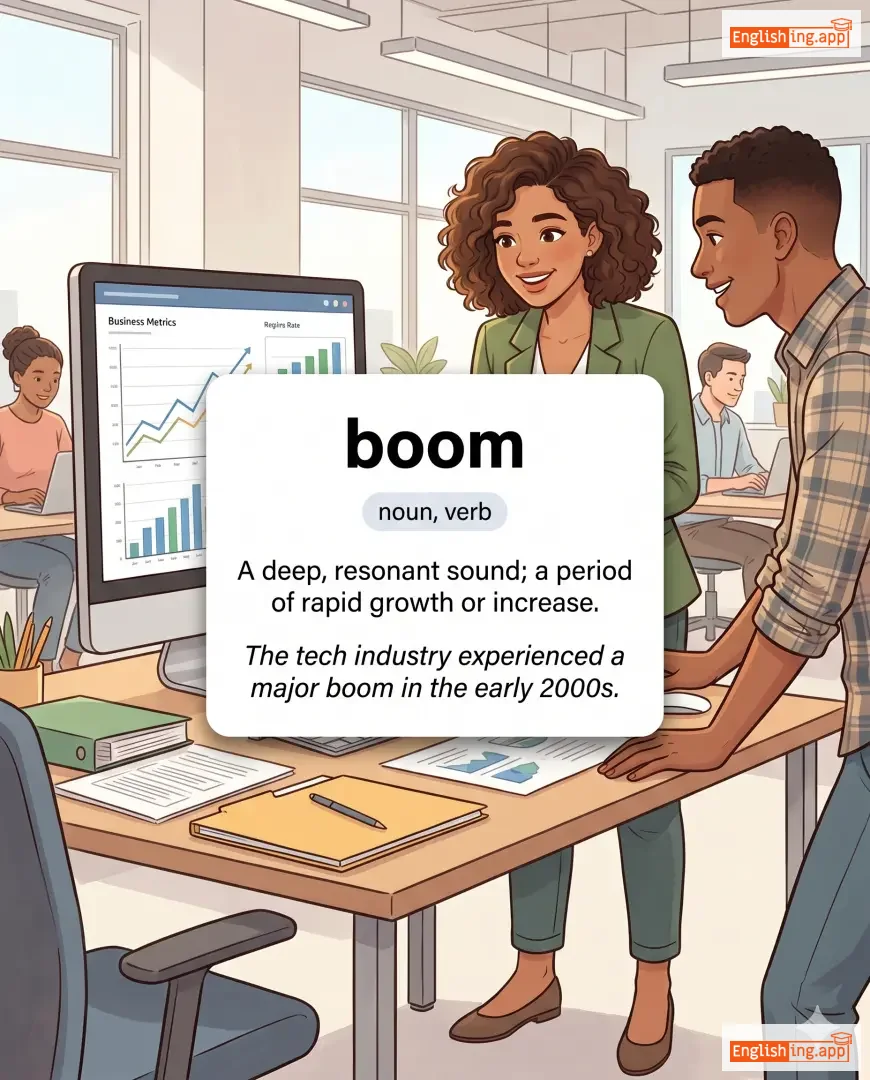
boom definition card — visual illustration of the meaning
noun, verb
/buːm/
auge, crecimiento rápido (auge, crecimiento rapido)

A deep, resonant sound; a period of rapid growth or increase.

"The tech industry experienced a major boom in the early 2000s."

"La industria tecnológica experimentó un gran auge a principios de los 2000." (La industria tecnologica experimento un gran auge a principios de los 2000.)
noun
/buːn/
bendición (bendicion)

A thing that is helpful or beneficial.

"The internet is a boon to modern education."

"Internet es una bendición para la educación moderna." (internet es una bendicion para la educacion moderna.)
noun
/bʊər/
grosero (grosero)

A rude, insensitive, or ill-mannered person.

"He was such a boor at the dinner table."

"Era un grosero en la mesa de la cena." (Era un grosero en la mesa de la cena.)
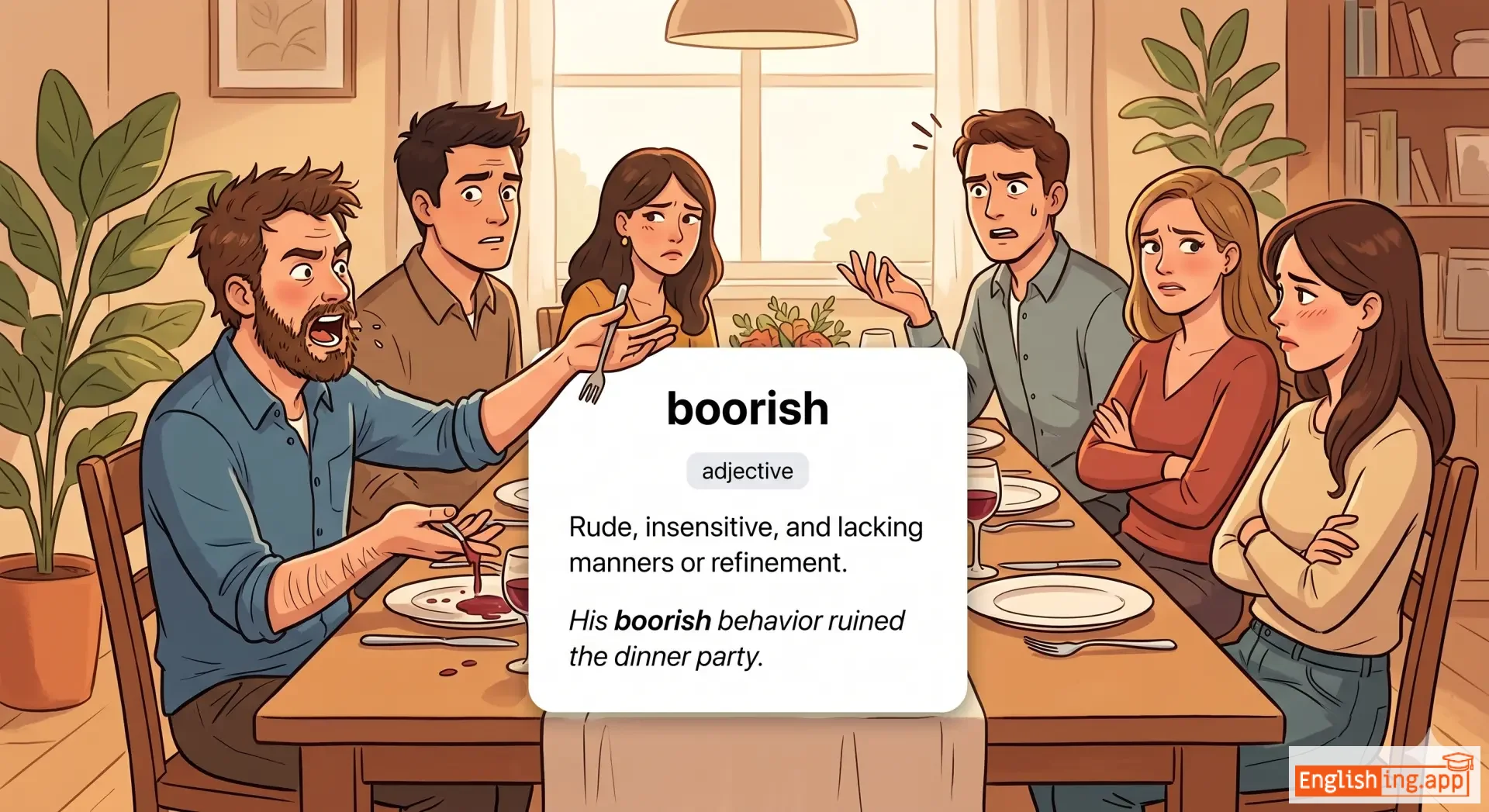
boorish definition card — visual illustration of the meaning
adjective
/ˈbʊərɪʃ/
grosero (grosero)

Rude, insensitive, and lacking manners or refinement.

"His boorish behavior ruined the dinner party."

"Su comportamiento grosero arruinó la fiesta de la cena." (Su comportamiento grosero arruinó la fiesta de la cena.)
verb
/buːst/
aumentar (aumentar)

To increase, improve, or raise something.

"The company launched a campaign to boost sales."

"La compañía lanzó una campaña para aumentar las ventas." (La compañia lanzo una campaña para aumentar las ventas.)
noun, verb
/buːt/
bota (bota)

A type of shoe that covers the ankle or higher; to start up a computer system.

"He put on his boots before going hiking."

"Él se puso sus botas antes de ir de excursión." (Él se puso sus botas antes de ir de excursión.)
noun
/ˈbuːt.leɪs/
cordón de bota (cordon de bota)

a cord or string used to fasten a boot or shoe

"I need to tie my boot-lace before going for a walk."

"Necesito atar mi cordón de bota antes de salir a caminar." (Necesito atar mi cordon de bota antes de salir a caminar.)
noun
/buːθ/
cabina (cabina)

a small enclosed space or area used for a specific purpose, such as voting or selling.

"He went into the voting booth to cast his ballot."

"Él entró en la cabina de votación para emitir su voto." (El entro en la cabina de votacion para emitir su voto.)
adjective
/ˈbuːtləs/
inútil (inutil)

Useless or futile; of no benefit.

"His bootless attempt to fix the machine only wasted time."

"Su intento inútil de arreglar la máquina solo desperdició tiempo." (su intento inutil de arreglar la maquina solo desperdicio tiempo.)
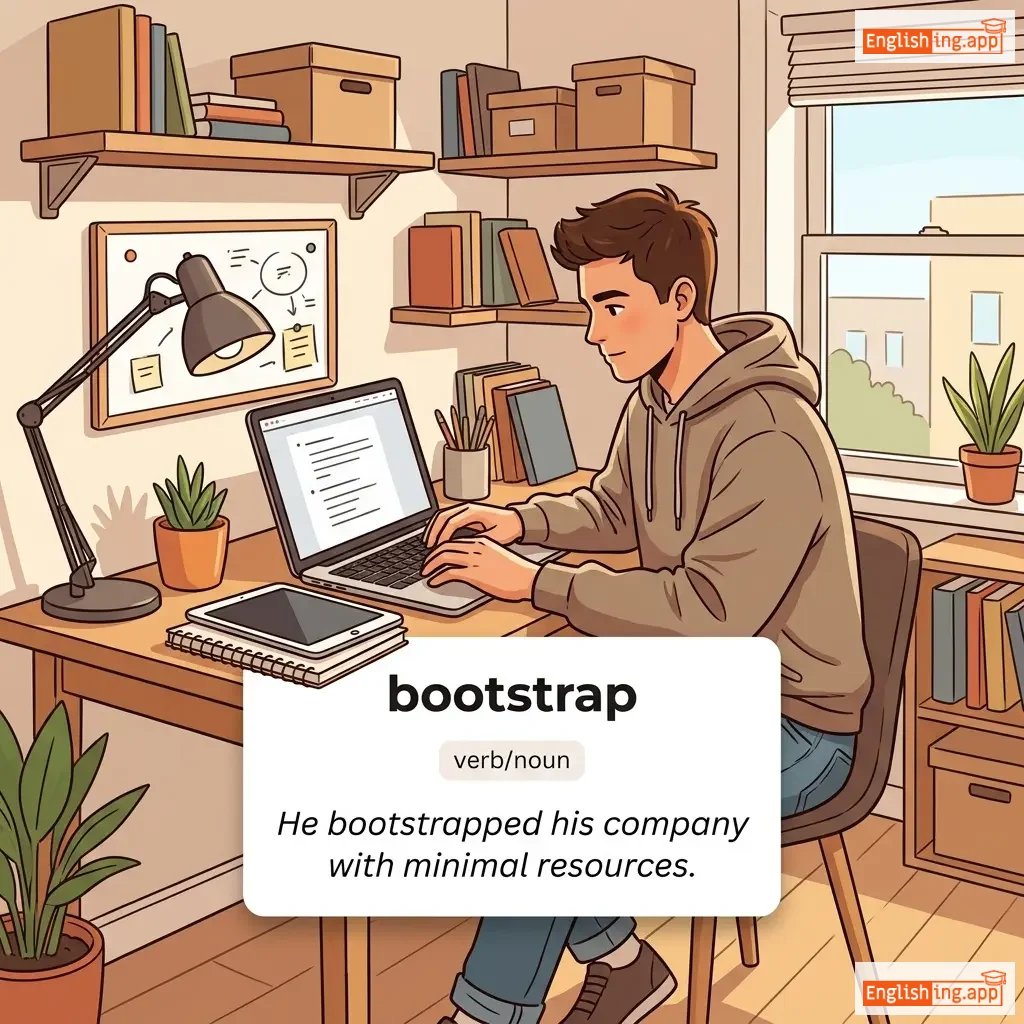
bootstrap definition card — visual illustration of the meaning
verb/noun
ˈbuːt.stræp
empezar un negocio utilizando recursos personales sin financiación externa (empezar un negocio utilizando recursos personales sin financiacion externa)

To start and develop a business using personal resources without external funding.

"He bootstrapped his company with minimal resources."

"Él comenzó su empresa con recursos mínimos." (El comenzo su empresa con recursos mínimos.)
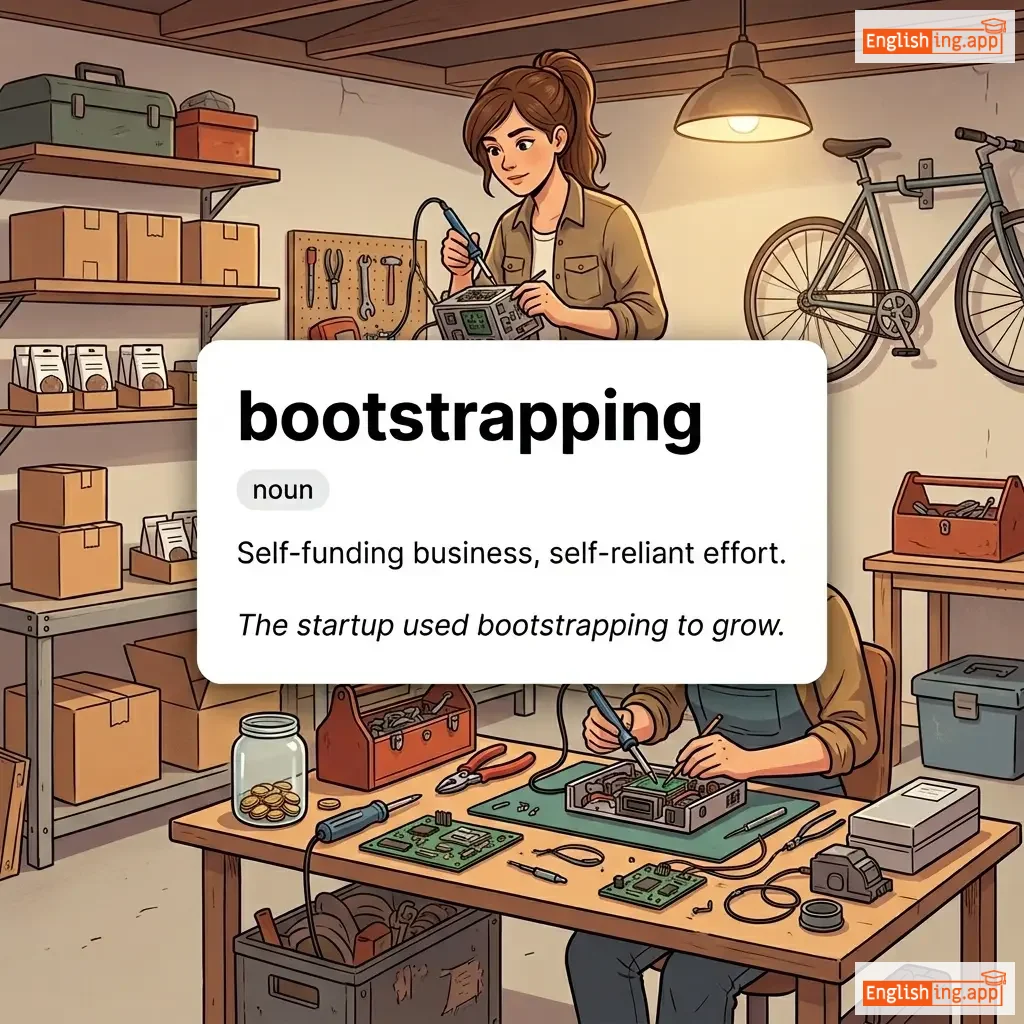
bootstrapping definition card — visual illustration of the meaning
noun
ˈbuːt.stræp.ɪŋ
autofinanciación empresarial, esfuerzo autosuficiente (autofinanciacion empresarial, esfuerzo autosuficiente)

Self-funding business, self-reliant effort.

"The startup used bootstrapping to grow."

"La startup utilizó el bootstrapping para crecer." (La startup utilizó el bootstrapping para crecer.)
noun, verb
/buːz/
alcohol (alcohol)

alcoholic drink, especially strong liquor; to drink alcohol, often excessively

"They bought some booze for the party."

"Compraron alcohol para la fiesta." (compraron alcohol para la fiesta)
adjective
/ˈbuːzi/
alcohólico (alcoholico)

containing or involving a lot of alcohol; slightly drunk from alcohol

"The party became boozy as the night went on."

"La fiesta se volvió alcohólica a medida que avanzaba la noche." (la fiesta se volvio alcoholica a medida que avanzaba la noche)
noun, verb
/ˈbɔːrdər/
frontera (frontera)

A line separating two political or geographical areas.

"Bangladesh shares a long border with India."

"Bangladesh comparte una larga frontera con India." (Bangladesh comparte una larga frontera con India.)
verb/noun
/bɔːr/
aburrir (aburrir)

Verb: To make someone feel uninterested or tired; Noun: A dull or tiresome person.

"The lecture began to bore the students."

"La conferencia comenzó a aburrir a los estudiantes." (La conferencia comenzó a aburrir a los estudiantes.)
adjective
/bɔːrd/
aburrido (aburrido)

feeling weary or uninterested because of lack of activity or excitement

"She felt bored during the long meeting."

"Se sintió aburrida durante la reunión larga." (se sintio aburrida durante la reunion larga)
adjective
/ˈbɔːrɪŋ/
aburrido (aburrido)

not interesting or exciting; dull.

"The lecture was so boring that several students fell asleep."

"La conferencia fue tan aburrida que varios estudiantes se quedaron dormidos." (La conferencia fue tan aburrida que varios estudiantes se quedaron dormidos.)
verb (past participle of 'bear'), adjective
/bɔːrn/
nacido (nacido)

To come into life; brought into existence.

"He was born in Dhaka in 1995."

"Él nació en Dhaka en 1995." (El nacio en Dhaka en 1995.)
noun
/ˈbʌrə, ˈbʊrə/
barrio (barrio)

A town, district, or administrative division, especially one with its own local government.

"Brooklyn is a borough of New York City."

"Brooklyn es un barrio de la ciudad de Nueva York." (Brooklyn es un barrio de la ciudad de Nueva York.)
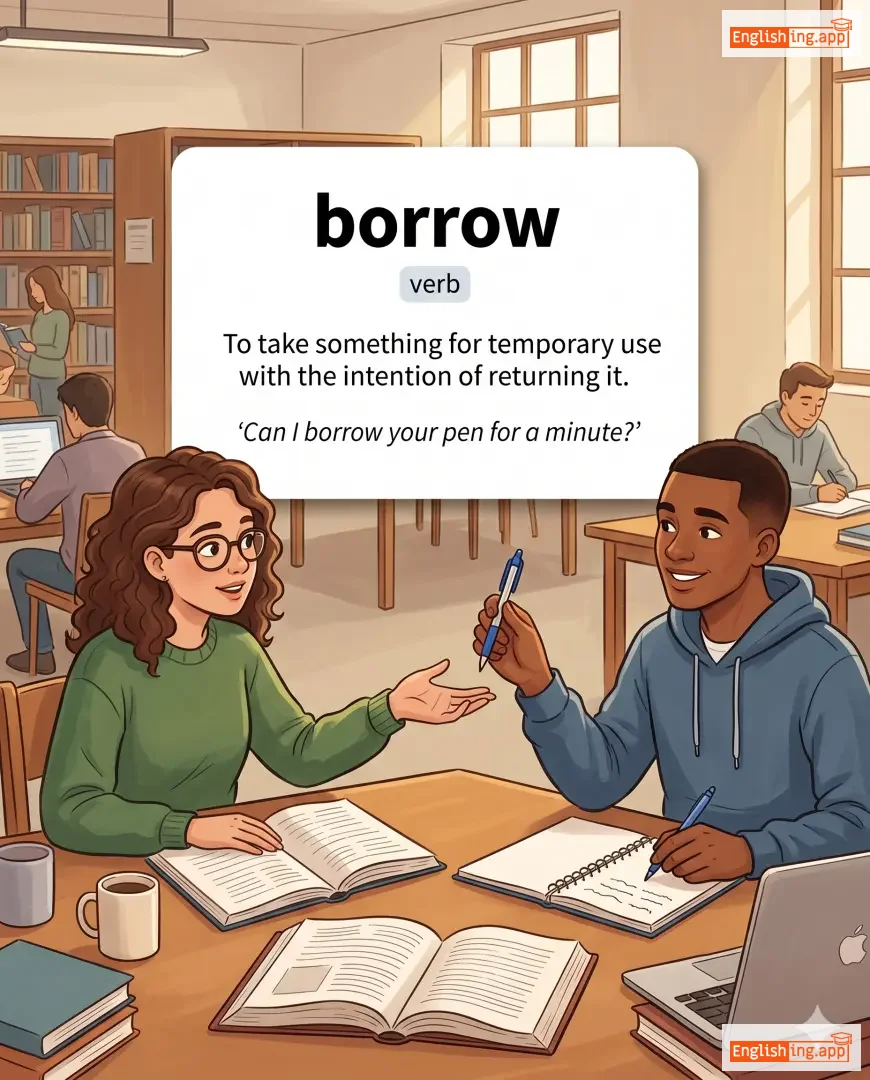
borrow definition card — visual illustration of the meaning
verb
/ˈbɑːroʊ/
tomar prestado (tomar prestado)

To take something for temporary use with the intention of returning it.

"Can I borrow your pen for a minute?"

"¿Puedo pedir prestado tu bolígrafo por un minuto?" (¿Puedo pedir prestado tu bolígrafo por un minuto?)
noun
/ˈbʊzəm/
pecho (pecho)

the human chest, especially a woman’s breast; also used metaphorically to refer to closeness or intimacy

"She kept the secret close to her bosom."

"Ella guardó el secreto cerca de su pecho." (Ella guardó el secreto cerca de su pecho.)
👨‍💼

boss (bós)

noun
/bɒs/
jefe (jefe)

a person who is in charge of a worker, group, or organization

"Her boss gave her a new project to complete."

"Su jefe le dio un nuevo proyecto para completar." (Su jefe le dio un nuevo proyecto para completar.)
adjective
/bəˈtænɪkəl/
botánico (botanico)

relating to plants or plant life

"She works at the botanical garden."

"Ella trabaja en el jardín botánico." (Ella trabaja en el jardin botanico.)
verb
/ˈbɒtənaɪz/
estudiar plantas (estudiar plantas)

to study plants in their natural environment

"They went to the forest to botanize during their vacation."

"Fueron al bosque a estudiar plantas durante sus vacaciones." (Fueron al bosque a estudiar plantas durante sus vacaciones.)
noun
/ˈbɒtəni/
botánica (botanica)

the scientific study of plants

"She is studying botany at the university."

"Ella está estudiando botánica en la universidad." (Ella esta estudiando botanica en la universidad.)
verb
/bɒtʃ/
estropear (estropear)

to carry out a task badly or carelessly

"He completely botched the repair job."

"Él estropeó completamente el trabajo de reparación." (El estropeó completamente el trabajo de reparación.)
determiner/pronoun
/boʊθ/
ambos (ambos)

referring to two people or things together

"Both of the children were excited about the trip."

"Ambos niños estaban emocionados por el viaje." (Ambos niños estaban emocionados por el viaje.)
verb
/ˈbɒðər/
molestar (molestar)

to annoy, worry, or cause trouble to someone

"I don't want to bother you while you're working."

"No quiero molestarte mientras trabajas." (No quiero molestarte mientras trabajas.)
noun
/ˈbɒt.əl/
botella (botella)

a container, typically made of glass or plastic, with a narrow neck used to hold liquids

"He poured water into the bottle."

"Él vertió agua en la botella." (Él vertió agua en la botella.)
adjective
/ˈbɒt.əl ɡriːn/
verde botella (verde botella)

a dark green color similar to that of a green glass bottle

"She wore a beautiful bottle-green dress to the evening party."

"Ella llevó un hermoso vestido de color verde botella a la fiesta de la noche." (Ella llevó un hermoso vestido de color verde botella a la fiesta de la noche.)
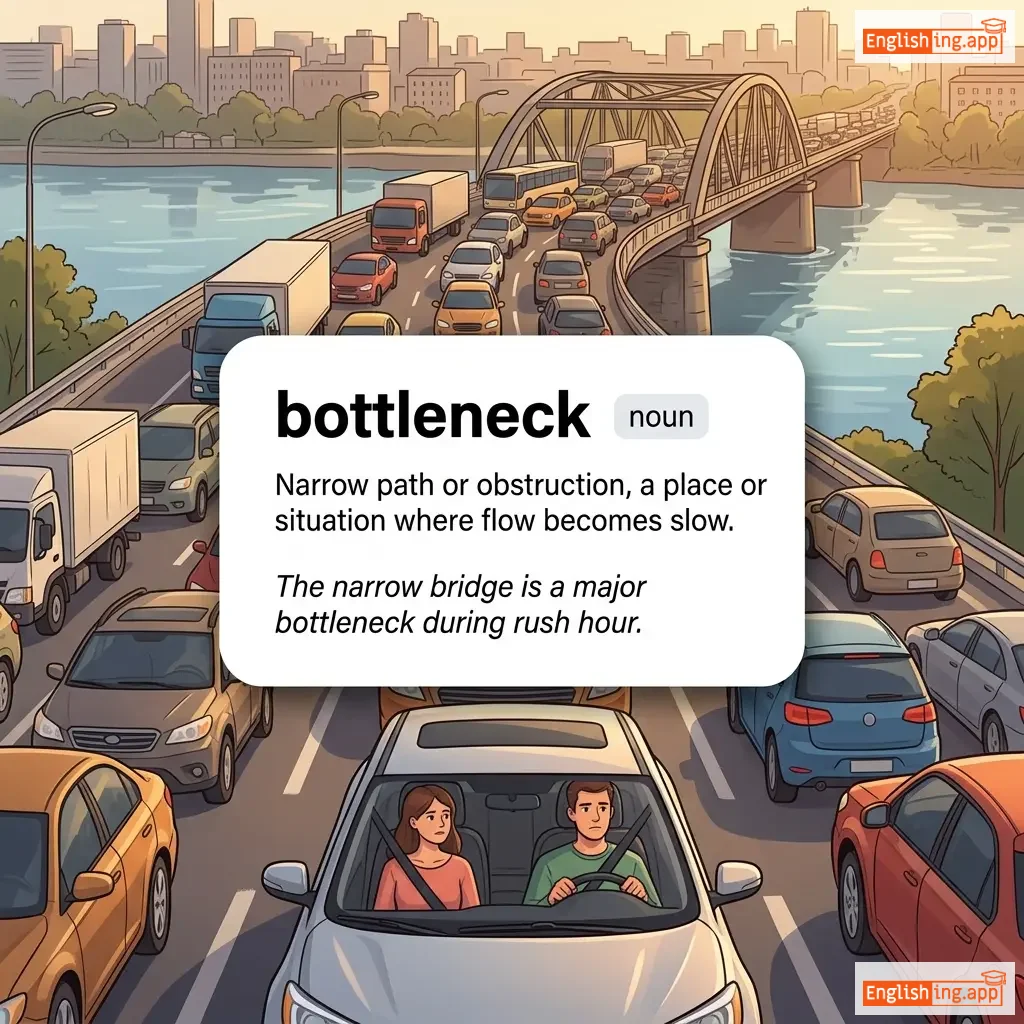
bottleneck definition card — visual illustration of the meaning
noun
/ˈbɒt.əl.nek/
cuello de botella (cuello de botella)

Narrow path or obstruction, a place or situation where flow becomes slow.

"The narrow bridge is a major bottleneck during rush hour."

"El puente estrecho es un gran cuello de botella durante la hora punta." (El puente estrecho es un gran cuello de botella durante la hora punta.)
noun, adjective
/ˈbɒtəm/
fondo (fondo)

The lowest part of something.

"The keys fell to the bottom of the bag."

"Las llaves cayeron al fondo de la bolsa." (Las llaves cayeron al fondo de la bolsa.)
noun
/ˌbuː.ɡənˈvɪl.i.ə/
buganvilea (buganvilea)

a tropical climbing plant with colorful bracts surrounding small flowers

"The bougainvillea climbing over the garden wall creates a beautiful purple display."

"La buganvilea que trepa sobre la pared del jardín crea una hermosa exhibición morada." (La buganvilea que trepa sobre la pared del jardín crea una hermosa exhibición morada.)
noun
/ˈbuː.jɒ̃/
caldo (caldo)

A clear, seasoned broth made by simmering meat, fish, or vegetables in water.

"She added vegetables to the bouillon for extra flavor."

"Ella agregó verduras al caldo para darle más sabor." (Ella agregó verduras al caldo para darle más sabor.)
verb
/baʊns/
rebotar (rebotar)

to spring back after hitting something; to rebound.

"The ball bounced off the wall and hit the window."

"La pelota rebotó contra la pared y golpeó la ventana." (La pelota reboto contra la pared y golpeo la ventana.)
verb, noun, adjective
/baʊnd/
limitado / atado (limitado / atado)

To move with large strides or jumps; also refers to being tied, limited, or certain.

"The dog bounded across the field with joy."

"El perro saltó a través del campo con alegría." (El perro salto a traves del campo con alegria.)
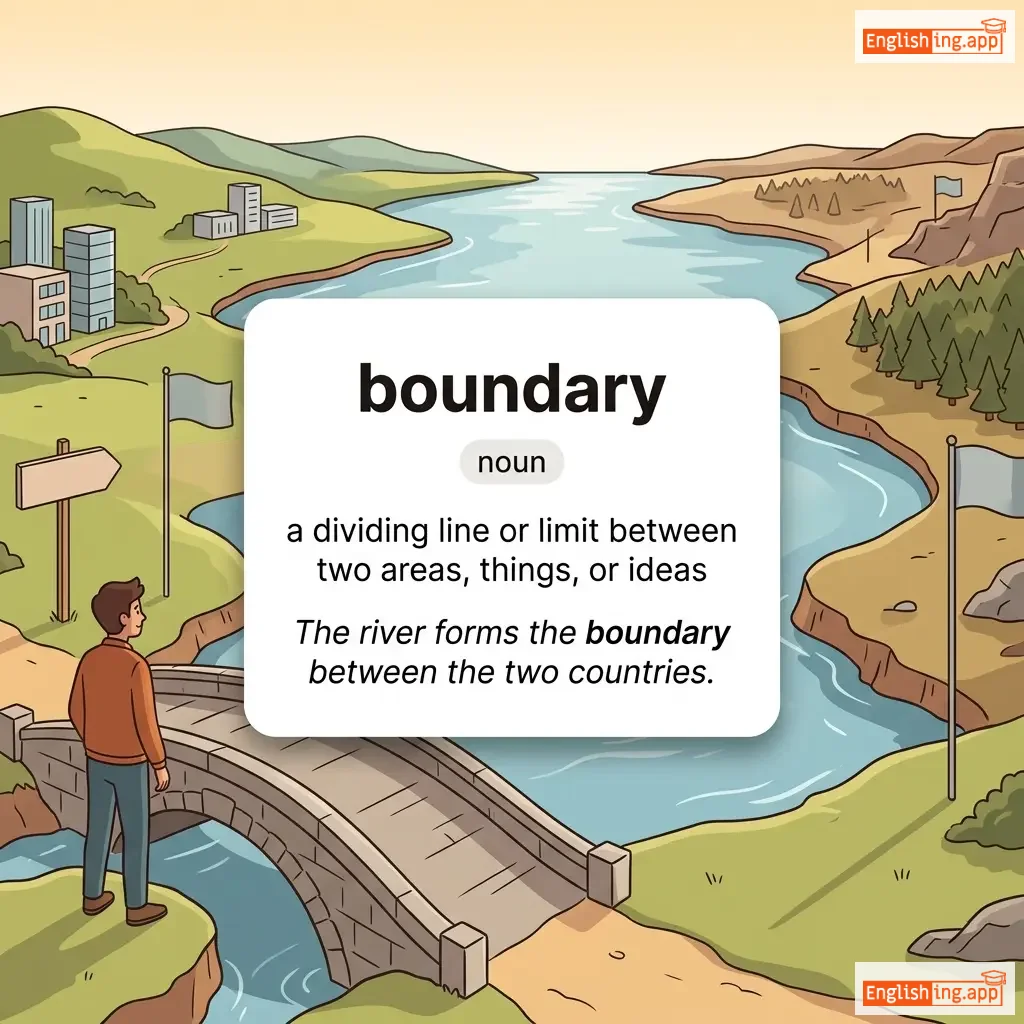
boundary definition card — visual illustration of the meaning
noun
/ˈbaʊn.dri/
frontera (frontera)

a dividing line or limit between two areas, things, or ideas

"The river forms the boundary between the two countries."

"El río forma la frontera entre los dos países." (El rio forma la frontera entre los dos paises.)
adjective
/ˈbaʊn.tɪ.fəl/
abundante / generoso (abundante / generoso)

Large in quantity; abundant; generous in giving.

"The farmer was grateful for the bountiful harvest."

"El agricultor estaba agradecido por la abundante cosecha." (El agricultor estaba agradecido por la abundante cosecha.)
noun
/buˈkeɪ/
ramo de flores (ramo de flores)

A bunch of flowers arranged together, often given as a gift or decoration.

"He gave her a bouquet of roses on her birthday."

"Él le dio un ramo de rosas en su cumpleaños." (El le dio un ramo de rosas en su cumpleaños.)
adjective, noun
/ˈbʊrʒ.wɑː/
burgués (burges)

Relating to the middle class, often with materialistic values or conventional attitudes.

"The novel criticizes the bourgeois lifestyle of the city dwellers."

"La novela critica el estilo de vida burgués de los habitantes de la ciudad." (La novela critica el estilo de vida burgués de los habitantes de la ciudad.)
noun
/baʊt/
un breve período de actividad intensa o un concurso, especialmente en deportes o enfermedad (un breve periodo de actividad intensa o un concurso, especialmente en deportes o enfermedad)

a short period of intense activity or a contest, especially in sports or illness

"He had a severe bout of flu last winter."

"Tuvo un grave ataque de gripe el invierno pasado." (Tuvo un grave ataque de gripe el invierno pasado.)
noun
/buːˈtiːk/
tienda de moda (tienda de moda)

a small shop that sells fashionable clothes or accessories

"She bought a beautiful dress from a boutique downtown."

"Ella compró un hermoso vestido en una tienda de moda en el centro." (Ella compro un hermoso vestido en una tienda de moda en el centro.)
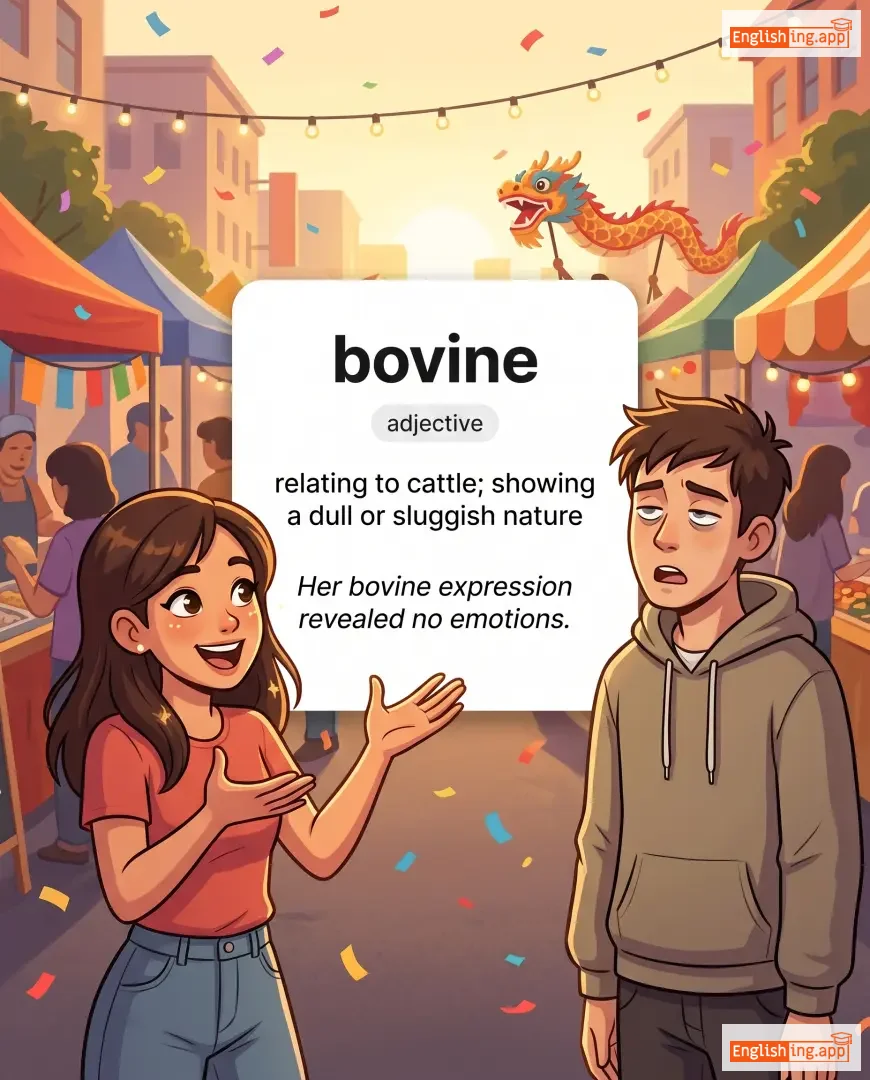
bovine definition card — visual illustration of the meaning
adjective
/ˈboʊvaɪn/
relacionado con el ganado (relacionado con el ganado)

relating to cattle; showing a dull or sluggish nature

"Her bovine expression revealed no emotions."

"Su expresión bovina no reveló ninguna emoción." (Su expresion bovina no reveló ninguna emoción.)
verb
/baʊ/ (verb), /boʊ/ (noun)
inclinarse (inclinarse)

to bend the upper part of the body forward as a sign of respect or greeting.

"The performer bowed deeply after the show."

"El intérprete se inclinó profundamente después del espectáculo." (El intérprete se inclinó profundamente después del espectáculo.)
verb
/ˈbaʊdləˌraɪz/
eliminar partes ofensivas (eliminar partes ofensivas)

to remove or modify parts of a text considered offensive or inappropriate

"The editor bowdlerized the novel to make it suitable for children."

"El editor boudlerizó la novela para hacerla adecuada para los niños." (El editor boudlerizó la novela para hacerla adecuada para los niños.)
noun
/boʊl/
cuenco (cuenco)

a round, deep dish used for holding food or liquids

"She poured the soup into a large bowl."

"Ella vertió la sopa en un cuenco grande." (Ella vertió la sopa en un cuenco grande.)