Vocabulaires

Découvrez, apprenez et maîtrisez le vocabulaire anglais

verb
/lɜːrk/
guetter (guetter)

to remain hidden so as to wait for an opportunity to attack or observe

"A stranger lurked in the shadows."

"Un étranger rôdait dans l'ombre." (Un étranger rôdait dans l'ombre.)
adjective
/ˈlʌʃəs/
délicieux (delicieux)

deliciously sweet or rich; highly appealing to the senses

"She served a luscious chocolate cake."

"Elle a servi un délicieux gâteau au chocolat." (Elle a servi un delicieux gateau au chocolat.)
adjective
/lʌʃ/
riche, abondant et luxueux, surtout en ce qui concerne la végétation (riche, abondant et luxueux, surtout en ce qui concerne la végétation)

rich, abundant, and luxurious, especially referring to vegetation

"The valley was filled with lush green fields."

"La vallée était remplie de champs verts et luxuriants." (La vallée était remplie de champs verts et luxuriants.)
noun
/lʌst/
désir (desir)

a very strong sexual desire or an intense craving for something

"His mind was clouded by lust for power."

"Son esprit était troublé par le désir de pouvoir." (Son esprit était trouble par le desir de pouvoir.)
noun
/ˈlʌstər/
lustre (lustre)

a gentle sheen or soft glow, especially from a polished surface

"The diamond had a brilliant luster."

"Le diamant avait un éclat brillant." (Le diamant avait un eclat brillant.)
lustrous definition card — visual illustration of the meaning
adjective
/ˈlʌstrəs/
lustré (lustre)

having a gentle sheen or soft glow

"Her hair looked smooth and lustrous."

"Ses cheveux semblaient lisses et lustrés." (Ses cheveux semblaient lisses et lustrés.)
noun
/lʌɡˈʒʊəriəns/
luxuriance (luxuriance)

abundant growth, richness, or elegance

"The garden was filled with the luxuriance of tropical plants."

"Le jardin était rempli de la luxuriance des plantes tropicales." (Le jardin etait rempli de la luxuriance des plantes tropicales.)
adjective
/lʌɡˈʒʊəriənt/
luxuriant (luxuriant)

abundant in growth or richly abundant

"The luxuriant forest was teeming with life."

"La forêt luxuriante regorgeait de vie." (La forêt luxuriante regorgeait de vie.)
verb
/lʌɡˈʒʊrieɪt/
se livrer à des plaisirs (se livrer a des plaisirs)

to enjoy something in a self-indulgent way; to take pleasure in great comfort

"She luxuriated in the warm bubble bath after a long day."

"Elle s'est luxurieuse dans le bain à bulles chaud après une longue journée." (Elle s'est luxurieuse dans le bain à bulles chaud après une longue journée.)
adjective
/lʌɡˈʒʊəriəs/
luxueux (luxueux)

extremely comfortable, elegant, or enjoyable, often involving great expense

"They stayed in a luxurious hotel during their vacation."

"Ils ont séjourné dans un hôtel luxueux pendant leurs vacances." (Ils ont sejourne dans un hotel luxueux pendant leurs vacances.)
noun
/ˈlʌkʃəri/
luxe (luks)

a state of great comfort or elegance, often involving great expense

"Staying at a five-star hotel is a luxury for most people."

"Séjourner dans un hôtel cinq étoiles est un luxe pour la plupart des gens." (sejourner dans un hotel cinq etoiles est un luks pour la plupart des gens.)
verb
/ˈlaɪɪŋ/
mentir (mentir)

the act of not telling the truth

"He was caught lying about his grades."

"Il a été attrapé en train de mentir sur ses notes." (Il a été attrapé en train de mentir sur ses notes.)
noun
/laɪər/
lyre (lyre)

a stringed musical instrument of ancient Greece

"The musician played a melody on the lyre."

"Le musicien a joué une mélodie sur la lyre." (Le musicien a joue une melodie sur la lyre.)
noun
/ˈluː.məˌnɛr.i/
personne influente (personne influente)

A person who inspires or influences others, especially in a particular field.

"He is considered a luminary in the world of science."

"Il est considéré comme une personne influente dans le monde de la science." (Il est considéré comme une personne influente dans le monde de la science.)
noun
/ˈlɪrɪk/
paroles de chanson (paroles de chanson)

the words of a song or a short poem that expresses personal feelings

"She memorized every lyric of her favorite song."

"Elle a mémorisé chaque parole de sa chanson préférée." (Elle a mémorisé chaque parole de sa chanson préférée.)
adjective
/məˈkɑːbrə/
macabre (macabre)

disturbing and horrifying because of involvement with or depiction of death and injury

"The horror movie had a macabre ending."

"Le film d'horreur avait une fin macabre." (Le film d'horreur avait une fin macabre.)
verb
/məˈkadəˌmaɪz/
recouvrir une route avec des pierres cassées (recouvrir une route avec des pierres cassées)

to construct or cover a road with broken stone

"The government decided to macadamize the old rural roads."

"Le gouvernement a décidé de macadamiser les vieilles routes rurales." (Le gouvernement a décidé de macadamiser les vieilles routes rurales.)
noun
/meɪs/
mace / sceptre (mace / sceptre)

a ceremonial staff carried as a symbol of authority or a weapon similar to a club

"The guard carried a mace as a symbol of authority."

"Le garde portait un mace comme symbole d'autorité." (Le garde portait un mace comme symbole d'autorité.)
verb
/ˈmæsəˌreɪt/
attendrir (attendrir)

to soften or break up something, especially food, by soaking in liquid

"The chef macerated the fruit in wine before serving."

"Le chef a macéré les fruits dans le vin avant de les servir." (Le chef a macéré les fruits dans le vin avant de les servir.)
machiavellian definition card — visual illustration of the meaning
adjective
/ˌmækɪəˈvɛliən/
astucieux, machiavélique et sans scrupules, en particulier en politique ou pour faire progresser sa carrière (makiavélien)

cunning, scheming, and unscrupulous, especially in politics or in advancing one's career

"The politician was known for his Machiavellian tactics."

"Le politicien était connu pour ses tactiques machiavéliques." (Le politicien était connu pour ses tactiques machiavéliques.)
verb
/ˈmæk.ɪ.neɪt/
machiner (machiner)

to engage in plots or schemes, usually for harmful or evil purposes

"The rebels tried to machinate against the king."

"Les rebelles ont essayé de machiner contre le roi." (Les rebelles ont essayé de machiner contre le roi.)
noun
/ˌmæk.ɪˈneɪ.ʃən/
machination (machination)

a secret plan or scheme intended to accomplish something, especially something evil

"The detective uncovered the villain's machination."

"Le détective a découvert la machination du méchant." (Le détective a découvert la machination du méchant.)
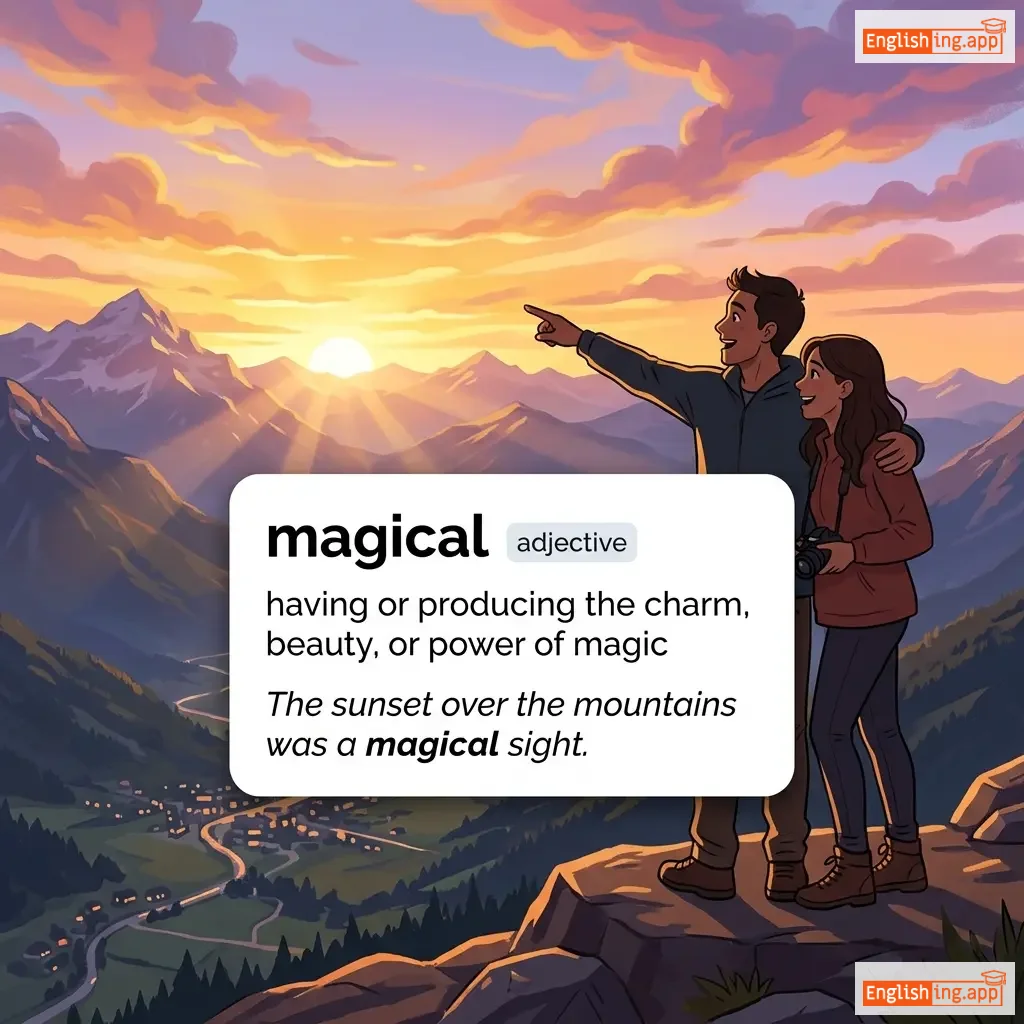
magical definition card — visual illustration of the meaning
adjective
/ˈmædʒɪkəl/
magique (magikal)

having or producing the charm, beauty, or power of magic

"The sunset over the mountains was a magical sight."

"Le coucher du soleil sur les montagnes etait un spectacle magique." (Le coucher du soleil sur les montagnes etait un spectacle magique)
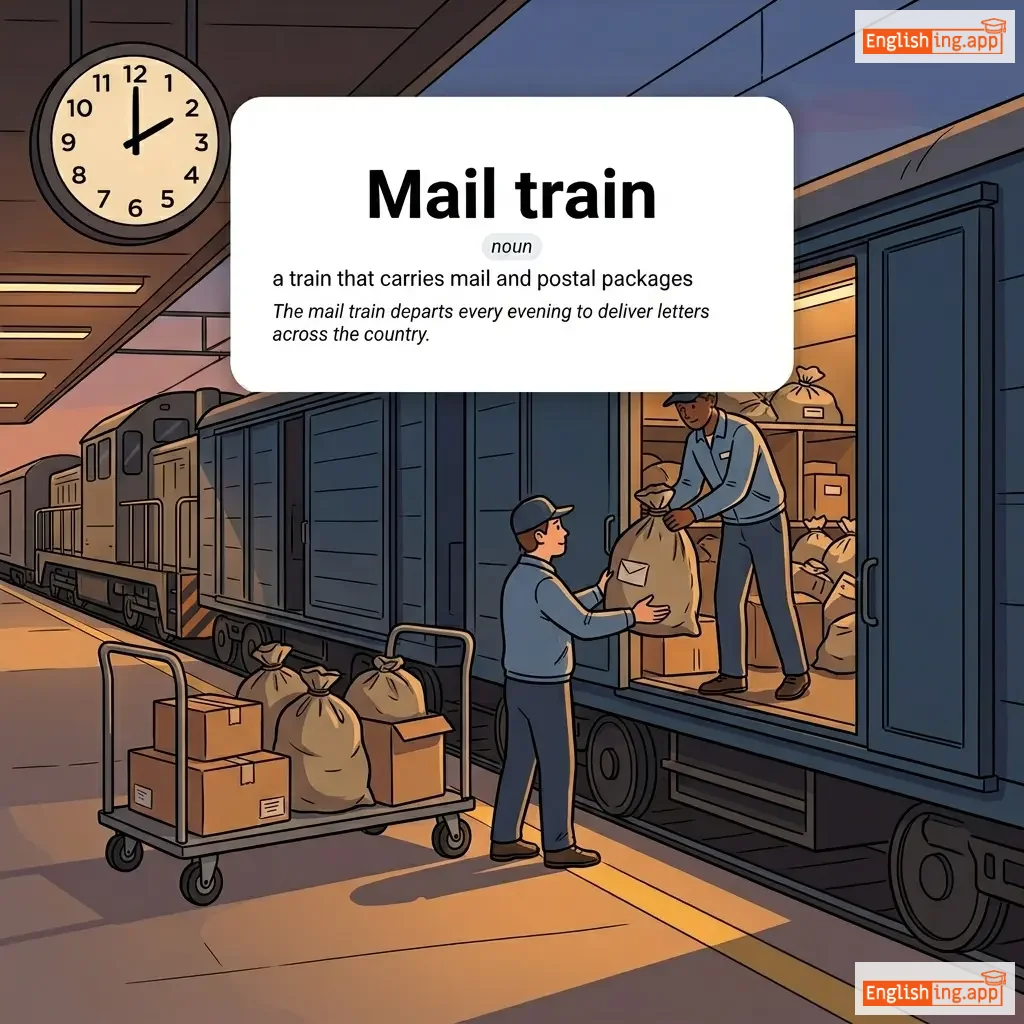
Mail train definition card — visual illustration of the meaning
noun
/meɪl treɪn/
train postal (train postal)

a train that carries mail and postal packages

"The mail train departs every evening to deliver letters across the country."

"Le train postal part chaque soir pour livrer des lettres à travers le pays." (Le train postal part chaque soir pour livrer des lettres à travers le pays.)
noun/verb
/meɪl/
courrier / lettre (courrier / lettre)

Letters, packages, or email messages sent or delivered to someone.

"I received an important letter in the mail."

"J'ai reçu une lettre importante par le courrier." (J'ai reçu une lettre importante par le courrier.)
noun
/ˈmeɪdənˌhʊd/
jeunesse (jeunesse)

The state of being a maiden; girlhood or virginity.

"The poem celebrated the innocence of maidenhood."

"Le poème a célébré l'innocence de la jeunesse." (Le poème a célébré l'innocence de la jeunesse.)
noun
/ˌmɑːhəˈrɑːdʒə/
maharaja (maharaja)

A great king, especially a ruler of one of the principal states in India.

"The maharaja lived in a grand palace surrounded by gardens."

"Le maharaja vivait dans un grand palais entouré de jardins." (Le maharaja vivait dans un grand palais entouré de jardins.)
noun
/ˈmæɡnɪtuːd/
magnitude (magnitude)

the great size, extent, or importance of something

"The magnitude of the earthquake shocked the nation."

"La magnitude du tremblement de terre a choqué la nation." (La magnitude du tremblement de terre a choque la nation.)
adjective
/mæɡˈnɪləkwənt/
langage pompeux (langage pompeux)

using high-flown or pompous language

"The politician’s magniloquent speech impressed the crowd."

"Le discours pompeux du politicien a impressionné la foule." (Le discours pompeux du politicien a impressionné la foule.)
verb
/ˈmæɡnɪfaɪ/
agrandir (agrandir)

to make something appear larger or more important than it really is

"The microscope can magnify tiny cells."

"Le microscope peut agrandir de petites cellules." (Le microscope peut agrandir de petites cellules.)
adjective
/mæɡˈnɪfɪsənt/
magnifique (magnifique)

extremely beautiful, impressive, or splendid

"The view from the mountain was truly magnificent."

"La vue depuis la montagne était vraiment magnifique." (La vue depuis la montagne était vraiment magnifique.)
noun
/mæɡˈnɪfɪsəns/
magnificence (magnificence)

splendor, grandeur, or impressive beauty

"The magnificence of the palace left everyone speechless."

"La magnificence du palais a laissé tout le monde sans voix." (La magnificence du palais a laissé tout le monde sans voix.)
verb
/ˈmæɡnɪtaɪz/
magnétiser (magnetiser)

to make something magnetic or to strongly attract

"The scientist managed to magnetize the iron rod."

"Le scientifique a réussi à magnétiser la tige de fer." (Le scientifique a reussi a magnetiser la tige de fer.)
adjective
/mæɡˈnɛtɪk/
magnétique (magnetique)

having the power to attract metal objects or to attract people or things in a strong way

"The magnetic field of the Earth protects us from harmful solar radiation."

"Le champ magnétique de la Terre nous protège des radiations solaires nuisibles." (Le champ magnétique de la Terre nous protège des radiations solaires nuisibles.)
noun
/ˈmæɡnət/
aimant (aiman)

An object that produces a magnetic field and attracts metals like iron.

"The magnet held the paper to the fridge door."

"L'aimant a maintenu le papier sur la porte du réfrigérateur." (L'aimant a maintenu le papier sur la porte du refrigerateur.)
noun
/ˈmæɡneɪt/
magnat (magnat)

A wealthy and influential person, especially in business or industry.

"The oil magnate donated millions to charity."

"Le magnat du pétrole a fait don de millions à la charité." (Le magnat du pétrole a fait don de millions à la charité.)
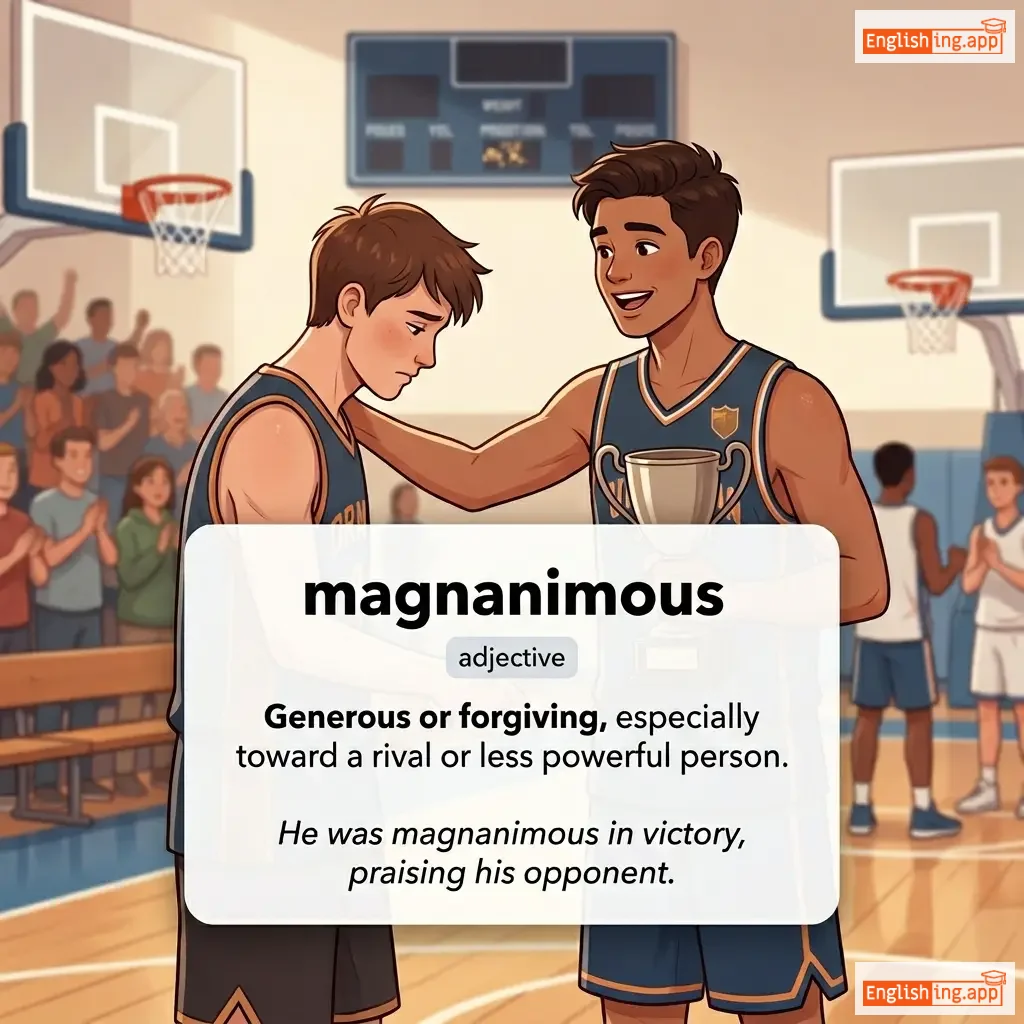
magnanimous definition card — visual illustration of the meaning
adjective
/mæɡˈnænɪməs/
magnanime (magnanime)

Generous or forgiving, especially toward a rival or less powerful person.

"He was magnanimous in victory, praising his opponent."

"Il était magnanime dans la victoire, louant son adversaire." (Il etait magnanime dans la victoire, louant son adversaire.)
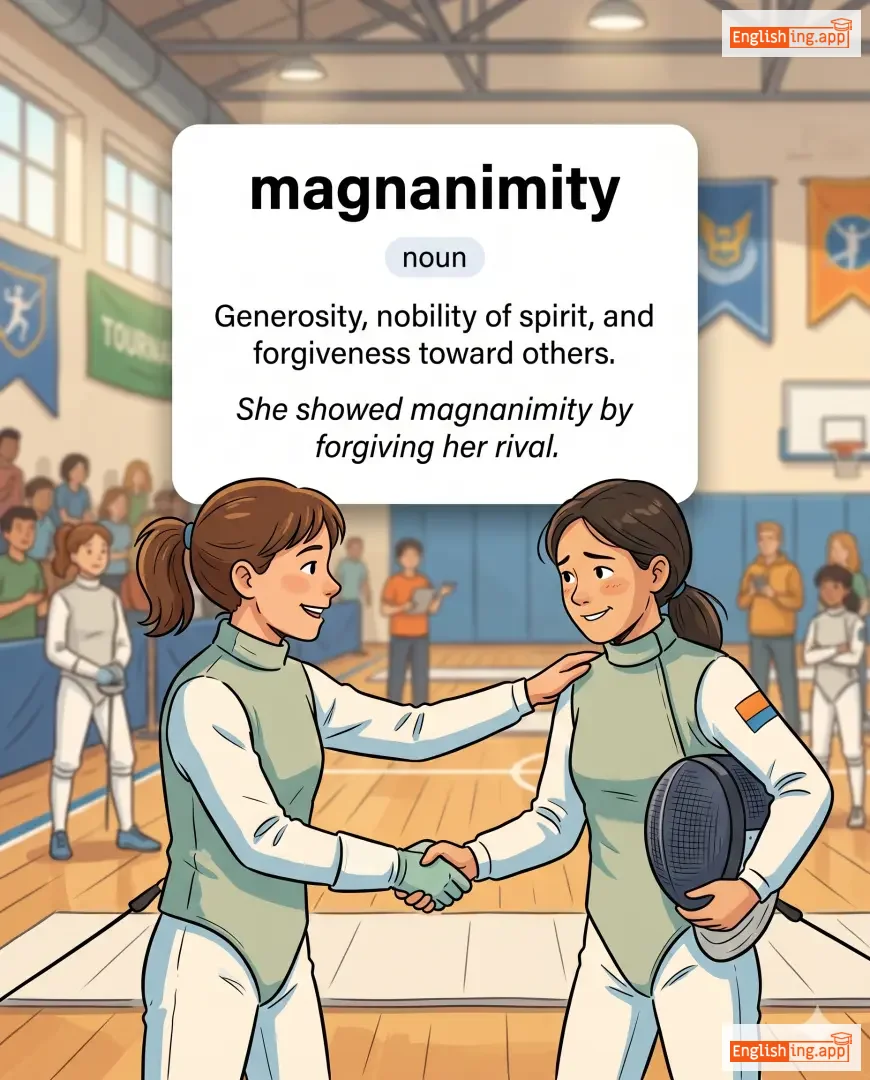
magnanimity definition card — visual illustration of the meaning
noun
/ˌmæɡnəˈnɪmɪti/
magnanimité (magnanimite)

Generosity, nobility of spirit, and forgiveness toward others.

"She showed magnanimity by forgiving her rival."

"Elle a montré de la magnanimité en pardonnant à son rival." (Elle a montre de la magnanimite en pardonnant a son rival.)
noun
/ˈmædʒɪstreɪt/
magistrat (magistrat)

A civil officer who administers the law, often with limited judicial authority.

"The magistrate presided over the minor criminal case."

"Le magistrat a présidé l'affaire criminelle mineure." (Le magistrat a présidé l'affaire criminelle mineure.)
noun
/ˈmædʒɪstrəsi/
bureau judiciaire (bureau judiciaire)

The office, authority, or district of a magistrate.

"He was proud to serve in the local magistracy for over a decade."

"Il était fier de servir dans le bureau judiciaire local pendant plus d'une décennie." (Il était fier de servir dans le bureau judiciaire local pendant plus d'une décennie.)
adjective
/ˌmædʒɪˈstɪəriəl/
magistériel (magisteriel)

Having the characteristics of a master or authority; commanding and dignified.

"The professor spoke in a magisterial tone during the lecture."

"Le professeur a parlé d'une manière magistérielle pendant la conférence." (Le professeur a parle d'une maniere magisterielle pendant la conference.)
noun
/məˈdʒɪʃən/
magicien (magicien)

A person who performs tricks and illusions for entertainment or one believed to have magical powers.

"The magician pulled a rabbit out of his hat."

"Le magicien a sorti un lapin de son chapeau." (Le magicien a sorti un lapin de son chapeau.)
noun
/ˈmækɪntɒʃ/
manteau imperméable (manteau impermeable)

a waterproof raincoat, originally made from rubberized fabric

"He wore a mackintosh to stay dry in the rain."

"Il portait un mackintosh pour rester au sec sous la pluie." (Il portait un mackintosh pour rester au sec sous la pluie.)
verb
/ˈmæk.jʊˌleɪt/
maculer (maculer)

To stain, spot, or pollute something.

"The white cloth was maculated by ink stains."

"Le tissu blanc a été souillé par des taches d'encre." (Le tissu blanc a été souillé par des taches d'encre.)
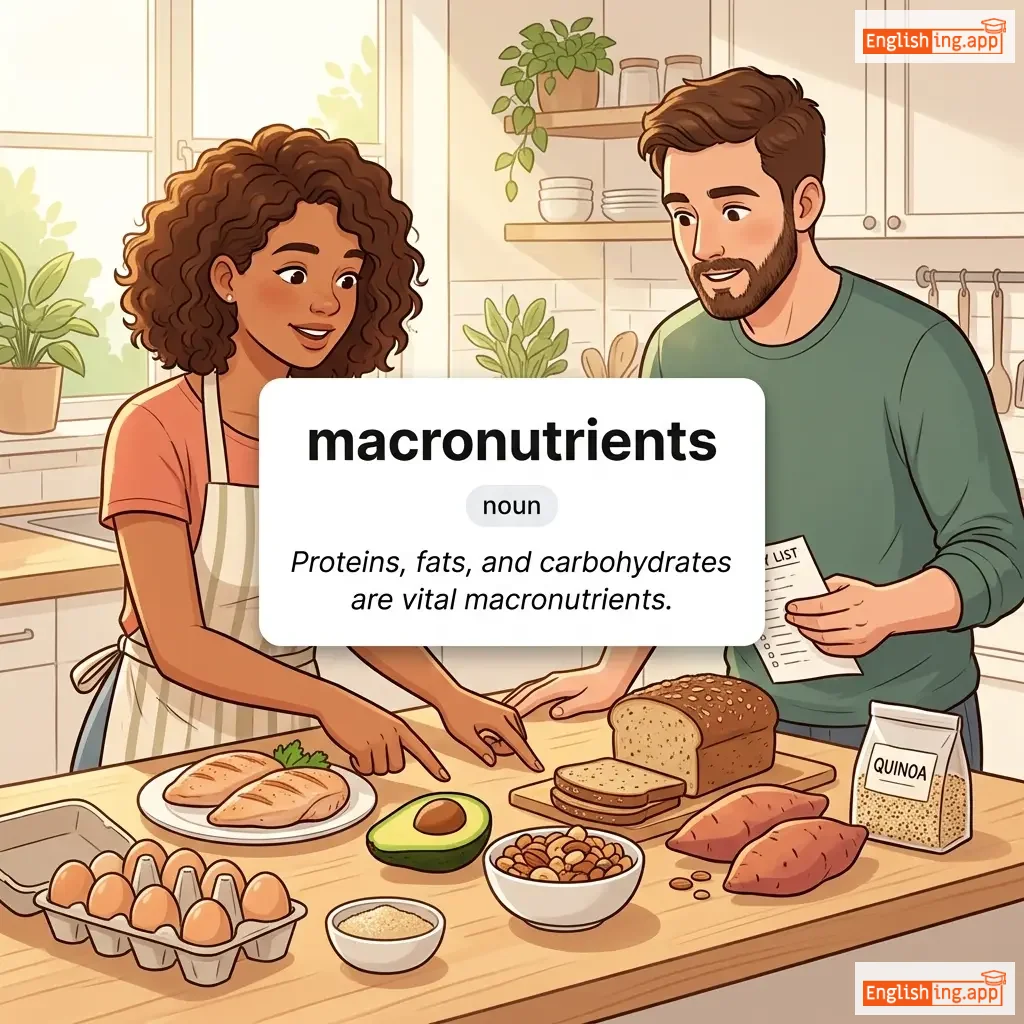
macronutrients definition card — visual illustration of the meaning
noun
/ˈmæk.rəʊˌnjuː.tri.ənts/
macronutriments (macronutriments)

Nutrients that are needed in large amounts to provide energy and building materials for the body, including carbohydrates, proteins, and fats.

"Proteins, fats, and carbohydrates are vital macronutrients."

"Les protéines, les graisses et les glucides sont des macronutriments essentiels." (Les proteines, les graisses et les glucides sont des macronutriments essentiels.)
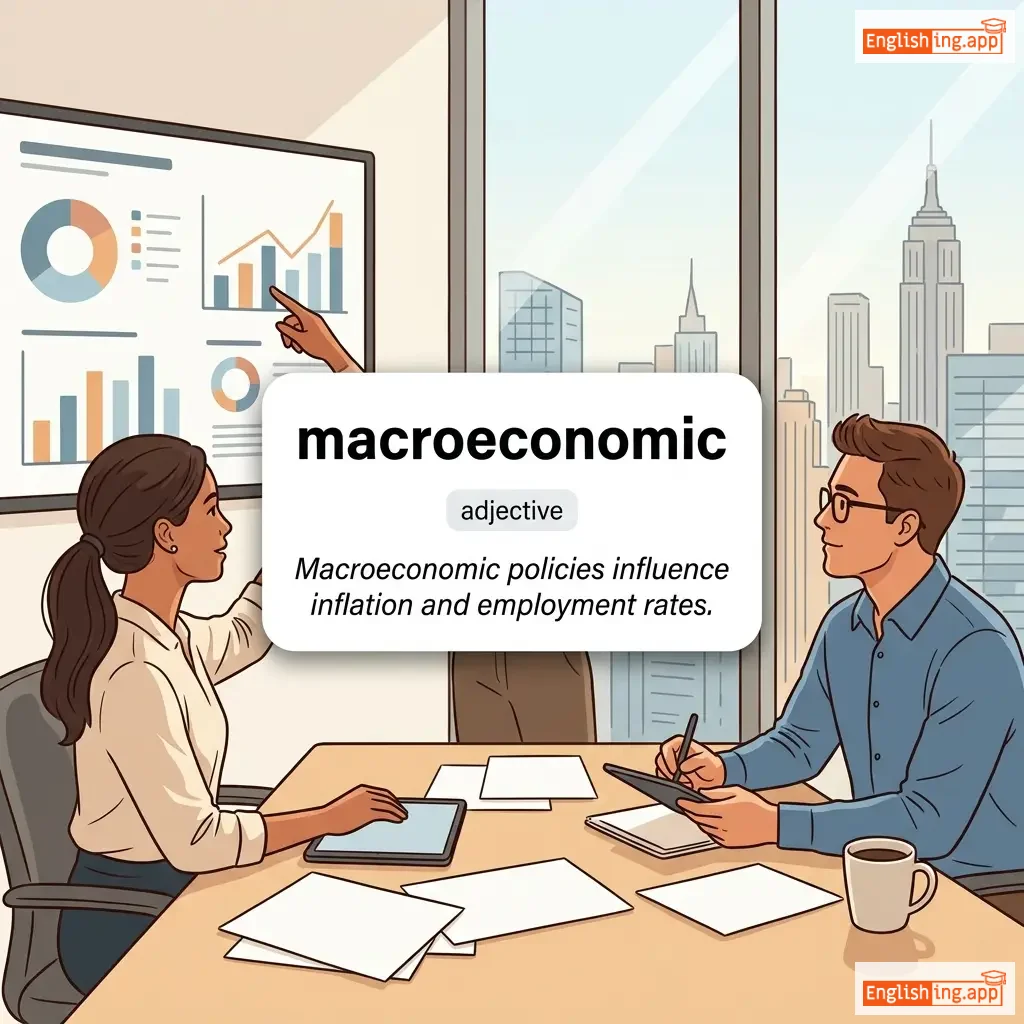
macroeconomic definition card — visual illustration of the meaning
adjective
/ˌmæk.rəʊ.iː.kəˈnɒm.ɪk/
macroéconomique (macroeconomique)

Relating to macroeconomics or the large-scale or general economic factors, such as interest rates and national productivity.

"Macroeconomic policies influence inflation and employment rates."

"Les politiques macroéconomiques influencent l'inflation et les taux d'emploi." (Les politiques macroéconomiques influencent l'inflation et les taux d'emploi.)
noun
/ˈmæk.rəˌkɒz.əm/
macrocosme (macrocosme)

The whole universe considered as a large, complex system; a large-scale representation of something.

"The macrocosm of the universe reflects the microcosm of human life."

"Le macrocosme de l'univers reflète le microcosme de la vie humaine." (Le macrocosme de l'univers reflète le microcosme de la vie humaine.)
noun
/məˈʃiː.nɪst/
machiniste (machiniste)

a person who operates machine tools or makes and repairs machines

"The machinist carefully adjusted the gears on the lathe."

"Le machiniste a ajusté soigneusement les engrenages sur le tour." (Le machiniste a ajusté soigneusement les engrenages sur le tour.)
noun
/məˈʃiːn/
machine (machine)

A device with moving parts that uses energy to perform a particular task.

"This washing machine is very efficient."

"Cette machine à laver est très efficace." (Cette machine à laver est très efficace.)
noun
/məˈʃiː.nər.i/
machinerie (machinerie)

machines collectively, or the parts of a machine; also, the system or process by which something works

"The factory invested in new machinery to increase production."

"L'usine a investi dans une nouvelle machinerie pour augmenter la production." (L'usine a investi dans une nouvelle machinerie pour augmenter la production.)