Словари

Словарь английского языка | Значения слов, определения и примеры

adjective
/ˌkɒm.plɪˈmen.tər.i/
комплиментарный; похвальный; предоставленный бесплатно как любезность (komplimentarnyy; pokhval'nyy; predostavlennyy besplatno kak lyubeznost')

expressing praise or admiration; given or supplied free of charge as a courtesy

"The hotel offers complimentary breakfast for all guests."

"Отель предлагает бесплатный завтрак для всех гостей." (Otel predlagaet besplatnyy zavtrak dlya vsekh gastey.)
verb
/kəmˈplaɪ/
соблюдать (soblyudat')

to act in accordance with a rule, request, or law

"All companies must comply with safety regulations."

"Все компании должны соблюдать правила безопасности." (Vse kompanii dolzhny soblyudat' pravila bezopasnosti.)
noun
/kəmˈpoʊnənt/
компонент (komponent)

a part or element of a larger whole, especially a machine or system

"The engine is the most important component of the car."

"Двигатель является самой важной частью автомобиля." (Dvigatel' yavyayetsya samoy vazhnoy chast'yu avtomobilya.)
verb
/kəmˈpɔːrt/
вести себя (vesti sebya)

to behave or conduct oneself in a particular way

"She comported herself with grace during the ceremony."
"Она вела себя с грацией во время церемонии." (Ona vела sebya s gratsiey vo vremya tseremonii.)
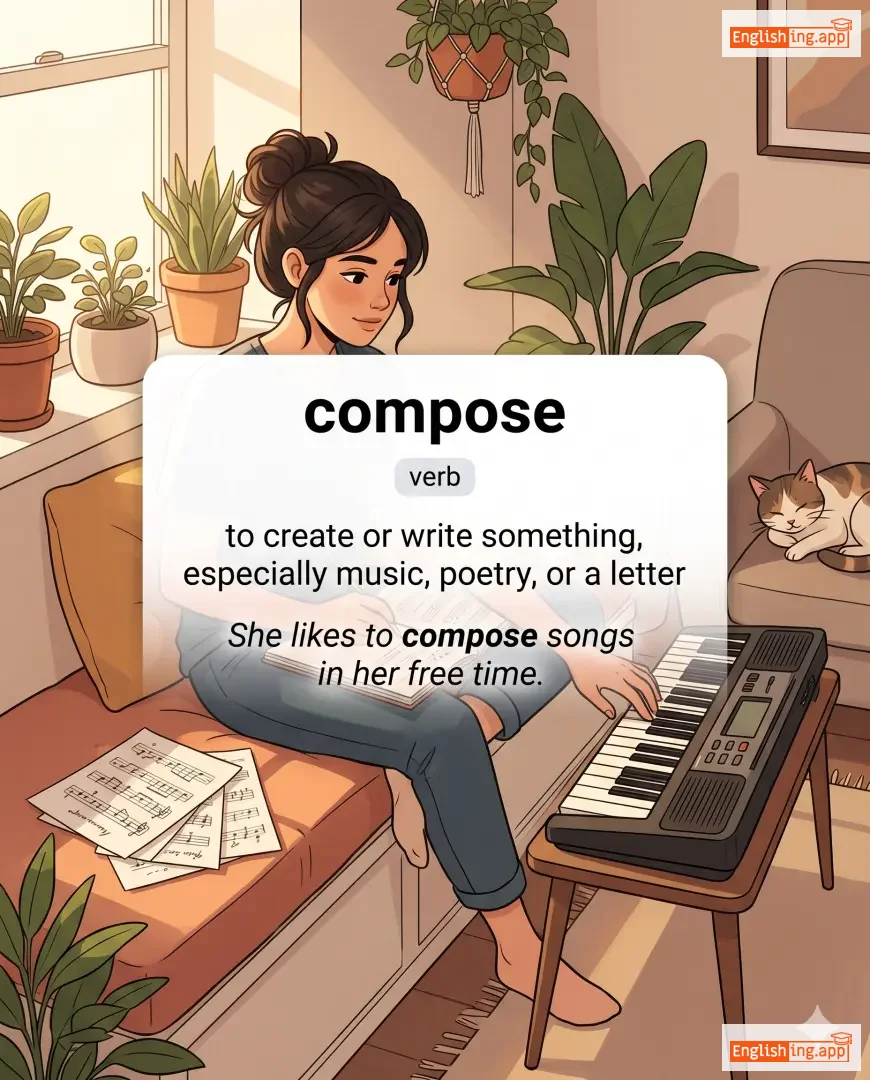
compose definition card — visual illustration of the meaning
verb
/kəmˈpəʊz/
сочинять (sochinyat)

to create or write something, especially music, poetry, or a letter

"She likes to compose songs in her free time."

"Она любит сочинять песни в свое свободное время." (Ona lyubit sochinyat' pesni v svoye svobodnoe vremya.)
adjective
/kəmˈpoʊzd/
спокойный (spokoynyy)

calm and in control of oneself; made up of or formed from

"He remained composed even under pressure."

"Он оставался спокойным, даже под давлением." (On ostavalsya spokoynym, dazhe pod davleniyem.)
noun
/kəmˈpəʊzə(r)/
композитор (kompozitor)

a person who writes music, especially classical music

"The composer is working on a new symphony."

"Композитор работает над новой симфонией." (Kompozitor rabotaet nad novoy simfoniey.)
noun
/ˌkɒmpəˈzɪʃən/
композиция (kompozitsiya)

the act of creating a piece of writing, music, or art; the way parts are arranged

"Her composition won first prize in the contest."

"Ее композиция выиграла первый приз на конкурсе." (Eyo kompozitsiya viyigrala pervyy priz na konkurse.)
noun
/kəmˈpɒz.ɪ.tər/
композитор (kompozitor)

a person who arranges type for printing or creates musical compositions

"The compositor carefully arranged the text for the newspaper."

"Композитор тщательно организовал текст для газеты." (Kompozitor tchatel'no organizoval tekst dlya gazety.)
noun
/ˈkɒmpoʊst/
компост (kompost)

decayed organic matter used as fertilizer

"The gardener added compost to enrich the soil."
"Садовник добавил компост, чтобы улучшить почву." (Sadovnik dobavil kompost, chtoby uluchshit' pochvu.)
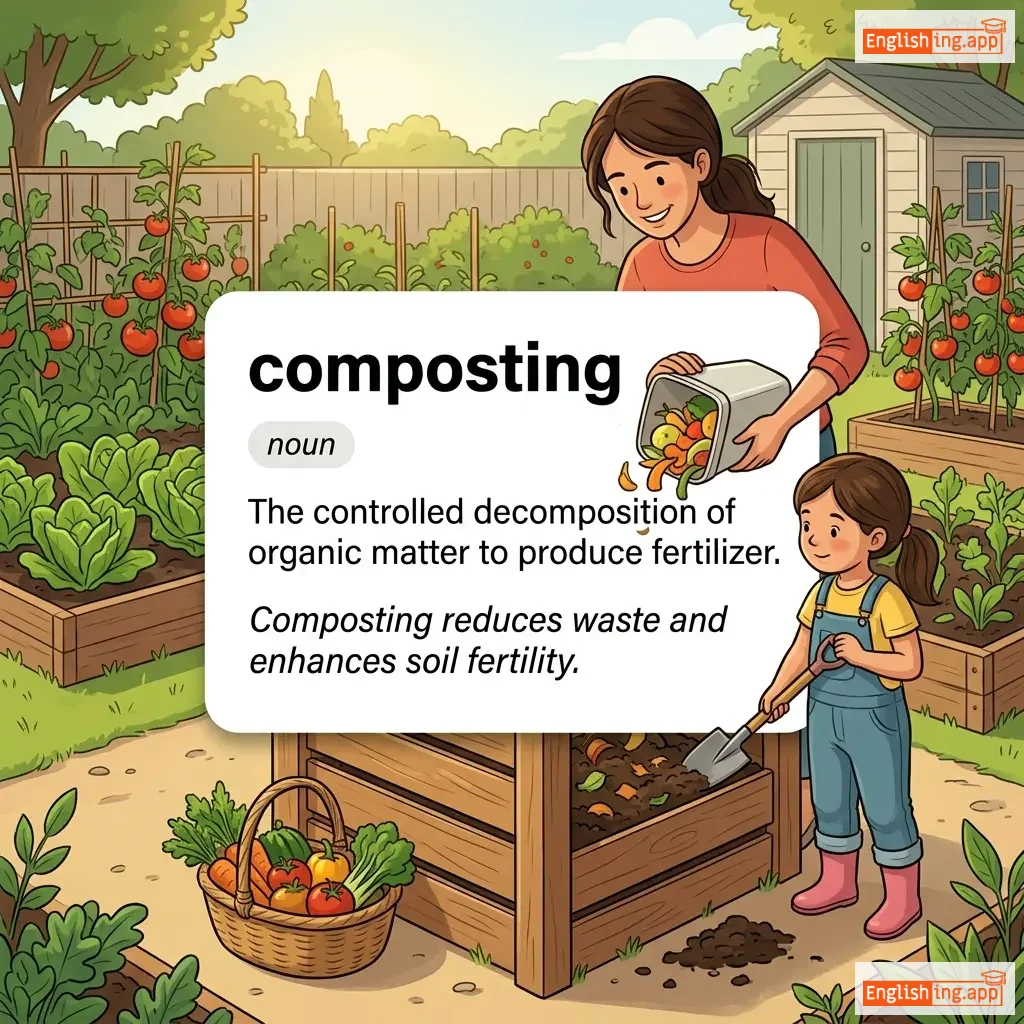
composting definition card — visual illustration of the meaning
noun
/ˈkɒm.pɒ.stɪŋ/
компостирование (kompostirovanie)

The controlled decomposition of organic matter to produce fertilizer.

"Composting reduces waste and enhances soil fertility."

"Компостирование снижает количество отходов и улучшает плодородие почвы." (Kompostirovanie snizhaet kolichestvo otkhodov i uluchshaet plodorodiye pochvy.)
composure definition card — visual illustration of the meaning
noun
/kəmˈpoʊʒər/
самообладание (samoobladanie)

the state of being calm and in control of oneself

"She managed to keep her composure during the heated debate."

"Ей удалось сохранить самообладание во время жаркой дискуссии." (Eĭ udalos' sokhranit' samoobladanie vo vremya zharkoy diskussii.)
noun
/ˈkɑːmpaʊnd/
соединение / огороженная территория (soedinenie / ogorozhennaya teritoriya)

a thing that is composed of two or more separate elements; an enclosed area with buildings

"The scientist studied the chemical compound in the lab."

"Учёный изучал химическое соединение в лаборатории." (Uchyonnyy izuchal khimicheskoe soedinenie v laboratorii.)
noun
/ˈkæmpəs/
кампус (kampus)

The grounds and buildings of a university, college, or school.

"The university campus is filled with students during the fall semester."

"Кампус университета полон студентов в осенний семестр." (Kampus universiteta polon studentov v osenniy semestr.)
Can definition card — visual illustration of the meaning
modal verb
/kæn/
мочь (moch)

to be able to; to have the ability or possibility to do something

"I can solve this problem easily."

"Я могу легко решить эту проблему." (Ya mogu legko reshit' etu problemu.)
noun
/ˈkeɪ.nə.naɪt/
кананитянин (kananitianin)

a member of a people who lived in the ancient land of Canaan in the Middle East

"The Canaanites were known for their advanced trade networks."

"Кананейцы были известны своими передовыми торговыми сетями." (Kananejtsy byli izvestny svoimi peredovymi torgovymi setyami.)
adjective
/kəˈneɪdiən/
канадский (kanadskiy)

Relating to Canada or its people.

"She enjoys Canadian culture and traditions."

"Она наслаждается канадской культурой и традициями." (Ona naslazhdayetsya kanadskoy kul'turoy i traditsiyami.)
noun
/kəˈnæl/
канал (kanal)

an artificial waterway constructed for navigation, irrigation, or drainage

"The canal was built to help transport goods across the region."

"Канал был построен, чтобы помочь транспортировать товары по региону." (Kanal byl postroyen, chtoby pomoch' transportirovat' tovaru po regionu.)
canard definition card — visual illustration of the meaning
noun
/kəˈnɑːrd/
ложная история (kanard)

a false or unfounded story or rumor

"The article turned out to be nothing more than a canard."

"Статья оказалась ничем иным, как ложной историей." (Statya okazalas nichim inim kak lozhnoy istoriyey)
noun
/kəˈnɛəri/
канарейка (kanareyka)

a small, usually yellow bird known for its singing; also used as a warning sign in dangerous conditions

"The canary sang beautifully in its cage."

"Канарейка пела прекрасно в своей клетке." (Kanareyka pela prekrasno v svoey kletke.)
verb
/ˈkænsəl/
отменить (otmenit)

to decide that something planned will not take place

"The flight was canceled due to heavy rain."

"Рейс был отменен из-за сильного дождя." (Reis byl otmenen iz-za sil'nogo dozhdya.)
noun
/ˌkænsəˈleɪʃən/
отмена (otmena)

the act of stopping something that was planned or scheduled; the act of nullifying or invalidating something

"The airline announced the cancellation of several flights due to bad weather."

"Авиакомпания объявила об отмене нескольких рейсов." (aviakompaniya obyavila ob otmene neskolkikh reysov)
noun
/ˈkænsər/
рак (rak)

A disease in which abnormal cells divide uncontrollably and destroy body tissue.

"Smoking is a leading cause of lung cancer."

"Курение является основной причиной рака легких." (Kurenie yavylyayetsya osnovnoy prichinoy raka legkikh.)
adjective
/ˈkændɪd/
откровенный (otkrovenny)

Truthful and straightforward; frank

"She gave a candid account of the challenges she faced."

"Она дала откровенный отчет о проблемах, с которыми столкнулась." (Ona dala otkrovennyy otchet o problemakh, s kotorymi stolknulas.)
noun
/ˈkændɪdeɪt/
кандидат (kandidat)

A person who applies for a job or is nominated for election.

"The candidate gave a strong speech during the debate."

"Кандидат произнес сильную речь во время дебатов." (Kandidat proznes sil'nuyu rech' vo vremya debata.)
candidates definition card — visual illustration of the meaning
noun
ˈkæn.dɪ.deɪts
кандидаты (kandidaty)

A person who applies for a job or is nominated for election; someone being considered for a position.

"Candidates undergo a rigorous selection process."

"Кандидаты проходят строгий процесс отбора." (Kandidaty prokhodyat strogij protsess otbora.)
noun
/ˈkændɪdnəs/
открытость (otkrytost)

The quality of being open, honest, and straightforward

"Her candidness during the meeting impressed everyone."

"Её открытость во время встречи произвела на всех впечатление." (Eyo otkrytost' vo vremya vstrechi proizvela na vsekh vpechatlenie.)
noun
/ˈkændl/
свеча (svecha)

a stick of wax with a wick that burns to give light

"She lit a candle during the power cut."

"Она зажгла свечу во время отключения электричества." (Ona zazhgla svechu vo vremya otklyucheniya elektrichestva.)
candor definition card — visual illustration of the meaning
noun
/ˈkændər/
искренность (iskrennost)

The quality of being open and honest in expression

"His candor in admitting mistakes earned him respect."

"Его искренность в признании ошибок принесла ему уважение." (Ego iskrennost' v priznaniji oshibok prinesla emu uvazhenie.)
noun
/ˈkændi/
конфета (konfeta)

a sweet food made with sugar or chocolate, often in small pieces

"The children were excited to get candy on Halloween."

"Дети были в восторге, когда получили конфеты на Хэллоуин." (Deti byli v vostorge, kogda poluchili konfety na Khellouin.)
adjective, noun
/ˈkeɪnaɪn/
связанный с собаками / клыки (svyazannyy s sobakami / klyki)

Relating to dogs; also refers to the pointed teeth in humans and animals

"The police trained a canine unit for search operations."

"Полиция обучила кинологическую группу для поисковых операций." (Politsiya obuchila kinologicheskuyu grupu dlya poiskovykh operatsiy.)
noun, verb
/ˈkæŋkər/
язва (yazva)

A fungal disease of plants; an ulcerous sore in the mouth; to corrupt or destroy slowly

"The tree was infected with a canker that damaged its bark."

"Дерево было заражено канкером, который повредил его кору." (Derevo bylo zaraženno kankyerom, kotoryy povredil ego koru.)
noun
/ˈkænə/
кана (kana)

a tropical flowering plant with large, colorful flowers and broad leaves

"The bright orange canna lilies grew tall beside the pond."

"Ярко-оранжевые лилии канны выросли высокими у пруда." (Yarko-oranzhevye lilii kanny vyrosli vysokimi u pruda.)
noun
/ˈkæn.ɪ.bəl/
каннибал (kannibal)

a person who eats the flesh of other human beings

"The explorer's journal described rumors of cannibals living on the remote island."

"Дневник исследователя описывал слухи о каннибалах, живущих на удаленном острове." (Dnevnik issledovatelya opisyval slukh o kannibalakh, zhivushchikh na udalennom ostrove.)
noun
/ˈkænən/
пушка (pushka)

large heavy gun that fires cannonballs or shells

"The castle was defended by several large cannons."

"Замок был защищен несколькими большими пушками." (Zamok byl zashchishchyon neskol'kimi bol'shimi pushkami.)
adjective
/ˈkæni/
хитрый (khitryy)

Having good judgment, especially in business or practical matters; shrewd.

"She made a canny investment in real estate."

"Она сделала хитрое вложение в недвижимость." (Ona sdelala khitroye vlozheniye v nedvizhimost'.)
noun
/kəˈnuː/
каноэ (kanoe)

a narrow boat pointed at both ends and moved with a paddle

"They paddled their canoe down the peaceful stream."

"Они гребли на своей каноэ по тихому потоку." (Oni grebli na svoey kanoe po tikhomu potoku)
canon definition card — visual illustration of the meaning
noun
/ˈkænən/
канон (kanon)

A general law, rule, principle, or collection of sacred books accepted as genuine.

"The book is now considered part of the literary canon."

"Книга теперь считается частью литературного канона." (Kniga teper schitayetsya chastyu literaturnogo kanona.)
adjective
/kəˈnɒnɪkəl/
канонический / принятый (kanonicheskiy / prinyatyy)

Conforming to a general rule or accepted standard; officially recognized.

"Shakespeare’s works are considered canonical in English literature."

"Произведения Шекспира считаются каноническими в английской литературе." (Proizvedeniya Shekspira schitayutsya kanonicheskimi v angliyskoy literature.)
verb
/ˈkænənaɪz/

To officially declare a dead person a saint; to regard as great or significant.

"The church canonized the martyr after years of investigation."
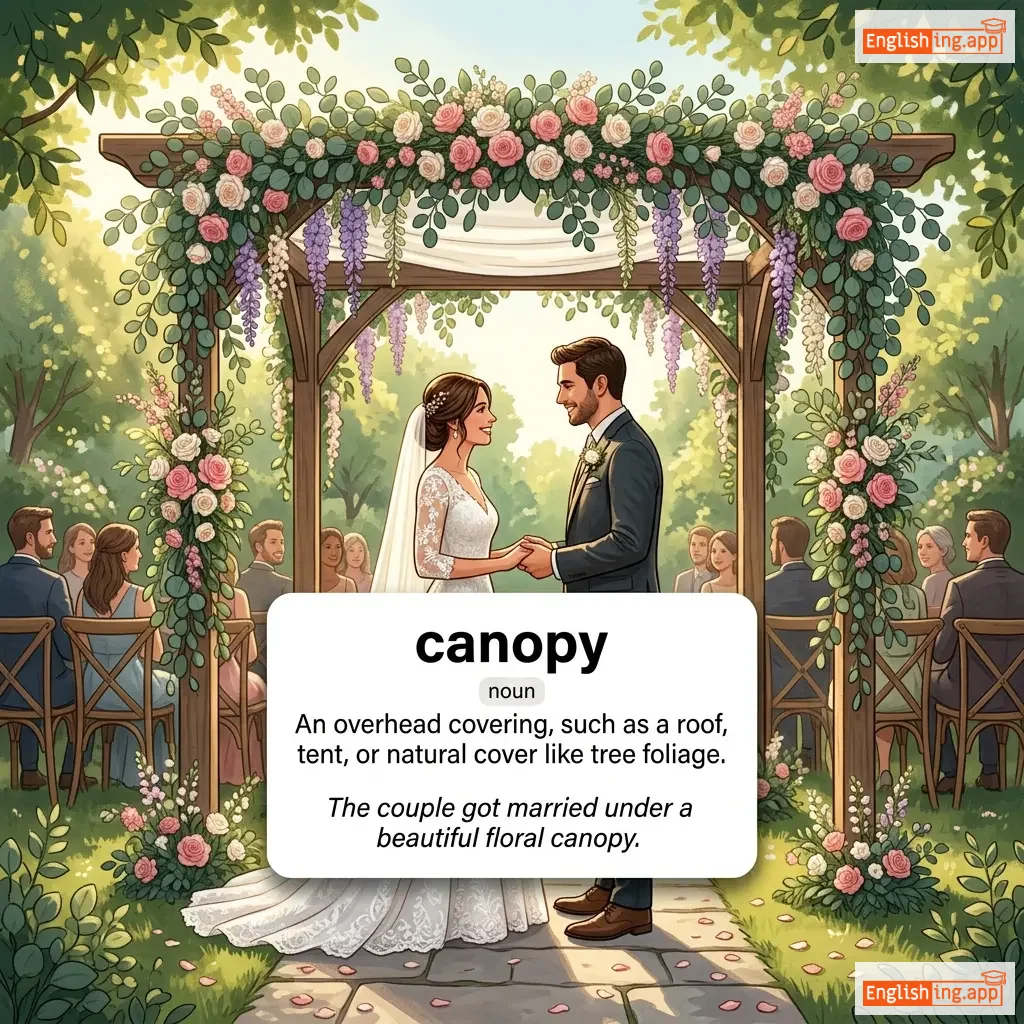
canopy definition card — visual illustration of the meaning
noun
/ˈkænəpi/
канопи (kanopi)

An overhead covering, such as a roof, tent, or natural cover like tree foliage.

"The couple got married under a beautiful floral canopy."
"Пара поженилась под красивым цветочным канопи." (Para pozhienilas' pod krasivym tsvetochnym kanopi.)
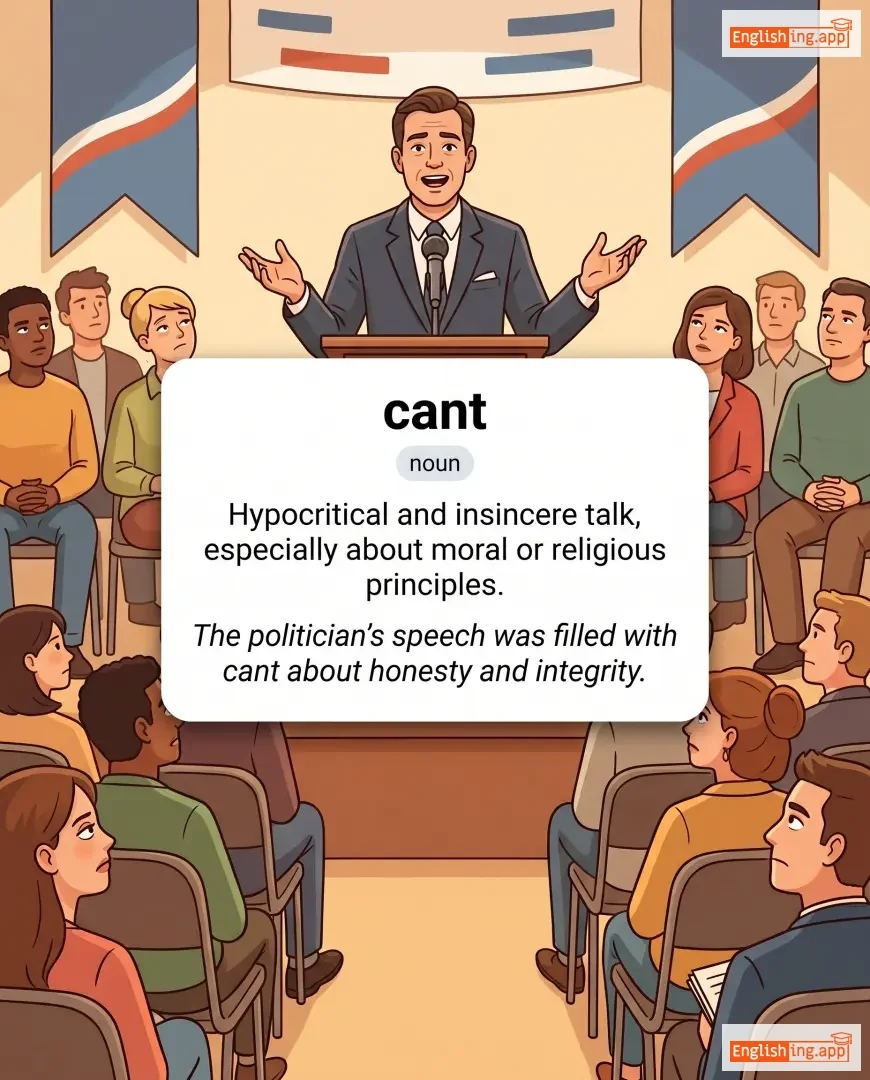
cant definition card — visual illustration of the meaning
noun
/kænt/
лицемерие (litsemeriie)

Hypocritical and insincere talk, especially about moral or religious principles.

"The politician's speech was filled with cant about honesty and integrity."
"Речь политика была наполнена лицемерием о честности и целостности." (Rech' politika byla napolnena litsemeriem o chestnosti i tsielostnosti.)
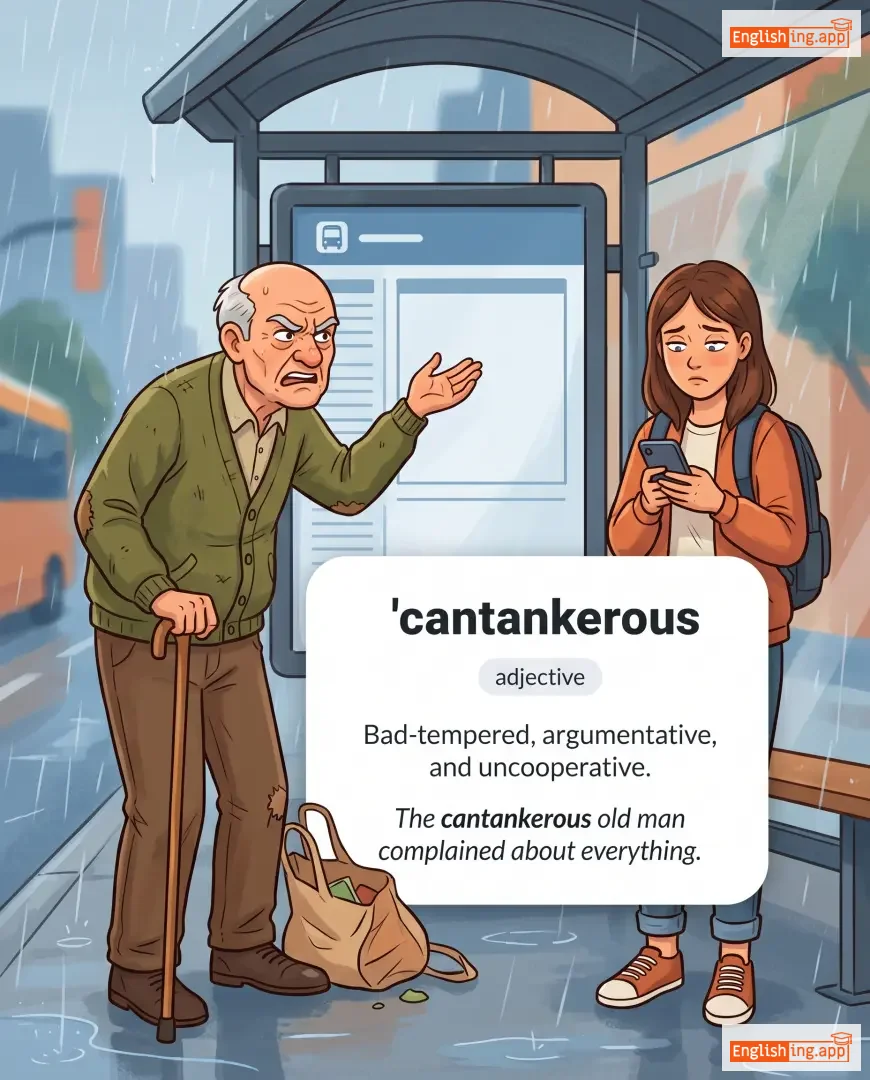
cantankerous definition card — visual illustration of the meaning
adjective
/kænˈtæŋ.kər.əs/
неприязненный (nepriyaznennyy)

Bad-tempered, argumentative, and uncooperative.

"The cantankerous old man complained about everything."

"Неприятный старик жаловался на всё." (Nepriyatnyy starik zhalovalsya na vsyo.)
noun
/kænˈtɑː.tə/
кантата (kantata)

A vocal composition with instrumental accompaniment, typically in several movements, often involving a choir.

"The choir performed a beautiful cantata during the festival."

"Хор исполнил прекрасную кантату на фестивале." (Khor ispolnil prekrasnuyu kantatu na festivale.)
verb
/ˈkæn.tər/
легкий галоп (legkiy galop)

To ride a horse at a controlled, easy pace between a trot and a gallop.

"She cantered her horse across the field with ease."

"Она каталась на лошади по полю с легкостью." (Ona katalas' na loshadi po polyu s legkost'yu.)
noun
/ˈkæn.toʊ/
кант (kant)

A main division of a long poem, especially in epic poetry.

"The Divine Comedy is divided into several cantos."

"Божественная комедия разделена на несколько кантов." (Bozhestvennaya komediya razdeleno na neskol'ko kantov.)
noun
/kænˈtuːnmənt/
квартал (kvartal)

A permanent military station or garrison town.

"The army established a new cantonment near the border."

"Армия создала новый квартал рядом с границей." (Armiya sozdala novyy kvartal ryadom s granitsey.)
canvas definition card — visual illustration of the meaning
noun
/ˈkænvəs/
холст (kanvas)

A strong, coarse cloth used for tents, sails, or painting.

"The artist prepared a canvas for his new painting."
"Художник приготовил холст для своей новой картины." (Khudozhnik prigotovil kholst dlya svoey novoy kartiny.)
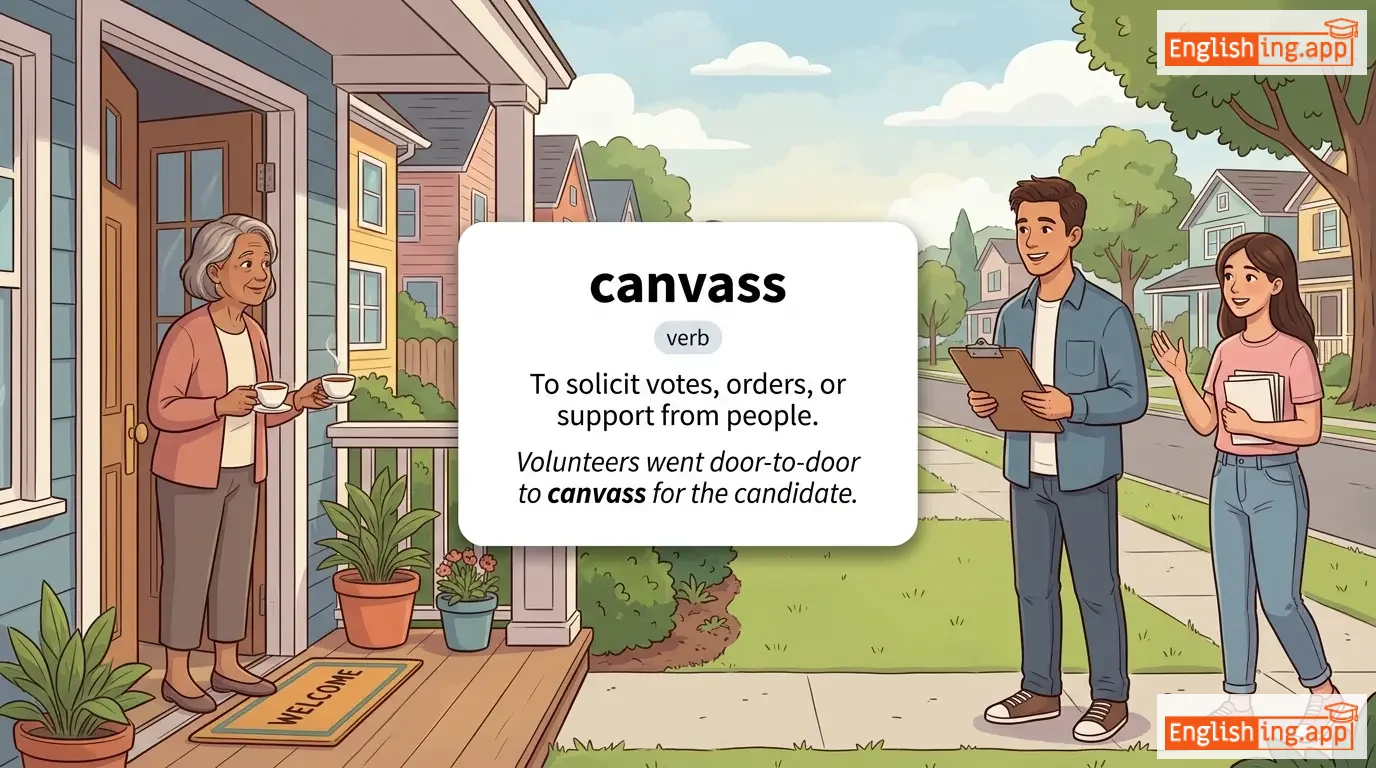
canvass definition card — visual illustration of the meaning
verb
/ˈkænvəs/
собирать голоса (sobirat' golosa)

To solicit votes, orders, or support from people.

"Volunteers went door-to-door to canvass for the candidate."

"Волонтёры ходили от двери к двери, чтобы собирать голоса за кандидата." (Volontyory khodili ot dveri k dveri, chtoby sobirat' golosa za kandidata.)
noun
/ˈkænjən/
каньон (kanyon)

A deep gorge, typically one with a river flowing through it.

"The Colorado River carved the Grand Canyon over millions of years."

"Река Колорадо вырезала Гранд-Каньон за миллионы лет." (Reka Kolorado vyrezala Grand-Kanyon za milliony let.)