Vocabulaires

Découvrez, apprenez et maîtrisez le vocabulaire anglais

adjective
/ˌkɒm.plɪˈmen.tər.i/
complémentaire; de louange; offert gratuitement par courtoisie (complementaire; de louange; offert gratuitement par courtoisie)

expressing praise or admiration; given or supplied free of charge as a courtesy

"The hotel offers complimentary breakfast for all guests."

"L'hôtel offre un petit-déjeuner gratuit pour tous les invités." (L'hôtel offre un petit-déjeuner gratuit pour tous les invités.)
verb
/kəmˈplaɪ/
se conformer (se conformer)

to act in accordance with a rule, request, or law

"All companies must comply with safety regulations."

"Toutes les entreprises doivent se conformer aux réglementations de sécurité." (Toutes les entreprises doivent se conformer aux réglementations de sécurité.)
noun
/kəmˈpoʊnənt/
composant (composant)

a part or element of a larger whole, especially a machine or system

"The engine is the most important component of the car."

"Le moteur est le composant le plus important de la voiture." (Le moteur est le composant le plus important de la voiture.)
verb
/kəmˈpɔːrt/
se comporter (se comporter)

to behave or conduct oneself in a particular way

"She comported herself with grace during the ceremony."

"Elle s'est comportée avec grâce lors de la cérémonie." (Elle s'est comportée avec grâce lors de la cérémonie.)
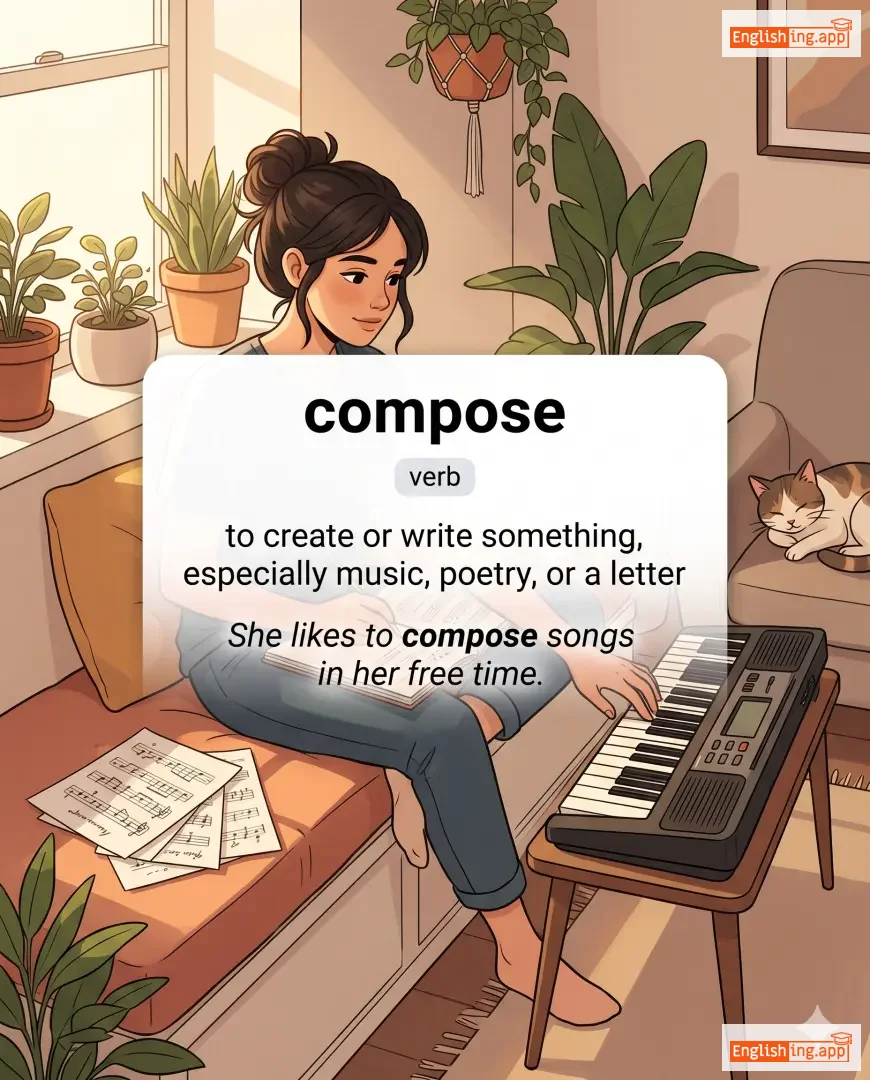
compose definition card — visual illustration of the meaning
verb
/kəmˈpəʊz/
composer (componer)

to create or write something, especially music, poetry, or a letter

"She likes to compose songs in her free time."

"Elle aime composer des chansons pendant son temps libre." (Elle aime composer des chansons pendant son temps libre.)
adjective
/kəmˈpoʊzd/
calme (calme)

calm and in control of oneself; made up of or formed from

"He remained composed even under pressure."

"Il est resté calme même sous pression." (Il est resté calme même sous pression.)
noun
/kəmˈpəʊzə(r)/
compositeur (compositeur)

a person who writes music, especially classical music

"The composer is working on a new symphony."

"Le compositeur travaille sur une nouvelle symphonie." (Le compositeur travaille sur une nouvelle symphonie.)
noun
/ˌkɒmpəˈzɪʃən/
composition (composition)

the act of creating a piece of writing, music, or art; the way parts are arranged

"Her composition won first prize in the contest."

"Sa composition a remporté le premier prix au concours." (Sa composition a remporte le premier prix au concours.)
noun
/kəmˈpɒz.ɪ.tər/
compositeur (compositeur)

a person who arranges type for printing or creates musical compositions

"The compositor carefully arranged the text for the newspaper."

"Le compositeur a soigneusement organisé le texte pour le journal." (Le compositeur a soigneusement organisé le texte pour le journal.)
noun
/ˈkɒmpoʊst/
compost (compost)

decayed organic matter used as fertilizer

"The gardener added compost to enrich the soil."

"Le jardinier a ajouté du compost pour enrichir le sol." (Le jardinier a ajouté du compost pour enrichir le sol.)
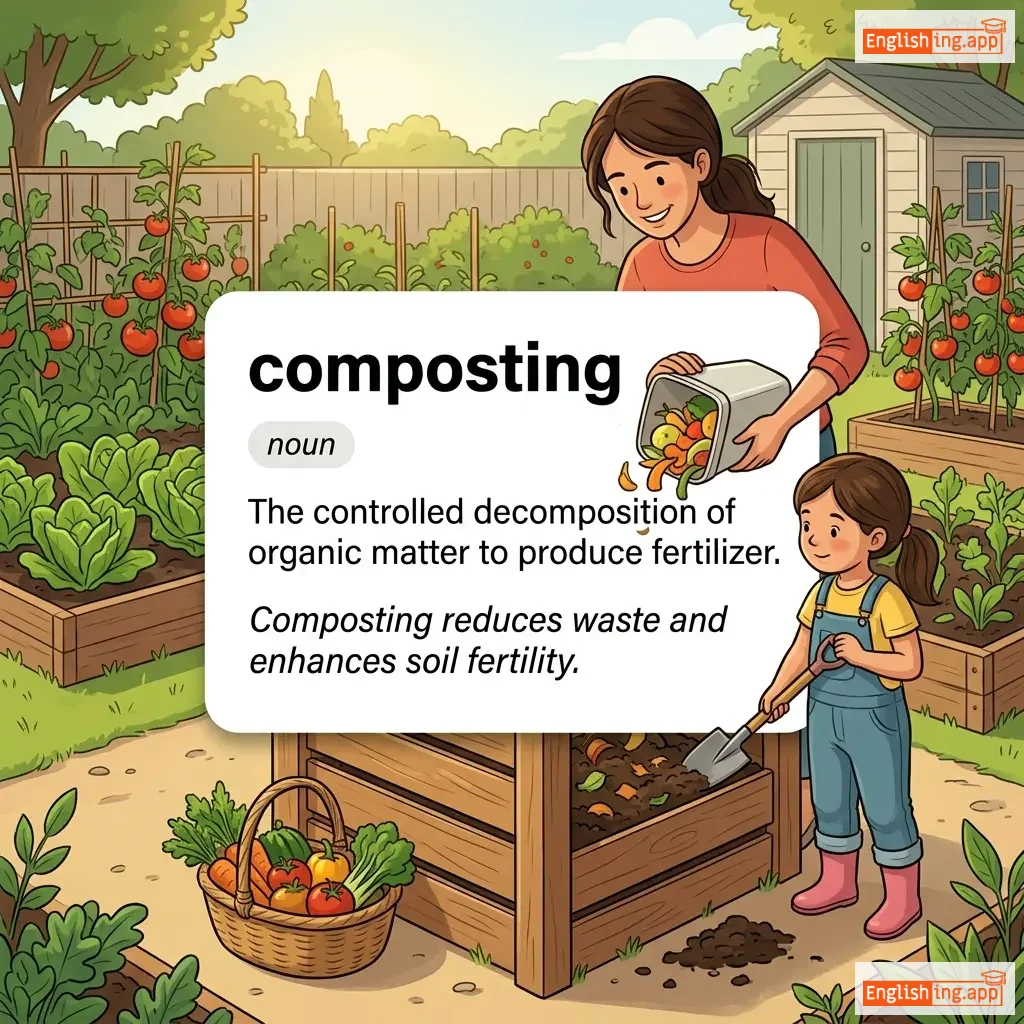
composting definition card — visual illustration of the meaning
noun
/ˈkɒm.pɒ.stɪŋ/
compostage (compostage)

The controlled decomposition of organic matter to produce fertilizer.

"Composting reduces waste and enhances soil fertility."

"Le compostage réduit les déchets et améliore la fertilité du sol." (Le compostage reduit les dechets et ameliore la fertilite du sol.)
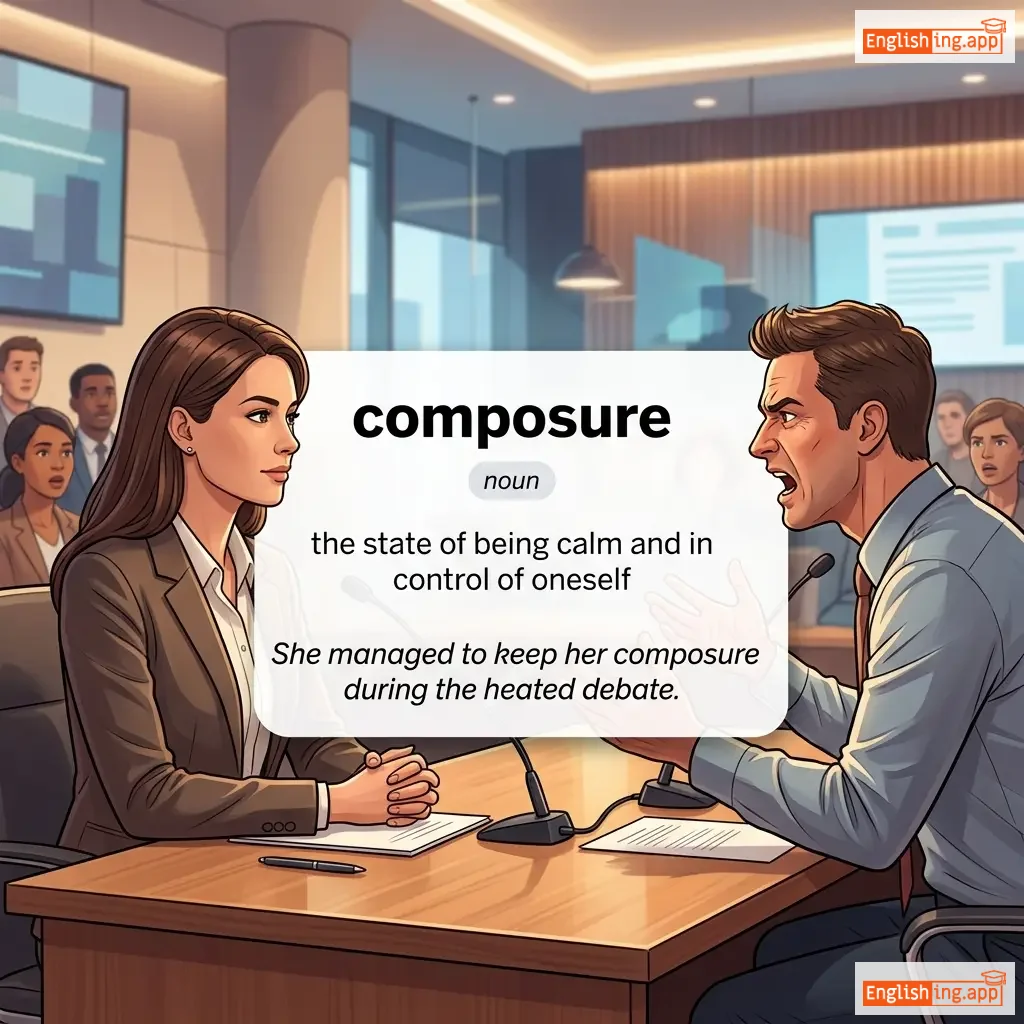
composure definition card — visual illustration of the meaning
noun
/kəmˈpoʊʒər/
composure (composure)

the state of being calm and in control of oneself

"She managed to keep her composure during the heated debate."

"Elle a réussi à garder sa composure pendant le débat houleux." (Elle a reussi a garder sa composure pendant le debat houleux.)
noun
/ˈkɑːmpaʊnd/
composé / zone fermée (compose / zone fermee)

a thing that is composed of two or more separate elements; an enclosed area with buildings

"The scientist studied the chemical compound in the lab."

"Le scientifique a étudié le composé chimique dans le laboratoire." (Le scientifique a etudie le compose chimique dans le laboratoire.)
noun
/ˈkæmpəs/
campus (campus)

The grounds and buildings of a university, college, or school.

"The university campus is filled with students during the fall semester."

"Le campus universitaire est rempli d'étudiants pendant le semestre d'automne." (Le campus universitaire est rempli d'étudiants pendant le semestre d'automne.)
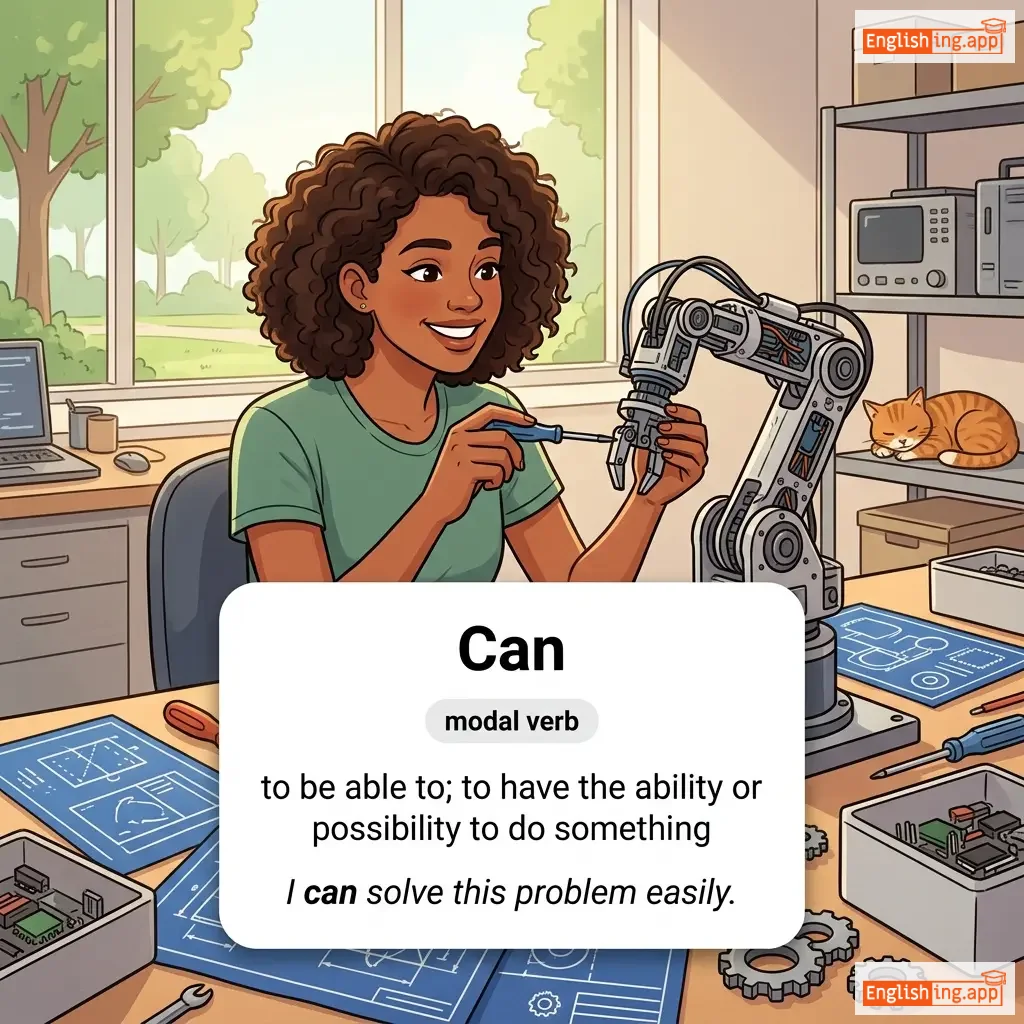
Can definition card — visual illustration of the meaning
modal verb
/kæn/
pouvoir (pouvoir)

to be able to; to have the ability or possibility to do something

"I can solve this problem easily."

"Je peux résoudre ce problème facilement." (Je peux resoudre ce probleme facilement.)
noun
/ˈkeɪ.nə.naɪt/
cananéen (cananeen)

a member of a people who lived in the ancient land of Canaan in the Middle East

"The Canaanites were known for their advanced trade networks."

"Les cananéens étaient connus pour leurs réseaux commerciaux avancés." (Les cananéens étaient connus pour leurs réseaux commerciaux avancés.)
adjective
/kəˈneɪdiən/
canadien (canadien)

Relating to Canada or its people.

"She enjoys Canadian culture and traditions."

"Elle aime la culture et les traditions canadiennes." (Elle aime la culture et les traditions canadiennes.)
noun
/kəˈnæl/
canal (kanal)

an artificial waterway constructed for navigation, irrigation, or drainage

"The canal was built to help transport goods across the region."

"Le canal a été construit pour aider au transport des marchandises à travers la région." (Le canal a ete construit pour aider au transport des marchandises a travers la region.)
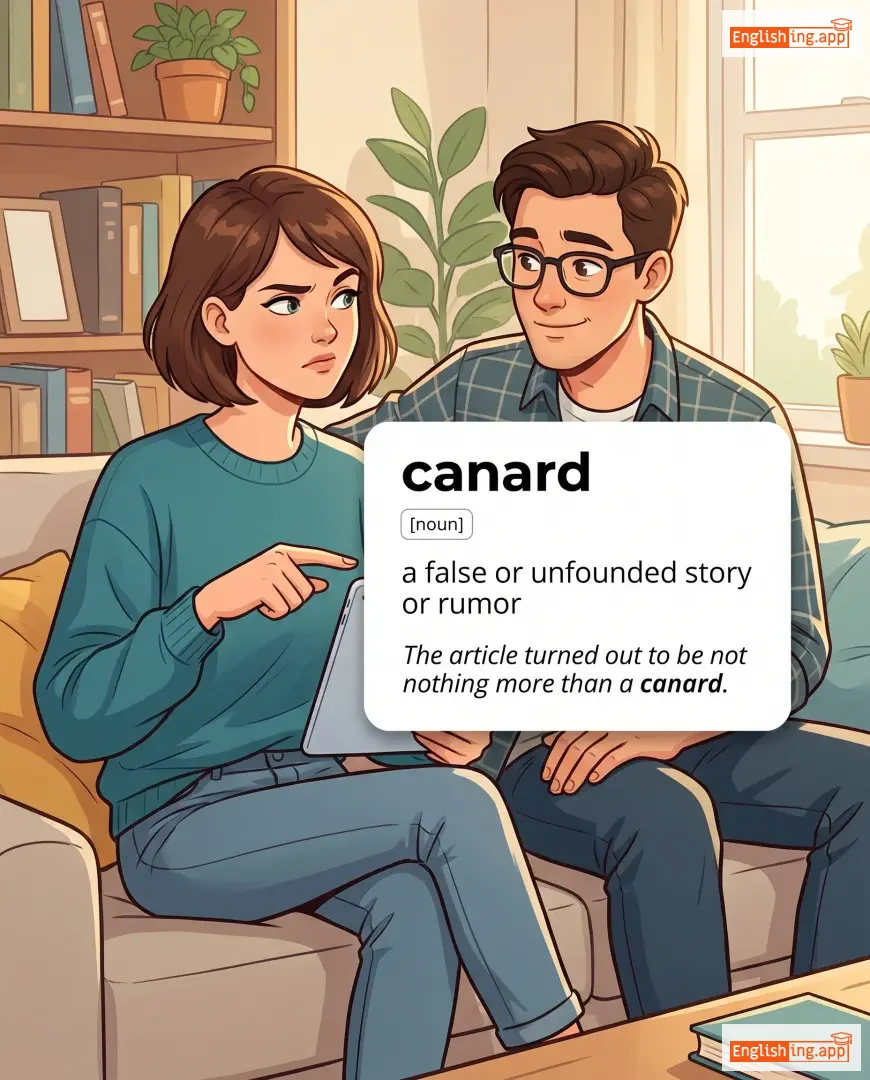
canard definition card — visual illustration of the meaning
noun
/kəˈnɑːrd/
un canular (kanyular)

a false or unfounded story or rumor

"The article turned out to be nothing more than a canard."

"L'article s'est avéré n'être rien de plus qu'un canular." (Larticle sest avere netre rien de plus quun canular)
noun
/kəˈnɛəri/
canari (canari)

a small, usually yellow bird known for its singing; also used as a warning sign in dangerous conditions

"The canary sang beautifully in its cage."

"Le canari chantait magnifiquement dans sa cage." (Le canari chantait magnifiquement dans sa cage.)
verb
/ˈkænsəl/
annuler (annuler)

to decide that something planned will not take place

"The flight was canceled due to heavy rain."

"Le vol a été annulé en raison de fortes pluies." (Le vol a été annulé en raison de fortes pluies.)
noun
/ˌkænsəˈleɪʃən/
annulation (annulation)

the act of stopping something that was planned or scheduled; the act of nullifying or invalidating something

"The airline announced the cancellation of several flights due to bad weather."

"La compagnie a annoncé l’annulation de plusieurs vols." (la compagnie a annonce l annulation de plusieurs vols)
noun
/ˈkænsər/
cancer (cancer)

A disease in which abnormal cells divide uncontrollably and destroy body tissue.

"Smoking is a leading cause of lung cancer."

"Le tabagisme est une cause majeure du cancer du poumon." (Le tabagisme est une cause majeure du cancer du poumon.)
adjective
/ˈkændɪd/
franc (franc)

Truthful and straightforward; frank

"She gave a candid account of the challenges she faced."

"Elle a donné un récit franc des défis auxquels elle a fait face." (Elle a donne un recit franc des defis auxquels elle a fait face.)
noun
/ˈkændɪdeɪt/
candidat (candidat)

A person who applies for a job or is nominated for election.

"The candidate gave a strong speech during the debate."

"Le candidat a fait un discours fort pendant le débat." (Le candidat a fait un discours fort pendant le débat.)
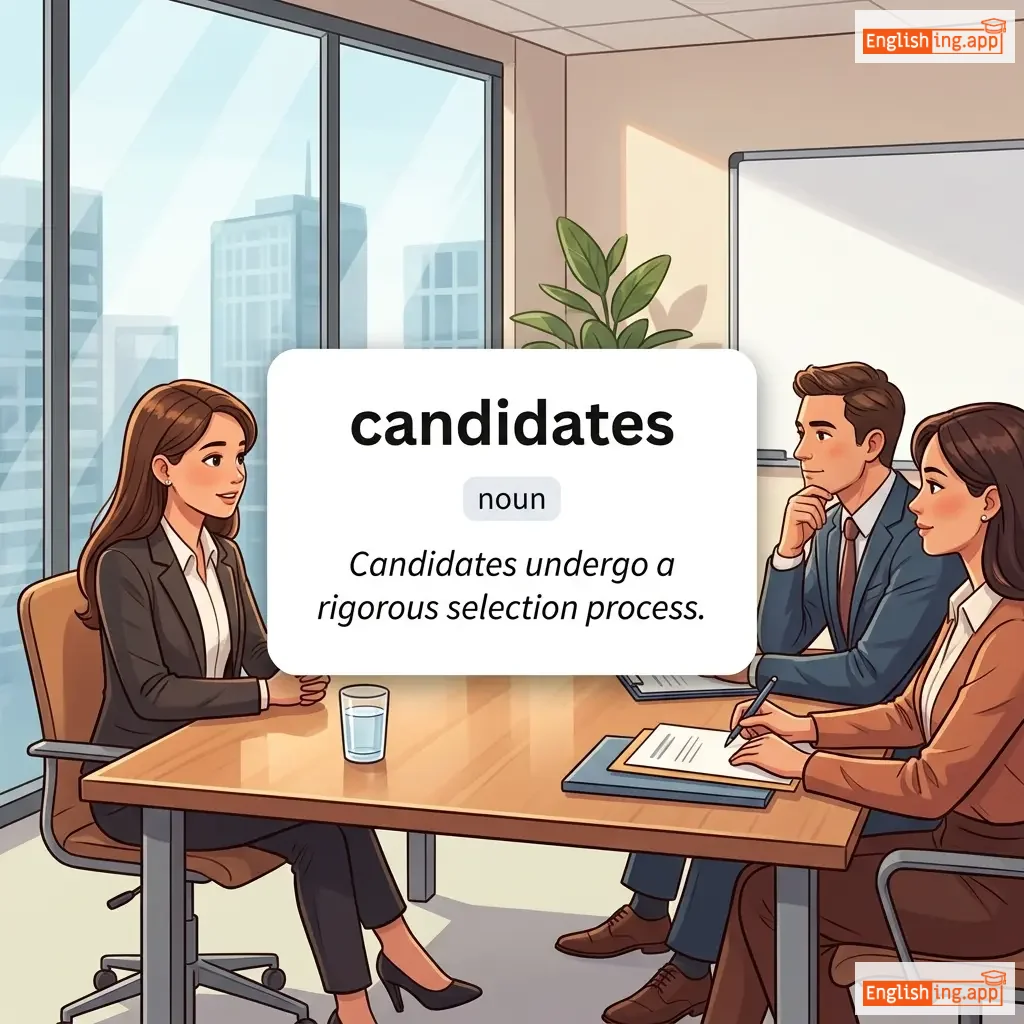
candidates definition card — visual illustration of the meaning
noun
ˈkæn.dɪ.deɪts
candidats (candidats)

A person who applies for a job or is nominated for election; someone being considered for a position.

"Candidates undergo a rigorous selection process."

"Les candidats passent par un processus de sélection rigoureux." (Les candidats passent par un processus de selection rigoureux.)
noun
/ˈkændɪdnəs/
franchise (franchise)

The quality of being open, honest, and straightforward

"Her candidness during the meeting impressed everyone."

"Sa franchise pendant la réunion a impressionné tout le monde." (Sa franchise pendant la reunion a impressionne tout le monde.)
noun
/ˈkændl/
bougie (bougie)

a stick of wax with a wick that burns to give light

"She lit a candle during the power cut."

"Elle a allumé une bougie pendant la coupure de courant." (Elle a allumé une bougie pendant la coupure de courant.)
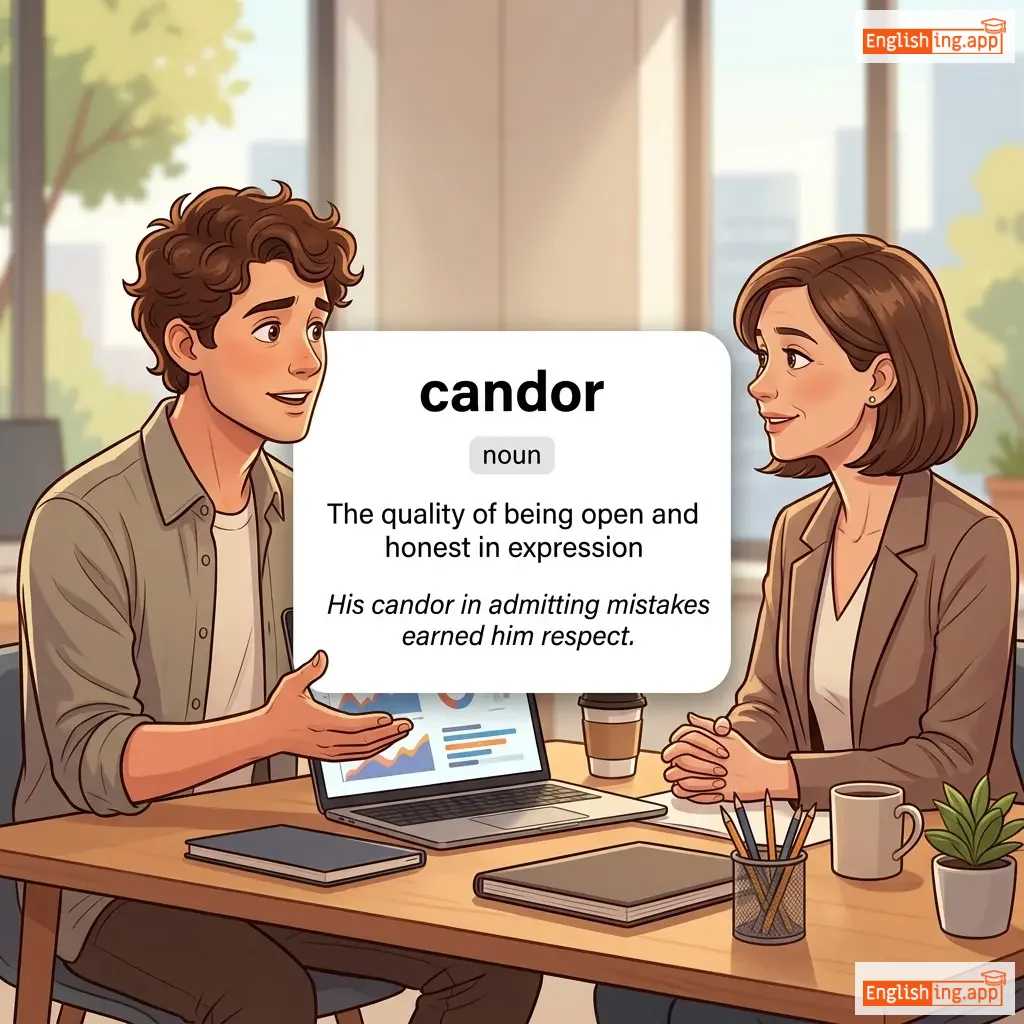
candor definition card — visual illustration of the meaning
noun
/ˈkændər/
honnêteté (on-net-te)

The quality of being open and honest in expression

"His candor in admitting mistakes earned him respect."

"Sa franchise dans l'admission des erreurs lui a valu du respect." (Sa fran-sheez dans l'admission des erreurs lui a valu du respect.)
noun
/ˈkændi/
bonbon (bonbon)

a sweet food made with sugar or chocolate, often in small pieces

"The children were excited to get candy on Halloween."

"Les enfants étaient excités de recevoir des bonbons pour Halloween." (Les enfants etaient excites de recevoir des bonbons pour Halloween.)
adjective, noun
/ˈkeɪnaɪn/
relatif aux chiens / dents canines (relatif aux chiens / dents canines)

Relating to dogs; also refers to the pointed teeth in humans and animals

"The police trained a canine unit for search operations."

"La police a formé une unité canine pour les opérations de recherche." (La police a formé une unité canine pour les opérations de recherche.)
noun, verb
/ˈkæŋkər/
cancro (cancro)

A fungal disease of plants; an ulcerous sore in the mouth; to corrupt or destroy slowly

"The tree was infected with a canker that damaged its bark."

"L'arbre était infecté par un chancre qui endommagait son écorce." (L'arbre était infecté par un chancre qui endommagait son écorce.)
noun
/ˈkænə/
canna (canna)

a tropical flowering plant with large, colorful flowers and broad leaves

"The bright orange canna lilies grew tall beside the pond."

"Les lys canna orange vif ont poussé grands près de l'étang." (Les lys canna orange vif ont poussé grands près de l'étang.)
noun
/ˈkæn.ɪ.bəl/
cannibale (cannibale)

a person who eats the flesh of other human beings

"The explorer's journal described rumors of cannibals living on the remote island."

"Le journal de l'explorateur décrivait des rumeurs de cannibales vivant sur une île éloignée." (Le journal de l'explorateur décrivait des rumeurs de cannibales vivant sur une île éloignée.)
noun
/ˈkænən/
canon (canon)

large heavy gun that fires cannonballs or shells

"The castle was defended by several large cannons."

"Le château a été défendu par plusieurs grands canons." (Le chateau a ete defendu par plusieurs grands canons.)
adjective
/ˈkæni/
astucieux (astucieux)

Having good judgment, especially in business or practical matters; shrewd.

"She made a canny investment in real estate."

"Elle a fait un investissement astucieux dans l'immobilier." (Elle a fait un investissement astucieux dans l'immobilier.)
noun
/kəˈnuː/
canoë (canoe)

a narrow boat pointed at both ends and moved with a paddle

"They paddled their canoe down the peaceful stream."

"Ils ont pagayé leur canoë dans le ruisseau paisible." (Ils ont pagaye leur canoe dans le ruisseau paisible)
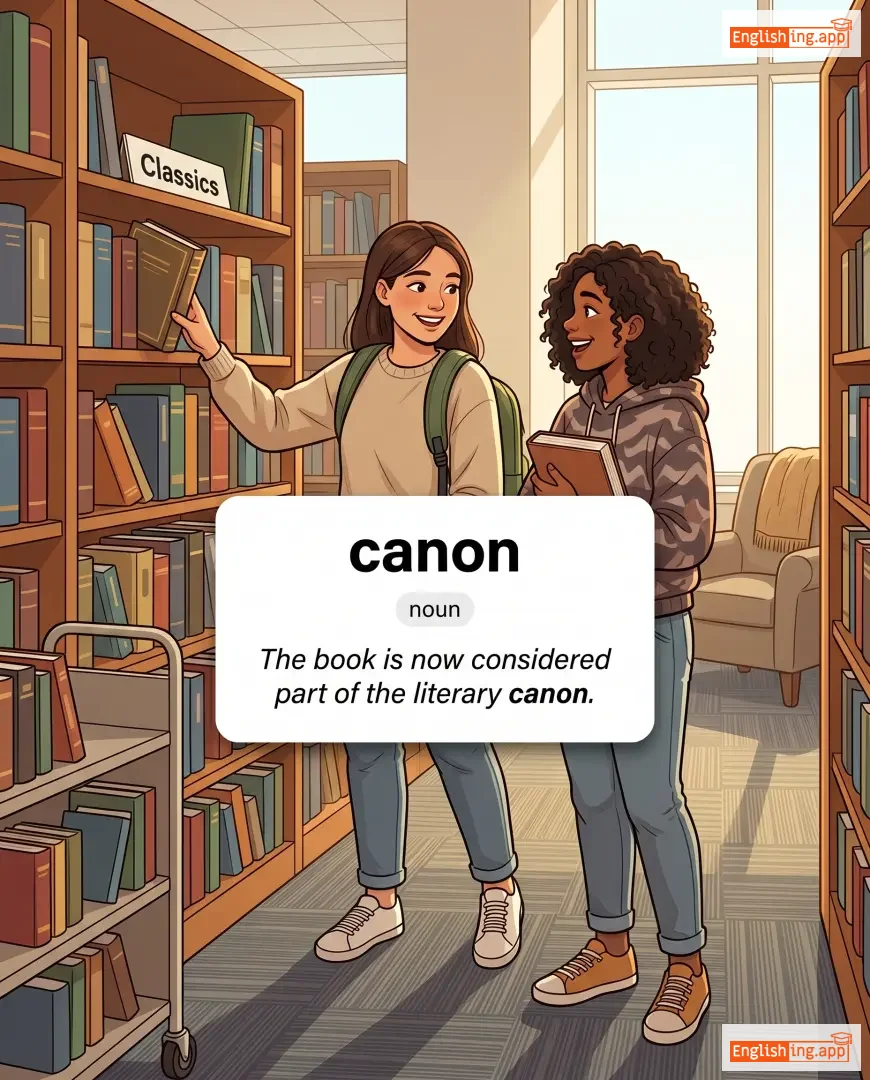
canon definition card — visual illustration of the meaning
noun
/ˈkænən/
canon (canon)

A general law, rule, principle, or collection of sacred books accepted as genuine.

"The book is now considered part of the literary canon."

"Le livre est désormais considéré comme faisant partie du canon littéraire." (Le livre est desormais considere comme faisant partie du canon litteraire.)
adjective
/kəˈnɒnɪkəl/
canonique / accepté (canonique / accepte)

Conforming to a general rule or accepted standard; officially recognized.

"Shakespeare’s works are considered canonical in English literature."

"Les œuvres de Shakespeare sont considérées comme canoniques dans la littérature anglaise." (Les œuvres de Shakespeare sont considérées comme canoniques dans la littérature anglaise.)
verb
/ˈkænənaɪz/
canoniser (canoniser)

To officially declare a dead person a saint; to regard as great or significant.

"The church canonized the martyr after years of investigation."

"L'église a canonisé le martyr après des années d'enquête." (L'église a canonisé le martyr après des années d'enquête.)
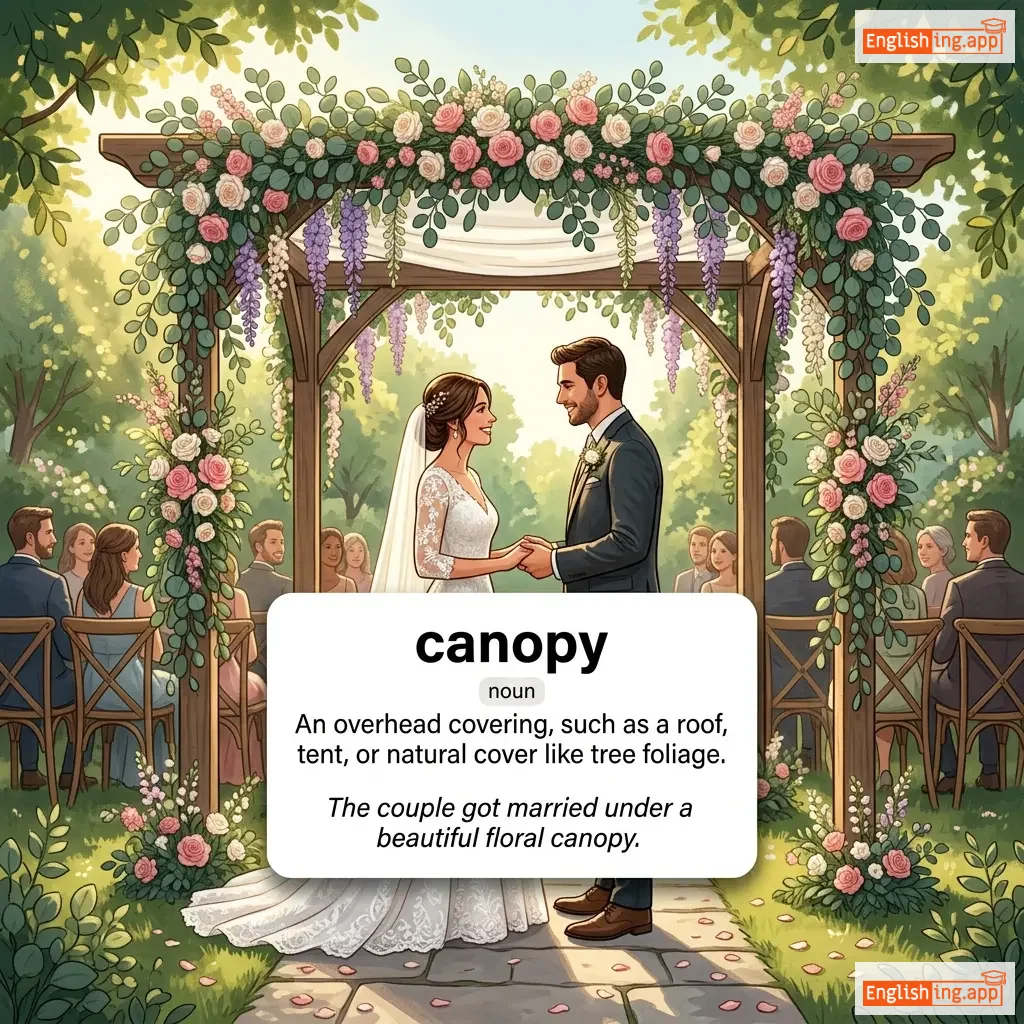
canopy definition card — visual illustration of the meaning
noun
/ˈkænəpi/
canopée (canopée)

An overhead covering, such as a roof, tent, or natural cover like tree foliage.

"The couple got married under a beautiful floral canopy."

"Le couple s'est marié sous une belle canopée florale." (Le couple s'est marié sous une belle canopée florale.)
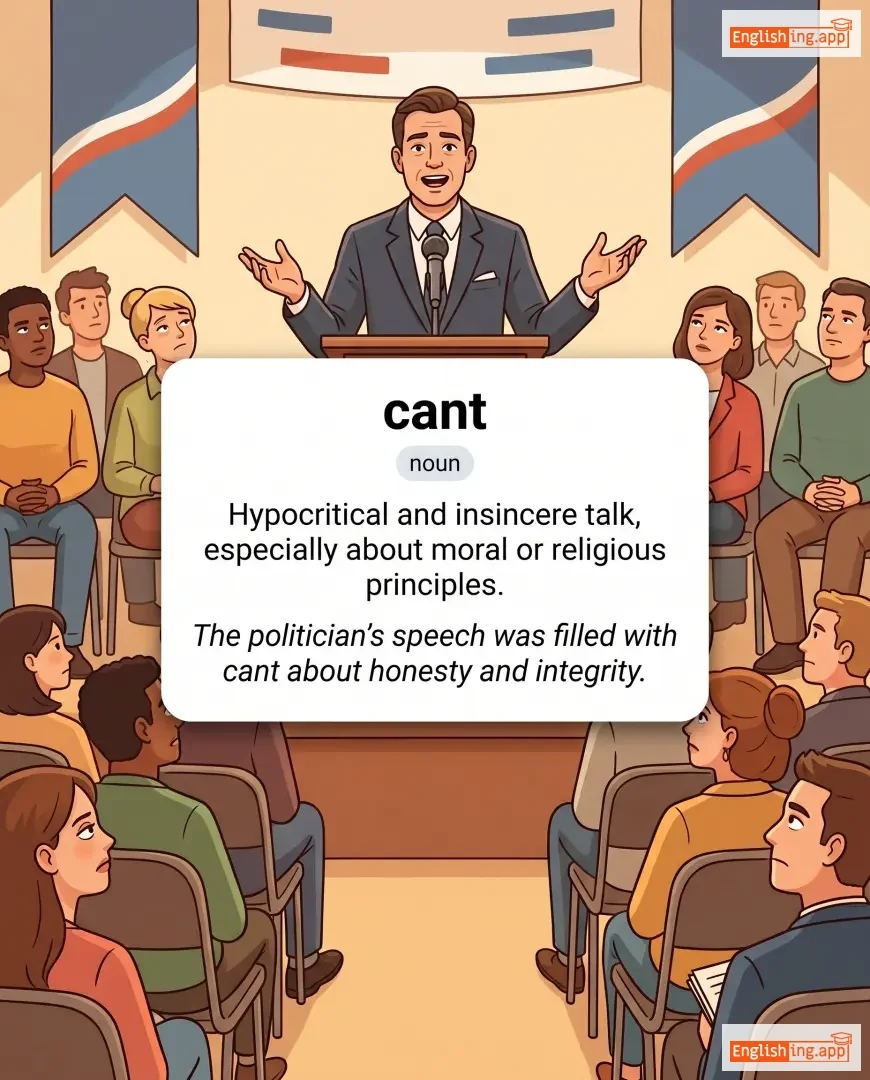
cant definition card — visual illustration of the meaning
noun
/kænt/
discours hypocrite (discours hypocrite)

Hypocritical and insincere talk, especially about moral or religious principles.

"The politician's speech was filled with cant about honesty and integrity."

"Le discours du politicien était rempli de discours hypocrites sur l'honnêteté et l'intégrité." (Le discours du politicien était rempli de discours hypocrites sur l'honnêteté et l'intégrité.)
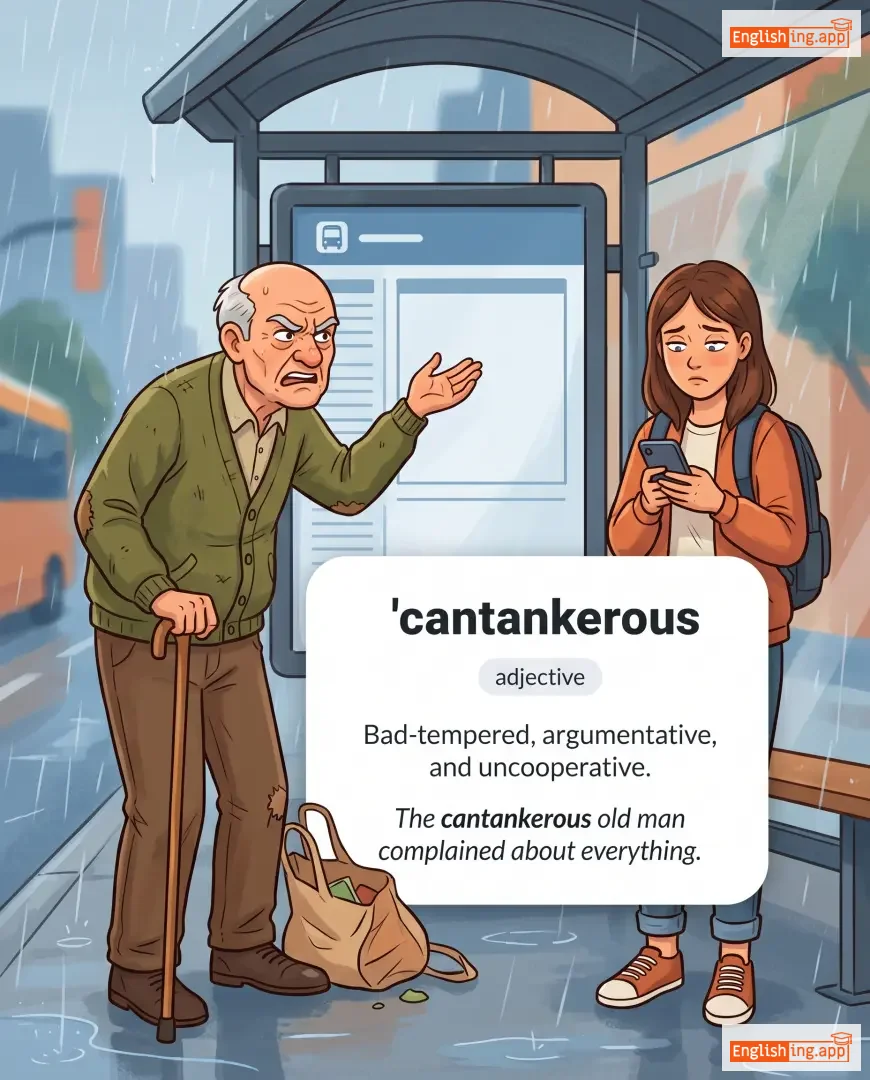
cantankerous definition card — visual illustration of the meaning
adjective
/kænˈtæŋ.kər.əs/
grincheux (grincheux)

Bad-tempered, argumentative, and uncooperative.

"The cantankerous old man complained about everything."

"Le vieux grincheux se plaignait de tout." (Le vieux grincheux se plaignait de tout.)
noun
/kænˈtɑː.tə/
cantate (cantate)

A vocal composition with instrumental accompaniment, typically in several movements, often involving a choir.

"The choir performed a beautiful cantata during the festival."

"Le chœur a interprété une belle cantate pendant le festival." (Le chœur a interprété une belle cantate pendant le festival.)
verb
/ˈkæn.tər/
galop lent (galop lent)

To ride a horse at a controlled, easy pace between a trot and a gallop.

"She cantered her horse across the field with ease."

"Elle a canter son cheval à travers le champ avec aisance." (Elle a canter son cheval à travers le champ avec aisance.)
noun
/ˈkæn.toʊ/
canto (canto)

A main division of a long poem, especially in epic poetry.

"The Divine Comedy is divided into several cantos."

"La Divine Comédie est divisée en plusieurs cantos." (La Divine Comedie est divisee en plusieurs cantos.)
noun
/kænˈtuːnmənt/
camp militaire (camp militaire)

A permanent military station or garrison town.

"The army established a new cantonment near the border."

"L'armée a établi un nouveau camp militaire près de la frontière." (L'armee a etabli un nouveau camp militaire pres de la frontiere.)
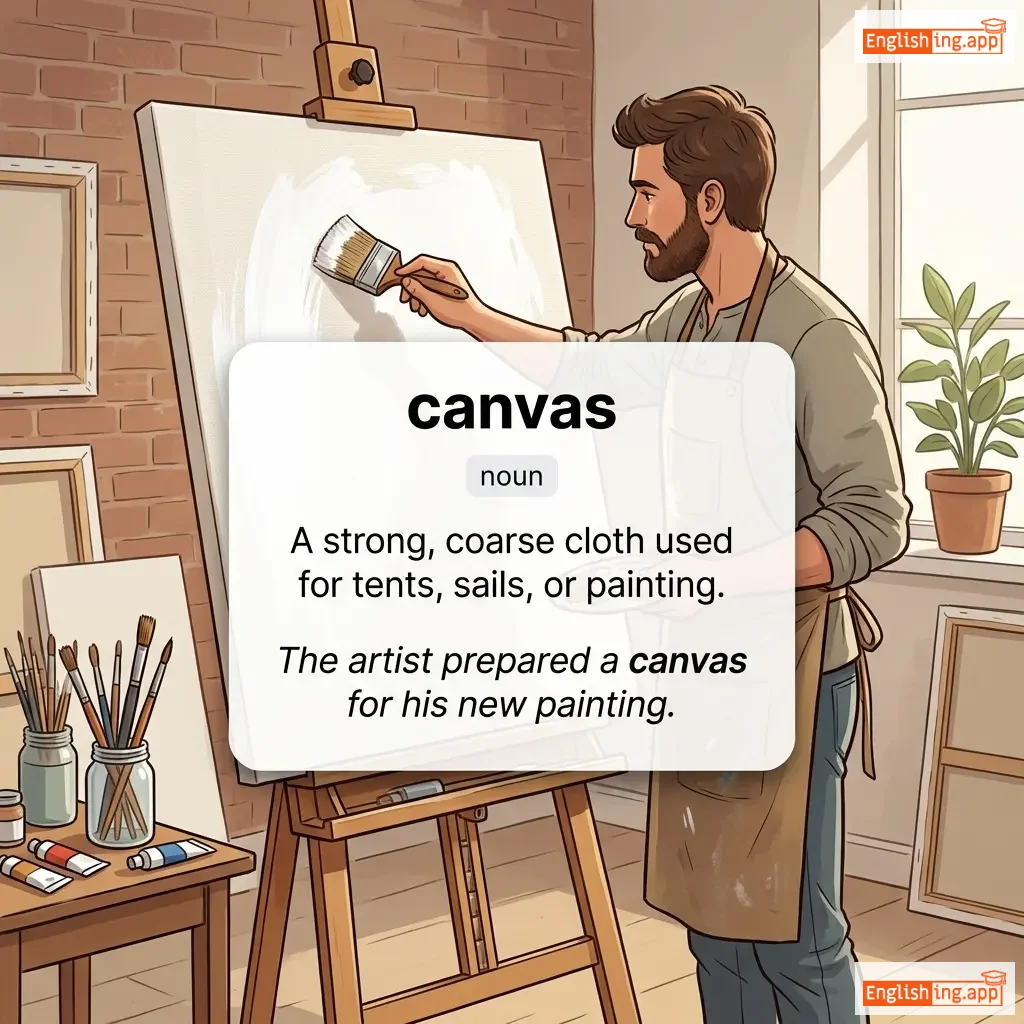
canvas definition card — visual illustration of the meaning
noun
/ˈkænvəs/
toile (kanvas)

A strong, coarse cloth used for tents, sails, or painting.

"The artist prepared a canvas for his new painting."

"L'artiste a préparé une toile pour sa nouvelle peinture." (L artiste a prepare une toile pour sa nouvelle peinture)
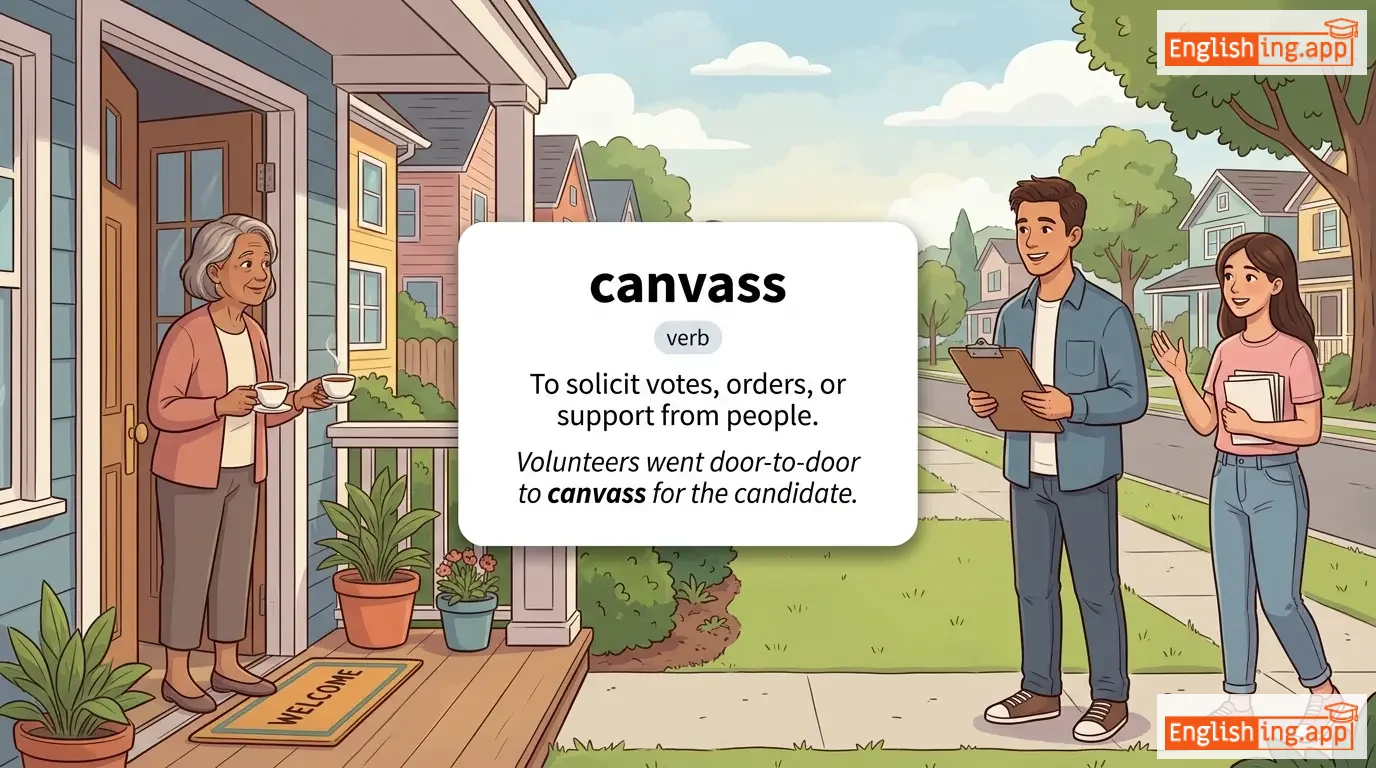
canvass definition card — visual illustration of the meaning
verb
/ˈkænvəs/
solliciter des votes (solliciter des votes)

To solicit votes, orders, or support from people.

"Volunteers went door-to-door to canvass for the candidate."

"Les bénévoles sont allés de porte en porte pour solliciter des votes pour le candidat." (Les bénévoles sont allés de porte en porte pour solliciter des votes pour le candidat.)
noun
/ˈkænjən/
canyon (canyon)

A deep gorge, typically one with a river flowing through it.

"The Colorado River carved the Grand Canyon over millions of years."

"Le fleuve Colorado a sculpté le Grand Canyon pendant des millions d'années." (Le fleuve Colorado a sculpte le Grand Canyon pendant des millions d'annees.)