Vocabularios

Descubra, aprenda y domine el vocabulario en inglés

adjective
/ˌkɒm.plɪˈmen.tər.i/
complementario; de elogio; proporcionado gratuitamente como cortesía (complementario; de elogio; proporcionado gratuitamente como cortesía)

expressing praise or admiration; given or supplied free of charge as a courtesy

"The hotel offers complimentary breakfast for all guests."

"El hotel ofrece desayuno complementario para todos los huéspedes." (El hotel ofrece desayuno complementario para todos los huéspedes.)
verb
/kəmˈplaɪ/
cumplir (cumplir)

to act in accordance with a rule, request, or law

"All companies must comply with safety regulations."

"Todas las empresas deben cumplir con las normativas de seguridad." (Todas las empresas deben cumplir con las normativas de seguridad.)
noun
/kəmˈpoʊnənt/
componente (componente)

a part or element of a larger whole, especially a machine or system

"The engine is the most important component of the car."

"El motor es el componente más importante del coche." (El motor es el componente mas importante del coche.)
verb
/kəmˈpɔːrt/
comportarse (comportarse)

to behave or conduct oneself in a particular way

"She comported herself with grace during the ceremony."

"Ella se comportó con gracia durante la ceremonia." (Ella se comportó con gracia durante la ceremonia.)
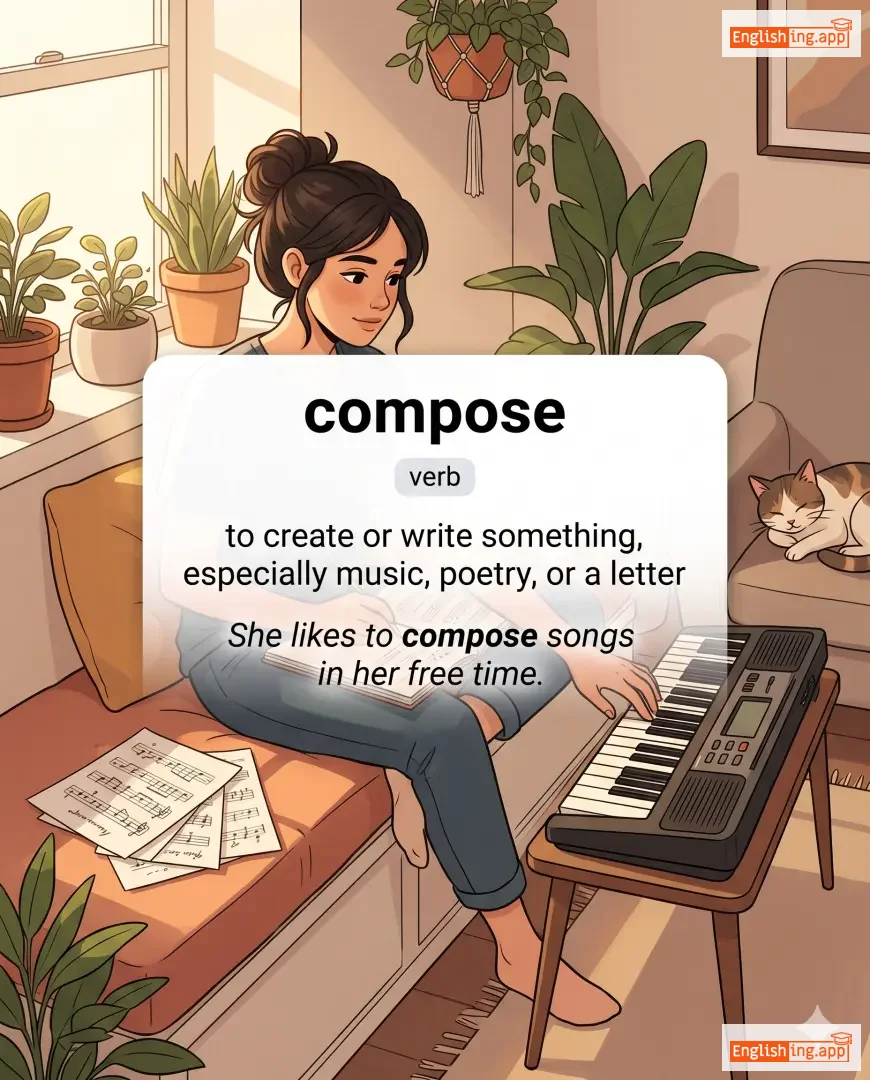
compose definition card — visual illustration of the meaning
verb
/kəmˈpəʊz/
componer (componer)

to create or write something, especially music, poetry, or a letter

"She likes to compose songs in her free time."

"A ella le gusta componer canciones en su tiempo libre." (A ella le gusta componer canciones en su tiempo libre.)
adjective
/kəmˈpoʊzd/
sereno (sereno)

calm and in control of oneself; made up of or formed from

"He remained composed even under pressure."

"Él permaneció sereno incluso bajo presión." (Él permaneció sereno incluso bajo presión.)
noun
/kəmˈpəʊzə(r)/
compositor (compositor)

a person who writes music, especially classical music

"The composer is working on a new symphony."

"El compositor está trabajando en una nueva sinfonía." (El compositor está trabajando en una nueva sinfonía.)
noun
/ˌkɒmpəˈzɪʃən/
composición (composicion)

the act of creating a piece of writing, music, or art; the way parts are arranged

"Her composition won first prize in the contest."

"Su composición ganó el primer premio en el concurso." (Su composicion gano el primer premio en el concurso.)
noun
/kəmˈpɒz.ɪ.tər/
compositor (compositor)

a person who arranges type for printing or creates musical compositions

"The compositor carefully arranged the text for the newspaper."

"El compositor organizó cuidadosamente el texto para el periódico." (El compositor organizó cuidadosamente el texto para el periódico.)
noun
/ˈkɒmpoʊst/
abono (abono)

decayed organic matter used as fertilizer

"The gardener added compost to enrich the soil."

"El jardinero añadió abono para enriquecer el suelo." (El jardinero añadio abono para enriquecer el suelo.)
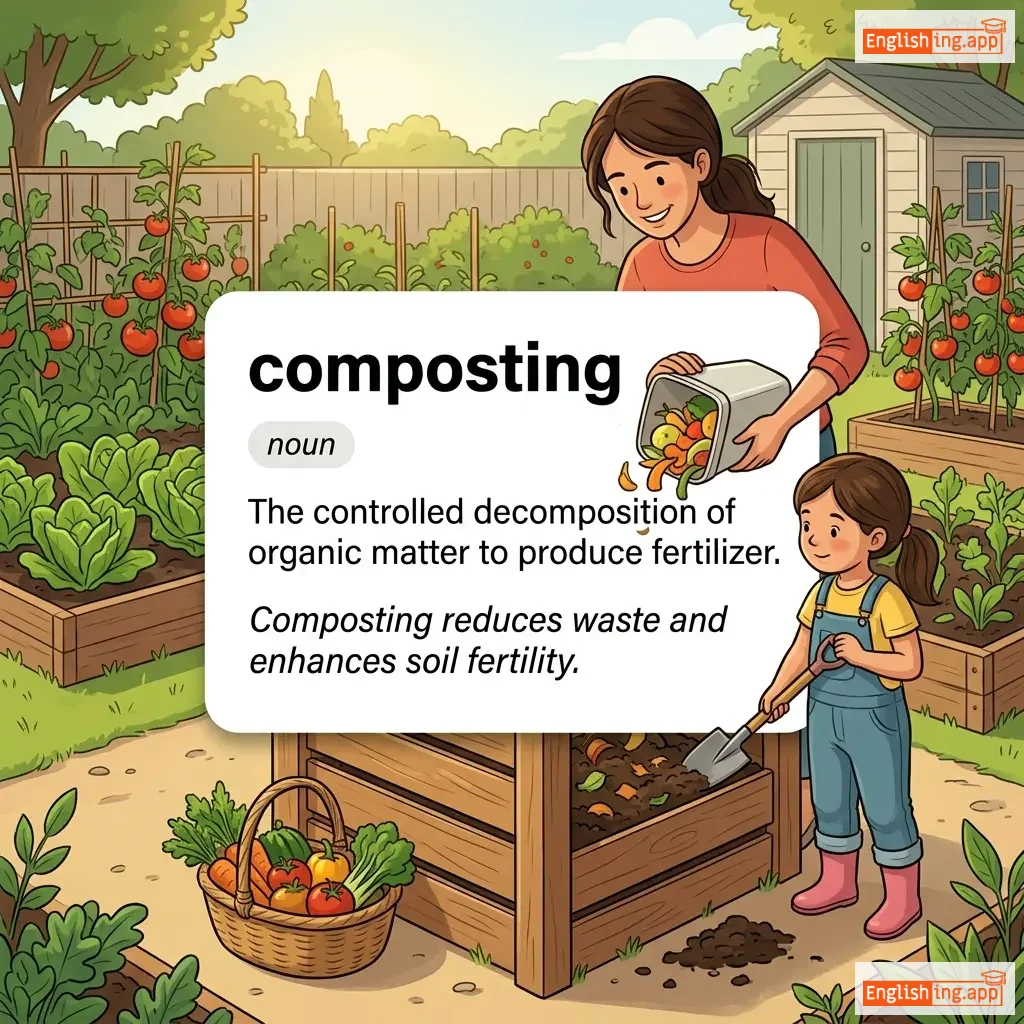
composting definition card — visual illustration of the meaning
noun
/ˈkɒm.pɒ.stɪŋ/
compostaje (compostaje)

The controlled decomposition of organic matter to produce fertilizer.

"Composting reduces waste and enhances soil fertility."

"El compostaje reduce los desechos y mejora la fertilidad del suelo." (El compostaje reduce los desechos y mejora la fertilidad del suelo.)
composure definition card — visual illustration of the meaning
noun
/kəmˈpoʊʒər/
composición (composicion)

the state of being calm and in control of oneself

"She managed to keep her composure during the heated debate."

"Ella logró mantener su compostura durante el debate acalorado." (Ella logro mantener su compostura durante el debate acalorado.)
noun
/ˈkɑːmpaʊnd/
compuesto / área cerrada (compuesto / area cerrada)

a thing that is composed of two or more separate elements; an enclosed area with buildings

"The scientist studied the chemical compound in the lab."

"El científico estudió el compuesto químico en el laboratorio." (El cientifico estudio el compuesto quimico en el laboratorio.)
noun
/ˈkæmpəs/
campus (campus)

The grounds and buildings of a university, college, or school.

"The university campus is filled with students during the fall semester."

"El campus universitario está lleno de estudiantes durante el semestre de otoño." (El campus universitario está lleno de estudiantes durante el semestre de otoño.)
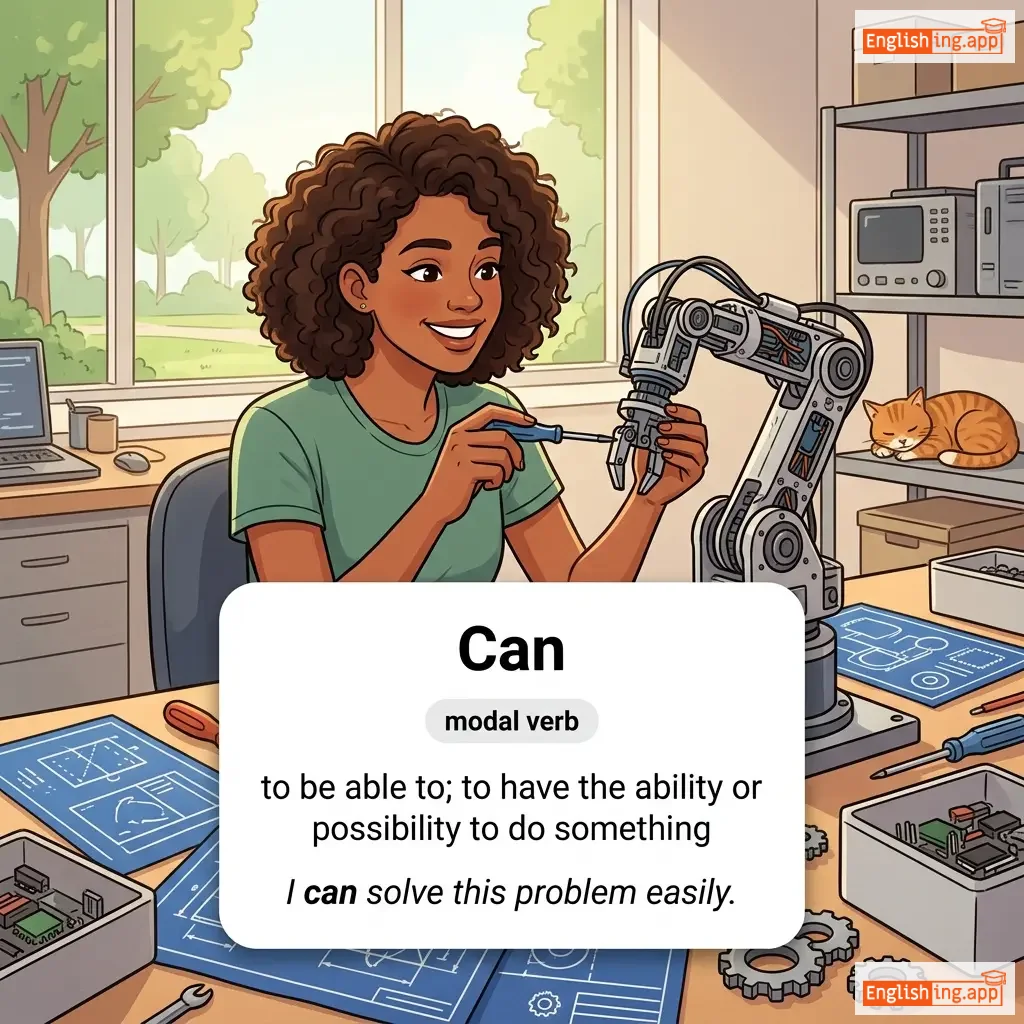
Can definition card — visual illustration of the meaning
modal verb
/kæn/
poder (poder)

to be able to; to have the ability or possibility to do something

"I can solve this problem easily."

"Puedo resolver este problema fácilmente." (Puedo resolver este problema facilmente.)
noun
/ˈkeɪ.nə.naɪt/
cananeo (kananeo)

a member of a people who lived in the ancient land of Canaan in the Middle East

"The Canaanites were known for their advanced trade networks."

"Los cananeos eran conocidos por sus avanzadas redes comerciales." (Los cananeos eran conocidos por sus avanzadas redes comerciales.)
adjective
/kəˈneɪdiən/
canadiense (canadiense)

Relating to Canada or its people.

"She enjoys Canadian culture and traditions."

"Ella disfruta de la cultura y las tradiciones canadienses." (Ella disfruta de la cultura y las tradiciones canadienses.)
noun
/kəˈnæl/
canal (kanal)

an artificial waterway constructed for navigation, irrigation, or drainage

"The canal was built to help transport goods across the region."

"El canal fue construido para ayudar a transportar bienes a través de la región." (El kanal fue construido para ayudar a transportar bienes a traves de la region.)
canard definition card — visual illustration of the meaning
noun
/kəˈnɑːrd/
bulo (bulo)

a false or unfounded story or rumor

"The article turned out to be nothing more than a canard."

"El artículo resultó ser nada más que un bulo." (El articulo resulto ser nada mas que un bulo.)
noun
/kəˈnɛəri/
canario (canario)

a small, usually yellow bird known for its singing; also used as a warning sign in dangerous conditions

"The canary sang beautifully in its cage."

"El canario cantaba hermosamente en su jaula." (El canario cantaba hermosamente en su jaula.)
verb
/ˈkænsəl/
cancelar (canselar)

to decide that something planned will not take place

"The flight was canceled due to heavy rain."

"El vuelo fue cancelado debido a la lluvia intensa." (El vuelo fue cancelado debido a la lluvia intensa.)
noun
/ˌkænsəˈleɪʃən/
cancelación (cancelacion)

the act of stopping something that was planned or scheduled; the act of nullifying or invalidating something

"The airline announced the cancellation of several flights due to bad weather."

"La aerolínea anunció la cancelación de varios vuelos." (la aerolinea anuncio la cancelacion de varios vuelos)
noun
/ˈkænsər/
cáncer (cancer)

A disease in which abnormal cells divide uncontrollably and destroy body tissue.

"Smoking is a leading cause of lung cancer."

"El fumar es una causa principal del cáncer de pulmón." (El fumar es una causa principal del cáncer de pulmón.)
adjective
/ˈkændɪd/
sincero (sincero)

Truthful and straightforward; frank

"She gave a candid account of the challenges she faced."

"Ella dio una descripción sincera de los desafíos que enfrentó." (Ella dio una descripcion sincera de los desafios que enfrento.)
noun
/ˈkændɪdeɪt/
candidato (candidato)

A person who applies for a job or is nominated for election.

"The candidate gave a strong speech during the debate."

"El candidato dio un discurso fuerte durante el debate." (El candidato dio un discurso fuerte durante el debate.)
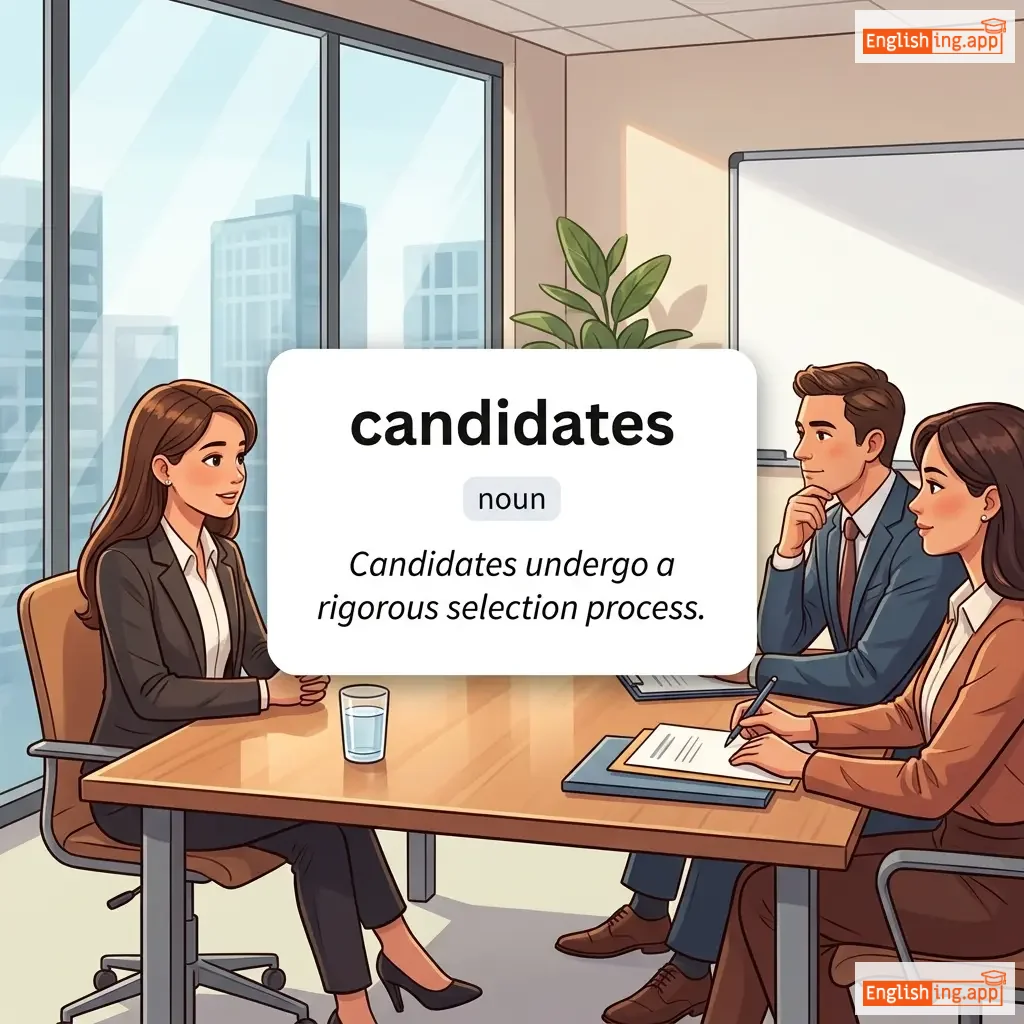
candidates definition card — visual illustration of the meaning
noun
ˈkæn.dɪ.deɪts
candidatos (candidatos)

A person who applies for a job or is nominated for election; someone being considered for a position.

"Candidates undergo a rigorous selection process."

"Los candidatos pasan por un proceso de selección riguroso." (Los candidatos pasan por un proceso de seleccion riguroso.)
noun
/ˈkændɪdnəs/
franqueza (franqueza)

The quality of being open, honest, and straightforward

"Her candidness during the meeting impressed everyone."

"Su franqueza durante la reunión impresionó a todos." (Su franqueza durante la reunión impresionó a todos.)
noun
/ˈkændl/
vela (vela)

a stick of wax with a wick that burns to give light

"She lit a candle during the power cut."

"Encendió una vela durante el corte de energía." (Encendió una vela durante el corte de energía.)
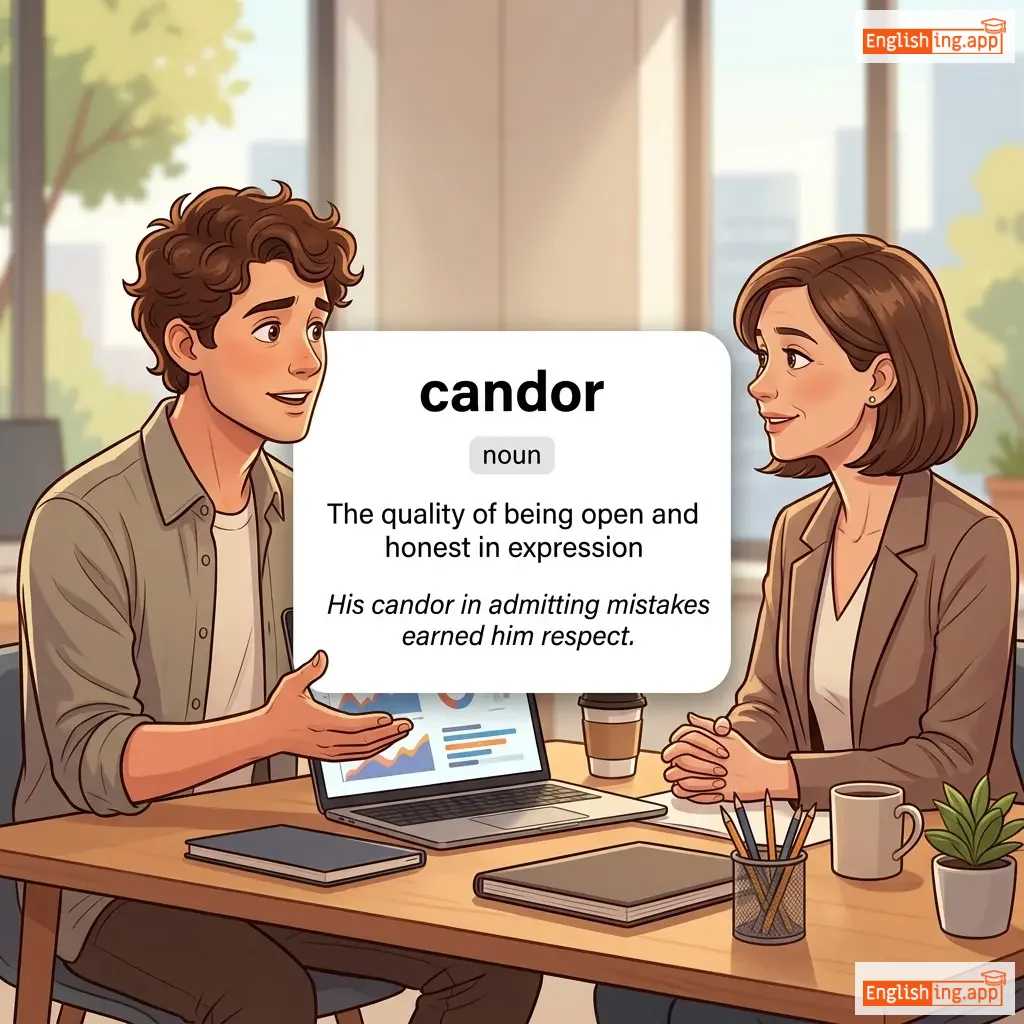
candor definition card — visual illustration of the meaning
noun
/ˈkændər/
franqueza (fran-ke-tha)

The quality of being open and honest in expression

"His candor in admitting mistakes earned him respect."

"Su franqueza al admitir errores le valió respeto." (Su fran-ke-tha al admitir errores le valió respeto.)
noun
/ˈkændi/
caramelo (caramelo)

a sweet food made with sugar or chocolate, often in small pieces

"The children were excited to get candy on Halloween."

"Los niños estaban emocionados de recibir caramelos en Halloween." (Los ninos estaban emocionados de recibir caramelos en Halloween.)
adjective, noun
/ˈkeɪnaɪn/
relacionado con los perros / dientes caninos (relacionado con los perros / dientes caninos)

Relating to dogs; also refers to the pointed teeth in humans and animals

"The police trained a canine unit for search operations."

"La policía entrenó una unidad canina para las operaciones de búsqueda." (La policía entrenó una unidad canina para las operaciones de búsqueda.)
noun, verb
/ˈkæŋkər/
ulceras (ulceras)

A fungal disease of plants; an ulcerous sore in the mouth; to corrupt or destroy slowly

"The tree was infected with a canker that damaged its bark."

"El árbol estaba infectado con un cancro que dañó su corteza." (El árbol estaba infectado con un cancro que dañó su corteza.)
noun
/ˈkænə/
canna (canna)

a tropical flowering plant with large, colorful flowers and broad leaves

"The bright orange canna lilies grew tall beside the pond."

"Los lirios de canna de color naranja brillante crecieron altos junto al estanque." (Los lirios de canna de color naranja brillante crecieron altos junto al estanque.)
noun
/ˈkæn.ɪ.bəl/
caníbal (canibal)

a person who eats the flesh of other human beings

"The explorer's journal described rumors of cannibals living on the remote island."

"El diario del explorador describía rumores de caníbales viviendo en la isla remota." (El diario del explorador describía rumores de caníbales viviendo en la isla remota.)
noun
/ˈkænən/
cañón (canon)

large heavy gun that fires cannonballs or shells

"The castle was defended by several large cannons."

"El castillo fue defendido por varios grandes cañones." (El castillo fue defendido por varios grandes canyones.)
adjective
/ˈkæni/
astuto (astuto)

Having good judgment, especially in business or practical matters; shrewd.

"She made a canny investment in real estate."

"Ella hizo una inversión astuta en bienes raíces." (Ella hizo una inversión astuta en bienes raíces.)
noun
/kəˈnuː/
canoa (canoa)

a narrow boat pointed at both ends and moved with a paddle

"They paddled their canoe down the peaceful stream."

"Remaron su canoa por el tranquilo arroyo." (Remaron su canoa por el tranquilo arroyo)
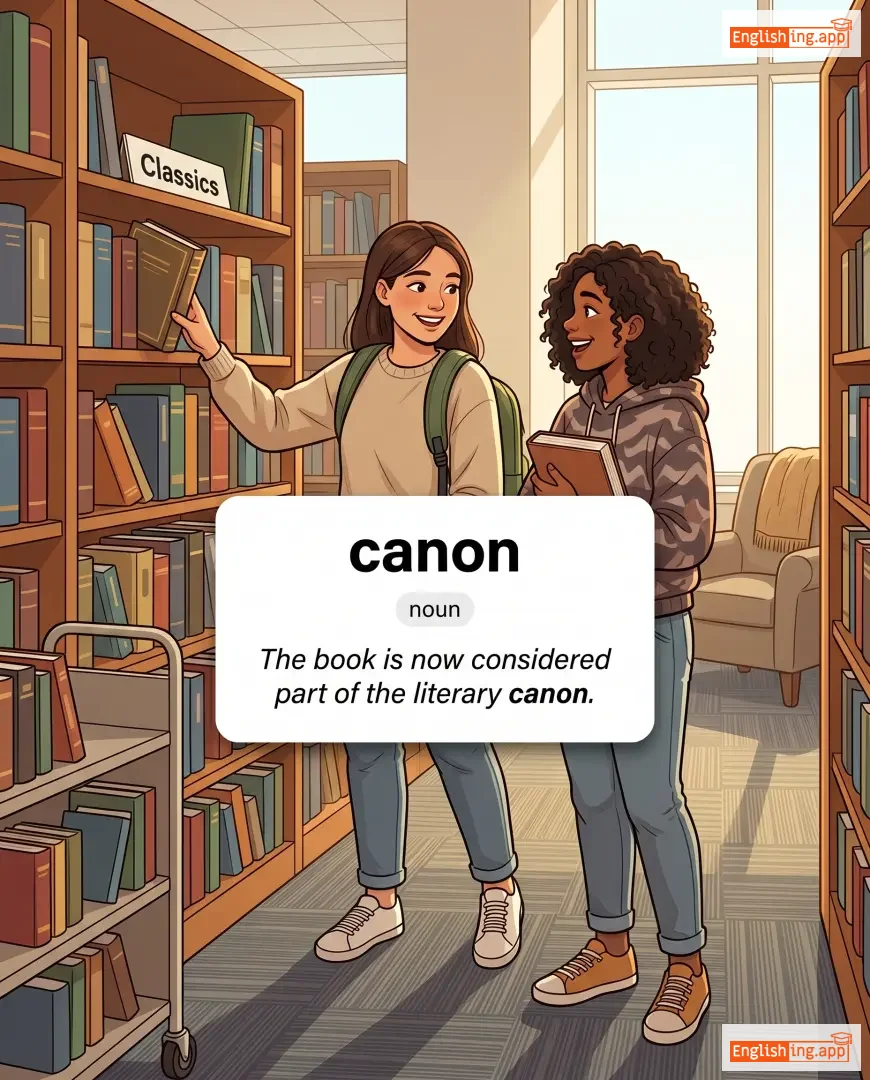
canon definition card — visual illustration of the meaning
noun
/ˈkænən/
cánon (canon)

A general law, rule, principle, or collection of sacred books accepted as genuine.

"The book is now considered part of the literary canon."

"El libro ahora se considera parte del canon literario." (El libro ahora se considera parte del canon literario.)
adjective
/kəˈnɒnɪkəl/
canónico / aceptado (canonico / aceptado)

Conforming to a general rule or accepted standard; officially recognized.

"Shakespeare’s works are considered canonical in English literature."

"Las obras de Shakespeare se consideran canónicas en la literatura inglesa." (Las obras de Shakespeare se consideran canónicas en la literatura inglesa.)
verb
/ˈkænənaɪz/
canonizar (canonizar)

To officially declare a dead person a saint; to regard as great or significant.

"The church canonized the martyr after years of investigation."

"La iglesia canonizó al mártir después de años de investigación." (La iglesia canonizó al mártir después de años de investigación.)
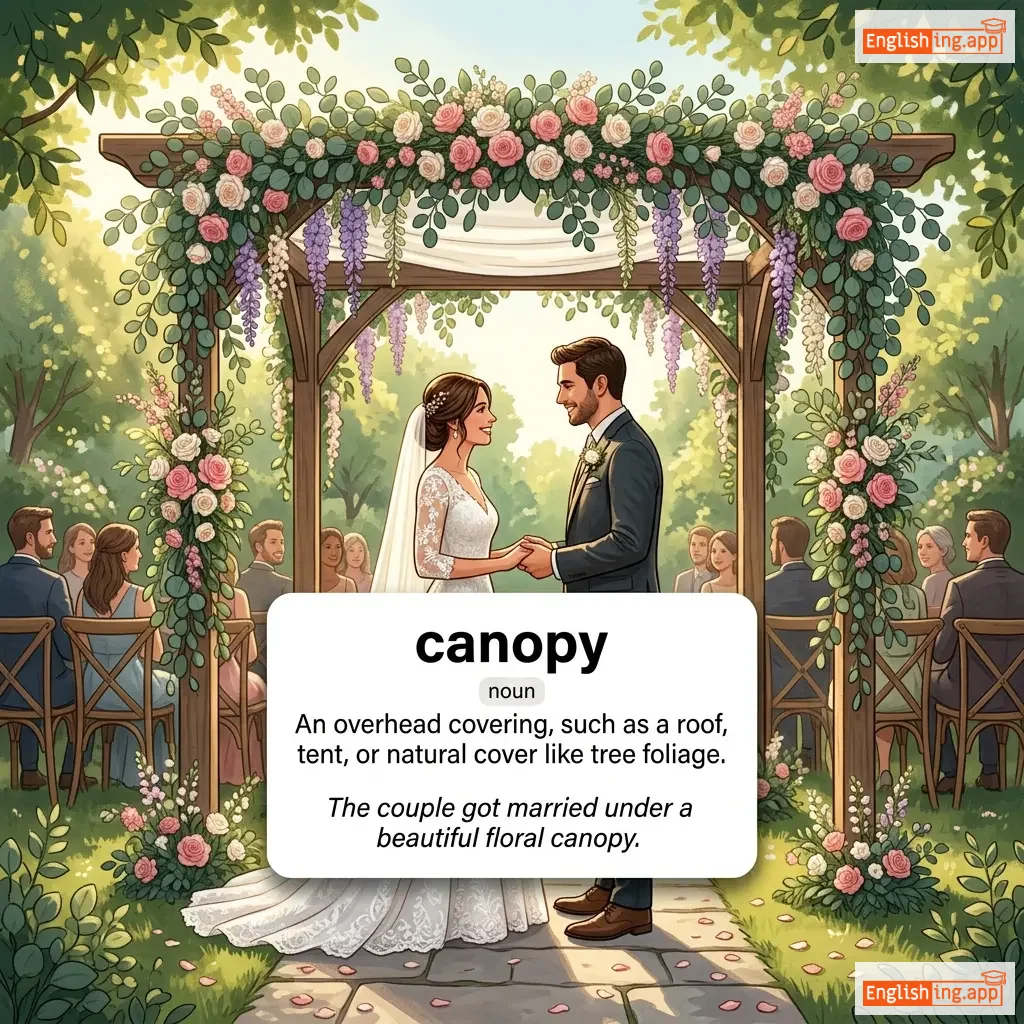
canopy definition card — visual illustration of the meaning
noun
/ˈkænəpi/
dosel (dosel)

An overhead covering, such as a roof, tent, or natural cover like tree foliage.

"The couple got married under a beautiful floral canopy."

"La pareja se casó bajo una hermosa canopia floral." (La pareja se casó bajo una hermosa canopia floral.)
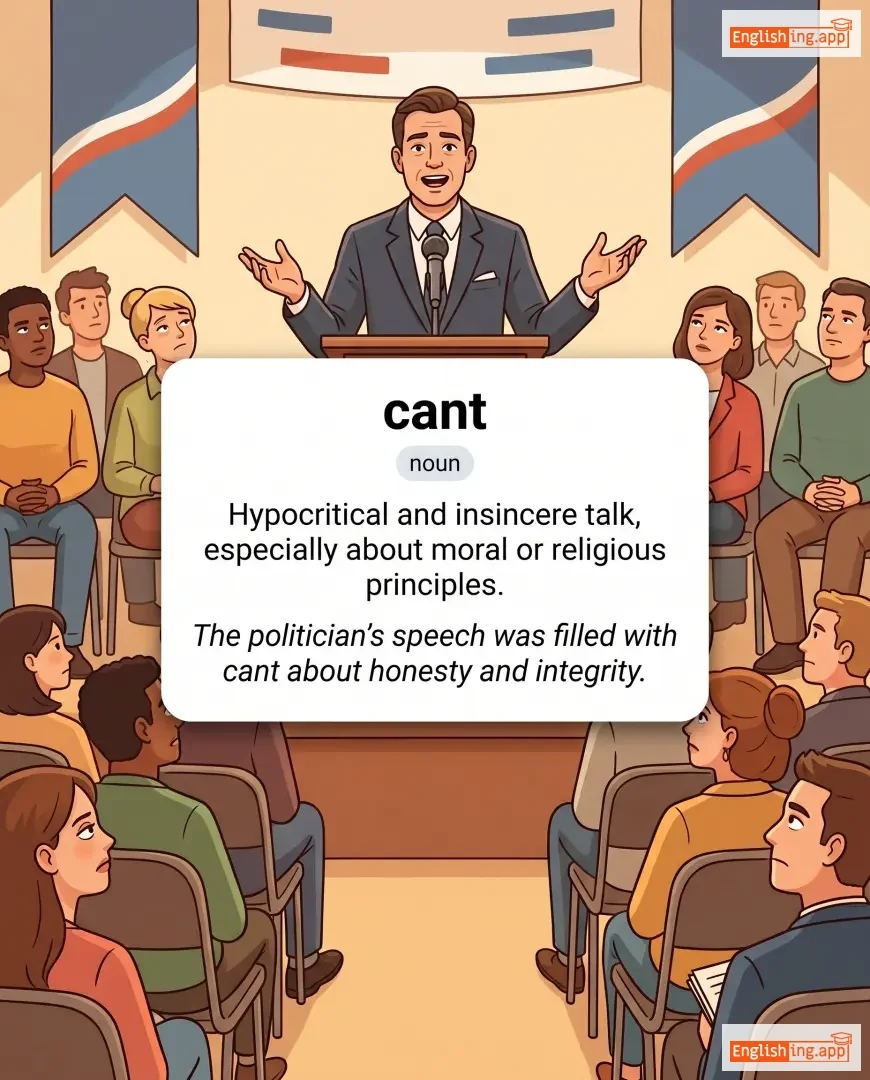
cant definition card — visual illustration of the meaning
noun
/kænt/
habladuría hipócrita (habladuria hipocrita)

Hypocritical and insincere talk, especially about moral or religious principles.

"The politician's speech was filled with cant about honesty and integrity."

"El discurso del político estaba lleno de habladurías hipócritas sobre honestidad e integridad." (El discurso del politico estaba lleno de habladurias hipocritas sobre honestidad e integridad.)
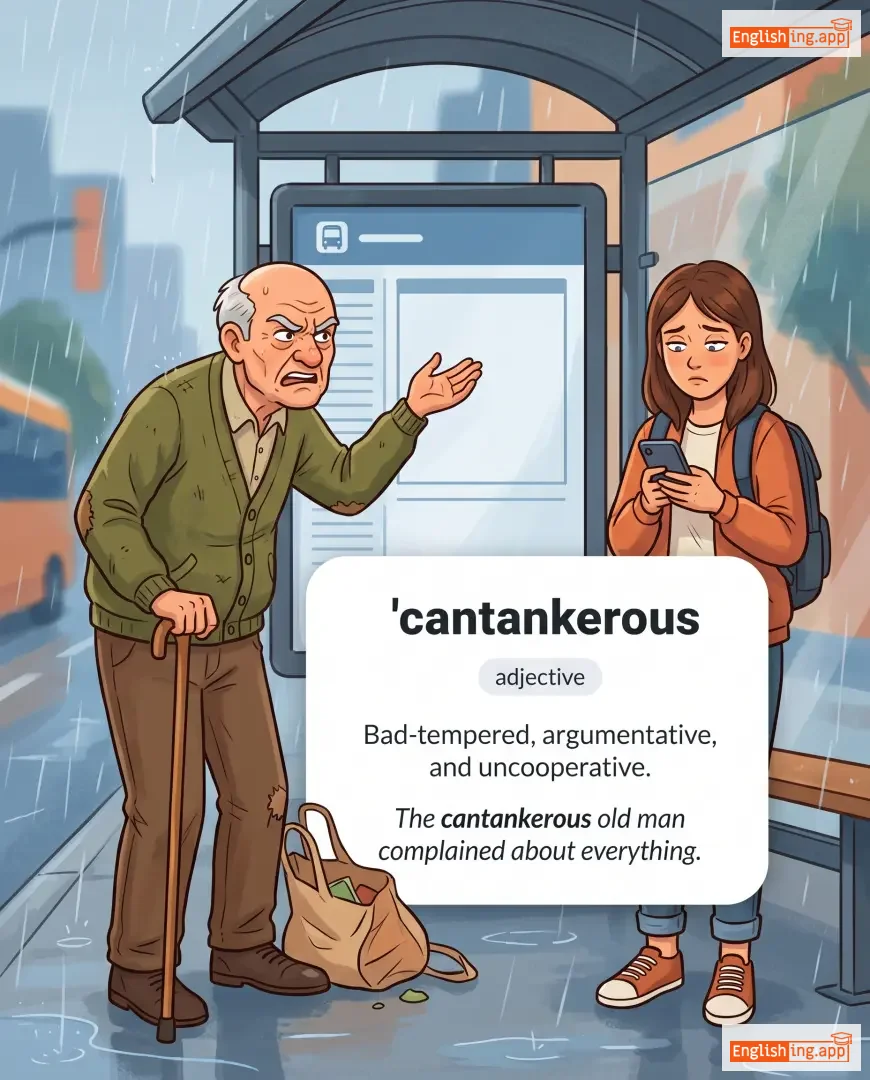
cantankerous definition card — visual illustration of the meaning
adjective
/kænˈtæŋ.kər.əs/
gruñón (grunyon)

Bad-tempered, argumentative, and uncooperative.

"The cantankerous old man complained about everything."

"El gruñón anciano se quejó de todo." (El grunyon anciano se quejó de todo.)
noun
/kænˈtɑː.tə/
cantata (cantata)

A vocal composition with instrumental accompaniment, typically in several movements, often involving a choir.

"The choir performed a beautiful cantata during the festival."

"El coro interpretó una hermosa cantata durante el festival." (El coro interpreto una hermosa cantata durante el festival.)
verb
/ˈkæn.tər/
galope lento (galope lento)

To ride a horse at a controlled, easy pace between a trot and a gallop.

"She cantered her horse across the field with ease."

"Ella canteó su caballo por el campo con facilidad." (Ella canteó su caballo por el campo con facilidad.)
noun
/ˈkæn.toʊ/
canto (canto)

A main division of a long poem, especially in epic poetry.

"The Divine Comedy is divided into several cantos."

"La Divina Comedia se divide en varios cantos." (La Divina Comedia se divide en varios cantos.)
noun
/kænˈtuːnmənt/
cuartel (cuartel)

A permanent military station or garrison town.

"The army established a new cantonment near the border."

"El ejército estableció un nuevo cuartel cerca de la frontera." (El ejercito establecio un nuevo cuartel cerca de la frontera.)
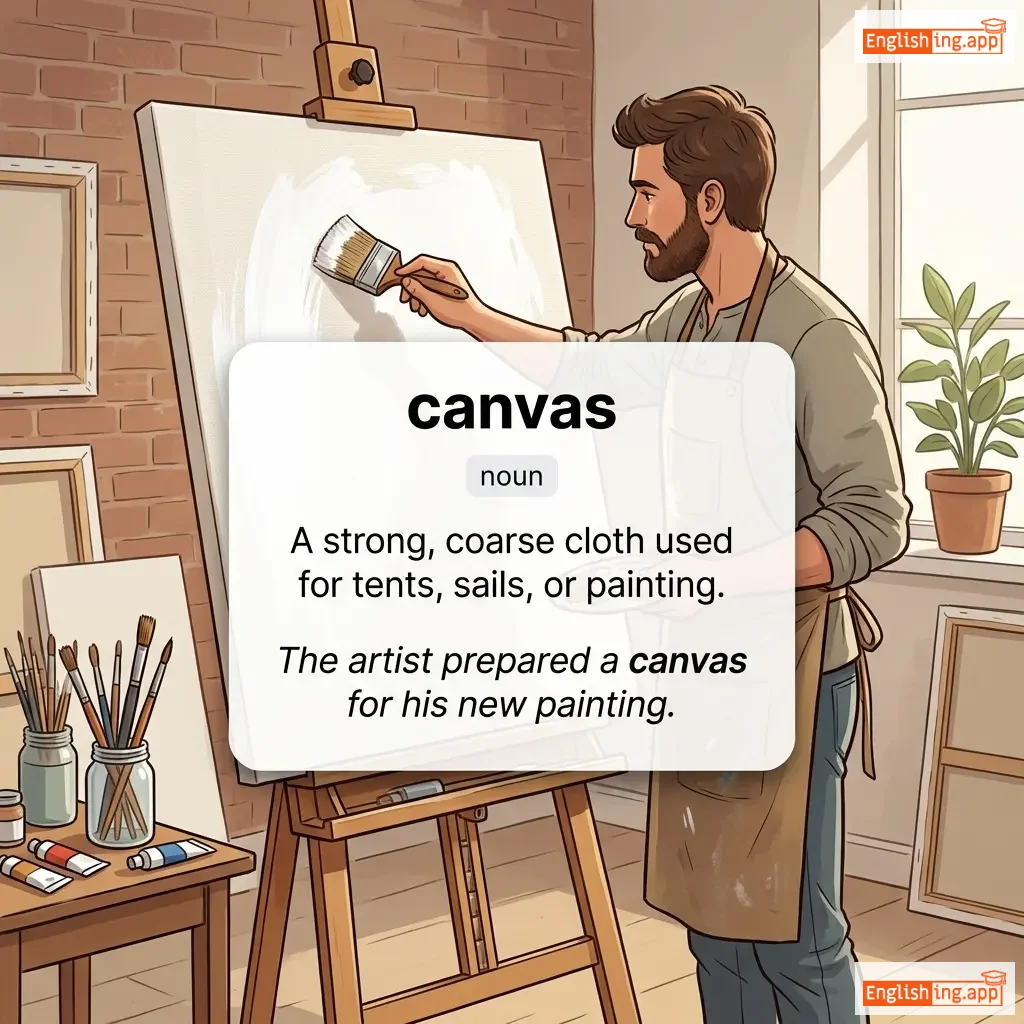
canvas definition card — visual illustration of the meaning
noun
/ˈkænvəs/
lienzo (kanvas)

A strong, coarse cloth used for tents, sails, or painting.

"The artist prepared a canvas for his new painting."

"El artista preparó un lienzo para su nueva pintura." (El artista preparo un lienzo para su nueva pintura.)
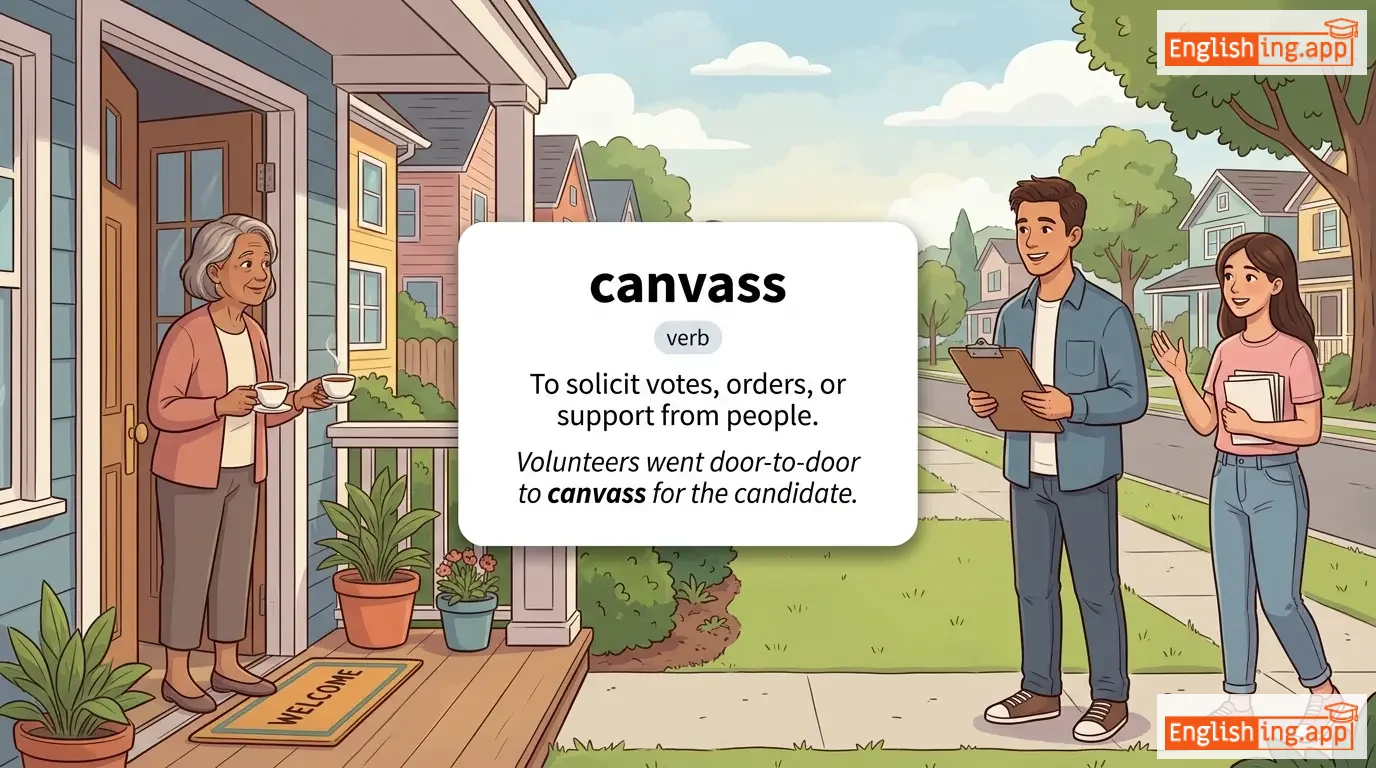
canvass definition card — visual illustration of the meaning
verb
/ˈkænvəs/
solicitar votos (solicitar votos)

To solicit votes, orders, or support from people.

"Volunteers went door-to-door to canvass for the candidate."

"Los voluntarios fueron de puerta en puerta para pedir votos para el candidato." (Los voluntarios fueron de puerta en puerta para pedir votos para el candidato.)
noun
/ˈkænjən/
cañón (canyon)

A deep gorge, typically one with a river flowing through it.

"The Colorado River carved the Grand Canyon over millions of years."

"El río Colorado talló el Gran Cañón durante millones de años." (El rio Colorado talló el Gran Cañón durante millones de años.)