Словари

Словарь английского языка | Значения слов, определения и примеры

noun
/ˌsɒlɪˈdærɪti/
солидарность (solidarnost)

Unity or agreement of feeling or action, especially among individuals with a common interest.

"Workers held a strike in solidarity with their colleagues."

"Рабочие провели забастовку в знак солидарности с коллегами." (Rabochie proveli zabastovku v znak solidarnosti s kollegami.)
verb
/səˈlɪdəˌfaɪ/
укрепить (ukrepit)

To make something firm, strong, or more certain.

"The company solidified its position in the market."

"Компания укрепила свою позицию на рынке." (Kompanija ukrepila svoyu poziciyu na rynke.)
soliloquy definition card — visual illustration of the meaning
noun
/səˈlɪləkwi/
монолог (monolog)

a speech in which a character talks to themselves, often used in drama to reveal inner thoughts

"Hamlet's soliloquy is one of the most famous passages in Shakespearean drama."

"Монолог Гамлета — это один из самых известных отрывков в драме Шекспира." (Monolog Gamleta — eto odin iz samykh izvestnykh otryvkov v drame Shekspira.)
adjective
/ˈsɒl.ɪ.ter.i/
одинокий; изолированный; один (odinokiy; izolirovannyy; odin)

alone; without companions; single; isolated

"He lived a solitary life in the mountains."
"Он вел одиночную жизнь в горах." (On vel odinochnuyu zhizn v gorakh.)
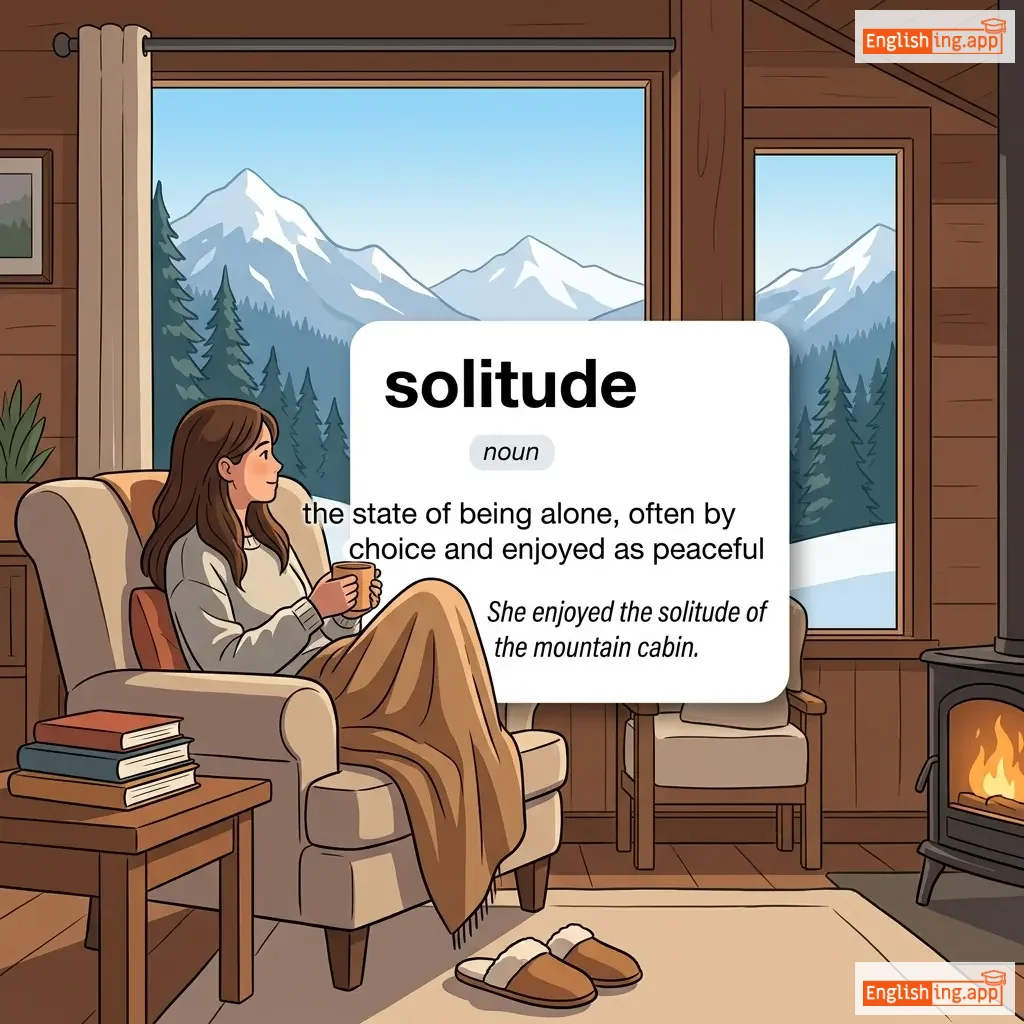
solitude definition card — visual illustration of the meaning
noun
/ˈsɒlɪtjuːd/
одиночество (odinochestvo)

the state of being alone, often by choice and enjoyed as peaceful

"She enjoyed the solitude of the mountain cabin."

"Она наслаждалась одиночеством в горной хижине." (Ona naslazhdalas' odinochestvom v gornoy khizhine.)
adjective
/ˈsoʊloʊ/
соло (solo)

performed by one person alone; a single performance

"She decided to perform a solo dance at the talent show."

"Она решила выступить с сольным танцем на шоу талантов." (Ona reshila vystupit' s sol'nym tantsem na shou talantov.)
noun
/ˈsɒlstɪs/
солнцестояние (solntse stoyanie)

the two times in the year when the sun is at its greatest distance from the equator (summer and winter solstice)

"People celebrate the summer solstice with festivals and rituals."
"Люди празднуют летнее солнцестояние с фестивалями и ритуалами." (Ludi prazdnuyut letnee solntse stoyanie s festivalyami i ritualami.)
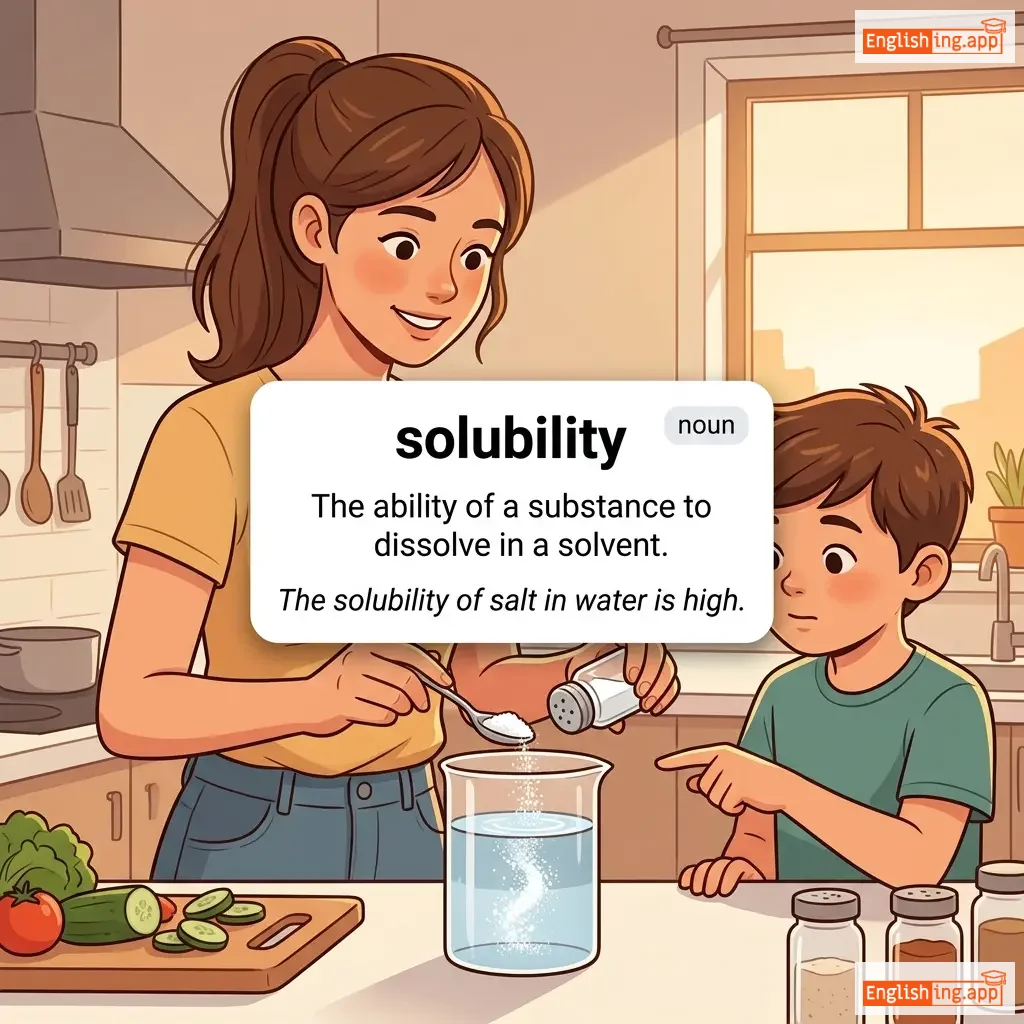
solubility definition card — visual illustration of the meaning
noun
/ˌsɒl.jʊˈbɪləti/
растворимость (rasstvorimost)

The ability of a substance to dissolve in a solvent.

"The solubility of salt in water is high."

"Растворимость соли в воде высокая." (Rastvorimost soli v vode vysokaya.)
adjective
/ˈsɒljʊbəl/
растворимый (rastvorimy)

able to be dissolved, especially in water

"Sugar is soluble in water."

"Сахар растворим в воде." (Sakhar rastvorim v vode.)
noun
/səˈluːʃən/
решение (reshenie)

a means of solving a problem or dealing with a difficult situation

"The solution to the problem was simpler than we thought."

"Решение проблемы было проще, чем мы думали." (Reshenie problemy bylo prosche, chem my dumali.)
solutions definition card — visual illustration of the meaning
noun
səˈluː.ʃənz
решения (resheniya)

A means of solving a problem or dealing with a difficult situation.

"Biotechnology provides solutions to environmental challenges."
"Биотехнология предоставляет решения для экологических проблем." (Biotekhnologiya predostavlyaet resheniya dlya ekologicheskikh problem.)
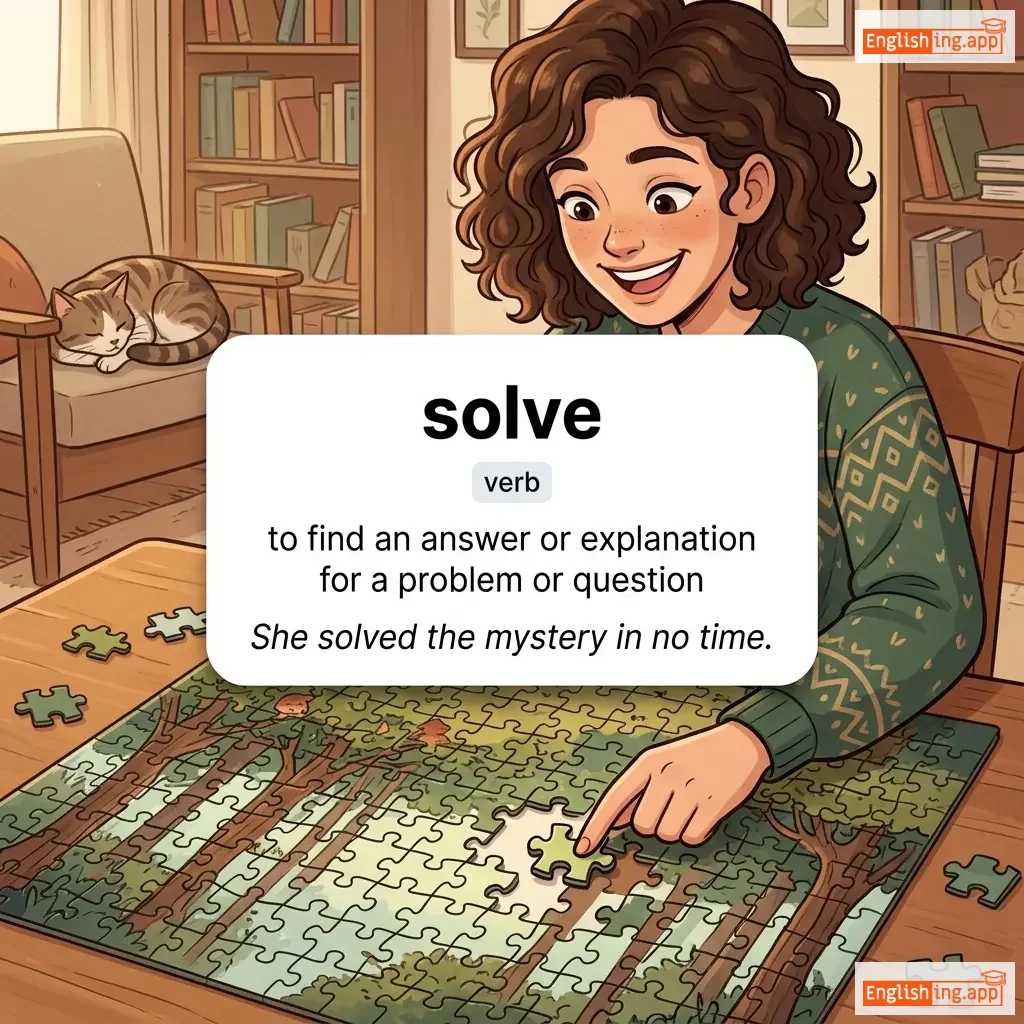
solve definition card — visual illustration of the meaning
verb
/sɒlv/
решать (reshat)

to find an answer or explanation for a problem or question

"She solved the mystery in no time."

"Она разгадала загадку в кратчайшие сроки." (Ona razgadala zagadku v kratkayshie sroki.)
solvency definition card — visual illustration of the meaning
noun
/ˈsɒl.vən.si/
способность погашать долги; наличие активов, превышающих обязательства (sposobnost' pogashat' dolgi; nalichie aktivov, prevyshayushchikh obyazatel'stva)

The possession of assets in excess of liabilities; ability to pay debts.

"The company's solvency determines its financial health."
"Платежеспособность компании определяет её финансовое здоровье." (Platezhesposobnost' kompanii opredelyaet yey finansovoe zdorov'ye.)
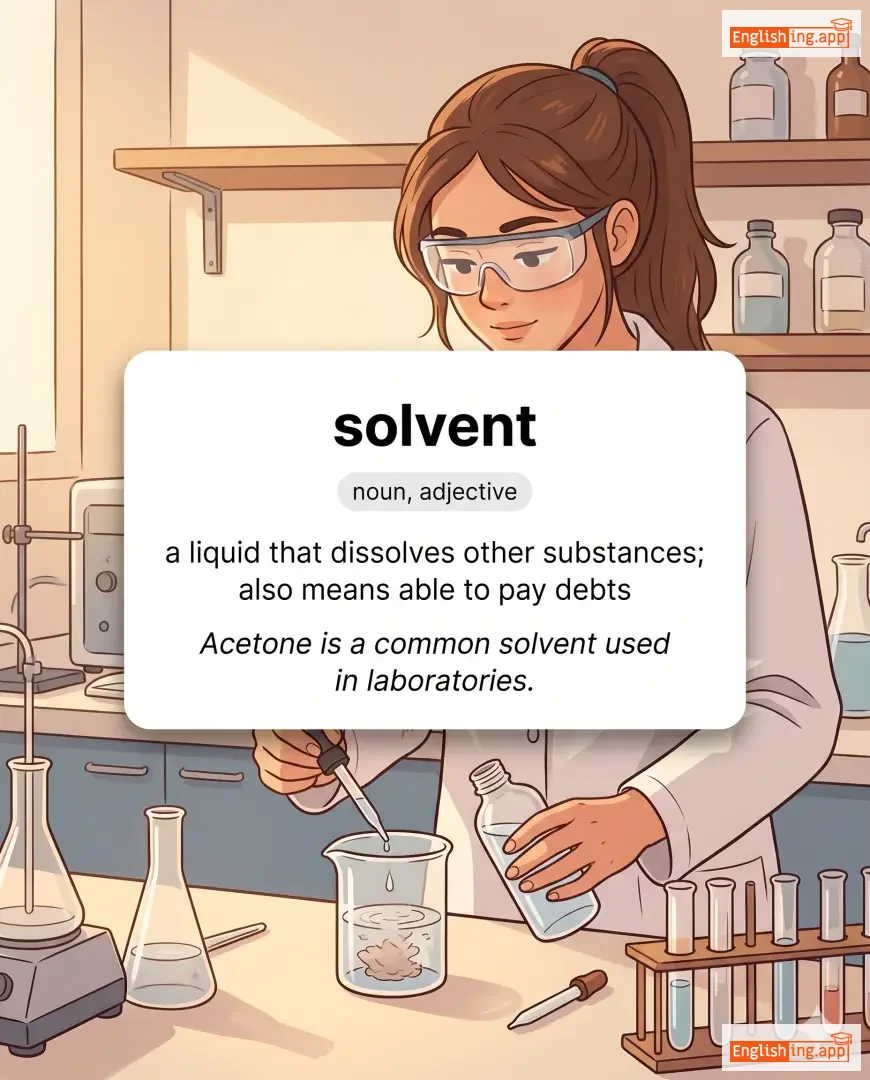
solvent definition card — visual illustration of the meaning
noun, adjective
/ˈsɒlvənt/
растворитель, способный погасить долги (rastvoritel, sposobnyj pogasit' dolgi)

a liquid that dissolves other substances; also means able to pay debts

"Acetone is a common solvent used in laboratories."
"Ацетон — это распространенный растворитель, используемый в лабораториях." (Atseton — eto rasprostranennyy rastvoritel', ispol'zuemyy v laboratoriyakh.)
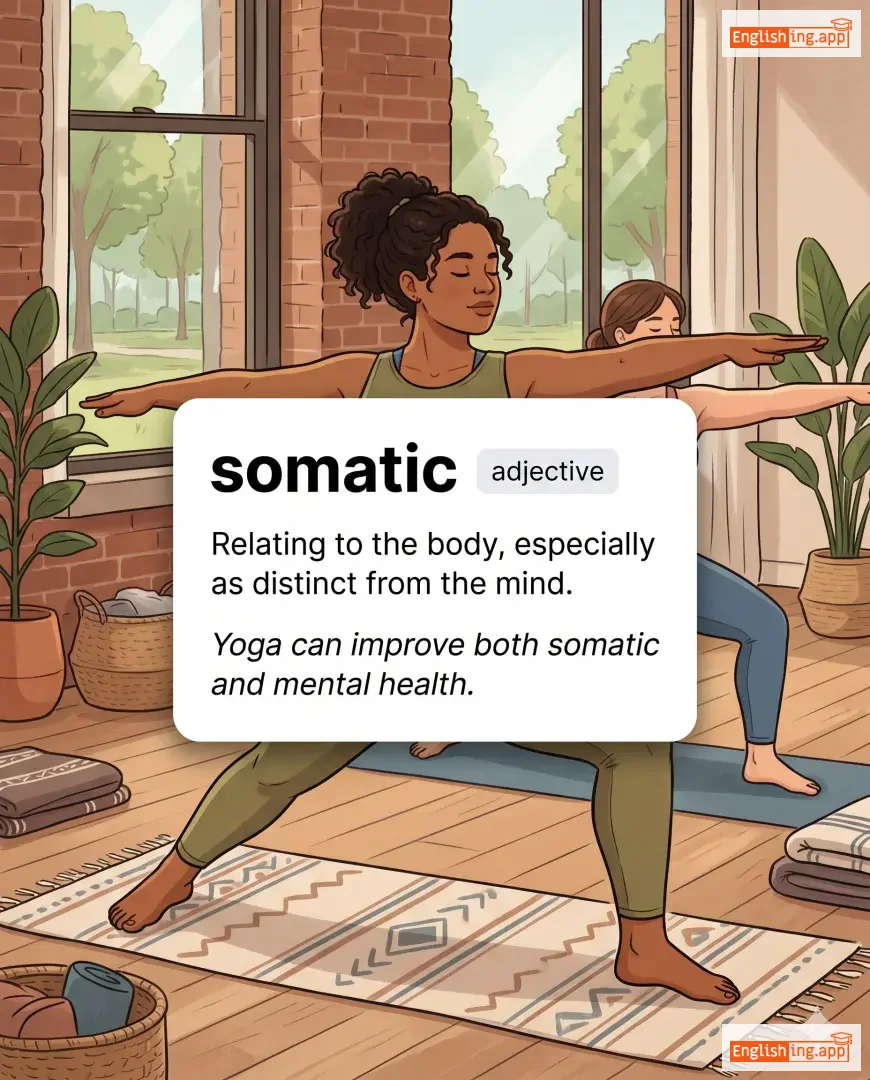
somatic definition card — visual illustration of the meaning
adjective
/səˈmætɪk/
телесный (telesnyy)

Relating to the body, especially as distinct from the mind.

"Yoga can improve both somatic and mental health."

"Йога может улучшить как телесное, так и психическое здоровье." (Yoga mozhet uluchshit' kak telesnoe, tak i psikhicheskoe zdorov'ye.)
adjective
/ˈsɒmbər/
мрачный (mrachniy)

Dark or dull in color or tone; gloomy or serious.

"The funeral had a somber atmosphere."

"На похоронах была мрачная атмосфера." (Na pokhoronakh byla mrachnaya atmosfera.)
determiner
/sʌm/
некоторые (nekotorye)

an unspecified amount or number of something

"I have some money in my wallet."

"У меня есть немного денег в кошельке." (U menya yest' nemnogo deneg v koshel'ke.)
pronoun
/ˈsʌmbədi/
кто-то (kto-to)

an unspecified person

"Somebody is knocking at the door."

"Кто-то стучит в дверь." (Kto-to stuchit v dver'.)
adverb
/ˈsʌm.deɪ/
когда-нибудь (kogda-nibud)

at some time in the future

"Someday, I want to travel the world."

"Когда-нибудь я хочу путешествовать по миру." (Kogda-nibud ya khochu puteshestvovat' po miru.)
adverb
/ˈsʌmˌhaʊ/
как-то (kak-to)

in some way, but not exactly known or specified

"Somehow, they managed to finish the project on time."

"Как-то они успели закончить проект вовремя." (Kak-to oni uspeli zakonchit' proyekt vovremya.)
pronoun
/ˈsʌmwʌn/
кто-то (kto-to)

a person, but not specifically known or named

"Someone left their umbrella in the hallway."

"Кто-то оставил свой зонтик в коридоре." (Kto-to ostavil svoy zontik v koridore.)
pronoun
/ˈsʌmθɪŋ/
что-то (chto-to)

an unspecified or unknown thing

"I think something is wrong with my phone."

"Я думаю, что с моим телефоном что-то не так." (Ya dumayu, chto s moim telefonov chto-to ne tak.)
adverb
/ˈsʌm.taɪm/
когда-нибудь (kogda-nibud)

at a time that is not known or stated; occasionally

"Let's meet for coffee sometime next week."

"Давай встретимся за кофе когда-нибудь на следующей неделе." (Davaj vstretimsya za kofe kogda-nibud na sleduyushchey nedele.)
adverb
/ˈsʌmˌtaɪmz/
иногда (inogda)

at certain times, but not always

"Sometimes I wonder what life would have been like if I had made different choices."

"Иногда я задумываюсь, как бы сложилась жизнь, если бы я принял другие решения." (Inogda ya zadumyvayus', kak by slozhilas' zhizn', esli by ya prinjal drugie resheniya.)
adverb
/ˈsʌmˌwʌt/
немного (nemnogo)

to a small degree or extent

"The new policy is somewhat better than the previous one."

"Новая политика немного лучше предыдущей." (Novaya politika nemnogo luchshe predydushchey.)
adverb
/ˈsʌmˌwɛr/
где-то (gde-to)

in, at, or to a place that is not known or specified

"Somewhere in the city, there is a hidden café."

"Где-то в городе есть скрытое кафе." (Gde-to v gorode yest' skrytoe kafe.)
noun
/sɒmˈnæmbjʊlɪst/
сомнамбулист (somnambulist)

A person who sleepwalks.

"The somnambulist wandered out of the house at night."

"Сомнамбулист ночью вышел из дома." (Somnambulist noch'yu vyshel iz doma.)
adjective
/sɒmˈnɪfərəs/
снотворный (snotvornyy)

Tending to induce sleep; soporific.

"The professor's somniferous lecture put half the class to sleep."
"Сомниферная лекция профессора усыпила половину класса." (Somnifernaya lektsiya professora usypila polovinu klassa.)
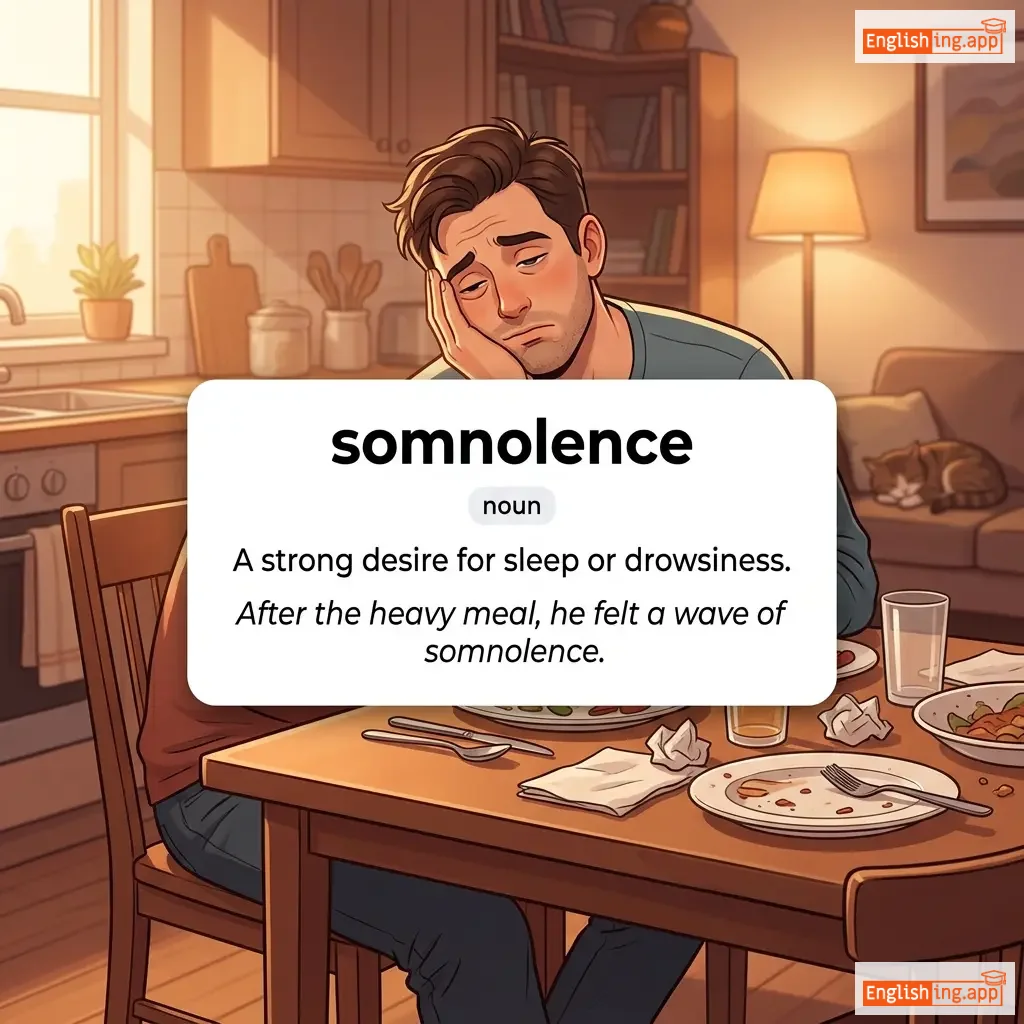
somnolence definition card — visual illustration of the meaning
noun
/ˈsɒmnələns/
сонливость (sonlivost)

A strong desire for sleep or drowsiness.

"After the heavy meal, he felt a wave of somnolence."

"После тяжелой пищи он почувствовал волну сонливости." (Posle tyazheloy pishchi on pochuvstvoval volnu sonlivosti.)
adjective
/ˈsɒmnələnt/
сонный (sonny)

Sleepy or drowsy; causing a desire to sleep.

"The somnolent lecture made half the class fall asleep."

"Сомнолентная лекция заставила половину класса заснуть." (Somnolentnaya lektsiya zastavila polovinu klassa zasnut'.)
noun
/sʌn/
сын (syn)

a male child of a parent

"His son is very talented in music."

"Его сын очень талантлив в музыке." (Ego syn ochen' talantliv v musike.)
noun
/səˈnɑːtə/
музыкальная композиция (соната) (muzykal'naya kompozitsiya (sonata))

A musical composition for one or more instruments, typically in several movements.

"She performed a beautiful Beethoven sonata on the piano."

"Она исполнила прекрасную сонату Бетховена на пианино." (Ona ispolnila prekrasnuyu sonatu Betkhovena na pianino.)
noun
/sɔːŋ/
песня (pesnya)

a short piece of music with words that are sung

"She sang a beautiful song at the concert."
"Она спела красивую песню на концерте." (Ona spela krasivuyu pesnyu na koncerte.)
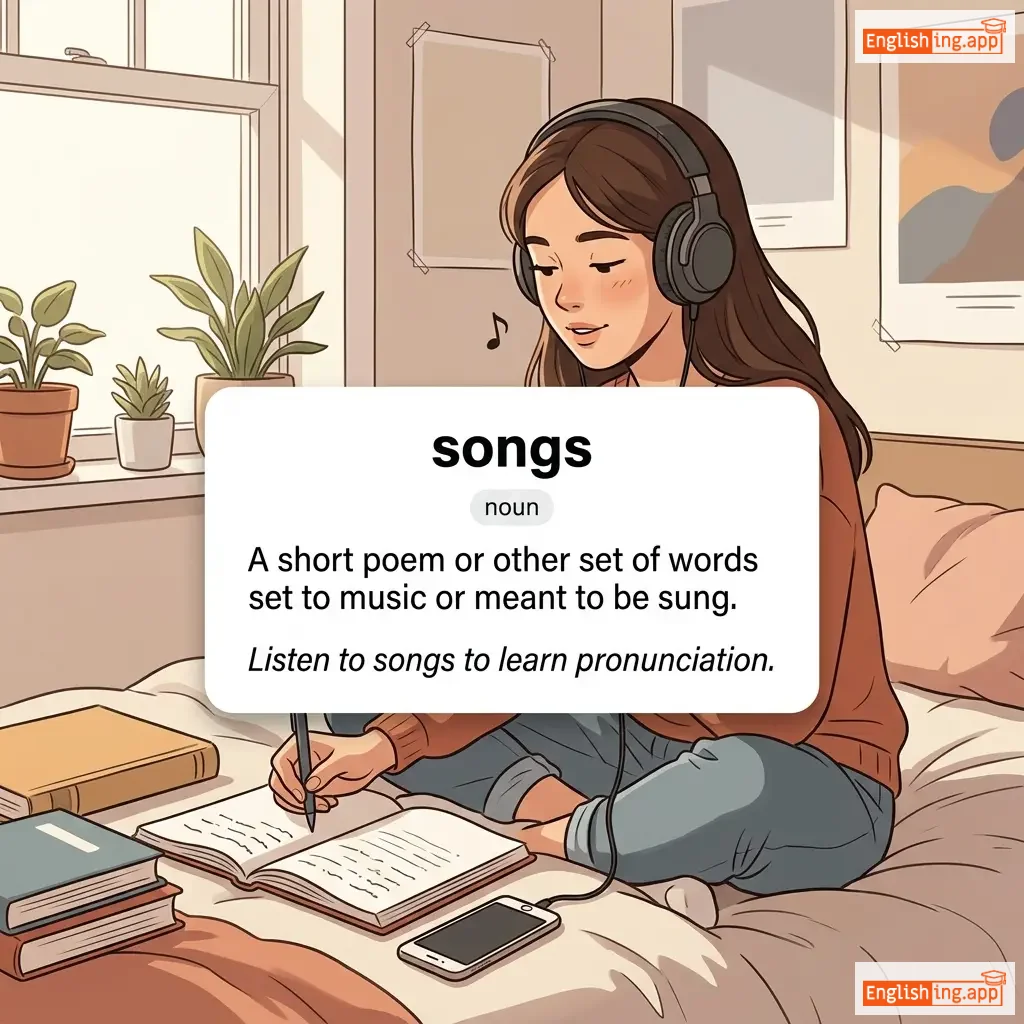
songs definition card — visual illustration of the meaning
noun
sɔːŋz
песни (pesni)

A short poem or other set of words set to music or meant to be sung.

"Listen to songs to learn pronunciation."

"Слушайте песни, чтобы учить произношение." (Slushayte pesni, chtoby uchit' proyiznashenie.)
adjective
/ˈsɒnɪk/
звуковой (zvukovoy)

Relating to or involving sound waves or speed of sound.

"The jet created a loud boom when it broke the sonic barrier."

"Самолет создал громкий звук, когда он преодолел звуковой барьер." (Samolyot sozdaval gromkiy zvuk, kogda on preodolel zvukovoy bar'er.)
noun
/ˈsɒnɪt/
сонет (sonet)

A poem of 14 lines using formal rhyme schemes, often about love.

"Shakespeare wrote many famous sonnets about love and beauty."

"Шекспир написал много известных сонетов о любви и красоте." (Shekspir napisal mnogo izvestnykh sonetov o lyubvi i krasote.)
adjective
/səˈnɔːrəs/
глубокий звук (glubokiy zvuk)

Deep, full, and rich in sound.

"The actor's sonorous voice filled the entire theater."

"Сонорный голос актера наполнил весь театр." (Sonornyy golos aktera napolnil ves' teatr.)
adverb
/suːn/
скоро (skoro)

in a short time; shortly

"I will be home soon."

"Я буду дома скоро." (Ya budu doma skoro.)
soothe definition card — visual illustration of the meaning
verb
/suːð/
успокаивать (uspokaivat)

to calm, comfort, or relieve pain or distress

"The mother soothed her crying baby."

"Мать успокоила своего плачущего ребенка." (Mat' uspokoila svoego plachushchego rebenka.)
noun
/ˈsuːθˌseɪər/
предсказатель (predskazatel)

a person who claims to predict the future

"The king consulted a soothsayer before going to war."

"Король проконсультировался с предсказателем перед тем, как отправиться на войну." (Korol' prokonsul'tirovalsya s predskazatelem pered tem, kak otpravit'sya na voyynu.)
🥖

sop

noun
/sɒp/

a concession or appeasement to pacify someone; also a piece of bread dipped in liquid

"The manager offered a bonus as a sop to the unhappy employees."

noun
/ˈsɒfɪzəm/
софизм (sofyizm)

a clever but misleading argument; fallacious reasoning

"The politician's speech was full of sophism designed to mislead voters."

"Речь политика была полна софизмов, предназначенных для того, чтобы ввести избирателей в заблуждение." (Rech' politika byla polna sofizmov, prednaznachennykh dlya togo, chtoby vvesti izbirateley v zabluzhdenie.)
noun
/ˈsɒfɪst/
софист (sofist)

a person who uses clever but misleading arguments

"He was dismissed as a sophist who twisted facts to win debates."

"Его отстранили как софиста, который искажал факты, чтобы выиграть дебаты." (Ego otstranili kak sofista, kotoryj iskazhal fakty, chtoby vyigrat' debaty.)
verb
/səˈfɪstɪkeɪt/
усовершенствовать (usovershenstvovat)

to make something more complex or refined; to educate or develop in taste and manners

"Traveling abroad helped sophisticate his worldview."
"Поездки за границу помогли улучшить его мировоззрение." (Poezdi za granitsu pomogli uluchshit' ego mirovoszrenie.)
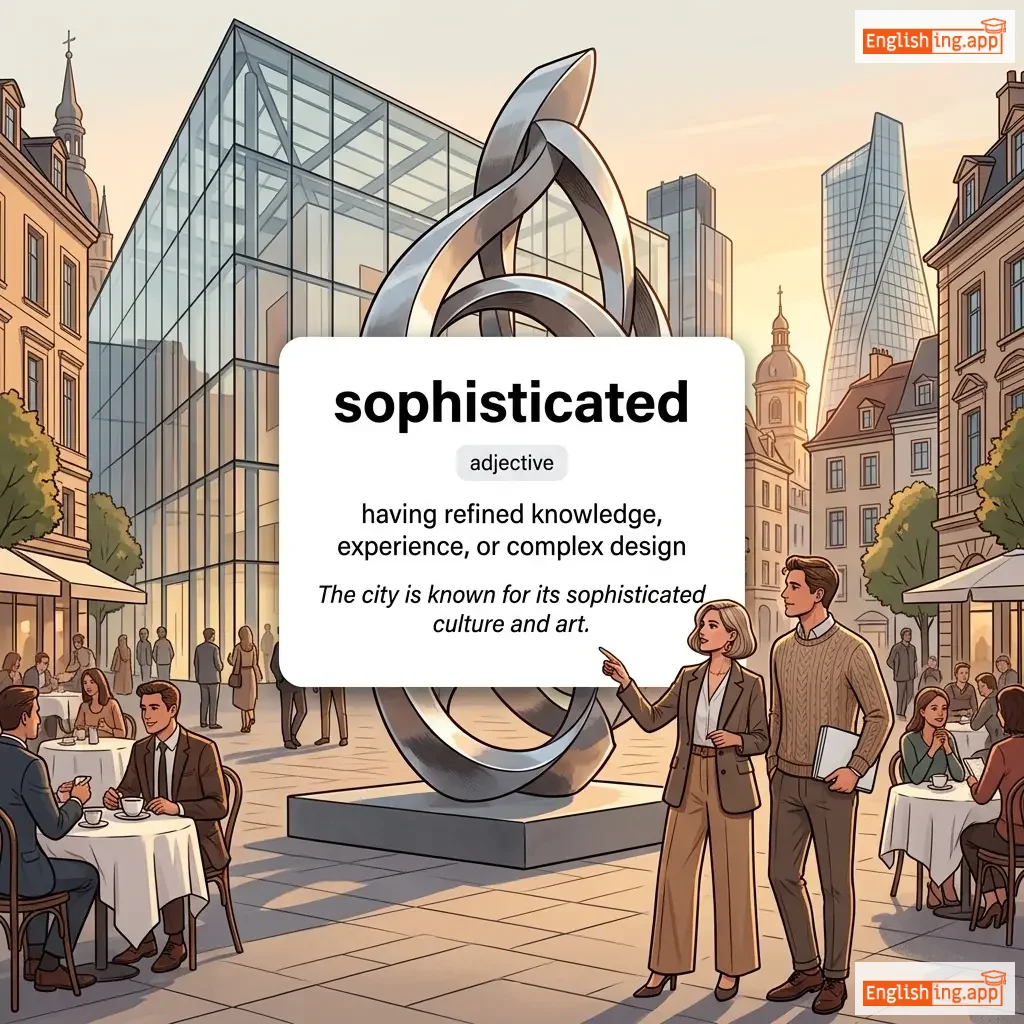
sophisticated definition card — visual illustration of the meaning
adjective
/səˈfɪstɪkeɪtɪd/
утонченный (utochhenny)

having refined knowledge, experience, or complex design

"The city is known for its sophisticated culture and art."

"Город известен своей утонченной культурой и искусством." (Gorod izvesten svoey utochhennoy kul'turoy i iskusstvom.)
sophistication definition card — visual illustration of the meaning
noun
/səˌfɪstɪˈkeɪʃən/
софистикация (sofistikatsiya)

the quality of being refined, cultured, or complex

"Her sophistication impressed everyone at the party."

"Ее софистикация впечатлила всех на вечеринке." (Eyo sofistikatsiya vpechatlila vsekh na vecherinke.)
noun
/ˈsɒfɪstri/
софистика (sofisthika)

the use of clever but false arguments, often to deceive

"The politician's speech was full of sophistry."

"Речь политика была полна софистики." (Rech' politika byla polna sofistiki.)
noun
/ˈsɑːfmɔːr/
студент второго курса (student vtorogo kursa)

a student in their second year of study at a university or high school

"He’s a sophomore in college, studying computer science."

"Он студент второго курса в университете, изучающий информатику." (On student vtorogo kursa v universitete, izuchayushchiy informatiky.)
adjective
/ˌsɒfəˈmɒrɪk/
незрелый (nezrely)

showing immaturity and overconfidence, like a sophomore

"His sophomoric behavior embarrassed his friends."

"Его незрелое поведение поставило в неловкое положение его друзей." (Ego nezreloe povedenie postavilo v nelovkoe polozhenie ego druzey.)
soporific definition card — visual illustration of the meaning
adjective
/ˌsɒpəˈrɪfɪk/
счастье (schastye)

tending to induce drowsiness or sleep; causing sleepiness

"The professor's lecture was so soporific that half the class fell asleep."

"Она не могла скрыть свое счастье, когда получила премию." (Ona ne mogla skryt' svoyo schast'ye, kogda poluchila premiyu.)