Словари

Словарь английского языка | Значения слов, определения и примеры

mediocrity definition card — visual illustration of the meaning
noun
ˌmiː.diˈɒk.rə.ti
средность (srednost)

Being average or ordinary, not particularly good.

"He refused to settle for mediocrity and aimed for greatness."

"Он отказался довольствоваться посредственностью и стремился к величию." (On otkazalsya dovol'stvovat'sya posredstvennost'yu i stremilsya k velichiyu.)
noun
/ˌmɛdɪˈteɪʃən/
медитация (meditatsiya)

The practice of focusing the mind to achieve calmness, clarity, or spiritual growth.

"She practices meditation every morning to start her day peacefully."

"Она практикует медитацию каждое утро, чтобы начать свой день с покоем." (Ona praktikuet meditatsiyu kazhdoe utro, chtoby nachat' svoy den' s pokoyem.)
noun
/ˈmiːdiəm/
средство (sredstvo)

A means or channel of communication, expression, or artistic work.

"Television is a powerful medium for spreading information."

"Телевидение - мощное средство распространения информации." (Televidenie - moshchnoe sredstvo rasprostraneniya informatsii.)
noun
/ˈmɛdli/
смесь (smes)

A mixture of different things, especially musical tunes combined together.

"The band played a medley of popular songs."

"Группа сыграла смесь популярных песен." (Gruppa sygrala smes' populyarnykh pesen.)
adjective
/miːk/
кроткий (krotkiy)

Quiet, gentle, and submissive in nature.

"Despite his strength, he remained meek and humble."

"Несмотря на свою силу, он остался кротким и скромным." (Nesmotrya na svoyu silu, on ostalsya krotkim i skromnym.)
adverb
/ˈmiːk.li/
смиренно; покорно (smirennо; pokorno)

in a quiet, gentle way; without resistance or protest

"He meekly accepted the criticism without arguing."

"Он смиренно принял критику, не споря." (On smirенно prinyal kritiku, ne sporya.)
noun
/ˈmiːknəs/
смирение (smireniye)

The quality of being quiet, gentle, and submissive

"His meekness was often mistaken for weakness by his colleagues."

"Его смирение часто воспринимали как слабость его коллегами." (Ego smireniye chasto vosprinimali kak slaboyst' ego kollegami.)
meet definition card — visual illustration of the meaning
verb
/miːt/
встретиться (vstretytsya)

To come into the presence of someone by chance or arrangement.

"I will meet you at the cafe tomorrow."

"Я встречу тебя в кафе завтра." (Ya vstretyu tebya v kafe zavtra.)
noun
/ˈmiːtɪŋ/
встреча (vstrecha)

A gathering of people for discussion or decision-making.

"The board had a meeting to finalize the budget."
"Совет провел встречу, чтобы завершить бюджет." (Sovet provel vstrechu, chtoby zavershit' byudzhet.)
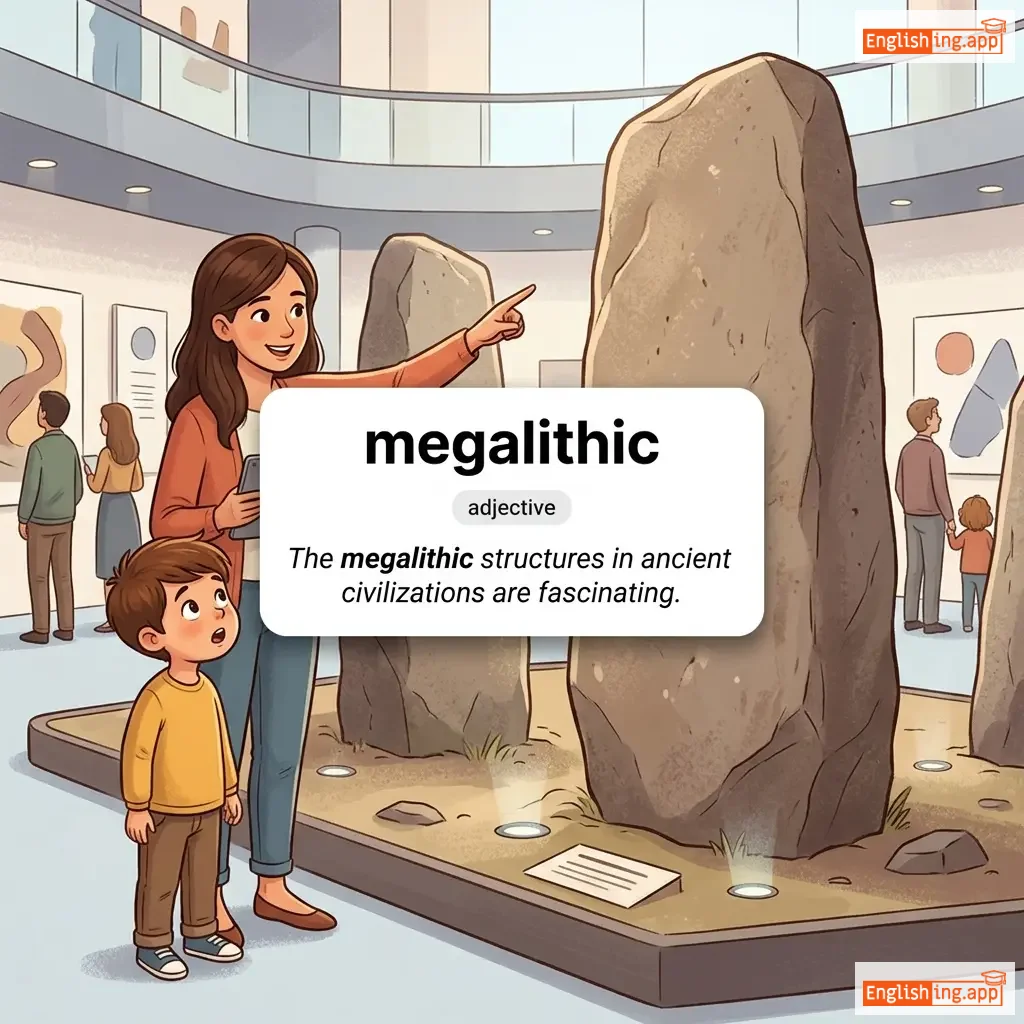
megalithic definition card — visual illustration of the meaning
adjective
ˌmɛɡəˈlɪθɪk
мегалитический (megaliticheskiy)

Relating to or denoting prehistoric monuments made of or containing large stones.

"The megalithic structures in ancient civilizations are fascinating."

"Мегалитические сооружения в древних цивилизациях fascinируют." (Megaliticheskiye sooruzheniya v drevnikh tsivilizatsiyakh fasciniruyut.)
megalomania definition card — visual illustration of the meaning
noun
/ˌmɛɡələˈmeɪniə/
бредовые фантазии о власти, богатстве или всевластии (bredovye fantazii o vlasti, bogatstve ili vsevlastii)

A condition characterized by delusional fantasies of power, wealth, or omnipotence.

"The dictator’s megalomania led him to believe he was invincible."

"Мегаломания диктатора заставила его поверить, что он непобедим." (Megalomaniya diktatora zastavila ego poverit, chto on nepobedim.)
adjective
/ˌmel.ənˈkɒl.ɪk/
грустный и задумчивый; выражать или чувствовать грусть (melankholichny)

sad and thoughtful; feeling or expressing sadness

"The melancholic music made everyone feel sad."

"Меланхоличная музыка заставила всех почувствовать грусть." (Melankholichnaya muzyka zastoavila vsekh pochuvstvovat' grust')
noun
/ˈmɛlənˌkɒli/
меланхолия (melankholiya)

A deep, persistent sadness or gloom.

"She felt a deep melancholy after hearing the tragic news."

"Она почувствовала глубокую меланхолию, услышав трагические новости." (Ona pochuvstvovala glubokuyu melankholiyu, uslyshav tragicheskie novosti.)
noun
/meɪˈlɑːnʒ/
смешение (smeshchenie)

A mixture of different things or styles.

"The festival offered a melange of music, food, and art."

"Фестиваль предложил смесь музыки, еды и искусства." (Festival predlozhil smes' muzyki, yedy i iskusstva.)
noun
/ˈmeɪleɪ/
хаотичная драка (khaotichnaya draka)

A noisy, confused fight or crowd situation.

"A melee broke out during the football match."

"Во время футбольного матча началась хаотичная драка." (Vo vremya futbol'nogo matcha nachalas' khaotichnaya draka.)
verb
/ˈmiːliəˌreɪt/
улучшать (uluchshat)

To make something better or improve a condition.

"The new policies aim to meliorate the living conditions of the poor."

"Новые политики направлены на улучшение условий жизни бедных." (Novye politiki napravleny na uluchshenie usloviy zhizni bednykh.)
noun
/ˈmiːliərɪzəm/
мелиоризм (melyorism)

The belief that the world tends to improve and that humans can aid its betterment.

"Her philosophy of meliorism kept her hopeful during difficult times."

"Её философия мелиоризма поддерживала её надежду в трудные времена." (Yeyo filosofiia meliorizma podderzhivala yeyo nadezhdu v trudnye vremena.)
adjective
/məˈlɪfluəs/
мелодичный (melodichnyy)

Sweet or musical; pleasant to hear.

"The singer’s mellifluous voice enchanted the audience."

"Мелодичный голос певца очаровал аудиторию." (Melodichnyy golos pevtsa ocharoval auditoriyu.)
adjective
/ˈmel.əʊ/
мягкий и приятный; расслабленный и нежный (melo)

soft and pleasant; relaxed and gentle

"The mellow evening light created a peaceful atmosphere."

"Мягкий свет вечера создавал мирную атмосферу." (Myagkiy svet vechera sozdaval mirnuyu atmosferu.)
adjective
/məˈloʊdiəs/
мелодичный (melodichny)

Having a pleasant tune; tuneful.

"She played a melodious tune on the piano."

"Она сыграла мелодичную мелодию на пианино." (Ona sygrala melodichnuyu melodiya na piano.)
noun
/ˈmɛləˌdrɑːmə/
мелодрама с преувеличениями (melodrama s preuvelicheniyami)

A dramatic piece with exaggerated characters and exciting events intended to appeal to the emotions.

"The movie was criticized for its excessive melodrama."

"Фильм был раскритикован за излишний мелодраматизм." (Film byl raskritikovann za izlishniy melodramatizm.)
noun
/ˈmɛlədi/
мелодия (melodiya)

A sequence of musical notes that are musically satisfying; a tune.

"The melody of the song stayed in my mind all day."
"Мелодия песни оставалась в моей голове весь день." (Melodiya pesni ostavalas' v moyey golove ves' den'.)
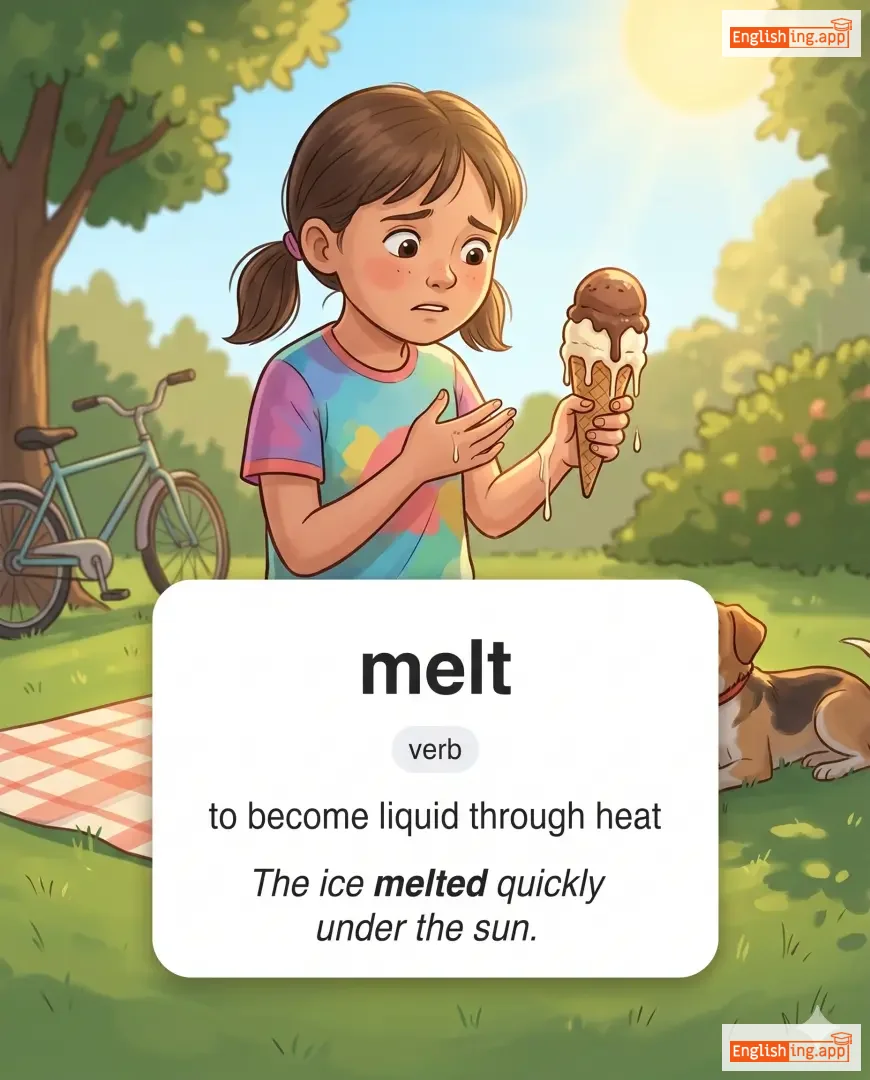
melt definition card — visual illustration of the meaning
verb
/mɛlt/
таять (tayat)

to become liquid through heat

"The ice melted quickly under the sun."

"Лёд растаял быстро под солнцем." (Lyod rastayal bystro pod solntsem.)
verb, noun, adjective
/ˈmeltɪŋ/
плавление (plavleniye)

the process of changing from solid to liquid due to heat; becoming softer or less rigid; emotionally moving or tender

"The ice is melting quickly under the hot sun."

"Лёд быстро тает под жарким солнцем." (Lyod bystro tayet pod zharkim solntsem)
noun
/ˈmembər/
член (chlen)

a person or thing that belongs to a group or organization

"She is a member of the local sports club."

"Она является членом местного спортивного клуба." (Ona yavyayetsya chlenom mestnogo sportivnogo kluba.)
members definition card — visual illustration of the meaning
noun
ˈmem.bərz
члены (chleny)

A person, animal, or plant belonging to a particular group; an individual belonging to a group such as a society or team.

"Members collaborate to finalize recruitment decisions."

"Члены команды сотрудничают, чтобы завершить процесс набора персонала." (Chleny komandy sotrudnichayut, chtoby zavershit' protsess nabora personala.)
membership definition card — visual illustration of the meaning
noun
/ˈmɛmbərʃɪp/
членство (chlenstvo)

The state of being a member of a group, organization, or club.

"Her membership in the gym expires next month."

"Её членство в спортзале заканчивается в следующем месяце." (Yeyo chlenstvo v sportzale zakanchivaetsya v sleduyushchem mesyatse.)
noun
/ˈmɛm.breɪn/
мембрана (membrana)

A thin layer of tissue or material that covers, separates, or connects structures.

"The cell membrane controls the movement of substances in and out of the cell."

"Клеточная мембрана контролирует движение веществ внутрь и наружу клетки." (Kletochnaya membrana kontroliruet dvizhennye veshchestv vnutr i naruzhu kletki.)
noun
/məˈmɛn.toʊ/
сувенир (suvenir)

An object kept as a reminder of a person, place, or event.

"She kept the ticket as a memento of their first concert together."

"Она оставила билет как память о их первом концерте вместе." (Ona ostavila bilet kak pamyat' o ikh pervom kontserte vmeste.)
📝

memo

noun
/ˈmɛmoʊ/

a written message, typically in a business setting

"He wrote a memo to the staff about the upcoming meeting."

noun
/ˈmɛm.wɑːr/
мемуары (memuary)

A historical account or autobiography written from personal experience.

"The author’s memoir details her journey through hardship and success."

"Мемуары автора описывают её путь через трудности и успехи." (Memuary avtora opisyvayut yeye put' cherez trudnosti i uspekhi.)
memorable definition card — visual illustration of the meaning
adjective
/ˈmɛm.ər.ə.bəl/
запоминающийся (zapominayushchiesya)

Worth remembering because it is special or unusual.

"Their wedding was one of the most memorable days of their lives."
"Их свадьба была одним из самых запоминающихся дней в их жизни." (Ikh svad'ba byla odnim iz samykh zapominayushchikhsya dney v ikh zhizni.)
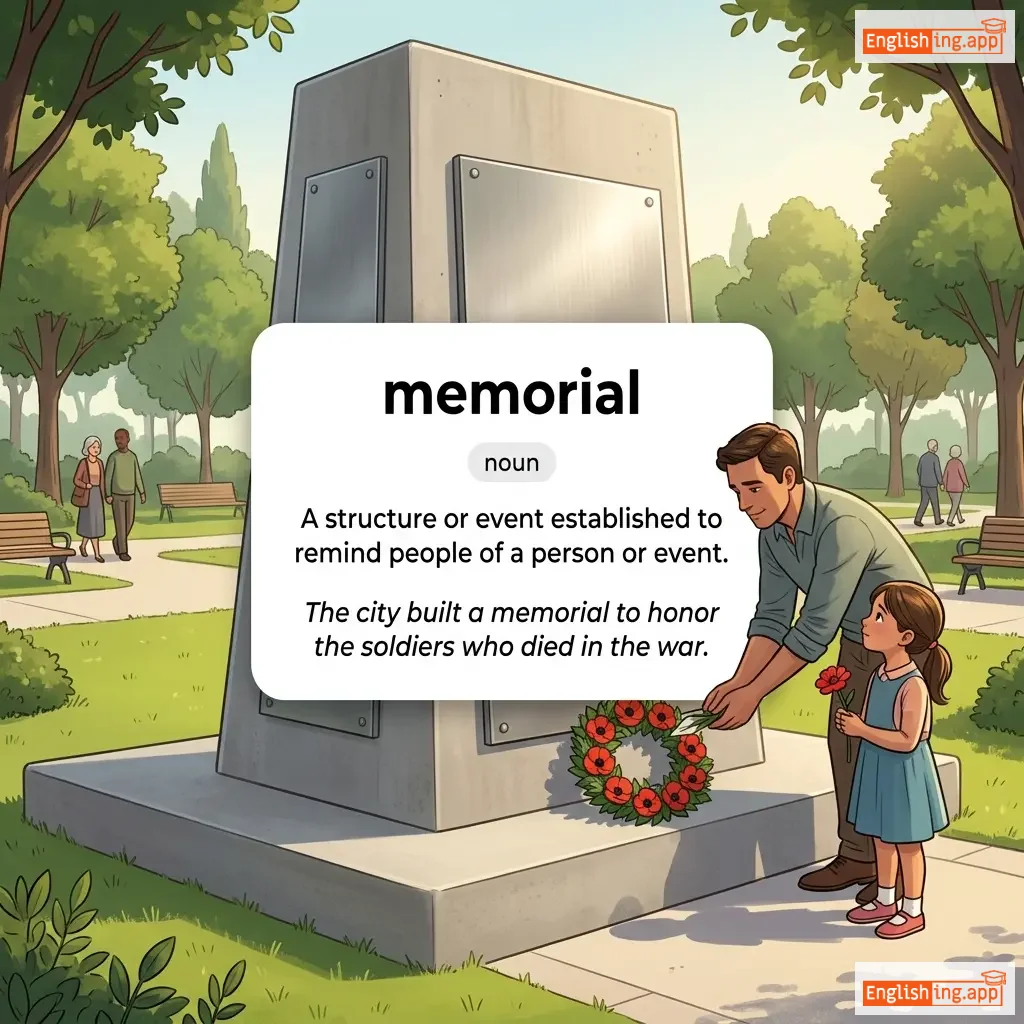
memorial definition card — visual illustration of the meaning
noun
/məˈmɔːr.i.əl/
памятник (pamyatnik)

A structure or event established to remind people of a person or event.

"The city built a memorial to honor the soldiers who died in the war."

"Город построил памятник, чтобы почтить солдат, погибших на войне." (Gorod postroil pamyatnik, chtoby pochtit' soldat, pogibshikh na voyne.)
verb
/məˈmɔːriəlaɪz/
увековечить (uvekovechit)

to preserve the memory of a person or event, often through a ceremony, monument, or record

"The city decided to memorialize the hero with a statue in the central square."

"Город решил увековечить героя статуей на центральной площади." (Gorod reshil uvekovechit' geroia statuiei na tsentral'noi ploshchadi.)
memorization definition card — visual illustration of the meaning
noun
ˌmɛməraɪˈzeɪʃən
запоминание (zapominanie)

The process of learning or committing something to memory

"Memorization of important information is crucial for exams."

"Запоминание важной информации критически важно для экзаменов." (Zapominanie vazhnoi informatsii kriticheski vazhno dlya ekzamenov.)
memorize definition card — visual illustration of the meaning
verb
/ˈmeməraɪz/
запоминать (zapominat')

to learn something by heart; to commit to memory

"Students need to memorize important formulas for the exam."

"Студентам нужно запомнить важные формулы для экзамена." (Studentam nuzhno zapomnit' vazhnie formuly dlya ekzamina.)
noun
/ˈmɛməri/
память (pamyat)

The faculty of the mind by which information is stored and remembered.

"She has a vivid memory of her childhood home."

"У неё яркое воспоминание о доме её детства." (U neyo yarkoye vospominaniye o dome yeye detstva.)
noun/verb
/ˈmɛnəs/
счастье (schast'ye)

a person or thing that is likely to cause harm; to threaten in a hostile manner

"The hurricane became a menace to the coastal towns."

"Она не могла скрыть свое счастье, когда получила награду." (Ona ne mogla skryt' svoe schast'ye, kogda poluchila nagradu.)
noun
/məˈnæʒəri/
коллекция диких животных (kollekciya dikikh zhivotnykh)

a collection of wild animals kept for exhibition; a diverse or strange group of people or things

"The circus had a menagerie of exotic animals."

"В цирке была коллекция экзотических животных." (V tsirke byla kollekciya ekzoticheskikh zhivotnykh.)
verb
/mɛnd/
ремонтировать (remontirovat)

To repair something that is broken or damaged.

"She learned to mend her torn dress."

"Она научилась ремонтировать свое порванное платье." (Ona nauchilas' remontirovat' svoe porvannoe plat'ye.)
mendacious definition card — visual illustration of the meaning
adjective
/mɛnˈdeɪʃəs/
лживый (lzhivyy)

not telling the truth; lying

"The politician was known for his mendacious statements."

"Политик был известен своими лживыми заявлениями." (Politik byl izvesten svoimi lzhivymi zayavleniyami.)
noun
/mɛnˈdæsəti/
лживость (lzhivost)

the tendency to be untruthful; dishonesty

"The journalist exposed the mendacity of the officials."

"Журналист раскрыл ложь официальных лиц." (Zhurnalist raskryl lozh' ofitsial'nykh lits.)
noun
/ˈmɛndɪkənt/
попрошайка (poproshayka)

a beggar; a person who lives by asking for alms

"The mendicant asked for food at the monastery gate."

"Попрошайка попросил еду у ворот монастыря." (Poproshayka poprosil yedu u vorot monastyrya.)
noun
/ˈmɪstəs/
багридовый сом (bagridovyy som)

a genus of catfish found in Asia, commonly known as bagrid catfish

"The mystus fish is commonly found in rivers and streams of South Asia."

"Рыба Mystus обычно встречается в реках и ручьях Южной Азии." (Ryba Mystus obychno vstrechayetsya v rekhakh i ruchyakh Yuzhnoy Azii)
menial definition card — visual illustration of the meaning
adjective
/ˈmiːniəl/
мелкие задачи (melkie zadachi)

lowly and sometimes degrading; related to unskilled or routine tasks

"He worked long hours doing menial tasks in the factory."

"Он работал долгие часы, выполняя мелкие задачи на фабрике." (On rabotal dolgiy chasy, vypolnyaya melkie zadachi na fabrike.)
adjective
/ˈmɛntəl/
психический (psikhicheskiy)

Relating to the mind, thoughts, or intellectual processes.

"He needs to take a break for his mental health."

"Ему нужно сделать перерыв для своего психического здоровья." (Yemu nuzhno sdelat' pereryv dlya svoego psikhicheskogo zdorov'ya.)
mental focus definition card — visual illustration of the meaning
noun
ˈmɛn.təl ˈfoʊ.kəs
умственная концентрация (umstvennaya kontsentratsiya)

The ability to concentrate deeply on a specific task or thought; mental concentration and attention.

"Meditation improves mental focus and cognitive performance."

"Медитация улучшает умственную концентрацию и когнитивные способности." (Meditatsiya uluchshaet umstvennuyu kontsentratsiyu i kognitivnye sposobnosti.)
noun
/mɛnˈtæləti/
менталитет (mentalitet)

a particular way of thinking; mindset or outlook

"Her positive mentality helped her overcome many challenges."

"Её позитивный менталитет помог ей преодолеть многие трудности." (Yeyo pozitivnyj mentalitet pomog yey preodolet' mnogie trudnosti.)
adverb
/ˈmɛntəli/
умственно (umstvenno)

in a way that relates to the mind or intellect rather than the body

"She felt mentally exhausted after the long exam."

"Она чувствовала себя умственно истощённой после длинного экзамена." (Ona chuvstvovala sebya umstvenno istochyonnoj posle dlinogo ekzamenya.)
verb
/ˈmɛnʃən/
упомянуть (upomyanut)

To refer to something briefly without giving much detail.

"He mentioned her name during the meeting."

"Он упомянул ее имя во время встречи." (On upomyanuł yeyo imya vo vremya vstrechi.)