Словари

Словарь английского языка | Значения слов, определения и примеры

adjective
/ˈsɛksi/
сексуальный (seksual'nyy)

sexually attractive or exciting

"She wore a sexy red dress to the party."

"Она носила сексуальное красное платье на вечеринке." (Ona nosila seksual'noye krasnoye plat'ye na vecherinke.)
adjective
/ˈʃæbi/
потрепанный (potreppannyy)

In poor condition through long use or lack of care; of low quality.

"The hotel room looked shabby and old-fashioned."

"Номер в отеле выглядел потрепанным и старомодным." (Nomer v otele viglyadel potreppannym i staromodnym.)
noun
/ʃæk/
хижина (khizhina)

a small, roughly built house or hut, often poor or temporary

"They spent the weekend in a small wooden shack by the river."

"Они провели выходные в небольшой деревянной хижине у реки." (Oni proveli vykhodnye v nebol'shoy derevyannoy khizhine u reki.)
verb
/ˈʃækəl/
оковы (okovy)

to chain or restrain; to restrict someone’s actions or freedom

"Outdated regulations shackle small businesses and slow innovation."

"Устаревшие правила сковывают малые предприятия и замедляют инновации." (Ustarevshiye pravila skovyvayut malye predpriyatiya i zamedlyayut innovatsii.)
noun
/ˈʃæd.ək/
помело (pomelo)

a large citrus fruit similar to grapefruit; pomelo

"The shaddock is the largest citrus fruit in the world."

"Шадок — самый крупный цитрусовый фрукт в мире." (Shadok — samyy krupnyy tsitrusovyy frukt v mire.)
noun, verb
/ʃeɪd/
тень (ten)

a sheltered or darker area where direct light is blocked; to block light from something

"We sat under the tree for some shade."
"Мы сидели под деревом и нашли немного тени." (My sideli pod derevom i nashli nemnogo teni)
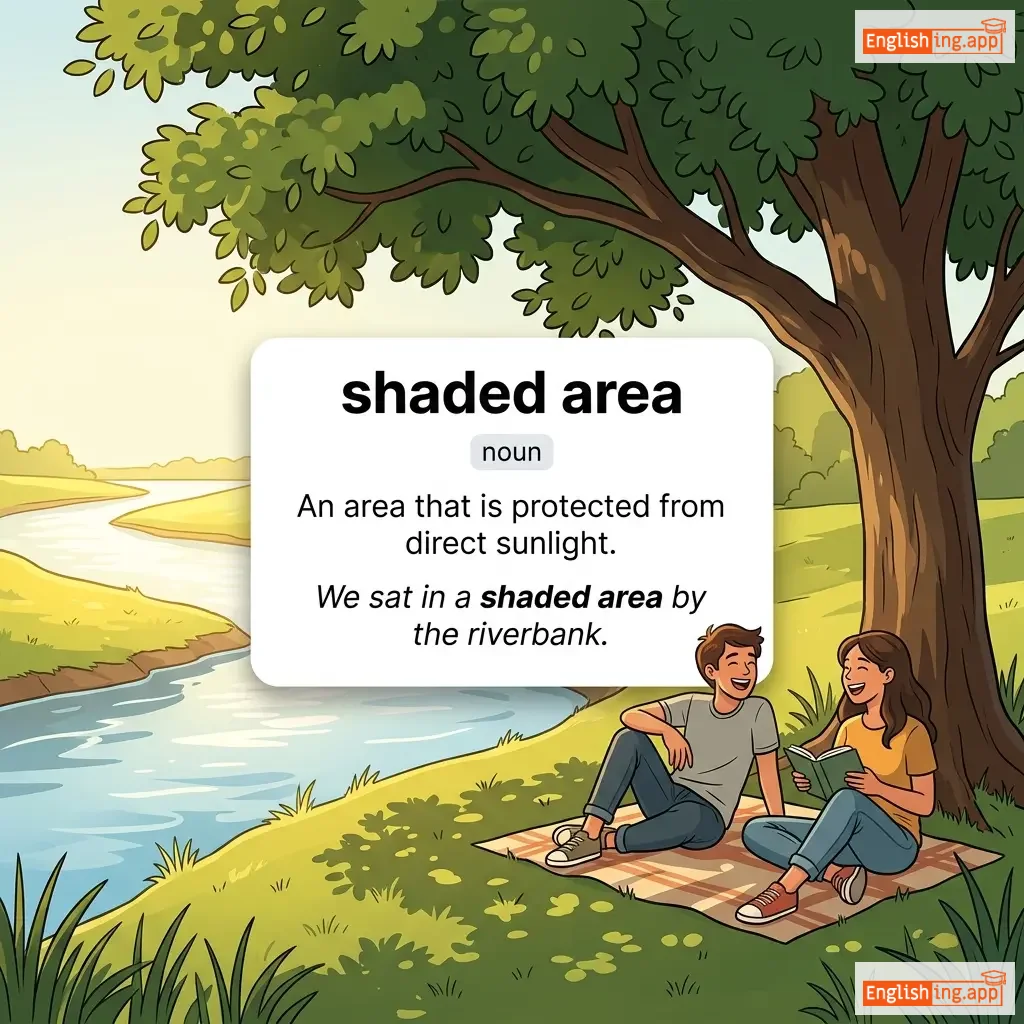
shaded area definition card — visual illustration of the meaning
noun
ˈʃeɪdɪd ˈɛəriə
затененная зона (zatenennaya zona)

An area that is protected from direct sunlight.

"We sat in a shaded area by the riverbank."

"Мы сидели в затененной зоне у берега реки." (My sidel v zatenennoy zone u berega reki.)
noun, verb
/ˈʃæd.oʊ/
тень (ten')

a dark area or shape made when something blocks light; to follow or observe secretly

"His shadow stretched long in the evening sun."

"Его тень растянулась длинной в вечернем солнце." (Ego ten' rastyanulas' dlinnoi v vechernem solntse.)
adjective
/ˈʃeɪ.di/
затенённый; подозрительный; нечестный; (zatenyonnyy; podozritel'nyy; nechesnyy)

providing shade; dishonest; suspicious

"The shady businessman made a suspicious deal."
"Затенённый бизнесмен заключил подозрительную сделку." (Zatenyonyy biznesmen zaklyuchil podozritel'nuyu sdelku.)
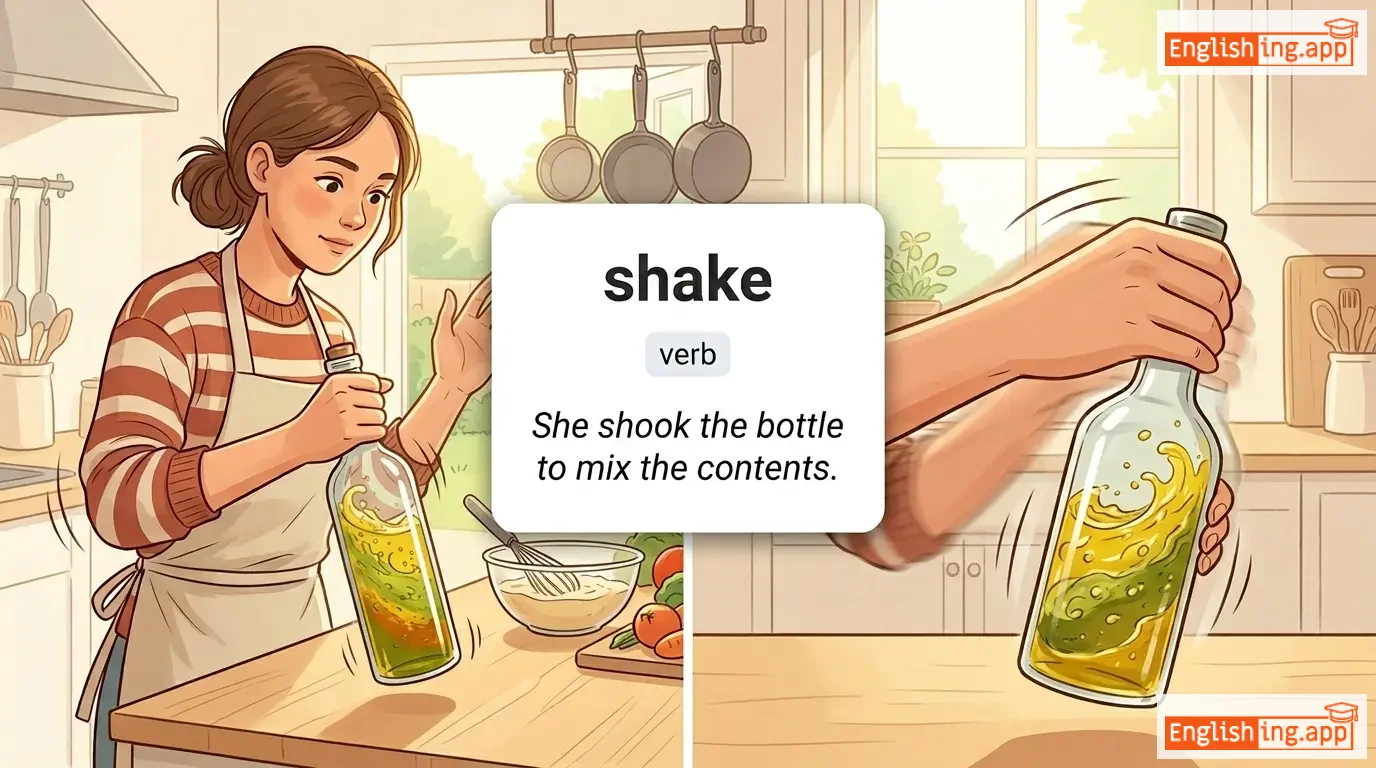
shake definition card — visual illustration of the meaning
verb
/ʃeɪk/
потрясти (potryasti)

to move or cause to move up and down or from side to side with rapid, short movements

"She shook the bottle to mix the contents."

"Она потрясла бутылку, чтобы смешать содержимое." (Ona potryasla butylku, chtoby smezhat' soderzhimoe.)
adjective
/ˈʃeɪ.ki/
неустойчивый; дрожащий; ненадежный; слабый (neustoychivyy; drozhashchiy; nenadyozhnyy; slaby)

unstable; trembling; unreliable; weak

"His voice was shaky with nervousness."

"Его голос дрожал от нервозности." (Yego golos drozhal ot nervoznosti.)
noun
/ʃeɪl/
сланец (slanets)

a fine-grained sedimentary rock that can be split into thin layers

"The region is rich in shale and natural gas deposits."

"Регион богат сланцем и месторождениями природного газа." (Region bogat slantsem i mestorozhdeniyami prirodnogo gaza.)
modal verb
/ʃæl/
должен (dolzhen)

used to express the future or indicate an intention or determination

"I shall return before sunset."

"Я вернусь до заката." (Ya vernus' do zakata.)
adjective
/ˈʃæl.oʊ/
мелкий (melkiy)

not deep; lacking depth of thought or feeling

"The children played in the shallow water near the shore."

"Дети играли в мелкой воде у берега." (Deti igrali v melkoy vode u berega.)
noun, adjective, verb
/ʃæm/
обман (obman)

something that is not what it appears to be; a false or fake thing; to pretend

"The deal turned out to be a sham."

"Сделка оказалась обманом." (Sdelka okazalas' obmanom.)
noun
/ˈʃæmbəlz/
полный беспорядок (polnyy besporyadok)

a state of complete disorder or ruin

"After the storm, the whole town was in shambles."

"После шторма весь город был в полном беспорядке." (Posle shtorma ves' gorod byl v polnom besporyadke.)
noun
/ʃeɪm/
стыд (styd)

a painful feeling of humiliation or distress caused by the consciousness of wrong or foolish behavior

"He felt deep shame after lying to his friend."

"Он почувствовал глубокий стыд после того, как соврал своему другу." (On pochuvstvoval glubokiy styd posle togo, kak sovral svoemu drugu.)
adjective
/ˈʃeɪm.fəl/
позорный; бесславный; стыдный (pozornyj; besslavnyj; stydnyj)

causing shame; disgraceful; embarrassing

"His shameful behavior embarrassed the entire family."

"Его позорное поведение опозорило всю семью." (Ego pozornoye povedeniye opozorilo vsyu sem'yu.)
adjective
/ˈʃeɪm.ləs/
бесстыдный (shaymless)

having no shame; bold and rude; impudent

"The shameless politician refused to apologize for his mistakes."

"Бесстыдный политик отказался извиняться за свои ошибки." (Besstydny politik otkazalsya izvinjatsya za svoi oshibki)
noun
/ˌʃæŋɡriˈlɑː/
воображаемый рай (voobrazhaemyj raj)

a remote, beautiful, imaginary place where life is perfect and peaceful

"They described the island as a modern-day Shangri-La."

"Они описали остров как современный Шангри-Ла." (Oni opisali ostrov kak sovremennyy Shangri-La.)
noun
/ʃeɪp/
форма (forma)

the external form, contours, or outline of someone or something

"The shape of the mountain was clearly visible from the valley."

"Форма горы была четко видна с долины." (Forma gory byla chetko vidna s doliny.)
adjective
/ʃeɪpt/
оформленный (oformlennyy)

having a particular form or appearance

"The sculpture was shaped like a human figure."

"Скульптура была оформлена как человеческая фигура." (Skulptura byla oformlena kak chelovecheskaya figura.)
adjective
/ˈʃeɪp.ləs/
бесформенный (bessformennyy)

having no definite or well-defined shape or form

"The fog created a shapeless mass in the distance."
"Туман создал бесформенную массу вдалеке." (Tuman sozdal bessformennuyu massu vdaleke.)
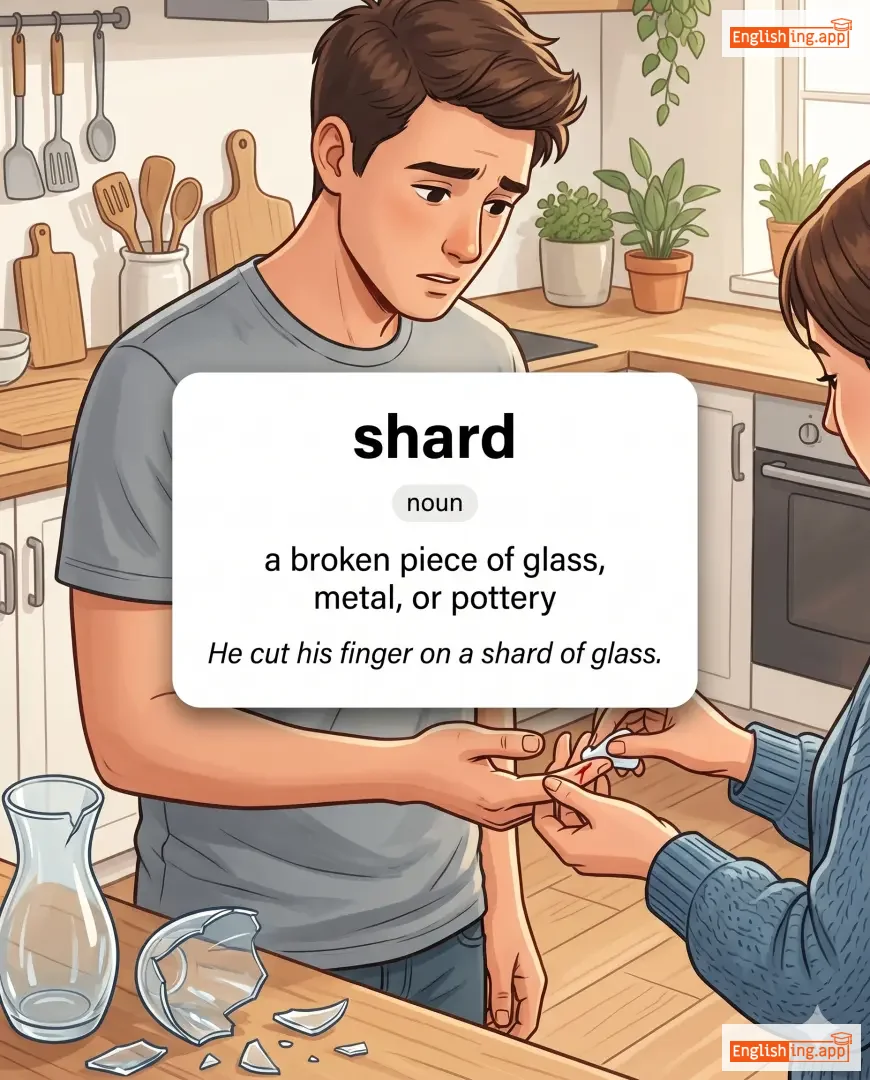
shard definition card — visual illustration of the meaning
noun
/ʃɑːrd/
осколок (oskolek)

a broken piece of glass, metal, or pottery

"He cut his finger on a shard of glass."

"Он порезал палец осколком стекла." (On porezal palets oskolkom stekla.)
verb
/ʃɛər/
делиться (delitsya)

to give a portion of (something) to others or allow others to use or enjoy it

"She decided to share her lunch with her friends."

"Она решила поделиться своим обедом с друзьями." (Ona reshila podelitsya svoim obedom s druz'yami.)
adjective
/ʃɛrd/
общий (obshchiy)

used, done, or experienced by two or more people together

"They live in a shared apartment near the university."

"Они живут в общей квартире рядом с университетом." (Oni zhivut v obshchey kvartire ryadom s universitetom.)
noun
/ˈʃɛərˌhoʊldər/
акционер (aktsioner)

an individual or organization that owns shares in a company

"Each shareholder has the right to vote at the annual meeting."

"Каждый акционер имеет право голосовать на ежегодном собрании." (Kazhdyy aktsioner imeyet pravo golosovat' na yezhgodnom sobranii.)
noun
/ʃɑːrk/
акула (akula)

a large fish with sharp teeth known for being a strong predator in the ocean

"The shark swam silently beneath the boat."

"Акула плавала тихо под лодкой." (Akula plavala tikho pod lodkoy.)
noun
/ˈʃær.ən fruːt/
шерон фрукт (sheron frukt)

a sweet orange persimmon fruit that can be eaten when firm

"The Sharon fruit is sweet and can be eaten like an apple."

"Шерон фрукт сладкий, и его можно есть как яблоко." (Sheron frukt sladkiy, i ego mozhno yest' kak yabloko.)
adjective
/ʃɑːrp/
острый (ostryy)

having a fine edge or point; keen

"The knife is sharp enough to cut through the meat easily."

"Нож достаточно острый, чтобы легко порезать мясо." (Nozh dostatochno ostry, chtoby legko porezat' myaso.)
adverb
/ˈʃɑːrpli/
резко (rezko)

suddenly and strongly; in a cutting or intense way

"Prices rose sharply after the announcement."

"Цены резко выросли после объявления." (Tseny rezko vyrosli posle ob'yavleniya.)
verb
/ˈʃætər/
разбивать (razbivat')

To break suddenly into many small pieces.

"The glass will shatter if you drop it."

"Стекло разобьется, если ты уронишь его." (Steklo razobyotsya, esli ty uronish' ego.)
verb, noun
/ʃeɪv/
брить (brit)

To remove hair from the body, typically using a razor; the act of removing hair

"He likes to shave every morning before work."

"Он любит бриться каждое утро перед работой." (On lyubit britsya kazhdoe utro pered rabotoy)
noun
/ˈʃeɪvɪŋ/
бритьё (brytyo)

the act of removing hair with a razor; a thin strip or piece shaved from something

"He bought a new cream for shaving."

"Он купил новый крем для бритья." (On kupil novyy krem dlya britya.)
pronoun
/ʃi/
она (ona)

a female person or animal previously mentioned or easily identified

"She is going to the market to buy vegetables."

"Она идет на рынок, чтобы купить овощи." (Ona idet na rynok, chtoby kupit' ovoshchi.)
noun
/ʃiːf/
пучок пшеницы (puchok pshenitsy)

a bundle of grain stalks laid lengthwise and tied together after reaping; a bundle of objects tied together

"The farmer carried a sheaf of wheat on his shoulder."

"Фермер нес пучок пшеницы на своем плече." (Fermyer nes puchok pshenitsy na svoem pleche.)
verb
/ʃɪə/
стричь (strich)

to cut the wool off a sheep or to cut something with sharp tools like scissors or shears

"The farmer will shear the sheep in the spring."

"Фермер стрижёт овцу весной." (Fermyer strizhyot ovtsu vesnoy.)
noun
/ʃiːt fɪʃ/
сом (som)

A large freshwater catfish with a broad flat head and long barbels

"The sheat-fish is one of the largest freshwater fish in South Asia."

"Сом — одна из самых крупных пресноводных рыб Южной Азии." (Som odna iz samykh krupnykh presnovodnykh ryb Yuzhnoy Azii)
verb
/ʃiːð/
вложить в ножны (vlozhit' v nozhny)

to put a sword or knife back into its cover

"He quickly sheathed his sword after the duel."

"Он быстро вложил свой меч обратно в ножны после дуэли." (On bystro vlozhil svoi mech obratno v nozhny posle duel.)
verb
/ʃɛd/
сбрасывать (sbrasyvat)

to let something fall off naturally, such as leaves, hair, or tears

"Trees shed their leaves in autumn."

"Деревья сбрасывают свои листья осенью." (Derev'ya sbrozyvayut svoi list'ya osenyu.)
noun
/ʃiːp/
овца (ovtsa)

a farm animal with thick wool that is raised for its wool, meat, and milk

"The farmer keeps a large flock of sheep."

"Фермер держит большое стадо овец." (Fermer derzhit bol'shoye stado ovets.)
adjective
/ʃɪə/
полный (polny)

complete and utter; very steep or transparent

"The cliff was a sheer drop into the sea."

"Утёс был прямым обрывом в море." (Utyos byl pryamym obryvom v more.)
noun
/ʃiːt/
простыня (prostynya)

a large piece of cloth or paper, typically used to cover or protect something

"I need a clean sheet to cover the bed."

"Мне нужно чистое простыня, чтобы накрыть кровать." (Mne nuzhno chistoye prostynya, chtoby nakryt' krovat'.)
noun
/ʃɛlf/
полка (polka)

a flat surface used for storing or displaying things, typically fixed to a wall or inside a cabinet

"I placed the books on the shelf next to the window."

"Я положил книги на полку рядом с окном." (Ya polozhil knigi na polku ryadom s oknom.)
noun
/ʃɛl/
раковина (rakovina)

the hard outer covering of a mollusk or a crustacean, or something similar

"She picked up a beautiful seashell on the beach."

"Она подобрала красивую раковину на пляже." (Ona podobrala krasivuyu rakovinu na plyazhe.)
noun
/ˈʃɛltər/
убежище (ubezhishche)

a place giving temporary protection from bad weather or danger

"They found shelter from the storm in the nearby barn."

"Они нашли убежище от шторма в ближайшем сарае." (Oni nashli ubezhishche ot shtorma v blizhayshem sarae.)
noun
/ˈʃepərd/
пастух (pastukh)

a person who tends and guards sheep

"The shepherd guided his flock to the green pasture."

"Пастух повел свое стадо на зеленую пастбище." (Pastukh povel svoe stado na zelyonuyu pastbishche.)
noun
/ˈʃɜːrbət/
шербет (sherbet)

a sweet flavored drink or a frozen dessert made from sweetened fruit juice

"On hot days, she enjoys a glass of lemon sherbet."

"В жаркие дни она наслаждается стаканом лимонного шербета." (V zharkiye dni ona naslazhdajetsya stakanom limonnogo sherbeta.)
noun
/ˈʃɪbəˌlɛθ/
выражение или вера, отличающие определённую группу людей (vyrazhenie ili vera, otlichayushchie opredyonnuyu gruppu lyudey)

A custom, phrase, or belief distinguishing a particular group of people, often used to identify outsiders.

"The phrase became a political shibboleth during the campaign."

"Фраза стала политическим шибболетом во время кампании." (Fraza stala politicheskim shibbolethom vo vremya kampanii.)
verb
/ʃɪft/
перемещать (peremeshchat)

To move or change from one place, position, or situation to another.

"She had to shift her focus to the new project."

"Ей нужно было перенаправить внимание на новый проект." (Yey nuzhno bylo perenapravit vnimanie na novyy proyekt.)