Словари

Словарь английского языка | Значения слов, определения и примеры

verb
/ˈpoʊ.lə.raɪz/
поляризовать (polyarizovat)

to divide or cause to divide into two sharply contrasting groups or sets of opinions or beliefs

"The controversial decision polarized public opinion."

"Противоречивое решение разделило общественное мнение на два противоположных лагеря." (Protivorechivoe reshenie razdelo obshchestvennoe mnenie na dva protivopolozhnykh lagerya.)
adjective
/ˈpoʊləraɪzd/
поляризованный (polyarizovannyy)

divided into two sharply contrasting groups or opinions

"The debate polarized the community on the issue of climate change."

"Дебаты поляризовали сообщество по вопросу изменения климата." (Debaty polyarizovali soobshchestvo po voprosu izmeneniya klimata.)
noun
/poʊl/
столб (stolb)

a long, slender, vertical object or structure, typically made of wood, metal, or another material

"They placed the flag on top of the pole."

"Они поставили флаг на вершину столба." (Oni postavili flag na vershinu stolba.)
noun
/pəˈlɛmɪk/
поли́тическая атака (politicheskaya ataka)

a strong verbal or written attack on someone or something

"The article was a fierce polemic against the government's policies."

"Статья была яростной политической атакой против политики правительства." (Stat'ya byla yarostnoy politicheskoy atakoy protiv politiki pravitel'stva.)
adjective
/pəˈlɛmɪkəl/
поли́мический (polimicheskiy)

relating to or involving strongly critical or controversial writing or speech

"She wrote a polemical article challenging traditional beliefs."

"Она написала полемическую статью, оспаривающую традиционные убеждения." (Ona napisała polemicheskuyu stat'yu, osporivayushchuyu traditsionnye ubezhdeniya.)
noun
/pəˈlɛmɪks/
поли́тика (politika)

the art or practice of engaging in controversial debate or dispute

"The conference was full of polemics on economic reforms."

"Конференция была полна полемики по экономическим реформам." (Konferentsiya byla polna polemiki po ekonomicheskim reformam.)
noun
/ˈpoʊl.stɑːr/
полярная звезда (polyarnaya zvezda)

a bright star that appears to stay in the same position in the sky and is used for navigation

"Sailors used the polestar to navigate across the ocean."

"Моряки использовали полярную звезду, чтобы ориентироваться через океан." (Moryaki ispol'zovali polyarnuyu zvezdu, chtoby orientirovatsya cherez okean.)
noun
/pəˈliːs/
полиция (politsiya)

a body of officers representing the civil authority of government

"The police arrived quickly to investigate the scene."

"Полиция быстро прибыла на место происшествия для расследования." (Politsiya bystro pribyla na mesto proisshestviya dlya rassledovaniya.)
noun
/pəˈliːsmən/
полицейский (politseyskiy)

a man whose job is to enforce the law and keep public order

"The policeman directed the traffic at the intersection."

"Полицейский регулировал движение на перекрестке." (Politseyskiy reguliroval dvizhene na perekryostke.)
policy definition card — visual illustration of the meaning
noun
/ˈpɑːləsi/
политика (politika)

a course or principle of action adopted or proposed by an organization or individual

"The company revised its privacy policy last month."
"Компания пересмотрела свою политику конфиденциальности в прошлом месяце." (Kompaniya peresmotrela svoyu politiku konfidentsial'nosti v proshlom mesyatse.)
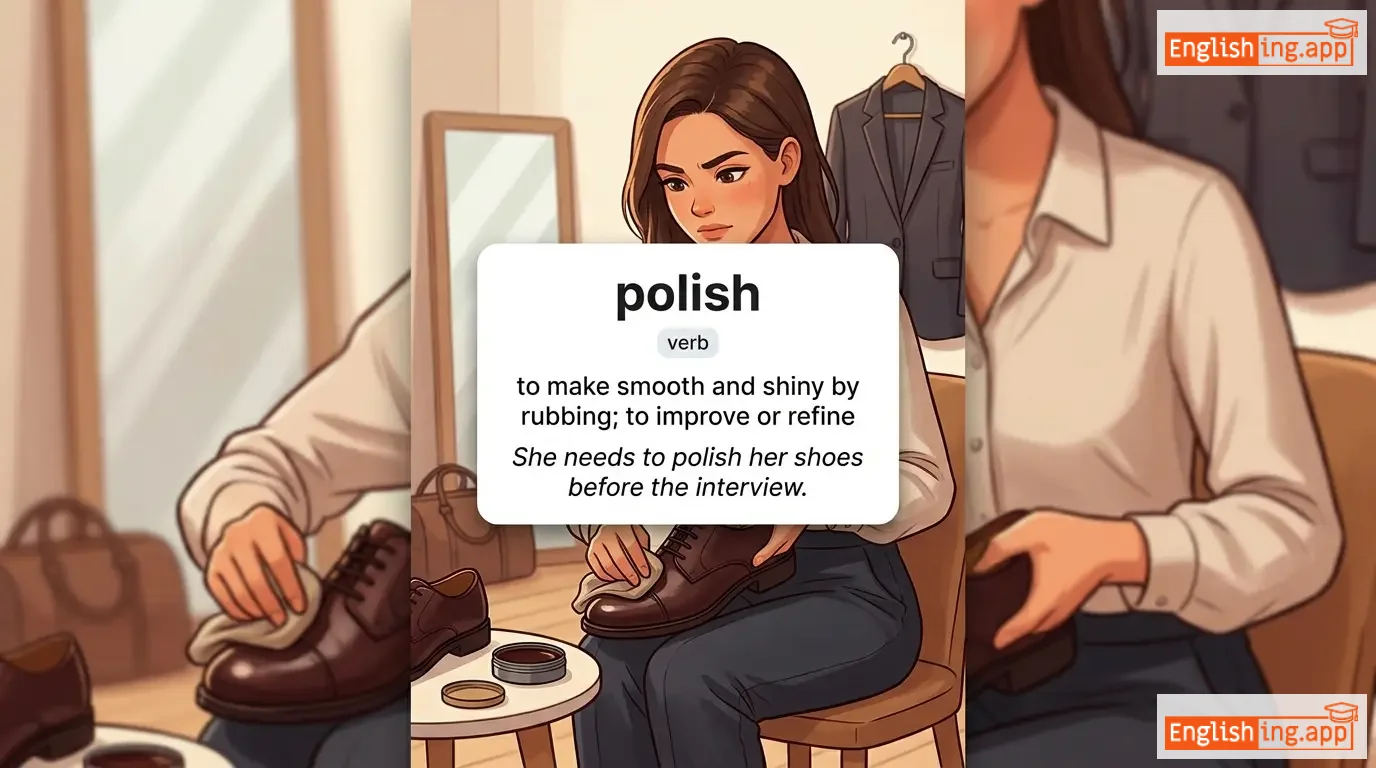
polish definition card — visual illustration of the meaning
verb
/ˈpɑːlɪʃ/
полировать (polirovat)

to make smooth and shiny by rubbing; to improve or refine

"She needs to polish her shoes before the interview."

"Ей нужно отполировать свои туфли перед собеседованием." (Ey nuzhno otpolirovat' svoi tufli pered sobesedovaniem.)
adjective
/ˈpɒlɪʃt/
отполированный, утончённый и элегантный (otpolirovannyy, utochnyonnyy i elegantnyy)

refined, sophisticated, and elegant in appearance or behavior

"She gave a polished performance at the recital."

"Она продемонстрировала полированное исполнение на концерте." (Ona prodemonstrirovala polirovannoye ispolneniye na kontserte.)
adjective
/pəˈlaɪt/
счастье (schastye)

Showing good manners and respect towards others.

"He was very polite to the elderly woman."

"Она не могла скрыть своего счастья, когда получила награду." (Ona ne mogla skryt' svoego schast'ya, kogda poluchila nagradu.)
adverb
/pəˈlaɪt.li/
вежливо; (vezhlivo)

in a respectful and considerate manner; courteously; with good manners

"She politely declined the invitation because she had other commitments."

"Она вежливо отклонила приглашение, потому что у неё были другие обязательства." (Ona vezhlivo otklonila priglashenie, potomu chto u neyo byli drugie obyazatel'stva.)
adjective
/ˈpɒlɪtɪk/
хитрый, разумный (khitryy, razumnyy)

shrewd, prudent, or tactful in practical matters

"It was politic of him to remain silent during the argument."
"Это было мудро с его стороны оставаться молчаливым во время спора." (Eto bylo mudro s ego storony ostavat'sya molchalivym vo vremya spora.)
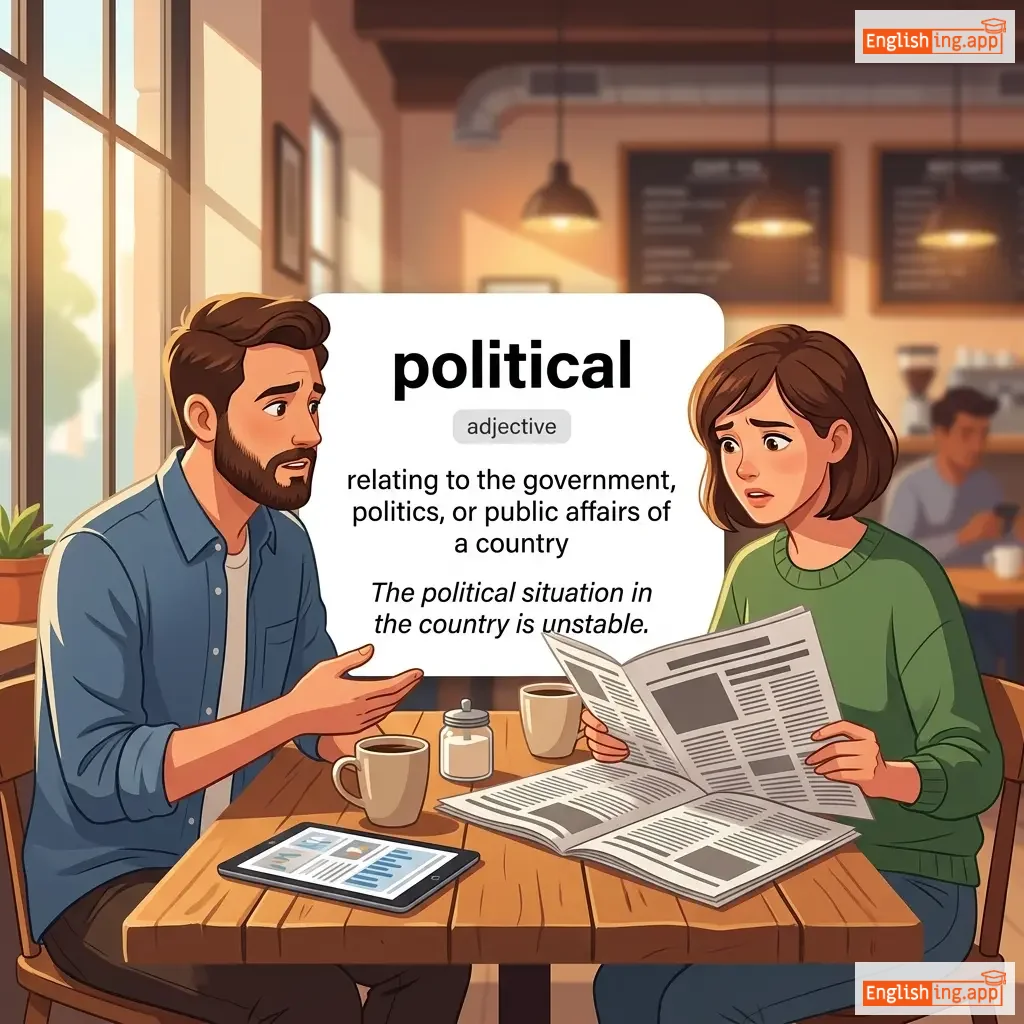
political definition card — visual illustration of the meaning
adjective
/pəˈlɪtɪkəl/
политический (politicheskiy)

relating to the government, politics, or public affairs of a country

"The political situation in the country is unstable."

"Политическая ситуация в стране нестабильна." (Politicheskaya situatsiya v strane nestabil'na.)
adverb
/pəˈlɪtɪkəli/
политически (politicheski)

in a way that relates to politics or government

"The country is politically divided between two major parties."

"Страна политически разделена между двумя основными партиями." (Strana politicheski razdelena mezhdu dvyumya osnovnymi partiyami.)
noun
/pəˈlɪtɪʃən/
политик (politic)

a person who is involved in politics, especially as a profession

"The politician promised to improve the economy."

"Политик пообещал улучшить экономику." (Politik poobeshchal uluchshit' ekonomiku.)
noun
/ˈpɒlɪtɪks/
политика (politika)

activities related to the governance of a country or area, especially the debate between parties having power

"Politics often involves making difficult decisions."

"Политика часто включает принятие трудных решений." (Politika chasto vklyuchayet prinyatiye trudnykh resheniy.)
noun
/ˈpɒlɪti/
политика, система правления (politika, sistema pravleniya)

an organized society or form of government

"The ancient Greek polity had a system of city-states."

"Древнегреческая политика имела систему городов-государств." (Drevnegrecheskaya politika imela sistemu gorodov-gosudarstv.)
noun/verb
/pəʊl/
опрос (opros)

a survey of public opinion or voting in an election

"The poll revealed that most people favored the new policy."

"Опрос показал, что большинство людей поддержало новую политику." (Opros pokazal, chto bol'shinstvo lyudey podderzhalo novuyu politiku.)
noun
/ˈpɒlən/
пыльца (pyl'tsa)

fine powder produced by flowers, used in fertilization

"Bees collect pollen from flowers to make honey."
"Пчёлы собирают пыльцу с цветов, чтобы делать мёд." (Pchëly sobirayut pyl'tsu s tsvetov, chtoby delat' myod.)
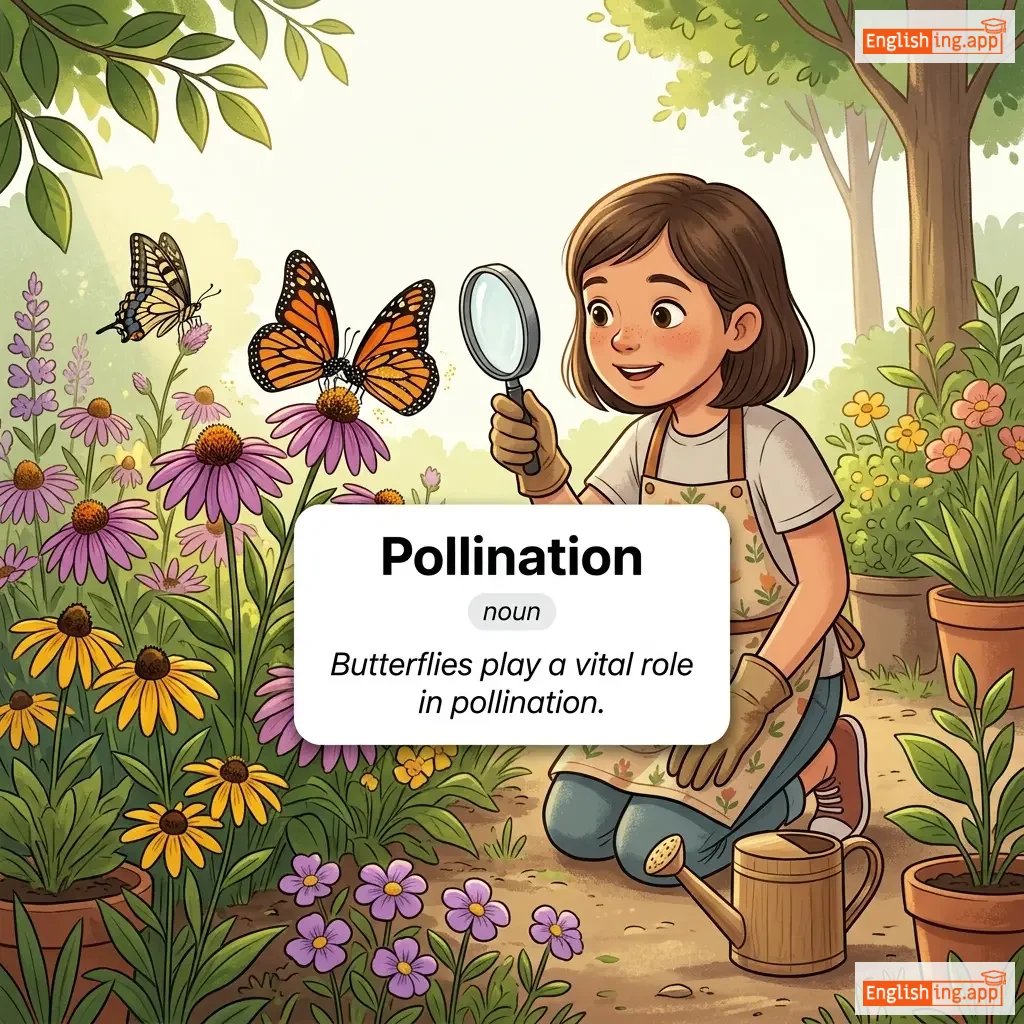
Pollination definition card — visual illustration of the meaning
noun
ˌpɒlɪˈneɪʃən
опыление (opylenie)

The process by which pollen is transferred from flowers, enabling plant reproduction.

"Butterflies play a vital role in pollination."

"Бабочки играют важную роль в опылении." (Babochki igraiut vazhnuu rol' v opylenii.)
noun
/ˈpoʊlstər/
социолог (sotsiolog)

a person or organization that conducts surveys to gauge public opinion

"The pollster predicted a close election outcome."
"Опросчик предсказал близкий результат выборов." (Opros' chik predskazal blizkiy rezultat vyborov.)
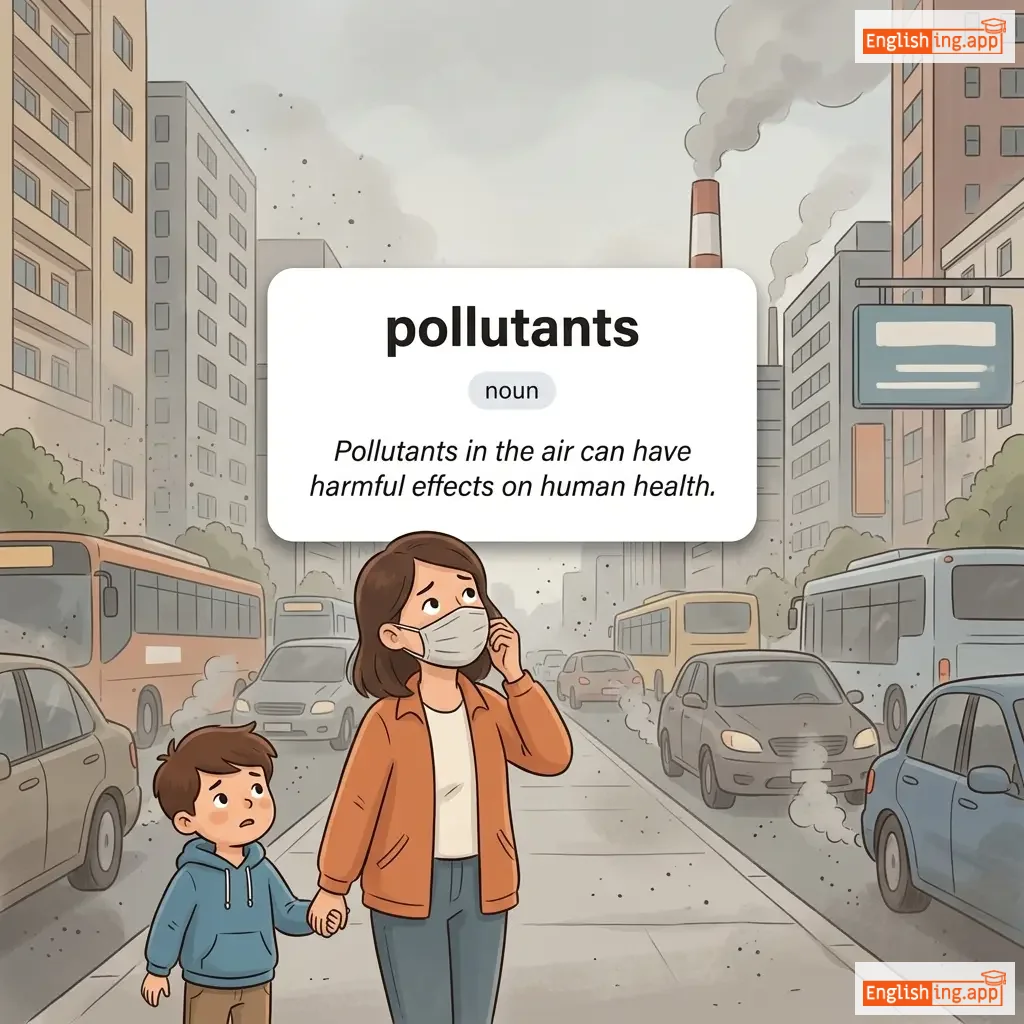
pollutants definition card — visual illustration of the meaning
noun
/pəˈluːtənts/
загрязнители (zagryazniteli)

Harmful substances that contaminate the environment, including air, water, and soil, potentially causing damage to living organisms and ecosystems.

"Pollutants in the air can have harmful effects on human health."
"Загрязнители в воздухе могут оказывать вредное воздействие на здоровье человека." (Zagryazniteli v vozdukhe mogut okazyvat' vrednoe vozdeystvie na zdorov'ye cheloveka.)
pollute definition card — visual illustration of the meaning
verb
/pəˈluːt/
загрязнять (zagryaznyat)

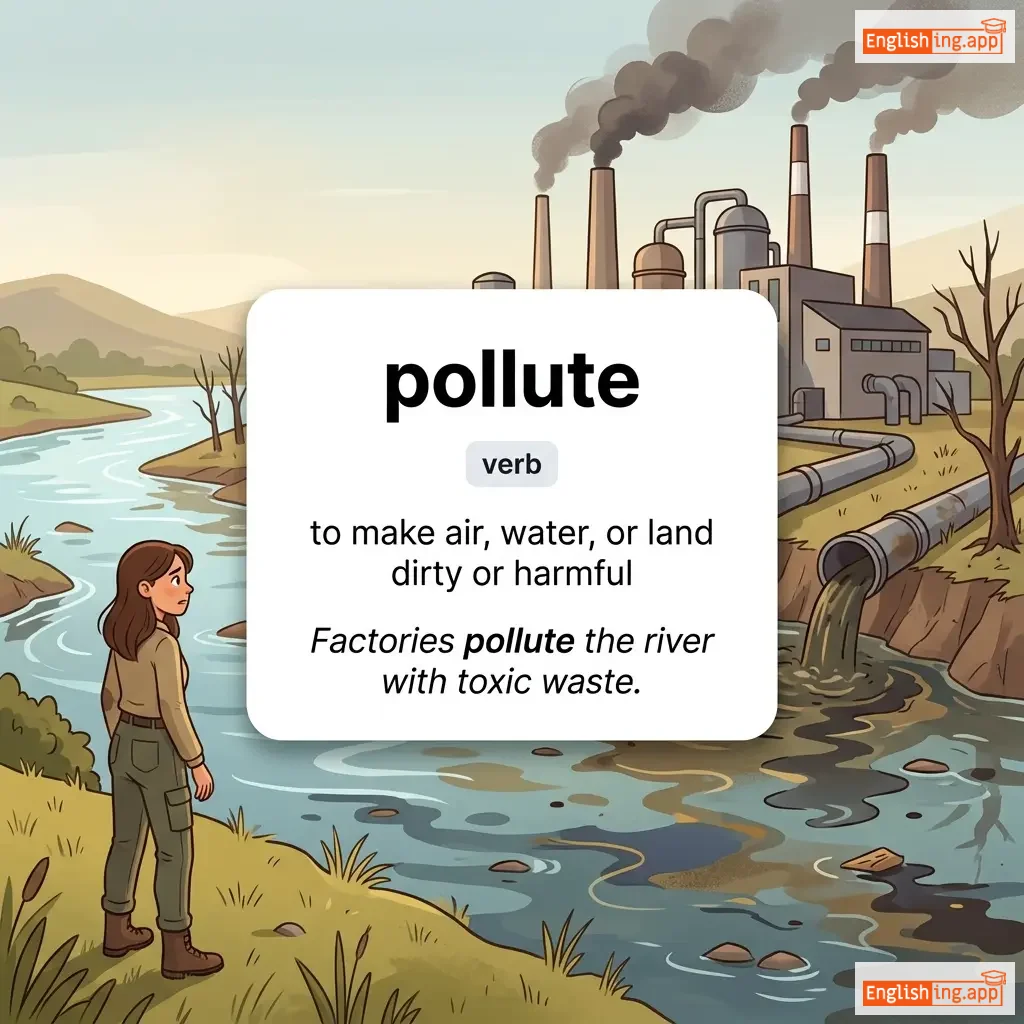
to make air, water, or land dirty or harmful

"Factories pollute the river with toxic waste."
"Фабрики загрязняют реку токсичными отходами." (Fabriki zagryaznyayut reku toksichnymi otdkhodami.)
polluted definition card — visual illustration of the meaning
adjective
/pəˈluː.tɪd/
загрязнённый (zagryaznjonnyj)

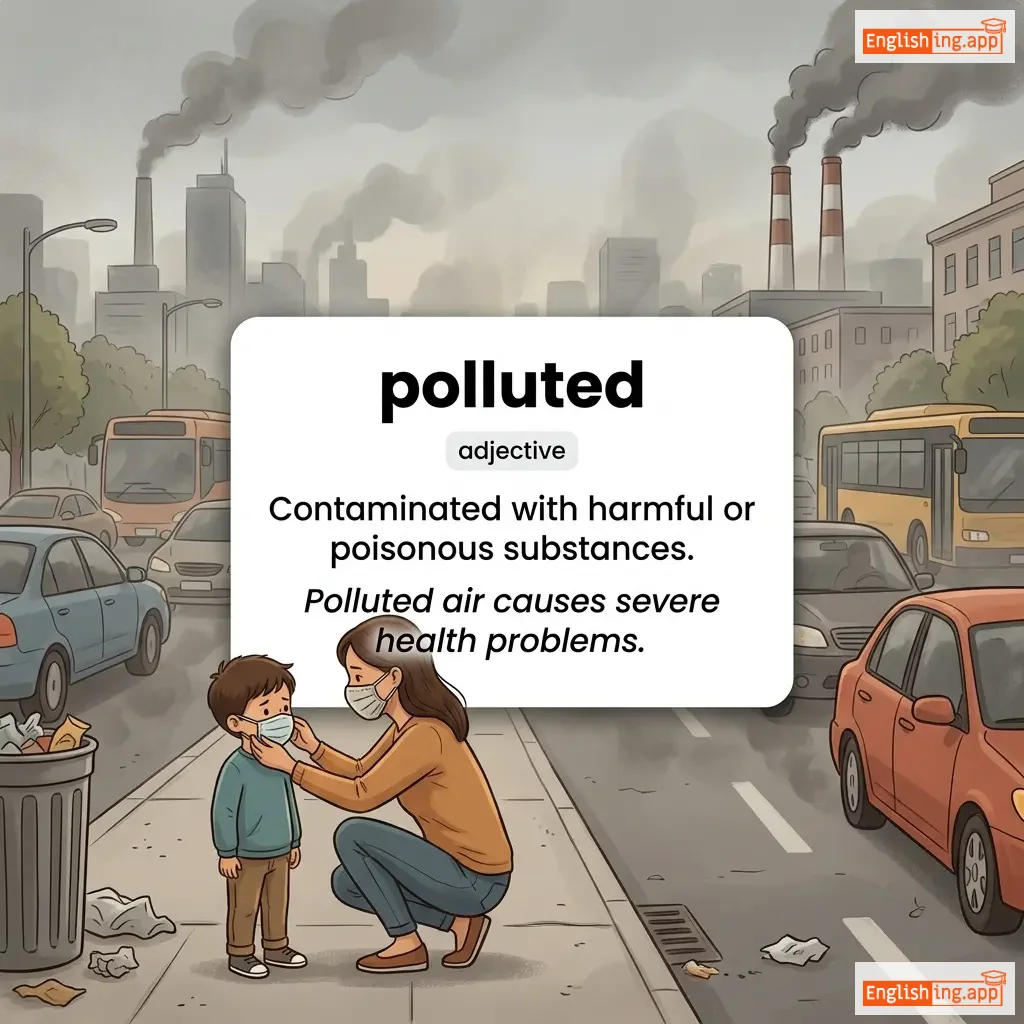
Contaminated with harmful or poisonous substances.

"Polluted air causes severe health problems."
"Загрязнённый воздух вызывает серьёзные проблемы со здоровьем." (Zagryaznjonnyj vozdukh vyzyvaet ser'yeznyye problemy so zdorov'yem.)
pollution definition card — visual illustration of the meaning
noun
/pəˈlʊʃən/
загрязнение (zagryaznenie)

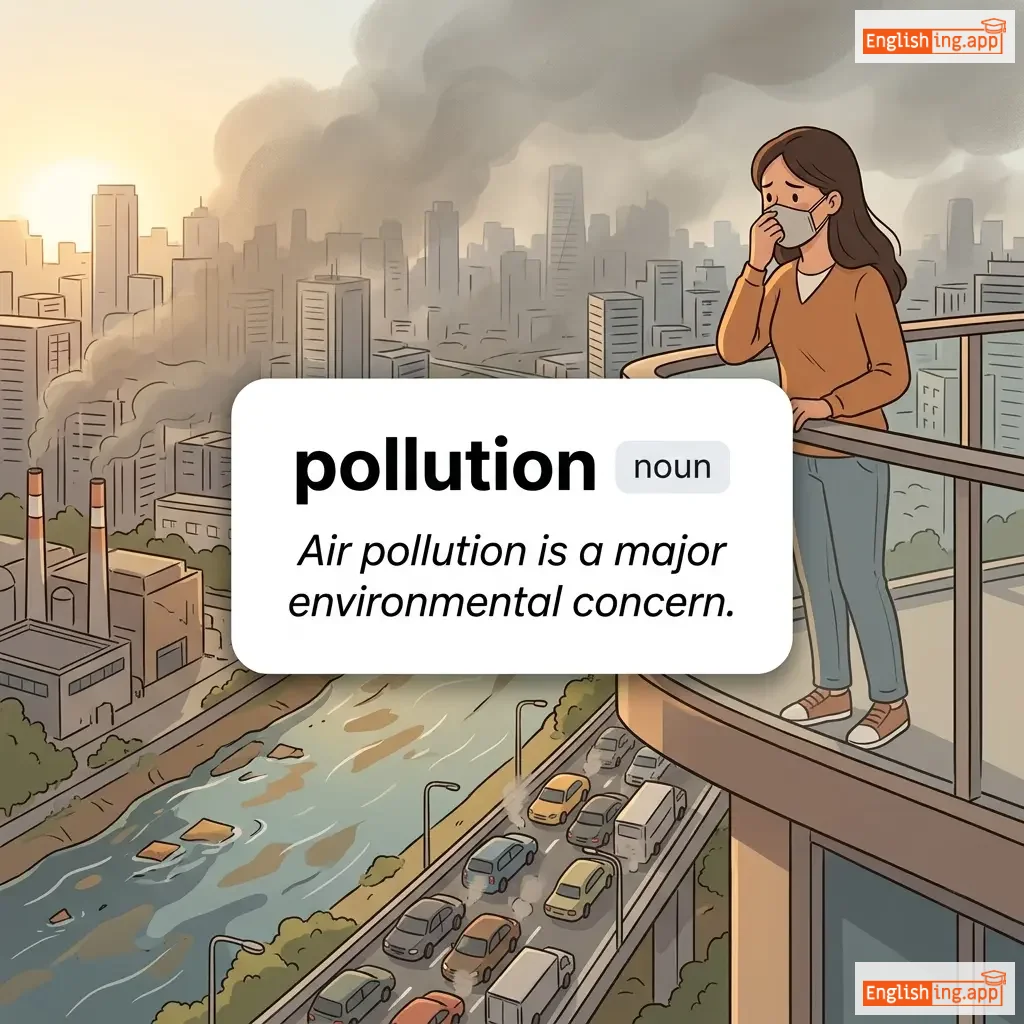
the presence of harmful substances in the environment, especially the air, water, or soil

"Air pollution is a major environmental concern."

"Загрязнение воздуха является важной экологической проблемой." (Zagryaznenie vozdukha yavlyaetsya vazhnoy ekologicheskoy problemoy.)
adjective
/ˌpɒliˈæn.ɪ.ɪʃ/
чрезмерно оптимистичный (chrezmerno optimistichny)

overly or blindly optimistic

"Her pollyannaish attitude ignored the obvious problems."

"Ее чрезмерно оптимистичное отношение игнорировало очевидные проблемы." (Eyo chrezmerno optimistichnoye otnosheniye ignorirovalo ochevidnyye problemy.)
noun
/pəˈtruːn/
трус (trus)

a cowardly person

"He acted like a poltroon during the crisis."

"Он вел себя как трус во время кризиса." (On vel sebya kak trus vo vremya krizisa.)
noun
/ˈpɒliˌɑːrki/
полиархия (poliarhiya)

government by many people

"Polyarchy allows multiple parties to share power."

"Полиархия позволяет нескольким партиям делить власть." (Polyarkhiya pozvolyayet neskol'kim partiyam delit' vlast'.)
noun
/ˈpɒliˌkreɪsi/
полиархия (poliarhiya)

rule by many; government by multiple authorities

"The nation experienced a polycracy after decentralization reforms."

"Страна испытала полиархию после реформ децентрализации." (Strana ispyitala poliarkhiyu posle reform detsentralizatsii.)
👨‍👩‍👧‍👦

polygamist (полига́мия)

noun
/ˈpɒlɪɡæmɪst/
полигамист (poligamist)

a person who has more than one spouse at the same time

"The polygamist had three wives living in different houses."

"Полигамист имел три жены, которые жили в разных домах." (Poligamist imel tri zheny, kotorye zhili v raznykh domakh.)
noun
/ˈpɒlɪɡəmi/
полига́мия (poligamiya)

the practice of having more than one spouse at the same time

"Polygamy is legal in some countries but frowned upon in others."

"Полига́мия законна в некоторых странах, но осуждается в других." (Poligamiya zakonna v nekotorykh stranakh, no osuzhdayetsya v drugikh.)
noun
/ˈpɒlɪɡlɒt/
полиглот (poliglot)

a person who knows and can use several languages

"She is a polyglot, fluent in English, Spanish, and Bengali."

"Она полиглот, свободно говорит на английском, испанском и бенгальском." (Ona poliglot, svobodno govorit na angliyskom, ispanskom i bengalskom.)
noun
/ˈpɒlɪɡɒn/
многоугольник (mnogougolnik)

a flat shape with three or more straight sides

"The artist drew a colorful polygon on the canvas."

"Художник нарисовал цветной многоугольник на холсте." (Hudozhnik narisoval tsvetnoy mnogougolnik na kholste.)
noun
/ˌpɒlɪˈhiːdrən/
твердое тело с плоскими многоугольными гранями (tvyordoe telo s ploskimi mnogougol'nymi granyami)

a solid object with flat polygonal faces, straight edges, and vertices

"The mathematician studied a complex polyhedron model."

"Математик изучал сложную модель полиэдра." (Matematik izuchal slozhnuyu model' polyedra.)
noun
/ˈpɒl.i.mæθ/
полимат (polimat)

a person with knowledge of many different subjects

"Leonardo da Vinci was a true polymath, excelling in art, science, and engineering."

"Леонардо да Винчи был настоящим полиматом, превосходя в искусстве, науке и инженерии." (Leonardo da Vinci byl nastoyashchim polimatom, prevoskhodya v iskusstve, nauke i inzhenerii.)
noun
/ˌpɒl.iˈsɪl.ə.bəl/
многосложное слово (mnogoslozhnoe slovo)

a word with more than one syllable

"The word 'elephant' is a polysyllable because it has three syllables."

"Слово 'слон' является многосложным, потому что оно состоит из трех слогов." (Slovo 'slon' yavlyaetsya mnogoslozhnym, potomu chto ono sostoyashcheesya iz trekh slogov.)
noun
/ˌpɒl.iˈtek.nɪk/
политехнический институт (politekhnicheskiy institut)

an educational institution offering practical and technical courses

"She studied engineering at a well-known polytechnic in her city."

"Она изучала инженерию в известном политехническом вузе своего города." (Ona izuchala inzheneriyu v izvestnom politekhnicheskom vuze svoego goroda.)
noun
/ˈpɒl.iˌθi.ɪz.əm/
политеизм (politeizm)

the belief in or worship of multiple gods

"Ancient Greeks practiced polytheism, worshiping gods like Zeus and Athena."

"Древние греки практиковали политеизм, поклоняясь богам, таким как Зевс и Афина." (Drevnie greki praktikovali politeizm, poklonjayas bogam, takim kak Zevs i Afina.)
noun
/ˈpɒm.ɪˌɡræn.ɪt/

a round fruit with thick red skin containing many small red seeds with juice

"The pomegranate seeds were sweet and refreshing."

noun
/ˈpɒmfrɪt/
помфрет (pomfret)

A deep-bodied marine fish with silvery scales, popular in Asian cuisine

"The restaurant serves delicious pomfret curry with rice."

"Ресторан подает вкусное карри из помфрета с рисом." (restoran podayet vkusnoe karri iz pomfreta s risom)
noun
/ˈpɒm.əl/
круглая ручка на рукоятке меча или седла (kruglaya ruchka na rukoyatke mecha ili sedla)

the rounded knob on the handle of a sword or saddle

"He gripped the sword firmly by the pommel."
"Он крепко схватил меч за поммель." (On krepko skhvatil mech za pommel.)
pomodoro definition card — visual illustration of the meaning
noun
/ˌpɒməˈdɔːrəʊ/
помодоро (pomodoro)

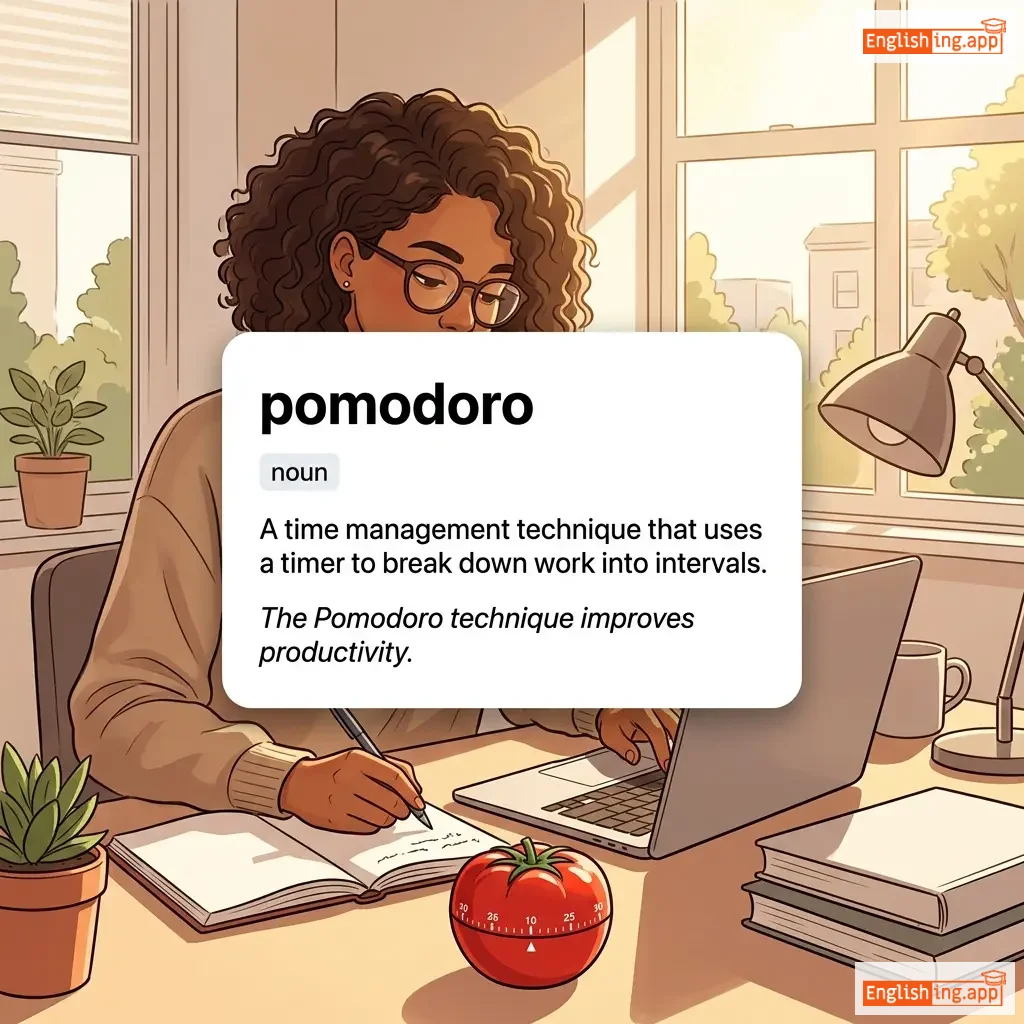
A time management technique that uses a timer to break down work into intervals.

"The Pomodoro technique improves productivity."

"Техника Помодоро улучшает производительность." (Tekhnika Pomodoro uluchshaet proizvoditel'nost'.)
noun
/pɒmp/
помпа, роскошь (pompa, roskoch)

ceremonial display or splendor; grandeur

"The graduation ceremony was full of pomp and circumstance."

"Церемония вручения дипломов была полна помпы и роскоши." (Tseremoniya vrucheniya diplomov byla polna pompy i roskoshi.)
noun
/pɒmˈpɒsəti/
помпозность, высокомерие (pompoznost, vysokomeriye)

self-important behavior or exaggerated dignity

"His speech was full of pomposity and arrogance."

"Его речь была полна помпозности и высокомерия." (Yego rech byla polna pompoznosti i vysokomeriya.)
adjective
/ˈpɒmpəs/
помпезный (pompeznyy)

exaggeratedly self-important; ostentatious

"The manager had a pompous attitude that annoyed his team."

"У менеджера было помпезное поведение, которое раздражало его команду." (U menedzhera bylo pompeznoye povedeniye, kotoroye razdrazhalo yego komandu.)
noun
/pɒnd/
пруд (prud)

a small area of still water, smaller than a lake

"The children were feeding ducks at the pond."

"Дети кормили уток в пруду." (Deti kormili utok v prudu.)
verb
/ˈpɒndər/
размышлять (razmyshlyat)

to think about something carefully

"She pondered over the meaning of the poem."

"Она размышляла о смысле стихотворения." (Ona razmyshlyala o smysle stikhotvoreniya.)