Словари

Словарь английского языка | Значения слов, определения и примеры
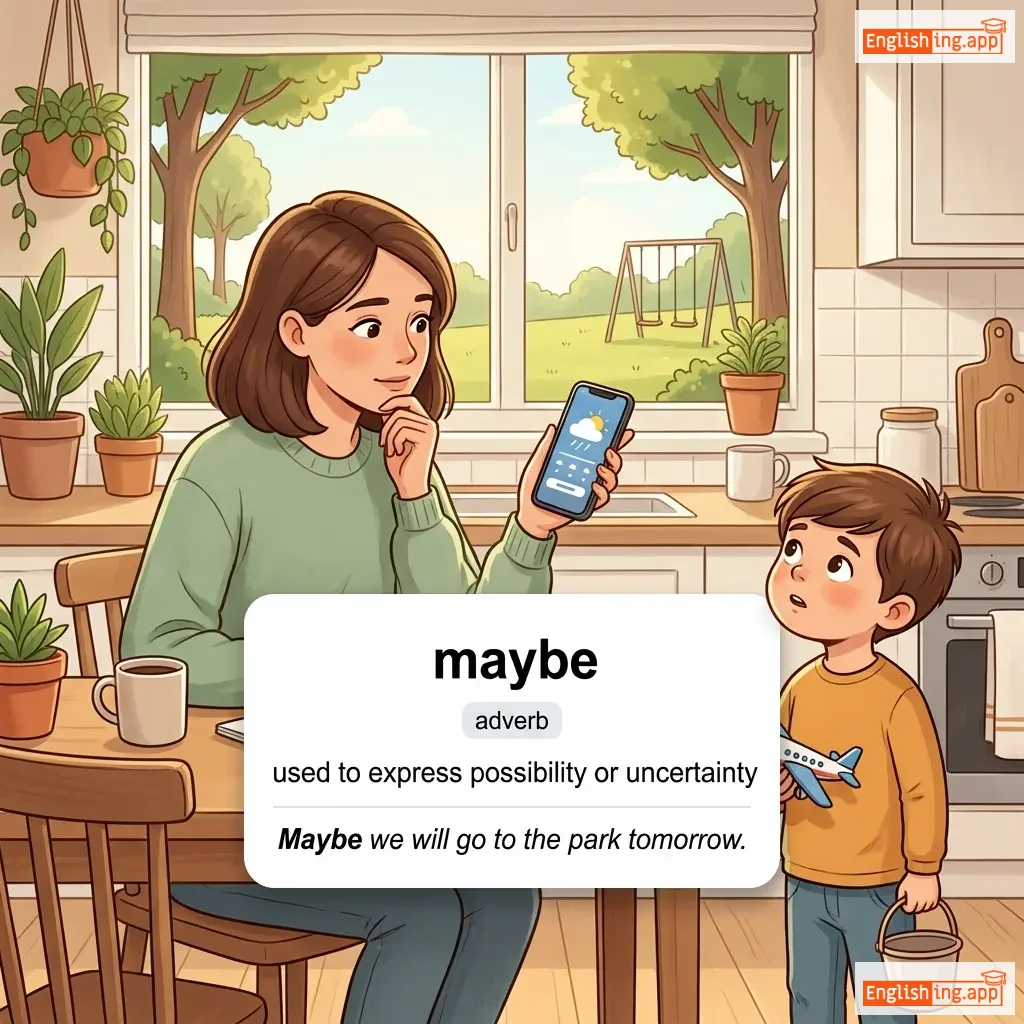
maybe definition card — visual illustration of the meaning
adverb
/ˈmeɪbi/
может быть (mozhet byt)

used to express possibility or uncertainty

"Maybe we will go to the park tomorrow."

"Может быть, мы пойдем в парк завтра." (Mozhet byt, my poydyom v park zavtra.)
noun
/ˈmeɪhɛm/
хаос (khaos)

Violent or extreme disorder; chaos and destruction.

"The protest turned into mayhem when the crowd clashed with the police."

"Протесты превратились в хаос, когда толпа столкнулась с полицией." (Protesty prevratilis' v khaos, kogda tolpa stolknulas' s politsiey.)
noun
/ˈmeɪər/
мэр (mer)

The elected head of a city, town, or municipality.

"The mayor announced a new policy to improve public transport."

"Мэр объявил новую политику для улучшения общественного транспорта." (Mer ob'yavil novuyu politiku dlya uluchsheniya obshchestvennogo transporta.)
noun
/meɪz/
лабиринт (labirint)

A complex network of paths or passages that are difficult to navigate.

"Tourists often get lost in the maze of narrow streets in the old city."

"Туристы часто теряются в лабиринте узких улиц старого города." (Turisty chasto teryayutsya v labirinte uzkikh ulits starogo goroda.)
pronoun
/miː/
меня (menya)

Used by a speaker to refer to themselves as the object of a verb or preposition.

"She gave me a beautiful gift."

"Она дала мне красивый подарок." (Ona dala mne krasivyy podarok.)
noun
/miːd/
медовуха (medovukha)

An alcoholic drink made from fermented honey and water.

"The Vikings were known to drink large amounts of mead during feasts."

"Викинги были известны тем, что пили большое количество медовухи на пиршествах." (Vikingu byli izvestny tem, chto pili bol'shoye kolichestvo medovukhi na pirshestvakh.)
noun
/ˈmedoʊ/
луг (medo)

A piece of grassland, especially one used for hay

"The cows grazed peacefully in the green meadow."

"Коровы мирно паслись на зелёном лугу." (Korovy mirno paslis' na zelyonom lug)
adjective
/ˈmiːɡər/
скудный (skudny)

Lacking in quantity or quality; inadequate.

"He could barely survive on his meager salary."

"Он едва мог выжить на своей скудной зарплате." (On edva mog vyzhit' na svoey skudnoy zarplate.)
Meal definition card — visual illustration of the meaning
noun
/miːl/
счастье (schast'ye)

An occasion when food is eaten, or the food that is eaten on such an occasion.

"We had a delicious meal at the restaurant."

"Она не могла скрыть свое счастье, когда получила награду." (Ona ne mogla skryt' svoe schast'ye, kogda poluchila nagradu.)
adjective
/ˈmiːli ˌmaʊðd/
лицемерный (litsemernnyy)

Unwilling to speak directly and honestly; insincere or evasive in speech.

"The manager gave a mealy-mouthed excuse instead of admitting the mistake."

"Менеджер дал лицемерное оправдание вместо того, чтобы признать ошибку." (Menedzher dal litsemernoe opravdanie vmesto togo, chtoby priznat' oshibku.)
adjective
/ˈmiːliˌmaʊðd/
увиливать от ответа (uvilyvat' ot otveta)

not willing to speak directly and honestly; evasive in speech

"The politician gave a mealymouthed response to the tough question."
"Политик дал уклончивый ответ на сложный вопрос." (Politik dal uklonchivyi otvet na slozhnyi vopros.)
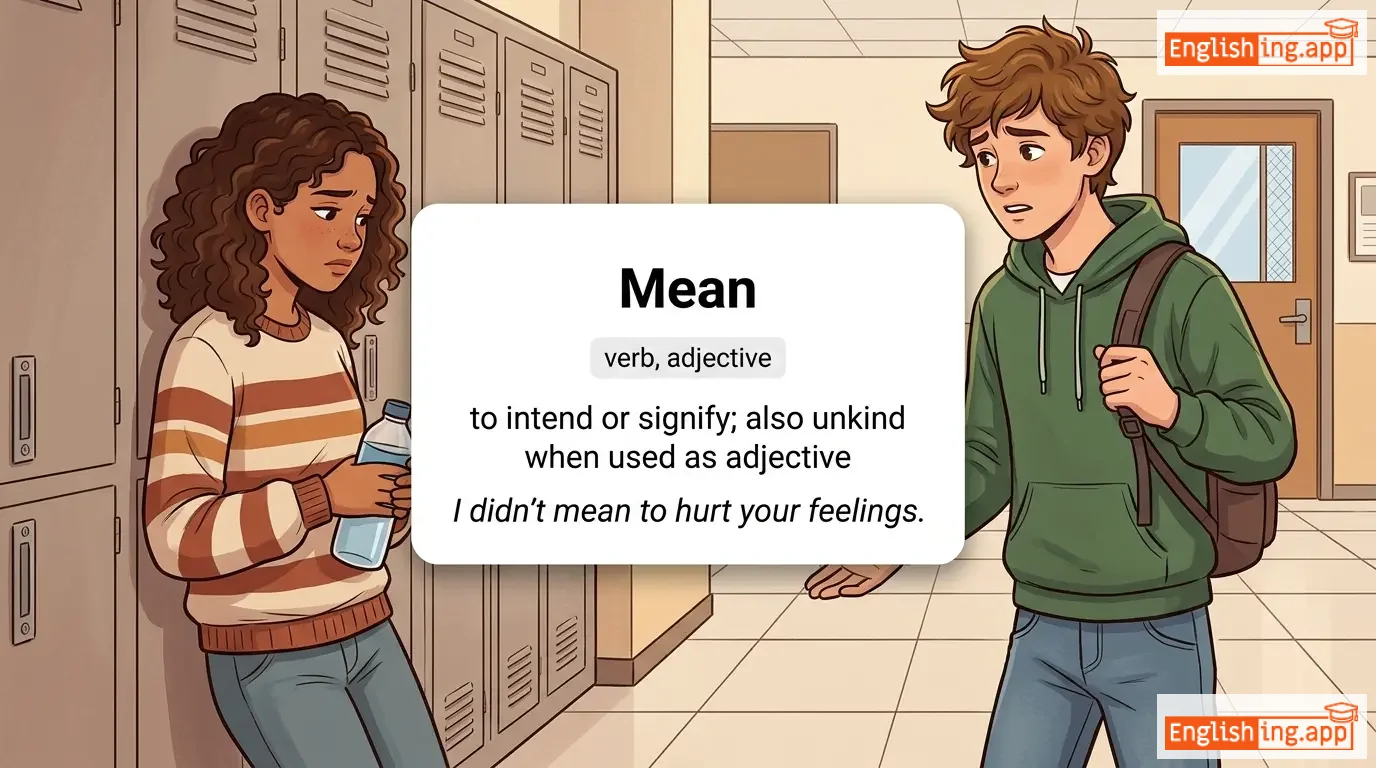
Mean definition card — visual illustration of the meaning
👉

Mean

verb, adjective
/miːn/

to intend or signify; also unkind when used as adjective

"I didn’t mean to hurt your feelings."

verb, noun
/miˈændər/
блуждать (bluzhdat)

to wander aimlessly or follow a winding course

"We meandered through the old streets of the city."

"Мы бродили по старым улицам города." (My brodili po starym ulitsam goroda.)
noun
/ˈmiːnɪŋ/
значение (znachenie)

The definition, purpose, or significance of something.

"The meaning of the word is explained in the dictionary."

"Значение слова объясняется в словаре." (Znachenie slova obyasnyaetsya v slovare.)
adjective
/ˈmiːnɪŋfəl/
значимый (znachimyy)

having purpose, value, or significance

"He gave a meaningful smile before leaving the room."

"Он дал значительную улыбку, перед тем как покинуть комнату." (On dal znachitelnuyu ulybku, pered tem kak pokinut' komnatu.)
adjective
/ˈmiː.nɪŋ.ləs/
бессмысленный; без цели; незначительный (bessmyslennyy; bez tseli; neznaachitel'nyy)

without purpose; having no significance; pointless

"The data became meaningless without proper context."

"Данные стали бессмысленными без соответствующего контекста." (Dannye stali bessmyslennymi bez sootvetstvuyushchego konteksta.)
noun
/ˈmiːnnəs/
злобность; скупость (minness)

The quality of being unkind, spiteful, or unfair; stinginess

"His meanness towards the poor children shocked everyone in the neighborhood."

"Его злобность по отношению к бедным детям потрясла всех в соседстве." (Ego zlobnost' po otnosheniyu k bednym detyam potryasla vsekh v sosedstve.)
noun
/miːnz/
средства; ресурсы; способ; (means)

An action or system by which a result is achieved; financial resources

"They don't have the means to afford such an expensive vacation."

"У них нет средств, чтобы позволить себе такой дорогой отпуск." (u nikh net sredstv, chtoby pozvolit' sebe takoy dorogoy otpusk.)
noun/adverb
/ˈmiːnˌtaɪm/
в это время (v eto vremya)

the period of time between two events; meanwhile

"The train will be late, so in the meantime let's have some tea."

"Поезд будет опаздывать, так что в это время давайте попьем чай." (Poyezd budet opazdyvat', tak chto v eto vremya davayte popyem chay.)
adverb
/ˈmiːnˌwaɪl/
в то время как (v to vremya kak)

At the same time; in the intervening period.

"She was cooking dinner; meanwhile, I set the table."

"Она готовила ужин; в то время как я накрыл стол." (Ona gotovila uzhin; v to vremya kak ya nakryl stol.)
adjective
/ˈmiːzli/
ничтожный (nichochny)

contemptibly small or insignificant

"He was paid a measly sum for the hard work."

"Ему заплатили ничтожную сумму за тяжёлую работу." (Yemu zaplatili nichtozhnuyu summu za tyazholuyu rabotu.)
adjective
/ˈmeʒ.ər.ə.bəl/
измеримый; количественно определяемый (izmerimyy; kolichestvenno opredelyayemyy)

able to be measured; quantifiable

"The project's success was measurable by increased sales."
"Успех проекта можно было измерить по увеличению продаж." (Uspekh proyektu mozhno bylo izmerit' po uvelicheniyu prodazh.)
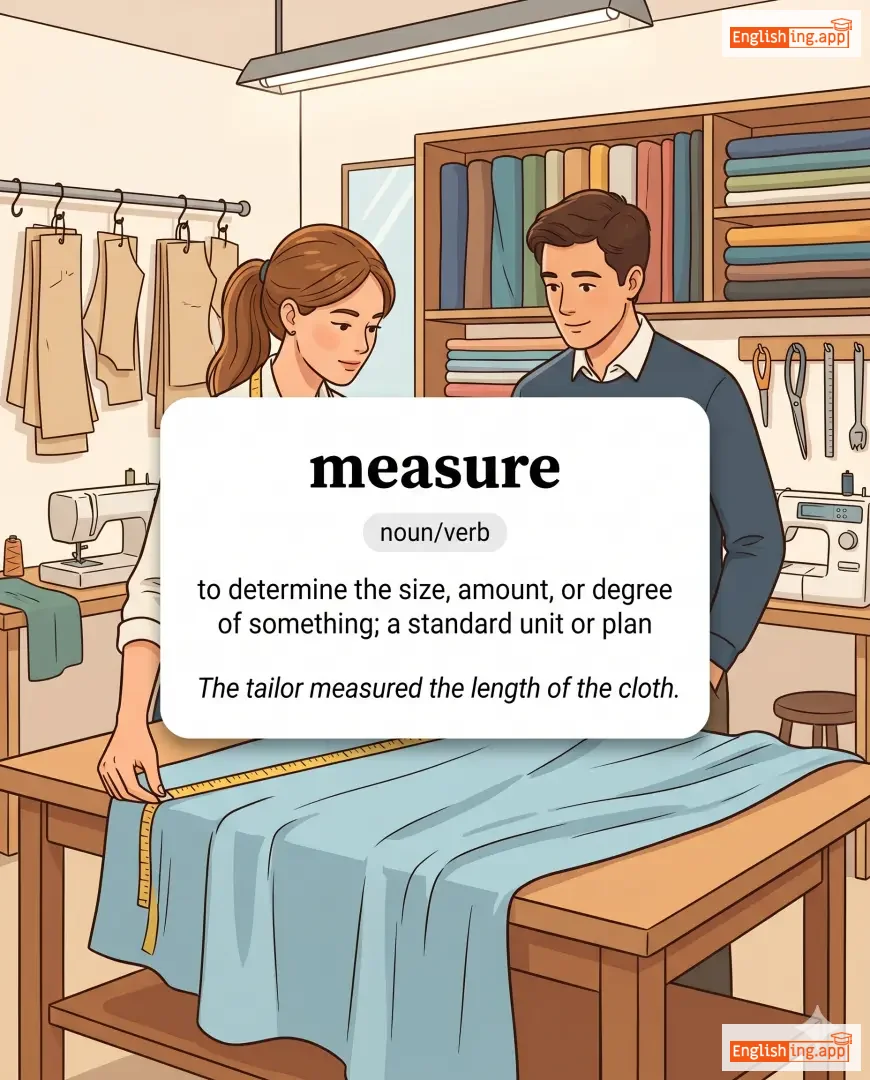
measure definition card — visual illustration of the meaning
noun/verb
/ˈmɛʒər/
измерять / мера (izmeriat' / mera)

to determine the size, amount, or degree of something; a standard unit or plan

"The tailor measured the length of the cloth."

"Портной измерил длину ткани." (Portnoi izmeril dlinu tkani.)
adjective
/ˈmɛʒərd/
измеренный (izmerenniy)

carefully considered and deliberate

"She spoke in a calm, measured tone."

"Она говорила спокойным и измеренным тоном." (Ona govorila spokoynym i izmerenym tonom.)
noun
/ˈmeʒərmənt/
измерение (izmerenie)

the size, length, or amount of something, as determined by measuring

"The tailor took my waist measurement before stitching the suit."
"Портной снял мою мерку для пояса перед тем, как сшить костюм." (Portnoy snyal moyu merku dlya poyasa pered tem, kak sshit' kostyum.)
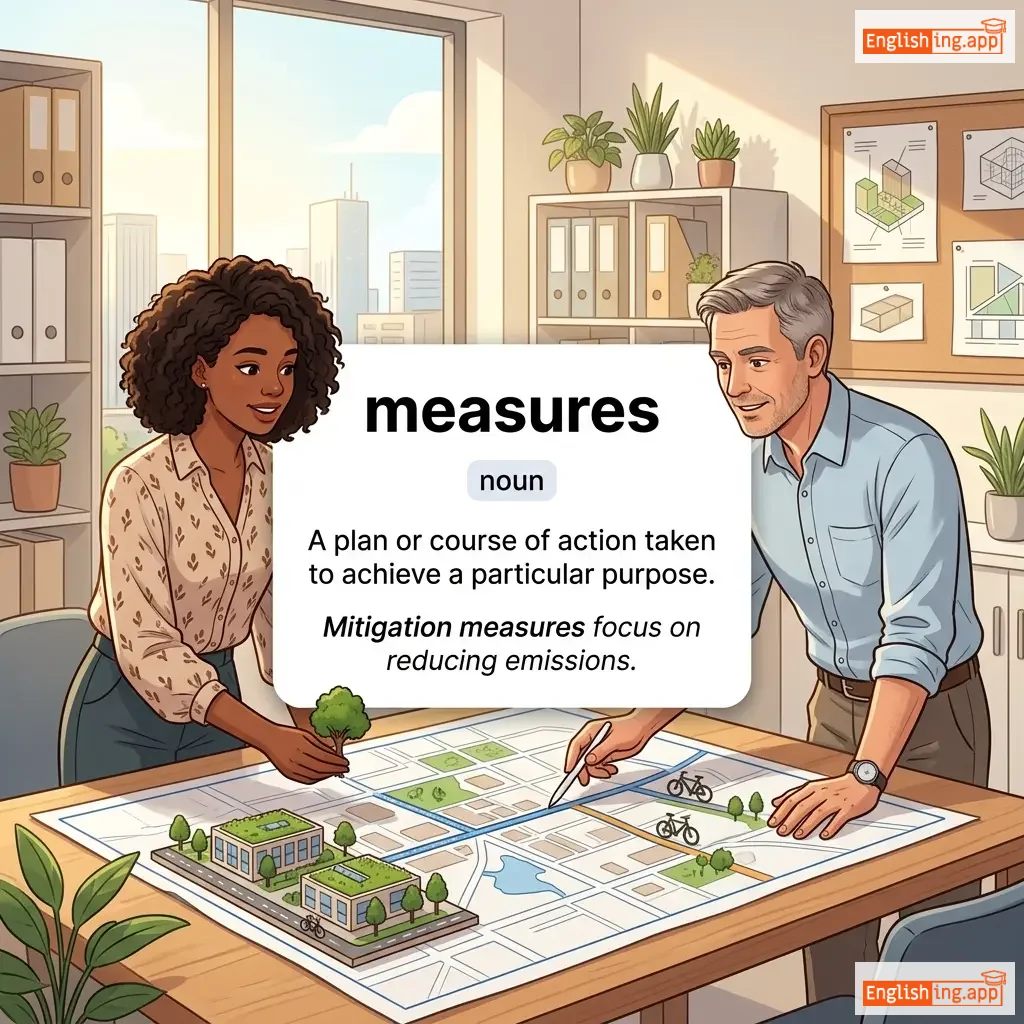
measures definition card — visual illustration of the meaning
noun
ˈmeʒ.ərz
меры (mery)

A plan or course of action taken to achieve a particular purpose.

"Mitigation measures focus on reducing emissions."

"Меры смягчения направлены на снижение выбросов." (Mery smyagcheniya napravleny na snizheniye vybrosov.)
Meat definition card — visual illustration of the meaning
noun
/miːt/
мясо (myaso)

the flesh of animals used as food

"She bought fresh meat from the market."

"Она купила свежее мясо на рынке." (Ona kupila svezhee myaso na rynke.)
noun
/məˈkænɪk/
механик (mekhanik)

a person who repairs and maintains machines or vehicles

"The mechanic fixed the engine in less than an hour."

"Механик отремонтировал двигатель менее чем за час." (Mekhanik otremontiroval dvizhitel menye chem za chas.)
adjective
/məˈkænɪkəl/
счастье (schast'ye)

relating to machines or the way they work

"She has a good understanding of mechanical systems."

"Она не могла скрыть своего счастья, когда получила награду." (Ona ne mogla skryt' svoego schast'ya, kogda poluchila nagradu.)
noun
/məˈkænɪks/
механика (mekhanika)

the branch of physics concerned with the motion of objects and the forces acting on them; also refers to the practical details of how something works

"He studied the mechanics of the machine before fixing it."

"Он изучал механику машины, прежде чем починить её." (On izuchal mekhaniku mashiny, prezhde chem pochinit' yeyu.)
noun
/ˈmɛkəˌnɪzəm/
механизм (mekhanizm)

A system of parts working together in a machine; a process or technique for achieving something.

"The mechanism of the clock stopped working after years of use."
"Механизм часов перестал работать после многих лет использования." (Mekhanizm chasov perestal rabotat' posle mnogikh let ispol'zovaniya.)
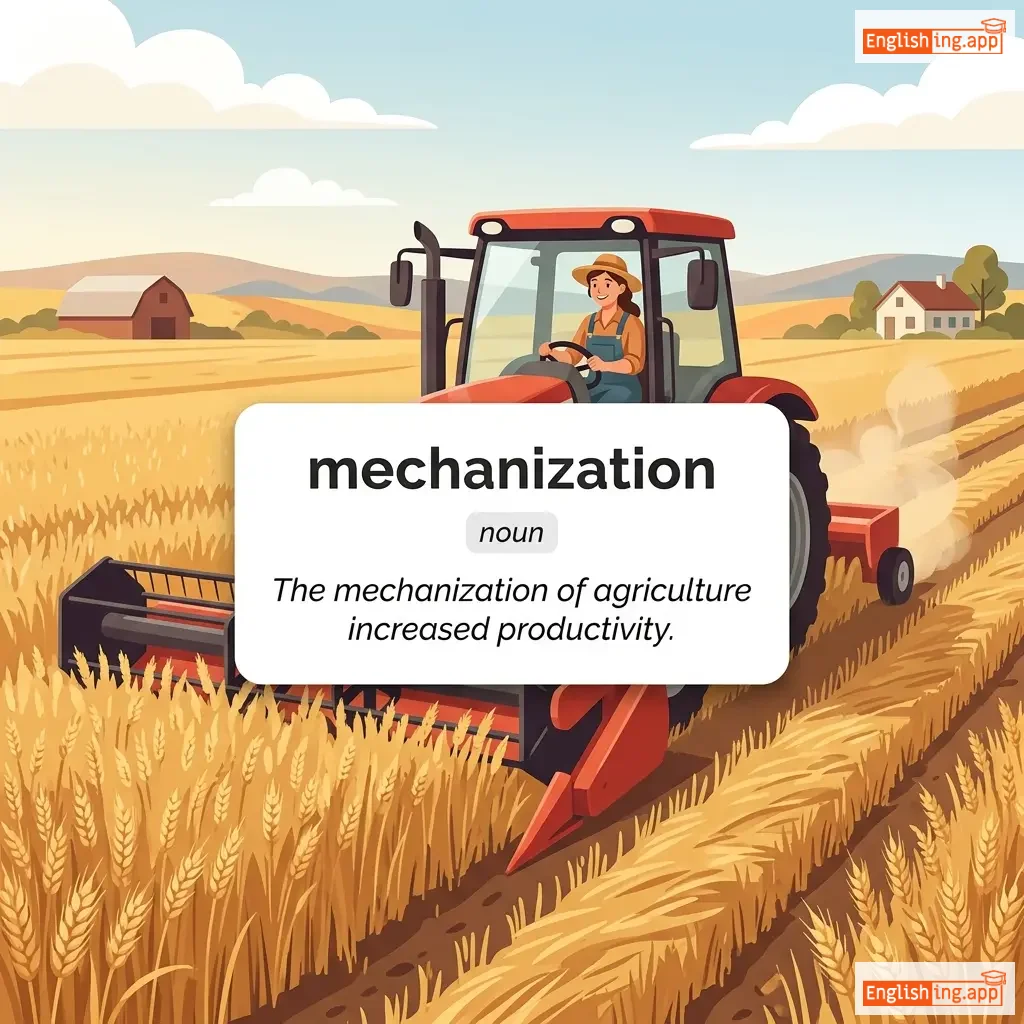
mechanization definition card — visual illustration of the meaning
noun
ˌmɛk.ə.nɪˈzeɪ.ʃən
механизация (mekhanizatsiya)

The use of machines in agriculture or industry to increase production efficiency.

"The mechanization of agriculture increased productivity."

"Механизация сельского хозяйства повысила производительность." (Mekhanizatsiya selskogho khozyaystva povysila proizvoditel'nost'.)
noun
/ˈmɛdəl/
медаль (medal)

a piece of metal given as an award for achievement

"She won a gold medal in the 100-meter race."

"Она выиграла золотую медаль на забеге на 100 метров." (Ona vyigrala zolotuyu medal' na zabege na 100 metrov.)
noun
/məˈdæliən/
медальон (medalyon)

a large medal or decorative piece, often worn as jewelry or used in architecture

"She wore a gold medallion around her neck."

"Она носила золотой медальон на шее." (Ona nosila zolotoy medalyon na sheye.)
verb
/ˈmɛdəl/
вмешиваться в чужие дела (vmeshivatsya v chuzhie dela)

to interfere in something that is not one's concern

"He always tries to meddle in other people’s business."

"Он всегда пытается вмешиваться в дела других людей." (On vsegda pytayetsya vmeshivatsya v dela drugikh lyudey.)
adjective
/ˈmɛdəlsəm/
вмешивающийся (vmeshivayushchiesya)

fond of interfering in other people’s affairs

"She found her neighbor to be meddlesome and annoying."

"Она посчитала своего соседа вмешивающимся и раздражающим." (Ona poschitala svoego soseda vmeshivayushchiesya i razdrazhayushchim.)
noun
/ˈmiːdiə/
средства массовой информации (sredstva massovoy informatsii)

the main means of mass communication such as newspapers, television, radio, and the internet

"The story quickly spread across the media."
"История быстро распространилась через СМИ." (Istoriya bystro rasprostranilas cherez SMI.)
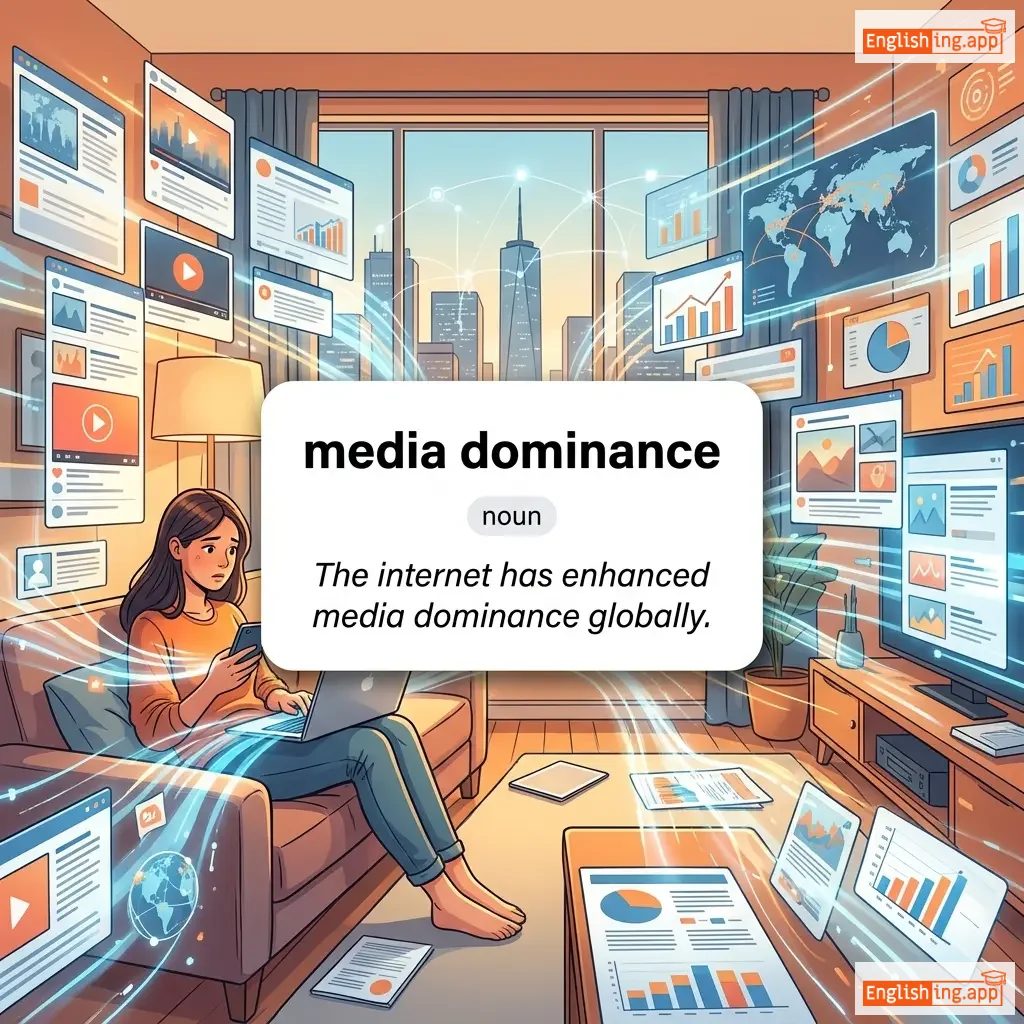
media dominance definition card — visual illustration of the meaning
noun
ˈmiːdiə ˈdɒmɪnəns
медийное доминирование (mediinoye dominirivaniye)

The control and powerful influence that media has over communication and information distribution in society.

"The internet has enhanced media dominance globally."

"Интернет усилил медийное доминирование на глобальном уровне." (Internet usilil mediinoye dominirivaniye na global'nom urovne.)
adjective
/ˌmed.iˈiː.vəl/
средневековый (srednevekovyy)

relating to the Middle Ages; medieval

"The castle displayed mediaeval architecture and design."

"Замок отображал средневековую архитектуру и дизайн." (Zamok otobrazhal srednevekovuyu arkhitekturu i dizayn.)
adjective
/ˈmiː.di.əl/
медиальный (medial'nyj)

Situated in or pertaining to the middle; located toward the midline of the body or structure.

"The medial side of the knee is more prone to injury."

"Медиальная сторона колена более подвержена травмам." (Medial'naya storona kolena bolee podverzhena travm.)
verb
/ˈmiː.di.eɪt/
посредничать (posrednichat)

To act as an intermediary in bringing about agreement or reconciliation between parties.

"She was asked to mediate between the two companies."

"Её попросили посредничать между двумя компаниями." (Eyo poprosili posrednichat' mezhdu dvumya kompaniyami.)
mediation definition card — visual illustration of the meaning
noun
/ˌmiːdɪˈeɪʃən/
медиация (mediatsiya)

Intervention between parties to promote reconciliation, settlement, or compromise.

"The mediation helped resolve the conflict between the two teams."

"Медиация помогла разрешить конфликт между двумя командами." (Mediatsiya pomogla rezhlit' konflikt mezhdu dvumya komandami.)
mediative definition card — visual illustration of the meaning
adjective
/ˈmiː.di.eɪ.tɪv/
связанный с медиацией (svyazannyy s mediatsiey)

Related to mediation, helping to resolve conflicts through diplomatic means.

"His mediative skills helped resolve the conflict."

"Его медиативные навыки помогли разрешить конфликт." (Ego mediativnye navyki pomogli rezreshit' konflikt.)
noun
/ˈmiːdieɪtər/
посредник (mediator)

A person who attempts to make people involved in a conflict agree

"The United Nations often acts as a mediator in international disputes."

"Организация Объединённых Наций часто выступает в роли медиатора в международных спорах." (Organizatsiya Ob'yedinyonnykh Natsiy chasto vystupayet v roli mediatora v mezhdunarodnykh sporah.)
medical definition card — visual illustration of the meaning
adjective
/ˈmedɪkəl/
медицинский (meditsinskiy)

relating to the science or practice of medicine

"He went for a medical check-up last week."
"Он пошел на медицинское обследование на прошлой неделе." (On poshel na meditsinskoe obsledovanie na proshloy nedele.)
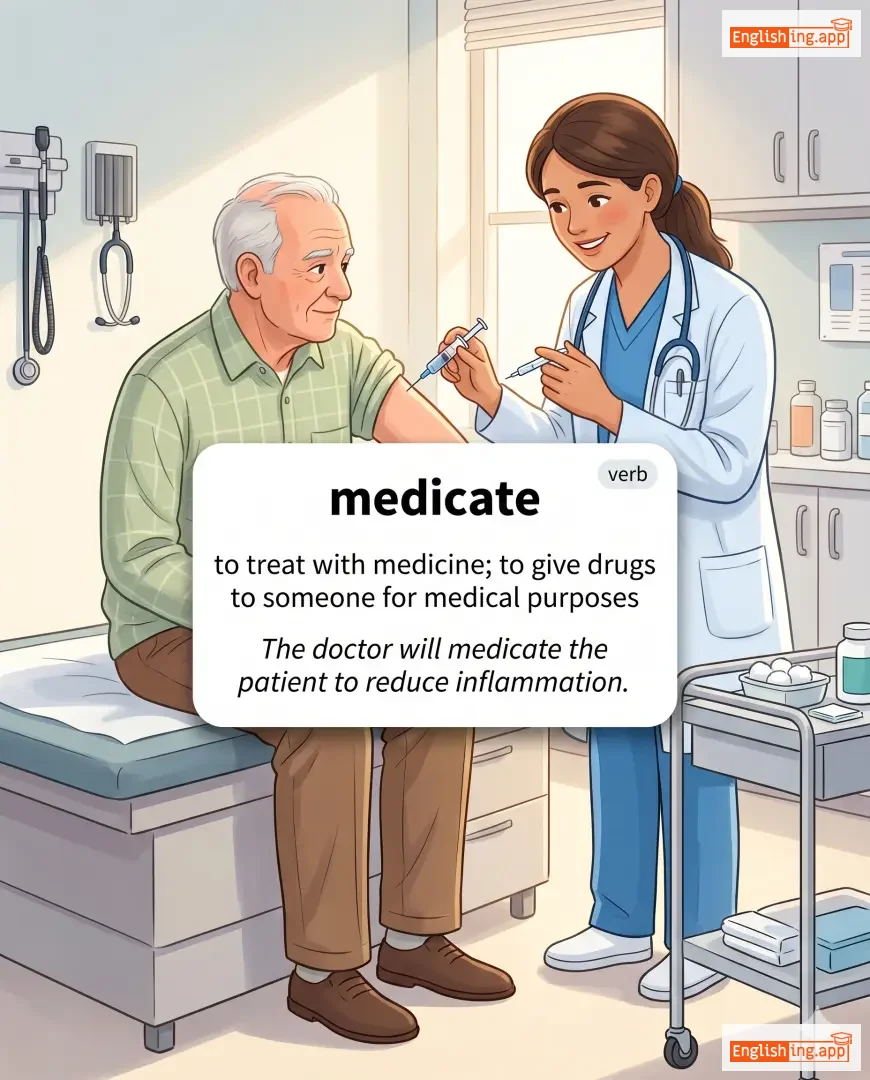
medicate definition card — visual illustration of the meaning
verb
/ˈmedɪkeɪt/
лечить (lechit)

to treat with medicine; to give drugs to someone for medical purposes

"The doctor will medicate the patient to reduce inflammation."

"Доктор будет лечить пациента, чтобы уменьшить воспаление." (Doktor budet lechit' patsiyenta, chtoby umenshit' vospaleniye.)
noun
/ˌmedɪˈkeɪʃən/
лекарство (lekarstvo)

a drug or other form of medicine used to treat or prevent disease

"The doctor prescribed medication for his headache."

"Доктор прописал лекарство от головной боли." (Doktor propisal lekarstvo ot golovnoi boli.)
medicine definition card — visual illustration of the meaning
noun
/ˈmed.ɪ.sən/
лекарство (lekarstvo)

A substance used to treat illness, injury, or disease.

"He took some medicine for his headache."

"Он принял лекарство от головной боли." (On prinyal lekarstvo ot golovnoy boli.)
adjective
/ˌmiː.diˈiː.vəl/
средневековый (srednevekovyy)

Relating to the Middle Ages, the period in European history from about the 5th to the 15th century.

"The castle is a famous medieval monument."

"Замок — это знаменитый средневековый памятник." (Zamok — eto znamenityy srednevekovyy pamyatnik.)
adjective
/ˌmiː.diˈoʊ.kər/
посредственный (posredstvenny)

Of only average quality; not very good.

"The movie was entertaining but overall mediocre."

"Фильм был увлекательным, но в целом посредственным." (Film byl uvykatelym, no v tsele posredstvennym.)