Словари

Словарь английского языка | Значения слов, определения и примеры

noun
/ˈhænd ˌrɪŋɪŋ/
чрезмерная тревога (chrezmernaya trevoga)

excessive worry or concern expressed in a visible or dramatic way.

"There was much hand-wringing over the political crisis."

"Было много драматической озабоченности по поводу политического кризиса." (Bylo mnogo dramaticheskoy ozabochennosti po povodu politicheskogo krizisa.)
noun
/ˈhænd.fʊl/
горсть (gorst')

the amount of something that can be held in one hand; a small number

"She took a handful of nuts."

"Она взяла горсть орехов." (Ona vzyala gorst' orekhov.)
noun
/ˈhæn.di.krɑːft/
ремесло (remeslo)

an activity involving the making of decorative domestic or other objects with the hands; handmade artistic work

"The local market featured beautiful handicrafts made by skilled artisans from the region."

"На местном рынке были представлены красивые ремесленные изделия, сделанные опытными ремесленниками из этого региона." (Na mestnom rynke byli predstavleny krasivye remeslennye izdeliya, sdelannye opytnymi remeslennikami iz etogo regiona.)
noun
/ˈhæŋ.kər.tʃɪf/
платок (platok)

a small piece of cloth used for wiping the nose or face

"She always carries a clean handkerchief in her purse."

"Она всегда носит чистый платок в своей сумочке." (Ona vsegda nosit chisty platok v svoey sumochke.)
Handle definition card — visual illustration of the meaning
noun, verb
/ˈhændl̩/
рукоятка / справляться (rukoyatka / spravlyatsya)

the part of an object designed to be held in the hand; to deal with or manage a situation

"He could not handle the pressure of the job."

"Он не смог справиться с давлением на работе." (On ne smog spravitsya s davleniem na rabote.)
noun
/ˈhændlɪŋ/
обработка (obrabotka)

the act of managing or dealing with something or someone

"His handling of the situation was impressive."

"Его обработка ситуации была впечатляющей." (Ego obrabotka situatsii byla vpechatlyayushchey.)
adjective
/ˈhæn.səm/
счастье (schastye)

attractive in appearance, usually referring to men; also can mean generous or impressive in size.

"He looked very handsome in his new suit."

"Она не могла скрыть своего счастья, когда получила награду." (Ona ne mogla skryt' svoego schast'ya, kogda poluchila nagradu.)
noun
/ˈhændˌraɪ.tɪŋ/
почерк (pocherk)

the style or manner of writing by hand.

"Her handwriting is very neat and easy to read."

"Ее почерк очень аккуратный и легко читаемый." (Eyo pocherk ochen' akuratnyy i legko chitayemyy.)
adjective
/ˈhændi/
удобный в использовании (udobnyy v ispol'zovanii)

convenient to use or easily accessible; skillful with the hands

"This pocket knife is very handy when you go camping."

"Этот карманный нож очень полезен, когда вы отправляетесь в поход." (Etot karmannyy nozh ochen' polezen, kogda vy otpravlyayetes' v pokhod.)
hang definition card — visual illustration of the meaning
🖼️

hang

verb
/hæŋ/

to suspend or attach something from above so that it moves freely or is supported

"She decided to hang the painting on the living room wall."

noun
/ˈhæŋ.ər/
ангар (angar)

a large building with extensive floor area, typically for housing aircraft; an aircraft shelter

"The airplane was stored safely in the hangar during the severe thunderstorm."

"Самолет был надежно припаркован в ангаре во время сильного шторма." (Samolyot byl nadezhno priparkovann v angare vo vremya sil'nogo shtorma.)
adjective
/ˈhæŋ.dɔːɡ/
смущённый (smushchyonny)

looking or feeling ashamed, guilty, or defeated.

"He gave me a hangdog look after being caught lying."

"Он посмотрел на меня с смущённым взглядом после того, как его поймали на лжи." (On posmotreli na menya s smushchyonnym vzglyadom posle togo, kak ego poymali na lzhi.)
noun
/ˈhæŋ.ər/
вешалка (veshalka)

a shaped piece of wood, plastic, or metal with a hook at the top, used to hang up clothes

"She hung her dress on a wooden hanger to prevent it from getting wrinkled."

"Она повесила свое платье на деревянную вешалку, чтобы оно не помялось." (Ona povesila svoe plat'ye na derevyannuyu veshalku, chtoby ono ne pomyalos'.)
noun
/ˌhæŋ.ər ˈɒn/
прилипала (prilipala)

a person who spends time with a powerful or famous person to gain benefits.

"The celebrity was always surrounded by hangers-on."

"Знаменитость всегда была окружена прилипалами." (Znamenitost' vsegda byla okruzhenna prilipalami.)
noun
/ˈhæŋ.kər/
тоска, желание (toska, zhelanie)

a feeling of yearning or craving; a strong desire for something

"After years abroad, she developed a deep hanker for her homeland's traditional cuisine."

"После многих лет за границей она развила глубокое желание поесть традиционные блюда своей родины." (Posle mnogikh let za granitsey ona razvila glubokoe zhelanie poest' traditsionnye blyuda svoey rodiny.)
noun
/ˈhæŋ.kər.ɪŋ/
тяга (tyaga)

a strong desire or craving for something.

"She had a hankering for chocolate late at night."

"Она почувствовала сильное желание съесть шоколад поздно ночью." (Ona pochuvstvovala sil'noe zhelanie s'yest' shokolad pozdno noch'yu.)
noun
/ˌhæŋ.ki ˈpæŋ.ki/
мошенничество; подозрительная активность; неэтичное поведение; обман (moshennichestvo; podozritelnaya aktivnost; neetichnoe povedenie; obman)

dishonest or suspicious activity; unethical behavior; trickery or deception

"The audit revealed some hanky-panky in the company's financial records."

"Аудит выявил мошенничество в финансовых записях компании." (Audit viyavil moshennichestvo v finansovykh zapisyakh kompanii.)
noun
/hæp/
счастье, удача, случайность (schastye, udacha, sluchaynost)

luck, fortune, or chance occurrence

"By sheer hap, he discovered the old letter hidden in the drawer."

"Только по удаче он нашел старое письмо, спрятанное в ящике." (Tol'ko po udache on nashel staroye pismo, spryatanoye v yashchike.)
adjective
/hæpˈhæzərd/
беспорядочный, случайный (besporyadochnyy, sluchaynyy)

lacking any obvious order or organization; random

"The books were stacked in a haphazard way on the table."

"Книги были сложены беспорядочно на столе." (Knihi byli slozheny besporyadochno na stole.)
adjective
/ˈhæpləs/
неудачливый, жалкий (neudachlivyy, zhalkiy)

unfortunate, unlucky, deserving pity

"The hapless traveler lost his passport on the very first day."

"Неудачливый путешественник потерял свой паспорт в первый же день." (Neudachlivyy puteshestvennik poteryal svoy pasport v pervyy zhe den.)
verb
/ˈhæpən/
случаться (sluchatsya)

to take place or occur, usually by chance

"Accidents can happen at any time."

"Аварии могут случиться в любое время." (Avarii mogut sluchitsya v lyuboye vremya.)
adverb
/ˈhæpɪli/
счастливо (schastlivo)

in a happy manner; with pleasure or satisfaction

"The children played happily in the garden."
"Дети играли счастливо в саду." (Deti igrali schastlivo v sadu.)
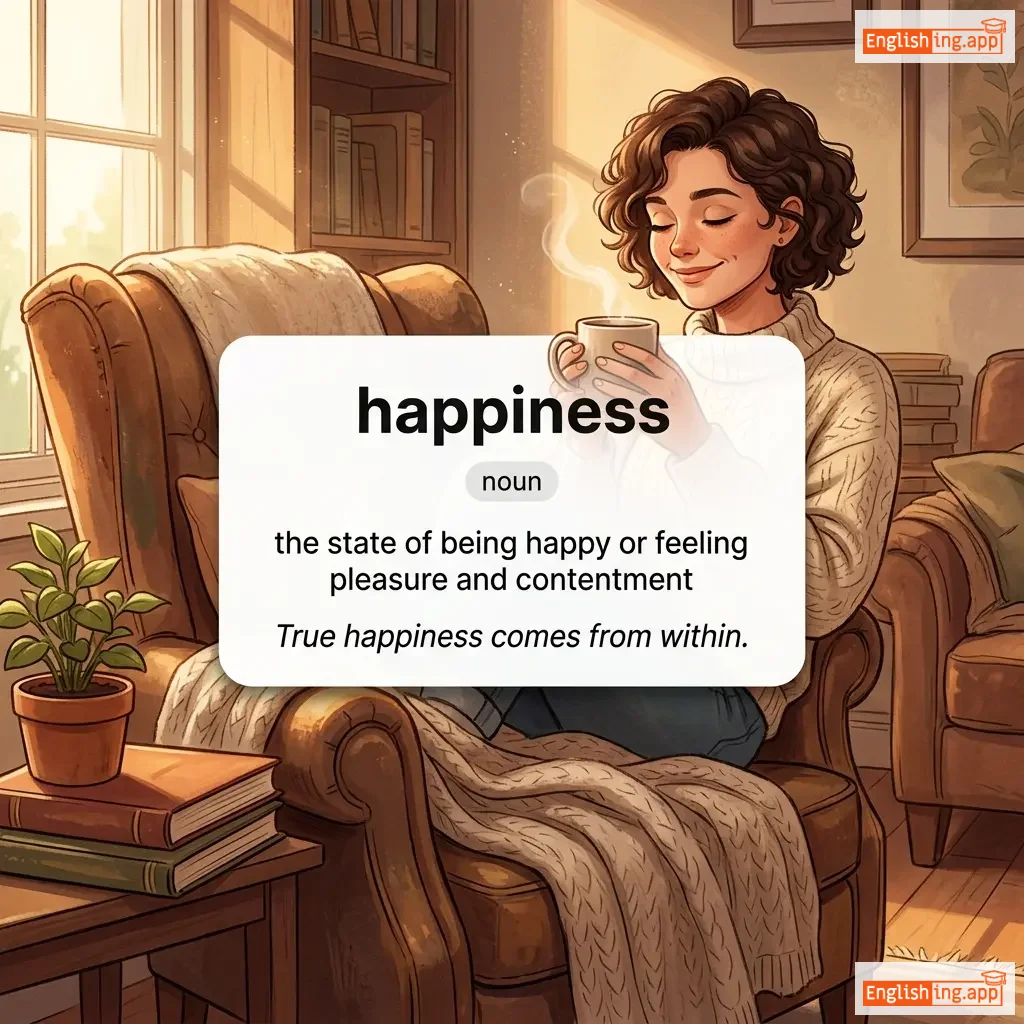
happiness definition card — visual illustration of the meaning
noun
/ˈhæpinəs/
счастье (schast'ye)

the state of being happy or feeling pleasure and contentment

"True happiness comes from within."

"Настоящее счастье приходит изнутри." (Nastoyashcheye schast'ye prikhodit iznutri.)
happy definition card — visual illustration of the meaning
adjective
/ˈhæpi/
счастье (schastye)

feeling or showing pleasure, contentment, or joy

"She was very happy to receive the gift."

"Она была очень счастлива получить подарок." (Ona byla ochen' schastliva poluchit' podarok.)
adjective
/ˌhæpi ɡoʊ ˈlʌki/
беззаботный, расслабленный, без беспокойства (bezzabotny, rasslablenniy, bez bespokoystva)

cheerfully unconcerned about the future; carefree

"She has a happy-go-lucky attitude and never worries about tomorrow."
"У неё беззаботное отношение, и она никогда не переживает о завтрашнем дне." (U neyo bezzabotnoe otnoshenie, i ona nikogda ne perezhivayet o zavtrashnem dne.)
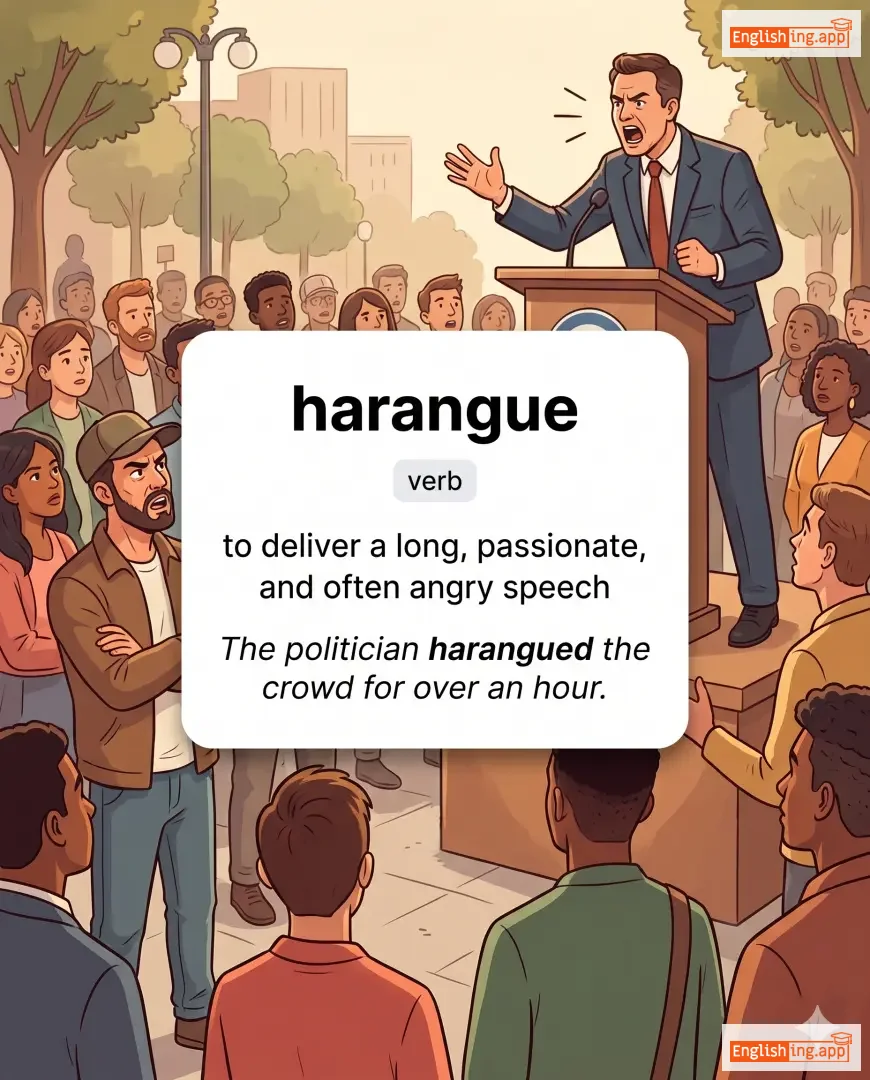
harangue definition card — visual illustration of the meaning
verb
/həˈræŋ/
выступать с длинной и яростной речью (vystupat s dlinnoi i yarostnoi rech'yu)

to deliver a long, passionate, and often angry speech

"The politician harangued the crowd for over an hour."

"Политик выступал перед толпой больше часа." (Politik vystupal pered tol'poy bol'she chasa.)
verb
/həˈræs/

to annoy or trouble someone repeatedly in an aggressive or persistent way

"The journalist claimed she was being harassed online."

noun
/həˈræsmənt/
домогательство (domogatiel'stvo)

aggressive pressure or intimidation; unwanted and repeated behavior causing discomfort

"The company has a strict policy against workplace harassment."

"Компания имеет строгую политику против домогательств на рабочем месте." (Kompaniya imeet stroguyu politiku protiv domogatel'stv na rabochem meste.)
noun
/ˈhɑːrbɪndʒər/
предвестие (predvestie)

a person or thing that announces or signals the approach of another

"The sudden drop in temperature was a harbinger of winter."

"Внезапное падение температуры было предвестием зимы." (Vnezapnoe padeniye temperatury bylo predvestiem zimy.)
noun, verb
/ˈhɑːrbər/

noun: a place on the coast where ships may find shelter; verb: to keep (a thought or feeling, often negative) in one's mind

"He continued to harbor resentment towards his former boss."
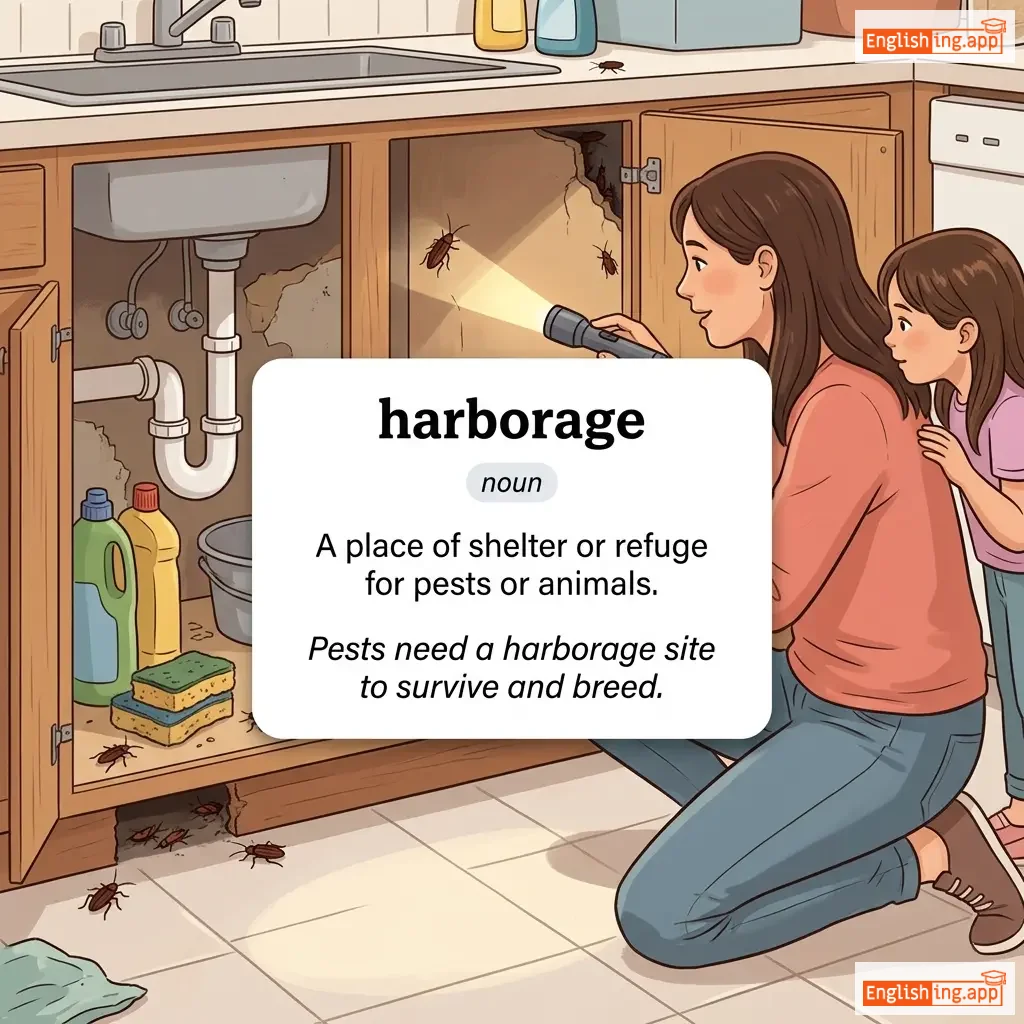
harborage definition card — visual illustration of the meaning
noun
ˈhɑːrbərɪdʒ
приют (priyut)

A place of shelter or refuge for pests or animals.

"Pests need a harborage site to survive and breed."

"Вредителям нужно место убежища для выживания и размножения." (Vreditelyam nuzhno mesto ubezhishcha dlya vyzhivaniya i razmnozheniya.)
noun
/ˈhɑːr.bər/
гавань (gavan')

a place on the coast where vessels may find shelter; a place of safety or refuge

"The fishing boats returned safely to the harbour before the storm hit the coastline."

"Рыболовные лодки безопасно вернулись в гавань до того, как буря ударила по побережью." (Rybolovnyye lodki bezopasno vernulis' v gavan' do togo, kak burya udarila po poberez'yu.)
adjective
/hɑːrd/
трудный (trudnyy)

solid, firm, or difficult to do or endure

"The exam was very hard for most students."

"Экзамен был очень трудным для большинства студентов." (Ekzamen byl ochen' trudnym dlya bol'shinstva studentov.)
adjective
/ˌhɑːrdˈbɪtn̩/
закаленный и опытный (zakalyonnyy i opytnyy)

tough and experienced, not easily affected by emotions or hardship

"The hard-bitten detective showed no sign of surprise at the crime scene."

"Опытный детектив не проявил удивления на месте преступления." (Opytnyy detektiv ne proyavil udivleniya na meste prestupleniya.)
adjective
/ˌhɑːrdˈhɑːrtɪd/
жестокий (zhestokiy)

showing no kindness or sympathy; cruel

"The landlord was hard-hearted and refused to help the poor family."

"Арендодатель был жестоким и отказался помочь бедной семье." (Arendodatel byl zhestokim i otkazalsya pomoch' bednoy sem'ye.)
noun
/ˈhɑːdɪhʊd/
отвага, смелость (otvaga, smelost)

Courage, boldness, or daring behavior; also physical robustness.

"The mountaineer's hardihood impressed the entire team."

"Отвага альпиниста впечатлила всю команду." (Otvaga alpinista vpechatlila vsyu komandу.)
adverb
/ˈhɑːrdli/
едва (yedva)

almost not; scarcely

"She could hardly believe her eyes."

"Она едва могла поверить своим глазам." (Ona yedva mogla poverit' svoim glazam.)
noun
/ˈhɑːrd.ʃɪp/
трудности, страдания (trudnosti, stradaniya)

severe suffering or privation; difficulty or distress

"Despite facing many hardships during the war, the family remained united and hopeful."

"Несмотря на многие трудности во время войны, семья оставалась единой и полной надежды." (Nesmotrya na mnogiye trudnosti vo vremya voyny, sem'ya ostavalas' yedinoy i polnoy nadezhdy.)
noun
/ˈhɑːrdˌwɛr/
аппаратное обеспечение (apparatnoe obespechenie)

the physical parts of a computer or electronic system, such as the monitor, keyboard, and processor

"The company upgraded its computer hardware to improve performance."

"Компания обновила аппаратное обеспечение своего компьютера для улучшения производительности." (Kompaniya obnovila apparatnoe obespechenie svoego komp'yutera dlya uluchsheniya proizvoditel'nosti.)
adjective
/ˈhɑːrdi/
выносливый, крепкий (vynoslivy, krepkij)

Strong, robust, and capable of enduring difficult conditions.

"Hardy plants can survive the harsh winter."

"Выносливые растения могут пережить суровую зиму." (Vynoslivye rasteniya mogut perezhit' surovuyu zimu.)
noun
/heə(r)/
заяц (zayats)

a fast-running long-eared mammal that resembles a large rabbit

"The hare quickly ran across the field."
"Заяц быстро пробежал через поле." (Zayats bystro probezhal cherez pole)
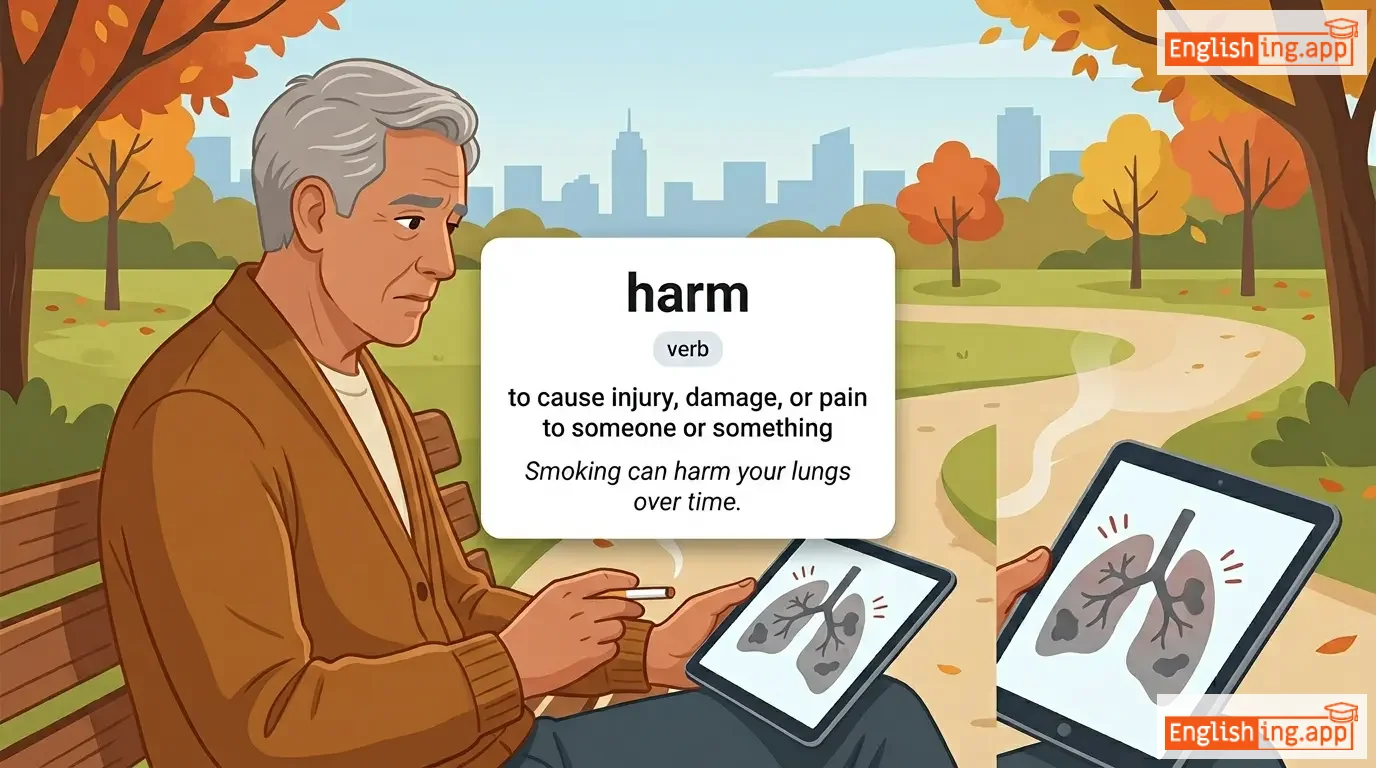
harm definition card — visual illustration of the meaning
verb
/hɑːrm/
вредить (vredit)

to cause injury, damage, or pain to someone or something

"Smoking can harm your lungs over time."

"Курение может повредить ваши легкие со временем." (Kurenie mozhet povredit' vashi legkiye so vremenem.)
adjective
/ˈhɑːrmfəl/
вредный (vrednyy)

causing or likely to cause harm; damaging

"Smoking is harmful to your health."

"Курение вредно для вашего здоровья." (Kurenie vredno dlya vashego zdorov'ya.)
adjective
/ˈhɑːrmləs/
безвредный; невинный; безопасный (bezvrednyy; nevinnyy; bezopasnyy)

not able or likely to cause harm; innocent; safe

"The snake looks dangerous but it's actually harmless."
"Змея выглядит опасной, но на самом деле она безвредна." (Zmeýa vyhlyadit opasnoy, no na samom dele ona bezvredna.)
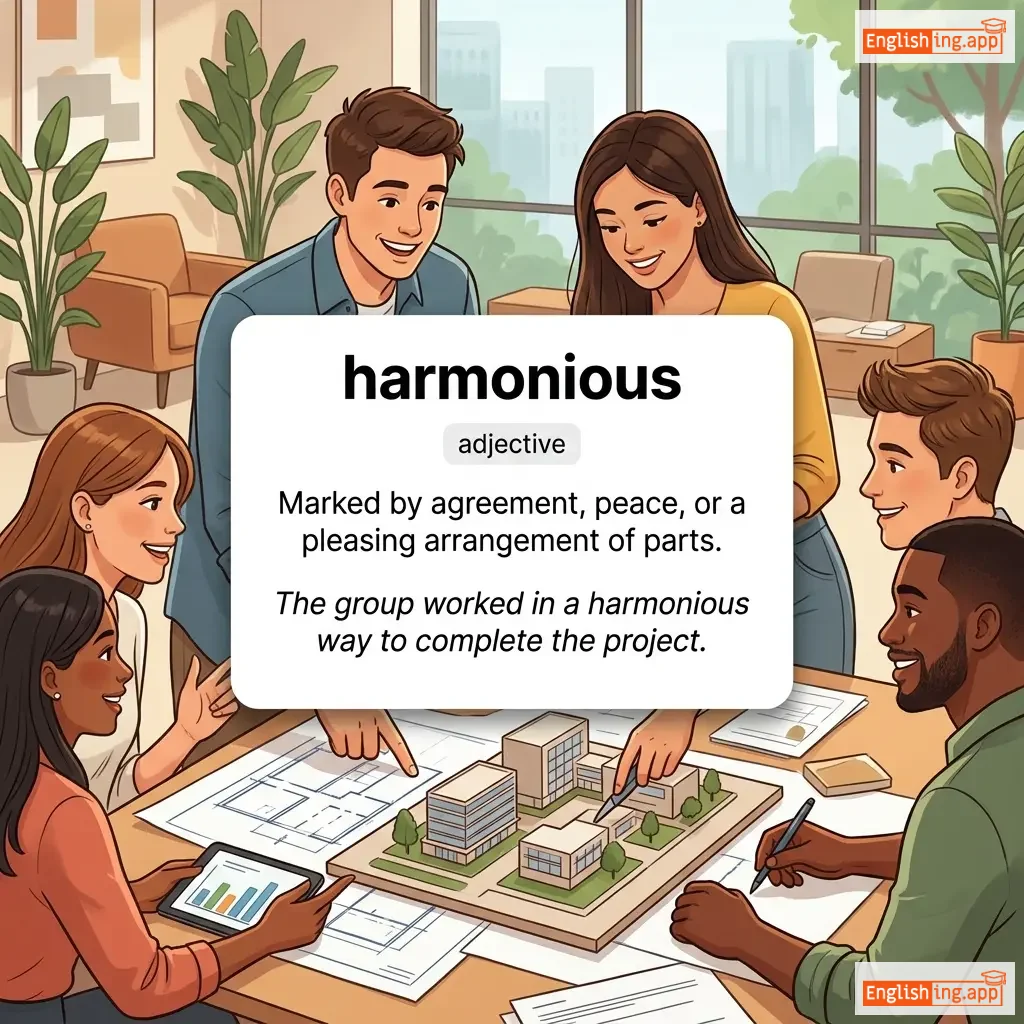
harmonious definition card — visual illustration of the meaning
adjective
/hɑːrˈmoʊniəs/
гармоничный, в гармонии (garmonichnyy, v garmonii)

Marked by agreement, peace, or a pleasing arrangement of parts.

"The group worked in a harmonious way to complete the project."

"Группа работала в гармонии, чтобы завершить проект." (Gruppa rabotala v garmonii, chtoby zavershit' proyekt.)
noun
/hɑrˈmoʊniəm/
гармониум (garmonium)

a keyboard musical instrument similar to an organ, using air to produce sound

"She played devotional songs on the harmonium at the temple."
"Она исполняла молитвенные песни на гармониуме в храме." (Ona ispolnyala molitvennyye pesni na garmoniyume v khrame.)
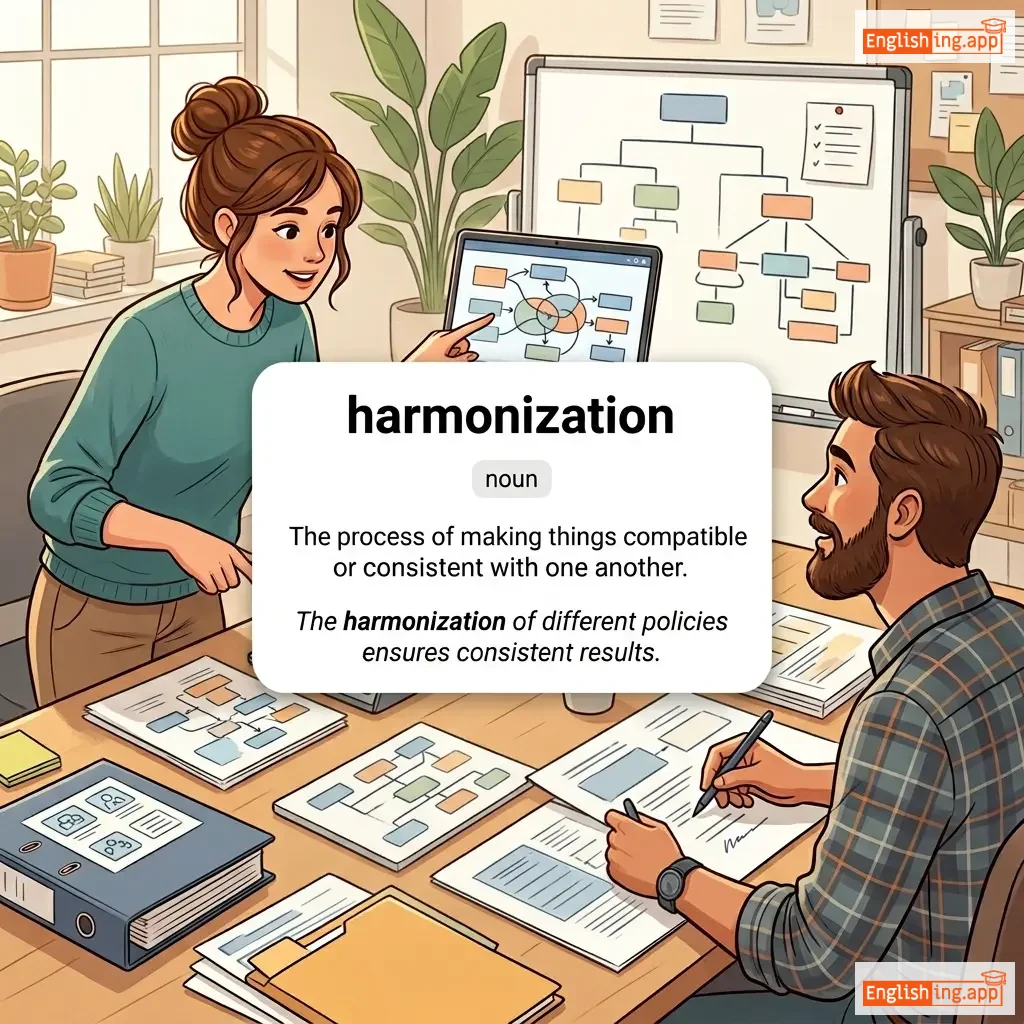
harmonization definition card — visual illustration of the meaning
noun
/ˌhɑːmənaɪˈzeɪʃən/
гармонизация, согласование (garmonizatsiya, soglasovanie)

The process of making things compatible or consistent with one another.

"The harmonization of different policies ensures consistent results."
"Гармонизация различных политик обеспечивает согласованные результаты." (Garmonizatsiya razlichnykh politik obespechivaet soglasovannye rezul'taty.)
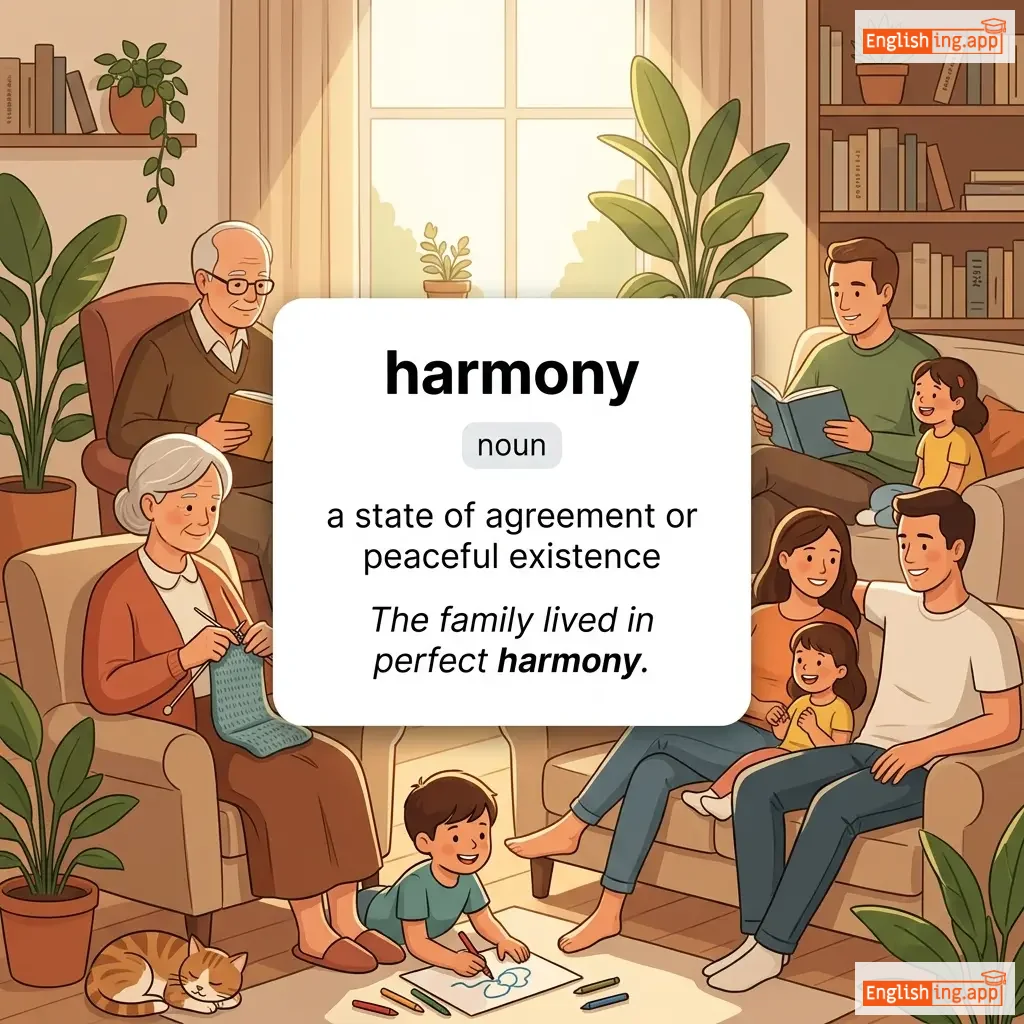
harmony definition card — visual illustration of the meaning
noun
/ˈhɑːrməni/
гармония (garmoniya)

a state of agreement or peaceful existence

"The family lived in perfect harmony."

"Семья жила в полной гармонии." (Sem'ya zhila v polnoy garmoniya.)
verb
/ˈhɑːrnɪs/
управлять и использовать (upravlyat i ispol'zovat)

To control and make use of natural resources, especially energy.

"Scientists are working to harness solar power effectively."

"Учёные работают над тем, чтобы эффективно использовать солнечную энергию." (Uchënyye rabotayut nad tem, chtoby effektivno ispol'zovat' solnechnuyu energiyu.)
verb
/hɑːrp/
постоянно жаловаться, упорствовать (postoyanno zhalovatsya, uporstvovat')

To dwell on or complain about something persistently.

"He kept harping on the same mistake over and over."

"Он продолжал жаловаться на одну и ту же ошибку снова и снова." (On prodolzhal zhalovatsya na odnu i tu zhe oshibku snova i snova.)