Словари

Словарь английского языка | Значения слов, определения и примеры

adjective
/ɡɑːrˈɡæntʃuən/
гигантский (gigantskiy)

Extremely large; enormous.

"They served a gargantuan meal at the feast."

"Они подали гигантский обед на банкете." (Oni podali gigantskiy obed na bankete.)
noun
/ˈɡɑːrɡɔɪl/
каменная скульптура (гротескная форма) (kamennaia skul'ptura (grotesknaia forma))

A carved stone figure, often of a grotesque creature, on a building, typically used as a spout to carry water away.

"The ancient cathedral had gargoyles on every corner."

"Древний собор имел гаргойли на каждом углу." (Drevnii sobor imel gargoili na kazhdom uglu.)
adjective
/ˈɡɛə.rɪʃ/
слишком яркий и бросающийся в глаза (slishkom yarkiy i brosayushchiesya v glaza)

Excessively bright and showy, often in a tasteless or unattractive way.

"The room was decorated with garish neon lights."

"Комната была украшена слишком яркими неоновыми огнями." (Komnata byla ukrashena slishkom yarkimi neonovymi ognyami.)
noun
/ˈɡɑːr.lənd/
венок; гирлянда; (venok, girlyanda)

a wreath of flowers and leaves, worn on the head or hung as decoration

"The bride wore a beautiful floral garland during the traditional ceremony."

"Невеста носила красивый цветочный венок на традиционной церемонии." (Nevesta nosila krasivyy tsvetochnyy venok na traditsionnoy tseremonii.)
noun
/ˈɡɑːrlɪk/
чеснок (chesnok)

A strong-smelling plant used as a seasoning in cooking.

"She added garlic to the curry."

"Она добавила чеснок в карри." (Ona dobavila chesnok v karri.)
noun
/ˈɡɑː.mənt/
предмет одежды (predmet odezhdy)

An item of clothing.

"She bought a new garment for the party."

"Она купила новую вещь для вечеринки." (Ona kupila novuyu veshch dlya vecherinki.)
verb
/ˈɡɑː.nər/
собирать (sobirat)

To gather or collect, especially information, support, or approval.

"The politician garnered support from young voters."

"Политик собрал поддержку от молодых избирателей." (Politik sobral podderzhku ot molodykh izbirateley.)
verb
/ˈɡɑː.nɪʃ/
украшать (ukrashat)

To decorate food with small items for added flavor or visual appeal.

"She garnished the dish with fresh coriander leaves."

"Она украсила блюдо свежими листьями кориандра." (Ona ukrasila blyudo s svezhimi list'yami koriandra.)
noun
/ˈɡær.ɪ.sən/
гарнизон (garnizon)

A body of troops stationed in a particular location, usually to defend it.

"The garrison defended the fortress against the invaders."

"Гарнизон защитил крепость от захватчиков." (Garnizon zashchitil krepost' ot zakhvatchikov.)
noun, verb
/ɡəˈrɒt/
удавить (udavit)

A method of execution by strangulation, or to strangle someone with a cord or wire.

"The assassin attempted to garrote his target in the alley."

"Убийца попытался удушить свою жертву в переулке." (Ubiytsa popytalsya udushit' svoyu zhertvu v pereulke.)
noun
/ɡəˈruːlɪti/
болтливость (boltlivost)

Excessive talkativeness, especially about trivial matters.

"His garrulity made it hard to focus during the meeting."
"Его болтливость затрудняла сосредоточение на встрече." (Ego boltlivost zatrudniala sosredotochenie na vstreche.)
Garrulous definition card — visual illustration of the meaning
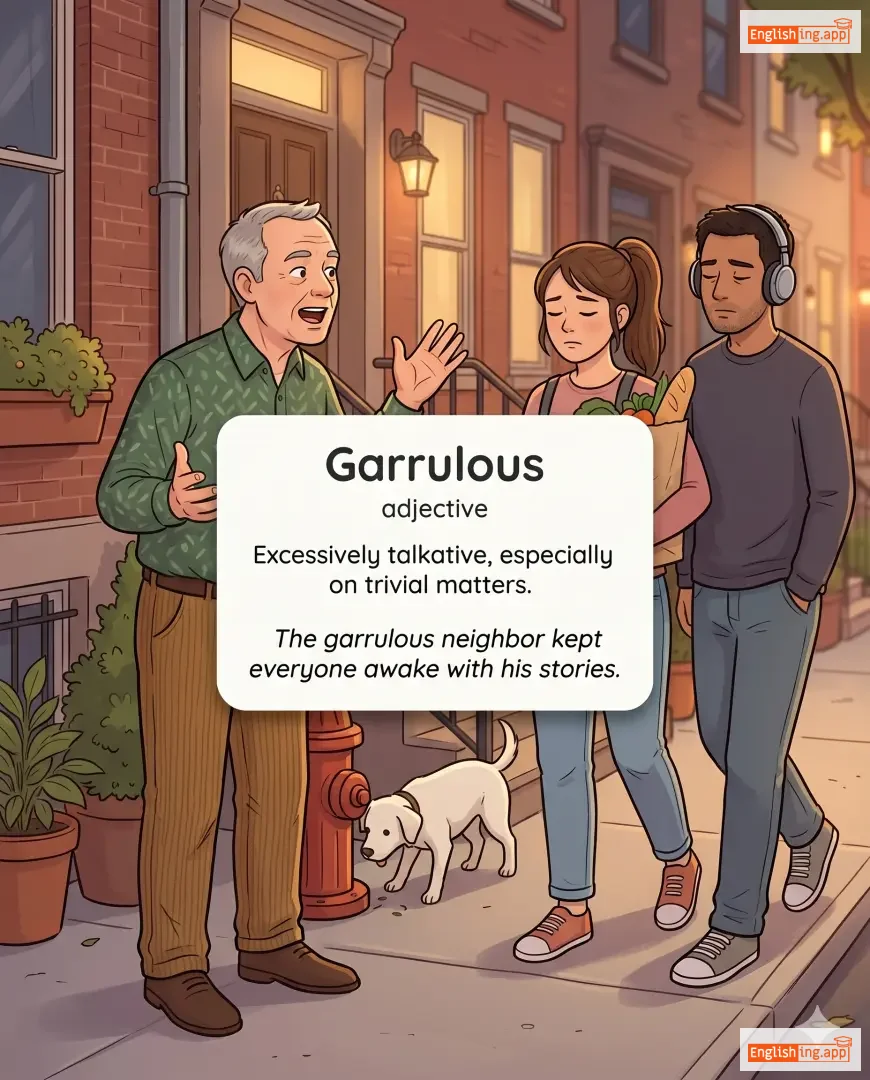
adjective
/ˈɡærələs/
болтливый, разговорчивый (boltlivyy, razgovorchivyy)

Excessively talkative, especially on trivial matters.

"The garrulous neighbor kept everyone awake with his stories."
"Болтливый сосед не давал никому спать своими рассказами." (Boltlivyy sosed ne daval nikomu spat' svoimi rasskazami.)
gas definition card — visual illustration of the meaning
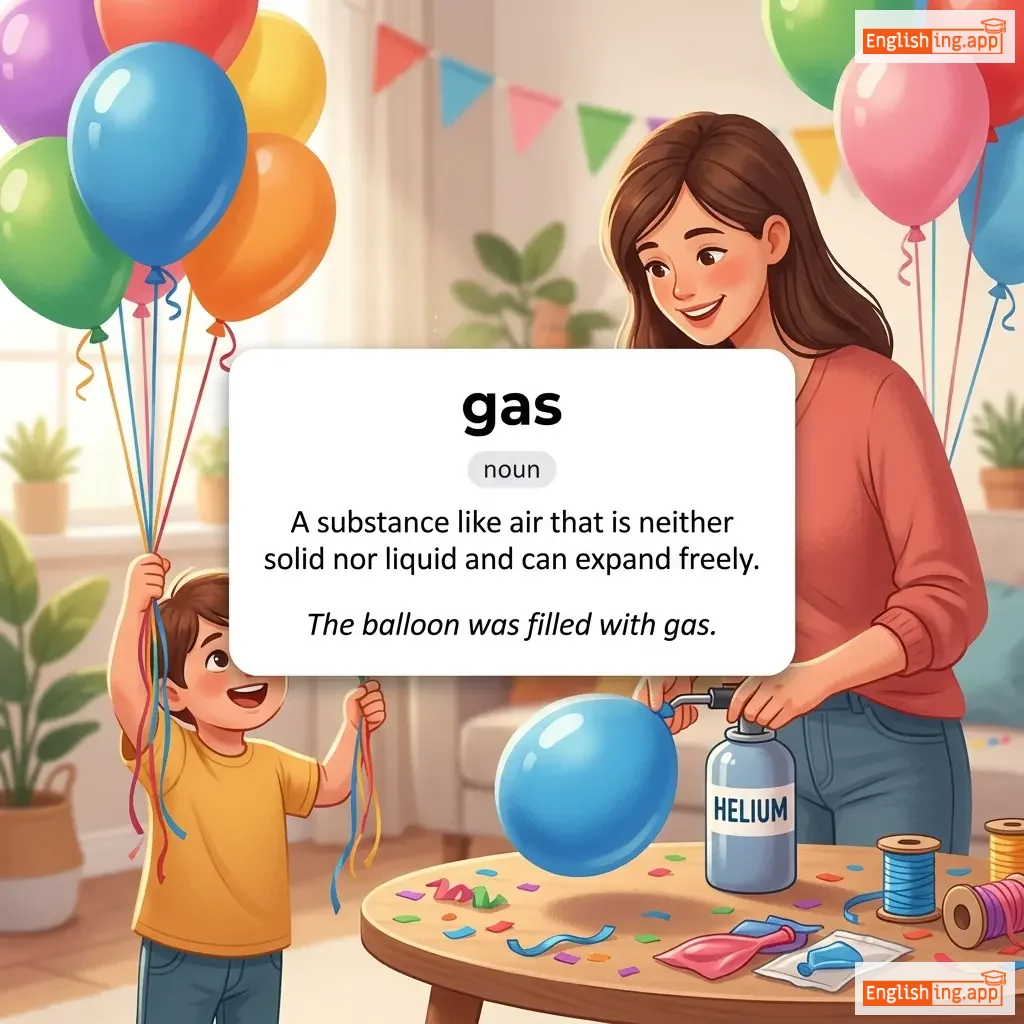
noun
/ɡæs/
газ (gaz)

A substance like air that is neither solid nor liquid and can expand freely.

"The balloon was filled with gas."

"Шар был наполнен газом." (Shar byl napolnen gazom.)
noun
/ˌɡæskəˈneɪd/
превышение похвалы, хвастовство (prevyshenie pokhvaly, khvastovstvo)

Extravagant boasting or bragging.

"His endless gasconade made him unpopular among his peers."

"Его бесконечное хвастовство сделало его непопулярным среди его сверстников." (Ego beskonechnoe khvastovstvo sdelalo ego nepopulyarnym sredi ego sverstnikov.)
adjective
/ˈɡæsiəs/
газообразный (gazobrazny)

Relating to or having the form of gas.

"Carbon dioxide is a gaseous substance."

"Углекислый газ — это газообразное вещество." (Uglekislyj gaz — eto gazobraznoe veshchestvo.)
noun/verb
/ɡæʃ/
глубокий порез (glubokiy porez)

A long, deep cut or wound; to cut deeply or violently.

"He had a deep gash on his leg after the accident."

"У него была глубокая рана на ноге после аварии." (U nego byla glubokaya rana na noge posle avarii.)
noun
/ˌɡæsɪfɪˈkeɪʃən/
газификация (gazifikatsiya)

The process of converting solid or liquid fuel into gas.

"Gasification is widely used to produce fuel gas from coal."

"Газификация широко используется для производства топливного газа из угля." (Gazifikatsiya shiroko ispol'zuyetsya dlya proizvodstva toplivnogo gaza iz uglya.)
noun
/ˈɡæsəˌliːn/
бензин (benzin)

a liquid fuel made from petroleum, used mainly to power engines in vehicles

"The price of gasoline has increased significantly this month."

"Цена на бензин значительно выросла в этом месяце." (Tsenа na benzin znachitel'no vyrosla v etom mesyatse.)
adjective
/ˈɡæstrɪk/
гастрический / проблемы с желудком (gastricheskiy / problemy s zheludkom)

Relating to the stomach.

"She was prescribed medicine for her gastric problems."

"Ей прописали лекарства от гастрических проблем." (Eyy propisali lekarstva ot gastricheskikh problem.)
noun
/ɡæsˈtraɪtɪs/
гастрит (gastrit)

Inflammation of the lining of the stomach.

"The doctor diagnosed him with gastritis after his endoscopy."

"Врач поставил ему диагноз гастрит после эндоскопии." (Vrach postavil emu diognos gastrit posle endoskopii.)
gastrointestinal definition card — visual illustration of the meaning
adjective
ˌɡæs.troʊ.ɪnˈtes.tɪ.nəl
гастроинтестинальный (gastrointestinal'nyy)

Relating to the stomach and intestines.

"Spicy food can cause gastrointestinal issues."

"Острая пища может вызвать гастроинтестинальные проблемы." (Ostraya pishcha mozhet vyzvat' gastrointestional'nye problemy.)
noun
/ɡæsˈtrɒnəmi/
гастрономия (gastronomiya)

The art or science of good eating and fine cuisine.

"Paris is famous for its rich tradition of gastronomy."

"Париж славится своей богатой гастрономической традицией." (Parizh slavyatsya svoey bogatoy gastronomicheskoy traditsiey.)
noun
/ɡeɪt/
счастье (schast'ye)

A movable barrier that opens and closes to allow or prevent entry through an opening.

"She closed the gate behind her as she left the garden."

"Она не могла скрыть своего счастья, когда получила награду." (Ona ne mogla skryt' svoego schast'ya, kogda poluchila nagradu.)
noun
/ˈɡeɪt.weɪ/
ворота; вход (vorota; vkhod)

an entrance or opening that provides access to a place; a means of achieving a particular state or condition

"The ancient stone gateway served as the entrance to the magnificent palace."
"Древняя каменная арка служила входом в великолепный дворец." (Drevnyaya kamennaya arka sluzhila vkhodom v velikolepnyy dvorets.)
gather definition card — visual illustration of the meaning
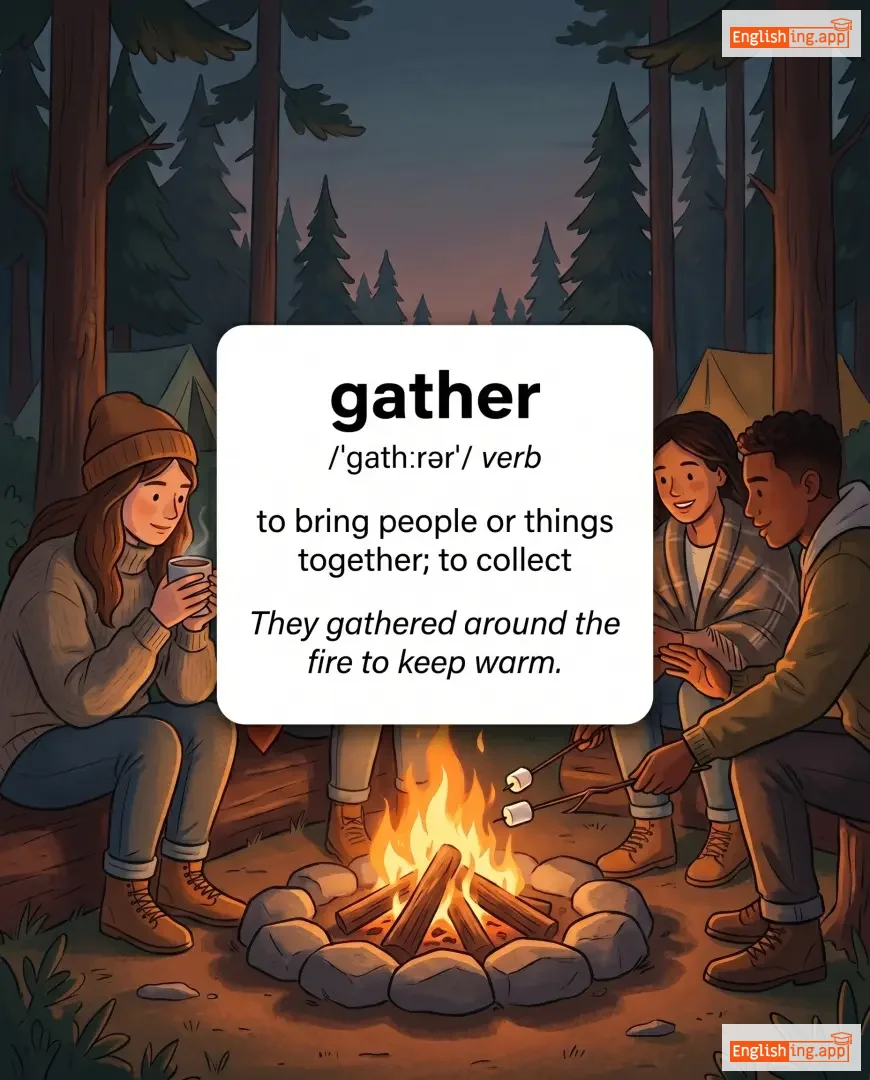
verb
/ˈɡæðər/
собирать (sobirat)

to bring people or things together; to collect

"They gathered around the fire to keep warm."

"Они собрались вокруг огня, чтобы согреться." (Oni sobralis’ vokrug ognya, chtoby sogretsya.)
noun
/ˈɡæðərɪŋ/
собрание (sobranie)

a meeting or assembly of people for a particular purpose

"We attended a family gathering last weekend."
"Мы участвовали в семейном собрании в прошлые выходные." (My uchastvovali v semeynom sobranii v proshlye vykhodnye.)
gauche definition card — visual illustration of the meaning
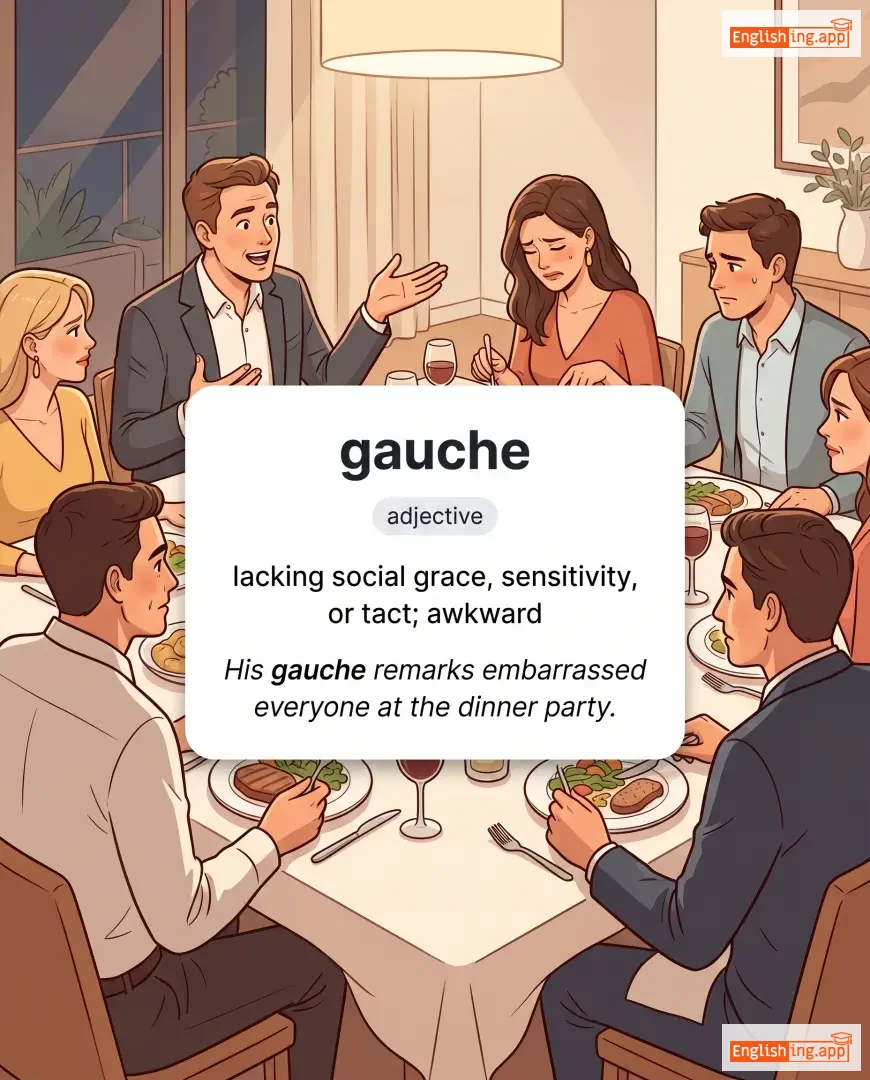
adjective
/ɡoʊʃ/
неловкий (nelovkiy)

lacking social grace, sensitivity, or tact; awkward

"His gauche remarks embarrassed everyone at the dinner party."

"Его неловкие замечания смутили всех на ужине." (Ego nelovkie zamechaniya smutili vsekh na uzhine.)
adjective
/ˈɡɔːdi/
пестрый (pestriy)

excessively showy or flashy, often in a tasteless way

"She wore a gaudy necklace that clashed with her elegant dress."

"Она носила пестрое ожерелье, которое не сочеталось с её элегантным платьем." (Ona nosila pestroye ozherelye, kotoroye ne sochetalos' s yeyo elegantnym plat'ye.)
verb
/ɡeɪdʒ/
измерять (izmeriat)

to measure, estimate, or determine the magnitude, amount, or capacity of something

"The mechanic gauged the pressure in the car tires."

"Механик измерил давление в шинах автомобиля." (Mekhanik izmeril davlenie v shinakh avtomobilya.)
adjective
/ɡɔːnt/
истощённый (istošchjonnyj)

extremely thin, bony, and haggard in appearance, often due to hunger or illness

"After weeks of illness, he looked pale and gaunt."

"После недель болезни он выглядел бледным и истощённым." (Posle nedelej bolezni on vyglyadel blednym i istoščonnym.)
noun
/ˈɡɔːntlɪt/
перчатка / вызов (perchatka / vyzov)

a protective glove; a challenge or trial; to 'throw down the gauntlet' means to issue a challenge

"The knight threw down his gauntlet as a sign of challenge."

"Рыцарь бросил свою перчатку как знак вызова." (Ritsar' brosil svoju perchatku kak znak vyzova.)
noun
/ˈɡævəl/
молоток (molotok)

A small ceremonial mallet used by a judge or an auctioneer to signal attention or mark a decision.

"The judge struck the gavel to call the court to order."

"Судья ударил молотком, чтобы призвать к порядку в суде." (Sud'ya udaril molotok, chtoby prizvat' k poryadku v sude.)
verb
/ɡɔːk/
пялиться (pyalit’sya)

To stare openly and rudely.

"Tourists gawked at the celebrity walking down the street."

"Туристы пялились на знаменитость, гуляющую по улице." (Turisty pyalilis’ na znamenitost’, gulyayushchuyu po ulitse.)
adjective
/ˈɡɔːki/
неловкий (nelovkiy)

Awkward and clumsy in appearance or behavior.

"The teenager felt gawky in his oversized suit."

"Подросток чувствовал себя неловким в своем слишком большом костюме." (Podrostok chuvstvoval sebya nelovkim v svoem slishkom bolshom kostyume.)
🏳️‍🌈

gay (гей)

adjective
/ɡeɪ/
гей (gey)

sexually attracted to people of the same sex; also used to mean cheerful or lively

"He came out as gay during college."

"Он вышел как гей во время учебы в университете." (On vyshel kak gey vo vremya ucheby v universitete.)
verb
/ɡeɪz/
пристально смотреть (pristal'no smotret')

To look steadily and intently at something, usually with admiration, surprise, or thought.

"He gazed at the stars in wonder."

"он с удивлением смотрел на звезды." (on s udivleniem smotrel na zvezdy.)
noun
/ɡəˈzɛt/
государственная газета (gosudarstvennaya gazeta)

An official journal, newspaper, or publication, especially one issued by a government.

"The law was published in the government gazette."

"Закон был опубликован в государственной газете." (Zakon byl opublikovan v gosudarstvennoy gazete.)
noun
/ɡɪə(r)/
снаряжение / оборудование (snaryazhenie / oborudovanie)

Equipment or apparatus for a particular purpose; also a toothed wheel in machinery.

"The climber packed all his gear before starting the journey."

"Альпинист упаковал всё своё снаряжение перед началом путешествия." (Al'pinist upakoval vsyo svoe snaryazhenie pered nachalom puteshestviya.)
noun
/dʒem/
драгоценный камень (dragotsenny kamen)

a precious or semi-precious stone, especially when cut and polished or engraved

"She wore a beautiful gem necklace to the party."

"Она носила красивое ожерелье с драгоценными камнями на вечеринке." (Ona nosila krasivoe ozherelie s dragotsennymi kamnyami na vecherinke.)
noun
/ˈʒɑːndɑːrm/
жандарм (zhandar)

A French police officer, especially a member of a military-style police force.

"The gendarme stopped the car for a routine check."

"Жандарм остановил машину для плановой проверки." (Zhendarm ostanovil mashinu dlya planovoy proverki.)
noun
/ˈdʒɛndər/
гендер (gender)

The state of being male, female, or another identity as recognized socially or culturally.

"The survey asked about participants' age and gender."

"Опрос спрашивал о возрасте и гендере участников." (Opros sprashival o vozraste i genderе uchastnikov.)
noun
/dʒiːn/
ген (gen)

A unit of heredity in living organisms, transferred from parent to offspring, determining traits.

"Eye color is influenced by genes inherited from parents."

"Цвет глаз зависит от генов, унаследованных от родителей." (tsvet glaz zavisit ot genov, unashledovannykh ot roditeley.)
noun
/ˌdʒiːniˈælədʒɪst/
генеалог (genealog)

A person who studies or traces the history of families and their lineages.

"The genealogist uncovered records dating back to the 18th century."

"Генеалог обнаружил записи, относящиеся к XVIII веку." (Genealog obnaruzhil zapisi, otnosyashchiesya k XVIII veka.)
noun
/ˌdʒiːniˈælədʒi/
генеалогия (genealogiya)

The study and tracing of lines of descent or family history.

"She spent years researching her family's genealogy."

"Она потратила годы на исследование генеалогии своей семьи." (Ona potratila gody na issledovaniye genealogii svoey sem'i.)
adjective
/ˈdʒɛnərəl/
общий (obshchij)

Relating to all or most people, things, or situations; not specific.

"He made a general comment about the project."

"Он сделал общий комментарий по проекту." (On sdelal obshhij kommentarij po proyektu.)
noun
/ˌdʒenəˈræləti/
обобщенность (obobshchennost)

A vague, non-specific statement or principle that applies broadly.

"The speech was full of generalities and lacked concrete details."

"Речь была полна обобщений и не хватало конкретных деталей." (Rech byla polna obobshcheniy i ne khvatalo konkretnykh detaley.)
verb
/ˈdʒenərəlaɪz/
обобщать (obobshchat')

To make a broad statement by inferring from specific cases.

"It is wrong to generalize based on a few experiences."

"Неправильно обобщать на основе нескольких опытов." (Nepravil'no obobshchat' na osnove neskol'kikh opytov.)
adverb
/ˈdʒɛnərəli/
обычно (obychno)

in most cases; usually; as a rule

"He generally arrives at work before 9 a.m."

"Он обычно приходит на работу до 9 утра." (On obychno prikhodit na rabotu do 9 utra.)
verb
/ˈdʒɛnəreɪt/
генерировать (generirovat)

to produce or create something

"The machine generates electricity."
"Машина генерирует электричество." (Mashina generiruet elektrostatichestvo.)
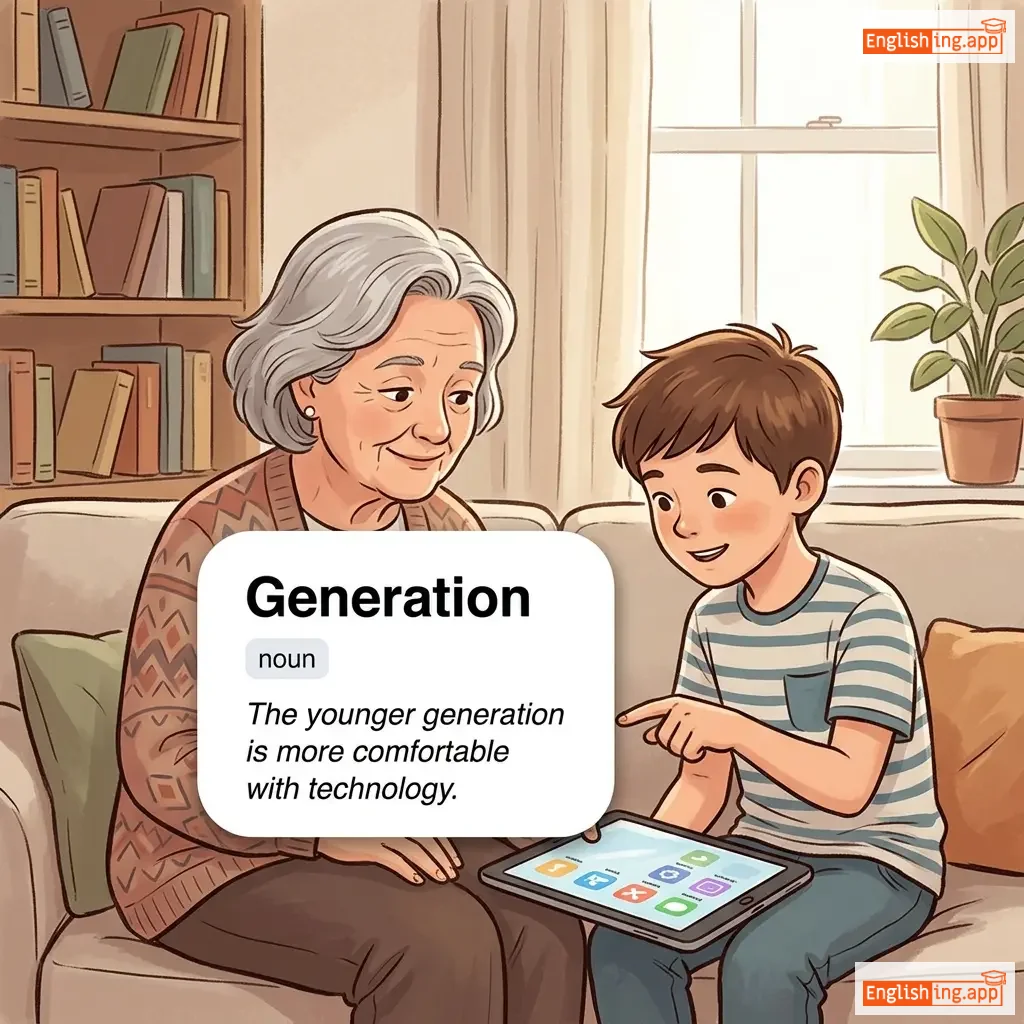
Generation definition card — visual illustration of the meaning
noun
/ˌdʒɛnəˈreɪʃən/
поколение (pokolenie)

all the people born and living at about the same time; the process of producing something

"The younger generation is more comfortable with technology."

"Молодое поколение более комфортно с технологиями." (Molodoe pokolenie bolee komfortno s tekhnologiyami.)