वोकैबुलरीज

इंग्लिश वोकैबुलरी डिस्कवर, लर्न और मास्टर करें

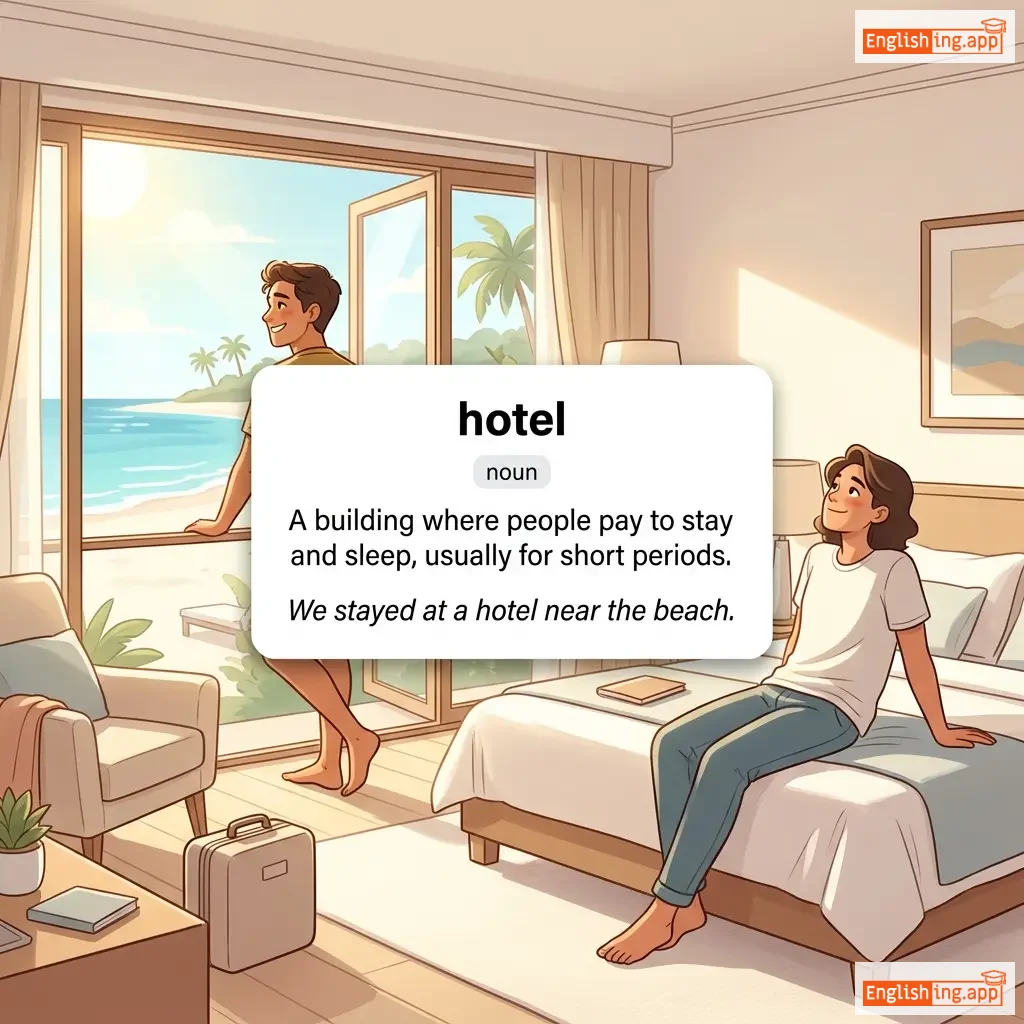
hotel definition card — visual illustration of the meaning
noun
/hoʊˈtɛl/
होटल (hotel)

A building where people pay to stay and sleep, usually for short periods.

"We stayed at a hotel near the beach."

"हम समुद्र तट के पास एक होटल में रुके थे।" (ham samudra tat ke paas ek hotel mein ruke the.)
noun
/ˈhɒthɛd/
गुस्सैल व्यक्ति (gussaail vyakti)

a person who acts quickly and without thinking when angry

"He is such a hothead that he often starts arguments."

"वह इतना गुस्सैल है कि वह अक्सर तकरार शुरू कर देता है।" (Vah itna gussail hai ki vah aksar takrar shuru kar deta hai.)
adverb
/ˈhɒtli/
गुस्से में (gusse mein)

in an intense, angry, or passionate way

"She hotly denied the accusations."

"उसने आरोपों को गुस्से में नकारा।" (Usne aaropon ko gusse mein nakara.)
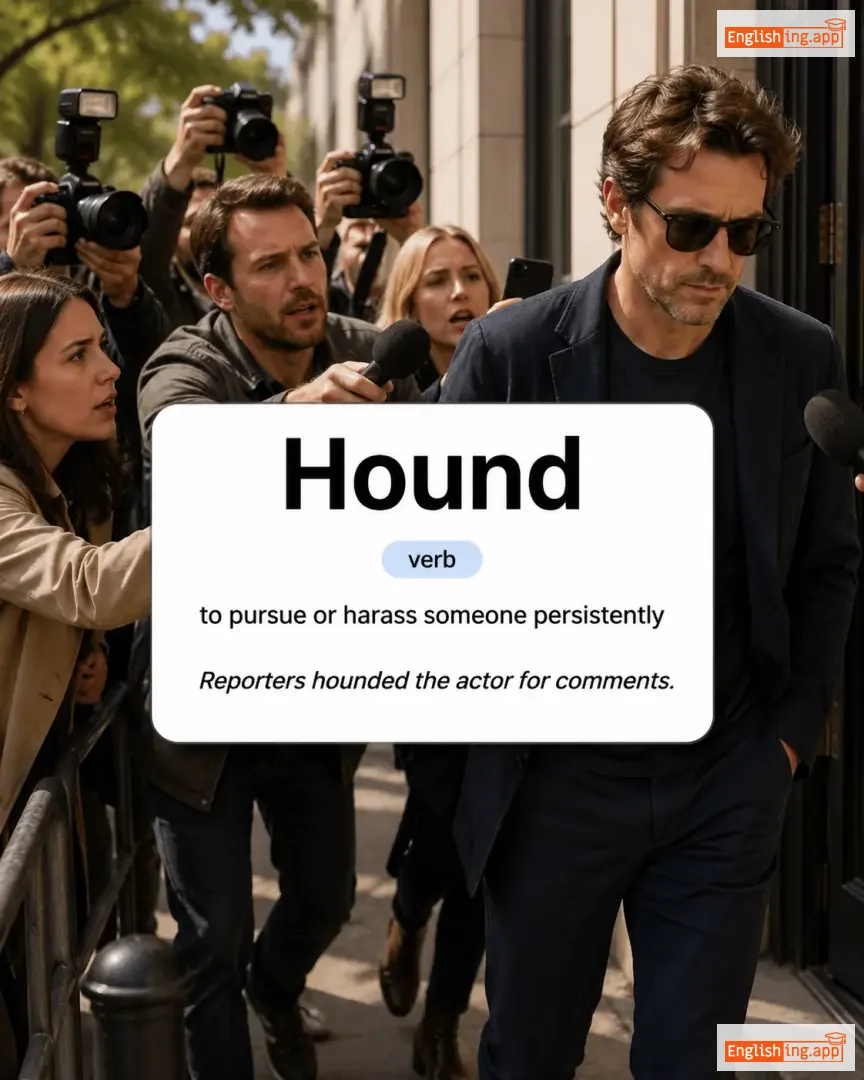
Hound definition card — visual illustration of the meaning
verb
/haʊnd/
परेशान करना (pareshan karna)

to pursue or harass someone persistently

"Reporters hounded the actor for comments."

"रिपोर्टर्स ने अभिनेता को टिप्पणियों के लिए परेशान किया।" (Reporters ne abhineta ko tippaniyon ke liye pareshan kiya.)
noun
/ˈaʊər/
घंटा (ghanta)

A period of time equal to 60 minutes.

"The meeting lasted for two hours."

"बैठक दो घंटे तक चली." (Baithak do ghante tak chali.)
adverb
/ˈaʊər.li/
प्रति घंटे; हर घंटे होने वाली; निरंतर (prati ghante; har ghante hone wali; nirantar)

every hour; happening or done each hour; continuously

"The weather report is updated hourly."

"मौसम रिपोर्ट प्रति घंटे अपडेट की जाती है।" (mausam report prati ghante update ki jaati hai.)
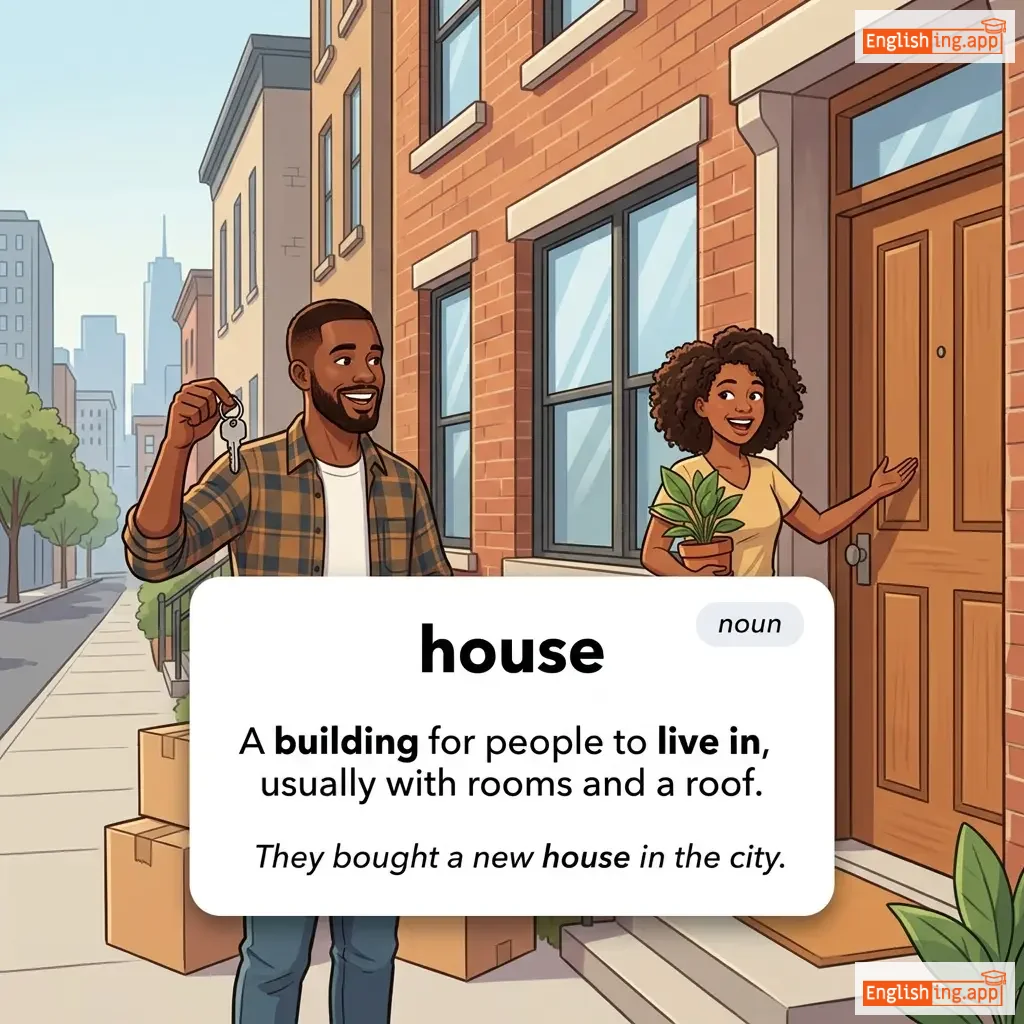
house definition card — visual illustration of the meaning
noun
/haʊs/
घर (ghar)

A building for people to live in, usually with rooms and a roof.

"They bought a new house in the city."

"वे शहर में एक नया घर खरीदने गए थे।" (ve shahar mein ek naya ghar kharidne gaye the.)
House boat definition card — visual illustration of the meaning
noun
/ˈhaʊs boʊt/
हाउस बोट (haus bot)

a boat that has been designed or modified to be used primarily as a home

"They spent their vacation on a beautiful house boat in the lake."

"उन्होंने झील में एक सुंदर हाउस बोट पर अपनी छुट्टियाँ बिताईं।" (unhone jheel mein ek sundar haus bot par apni chhutiyaan bitai)
noun
/ˈhaʊsˌbreɪkɪŋ/
घर में घुसकर चोरी करना (ghar mein ghuskar chori karna)

the crime of breaking into a house with intent to steal

"The thief was arrested for housebreaking."

"चोर को घर में घुसकर चोरी करने के आरोप में गिरफ्तार किया गया।" (Chor ko ghar mein ghuskar chori karne ke aarop mein giraftaar kiya gaya.)
noun
/ˈhaʊshoʊld/
घर-परिवार (ghar-parivar)

All the people living together in one house, considered as a unit.

"There are five people in our household."

"हमारे घर-परिवार में पाँच लोग हैं।" (Hamare ghar-parivar mein paanch log hain.)
noun
/ˈhaʊswaɪf/
गृहिणी (grihini)

a married woman who manages a household and whose main occupation is caring for her family and home

"She chose to work as a housewife while raising her children."

"उसने बच्चों की परवरिश के दौरान गृहिणी बनने का निर्णय लिया।" (usne bachchon ki parvarish ke dauraan grihini banne ka nirnay liya)
noun
/ˈhaʊzɪŋ/
आवास (aavaas)

buildings or structures where people live; accommodation

"The government is working to provide affordable housing for everyone."

"सरकार हर किसी के लिए किफायती आवास प्रदान करने के लिए काम कर रही है।" (Sarkar har kisi ke liye kifayati aavaas pradan karne ke liye kaam kar rahi hai.)
noun
/ˈhʌvəl/
झोपड़ी (jhopaDi)

a small, poorly built, and dirty house

"The refugees lived in a makeshift hovel."

"शरणार्थी एक अस्थायी झोपड़ी में रहते थे।" (Sharanarthi ek asthaayi jhopaDi mein rahte the.)
verb
/ˈhʌvər/
हवा में एक जगह स्थिर रहना (hawa mein ek jagah sthir rehna)

to remain in the air in one place without moving forward or backward

"The helicopter hovered over the city."

"हेलीकॉप्टर शहर के ऊपर तैर रहा था।" (Helicopter shehar ke upar tair raha tha.)
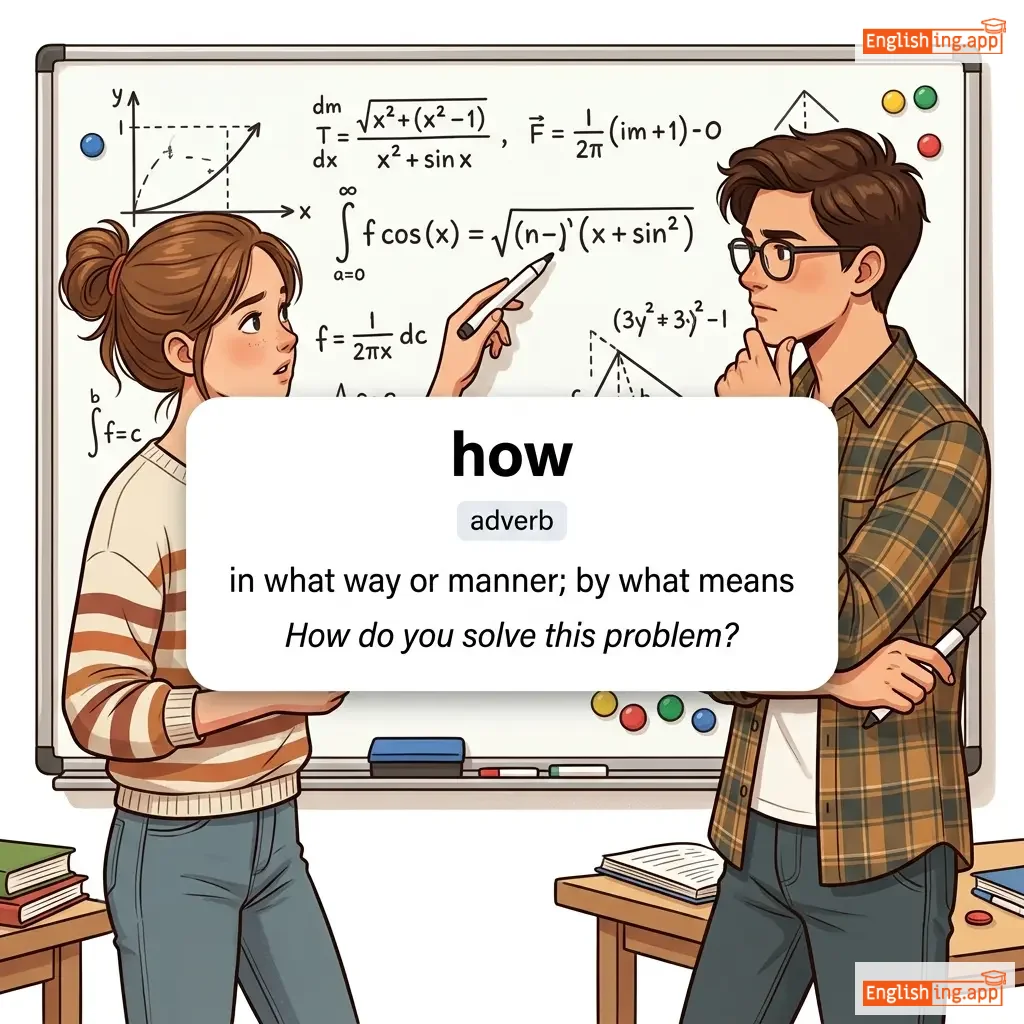
how definition card — visual illustration of the meaning
adverb
/haʊ/
कैसे (kaise)

in what way or manner; by what means

"How do you solve this problem?"

"तुम इस समस्या को कैसे हल करोगे?" (Tum is samasya ko kaise hal karoge?)
adverb, conjunction
/haʊˈɛvər/
हालाँकि (haalanki)

used to introduce a statement that contrasts with or seems to contradict something previously said

"The journey was long; however, it was enjoyable."

"यात्रा लंबी थी; हालाँकि, यह आनंददायक थी।" (Yatra lambi thi; haalanki, yah ananddayak thi.)
noun
/ˈhɔɪdən/
शरारती लड़की (shararti ladki)

a boisterous or tomboyish girl

"The hoyden preferred climbing trees to playing with dolls."

"शरारती लड़की को गुड़िया से खेलने के बजाय पेड़ों पर चढ़ना ज्यादा पसंद था।" (Shararti ladki ko gudiya se khelne ke bajaye pedon par chadhna zyada pasand tha.)
noun
/hʌb/
केंद्र (kendra)

the central part of a place or activity where things converge

"The city is the hub of the country's trade network."

"शहर देश के व्यापार नेटवर्क का केंद्र है।" (Shahar desh ke vyapar network ka kendra hai.)
noun
/ˈhʌbʌb/
कोलाहल (kolahal)

a loud noise caused by a crowd of people talking or shouting

"There was a hubbub in the market as the sale began."

"जब बिक्री शुरू हुई तो बाजार में कोलाहल मच गया।" (Jab bikri shuru hui to bazaar mein kolahal mach gaya.)
noun
/ˈhjuːbrɪs/
अत्यधिक अभिमान (atyadhik abhimaan)

excessive pride or self-confidence

"His hubris led to his downfall."

"उसका अभिमान उसकी गिरावट का कारण बना।" (Uska abhimaan uski girawat ka kaaran bana.)
noun
/ˈhʌk.stər/
बेचने वाला (bechne wala)

A person who sells small items aggressively, often in a showy or dishonest way.

"The huckster loudly promoted his goods in the busy marketplace."

"हक्स्टर ने व्यस्त बाज़ार में अपने सामान का जोरदार प्रचार किया।" (Huckster ne vyast bazar mein apne samaan ka zordar prachar kiya.)
noun
/hjuː/
रंग (rang)

A color or shade.

"The artist chose a soft blue hue for the background."

"कलाकार ने पृष्ठभूमि के लिए एक हल्का नीला रंग चुना।" (Kalaakar ne prishthabhoomi ke liye ek halka neela rang chuna.)
noun phrase
/ˌhjuː ən ˈkraɪ/
हंगामा-प्रतिवाद (hungama-prativad)

A loud public outcry or protest, often demanding action.

"There was a hue and cry over the new policy changes."

"नई नीति परिवर्तनों को लेकर हंगामा-प्रतिवाद हुआ था।" (Nayi niti parivartano ko lekar hungama-prativad hua tha.)
verb
/hʌɡ/
गले लगाना (gale lagana)

to hold someone tightly in your arms to show affection or comfort

"She hugged her friend before leaving for the airport."

"उसने हवाई अड्डे के लिए रवाना होने से पहले अपनी दोस्त को गले लगाया।" (Usne hawaai addhe ke liye ravaana hone se pehle apni dost ko gale lagaya.)
adjective
/hjuːdʒ/
विशाल (vishal)

extremely large in size or amount

"The stadium was filled with a huge crowd."

"स्टेडियम एक विशाल भीड़ से भरा हुआ था।" (Stadium ek vishal bheed se bhara hua tha.)
interjection
/hʌ/
क्या कहा? (kya kaha?)

used to express confusion, surprise, or that you did not hear something

"Huh? What did you say?"

"हह? आपने क्या कहा?" (Hah? Aapne kya kaha?)
noun
/hʌl/
जहाज की शरीर / बीज का छिलका (jahaz ki sharir / beej ka chilka)

The outer covering of a seed or fruit; also the main body of a ship.

"The sailors inspected the ship’s hull for any damage."

"नाविकों ने जहाज के हल का निरीक्षण किया ताकि कोई क्षति न हो।" (Navikon ne jahaz ke hal ka nirikshan kiya taki koi kshati na ho.)
noun
/hʌm/
गुंजना (gunjana)

a low continuous sound; to make a low continuous droning sound

"The constant hum of the air conditioner helped her fall asleep peacefully."

"एयर कंडीशनर की निरंतर गूंज ने उसे शांति से सोने में मदद की।" (air conditioner ki nirantar gunj ne use shanti se sone mein madad ki.)
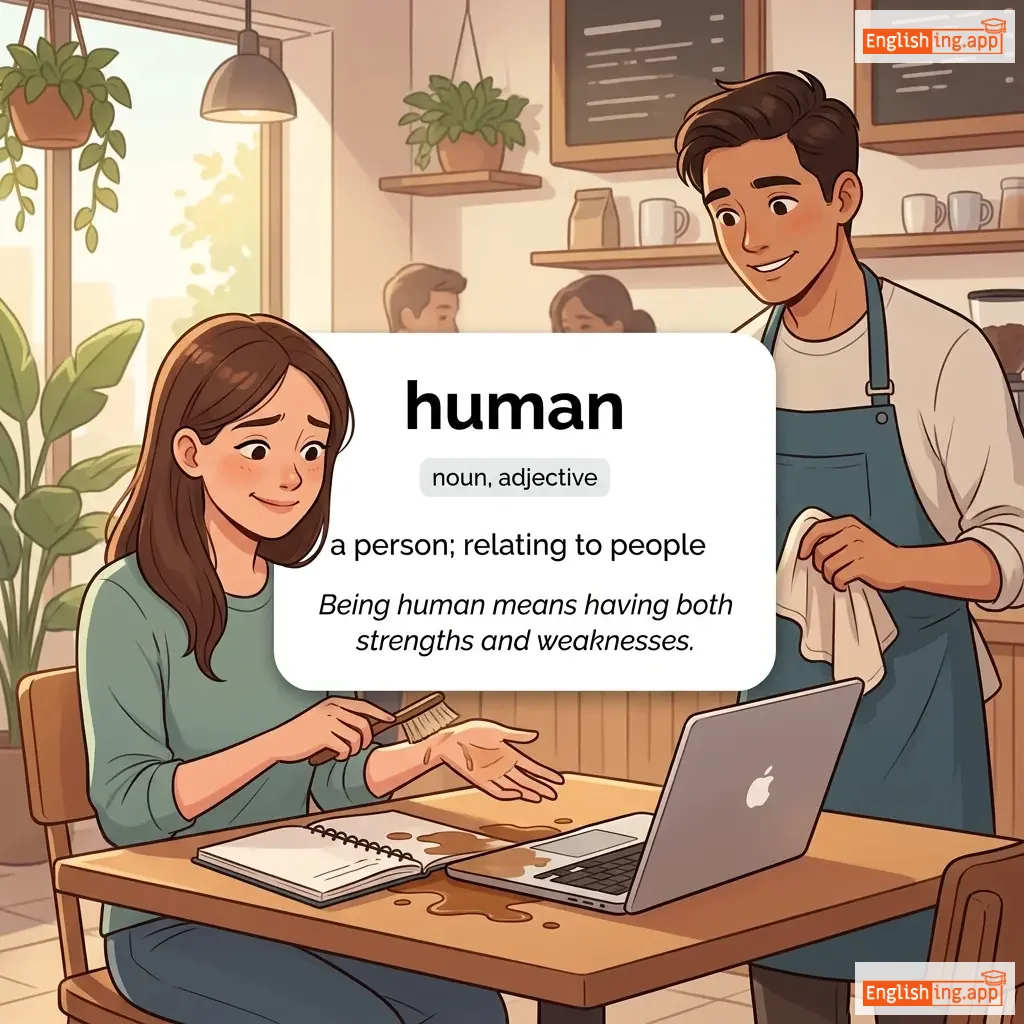
human definition card — visual illustration of the meaning
noun, adjective
/ˈhjuːmən/
मानव (manav)

a person; relating to people

"Being human means having both strengths and weaknesses."

"मानव होने का मतलब है दोनों ताकत और कमजोरी रखना।" (manav hone ka matlab hai dono taqat aur kamzori rakhna.)
human rights definition card — visual illustration of the meaning
noun
ˌhjuː.mən ˈraɪts
मानव अधिकार (manav adhikar)

A right that is believed to belong justifiably to every person.

"Human rights protect individual freedoms."

"मानव अधिकार व्यक्तिगत स्वतंत्रता की रक्षा करते हैं।" (Manav adhikar vyaktigat svatantrata ki raksha karte hain.)
adjective
/hjuːˈmeɪn/
मानवीय (manviya)

Showing compassion or benevolence.

"The doctor provided humane treatment to the injured animals."

"डॉक्टर ने घायल जानवरों को मानवीय उपचार प्रदान किया।" (Doctor ne ghaayal janwaron ko manviya upchar pradan kiya.)
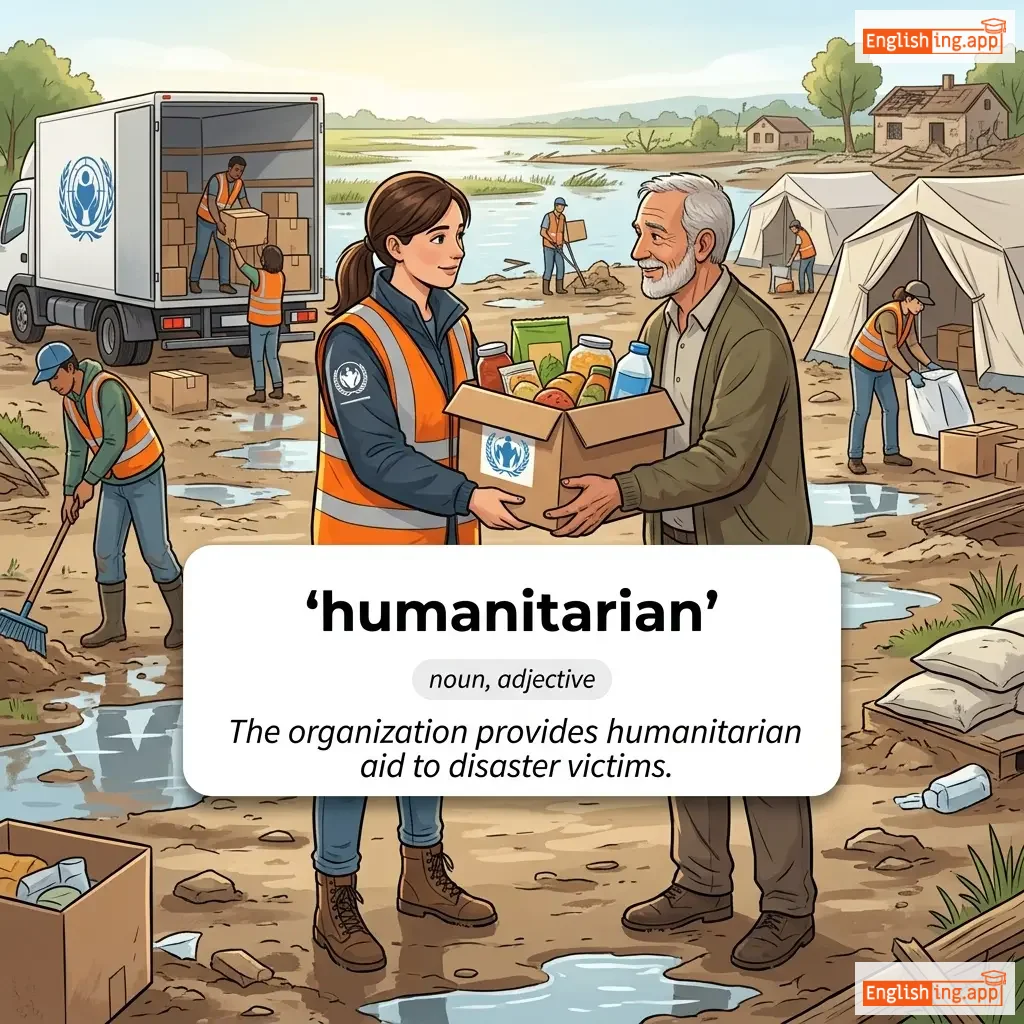
humanitarian definition card — visual illustration of the meaning
noun, adjective
/hjuːˌmænɪˈtɛəriən/
मानवतावादी (manavtavadi)

A person who seeks to promote human welfare, or something relating to human welfare and compassion.

"The organization provides humanitarian aid to disaster victims."

"संस्था आपदा पीड़ितों को मानवीय सहायता प्रदान करती है।" (Sanstha aapda peediton ko manaviy sahayata pradan karti hai.)
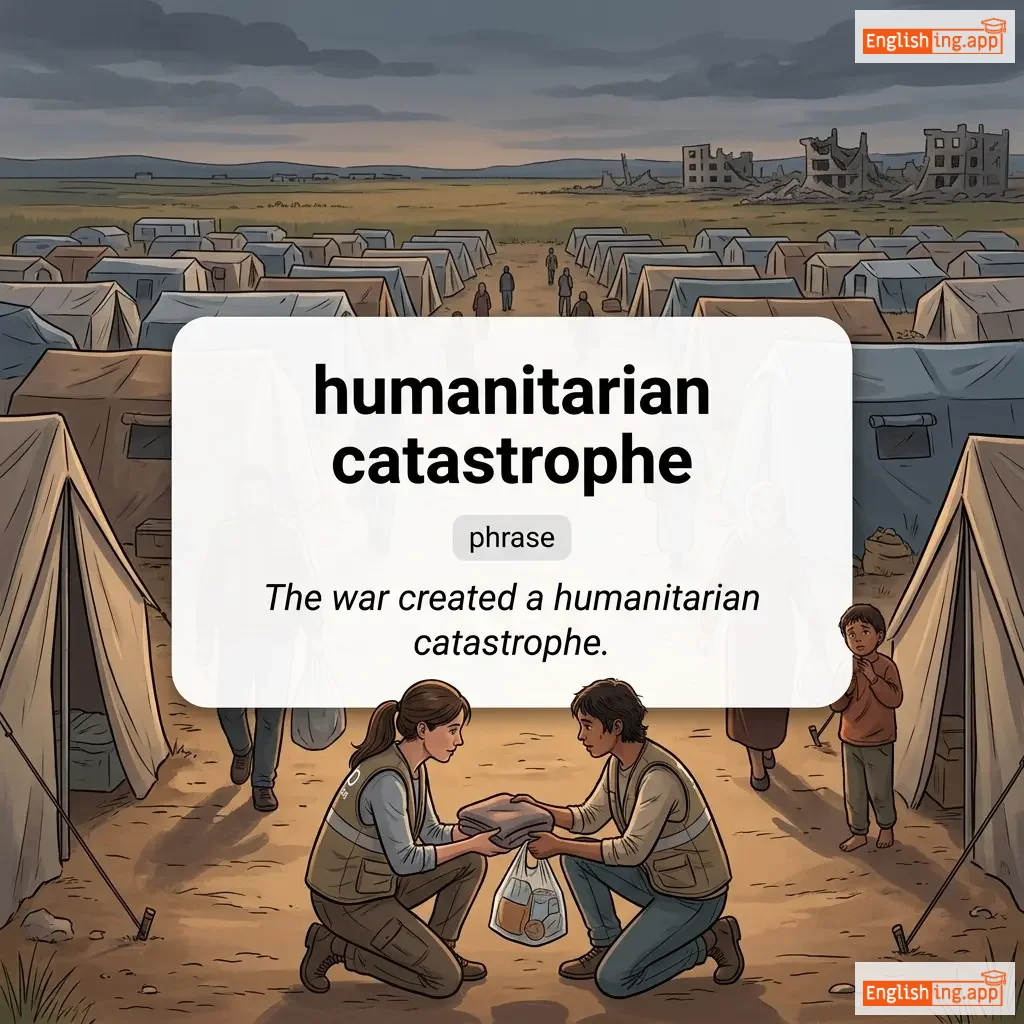
humanitarian catastrophe definition card — visual illustration of the meaning
phrase
ˌhjuː.məˈnɪt.ər.i.kəˈtæs.trə.fi
मानवतावादी आपदा (manavtavadi aapda)

A widespread disaster affecting human life, health, and well-being on a large scale.

"The war created a humanitarian catastrophe."

"युद्ध ने एक मानवतावादी आपदा उत्पन्न की।" (Yudh ne ek manavtavadi aapda utpann ki.)
noun
/hjuːˈmænɪti/
मानवता (manavta)

the quality of being human; kindness or compassion towards others; all human beings collectively

"Kindness is one of the greatest expressions of humanity."

"दया मानवता के सबसे बड़े रूपों में से एक है।" (Daya manavta ke sabse bade roopon mein se ek hai.)
verb
/ˈhjuːmənaɪz/
मानविक बनाना (manvik banana)

To make something more humane, kind, or relatable.

"The teacher tried to humanize the lesson with personal stories."

"टीचर ने व्यक्तिगत कहानियों के साथ पाठ को अधिक मानवीय बनाने की कोशिश की।" (Teacher ne vyaktigat kahaniyon ke saath path ko adhik maanviya banane ki koshish ki.)
adjective, verb
/ˈhʌmbəl/
विनम्र (vinamra)

Having or showing a modest view of one's importance; to lower pride or status.

"Despite his success, he remained humble."

"उसकी सफलता के बावजूद वह विनम्र रहा।" (Uski safalta ke bawajood wah vinamra raha.)
noun
/ˈhʌmbʌɡ/
धोखा, बकवास (dhokha, bakwaas)

Deceptive or false talk or behavior; nonsense.

"He dismissed the idea as humbug."

"उसने उस विचार को बकवास कहकर नकार दिया।" (Usne us vichar ko bakwaas kehkar nakar diya.)
adjective
/ˈhʌmdrʌm/
नीरस (neeras)

Lacking excitement or variety; dull and monotonous.

"She grew tired of the humdrum routine of office life."

"वह ऑफिस जीवन की एकसरी दिनचर्या से थक गई थी।" (Wah office jeevan ki eksari dincharya se thak gayi thi.)
adjective
/ˈhjuː.mɪd/
आर्द्र (aardra)

Having a high amount of water vapor in the air; damp or moist.

"The weather was hot and humid during the summer."

"गर्मी में मौसम गर्म और आर्द्र था।" (Garmi mein mausam garm aur aardra tha.)
noun
/ˌhjuː.mɪ.fɪˈkeɪ.ʃən/
जैविक पदार्थों का अपघटन (jaivik padarthon ka apghatan)

The process of organic matter decomposition to form humus in soil.

"Humification enhances soil structure and fertility."

"ह्यूमिफिकेशन मृदा संरचना और उर्वरता को बढ़ाता है।" (Hyumifikeshan mrida sanrachna aur urvarata ko badhata hai.)
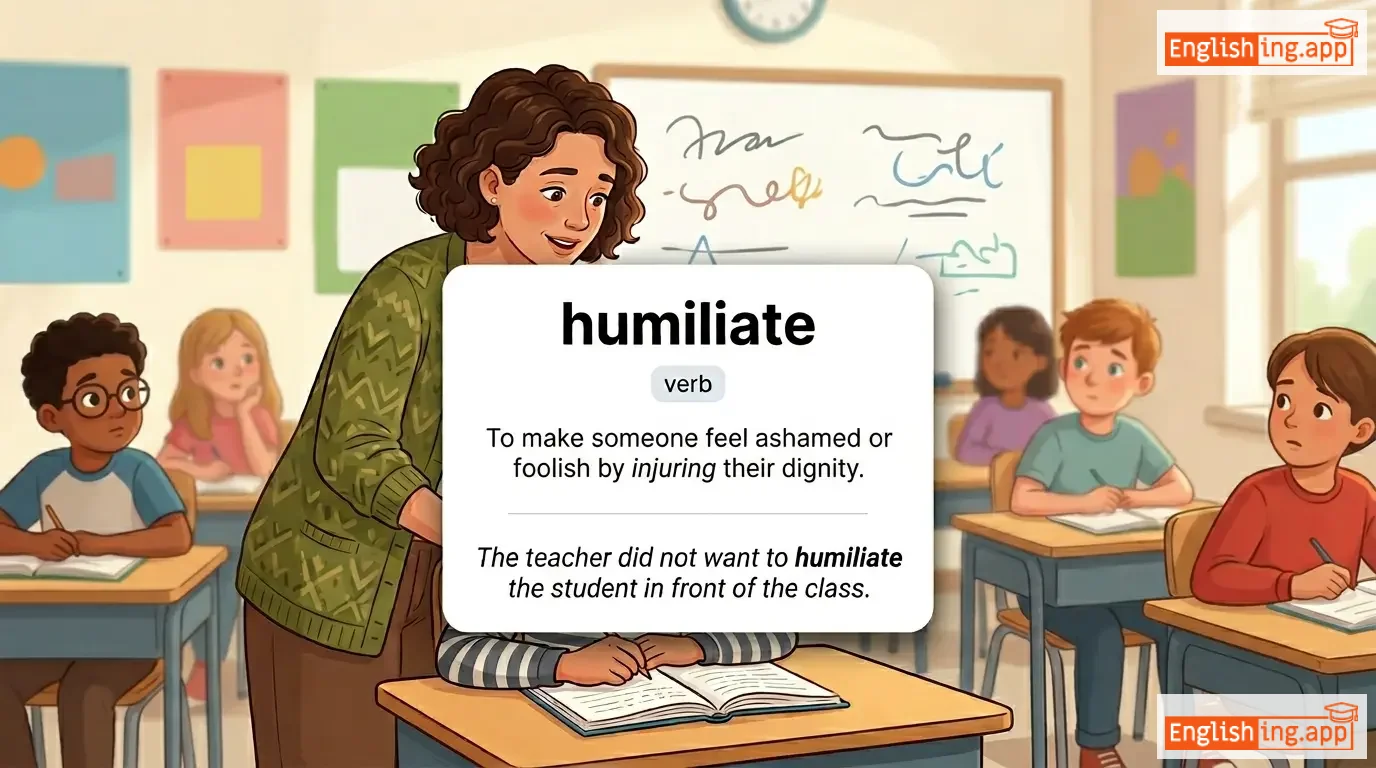
humiliate definition card — visual illustration of the meaning
verb
/hjuːˈmɪl.i.eɪt/
अपमानित करना (apmaanit karna)

To make someone feel ashamed or foolish by injuring their dignity.

"The teacher did not want to humiliate the student in front of the class."

"टीचर छात्र को क्लास के सामने अपमानित नहीं करना चाहते थे।" (Teacher chhatr ko class ke samne apmaanit nahi karna chahte the.)
noun
/hjuːˈmɪl.ɪ.ti/
विनम्रता (vinmrata)

The quality of having a modest or low view of one's importance.

"She accepted the award with grace and humility."

"उसने पुरस्कार को गरिमा और विनम्रता के साथ स्वीकार किया।" (Usne puraskar ko garima aur vinmrata ke saath svikaar kiya.)
noun
/ˈhʌm.ək/
टीला (teela)

A small hill, mound, or ridge of earth or ice.

"The hikers rested on a grassy hummock by the river."

"यात्री नदी के किनारे एक घास वाले टीले पर विश्राम कर रहे थे।" (Yaatri nadi ke kinare ek ghas wale teele par vishraam kar rahe the.)
noun
/ˈhjuː.mər/
हास्य (hyumer)

The quality of being amusing or entertaining.

"His sense of humor always lightens the mood."

"उसके हास्यबोध से माहौल हमेशा हल्का हो जाता है." (uske hasyabodh se hamesha mahaul halka ho jaata hai.)
adjective
/ˈhjuː.mər.əs/
मज़ेदार; हास्यपूर्ण; हंसी उत्पन्न करने वाला; (mazedaar; haasyapurn; hansi utpann karne wala;)

funny; amusing; causing laughter;

"His humorous stories always make everyone laugh."

"उसकी मज़ेदार कहानियाँ हमेशा सभी को हंसी में डाल देती हैं।" (uski mazedaar kahaniyan hamesha sabhi ko hansi mein daal deti hain)
noun
/ˈhjuːməs/
ह्यूमस (hyumas)

The dark, organic material in soil formed from decayed plants and animals.

"The gardener enriched the soil with humus to improve plant growth."

"माली ने पौधों की वृद्धि में सुधार के लिए मिट्टी में ह्यूमस मिलाया।" (Mali ne podhon ki vruddhi mein sudhaar ke liye mitti mein hyumas milaaya.)
noun, numeral
/ˈhʌndrəd/
सौ (sau)

the number 100

"There are a hundred students in the hall."

"हॉल में सौ छात्र हैं।" (Hall mein sau chhatra hain.)
noun
/ˈhʌŋɡər/
भूख (bhookh)

the feeling of discomfort caused by lack of food

"The child cried out of hunger."

"बच्चा भूख के कारण रो रहा था।" (Baccha bhookh ke karan ro raha tha.)
adverb
/ˈhʌŋ.ɡrə.li/
भूख से; लालच से; उत्सुकता से (bhukh se; lalach se; utsukta se)

in a way that shows hunger; greedily; eagerly

"The dog ate hungrily after not eating for hours."

"कुत्ता घंटों तक खाना नहीं खाने के बाद भूख से खा रहा था।" (kutta ghanton tak khana nahi khane ke baad bhukh se khaa raha tha.)
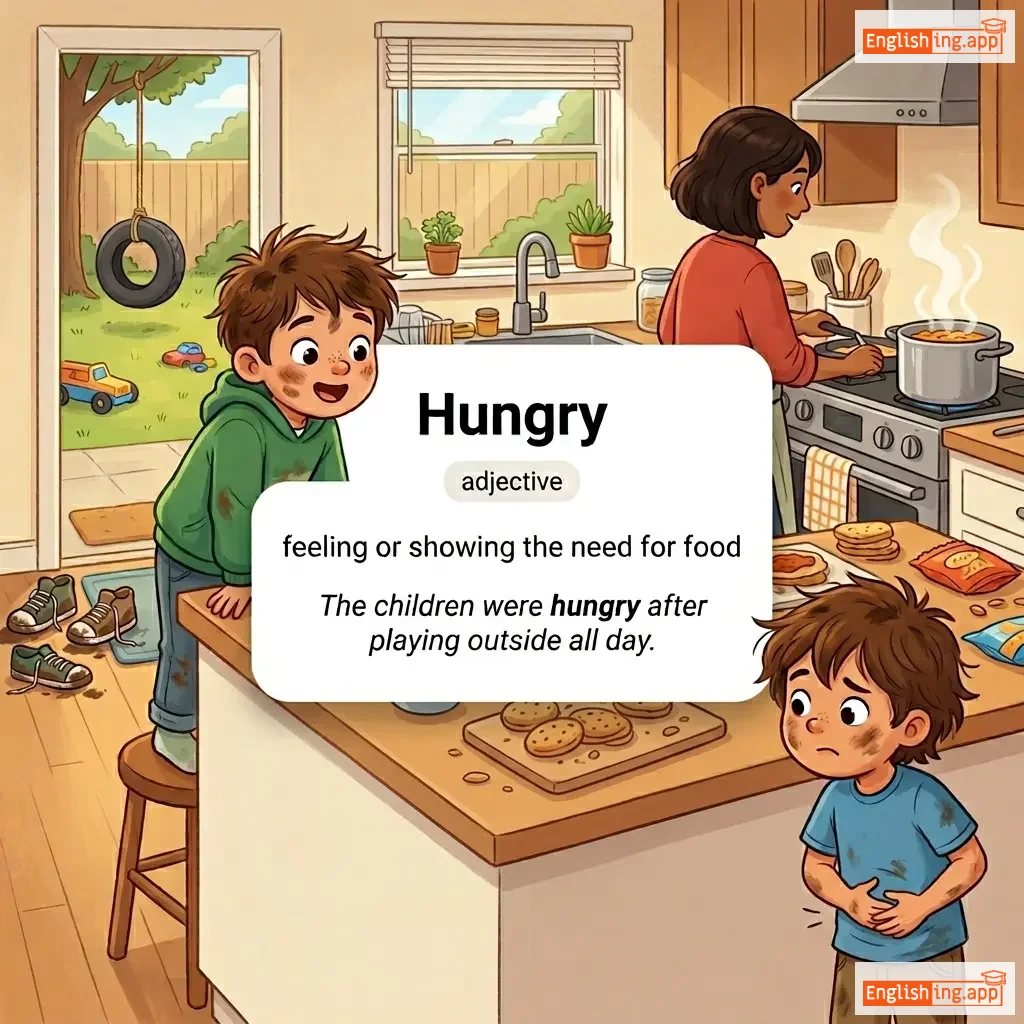
Hungry definition card — visual illustration of the meaning
adjective
/ˈhʌŋɡri/
भूखा (bhookha)

feeling or showing the need for food

"The children were hungry after playing outside all day."

"सारदिन बाहर खेलने के बाद बच्चे भूखे थे।" (saardin baahar khelne ke baad bachche bhookhe the.)