वोकैबुलरीज

इंग्लिश वोकैबुलरी डिस्कवर, लर्न और मास्टर करें

noun
/lɒs/
हानि (hāni)

The state of no longer having something or someone; the harm resulting from losing.

"The company suffered a huge financial loss last year."

"कंपनी ने पिछले साल एक बड़ा वित्तीय हानि झेला।" (kampanī ne pichhale sāl ek baṛā vittīya hāni jhelā.)
verb/adjective
/lɒst/
खो गया (kho gaya)

Unable to find the way; no longer in possession of something.

"He lost his keys and couldn’t enter the house."

"वह अपनी चाबियाँ खो चुका था और घर में प्रवेश नहीं कर पा रहा था।" (Wah apni chaabiyan kho chuka tha aur ghar mein pravesh nahin kar pa raha tha.)
noun
/lɒt/
बहुत (bahut)

A large number or amount; a group or portion.

"She bought a lot of books at the fair."

"वह मेले में बहुत सारी किताबें खरीदने गई थी।" (Wah mele mein bahut saari kitaabein kharidne gayi thi.)
pronoun/noun
/lɒts/
बहुत (bahut)

A large number or amount of something.

"She has lots of friends in the city."

"वह शहर में बहुत सारे दोस्तों के साथ है।" (Vah shahar mein bahut saare doston ke saath hai.)
noun
/ˈlɒtəri/
लॉटरी (lotari)

A means of raising money by selling numbered tickets and giving prizes to the holders of numbers drawn at random.

"He won a car in the national lottery."

"उसने राष्ट्रीय लॉटरी में एक कार जीती।" (Usne rashtriya lottery mein ek car jeeti.)
noun
/ˈloʊ.təs/
कमल (kamal)

a large water flower that floats on the surface of ponds and lakes

"The lotus flower blooms beautifully in the quiet pond."

"कमल का फूल शांत तालाब में सुंदरता से खिलता है।" (kamal ka phool shant talab mein sundarta se khilta hai)
adjective/adverb
/laʊd/
ऊँचा (ooncha)

Producing or capable of producing much noise.

"The music was too loud to concentrate."

"संगीत बहुत ऊँचा था कि ध्यान केंद्रित करना मुश्किल था।" (Sangeet bahut ooncha tha ki dhyan kendrit karna mushkil tha.)
adverb
/ˈlaʊdli/
जोर से (zor se)

in a way that produces a lot of sound; with a high volume

"He spoke loudly so everyone in the room could hear him."

"सब लोग सुन सकें इसलिए उसने जोर से बोला।" (sab log sun saken isliye usne zor se bola)
noun
/lɒx/ or /lɒk/
तालाब (taalab)

An Irish or Scottish word for a lake or sea inlet.

"The fishermen lived by the lough for generations."

"मछुआरे कई पीढ़ियों से तालाब के पास रहते थे।" (Machhuare kai pidhiyaan se taalab ke paas rahte the.)
noun, verb
/laʊndʒ/
विश्राम कक्ष (vishram kaksh)

A public room for relaxing; or to sit, lie, or stand in a relaxed way.

"They lounged on the sofa after dinner."

"वे डिनर के बाद सोफे पर आराम से लेटे थे।" (ve dinar ke baad sofay par aaram se lete the)
noun
/laʊs/
जूँ (joo)

A small parasitic insect that lives on the skin of mammals and birds; also used as an insult for a contemptible person.

"The child had to be treated for head louse infestation."

"बच्चे को सिर में जूँ के संक्रमण के लिए इलाज करना पड़ा।" (bachche ko sir mein joo ke sankraman ke liye ilaaj karna pada.)
adjective
/ˈlaʊzi/
खराब (kharab)

of very poor quality; bad or unpleasant

"He felt lousy after catching the flu."

"फ्लू होने के बाद उसे बहुत खराब महसूस हुआ।" (Flu hone ke baad use bahut kharab mahsus hua.)
noun
/laʊt/
अशिष्ट व्यक्ति (ashisht vyakti)

An uncouth or aggressive man or boy.

"The drunken lout caused a scene at the party."

"मदहोश अशिष्ट व्यक्ति ने पार्टी में हंगामा किया।" (Madhosh ashisht vyakti ne party mein hangama kiya.)
adjective
/ˈlaʊtɪʃ/
असभ्य (ashabhya)

Clumsy, rude, or aggressive in behavior.

"His loutish remarks offended everyone at the meeting."

"उसके असभ्य टिप्पणी ने मीटिंग में सभी को आहत किया।" (Uske asabhya tippani ne meeting mein sabhi ko aahat kiya.)
adjective
/ˈlʌvəbəl/
खुशी (khushi)

Inspiring or deserving love or affection.

"The puppy was so lovable that everyone wanted to hold it."

"वह जब पुरस्कार प्राप्त करती है तो अपनी खुशी छुपा नहीं पाती।" (Wah jab puraskaar praapt karti hai to apni khushi chhupa nahin paati.)
Love definition card — visual illustration of the meaning
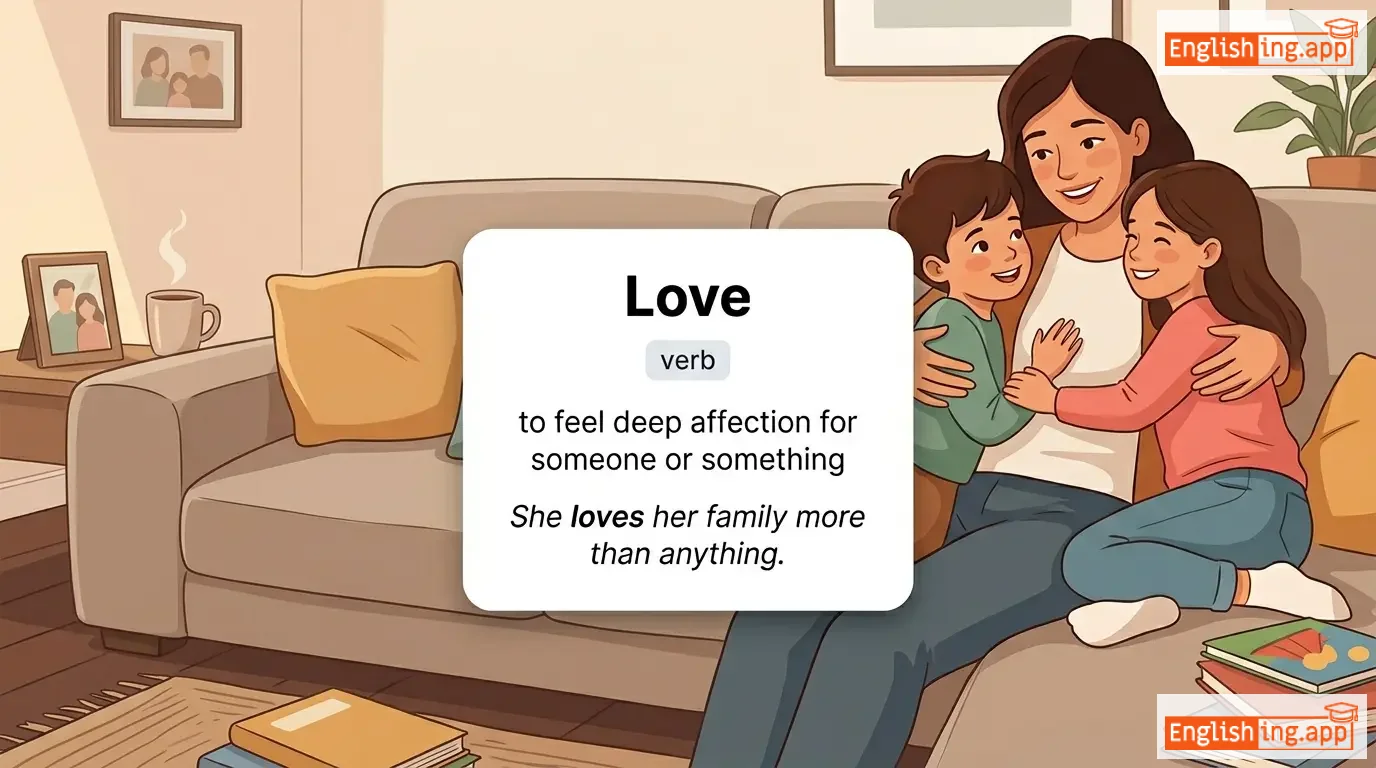
verb
/lʌv/
प्रेम (prem)

to feel deep affection for someone or something

"She loves her family more than anything."

"वह अपने परिवार से ज्यादा कुछ भी प्यार करती है।" (Wah apne parivar se zyada kuch bhi pyaar karti hai.)
adjective
/ˈlʌvəbl̩/
खुशी (khushi)

easy to love; endearing or charming

"The puppy was so loveable that everyone wanted to hold it."

"वह पुरस्कार प्राप्त करने पर अपनी खुशी छिपा नहीं सकी।" (Woh puraskaar prapt karne par apni khushi chhupa nahi saki.)
adjective
/ˈlʌvli/
सुंदर (sundar)

Delightful or very pleasing; beautiful.

"It was a lovely evening by the beach."

"यह समुद्र के किनारे एक सुंदर शाम थी।" (Yah samudra ke kinare ek sundar shaam thi.)
noun
/ˈlʌvər/
प्रेमी (premi)

a person who is in a romantic relationship or has strong affection for someone

"She met her lover at the café every evening."

"वह हर शाम कैफे में अपने प्रेमी से मिलती थी।" (Wah har shaam cafe mein apne premi se milti thi.)
adjective
/ˈlʌv.ɪŋ/
दयालु; देखभाल करने वाली; प्यार और गर्मी दिखाने वाली (dayalu; dekhbhal karne wali; pyaar aur garmi dikhane wali)

affectionate; caring; showing love and warmth

"She is a loving mother who cares deeply for her children."

"वह एक दयालु माँ हैं जो अपने बच्चों के लिए गहरे प्यार करती हैं।" (vah ek dayalu maa hain jo apne bachon ke liye gahre pyaar karti hain.)
adjective
/loʊ/
निम्न (nimn)

Small in amount, degree, or position; not high.

"The river is at its lowest level in years."

"नदी वर्षों में सबसे निचले स्तर पर है।" (Nadi varsho mein sabse nichle star par hai.)
adjective
/ˌloʊ ˈspɪrɪtɪd/
निराश (nirash)

feeling sad, depressed, or lacking enthusiasm

"He felt low-spirited after hearing the bad news."

"वह बुरी खबर सुनने के बाद निराश महसूस कर रहा था।" (Woh buri khabar sunne ke baad nirash mehsoos kar raha tha.)
verb
/ˈloʊər/
घटाना (ghatana)

to move something to a lower position or to reduce

"The company decided to lower the prices."

"कंपनी ने दाम घटाने का फैसला लिया।" (Company ne daam ghataane ka faisla liya.)
lowest definition card — visual illustration of the meaning
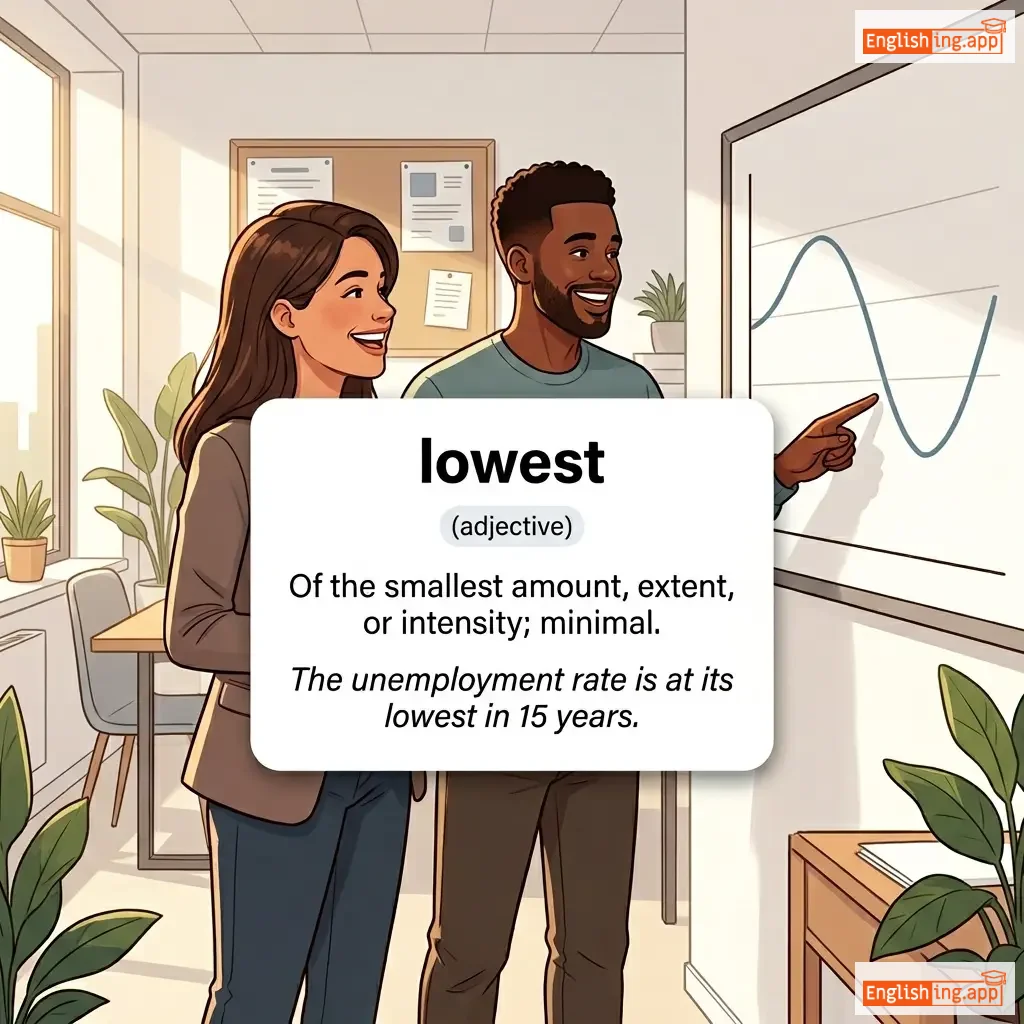
adjective
/ˈloʊɪst/
न्यूनतम (nyoonatam)

Of the smallest amount, extent, or intensity; minimal.

"The unemployment rate is at its lowest in 15 years."

"बेरोजगारी दर 15 वर्षों में सबसे कम है।" (Berozgaari dar 15 varshon mein sabse kam hai.)
adjective
/ˈloʊli/
नम्र (namra)

humble in status, position, or manner

"She rose from a lowly position to become the company's CEO."

"वह एक नीच स्थिति से उठकर कंपनी की सीईओ बनी।" (Wah ek neech sthiti se uthkar company ki CEO bani.)
adjective
/ˈlɔɪəl/
वफादार, निष्ठावान (wafadar, nishthawan)

showing firm and constant support or allegiance to someone or something

"She remained loyal to her friends even in hard times."

"वह कठिन समय में भी अपने दोस्तों के प्रति वफादार रही।" (Wah kathin samay mein bhi apne doston ke prati wafadar rahi.)
noun
/ˈlɔɪəlti/
निष्ठा (nishtha)

a strong feeling of support or allegiance

"His loyalty to the company earned him great respect."

"कंपनी के प्रति उसकी निष्ठा ने उसे बहुत सम्मान दिलवाया।" (Company ke prati uski nishtha ne use bahut samman dilwaya.)
verb
/ˈluːbrɪkeɪt/
तेल लगाना (tel lagana)

to apply oil or grease to reduce friction between surfaces

"The mechanic lubricated the car engine parts."

"मेकैनिक ने कार इंजन के हिस्सों में तेल डाला।" (Mechanic ne car engine ke hisso mein tel dala.)
lubrication definition card — visual illustration of the meaning
noun
ˌluː.brɪˈkeɪ.ʃən
चिकनाई (lubrikeshan)

The application of a substance such as oil or grease to reduce friction between moving parts.

"Lubrication reduces wear and tear in machines."

"चिकनाई मशीनों में घिसाव को कम करती है." (chiknai mashinon mein ghisav ko kam karti hai.)
noun
/luːˈbrɪsɪti/
चिकनापन (chikanapan)

the quality of being slippery or smooth; sometimes also refers to lewdness

"The lubricity of the surface made it difficult to walk on."

"सतह की चिकनापन के कारण उस पर चलना कठिन था।" (Satah ki chikanapan ke karan us par chalna kathin tha.)
adjective
/ˈluːsənt/
दीप्तिमान (deeptimaan)

shining or glowing with light

"The lucent stars brightened the night sky."

"दीप्तिमान सितारों ने रात के आकाश को रोशन कर दिया।" (Deeptimaan sitaaron ne raat ke aakaash ko roshan kar diya.)
lucid definition card — visual illustration of the meaning
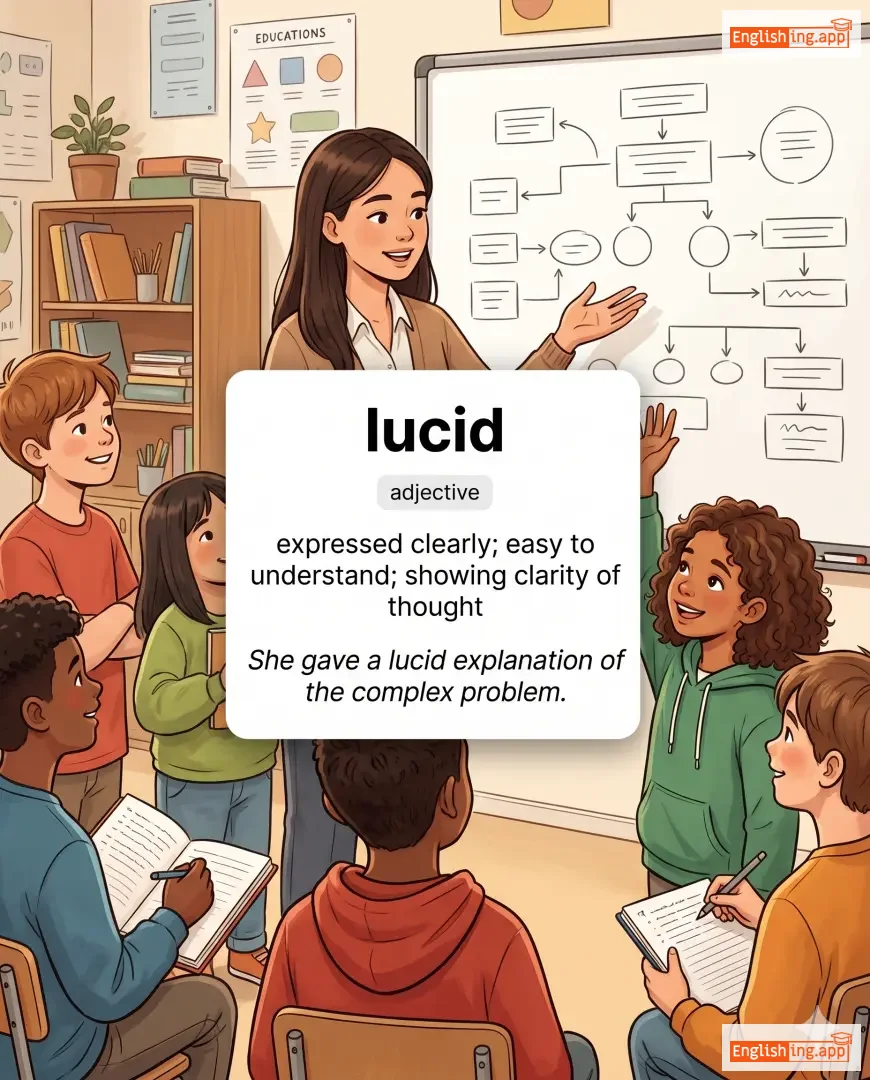
adjective
/ˈluːsɪd/
स्पष्ट (spasht)

expressed clearly; easy to understand; showing clarity of thought

"She gave a lucid explanation of the complex problem."

"उसने जटिल समस्या का स्पष्ट विवरण दिया।" (Usne jatil samasya ka spasht vivaran diya.)
lucidity definition card — visual illustration of the meaning
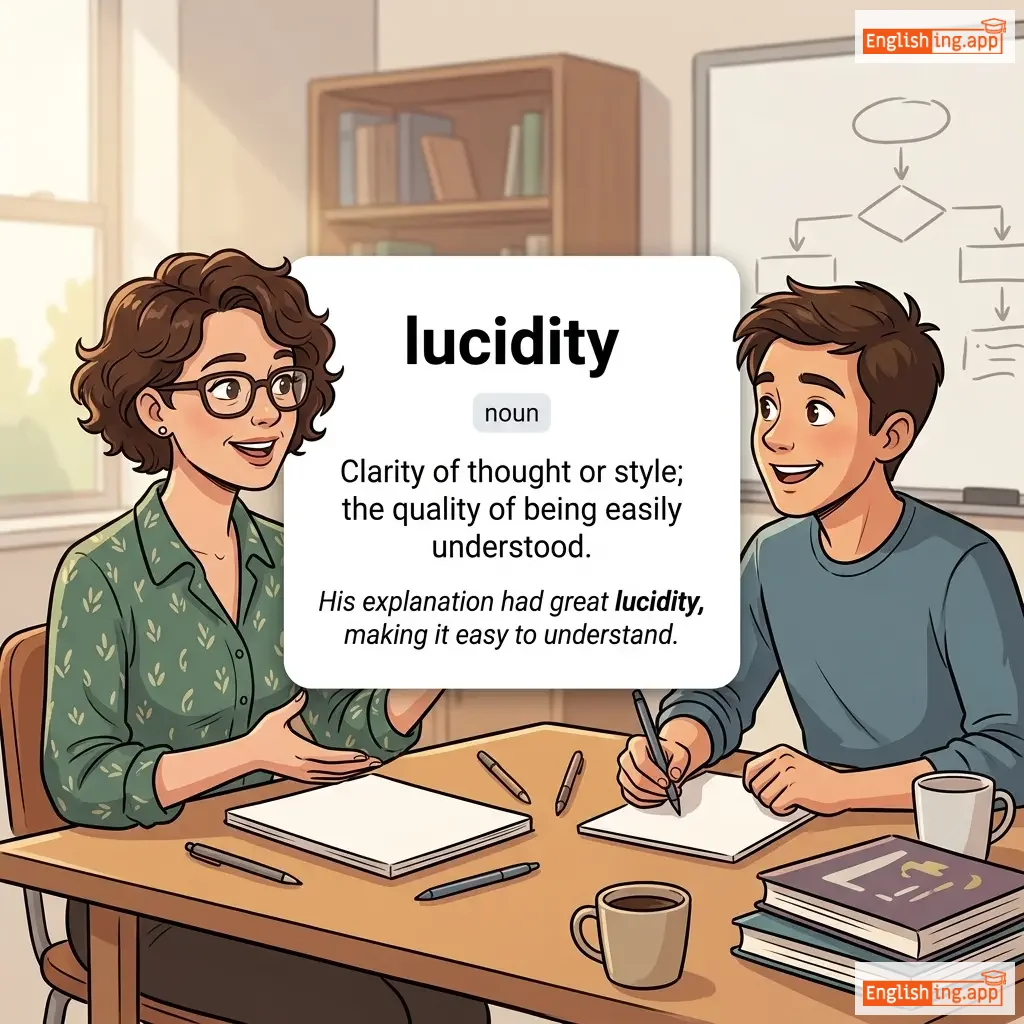
noun
/luːˈsɪd.ə.ti/
स्पष्टता (spashtata)

Clarity of thought or style; the quality of being easily understood.

"His explanation had great lucidity, making it easy to understand."

"उसकी व्याख्या में बहुत स्पष्टता थी, जिससे समझना आसान हो गया।" (Uski vyakhya mein bahut spashtata thi, jisse samajhna aasaan ho gaya.)
noun
/lʌk/
भाग्य (bhagya)

success or failure apparently brought by chance rather than through one’s actions

"He had the luck to find a good job quickly."

"उसके पास जल्दी अच्छी नौकरी मिल जाने का भाग्य था।" (uske paas jaldi acchi naukri mil jaane ka bhagya tha)
adjective
/ˈlʌki/
भाग्यशाली (bhagyashali)

having good fortune or favorable circumstances

"She felt lucky to have such supportive friends."

"उसे इतने सहायक दोस्त मिलने पर वह भाग्यशाली महसूस कर रही थी।" (Use itne sahayak dost milne par wah bhagyashali mahsus kar rahi thi.)
lucrative definition card — visual illustration of the meaning
adjective
/ˈluːkrətɪv/
लाभकारी (labhkaari)

producing a great deal of profit

"He left his job for a more lucrative business opportunity."

"उसने एक और लाभकारी व्यापार अवसर के लिए अपनी नौकरी छोड़ दी।" (Usne ek aur labhkaari vyapaar avsar ke liye apni naukri chhod di.)
lucre definition card — visual illustration of the meaning
noun
/ˈluːkər/
लालच (laalach)

money, especially when regarded as sordid or gained dishonorably

"He was motivated more by lucre than by duty."

"वह कर्तव्य से अधिक लालच से प्रेरित था।" (Wah kartavya se adhik laalach se prerit tha.)
noun
/ˌluːkjʊˈbreɪʃən/
रात्रि अध्ययन (ratri adhyayan)

study or meditation, especially at night

"His novel was the result of long lucubration."

"उसकी नावेल लंबी रात्रि अध्ययन का परिणाम था।" (Uski novel lambi raatri adhyayan ka parinaam tha.)
adjective
/ˈluːdɪkrəs/
हास्यास्पद (hasyaspad)

so foolish, unreasonable, or out of place as to be amusing

"It is ludicrous to think the Earth is flat."

"पृथ्वी के सपाट होने का विचार हास्यास्पद है।" (Prithvi ke sapat hone ka vichar hasyaspad hai.)
verb
/lʌɡ/
भारी वस्तु को खींचना या कष्टपूर्वक ले जाना (bhari vastu ko kheenchna ya kashtpoorvak le jana)

to carry or drag something heavy or cumbersome with effort

"He had to lug the suitcase up three flights of stairs."

"उसे तीन मंजिलों तक सूटकेस खींचकर ले जाना पड़ा।" (Use teen manzilon tak suitcase kheenchkar le jana pada.)
noun
/ˈlʌɡ.ɪdʒ/
सामान (samaan)

suitcases or other bags in which to pack personal belongings for traveling

"Please check your luggage at the airport counter."

"कृपया एयरपोर्ट काउंटर पर अपना सामान चेक करें।" (kripya airport counter par apna samaan chek karein)
noun
/ˈlʌɡ.ɪdʒ væn/
सामान का वाहन (samaan ka vaahan)

a vehicle designed for carrying luggage and cargo

"The luggage van carried all the passengers' suitcases."

"लगेज वैन ने सभी यात्रियों के सूटकेस को उठाया।" (luggage van ne sabhi yatriyon ke suitcase ko uthaya)
adjective
/luːˈɡuːbriəs/
दुखीपूर्ण (dukhipoorn)

looking or sounding sad and dismal

"His lugubrious expression made everyone feel uneasy."

"उसकी दुखीपूर्ण अभिव्यक्ति ने सभी को बेचैन कर दिया।" (Uski dukhipoorn abhibyakti ne sabhi ko bechain kar diya.)
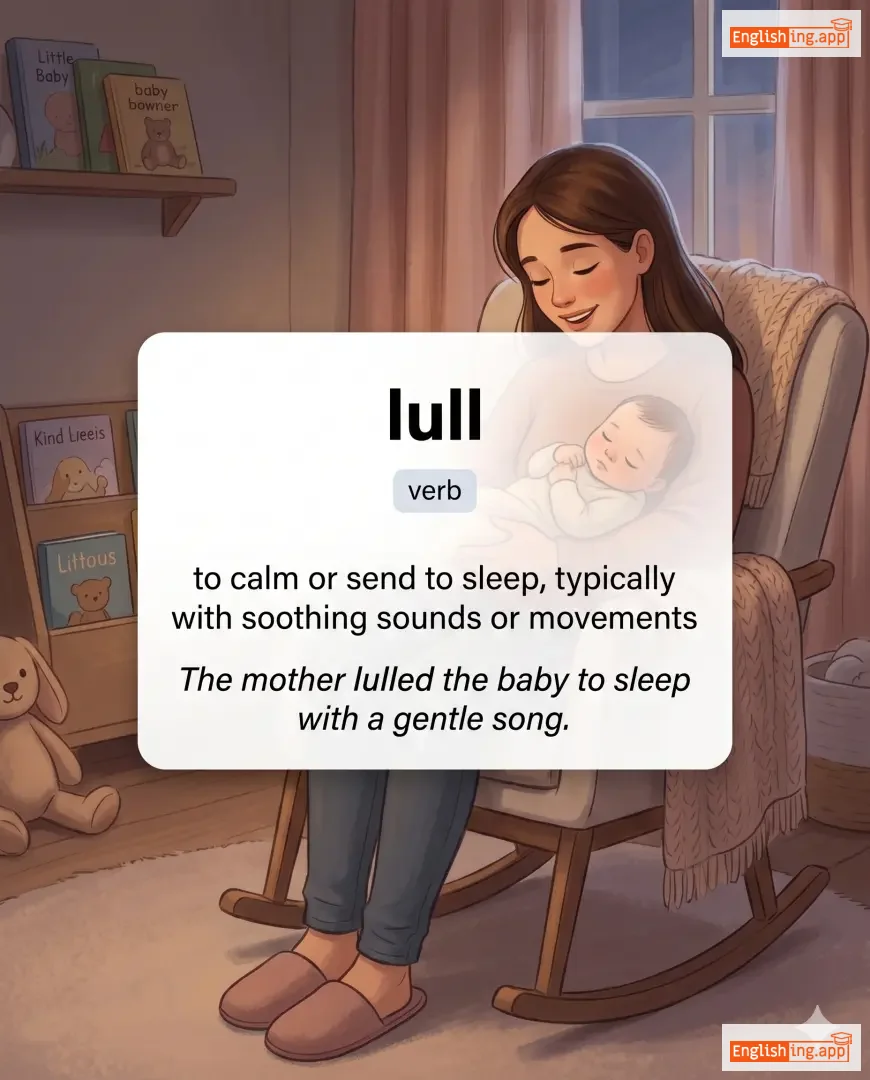
lull definition card — visual illustration of the meaning
verb
/lʌl/
सोत्ते में डालना (sotte mein daalna)

to calm or send to sleep, typically with soothing sounds or movements

"The mother lulled the baby to sleep with a gentle song."

"माँ ने एक नरम गीत के साथ बच्चे को सोने के लिए लुल्ड किया।" (Maan ne ek narm geet ke saath bachche ko sone ke liye luld kiya.)
noun
/ˈlʌləˌbaɪ/
लोरी (lori)

a soothing song sung to help a child fall asleep

"She sang a lullaby to her baby every night."

"वह हर रात अपने बच्चे को लोरी गाकर सुलाती थी।" (vah har raat apne bachche ko lori gaakar sulati thi)
verb
/ˈlʌmbər/
भारी कदमों से चलना (bhari kadmon se chalna)

to move in a slow, heavy, awkward way

"The bear lumbered through the forest in search of food."

"भालू भोजन की तलाश में जंगल से धीरे-धीरे गुजर रहा था।" (Bhalu bhojan ki talash mein jangal se dheere-dheere guzar raha tha.)
noun
/ˈluː.mən/
ल्यूमेन (lyumen)

A unit of luminous flux, measuring the amount of visible light emitted by a source.

"The bulb produces 800 lumens of light."

"बल्ब 800 ल्यूमेन लाइट उत्पन्न करता है।" (balb 800 lyumen light utpann karta hai.)
noun
/ˈluː.məˌnɛr.i/
प्रकाशस्तंभ (prakashstambh)

A person who inspires or influences others, especially in a particular field.

"He is considered a luminary in the world of science."

"उसे विज्ञान की दुनिया में एक प्रकाशस्तंभ माना जाता है।" (use vigyan ki duniya mein ek prakashstambh maana jaata hai.)
noun
/ˌluː.mɪˈnɛs.əns/
प्रकाशोत्सर्जन (prakashotsarjan)

The emission of light by a substance not resulting from heat; a type of cold light.

"The luminescence of the fireflies lit up the forest."

"जोनाकियों की ल्यूमिनेसेंस ने जंगल को रोशन कर दिया।" (jonakiyon ki luminescence ne jangal ko roshan kar diya.)
adjective
/ˌluː.mɪˈnɛs.ənt/
प्रकाशमान (prakashmaan)

Emitting light without heat, glowing softly.

"The luminescent watch dial was visible in the dark."

"ल्यूमिनेसेंट घड़ी की डायल अंधेरे में स्पष्ट थी।" (luminescent ghadi ki daiyal andhere mein spasht thi.)