वोकैबुलरीज

इंग्लिश वोकैबुलरी डिस्कवर, लर्न और मास्टर करें

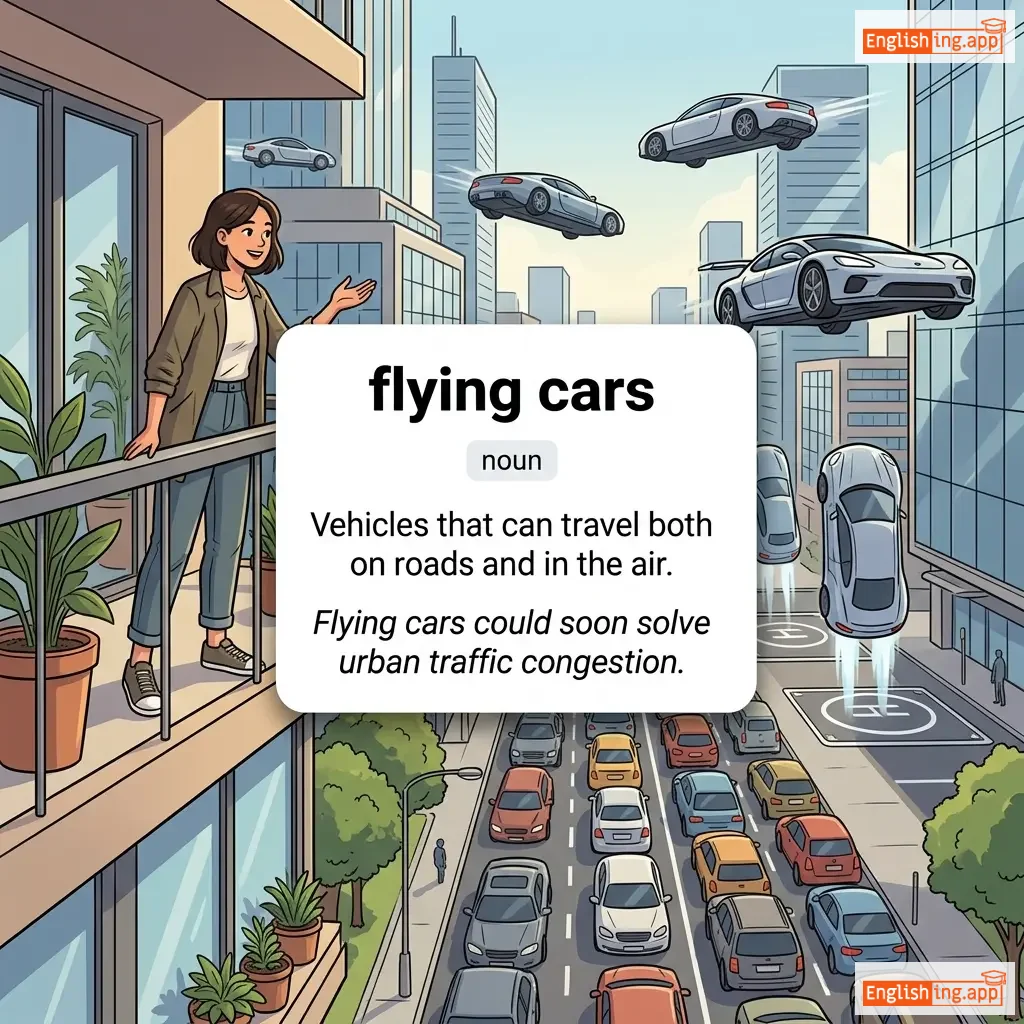
flying cars definition card — visual illustration of the meaning
noun
ˈflaɪ.ɪŋ kɑːrz
उड़ने वाली गाड़ियाँ (udne wali gadiyan)

Vehicles that can travel both on roads and in the air.

"Flying cars could soon solve urban traffic congestion."

"फ्लाइंग कार्स जल्द ही शहरी यातायात जाम समस्या का हल कर सकती हैं।" (Flying cars jald hi shahri yaatayat jam samasya ka hal kar sakti hain.)
noun
/ˈflaɪ.ɪŋ ˈkriː.tʃər/
उड़ने वाला प्राणी (udne wala prani)

any animal that has the ability to fly through the air

"Birds, bats, and insects are all examples of flying creatures."

"पक्षी, चमगादड़, और कीट सभी उड़ने वाले प्राणियों के उदाहरण हैं।" (pakshi, chamgadad, aur keet sabhi udne wale praniyon ke udaharan hain)
noun
/foʊl fʊt/
घोड़े के पंजे जैसा फूल (ghode ke panje jaisa phool)

a yellow flowering plant with leaves shaped like a horse's hoof, also known as coltsfoot

"The foal-foot plant grows wild in many meadows and is often the first flower to bloom in spring."

"घोड़े के पंजे जैसा फूल पौधा कई घासभूमियों में जंगली रूप से उगता है और वसंत में पहला फूल खिलने वाला होता है" (ghode ke panje jaisa phool paudha kai ghasbhoomiyon mein jangli roop se ugta hai aur basant mein pehla phool khilne wala hota hai)
noun
/foʊm/
फोम (phom)

a mass of small bubbles formed on or in liquid; frothy white mass

"The waves crashed against the rocks, creating white foam on the shore."

"लहरें चट्टानों से टकराईं, जिससे तट पर सफेद फोम बनी।" (laharein chattano se takrayein, jisse tath par safed phom bani.)
focus definition card — visual illustration of the meaning
verb
/ˈfoʊ.kəs/
ध्यान केंद्रित करना (dhyan kendrit karna)

to direct attention or effort on something specific

"She needs to focus on her studies."

"उसे अपनी पढ़ाई पर फोकस करना है।" (Use apni padhai par focus karna hai.)
focus tracking definition card — visual illustration of the meaning
noun
/ˈfoʊ.kəs ˈtræk.ɪŋ/
फोकस ट्रैकिंग (focus tracking)

A technique of monitoring and maintaining attention on specific tasks or goals.

"Proper focus tracking improves productivity."

"सही फोकस ट्रैकिंग उत्पादकता बढ़ाता है।" (sahi focus tracking utpadakta badhata hai.)
focused definition card — visual illustration of the meaning
adjective
/ˈfəʊkəst/
केंद्रित (kendrit)

Directing a great deal of attention or effort toward a particular activity, situation, or person.

"Staying focused during work hours enhances productivity."

"काम के समय केंद्रित रहना उत्पादकता बढ़ाता है।" (Kaam ke samay kendrit rehna utpadakta badhata hai.)
noun
/ˈfɒdər/
चारा (chaara)

food for livestock such as cattle, horses, or sheep; also something considered of little value but used to supply a demand

"The farmer stored enough fodder for the cattle to last through winter."

"किसान ने गायों के लिए पर्याप्त चारा स्टोर किया था ताकि सर्दी में उनका पेट भर सके।" (Kisaan ne gaayon ke liye paryapt chaara store kiya tha taaki sardi mein unka pet bhar sake.)
noun
/foʊ/
दुश्मन (dushman)

an enemy or opponent

"The knight fought bravely against his foe."

"योद्धा ने अपने दुश्मन के खिलाफ बहादुरी से लड़ा।" (Yoddha ne apne dushman ke khilaf bahaduri se ladi.)
adjective
/ˈfiːtɪd/
गंदा (ganda)

having an offensive, unpleasant smell

"The foetid smell from the garbage made it hard to breathe."

"कचरे से आने वाली गंदी गंध को महसूस करना मुश्किल हो गया था।" (Kachre se aane wali gandi gandh ko mehsoos karna mushkil ho gaya tha.)
noun
/fɒɡ/
कोहरा (kohra)

a thick cloud of tiny water droplets suspended in the air near the ground that reduces visibility

"The airplane was delayed due to heavy fog."

"विमान भारी कोहरे के कारण देरी से आया।" (Vimaan bhaari kohre ke kaaran deri se aaya.)
adjective
/ˈfɒɡi/
कोहरे से ढका हुआ (kohre se dhaka hua)

Full of or covered with fog; unclear or hazy.

"The mountain road was dangerous on the foggy morning."

"कोहरे से ढकी सुबह में पहाड़ी सड़क खतरनाक थी।" (Kohre se dhaki subah mein pahadi sadak khatarnak thi.)
noun
/ˈfɔɪbəl/
छोटी कमजोरी (chhoti kamzori)

A minor weakness or eccentricity in someone's character.

"She loved him despite his little foibles."

"वह उसे उसकी छोटी-छोटी कमजोरियों के बावजूद पसंद करती थी।" (Vah use uski chhoti-chhoti kamzori ke bawajood pasand karti thi.)
verb
/fɔɪl/
विफल करना (vifal karna)

To prevent something (especially a plan) from succeeding.

"The police foiled the robbery attempt."

"पुलिस ने डकैती के प्रयास को विफल कर दिया।" (Police ne dakaitee ke prayaas ko vifal kar diya.)
verb
/fɔɪst/
जबरदस्ती थोपना (zabardasti thopna)

To impose something unwelcome or unnecessary on someone.

"He tried to foist his old books onto his friends."

"उसने अपने पुराने किताबें अपने दोस्तों पर जबरदस्ती थोपने की कोशिश की।" (Usne apne purane kitaabein apne doston par zabardasti thopne ki koshish ki.)
verb
/fəʊld/
मोड़ना (modna)

to bend something, especially paper or cloth, so that one part covers another

"She folded the letter neatly before placing it in the envelope."

"उसने पत्र को सुगमता से मोड़ लिया और उसे लिफाफे में रखा।" (Usne patra ko sugamta se mod liya aur use lifaafe mein rakha.)
noun
/ˈfoʊldər/
फ़ोल्डर (folder)

a container or directory used to store and organize papers or digital files

"I saved all the photos in a separate folder."

"मैंने सभी तस्वीरें एक अलग फ़ोल्डर में सेव कीं।" (maine sabhi tasveeren ek alag folder mein save keen)
noun
/ˈfoʊliɪdʒ/
पत्तियों का समूह (pattion ka samooh)

The leaves of a plant, collectively.

"The autumn foliage looked stunning in the park."

"पार्क में शरद ऋतु की पत्तियों का समूह अद्भुत लग रहा था।" (Park mein sharad ritu ki pattion ka samooh adbhut lag raha tha.)
noun
/ˈfoʊ.li.oʊ/
बड़ा पुस्तक या पांडुलिपि (bada pustak ya pandulipi)

A sheet of paper folded once to form two leaves (four pages) of a book; also a term for a large book or manuscript.

"The library houses an ancient Shakespeare folio."

"पुस्तकालय में एक प्राचीन शेक्सपियर फोलियो है।" (Pustakalay mein ek prachin Shakespeare folio hai.)
👨‍👩‍👧‍👦

folk (फोक)

noun
/foʊk/
लोग (log)

people in general, often referring to a group or community

"Country folk often live a simple life."

"कंट्री लोग अक्सर एक साधारण जीवन जीते हैं।" (Country log aksar ek saadharan jeevan jeete hain.)
noun
/ˈfoʊk.lɔːr/
लोककथा (lokkatha)

The traditional beliefs, customs, stories, songs, and practices of a community, passed down through generations.

"Bangladeshi folk-lore is rich with myths and legends."

"भारतीय लोककथा मिथकों और किंवदंतियों से भरपूर होती है।" (Bhartiya lokkatha mithako aur kinvadanthiyon se bharee hoti hai.)
verb
/ˈfɒloʊ/
अनुसरण करना (anusaran karna)

to move behind someone or something; to go after or come after

"The children followed their teacher into the classroom."

"बच्चों ने अपने शिक्षक का अनुसरण किया और कक्षा में प्रवेश किया।" (Bachcho ne apne shikshak ka anusaran kiya aur kaksha mein pravesh kiya.)
noun
/ˈfɑː.loʊ.ɪŋ/
अनुयायी (anuyayi)

a group of supporters or people who admire something or someone

"The singer has a large following around the world."

"गायक के दुनिया भर में कई अनुयायी हैं।" (Gaayak ke duniya bhar mein kai anuyayi hain.)
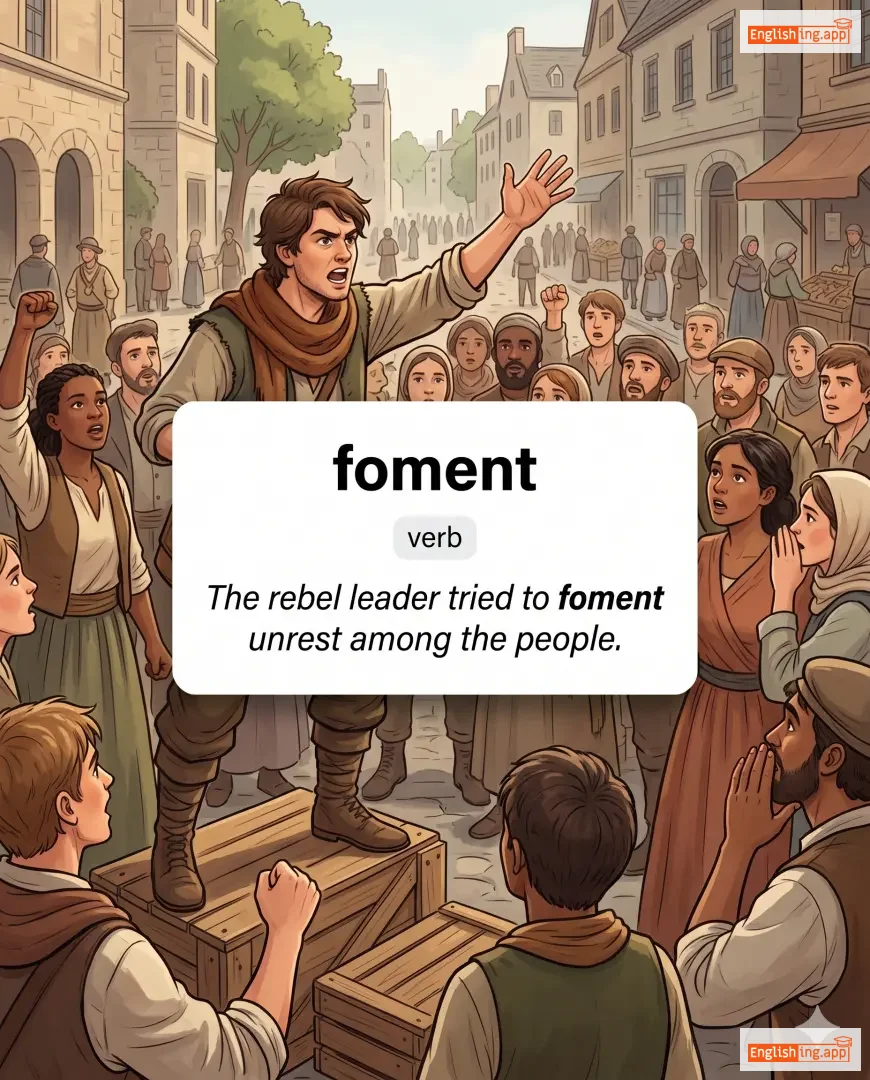
foment definition card — visual illustration of the meaning
verb
/foʊˈmɛnt/
उकसाना (uksana)

To instigate or stir up (an undesirable or violent sentiment or course of action).

"The rebel leader tried to foment unrest among the people."

"विद्रोही नेता लोगों में अशांति भड़काने की कोशिश कर रहा था।" (Vidrohi neta logon mein ashanti bhadkane ki koshish kar raha tha.)
noun
/ˌfoʊ.mənˈteɪ.ʃən/
उत्तेजना, प्रोत्साहन (uttejana, protsahan)

The action of instigating or stirring up; also the application of warm substances to the body to ease pain.

"His speech led to the fomentation of violence in the region."

"उसके भाषण ने क्षेत्र में हिंसा को भड़काने का कारण बना।" (Uske bhashan ne kshetra mein hinsaa ko bhadkaane ka kaaran bana.)
adjective
/fɒnd/
प्रिय (priya)

having a strong liking or affection for something or someone

"She is fond of painting and spends hours in front of her canvas."

"वह पेंटिंग की प्रिय है और घंटों अपने कैनवास के सामने समय बिताती है।" (Vah painting ki priya hai aur ghanton apne canvas ke samne samay bitati hai.)
verb
/ˈfɒn.dəl/
मुलायम या प्यार से सहलाना (mulayam ya pyar se sehalaana)

To stroke or caress lovingly or gently.

"She fondled the kitten gently in her lap."

"वह अपनी गोदी में बिल्ली को धीरे-धीरे प्यार से सहला रही थी।" (Wah apni godi mein billi ko dheere-dheere pyaar se sehla rahi thi.)
noun
/fuːd/
खाना (khana)

any nutritious substance that people or animals eat or drink to maintain life and growth

"Rice is a common food in Asia."

"चावल एशिया में एक सामान्य खाना है।" (Chawal Asia mein ek samanya khana hai.)
noun, verb
/fuːl/
मूर्ख (moorkh)

a silly or stupid person; to trick someone

"He felt like a fool after believing the prank."

"प्रैंक पर विश्वास करने के बाद उसने खुद को मूर्ख महसूस किया।" (Prank par vishwas karne ke baad usne khud ko moorkh mahsus kiya.)
noun
/ˈfuːləri/
मूर्खता (moorkhta)

Silly or foolish behavior or actions.

"His constant foolery made the meeting hard to take seriously."

"उसकी लगातार मूर्खता ने बैठक को गंभीरता से लेना कठिन बना दिया।" (Uski lagataar moorkhta ne baithak ko gambhirata se lena kathin bana diya.)
adjective
/ˈfuːlˌhɑːrdi/
बेवकूफी से साहसी (bewakoofi se saahasi)

Recklessly bold or rash; taking foolish risks.

"It was foolhardy of him to climb the mountain without proper gear."

"सही उपकरण के बिना पहाड़ पर चढ़ना उसकी बेवकूफी से साहसिकता का उदाहरण था।" (sahi upkaran ke bina pahaad par chadhna uski bewakoofi se saahasikta ka udaharan tha.)
adjective
/ˈfuːlɪʃ/
मूर्खतापूर्ण (murkhatapurn)

showing a lack of good sense or judgment

"It was foolish to go out without an umbrella in the storm."

"तूफान में बिना छाते के बाहर जाना मूर्खता थी।" (Toofan mein bina chhaate ke baahar jaana murkhta thi.)
adjective
/ˈfuːlpruːf/
अवधारणाहीन (avdharanahin)

Designed to be very easy to use or understand, leaving no possibility of failure or error.

"The new software has a foolproof installation process."

"नया सॉफ़्टवेयर एक अवसंरचनाहीन इंस्टॉलेशन प्रक्रिया है।" (naya software ek avdharnahin installation prakriya hai.)
noun
/fʊt/
पैर (pair)

The lower extremity of the leg below the ankle, used for standing and walking.

"He injured his foot while playing basketball."

"वह बास्केटबॉल खेलते समय अपने पैर को घायल कर बैठा।" (vah basketball khelte samay apne pair ko ghayal kar baitha.)
noun
/ˈfʊtˌnoʊt/
पाद टिप्पणी (pad tippani)

A note of reference, explanation, or comment placed at the bottom of a page.

"The author included a foot-note to explain the historical context."

"लेखक ने ऐतिहासिक संदर्भ समझाने के लिए एक पाद टिप्पणी शामिल की।" (lekhak ne aitihaasik sandarbh samjhaane ke liye ek pad tippani shaamil kee.)
noun
/ˈfʊtɪdʒ/
वीडियो रिकॉर्डिंग (video recording)

a recorded film or video, especially one that is used for news or documentaries

"The footage of the protest was shown on television all day."

"प्रदर्शन का फुटेज पूरे दिन टेलीविजन पर दिखाया गया।" (Pradarshan ka footage poore din television par dikhaya gaya.)
noun
/ˈfʊtˌbɔːl/
फुटबॉल (football)

A team sport played with a ball that is kicked or carried to score points.

"They watched a football match on TV."

"उन्होंने टीवी पर एक फुटबॉल मैच देखा।" (Unhone TV par ek football match dekha.)
adjective
/ˈfʊtˌluːs/
निःसंकीर्ण (nissankirn)

Free to go anywhere or do anything; not tied down by responsibilities.

"After graduating, he felt footloose and ready to explore the world."

"स्नातक करने के बाद, वह निःसंकीर्ण महसूस कर रहा था और दुनिया का पता लगाने के लिए तैयार था।" (snatak karne ke baad, vah nissankirn mahsus kar raha tha aur duniya ka pata lagane ke liye tayar tha.)
noun
/ˈfɒpəri/
अत्यधिक दिखावा (atyadhik dikhawa)

Foolish or excessive concern with one's appearance or manners; pretentious behavior.

"His obsession with fashion was dismissed as mere foppery."

"उसकी फैशन के प्रति जुनून को केवल दिखावा माना गया।" (Uski fashion ke prati junoon ko keval dikhawa maana gaya.)
adjective
/ˈfɒpɪʃ/
अत्यधिक कपड़ों और दिखावे में रुचि रखने वाला (atyadhik kapdon aur dikhave mein ruchi rakhne wala)

Excessively concerned with clothes and appearance in a vain or foolish way.

"He looked rather foppish in his brightly colored suit."

"वह अपने उज्जवल रंग के सूट में कुछ ज्यादा ही फैशनेबल लग रहा था।" (vah apne ujjval rang ke suit mein kuch jyada hi fashionable lag raha tha.)
preposition
/fɔːr/
के लिए (ke liye)

used to indicate purpose, destination, or recipient

"This gift is for you."

"यह उपहार तुम्हारे लिए है।" (Yah uphaar tumhare liye hai.)
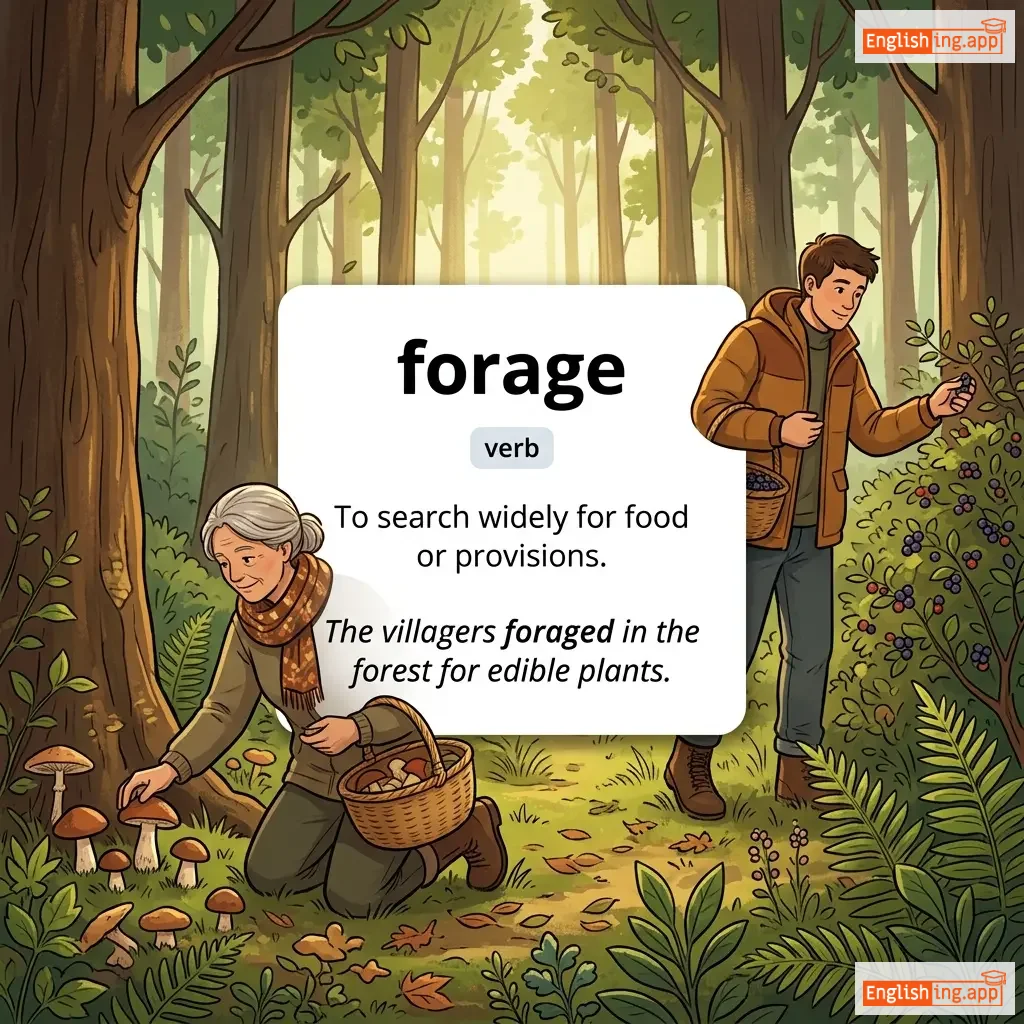
forage definition card — visual illustration of the meaning
verb
/ˈfɒrɪdʒ/
खाद्य के लिए तलाश करना (khadya ke liye talash karna)

To search widely for food or provisions.

"The villagers foraged in the forest for edible plants."

"गांववाले खाद्ययुक्त पौधों के लिए जंगल में तलाश कर रहे थे।" (gaonwale khadyayukt paudhon ke liye jangal mein talash kar rahe the.)
noun
/ˈfɔːreɪ/
हड़बड़ी में आक्रमण / पहला प्रयास (hadbadi mein akraman / pehla prayas)

A sudden short attack or attempt, especially into new activity or territory.

"The company made its first foray into the international market."

"कंपनी ने अंतर्राष्ट्रीय बाजार में अपनी पहली फोरे की।" (company ne antarraashtreey bazar mein apni pehli fore ki.)
verb
/fɔːˈbɛər/
रोकना (rokna)

To refrain from doing something; to show patience or self-control.

"She forbore from commenting on his mistake."

"वह उसकी गलती पर टिप्पणी करने से रोक गई।" (vah uski galti par tippani karne se rok gayi.)
forbearance definition card — visual illustration of the meaning
noun
/fɔːrˈbɛrəns/
धैर्य (dhairya)

Patient self-control; restraint and tolerance, especially in difficult situations.

"She showed remarkable forbearance during the heated argument."

"उसने गरमागरम बहस के दौरान असाधारण धैर्य दिखाया।" (Usne garamgaram bahas ke dauran asadharan dhairya dikhaya.)
verb
/fərˈbɪd/
निषेध करना (nishedh karna)

to order someone not to do something

"The school forbids smoking on campus."

"स्कूल कैंपस में धूम्रपान करना निषेध करता है।" (School campus mein dhumrapan karna nishedh karta hai.)
adjective
/fəˈbɪd.ən/
प्रतिबंधित; निषिद्ध; अवैध (pratibandhit; nishiddh; avaidh)

not allowed; prohibited; banned

"Smoking is strictly forbidden in this building."

"इस इमारत में धूम्रपान पूरी तरह से निषिद्ध है।" (is imarat mein dhumrapan puri tarah se nishiddh hai.)
adverb
/ˈfɔːrbi/
इसके अलावा (iske alawa)

In addition; besides (archaic Scottish/English word).

"He is kind and generous, and wise forby."

"वह दयालु और उदार है, और इसके अलावा बुद्धिमान भी है।" (Vah dayalu aur udar hai, aur iske alawa buddhimaan bhi hai.)
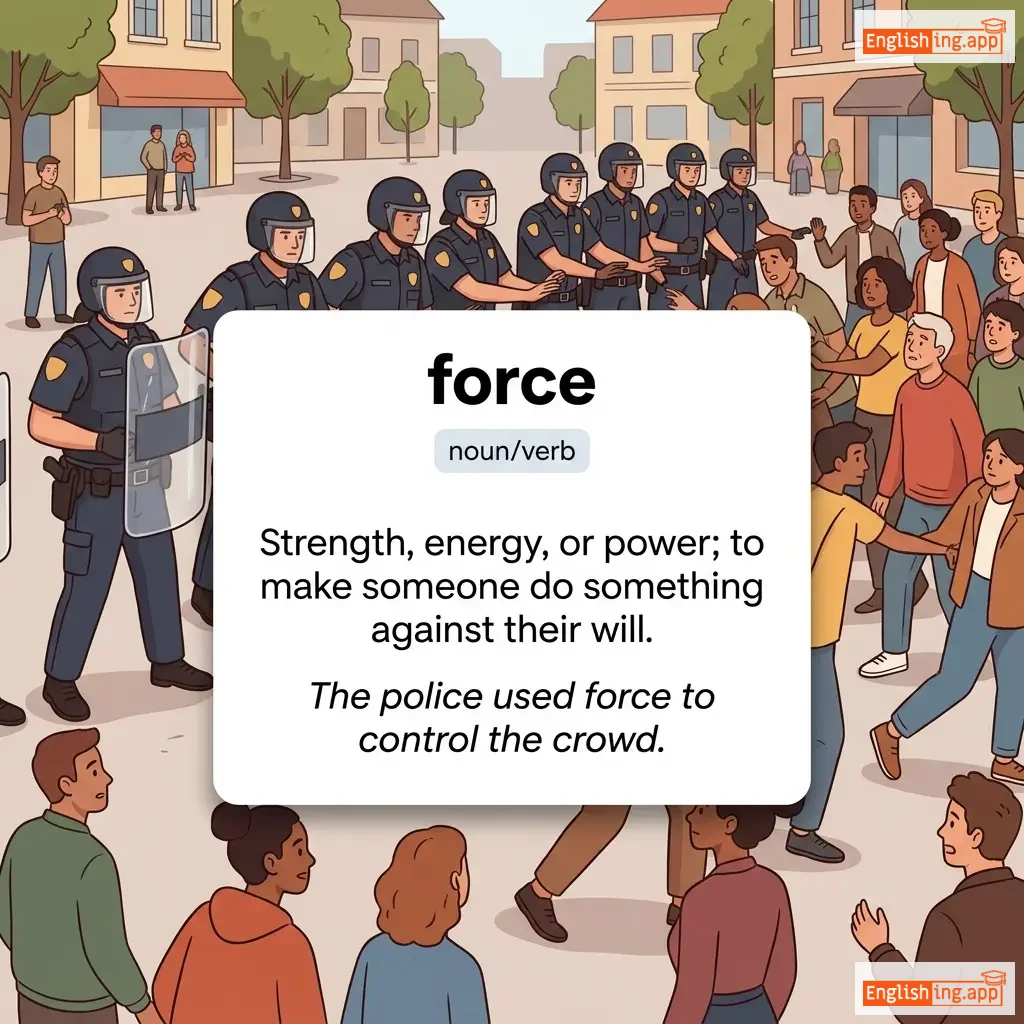
force definition card — visual illustration of the meaning
noun/verb
/fɔːrs/
बल / शक्ति (bal / shakti)

Strength, energy, or power; to make someone do something against their will.

"The police used force to control the crowd."

"पुलिस ने भीड़ को नियंत्रित करने के लिए बल का प्रयोग किया।" (Police ne bhir ko niyantrit karne ke liye bal ka prayog kiya.)
adjective
/ˈfɔːrsəbl/
बलात्कारी (balatkari)

Done by force; using physical strength or power.

"The police made a forcible entry into the house."

"पुलिस ने घर में बलात्कारी प्रवेश किया।" (Police ne ghar mein balatkari pravesh kiya.)