वोकैबुलरीज

इंग्लिश वोकैबुलरी डिस्कवर, लर्न और मास्टर करें

coerce definition card — visual illustration of the meaning
verb
/kəʊˈɜːs/
जबरदस्ती करना (zabardasti karna)

to persuade or force someone to do something by using threats or pressure

"They tried to coerce him into signing the contract."

"उन्होंने उसे अनुबंध पर हस्ताक्षर करने के लिए जबरदस्ती करने की कोशिश की।" (Unhone use anubandh par hastakshar karne ke liye zabardasti karne ki koshish ki.)
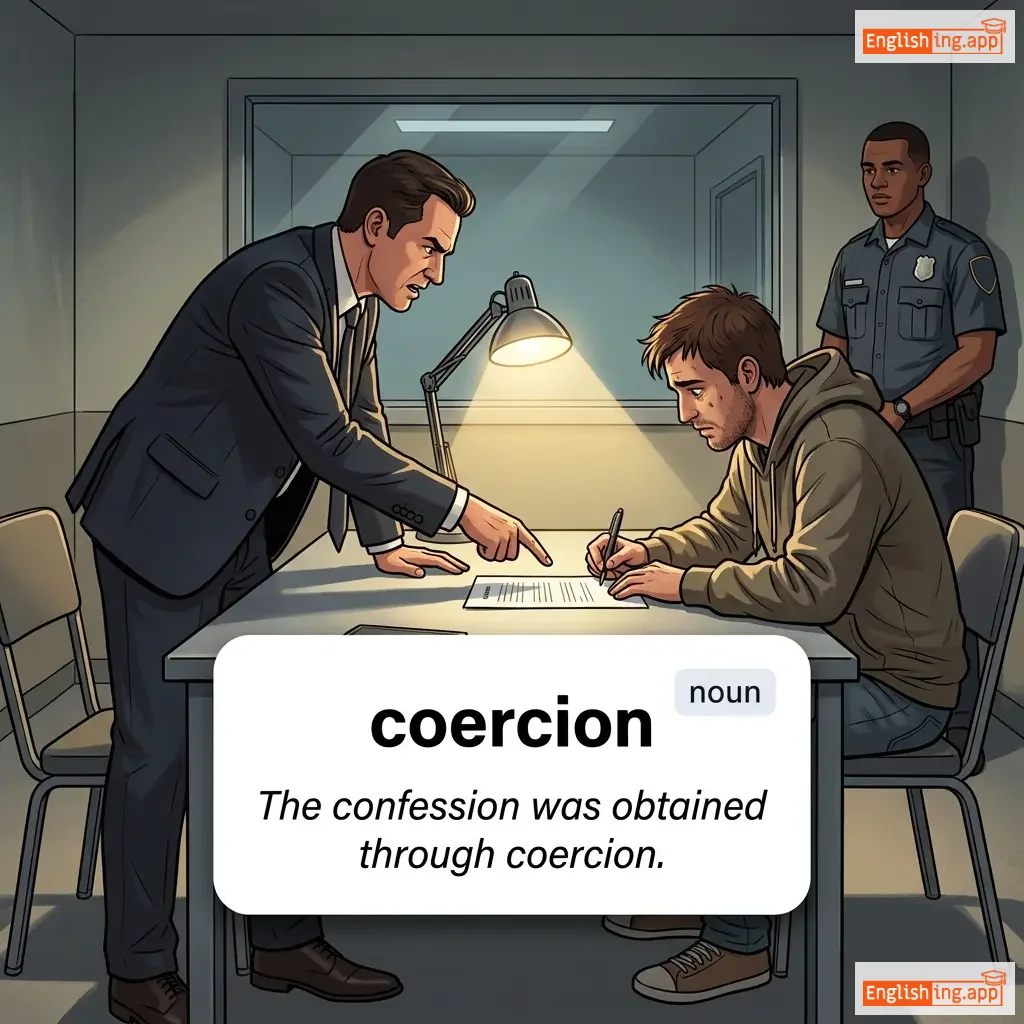
coercion definition card — visual illustration of the meaning
noun
/kəʊˈɜː.ʒən/
दबाव (dabaav)

the practice of forcing someone to act in a certain way by using threats or pressure

"The confession was obtained through coercion."

"स्वीकृति दबाव डालकर प्राप्त की गई थी।" (Sweekriti dabaav daalkar prapt ki gayi thi.)
adjective
/koʊˈɜːrsɪv/
जबरदस्तीपूर्ण (jabaradastipurn)

Relating to or using force or threats to make someone do something.

"The government faced criticism for adopting coercive measures against protestors."

"सरकार को विरोध प्रदर्शनकारियों के खिलाफ जबरदस्तीपूर्ण उपाय अपनाने के लिए आलोचना का सामना करना पड़ा।" (Sarkar ko virodh pradarshankariyon ke khilaf jabaradastipurn upay apnane ke liye alochana ka samna karna pada.)
adjective
/koʊˈiːvəl/
समवयस्क (samavayask)

Having the same age, date of origin, or duration; contemporary.

"The philosopher was coeval with the rise of modern science."

"दार्शनिक आधुनिक विज्ञान के उदय के साथ समवयस्क थे।" (Darshanik aadhunik vigyaan ke uday ke saath samavayask the.)
noun
/ˈkɔːfi/
खुशी (khushi)

a hot drink made from roasted and ground coffee beans

"I drink a cup of coffee every morning."

"वह जब पुरस्कार प्राप्त कर रही थी, तो अपनी खुशी को छुपा नहीं पाई।" (Wah jab puraskaar praapt kar rahi thi, to apni khushi ko chhupa nahi paayi.)
noun
/ˈkɒf.i ˈmeɪ.kər/
कॉफी मेकर (kaafi mekar)

an electric appliance used to brew coffee automatically

"I use my coffee maker every morning to brew fresh coffee."

"मैं हर सुबह अपने कॉफी मेकर का उपयोग करके ताजा कॉफी बनाता हूँ।" (main har subah apne kaafi mekar ka upyog karke taza kaafi banata hoon)
noun
/ˈkɔːfər/
संदूक (sandook)

A strongbox or small chest for holding valuables, often used metaphorically for funds or financial reserves.

"The city's coffers were drained after the costly project."

"महंगे प्रोजेक्ट के बाद शहर का कोष खाली हो गया था।" (Mahange project ke baad sheher ka kosh khaali ho gaya tha.)
noun
/kɑːɡ/
पहिया या गियर का दांत (pahiya ya gear ka daant)

A tooth on the rim of a wheel or gear; metaphorically, a minor but necessary part of a larger system.

"He felt like just a small cog in a big machine."

"उसे बड़े मशीन में एक छोटा सा पहिया जैसा महसूस हो रहा था।" (Use bade machine mein ek chhota sa pahiya jaisa mehsoos ho raha tha.)
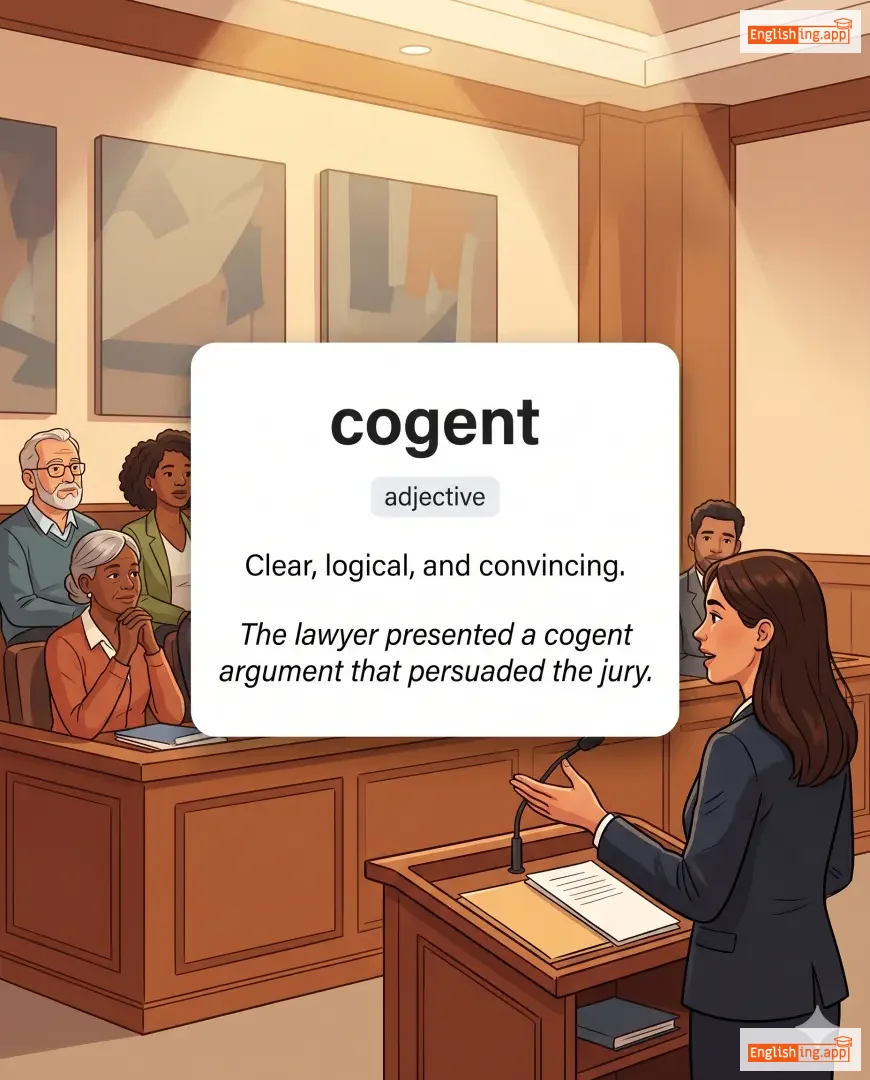
cogent definition card — visual illustration of the meaning
adjective
/ˈkoʊdʒənt/
स्पष्ट और तर्कसंगत (spasht aur tarkasanghat)

Clear, logical, and convincing.

"The lawyer presented a cogent argument that persuaded the jury."

"वकील ने एक स्पष्ट और तर्कसंगत तर्क प्रस्तुत किया जिसने जूरी को प्रभावित किया।" (Vakeel ne ek spasht aur tarkasanghat tark prastut kiya jisne juri ko prabhavit kiya.)
verb
/ˈkɒdʒɪteɪt/
गंभीरता से सोचना (gambhirata se sochna)

to think deeply about something; to meditate or reflect

"He sat by the river to cogitate on his future plans."

"वह नदी के किनारे बैठकर अपने भविष्य की योजनाओं पर गहरे विचार कर रहा था।" (Vah nadi ke kinare baithkar apne bhavishya ki yojnaon par gahare vichar kar raha tha.)
cogitation definition card — visual illustration of the meaning
noun
ˌkɒdʒ.ɪˈteɪ.ʃən
गहरी सोच; ध्यान या मनन (gehri soch; dhyan ya manan)

Deep thought; contemplation or meditation.

"After much cogitation, he decided to change his career path."

"काफी सोच-विचार के बाद, उसने अपने करियर के रास्ते को बदलने का निर्णय लिया।" (Kaafi soch-vichar ke baad, usne apne career ke raste ko badalne ka nirnay liya.)
noun
/ˈkɒɡneɪt/
संबंधित शब्द (sambandhit shabd)

a word related to another word in origin; having the same linguistic root

"The Spanish word 'madre' and the English word 'mother' are cognates."

"स्पेनिश शब्द 'madre' और इंग्लिश शब्द 'mother' संबंधित शब्द हैं।" (Spanish shabd 'madre' aur English shabd 'mother' sambandhit shabd hain.)
cognition definition card — visual illustration of the meaning
noun
kɒɡˈnɪʃ.ən
ज्ञान (gyan)

The mental action or process of acquiring knowledge and understanding through thought, experience, and the senses.

"Sleep is essential for proper cognition and memory retention."

"नींद सही ज्ञान-प्राप्ति और स्मृति बनाए रखने के लिए आवश्यक है।" (neend sahi gyan-praapti aur smriti banae rakhne ke liye aavashyak hai)
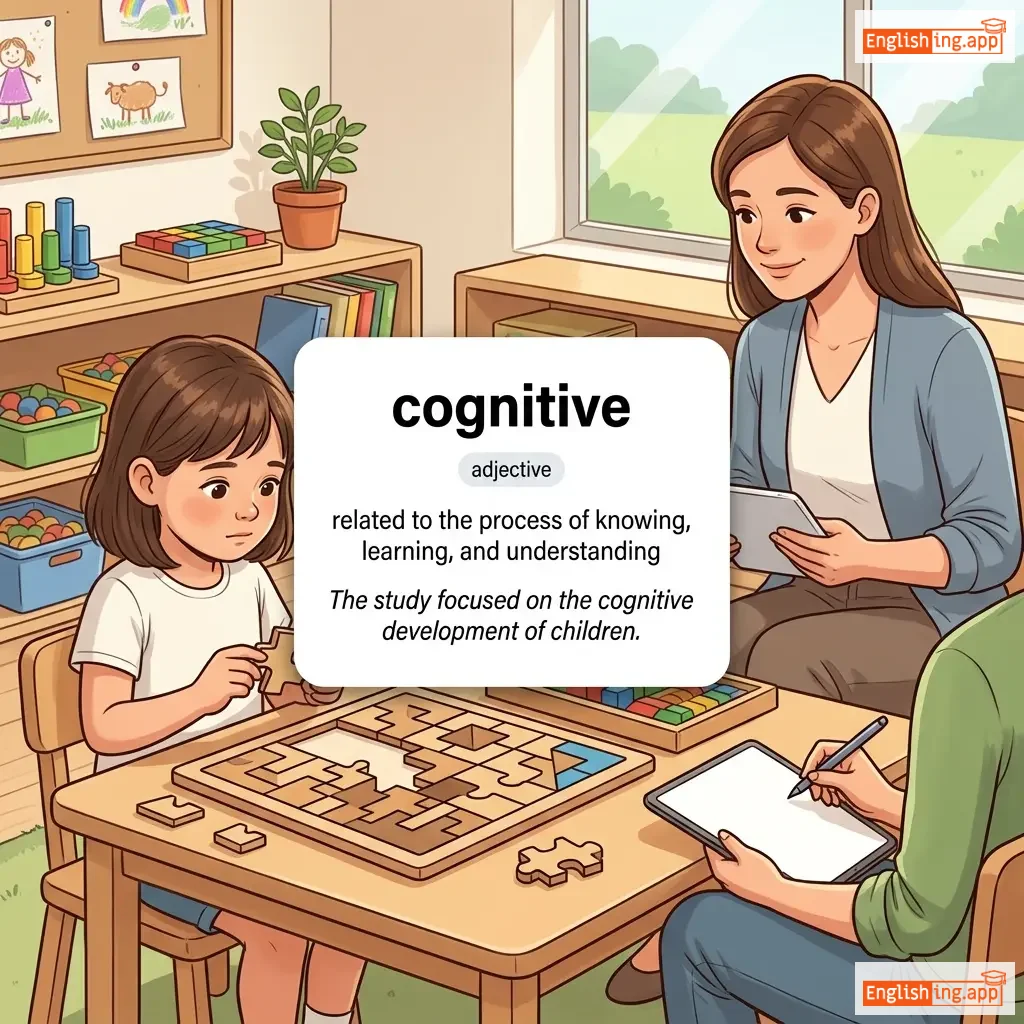
cognitive definition card — visual illustration of the meaning
adjective
/ˈkɒɡnətɪv/
संज्ञानात्मक (sanjnyanātmak)

related to the process of knowing, learning, and understanding

"The study focused on the cognitive development of children."

"अध्यान ने बच्चों के संज्ञानात्मक विकास पर ध्यान केंद्रित किया।" (Adhyayan ne bachchon ke sanjnātmāk vikās par dhyan kendrit kiya.)
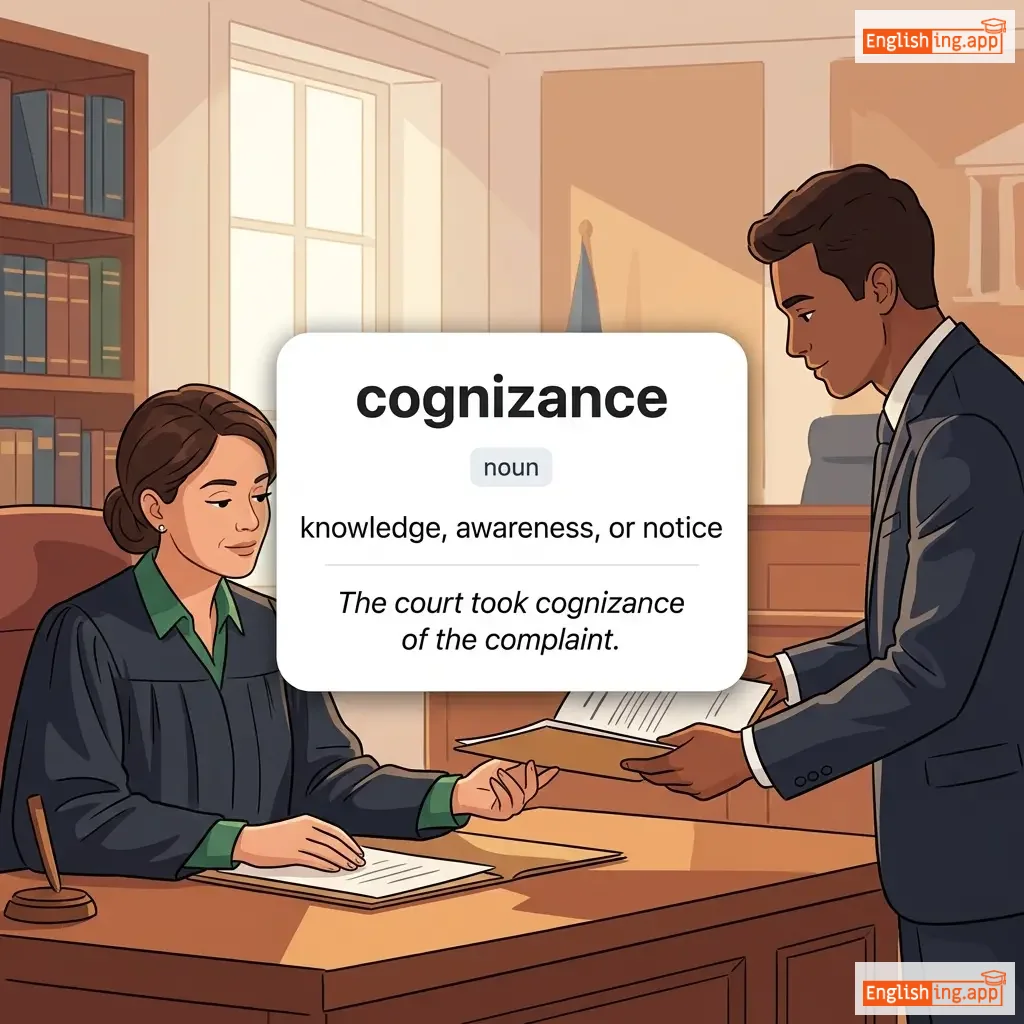
cognizance definition card — visual illustration of the meaning
noun
/ˈkɒɡnɪzəns/
ज्ञान, सचेतनता, या सूचना (gyaan, sachetna, ya soochna)

knowledge, awareness, or notice

"The court took cognizance of the complaint."

"कोर्ट ने शिकायत का संज्ञान लिया।" (Kort ne shikayat ka sangyaan liya.)
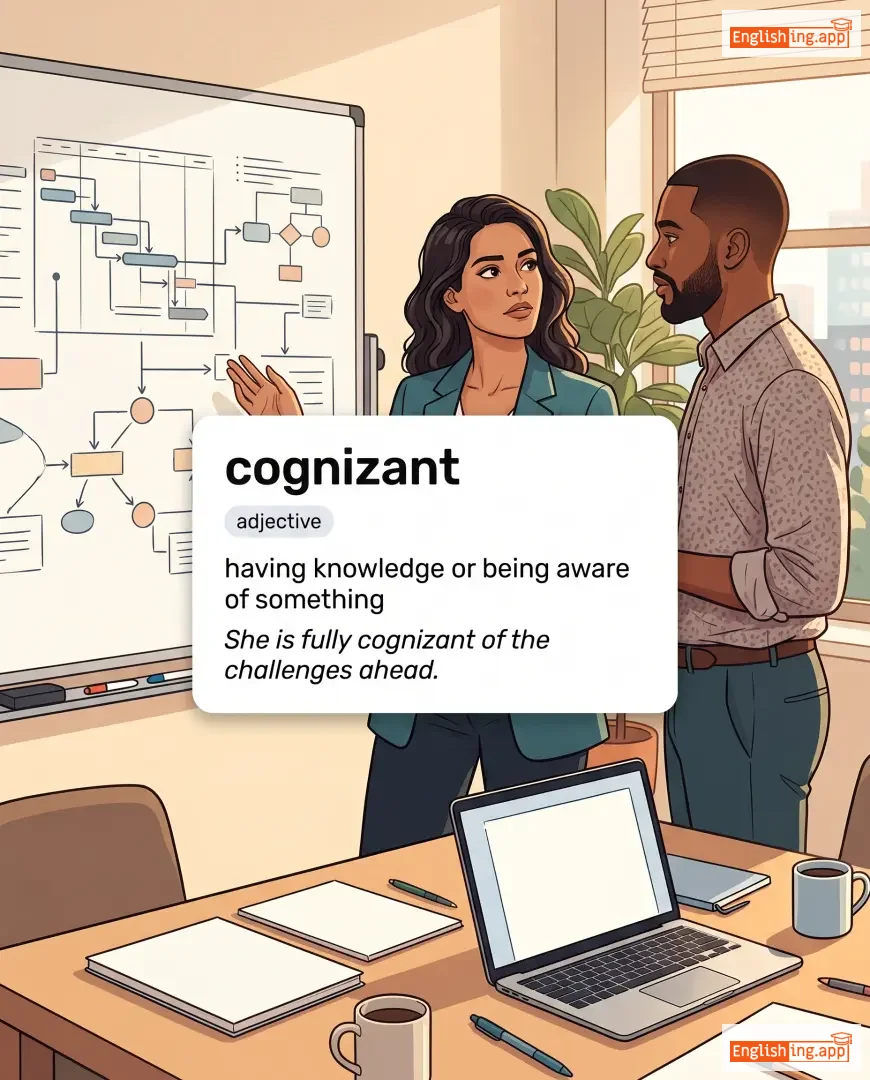
cognizant definition card — visual illustration of the meaning
adjective
/ˈkɒɡnɪzənt/
अवगत (avgat)

having knowledge or being aware of something

"She is fully cognizant of the challenges ahead."

"वह सामने आने वाली चुनौतियों से पूरी तरह से अवगत है।" (Vah samne aane wali chunautiyon se puri tarah se avgat hai.)
noun
/kɒɡˈnoʊmən/
उपनाम / उपनाम (upanam / upanam)

A family name or surname; an additional name or nickname.

"His cognomen became widely known in literary circles."

"उसका उपनाम साहित्यिक सर्कलों में व्यापक रूप से जाना गया।" (uska upanam sahityik sarklon mein vyapak roop se jana gaya.)
verb
/koʊˈhæbɪt/
साथ रहना (saath rehna)

To live together, often as partners without being married.

"They decided to cohabit before getting married."

"वे शादी करने से पहले साथ रहने का निर्णय लिया।" (ve shaadi karne se pehle saath rehne ka nirnay liya.)
verb
/koʊˈhɪr/
संयुक्त होना (sanyukt hona)

To stick together; to be united logically or physically.

"The ideas in his essay cohere well."

"उसके निबंध में विचार अच्छे से जुड़े हुए हैं।" (uske nibandh mein vichar achhe se jude hue hain.)
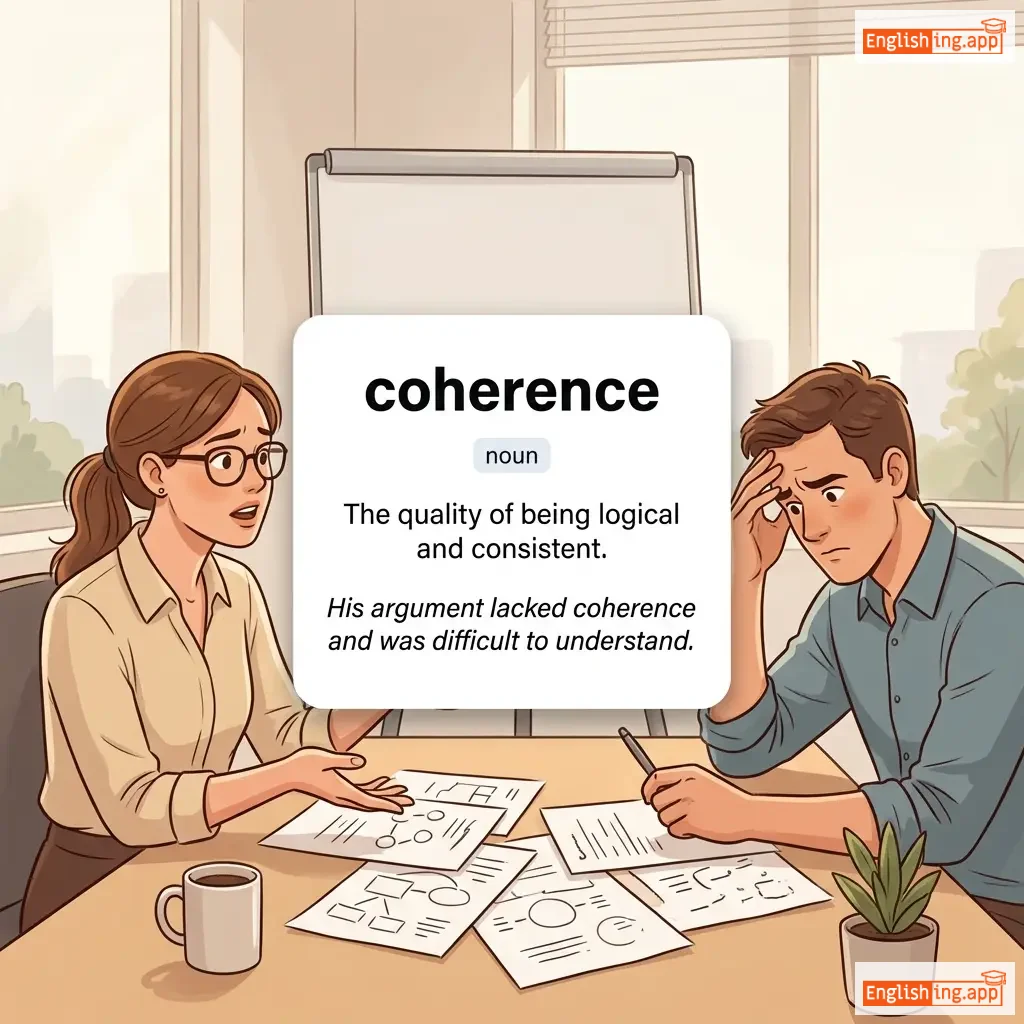
coherence definition card — visual illustration of the meaning
noun
/kəʊˈhɪə.rəns/
संगति, सामंजस्य, तार्किक और सुसंगतता (sangati, samanjasya, tarkik aur susangatata)

The quality of being logical and consistent.

"His argument lacked coherence and was difficult to understand."

"उसका तर्क संगति की कमी थी और समझने में कठिनाई थी।" (Uska tark sangati ki kami thi aur samajhne mein kathinai thi.)
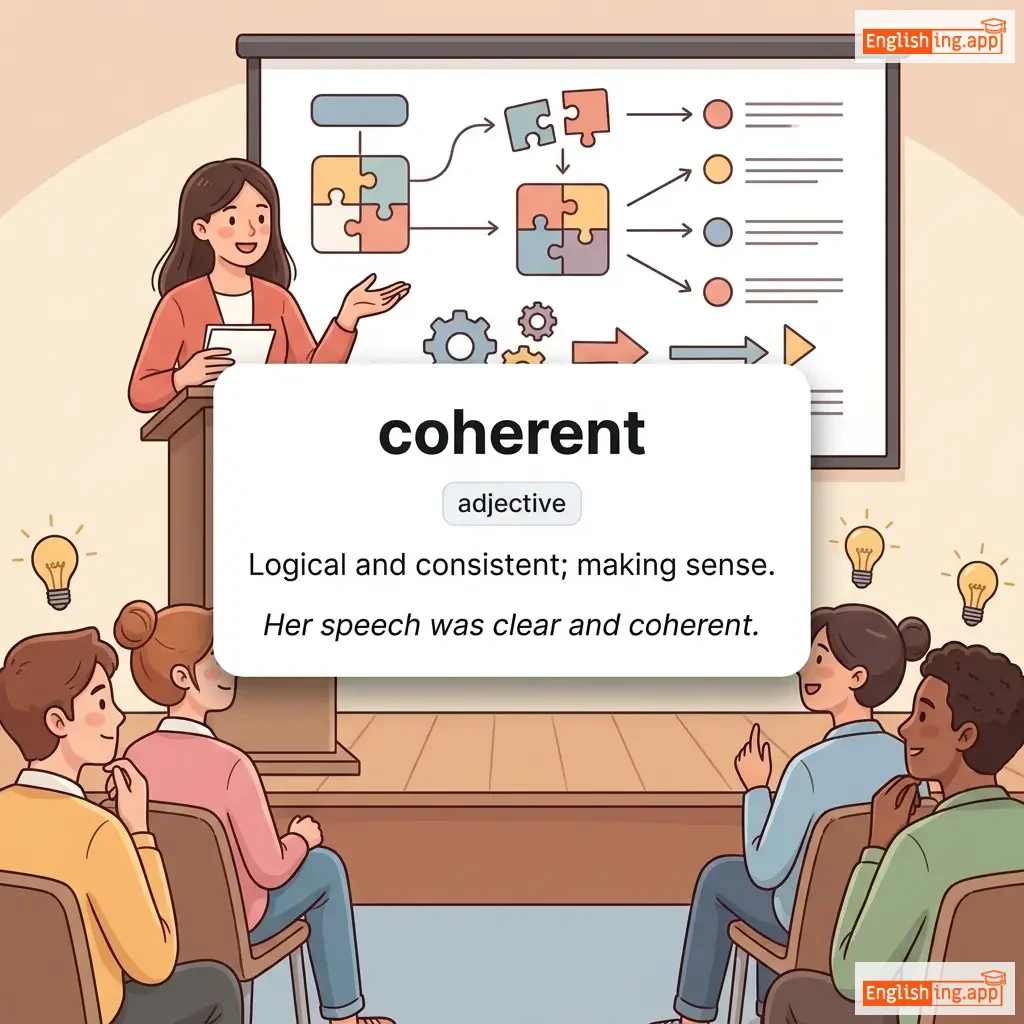
coherent definition card — visual illustration of the meaning
adjective
/koʊˈhɪə.rənt/
संगतपूर्ण (sangatpurn)

Logical and consistent; making sense.

"Her speech was clear and coherent."

"उसका भाषण स्पष्ट और संगतपूर्ण था।" (Uska bhashan spasht aur sangatpurn tha.)
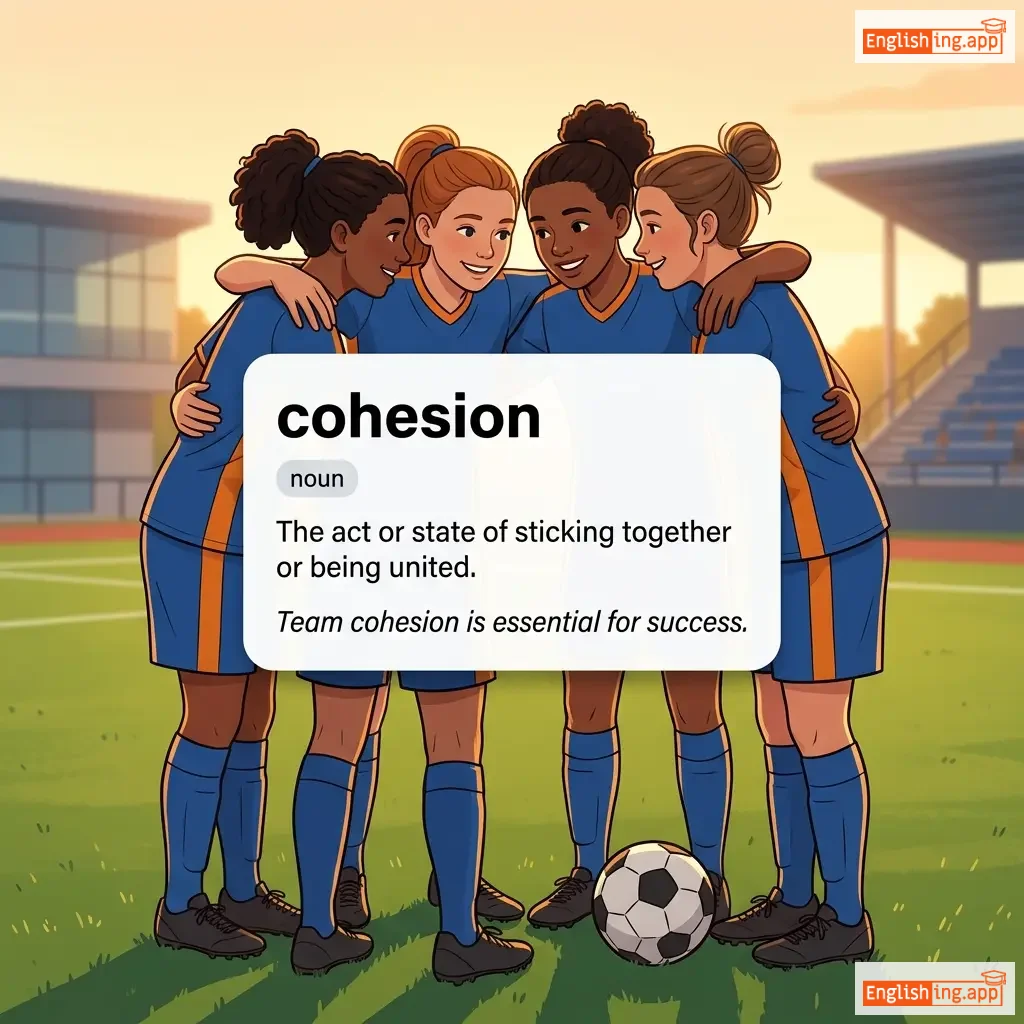
cohesion definition card — visual illustration of the meaning
noun
/koʊˈhiːʒən/
सहयोग (sahyog)

The act or state of sticking together or being united.

"Team cohesion is essential for success."

"टीम का सहयोग सफलता के लिए आवश्यक है।" (Team ka sahyog safalta ke liye avashyak hai.)
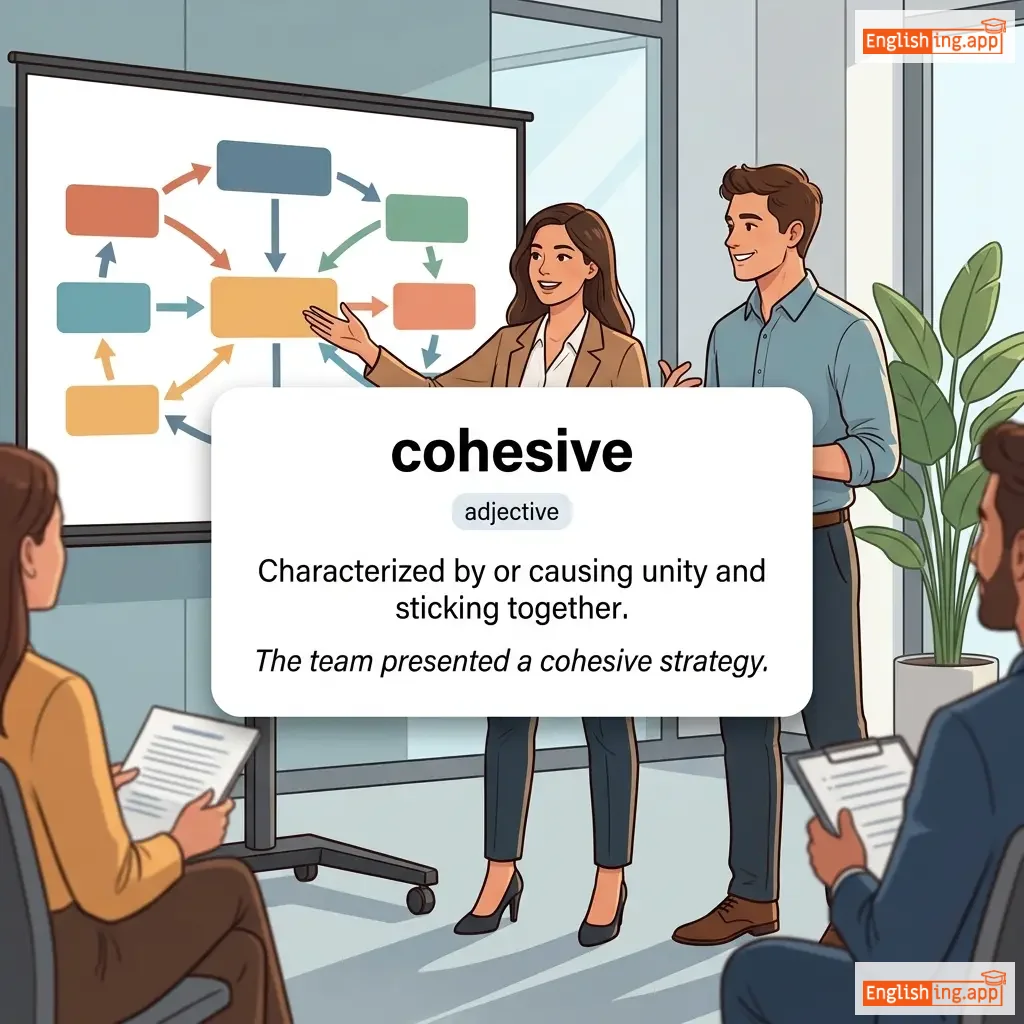
cohesive definition card — visual illustration of the meaning
adjective
/koʊˈhiːsɪv/
एकजुट (ekjut)

Characterized by or causing unity and sticking together.

"The team presented a cohesive strategy."

"द टीम ने एक संयुक्त रणनीति प्रस्तुत की।" (da team ne ek sanyukt rananiti prastut ki.)
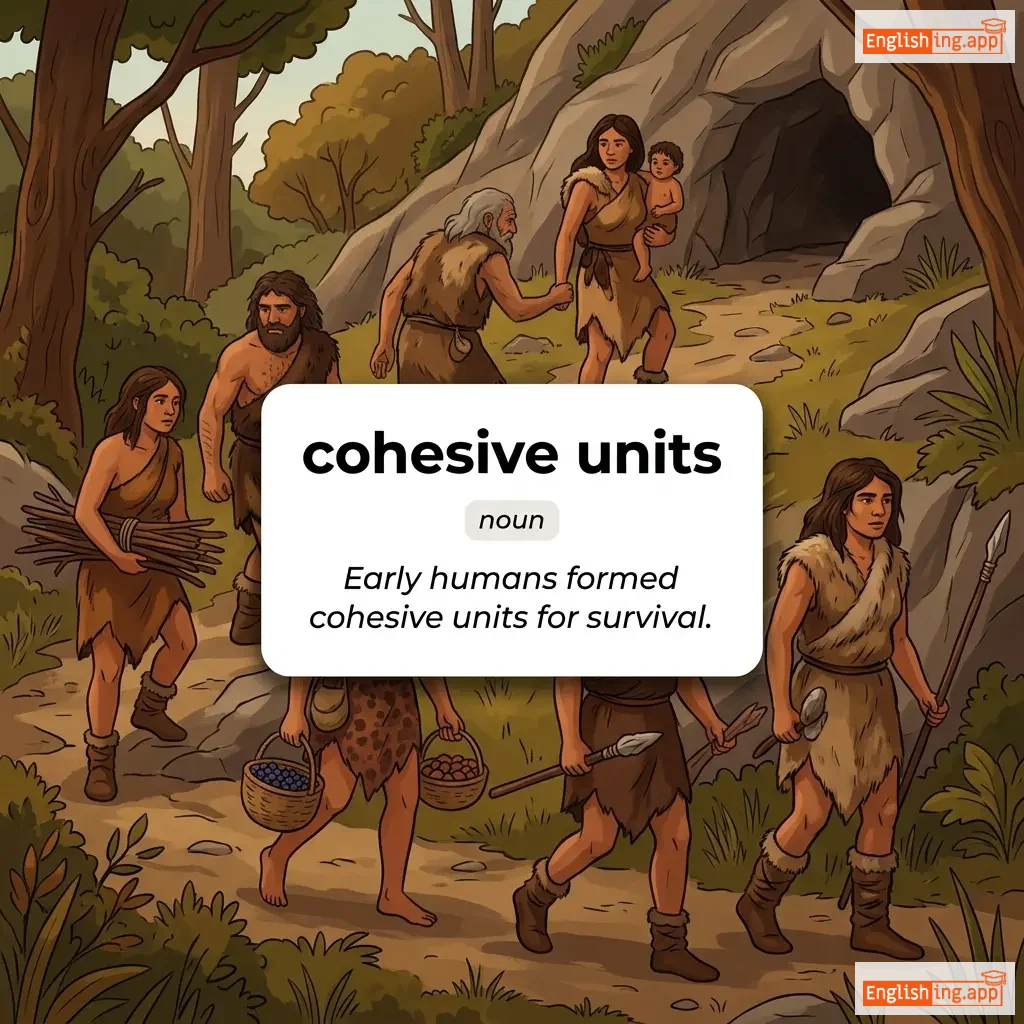
cohesive units definition card — visual illustration of the meaning
noun
koʊˈhisɪv ˈjunɪts
एकीकृत इकाइयाँ (ekeekrit ikaiyaan)

Groups or organizations that work together as unified wholes, with members closely bound together.

"Early humans formed cohesive units for survival."

"प्रारंभिक मनुष्यों ने जीवित रहने के लिए एकीकृत इकाइयाँ बनाई।" (Prarambhik manushyon ne jeevit rehne ke liye ekeekrit ikaiyaan banayi.)
noun
/ˈkoʊhɔːrt/
समूह (samooh)

A group of people with a shared characteristic, usually of the same age or with a common experience.

"The study tracked a cohort of students over ten years."

"अध्यान ने दस सालों तक छात्रों के एक समूह का पालन किया।" (Adhyayan ne das saalon tak chhatron ke ek samooh ka paalan kiya.)
👨‍👩‍👧‍👦

cohorts (कोहोर्ट्स)

noun
/ˈkoʊhɔːrts/
समूह (samooh)

Groups of people who share a common feature or experience.

"Researchers compared the health outcomes of different cohorts."

"शोधकर्ताओं ने विभिन्न समूहों के स्वास्थ्य परिणामों की तुलना की।" (Shodhkartao ne vibhinn samoohon ke swasthya parinaamon ki tulna ki.)
noun
/kwɑːˈfjʊr/
केश विन्यास (kesh vinyaas)

A person's hairstyle, typically an elaborate one.

"Her elegant coiffure impressed everyone at the party."

"उसकी सुरुचिपूर्ण केश विन्यास ने पार्टी में सभी को प्रभावित किया।" (Uski suruchipurn kesh vinyaas ne party mein sabhi ko prabhavit kiya.)
noun, verb
/kɔɪn/
सिक्का (sikka)

A flat piece of metal used as money; as a verb, to invent a new word or phrase.

"The government decided to coin a new term for the program."

"सरकार ने कार्यक्रम के लिए एक नया शब्द बनाने का निर्णय लिया।" (Sarkar ne karyakram ke liye ek naya shabd banane ka nirnay liya.)
verb
/ˌkoʊ.ɪnˈsaɪd/
साथ में घटित होना (saath mein ghatit hona)

To occur at the same time or to be in agreement.

"The meeting coincided with her birthday."

"मीटिंग उसकी जन्मदिन के साथ मेल खा गई।" (Meeting uski janmadin ke saath mel khaa gayi.)
noun
/koʊˈɪnsɪdəns/
संयोग (sanyog)

A remarkable or surprising occurrence of events at the same time by chance.

"It was pure coincidence that we met at the airport."

"यह विमानक्षेत्र पर हमारी मुलाकात एक संयोग था।" (Yah vimankshetra par hamari mulaqat ek sanyog tha.)
adjective
/koʊˈɪnsɪdənt/
सामयिक (saamayik)

Occurring at the same time; occupying the same position in space or time.

"The festival was coincident with the national holiday."

"उत्सव राष्ट्रीय अवकाश के साथ सामयिक था।" (Utsav rashtriya avkash ke saath saamayik tha.)
noun
/kɔɪnz/
सिक्के (sikke)

Flat, typically round pieces of metal issued by a government as money.

"He collected old coins from different countries."

"उसने विभिन्न देशों से पुराने सिक्के एकत्र किए।" (Usne vibhinn deshon se puraane sikke ekatr kiye.)
noun
/ˈkɒləndər/
छानने का बर्तन (chhanne ka bartan)

A bowl with holes used for draining liquid from food such as pasta or vegetables.

"She poured the pasta into a colander to drain the water."

"उसने पानी निकालने के लिए पास्ता को छानने के बर्तन में डाला।" (Usne pani nikalne ke liye pasta ko chhanne ke bartan mein daala.)
adjective/noun
/koʊld/
ठंडा (thanda)

having a low temperature; lacking warmth

"It was so cold outside that she wore two jackets."

"बाहर इतना ठंडा था कि उसने दो जैकेट पहने थे।" (Baahar itna thanda tha ki usne do jacket pahne the.)
noun
/koʊld drɪŋk/
ठंडा पेय (thanda pey)

A chilled beverage; a refreshing drink served cold

"I ordered a cold drink to beat the summer heat."

"गर्मी से राहत पाने के लिए मैंने एक ठंडा पेय ऑर्डर किया।" (garmi se rahat paane ke liye maine ek thanda pey order kiya.)
collaborate definition card — visual illustration of the meaning
verb
/kəˈlæbəreɪt/
सहयोग करना (sahyog karna)

To work jointly with others, especially on an intellectual or creative project.

"The two companies decided to collaborate on a new project."

"दोनों कंपनियों ने एक नई परियोजना पर सहयोग करने का निर्णय लिया।" (Donon kampaniyon ne ek nai pariyojna par sahyog karne ka nirnay liya.)
collaboration definition card — visual illustration of the meaning
noun
/kəˌlæbəˈreɪʃən/
सहयोग (sahyog)

the action of working together with others to produce or achieve something

"The project was a result of close collaboration between two companies."

"यह परियोजना दो कंपनियों के बीच घनिष्ठ सहयोग का परिणाम थी।" (Yah pariyojana do kampaniyon ke beech ghanisht sahyog ka parinaam thi.)
collage definition card — visual illustration of the meaning
noun
/kəˈlɑːʒ/
कोलाज (kolaj)

A piece of art made by sticking various materials such as photographs or paper onto a surface.

"She created a collage using old magazine pictures."

"उसने पुराने मैगज़ीन की तस्वीरों से एक कोलाज बनाया।" (Usne purane magazine ki tasveeron se ek kolaj banaya.)
verb
/kəˈlæps/
धसना (dhasna)

to fall down or inward suddenly; to break down completely

"The old building collapsed after the earthquake."

"भूकंप के बाद पुरानी इमारत धस गई।" (Bhookamp ke baad purani imarat dhas gayi.)
adjective
/kəˈlæpsəbl̩/
संकुचनशील (sankuchansheel)

able to be folded down or reduced in size

"She bought a collapsible chair for camping."

"उसने कैम्पिंग के लिए एक संकुचनशील कुर्सी खरीदी।" (Usne camping ke liye ek sankuchansheel kursi khareedi.)
noun
/ˈkɒlər/
कॉलर (kolar)

the part of a shirt, coat, or dress that goes around the neck

"He adjusted his shirt collar before entering the meeting."

"उसने मीटिंग में प्रवेश करने से पहले अपनी शर्ट के कॉलर को ठीक किया।" (Usne meeting mein pravesh karne se pehle apni shirt ke kolar ko theek kiya.)
noun
/ˈkɒl.ə.bəʊn/
कॉलर-बोन (kolar-bon)

either of the pair of bones joining the breastbone to the shoulder blades; clavicle

"He broke his collar-bone in the accident."

"उसने दुर्घटना में अपनी कॉलर-बोन तोड़ दी।" (Usne durghatna mein apni kolar-bon tod di.)
verb
/kəˈleɪt/
संगठित करना (sangathit karna)

to collect, arrange, and combine in order

"The secretary collated the reports before the meeting."

"सेक्रेटरी ने मीटिंग से पहले रिपोर्ट्स को संकलित किया।" (Secretary ne meeting se pehle reports ko sankalit kiya.)
collateral definition card — visual illustration of the meaning
noun
/kəˈlætərəl/
विकृत संपत्ति (vikrit sampatti)

something pledged as security for repayment of a loan

"He used his house as collateral for the bank loan."

"उसने बैंक ऋण के लिए अपने घर को सुरक्षा के रूप में इस्तेमाल किया।" (Usne bank rin ke liye apne ghar ko suraksha ke roop mein istemal kiya.)
noun
/kəˈleɪʃən/
संग्रह (sangrah)

the act of collecting, comparing, and arranging in proper order

"The librarian spent hours on the collation of old manuscripts."

"ग्रंथपाल ने पुराने पांडुलिपियों के संग्रह में कई घंटे बिताए।" (Granthpal ne purane pandulipiyon ke sangrah mein kai ghante bitaye.)
noun
/ˈkɒliːɡ/
सहकर्मी (sahkarmi)

a person with whom one works, especially in a profession or business

"She invited her colleagues to the office party."

"उसने अपने सहकर्मियों को ऑफिस पार्टी में आमंत्रित किया।" (Usne apne sahkarmiyon ko office party mein aamantrit kiya.)
collect definition card — visual illustration of the meaning
verb
/kəˈlekt/
संग्रह करना (sangrah karna)

To gather or bring together items from different places.

"She likes to collect stamps as a hobby."

"वह एक शौक के रूप में स्टांप इकट्ठा करना पसंद करती है।" (vah ek shauk ke roop mein stamp ikattha karna pasand karti hai.)
adjective
/kəˈlɛktɪd/
शांत (shaant)

calm and in control of oneself

"She remained calm and collected during the crisis."

"संकट के दौरान वह शांत और कलेक्टेड रही।" (Sankat ke dauran wah shaant aur collected rahi.)
noun
/kəˈlɛkʃən/
संग्रह (sangrah)

a group of things gathered together

"She has a large collection of rare books."

"वह दुर्लभ किताबों का एक बड़ा संग्रह रखती है।" (Vah durlabh kitabon ka ek bada sangrah rakhti hai.)
collective definition card — visual illustration of the meaning
adjective
/kəˈlɛktɪv/
सामूहिक (sāmuḥik)

done by people acting as a group

"The decision was made by collective agreement."

"निर्णय सामूहिक सहमति से लिया गया था।" (Nirṇay sāmuḥik sahamatī se liyā gayā thā.)