Словари

Словарь английского языка | Значения слов, определения и примеры

adverb
/ˈtaɪtli/
крепко (krepko)

in a way that is firm and difficult to move or open

"She held the baby tightly in her arms."

"Она крепко держала ребенка на руках." (Ona krepko derzhala rebenka na rukakh.)
🙅‍♂️💵

tightwad (тайтвэд)

noun
/ˈtaɪtwɒd/
скряга (skryaga)

a person who is unwilling to spend money; a miser

"Everyone calls him a tightwad because he never buys gifts."

"Все называют его скрягой, потому что он никогда не покупает подарки." (Vse nazyvayut ego skryagoy, potomu chto on nikogda ne pokupayet podarki.)
noun
/ˈtaɪ.ɡrəs/
тигрица (tigritsa)

an adult female tiger

"The powerful tigress hunted silently through the jungle."

"Могущественная тигрица охотилась тихо через джунгли." (Mogushchestvennaya tigritsa okhotilas' tikho cherez dzhungli.)
noun
/tɪˈlɑpiə fɪʃ/
рыба тилапия (ryba tilapiya)

a freshwater fish native to Africa, widely farmed for food due to its mild taste and fast growth

"Tilapia fish is one of the most commonly farmed fish species worldwide."

"Рыба тилапия — один из самых часто выращиваемых видов рыб в мире." (ryba tilapiya odin iz samykh chasto vyrashchivaemykh vidov ryb v mire)
noun
/taɪl/
плитка (plitka)

a flat piece of baked clay or other material used for covering roofs, floors, or walls

"The kitchen floor is covered with ceramic tiles."

"Пол кухни покрыт керамическими плитками." (Pol kukhni pokryt keramičeskimi plitkami.)
preposition
/tɪl/
до (do)

up to the time of; until

"She waited till midnight for his call."
"Она ждала до полуночи его звонка." (Ona zhdala do polunoči ego zvonka.)
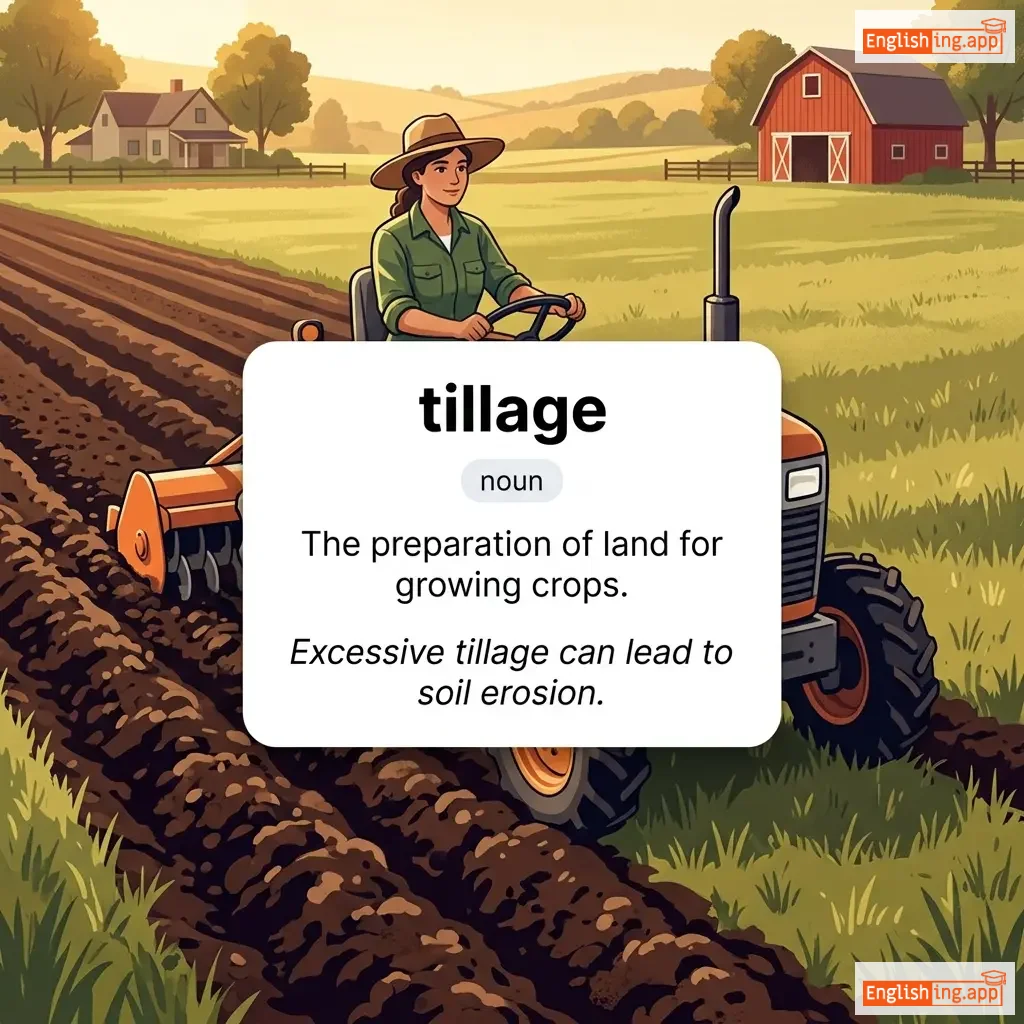
tillage definition card — visual illustration of the meaning
noun
ˈtɪl.ɪdʒ
обработка почвы (obrabotka pochvy)

The preparation of land for growing crops.

"Excessive tillage can lead to soil erosion."

"Чрезмерная обработка почвы может привести к эрозии почвы." (Chrezmernyaya obrabotka pochvy mozhet privesti k erozzii pochvy.)
noun
/ˈtɪlər/
руль или человек, который обрабатывает землю (rul' ili chelovek, kotoryy obrabotayet zemlyu)

A lever used to steer a boat or a person who tills the soil.

"The sailor gripped the tiller firmly to keep the boat on course."

"Моряк крепко держал руль, чтобы держать лодку на курсе." (Moryak krepko derzhal rul', chtoby derzhat' lodku na kursye.)
noun
/tɪlθ/
состояние почвы (пригодность для посадки растений) (sostoyanie pochvy (prigodnost dlya posadki rasteniy))

The physical condition of soil in relation to its suitability for planting crops.

"The farmer checked the soil's tilth before planting the seeds."

"Фермер проверил состояние почвы перед посадкой семян." (Fermer proveryl sostoyanie pochvy pered posadkoy semyan.)
noun
/ˈtɪmbər/
дерево (derevo)

wood prepared for use in building and carpentry

"The house was built entirely from local timber."

"Дом был построен полностью из местного дерева." (Dom byl postroen polnost'yu iz mestnogo dereva.)
noun
/ˈtæmbər/ or /ˈtɪmbər/
тембр (tembr)

The character or quality of a musical sound or voice as distinct from its pitch and intensity.

"Her voice had a warm timbre that soothed the audience."

"Её голос имел тёплый тембр, который успокаивал аудиторию." (Yeyo golos imel tyoplyy tembr, kotoryy uspokaval auditoriyu.)
noun
/taɪm/
время (vremya)

a measured or measurable period during which an action, process, or condition exists or continues

"I don’t have enough time to finish the project."
"У меня нет достаточно времени, чтобы закончить проект." (U menya net dostatochno vremeni, chtoby zakonchit' proyekt.)
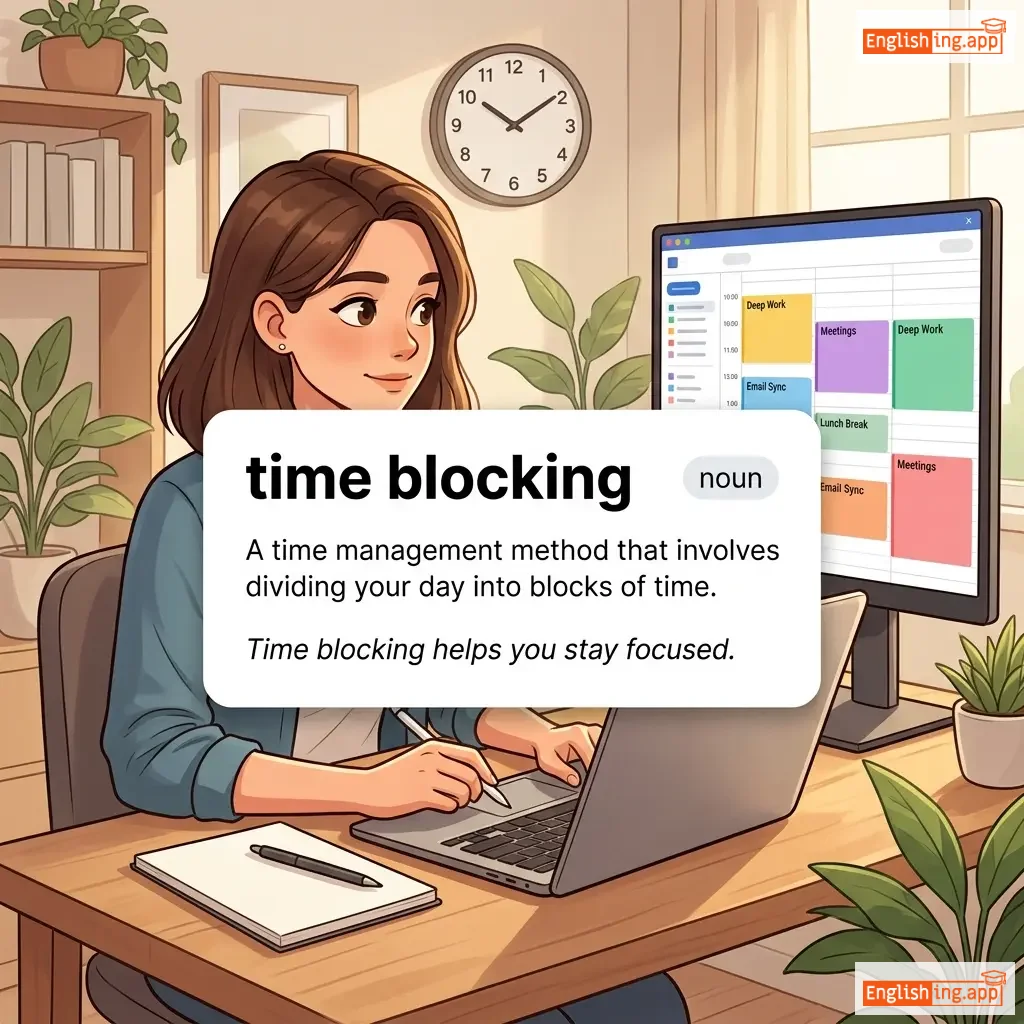
time blocking definition card — visual illustration of the meaning
noun
/taɪm ˈblɒk.ɪŋ/
блокировка времени (blokirovka vremeni)

A time management technique where specific time slots are allocated for specific tasks or activities.

"Time-blocking helps in managing tasks efficiently."

"Тайм-блокинг помогает эффективно управлять задачами." (Taym-bloking pomogayet effektivno upravlyat' zadachami.)
time management definition card — visual illustration of the meaning
noun
/taɪm ˈmæn.ɪdʒ.mənt/
управление временем (upravlenie vremenyem)

The ability to plan and control time effectively to accomplish tasks efficiently.

"Effective time management improves productivity."

"Эффективное управление временем улучшает производительность." (Effektivnoe upravlenie vremenyem uluchshaet proizvoditel'nost'.)
verb
/taɪmd/
время замерять (vremya zameriat')

to measure or record the duration or speed of something

"He timed the race with a stopwatch."
"Он засек время на гонке с помощью секундомера." (On zasek vremya na gonke s pomoshch'yu sekundomera.)
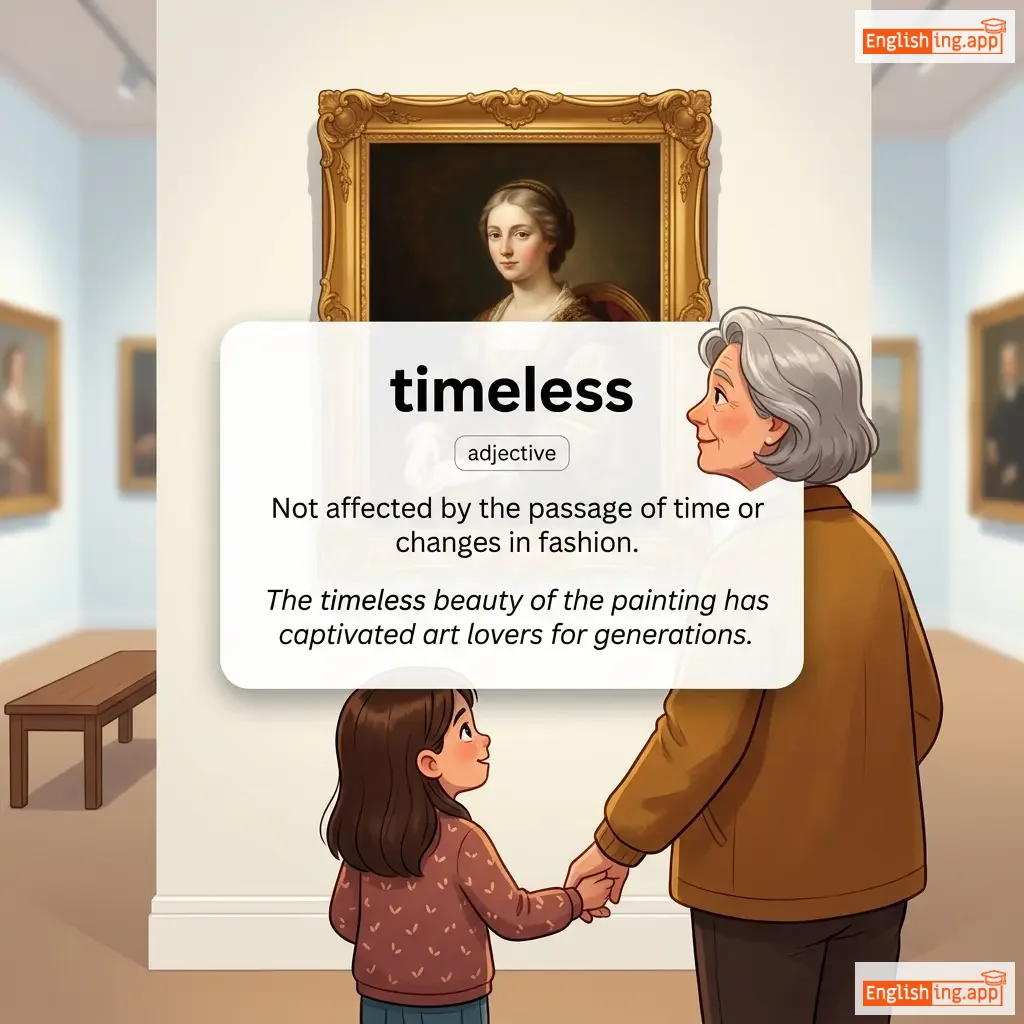
timeless definition card — visual illustration of the meaning
adjective
ˈtaɪmləs
вневременной (vnevremennoy)

Not affected by the passage of time or changes in fashion.

"The timeless beauty of the painting has captivated art lovers for generations."

"Вневременная красота картины очаровала любителей искусства на протяжении поколений." (Vnevremennaya krasota kartiny ocharovala lyubiteley iskusstva na protyazhenii pokoleni.)
adjective
/ˈtaɪmli/
своевременный (svoevremenny)

Done or occurring at a favorable or useful time; opportune.

"Her timely advice helped me avoid a big mistake."

"Её своевременный совет помог мне избежать большой ошибки." (eyo svoevremenny sovet pomog mne izbezhat bolshoy oshibki.)
timer definition card — visual illustration of the meaning
noun
ˈtaɪmər
таймер (taymer)

An automatic mechanism for activating a device at a preset time; a device that measures time intervals.

"He set the timer for 30 minutes to complete the task."

"Он установил таймер на тридцать минут, чтобы выполнить задачу." (On ustanovil taymer na tridtsat minut, chtoby vypolnit zadachu.)
noun
/ˈtaɪm.teɪ.bəl/
расписание (raspisanie)

a schedule showing planned activities or events at particular times

"Please check the train timetable for departure times."

"Пожалуйста, проверьте расписание поезда для времени отправления." (Pozhaluysta, prover'te raspisaniye poezzda dlya vremeni otpravleniya.)
adjective
/ˈtaɪmwɔːrn/
потёртый временем (potyortyy vremyem)

Worn or impaired by age; old and used many times.

"The timeworn house carried a sense of history and nostalgia."

"Потёртый временем дом несло чувство истории и ностальгии." (Potyortyy vremyem dom neslo chuvstvo istorii i nostalgia.)
adjective
/ˈtɪmɪd/
трусишка (trusishka)

lacking courage or confidence; easily frightened

"The timid child hid behind his mother when strangers approached."

"Трусишка спрятался за своей матерью, когда подошли незнакомцы." (Trusishka spryatalsya za svoey matyeryu, kogda podoshli neznakomtsy.)
noun
/tɪˈmɪdəti/
робость (robost)

lack of courage or self-confidence

"His timidity kept him from speaking up during the meeting."

"Его робость помешала ему говорить на встрече." (Ego robost' pomeshala emu govorit' na vstreche.)
noun
/ˈtaɪmɪŋ/
тайминг (tayming)

the choice, judgment, or control of when something should be done

"Good timing is essential in business negotiations."

"Хороший тайминг важен в бизнес-переговорах." (Khoroshiy tayming vazhen v biznes-peregovorakh.)
adjective
/ˈtɪmərəs/
робкий (robkiy)

showing or suffering from nervousness, fear, or lack of confidence

"The timorous student hesitated to ask the teacher a question."

"Робкий студент колебался, чтобы задать вопрос учителю." (Robkiy student kolebalsya, chtoby zadat' vopros uchitelyu.)
noun
/tɪn/
банка (banka)

a metal container; a chemical element (Sn)

"She bought a tin of biscuits from the store."

"Она купила банку печенья в магазине." (Ona kupila banku pechen'ya v magazine.)
noun
/ˈtɪŋktʃər/
легкий след, лекарство, приготовленное растворением лекарства в алкоголе (legkiy sled, lekarstvo, prigotovlennoe rastvoreniyem lekarstva v alkogole)

a slight trace of something; a medicine made by dissolving a drug in alcohol

"There was a tincture of sadness in her smile."

"В её улыбке была лёгкая нотка грусти." (V yey ulybke byla lyogkaya notka grusti.)
noun, verb
/tɪndʒ/
легкий оттенок цвета или вкуса (legkiy ottenok tsveta ili vkusa)

a slight added color, flavor, or feeling; to add a slight amount of color or quality

"Her voice was tinged with sadness."

"Её голос был окрашен печалью." (Eyo golos byl okrashen pechalyu.)
verb
/ˈtɪŋkər/
колдовать (koldovat')

to make small adjustments or repairs to something, often experimentally or imperfectly

"He likes to tinker with old radios in his garage."

"Ему нравится колдовать со старыми радиоприемниками в своем гараже." (Emu nravitsya koldovat' so starymi radiopriemnikami v svoem garage.)
noun
/tɪnt/
оттенок (ottenok)

a slight shade or variation of a color

"The walls were painted white with a slight blue tint."

"Стены были окрашены в белый цвет с легким синим оттенком." (Steny byli okrasheny v belyy tsvet s legkim sinim otenkom.)
adjective
/ˈtaɪni/
очень маленький (ochen' malen'kiy)

very small

"She held a tiny kitten in her hands."

"Она держала в руках очень маленького котенка." (Ona derzhala v rukakh ochen' malen'kogo kotenka.)
noun
/tɪp/
совет (sovet)

a small but useful piece of advice

"I received a tip on how to improve my presentation."

"Я получил совет, как улучшить свою презентацию." (Ya poluchil sovet, kak uluchshit' svoyu prezentatsiyu.)
verb
/ˈtɪpəl/
пить (pit)

to drink alcohol, especially regularly or in small amounts

"He likes to tipple at the local pub after work."

"Он любит пить в местном пабе после работы." (On lyubit pit' v mestnom pabe posle raboty.)
adjective
/ˈtɪpsi/
слегка пьяный (slegka p'yanyy)

slightly drunk

"She felt tipsy after just one glass of wine."

"Она почувствовала себя немного пьяной после одного бокала вина." (Ona pochuvstvovala sebya nemnogo p'yanoy posle odnogo bokala vina.)
adjective
/ˈtɪp.tɒp/
отличный; высшего качества (otlichnyy; vysshogo kachestva)

of the highest quality; excellent; in perfect condition

"The car is in tiptop condition."

"Машина в отличном состоянии." (Mashina v otlichnom sostoyanii)
noun
/taɪˈreɪd/
тирада (tirada)

a long, angry, or critical speech

"The manager launched into a tirade about poor performance."

"Менеджер устроил тираду по поводу плохой работы." (Menedzher ustroil tiradu po povodu plokhoy raboty.)
noun
/taɪər/
шина (shina)

a rubber covering around a wheel

"The car’s tire burst on the highway."

"Шина машины лопнула на шоссе." (Shina mashiny lopnula na shosse.)
adjective
/ˈtaɪərd/
усталый (ustaly)

in need of rest or sleep

"I feel so tired after the long journey."

"Я чувствую себя таким усталым после долгого путешествия." (Ya chuvstvuyu sebya takim ustalym posle dolgogo puteshestviya.)
adjective
/ˈtaɪərləs/
неутомимый (neutomimyj)

Showing great effort or energy without becoming tired.

"She worked tirelessly to complete the project on time."

"Она работала неутомимо, чтобы закончить проект вовремя." (Ona rabotala neutomimo, chtoby zakonchit' proyekt vovremya.)
adjective
/ˈtaɪərsəm/
утомительный (utomitel'nyj)

Causing one to feel bored, annoyed, or tired.

"The long meeting became very tiresome."

"Долгая встреча стала очень утомительной." (Dolgaya vstrecha stala ochen' utomitel'noj.)
adjective
/ˈtaɪərɪŋ/
утомительный (utomitelnyy)

causing someone to feel exhausted or in need of rest

"The long journey was extremely tiring."

"Долгое путешествие было крайне утомительным." (Dolgoe puteshestvie bylo krayne utomitelnym)
noun
/ˈtɪʃ.uː/
платок (platok)

a piece of soft absorbent paper or fabric

"She used a tissue to wipe her nose."

"Она использовала платок, чтобы вытереть нос." (Ona ispol'zovala platok, chtoby vyteret' nos.)
adjective
/taɪˈtænɪk/
титанический (titanicheskiy)

Of exceptional strength, size, or power.

"The company made titanic efforts to expand into new markets."

"Компания предприняла титанические усилия, чтобы расшириться на новые рынки." (Kompaniya predprinяла titanicheskie usiliya, chtoby rasshirit'sya na novye rynki.)
noun
/ˈtɪt.bɪt/
маленький кусочек вкусной еды; маленький интересный фрагмент информации (titbit)

a small piece of tasty food; a small interesting piece of information

"She served delicious titbits at the party."

"Она подала вкусные закуски на вечеринке." (ona podala vkusnye zakuski na vecherinke)
noun
/taɪð/
десятина (desyatina)

A tenth part of one’s income or produce, often given as a religious offering.

"He gave a tithe of his earnings to the church."

"Он пожертвовал десятую часть своего дохода церкви." (On pozhertvoval desyatuyu chast' svoego dokhoda tserkvi.)
verb
/ˈtɪtəleɪt/
возбуждать (vozzbuzhdat)

To excite or amuse, especially in a slightly sexual or playful way.

"The comedian's jokes titillated the audience."

"Шутки комика возбуждали публику." (Shutki komika vozzbuzhdali publiku.)
noun
/ˈtaɪtəl/
заголовок (zagolovok)

the name of a book, film, or piece of writing; also a formal designation or rank

"The book's title changed at the last minute."

"Название книги изменилось в последнюю минуту." (Nazvanie knigi izmenilos' v poslednyuyu minutu.)
verb
/ˈtɪtər/
тихо хихикать (tikho khikhikat)

to laugh in a quiet, nervous, or restrained way

"The students began to titter when the projector froze."

"Студенты начали тихо хихикать, когда проектор завис." (Studenty nachali tikho khikhikat, kogda proyektor zavis.)
adjective
/ˈtɪtjələr/
титуляр (titulyar)

holding a title or position in name only without real power; relating to the title of a work

"She is the titular head of the committee, but decisions are made by the coordinator."

"Она титулярный глава комитета, но решения принимаются координатором." (Ona titularnyy glava komiteta, no resheniya priniimayutsya koordinatorom.)
preposition
/tuː/
к (k)

used for expressing motion or direction

"She is going to the market."

"Она идет на рынок." (Ona idet na rynok.)
Toady definition card — visual illustration of the meaning
🙇‍♂️

Toady

verb
/ˈtoʊdi/

to flatter or behave excessively subserviently toward someone for advantage

"Stop toadying to the manager and speak your mind."