Словари

Словарь английского языка | Значения слов, определения и примеры

noun
/ˈtraɪ.pɒd/
треножник (trenozhnik)

A three-legged stand used to support a camera, telescope, or other object.

"The photographer set up his camera on a tripod."

"Фотограф установил свою камеру на треножнике." (Fotograf ustanovil svoyu kameru na trenozhnike.)
verb
/traɪˈsɛkt/
делить на три части (delit na tree chasti)

To divide into three parts.

"The teacher asked the students to trisect the line segment."

"Учитель попросил учеников разделить отрезок на три части." (Uchitel' poprosil uchenikov razdelit' otrezok na tree chasti.)
adjective
/traɪt/
банальный (banal'nyy)

Overused and lacking originality.

"The speech was full of trite phrases."

"Речь была полна избитых фраз." (Rech' byla polna izbitykh fraz.)
triumph definition card — visual illustration of the meaning
noun
/ˈtraɪʌmf/
триумф (triumf)

a great victory or achievement

"Winning the championship was a moment of triumph for the team."

"Победа в чемпионате стала моментом триумфа для команды." (Pobeda v chempionate stala momentom triumfa dlya komandy.)
adjective
/traɪˈʌmfənt/
триумфальный; радостный (triumfalny; radostny)

having won a battle or contest; rejoicing as a result of success

"The team was triumphant after winning the championship."

"Команда была триумфальной после победы в чемпионате." (Komanda byla triumfal'noy posle pobedy v chempionate.)
noun
/traɪˈʌmvɪər/
триумвир (triumvir)

One of a group of three men holding power in ancient Rome.

"Caesar was a triumvir in the first Roman triumvirate."

"Цезарь был триумвиром в первом римском триумвирате." (Tsezar' byl triumvirom v pervom rimskom triumvirate.)
noun
/traɪˈʌmvɪrət/
триумвират (triumvirat)

A political regime ruled or dominated by three powerful individuals.

"The Roman Republic was once governed by a triumvirate."

"Римская Республика когда-то была правлена триумвиратом." (Rimskaya Respublika kogda-to byla pravlena triumviratom.)
noun
/ˈtrɪviə/
тривиальные факты (trivial'nye fakty)

Details or information that are considered unimportant or of little value.

"The quiz was filled with fun trivia about movies and music."

"В викторине было много забавных тривий о фильмах и музыке." (V viktorine bylo mnogo zabavnykh triviy o fil'makh i muzyke.)
adjective
/ˈtrɪviəl/
тривиальный (trivial'nyy)

Of little value or importance.

"He often gets upset over the most trivial matters."

"Он часто расстраивается из-за самых тривиальных вещей." (On chasto rasstraivayetsya iz-za samykh trivial'nykh veshchey.)
noun
/ˈtrɒɡlədaɪt/
пещерный человек (peshchernyy chelovek)

A person who lives in a cave or is considered old-fashioned and out of touch.

"Some called him a troglodyte for refusing to use modern technology."

"Некоторые называли его пещерным человеком за отказ использовать современные технологии." (Nekotorye nazyvali ego peshchernym chelovekom za otkaz ispol'zovat' sovremennye tekhnologii.)
noun
/ˈtrɒli/
троллейбус (trolleybus)

an electric vehicle that runs on rails or tracks in the street

"The trolley runs through the city center every fifteen minutes."

"Троллейбус проходит через центр города каждые пятнадцать минут." (Trolleybus prokhodit cherez tsentr goroda kazhdyye pyatnadtsat' minut.)
noun
/truːp/
отряд (otryad)

a group of people, animals, or things moving together

"A troop of soldiers marched down the street."

"Отряд солдат маршировал по улице." (Otryad soldat marshiroval po ulitse.)
noun
/troʊp/
литературный троп (literaturnyy trop)

A common or overused theme, idea, or device in literature, film, or speech.

"The film avoided the usual superhero tropes."

"Фильм избежал обычных тропов супергероев." (Film izbegal obychnykh tropov supergeroev.)
noun
/ˈtroʊfi/
трофей (trofey)

An object awarded as a prize for a victory or achievement.

"She proudly displayed the trophy she won in the competition."
"Она гордо показала трофей, который она выиграла на соревновании." (Ona gordo pokazala trofey, kotoryy ona viigrala na sorevnovanii.)
tropical definition card — visual illustration of the meaning
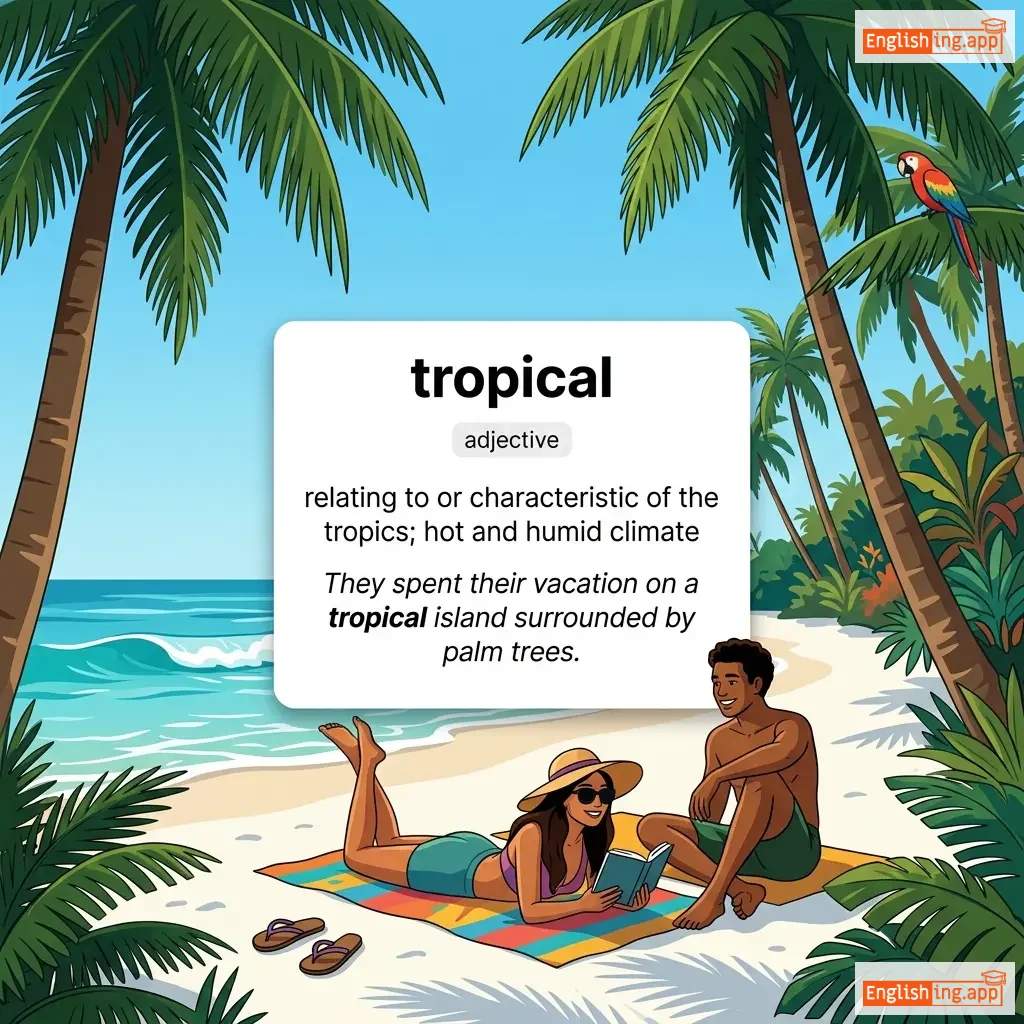
adjective
/ˈtrɒpɪkəl/
тропический (tropicheskiy)

relating to or characteristic of the tropics; hot and humid climate

"They spent their vacation on a tropical island surrounded by palm trees."
"Они провели свой отпуск на тропическом острове, окруженном пальмами." (Oni proveli svoy otpusk na tropicheskom ostrove, okruzhennom palmami.)
tropical regions definition card — visual illustration of the meaning
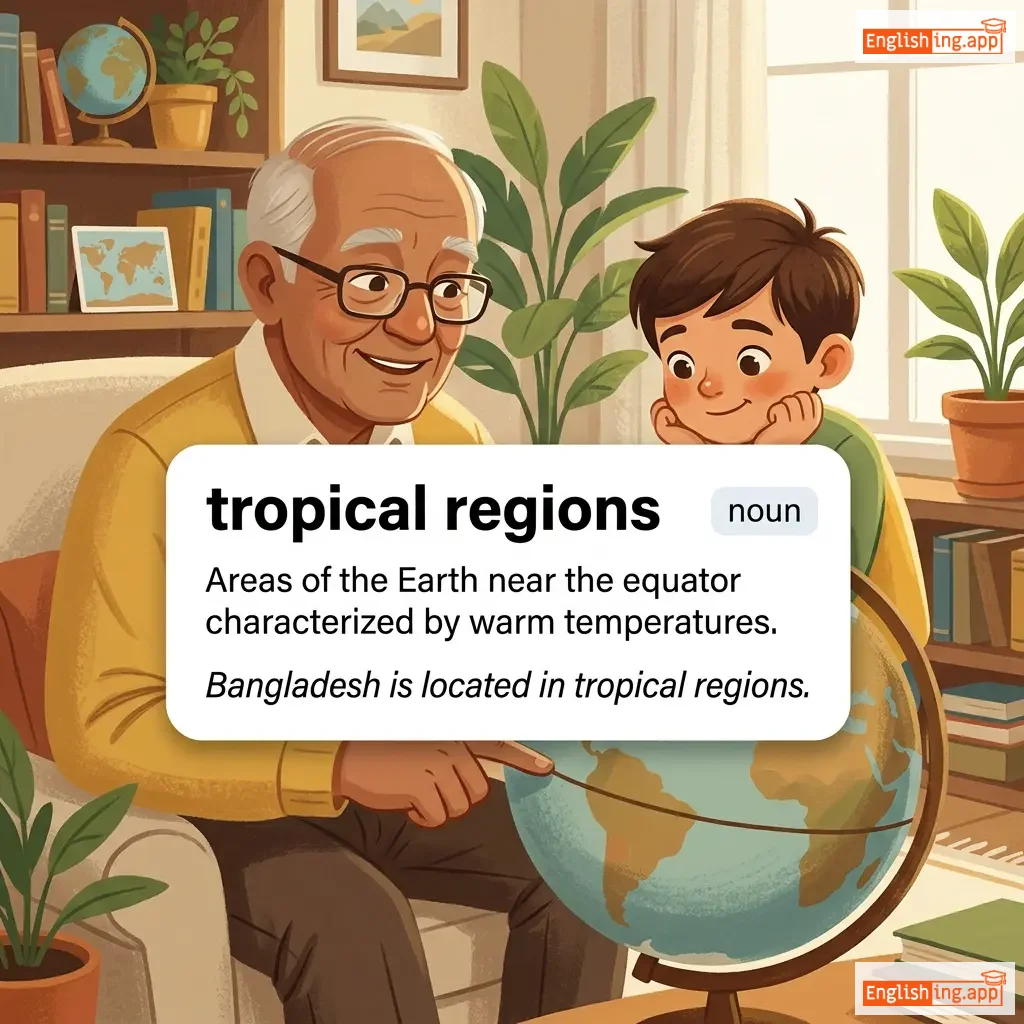
noun
ট্রপিক্যাল রিজিওনস
тропические регионы (tropicheskiye regiony)

Areas of the Earth near the equator characterized by warm temperatures.

"Bangladesh is located in tropical regions."
"Бангладеш находится в тропических регионах." (Bangladesh nakhoditsya v tropicheskikh regionakh.)
troposphere definition card — visual illustration of the meaning
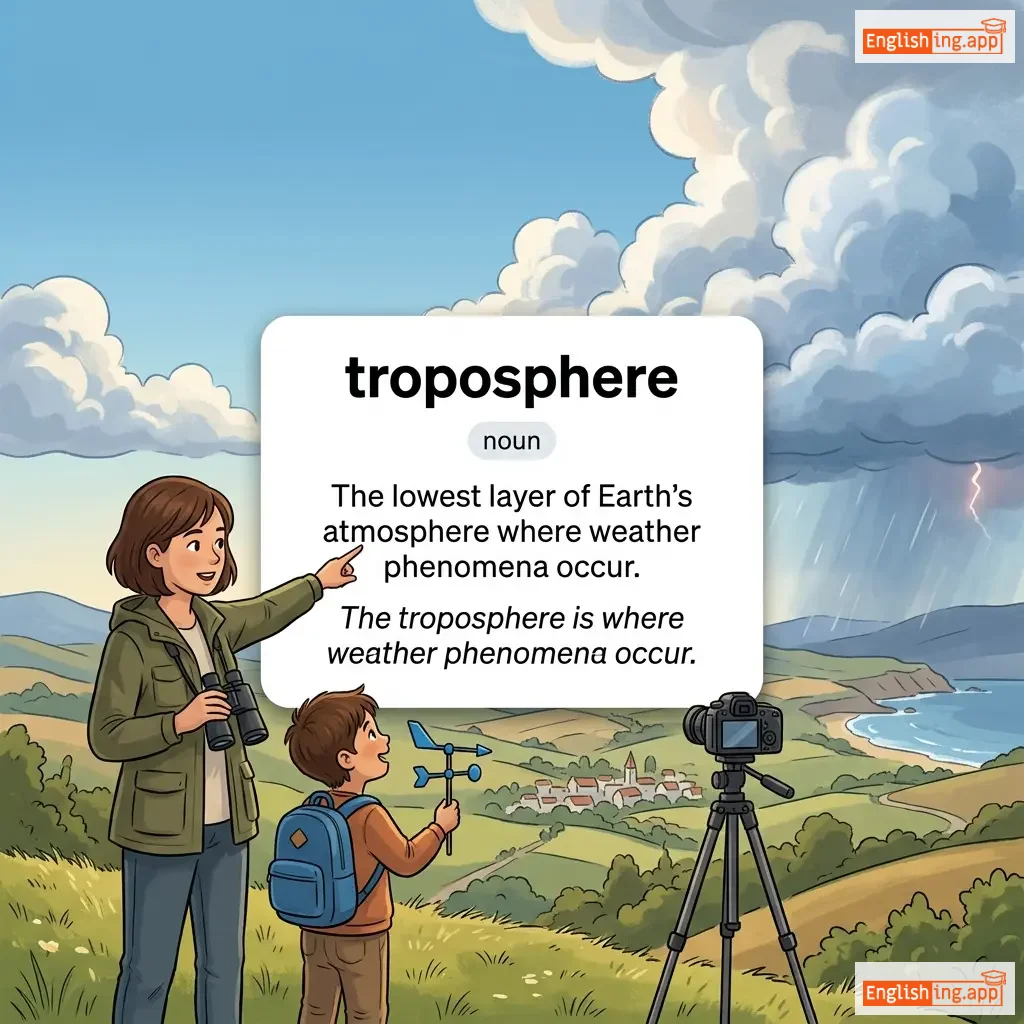
noun
ট্রোপোস্ফিয়ার
тропосфера (troposphera)

The lowest layer of Earth's atmosphere where weather phenomena occur.

"The troposphere is where weather phenomena occur."

"Тропосфера — это место, где происходят погодные явления." (Troposphera — eto mesto, gde proiskhodyat pogodnye yavleniya.)
🤵‍♀️

troth (троʊθ)

noun
/troʊθ/
обет, верность (obet, vernost)

Faith or loyalty when pledged in a solemn agreement or vow, especially in marriage.

"He pledged his troth to her before the gathering."

"Он пообещал свою верность ей перед собранием." (On poobeshchal svoyu vernost' yey pered sobraniem.)
noun
/ˈtrʌbəl/
проблема (problema)

difficulty or problems that cause distress or inconvenience

"She had a lot of trouble finding her keys."

"У нее было много проблем с поиском ключей." (U nee bylo mnogo problem s poiscom klyuchey.)
adjective
/ˈtrʌbəld/
озабоченный (ozabochennyy)

experiencing or showing distress, anxiety, or worry

"He looked deeply troubled after hearing the bad news."

"Он выглядел глубоко озабоченным после того, как услышал плохие новости." (On vyglyadel gluboko ozabochennym posle togo, kak uslyshal plokhie novosti.)
adjective
/ˈtrʌb.əl.səm/
трудный, надоедливый (trudny, nadoydeviy)

Causing difficulty, annoyance, or worry.

"The troublesome child refused to follow the rules."

"Надоедливый ребенок отказался следовать правилам." (Nadoydeviy rebenok otkazalsya sledovat' pravilam.)
noun
/trɔːf/
кормушка, низкая точка (kormushka, nizkaya tochka)

A long, narrow container from which animals eat or drink; also, a low point between waves or in business cycles.

"The cows drank water from the wooden trough."

"Коровы пили воду из деревянной кормушки." (Korovy pili vodu iz derevyannoy kormushki.)
noun
/truːp/
группа, театральная труппа (gruppa, teatral'naya truppa)

A group of dancers, actors, or performers who work together.

"The theater troupe performed brilliantly on stage."

"Театральная труппа блестяще выступила на сцене." (Teatral'naya truppa blestyashche vystupila na stsene.)
noun
/traʊt/
форель (forel)

a freshwater fish species known for its delicate flavor and often found in cold, clear waters

"Rainbow trout is popular among anglers for sport fishing."

"Радужная форель популярна среди рыболовов-спортсменов." (Raduzhnaya forel' popularna sredi rybolovov-sportsmenov.)
noun
/ˈtruː.ənt/
прогульщик (progul'shchik)

A student who stays away from school without permission.

"The teacher punished the truant for skipping class."

"Учитель наказал прогульщика за пропуск занятия." (Uchitel' nakazal progul'shchika za propusk zanyatiya.)
noun
/truːs/
перемирие (peremirie)

An agreement between enemies or opponents to stop fighting for a certain time.

"The two countries agreed to a truce after weeks of intense fighting."

"Две страны договорились о перемирии после нескольких недель интенсивных боев." (Dve strany dogovorilis o peremirii posle neskol'kikh nedel' intensivnykh boyev.)
noun
/trʌk/
грузовик (gruzovik)

a large motor vehicle for transporting goods

"The truck was loaded with boxes for the warehouse."

"Грузовик был загружен коробками для склада." (Gruzovik byl zagruzhen korobkami dlya sklada.)
verb
/ˈtrʌk.əl/
подчиняться (podchinyatsya)

To submit or yield obsequiously to someone in power.

"He refused to truckle to the demands of the corrupt officials."
"Он отказался подчиняться требованиям коррумпированных чиновников." (On otkazalsya podchinyatsya trebovaniyam korrumpirovanikh chinovnikov.)
truculence definition card — visual illustration of the meaning
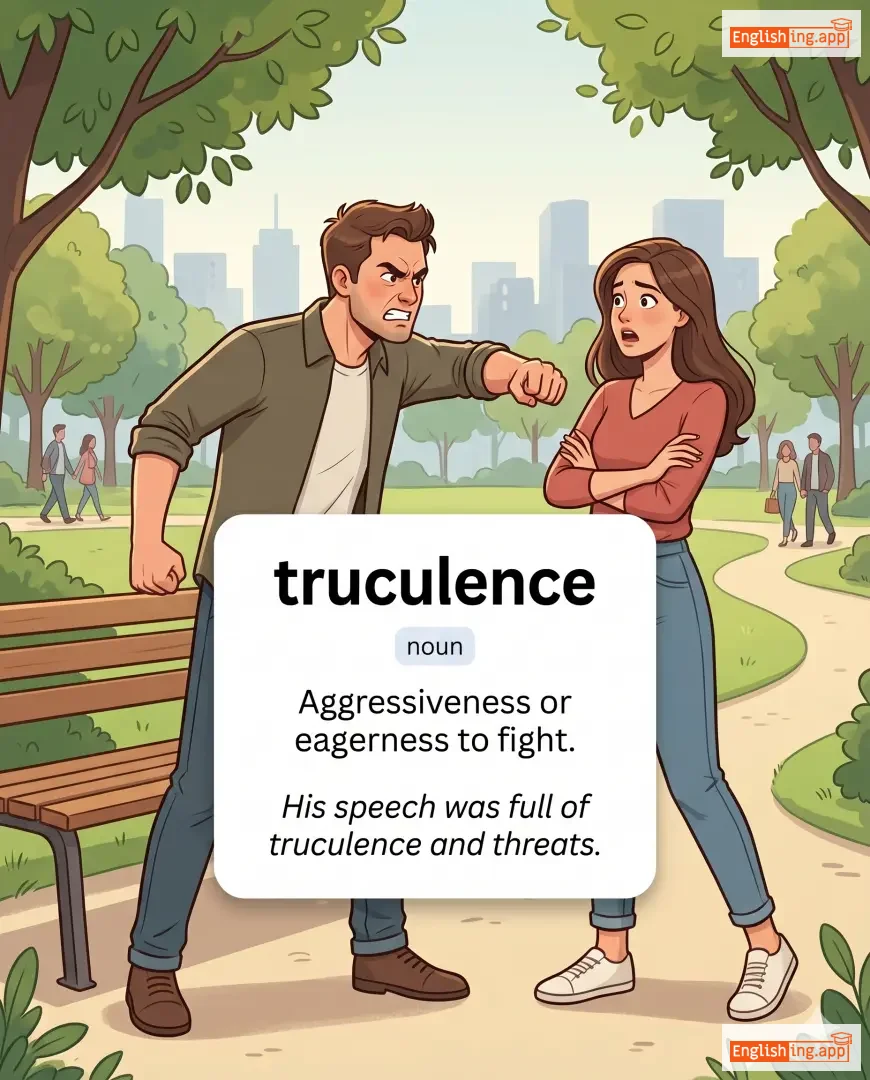
noun
/ˈtrʌk.jʊ.ləns/
агрессивность (agressivnost)

Aggressiveness or eagerness to fight.

"His speech was full of truculence and threats."

"Его речь была полна агрессивности и угроз." (Yego rech' byla polna agressivnosti i ugroz.)
adjective
/ˈtrʌk.jʊ.lənt/
агрессивный (agressivny)

Eager or quick to argue, fight, or show aggression.

"She became truculent when her ideas were challenged."

"Она стала агрессивной, когда её идеи были оспорены." (Ona stala agressivnoy, kogda yeye idei byli osporeny.)
verb
/trʌdʒ/
идти с трудом (idti s trudom)

To walk slowly and with heavy steps, typically because of exhaustion or harsh conditions.

"They had to trudge through the snow to reach the village."

"Им пришлось идти с трудом по снегу, чтобы добраться до деревни." (Im prishlos idti s trudom po snegu, chtoby dobrat'sya do derevni.)
adjective
/truː/
истинный (istinnyy)

in accordance with fact or reality; correct

"His story was true, and everyone believed him."

"Его история была правдой, и все ему поверили." (Yego istoriya byla pravdoy, i vse yemu poverili.)
true education definition card — visual illustration of the meaning
noun
truː ˌɛdjuˈkeɪʃən
настоящее образование (nastoyashchee obrazovanie)

Genuine learning that develops both mind and character.

"True education builds a noble and beautiful life."

"Настоящее образование строит благородную и красивую жизнь." (Nastoyashchee obrazovanie stroit blagorodnuyu i krasivuyu zhizn'.)
noun
/ˈtruːɪzəm/
банальная истина (banal'naya istina)

a statement that is obviously true and says nothing new or interesting

"It is a truism that hard work leads to success."

"Это банальная истина, что усердная работа ведет к успеху." (Eto banal'naya istina, chto usyerdnaya rabota vedet k uspekhu.)
adverb
/ˈtruːli/
действительно (deystvitel'no)

in a truthful, genuine, or sincere manner

"She truly believed in the power of kindness."

"Она действительно верила в силу доброты." (Ona deystvitel'no verila v silu dobrotý.)
noun
/ˈtrʌmpəri/
бессмысленная чепуха или показные, но бессмысленные вещи (bessmyslennaya chepukha ili pokaznye, no bessmyslennye veshchi)

worthless nonsense or showy but worthless things

"The speech was full of political trumpery."

"Речь была полна политической чепухи." (Rech byla polna politicheskoy chepukhi.)
noun/verb
/ˈtrʌmpɪt/

a brass musical instrument with a bright sound; to proclaim loudly

"The band played the trumpet loudly at the parade."

verb
/ˈtrʌŋkeɪt/
сокращать (sokrashchat)

to shorten something by cutting off the top or the end

"The article was truncated to fit the limited space."

"Статья была укорочена, чтобы поместиться в ограниченное пространство." (Stat'ya byla ukorachena, chtoby pomestit'sya v ogranichennoe prostranstvo.)
adjective
/ˈtrʌŋkeɪtɪd/
сокращенный (sokrashchennyi)

shortened by cutting off a part; cut short

"The meeting was truncated due to time constraints."

"Встреча была сокращена из-за ограничения по времени." (Vstrecha byla sokrashchena iz-za ogranicheniya po vremeni.)
🌳

Trunk

noun
/trʌŋk/

the main woody stem of a tree; also a large, strong container for storage or travel; the enclosed space at the back of a car

"She packed her clothes into a trunk before leaving for college."

🏗️

truss

noun
/trʌs/

a framework, typically consisting of rafters, posts, and struts, supporting a roof, bridge, or other structure

"The engineer designed a strong truss for the new bridge."

trust definition card — visual illustration of the meaning
🤝

trust

verb
/trʌst/

to believe in the reliability, truth, ability, or strength of someone or something

"I trust you to handle this situation carefully."

noun
/trʌsˈtiː/
доверенное лицо (doverennoye litso)

a person who holds or manages property or assets for the benefit of others

"She was appointed as the trustee of the family estate."

"Она была назначена доверенным лицом семейного имущества." (Ona byla naznachena doverennym litsom semeynogo imushchestva.)
adjective
/ˈtrʌst.fəl/
доверчивый; показывающий доверие к кому-либо или чему-либо (doverchivyy)

having or showing trust in someone or something; trusting

"She was too trustful and believed everything he said."

"Она была слишком доверчива и верила всему, что он сказал." (Ona byla slishkom doverchiva i verila vsemyu, chto on skazal.)
adjective
/ˈtrʌstˌwɜːrði/
надежный (nadezhny)

Able to be relied on as honest or truthful.

"She is a trustworthy friend who never lies."

"Она надежный друг, который никогда не лжет." (Ona nadezhnyy drug, kotoryy nikogda ne lzhet.)
🧭

Truth

noun
/truːθ/

the quality or state of being true; facts or reality

"The truth will always come out in the end."

adjective
/ˈtruːθfʊl/
правдивый (pravdivyy)

telling or expressing the truth; honest

"He gave a truthful account of the incident."

"Он дал правдивое описание инцидента." (On dal pravdiveye opisanie intsidenta.)
noun
/ˈtruːθ.fəl.nəs/
правдивость (pravdivost)

the quality of being truthful; honesty and accuracy in what one says or does

"Her truthfulness in the investigation helped solve the case quickly."
"Её правдивость в расследовании помогла быстро решить дело." (Yeyo pravdivost' v rassledovanii pomogla bystro reshit' delo.)
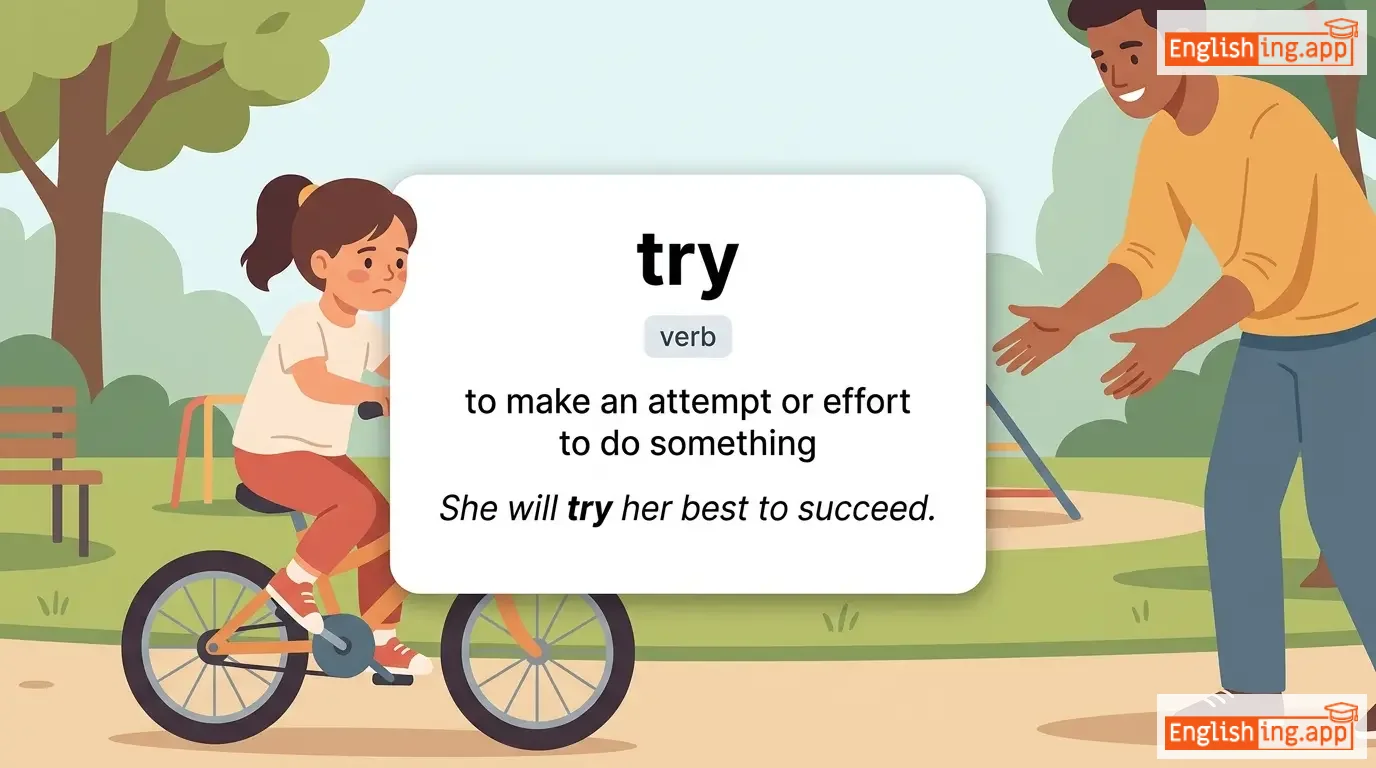
try definition card — visual illustration of the meaning
verb
/traɪ/
пытаться (pytat'sya)

to make an attempt or effort to do something

"She will try her best to succeed."

"Она попробует сделать все возможное, чтобы добиться успеха." (Ona poprobyet sdelat' vse vozmozhnoe, chtoby dobivat'sya uspekha.)
tryst definition card — visual illustration of the meaning
noun
/traɪst/
секретная встреча (sekretnaya vstrecha)

a private romantic meeting between lovers

"They arranged a secret tryst in the park."

"Они устроили секретную встречу в парке." (Oni ustroili sekretnuyu vstrechu v parke.)