Словари

Словарь английского языка | Значения слов, определения и примеры

noun
/ˌsætɪsˈfækʃən/
удовлетворение (udovletvorenie)

the feeling of being pleased or content with something

"Her satisfaction with the results was evident."

"Ее удовлетворение результатами было очевидным." (Eye udovletvorenie rezul'tatami bylo ochevidnym.)
adjective
/ˈsæt.ɪs.fæk.tər.i/
удовлетворительный (udovletvoritel'nyy)

acceptable; meeting requirements; adequate

"The test results were satisfactory."

"Результаты испытаний были удовлетворительными." (rezul'taty ispytaniy byli udovletvoritel'nymi.)
adjective
/ˈsætɪsfaɪd/
удовлетворён (udovletvorjon)

Pleased or content with what has been achieved or received.

"He felt satisfied after finishing his project."

"Он почувствовал удовлетворение после завершения своего проекта." (On pochuvstvoval udovletvorenie posle zaversheniya svoego proekta.)
satisfy definition card — visual illustration of the meaning
verb
/ˈsætɪsfaɪ/
удовлетворять (udovletvoryat)

to meet the expectations, needs, or desires of someone

"The manager's explanation satisfied all of our concerns."

"Пояснение менеджера удовлетворило все наши беспокойства." (Poyasnenie menedzhera udovletvorilo vse nashi bespokoystva.)
noun
/ˈsætræp/
сатрап (satrap)

a governor of a province in ancient Persia; also used figuratively for a subordinate ruler

"The king appointed a satrap to oversee the distant province."
"Царь назначил сатрапа для управления удаленной провинцией." (Tsar' naznachil satrapa dlya upravleniya udalennoy provintsiey.)
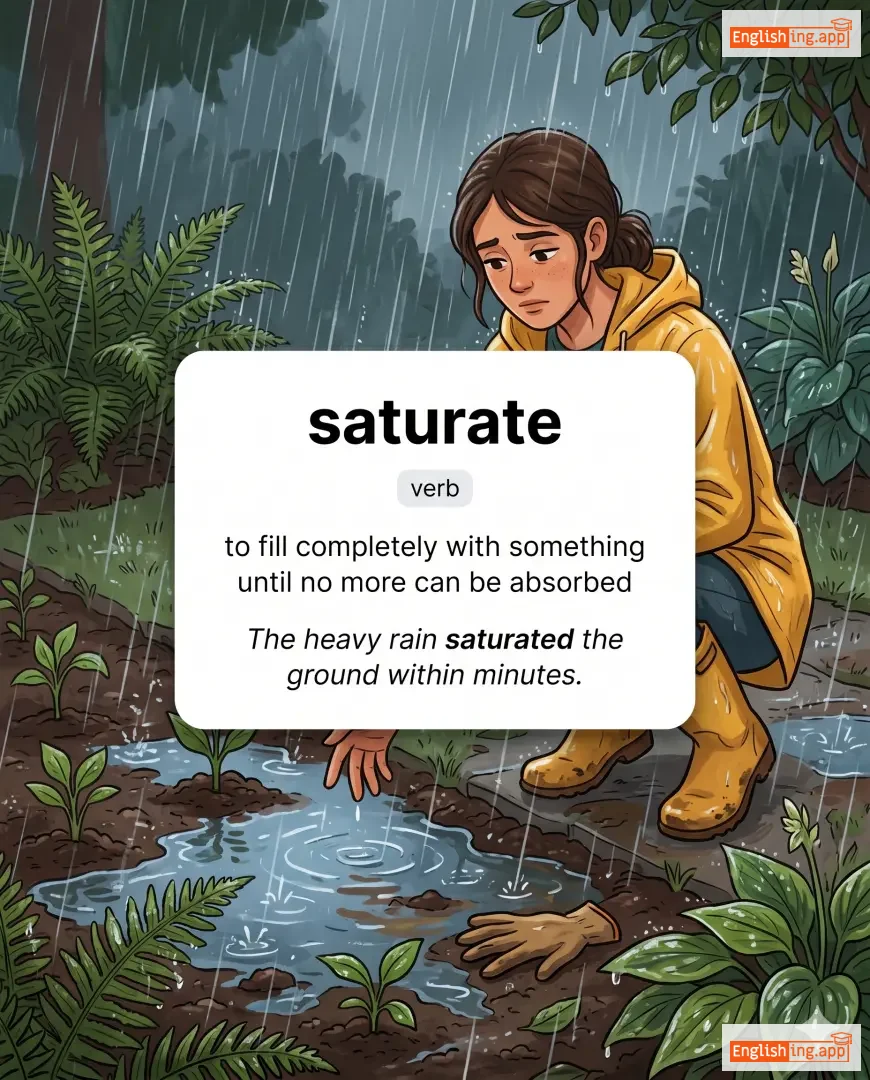
saturate definition card — visual illustration of the meaning
verb
/ˈsætʃəˌreɪt/

to fill completely with something until no more can be absorbed

"The heavy rain saturated the ground within minutes."
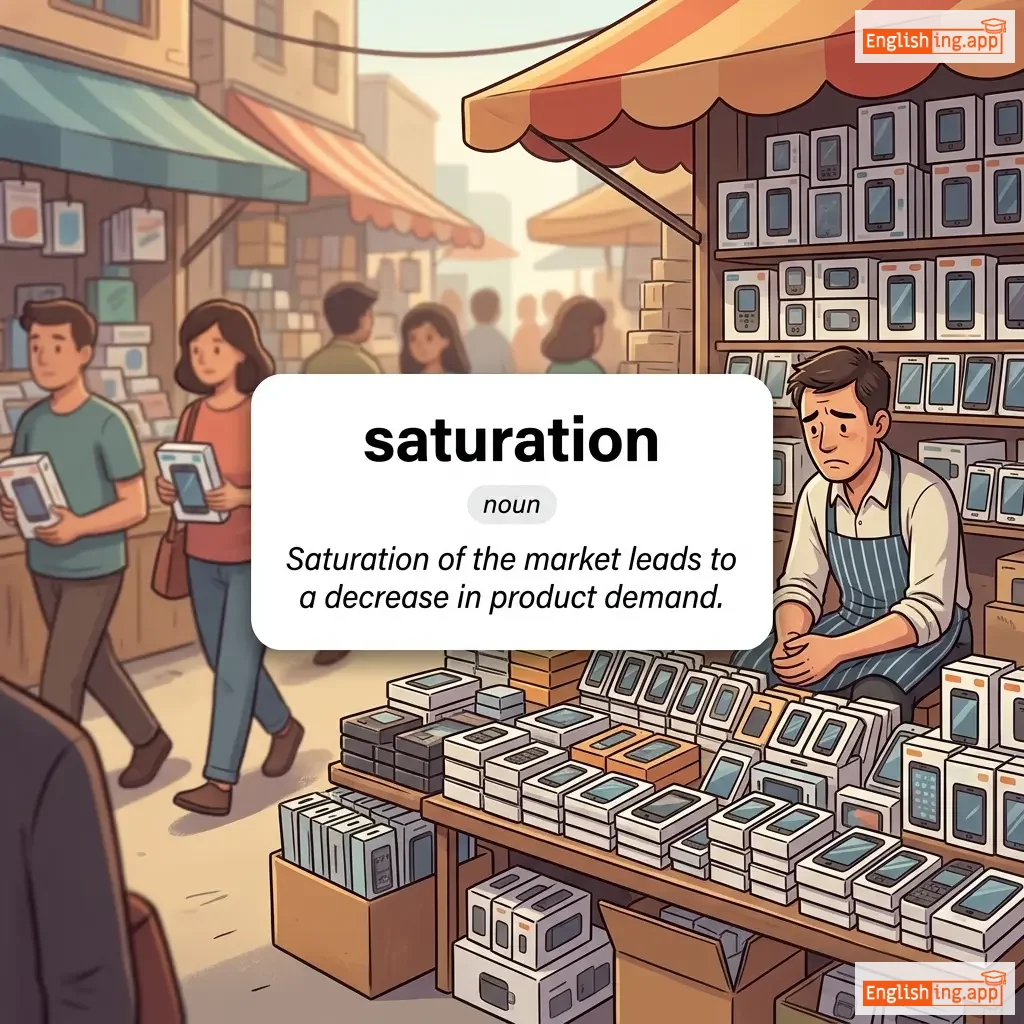
saturation definition card — visual illustration of the meaning
noun
/ˌsætʃəˈreɪʃən/
насыщение (nasyshchenie)

The state or process that occurs when no more of something can be absorbed, combined with, or added.

"Saturation of the market leads to a decrease in product demand."

"Насыщение рынка приводит к снижению спроса на продукцию." (Nasyshchenie rynka privodit k snizheniyu sprosa na produktsiyu.)
noun
/ˈsætərdeɪ/
суббота (subbota)

The day of the week between Friday and Sunday; traditionally the sixth day of the week

"We are going to the beach on Saturday."
"Мы идем на пляж в субботу." (My idem na plyazh v subbotu.)
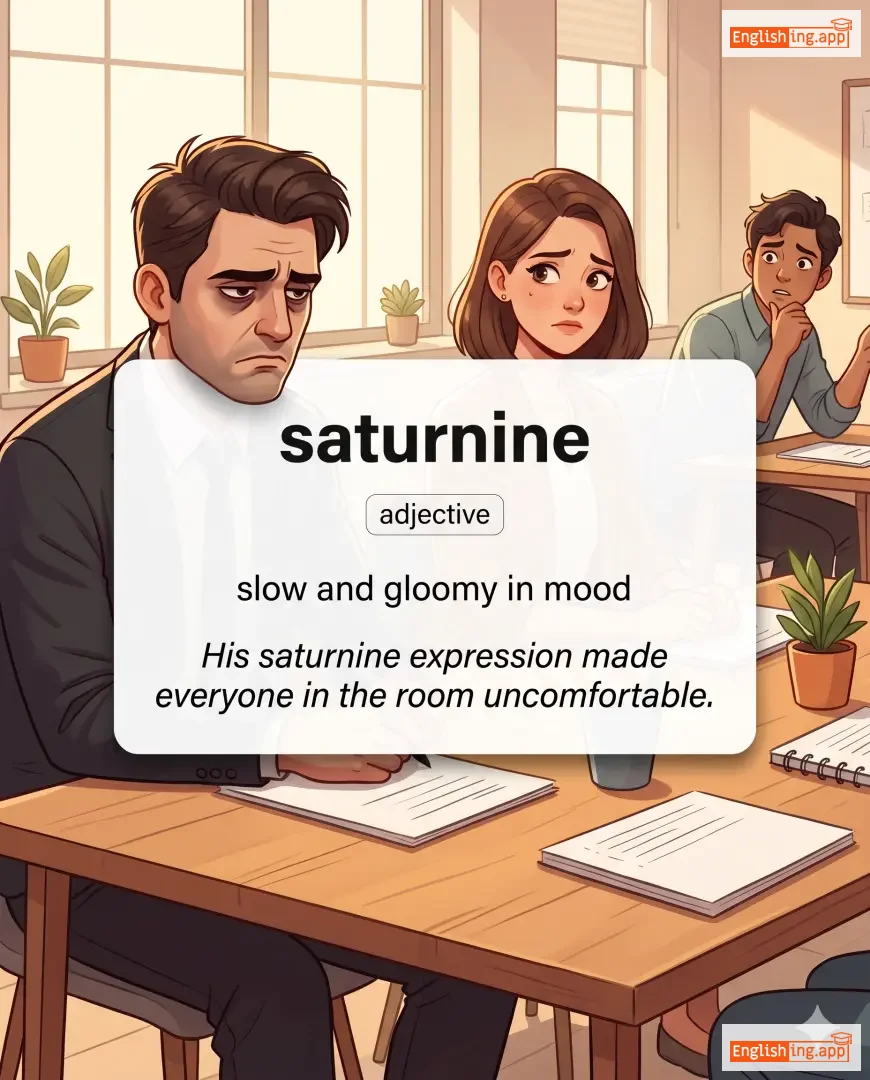
saturnine definition card — visual illustration of the meaning
adjective
/ˈsætərˌnaɪn/
сатурнинский (saturninskij)

slow and gloomy in mood

"His saturnine expression made everyone in the room uncomfortable."
"Его сатурнинское выражение заставило всех в комнате чувствовать себя неудобно." (Yego saturninskoe vyrazhenie zastavilo vsekh v komnate chuvstvovat' sebya neudobno.)
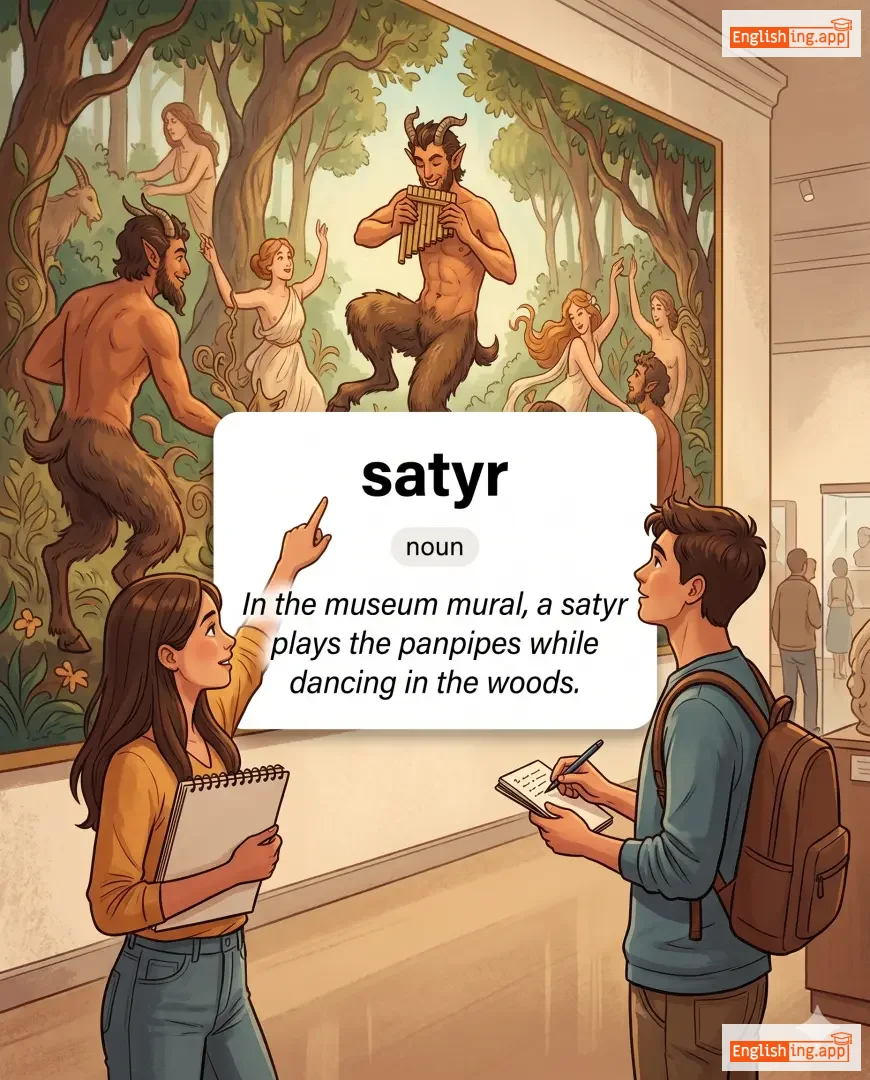
satyr definition card — visual illustration of the meaning
noun
/ˈsætər/
счастье (schastye)

a creature from Greek mythology depicted as a lustful being, often half-man and half-goat; by extension, a lecherous man

"In the museum mural, a satyr plays the panpipes while dancing in the woods."

"Она не могла скрыть свое счастье, когда получила награду." (Ona ne mogla skryt' svoe schast'ye, kogda poluchila nagradu.)
noun
/sɔːs/
соус (sous)

a liquid or semi-liquid substance used to add flavor to food

"She added some tomato sauce to the pasta."

"Она добавила немного томатного соуса в пасту." (Ona dobavila nemnogo tomatnogo sousa v pastu.)
adjective
/ˈsɔːsi/
наглый (naglyi)

Boldly rude, cheeky, or playfully disrespectful.

"The child gave a saucy reply to his teacher."

"Ребёнок дал наглый ответ своему учителю." (Rebyonok dal naglyi otvet svoemu uchitelyu.)
verb
/ˈsɔːntər/
прогуливаться (saunter)

to walk in a slow, relaxed manner without hurry or effort

"We sauntered along the riverside, stopping now and then to watch the boats."

"Мы неспешно прогуливались вдоль набережной, иногда останавливаясь, чтобы посмотреть на лодки." (My nespesno progulivalisya vdol naberezhnoy, inogda ostanavlivayas, chtoby posmotret na lodki.)
adjective
/ˈsævɪdʒ/
дикой; жестокий (dikoy; zhestokiy)

fierce, violent, or uncontrolled; cruel or brutal

"The storm brought savage winds that tore branches from the trees."

"Шторм принес дикие ветры, которые вырвали ветки с деревьев." (Shtorm prines dikie vetry, kotorye vyrvali vetki s derev'yev.)
noun
/səˈvænə/
саванна (с рассеянными деревьями) (savanna (s rasseyannymi derev'yami))

a grassy plain with scattered trees, typical of tropical and subtropical regions

"Giraffes browsed on acacia trees across the wide savanna."

"Жирафы щипали акациевые деревья на широкой саванне." (Zhirafy shchipali akatsievye derev'ya na shirokoy savanne.)
noun
/səˈvɑːnt/

a learned person, especially a distinguished scientist or scholar; sometimes used in the phrase ‘savant syndrome’ for someone with exceptional abilities alongside developmental differences

"The conference keynote was delivered by a linguistic savant who studies endangered languages."
save definition card — visual illustration of the meaning
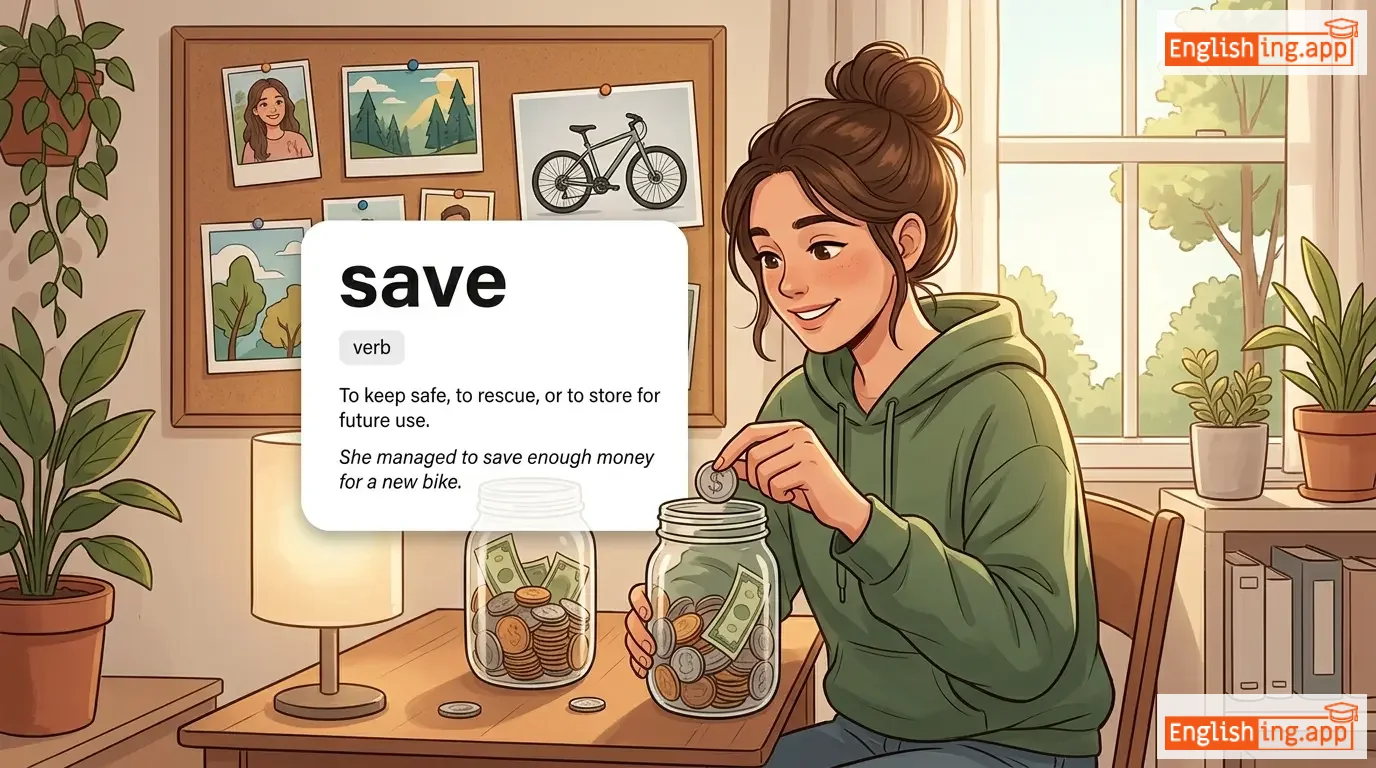
verb
/seɪv/
спасать / сохранять (spasat' / soxranjat')

To keep safe, to rescue, or to store for future use.

"She managed to save enough money for a new bike."
"Ей удалось накопить достаточно денег на новый велосипед." (Ey udalos' nakopit' dostatochno deneg na novyj velosiped.)
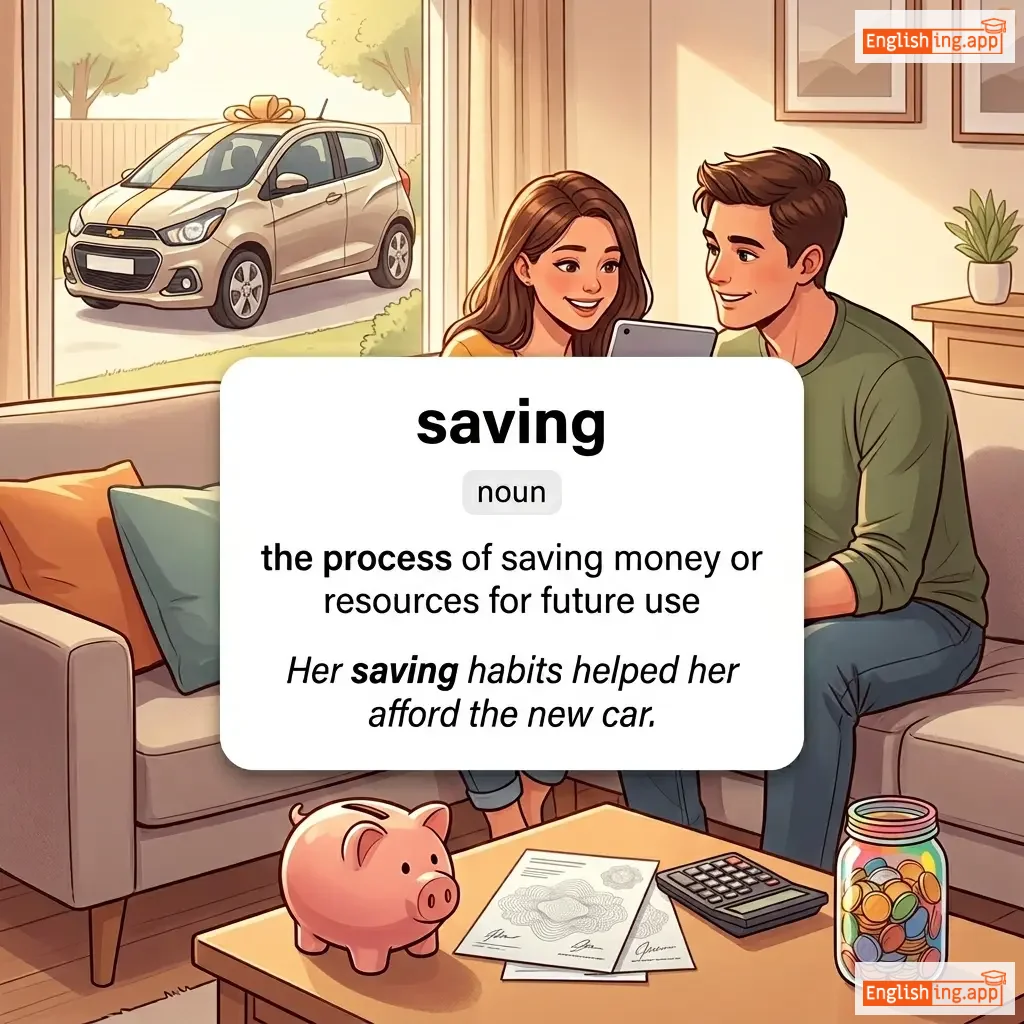
saving definition card — visual illustration of the meaning
noun
/ˈseɪvɪŋ/
сбережения (sberezheniya)

the process of saving money or resources for future use

"Her saving habits helped her afford the new car."

"Её привычка к сбережениям помогла ей купить новый автомобиль." (Eyo privychka k sberezhjajm pomogla ej kupit' novyj avtomobil')
savings definition card — visual illustration of the meaning
noun
ˈseɪ.vɪŋz
сбережения (sberezheniya)

Money that is kept for future use or investment.

"Many people invest their savings in real estate."

"Многие люди инвестируют свои сбережения в недвижимость." (Mnogie lyudi investiruyut svoi sberezheniya v nedvizhimost'.)
noun
/ˌsæv.wɑːr ˈfeər/
социальная ловкость (sotsial'naya lovkost')

The ability to act or speak appropriately in social situations; polished social skills.

"She handled the delicate situation with remarkable savoir-faire."
"Она справилась с деликатной ситуацией с замечательным savoir-faire." (Ona spravilas' s delikatnoy situatsiyey s zamechatel'nym savoir-faire.)
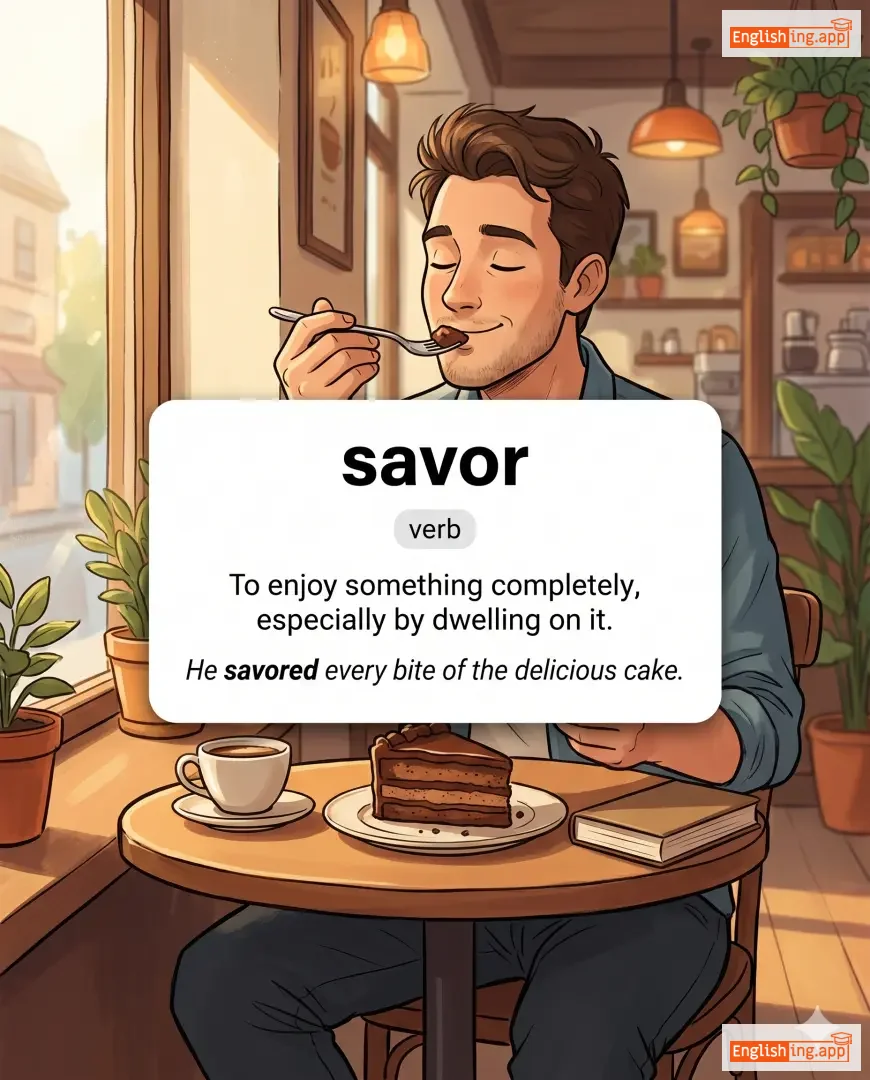
savor definition card — visual illustration of the meaning
verb
/ˈseɪ.vər/
наслаждаться (naslazhdat'sya)

To enjoy something completely, especially by dwelling on it.

"He savored every bite of the delicious cake."

"Он наслаждался каждым куском вкусного торта." (On naslazhdalsya kazhdym kuskom vkusnogo torta.)
adjective
/ˈseɪ.vər.i/
вкусный (соленый или острый) (vkusny (soleny ili ostryy))

Having a pleasant salty or spicy taste; morally acceptable.

"The restaurant serves a variety of savory dishes."

"Ресторан предлагает разнообразные вкусные блюда." (Restoran predlagaet raznoobraznye vkusnye blyuda.)
adjective
/ˈsæv.i/
умный, ловкий (umnyy, lovkiy)

Having practical knowledge and the ability to make good judgments.

"She is a tech-savvy entrepreneur."
"Она - предприниматель с хорошими техническими знаниями." (Ona - predprinimatel' s khoroshimi tekhnicheskimi znaniyami.)
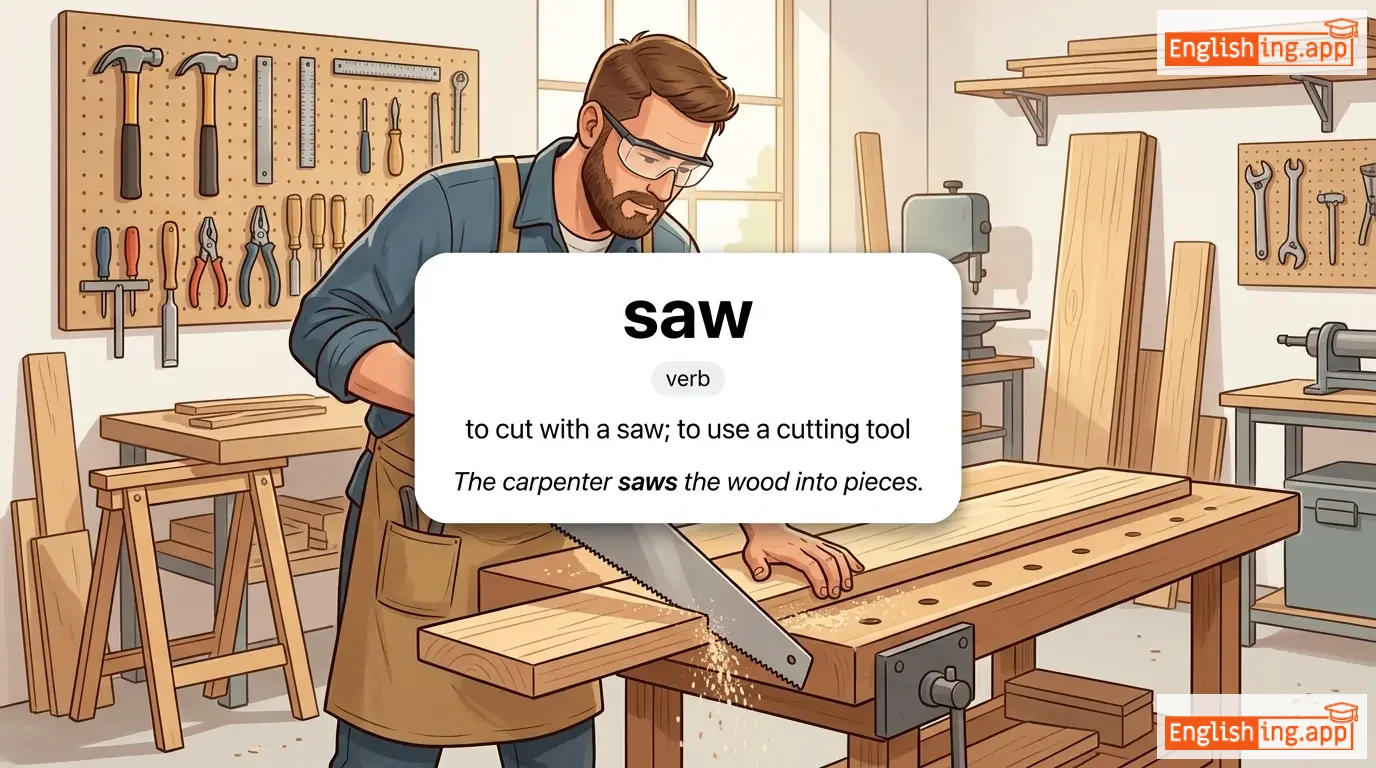
saw definition card — visual illustration of the meaning
noun
/sɔː/
пила (pila)

a tool with a sharp blade used for cutting wood or other materials

"He used a saw to cut the wooden plank."

"Он использовал пилу, чтобы нарезать деревянную доску." (On ispol'zoval pilu, chtoby narezaty derevyannuyu dosku.)
noun
/ˈsɔː.dər/
подхалимство; льстивые речи (podkhalimstvo; lstitvie rechi)

flattering or wheedling talk; soft soap

"His sawder couldn't convince anyone of his sincerity."

"Его подхалимство не могло убедить никого в его искренности." (Ego podkhalimstvo ne moglo ubedit nikogo v ego iskrennosti.)
noun
/ˈsɔː.dʌst/
опилки (opilki)

The tiny particles of wood produced by sawing or sanding.

"The floor was covered with sawdust from the carpentry work."

"Пол был покрыт опилками от плотницких работ." (Pol byl pokryt opilkami ot plotnitskikh rabot.)
noun
/ˈsɔːjər/
плотник (plotnik)

a person who saws wood, especially as an occupation

"The skilled sawyer cut the logs into planks."

"Опытный плотник нарезал бревна на доски." (Opytniy plotnik narezhal brevna na doski)
noun
/ˈsæksəfoʊn/
саксофон (saksofon)

a wind musical instrument with a curved metal body and a single reed mouthpiece

"The jazz musician played a beautiful solo on his saxophone."

"Джазовый музыкант сыграл прекрасное соло на своем саксофоне." (Dzhazovyy muzykant sygral prekrasnoe solo na svoem saksafone.)
say definition card — visual illustration of the meaning
verb
/seɪ/
сказать (skazat)

to speak words or express thoughts aloud

"She asked him to say hello to her parents."

"Она попросила его передать привет её родителям." (Ona poprosila ego peredat' privet yeyo roditelyam.)
noun
/ˈseɪ.ɪŋ/
пословица (poslovitsa)

a well-known phrase that expresses something true about life; a proverb

"There's an old saying that practice makes perfect."

"Есть старая пословица, что практика приводит к совершенству." (Yest' staraya poslovitsa, chto praktika prikhodit k sovershenstvu.)
noun
/ˈskæb.ərd/
ножны (nozhny)

A sheath for the blade of a sword or dagger, typically made of leather or metal.

"The knight drew his sword from the scabbard."

"Рыцарь вытащил меч из ножен." (Rytsar' vytashchil mech iz nozhny.)
noun
/ˈskeɪ.biːz/
чесотка (chesotka)

a contagious skin disease caused by mites that causes intense itching

"The doctor diagnosed him with scabies after examining the rash."

"Доктор поставил диагноз чесотка после осмотра сыпи." (Doktor postavil diagnoz chesotka posle osmotra sypi.)
noun
/skæd/
скэд рыба (sked ryba)

A type of fish of the jack family; also informally means a large number or quantity.

"The fisherman caught a scad in the net."

"Рыбак поймал скэд в сети." (Rybak poymal sked v seti.)
noun (plural, informal)
/skædz/
кучи (kuchi)

A large number or quantity of something (informal).

"She has scads of friends in the city."

"У нее много друзей в городе." (U nee mnogo druzey v gorode.)
noun
/ˈskæf.əʊld/
лесa (lesa)

A temporary platform used to support workers and materials during the construction or repair of a building.

"The workers stood on the scaffold to paint the building."

"Рабочие стояли на лесах, чтобы покрасить здание." (Rabochie stoyali na lesakh, chtoby pokrasit' zdanie.)
scalability definition card — visual illustration of the meaning
noun
/ˌskeɪ.ləˈbɪl.ə.ti/
масштабируемость (masshtabiruemost)

The ability to expand to larger scales while maintaining efficiency

"The startup focused on scalability to handle future growth."

"Стартап сосредоточился на масштабируемости, чтобы справиться с будущим ростом." (Startap sosredotochilsya na masshtabiruemosti, chtoby spravitsya s budushchim rostem.)
noun/verb
/skeɪl/
масштаб / увеличение размера (mashtab / uvelichenie razmera)

A system of ordered marks used for measurement; also means to climb or to adjust in size.

"The company plans to scale its operations globally."

"Компания планирует расширить свои операции на глобальном уровне." (Kompaniya planirovat rasshirit' svoi operatsii na global'nom urovne.)
noun
/ˈskælpəl/
скальпель (skalpel)

A small and extremely sharp bladed instrument used for surgery and dissection.

"The surgeon carefully used a scalpel to make the first incision."

"Хирург осторожно использовал скальпель, чтобы сделать первый разрез." (Khirurg ostorozhno ispol'zoval skalpel', chtoby sdelat' pervyy razrez.)
adjective
/ˈskeɪ.li/
чешуйчатый (cheshuychaty)

covered with scales; having a rough surface like scales

"The fish has scaly skin."

"У рыбы чешуйчатая кожа." (U ryby cheshuychataya kozha.)
verb
/skæn/
счастье (schastye)

To look at something carefully or quickly; to digitally copy or capture an image or document.

"She scanned the document before sending it by email."

"Она не могла скрыть свое счастье, когда получила награду." (Ona ne mogla skryt' svoe schast'ye, kogda poluchila nagradu.)
noun
/ˈskændəl/
скандал (skandal)

an event or action that causes public outrage or damage to one's reputation

"The politician's affair became a public scandal."

"Роман политика стал общественным скандалом." (Roman politika stal obshchestvennym skandalom.)
adjective
/skænt/
скудный (skudnyy)

Barely sufficient or inadequate in amount, degree, or quantity.

"There was scant evidence to support the claim."

"Было мало доказательств для поддержки утверждения." (Bylo malo dokazahtel'stv dlya podderzhki utverzhdeniya.)
adjective
/ˈskænti/
бедный (bednyy)

Small in quantity; insufficient or meager.

"The refugees survived on scanty food supplies."

"Беженцы выжили на скудных запасах пищи." (Bezhen'tsy vyzhili na skudnykh zapasakh pishchi.)
noun
/ˈskeɪpˌɡoʊt/
козел отпущения (kozel otpushcheniya)

A person who is unfairly blamed for problems, mistakes, or faults of others.

"He became the scapegoat for the company’s financial troubles."

"Он стал козлом отпущения за финансовые проблемы компании." (On stal kozlom otpushcheniya za finansovye problemy kompanii.)
noun
/skɑːr/
шрам (shram)

a mark left on the skin after a wound has healed; lasting emotional damage

"The accident left a permanent scar on his forehead."

"Авария оставила постоянный шрам на его лбу." (Avariya ostavila postoyannyy shram na ego lbu.)
adjective
/skɛərs/
дефицитный (defitsitnyy)

insufficient in quantity; hard to find

"Water was scarce during the long drought."

"Вода была дефицитной во время долгой засухи." (Voda byla defitsitnoy vo vremya dolgoy zasukhi.)
adverb
/ˈskeəs.li/
едва; едва ли; только что (yedva; yedva li; tol'ko chto)

hardly; barely; only just

"I could scarcely believe my eyes."
"Я едва мог поверить своим глазам." (Ya yedva mog poverit' svoim glazam.)
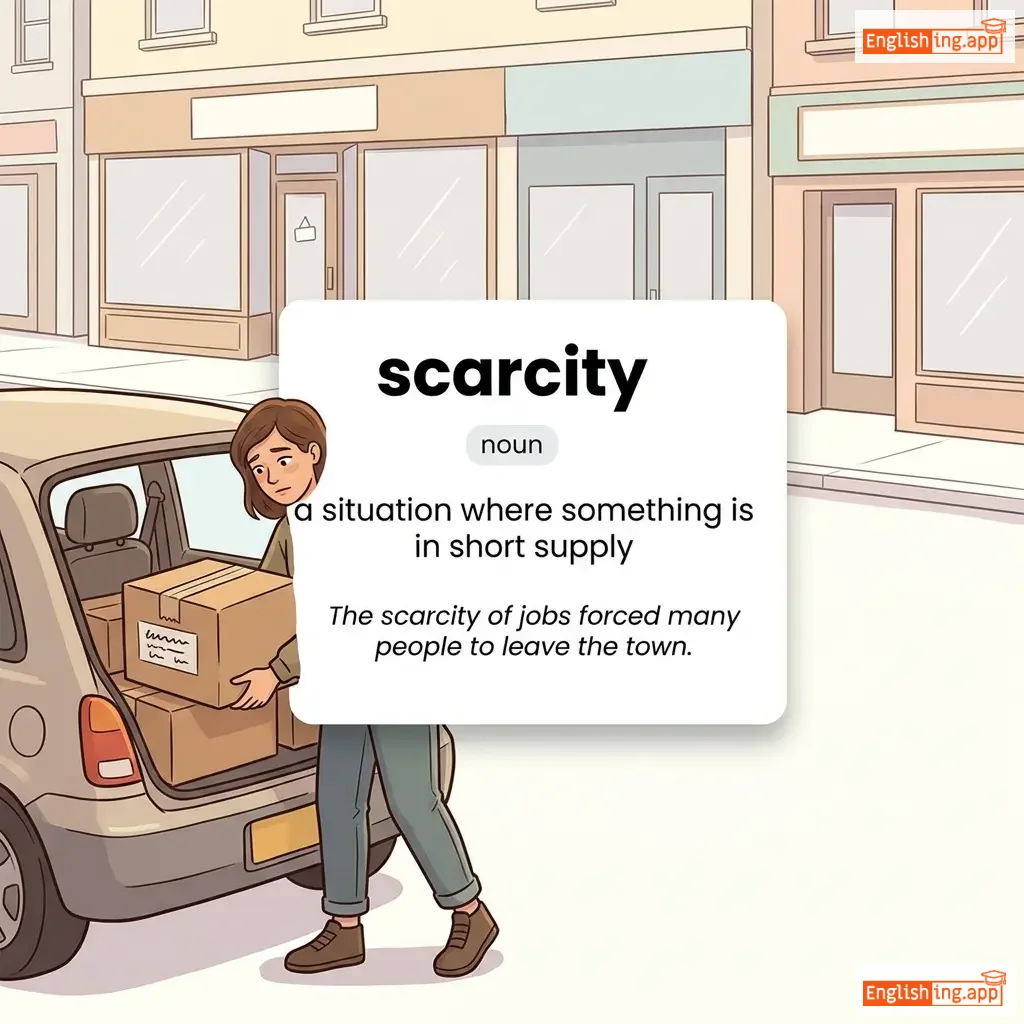
scarcity definition card — visual illustration of the meaning
noun
/ˈskɛərsəti/
дефицит (defitsit)

a situation where something is in short supply

"The scarcity of jobs forced many people to leave the town."

"Дефицит рабочих мест заставил многих людей покинуть город." (Defitsit rabochikh mest zastavil mnogikh lyudey pokinut' gorod.)
verb
/skeər/
ispugat' (ispugat')

to frighten someone or make them feel afraid

"The loud noise scared the baby."

"Gromkij zvuk ispugnul rebyonka." (Gromkij zvuk ispugnul rebyonka.)
adjective
/skɛrd/
напуганный (napuganny)

feeling afraid or worried

"She was scared of the dark."

"Она боялась темноты." (Ona boyalas' temnoty.)