Словари

Словарь английского языка | Значения слов, определения и примеры

adjective
/rɪˈɡret.ə.bəl/
печальный; прискорбный; досадный (pechal'nyy; priskorbnyy; dosadnyy)

causing or deserving regret; unfortunate; deplorable

"It is regrettable that so many talented people left the company."

"Жаль, что так много талантливых людей покинули компанию." (Zhal', chto tak mnogo talantlivykh lyudey pokinuli kompaniyu.)
adjective
/ˈrɛɡjələr/
регулярный (regulyarnyy)

Happening at fixed intervals; usual or normal in pattern or quality

"He is a regular visitor to the library."

"Он регулярный посетитель библиотеки." (On regulyarnyy posetitel' biblioteki.)
noun
/ˌreɡ.jʊˈlær.ɪ.ti/
регулярность (regulyarnost)

the quality of being regular; occurring at fixed intervals or in a consistent pattern

"The regularity of his exercise routine helped him stay healthy."

"Регулярность его тренировочного расписания помогла ему оставаться здоровым." (Regulyarnost' ego trenirovochnogo raspisaniya pomogla yemu ostavat'sya zdorovym)
adverb
/ˈrɛɡjələrli/
регулярно (regulyarno)

at regular intervals; in a regular manner

"She exercises regularly to stay healthy."
"Она регулярно занимается спортом, чтобы оставаться здоровой." (Ona regulyarno zanimaetsya sportom, chtoby ostavat'sya zdorovoy.)
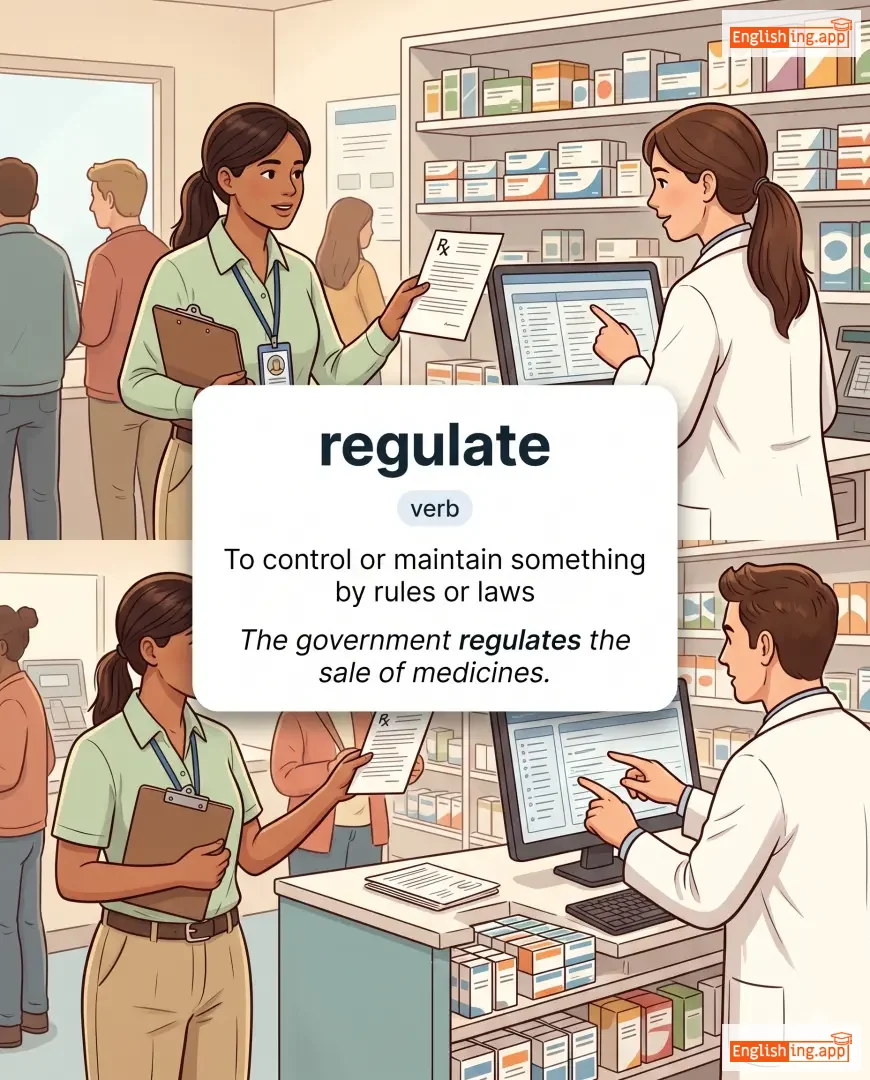
regulate definition card — visual illustration of the meaning
verb
/ˈrɛɡjʊˌleɪt/
регулировать (regulirovat)

To control or maintain something by rules or laws

"The government regulates the sale of medicines."
"Правительство регулирует продажу медикаментов." (Pravitel'stvo reguliruet prodazhu medikamentov.)
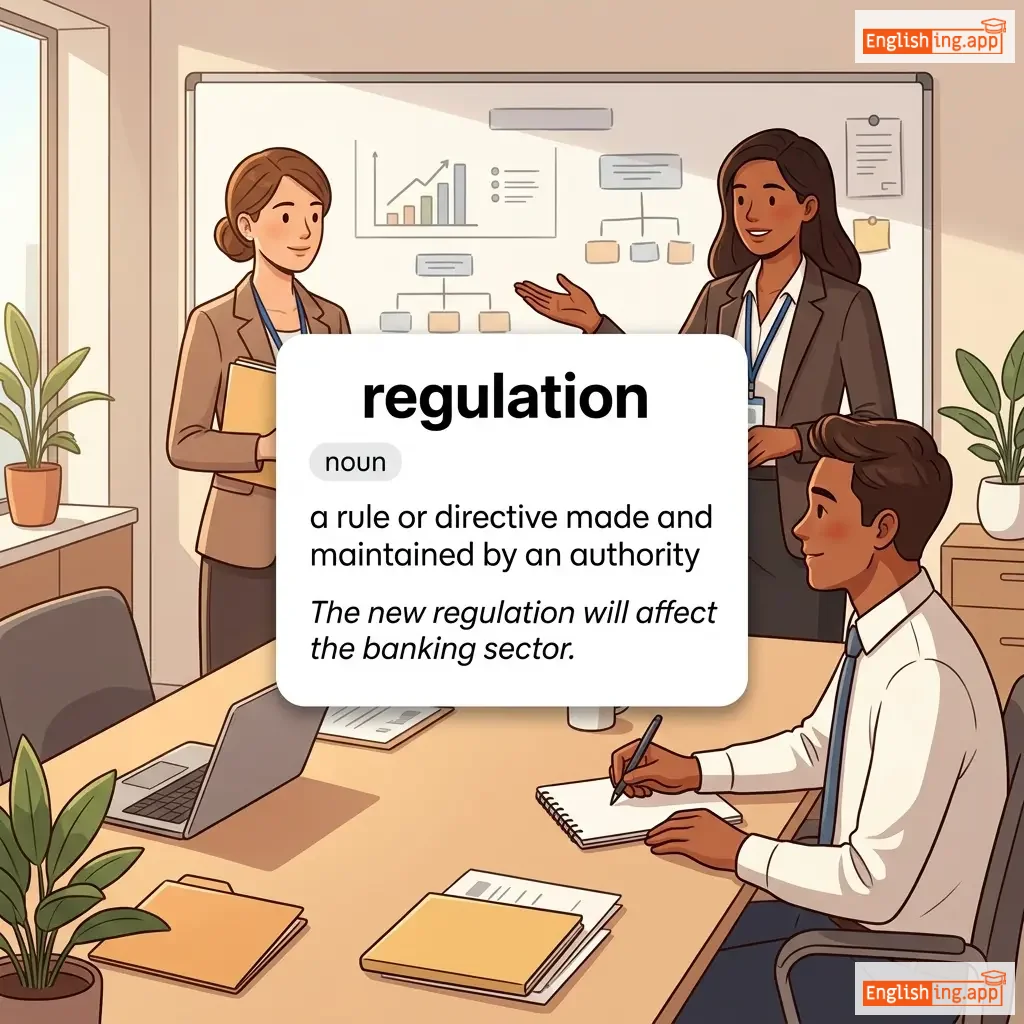
regulation definition card — visual illustration of the meaning
noun
/ˌrɛɡjuˈleɪʃən/
регламент (reglament)

a rule or directive made and maintained by an authority

"The new regulation will affect the banking sector."
"Новый регламент повлияет на банковский сектор." (Novyy reglament povliyaet na bankovskiy sektor.)
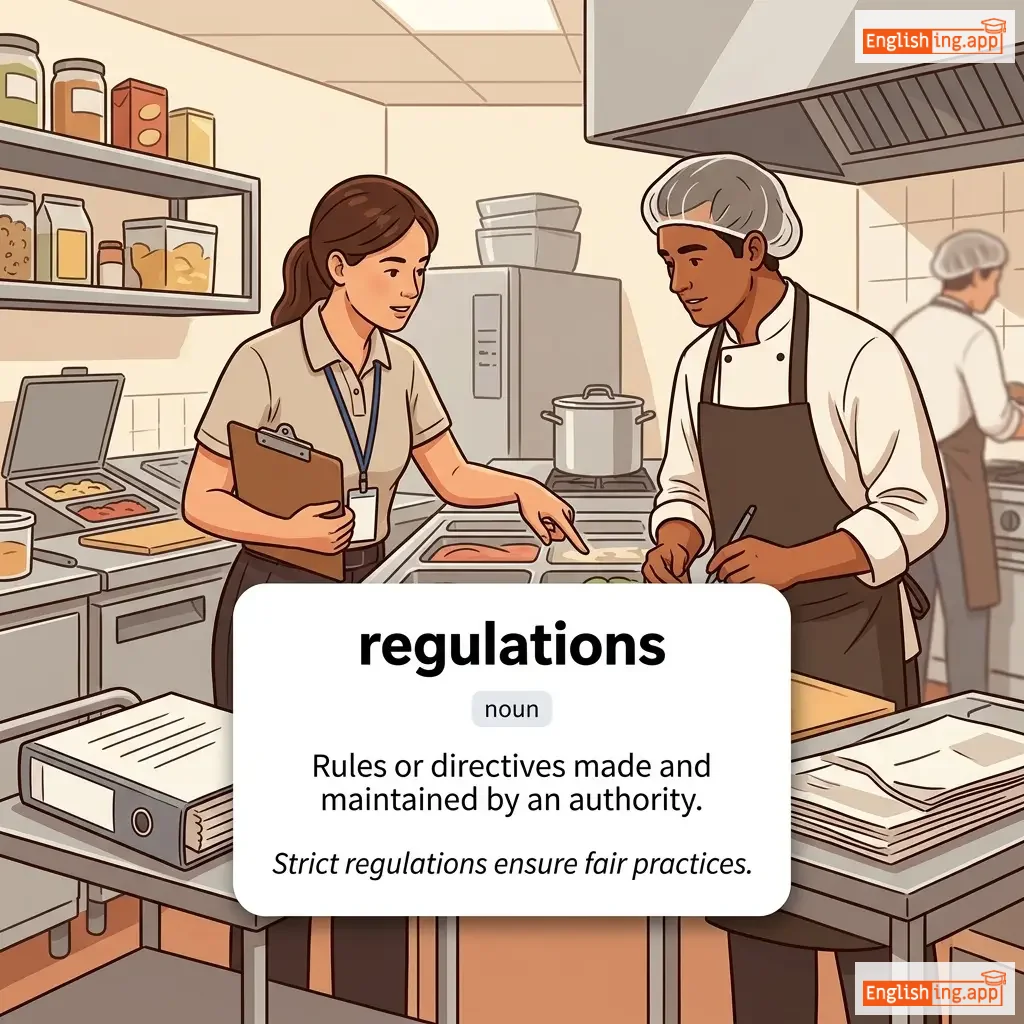
regulations definition card — visual illustration of the meaning
noun
/ˌreɡ.jʊˈleɪ.ʃənz/
регулирования (regulirovaniya)

Rules or directives made and maintained by an authority.

"Strict regulations ensure fair practices."

"Строгие правила обеспечивают справедливые практики." (Strogiye pravila obespechivayut spravedlivye praktiki.)
noun
/ˈrɛɡjəleɪtər/
регулятор (regulyator)

a person or device that controls or maintains the operation of a system

"The government appointed a new regulator for the financial sector."

"Правительство назначило нового регулятора для финансового сектора." (Pravitel'stvo naznachilo novogo regulyatora dlya finansovogo sektora.)
Regulatory definition card — visual illustration of the meaning
adjective
/ˈrɛɡjʊlətɔːri/
регулирующий (reguliruyushchiy)

relating to the rules or laws made by an authority to control an activity or process

"The company must comply with all regulatory requirements before launching the product."

"Компания должна выполнить все регулирующие требования перед запуском продукта." (Kompaniya dolzhna vypolnit' vse reguliruyushchie trebovaniya pered zapuskom produkta.)
verb
/ˌriːhəˈbɪlɪteɪt/
реабилитировать (reabilitirovat)

to restore someone to health, normal life, or a good condition after illness, injury, or imprisonment

"The clinic helps rehabilitate injured athletes."

"Клиника помогает реабилитировать травмированных спортсменов." (Klinika pomogaet reabilitirovat' travmirovannykh sportsmenov.)
noun
/ˌriːhəˌbɪlɪˈteɪʃən/
счастье (schastye)

the process of restoring someone or something to health or normal life through training or therapy

"After the accident, he went through months of rehabilitation to walk again."

"Она не смогла скрыть свое счастье, когда получила награду." (Ona ne smogla skryt' svoyo schast'ye, kogda poluchila nagradu.)
noun
/rɪˈhɜːrsəl/
репетиция (repetitsiya)

a practice or trial performance of a play, music, or other work for later public performance

"The actors had a final rehearsal before the play."

"Актёры провели финальную репетицию перед спектаклем." (Aktyory proveli final'nuyu repetitsiyu pered spektaklem.)
verb, noun
/reɪn/
царствовать (tsarstvovat)

to rule as a king or queen; the period during which a sovereign rules

"Queen Elizabeth II reigned for many decades."

"Королева Елизавета II правила в течение многих десятилетий." (Koroleva Yelizaveta II pravila v techeniye mnogikh desyatiletiy.)
verb
/ˌriːɪmˈbɜːrs/
возмещать (vozmeshchat)

to pay back money to someone who has spent it or lost it

"The company reimbursed him for travel expenses."

"Компания возместила ему расходы на поездку." (Kompaniya vozmestila emu raskhody na poezdku.)
🐎

rein

noun/verb
/reɪn/

A strap used to control a horse; to control or guide something.

"The rider pulled the rein to stop the horse."

noun
/ˈreɪn.dɪər/
северный олень (severnyy olen')

a large deer with branched horns that lives in cold northern areas

"Santa's reindeer pulled his sleigh across the sky."
"Рождественский олень Санты вез его сани по небу." (Rozhdestvenskiy olen' Santi vez ego sani po nebu)
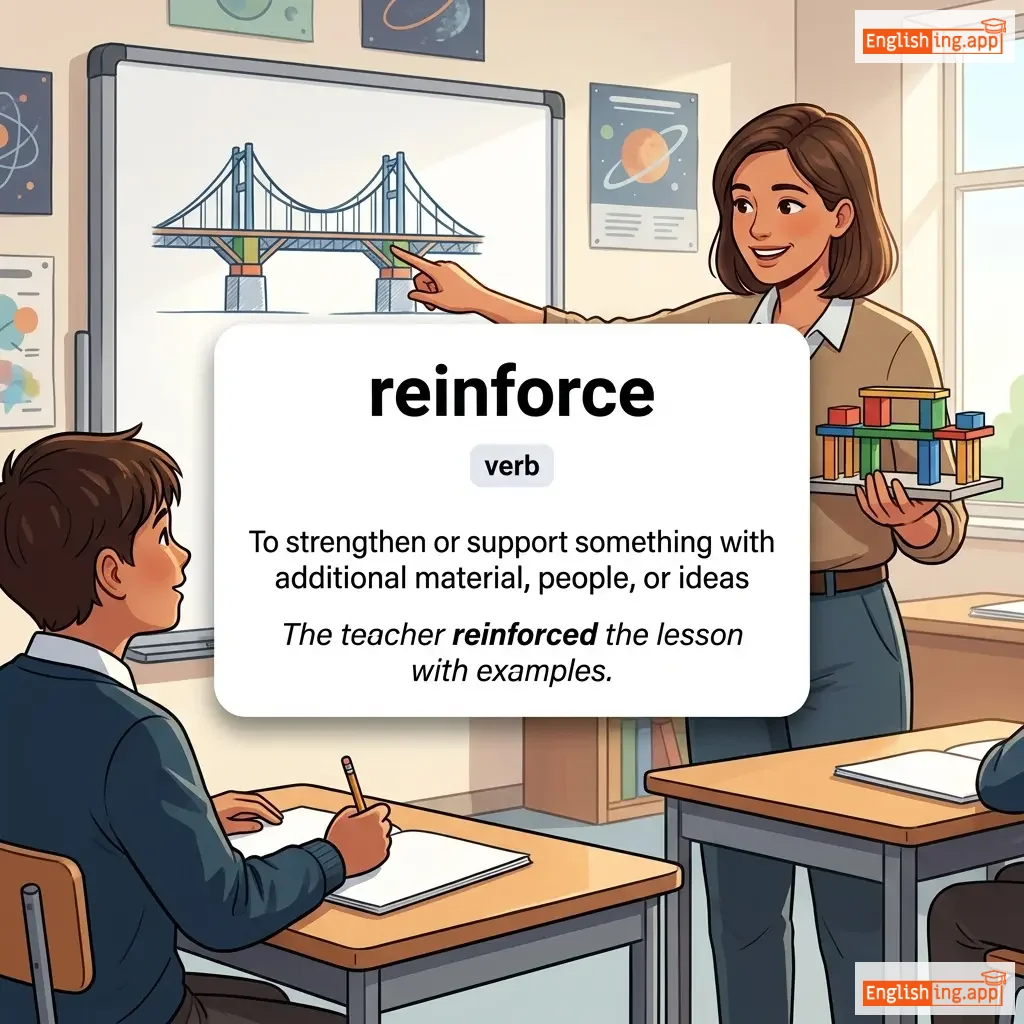
reinforce definition card — visual illustration of the meaning
verb
/ˌriːɪnˈfɔːrs/
усиливать (usilivat)

To strengthen or support something with additional material, people, or ideas

"The teacher reinforced the lesson with examples."
"Учитель укрепил урок с примерами." (Uchitel' ukrepil urok s primerami.)
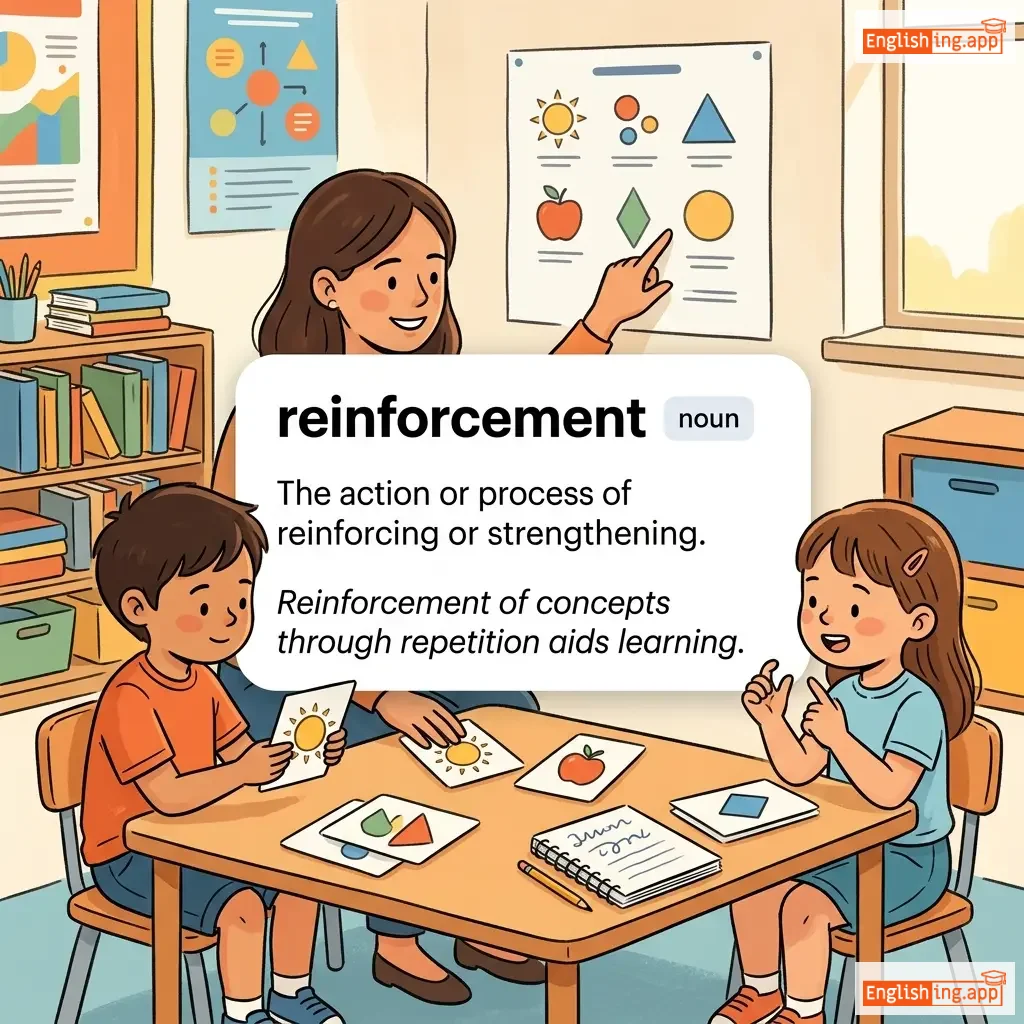
reinforcement definition card — visual illustration of the meaning
noun
ˌriː.ɪnˈfɔːrs.mənt
усиление или укрепление (usilenie ili ukreplenie)

The action or process of reinforcing or strengthening.

"Reinforcement of concepts through repetition aids learning."

"Укрепление концепций через повторение помогает обучению." (Ukreplenie kontseptsiy cherez povtorenie pomogaet obucheniu.)
verb
/ˌriːɪnˈsteɪt/
восстановить (vosstanovit)

To restore someone or something to their former position or condition.

"The company decided to reinstate the suspended employee."

"Компания решила восстановить приостановленного сотрудника." (Kompaniya reshila vosstanovit priostanovlennogo sotrudnika.)
verb
/ˌriːɪnˈtɪɡreɪt/
реинтегрировать (reintegrirovat)

To bring someone or something back into a group or society after being separated.

"The program helps prisoners reintegrate into society."

"Программа помогает заключённым реинтегрироваться в общество." (Programma pomogaet zaklyuchyonnym reintegrirvatsya v obshchestvo.)
verb
/riˈɪtəreɪt/
повторять (povtoryat)

To say something again or repeatedly for emphasis or clarity.

"The teacher reiterated the importance of honesty."
"Учитель повторил важность честности." (Uchitel' povtoril vazhnost' chestnosti.)
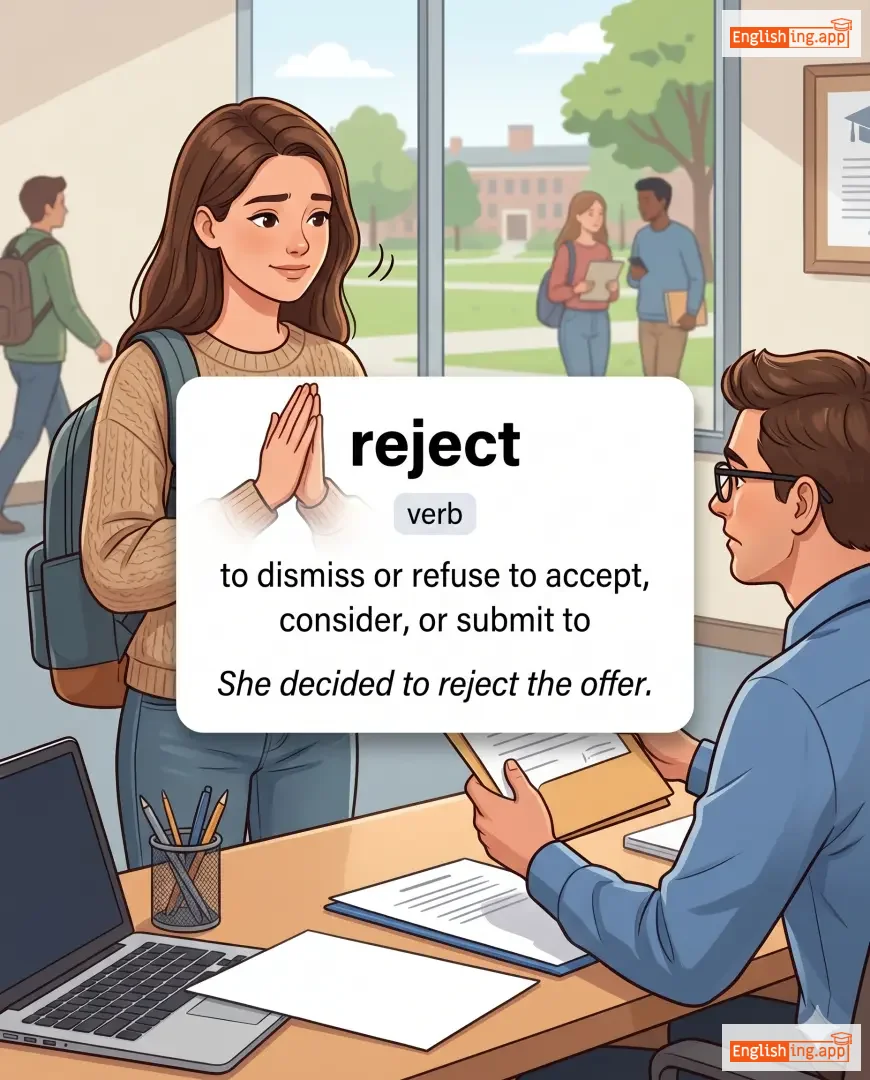
reject definition card — visual illustration of the meaning
verb
/rɪˈdʒɛkt/
отклонять (otklonyat')

to dismiss or refuse to accept, consider, or submit to

"She decided to reject the offer."

"Она решила отклонить предложение." (Ona reshilá otklonit' predlozheniye.)
noun
/rɪˈdʒɛkʃən/
отказ (otkaz)

the action of refusing or dismissing something or someone

"Her rejection of the offer surprised everyone."

"Её отказ от предложения удивил всех." (Yeyo otkaz ot predlozheniya udivil vsekh.)
verb
/rɪˈdʒɔɪs/
радоваться (radovatsya)

To feel or show great joy or delight.

"The fans rejoiced after their team won the championship."

"Фанаты радовались после того, как их команда выиграла чемпионат." (Fanaty radovalis' posle togo, kak ikh komanda vyigrala chempionat.)
noun
/rɪˈdʒɔɪsɪŋ/
радость (radost)

The action of showing great joy or happiness

"There was much rejoicing after the victory."

"После победы было много радости." (Posle pobedy bylo mnogo radosti.)
verb
/riˈdʒɔɪn/
воссоединиться (vossoedinitsya)

to join again or return to a group, place, or activity

"After a short break, she decided to rejoin the team."

"После короткого перерыва она решила вернуться в команду." (Posle korotkogo pereryva ona reshila vernut'sya v komandu.)
noun
/rɪˈdʒɔɪndər/
ответ (otvet)

a quick or witty reply; a response to a remark or argument

"His sharp rejoinder silenced the crowd."
"Его резкий ответ заставил толпу замолчать." (Ego rezkiy otvet zastavil tolpu zamoletchay.)
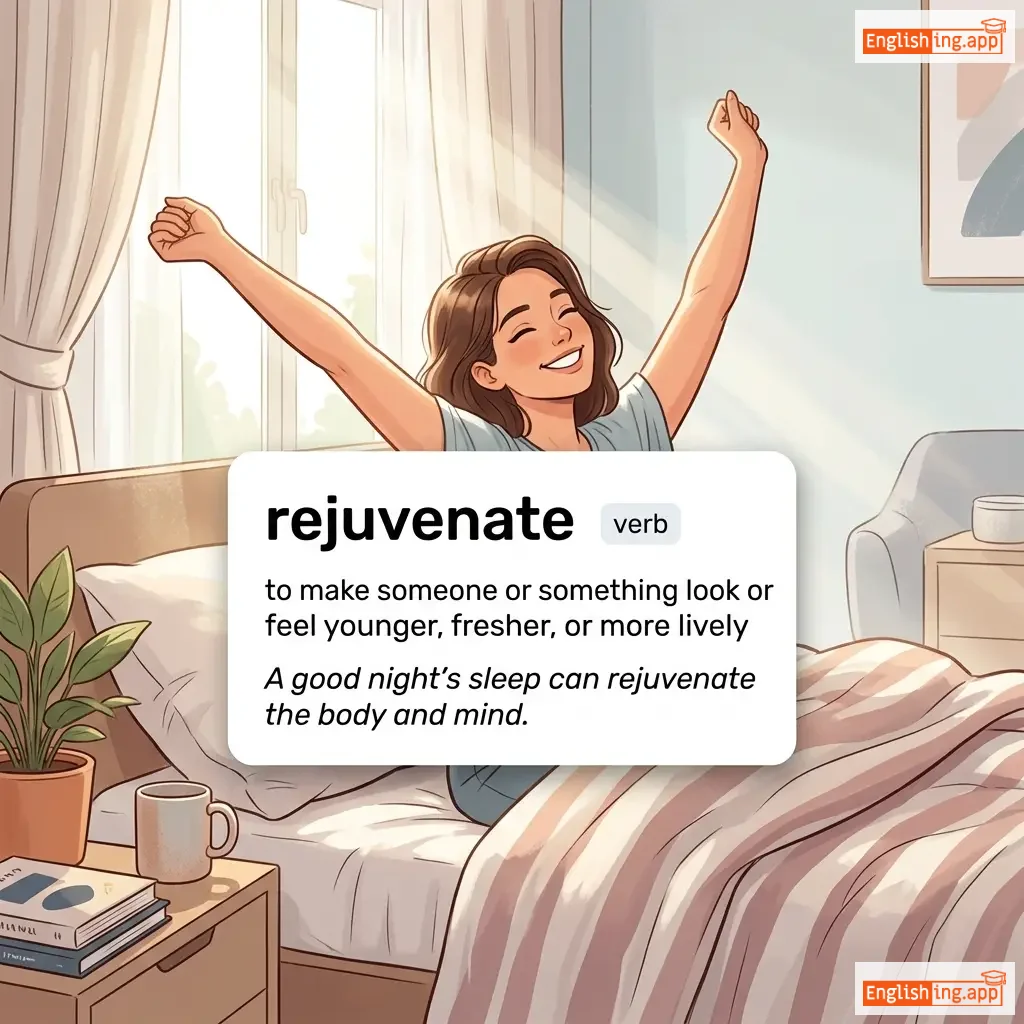
rejuvenate definition card — visual illustration of the meaning
verb
/rɪˈdʒuːvəˌneɪt/
омолодить (omolodit)

to make someone or something look or feel younger, fresher, or more lively

"A good night's sleep can rejuvenate the body and mind."
"Хороший ночной сон может омолодить тело и разум." (Khoroshiy nochnoy son mozhet omolodit telo i razum.)
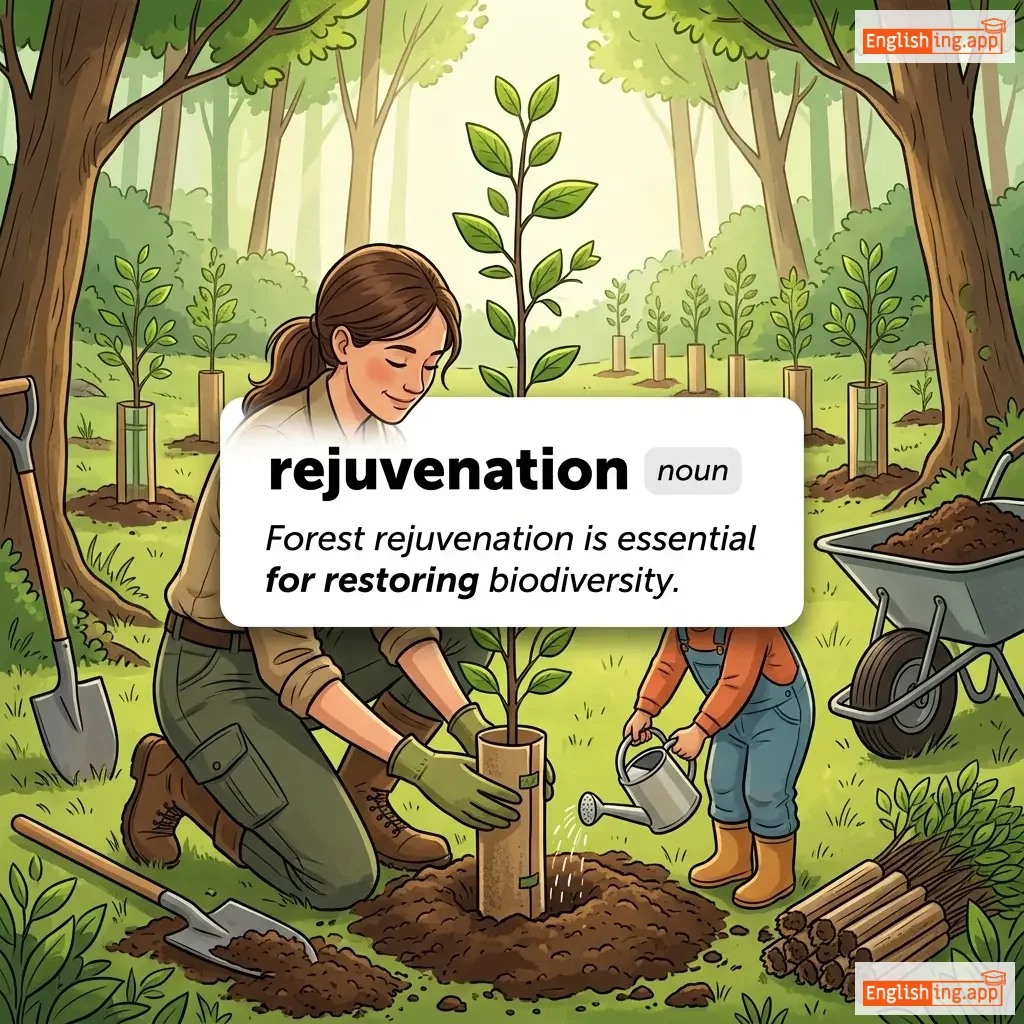
rejuvenation definition card — visual illustration of the meaning
noun
rɪˌdʒuː.vɪˈneɪ.ʃən
омоложение (omolozhenie)

The action or process of making someone or something look or feel better, younger, or more vital.

"Forest rejuvenation is essential for restoring biodiversity."

"Омоложение лесов необходимо для восстановления биологического разнообразия." (Omolozhenie lesov neobkhodimo dlya vosstanovleniya biologicheskogo raznoobraziya.)
noun
/rɪˌdʒuːvəˈnɛsəns/
омоложение (omolozhenie)

the action or process of becoming young or fresh again

"The forest showed signs of rejuvenescence after the rains."

"Лес показал признаки омоложения после дождей." (Les pokazal priznakim omolozheniya posle dozhdey.)
noun/verb
/rɪˈlæps/
рецидив (retsidiv)

to return to a worse condition, especially after improvement; a deterioration after recovery

"After months of progress, he suffered a relapse."

"После месяцев прогресса он пережил рецидив." (Posle mesyatsev progressa on perezhil retsidiv.)
verb
/rɪˈleɪt/
связывать (svyazyvat)

to show or make a connection between things or people

"She could relate to his feelings of loss."

"Она могла понять его чувства утраты." (Ona mogla ponyat ego chuvstva utraty.)
adjective
/rɪˈleɪtɪd/
связанный (svyazannyy)

connected or associated with something else

"The documents are all related to the same project."

"Документы все связаны с одним и тем же проектом." (Dokumenty vse svyazany s odnim i tem zhe proyektom.)
noun
/rɪˈleɪʃən/
отношения (otnosheniya)

the way in which two or more concepts, objects, or people are connected

"Their relation has always been one of mutual respect."

"Их отношения всегда были основаны на взаимном уважении." (Ih otnosheniya vsegda byli osnovany na vzaimnom uvazhenii.)
noun
/rɪˈleɪʃənʃɪp/
отношения (otnosheniya)

the state of being connected or involved with someone or something in a significant way

"They have a strong, supportive relationship."

"У них крепкие, поддерживающие отношения." (U nikh krepkie, podderzhivayushchie otnosheniya.)
👨‍👩‍👧‍👦

Relative (рэлэйтив)

noun
/ˈrɛlətɪv/
родственник (rodstvennik)

a person who is part of your family

"He invited his close relatives to the wedding."

"Он пригласил своих близких родственников на свадьбу." (On priglasil svoikh blizkikh rodstvennikov na svad'bu.)
adverb
/ˈrɛlətɪvli/
относительно (otnositel'no)

in comparison with something else

"The task was relatively easy compared to others."
"Задача была относительно легкой по сравнению с другими." (Zadacha byla otnositel'no legkoy po sravneniyu s drugimi.)
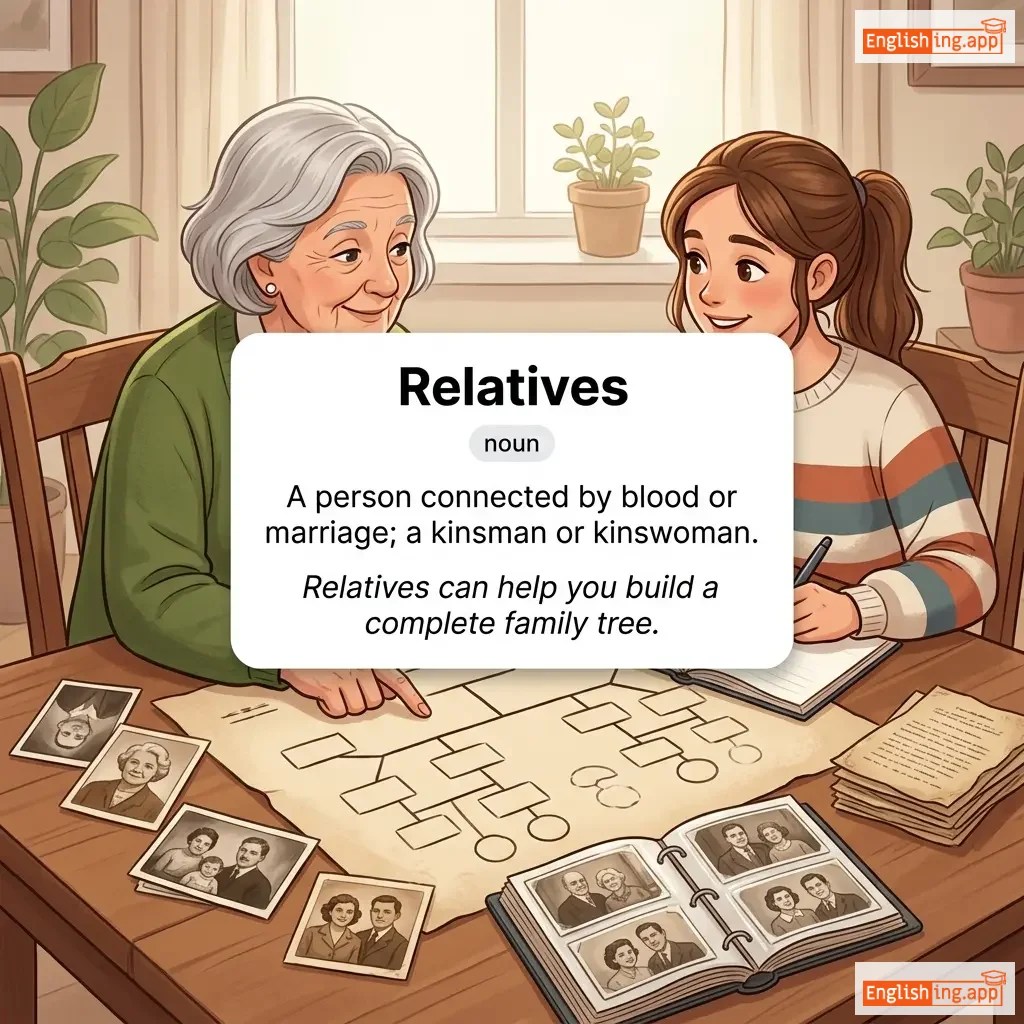
Relatives definition card — visual illustration of the meaning
👨‍👩‍👧‍👦

Relatives (рела́тивс)

noun
ˈrɛlətɪvz
родственники (rodtvenniki)

A person connected by blood or marriage; a kinsman or kinswoman.

"Relatives can help you build a complete family tree."

"Родственники могут помочь вам построить полный родословный древо." (Rodstvenniki mogut pomoch' vam postroit' polnoe rodoslovnoe drevo.)
verb
/rɪˈlæks/
расслабляться (rasslablyatsya)

to make or become less tense or anxious; to rest

"After a long day, she likes to relax with a good book."

"После долгого дня ей нравится расслабляться с хорошей книгой." (Posle dolgogo dnya yey nravitsya rasslablyat'sya s khoroshiyey knigoy.)
adjective
/rɪˈlækst/
расслабленный (rasslablennyi)

free from tension or stress; calm and comfortable

"She felt relaxed after listening to soft music."

"Она чувствовала себя расслабленной после спокойной музыки." (Ona chuvstvovala sebya rasslablennoy posle spokoinoy muzyki)
release definition card — visual illustration of the meaning
verb
/rɪˈliːs/
выпуск, релиз (vypusk, reliz)

to set free, to make available, or to allow something to go out

"The company will release the new product next month."
"Компания выпустит новый продукт в следующем месяце." (Kompaniya vypustit novyy produkt v sleduyushchem mesyatse.)
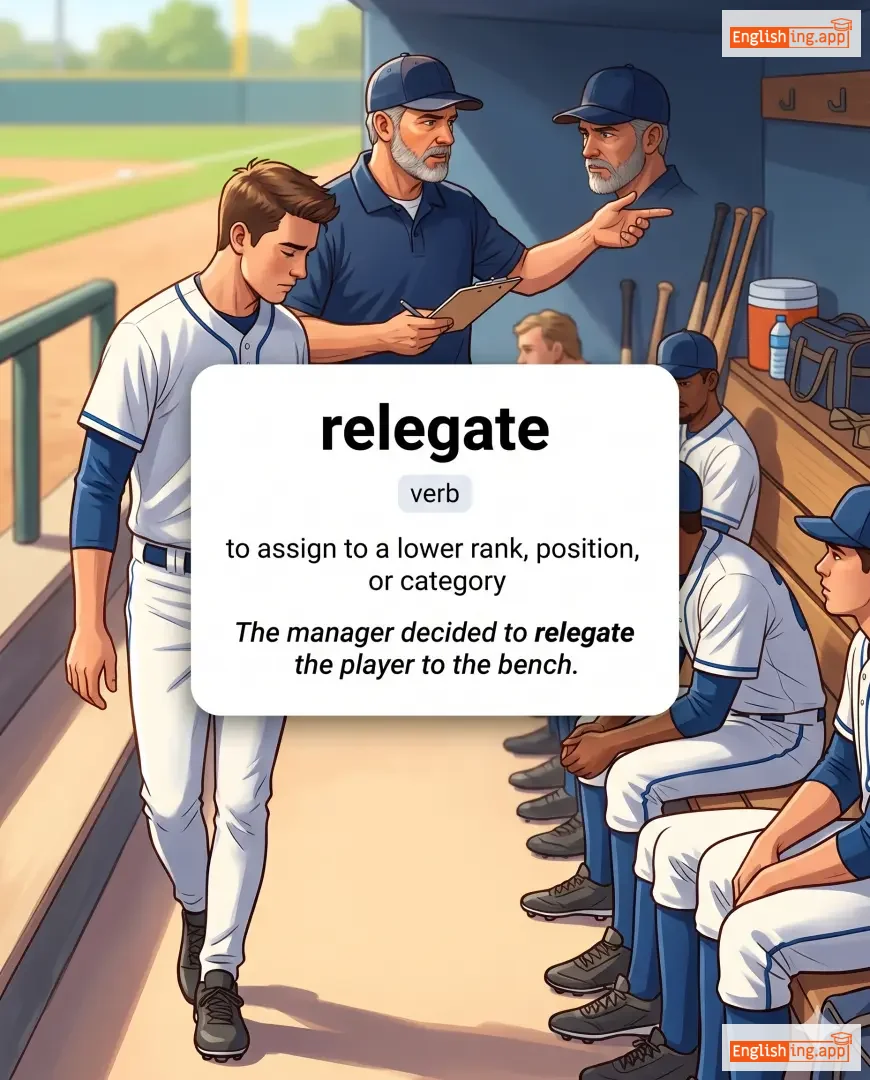
relegate definition card — visual illustration of the meaning
verb
/ˈrɛlɪɡeɪt/
религировать (religirovat)

to assign to a lower rank, position, or category

"The manager decided to relegate the player to the bench."

"Менеджер решил религировать игрока на скамейку запасных." (Menedzher reshil religirovat' igroka na skameyku zapasnykh.)
verb
/rɪˈlɛnt/
уступать, становиться мягче (ustupat, stanovitsya myagche)

to become less severe, harsh, or strict

"After hours of begging, she finally relented."
"После часов мольбы она наконец уступила." (Posle chasov mol'by ona nakonec ustupila.)
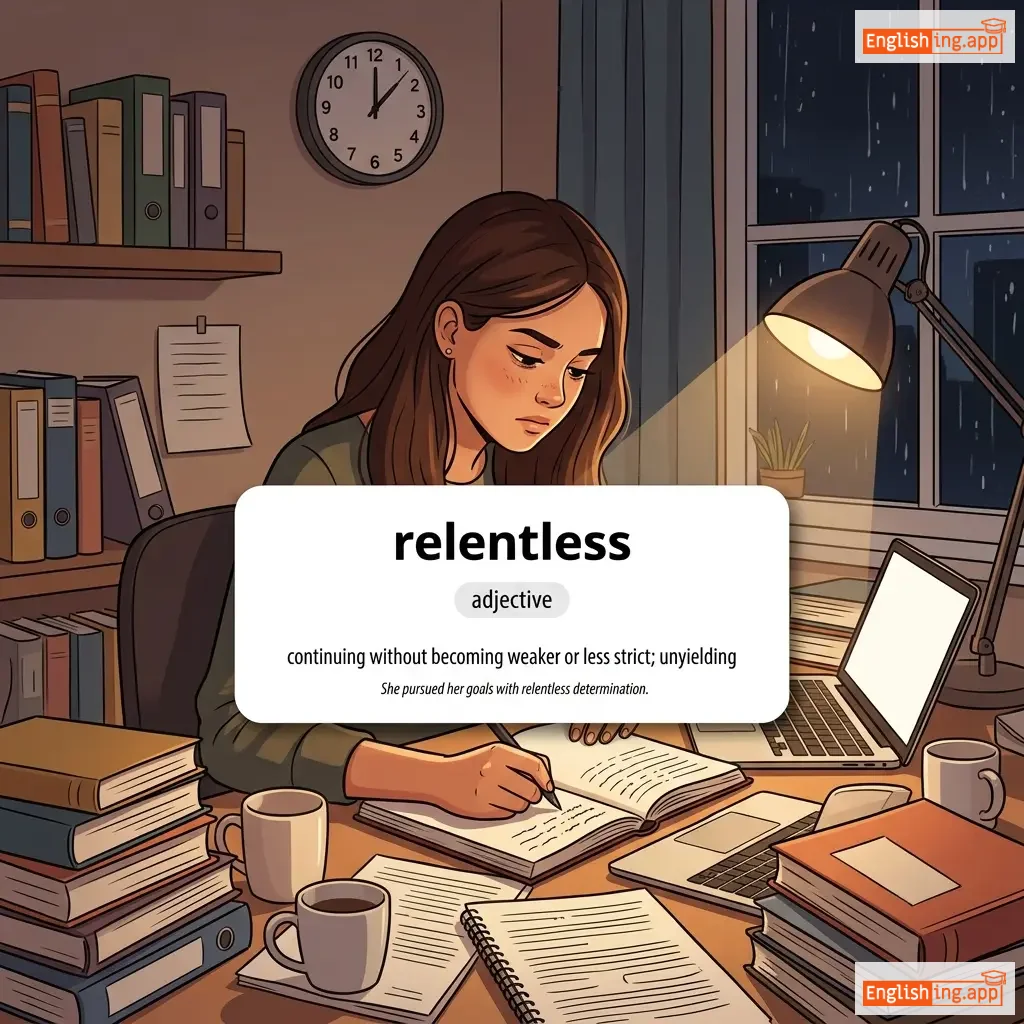
relentless definition card — visual illustration of the meaning
adjective
/rɪˈlɛntləs/

continuing without becoming weaker or less strict; unyielding

"She pursued her goals with relentless determination."

noun
/ˈrɛlɪvəns/
актуальность (aktual'nost')

the quality or state of being closely connected or appropriate

"The relevance of the information was clear to everyone."

"Актуальность информации была очевидна для всех." (Aktual'nost' informatsii byla ochevidna dlya vsekh.)
noun
/ˈrɛlɪvənsi/
релевантность (relevatnost)

the quality of being closely connected or appropriate

"The professor questioned the relevancy of the example to the topic."

"Профессор поставил под сомнение релевантность примера для темы." (Professor postavil pod somnenie relevatnost' primera dlya temy.)
adjective
/ˈrɛl.ə.vənt/
релевантный (relevantny)

closely connected or appropriate to what is being considered or done

"Your comments are not relevant to the discussion."

"Ваши комментарии не имеют отношения к обсуждению." (Vashi kommentarii ne imeyut otnosheniya k obsuzhdeniyu.)
noun
/rɪˌlaɪəˈbɪləti/
надежность (nadezhnost)

the quality of being trustworthy or performing consistently well

"Customers value the reliability of our service."
"Клиенты ценят надежность нашего сервиса." (Klienty tsenyat nadezhnost' nashego servisa.)
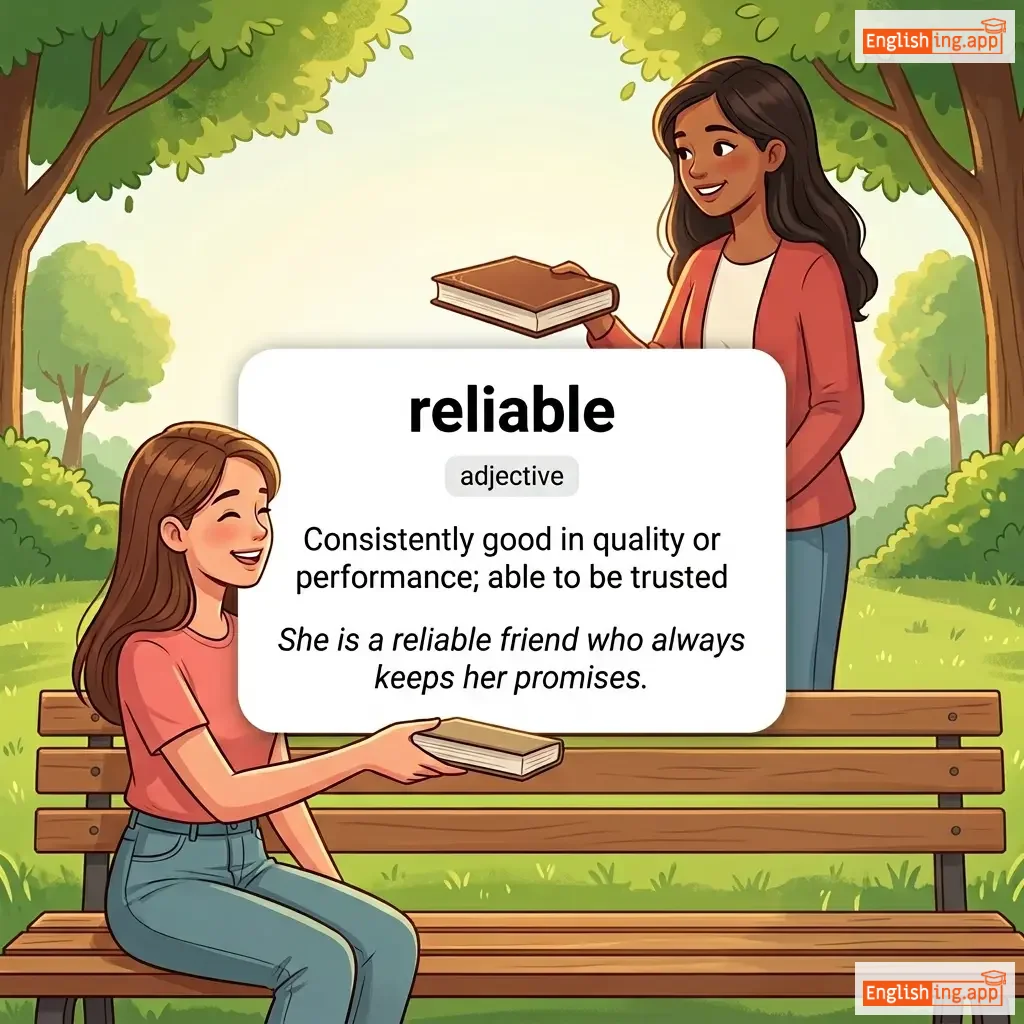
reliable definition card — visual illustration of the meaning
adjective
/rɪˈlaɪəbl/
надежный (nadezhny)

Consistently good in quality or performance; able to be trusted

"She is a reliable friend who always keeps her promises."

"Она надежный друг, который всегда сдерживает свои обещания." (Ona nadezhnyy drug, kotoryy vsegda sderzhivayet svoi obeshchaniya.)
noun
/rɪˈlaɪ.əns/
зависимость (zavisimost)

dependence on or trust in someone or something

"Her reliance on her friends helped her through difficult times."

"Ее зависимость от друзей помогла ей пройти через трудные времена." (Eyo zavisimost' ot druzey pomogla yey proyti cherez trudnye vremena.)