Словари

Словарь английского языка | Значения слов, определения и примеры
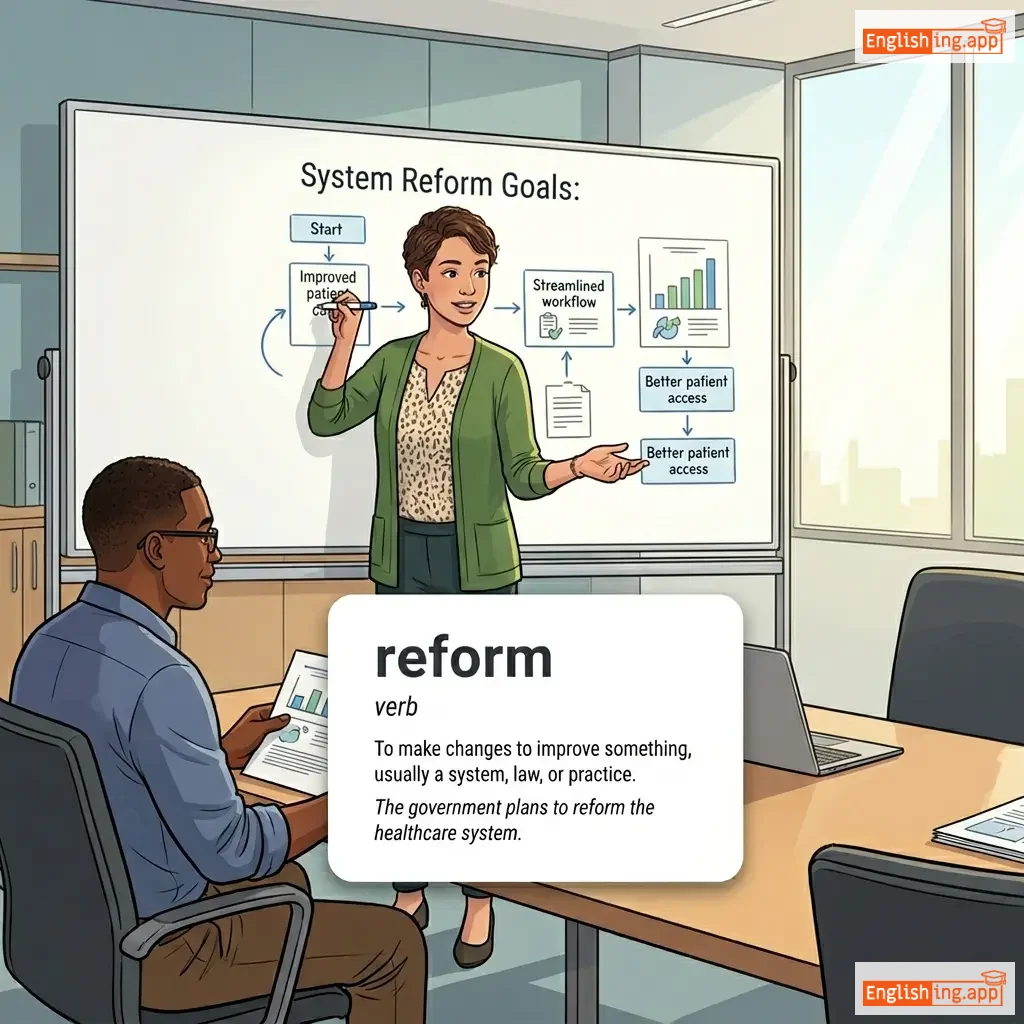
reform definition card — visual illustration of the meaning
verb
/rɪˈfɔːrm/
реформировать (reformirovat)

To make changes to improve something, usually a system, law, or practice.

"The government plans to reform the healthcare system."

"Правительство планирует реформировать систему здравоохранения." (Pravitel'stvo planiroval reformirovat' sistemy zdravookhraneniya.)
noun
/rɪˈfɔːrmər/
реформатор (reformator)

A person who works to improve laws, institutions, or social practices.

"Martin Luther King Jr. was a great social reformer."

"Мартин Лютер Кинг-младший был великим социальным реформатором." (Martin Lyuter King-mladshiy byl velikim sotsial'nym reformatorom.)
verb
/rɪˈfrækt/
рефрактировать (refraktirovat)

To bend light, sound, or heat as it passes through a medium.

"The water refracts light, making the straw look bent."

"Вода преломляет свет, заставляя соломинку выглядеть согнутой." (Voda prelomlyaet svet, zastavlyaya solominku viglyadet' sognutoy.)
noun
/rɪˈfrækʃən/
рефракция (refraksia)

The bending of light, sound, or other waves when they pass from one medium to another of different density.

"The refraction of light in water makes objects appear bent."

"Рефракция света в воде заставляет объекты выглядеть искривленными." (Refrakciya sveta v vode zastavlyaet ob'ekty vyglyadet' iskivlennymi.)
refractor definition card — visual illustration of the meaning
noun
/rɪˈfræk.tər/
рефрактор (refraktor)

A type of telescope that uses lenses to focus light.

"Refractor telescopes use lenses to focus light."
"Рефракторные телескопы используют линзы для фокусировки света." (Refraktornye teleskopy ispol'zuyut linzy dlya fokusirovki sveta.)
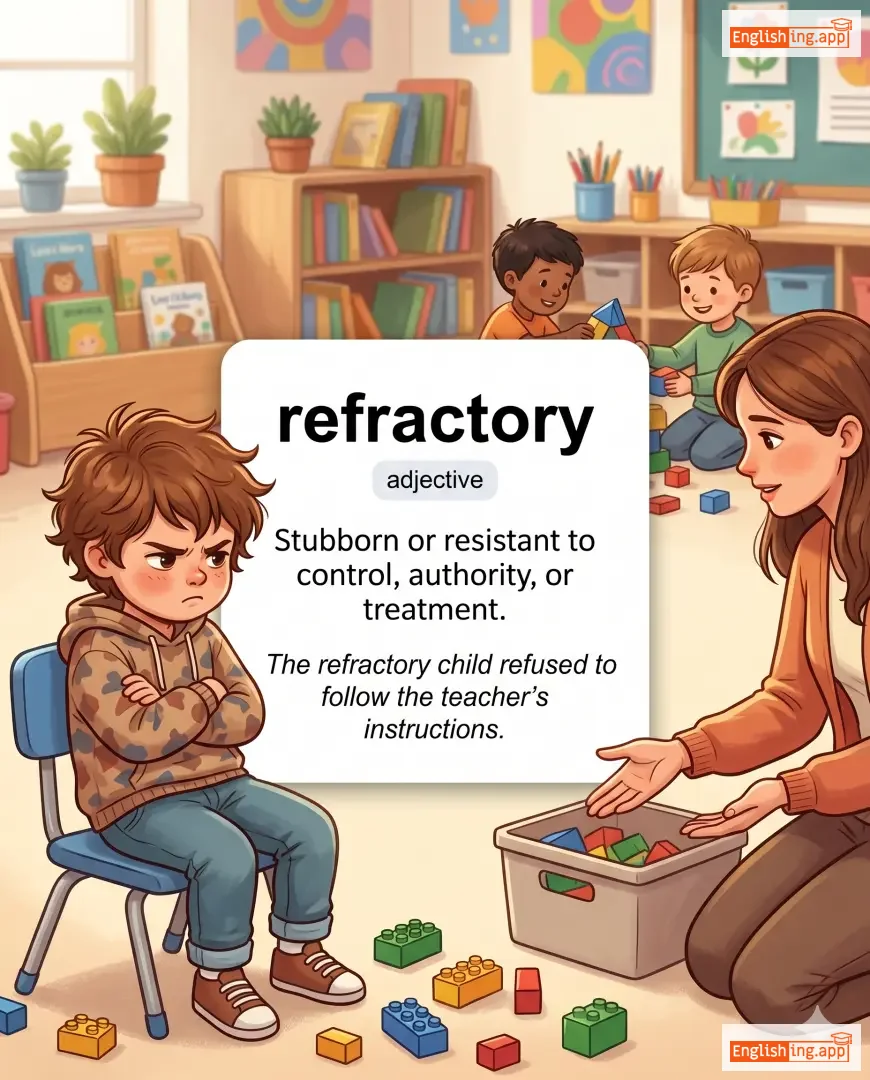
refractory definition card — visual illustration of the meaning
adjective
/rɪˈfræktəri/
непослушный (neposlushny)

Stubborn or resistant to control, authority, or treatment.

"The refractory child refused to follow the teacher's instructions."

"Непослушный ребенок отказался следовать указаниям учителя." (Neposlushnyj rebenok otkazalsya sledovat' ukazaniyam uchitelya.)
adjective
/rɪˈfræɡəbəl/
опровержимый (opverzhimyy)

Capable of being refuted or disproved.

"His argument was weak and easily refragable."

"Его аргумент был слабым и легко опровергнутым." (Ego argument byl slabym i legko opovrezhdenym.)
verb
/rɪˈfreɪn/
воздерживаться (vozderzhivat'sya)

To hold oneself back from doing something.

"Please refrain from smoking in this area."
"Пожалуйста, воздержитесь от курения в этой зоне." (Pozhaluysta, vozderzhitēs' ot kureniya v etoy zone.)
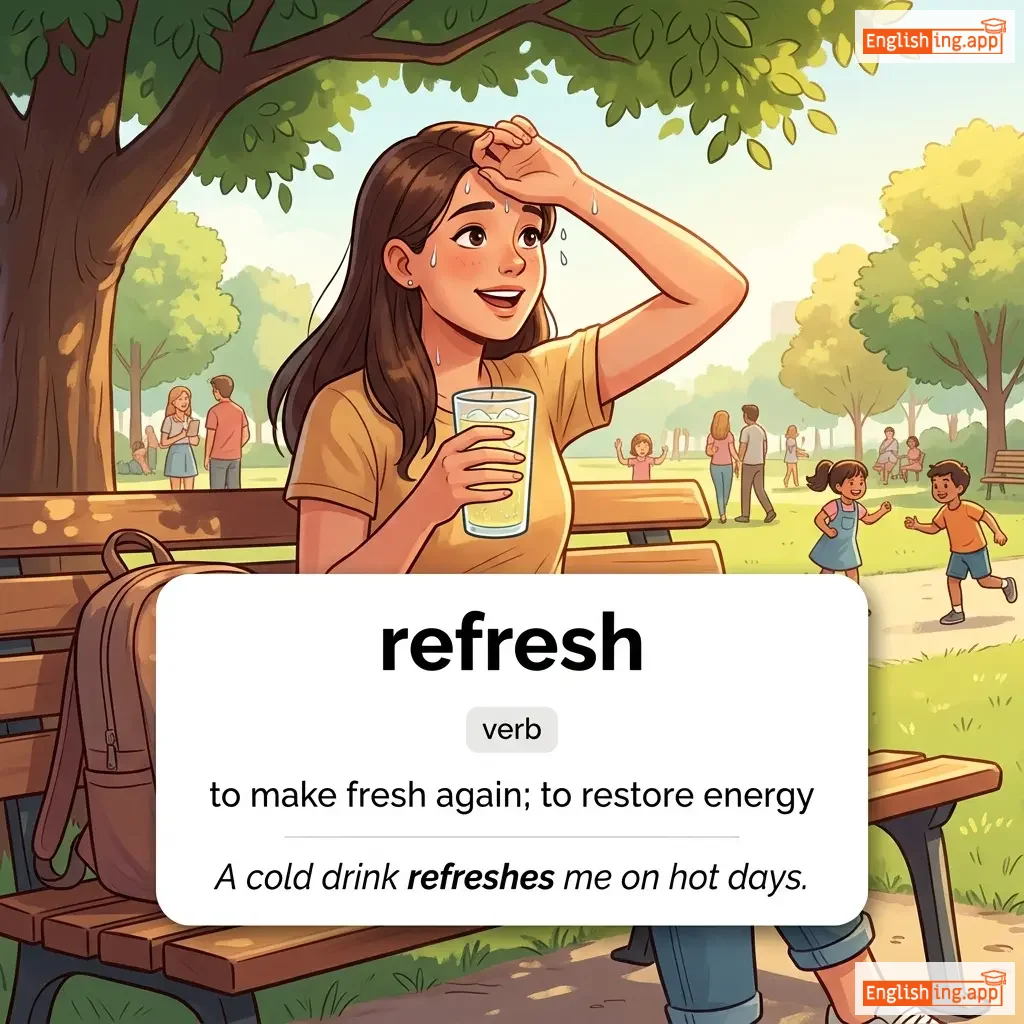
refresh definition card — visual illustration of the meaning
verb
/rɪˈfreʃ/
освежить (osvezhit)

to make fresh again; to restore energy

"A cold drink refreshes me on hot days."

"Холодный напиток освежает меня в жаркие дни." (kholodny napitok osvezhaet menya v zharkie dni)
adjective
/rɪˈfreʃ.ɪŋ/
освежающий (osvezhayushchiy)

making one feel energized and renewed; pleasantly new or different

"The cool breeze was refreshing after the hot day."

"Прохладный ветер был освежающим после жаркого дня." (Prokhladnyy veter byl osvezhayushchim posle zharkogo dnya.)
noun
/rɪˈfreʃ.mənt/
освежение (osvezhenie)

food and drink that is served as a light meal; something that refreshes

"We served light refreshments after the meeting."

"Мы подали легкие освежения после встречи." (my podali legkie osvezheniya posle vstrechi)
noun
/rɪˈfrɪdʒəreɪtər/
холодильник (kholodil'nik)

an appliance used to keep food and drinks cold

"She kept the milk in the refrigerator to prevent it from spoiling."

"Она положила молоко в холодильник, чтобы не испортилось." (Ona polozhila moloko v kholodil'nik, chtoby ne isportilos'.)
noun
/rɪˈfrɪndʒənsi/
рефрингенция (refringentsiya)

The ability of a substance to bend light; refractive power.

"Glass has a higher refringency than water."

"Стекло имеет более высокую рефрингенцию, чем вода." (Steklo imeyet boleye vysokuyu refringentsiyu, chem voda.)
adjective
/rɪˈfrɪndʒənt/
преломляющий (prelomlyayushchiy)

Capable of refracting light or other waves.

"The refringent properties of the crystal bent the light into a spectrum."

"Преломляющие свойства кристалла изгибали свет в спектр." (Prelomlyayushchie svoystva kristalla izgibali svet v spektr.)
noun
/ˈrɛfjuːdʒ/
убежище (ubezhishche)

a place that provides shelter or protection from danger or distress

"The villagers took refuge in the temple during the storm."

"Жители деревни нашли убежище в храме во время бури." (Zhiteli derevni nashli ubezhishche v khrame vo vremya buri.)
noun
/ˌrɛfjuˈʤi/
беженец (bezhenets)

a person who has been forced to leave their country in order to escape war, persecution, or natural disaster

"Thousands of refugees fled the war-torn region."
"Тысячи беженцев покинули разрушенный войной регион." (Tysiachi bezhentsev pokinuli razrushennyi voinoy region.)
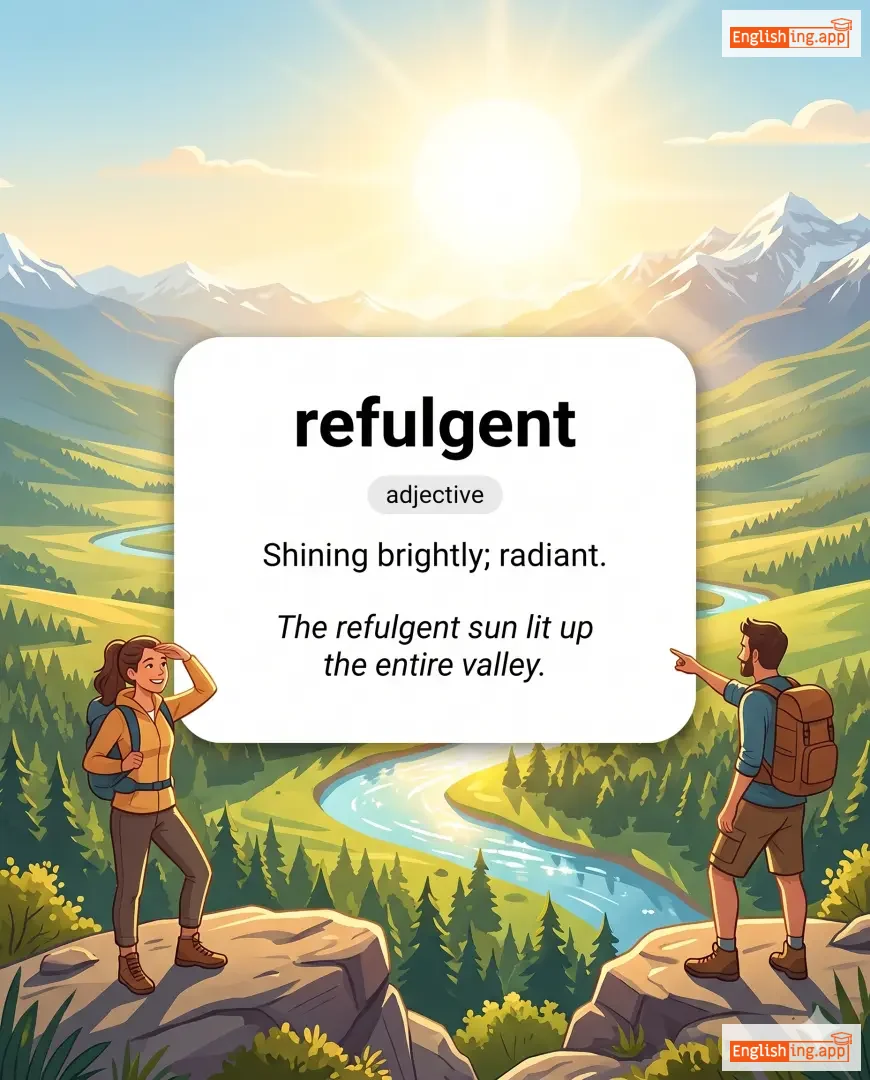
refulgent definition card — visual illustration of the meaning
adjective
/rɪˈfʌldʒənt/
сияющий (siyayushchiy)

Shining brightly; radiant.

"The refulgent sun lit up the entire valley."

"Яркое солнце освещало всю долину." (Yarkoye solntse osveshchalo vsyu dolinu.)
verb
/riːˈfɜːrbɪʃ/
обновить (obnovit)

To renovate or redecorate something, especially a building.

"The company decided to refurbish its old office."

"Компания решила обновить свой старый офис." (Kompaniya reshilа obnovit' svoy staryy ofis.)
noun
/rɪˈfjuːzəl/
отказ (otkaz)

An act of saying or showing that one will not do or accept something.

"Her refusal to cooperate delayed the project."

"Её отказ сотрудничать задержал проект." (Eё otkaz sotrudnichat' zaderzhal proyekt.)
♻️

Refuse

verb, noun
/rɪˈfjuːz/ (verb), /ˈrɛfjuːs/ (noun)

As a verb: to say no to something offered or requested; as a noun: waste material; rubbish.

"He refused to answer the question, and the street was full of refuse."

adjective
/rɪˈfjuː.tə.bəl/
опровержимый (oprovyezhimyy)

capable of being proven wrong or false; able to be disproved

"His theory was refutable because it could be tested experimentally."

"Его теория была опровержима, потому что ее можно было протестировать экспериментально." (Ego teoriya byla oprovyerzhima, potomu chto yeyo mozhno bylo protestirovat' eksperimental'no.)
noun
/ˌrɛfjʊˈteɪʃən/
опровержение (oprovizhenie)

The act of proving a statement or argument to be false or incorrect.

"Her essay was a strong refutation of the opposing theory."
"Её эссе было сильным опровержением противоположной теории." (Eyo esse bylo sil'nym oprovizheniem protivopolozhnoy teorii.)
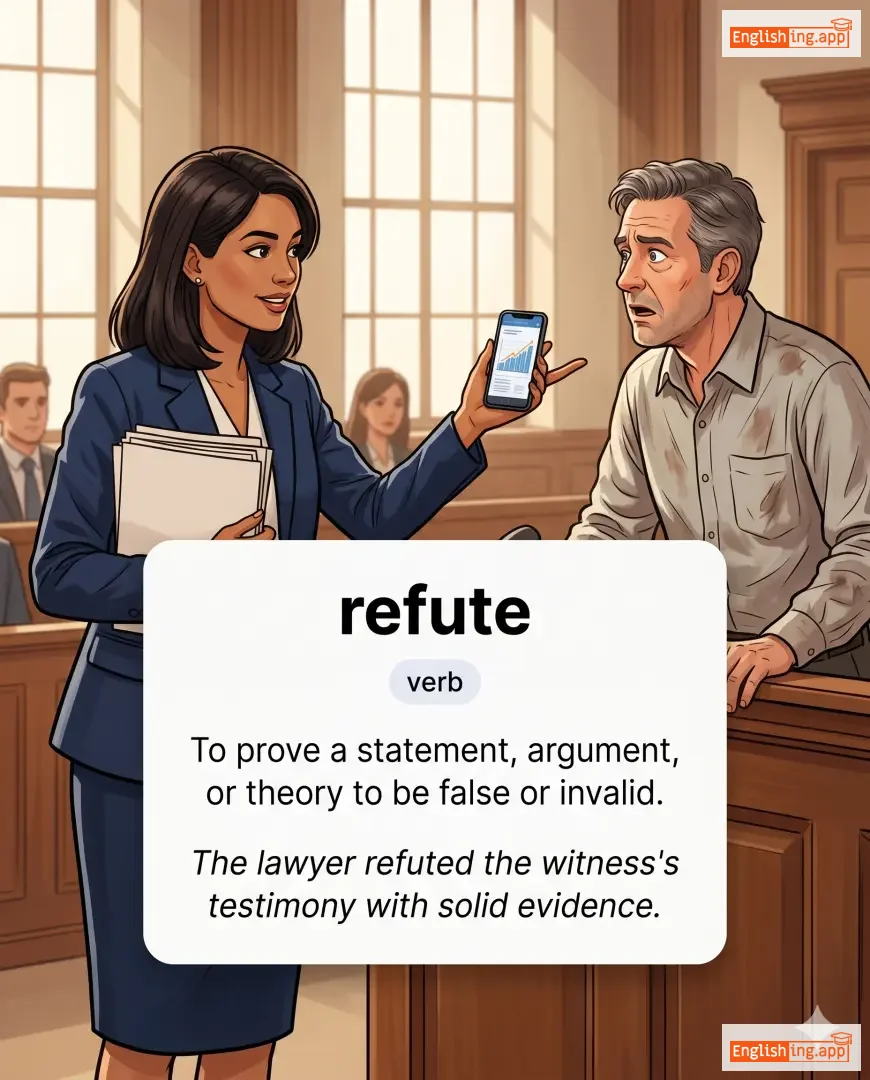
refute definition card — visual illustration of the meaning
verb
/rɪˈfjuːt/
опровергать (oprovergat')

To prove a statement, argument, or theory to be false or invalid.

"The lawyer refuted the witness's testimony with solid evidence."

"Advokat oprovergnul poklonschika s pomoshch'yu nadezhnykh doku­mentov." (Advokat oprovergnul poklonschika s pomoshch'yu nadezhnykh doku­mentov.)
regain definition card — visual illustration of the meaning
verb
/rɪˈɡeɪn/
восстановить (vosstanovit)

to get back something that was lost or taken away

"He worked hard to regain his confidence after the failure."

"Он усердно работал, чтобы вернуть уверенность после неудачи." (On usyerdno rabotal, chtoby vernut' uverennost' posle neudachi.)
adjective
/ˈriːɡəl/
царский (tsarskii)

Resembling or fit for a king; majestic or royal.

"The queen entered the hall with a regal presence."

"Королева вошла в зал с царственным присутствием." (Koroleva voshla v zal s tsarstvennym prisutstviem.)
regale definition card — visual illustration of the meaning
verb
/rɪˈɡeɪl/
развлекать (razvlekat)

To entertain or amuse someone with stories, food, or drink.

"He regaled us with stories of his travels around the world."

"Он развлек нас историями о своих путешествиях по всему миру." (On razvlekal nas istoriyami o svoikh puteshestviyakh po vsemu miru.)
noun/verb
/rɪˈɡɑrd/
уважение, внимание (uvazhenie, vnimanie)

consider or think of in a specified way

"She regarded him as her mentor."

"Она считала его своим наставником." (Ona schitala ego svoim nastavnikom.)
preposition
/rɪˈɡɑrdɪŋ/
относительно (otnositel'no)

concerning or relating to

"The decision regarding the meeting will be made tomorrow."

"Решение относительно встречи будет принято завтра." (Reshenie otnositel'no vstrechi budet prinyato zavtra.)
adverb
/rɪˈɡɑrdləs/
независимо от (nezavisimo ot)

without paying attention to the current situation or condition

"She will go to the party regardless of the weather."

"Она пойдет на вечеринку, независимо от погоды." (Ona poydyot na vecherinku, nezavisimo ot pogody.)
noun
/rɪˈɡætə/
регата (regata)

A sporting event consisting of a series of boat or yacht races.

"The annual regatta attracted competitors from around the world."

"Ежегодная регата привлекла участников со всего мира." (ezhegodnaya regata privlekla uchastnikov so vsego mira)
verb
/rɪˈdʒɛnəreɪt/
регенерировать (regenerirovat)

to grow or produce again; to renew or restore

"The lizard can regenerate its lost tail."
"Ящерица может регенерировать свой потерянный хвост." (Yashcheritsa mozhet regenerirovat' svoi poteryannyi khvost.)
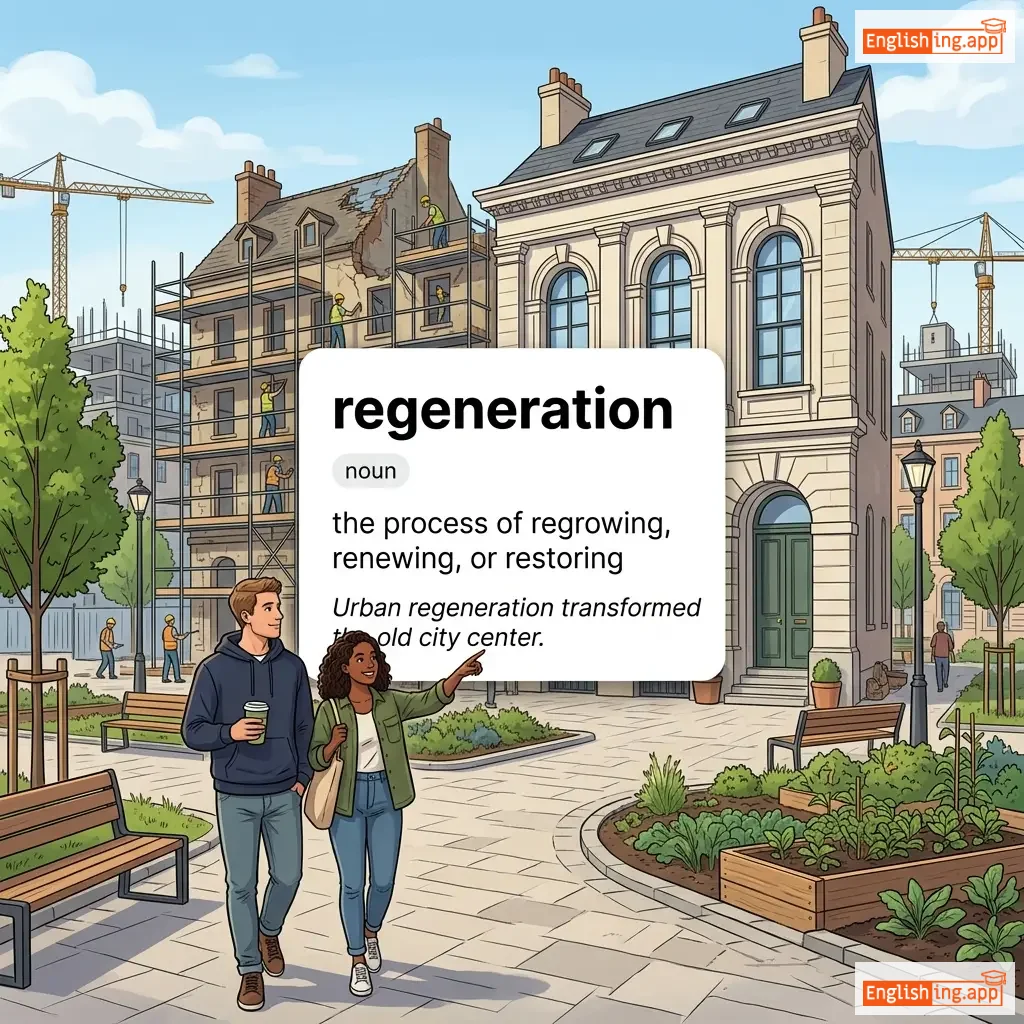
regeneration definition card — visual illustration of the meaning
noun
/rɪˌdʒɛnəˈreɪʃən/
регенерация (regeneratsiya)

the process of regrowing, renewing, or restoring

"Urban regeneration transformed the old city center."
"Городская регенерация преобразила старый городской центр." (Gorodskaya regeneratsiya preobrazila staryy gorodskoy tsentr.)
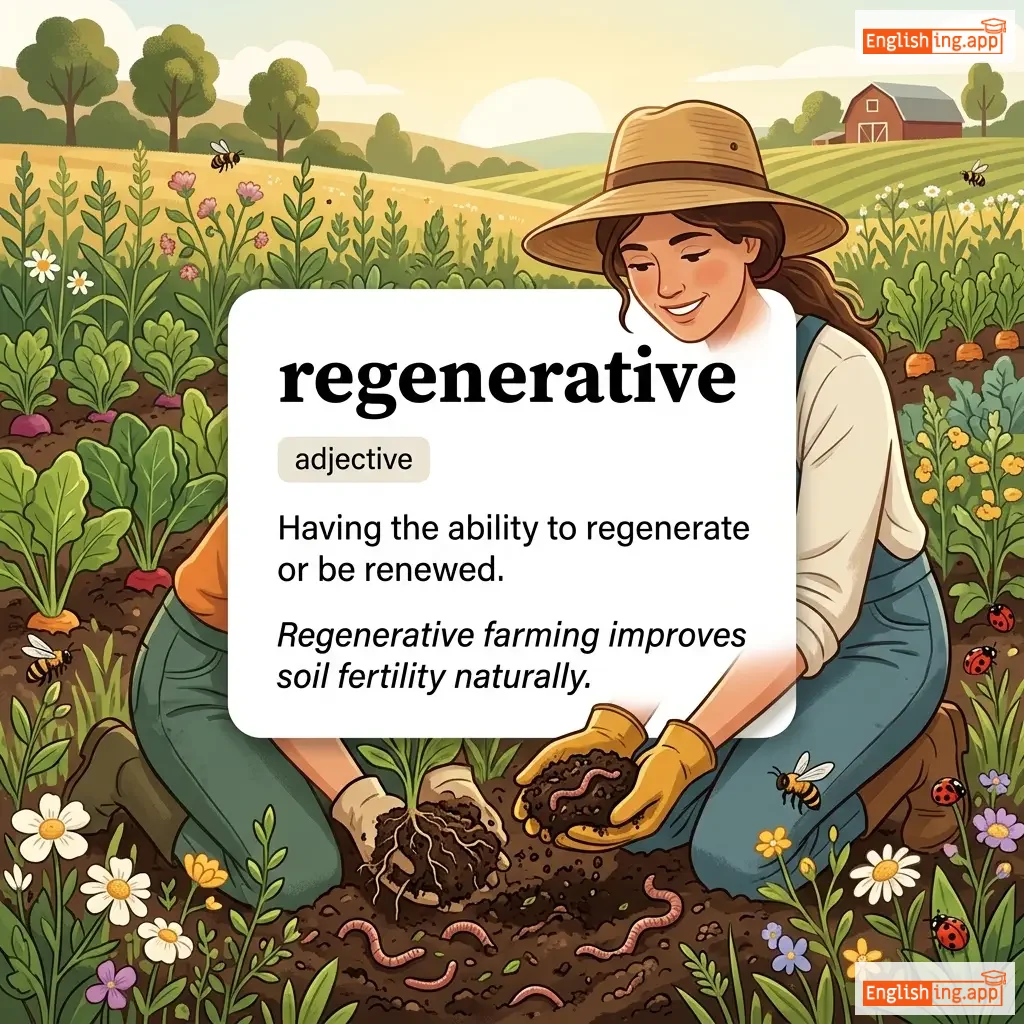
regenerative definition card — visual illustration of the meaning
adjective
rɪˈdʒɛn.ər.ə.tɪv
регенеративный или возобновляемый (regenerativnyy ili vozobnovlyayemyy)

Having the ability to regenerate or be renewed.

"Regenerative farming improves soil fertility naturally."
"Регенеративное сельское хозяйство естественным образом улучшает плодородие почвы." (Regenerativnoe selskoe khozyaystvo estestvennym obrazom uluchshaet plodorodiye pochvy.)
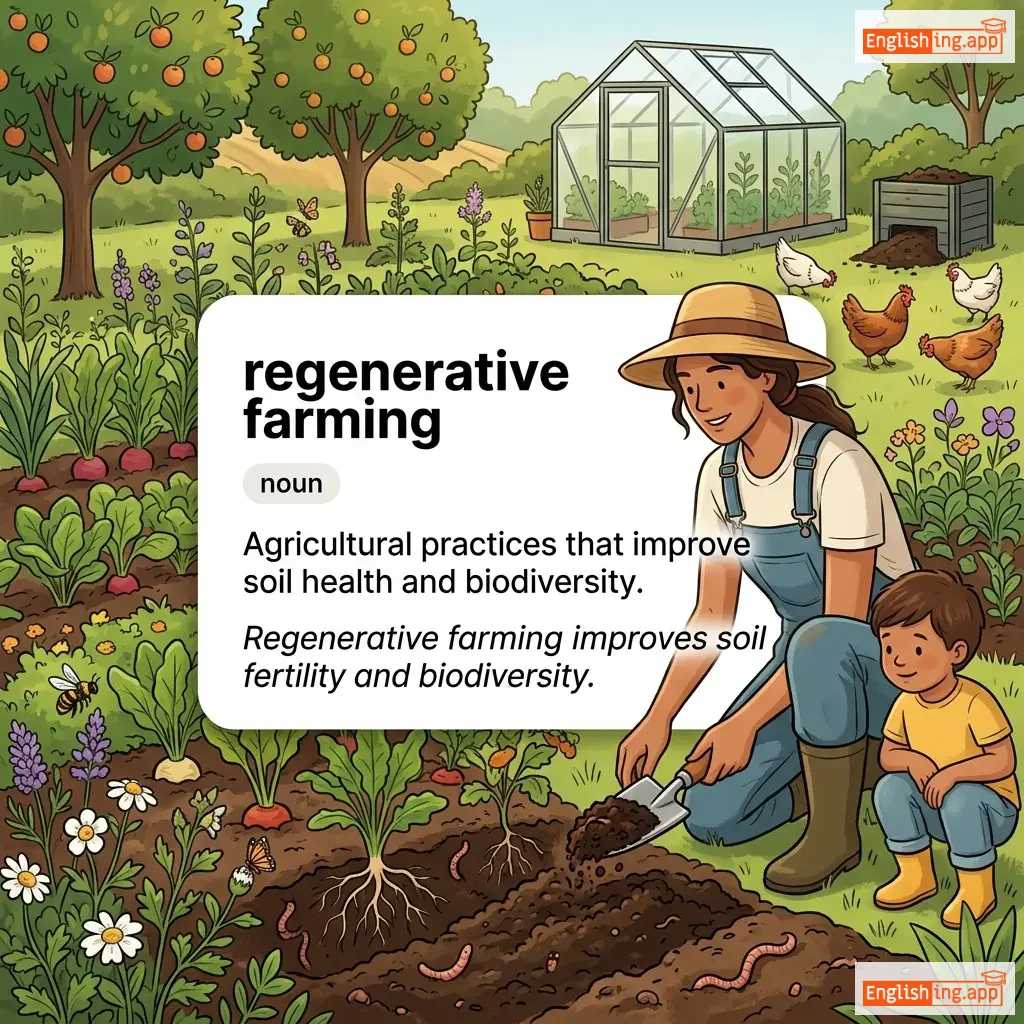
regenerative farming definition card — visual illustration of the meaning
noun
rɪˈdʒɛn.ər.ə.tɪv ˈfɑːr.mɪŋ
регenerative сельское хозяйство (regenerative selskoe khozyaystvo)

Agricultural practices that improve soil health and biodiversity.

"Regenerative farming improves soil fertility and biodiversity."

"Регenerative сельское хозяйство улучшает плодородие почвы и биологическое разнообразие." (Regenerative selskoe khozyaystvo uluchshayushche plodorodiye pochvy i biologicheskoe raznoobraziye.)
noun
/ˈriːdʒənt/
регент (regent)

a person who rules in place of a monarch when the monarch is absent or too young

"The prince acted as regent until the king came of age."

"Принц исполнял обязанности регента, пока король не стал совершеннолетним." (Princ ispolnyal obyazannosti regenta, poka korol' ne stal sovershennoletnim.)
noun
/ˈrɛdʒɪsaɪd/
регицид (regitsid)

the act of killing a king

"The conspirators were executed for committing regicide."

"Заговорщики были казнены за совершение регицида." (Zagovorshchiki byli kazneny za sovershenie regitsida.)
noun
/reɪˈʒiːm/
режим (rezhim)

a system or form of government, often authoritarian

"The military regime controlled the country for decades."

"Военное правление контролировало страну в течение десятилетий." (Voyennoe pravlenie kontrolirovalo stranu v techenie desyatiletiy.)
regimen definition card — visual illustration of the meaning
noun
/ˈrɛdʒɪmən/
режим (regimen)

A prescribed course of medical treatment, diet, or exercise for the promotion or restoration of health.

"She followed a strict fitness regimen to recover after surgery."

"Она придерживалась строгого фитнес-режима, чтобы восстановиться после операции." (Ona priderzhivalas strogo fitnes rezhima chtoby vosstanovitsya posle operatsii)
🎖️

regiment

noun
/ˈrɛdʒɪmənt/

A permanent unit of an army, typically commanded by a colonel and divided into several companies.

"The regiment marched proudly through the streets after returning from the mission."

noun
/ˈriːdʒən/
регион (region)

an area or division, especially part of a country or the world having definable characteristics but not always fixed boundaries

"The region is known for its beautiful landscapes."
"Регион известен своими красивыми пейзажами." (region izvesten svoimi krasivymi peyzazhami)
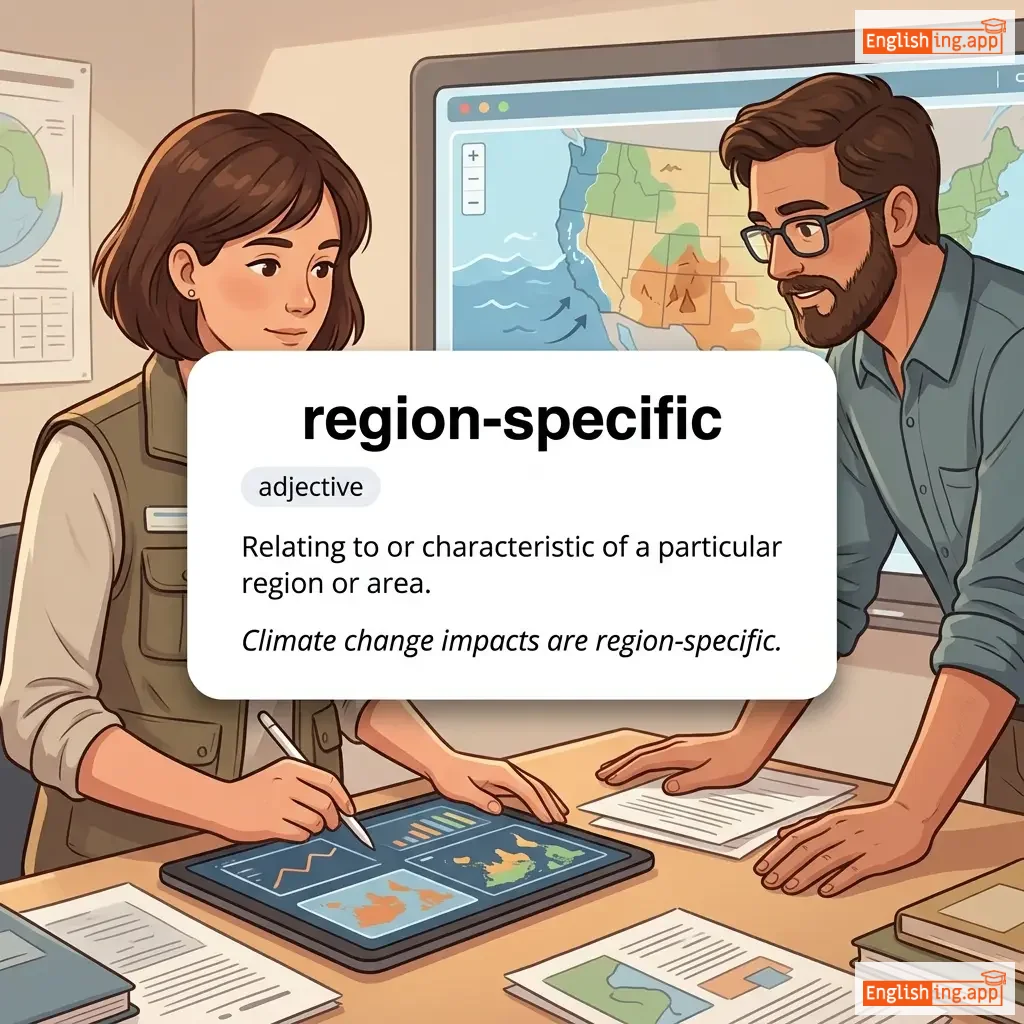
region-specific definition card — visual illustration of the meaning
adjective
ˈriːdʒən spəˈsɪfɪk
регионо-специфический (regiono-specificheskiy)

Relating to or characteristic of a particular region or area.

"Climate change impacts are region-specific."
"Воздействие изменения климата является специфическим для региона." (Vozdeystvie izmeneniya klimata yavyayetsya spetsificheskim dlya regiona.)
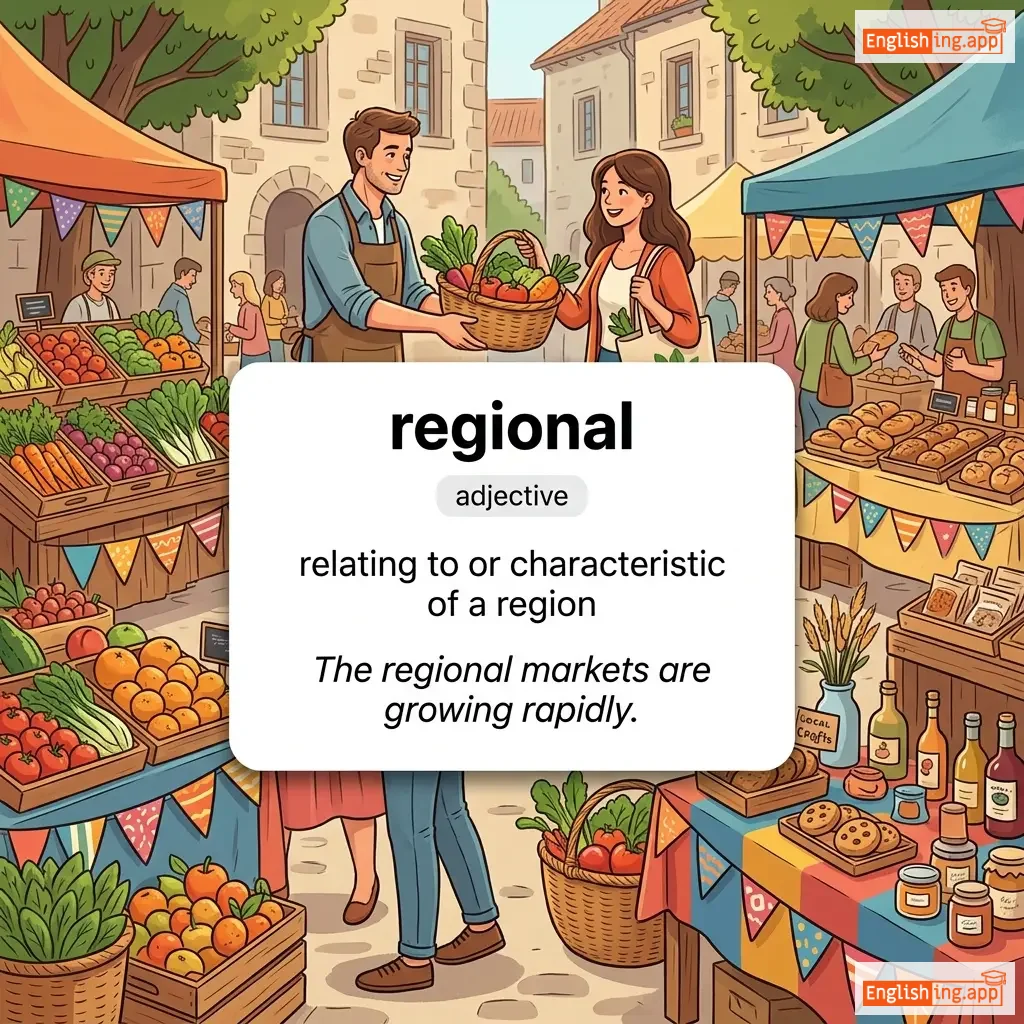
regional definition card — visual illustration of the meaning
adjective
/ˈriːdʒənl/
региональный (regional'nyj)

relating to or characteristic of a region

"The regional markets are growing rapidly."
"Региональные рынки быстро растут." (Regional'nye rynki bystro rastut.)
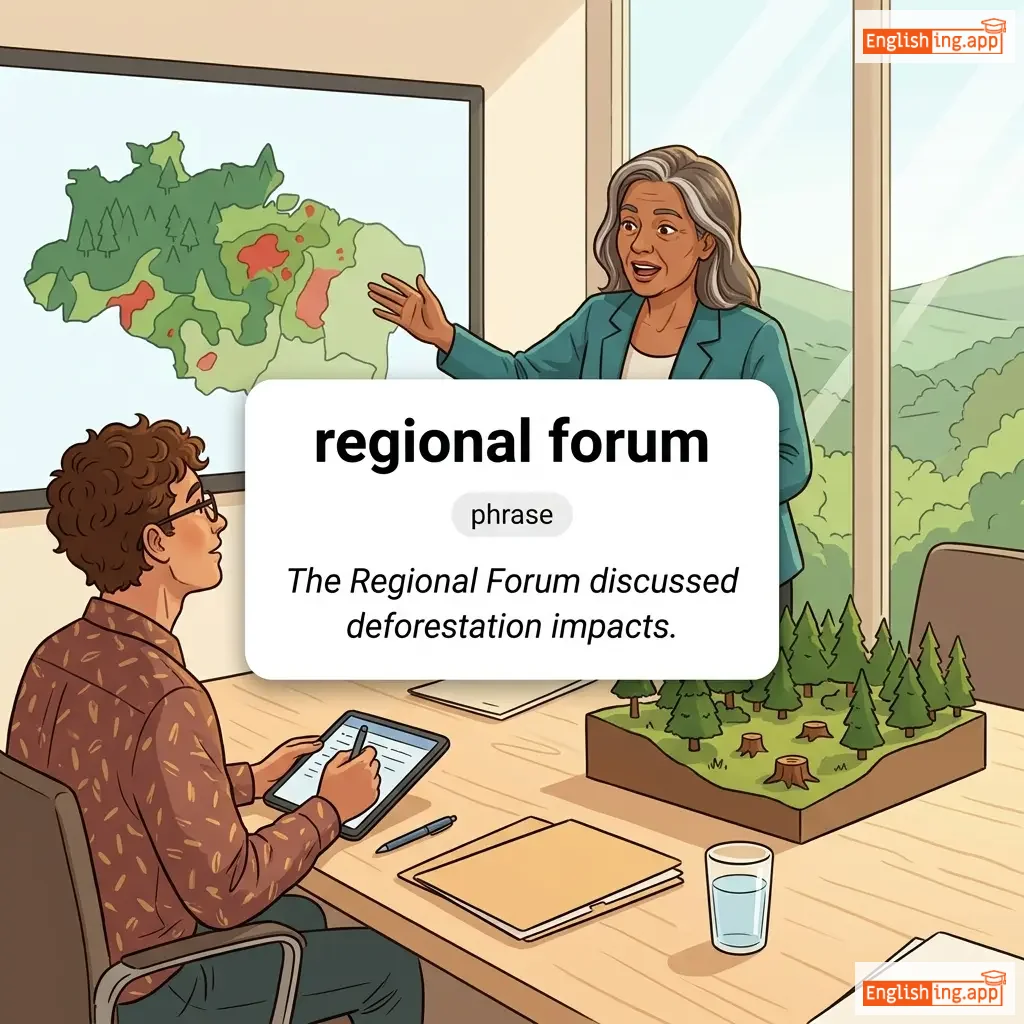
regional forum definition card — visual illustration of the meaning
phrase
ˈriː.dʒən.əl ˈfɔː.rəm
региональный форум (regional'nyy forum)

A meeting or conference where representatives from countries or organizations in a specific geographical area discuss issues of common interest.

"The Regional Forum discussed deforestation impacts."

"Региональный форум обсудил последствия вырубки лесов." (Regional'nyy forum obsudil posledstviya vyrubki lesov.)
verb
/ˈrɛdʒɪstər/
регистрировать (registrirovat)

To enter or record officially on a list or in a book.

"You must register for the conference before the deadline."
"Вы должны зарегистрироваться для конференции до окончания срока." (Vy dolzhny zaregistrirovatsya dlya konferentsii do okonchaniya sroka.)
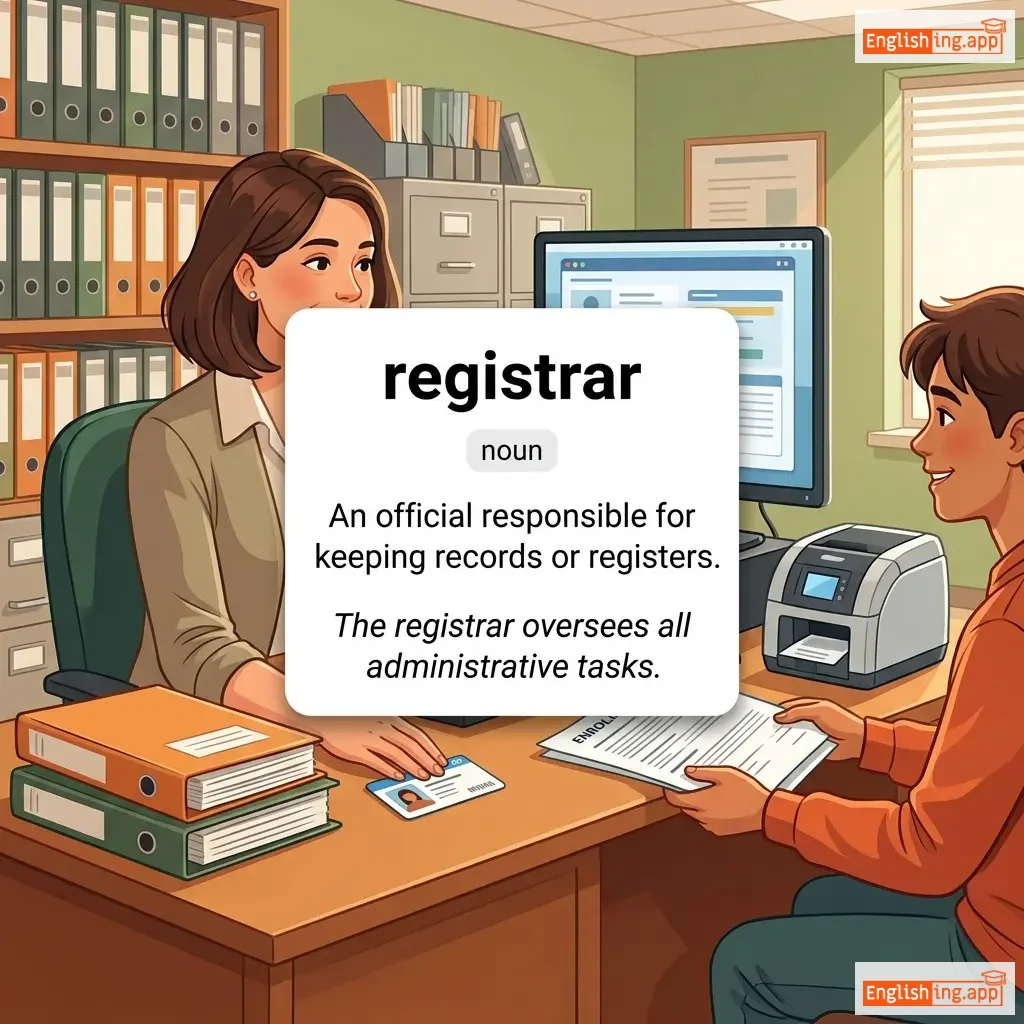
registrar definition card — visual illustration of the meaning
noun
ˈredʒ.ɪ.strɑːr
регистратор (registrator)

An official responsible for keeping records or registers.

"The registrar oversees all administrative tasks."

"Регистратор курирует все административные задачи." (Registrator kuriiruet vse administrativnye zadachi.)
noun
/ˌrɛdʒɪˈstreɪʃən/
регистрация (registratsiya)

the action or process of enrolling or signing up for something

"The registration for the event will close tomorrow."

"Регистрация на мероприятие завершится завтра." (Registratsiya na meropriyatie zavershitsya zavtra.)
adjective
/ˈrɛɡnənt/
правящий (pravyashchiy)

Reigning; currently holding power, authority, or dominance.

"The regnant queen introduced several reforms during her reign."

"Правящая королева внесла несколько реформ в течение своего правления." (Pravyashchaya koroleva vnesla neskol'ko reform v techeniye svoego pravyeniya.)
verb
/rɪˈɡrɛs/

To return to a former or less developed state.

"Without proper guidance, the child's progress began to regress."

verb
/rɪˈɡrɛt/
сожалеть (sozhalet')

to feel sad or disappointed about something that has happened or been done

"I deeply regret saying those harsh words to her."

"Я глубоко сожалею, что сказал ей эти жесткие слова." (Ya gluboko sozhaleю, chto skazal yey eti zhostkie slova.)
adjective
/rɪˈɡrɛtfəl/
сожалеющий (sozhaleyushchiy)

feeling or showing sadness or disappointment about something that has happened or been done

"She gave him a regretful smile as she turned away."

"Она подарила ему сожалительную улыбку, когда отвернулась." (Ona podarila yemu sozhalitel'nuyu ulybku, kogda otvernulas'.)