Словари

Словарь английского языка | Значения слов, определения и примеры

noun, verb
/rɪər/
задняя часть / растить (zadyaya chast / rastit')

the back part of something; to bring up or raise children or animals

"The mother cat reared her kittens in a quiet corner."

"Мать кошка вырастила своих котят в тихом уголке." (Mat' koshka vyrastila svoikh kotyat v tikhom uglke.)
verb
/ˌriːəˈreɪndʒ/
переставлять (perestavlyat')

to change the order or position of something

"She decided to rearrange the furniture in her living room."

"Она решила переставить мебель в своей гостиной." (Ona reshilа perestavit' mebel' v svoey gostinoy.)
noun, verb
/ˈriːzən/
причина, основание (prichina, osnovanie)

A cause, explanation, or justification for an action or event; to think or argue logically.

"There is no reason to be upset."

"Нет причины быть расстроенным." (Net prichiny byt' rasstroennym.)
adjective
/ˈriːzənəbl/
разумный (razumnyy)

Fair and sensible; having sound judgment; not extreme or excessive.

"The price of the meal was quite reasonable."

"Цена еды была довольно разумной." (Tsená yedy byla dovol'no razumnoy.)
adverb
/ˈriːzənəbli/
разумно (razumno)

in a fair, sensible, or logical manner

"The price was reasonably low compared to other products."

"Цена была разумно низкой по сравнению с другими продуктами." (Tsená byla razoumno nizkoy po sravneniyu s drugimi produktami.)
noun
/ˈriːzənɪŋ/
рассуждение (rassuzhdeniye)

the process of thinking about something in a logical way in order to form a conclusion or judgment

"Her reasoning for leaving was clear and logical."
"Её рассуждения по поводу ухода были ясными и логичными." (Yeyo rassuzhdeniya po povodu ukhoda byli yasnymi i logichnymi.)
reasons definition card — visual illustration of the meaning
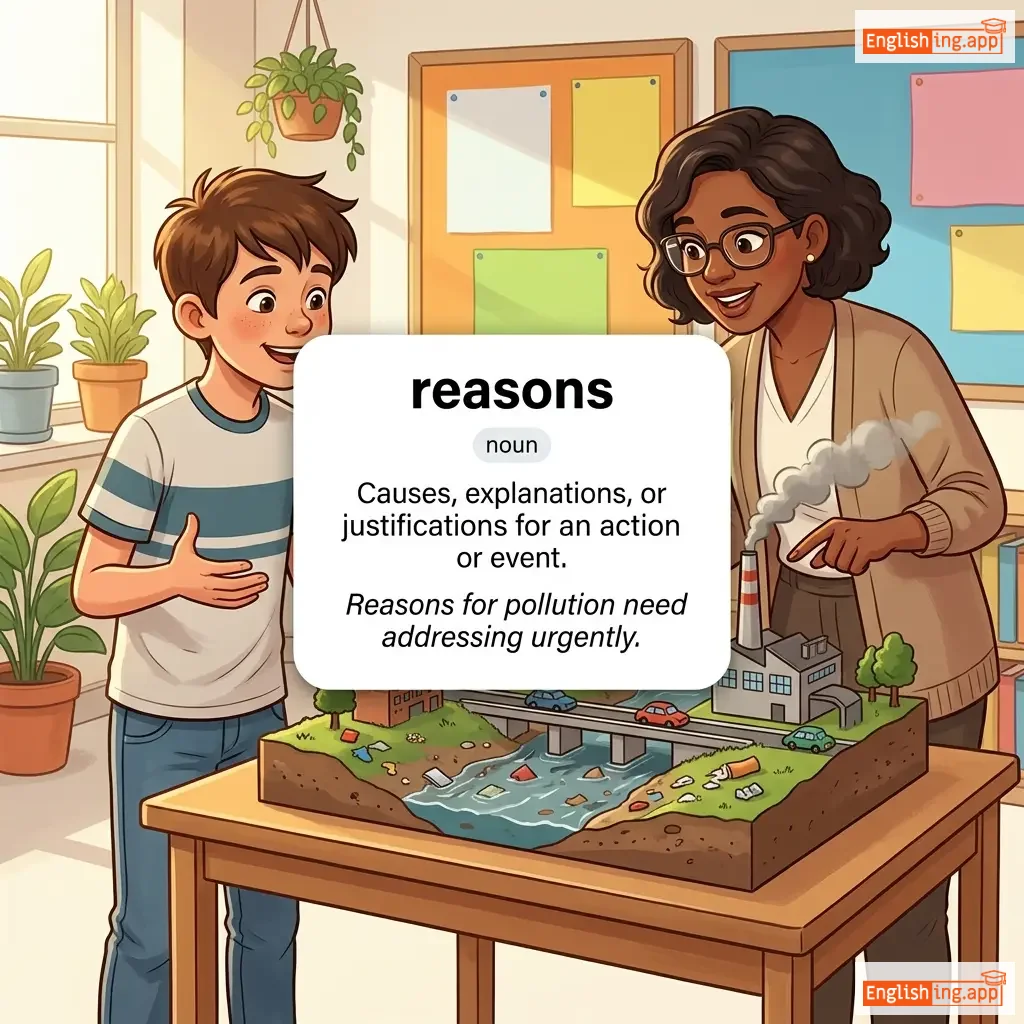
noun
/ˈriː.zənz/
причины (prichiny)

Causes, explanations, or justifications for an action or event.

"Reasons for pollution need addressing urgently."

"Причины загрязнения требуют неотложного решения." (Prichiny zagryazneniya trebuyut neotlozhnogo resheniya.)
noun
/ˌriː.əˈʃʊr.əns/
успокоение (uspokoenie)

comfort or confidence given to someone to remove their fears or doubts

"She needed reassurance that everything would be okay."

"Ей было нужно успокоение, что все будет в порядке." (Ey bylo nuzhno uspokoenie, chto vse budet v poryadke.)
verb
/ˌriːəˈʃʊr/
успокаивать (uspokaivat')

to say or do something to remove someone's doubts or fears

"The teacher reassured the students before the exam."

"Учитель успокоил учеников перед экзаменом." (Uchitel' uspokoil uchenikov pered ekzamenom.)
noun
/ˈriːbeɪt/
скидка/возврат денег (skidka/vozvrat deneg)

a partial refund given to someone who has paid too much money for something

"The store offered a rebate on bulk purchases."

"Магазин предложил скидку на оптовые покупки." (Magazin predlozhil skidku na optovye pokupki.)
noun, verb
/ˈreb.əl/
бунтарь / восставать (buntar' / vosstavat')

a person who resists authority or control; to resist or fight against authority

"The students rebelled against the new dress code."

"Студенты восстали против нового дресс-кода." (Studenty vosstali protiv novogo dress-koda.)
noun
/rɪˈbɛljən/
восстание (vosstanie)

an act of violent or open resistance to an established government or ruler

"The rebellion was crushed by the army after a few months."

"Восстание было подавлено армией через несколько месяцев." (Vostanie bylo podavleno armiey cherez neskol'ko mesyatsev.)
adjective
/rɪˈbɛljəs/
бунтарский (buntarskiy)

resisting authority or control; showing a desire to rebel

"The rebellious teenager refused to follow the school rules."

"Ребенок-революционер отказался следовать школьным правилам." (Rebenok-revolyutsioner otkazalsya sleduyushchim shkol'nym pravilam.)
verb
/rɪˈbʌf/
отклонить (otklonit)

to reject or refuse in a sharp or abrupt way

"She rebuffed his invitation to dinner."

"Она отклонила его приглашение на ужин." (Ona otklonila ego priglashenie na uzhin.)
verb
/ˌriːˈbɪld/
восстанавливать (vosstanavlivat)

to build something again after it has been damaged or destroyed

"The villagers worked together to rebuild the bridge after the flood."
"Деревенские жители работали вместе, чтобы восстановить мост после наводнения." (Derevenskie zhiteli rabotali vmeste, chtoby vosstanovit' most posle navodneniya.)
rebuke definition card — visual illustration of the meaning
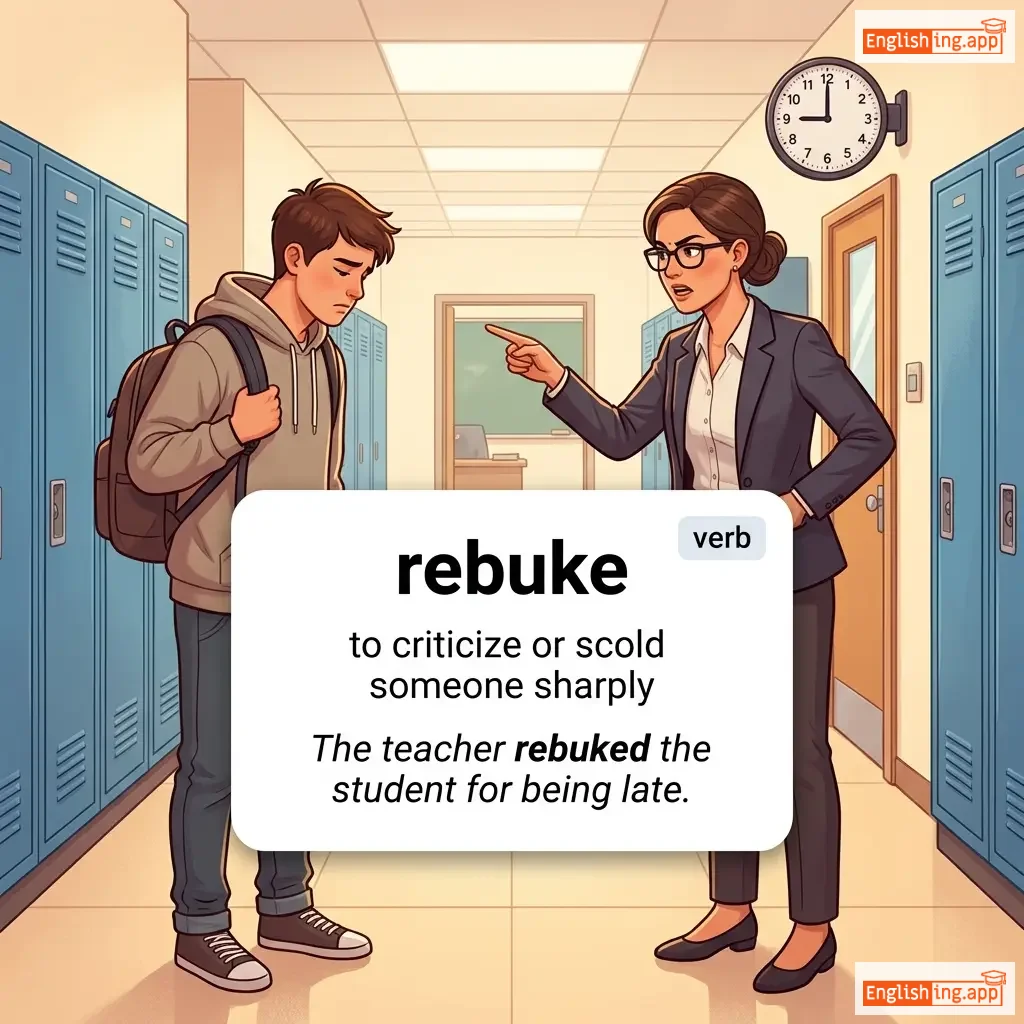
verb
/rɪˈbjuːk/
осуждать (osuzhdat)

to criticize or scold someone sharply

"The teacher rebuked the student for being late."

"Учитель отругал ученика за опоздание." (Uchitel' otryugal uchenika za opozdanie.)
noun
/ˈriːbəs/
ребус (rebus)

a puzzle in which words are represented by pictures, symbols, or letters

"The children enjoyed solving the rebus puzzles in the magazine."

"Дети наслаждались разгадыванием ребусов в журнале." (Deti naslazhdalis' razgadyvaniem rebusov v zhurnale.)
verb
/rɪˈbʌt/
опровергать (oprovergat)

to argue against or prove wrong; to refute

"The lawyer rebutted the false accusations with strong evidence."

"Адвокат опроверг ложные обвинения с помощью убедительных доказательств." (Advokat oproverg lozhnye obvinenija s pomoshch'yu ubeditel'nykh dokazuestv.)
noun
/rɪˈbʌtəl/
опровержение (oprovizhenie)

a statement or argument made to oppose or disprove another

"Her rebuttal was clear and convincing."
"Ее опровержение было ясным и убедительным." (Eyo oprovizhenie bylo yasnym i ubeditel'nym.)
recalcitrant definition card — visual illustration of the meaning
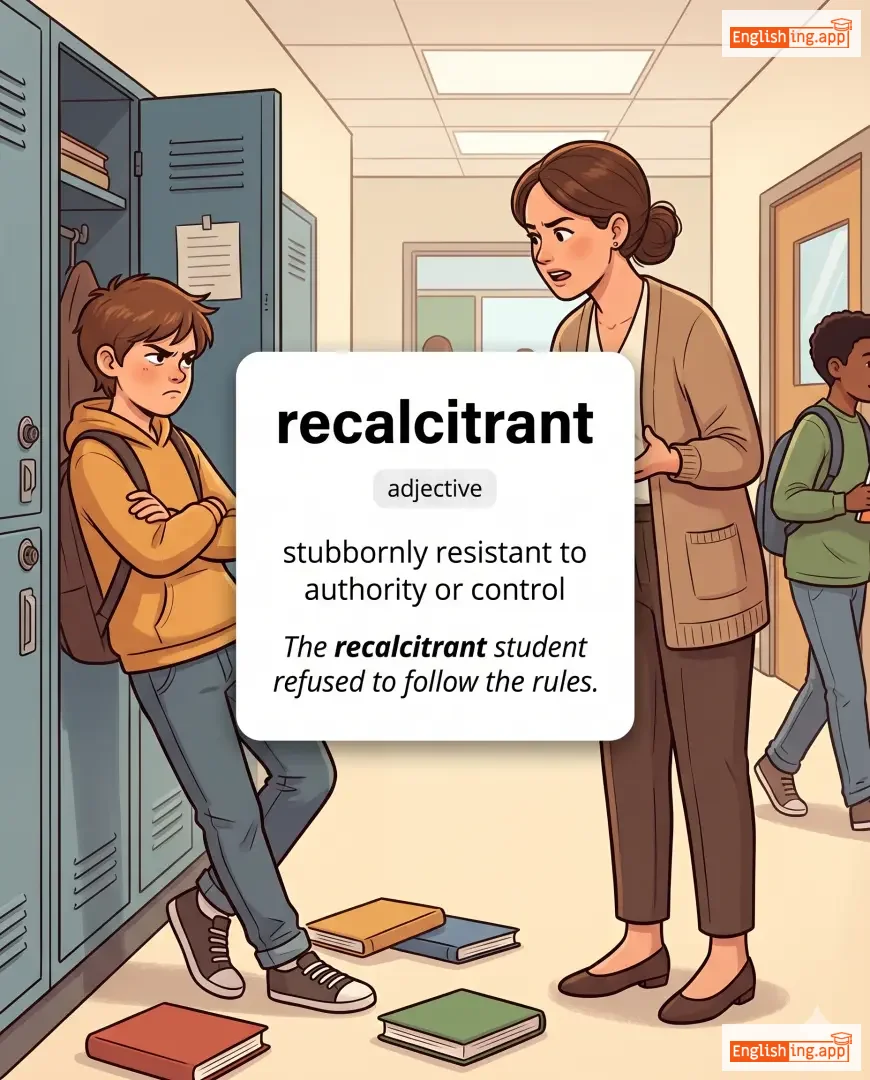
adjective
/rɪˈkælsɪtrənt/

stubbornly resistant to authority or control

"The recalcitrant student refused to follow the rules."

recalibrate definition card — visual illustration of the meaning
verb
ˌriːˈkæl.ɪ.breɪt
перекалибровать (perekalibrovat')

To adjust or modify according to a new standard or plan; to reassess and realign.

"He had to recalibrate his strategy after the market crash."

"Ему пришлось перекалибровать свою стратегию после краха рынка." (Emu prishlos' perekalibrovat' svoju strategiju posle kraha rynka.)
verb
/rɪˈkɔːl/
вспоминать (vspominat)

to bring (a memory, fact, or situation) back into one's mind

"I can't recall the last time we met."
"Я не могу вспомнить последний раз, когда мы встречались." (Ya ne mogu vspomnit posledniy raz, kogda my vstrechalis.)
recant definition card — visual illustration of the meaning
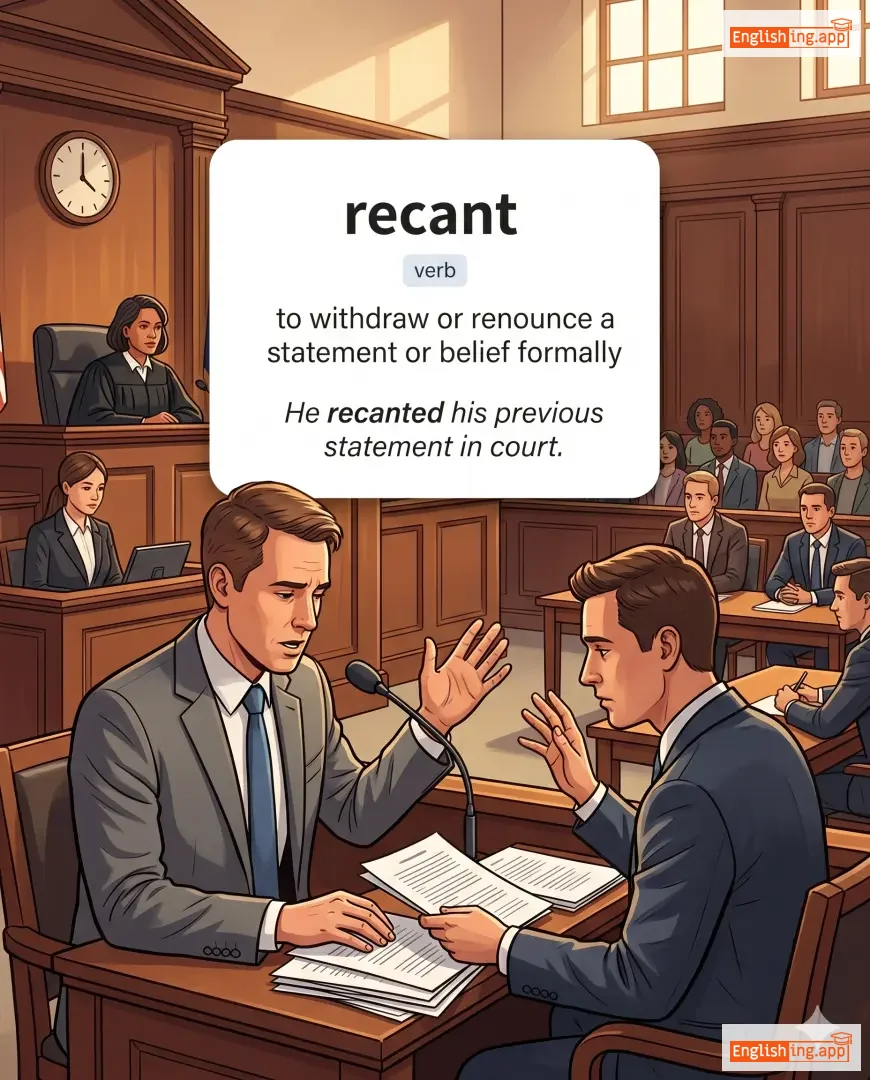
verb
/rɪˈkænt/
отрекаться (otrekat'sya)

to withdraw or renounce a statement or belief formally

"He recanted his previous statement in court."
"Он отрекся от своего предыдущего заявления в суде." (On otreksya ot svoego predydushchego zayavleniya v sude.)
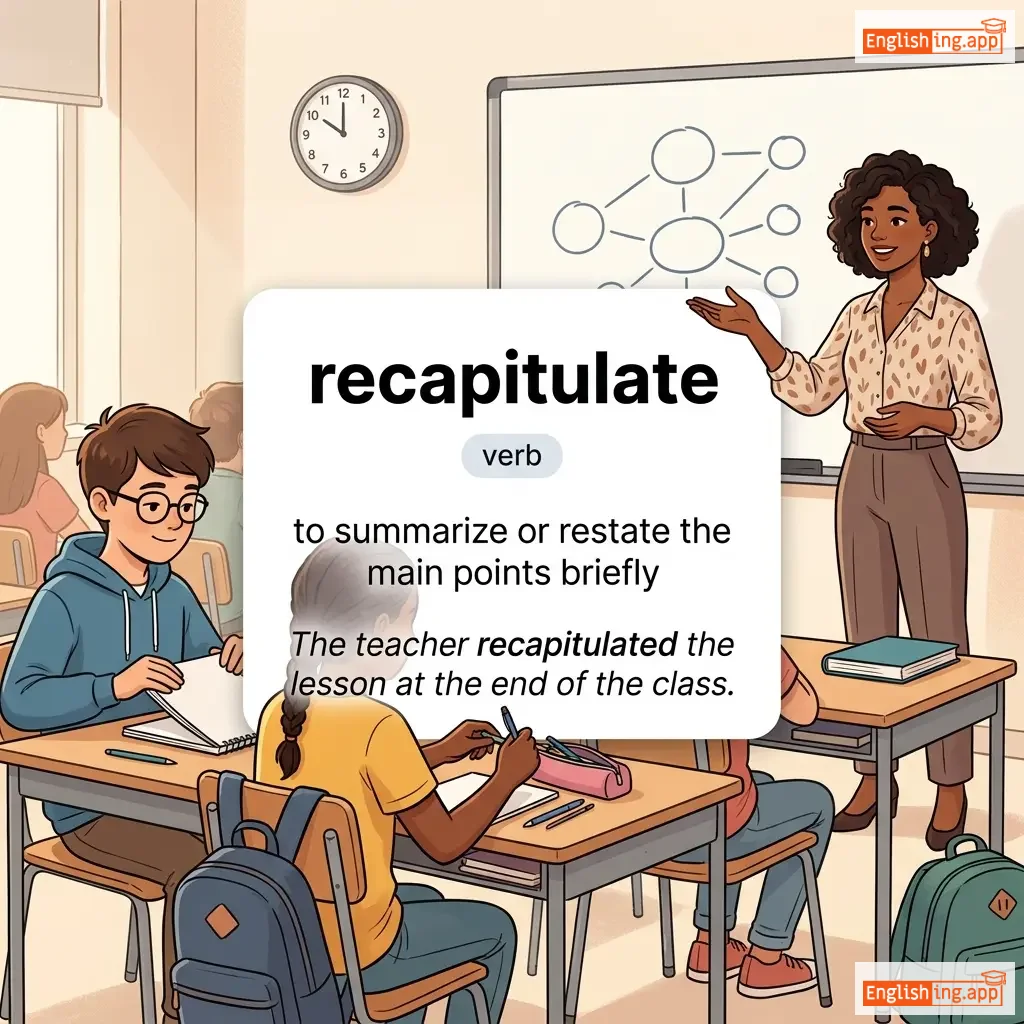
recapitulate definition card — visual illustration of the meaning
verb
/ˌriːkəˈpɪtjʊleɪt/
резюмировать (rezumirovat')

to summarize or restate the main points briefly

"The teacher recapitulated the lesson at the end of the class."

"Учитель рекэпитулировал урок в конце класса." (Uchitel' rekeptuliroval urok v kontse klassa.)
noun
/ˌriːkəˌpɪtjʊˈleɪʃən/
рекапитуляция (rekapitulyatsiya)

The act of summarizing or repeating the main points of something.

"The professor gave a brief recapitulation of the lecture before ending the class."

"Профессор дал краткое резюме лекции перед тем, как закончить занятие." (Professor dal kratkoye rezyume lektsii pered tem, kak zakonchit' zanyatiye.)
verb
/riːˈkæptʃər/
вновь захватывать (vnov' zakhvatyvat)

To take back or regain possession of something.

"The army managed to recapture the lost territory."

"Армия смогла вернуть потерянную территорию." (Armiya smogla vernut' poteryannuyu territoriyu.)
verb
/ˌriːˈkæst/
перекастинг (perekasting)

To present or change something in a different form or style.

"The director decided to recast the role with a younger actor."

"Режиссер решил изменить роль, взяв более молодого актера." (Rezhisser reshil izmenit' rol', vzyav bolee molodogo aktera.)
verb
/rɪˈsiːd/
отступать (otstupat')

To move back or further away from a previous position.

"The floodwaters began to recede after the heavy rain stopped."

"Затопленные воды начали отступать после того, как дождь прекратился." (Zatoplennye vody nachali otstupat' posle togo, kak dozhd' prekratilsya.)
adjective, noun
/rɪˈsiːvəbl/
подлежащий получению (podlezhashchiy polucheniu)

Money that is owed to a company and is expected to be paid.

"The company's receivables increased significantly this quarter."
"Дебиторская задолженность компании значительно увеличилась в этом квартале." (Debitorskaya zadolzhennost' kompanii znachitel'no uvelichilas' v etom kvartale.)
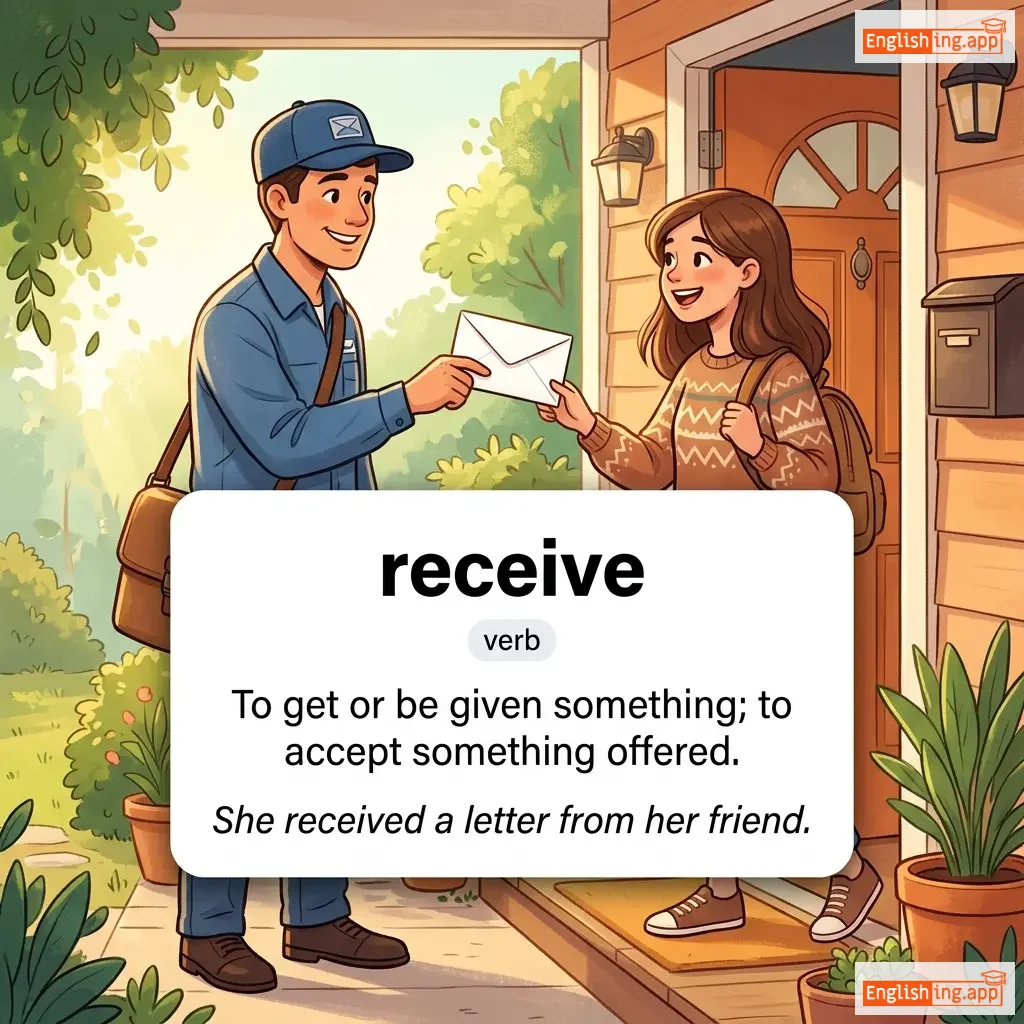
receive definition card — visual illustration of the meaning
verb
/rɪˈsiːv/
получать (poluchat')

To get or be given something; to accept something offered.

"She received a letter from her friend."

"Она получила письмо от своей подруги." (Ona poluchila pismo ot svoey podrugi.)
noun
/rɪˈsiːvər/
приемник (priyomnik)

a person or device that receives something such as a signal, message, or object

"The radio receiver picks up signals from distant stations."

"Радиоприемник принимает сигналы от удаленных станций." (Radiopriemnik prinimayet signaly ot udalennykh stantsiy.)
adjective
/ˈriːsənt/
недавний (niedavniy)

having happened or started only a short time ago

"The recent developments have been quite exciting."

"Недавние события были довольно захватывающими." (Nedavniye sobytiya byli dovol'no zakhvatyvayushchimi.)
adverb
/ˈriːsəntli/
недавно (nedavno)

in the recent past; not long ago

"I recently visited the museum."

"Я недавно посетил музей." (Ya nedavno posetil muzey.)
noun
/rɪˈsepʃən/
приём (priyom)

the act of receiving something or someone; a formal social gathering

"We attended a wedding reception at the hotel."

"Мы посетили свадебный приём в отеле." (My posetili svadebnyy priyom v otele.)
adjective
/rɪˈsɛptɪv/
восприимчивый (vospriimchivyi)

Willing to listen to or accept new ideas, suggestions, or experiences.

"She was receptive to feedback from her colleagues."
"Она была восприимчива к отзывам от своих коллег." (Ona byla vospriimchivaya k otzyvam ot svoikh kolleg.)
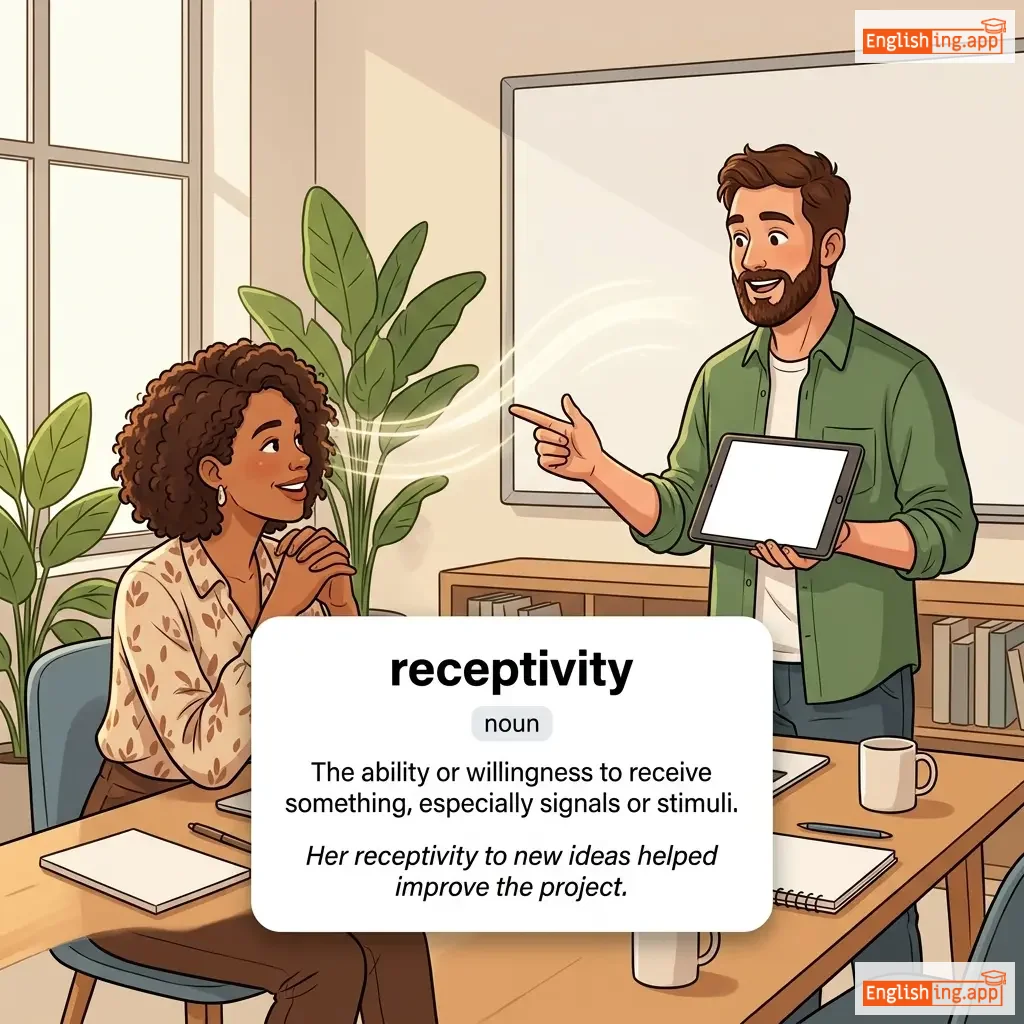
receptivity definition card — visual illustration of the meaning
noun
/rɪˌsɛptɪˈvɪti/
восприятиe (vospriyatie)

The ability or willingness to receive something, especially signals or stimuli.

"Her receptivity to new ideas helped improve the project."

"Её восприимчивость к новым идеям помогла улучшить проект." (Yeyo vospriimchivost' k novym ideyam pomogla uluchshit' proyekt.)
noun
/rɪˈsɛs/
перерыв (pereryv)

A short break from work or school; also a small space set back in a wall.

"The children played outside during recess."
"Дети играли на улице во время перерыва." (Deti igrali na ulitse vo vremya pereryva.)
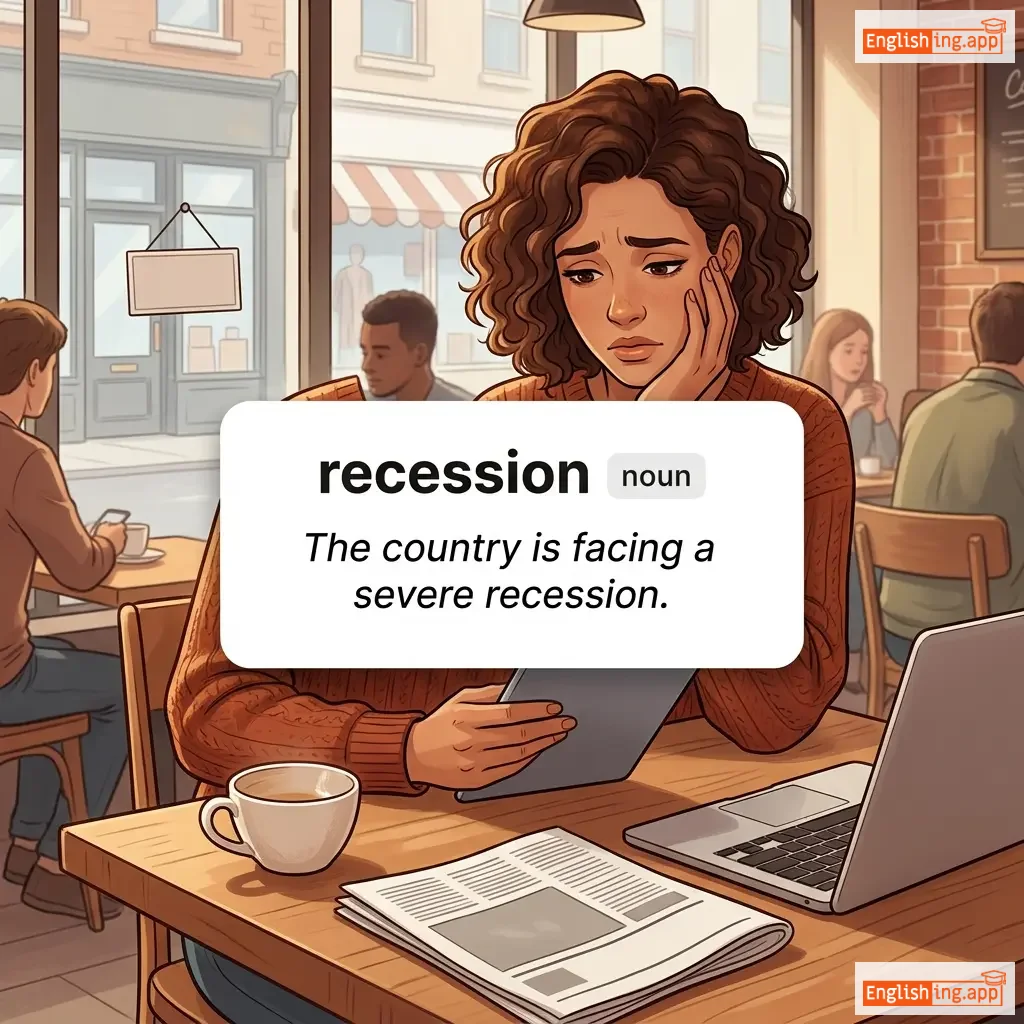
recession definition card — visual illustration of the meaning
noun
/rɪˈsɛʃən/
рецессия (retsessiya)

A period of temporary economic decline during which trade and industrial activity are reduced.

"The country is facing a severe recession."
"Страна сталкивается с тяжёлой рецессией." (Strana stalkivaetsya s tyazhyoloy retsessiyey)
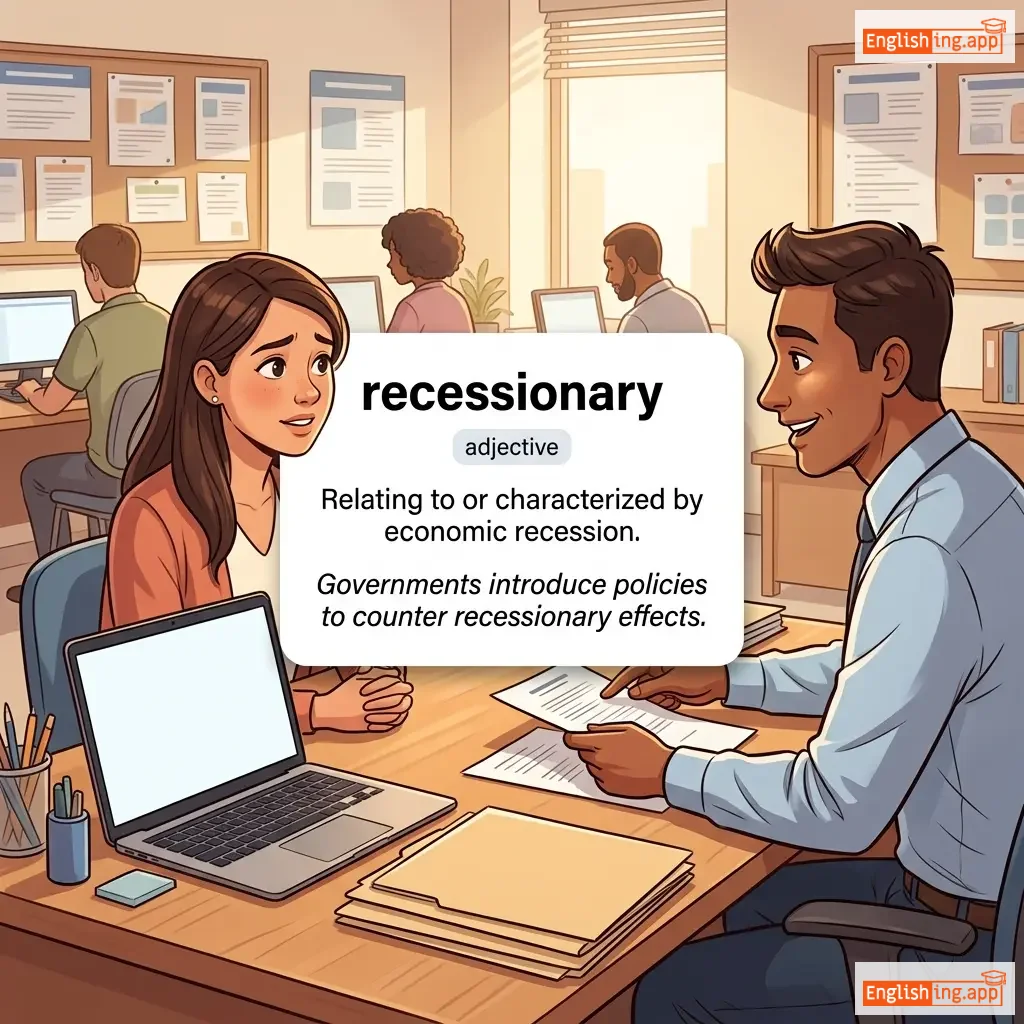
recessionary definition card — visual illustration of the meaning
adjective
rɪˈsɛʃ.ən.er.i
рецессионный (recessionny)

Relating to or characterized by economic recession.

"Governments introduce policies to counter recessionary effects."

"Правительства вводят политику для противодействия рецессионным эффектам." (Pravitel'stva vvodjat politiku dlya protivodejstviya recessionnym effektam.)
adjective
/rɪˈsɛsɪv/
рецессивный (retsezivny)

In genetics, relating to a trait that is expressed only when two copies of the gene are present.

"Blue eye color is often a recessive trait."

"Синий цвет глаз часто является рецессивной чертой." (Sinii tsvet glaz chasto yavlyaetsya retsezivnoi chertoi.)
adjective
/rəˈʃɛrʃ/
редкий (redkiy)

Rare, exotic, or obscure, often in a sophisticated or refined way.

"The gallery displayed many recherche artworks from unknown artists."

"Галерея представила много редких произведений искусства неизвестных художников." (Galereya predstavila mnogo redkikh proizvedeniy iskusstva neizvestnykh khudozhnikov.)
noun
/rɪˈsɪdɪˌvɪzəm/
рецидивизм (retsidivizm)

The tendency of a convicted criminal to reoffend or relapse into criminal behavior.

"The government introduced new programs to reduce recidivism among former inmates."

"Правительство внедрило новые программы по снижению рецидивизма среди бывших заключённых." (Pravitelstvo vnedrilo novye programmy po snizheniyu retsidivizma sredi byvshikh zaklyuchennykh.)
noun
/rɪˈsɪdɪvɪst/
рецидивист (retsidivist)

A person who repeatedly commits crimes, especially after having been punished.

"The police identified him as a recidivist who had been arrested several times before."

"Полиция идентифицировала его как рецидивиста, которого арестовывали несколько раз ранее." (Politsiya identifitsirovala ego kak retsidivista, kotorogo arestovyvali neskol'ko raz ranee.)
noun
/ˈrɛsɪpi/
рецепт (retsept)

a set of instructions for preparing a particular dish, including a list of the ingredients required

"I found a great recipe for chocolate cake."

"Я нашел отличный рецепт шоколадного торта." (Ya nashel otlichnyy retsept shokoladnogo torta.)
noun
/rɪˈsɪpiənt/
получатель (poluchatel)

A person who receives something, such as an award, gift, or message.

"She was the recipient of the award for best performance."

"Она была получателем награды за лучшее исполнение." (Ona byla poluchatelem nagrady za luchsheye ispolneniye.)
adjective
/rɪˈsɪprəkəl/
взаимный (vzaimny)

Given, felt, or done in return; mutual.

"Their relationship is based on reciprocal respect and trust."

"Их отношения основаны на взаимном уважении и доверии." (Ih otnosheniya osnova na vzaimnom uvaženii i doverii.)
verb
/rɪˈsɪprəˌkeɪt/
отвечать (otvechat)

To respond to an action or gesture by making a corresponding one.

"She smiled at him, and he reciprocated with a warm hug."
"Она улыбнулась ему, а он ответил теплым объятием." (Ona ulybnulas' emu, a on otvetil teplym ob'iat'em.)
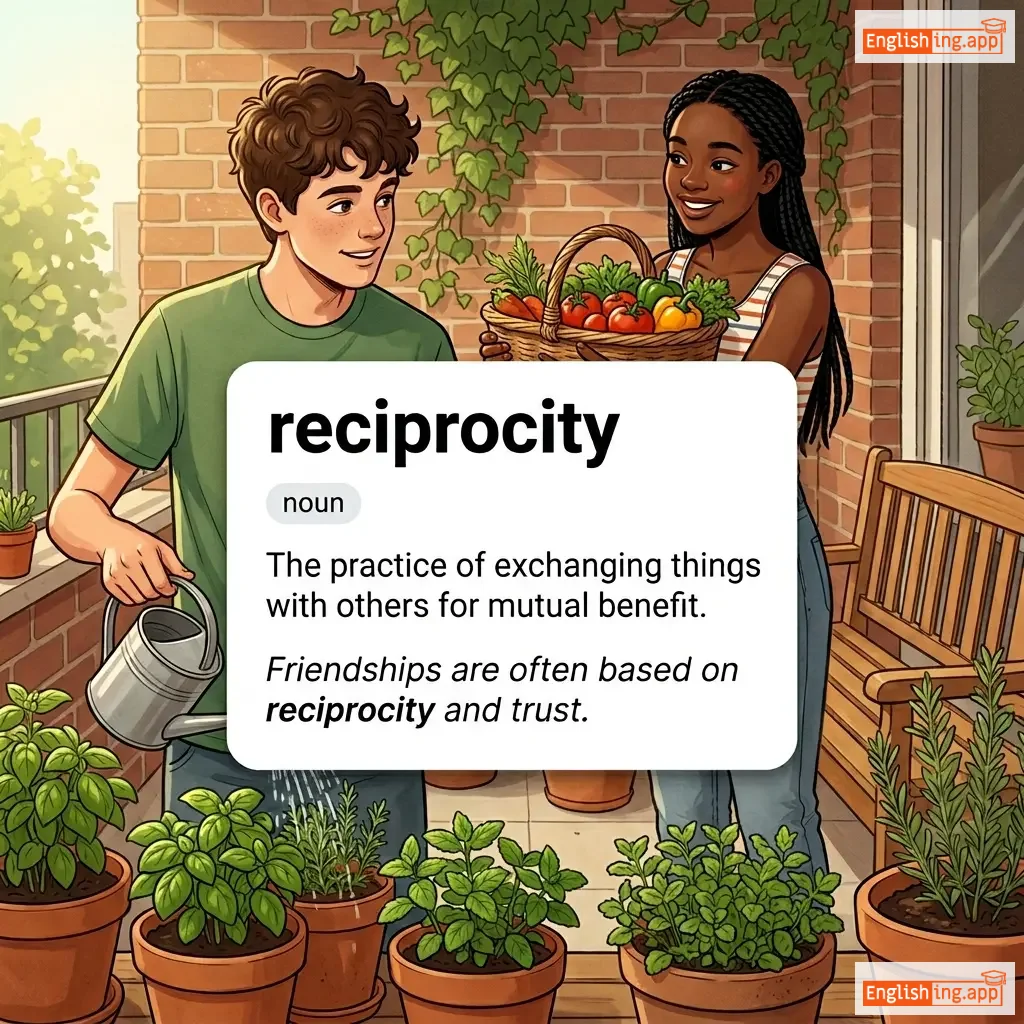
reciprocity definition card — visual illustration of the meaning
noun
/ˌrɛsɪˈprɒsɪti/
взаимность (vzaimnost)

The practice of exchanging things with others for mutual benefit.

"Friendships are often based on reciprocity and trust."

"Дружба часто основана на взаимности и доверии." (Druzhba chasto osnovana na vzaimnosti i doverii.)
noun
/rɪˈsaɪtl/
рецитал (retsital)

A performance of music, dance, or poetry, usually by a soloist.

"She gave a piano recital at the concert hall."

"Она дала фортепианный рецитал в концертном зале." (Ona dala fortepiannyy retsital v kontsertnom zale.)
noun
/ˌrɛsɪˈteɪʃən/
декламация (deklamatsiya)

The act of reading or repeating something aloud, especially poetry or passages.

"The student won the prize for her poetry recitation."

"Студентка выиграла приз за её поэтическое декламирование." (Studentka vyigrala priz za yeye poetskoye deklamirovaniye.)