Словари

Словарь английского языка | Значения слов, определения и примеры

noun
/ˌræm.ɪ.fɪˈkeɪ.ʃən/
последствие (posledstvie)

a consequence of an action or event, often complex or unwelcome.

"The new law has serious social ramifications."

"Новый закон имеет серьезные социальные последствия." (Novyy zakon imeyet seryoznye sotsial'nyye posledstviya.)
verb
/ˈræm.ɪ.faɪ/
разветвляться (razvetvlyatsya)

to spread or branch out into divisions or subdivisions.

"The river ramifies into several smaller streams."

"Река разветвляется на несколько мелких ручьёв." (Reka razvetvlyayetsya na neskol'ko melkikh ruch'yev.)
adjective
/ˈreɪ.moʊs/
ветвистый (vetvistyy)

having many branches.

"The ramose tree shaded the entire garden."

"Ветвистое дерево давало тень всему саду." (Vetvistoe derevo davalo ten' vsemu sadu.)
noun, verb
/ræmp/
рампа (rampa)

a sloping surface joining two different levels; as a verb, to increase or rise sharply

"The car drove up the ramp into the parking garage."

"Машина поднялась по рампе в гараж." (Mashina podnyalas' po rampe v garazh.)
adjective
/ˈræmpənt/
необузданный (neobuzdanny)

existing or spreading unchecked, often in an undesirable way

"Corruption was rampant in the city administration."

"Коррупция была в разгаре в городской администрации." (Korruptsiya byla v razgare v gorodskoy administratsii.)
noun
/ˈræmpɑːrt/
бастион (bastion)

a defensive wall of a castle or fort

"The soldiers stood on the rampart, watching the enemy approach."

"Солдаты стояли на бастионе, наблюдая, как враг приближается." (Soldaty stoyali na bastione, nablyudaya, kak vrag priblizhayetsya.)
adjective
/ˈræmʃækəl/
ветхий (vethij)

poorly built or maintained; in a state of disrepair

"They lived in a ramshackle old house on the edge of town."

"Они жили в старом ветхом доме на окраине города." (Oni zhili v starom vethom dome na okraine goroda.)
noun
/ræntʃ/
скотоводческая ферма (skotovodcheskaya ferma)

a large farm where animals such as cattle or sheep are raised

"They own a huge cattle ranch in Texas."

"Они владеют огромной скотоводческой фермой в Техасе." (Oni vladejut ogromnoj skotovodcheskoj fermoj v Tekhase.)
adjective
/ˈrænsɪd/
прогорклый (progorklyi)

having a bad taste or smell due to being old or spoiled (especially fats or oils)

"The butter had gone rancid after being left out too long."

"Масло стало прогорклым после того, как оно лежало слишком долго на воздухе." (Maslo stalo progorklym posle togo, kak ono lezhalo slishkom dolgo na vozdukhe.)
noun
/ˈræŋ.kər/
злоба (zloba)

A feeling of deep and bitter anger or resentment.

"There was a rancor between the two rivals that never faded."

"Между двумя соперниками была злоба, которая никогда не исчезала." (Mezhdu dvumya soopernikami byla zloba, kotoraya nikogda ne ischezala.)
adjective
/ˈræŋ.kər.əs/
злопамятный (zlopamyatny)

Characterized by bitterness or resentment.

"Their rancorous debate lasted for hours."

"Их злопамятные дебаты продолжались часами." (Ikh zlopamyatnye debaty prodolzhalis' chasami.)
adjective
/ˈræn.dəm/
случайный (sluchaynyy)

Made, done, or happening without method or conscious decision.

"He made a random choice from the menu."

"Он сделал случайный выбор из меню." (On sdelal sluchaynyy vybor iz menyu.)
verb
/ˈræn.də.maɪz/
рандомизировать (randomizirovat)

To make something happen in a random order or manner.

"The software can randomize the order of questions."
"Программное обеспечение может случайным образом переставить порядок вопросов." (Programmnoye obespecheniye mozhet sluchaynym obrazom perestavit' poryadok voprosov.)
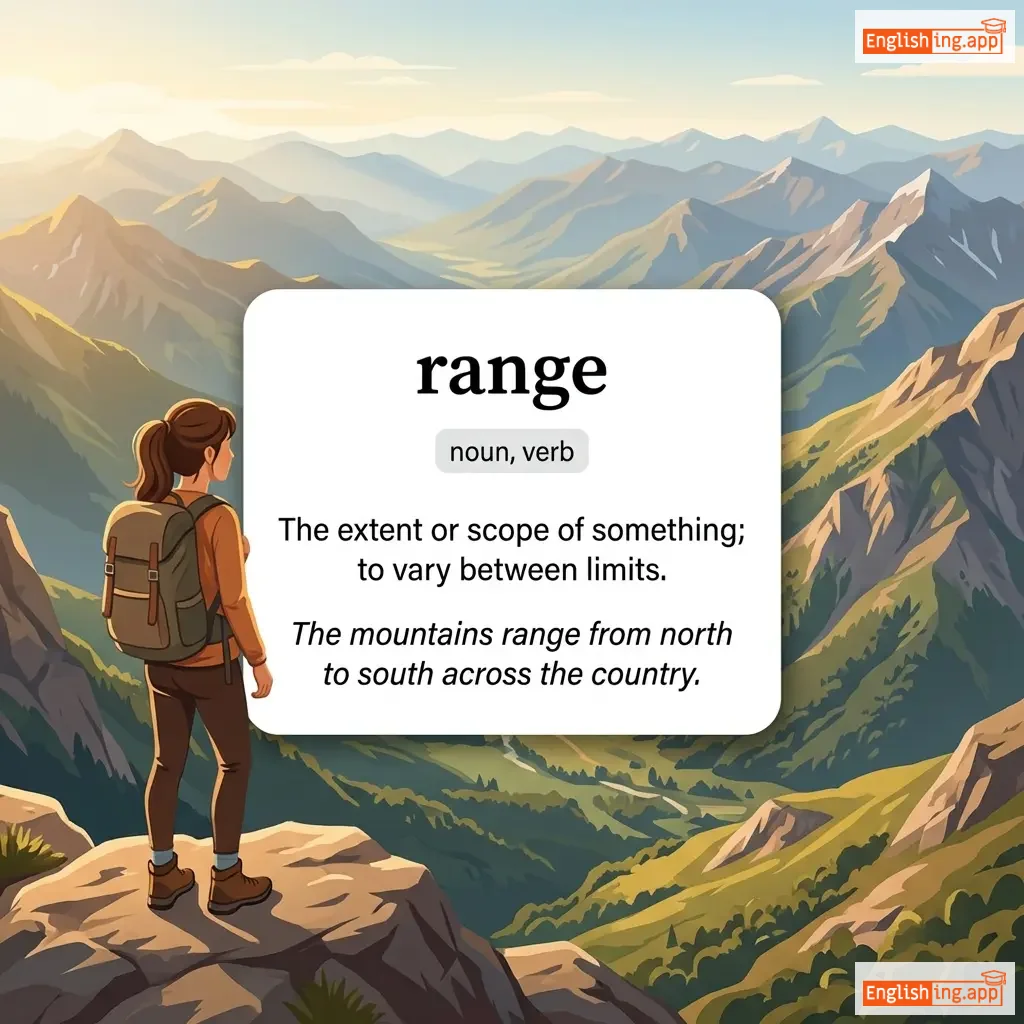
range definition card — visual illustration of the meaning
noun, verb
/reɪndʒ/
диапазон, предел (diapazon, predel)

The extent or scope of something; to vary between limits.

"The mountains range from north to south across the country."

"Горы простираются с севера на юг по всей стране." (Gory prostrirayutsya s severa na yug po vsei strane.)
noun
/ˈreɪn.dʒər/
лесник (lesnik)

A person responsible for protecting and managing forests, parks, or natural areas.

"The park ranger guided the tourists through the forest trail."

"Лесник парка проводил туристов по лесной тропе." (Lesnik parka provodil turistov po lesnoy trope.)
verb
/ˈreɪn.dʒɪŋ/
колебаться (kolebat'sya)

Extending or varying between limits.

"The temperatures are ranging from 15 to 30 degrees this week."

"Температуры колеблются от 15 до 30 градусов на этой неделе." (Temperatury koleblyutsya ot 15 do 30 gradusov na etoy nedele.)
noun
/ræŋˈɡuːn ˈkriːpər/
Рангон Крипер (Rangon Kriper)

A climbing vine with fragrant flowers that change color from white to pink to red

"The Rangoon creeper covered the entire fence with its sweet-smelling flowers."

"Рангон Крипер покрывал весь забор своими сладко пахнущими цветами." (Rangon Kriper pokryval ves' zabor svoimi sladko pakhnushchimi tsvetami.)
noun, verb, adjective
/ræŋk/
ранг (rang)

A position in a hierarchy; to place in order according to importance or quality.

"She quickly rose to a senior rank in the company."
"Она быстро поднялась до старшего ранга в компании." (Ona bystro podnyalas' do starshego ranga v kompanii.)
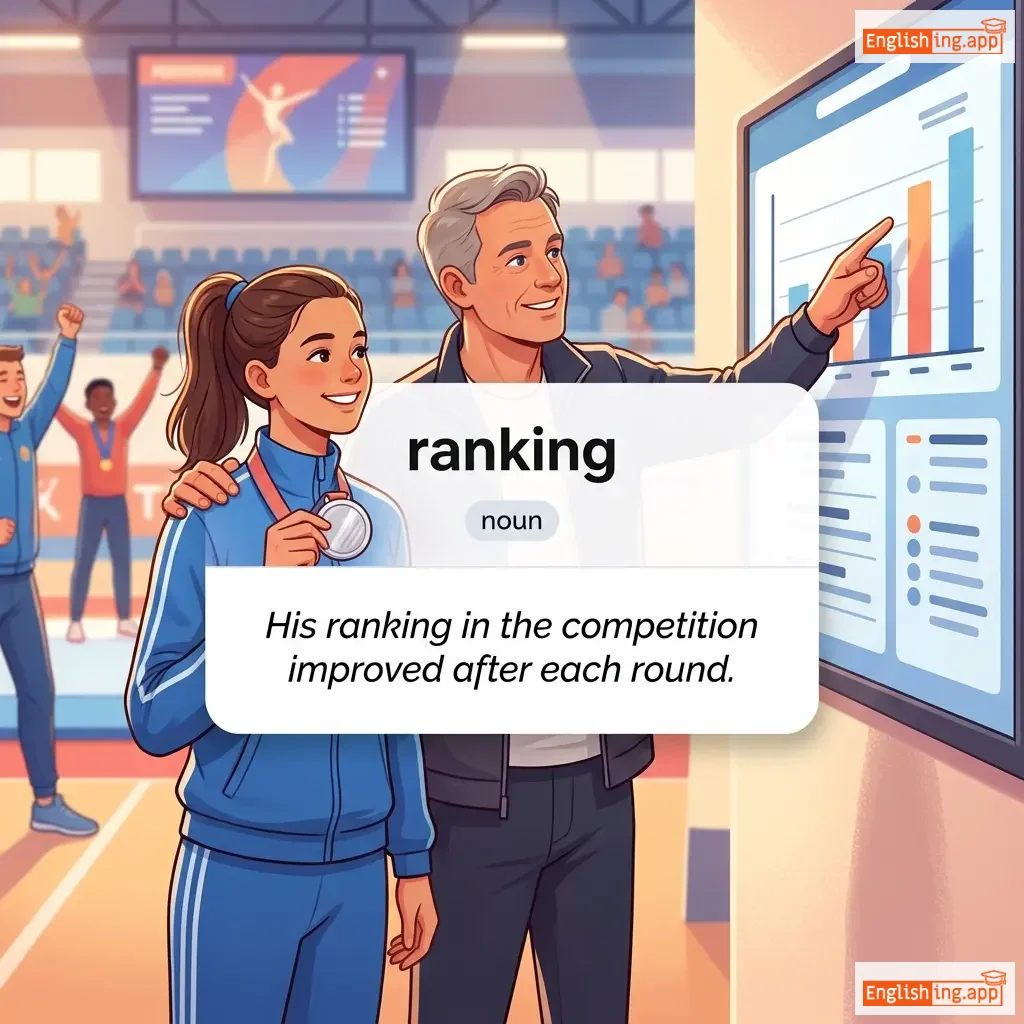
ranking definition card — visual illustration of the meaning
noun
/ˈræŋkɪŋ/
рейтинг (reyting)

a position in a list or hierarchy, especially in terms of performance or importance

"His ranking in the competition improved after each round."

"Его рейтинг в конкурсе улучшился после каждого раунда." (Ego reyting v konkurse uluchshilsya posle kazhdogo raunda.)
verb
/ˈræŋ.kəl/
досаждать (dosazhdat')

To cause continuing annoyance or resentment.

"His unfair criticism continued to rankle her for days."

"Его несправедливая критика продолжала раздражать её в течение нескольких дней." (Ego nespravedlivaya kritika prodolzhala razdrazhat' yejo v techeniye neskol'kikh dney.)
noun, verb
/ræŋks/
ранги (rangi)

Positions within a group, especially in a hierarchy or organization.

"He quickly moved up the ranks of the army."

"Он быстро поднялся по служебной лестнице в армии." (On bystro podnyalsya po sluzhebnoy lestnitsye v armii.)
verb
/ˈræn.sæk/
грабить (grabit)

to search a place roughly and steal or damage things

"Burglars ransacked the house while the family was away."

"Грабители обыскали дом, пока семья была в отъезде." (Grabiteli obyskali dom, poka sem'ya byla v otyezde.)
verb
/rænt/
кричать (krichat)

to speak or shout in an angry, uncontrolled way

"He ranted about the unfair treatment at work."

"Он кричал по поводу несправедливого отношения на работе." (On krichal po povodu nespravedlivogo otnosheniya na rabote.)
adjective
/rəˈpeɪ.ʃəs/
жадный (zhadny)

having an extreme desire to take things for oneself, greedy

"The rapacious landlord raised the rent without reason."

"Жадный арендодатель поднял аренду без причины." (Zhadny arendodatel' podnyal arendu bez prichiny.)
verb
/reɪp/
изнасилование (iznasilovanie)

to force someone to have sexual intercourse without their consent

"The law strictly punishes those who commit rape."

"Закон строго наказывает тех, кто совершает изнасилование." (Zakon strogo nakazyvayet tekh, kto sovershayet iznasilovanie.)
adjective
/ˈræp.ɪd/
быстрый (bistryy)

happening quickly or in a short time

"The company experienced rapid growth last year."

"Компания испытала быстрый рост в прошлом году." (Kompaniya ispytala bystryy rost v proshlom godu.)
noun
/rəˈpɪdəti/
быстрота (bystrota)

The quality of moving or happening quickly; swiftness or speed.

"The rapidity of technological change is astonishing."
"Быстрота технологических изменений потрясающе." (Bystrota tekhnologicheskikh izmeneniy potryasayushche.)
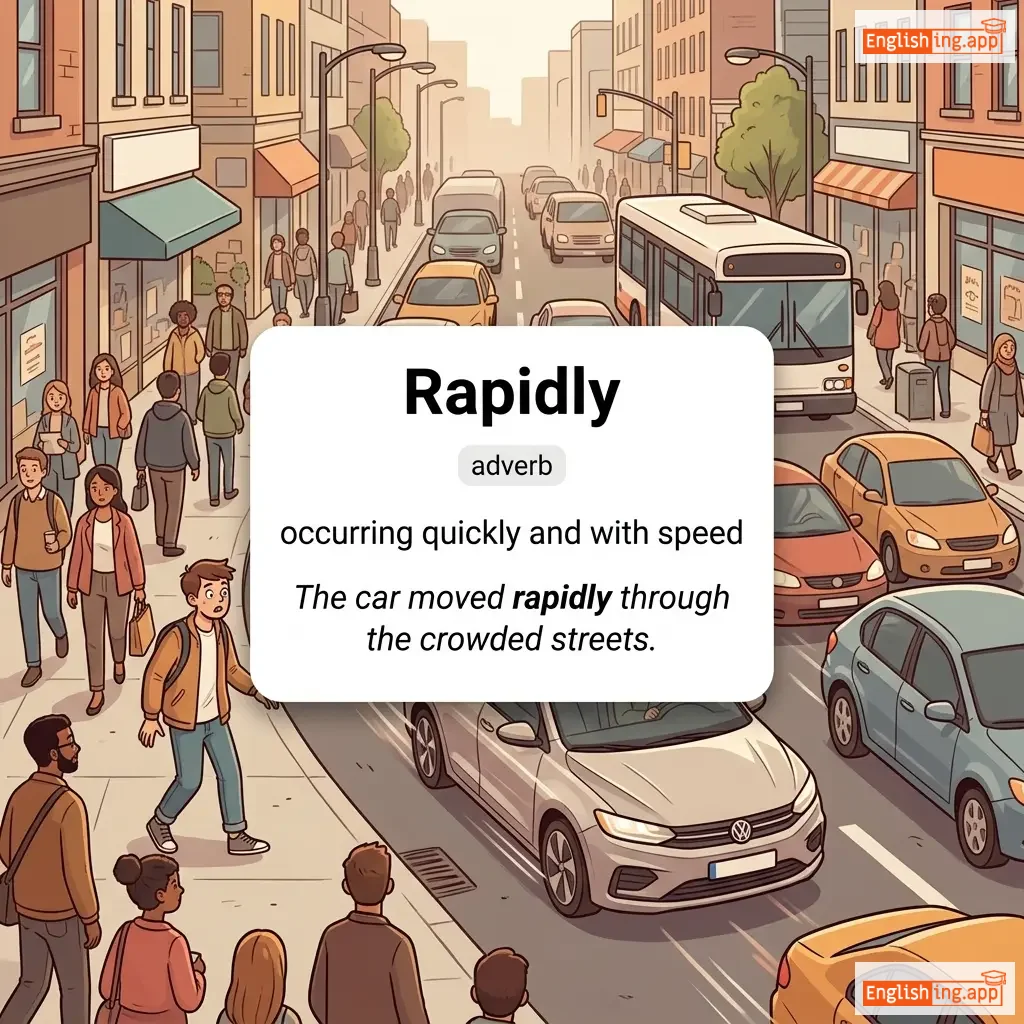
Rapidly definition card — visual illustration of the meaning
adverb
/ˈræpɪdli/
быстро (bystro)

occurring quickly and with speed

"The car moved rapidly through the crowded streets."

"Машина двигалась быстро по переполненным улицам." (Mashina dvigalas' bystro po perepovnennym ulitsam.)
noun
/ˈræp.aɪn/
разбой (razboy)

the violent seizure of someone's property

"The war was marked by rapine and destruction."
"Война была отмечена разбоем и разрушениями." (Voyna byla otmechena razboem i razrusheniyami.)
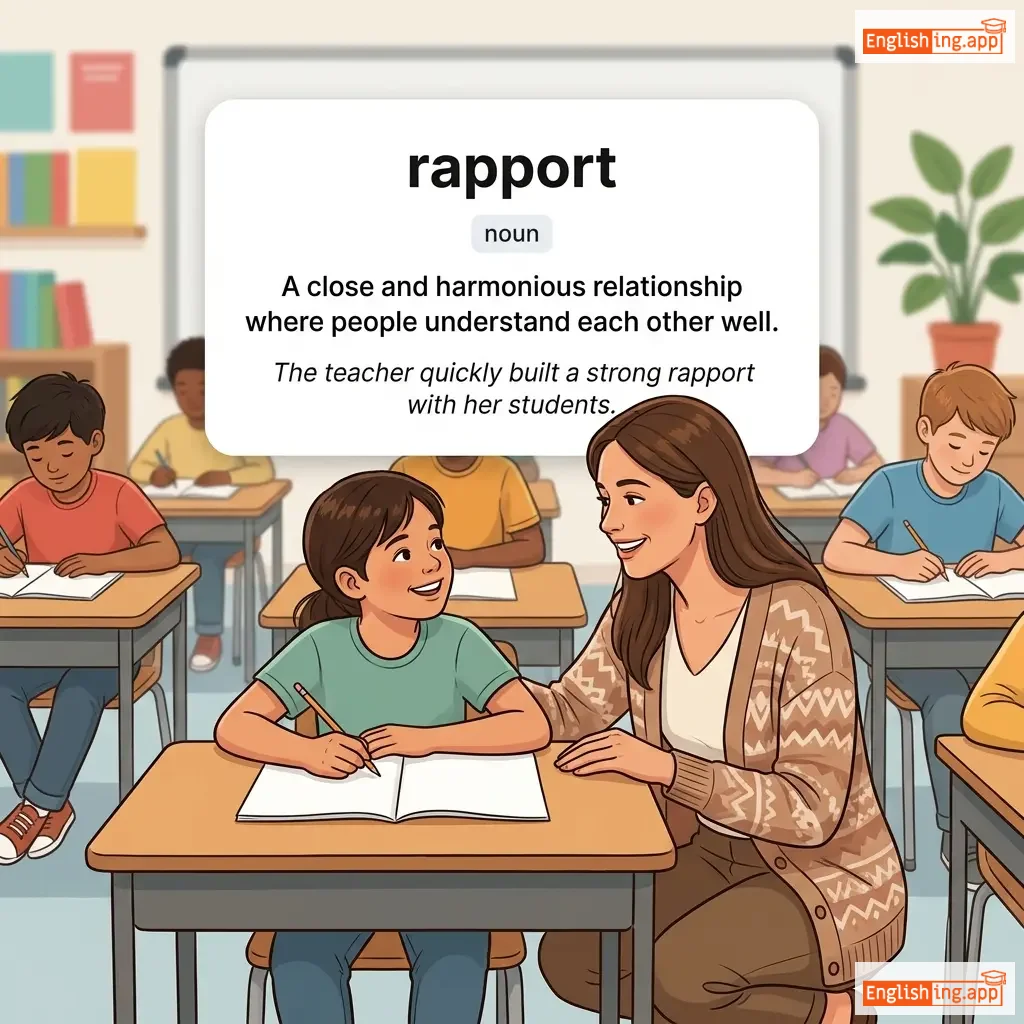
rapport definition card — visual illustration of the meaning
noun
/ræˈpɔːr/
отношения (otnosheniya)

A close and harmonious relationship where people understand each other well.

"The teacher quickly built a strong rapport with her students."

"Учитель быстро установил крепкие отношения с учениками." (Uchitel' bystro ustanovil krepkie otnosheniya s uchenikami.)
noun
/ˌræproʊʃˈmɑːn/
приближение (priblizhenie)

The establishment or resumption of harmonious relations.

"The two countries signed an agreement that marked a new rapprochement."

"Две страны подписали соглашение, которое ознаменовало новое приближение." (Dve strany podpisali soglashenie, kotoroe oznamenovalo novoe priblizhenie.)
noun
/ræpˈskæliən/
озорной человек (ozornoy chelovek)

A mischievous or cheeky person; a rascal.

"The little rapscallion hid his brother’s shoes as a prank."

"Маленький рапскалион спрятал туфли своего брата, устроив розыгрыш." (Malen'kiy rapscallion spryatal tufli svoego brata, ustroiv rozygrysh.)
adjective
/ræpt/
заворожённый (zavorozhyonnyy)

Completely absorbed or fascinated by something.

"She listened with rapt attention to the speaker’s words."

"Она слушала слова оратора с заворожённым вниманием." (Ona slushala slova oratora s zavorozhyonnyy vnimaniem.)
adjective
/ræpˈtɔːriəl/
хищный (khishchnyy)

Relating to birds of prey or predatory behavior.

"The eagle is a raptorial bird with sharp talons."

"Орёл — это хищная птица с острыми когтями." (Oryol – eto khishchnaya ptitsa s ostryimi kogtyami.)
noun
/ˈræp.tʃər/
экстаз, восторг (ekstaz, vostorg)

A feeling of intense joy, delight, or ecstasy.

"She listened to the music in rapture."

"Она слушала музыку в экстазе." (Ona slushala muzyku v ekstaze.)
adjective
/reər/
редкий (redkiy)

Unusual or uncommon; not occurring often.

"This species of bird is extremely rare."
"Этот вид птиц чрезвычайно редок." (Etot vid ptits chrezvychayno redok.)
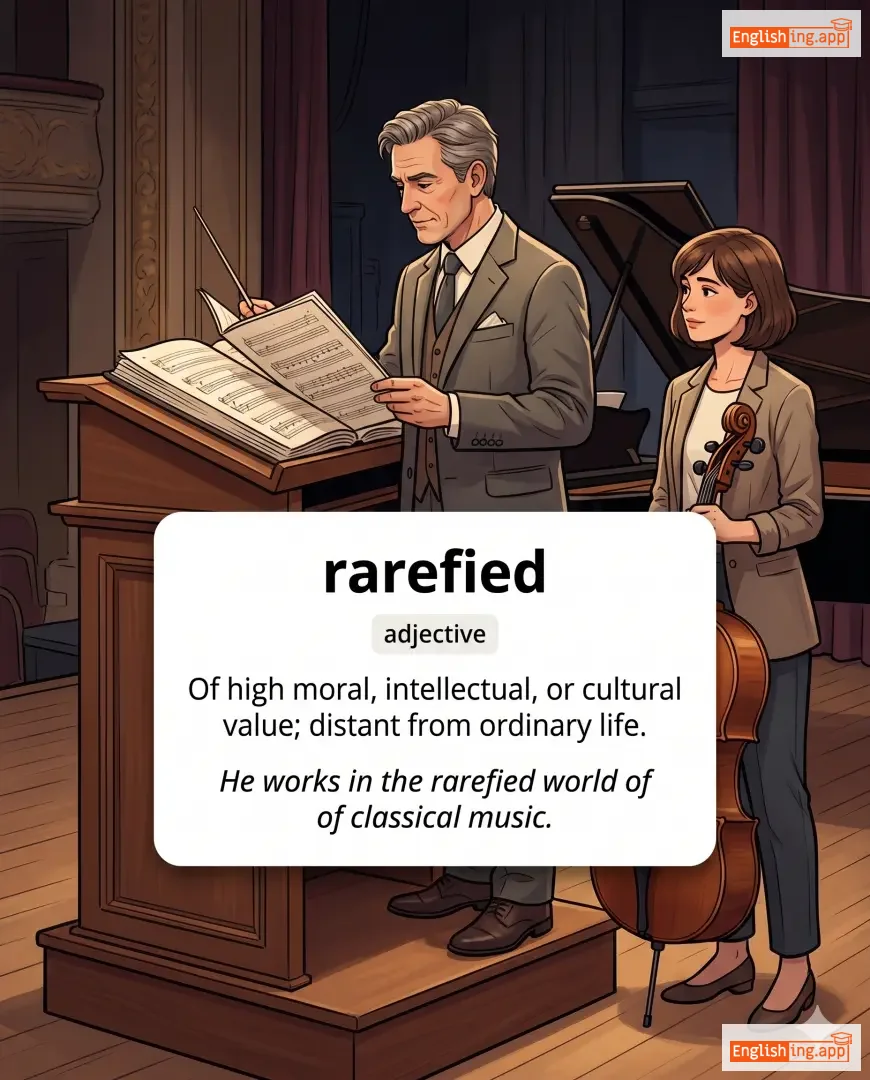
rarefied definition card — visual illustration of the meaning
adjective
/ˈreə.rɪ.faɪd/
возвышенный (rarefied)

Of high moral, intellectual, or cultural value; distant from ordinary life.

"He works in the rarefied world of classical music."

"Он работает в возвышенном мире классической музыки." (On rabotaet v vozvyshennom mire klassicheskoy muzyki.)
verb
/ˈreə.rɪ.faɪ/
разжижать, очищать (razhizhat', ochishchat')

To make something less dense or more refined.

"The air rarefies as you climb higher into the mountains."

"Воздух разжижается по мере того, как вы поднимаетесь выше в горах." (Vozdukh razhizhaetsya po mere togo, kak vy podnimayetes' vyshe v gorakh.)
adverb
/ˈrɛə(r)li/
редко (redko)

not often, infrequently

"She rarely eats sweets because of her diet."

"Она редко ест сладости из-за своей диеты." (Ona redko yest sladosti iz-za svoey diety.)
noun
/ˈrerəti/
состояние быть редким; что-то необычное или редкое (sostoyanie byt' redkim; chto-to neobychnoye ili redkoye)

the state of being rare; something that is uncommon or scarce

"The antique vase was a rarity worth thousands of dollars."

"Антикварная ваза была редкостью, стоящей тысячи долларов." (Antikvarnaya vaza byla redkost'yu, stoyashchiyey tysyachi dollarov.)
adjective
/ræʃ/
поспешный, необдуманный (pospeshny, neobdumanny)

Acting quickly without careful consideration; reckless.

"It was a rash decision to invest without research."

"Это было поспешное решение инвестировать без исследования." (Eto bylo pospeshnoe reshenie investirovat' bez issledovaniya.)
verb
/ræsp/
говорить грубым голосом или скрежетать с грубым звуком (govorit' grubym golosom ili skrezhyatat' s grubym zvukom)

to speak in a rough, harsh voice or to scrape with a coarse sound

"He rasped out a warning before collapsing."

"Он расспел предупреждение перед тем как упасть." (On raspel preduprezhdenie pered tem kak upast'.)
adjective
/ˈræspi/
хриплый (khriply)

having a harsh, rough, or grating sound

"His raspy voice revealed years of smoking."

"Его хриплый голос показал годы курения." (Ego khriplyi golos pokazal gody kureniya.)
noun
/ræt/
крыса (krysa)

a small rodent that resembles a large mouse, often considered a pest

"A rat ran across the kitchen floor last night."

"Крыса пробежала по кухонному полу прошлой ночью." (Krysa probezhala po kukhonnomu polu proshloy noch'yu.)
noun
/reɪt/
ставка (stavka)

the cost or price of something, or the amount at which something happens

"The rate of inflation is increasing every year."

"Уровень инфляции увеличивается каждый год." (Uroven' inflyatsii uvelichivaetsya kazhdyy god.)
adverb
/ˈræðər/
в большинстве случаев (v bolshinstve sluchayev)

to a certain extent or degree

"I would rather stay home than go out."

"Я бы предпочел остаться дома, чем выходить." (Ya by predpochyol ostatsya doma, chem vykhodit.)
noun
/ˌrætɪfɪˈkeɪʃən/
ратификация (ratifikaciya)

the action of signing or giving formal consent to a treaty, contract, or agreement

"The treaty required ratification by both countries' parliaments."

"Договор потребовал ратификации обоими парламентами стран." (Dogovor potreboval ratifikatsii oboimi parlamentami stran.)
verb
/ˈrætɪfaɪ/
ратифицировать (ratifitsirovat)

to approve or confirm something officially, usually by law or formal consent

"The government ratified the trade agreement."

"Правительство ратифицировало торговое соглашение." (Pravitel'stvo ratifitsirovalo torgovoe soglashenie.)
noun
/ˈreɪtɪŋ/
оценка (otsenka)

an evaluation or assessment, usually numerical

"The movie received a high rating from critics."

"Фильм получил высокую оценку от критиков." (Film poluchil vysokuyu otsenku ot kritikov.)
noun
/ˈreɪʃoʊ/
соотношение (sootnoshenie)

a relationship between two numbers showing how many times the first number contains the second

"The ratio of boys to girls in the class is 2:1."

"Соотношение мальчиков и девочек в классе 2:1." (Soootnoshenie mal'chikov i devochek v klasse 2:1.)