Словари

Словарь английского языка | Значения слов, определения и примеры
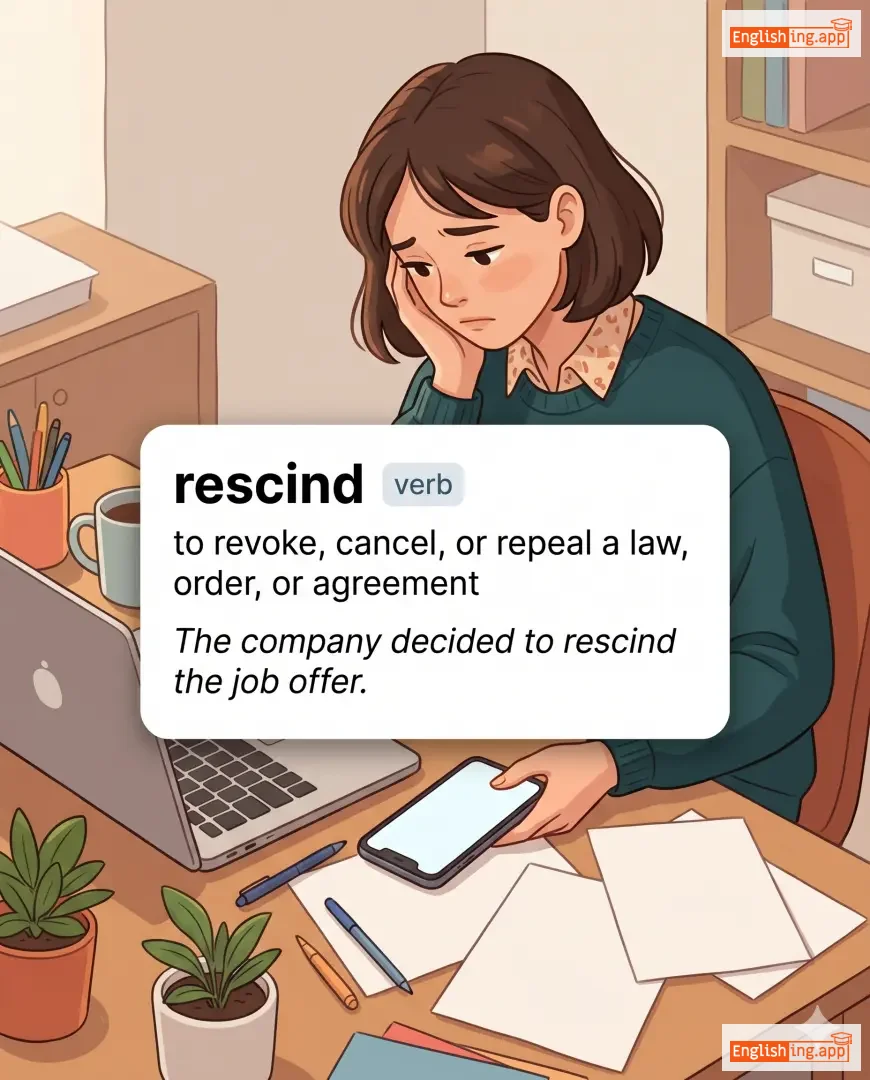
rescind definition card — visual illustration of the meaning
verb
/rɪˈsɪnd/
отменить (otmenit')

to revoke, cancel, or repeal a law, order, or agreement

"The company decided to rescind the job offer."

"Компания решила отменить предложение о работе." (Kompaniya reshilа otmenit' predlozhenie o rabote.)
noun
/rɪˈsɪʒən/
аннулирование (annulirovanie)

the cancellation or annulment of a law, contract, or agreement

"The rescission of the contract left both parties disappointed."
"Аннулирование контракта оставило обе стороны разочарованными." (Annulirovanie kontrakta ostavilo obe storony razocharovannymi.)
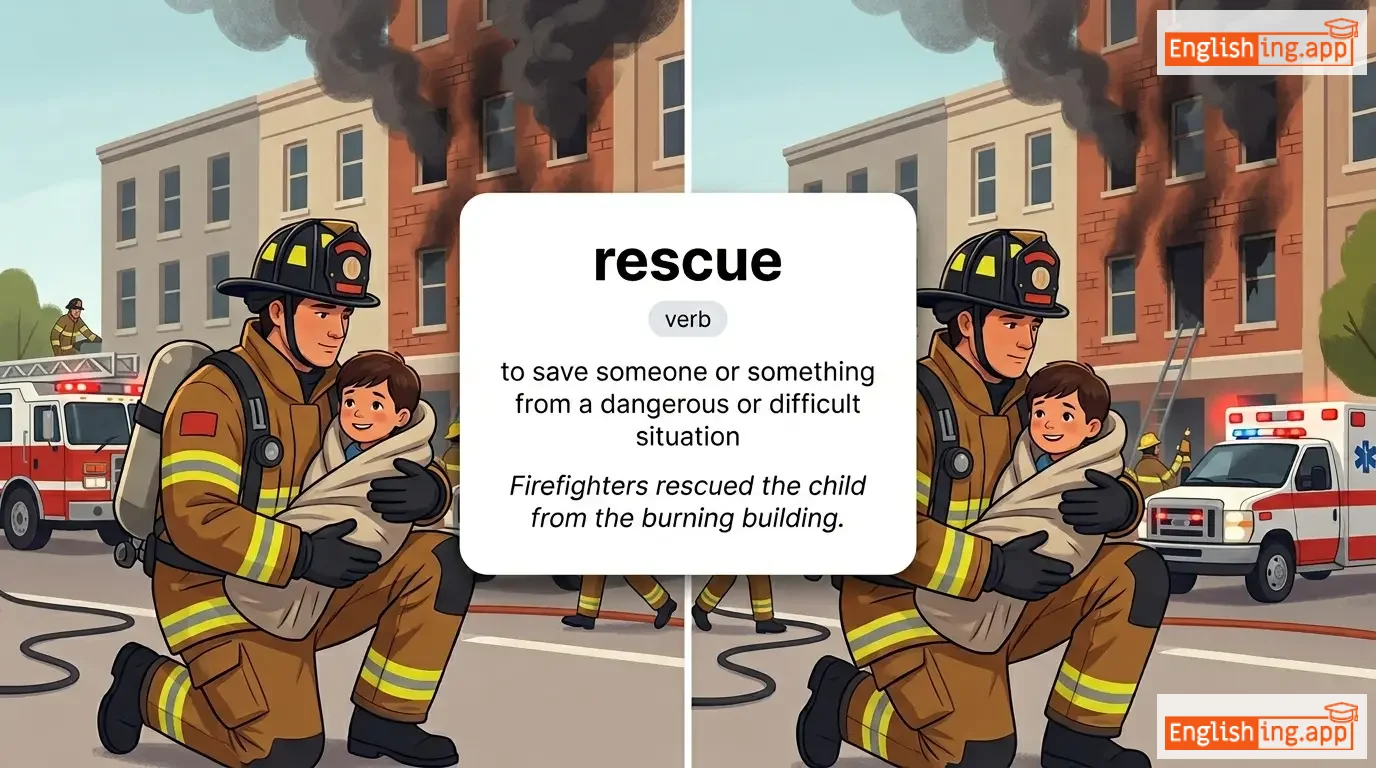
rescue definition card — visual illustration of the meaning
verb
/ˈrɛskjuː/
спасать (spasat)

to save someone or something from a dangerous or difficult situation

"Firefighters rescued the child from the burning building."

"Пожарные спасли ребенка из горящего здания." (Pozharnye spasli rebenka iz goryashchego zdaniya.)
research definition card — visual illustration of the meaning
noun
/rɪˈsɜːtʃ/
исследование (issledovanie)

the systematic investigation into and study of materials and sources in order to establish facts and reach new conclusions

"She conducted research on climate change effects."

"Она провела исследование о последствиях изменения климата." (Ona provela issledovanie o posledstviyah izmeneniya klimata.)
noun
/rɪˈsɜːtʃə(r)/
исследователь (issledovatel)

a person who conducts research

"The researcher published her findings in a scientific journal."

"Исследователь опубликовал свои результаты в научном журнале." (Issledovatel opublikoval svoi rezul'taty v nauchnom zhurnale.)
researchers definition card — visual illustration of the meaning
noun
rɪˈsɜː.tʃəz
исследователи (issledovateli)

People who study and investigate to discover new information or facts.

"Researchers are working on innovative solutions."

"Исследователи работают над инновационными решениями." (Issledovateli rabotayut nad innovatsionnymi resheniyami.)
verb
/ˌriːˈsiːt/
пересаживать (peresazhivat)

to seat someone again or to fit something back into its place

"The usher had to reseat the guests after the interruption."

"Услужливый работник должен был пересадить гостей после прерывания." (Usluzhivyy rabotnik dolzhen byl peresadit' gostey posle preryvaniya.)
noun
/rɪˈzembləns/
похожесть (pokhozhect)

the state of being alike or similar, especially in appearance

"There is a strong resemblance between the two brothers."

"Между двумя братьями есть сильное сходство." (Mezhdu dvumya brat'yami yest' sil'noye skhodstvo.)
verb
/rɪˈzɛmbəl/
похоже на (pokhozhe na)

to look like or be similar to something or someone

"She resembles her mother in both appearance and mannerisms."

"Она похожа на свою мать как по внешности, так и по манерам." (Ona pokhozha na svoiu mat' kak po vneshnosti, tak i po maneram.)
verb
/rɪˈzɛnt/
негодовать (negodovat)

to feel bitterness or displeasure about something or someone

"She began to resent the constant criticism from her boss."
"Она начала испытывать раздражение от постоянной критики своего начальника." (Ona nachala ispytyvat' razdrazhenie ot postoyannoy kritiki svoego nachal'nika.)
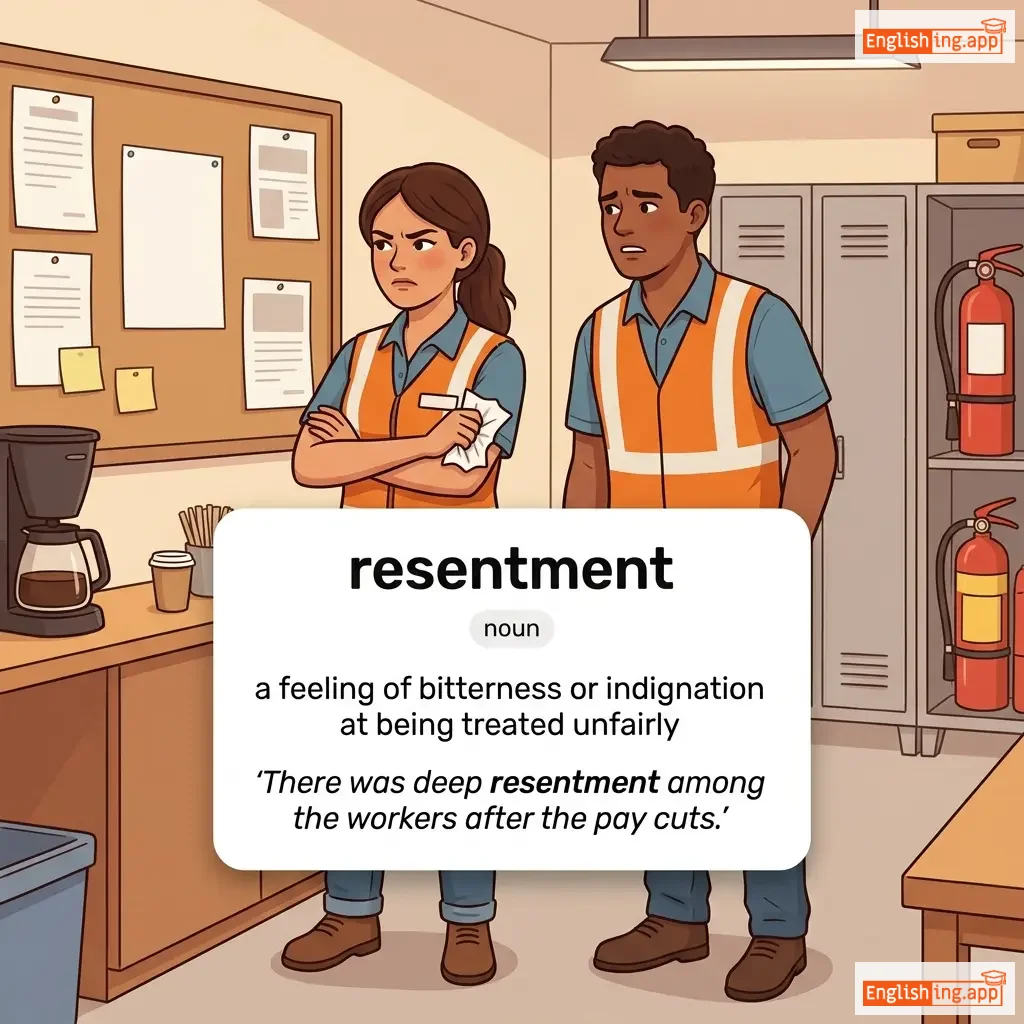
resentment definition card — visual illustration of the meaning
noun
/rɪˈzɛntmənt/
негодование (negodovanie)

a feeling of bitterness or indignation at being treated unfairly

"There was deep resentment among the workers after the pay cuts."

"После сокращения зарплаты среди работников был глубокий рессентимент." (Posle sokrashcheniya zarplaty sredi rabotnikov byl glubokiy ressentiment.)
noun
/ˌrɛzərˈveɪʃən/
бронирование (bronirovanie)

an arrangement made in advance to secure accommodation, a seat, or service

"He made a reservation at the hotel for the weekend."

"Он сделал бронирование в отеле на выходные." (On sdelal bronirovanie v otele na vykhodnye.)
reserve definition card — visual illustration of the meaning
verb
/rɪˈzɜːrv/
зарезервировать (zarezervirovat)

to arrange for something to be kept for future use or for a particular person

"They reserved a table for two at the restaurant."

"Они зарезервировали столик на двоих в ресторане." (Oni zarezervirovali stolik na dvoikh v restorane.)
adjective
/rɪˈzɜːrvd/
сдержанный / reservado (sderzhannyy / reservado)

quiet, restrained, or not openly expressive of feelings

"He is a reserved person who rarely shares his thoughts."

"Он сдержанный человек, который редко делится своими мыслями." (On sderzhannyy chelovek, kotoryy redko delitsya svoimi myslyami.)
noun
/ˈrɛzərvwɑːr/
резервуар (rezervuar)

A large natural or artificial lake used as a source of water supply.

"The city built a new reservoir to ensure enough drinking water for its residents."

"Город построил новый резервуар, чтобы обеспечить достаточное количество питьевой воды для своих жителей." (Gorod postroil novyy rezervuar, chtoby obespechit' dostatochnoe kolichestvo pit'yevoyi vody dlya svoikh zhiteley.)
verb
/rɪˈzaɪd/
проживать (prozhivat')

to live or dwell in a particular place

"They reside in a large house near the river."

"Они живут в большом доме у реки." (Oni zhivut v bol'shom dome u reki.)
noun
/ˈrɛzɪdəns/
резиденция (rezidentsiya)

a place where someone lives; a home or dwelling

"He recently moved to a new residence near the city center."

"Он недавно переехал в новое резиденцию рядом с центром города." (On nedavno pereekhal v novoe rezidentsiyu ryadom s tsentrom goroda.)
noun
/ˈrɛzɪdənt/
житель (zhitel)

A person who lives in a particular place.

"Every resident of the building must follow the safety rules."
"Каждый житель здания должен соблюдать правила безопасности." (Kazhdyi zhitel zdaniya dolzhen soblyudat' pravila bezopasnosti.)
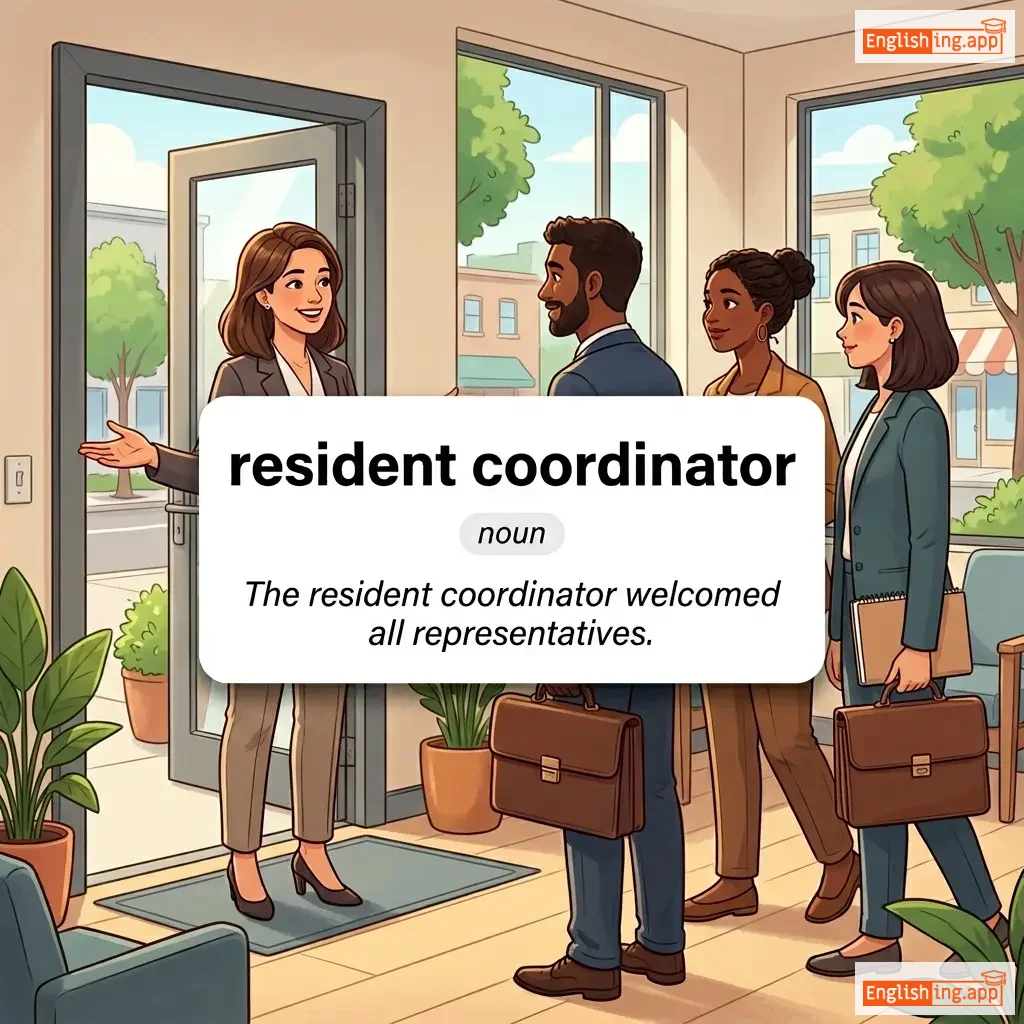
resident coordinator definition card — visual illustration of the meaning
noun
/ˈrez.ɪ.dənt ˈkəʊ.ɔː.dɪ.neɪ.tər/
резиденциальный координатор (rezidentsial'nyy koordinator)

A local administrator or official who coordinates activities in a specific region.

"The resident coordinator welcomed all representatives."
"Резиденциальный координатор приветствовал всех представителей." (Rezidentsial'nyy koordinator privetstvoval vsekh predstaviteley.)
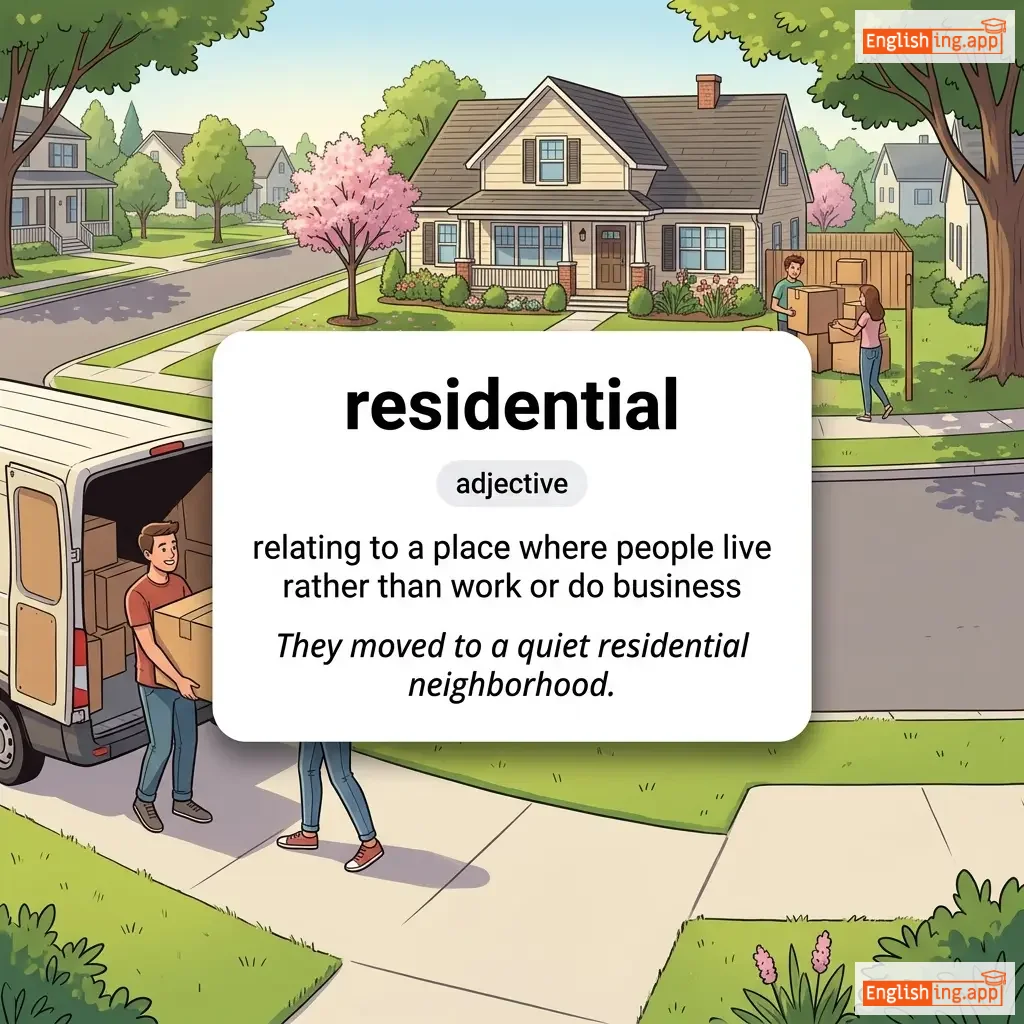
residential definition card — visual illustration of the meaning
adjective
/ˌrɛzɪˈdɛnʃəl/
жилой (zhiloy)

relating to a place where people live rather than work or do business

"They moved to a quiet residential neighborhood."

"Они переехали в тихий жилой район." (Oni pereekhali v tikhij zhilyj rajon.)
adjective
/rɪˈzɪdjuəl/
резидуальный (rezidual'nyy)

Remaining after the greater part has gone.

"The patient experienced residual pain after the surgery."
"Пациент испытал резидуальную боль после операции." (Patsiyent ispyltal rezidual'nuyu bol' posle operatsii.)
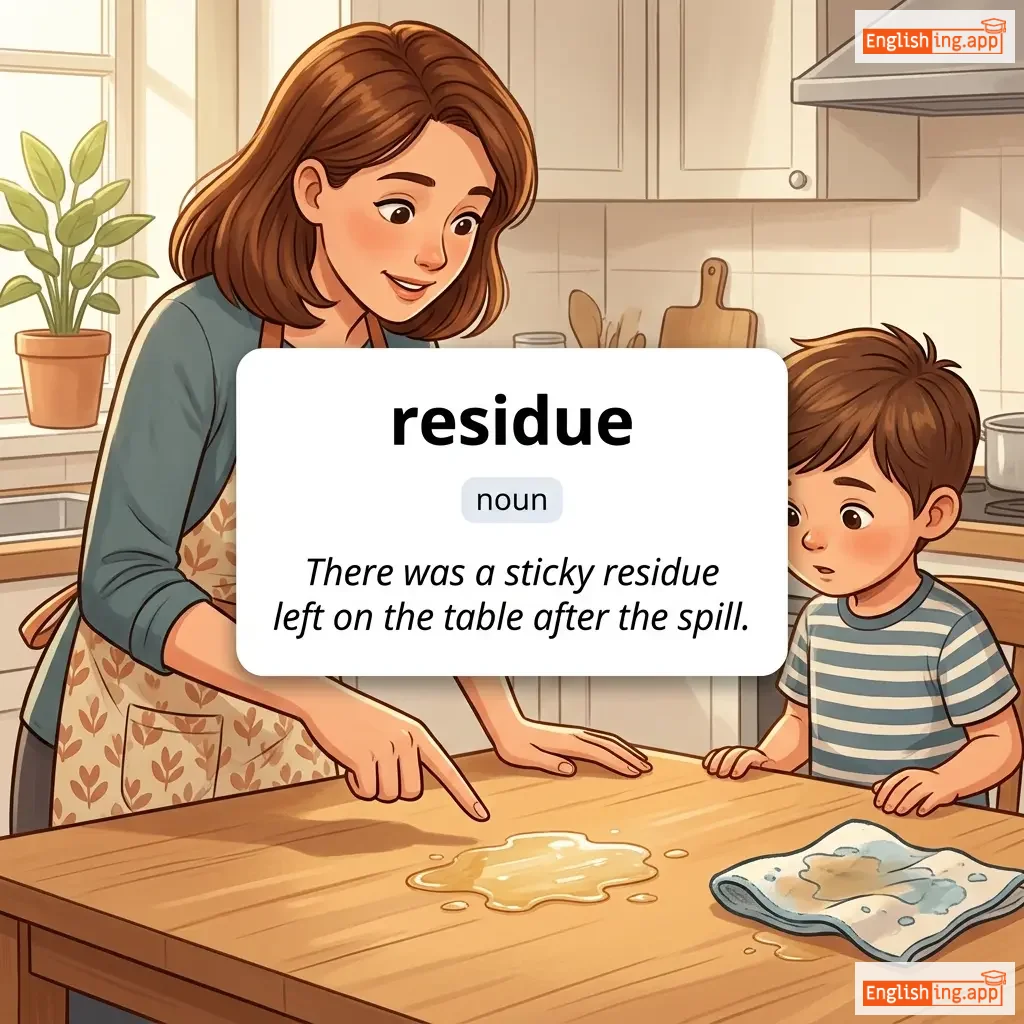
residue definition card — visual illustration of the meaning
noun
/ˈrɛzɪdjuː/
остаток (ostatok)

A small amount of something that remains after the main part has been removed or used.

"There was a sticky residue left on the table after the spill."
"После разлива на столе остался липкий остаток." (Posle razliva na stole ostalsya lipkiy ostatok.)
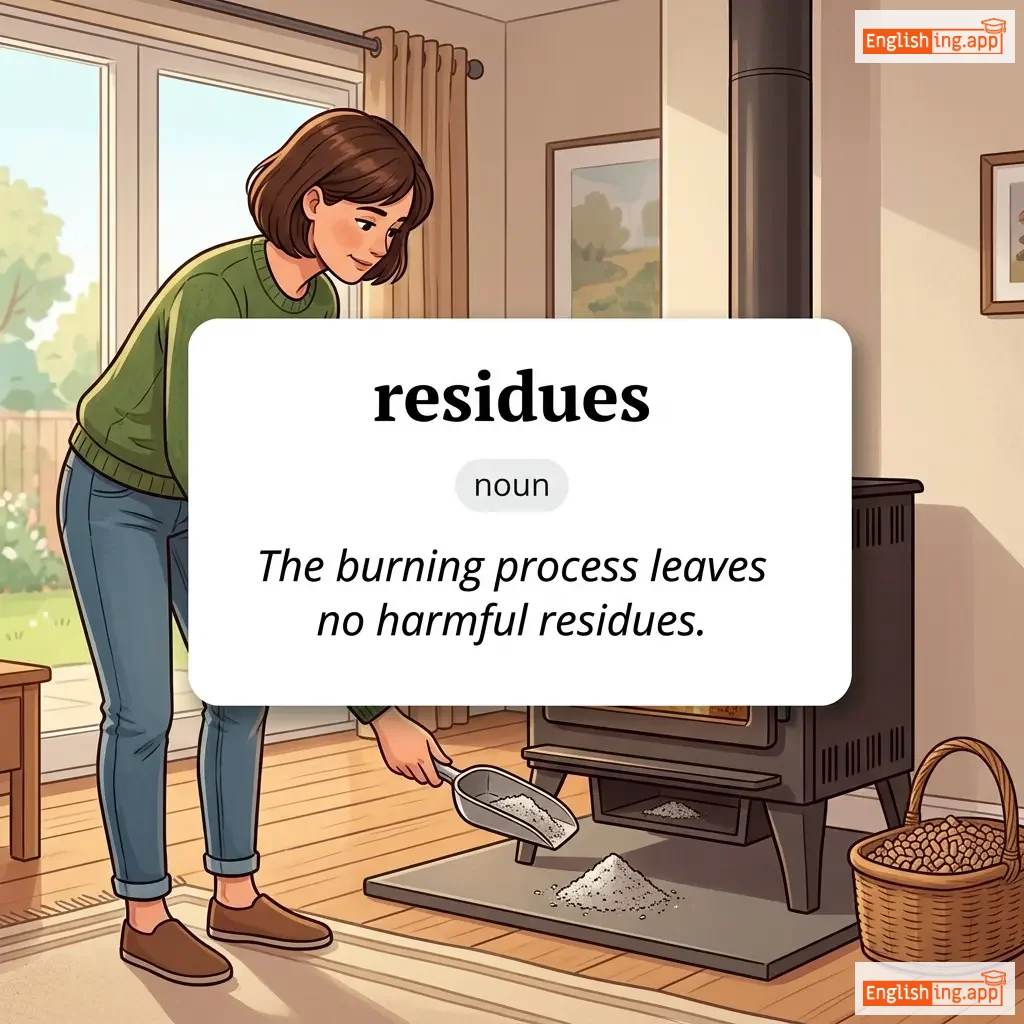
residues definition card — visual illustration of the meaning
noun
ˈrez.ɪ.djuːz
остатки (ostatki)

A small amount of something that remains after the main part has gone or been taken or used.

"The burning process leaves no harmful residues."
"Процесс горения не оставляет вредных остатков." (Process gorenija ne ostavlyaet vrednykh ostatočkov.)
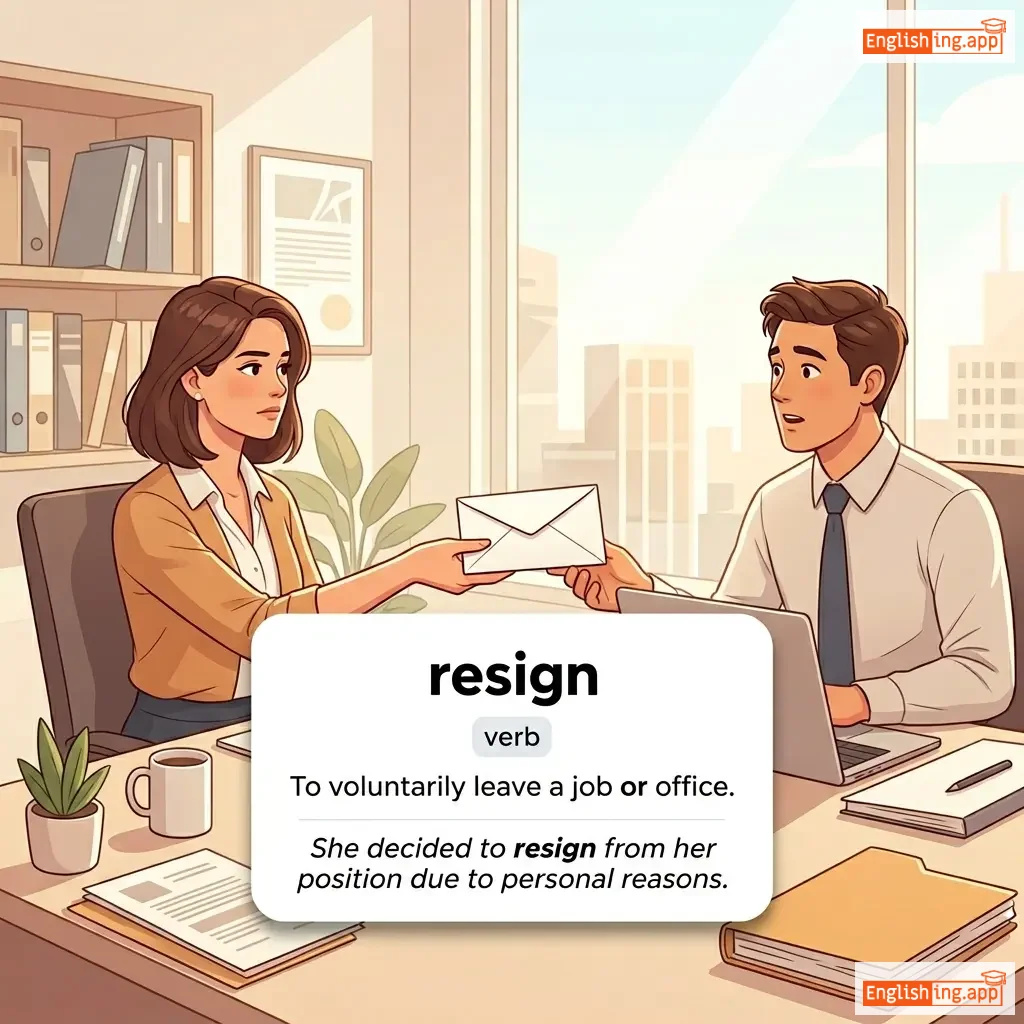
resign definition card — visual illustration of the meaning
verb
/rɪˈzaɪn/
уйти в отставку (ujti v otstavku)

To voluntarily leave a job or office.

"She decided to resign from her position due to personal reasons."

"Она решила уйти с поста по личным причинам." (Ona reshilа uyti s posta po lichnym prichinam.)
resignation definition card — visual illustration of the meaning
noun
/ˌrɛzɪɡˈneɪʃən/
отставка (otstavka)

The act of giving up a job or position; acceptance of something undesirable but inevitable.

"The CEO submitted his resignation yesterday."
"Генеральный директор подал в отставку вчера." (General'nyy direktor podal v otstavku vchera.)
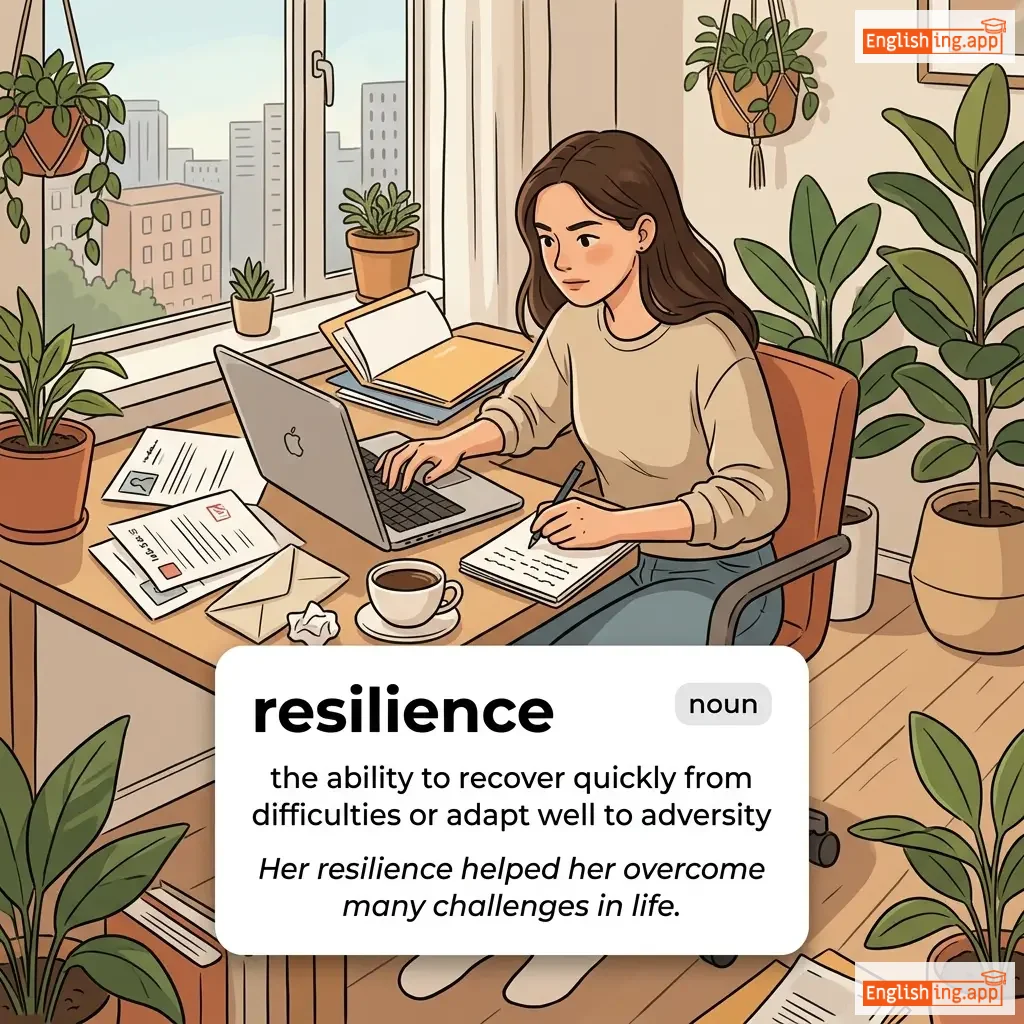
resilience definition card — visual illustration of the meaning
noun
/rɪˈzɪliəns/
упругость (uprugost)

the ability to recover quickly from difficulties or adapt well to adversity

"Her resilience helped her overcome many challenges in life."
"Её упругость помогла ей преодолеть многие жизненные трудности." (Yeyo uprugost' pomogla yey preodolet' mnogie zhiznennye trudnosti.)
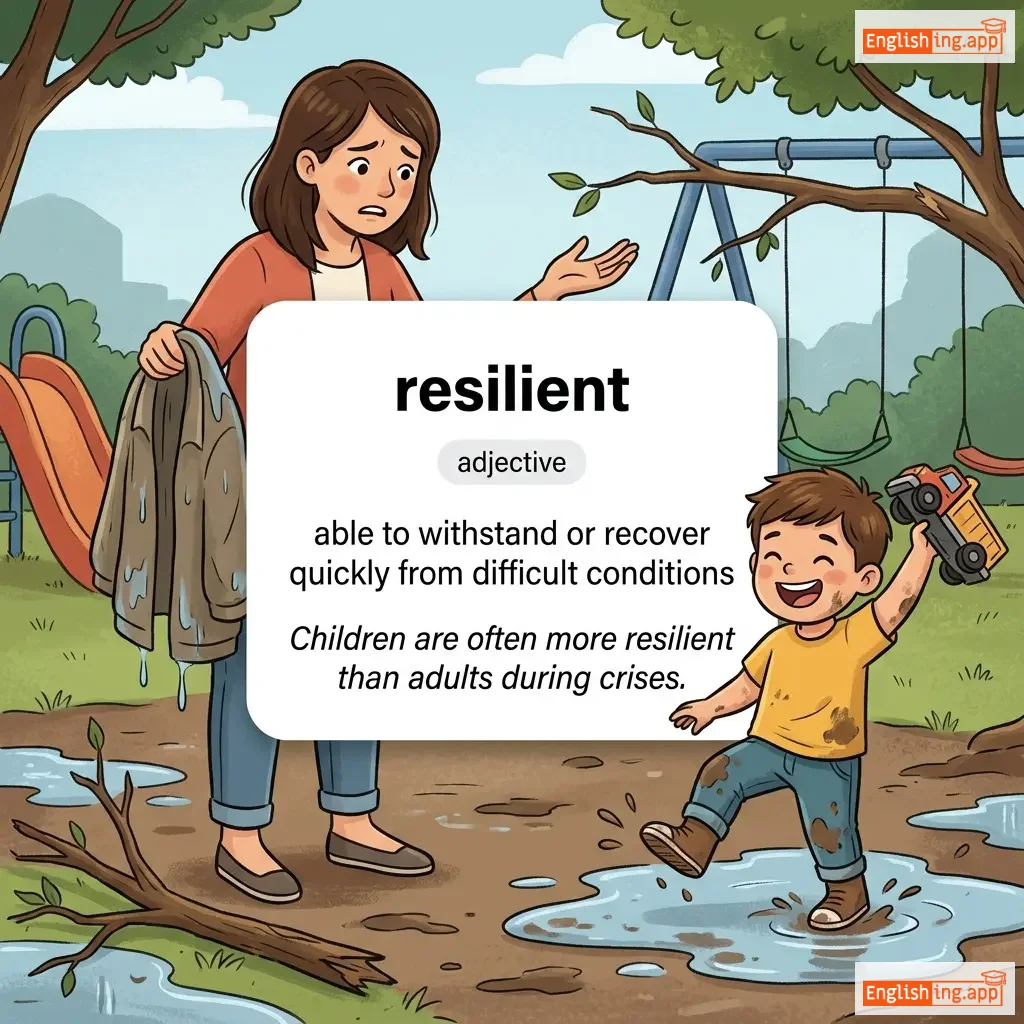
resilient definition card — visual illustration of the meaning
adjective
/rɪˈzɪliənt/
стойкий (stoykiy)

able to withstand or recover quickly from difficult conditions

"Children are often more resilient than adults during crises."

"Дети часто более стойкие, чем взрослые, в условиях кризиса." (Deti chasto bolee stoykie, chem vzroslye, v usloviyakh krizisa.)
noun
/ˈrɛzɪn/
смола (smola)

a sticky organic substance, usually secreted by plants, often used in varnishes or plastics

"The craftsman used natural resin to make the sculpture shine."
"Ремесленник использовал натуральную смолу, чтобы придать скульптуре блеск." (Remeslennik ispol'zoval natural'nuyu smolu, chtoby pridat' skul'pture blesk.)
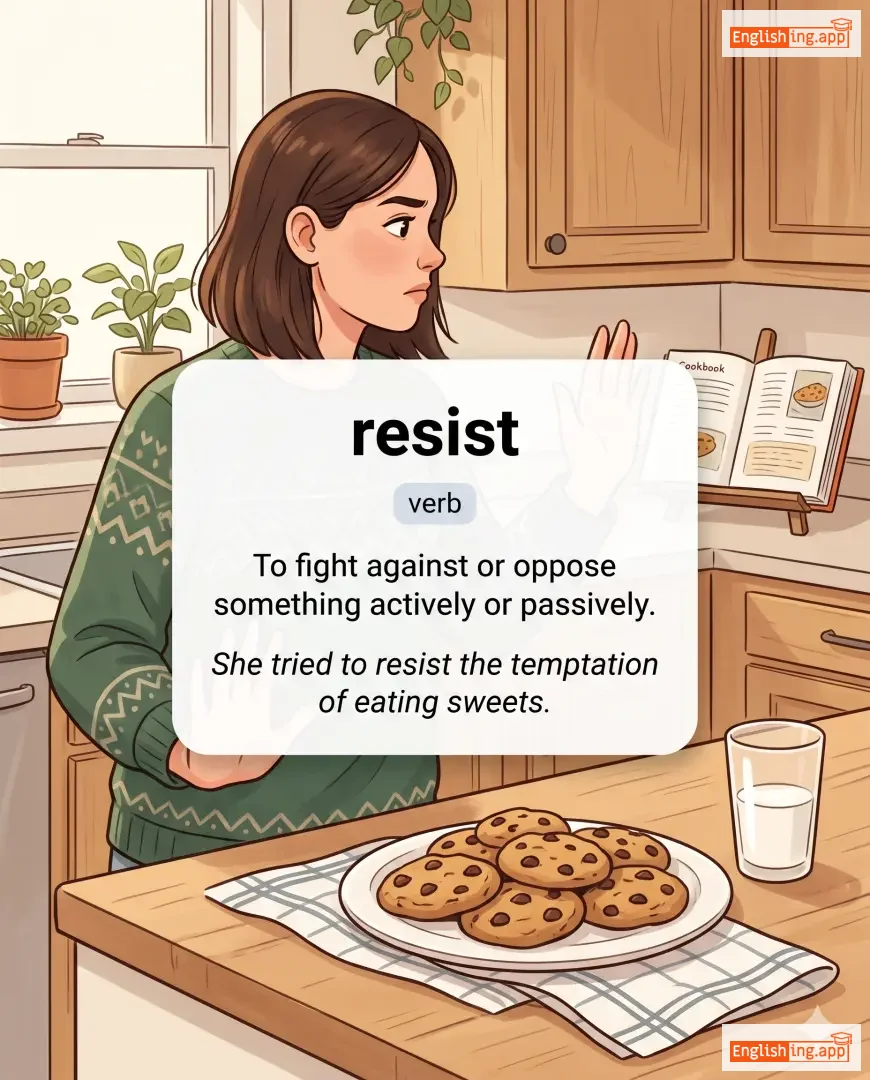
resist definition card — visual illustration of the meaning
verb
/rɪˈzɪst/
сопротивляться (soprotivlyatsya)

To fight against or oppose something actively or passively.

"She tried to resist the temptation of eating sweets."
"Она пыталась сопротивляться искушению съесть сладости." (Ona pytalas' soprotivlyat'sya iskusheniyu s'yest' sladosti.)
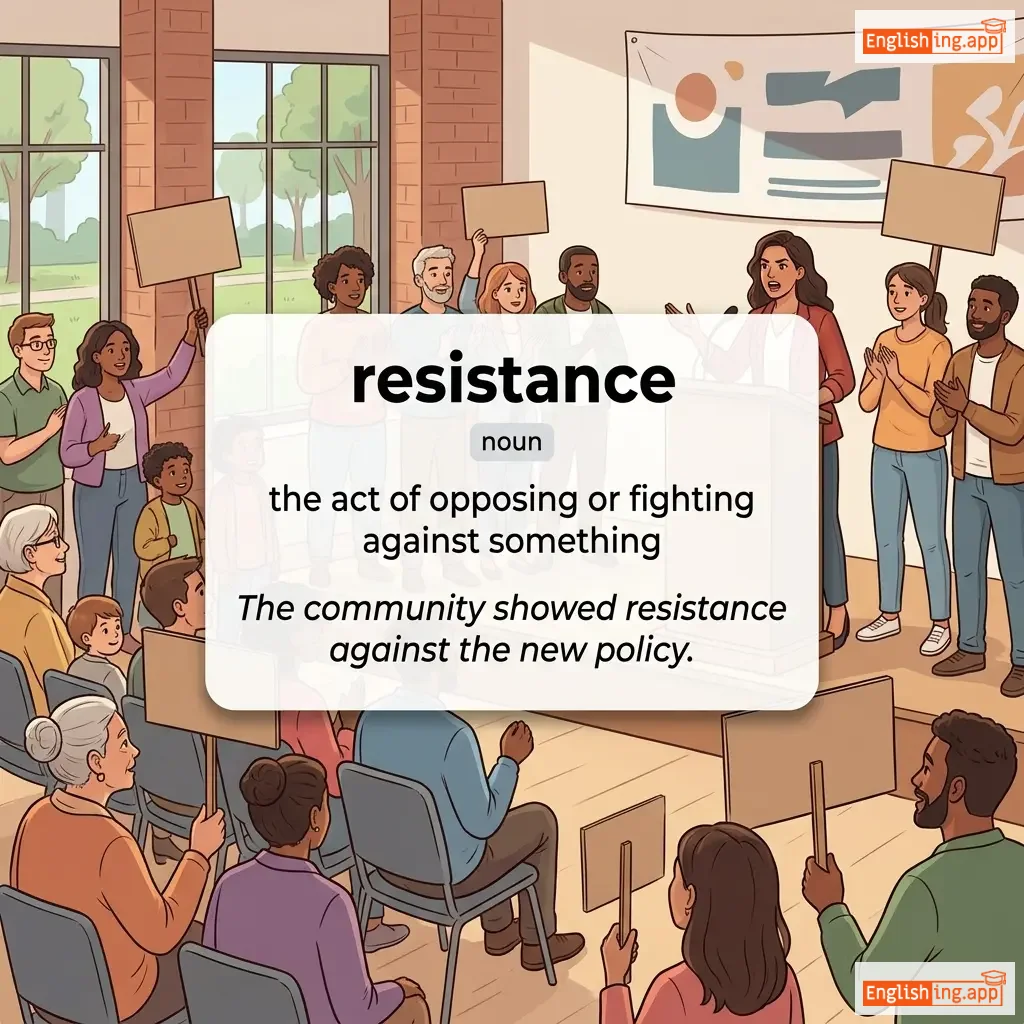
resistance definition card — visual illustration of the meaning
noun
/rɪˈzɪstəns/
сопротивление (soprotivlenie)

the act of opposing or fighting against something

"The community showed resistance against the new policy."

"Сообщество проявило сопротивление новой политике." (Soobshchestvo proyavilo soprotivlenie novoy politike.)
adjective
/rɪˈzɪstənt/
устойчивый (ustoychivyy)

not affected by something; able to oppose or withstand

"This fabric is resistant to water and stains."

"Этот материал устойчив к воде и пятнам." (Etot material ustoychiv k vode i pyatnam.)
adjective
/rɪˈzɪstɪv/
резистивный (rezistivny)

tending to resist or oppose; in physics, relating to electrical resistance

"The material has resistive properties that slow down current flow."

"Материал имеет резистивные свойства, которые замедляют ток." (Material imeet rezistivnye svoystva, kotorye zamedlyayut tok.)
adjective
/rɪˈzɪstləs/
непреодолимый (nepreodolimy)

Impossible to resist; having an overpowering effect.

"She felt a resistless urge to laugh at the joke."

"Она почувствовала непреодолимое желание смеяться над шуткой." (Ona pochuvstvovala nepreodolimoye zhelaniye smeyatsya nad shutkoy.)
adjective
/ˈrɛzəluːt/
решительный (reshitel'nyy)

Admirably purposeful, determined, and unwavering.

"He remained resolute despite the many challenges."
"Он остался решительным, несмотря на множество трудностей." (On ostalsya reshitelnym, nesmotrya na mnogochislennyye trudnosti)
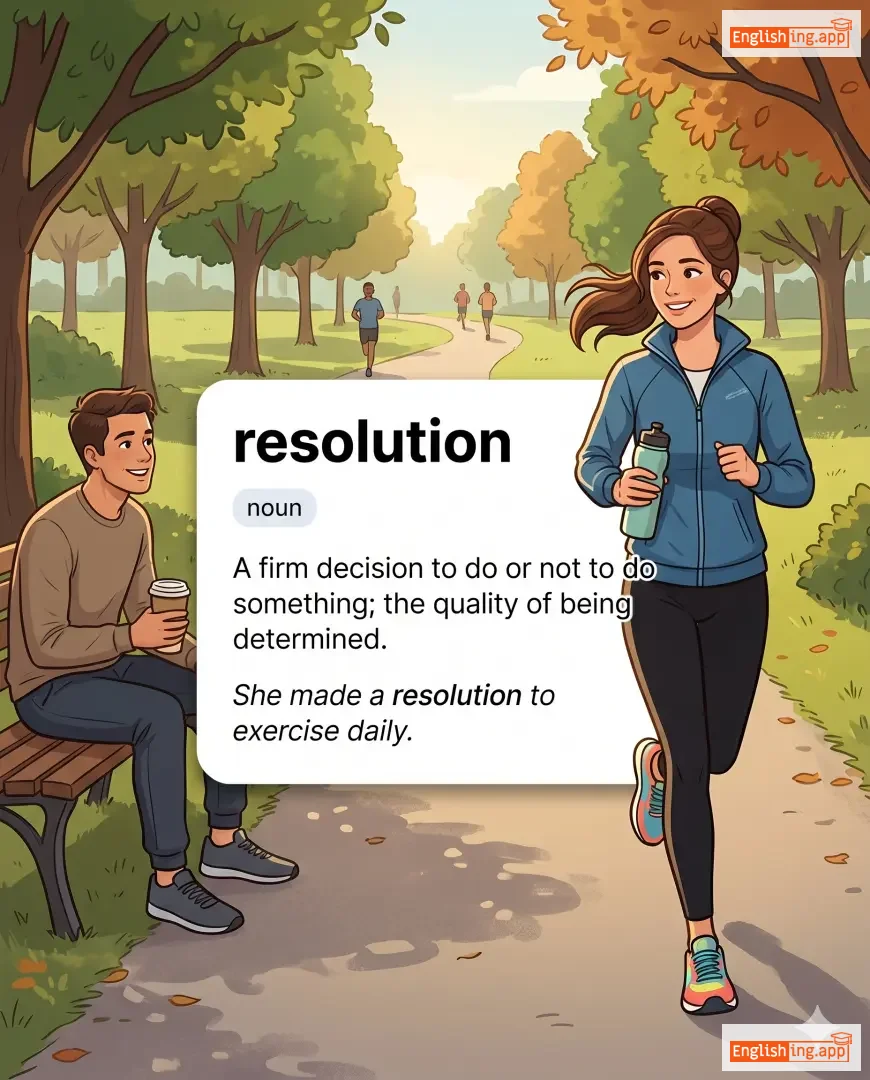
resolution definition card — visual illustration of the meaning
noun
/ˌrɛzəˈluːʃən/
резолюция (rezolyutsiya)

A firm decision to do or not to do something; the quality of being determined.

"She made a resolution to exercise daily."

"Она приняла решение заниматься спортом каждый день." (Ona prinjala reshenie zanimat'sya sportom kazhdyy den'.)
resolve definition card — visual illustration of the meaning
verb
/rɪˈzɒlv/
решать (reshat)

To decide firmly on a course of action; to settle or solve a problem.

"They resolved to finish the project on time."
"Они решили завершить проект вовремя." (Oni reshilи zavershit' proyekt vovremya.)
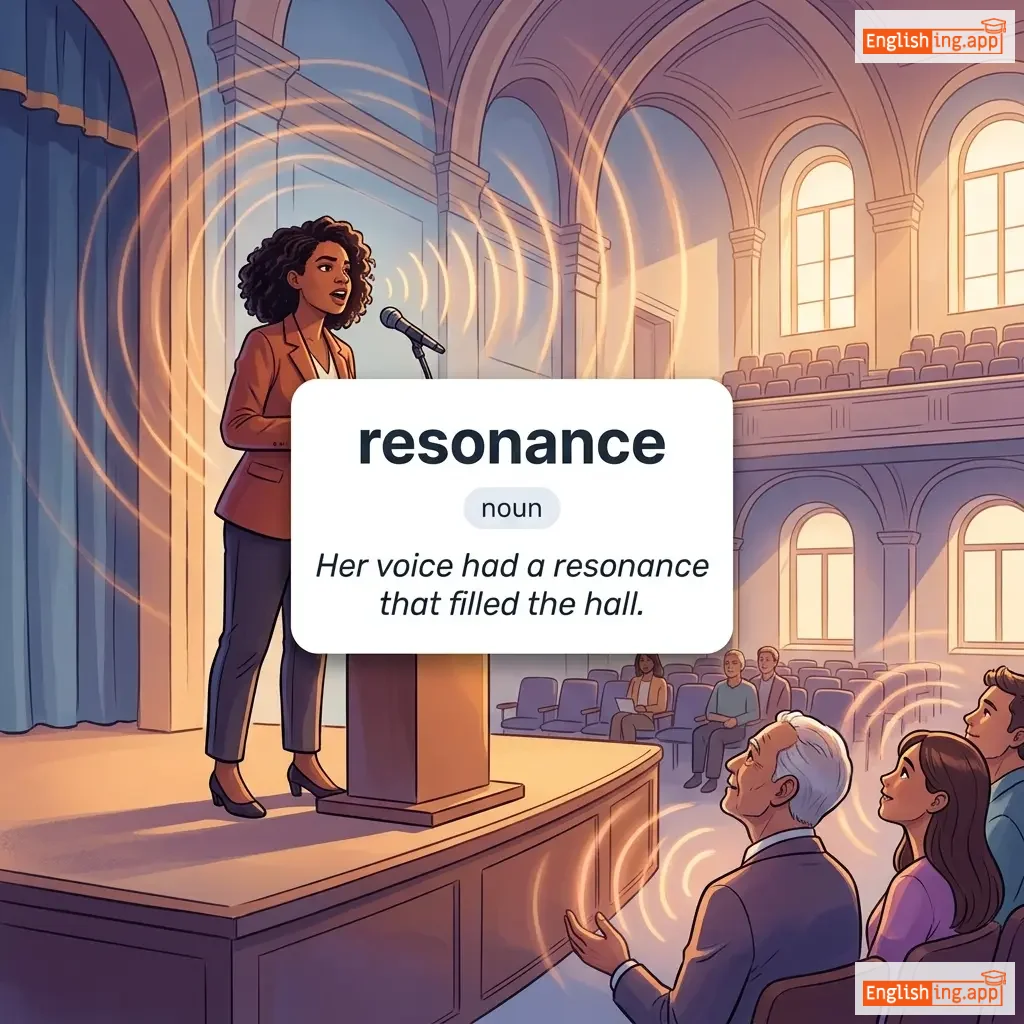
resonance definition card — visual illustration of the meaning
noun
/ˈrɛzənəns/
резонанс (rezonans)

The quality of a sound being deep, full, and reverberating; the ability to evoke a strong response.

"Her voice had a resonance that filled the hall."

"Ее голос имел резонанс, который наполнил зал." (Eyo golos imel rezonans, kotoryy napolnil zal.)
adjective
/ˈrɛzənənt/
резонансный (rezonansny)

Deep, clear, and continuing to sound or echo.

"The resonant voice of the speaker filled the hall."

"Резонансный голос оратора наполнил зал." (Rezonansnyy golos oratora napolnil zal.)
verb
/ˈrɛzəneɪt/
резонировать (rezonirovat)

To produce or be filled with a deep, full, and reverberating sound; to evoke a feeling or memory.

"Her words resonated with the audience."

"Её слова отозвались в сердцах слушателей." (Yeyo slova otozvalis' v serdtsakh slushateley.)
noun, verb
/rɪˈzɔːrt/
курорт / последний шанс (kurort / posledniy shans)

A place for rest or recreation; to turn to something for help or solution.

"They stayed at a beach resort during their vacation."

"Они остановились в курортном отеле на пляже во время отпуска." (Oni ostanovilis' v kurortnom otele na plyazhe vo vremya otpuska.)
verb
/rɪˈzaʊnd/
звучать (zvuchat)

To fill a place with sound; to be celebrated or talked about widely.

"The hall resounded with applause."

"Зал наполнился аплодисментами." (Zal napolnilsya aplodismentami.)
noun
/rɪˈsɔːrs/
ресурс (resurs)

A supply of materials, money, or assets that can be used when needed.

"Water is a vital natural resource."

"Вода — это жизненно важный природный ресурс." (Voda — eto zhiznennо vazhnyy prirodnyy resurs.)
resource-efficient definition card — visual illustration of the meaning
adjective
/rɪˈsɔːrs ɪˈfɪʃ.ənt/
ресурсосберегающий (resursosberegayushchiy)

Using resources in a way that minimizes waste and maximizes productivity.

"Resource-efficient farming conserves water and energy."

"Ресурсосберегающее сельское хозяйство экономит воду и энергию." (Resursosberegayushchee selskoe khozyaystvo ekonomit vodu i energiyu.)
adjective
/rɪˈsɔːrsfəl/
находчивый (risorsful)

Having the ability to find quick and clever ways to overcome difficulties.

"She is very resourceful when it comes to solving unexpected problems."
"Она очень находчива, когда речь идёт о решении неожиданных проблем." (Ona ochen nakhodchiva, kogda rech idet o reshenii neozhidannyh problemy)
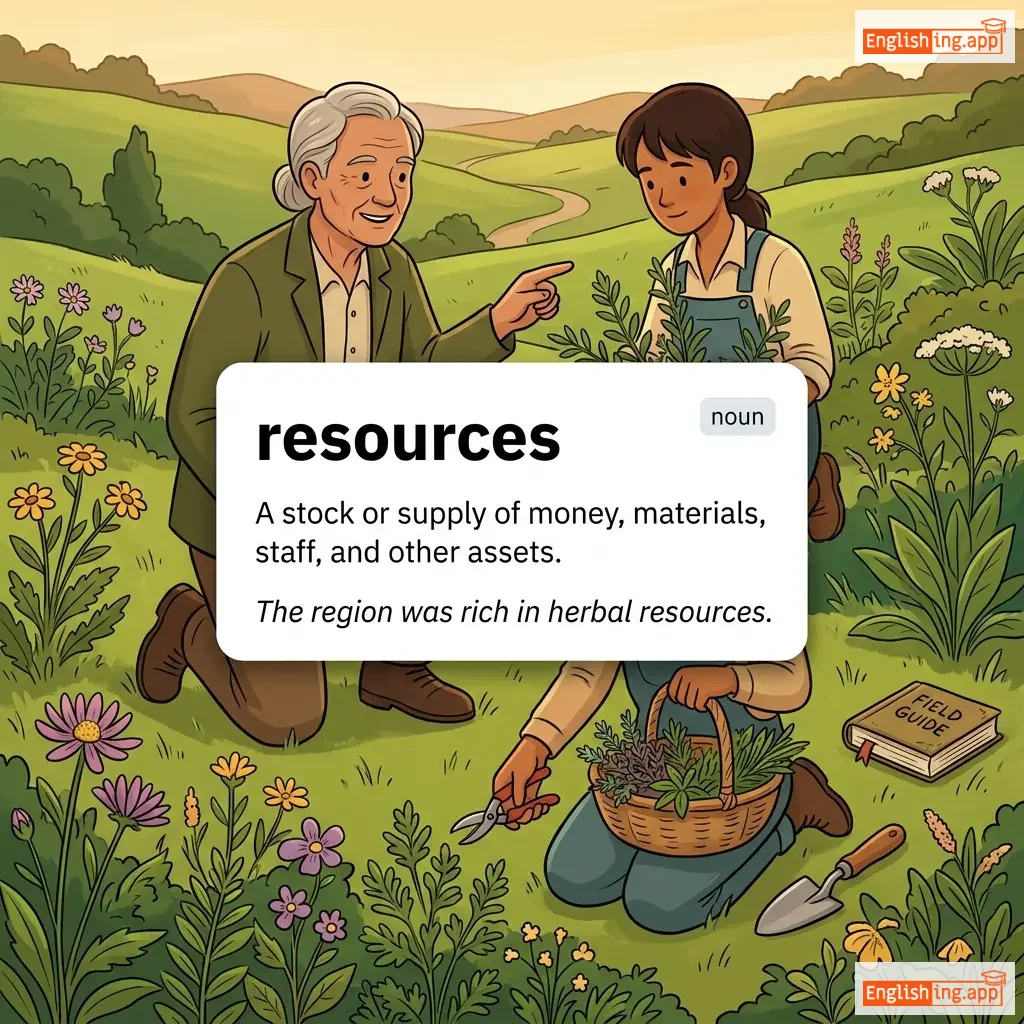
resources definition card — visual illustration of the meaning
noun
/rɪˈzɔː.sɪz/
ресурсы (resursy)

A stock or supply of money, materials, staff, and other assets.

"The region was rich in herbal resources."

"Регион был богат травяными ресурсами." (Region byl bogat travyanimi resursami.)
respect definition card — visual illustration of the meaning
noun/verb
/rɪˈspɛkt/
уважение (uvazhenie)

to treat someone with admiration or regard; high regard for someone or something

"We should respect each other's opinions, even if we disagree."

"Мы должны уважать мнения других, даже если мы не согласны." (My dolzhny uvazhat' mneniya drugikh, dazhe esli my ne soglasny.)
adjective
/rɪˈspek.tə.bəl/
респектабельный (respektabel'nyy)

worthy of respect; having good reputation; decent

"He comes from a respectable family in the community."

"Он из респектабельной семьи в сообществе." (On iz respektabel'noy sem'i v soobshchestve.)
adverb
/rɪˈspek.tə.bli/
с уважением; достойно; (s uvazheniyem; dostoyno;)

in a way that is worthy of respect; decently; properly

"She was dressed respectably for the interview."

"Она была одета достойно для интервью." (Ona byla odeta dostoyno dlya intervyu.)
adjective
/rɪˈspɛktɪv/
соответствующий (sootvetstvuyushchiy)

belonging or relating separately to each of the people or things already mentioned

"The students were in their respective rooms."

"Студенты были в своих соответствующих комнатах." (Studenty byli v svoikh sootvetstvuyushchikh komnakh.)
adverb
/rɪˈspɛktɪvli/
соответственно (sotvetstvenno)

Separately and in the order already mentioned.

"The two teams scored 3 and 5 points, respectively."

"Две команды набрали 3 и 5 очков, соответственно." (Dve komandy nabraly 3 i 5 ochkov, sootvetstvenno.)