Словари

Словарь английского языка | Значения слов, определения и примеры

adjective
/ˈplaɪəbəl/
гибкий (gibkiy)

easily bent or flexible; adaptable

"The metal is pliable enough to be shaped into jewelry."

"Металл достаточно гибкий, чтобы его можно было сформировать в ювелирные изделия." (Metall dostatochno gibkiy, chtoby ego mozhno bylo sformirovat' v yuvelirnye izdeliya.)
adjective
/ˈplaɪənt/
гибкий, легко восприимчивый или адаптируемый (gibkiy, legko vospreeemchivyy ili adaptiruemyy)

flexible; easily influenced or adaptable

"She has a pliant personality that adapts well to new situations."

"У неё гибкий характер, который хорошо адаптируется к новым ситуациям." (U nee gibkiy kharakter, kotoryy khorosho adaptiruetsya k novym situatsiyam.)
noun
/plaɪt/
бедствие, опасная ситуация (bedstvie, opasnaya situatsiya)

a difficult or dangerous situation

"The refugees described their plight during the war."

"Беженцы описали свое бедствие во время войны." (Bezhtsy opisali svoe bedstvie vo vremya voyny.)
verb
/plɒd/
работать медленно и усердно (rabotat' medlenno i usierdno)

to work slowly and steadily, often with effort or difficulty

"He plodded through his homework despite feeling tired."

"Он медленно делал домашку, несмотря на усталость." (On medlenno delal domashku, nesmotrya na ustalost'.)
adjective
/ˈplɒd.ɪŋ/
медленный и скучный (medlennyy i skuchnyy)

slow-moving and unexciting; showing steady effort

"The movie was entertaining but a bit plodding in the middle."
"Фильм был развлекательным, но немного медленным и скучным в середине." (Film byl razvlekatel'nym, no nemnogo medlennym i skuchnym v seredine.)
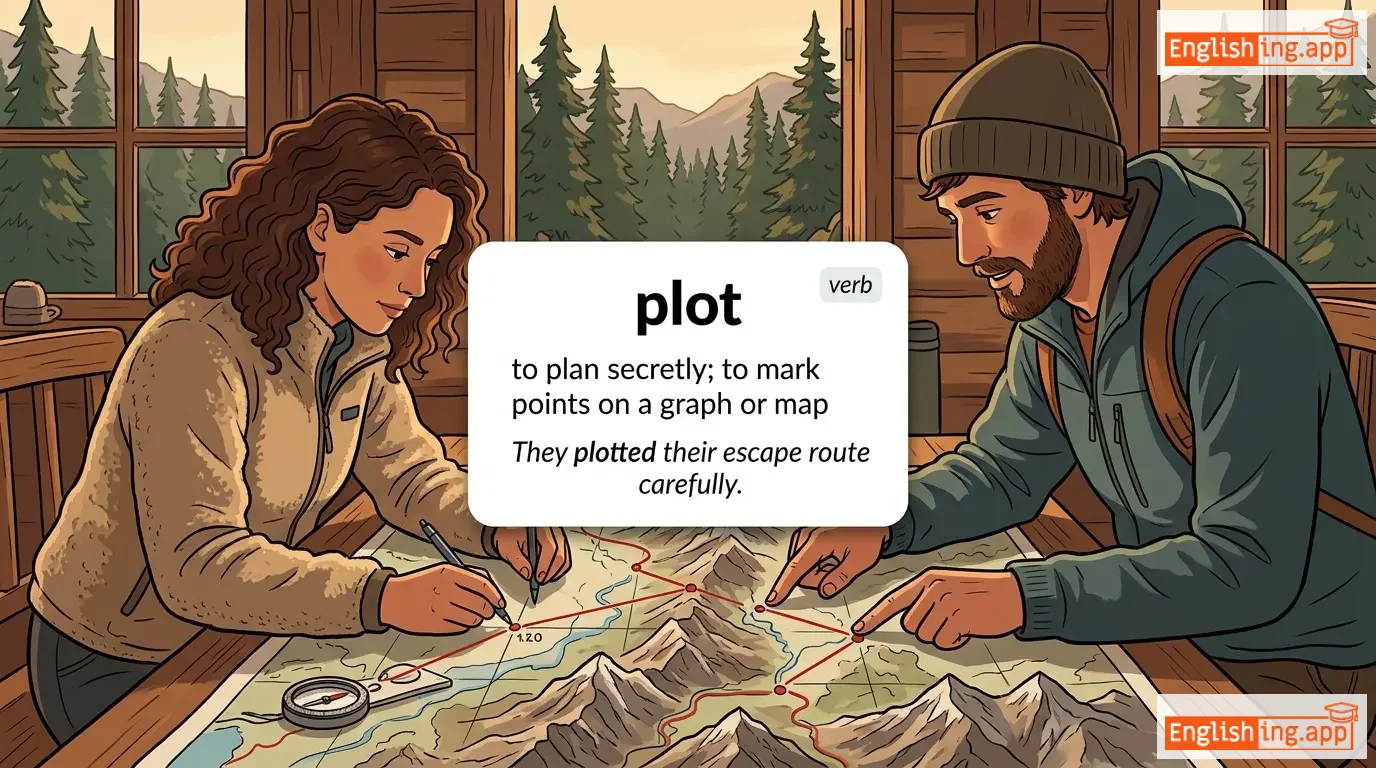
plot definition card — visual illustration of the meaning
noun
/plɒt/
заговор (zagovor)

a secret plan or scheme, often with bad intentions

"The villain made a plot to steal the treasure."
"Злодей придумал заговор, чтобы украсть сокровище." (Zlodey pridumal zagovor, chtoby ukrast' sokrovishche.)
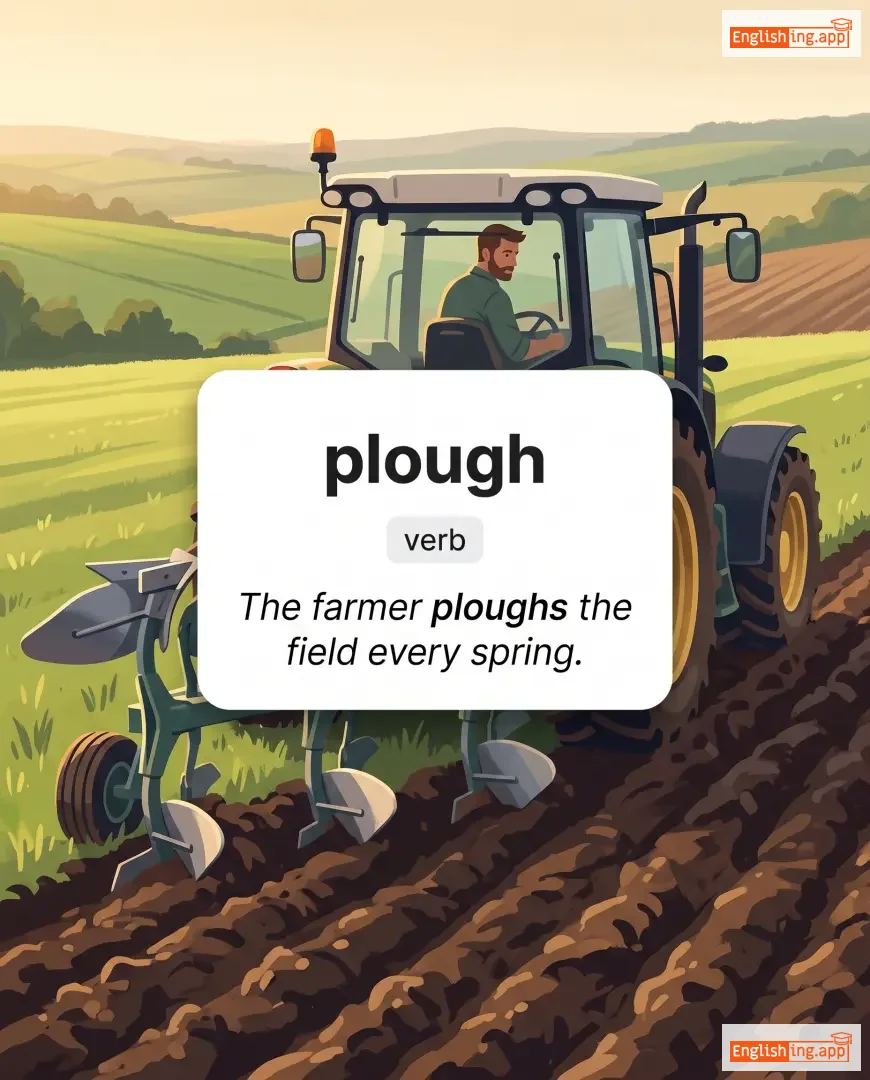
plough definition card — visual illustration of the meaning
noun
/plaʊ/
плуг (plugh)

a large farming tool used to break up and turn over soil before planting crops

"The oxen pulled the heavy plough across the field."

"Оксены тащили тяжелый плуг по полю." (Oksheny tashchili tyazhelyy plug po polyu.)
noun
/plɔɪ/
хитрый ход (khitryy khod)

a clever plan or action designed to gain an advantage

"She used a clever ploy to win the debate."

"Она использовала хитрый ход, чтобы выиграть дебаты." (Ona ispol'zovala khitryy khod, chtoby viigrat' debaty.)
verb
/plʌk/
сорвать, собрать мужество (sorvat', sobrat' muzhestvo)

to take hold of and quickly remove; to gather courage or determination

"She plucked a flower from the garden."

"Она сорвала цветок в саду." (Ona sorvala tsvetok v sadu.)
adjective
/ˈplʌk.i/
отважный (otvazhny)

having or showing courage and determination

"The plucky child rescued the kitten from the tree."

"Отважный ребенок спас котенка с дерева." (Otvazhnyy rebenok spas kotenka s dereva.)
noun
/plʌɡ/
вилка (vilka)

a device used to connect or block an opening

"She inserted the plug into the socket."

"Она вставила вилку в розетку." (Ona vstavila vilku v rozetku.)
noun
/plʌm/
слива (sliva)

a small round fruit with smooth red or purple skin, sweet flesh, and a single large seed

"The purple plum was juicy and delicious."

"Пурпурная слива была сочной и вкусной." (Purpurnaya sliva byla sochnoy i vkusnoy.)
noun
/ˈpluː.mɪdʒ/
оперение (operenie)

the feathers covering a bird's body

"The peacock's plumage was vibrant and eye-catching."

"Перья павлина были яркими и привлекающими внимание." (Perya pavlina byli yarkimi i privlekayushchimi vnimanie.)
verb
/plʌm/
измерять глубину или тщательно исследовать (izmeriat' glubinu ili tchatel'no issledovat')

to measure the depth of water or examine closely

"They used a line to plumb the depth of the lake."

"Они использовали линию для измерения глубины озера." (Oni ispol'zovali liniyu dlya izmereniya glubiny ozera.)
noun
/ˈplʌm.ər/
сантехник (santekhnik)

a person who installs or repairs water pipes

"The plumber fixed the leaking pipe in the kitchen."

"Сантехник починил протекающую трубу на кухне." (Santekhnik pochinyil protikayushchuyu trubu na kukhne.)
noun
/pluːm/
большое, мягкое перо или что-то, напоминающее перо (bol'shoe, myagkoye pero ili chto-to, napominayushchee pero)

a large, soft feather or something resembling a feather

"The soldier wore a red plume on his helmet."

"Солдат носил красное перо на своем шлеме." (Soldat nosil krasnoye pero na svoem shleme.)
plummet definition card — visual illustration of the meaning
verb
/ˈplʌm.ɪt/
падать прямо вниз на высокой скорости (padat' priamo vnyz na vysokoy skorosti)

to fall straight down at high speed

"Stock prices plummeted after the sudden market crash."
"Цены на акции упали после внезапного краха рынка." (Tseny na aktsii upali posle vnezapnogo kraha rynka.)
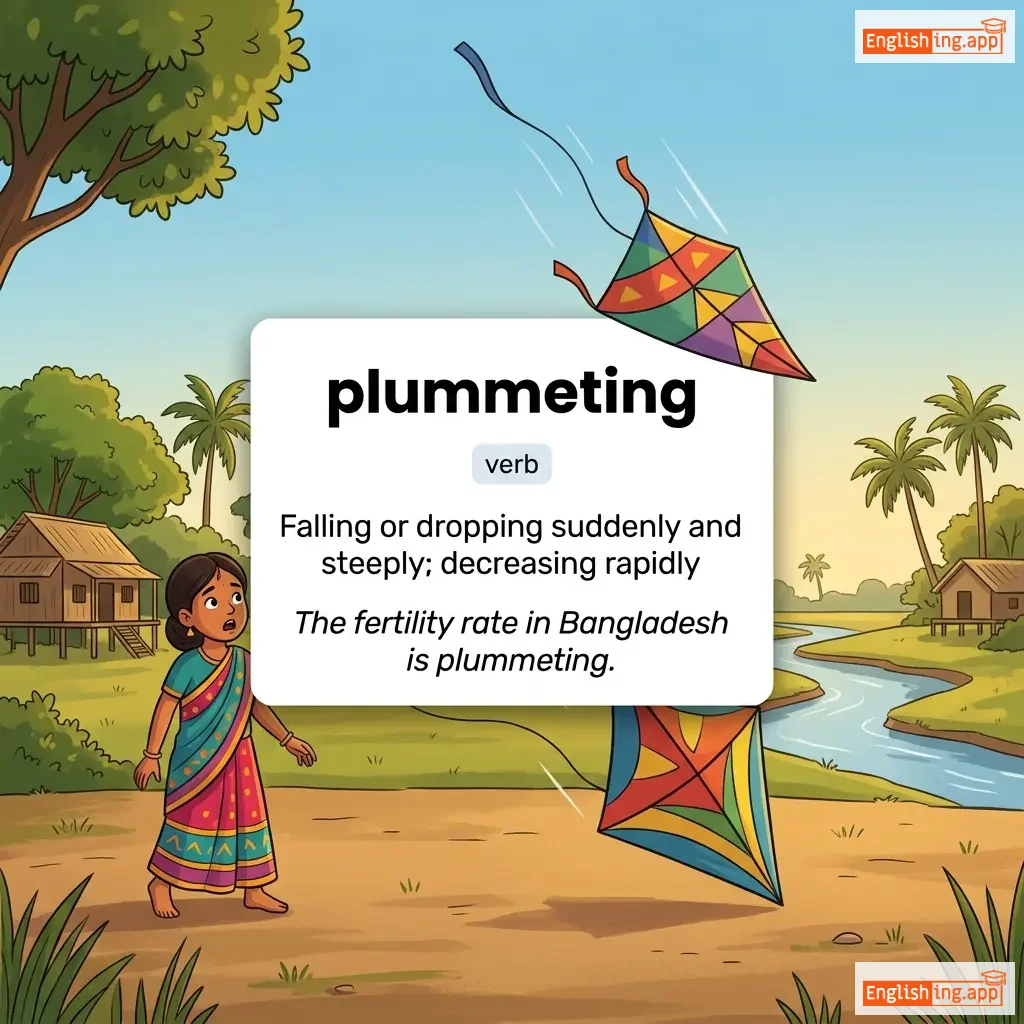
plummeting definition card — visual illustration of the meaning
verb
ˈplʌmɪtɪŋ
резкое падение (rezkoye padenie)

Falling or dropping suddenly and steeply; decreasing rapidly

"The fertility rate in Bangladesh is plummeting."

"Уровень рождаемости в Бангладеш стремительно падает." (Uroven' rozhdaemosti v Bangladeshe stremitel'no padayet.)
adjective
/plʌmp/
пухлый или округлый (pukhlyy ili okruglyy)

having a full, rounded shape; pleasantly fat

"The cat was plump and well-fed."

"Кошка была пухлой и хорошо накормленной." (Koshka byla pukhloy i khorosho nakormlennoy.)
noun
/ˈplʌn.dər.ər/
грабитель (grabitiel)

a person who steals goods, especially during war or civil disorder

"The plunderers ransacked the village after the battle."

"Грабители разграбили деревню после сражения." (Grabiteli razgrabili derevnyu posle srazheniya.)
verb
/plʌndʒ/
прыгать или нырять быстро; резко падать (prygat' ili niryat' bystro; rezko padat')

to jump or dive quickly; to fall sharply

"She plunged into the swimming pool."

"Она прыгнула в бассейн." (Ona prygla v basseyn.)
adjective
/ˌpluːˈpɜːrfɪkt/
плюсквамперфект (plyuskvamperfekt)

a verb tense expressing an action completed before another past action

"By the time she arrived, he had finished his homework, showing the pluperfect tense."

"К тому времени, как она пришла, он уже закончил домашнее задание, что показывает плюсквамперфект." (K tomu vremeni, kak ona prishla, on uzhe zakonchil domashnee zadanije, chto pokazyvayet plyuskvamperfekt.)
adjective
/ˈplʊrəl/
множественное число (mnozhestvennoe chislo)

denoting more than one person or thing

"The word 'cats' is the plural of 'cat'."

"Слово 'коты' является множественным числом от 'кот'." (Slovo 'koty' yavyayetsya mnozhestvennym chislom ot 'kot'.)
noun
/plʊəˈrælɪti/
множество или большинство (mnozhestvo ili bol'shinstvo)

the state of being multiple; the greater part or majority

"In the election, she won by a plurality of votes."

"На выборах она выиграла с множеством голосов." (Na viborakh ona viigrala s mnozhestvom golosov.)
preposition/conjunction/noun/adjective
/plʌs/
плюс/преимущество (plyus/preimushchestvo)

in addition to; a positive aspect or advantage

"She received an A plus on her exam."

"Она получила A плюс на своем экзамене." (Ona poluchila A plyus na svoem ekzamine.)
noun
/pluːˈtɒkrəsi/
власть богатых (vlást' bogatykh)

a system of government where the wealthy hold power

"The country was ruled as a plutocracy."

"Страна управлялась как плутократия." (Strana upravlyalas' kak plutokratiya.)
noun
/piːˈɛm/
после полудня (posle poludnya)

abbreviation for post meridiem; after midday

"The meeting is scheduled at 3 pm."

"Встреча запланирована на 3 часа дня." (Vstrecha zaplanirovana na 3 chasa dnya.)
adjective
/njuːˈmætɪk/
пневматический (pnevmaticheskiy)

operated by air or gas under pressure

"The factory uses pneumatic tools for assembly."

"Фабрика использует пневматические инструменты для сборки." (Fabrika ispol'zuyet pnevmaticheskie instrumenty dlya sborki.)
noun
/ˈpɒkɪt/
карман (poket)

a small, enclosed space in clothing for carrying items

"He put his phone in his pocket."

"Он положил свой телефон в свой карман." (Khi put khiz foun in khiz poket.)
podcasts definition card — visual illustration of the meaning
noun
ˈpɒdkɑːsts
подкаст (podcast)

A digital audio or video file or recording, usually part of a themed series, that can be downloaded from a website to a media player or computer.

"Podcasts are great for improving listening."

"Подкасты отличные для улучшения слуха." (Podkasty otlichnye dlya uluchsheniya slukha.)
noun
/ˈpoʊdiətrɪst/
подолог (podolog)

a doctor specializing in foot care

"I have an appointment with the podiatrist for my ankle pain."

"У меня запись к подологу из-за боли в лодыжке." (U menya zapis' k podologu iz-za boli v lodyzhke.)
noun
/ˈpoʊdiəm/
подиум (podium)

a small platform on which a person stands to speak or conduct an orchestra

"The speaker stepped onto the podium to deliver the speech."

"Оратор поднялся на подиум, чтобы произнести речь." (Orator podnyalsya na podium, chtoby proznesi rech'.)
noun
/ˈpoʊɪm/
стихотворение (stikhotvorenie)

a piece of writing that expresses ideas, feelings, or tells a story in a distinct form, often using rhyme or meter

"She wrote a beautiful poem for her mother."

"Она написала красивое стихотворение для своей матери." (Ona napisała krasivoye stikhotvoreniye dlya svoey materi.)
noun
/ˈpoʊ.ə.si/
поэзия (poeziya)

poetry; the art or composition of poems

"The anthology was filled with romantic poesy."

"Антология была наполнена романтической поэзией." (Antologiya byla napolnena romanticheskoy poeziya.)
noun
/ˈpoʊɪt/
поэт (poet)

a person who writes poems

"The poet wrote about love and nature."

"Поэт писал о любви и природе." (Poet pisal o lyubvi i prirode.)
noun
/ˈpoʊ.ɪˌtæs.tər/
низший или тривиальный поэт (nizshiy ili triviyniy poet)

an inferior or trivial poet

"He was mocked as a poetaster by the literary critics."

"Он был осмеян литературными критиками как поэтасфер." (On byl osmeyan literaturnymi kritikami kak poetaster.)
adjective
/poʊˈɛt.ɪk/
поэтичный (poetichny)

having qualities of poetry; expressive, beautiful, or imaginative

"Her speech had a poetic rhythm that captivated the audience."

"Её речь имела поэтичный ритм, который очаровал аудиторию." (Yeyo rech' imela poetichny ritm, kotoryy ocharoval auditoriyu.)
noun
/poʊˈɛt.ɪks/
поэтика, теория поэзии (poetika, teoriya poezii)

the study or theory of poetry and its principles

"He wrote a book on poetics explaining the art of verse."

"Он написал книгу о поэтике, объясняющую искусство стиха." (On napisal knigu o poetike, obyasnyayushchuyu iskusstvo stikha.)
noun
/ˈpoʊɪtri/
поэзия (poeziya)

a literary form that uses rhythmic and metaphorical language to express emotions or ideas

"She loves reading poetry in her free time."

"Она любит читать поэзию в свободное время." (Ona lyubit chitayt' poeziyu v svobodnoe vremya.)
noun
/ˈpɔɪ.nən.si/
тоска, сожаление (toska, sozhalenie)

the quality of evoking a keen sense of sadness or regret; emotionally touching

"The poignancy of the farewell brought tears to everyone's eyes."

"Трагичность прощания вызвала слезы на глазах у всех." (Tragichnost' proshchaniya vyzvala slezy na glazakh u vsekh.)
adjective
/ˈpɔɪ.njənt/
трогательный, глубоко тронувший (trogatelnij, gluboko tronuvshij)

evoking a keen sense of sadness or regret; deeply touching

"The movie's ending was so poignant that many in the audience were moved to tears."

"Конец фильма был настолько трогательным, что многие зрители были потрясены до слёз." (Konets fil'ma byl nastol'ko trogatelnym, chto mnogie zriteli byli potryaseny do slyoz.)
noun
/pɔɪnt/
точка (tochka)

a particular spot, location, or position in space

"The mountain peak is the highest point in the region."

"Вершина горы — это самая высокая точка в регионе." (Vershina gory — eto samaya vysokaya tochka v regione.)
adjective
/ˈpɔɪn.tɪd/
острый; прямой и однозначный (ostryy; pryamoy i odnoznachnyy)

having a sharp end; direct and unambiguous

"She made a pointed remark about his behavior."

"Она сделала прямое замечание о его поведении." (Ona sdelała pryamoe zamechanie o yego povedenii.)
poise definition card — visual illustration of the meaning
noun
/pɔɪz/
грация, выдержка, спокойствие (gratsiya, vydershka, spokoyestviye)

graceful and elegant bearing in a person; composure under stress

"She maintained her poise even under intense questioning."

"Она сохраняла спокойствие даже под интенсивным допросом." (Ona sokhranala spokoyestviye dazhe pod intensivnym doprosom.)
noun
/ˈpɔɪ.zən/
яд (poyzon)

a substance that is capable of causing death or illness

"The snake's bite contains deadly poison."

"Укус змеи содержит смертельный яд." (ukus zmei soderzhit smertelnyy yad.)
adjective
/ˈpɔɪzənəs/
ядовитый (yadovity)

Containing poison; capable of causing illness or death.

"Some mushrooms are highly poisonous."

"Некоторые грибы очень ядовиты." (Nekotorye griby ochen' yadavity.)
verb
/poʊk/
прикоснуться (prikosnutsya)

to push something with a finger or a pointed object

"He poked the fire with a stick."

"Он прикоснулся к огню палкой." (On prikosnulsya k ognyu palkoy.)
adjective
/ˈpoʊ.lər/
полярный, относящийся к полюсам (polyarny, otnosyashchijsya k polyusam)

relating to the North or South Pole; opposite in nature or character

"Penguins live in polar regions of the Earth."

"Пингвины живут в полярных регионах Земли." (Pingviny zhivut v polyarnykh regionakh Zemli.)
noun
/ˈpoʊ.lər beər/
белый медведь (bely medved)

a large white bear that lives in the Arctic regions

"The polar bear swims in the icy Arctic waters."

"Белый медведь плавает в ледяных водах Арктики." (Belyy medved' plavayet v lyedyanykh vodakh Arktiki.)
noun
/poʊˈlær.ɪ.ti/
полярность (polyarnost)

the state of having two opposite or contradictory tendencies, opinions, or aspects

"The polarity between the two political parties is growing stronger."

"Полярность между двумя политическими партиями становится все сильнее." (Polyarnost' mezhdu dvumya politicheskimi partiyami stanovitsya vse sil'nee.)