Словари

Словарь английского языка | Значения слов, определения и примеры

noun
/ˈɔːrətər/
оратор (orator)

A person who delivers formal speeches with skill and eloquence

"The orator captivated the audience with his eloquence."

"Оратор захватил внимание аудитории своей красноречивостью." (Orator zakhvatil vnimanie auditorii svoey krasnorechivost'yu.)
noun
/ˌɔːrəˈtɔːri.oʊ/
религиозная музыкальная композиция (religioznaya muzykal'naya kompozitsiya)

A large-scale musical composition for orchestra, choir, and soloists, usually on a sacred theme, performed without costumes or scenery.

"Handel's 'Messiah' is one of the most famous oratorios ever written."
"Мессия Генделя — одно из самых известных ораторио, когда-либо написанных." (Messiya Hendelya — odno iz samykh izvestnykh oratorio, kogda-libo napisannykh.)
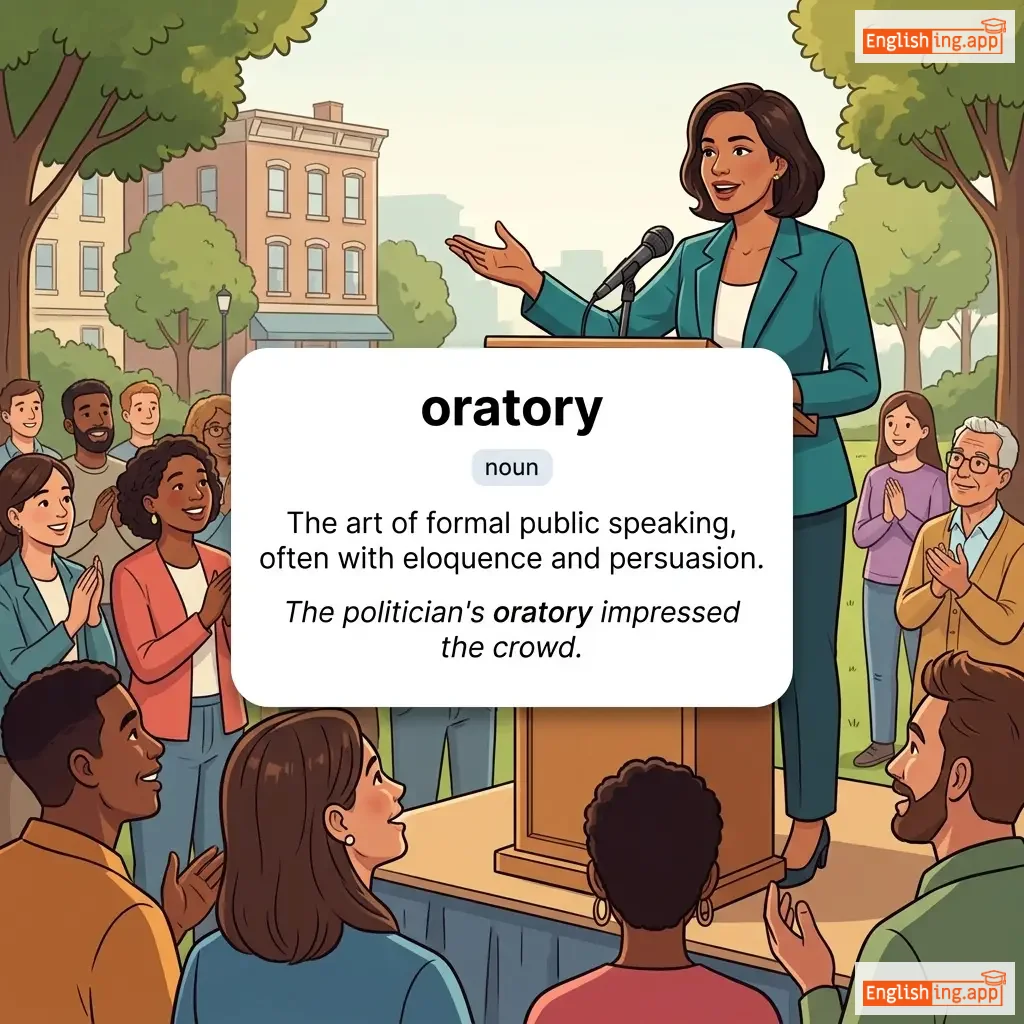
oratory definition card — visual illustration of the meaning
noun
/ˈɔːrəˌtɔːri/
ораторское искусство (oratorskoye iskusstvo)

The art of formal public speaking, often with eloquence and persuasion.

"The politician's oratory impressed the crowd."
"Ораторское искусство политика впечатлило толпу." (Oratorskoye iskusstvo politika vpechatlilo tolpu.)
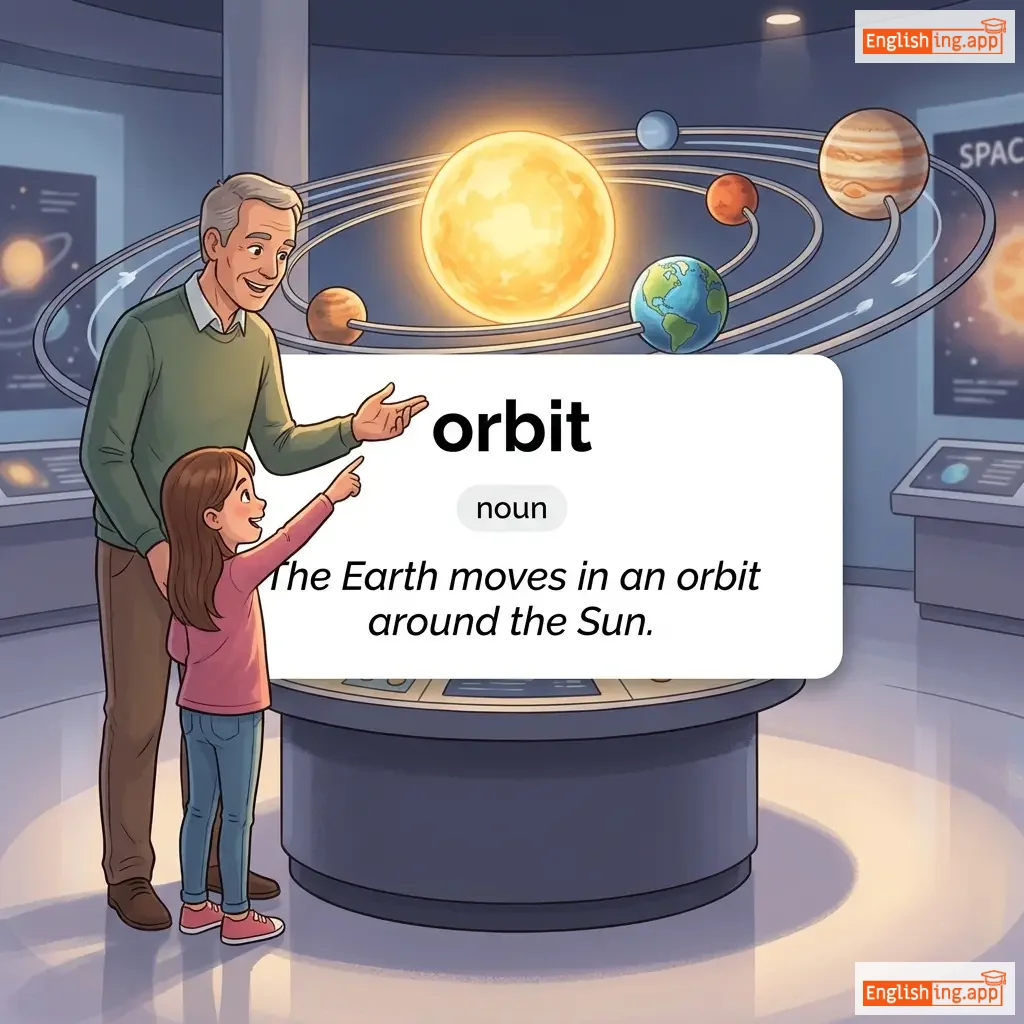
orbit definition card — visual illustration of the meaning
noun
/ˈɔːbɪt/
орбита (orbita)

the curved path that a planet, satellite, or object follows around another body in space

"The Earth moves in an orbit around the Sun."

"Земля движется по орбите вокруг Солнца." (Zemlya dvizhutsya po orbite vokrug Solntsa.)
noun
/ˈɔːkɪstrə/
оркестр (orkestr)

a large group of musicians playing different instruments together

"The orchestra performed beautifully at the concert."
"Оркестр прекрасно выступил на концерте." (Orkestr prekrasno vystupil na kontserte.)
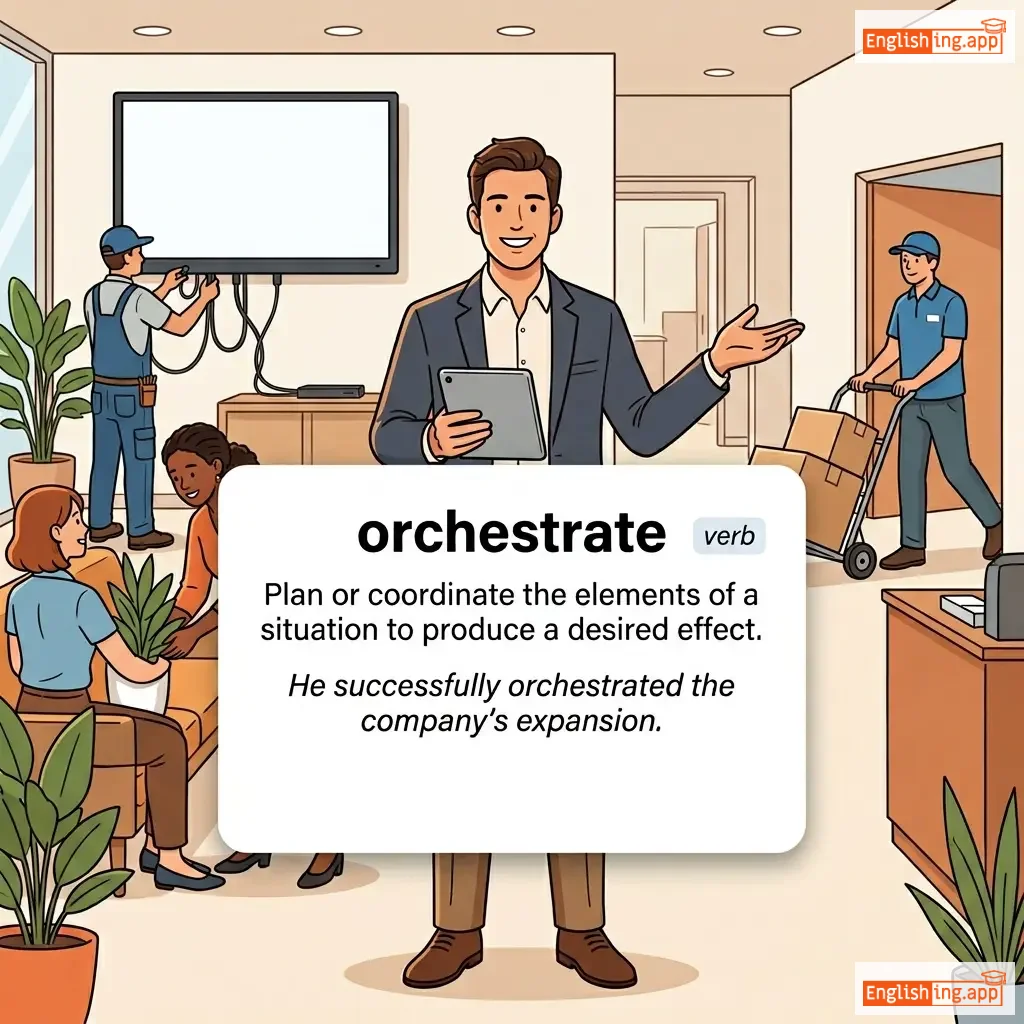
orchestrate definition card — visual illustration of the meaning
verb
/ˈɔːr.kɪ.streɪt/
оркестрировать (orkestrirovat)

Plan or coordinate the elements of a situation to produce a desired effect.

"He successfully orchestrated the company's expansion."

"Он успешно оркестрировал расширение компании." (On uspeshno orkestriroval rasshirenie kompanii.)
orchestrated definition card — visual illustration of the meaning
verb
ˈɔː.kɪ.streɪ.tɪd
срежиссирован (srezhissirovan)

Planned or coordinated carefully and deliberately.

"The attacks were orchestrated with precision."

"Атаки были срежиссированы с точностью." (Ataki byli srezhissirovany s tochnost'yu.)
noun
/ˈɔːrkɪd/
орхидея (orkhidaya)

a diverse family of flowering plants known for their exotic and often fragrant flowers

"The white orchid on the windowsill bloomed for months."

"Белая орхидея на подоконнике цвела в течение нескольких месяцев." (Belyaya orkhideya na podokonnike tsvyela v techeniye neskol'kikh mesyatsev.)
verb
/ɔːrˈdeɪn/
священствовать (svyashchennstvovat')

To officially make someone a priest or minister; to decree or order something officially.

"The bishop will ordain three new priests this Sunday."
"Епископ ordain три новых священников в это воскресенье." (Episkop ordain tri novykh svyashchennikov v eto voskresen'ye.)
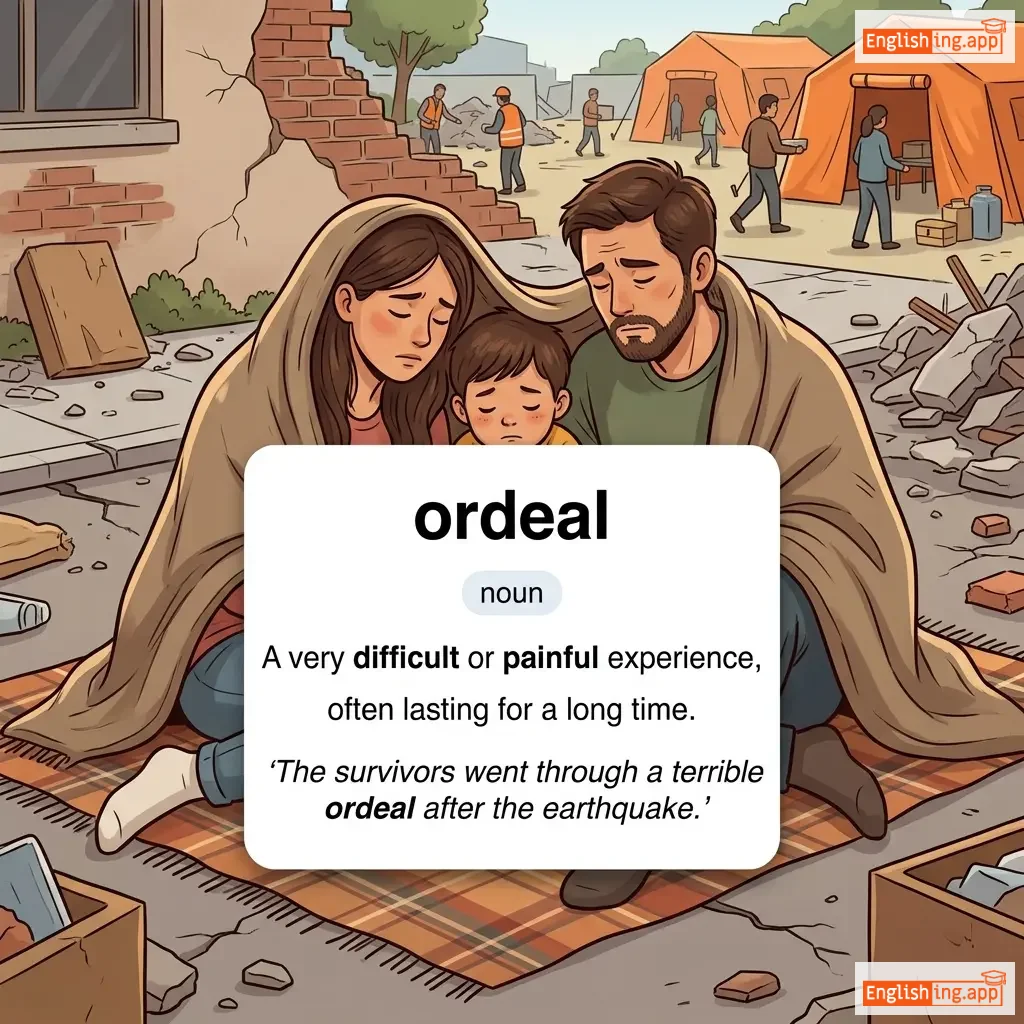
ordeal definition card — visual illustration of the meaning
noun
/ɔːrˈdiːl/
трудный опыт (trudnyy opyt)

A very difficult or painful experience, often lasting for a long time.

"The survivors went through a terrible ordeal after the earthquake."
"Выжившие прошли через ужасное испытание после землетрясения." (Vyzhivshie proshli cherez uzhasnoe ispytanie posle zemletryaseniya.)
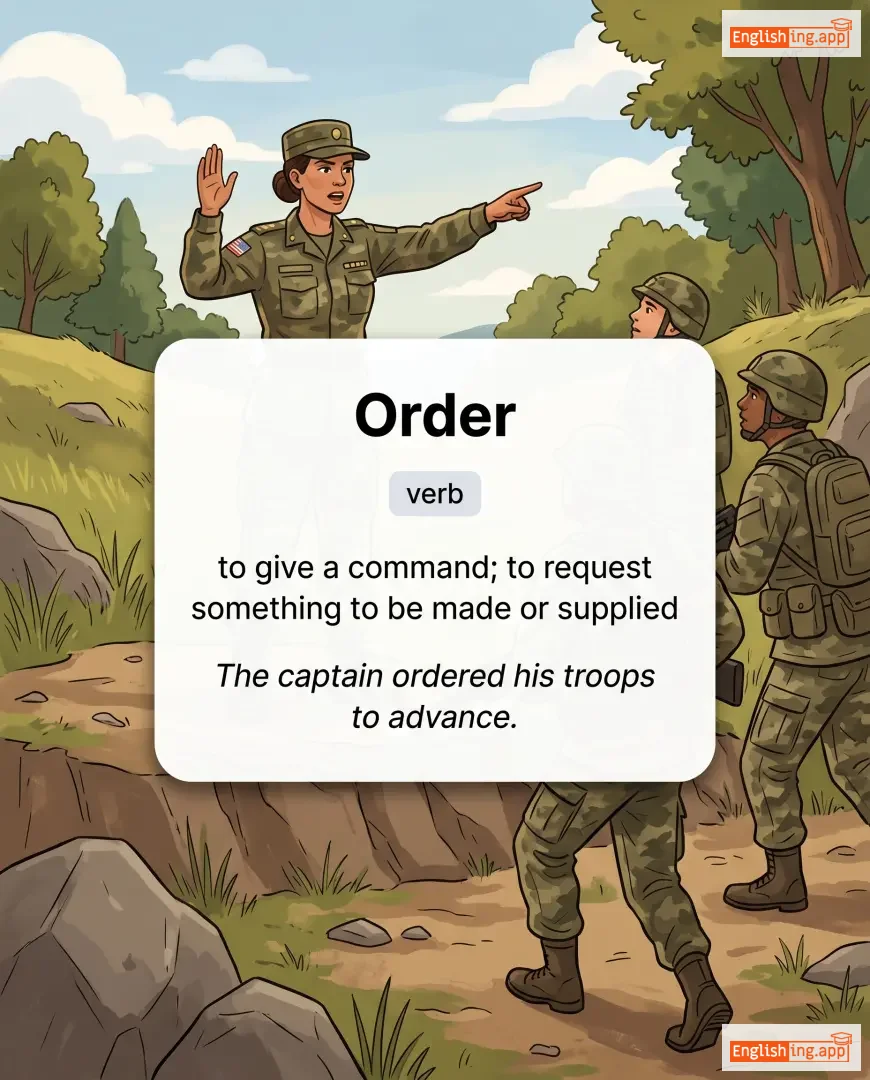
Order definition card — visual illustration of the meaning
noun
/ˈɔːdə(r)/
заказ (zakaz)

an arrangement or command; a request for something to be made, done, or delivered

"He placed an order for a new laptop."

"Он разместил заказ на новый ноутбук." (On razmestil zakaz na novyy noutbuk.)
adjective
/ˈɔː.də.li/
упорядоченный; систематичный; мирный (orderli)

well-organized; systematic; peaceful

"Please keep your desk orderly and clean."

"Пожалуйста, держите свой стол в порядке и чистоте." (Pozhaluysta, derzhite svoi stol v poryadke i chistote.)
adjective
/ˈɔːrdɪnəl/
порядковый (poryadkovyy)

Relating to the order or position of something in a sequence (first, second, third, etc.).

"The ordinal number 'third' indicates position in a sequence."

"Число 'третий' порядковое указывает на позицию в последовательности." (Chislo 'tretiy' poryadkovoye ukazyvayet na pozitsiyu v posledovatel'nosti.)
noun
/ˈɔːrdɪnəns/
устав (ustav)

An authoritative rule, law, or decree issued by a city, town, or authority.

"The city council passed an ordinance banning smoking in public parks."

"Городской совет принял устав, запрещающий курение в общественных парках." (Gorodskoy sovet prinyal ustav, zapreshchayushchiy kuryeniye v obshchestvennykh parkakh.)
adjective
/ˈɔːrdəˌnɛri/
обычный (obychny)

Common, usual, or not special; something that happens regularly.

"She wore an ordinary dress to the party."

"Она носила обычное платье на вечеринку." (Ona nosila obychnoye plat'ye na vecherinku.)
noun
/ˌɔːrdɪˈneɪʃən/
посвящение (posvyashcheniye)

The ceremony of conferring holy orders or official religious authority.

"The church held a special service for the ordination of new priests."

"Церковь провела специальную службу для посвящения новых священников." (Tserkov' provela spetsial'nuyu sluzhbu dlya posvyashcheniya novykh svyashchennikov.)
noun
/ˈɔːrdnəns/
вооружение (vooruzhenie)

Military supplies including weapons, ammunition, and combat equipment.

"The army stored ordnance in a secure facility outside the city."

"Армия хранила вооружение в безопасном месте за пределами города." (Armiya khranila vooruzhenie v bezopasnom meste za predelami goroda.)
noun
/ˈɔːɡən/
орган (organ)

a part of the body that performs a specific function

"The heart is an important organ in the human body."

"Сердце — важный орган в человеческом теле." (Serdtse — vazhnyy organ v chelovecheskom tele.)
organic definition card — visual illustration of the meaning
adjective
/ɔːrˈɡænɪk/
органический (organicheskiy)

Relating to or derived from living matter; produced without artificial chemicals.

"They prefer to eat organic fruits and vegetables."
"Они предпочитают есть органические фрукты и овощи." (Oni predpochitayut est' organicheskie frukty i ovoshchi.)
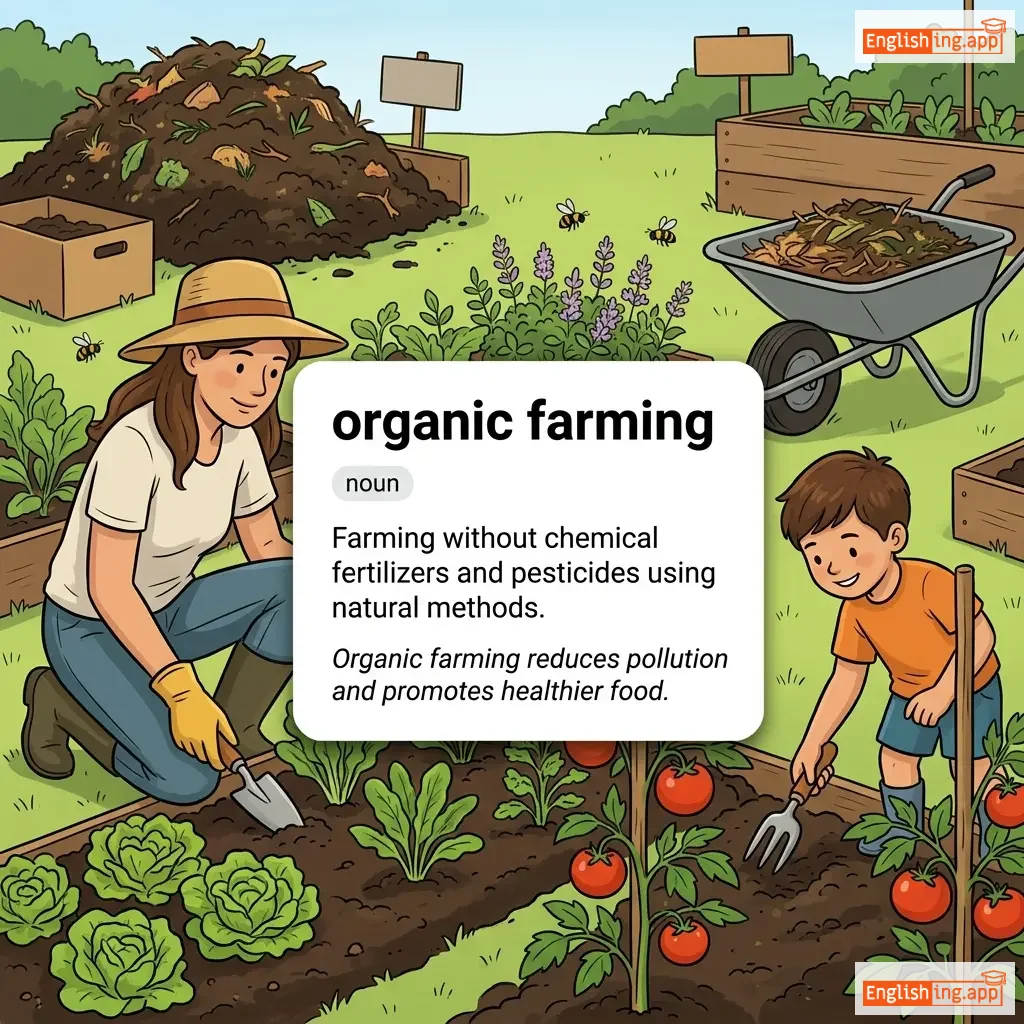
organic farming definition card — visual illustration of the meaning
noun
ˈɔːr.ɡə.nɪk ˈfɑːr.mɪŋ
органическое сельское хозяйство (organicheskoe selskoe khozyaystvo)

Farming without chemical fertilizers and pesticides using natural methods.

"Organic farming reduces pollution and promotes healthier food."

"Органическое сельское хозяйство снижает загрязнение и способствует более здоровой пище." (Organicheskoe selskoe khozyaystvo snizhaet zagryaznenie i sposbstvaet bolee zdorovoy pishche.)
organic foods definition card — visual illustration of the meaning
noun
ɔːˈɡæn.ɪk fuːdz
органические продукты (organicheskie produkty)

Food produced without the use of chemicals such as artificial pesticides, fertilizers, or other artificial agents.

"Organic foods are healthier than processed foods."

"Органические продукты полезнее, чем переработанные продукты." (Organicheskie produkty poleznee, chem pererabotannye produkty.)
noun
/ˈɔːɡənɪzəm/
организм (organizm)

a living thing that has an organized structure and can grow and reproduce

"Every organism needs water to survive."
"Каждому организму нужна вода для выживания." (Kazhdomu organizmu nuzhna voda dlya vyzhivaniya.)
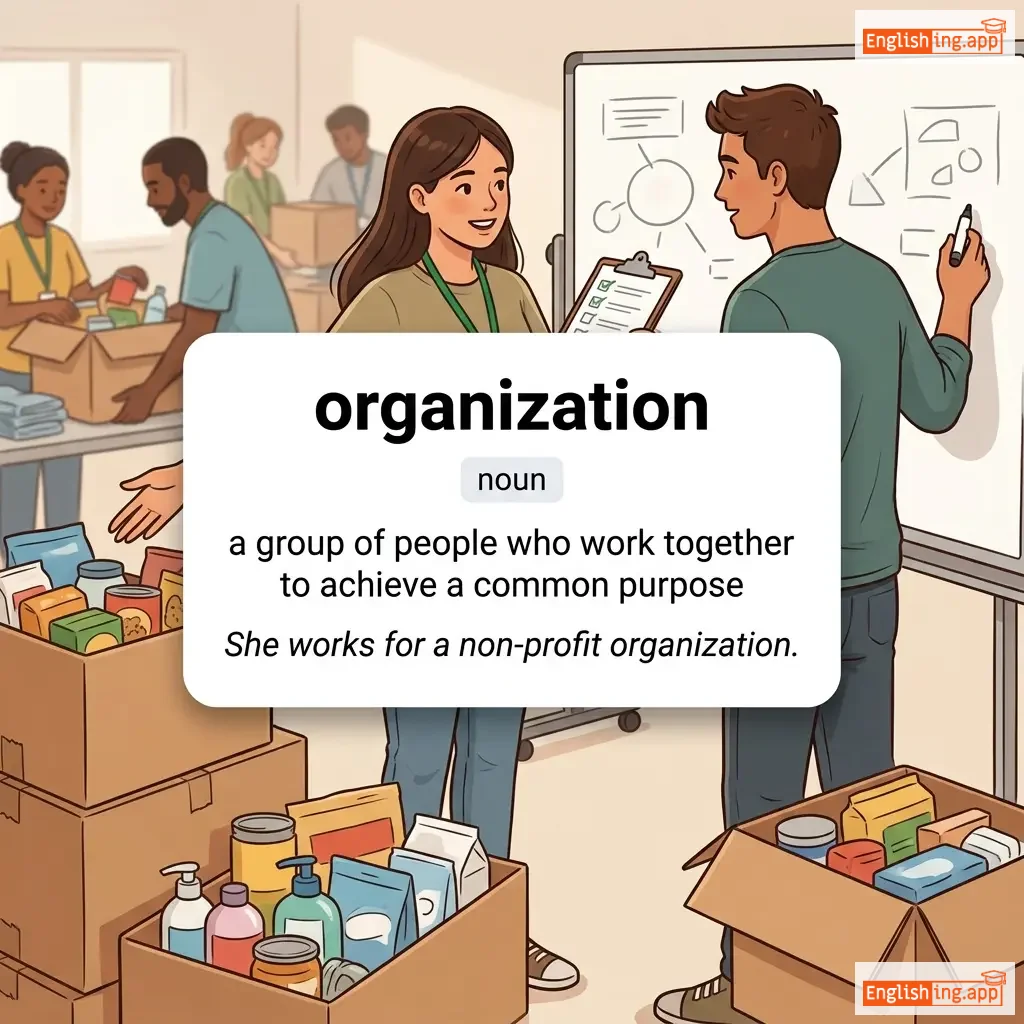
organization definition card — visual illustration of the meaning
noun
/ˌɔːɡənaɪˈzeɪʃn/
организация (organizatsiya)

a group of people who work together to achieve a common purpose

"She works for a non-profit organization."

"Она работает в некоммерческой организации." (Ona rabotayet v nekomecheskoy organizatsii.)
adjective
/ˌɔːɡənaɪˈzeɪʃənəl/
организационный (organizatsionny)

relating to the structure or arrangement of a company or group

"He works on improving the organizational structure of the company."
"Он работает над улучшением организационной структуры компании." (On rabotaet nad uluchsheniem organizatsionnoj struktury kompanii.)
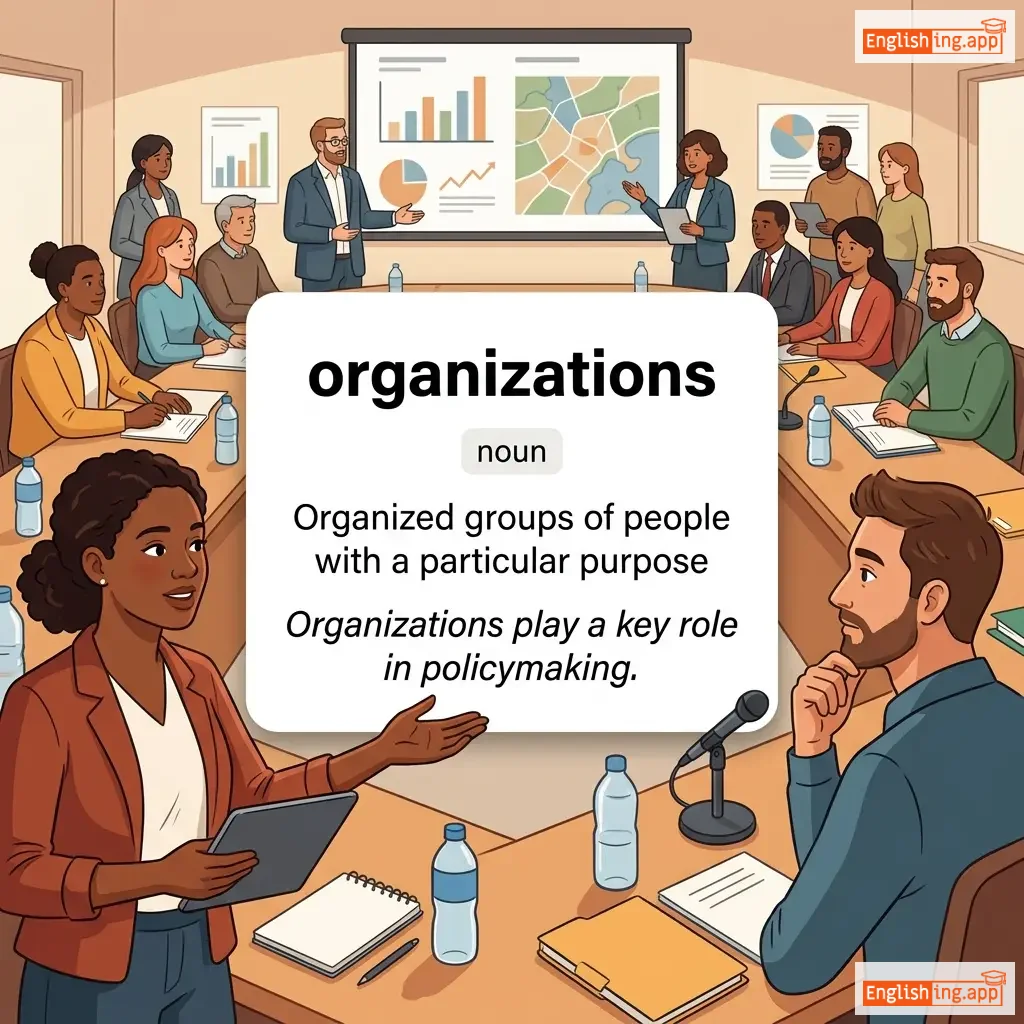
organizations definition card — visual illustration of the meaning
noun
ˌɔː.ɡən.aɪˈzeɪ.ʃənz
организации (organizatsii)

Organized groups of people with a particular purpose

"Organizations play a key role in policymaking."
"Организации играют ключевую роль в формировании политики." (Organizatsii igraiut kliuchevuiu rol' v formirovanii politiki.)
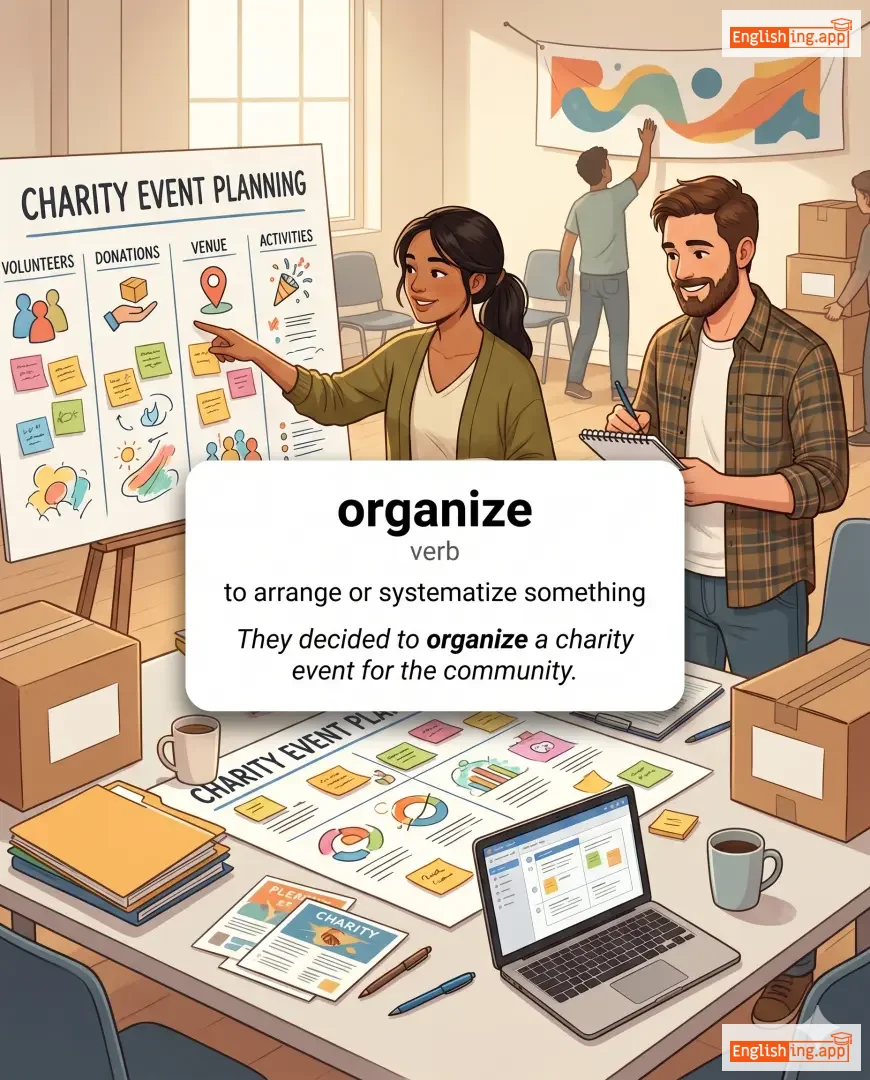
organize definition card — visual illustration of the meaning
verb
/ˈɔːɡənaɪz/
организовать (organizovat)

to arrange or systematize something

"They decided to organize a charity event for the community."

"Они решили организовать благотворительное мероприятие для сообщества." (Oni reshili organizovat blagotvoritel'noe meropriyatie dlya soobshchestva.)
organized definition card — visual illustration of the meaning
adjective
/ˈɔːrɡənaɪzd/
организованный (organizovannyy)

arranged or structured in a systematic and efficient way

"She always keeps her workspace neat and organized."

"Она всегда держит свое рабочее место в порядке и организованным." (Ona vsegda derzhit svoe rabocheye mesto v poryadke i organizovannym.)
noun
/ˈɔːrɡənaɪzər/
организатор (organizator)

a person who arranges or coordinates activities, events, or groups; a tool or item used to keep things in order

"She worked as the main organizer of the international conference."

"Она была главным организатором международной конференции." (Ona byla glavnym organizatorom mezhdunarodnoy konferentsii)
noun (plural)
/ˈɔːrdʒiːz/
оргии (orgii)

Wild gatherings involving excessive indulgence in food, drink, or sexual activity.

"The ancient Romans were infamous for their lavish feasts and orgies."

"Древние римляне были печально известны своими роскошными пиршествами и оргиями." (Drevnie rimlyane byli pechal'no izvestny svoimi roskoshnymi pirshtestvami i orgiyami.)
noun
/ˈɔːrdʒi/
орги (orgi)

A wild party involving excessive indulgence, especially of a sexual nature.

"The novel described a scandalous orgy in a wealthy mansion."

"Роман описал скандальную оргии в богатом особняке." (Roman opisal skandal'nuyu orgiyu v bogatom osobnyake.)
verb
/ˈɔː.ri.ənt/
ориентировать (orientirovat)

to align or position something relative to a particular point or direction

"The map helps tourists orient themselves in the city."

"Карта помогает туристам ориентироваться в городе." (Karta pomogaet turistam orientirovatsya v gorode.)
adjective
/ˌɔː.riˈen.təl/
относящийся к странам Восточной Азии; восточный (oriental)

relating to the countries of East Asia; eastern

"The museum has a beautiful collection of oriental art."

"В музее есть красивая коллекция восточного искусства." (V muzeye yest' krasivaya kollektsiya vostochnogo iskusstva)
noun
/ˌɔː.ri.enˈteɪ.ʃən/
ориентация (orientatsiya)

the process of becoming familiar with a new situation or environment

"The company provides an orientation for all new employees."

"Компания предоставляет ориентирование для всех новых сотрудников." (Kompaniya predostavlyayet orientirovaniye dlya vsekh novykh sotrudnikov.)
noun
/ˈɔː.rɪ.fɪs/
отверстие (otverstie)

an opening or hole, especially in the body or a device

"The medicine was applied through a small orifice in the device."

"Медикамент был нанесен через небольшое отверстие в устройстве." (Medikament byl nanesen cherez nebol'shoe otverstie v ustroystve.)
noun
/ˈɒr.ɪ.dʒɪn/
происхождение (proiskhozhdenie)

the point or place where something begins or is created

"The river has its origin in the mountains."

"Река берет свое начало в горах." (Reka beret svoe nachalo v gorakh.)
adjective
/əˈrɪdʒ.ɪ.nəl/
оригинальный (original'nyy)

existing from the beginning; not a copy or imitation

"This is the original manuscript of the novel."

"Это оригинальная рукопись романа." (Eto original'naya rukopis' romana.)
noun
/əˌrɪʒ.əˈnæl.ə.ti/
оригинальность (originalnost)

the quality of being novel or unusual; the ability to think independently and creatively

"The artist's work showed great originality and creativity."

"Работа художника показала большую оригинальность и креативность." (rabota khudozhnika pokazala bolshuyu originalnost i kreativnost)
adverb
/əˈrɪdʒɪnəli/
изначально (iznachal'no)

in the beginning, at first

"Originally, she wanted to be a doctor."

"Изначально она хотела стать врачом." (Iznachal'no ona hotela stat' vrachom.)
verb
/əˈrɪdʒɪneɪt/
возникать (voznikat)

to come into existence; to begin; to create or produce

"The tradition originated in ancient times."

"Традиция возникла в древние времена." (Tradicija voznikla v drevnie vremena.)
noun
/ˈɒrɪz(ə)n/
молитва (molitva)

a prayer, especially a devout or formal one

"He whispered a quiet orison before going to sleep."

"Он шептал тихую молитву перед сном." (On sheptal tikhuyu molitvu pered snom.)
noun
/ˈɔːrnəmənt/
украшение (ukrasheniye)

A decorative object that adds beauty to something.

"The Christmas tree was decorated with colorful ornaments."

"Рождественская елка была украшена цветными украшениями." (Rozhdestvenskaya yolka byla ukrashena tsvetnymi ukrasheniya.)
adjective
/ˌɔːrnəˈmɛntl/
декоративный (dekorativnyy)

Serving as decoration; decorative rather than functional.

"The garden was filled with ornamental plants."

"Сад был заполнен декоративными растениями." (Sad byl zapolnen dekorativnymi rasteniyami.)
adjective
/ɔːˈneɪt/
роскошный (roskoshnyy)

elaborately or highly decorated

"The palace hall was filled with ornate furniture and paintings."

"Зал дворца был заполнен роскошной мебелью и картинами." (Zal dvortsa byl zapolnen roscohnyy mebelyu i kartinami.)
adjective
/ˈɔːrnəri/
раздражительный (razdrazhitel'nyy)

bad-tempered and combative; stubborn

"The ornery old man refused to leave his chair."

"Этот раздражительный старик отказался покидать своё кресло." (Eto razdrazhitel'nyy starik otkazalsya pokidat' svoe kreslo.)
noun
/ˌɔːrnɪˈθɒlədʒɪst/
орнитолог (ornitolog)

a scientist who studies birds

"The ornithologist spent years studying migratory birds."

"Орнитолог провел годы, изучая мигрирующих птиц." (Ornitolog provel gody, izuchaya migriruyushchikh ptits.)
noun
/ˌɔːrnɪˈθɑːlədʒi/
орнитология (ornitologiya)

the scientific study of birds

"She pursued ornithology to understand the migration patterns of birds."

"Она изучала орнитологию, чтобы понять миграционные паттерны птиц." (Ona izuchala ornitologiyu, chtoby ponyat' migratsionnye patterny ptits.)
adjective
/ˈɔːrəˌtʌnd/
глубокий и ясный голос (glubokij i yasnyj golos)

full, rich, and clear in sound; pompous in style

"The actor's orotund voice filled the theater."

"Глубокий голос актера наполнил театр." (Glubokij golos aktera napolnil teatr.)
noun
/ˈɔr.fən/
сирота (sirota)

a child whose parents are dead; someone without protective support

"The orphan was adopted by a loving family."

"Сирота был усыновлён любящей семьёй." (Sirota byl usynovlyon lyubyashchey sem'yoy.)
noun
/ˈɔr.fən.ɪʒ/
детский дом (detskiy dom)

an institution for the care and education of children who have lost their parents

"The charity built a new orphanage for homeless children."

"Благотворительная организация построила новый детский дом для бездомных детей." (Blagotvoritel'naya organizatsiya postroila novyy detskiy dom dlya bezdomnykh detey.)
adjective
/ˈɔːrθədɑːks/
ортодоксальный (ortodoxalnyy)

conforming to traditional beliefs or practices

"He comes from a very orthodox family."

"Он родом из очень ортодоксальной семьи." (On rodom iz ochen ortodoxalnoy semi)