Словари

Словарь английского языка | Значения слов, определения и примеры

noun
/ˈnoʊzˌɡeɪ/
букет цветов (buket tsvetov)

a small bunch of flowers, typically given as a gift or carried for decoration

"She carried a nosegay of fresh roses to the ceremony."
"Она принесла букет свежих роз на церемонию." (Ona prinesla buket svezhikh roz na tseremoniyu.)
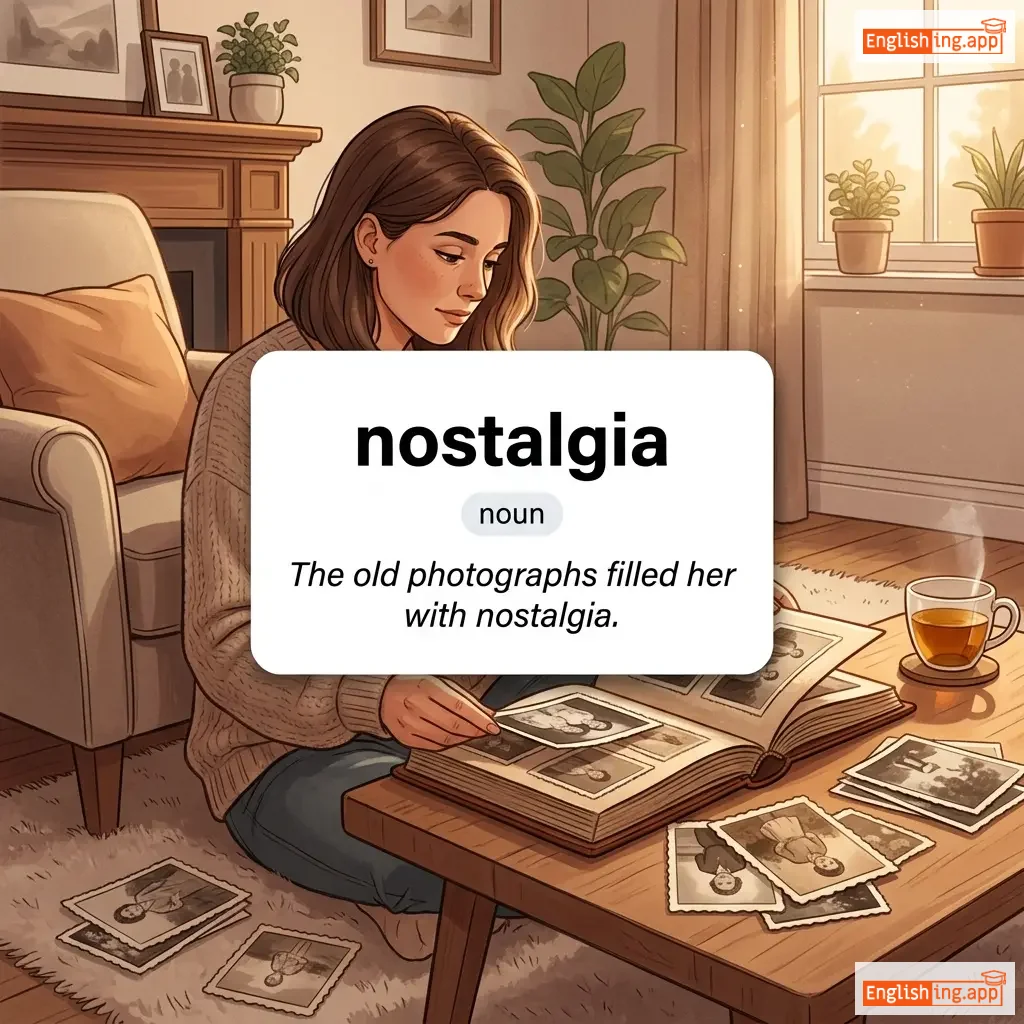
nostalgia definition card — visual illustration of the meaning
noun
/nəˈstældʒə/
ностальгия (nostalgiya)

a sentimental longing for the past, often for a period or place with happy memories

"The old photographs filled her with nostalgia."

"Старые фотографии наполнили её ностальгией." (Staryye fotografii napolnili yeye nostal'giey.)
noun
/ˈnɒs.trɪl/
носовой ход (nosovoy khod)

either of the two openings in the nose through which air passes

"The doctor checked each nostril for any blockage."
"Доктор проверил каждое носовое отверстие на наличие блокировок." (Doktor proveril kazhdoe nosovoye otverstye na nalichiye blokirovok.)
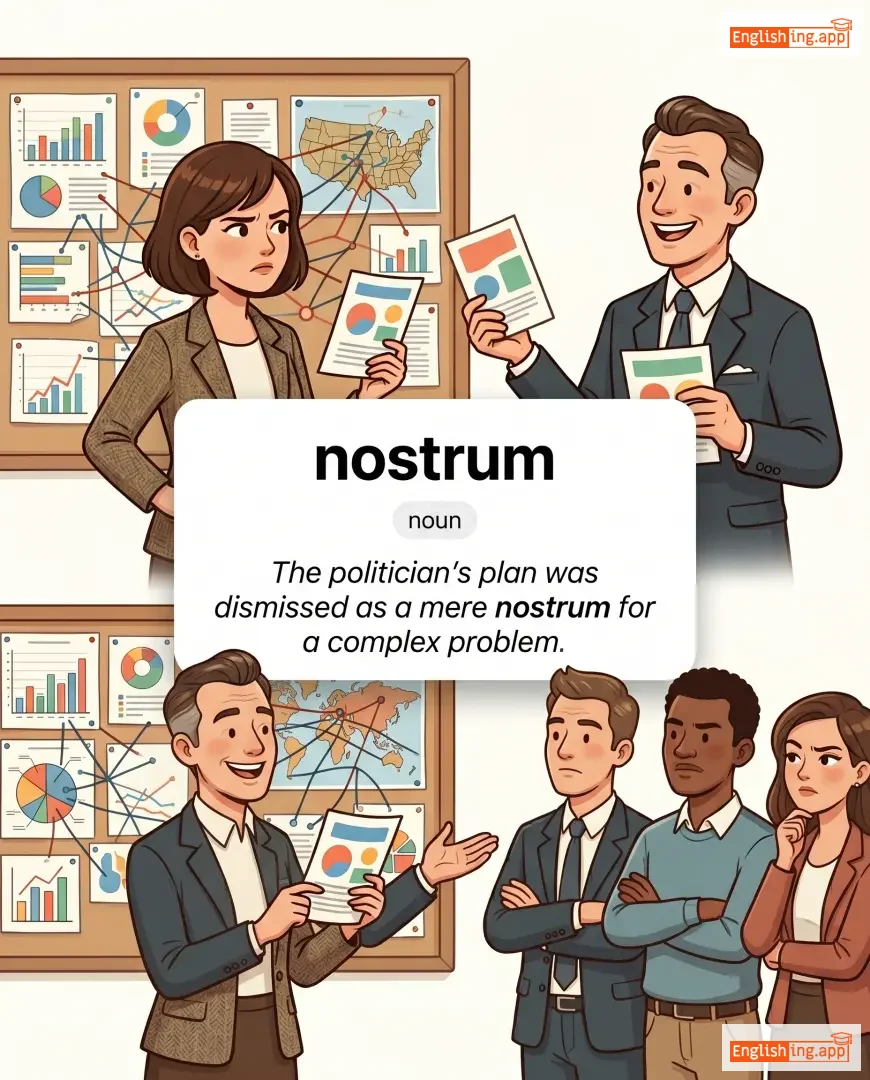
nostrum definition card — visual illustration of the meaning
noun
/ˈnɑːstrəm/
неэффективное средство (neeffektivnoe sredstvo)

a medicine or remedy, especially one that is not considered effective; a questionable solution

"The politician’s plan was dismissed as a mere nostrum for a complex problem."

"План политика был отклонён как простое средство для сложной проблемы." (Plan politika byl otklonyon kak prostoie sredstvo dlya slozhnoi problemy.)
adverb
/nɒt/
нет (net)

used to make a word or phrase negative

"I do not like spicy food."

"Я не люблю острую еду." (Ya ne lyublyu ostruyu yedu.)
adjective
/ˈnoʊtəbl/
значительный (znachitel'nyj)

worthy of attention or notice; remarkable

"She made a notable contribution to the project."

"Она сделала значительный вклад в проект." (Ona sdelala znachitel'nyj vklad v proyekt.)
adverb
/ˈnoʊtəbli/
заметно (zametno)

used to indicate something worthy of attention or significant

"She is notably talented in painting."

"Она чрезвычайно талантлива в живописи." (Ona chrezvychayno talantliva v zhivopisi.)
noun
/noʊˈteɪʃən/
нотация (notatsiya)

A system of symbols or signs used to represent information, especially in mathematics or music.

"The teacher explained the notation used in the algebra equations."

"Учитель объяснил нотацию, использованную в алгебраических уравнениях." (Uchitel' ob'iasnil notatsiyu, ispol'zovannuyu v algebrais'kikh uravneniyakh.)
noun
/nɑːtʃ/
выемка (vyemka)

A small cut or groove on the edge or surface of something; a level or degree of achievement.

"He carved a notch on the stick to mark the days."

"Он вырезал выемку на палке, чтобы отмечать дни." (On vyrezal vyemku na palke, chtoby otmechat' dni.)
note definition card — visual illustration of the meaning
noun, verb
/noʊt/
заметка (zametka)

a brief record of facts, topics, or thoughts written down; to observe or remark upon something

"She wrote a quick note to remind herself of the meeting."

"Она написала быстрые заметки, чтобы напомнить себе о встрече." (Ona napisal bystrye zametki, chtoby napomnit' sebe o vstreche.)
noun
/ˈnoʊtbʊk/

a small book with blank or ruled pages for writing notes; also a portable computer

"She opened her notebook to jot down some ideas."

adjective, verb
/ˈnoʊtɪd/
известный (izvestny)

well known or famous; written down or observed

"He is a noted author in the field of history."

"Он известный автор в области истории." (On izvestnyy avtory v oblasti istorii.)
pronoun
/ˈnʌθɪŋ/
ничто (nichto)

not anything; no thing

"She has nothing to worry about."
"Ей нечего беспокоиться." (Yey nechego bespokoitsya.)
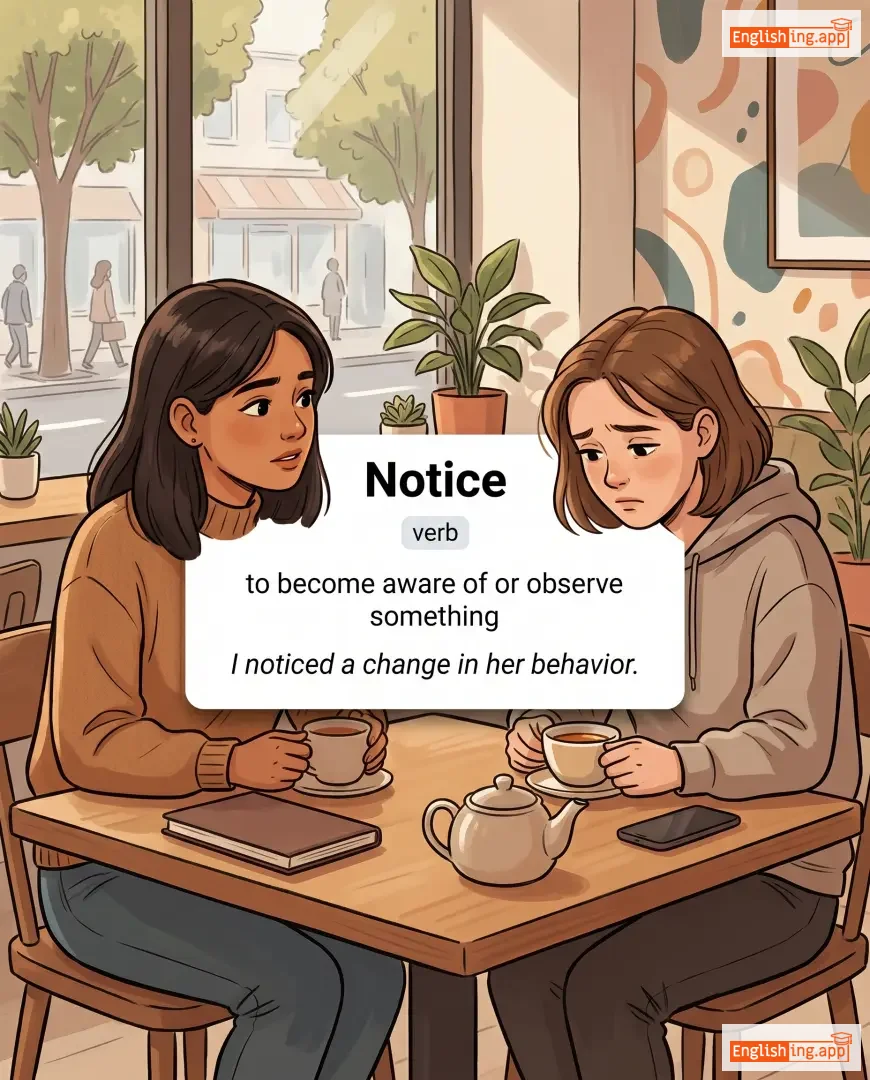
Notice definition card — visual illustration of the meaning
noun
/ˈnoʊtɪs/
уведомление (uvedomlenie)

a written or printed announcement or notification

"He gave me a notice about the meeting."

"Он дал мне уведомление о собрании." (On dal mne uvedomlenie o sobrasnii.)
adjective
/ˈnoʊtɪsəbl/
заметный (zametnyy)

Easily seen, observed, or recognized.

"There was a noticeable improvement in her performance."

"В ее выступлении было заметное улучшение." (V yeye vystuplenii bylo zametnoye uluchsheniye.)
noun
/ˌnəʊtɪfɪˈkeɪʃən/
уведомление (uvedomleniye)

an official or formal notice or message informing someone of something; an alert delivered by a system or device

"You will receive a notification when your application is approved."
"Вы получите уведомление, когда ваша заявка будет одобрена." (vy poluchite uvedomleniye kogda vasha zayavka budet odobrena)
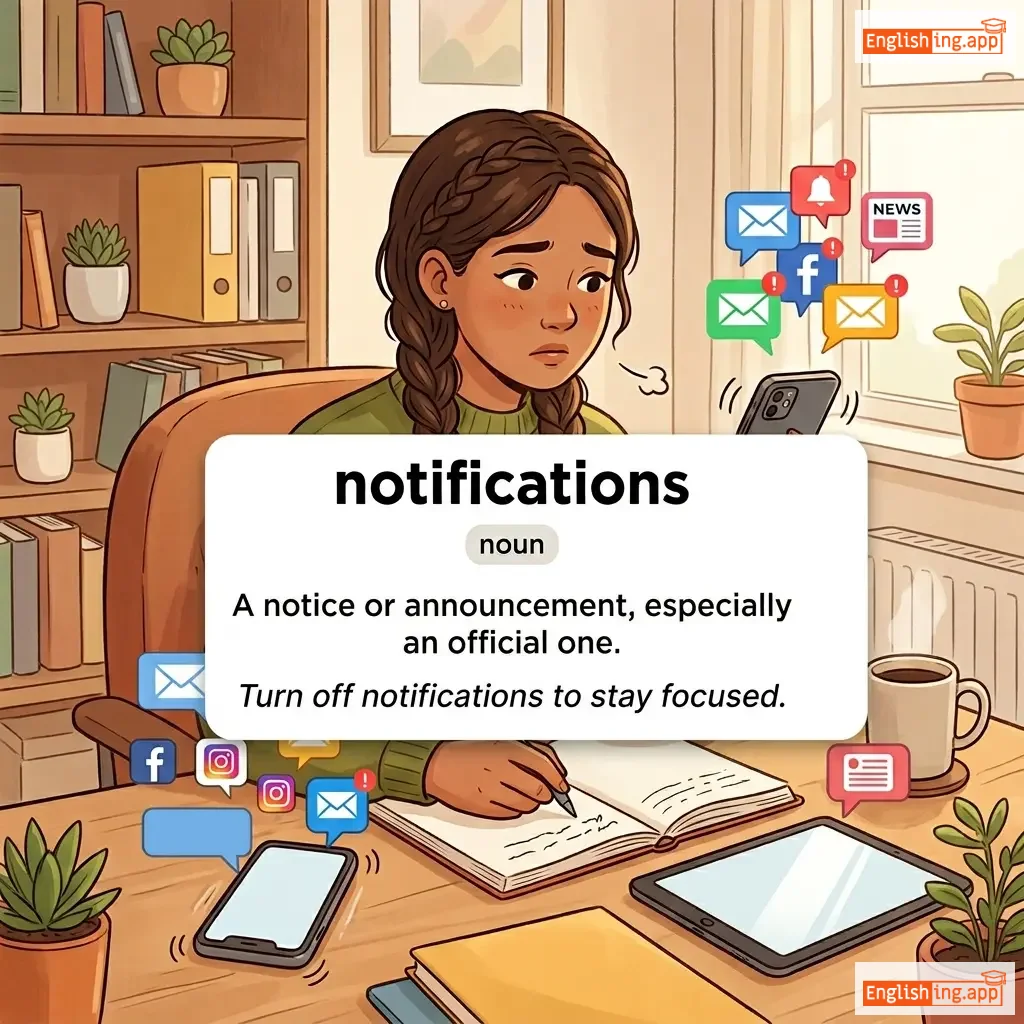
notifications definition card — visual illustration of the meaning
noun
/ˌnoʊtɪfɪˈkeɪʃənz/
уведомления (uvedomleniya)

A notice or announcement, especially an official one.

"Turn off notifications to stay focused."

"Выключите уведомления, чтобы оставаться сосредоточенным." (Vyklyuchite uvedomleniya, chtoby ostavat'sya sosredotochennym.)
verb
/ˈnoʊtɪfaɪ/
уведомить (uvedomit)

to inform someone officially about something

"The manager will notify the staff about the schedule change."

"Менеджер уведомит персонал о смене расписания." (Menedzher uvedomit personal o smene raspisaniya.)
noun
/ˈnoʊʃən/
понятие (ponyatie)

An idea, belief, or concept about something.

"He had a vague notion of what she wanted."

"У него было смутное представление о том, что она хотела." (U nego bylo smutnoe predstavlenie o tom, chto ona khotela.)
noun
/ˌnoʊtəˈraɪəti/
порочность (porochnost)

The state of being famous or well-known for something bad.

"The criminal gained notoriety for his daring escapes."

"Преступник стал известен за свои смелые побеги." (Prestuponnik stal izvesten za svoi smelye pobegi.)
adjective
/nəˈtɔːriəs/
пресловутый (preslovutyy)

Famous or well-known for something bad or undesirable

"The area is notorious for its high crime rate."

"Этот район пресловут за высокую преступность." (Etot rayon preslovut za vysokuyu prestupnost'.)
preposition/adverb/conjunction
/ˌnɒtwɪθˈstændɪŋ/
несмотря на (nesmotrya na)

In spite of; despite

"Notwithstanding the challenges, the team completed the project."

"Несмотря на трудности, команда завершила проект." (Nesmotrya na trudnosti, komanda zavershila proyekt.)
verb
/ˈnʌrɪʃ/
питать (pitat)

To provide with food or other substances necessary for growth, health, and good condition

"Good books nourish the mind."
"Хорошие книги питают ум." (Khoroshiye knigi pitayut um.)
nourishment definition card — visual illustration of the meaning
noun
/ˈnʌrɪʃmənt/
питание (pitanie)

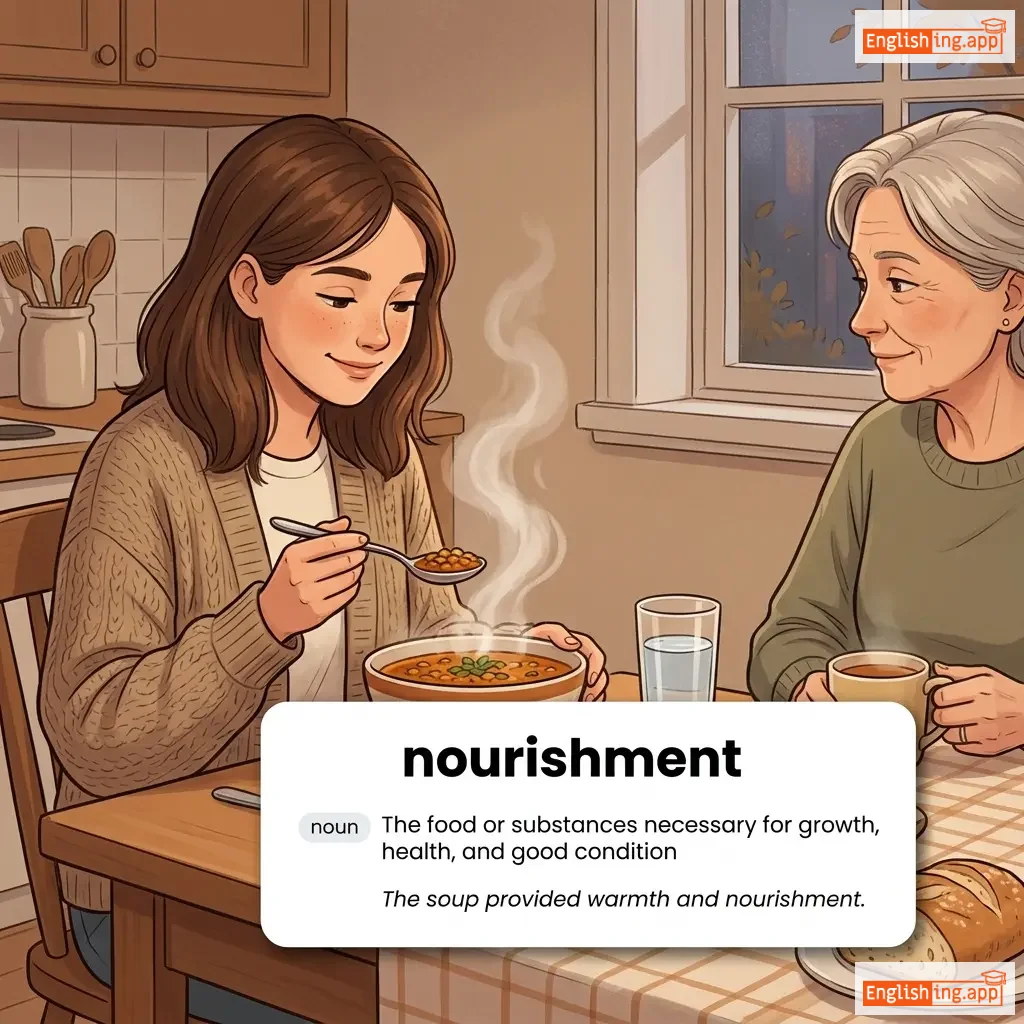
The food or substances necessary for growth, health, and good condition

"The soup provided warmth and nourishment."

"Суп дал тепло и питание." (Sup dal teplo i pitaniye.)
noun
/ˈnoʊvə/
нова (звезда, показывающая резкое увеличение яркости, а затем медленно возвращающаяся в исходное состояние) (nova)

A star showing a sudden large increase in brightness and then slowly returning to its original state

"Astronomers observed a bright nova in the sky."

"Астрономы наблюдали яркую нову на небе." (Astronomy nablyudali yarkuyu novu na nebe.)
noun/adjective
/ˈnɒvəl/
роман / новый (roman / novyj)

A long fictional narrative; also something new or unusual.

"She spent the weekend reading a historical novel."

"Она провела выходные, читая исторический роман." (Ona provela vykhodnye, chitaya istoricheskij roman.)
noun
/ˈnɒvəlɪst/
писатель романов (pisatel' romanov)

a person who writes novels

"The novelist spent years writing his new book."

"Новелист провел годы, написав свою новую книгу." (Novelist provel gody, napisav svoju novuju knigu.)
noun
/ˌnɒvəˈlɛt/
новеллета (novetta)

A short novel or long short story.

"The author published a novellette as a preview of her upcoming series."
"Автор опубликовал новеллету в качестве превью своей будущей серии." (Avtor opublikoval novettu v kachestve preview svoey budushchey serii.)
novelty definition card — visual illustration of the meaning
noun
/ˈnɒvəlti/
новизна (novizna)

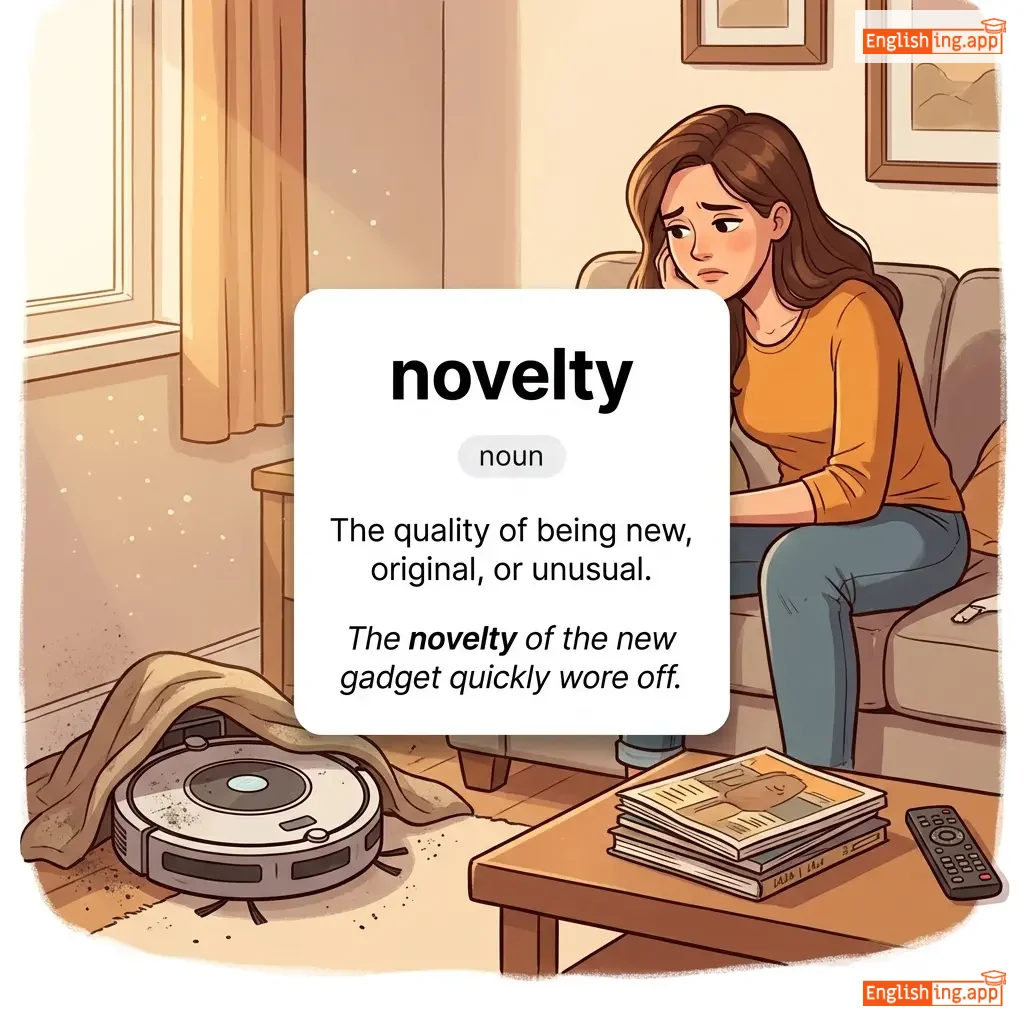
The quality of being new, original, or unusual.

"The novelty of the new gadget quickly wore off."

"Новизна нового гаджета быстро исчезла." (Novizna novogo gadzheta bыstro ischezla.)
noun
/noʊˈvɛmbər/
ноябрь (noyabr)

the eleventh month of the year in the Gregorian calendar

"November is often cool and quiet before winter begins."

"Ноябрь часто бывает прохладным и тихим перед началом зимы." (noyabr chasto byvaet prokhladnym i tikhim pered nachalom zimy)
noun
/ˈnɒvɪs/
новичок (novichok)

A person new to or inexperienced in a field or activity.

"He is still a novice at playing the guitar."

"Он все еще новичок в игре на гитаре." (On vse eshche novichok v igre na gitare.)
adverb
/naʊ/
сейчас (sejchas)

at the present moment or time

"I am studying now."

"Я учусь сейчас." (Ya uchus' sejchas.)
adverb
/ˈnaʊədeɪz/
В настоящее время; в наши дни (v nastoyashchee vremya)

at the present time; in these times

"Now-a-days, people prefer online shopping."

"Сейчас люди предпочитают покупки онлайн." (Seychas lyudi predpochitayut pokupki onlayn.)
adverb
/ˈnaʊədeɪz/
в наши дни (v nashi dni)

At the present time; in contrast with the past.

"Nowadays, many people prefer shopping online."

"В наши дни многие люди предпочитают делать покупки онлайн." (V nashi dni mnogie lyudi predpochitayut delat' pokupki onlayn.)
adverb
/ˈnoʊˌwɛr/
нигде (nigde)

in or to no place; not anywhere

"The missing keys were nowhere to be found."

"Потерянные ключи нигде не были найдены." (Poteryannye klyuchi nigde ne byli naydeny.)
adjective
/ˈnɑːkʃəs/
вредный (vrednyy)

harmful, poisonous, or very unpleasant

"The factory released noxious fumes into the air."
"Фабрика выпустила ядовитые пары в воздух." (Fabrika vypustila yodovitye pary v vozdukh.)
nuance definition card — visual illustration of the meaning
noun
/ˈnuːˌɑːns/
нюанс (nyuans)

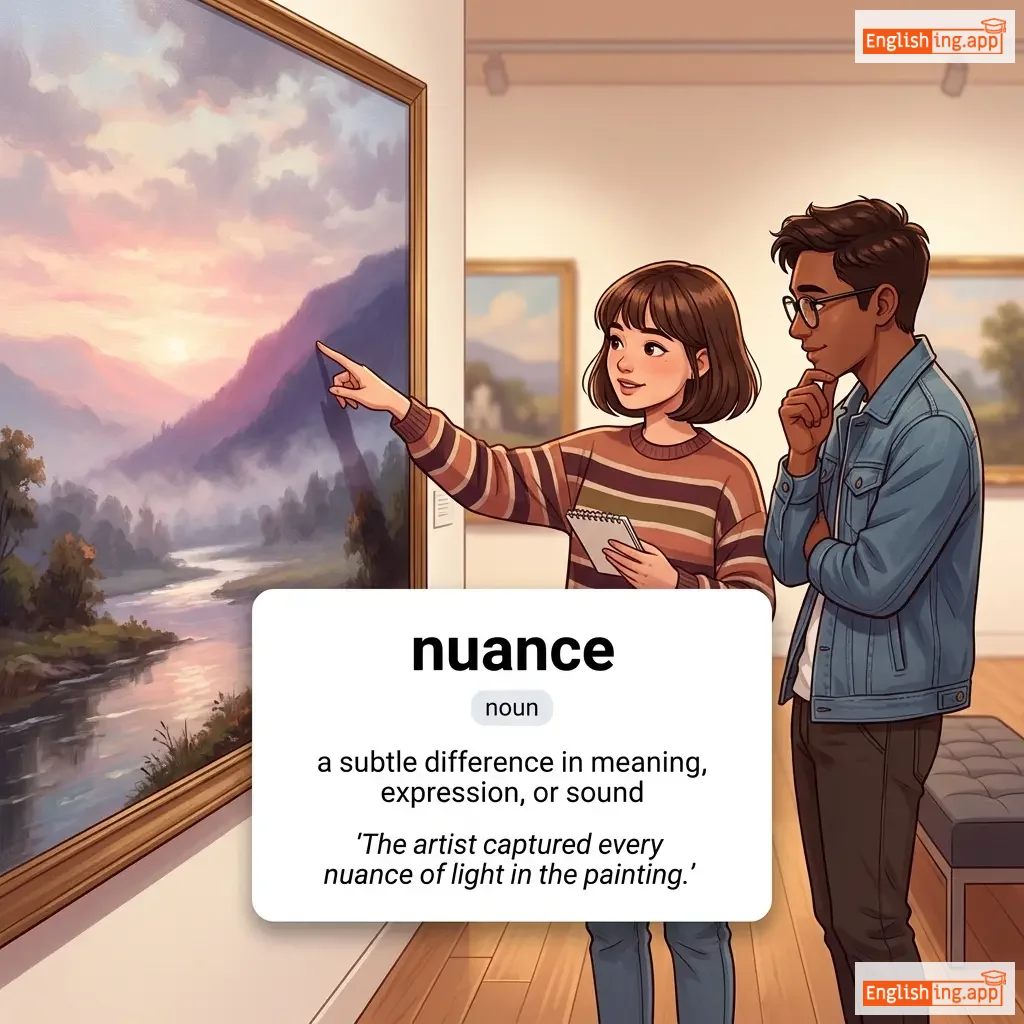
a subtle difference in meaning, expression, or sound

"The artist captured every nuance of light in the painting."

"Художник уловил каждый нюанс света в картине." (Khodozhnik ulovil kazhdyy nyuans sveta v kartine.)
adjective
ˈnuː.ɑːnst
нюансированный (nyuansirovannyy)

Characterized by subtle shades of meaning or expression; having or characterized by subtle and often appealingly complex qualities.

"His argument was nuanced and well-structured."

"Его аргументация была нюансированной и хорошо структурированной." (Ego argumentatsiya byla nyuansirovannoy i khorosho struktuirovannoy.)
adjective
/ˈnjuːbaɪl/
девушка (devushka)

of a young woman, sexually mature and suitable for marriage

"The village was celebrating the festival with its nubile maidens dancing."

"Деревня праздновала фестиваль с ее девицами, танцующими." (Derevnya prazdnovala festival s yeye devitsami, tantsuyushchimi.)
adjective
/ˈnuːkliər/
ядерный (yaderny)

relating to the nucleus of an atom or to nuclear energy

"The country is developing nuclear energy."

"Страна разрабатывает ядерную энергию." (Strana razrabatyvayet yadernuju energiyu.)
verb
/ˈnuːkliˌeɪt/
нуклеировать (nukleirovat)

to form into a nucleus or bring together into a central part

"The droplets began to nucleate around tiny particles in the air."
"Капли начали нуклеироваться вокруг мелких частиц в воздухе." (Kapli nachali nukleirovatsya vokrug mel'kikh chastits v vozdukhe.)
nucleus definition card — visual illustration of the meaning
noun
/ˈnjuː.kli.əs/
ядеро (yadero)

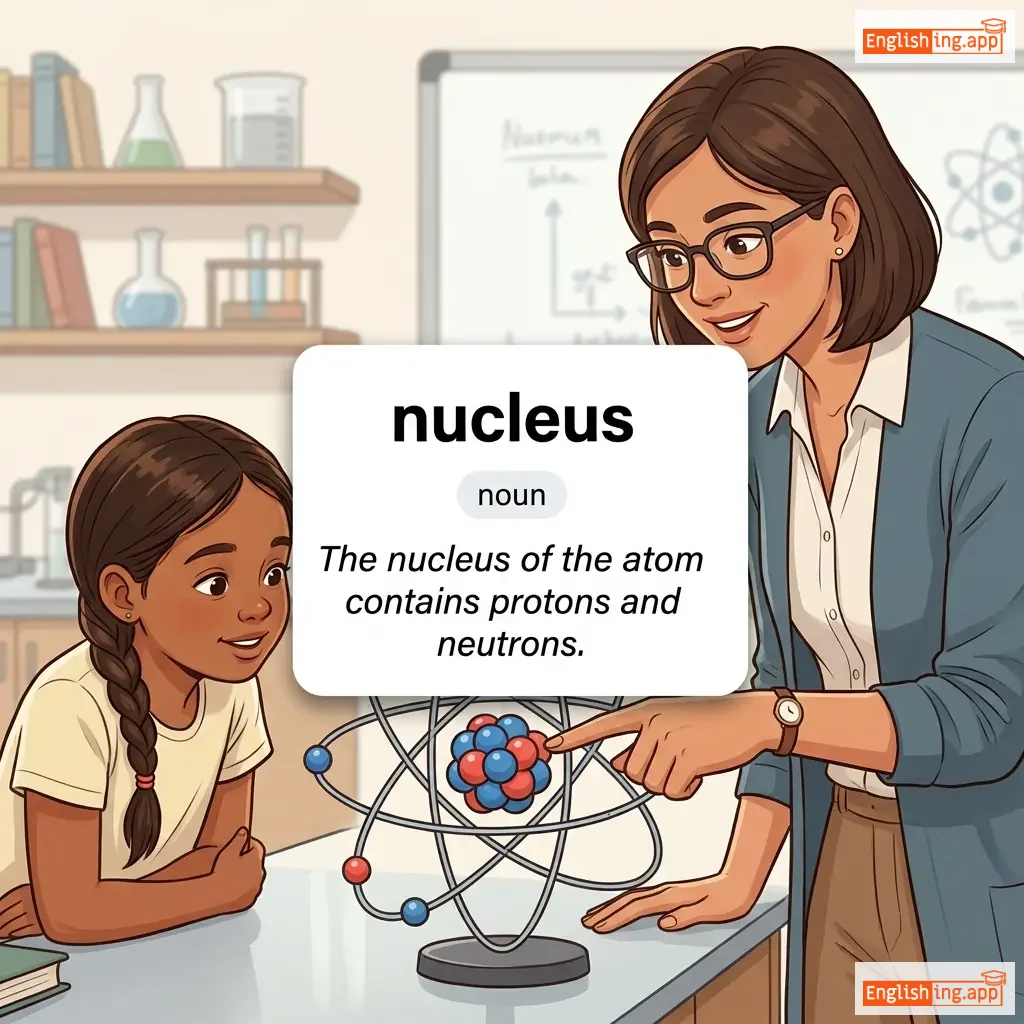
The central and most important part of something, forming the basis for its activity and growth; in biology, the central part of a cell.

"The nucleus of the atom contains protons and neutrons."

"Ядро атома содержит протоны и нейтроны." (Yadro atoma soderzhit protony i neytrony.)
adjective
/nuːd/
обнажённый (obnazhyonny)

Wearing no clothes; naked.

"The artist painted a nude model."

"Художник написал картину с обнажённой моделью." (Khudozhnik napisal kartinu s obnazhyonnoi modelyu.)
verb
/nʌdʒ/
прикоснуться локтем (prikosnut'sya loktem)

To push someone gently, usually with your elbow, in order to attract attention.

"She nudged him to be quiet during the meeting."
"Она толкнула его локтем, чтобы он замолчал во время собрания." (Ona tolkhnula ego loktem, chtoby on zamlchal vo vremya sobrania.)
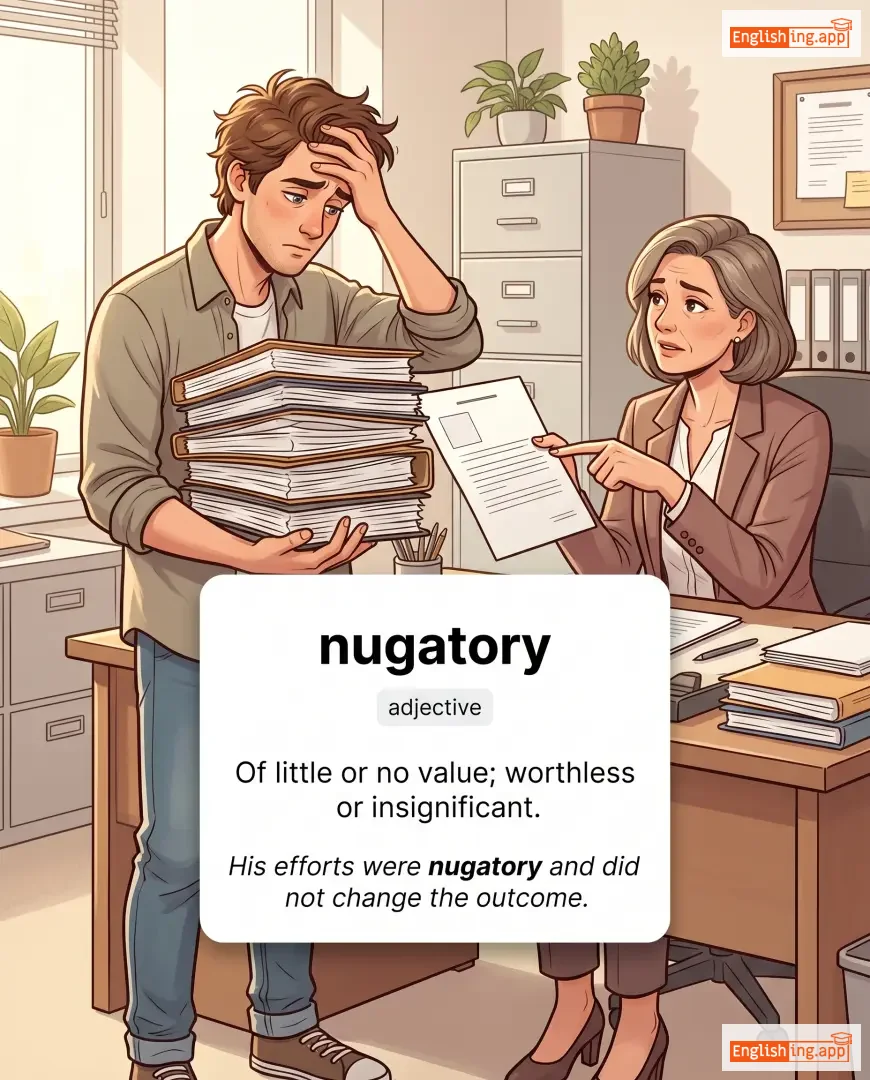
nugatory definition card — visual illustration of the meaning
adjective
/ˈnjuː.ɡə.tɔːr.i/
ничтожный (nischtozhny)

Of little or no value; worthless or insignificant.

"His efforts were nugatory and did not change the outcome."

"Его усилия были ничтожными и не изменили результат." (Ego usiliya byli nichtozhnymi i ne izmenili rezul'tat.)
noun
/ˈnjuː.səns/
неприятность (nepriyatnost)

A person, thing, or situation that causes inconvenience or annoyance.

"The loud construction noise was a nuisance to the neighbors."

"Громкий строительный шум был неприятностью для соседей." (Gromkiy stroitel'nyy shum byl nepriyatnost'yu dlya sosedey.)
nullify definition card — visual illustration of the meaning
verb
/ˈnʌlɪfaɪ/

to make legally null and void; to cancel or invalidate

"The contract was nullified due to fraud."

noun
/ˈnʌmbər/
номер (nomer)

a mathematical value used to count, measure, or label

"She gave me her phone number."

"Она дала мне свой номер телефона." (Ona dala mne svoy nomer telefona.)
adjective
/ˈnjuː.mər.ə.bəl/
считаемый; числяемый (schitayemy; schislyaemy)

capable of being counted; countable

"The stars in the sky are not numerable."

"Звезды на небе не поддаются подсчету." (Zvezdy na nebe ne poddayutsya podschetu.)
noun
/ˌnjuːməˈreɪʃən/
нумерация (númeratsiya)

the action or process of counting or assigning numbers

"The teacher explained the basics of numeration to the students."

"Учитель объяснил основы нумерации студентам." (Uchitel ob'yasnil osnovy numeratsii studentam.)