Словари

Словарь английского языка | Значения слов, определения и примеры

noun
/mæn əv wɔːr/
военный корабль (voenny korabl)

a warship; a naval vessel equipped with weapons for warfare

"The man of war sailed across the ocean to defend the coast."

"Военный корабль пересёк океан, чтобы защитить побережье." (Voenny korabl peresyok okean, chtoby zashchitit poberezhe.)
noun
/ˈmænˌiː.tər/
людоед (lyudoed)

An animal that kills and eats humans; informally, a woman who is very assertive in relationships.

"The tiger became a notorious man-eater in the village."

"Тигр стал печально известным людоедом в деревне." (Tigr stal pechal'no izvestnym lyudoedom v derevne.)
noun
/ˈmænˌtræp/
ловушка для людей (lovushka dlya lyudey)

A trap designed to catch or injure humans; informally, a woman considered dangerously attractive.

"The old castle had a man-trap at the entrance."

"Старый замок имел ловушку для людей у входа." (Staryy zamok imel lovushku dlya lyudey u vkhoda.)
noun/verb
/ˈmæn.ə.kəl/
кандалы (kandaly)

A metal shackle for fastening someone's hands or ankles; also to restrain with such shackles.

"The prisoner was manacled before being taken to court."

"Заключенный был закован в кандалы перед тем, как его отвезли в суд." (Zaklyuchennyy byl zakovan v kandaly pered tem, kak ego otvezli v sud.)
manage definition card — visual illustration of the meaning
verb
/ˈmænɪdʒ/
управлять (upravlyat)

to be in charge of or control something

"She manages a small bookstore in town."

"Она управляет маленьким книжным магазином в городе." (Ona upravlyayet malenkim knizhnym magazinom v gorode.)
adjective
/ˈmænɪdʒəbəl/
управляемый; контролируемый (upravlyaemy; kontrolirovannyy)

able to be controlled or dealt with; feasible

"The workload is manageable if we plan properly."

"Нагрузка на работу управляемая, если мы правильно планируем." (Nagruzka na rabotu upravlyaemaya, yesli my pravil'no planirovali.)
management definition card — visual illustration of the meaning
noun
/ˈmænɪdʒmənt/
управление (upravlenie)

the process of dealing with or controlling things or people

"Good management is crucial for the success of any business."

"Хорошее управление важно для успеха любого бизнеса." (Khoroshee upravlenie vazhno dlya uspekha lyubogo biznesa.)
noun
/ˈmænɪdʒər/
менеджер (menedzher)

a person responsible for controlling or administering an organization or group of staff

"The manager approved the new project plan."

"Менеджер утвердил новый план проекта." (Menedzher utverdil novyy plan proyektа.)
noun, verb
/ˈmæn.deɪt/
мандат (mandat)

an official order or command; to give someone authority to act in a certain way

"The government issued a mandate to reduce carbon emissions."

"Правительство выдало мандат на сокращение выбросов углерода." (Pravitel'stvo vydalo mandat na sokrashchenie vybrosov ugleroda.)
adjective
/ˈmæn.dəˌtɔːr.i/
обязательный (obyazatel'nyy)

required by law or rules; compulsory

"Wearing seat belts is mandatory in most countries."

"Ношение ремня безопасности обязательно в большинстве стран." (Nosheniye remnya bezopasnosti obyazatel'no v bol'shinstve stran.)
noun
/meɪn/
гриву (grivu)

the long hair growing on the neck of a horse, lion, or other animal

"The lion shook its thick mane proudly."

"Лев гордо встряхнул свою густую гриву." (Lev gordo vstryakhnul svoyu gustuyu grivu.)
✈️

maneuver

noun, verb
/məˈnuː.vər/

a planned or skillful movement or action; to move skillfully or carefully

"The pilot maneuvered the plane through the storm."

noun
/meɪndʒ/
чесотка (chesotka)

a skin disease in animals caused by parasitic mites, leading to hair loss and sores

"The stray dog was suffering from mange."

"Бродячая собака страдала от чесотки." (Brodyachaya sobaka stradala ot chesotki.)
verb
/ˈmæŋɡəl/
изуродовать (izurodovat)

to severely damage or mutilate something, often by tearing or crushing

"The car was mangled in the accident."

"Машина была изуродована в аварии." (Mashina byla izurodovana v avarii.)
noun
/ˈmæŋ.ɡoʊ/
манго (mango)

a tropical fruit with yellow-orange skin and sweet juicy flesh

"The mango is known as the king of fruits."

"Мангo известно как король фруктов." (Mango izvestno kak korol' fruktov.)
noun
/ˈmæŋɡoʊ fɪʃ/
барамунди (baramundi)

A popular white fish also known as barramundi or Asian sea bass

"Mango fish is prized for its delicate flavor and tender texture."

"Барамунди ценится за свой нежный вкус и мягкую текстуру." (Baramundi tsenitsya za svoi nezhny vkus i myagkuyu teksturu)
noun
/mæŋˈɡoʊ.li.ə/
магнолия (magnolia)

a type of flowering tree with large, fragrant pink or white flowers

"The beautiful magnolia tree bloomed in spring with pink flowers."

"Прекрасное дерево магнолии зацвело весной с розовыми цветами." (Prekrasnoe derevo magnolii zatsvelo vesnoy s rozovymi tsvetami)
Mangrove Forest definition card — visual illustration of the meaning
noun
ˈmæŋɡroʊv ˈfɒrɪst
мангровый лес (mangrovy les)

A coastal forest ecosystem characterized by salt-tolerant trees and shrubs that grow in intertidal zones.

"Sundarbans is the world's largest mangrove forest."

"Сундарбаны — крупнейший мангровый лес в мире." (Sundarbany — krupneyshee mangrovy les v mire.)
adjective
/ˈmeɪndʒi/
грязный и изношенный (gryaznyy i iznoshennyy)

in poor condition, shabby, dirty, or affected by mange

"The stray dog looked mangy and weak."

"Бездомная собака выглядела грязной и слабой." (Bezdomnaya sobaka viglyadela gryaznoy i slaboy.)
noun
/ˈmeɪniə/
мания (manya)

an extreme enthusiasm or obsession; a mental illness marked by excitement

"There was a mania for collecting rare stamps."

"Была мания собирать редкие марки." (Byla mania sobirat' redkiye marki.)
noun
/ˈmeɪniæk/
маньяк (manyak)

a person who behaves in a wildly foolish, dangerous, or violent way

"The driver was speeding like a maniac."

"Водитель мчался как маньяк." (Voditel' mchsya kak manyak.)
adjective
/məˈnaɪəkəl/
маниакальный (maniakalnyy)

behaving like a maniac; showing excessive enthusiasm or madness

"He gave a maniacal laugh during the movie."

"Он дал маниакальный смех во время фильма." (On dal maniakal'nyy smekh vo vremya fil'ma.)
manifest definition card — visual illustration of the meaning
verb, adjective
/ˈmænɪˌfɛst/
проявлять (proyavlyat)

to show or display clearly; obvious or evident

"The symptoms of the disease manifest quickly."

"Симптомы болезни проявляются быстро." (Simptomy bolezni proyavlyayutsya bystro.)
manifestation definition card — visual illustration of the meaning
noun
/ˌmænɪfɛˈsteɪʃən/
проявление (proyavleniye)

an event, action, or object that clearly shows or embodies something

"His sudden anger was a manifestation of his stress."

"Его внезапный гнев был проявлением его стресса." (Ego vnezapnyy gnev byl proyavleniyem ego stressa.)
noun
/ˌmænɪˈfɛstoʊ/
манифест (manifest)

a public declaration of policy and aims, especially by a political party

"The party released its manifesto before the election."

"Партия опубликовала свой манифест до выборов." (Partiya opublikovala svoi manifest do viborov.)
adjective, noun
/ˈmænɪˌfoʊld/
многообразный (mnogoobrazny)

many and various; having many different forms

"The benefits of exercise are manifold."

"Преимущества упражнений многообразны." (Preimushchestva uprazhneniy mnogoobrazny.)
verb
/məˈnɪpjəˌleɪt/
манипулировать (manipulirovat)

to control or influence someone or something cleverly or unfairly

"He tried to manipulate the results in his favor."
"Он пытался манипулировать результатами в свою пользу." (On pytalsya manipulirovat rezul'tatami v svoyu pol'zu.)
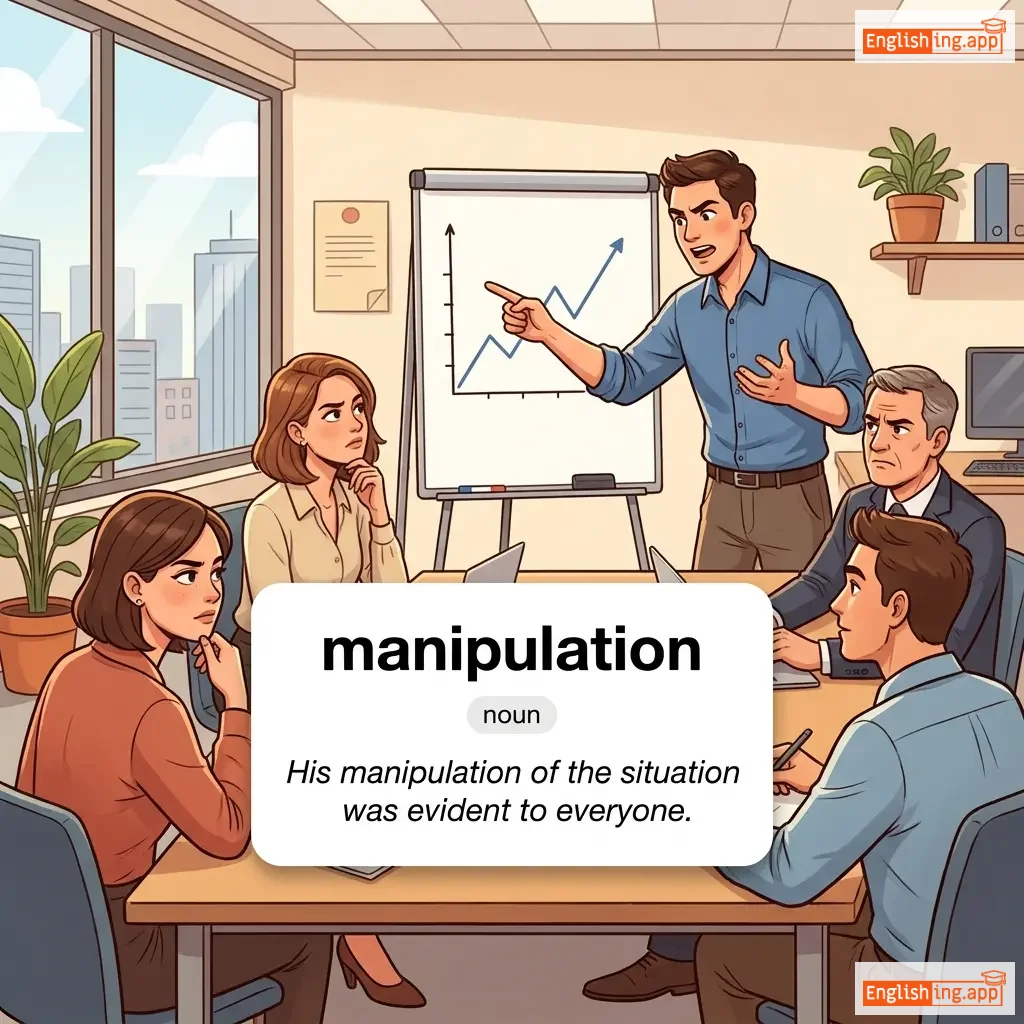
manipulation definition card — visual illustration of the meaning
noun
/məˌnɪpjʊˈleɪʃən/

the action of controlling or influencing something or someone cleverly or unfairly

"His manipulation of the situation was evident to everyone."

adjective
/ˈmæn.laɪk/
мужской (muzhskoy)

Having qualities or characteristics traditionally associated with a man; manly.

"His manlike courage impressed everyone in the village."

"Его мужское мужество впечатлило всех в деревне." (Ego muzhskoye muzhestvo vpechatlilo vsekh v derevne.)
noun
/ˈmæn.li.nəs/
мужественность (muzhestvennost)

The quality of being manly; courage, strength, and honor associated with men.

"His manliness was admired by his peers."

"Его мужественность была восхищена его сверстниками." (Ego muzhestvennost' byla voskhishchena ego sverstnikami.)
adjective
/ˈmæn.li/
мужественный; смелый; отважный (menli)

having qualities traditionally associated with men; brave; courageous

"He showed manly courage during the crisis."

"Он проявил мужество во время кризиса." (On proyavil muzhestvo vo vremya krizisa.)
adjective
/ˌmænˈmeɪd/
искусственно созданный (iskusstvenno sozdannyy)

something created or built by humans rather than occurring naturally

"This lake is manmade, not natural."

"Это озеро искусственно создано, не природное." (Eto ozero iskusstvenno sozdano, ne prirodnoye.)
noun
/ˈmænɪkɪn/
манекен (maneken)

a life-sized model of a human figure used by shops to display clothes

"The mannequin in the shop window was dressed in a red gown."

"Манекен в витрине был одет в красное платье." (Maneken v vitrine byl odet v krasnoe plat'ye.)
noun
/ˈmænər/
манера (manera)

a way in which something is done or happens

"He spoke in a polite manner."

"Он говорил вежливо." (On govoril vezhlivo.)
adjective
/ˈmæn.əd/
искусственный / притворный (iskusstvennyy / pritvornyy)

Having or showing a particular manner, especially an artificial or affected one.

"The actor’s performance was too mannered to feel natural."

"Выступление актера было слишком искусственным, чтобы казаться естественным." (Vystuplenie aktera bylo slishkom iskusstvennym, chtoby kazat'sya yestestvennym.)
noun
/ˈmæn.əˌrɪz.əm/
привычный способ (privychnyy sposob)

A habitual way of speaking or behaving; a distinctive personal trait.

"One of his funny mannerisms is scratching his head when he’s nervous."

"Одна из его забавных манер — это чесать голову, когда он нервничает." (Odna iz ego zabavnykh maner — eto chesat' golovu, kogda on nervnichayet.)
verb
/məˈnuː.vər/

To move skillfully or carefully; to guide or manipulate into a desired position.

"The driver skillfully manoeuvered the car through the narrow street."

noun
/ˈmænər/
особняк (osobnyak)

A large country house with lands; the main house of an estate.

"The old manor stood proudly on the hill for centuries."

"Старый особняк стоял гордо на холме веками." (Staryy osobnyak stoyal gordo na kholme vekami.)
noun
/ˈmænʃən/
счастье (schastye)

a large, impressive house

"The billionaire lives in a luxurious mansion overlooking the ocean."

"Она не смогла скрыть свое счастье, когда получила премию." (Ona ne smogla skryt' svoe schast'ye, kogda poluchila premiyu.)
noun
/ˈmæntl̩/
полка над камином (polka nad kaminom)

A shelf above a fireplace, often used for decoration.

"She placed family photos on the mantel above the fireplace."

"Она поставила семейные фотографии на полку над камином." (Ona postavila semeynye fotografii na polku nad kaminom.)
noun
/ˈmæntl̩/
мантия, ответственность (mantiya, otvetstvennost)

A cloak or covering; also the layer of the earth between the crust and the core.

"The leader assumed the mantle of responsibility."

"Лидер принял мантии ответственности." (Lider prinyal manti otvetstvennosti.)
noun
/ˈmænjuəl/
руководство (rukovodstvo)

a handbook or guide that provides instructions on how to do or operate something

"You should read the user manual before setting up the device."

"Перед настройкой устройства вам следует прочитать руководство пользователя." (Pered nastrojkoj ustrojstva vam sleduet prochitat' rukovodstvo pol'zovatelya.)
adverb
/ˈmæn.ju.ə.li/
вручную; с физическим усилием; (vruchnuyu; s fizicheskim usiliem)

by hand; using physical effort rather than machines

"The data was entered manually into the system."

"Данные были введены вручную в систему." (Dannye byli vvedeny vruchnuyu v sistemy.)
manufacture definition card — visual illustration of the meaning
verb
/ˌmænɪˈfæktʃər/
производить (proizvodit')

to make something in large quantities using machinery

"The company manufactures high-quality electronics."

"Компания производит высококачественную электронную продукцию." (Kompaniya proizvodit vysokokachestvennuyu elektronnuyu produktsiyu.)
noun
/ˌmænjəˈfæktʃərər/
производитель (proizvoditel)

A person or company that makes goods in large quantities.

"The manufacturer produces cars for the global market."

"Производитель производит автомобили для мирового рынка." (Proizvoditel proizvodit avtobily dlya mirovoho rynka.)
noun
/ˌmænjəˈfæktʃərɪŋ/
производство (proizvodstvo)

the process of making products on a large scale using machinery

"The country is investing heavily in the manufacturing sector."

"Страна активно инвестирует в производственный сектор." (Strana aktivno investiruet v proizvodstvennyy sektor.)
noun
/ˌmænjəˈmɪʃən/
освобождение рабов (osvobozhdenie rabov)

The act of a slave owner freeing their slaves.

"The manumission of the slaves marked a turning point in history."

"Освобождение рабов стало поворотным моментом в истории." (Osvobozhdenie rabov stalo povorotnym momentom v istorii.)
verb
/ˌmæn.juˈmɪt/
освободить от рабства (osvobodit' ot rabstva)

to release from slavery or servitude; to set free

"The landowner decided to manumit his slaves."
"Землевладелец решил освободить своих рабов." (Zemlevladelets reshil osvobodit' svoikh rabov.)
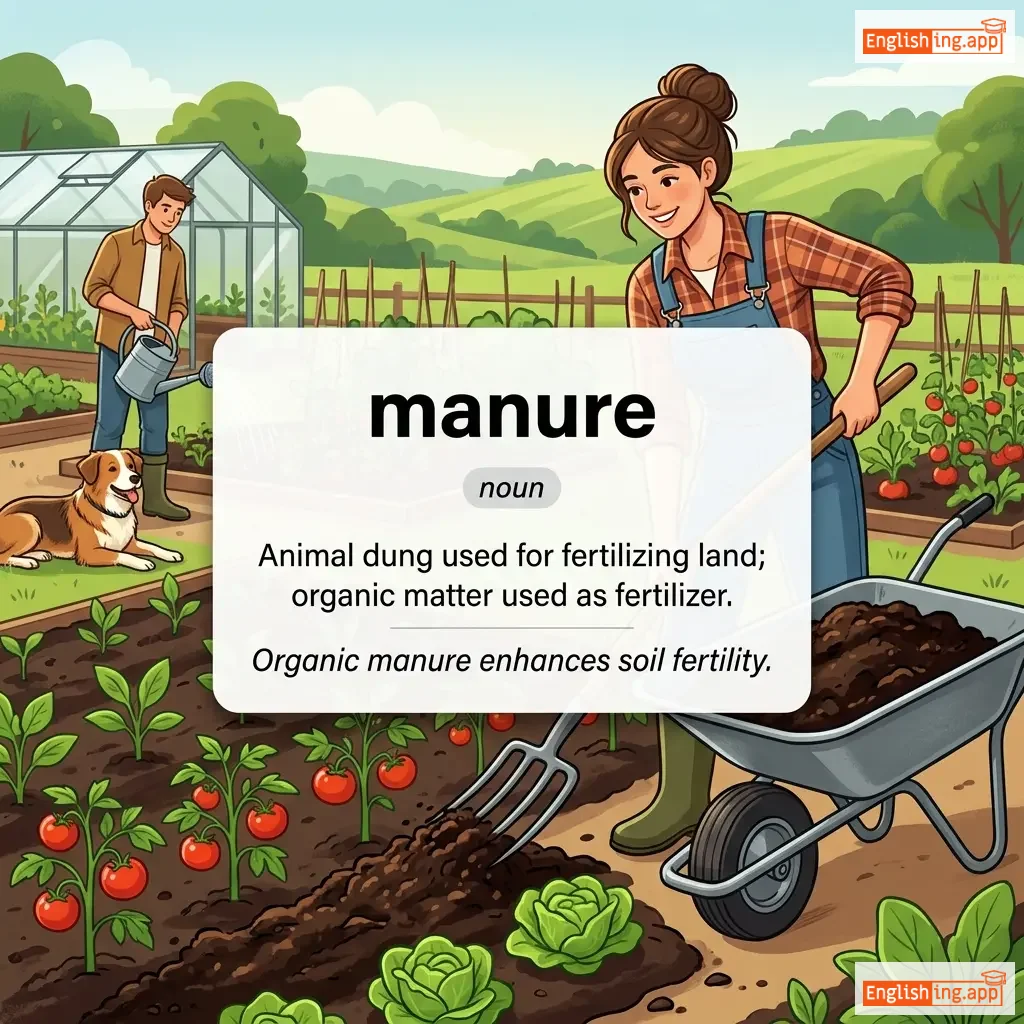
manure definition card — visual illustration of the meaning
noun
məˈnjʊər
навоз, органическое удобрение (navoz, organicheskoe udobrenie)

Animal dung used for fertilizing land; organic matter used as fertilizer.

"Organic manure enhances soil fertility."

"Органический навоз улучшает плодородие почвы." (Organicheskiy navoz uluchshayet plodorodiye pochvy.)
noun
/ˈmæn.juˌskrɪpt/
рукопись (rukopis)

a handwritten or typed document, especially a writer’s draft before publication

"The author submitted her manuscript to the publisher."

"Автор подал свою рукопись издателю." (Avtor podal svoju rukopis' izdatelyu.)