Словари

Словарь английского языка | Значения слов, определения и примеры

adverb
/ˈmeɪnli/
в основном (v osnovnom)

for the most part; chiefly

"The audience was mainly composed of students."

"Аудитория в основном состояла из студентов." (Auditoriya v osnovnom sostoyala iz studentov.)
noun
/ˈmeɪnstriːm/
основное течение (osnovnoe techenie)

the ideas, attitudes, or activities that are regarded as normal or conventional; the dominant trend in opinion or fashion

"Social media has become a mainstream source of news for many people."
"Социальные сети стали основным источником новостей для многих людей." (Sotsial'nye seti stali osnovnym istochnikom novostey dlya mnogikh lyudey.)
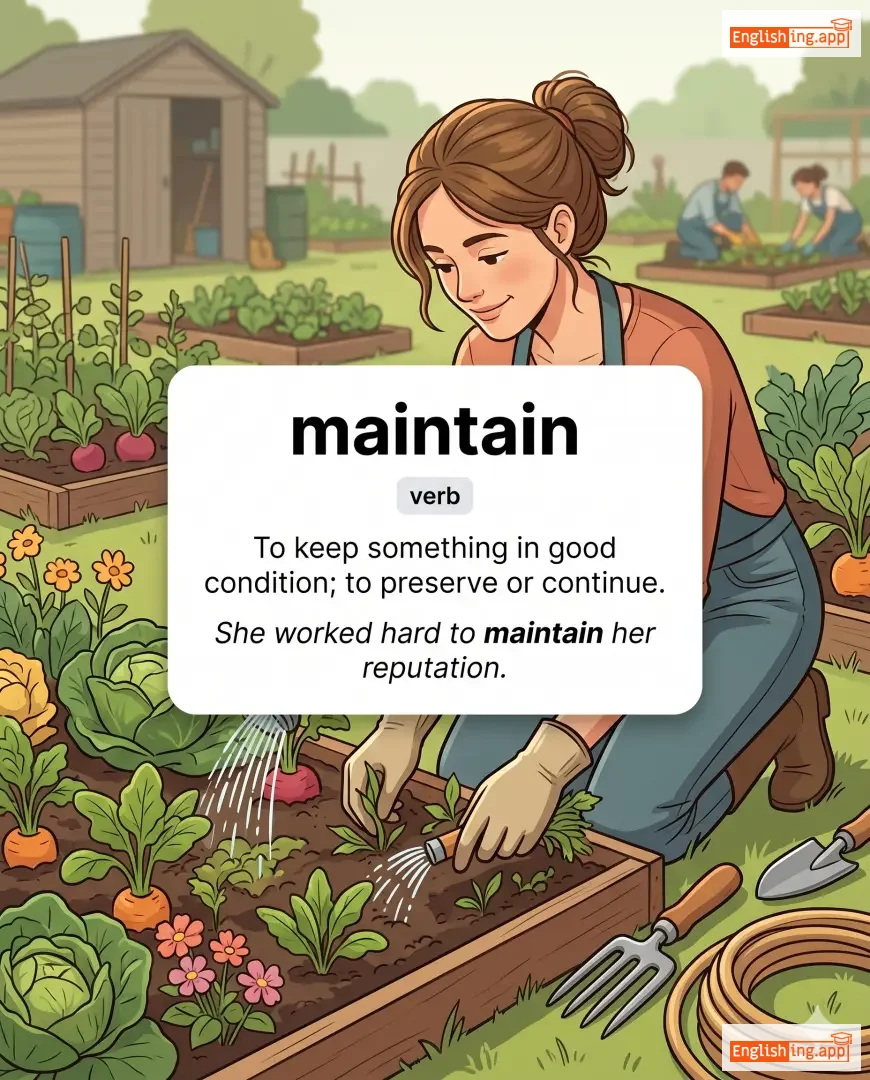
maintain definition card — visual illustration of the meaning
verb
/meɪnˈteɪn/
сохранять (sokhranyat)

To keep something in good condition; to preserve or continue.

"She worked hard to maintain her reputation."
"Она усердно работала, чтобы сохранить свою репутацию." (Ona usyerdno rabotala, chtoby sokhranit svoyu reputatsiyu.)
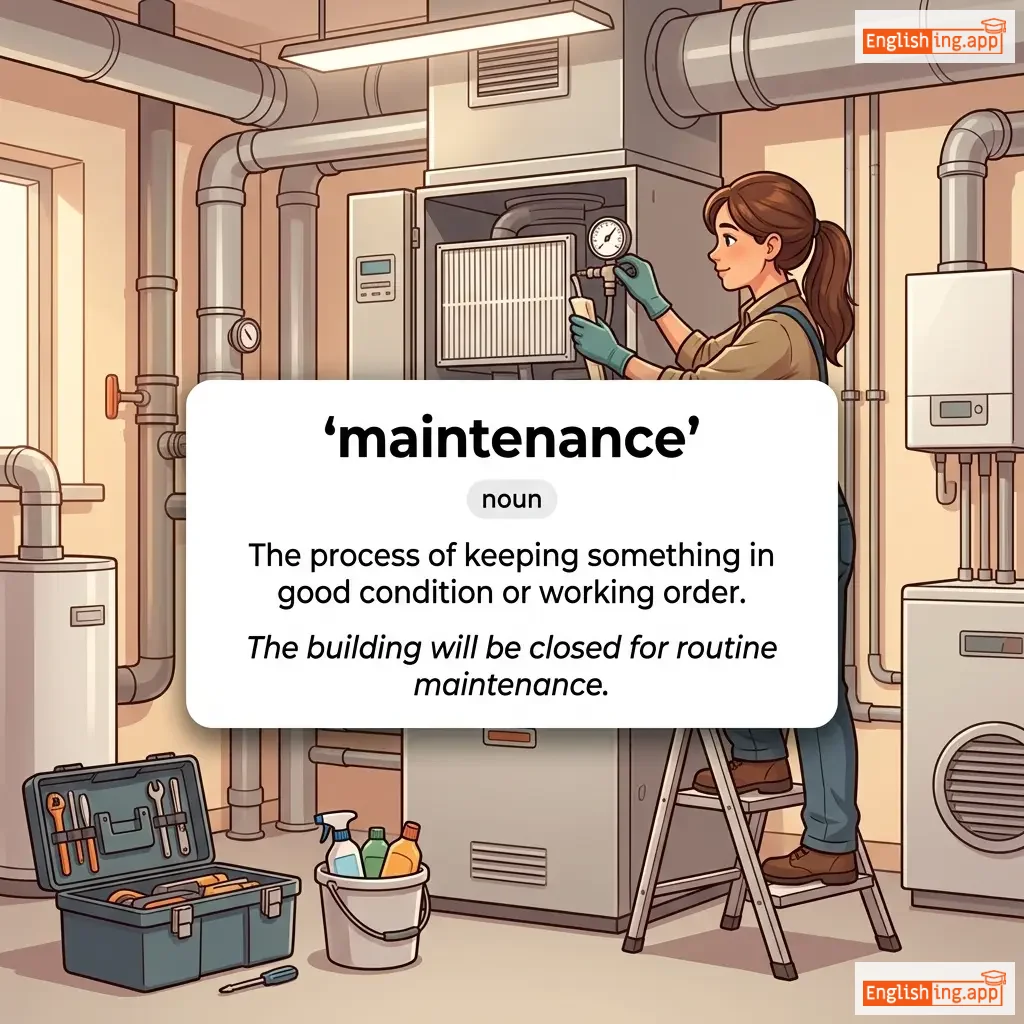
maintenance definition card — visual illustration of the meaning
noun
/ˈmeɪntənəns/
обслуживание (obsluzhivanie)

The process of keeping something in good condition or working order.

"The building will be closed for routine maintenance."

"Здание будет закрыто на плановое обслуживание." (Zdanie budet zakryto na planovoe obsluzhivanie.)
noun
/meɪz/
кукуруза (kukuruza)

a tall cereal plant grown for its large yellow grains, also called corn

"Farmers harvested the maize in late autumn."
"Фермеры собрали кукурузу поздней осенью." (Fermery sobrali kukuruzu pozdney osenyu.)
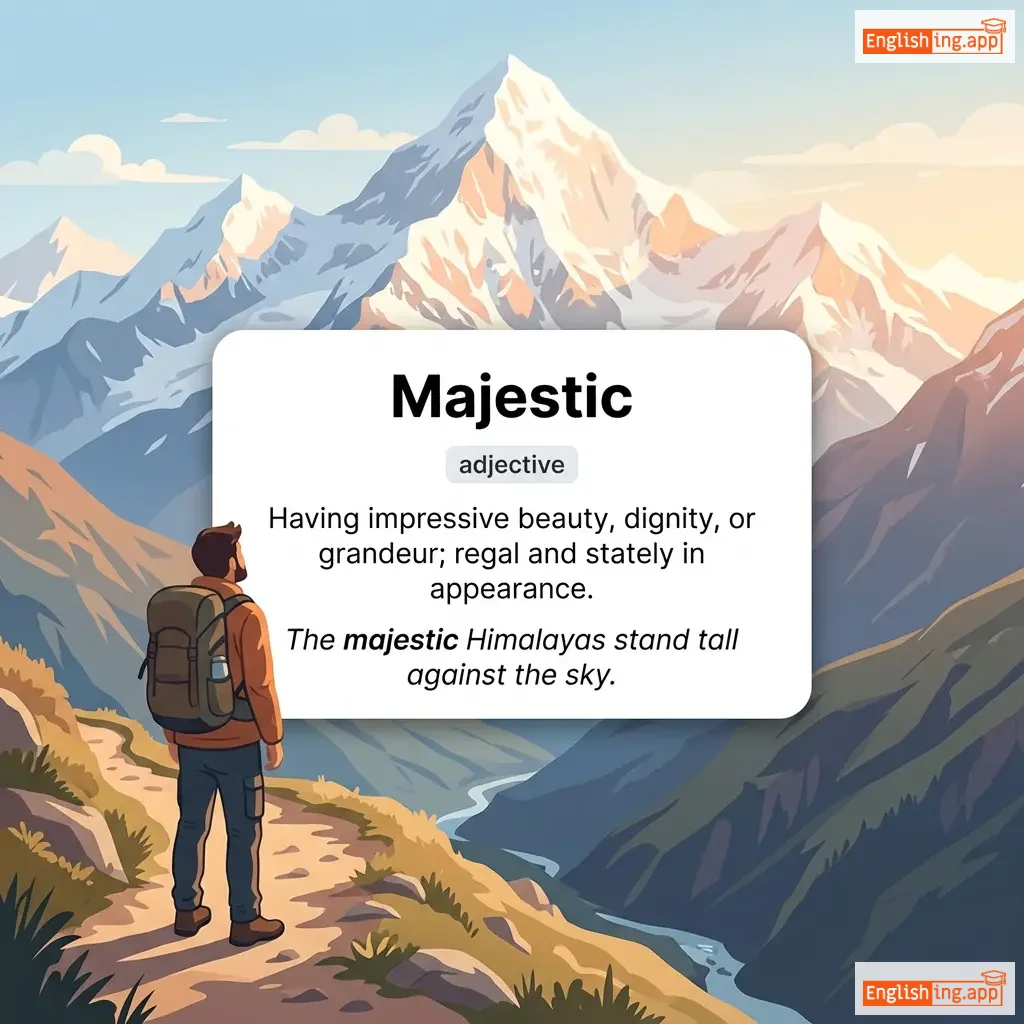
Majestic definition card — visual illustration of the meaning
adjective
məˈdʒes.tɪk
величественный (velichestvennyy)

Having impressive beauty, dignity, or grandeur; regal and stately in appearance.

"The majestic Himalayas stand tall against the sky."

"Величественные горы Гималаев высоко возвышаются против неба." (Velichestvennye gory Himalayev vysoko vozvyshayutsya protiv neba.)
adjective
/ˈmeɪdʒər/
важный (vazhnyy)

important, serious, or significant

"Climate change is a major concern for the world."
"Изменение климата — это важная проблема для мира." (Izmeneniye klimata — eto vazhnaya problema dlya mira.)
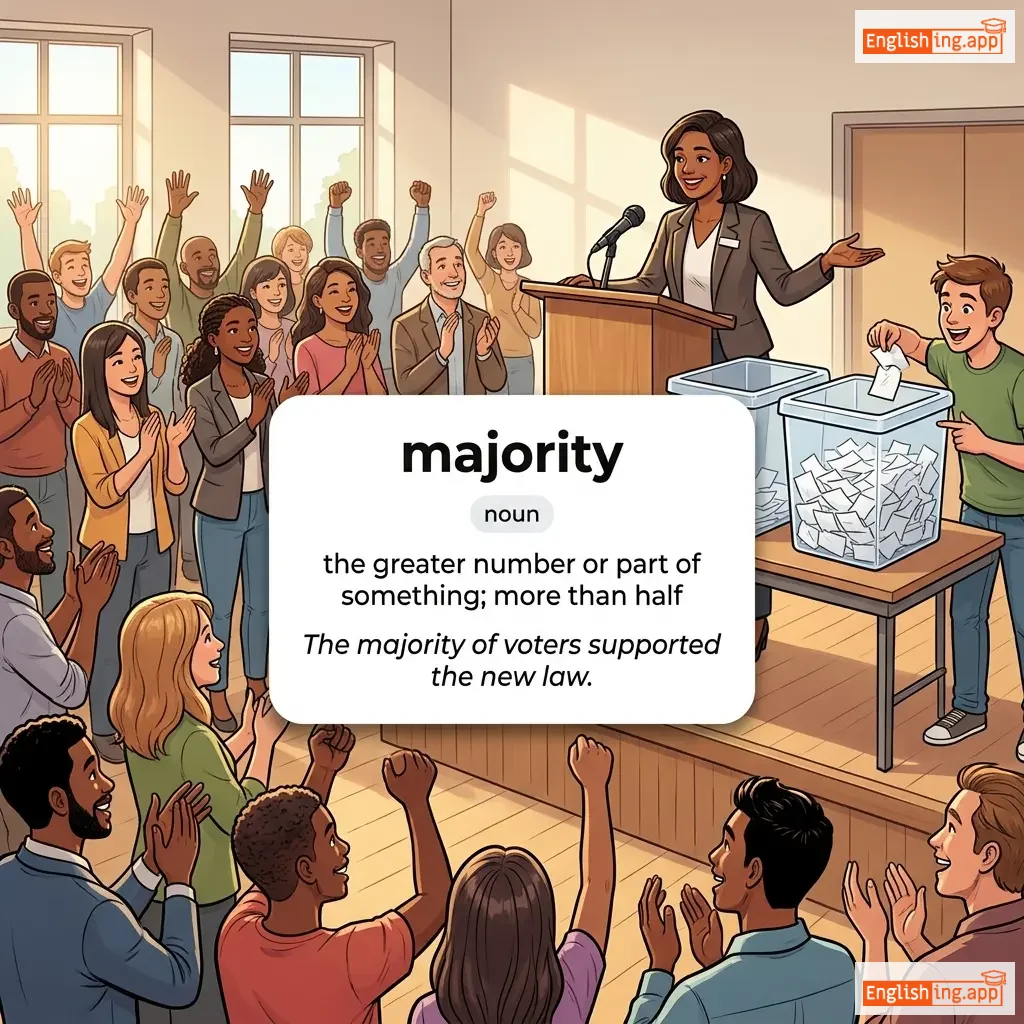
majority definition card — visual illustration of the meaning
noun
/məˈdʒɒrəti/
большинство (bolshinstvo)

the greater number or part of something; more than half

"The majority of voters supported the new law."

"Большинство избирателей поддержали новый закон." (Bolshinstvo izbirateley podderzhali novyy zakon.)
verb
/meɪk/
делать (delat')

to create, build, or cause something to happen

"She can make delicious cakes."

"Она может делать вкусные торты." (Ona mozhet delat' vkusnye torty.)
noun
/ˈmeɪkər/
создатель (sozdatel)

a person or thing that makes or produces something

"He is a famous movie maker in Hollywood."

"Он знаменитый кинорежиссер в Голливуде." (On znamenityy kinorezhisser v Gollivude.)
adjective
/ˈmeɪkˌʃɪft/
временный (vremennyy)

used as a temporary substitute; improvised

"They used boxes as a makeshift table."

"Они использовали коробки как временный стол." (Oni ispol'zovali korobki kak vremennyy stol.)
noun
/ˈmeɪkʌp/
макияж (makiyazh)

cosmetics used to enhance or alter appearance

"She applied makeup before the party."

"Она нанесла макияж перед вечеринкой." (Ona nanesla makiyazh pered vecherinkoy.)
noun
/ˈmeɪkɪŋ/
создание (sozdanie)

the process of producing or constructing something

"The making of the movie took over two years."

"Создание фильма заняло более двух лет." (Sozdanie fil'ma zanyalo bolee dvukh let.)
adjective
/ˌmæləˈdrɔɪt/
неуклюжий (neuklyuzhiy)

clumsy or awkward in movement or behavior

"His maladroit attempt at fixing the chair made it worse."

"Его неуклюжая попытка починить стул только ухудшила ситуацию." (Ego neuklyuzhaya popytka pochinit' stul tol'ko ukhudshila situatsiyu.)
noun
/ˈmælədi/
болезнь (bolezn)

a disease or disorder of the body or mind; a serious problem

"The doctor treated the malady with great care."

"Врач лечил болезнь с большой осторожностью." (Vrach lechil bolezn' s bol'shoy ostorozhnost'yu.)
noun
/məˈleɪz/
недомогание (nedomoganie)

a general feeling of discomfort, illness, or unease whose exact cause is difficult to identify

"After the long journey, she felt a general malaise."

"После долгого путешествия она почувствовала общее недомогание." (Posle dolgogo puteshestviya ona pochuvstvovala obshchee nedomoganie.)
noun
/ˈmæləprɒˌpɪzəm/
малапропизм (malapropizm)

the mistaken use of a word in place of a similar-sounding one, often with amusing effect

"He is famous for his malapropism when speaking in public."

"Он знаменит своим малапропизмом, когда говорит на публике." (On znamenit svoim malapropizmom, kogda govorit na publike.)
adjective, adverb
/ˌmæləprəˈpoʊ/
неуместный (neumestnyy)

inappropriate or unsuitable; at an inconvenient or inappropriate time

"His comment was malapropos during the serious discussion."

"Его комментарий был неуместным во время серьезной дискуссии." (Yego kommentariy byl neumestnym vo vremya seryoznoy diskussii.)
noun
/məˈlɛəriə/
малярия (malariya)

a serious infectious disease spread by mosquitoes, causing fever, chills, and sweating

"Malaria is a common disease in tropical regions."

"Малярия - это распространённое заболевание в тропических районах." (Malyariya - eto rasprostranyonnoye zabolevaniye v tropicheskikh rayonakh.)
noun
/məˈlɑː.ti/
мала́ти (malati)

a fragrant climbing plant with small white flowers, commonly known as jasmine

"The malati vine covered the garden wall with sweet-smelling flowers."

"Лоза малати покрыла садовую стену сладко пахнущими цветами." (Loza malati pokryla sadovuyu stenu sladko pakhnushchimi tsvetami)
noun
/ˈmæl.kənˌtɛnt/
недовольный человек (nedovolny chelovek)

A person who is dissatisfied or rebellious; one who is not content.

"The malcontent voiced his grievances against the government."

"Недовольный человек высказал свои жалобы против правительства." (Nedovolny chelovek vyskazal svoi zhaloby protiv pravitelstva.)
noun/adjective
/meɪl/
мужской (muzhskoy)

a man or boy; relating to men or boys

"The school has more male teachers than female teachers."

"В школе больше мужчин-преподавателей, чем женщин-преподавателей." (V shkole bolshe muzhchin-prepodavateley, chem zhenshchin-prepodavateley.)
noun
/ˌmæl.əˈdɪk.ʃən/
проклятие (proklyatie)

A curse or the utterance of a curse.

"The witch cast a malediction upon the village."

"Ведьма наложила проклятие на деревню." (V'ed'ma nalozhila proklyatie na derevnyu.)
noun
/ˈmæl.əˌfæk.tər/
преступник (prestupnik)

A person who commits a crime or does evil.

"The malefactor was arrested for the robbery."

"Преступник был арестован за ограбление." (Prestuptnik byl arestovan za ograblenie.)
adjective
/məˈlɛfɪsənt/
злой (zloy)

Causing harm or destruction, especially by supernatural means.

"The maleficent witch cursed the young princess."

"Злая ведьма прокляла молодую принцессу." (Zlaya ved'ma proklyala moloduyu printsessu.)
adjective
/ˌmæl.əˈfɪʃ.ənt/
злой (zloy)

Doing harm or evil; having a harmful effect.

"The maleficient acts of the tyrant ruined the kingdom."

"Злые поступки тирана разрушили королевство." (Zlye postupki tirana razrushili korolevstvo.)
noun
/məˈlɛvələns/
злонамеренность (zlonamerenost)

The state or condition of being malevolent; having or showing a wish to do evil to others.

"His malevolence was clear in the cruel way he treated his rivals."

"Его злонамеренность была очевидна в жестоком отношении к своим соперникам." (Ego zlonamerenost' byla ochevidna v zhestokom otnoshenii k svoim sopernikam.)
adjective
/məˈlɛvələnt/
злобный (zlobnyj)

Having or showing a wish to do evil or harm to others.

"The malevolent glare in his eyes frightened the children."

"Злобный взгляд в его глазах напугал детей." (Zlobnyj vzglyad v ego glazakh napugal detej.)
noun
/mælˈfiːzəns/
злоупотребление служебным положением (zloupotreblenie sluzhebnyim polozheniem)

Wrongdoing or misconduct, especially by a public official.

"The mayor was accused of malfeasance in office."
"Мэра обвинили в злоупотреблении служебным положением." (Mery obvinili v zloupotreblenii sluzhebnyim polozheniem.)
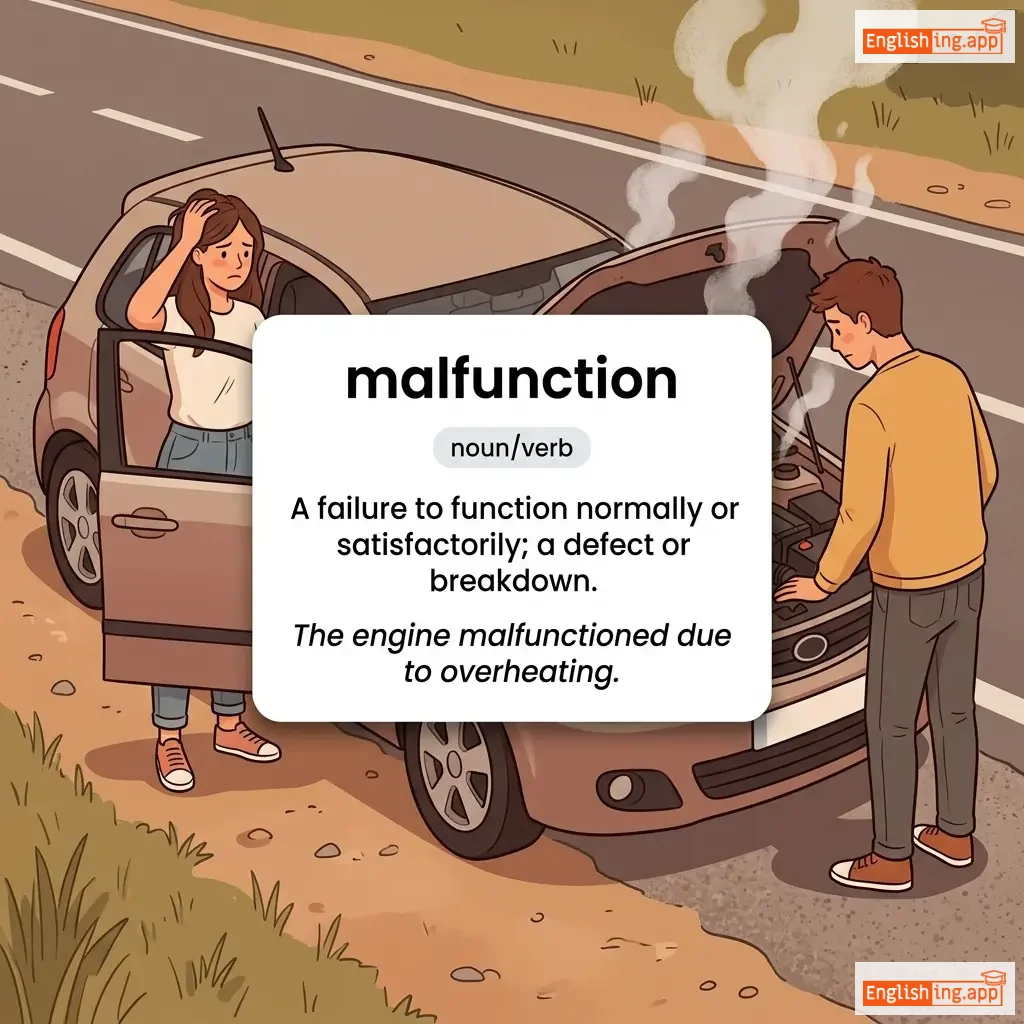
malfunction definition card — visual illustration of the meaning
noun/verb
mælˈfʌŋk.ʃən
неисправность (neispravnost)

A failure to function normally or satisfactorily; a defect or breakdown.

"The engine malfunctioned due to overheating."

"Двигатель вышел из строя из-за перегрева." (Dvigatel' vyshel iz stroya iz-za peregreva.)
noun
/ˈmælɪs/
злость (zlost)

The intention or desire to do evil or cause harm.

"She bore no malice towards her former friend."

"Она не испытывала злости к своей бывшей подруге." (Ona ne ispytyvala zlosty k svoey byvshey podruge.)
adjective
/məˈlɪʃəs/
злобный (zlobny)

Characterized by malice; intending or intended to do harm.

"The hackers launched a malicious attack on the company’s system."
"Хакеры запустили злобную атаку на систему компании." (Khakeri zapustili zlobnuyu ataku na sistemu kompanii.)
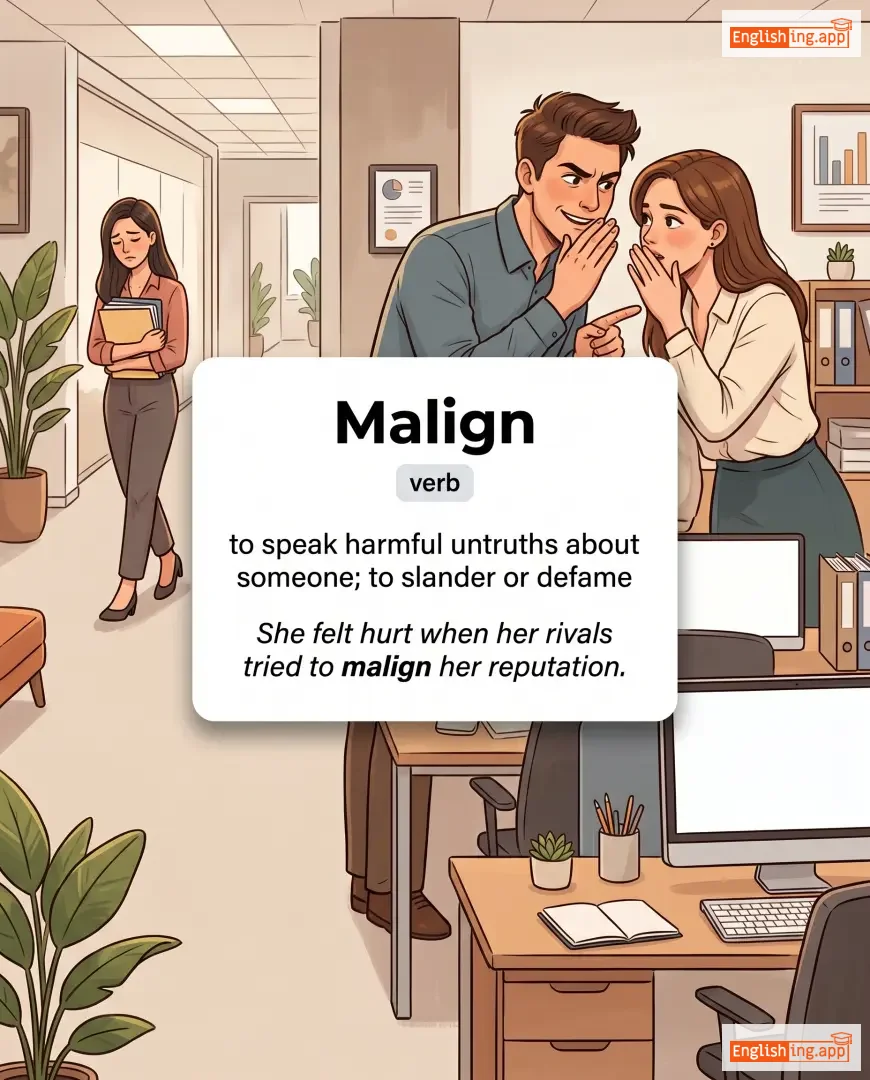
Malign definition card — visual illustration of the meaning
🗣️

Malign

verb
/məˈlaɪn/

to speak harmful untruths about someone; to slander or defame

"She felt hurt when her rivals tried to malign her reputation."

adjective
/məˈlɪɡnənt/
злокачественный (zlokachestvennyy)

dangerous or harmful in influence or effect; medically, tending to invade and destroy tissue

"Doctors confirmed that the tumor was malignant."
"Врачи подтвердили, что опухоль была злокачественной." (Vrachi podtverdili, chto opukhul' byla zlokachestvennoy.)
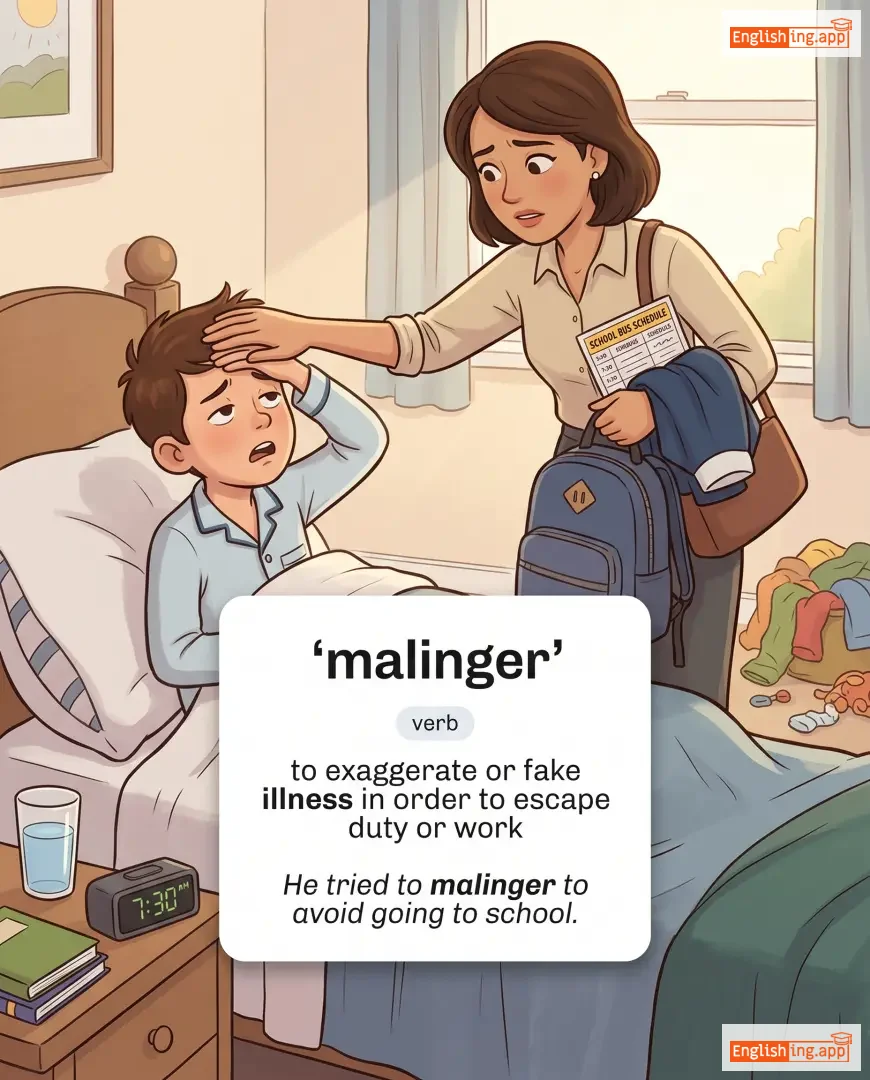
malinger definition card — visual illustration of the meaning
verb
/məˈlɪŋɡər/
симулировать болезнь (simulirovat' bolezn')

to exaggerate or fake illness in order to escape duty or work

"He tried to malinger to avoid going to school."
"Он попытался симулировать болезнь, чтобы избежать посещения школы." (On popytalsya simulirovat' bolezn', chtoby izbezhat' poseshcheniya shkoly.)
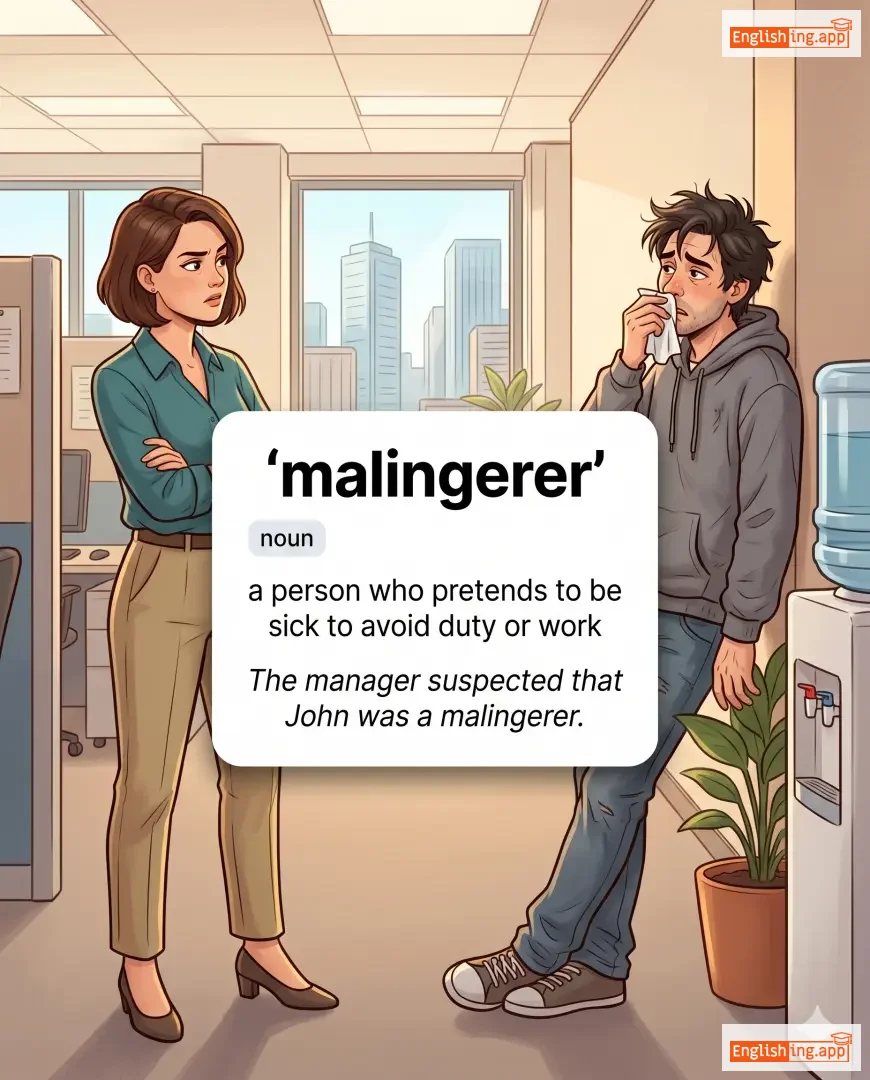
malingerer definition card — visual illustration of the meaning
noun
/məˈlɪŋɡərər/
человек, который симулирует болезнь (chelovek, kotoryj simuliruet bolezn)

a person who pretends to be sick to avoid duty or work

"The manager suspected that John was a malingerer."

"Менеджер подозревал, что Джон был малингером." (Menedzher podozreval, chto John byl malingerom.)
noun
/mɔːl/ or /mæl/
торговый центр (torgovyy tsentr)

a large building or series of connected buildings containing shops and restaurants

"They went to the mall to buy new clothes."
"Они пошли в торговый центр, чтобы купить новую одежду." (Oni poshli v torgovyy tsentr, chtoby kupit' novuyu odezhdu.)
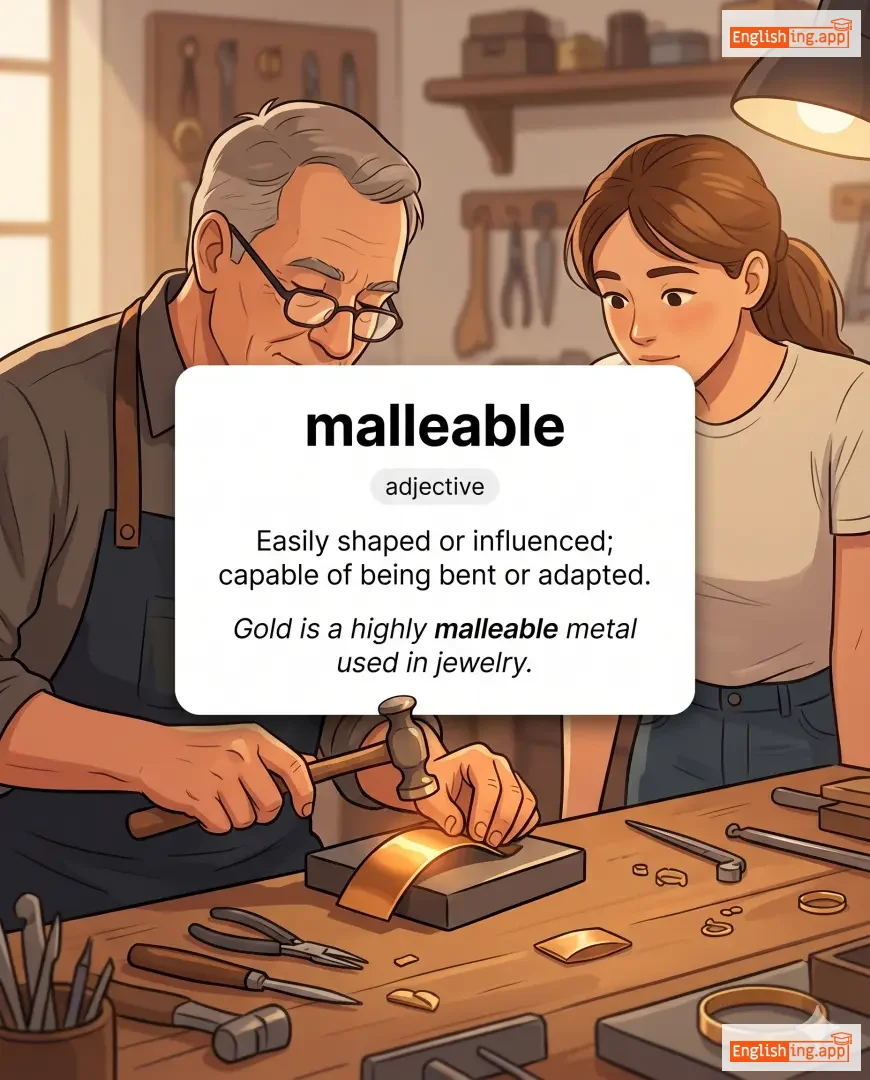
malleable definition card — visual illustration of the meaning
adjective
/ˈmæliəbl̩/
легко формируемый (legko formiruemyy)

Easily shaped or influenced; capable of being bent or adapted.

"Gold is a highly malleable metal used in jewelry."

"Золото — это очень пластичный металл, используемый в ювелирных изделиях." (Zoloto — eto ochen' plastichnyy metall, ispol'zuyemyy v yuvelirnykh izdeliyakh.)
noun
/ˈmælɪt/
молоток (molotok)

A tool with a large, usually wooden head, used for hitting something without damaging it.

"He used a mallet to drive the chisel into the wood."

"Он использовал молоток, чтобы вбить зубило в дерево." (On ispol'zoval molotok, chtoby vbit' zubilo v derevo.)
noun
/ˈmælɪt fɪʃ/
панцирная рыба (pantsirnaya ryba)

A marine fish with a hard shell-like covering, found in coastal waters

"The mallet fish is known for its unique protective shell covering."
"Панцирная рыба известна своей уникальной защитной оболочкой." (pantsirnaya ryba izvestna svoey unikalnoy zashchitnoy obolochkoy)
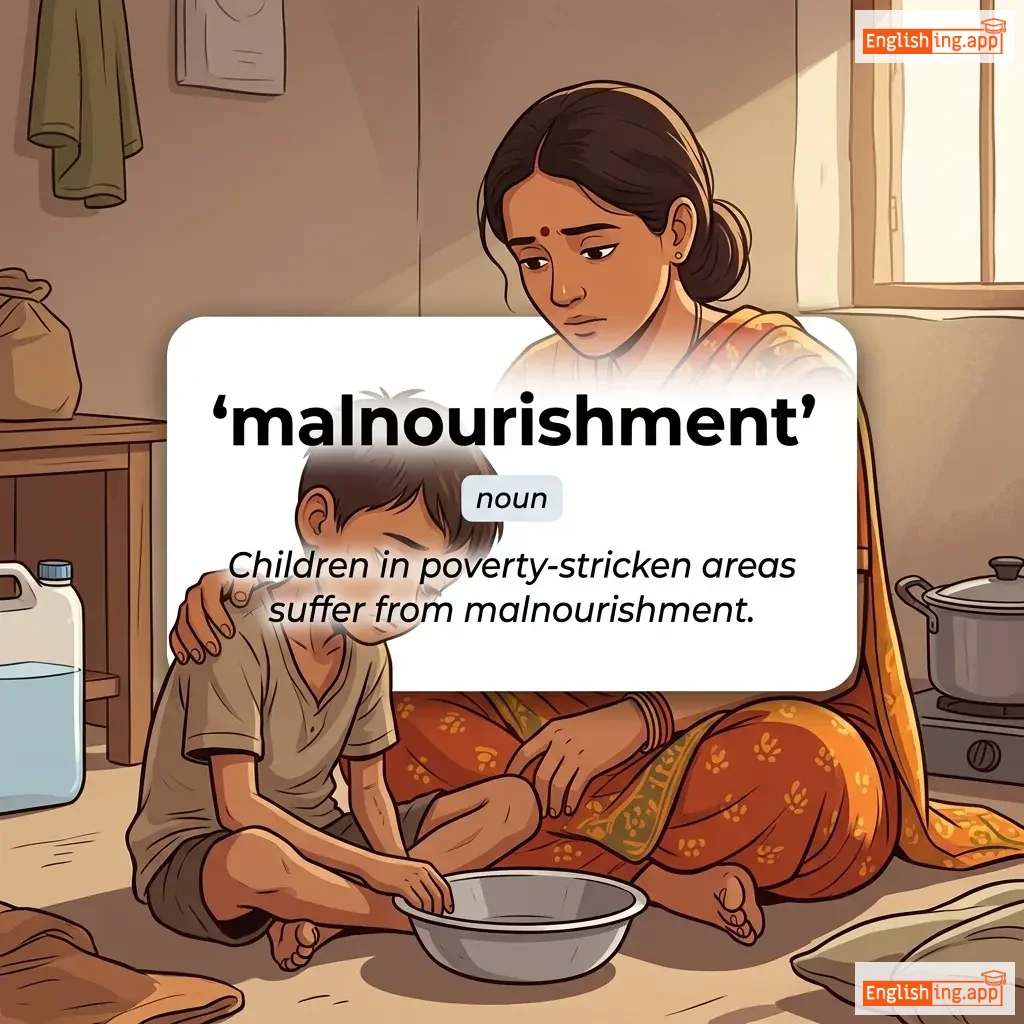
malnourishment definition card — visual illustration of the meaning
noun
mælˈnʌr.ɪʃ.mənt
недоедание (nedeedanie)

Lack of proper nutrition, caused by not having enough to eat, not eating enough of the right things, or being unable to use the food that one does eat.

"Children in poverty-stricken areas suffer from malnourishment."

"Дети в бедных районах страдают от недоедания." (Deti v bednykh rayonakh stradayut ot nedoedyaniya.)
noun
/ˌmælnuːˈtrɪʃən/
недоедание; плохое питание (malnutrition)

Lack of proper nutrition; poor nourishment

"Malnutrition among children is a serious public health concern."

"Недоедание среди детей - это серьезная общественная угроза здоровью." (nedoyedanie sredi detey - eto seryoznaya obshchestvennaya ugroza zdorov'yu.)
noun
/ˌmælˈoʊdər/
неприятный запах (nepriyatnyy zapakh)

An unpleasant smell; bad odor.

"The garbage bin gave off a terrible malodor."

"Мусорное ведро издавало ужасный неприятный запах." (Musornoe vedro izdavalo uzhasnyy nepriyatnyy zapakh.)
adjective
/ˌmælˈoʊdərəs/
вонючий (vonyuchiy)

Having a very unpleasant smell.

"The malodorous room made everyone leave quickly."

"Вонючая комната заставила всех быстро уйти." (Vonyuchaya komnata zastavila vsekh bystro uyti.)
noun
/mælˈpræktɪs/
небрежность (malpraktis)

Improper, illegal, or negligent professional behavior

"The surgeon was sued for malpractice after the failed operation."

"Хирург был подан в суд за недобросовестную практику после неудачной операции." (Hirurg byl podan v sud za nedobrosovestnuyu praktiku posle neudachnoy operatsii.)
🍊

Malta

noun
/ˈmɔːl.tə/

a sweet citrus fruit similar to orange, also known as blood orange or sweet orange

"Malta is a popular citrus fruit in Bangladesh known for its sweet taste and high vitamin C content."

verb
/ˌmælˈtriːt/
жестоко обращаться (zhestoko obrashchatsya)

To treat someone cruelly or unfairly.

"The law punishes those who maltreat animals."

"Закон наказывает тех, кто жестоко обращается с животными." (Zakon nakazyvayet tekh, kto zhestoko obrashchayetsya s zhivotnymi.)
noun
/ˈmæm.əl/
млекопитающее (mlekopitayushchee)

A warm-blooded animal with hair or fur, and females produce milk for their young.

"The whale is the largest mammal on Earth."

"Кит - крупнейшее млекопитающее на Земле." (Kit - krupneyshoye mlekopitayushcheye na Zemle.)
noun/adjective
/ˈmæm.əθ/

An extinct large elephant-like animal with long curved tusks; also means something huge.

"The company faced a mammoth challenge during expansion."

noun
/mæn/
мужчина (muzhchina)

an adult human male

"The man helped the child cross the street."

"Мужчина помог ребенку перейти через улицу." (Muzhchina pomog rebenku pereyti cherez ulitsu.)