Словари

Словарь английского языка | Значения слов, определения и примеры

noun
/lɪm/
член (chlen)

an arm or leg of a person or animal; a large branch of a tree

"He broke a limb while climbing the tree."

"Он сломал член, когда залезал на дерево." (On slomal chlen, kogda zalezal na derevo.)
adjective
/ˈlɪmbər/
гибкий и ловкий (gibkiy i lovkiy)

Flexible and agile in body or movement.

"Dancers need to stay limber to perform well."

"Танцоры должны оставаться гибкими, чтобы хорошо выступать." (Tantsory dolzhny ostavat'sya gibkimi, chtoby khorosho vystupat'.)
noun
/ˈlɪmboʊ/
неопределенность, состояние приостановки (neopredelennost', sostoyanie priostanovki)

A state of uncertainty or neglect; an intermediate or transitional state.

"The project was left in limbo after the funding was withdrawn."

"Проект был оставлен в неопределенности после того, как финансирование было отменено." (Proyekt byl ostavlen v neopredelennosti posle togo, kak finansirovanie bylo otmeneno.)
noun
/laɪm/
лайм (laym)

a small green citrus fruit with acidic juice

"Add a slice of lime to your drink."

"Добавьте дольку лайма в ваш напиток." (Dobav'te dol'ku layma v vash napitok.)
noun
/ˈlaɪm.stoʊn/
известняк (izvestnyak)

a hard sedimentary rock, composed mainly of calcium carbonate or dolomite, used as building material and in the making of cement

"The ancient building was made of limestone blocks."

"Древнее здание было построено из известняковых блоков" (Drevnee zdanie bylo postroeno iz izvestnyakovykh blokov)
noun
/ˈlaɪm.laɪt/
центр общественного внимания; яркий свет, создаваемый нагреванием цилиндра известняка (laimlait)

the focus of public attention; a bright light produced by heating a cylinder of lime

"The celebrity enjoyed being in the limelight."

"Сельбрити наслаждался быть в центре внимания." (selibriti naslazhdalsya byt v tsentre vnimaniya)
noun
/ˈlɪmərɪk/
юмористическое стихотворение из пяти строк (yumoristicheskoe stikhotvorenie iz pyati strok)

a humorous five-line poem with a specific rhythm and rhyme scheme (AABBA).

"She recited a funny limerick at the party."

"Она прочитала забавный лимэрик на вечеринке." (Ona prochitala zabavny limerik na vecherinke.)
noun, verb
/ˈlɪmɪt/
предел (predel)

A point or level beyond which something does not or may not extend; to restrict.

"You should limit the amount of sugar you eat."
"Вы должны ограничить количество сахара, которое вы едите." (Vy dolzhny ogranichit' kolichestvo sakhara, kotoroe vy edite.)
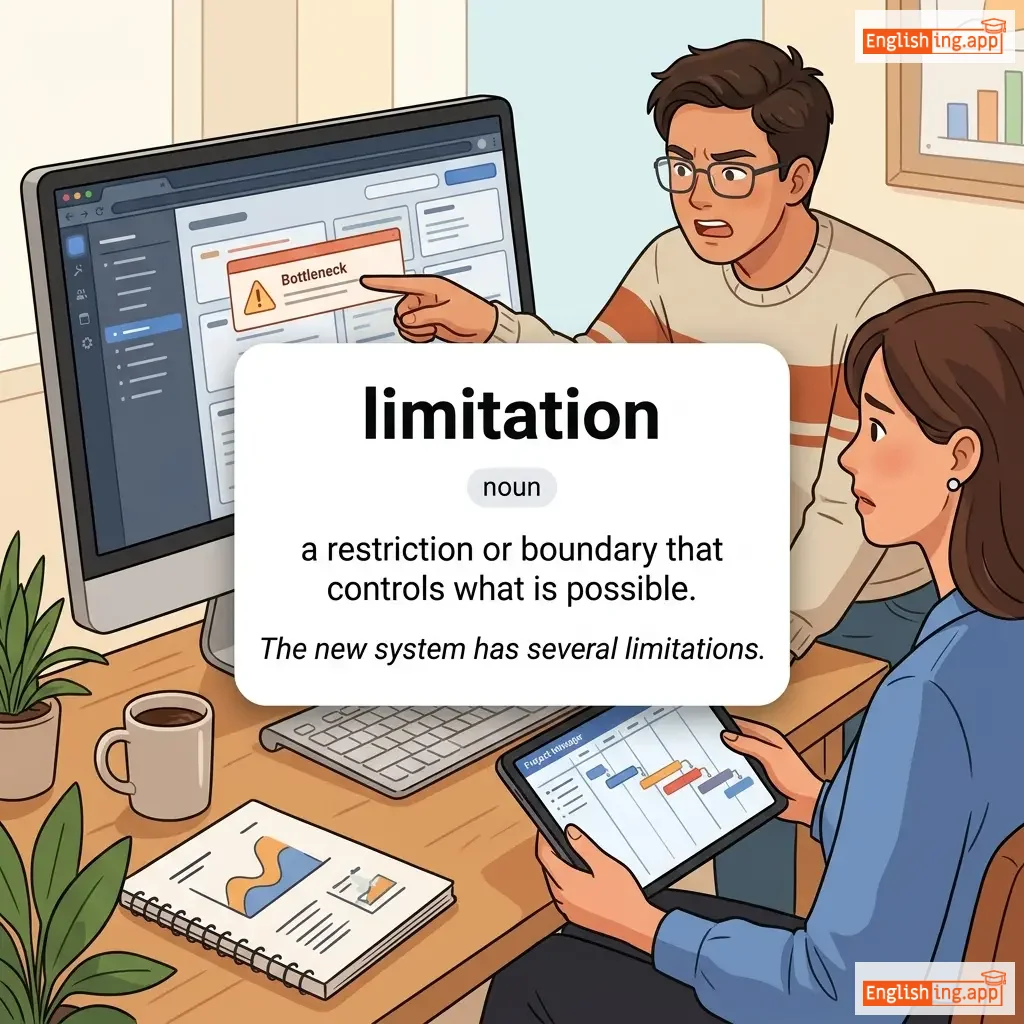
limitation definition card — visual illustration of the meaning
noun
/ˌlɪmɪˈteɪʃən/
ограничение (ogranichenie)

a restriction or boundary that controls what is possible.

"The new system has several limitations."

"Новая система имеет несколько ограничений." (Novaya sistema imeet neskol'ko ogranicheniy.)
adjective
/ˈlɪmɪtɪd/
ограниченный (ogranichennyy)

Restricted in size, amount, or extent; not great in number or ability.

"Tickets for the concert are limited."

"Билеты на концерт ограничены." (Bilety na kontsert ogranicheny.)
limn definition card — visual illustration of the meaning
verb
/lɪm/
описывать / изображать (opisyvat' / izobrazhat')

to depict or describe something vividly in words or art.

"The author limned the beauty of the countryside."

"Автор ярко описал красоту сельской местности." (Avtor yarko opisal krasotu selskoj mestnosti.)
noun
/ˈlɪməˌziːn/
большой, роскошный автомобиль, управляемый шофером (bol'shoy, roskoshnyy avtomobil', upravlyayemyy shofyorm)

a large, luxurious car driven by a chauffeur.

"The bride arrived in a white limousine."

"Невеста приехала на белом лимузине." (Nevesta priekhala na bielom limuzine.)
verb, adjective, noun
/lɪmp/
хромать / слабый (khromat' / slabyj)

to walk with difficulty, often due to injury or weakness; lacking strength or firmness.

"He limped after injuring his ankle."
"Он хромал после того, как повредил лодыжку." (On khromal posle togo, kak povredil lodyzhku.)
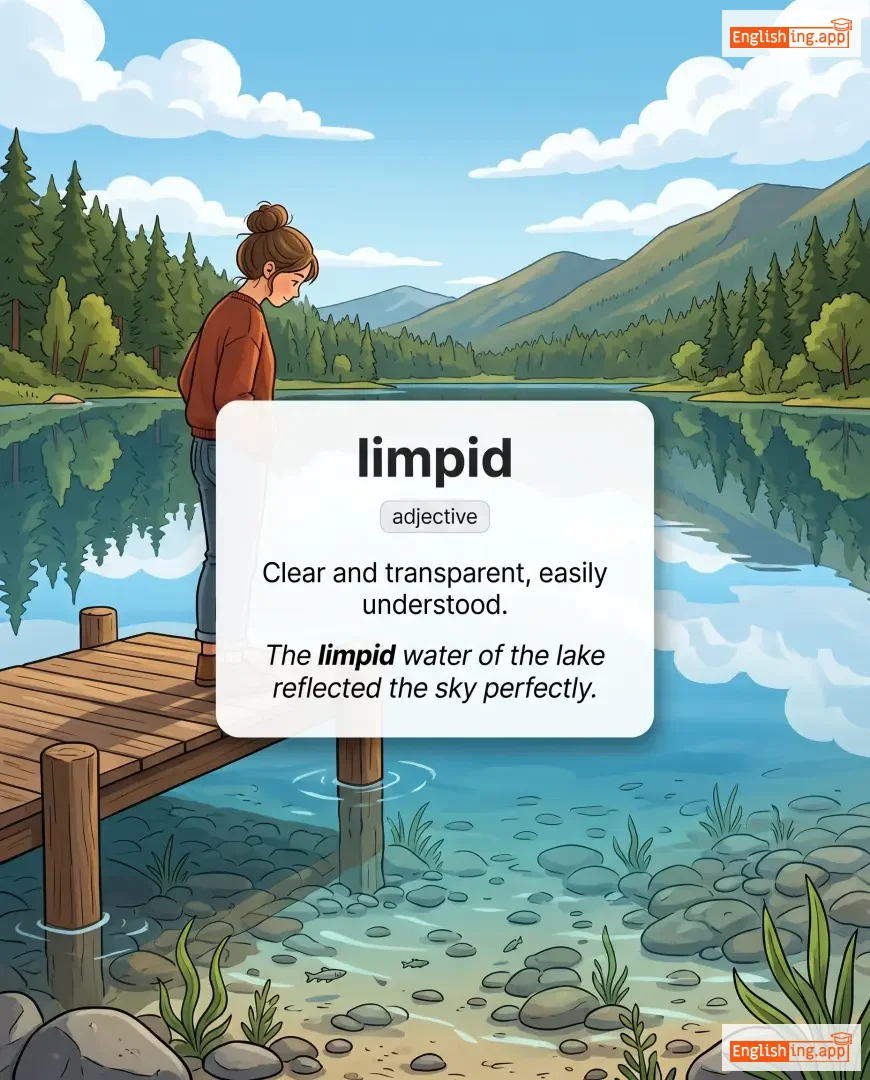
limpid definition card — visual illustration of the meaning
adjective
/ˈlɪmpɪd/
прозрачный (prozrachny)

Clear and transparent, easily understood.

"The limpid water of the lake reflected the sky perfectly."

"Прозрачная вода озера идеально отражала небо." (Prozrachnaya voda ozera ideal'no otrazhala nebo.)
noun, verb
/laɪn/
линия (liniya)

A long narrow mark or band; a row of people or things; to cover the inside surface of something.

"People waited in a long line outside the theater."

"Люди ждали в длинной очереди перед театром." (Lyudi zhдали v dlinnoĭ ocheredi pered teatrrom.)
noun; verb
/ˈlaɪnʌp/
расстановка; выстраивать в ряд (rasstanovka; vystraivat v ryad)

a group or arrangement of people or things in a line; to arrange people or things in a row or planned order

"The coach announced the team line-up before the match."

"Тренер объявил расстановку перед матчем." (Trener obyavil rasstanovku pered matchem)
Lineage definition card — visual illustration of the meaning
noun
/ˈlɪniɪdʒ/
происхождение (proiskhozhdenie)

Direct descent from an ancestor; family line.

"He traced his lineage back to medieval kings."

"Он проследил свое происхождение до средневековых королей." (On prosledil svoe proiskhozhdenie do srednevekovykh koroley.)
noun
/ˈlɪniəmənt/
черта (cherta)

A distinctive feature or characteristic, especially of the face.

"Her delicate lineaments revealed her noble birth."

"Ее утонченные черты выдали ее благородное происхождение." (Eyo utochnennyye cherty vydali yeyo blagorodnoye proiskhozhdeniye.)
noun (plural)
/ˈlɪniəmənts/
черты лица (cherty litsa)

The features or distinctive characteristics of the face or body.

"The lineaments of his face were sharp and stern."

"Черты его лица были острыми и строгими." (Cherty ego litsa byli ostryimi i strogimi.)
adjective
/ˈlɪniər/
линейный (lineynyy)

Arranged in or extending along a straight line.

"The artist used linear perspective in his drawings."

"Художник использовал линейную перспективу в своих рисунках." (Khudozhnik ispol'zoval lineynuyu perspektivu v svoikh risunkakh.)
noun
/ˈlɪn.ən/
лен ткани (len tkani)

A strong cloth made from the fibers of the flax plant, or items made from this cloth such as sheets or clothing.

"She bought new linen curtains for the living room."

"Она купила новые льняные занавески для гостиной." (Ona kupila novye l'nyanye zanaveski dlya gostinoy.)
🚢

liner

noun
/ˈlaɪ.nər/

A large ship used for transporting people or goods regularly, or a material used as a lining inside something.

"The luxury liner docked at the port yesterday."

noun
/ˈlaɪnˌʌp/
состав (sostav)

a group of people or things arranged in a sequence

"The event featured a star-studded lineup of musicians."
"Мероприятие представило звездный состав музыкантов." (Meropriyatie predstavylo zvezdnyy sostav muzykantov.)
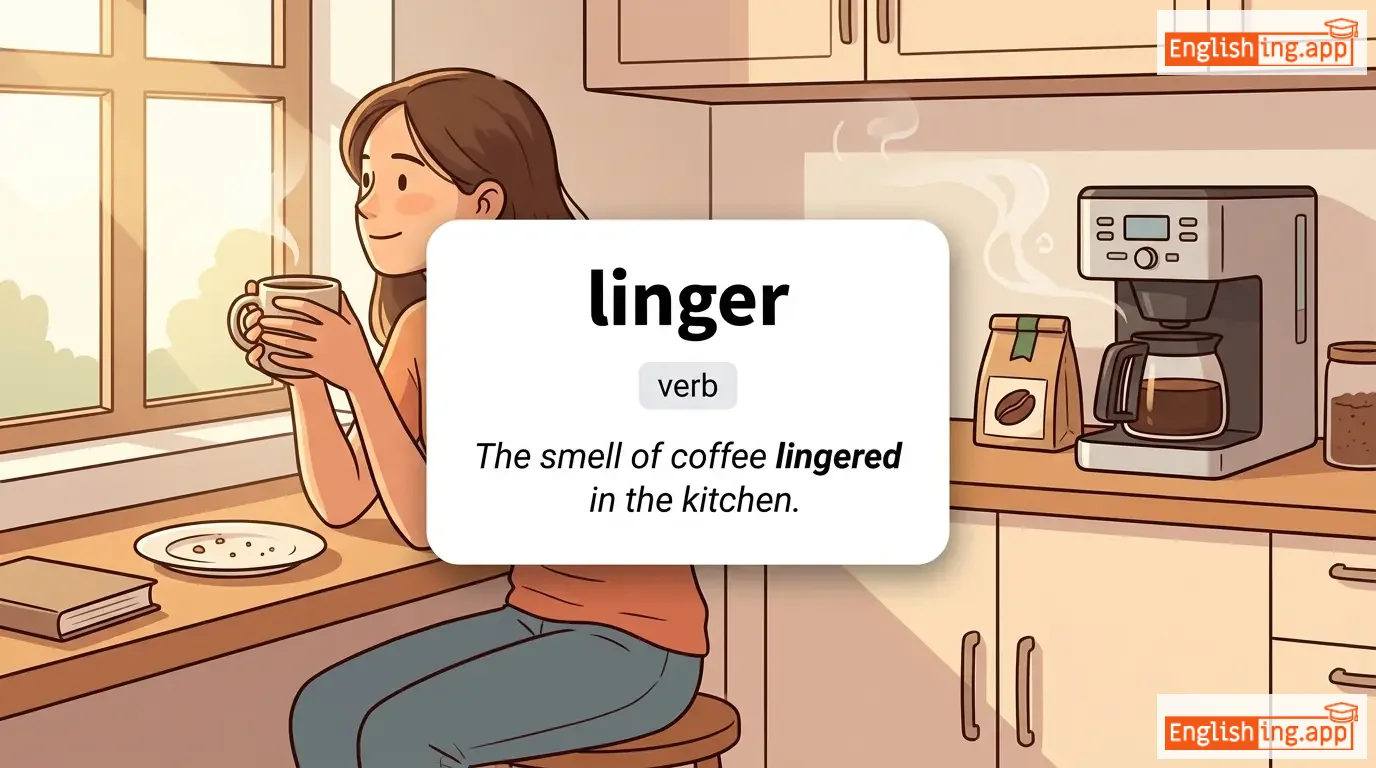
linger definition card — visual illustration of the meaning
verb
/ˈlɪŋ.ɡər/
задерживаться (zaderzhivat'sya)

To stay in a place longer than necessary, often because of unwillingness to leave.

"The smell of coffee lingered in the kitchen."

"Запах кофе задержался на кухне надолго." (Zapakh kofe zaderzhalsya na kukhne nadolgo.)
noun
/ˈlɪŋ.ɡoʊ/
специализированный язык (spetsializirovannyy yazyk)

Specialized or informal language used by a particular group that is often difficult for outsiders to understand.

"The manual was written in technical lingo that confused the new employees."

"Руководство было написано на техническом жаргоне, который сбивал с толку новых сотрудников." (Rukovodstvo bylo napisana na tekhnicheskom zhargone, kotoryy sbival s tolku novykh sotrudnikov.)
noun
/ˈlɪŋ.ɡwə/
язык (yazyk)

A language, especially one used for communication among people.

"English has become a global lingua for business and science."

"Английский язык стал глобальной лингвой для бизнеса и науки." (Angliyskiy yazyk stal global'noy lingvoy dlya biznesa i nauki.)
adjective
/ˈlɪŋɡwəl/
связанный с языком (svyazannyy s yazykom)

Relating to the tongue or speech.

"The dentist examined the patient's lingual surface of the teeth."

"Стоматолог осмотрел языковую поверхность зубов пациента." (Stomatolog osmotrel yazykovuyu poverkhnost' zubov patsiyenta.)
noun
/ˈlɪŋɡwɪst/
лингвист (lingvist)

A person skilled in foreign languages or in the scientific study of language.

"She is a linguist who speaks six languages fluently."
"Она лингвист, говорящая на шести языках свободно." (Ona lingvist, govoryashchaya na shesti yazykakh svobodno.)
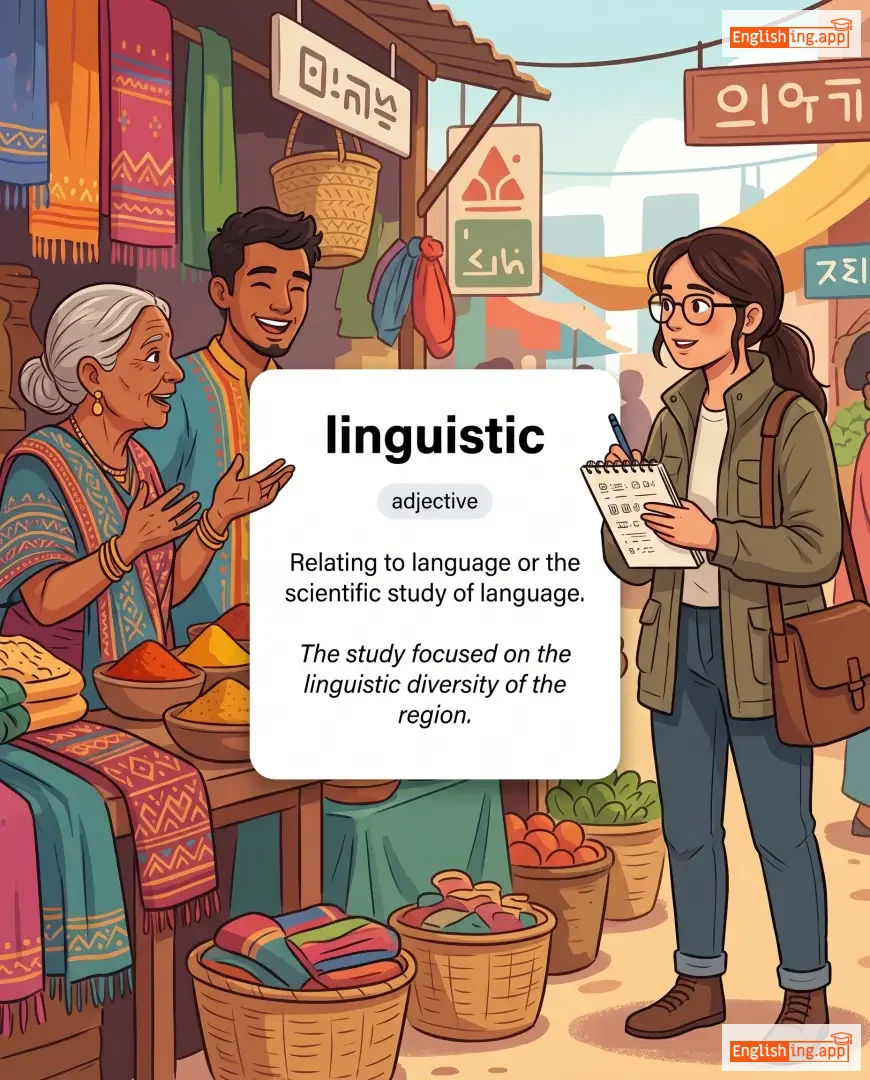
linguistic definition card — visual illustration of the meaning
adjective
/lɪŋˈɡwɪstɪk/
лингвистический (lingvisticheskiy)

Relating to language or the scientific study of language.

"The study focused on the linguistic diversity of the region."

"Исследование сосредоточилось на лингвистическом разнообразии региона." (Issledovaniye sosredotochilos' na lingvisticheskom raznoobrazii regiona.)
noun
/lɪŋˈɡwɪstɪks/
лингвистика (lingvistika)

The scientific study of language and its structure.

"She decided to major in linguistics at university."

"Она решила изучать лингвистику в университете." (Ona reshila izuchat' lingvistiku v universitete.)
noun
/ˈlɪnəmənt/
линмент / лосьон (liniment / loshon)

A liquid or lotion applied to the skin to relieve pain or stiffness.

"He rubbed liniment on his sore muscles after the workout."

"Он растер ланимент на свои болящие мышцы после тренировки." (On raster liniment na svoi boliashchie myshcy posle trenirovki.)
noun, verb
/lɪŋk/
связь (svyaz)

a connection between two things; to connect or associate

"The article includes a link to the official website."

"Статья включает ссылку на официальный сайт." (Statya vklyuchayet ssylku na ofitsial'nyy sayt.)
noun
/lɪˈnoʊ.li.əm/
линолеум (linoleum)

a durable, washable floor covering made from solidified linseed oil, wood flour, or cork dust on a canvas backing

"They decided to cover the kitchen floor with linoleum."

"Они решили покрыть кухонный пол линолеумом." (Oni reshili pokryt' kukhonnij pol linoleumom)
noun
/lɪnt/
пух (puh)

small soft fibers that come off cloth, often found in dryers or on clothes

"There was lint all over his black shirt after the wash."

"После стирки на его черной рубашке был пух." (Posle stirki na ego chernoy rubashke byl pukh.)
noun
/ˈlaɪən/
лев (lev)

a large wild animal of the cat family that lives in Africa and Asia, known as the king of the jungle

"The lion roared loudly in the distance."

"Лев рычал громко вдалеке." (Lev rychal gromko vdaleke.)
noun
/ˈlaɪ.ə.nəs/
львица (l'vitsa)

an adult female lion

"The fierce lioness protected her cubs from danger."

"Яростная львица защитила своих детенышей от опасности." (Yarostnaya l'vitsa zashchitila svoikh detenyshikh ot opasnosti.)
verb
/ˈlaɪ.ə.naɪz/
возвеличивать (vozelichivat)

to treat someone as a celebrity or give a lot of public attention

"The press began to lionize the young scientist after his discovery."

"Пресса начала льстить молодому ученому после его открытия." (Pressa nachala l'stit' molodomu uchenomu posle ego otkrytiya.)
noun
/lɪp/
губа (guba)

either of the two soft edges of the mouth

"She smiled and bit her lower lip nervously."

"Она улыбнулась и нервно прикусила свою нижнюю губу." (Ona ulybnulas' i nervno prikusila svoyu nizhnyuyu gubu.)
lipogenesis definition card — visual illustration of the meaning
noun
/ˌlaɪ.pəˈdʒen.ɪ.sɪs/
липогенез (lipogenez)

The metabolic process of fat synthesis where excess carbohydrates are converted into fatty acids and stored as triglycerides.

"Excess carbohydrate intake promotes lipogenesis and fat storage."

"Чрезмерное потребление углеводов способствует липогенезу и накоплению жира." (Chrezmernoye potrebleniye uglevodov sposobyvayet lipogenezu i nakopleniyu zhiro.)
noun
/ˌlɪk.wəˈfeɪ.ʃənt/
жидкость (liquefacient)

a substance that causes something to become liquid

"The chemist explained how the liquefacient worked in the experiment."

"Химик объяснил, как жидкость работала в эксперименте." (Khimik ob'yasnil, kak zhidkost' rabotala v eksperimentye.)
verb
/ˈlɪk.wɪ.faɪ/
расплавлять (liquefy)

to make or become liquid

"The heat will liquefy the butter in a few minutes."

"Тепло заставит масло стать жидким через несколько минут." (Teplo zastavit maslo stat' zhidkim cherez neskol'ko minut.)
noun
/lɪˈkjʊər/
сладкий ликер (sladkiy liker)

A strong, sweet alcoholic drink flavored with fruits, herbs, or spices.

"She served a small glass of cherry liqueur after dinner."

"Она подала маленький стакан вишневого ликера после ужина." (Ona podala malen'kiy stakan vishnevogo likera posle uzhina.)
noun
/ˈlɪkwɪd/
жидкость (zhidkost)

a substance that flows freely but is of constant volume, having a consistency like water or oil.

"Water is a clear liquid that is essential for life."

"Вода - это прозрачная жидкость, которая необходима для жизни." (Voda - eto prozrachnaya zhidkost, kotoraya neobkhodima dlya zhizni.)
verb
/ˈlɪkwɪdeɪt/
ликвидировать (likvidirovat')

To sell assets in order to pay off debts; to close a business and convert assets into cash.

"The company decided to liquidate its assets to pay creditors."

"Компания решила ликвидировать свои активы, чтобы расплатиться с кредиторами." (Kompaniya reshila likvidirovat' svoi aktyvy, chtoby raspaltit'sya s kreditormi.)
liquidity definition card — visual illustration of the meaning
noun
/lɪkˈwɪd.ə.ti/
ликвидность (likvidnost)

The availability of liquid assets to a market or company.

"A business must maintain liquidity to cover expenses."

"Бизнес должен поддерживать ликвидность для покрытия расходов." (Biznes dolzhen podderzhivat' likvidnost' dlya pokrytiya raskhodov.)
noun
/ˈlɪkər/

Alcoholic drinks, especially strong distilled ones such as whiskey or vodka.

"The shop sells both beer and hard liquor."

adjective
/ˈlɪsəm/
тонкая, гибкая и грациозная в движении (tonkaya, gibkaya i gratsioznaya v dvizhennye)

Thin, supple, and graceful in movement.

"The dancer moved with a lissome elegance."

"Танцовщица двигалась с лисом элегантностью." (Tantsovshchitsa dvigalas' s lisom elegantsnost'yu.)
noun, verb
/lɪst/
список (spisok)

A series of names, items, or tasks written or printed together; also, to record or register items in such a way.

"She wrote a shopping list before going to the market."

"Она составила список покупок перед тем, как отправиться на рынок." (Ona sostavila spisok pokupok pered tem kak otpravitsya na rynok)
listen definition card — visual illustration of the meaning
verb
/ˈlɪs.ən/
слушать (slushat')

to pay attention to sound

"She loves to listen to classical music in the evenings."

"Ей нравится слушать классическую музыку по вечерам." (Ey nravitsya slushat' klassicheskuyu muzyku po vecheram.)
noun
/ˈlɪsənər/
слушатель (slushatel)

a person who listens or pays attention to something, especially to a speaker or sound.

"She is a good listener who always understands others' problems."

"Она хороший слушатель, который всегда понимает проблемы других." (Ona khoroshij slushatel', kotoryj vsegda ponimayet problemy drugikh.)