Словари

Словарь английского языка | Значения слов, определения и примеры

leap definition card — visual illustration of the meaning
🏃‍♂️

leap (лип)

verb
/liːp/
прыгать (prygat')

to jump or spring a long way or to a great height

"The cat leapt onto the wall effortlessly."

"Кошка прыгнула на стену без усилий." (Koshka pryghnula na stenu bez usiliy.)
learn definition card — visual illustration of the meaning
verb
/lɜːrn/
учить (uchit)

to gain knowledge or skill by studying or experience

"Children learn new things quickly."

"Дети быстро учат новые вещи." (Deti bystro uchat novye veshchi.)
adjective; verb (past and past participle)
/lɜːrnd/
учёный (uchyonyy)

having acquired much knowledge through study; gained knowledge or skill through experience or teaching

"She is a learned scholar with deep knowledge of history."

"Она учёный с глубокими знаниями истории." (ona uchyonyy s glubokimi znaniyami istorii)
noun
/ˈlɜːrnər/
учащийся (uchashchiysya)

a person who is acquiring knowledge or skill through study or experience

"She is a fast learner."

"Она быстро учится." (ona bystro uchitsya)
noun
/ˈlɜrnɪŋ/
обучение (obuchenie)

The process of gaining knowledge or skills through study or experience.

"Learning a new language can be exciting."

"Изучение нового языка может быть увлекательным." (Izuchenie novogo yazyka mozhet byt' uvekatelym.)
Lease definition card — visual illustration of the meaning
noun
/liːs/
аренда; договор аренды (leez)

a contract by which one party conveys land, property, services, etc. to another for a specified time, usually in return for a periodic payment

"They signed a two-year lease for the apartment."

"Они подписали двухлетний контракт на аренду квартиры." (Oni podpisali dvukhletniy kontrakt na arendu kvartiry.)
noun/verb
/liːʃ/
поводок (povodok)

a strap or cord used to control or guide an animal; to restrain or control

"The dog was on a leash during the walk."

"Собака была на поводке во время прогулки." (Sobaka byla na povodke vo vremya progulki.)
adjective
/liːst/
наименьший (naimenshiy)

smallest in amount, extent, or importance

"She showed the least interest in the project."
"Она проявила наименьший интерес к проекту." (Ona proyavila naimenshiy interes k proyektu.)
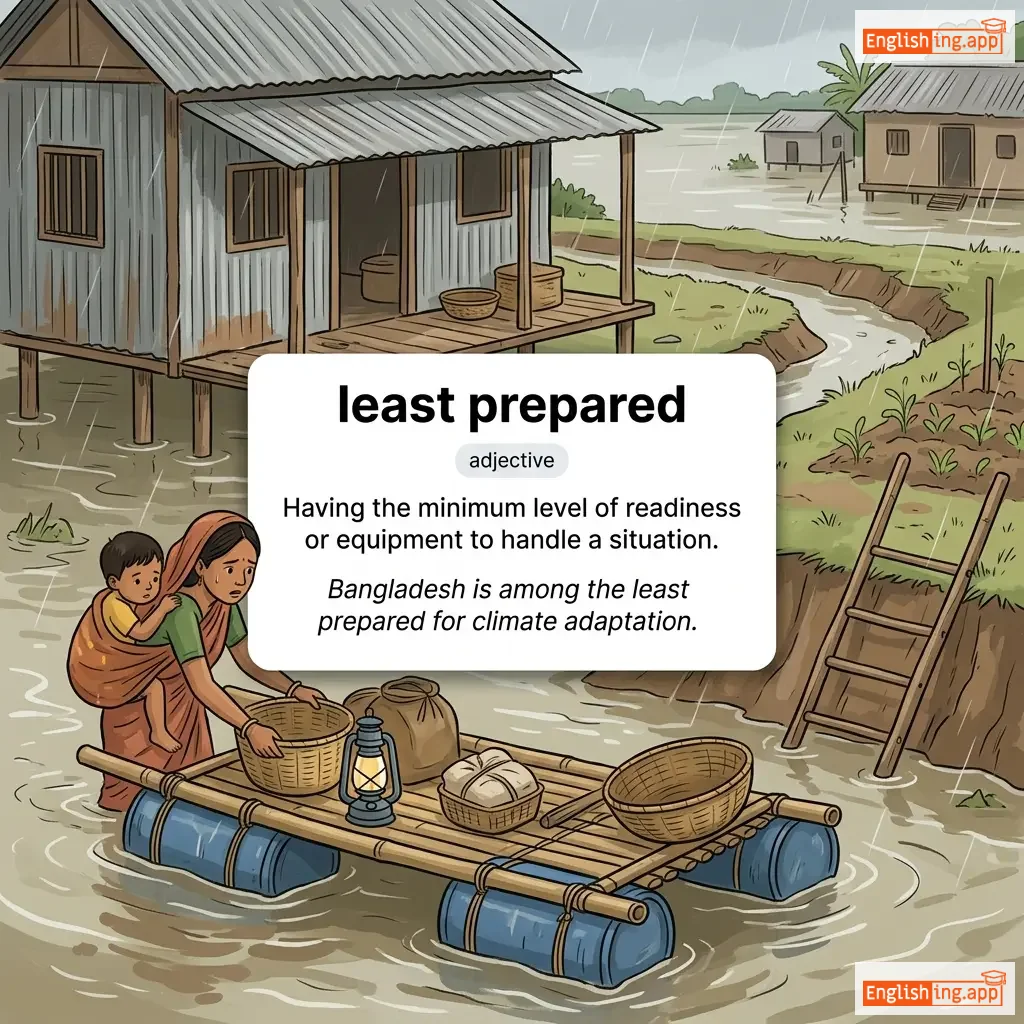
least prepared definition card — visual illustration of the meaning
adjective
liːst prɪˈpeərd
менее подготовленный (menee podgotovlennyj)

Having the minimum level of readiness or equipment to handle a situation.

"Bangladesh is among the least prepared for climate adaptation."

"Бангладеш находится среди наименее подготовленных стран для адаптации к изменениям климата." (Bangladesh nakhoditsya sredi naimenee podgotovlennyh stran dlya adaptatsii k izmeneniyam klimata.)
noun
/ˈlɛðər/
кожа (kozha)

A material made from the skin of an animal, usually treated and used to make clothing, shoes, or furniture.

"He bought a leather jacket for winter."
"Он купил кожаную куртку для зимы." (On kupil kozhanuu kurtku dlya zimy.)
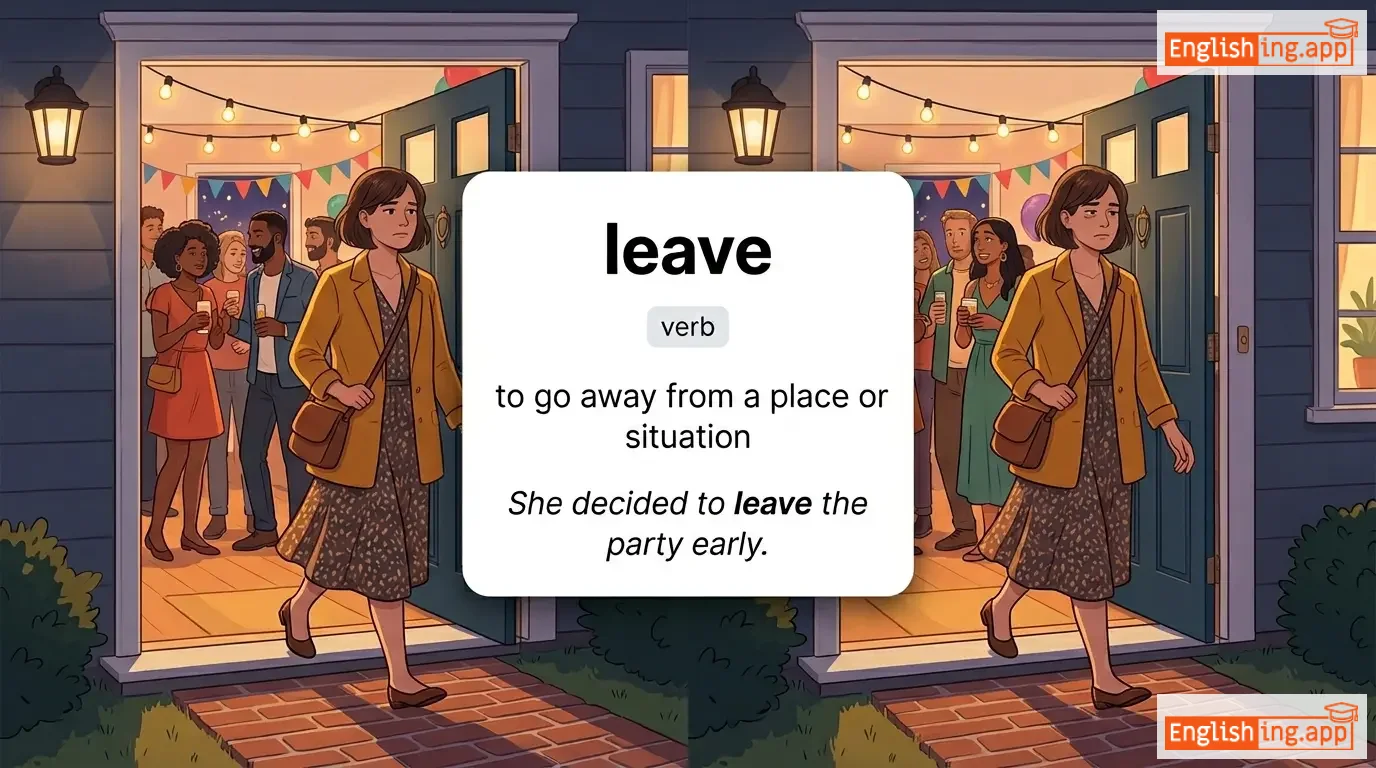
leave definition card — visual illustration of the meaning
🚶‍♂️

leave (liv)

verb
/liːv/
покидать (pokidat)

to go away from a place or situation

"She decided to leave the party early."

"Она решила уйти с вечеринки рано." (Ona reshila uiti s vecherinki rano.)
noun
/ˈliːvˌteɪ.kɪŋ/
прощание (proshchaniye)

an act of saying goodbye; farewell

"His leave-taking from his friends was emotional."

"Его прощание с друзьями было эмоциональным." (Yego proshchaniye s druz'yami bylo emosional'nym.)
noun/verb
/ˈlɛv.ən/
дрожжи (drozhzhi)

a substance, typically yeast, that causes dough to rise; to permeate and modify

"A little yeast will leaven the bread dough."

"Немного дрожжей заставит тесто подняться." (Nemnogo drozhzhej zastavit testo podnyat'sya.)
noun
/ˈliː.vɪŋz/
остатки; пережитки (livings)

things that have been left behind or remain; remnants or scraps

"The leavings from dinner were given to the dog."

"Остатки ужина были отданы собаке." (Ostatki uzhina byli otdany sobake.)
noun
/ˈleʧ.ər/
похотливый человек (pohotlivyi chelovek)

a man who behaves in a sexually inappropriate way towards women

"The company fired him for being a lecher."

"Компания уволила его за то, что он был похотливым человеком." (kompaniya uvolila ego za to chto on byl pohotlivym chelovekom)
adjective
/ˈlɛtʃ.ər.əs/
похотливый (pokhotlivyy)

having or showing excessive or offensive sexual desire

"The character was portrayed as a lecherous old man."

"Персонаж был изображен как похотливый старик." (Personazh byl izobrazhen kak pokhotlivyy starik.)
noun
/ˈlɛtʃ.əri/
похоть (pokhot)

excessive or offensive sexual desire; lustfulness

"The novel depicted the lechery of corrupt nobles."

"Роман изображал похоть коррумпированных дворян." (Roman izobrazhal pokhot' korrumpirovannykh dvorian.)
noun
/ˈlɛktən/
пюпитр (pyupitr)

A tall stand with a sloping top used to support a book, notes, or script during a speech or lecture.

"The professor placed her notes on the lectern before starting her lecture."

"Профессор поставил свои заметки на кафедру, прежде чем начать свою лекцию." (Professor postavil svoi zametki na kafedru, prezhde chem nachat' svoju lektsiyu.)
noun
/ˈlektʃər/
лекция (lektsiya)

a talk given to a group of people to teach them about a subject

"The professor gave a lecture on climate change."

"Профессор прочитал лекцию о климатических изменениях." (Professor prochital lektsiyu o klimaticheskikh izmeneniyakh.)
noun
/ˈlɛktʃərər/
лектор (lektor)

a person who gives lectures, especially at a college or university

"The lecturer explained the theory with clear examples."

"Лектор объяснил теорию на понятных примерах." (Lektor obyasnil teoriyu na ponyatnykh primerakh)
noun
/ˈledʒ.ər/
главная книга (glavnaya kniga)

a book or other collection of financial accounts of a particular type

"The accountant updated the company ledger daily."

"Бухгалтер обновил главный журнал компании ежедневно." (Bukhgalter obnovil glavniy zhurnal kompanii ezhednevno.)
noun
/liːt͡ʃ/
пиявка (piyavka)

a blood-sucking worm that lives in water or moist ground

"The doctor used a medical leech to reduce swelling after surgery."

"Врач использовал медицинскую пиявку, чтобы уменьшить отек после операции." (Vrach ispol'zoval meditsinskuyu piyavku, chtoby umenshit' otek posle operatsii)
noun
/liːk/
лук-порей (luk-porey)

vegetable related to onion with long green leaves and white bulb, milder than onion

"The soup was made with potatoes and leeks."

"Суп был приготовлен из картошки и лука-порея." (Sup byl prigotovlen iz kartoshki i luka-poreya.)
verb
/lɪr/
похотливый взгляд (pokhotlivyy vzglyad)

To look at someone in an unpleasant, sly, or sexually suggestive way.

"He leered at her in a way that made her uncomfortable."

"Он смотрел на неё так, что она почувствовала себя неловко." (On smotrel na ney tak, chto ona pochuvstvovala sebya nelovko.)
adjective
/ˈlɪəri/
подозрительный (podozritel'nyy)

Cautious or wary due to suspicion or distrust.

"She was leery of investing in the new business."

"Она была подозрительна к инвестированию в новый бизнес." (Ona byla podozritel'na k investirovaniyu v novyy biznes.)
adjective
/ˈliːwərd/
защищенная сторона от ветра (zashchishchennaya storona ot vetra)

On or toward the sheltered side away from the wind.

"They built their camp on the leeward side of the hill."

"Они поставили свой лагерь на защищенной стороне холма." (Oni postavili svoy lager' na zashchishchennoy storone kholma.)
noun
/ˈliːweɪ/
простор (prostor)

Freedom to act within certain limits; extra space or time.

"The manager gave the team some leeway to finish the project."

"Менеджер дал команде немного простора, чтобы завершить проект." (Menedzher dal komande nemnogo prostora, chtoby zavershit' proyekt.)
adjective, noun, adverb, verb (past tense of leave)
/lɛft/
налево (nalevo)

on or towards the side of the body that is to the west when facing north

"He turned left at the intersection."

"Он повернул налево на перекрестке." (On povernul nalevo na perekryostke.)
adjective
/ˌlɛftˈhændɪd/
левша (levsha)

Using or done with the left hand; also can mean clumsy or awkward.

"She is left-handed and writes beautifully with her left hand."

"Она левша и красиво пишет левой рукой." (Ona levsha i krasivo pishet levoy rukoy.)
noun
/lɛɡ/
нога (noga)

one of the limbs on which a person or animal walks and stands

"He injured his leg while playing football."

"Он повредил ногу, играя в футбол." (On povredil nogu, igraya v futbol.)
legacy definition card — visual illustration of the meaning
noun
/ˈlɛɡəsi/
наследие (nasledie)

Something handed down from the past, such as money, property, or traditions.

"Her artistic legacy continues to inspire young painters."

"Ее художественное наследие продолжает вдохновлять молодых художников." (Yeyo khudozhestvennoye naslediye prodolzhayet vdokhnovlyat' molodykh khudozhnikov.)
legal definition card — visual illustration of the meaning
adjective
/ˈliːɡəl/
юридический (yuridicheskiy)

relating to the law

"He sought legal advice before signing the contract."

"Он искал юридическую консультацию перед подписанием контракта." (On iskal yuridicheskuyu konsultatsiyu pered podpisaniem kontrakta.)
noun
/lɪˈɡæl.ə.ti/
легальность (legalnost)

the quality or state of being legal; accordance with the law

"The lawyer questioned the legality of the contract."

"Адвокат поставил под сомнение легальность контракта." (Advokat postavil pod somnenie legal'nost' kontrakta.)
verb
/ˈliːɡəlaɪz/
узаконить (uzakonit)

To make something lawful by official approval.

"The government decided to legalize online businesses."

"Правительство решило узаконить онлайн-бизнес." (Pravitel'stvo reshilo uzakonit' onlayn-biznes.)
adverb
/ˈliːɡəli/
законно (zakonno)

in a way that is allowed by law

"He is legally responsible for his actions."

"Он законно ответственен за свои действия." (On zakonno otvetstvenen za svoi deystviya)
adverb/adjective
/lɪˈɡɑːtoʊ/
в музыке, играется или поется плавно и соединенно (v muzyke, igraetsya ili poyetsya plavno i soyedinenno)

In music, played or sung smoothly and connectedly.

"The pianist played the passage legato, with each note flowing into the next."

"Пианист сыграл пассаж легато, каждая нота переходила в следующую." (Pianist sygral passazh legato, kazhdaya nota perekhodila v sleduyushchuyu.)
noun
/ˈlɛdʒənd/
легенда (legenda)

A traditional story popularly regarded as historical but unauthenticated; also a famous person admired for achievements.

"The footballer is considered a legend in his country."

"Футболист считается легендой в своей стране." (Futbolist schitayetsya legendoy v svoey strane.)
adjective
/ˈlɛdʒəndɛri/

remarkable enough to be famous; often used to describe something that is iconic or widely known

"The legendary musician performed in front of a packed stadium."

noun
/ˌlɛdʒərdəˈmeɪn/
фокусы, обман (fokusy, obman)

skillful use of one's hands when performing tricks; deception or trickery

"The magician's legerdemain left the audience amazed."

"Фокусы мага поразили зрителей." (Fokusy maga porazili zriteley.)
noun
/ˈlɛɡɪŋ/
тайтсы (taytsy)

tight-fitting stretch pants, typically worn by women for exercise or casual wear

"She bought a new pair of black leggings for the gym."

"Она купила новую пару черных леггинсов для тренажерного зала." (Ona kupila novuyu paru chernykh legginsov dlya trenazhernogo zala.)
adjective
/ˈlɛdʒəbl/
разборчивый (razborchivyy)

clear enough to read

"Her handwriting was barely legible."

"Её почерк был едва разборчив." (Yeyo pochek byl yedva razborchiv)
noun
/ˈliːdʒən/
большая группа людей, особенно солдат; большое количество (bolshaya gruppa lyudey, osobenno soldat; bol'shoye kolichestvo)

a large group of people, especially soldiers; a great number

"The Roman army was divided into legions."

"Римская армия была разделена на легионы." (Rimskaya armiya byla razdelena na legiony.)
noun
/ˈliːdʒənəri/
римский солдат (rimskij soldat)

a soldier in the Roman army

"Each legionary carried a shield and a short sword."

"Каждый легионер носил щит и короткий меч." (Kazhdyj legioner nosil schit i korotkij mech.)
verb
/ˈlɛdʒɪsˌleɪt/
законотворчество (zakonotvorchestvo)

to make or enact laws

"The government plans to legislate new safety standards."

"Правительство планирует ввести новые стандарты безопасности." (Pravitel'stvo planiruet vvesti novye standarty bezopasnosti.)
noun
/ˌledʒɪsˈleɪʃən/
законодательство (zakonodatel'stvo)

laws considered collectively, or the act of making laws

"The government passed new legislation to protect the environment."

"Правительство приняло новое законодательство для защиты окружающей среды." (Pravitel'stvo prinyalo novoye zakonodatel'stvo dlya zashchity okruzhayushchey sredy.)
adjective
/ˈlɛdʒɪslətɪv/
законодательный (zakonodatel'nyj)

relating to the making of laws

"The legislative body passed the new tax bill."

"Законодательный орган принял новый налоговый закон." (Zakonodatel'nyj organ prinyal novyj nalogovyj zakon.)
noun
/ˈlɛdʒɪsleɪtər/
законодатель (zakonodatel)

a person who makes laws, especially a member of a legislative body

"The legislator introduced a bill to improve healthcare."
"Законодатель представил законопроект по улучшению здравоохранения." (Zakonodatel predstavil zakonoproekt po uluchsheniyu zdravookhraneniya.)
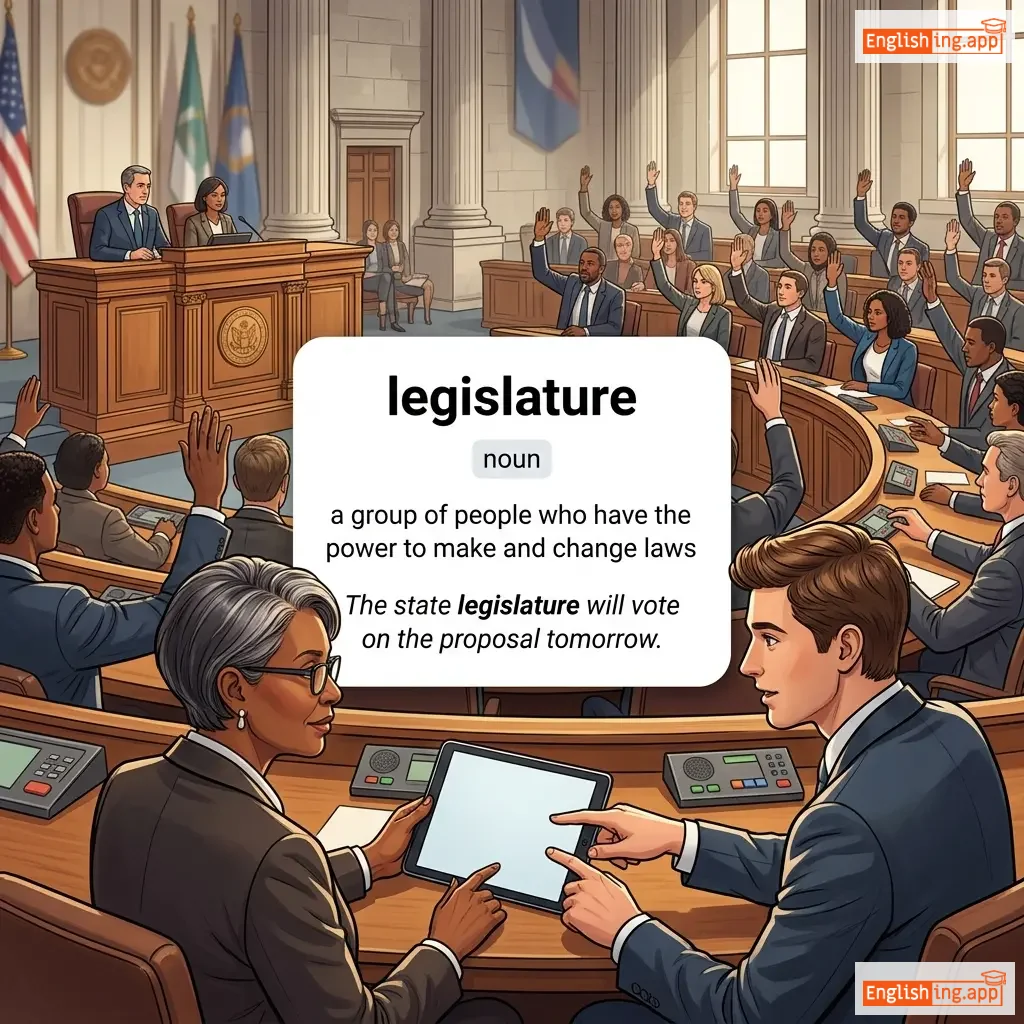
legislature definition card — visual illustration of the meaning
noun
/ˈlɛdʒɪsˌleɪtʃər/
законодательное собрание (zakonodatel'noe sobranie)

a group of people who have the power to make and change laws

"The state legislature will vote on the proposal tomorrow."

"Государственное законодательное собрание проголосует за предложение завтра." (Gosudarstvennoe zakonodatel'noe sobranie pro-golosuyet za predlozhenie zavtra.)
noun
/lɪˈdʒɪtɪməsi/
легитимность (legitimnost)

the quality of being accepted as right, proper, or lawful

"The legitimacy of the election was questioned by observers."

"Легитимность выборов была поставлена под сомнение наблюдателями." (Legitimnost viborov byla postavlena pod somneniye nabljudatelyami.)
adjective
/lɪˈdʒɪtɪmət/
законный (zakonny)

Conforming to the law or to rules; valid or acceptable.

"She presented a legitimate reason for her absence."

"Она представила законную причину своего отсутствия." (Ona predstavila zakonnuyu prichinu svoego otsutstviya.)