Словари

Словарь английского языка | Значения слов, определения и примеры

noun
/lɒs/
потеря (poterya)

The state of no longer having something or someone; the harm resulting from losing.

"The company suffered a huge financial loss last year."

"Компания понесла огромные финансовые потери в прошлом году." (Kompaniya ponessla ogromnye finansovye poteri v proshlom godu.)
verb/adjective
/lɒst/
потерянный (poteryannyy)

Unable to find the way; no longer in possession of something.

"He lost his keys and couldn’t enter the house."

"Он потерял свои ключи и не смог войти в дом." (On poteryal svoi klyuchi i ne smog voyti v dom.)
noun
/lɒt/
много (mnogo)

A large number or amount; a group or portion.

"She bought a lot of books at the fair."

"Она купила много книг на ярмарке." (Ona kupila mnogo knig na yarmarke.)
pronoun/noun
/lɒts/
много (mnogo)

A large number or amount of something.

"She has lots of friends in the city."

"У неё много друзей в городе." (U neyo mnogo druzey v gorode.)
noun
/ˈlɒtəri/
лотерея (loteriya)

A means of raising money by selling numbered tickets and giving prizes to the holders of numbers drawn at random.

"He won a car in the national lottery."

"Он выиграл машину в национальной лотерее." (On vyigral mashinu v natsional'noi loteree.)
noun
/ˈloʊ.təs/
лотос (lotos)

a large water flower that floats on the surface of ponds and lakes

"The lotus flower blooms beautifully in the quiet pond."

"Цветок лотоса прекрасно цветёт в тихом пруду." (tsvetok lotosa prekrasno tsvetyot v tikhom prudu)
adjective/adverb
/laʊd/
громкий (gromkiy)

Producing or capable of producing much noise.

"The music was too loud to concentrate."

"Музыка была слишком громкой, чтобы сосредоточиться." (Muzyka byla slishkom gromkoy, chtoby sosredotochit'sya.)
adverb
/ˈlaʊdli/
громко (gromko)

in a way that produces a lot of sound; with a high volume

"He spoke loudly so everyone in the room could hear him."

"Он говорил громко, чтобы все его слышали." (On govoril gromko chtoby vse ego slyshali)
noun
/lɒx/ or /lɒk/
озеро (ozero)

An Irish or Scottish word for a lake or sea inlet.

"The fishermen lived by the lough for generations."

"Рыбаки жили у озера на протяжении поколений." (Rybaki zhili u ozera na protyazhenii pokoleniy.)
noun, verb
/laʊndʒ/
гостиная (gostinaya)

A public room for relaxing; or to sit, lie, or stand in a relaxed way.

"They lounged on the sofa after dinner."

"Они развалились на диване после ужина." (Oni razvailsya na divane posle uzhina.)
noun
/laʊs/
вошь (vosh)

A small parasitic insect that lives on the skin of mammals and birds; also used as an insult for a contemptible person.

"The child had to be treated for head louse infestation."

"Ребенка нужно было лечить от заражения головными вшами." (Rebyonka nuzhno bylo lechit' ot zaraZheniya golovnymi vshami.)
adjective
/ˈlaʊzi/
плохой (plokhoy)

of very poor quality; bad or unpleasant

"He felt lousy after catching the flu."

"Он почувствовал себя плохо после того, как подхватил грипп." (On pochuvstvoval sebya plokho posle togo, kak podkhvatil gripp.)
noun
/laʊt/
грубый человек (grubyy chelovek)

An uncouth or aggressive man or boy.

"The drunken lout caused a scene at the party."

"Пьяный грубый человек устроил скандал на вечеринке." (P'yanyy grubyy chelovek ustroil skandal na vecherinke.)
adjective
/ˈlaʊtɪʃ/
грубый (grubyy)

Clumsy, rude, or aggressive in behavior.

"His loutish remarks offended everyone at the meeting."

"Его грубые замечания оскорбили всех на собрании." (Yego grubye zamechaniya oskorbili vsekh na sobranie.)
adjective
/ˈlʌvəbəl/
счастье (schast'ye)

Inspiring or deserving love or affection.

"The puppy was so lovable that everyone wanted to hold it."
"Она не могла скрыть своего счастья, когда получила премию." (Ona ne mogla skryt' svoego schast'ya, kogda poluchila premium.)
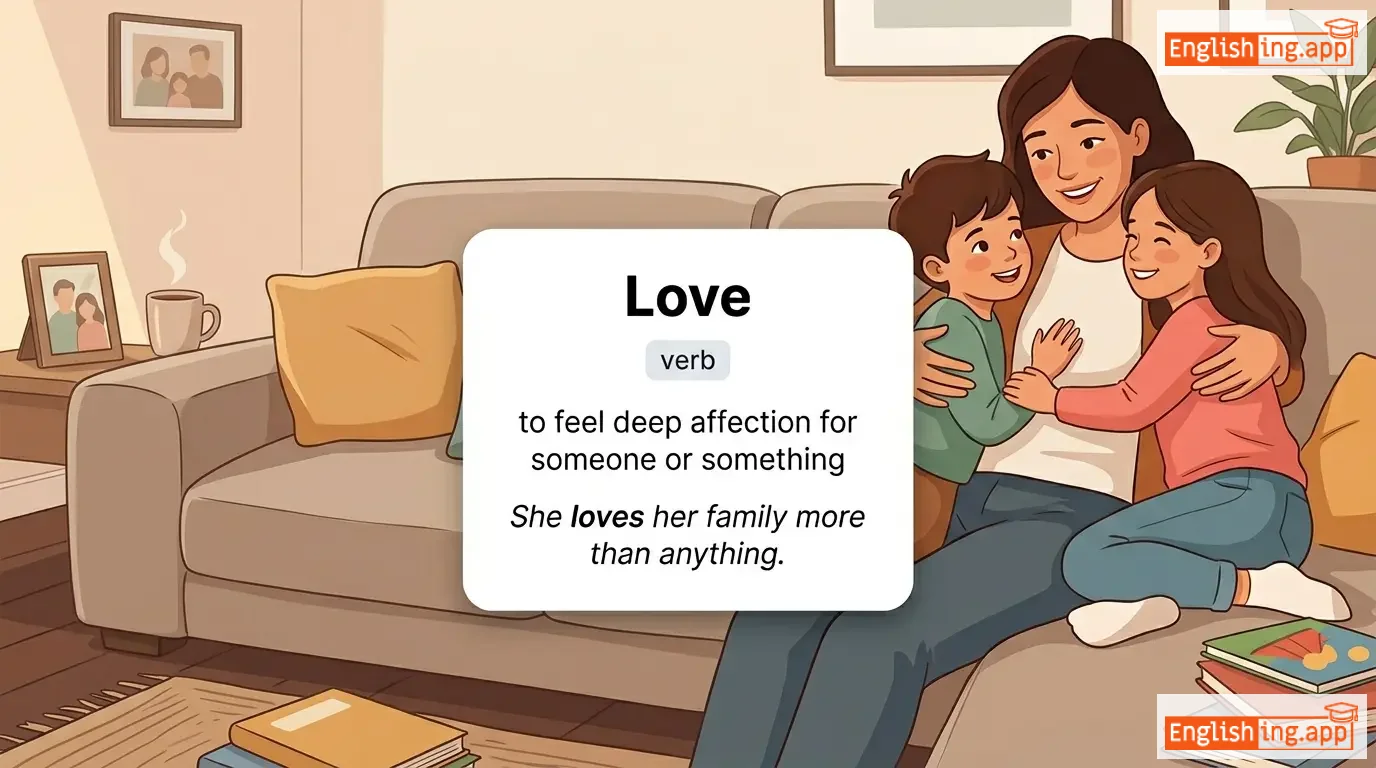
Love definition card — visual illustration of the meaning
verb
/lʌv/
любовь (lyubov)

to feel deep affection for someone or something

"She loves her family more than anything."

"Она любит свою семью больше всего." (Ona lyubit svoyu sem'yu bol'she vsego.)
adjective
/ˈlʌvəbl̩/
счастье (schastye)

easy to love; endearing or charming

"The puppy was so loveable that everyone wanted to hold it."

"Она не могла скрыть свое счастье, когда получила награду." (Ona ne mogla skryt' svoe schast'ye, kogda poluchila nagradu.)
adjective
/ˈlʌvli/
прекрасный (prekrasny)

Delightful or very pleasing; beautiful.

"It was a lovely evening by the beach."

"Это был прекрасный вечер у моря." (Eto byl prekrasnyy vecher u morya.)
noun
/ˈlʌvər/
любовник (lyubovnik)

a person who is in a romantic relationship or has strong affection for someone

"She met her lover at the café every evening."

"Она встречала своего любовника в кафе каждый вечер." (Ona vstrechala svoego lyubovnika v kafe kazhdyj vecher.)
adjective
/ˈlʌv.ɪŋ/
любящий; заботливый; проявляющий любовь и тепло (lyubyashchiy; zabotlivyy; proyavlyayushchiy lyubov' i teplo)

affectionate; caring; showing love and warmth

"She is a loving mother who cares deeply for her children."

"Она любящая мать, которая глубоко заботится о своих детях." (Ona lyubyashchaya mat', kotorya gluboko zabotitsya o svoikh detyakh.)
adjective
/loʊ/
низкий (nizkiy)

Small in amount, degree, or position; not high.

"The river is at its lowest level in years."

"Река находится на самом низком уровне за последние годы." (Reka nakhoditsya na samom nizkom urovne za poslednie gody.)
adjective
/ˌloʊ ˈspɪrɪtɪd/
подавленный (podavlennyy)

feeling sad, depressed, or lacking enthusiasm

"He felt low-spirited after hearing the bad news."

"Он почувствовал себя подавленным после того, как услышал плохие новости." (On pochuvstvoval sebya podavlennym posle togo, kak uslyshal plokhie novosti.)
verb
/ˈloʊər/
снижать (snizhat)

to move something to a lower position or to reduce

"The company decided to lower the prices."

"Компания решила снизить цены." (Kompaniya reshilа snizit' tseny.)
lowest definition card — visual illustration of the meaning
adjective
/ˈloʊɪst/
самый низкий (samy nizkiy)

Of the smallest amount, extent, or intensity; minimal.

"The unemployment rate is at its lowest in 15 years."

"Уровень безработицы достиг минимального уровня за 15 лет." (Uroven' bezrabotitsy dostig minimal'nogo urovnya za 15 let.)
adjective
/ˈloʊli/
скромный (skromny)

humble in status, position, or manner

"She rose from a lowly position to become the company's CEO."

"Она поднялась с низкой позиции до генерального директора компании." (Ona podnyalas' s nizkoy pozitsii do general'nogo direktora kompanii.)
adjective
/ˈlɔɪəl/
верный, преданный (verny, predanny)

showing firm and constant support or allegiance to someone or something

"She remained loyal to her friends even in hard times."

"Она осталась верной своим друзьям даже в трудные времена." (Ona ostalas' vernoj svoim druz'yam dazhe v trudnye vremena.)
noun
/ˈlɔɪəlti/
лояльность (loyal'nost')

a strong feeling of support or allegiance

"His loyalty to the company earned him great respect."

"Его лояльность к компании принесла ему большой респект." (Ego loyal'nost' k kompanii prinesla emu bol'shoy respekt.)
verb
/ˈluːbrɪkeɪt/
смазать (smazat)

to apply oil or grease to reduce friction between surfaces

"The mechanic lubricated the car engine parts."

"Механик смазал детали двигателя машины." (Mekhanik smazal detali dvizhka mashiny.)
lubrication definition card — visual illustration of the meaning
noun
ˌluː.brɪˈkeɪ.ʃən
смазка (lubrikeyshn)

The application of a substance such as oil or grease to reduce friction between moving parts.

"Lubrication reduces wear and tear in machines."

"Смазка уменьшает износ и поломки в машинах." (Smazka umeneshaet iznos i polomki v mashinakh)
noun
/luːˈbrɪsɪti/
скользкость (skol'zkost')

the quality of being slippery or smooth; sometimes also refers to lewdness

"The lubricity of the surface made it difficult to walk on."

"Скользкость поверхности затрудняла ходьбу по ней." (Skol'zkost' poverkhnosti zatrudnyala khod'bu po ney.)
adjective
/ˈluːsənt/
светящийся (svetyashchijsya)

shining or glowing with light

"The lucent stars brightened the night sky."
"Светящиеся звезды осветили ночное небо." (Svetjashchiesya zvezdy osvetili nochnoye nebo.)
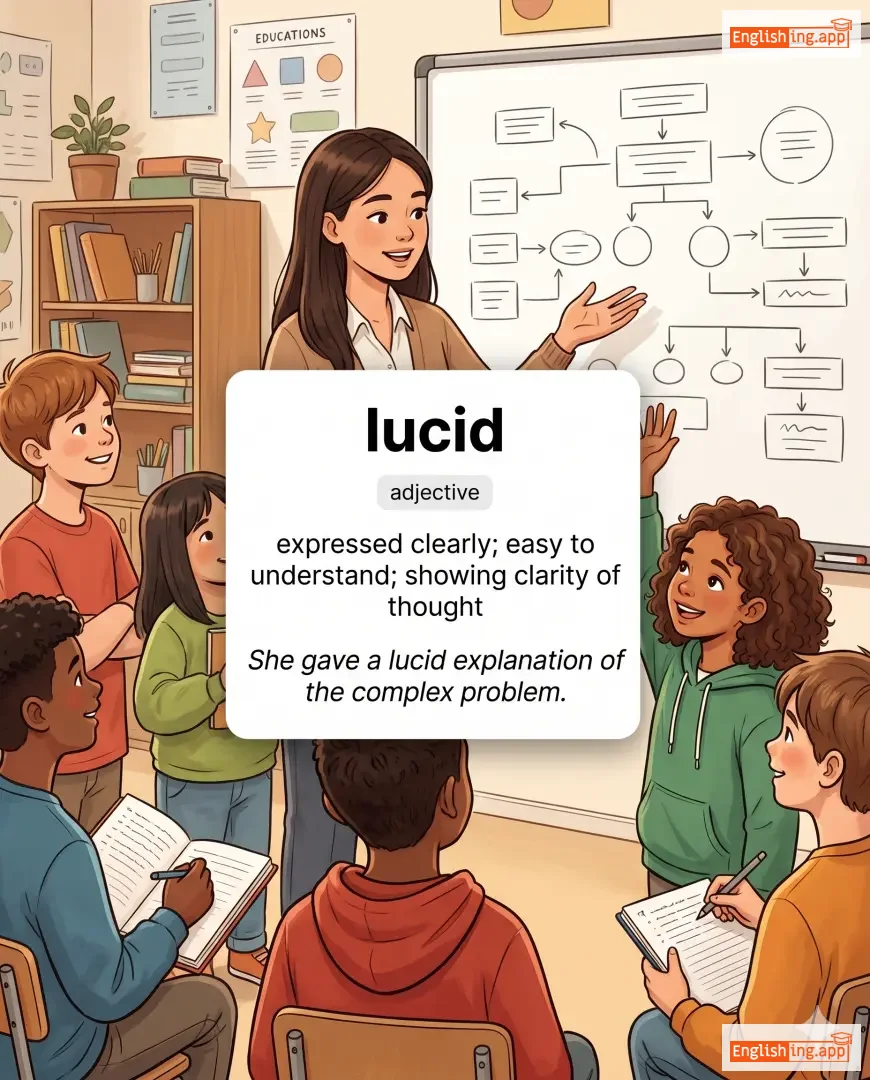
lucid definition card — visual illustration of the meaning
adjective
/ˈluːsɪd/
люцидный (lyutsidnyy)

expressed clearly; easy to understand; showing clarity of thought

"She gave a lucid explanation of the complex problem."

"Она дала ясное объяснение сложной проблемы." (Ona dala yasnoe ob'yasnenie slozhnoy problemy.)
lucidity definition card — visual illustration of the meaning
noun
/luːˈsɪd.ə.ti/
ясность (yasnost)

Clarity of thought or style; the quality of being easily understood.

"His explanation had great lucidity, making it easy to understand."

"Его объяснение было очень ясным, что облегчало понимание." (Ego obyasnenie bylo ochen yasnym, chto oblegchalo ponyatiye.)
noun
/lʌk/
удача (luk)

success or failure apparently brought by chance rather than through one’s actions

"He had the luck to find a good job quickly."

"Ему повезло быстро найти хорошую работу." (emu povezlo bystro nayti khoroshuyu rabotu)
adjective
/ˈlʌki/
везучий (vezuchiy)

having good fortune or favorable circumstances

"She felt lucky to have such supportive friends."

"Она почувствовала себя везучей, имея таких поддерживающих друзей." (Ona pochuvstvovala sebya vezuchey, imya takikh podderzhivayushchikh druzey.)
lucrative definition card — visual illustration of the meaning
adjective
/ˈluːkrətɪv/
прибыльный (pribylnyy)

producing a great deal of profit

"He left his job for a more lucrative business opportunity."

"Он ушел с работы ради более прибыльной бизнес-возможности." (On ushel s raboty radi boleye pribylnoy biznes-vozmozhnosti.)
lucre definition card — visual illustration of the meaning
noun
/ˈluːkər/
прибыль (pribyl)

money, especially when regarded as sordid or gained dishonorably

"He was motivated more by lucre than by duty."

"Он был мотивирован больше прибылью, чем долгом." (On byl motivirovan bol'she pribyl'yu, chem dolgom.)
noun
/ˌluːkjʊˈbreɪʃən/
ночное изучение (nochnoye izucheniye)

study or meditation, especially at night

"His novel was the result of long lucubration."

"Его роман был результатом долгого ночного изучения." (Yego roman byl rezul'tatom dolgogo nochnogo izucheniya.)
adjective
/ˈluːdɪkrəs/
нелепый (nelepyj)

so foolish, unreasonable, or out of place as to be amusing

"It is ludicrous to think the Earth is flat."

"Это нелепо думать, что Земля плоская." (Eto nelepy dumat', chto Zemlya ploskaya.)
🧳

lug

verb
/lʌɡ/

to carry or drag something heavy or cumbersome with effort

"He had to lug the suitcase up three flights of stairs."

noun
/ˈlʌɡ.ɪdʒ/
багаж (bagazh)

suitcases or other bags in which to pack personal belongings for traveling

"Please check your luggage at the airport counter."

"Пожалуйста, проверьте свой багаж на стойке регистрации в аэропорту." (Pozhaluysta, prover'te svoy bagazh na stoyke registratsii v aeroporte.)
noun
/ˈlʌɡ.ɪdʒ væn/
багажный фургон (bagazhnyy furgon)

a vehicle designed for carrying luggage and cargo

"The luggage van carried all the passengers' suitcases."

"Багажный фургон перевез все чемоданы пассажиров." (Bagazhnyy furgon perevez vse chemodany passazhirov)
adjective
/luːˈɡuːbriəs/
мрачный (mrachniy)

looking or sounding sad and dismal

"His lugubrious expression made everyone feel uneasy."
"Его мрачное выражение заставило всех почувствовать себя неловко." (Ego mrachnoe vyrazhenie zastavilo vsekh pochuvstvovat' sebya nelovko.)
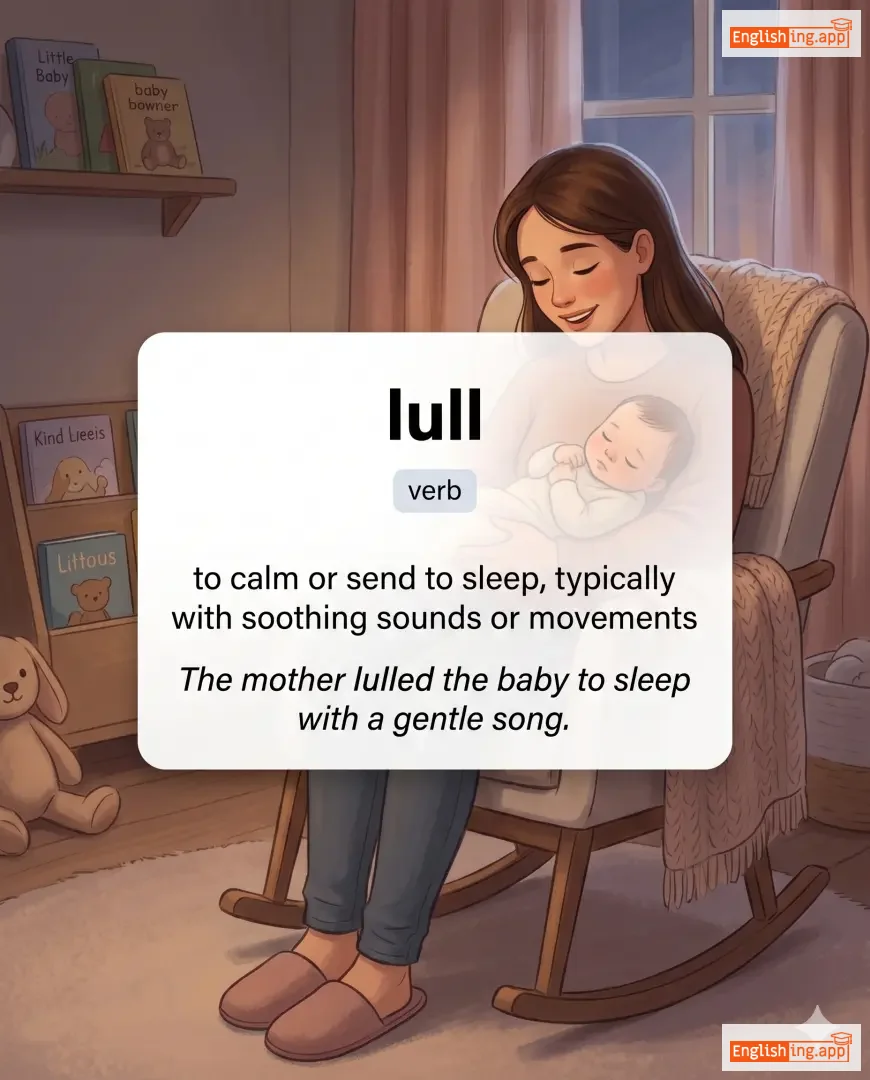
lull definition card — visual illustration of the meaning
😴

lull

verb
/lʌl/

to calm or send to sleep, typically with soothing sounds or movements

"The mother lulled the baby to sleep with a gentle song."

noun
/ˈlʌləˌbaɪ/
колыбельная (kolybelnaya)

a soothing song sung to help a child fall asleep

"She sang a lullaby to her baby every night."

"Она пела колыбельную своему малышу каждую ночь." (Ona pela kolybel'nuyu svoemu malyshu kazhduyu noch')
verb
/ˈlʌmbər/
идти тяжело (idti tyazhelo)

to move in a slow, heavy, awkward way

"The bear lumbered through the forest in search of food."

"Медведь шел тяжело через лес в поисках пищи." (Medved' shel tyazhelo cherez les v poiskakh pishchi.)
noun
/ˈluː.mən/
люмен (lyumen)

A unit of luminous flux, measuring the amount of visible light emitted by a source.

"The bulb produces 800 lumens of light."

"Лампа производит 800 люмен света." (Lampa proizvodit 800 lyumen sveta.)
noun
/ˈluː.məˌnɛr.i/
выдающаяся личность (vydajushchayasya lichnost)

A person who inspires or influences others, especially in a particular field.

"He is considered a luminary in the world of science."

"Его считают выдающейся личностью в мире науки." (Ego schitayut vydajushchaysya lichnost'yu v mire nauki.)
noun
/ˌluː.mɪˈnɛs.əns/
люминесценция (lyuminescentsiya)

The emission of light by a substance not resulting from heat; a type of cold light.

"The luminescence of the fireflies lit up the forest."

"Люминесценция светлячков осветила лес." (Lyuminescentsiya svetlyachkov osvetila les.)
adjective
/ˌluː.mɪˈnɛs.ənt/
светящийся (svetyashchiesya)

Emitting light without heat, glowing softly.

"The luminescent watch dial was visible in the dark."

"Светящийся циферблат часов был виден в темноте." (Svyetyashchiesya tsiferblat chasov byl viden v temnote.)