Словари

Словарь английского языка | Значения слов, определения и примеры

noun
/ˈdʒʌɡləri/
жонглирование (zhonglirovaniye)

The performance of tricks and illusions, especially by sleight of hand.

"The magician's jugglery amazed the audience."

"Жонглирование мага поразило зрителей." (Zhonklirovaniye maga porazilo zritelyey.)
noun
/ˈdʒʌɡjələr/
яремная вена (yaremnaya vena)

A large vein in the neck that carries blood from the head back to the heart.

"The doctor checked the patient's jugular vein for signs of pressure."

"Врач проверил яремную вену пациента на наличие признаков давления." (Vrach proveryl yaremnuyu venu patsiyenta na nalichiye priznakov davleniya.)
noun
/dʒuːs/
сок (sok)

the liquid obtained from fruits, vegetables, or meat; also refers to energy or power in informal use

"She drank a glass of orange juice with breakfast."

"Она выпила стакан апельсинового сока за завтраком." (Ona vypila stakan apelsinovogo soka za zavtrakom.)
adjective
/ˈdʒuːsi/
сочный (sochnyy)

Full of juice; succulent; also used to describe something exciting or scandalous.

"The steak was so juicy that it melted in my mouth."

"Стейк был настолько сочным, что таял во рту." (Steyk byl nastol'ko sochnym, chto tayał vo rtu.)
noun
/dʒuˈlaɪ/
июль (iyul)

the seventh month of the year in the Gregorian calendar

"July is often the hottest month of the year."
"Июль часто самый жаркий месяц года." (iyul chasto samyy zharkiy mesyats goda)
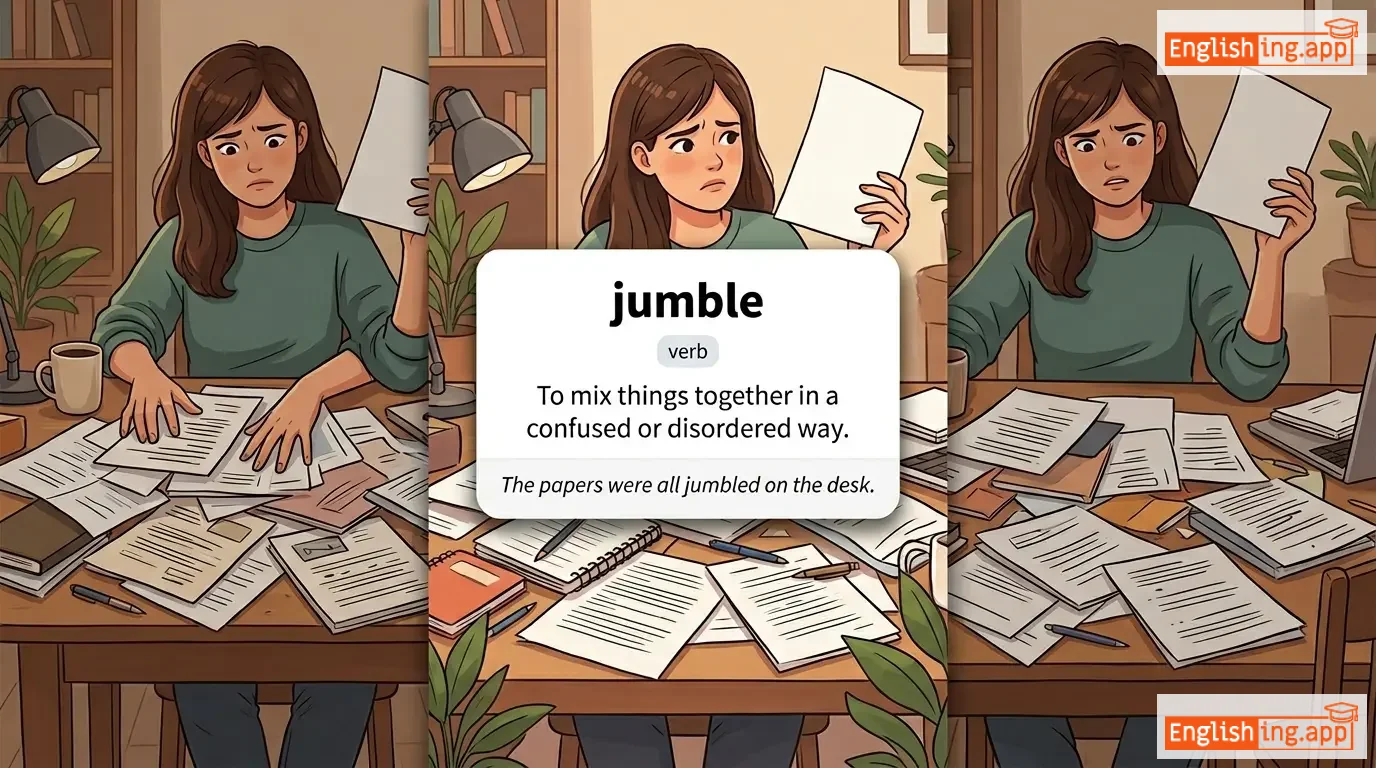
jumble definition card — visual illustration of the meaning
verb
/ˈdʒʌmbəl/
перемешивать (peremeshivat)

To mix things together in a confused or disordered way.

"The papers were all jumbled on the desk."

"Бумаги были все перемешаны на столе." (Bumagi byli vse peremeshany na stole.)
adjective
/ˈdʒʌm.boʊ/
чрезвычайно большое; гигантское (jumbo)

exceptionally large; enormous; gigantic

"The jumbo jet was delayed at the airport."
"Джамбо-джет был задержан в аэропорту." (Dzhambo-dzhet byl zaderzhan v aeroportu.)
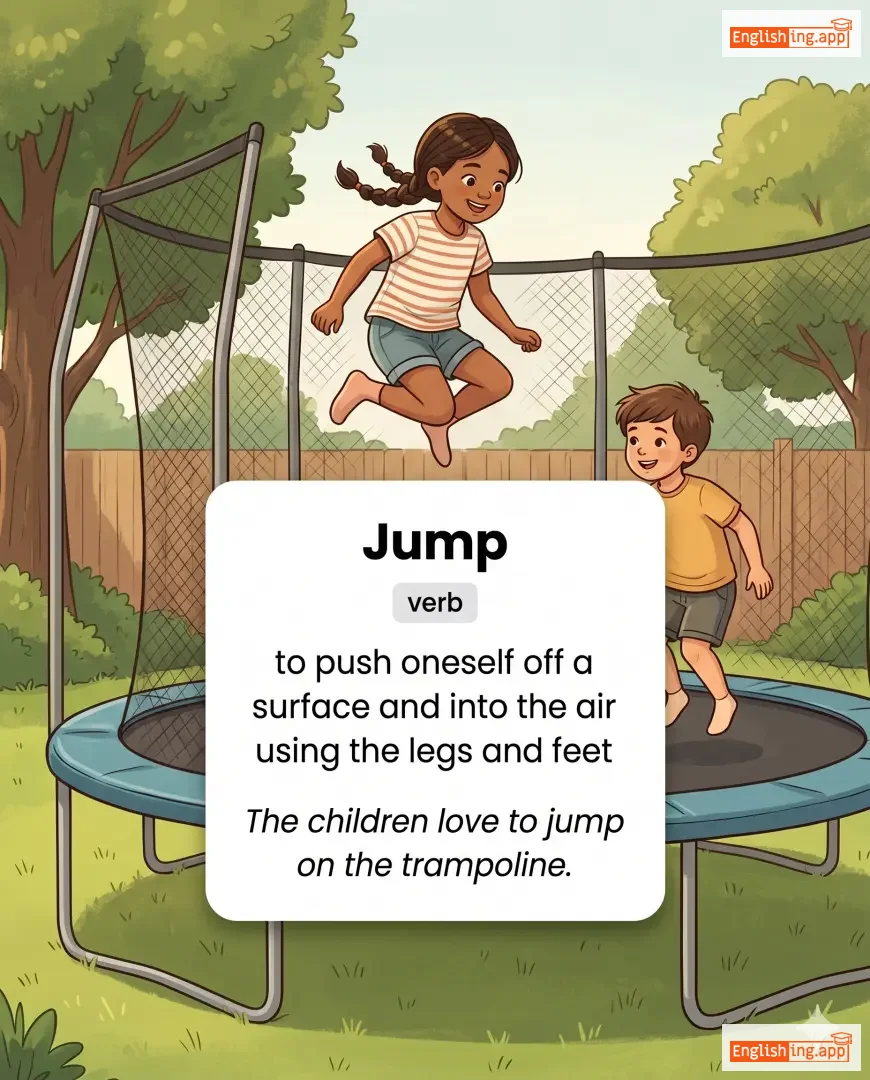
Jump definition card — visual illustration of the meaning
verb
/dʒʌmp/
прыгать (dzhamp)

to push oneself off a surface and into the air using the legs and feet

"The children love to jump on the trampoline."

"Дети любят прыгать на батуте." (Deti lyubyat prygat na batute.)
noun
/ˈdʒʌm.pər/
свитер; (sviter)

a knitted garment worn on the upper body; a person or animal that jumps

"She wore a warm woolen jumper during the cold winter evening."

"Она носила теплый шерстяной свитер в холодный зимний вечер." (Ona nosila teplyy sherstyanoy sviter v kholodnyy zimniy vecher.)
noun
/ˈdʒʌŋkʃən/
перекрёсток (perekryostok)

A place where two or more roads or things meet or are joined.

"The car stopped at the busy junction."

"Машина остановилась на оживлённом перекрёстке." (Mashina ostanovilas na ozhivlennom perekryostke.)
noun
/ˈdʒʌŋktʃər/
критический момент (kriticheskiy moment)

A particular point in time or a critical moment.

"At this critical juncture, we must make the right decision."

"В этот критический момент мы должны принять правильное решение." (V etot kriticheskiy moment my dolzhny prinimat' pravil'noye resheniye.)
noun
/dʒuːn/
июнь (iyun)

the sixth month of the year in the Gregorian calendar

"Schools often close for summer vacation in June."

"Школы часто закрываются на каникулы в июне." (shkoly chasto zakryvayutsya na kanikuly v iyune)
noun
/ˈdʒʌŋɡəl/
джунгли (dzhungli)

a dense forest, typically in a tropical region, filled with wild plants and animals

"They got lost in the thick jungle during their trip."

"Они заблудились в густых джунглях во время их путешествия." (Oni zabludilis' v gustykh dzhunglyakh vo vremya ikh puteshestviya.)
adjective, noun
/ˈdʒuːniər/
младший (mladshiy)

younger or lower in rank; also a student in the next-to-last year of high school or college

"He works as a junior officer in the company."

"Он работает младшим офицером в компании." (On rabotaet mladshim ofitserom v kompanii.)
noun
/dʒʌŋk/
мусор; хлам (musor, khlam)

old or discarded articles that are considered useless or of little value; things of poor quality

"He cleaned out the garage and threw away all the old junk."

"Он почистил гараж и выбросил весь старый мусор." (On pochistil garazh i vybrosil ves' staryy musor.)
noun
/ˈdʒʌŋkɪt/
поездка или празднование (poezdka ili prazdnovanie)

A trip or celebration, often funded by someone else, usually for pleasure or promotional purposes.

"The company organized a junket for journalists to promote their new resort."
"Компания организовала поездку для журналистов, чтобы продвигать свой новый курорт." (Kompaniya organizovala poezdku dlya zhurnalistov, chtoby prodvigat' svoy novyy kurort.)
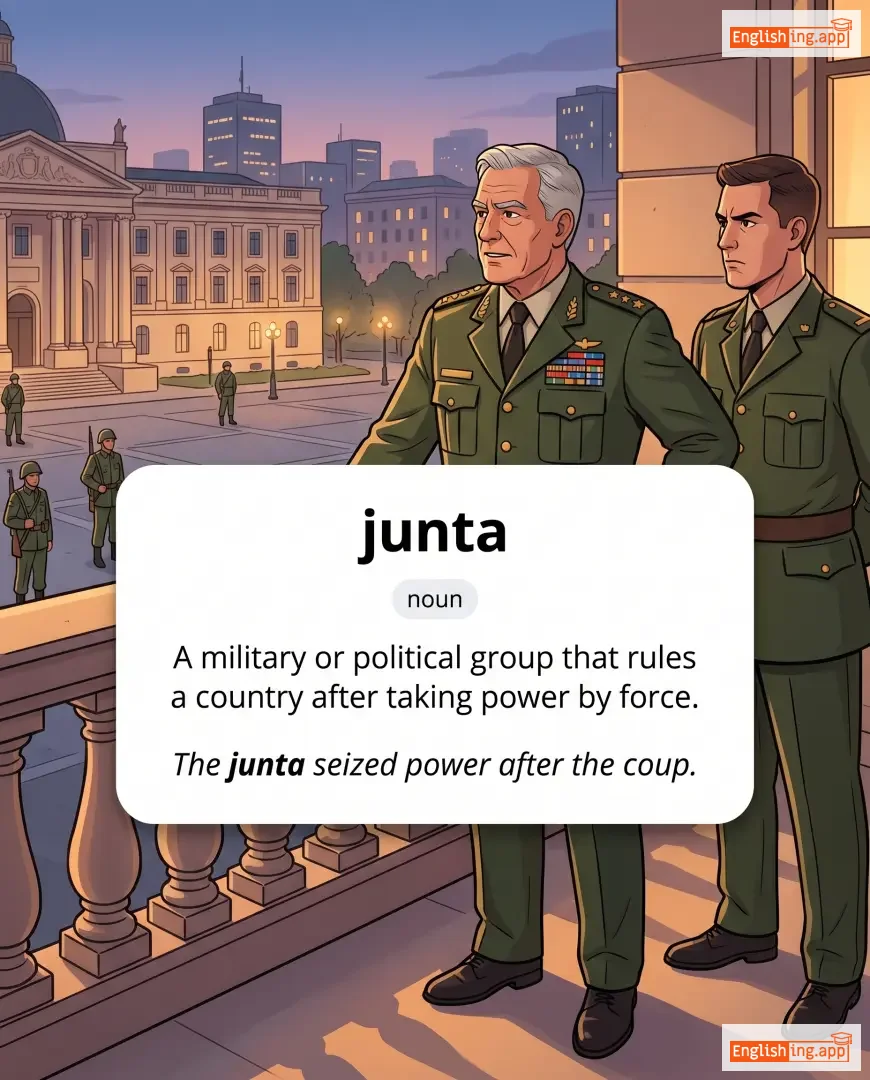
junta definition card — visual illustration of the meaning
noun
/ˈdʒʊntə/
военная хунта (voennaya khunta)

A military or political group that rules a country after taking power by force.

"The junta seized power after the coup."

"Хунта захватила власть после переворота." (Khunta zakhvatila vlast' posle perevorota.)
noun
/ˈdʒuː.pɪ.tər/
Юпитер; главный бог римской мифологии (Yupiter; glavnyj bog rimskoj mifologii)

the largest planet in our solar system; the chief god of Roman mythology

"Jupiter is known for its massive size and distinctive red spot."

"Юпитер известен своим гигантским размером и отличительным красным пятном." (Yupiter izvesten svoim gigantskim razmerom i otlichitel'nym krasnym pyatnom.)
adjective
/dʒʊˈrɪdɪkəl/
юридический (yuridicheskiy)

Relating to judicial proceedings or the administration of law.

"The case raised important juridical questions."

"Дело подняло важные юридические вопросы." (Delo podnyalo vazhnyye yuridicheskiye voprosy.)
noun
/ˌdʒʊərɪsˈdɪkʃən/
юрисдикция (yurisdiktsiya)

The official power to make legal decisions and judgments.

"The court has jurisdiction over criminal cases."

"Суд имеет юрисдикцию по уголовным делам." (Sud imeyet yurisdiktsiyu po ugolovnym delam.)
noun
/ˌdʒʊərɪsˈpruːdəns/
юриспруденция (yurisprudentsiya)

The theory, philosophy, or science of law.

"She is a professor of jurisprudence at the university."
"Она профессор юриспруденции в университете." (Ona professor yurisprudentsii v universitete.)
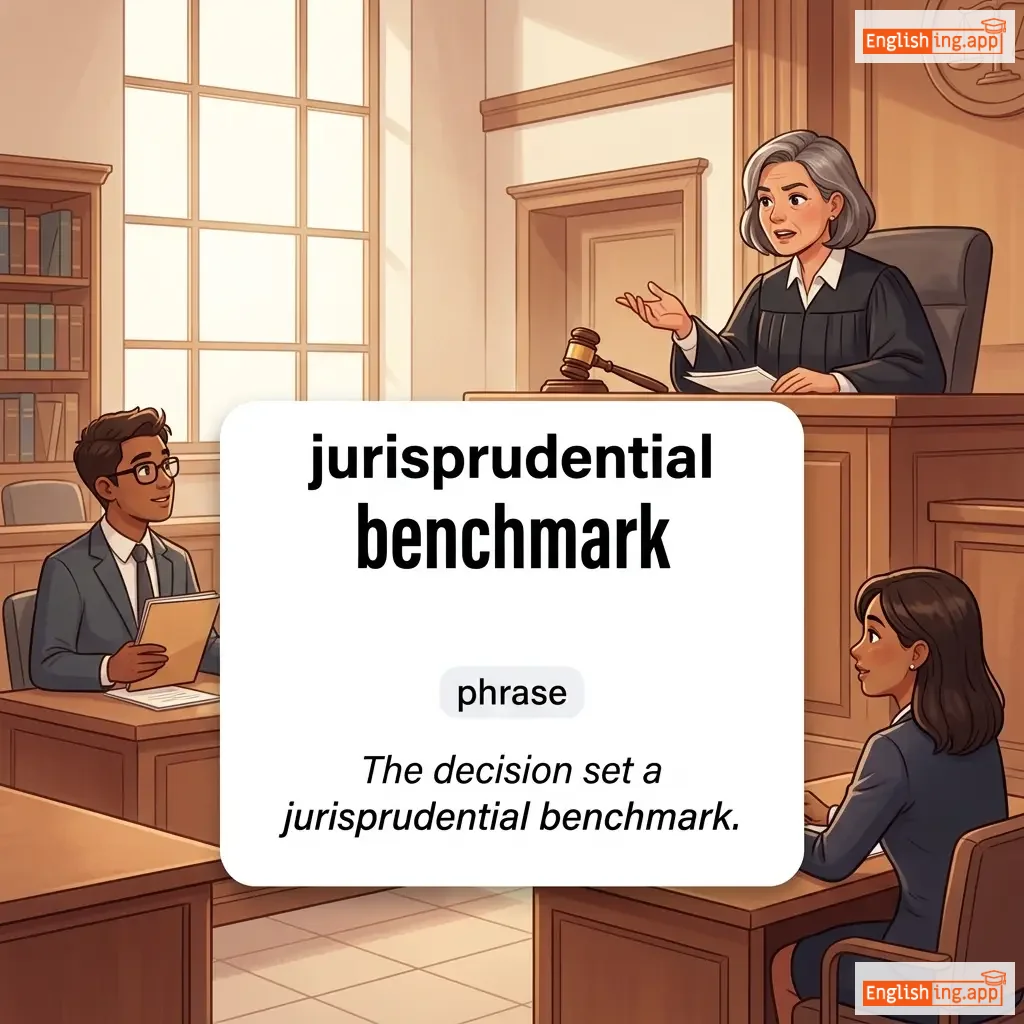
jurisprudential benchmark definition card — visual illustration of the meaning
phrase
ˌdʒʊə.rɪs.pruːˈden.ʃəl ˈbentʃ.mɑːk
юридический стандарт (yuridicheskiy standart)

A legal standard or precedent that serves as a reference point for future legal decisions.

"The decision set a jurisprudential benchmark."

"Решение установило юридический стандарт." (Reshenie ustanovilo yuridicheskiy standart.)
noun
/ˈdʒʊərər/
член жюри (chlen zhuri)

a member of a jury who is chosen to hear evidence in a legal case and help make a decision

"The juror listened carefully to the witness’s testimony."

"Член жюри внимательно выслушал показания свидетеля." (Chlen zhuri vnimatel'no vyslushal pokazanija svidetelya.)
noun
/ˈdʒʊəri/
жюри (zhuri)

a group of people sworn to give a verdict in a legal case based on the evidence

"The jury found him guilty of the crime."

"Жюри признало его виновным в преступлении." (Zhuri priznalo ego vinovnym v prestuplenii.)
adverb/adjective
/dʒʌst/
Точно, только или справедливо и морально правильно (Tochno, tol'ko ili spravedlivo i moral'no pravil'no)

Exactly, only, or fair and morally right.

"She arrived just in time for the meeting."
"Она пришла как раз вовремя для встречи." (Ona prishla kak raz vovremya dlya vstrechi.)
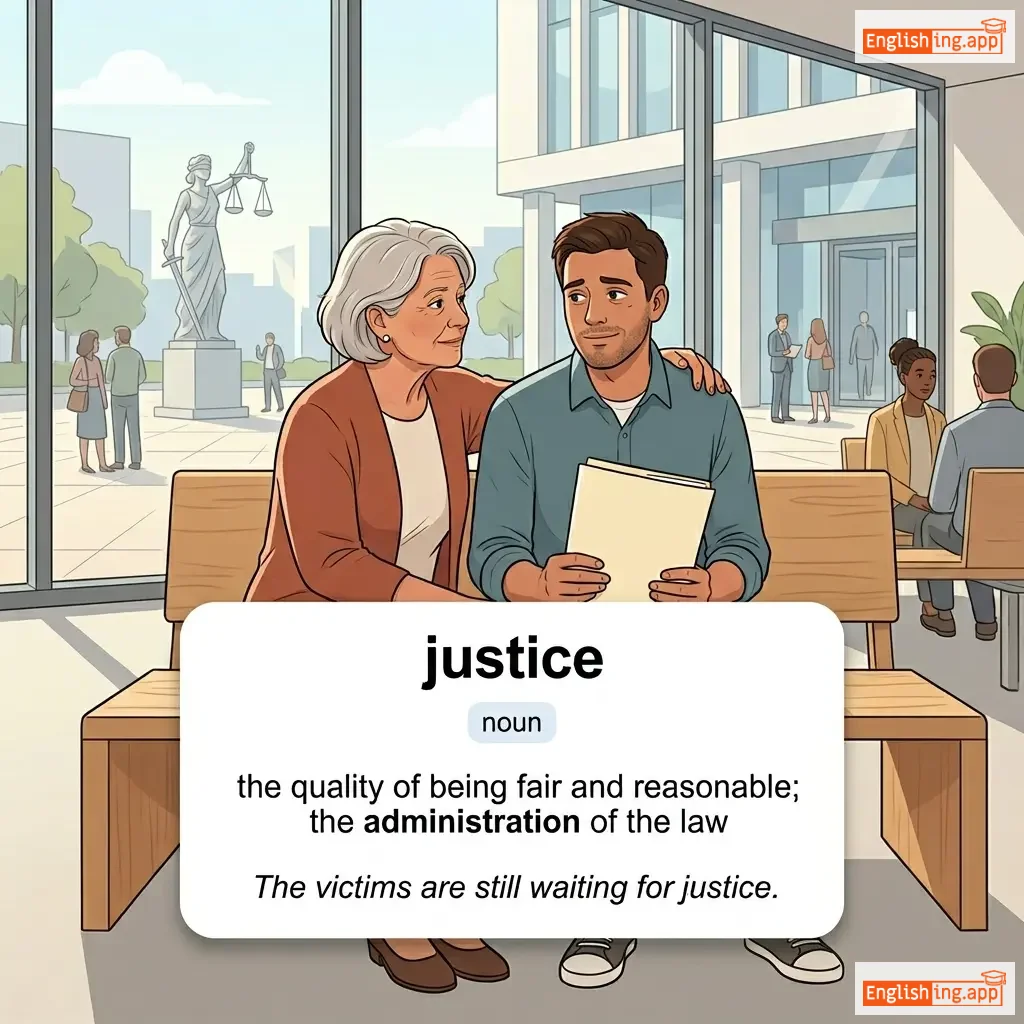
justice definition card — visual illustration of the meaning
noun
/ˈdʒʌstɪs/
справедливость (spravedlivost)

the quality of being fair and reasonable; the administration of the law

"The victims are still waiting for justice."

"Жертвы все еще ждут справедливости." (Zhertvy vse eshche zhdut spravedlivosti.)
noun
/ˌdʒʌstɪfɪˈkeɪʃən/
оправдание (opravdanie)

a reason, explanation, or excuse that shows something is right or reasonable

"There is no justification for such rude behavior."

"Нет оправдания такому грубому поведению." (Net opravdaniya takomu grubomu povedeniyu.)
verb
/ˈdʒʌstɪfaɪ/
оправдывать (opravdyvat')

to show or prove that something is right or reasonable

"He tried to justify his decision with logical reasons."

"Он попытался оправдать своё решение логическими причинами." (On popytalsya opravdat' svoyo reshenie logicheskimi prichinami.)
noun
/dʒuːt/
джут (dzhut)

a long, soft, shiny plant fiber used to make rope, bags, sacks, and coarse cloth

"Jute is widely used to make eco-friendly bags and ropes."

"Джут широко используется в промышленности." (dzhut shiroko ispolzuetsya v promyshlennosti)
noun
/dʒuːt liːf/
листья джута (list'ya dzhuta)

the edible leaves of the jute plant, commonly eaten as a leafy green vegetable

"Jute leaf is rich in vitamins and minerals and is often cooked with lentils in Bengali cuisine."

"Листья джута богаты витаминами и минералами и часто готовятся с чечевицей в бенгальской кухне." (List'ya dzhuta bogaty vitaminami i mineralami i chasto gotovyatsya s chechevitsyej v bengal'skoj kukhne.)
adjective, noun
/ˈdʒuːvənaɪl/
ювенильный (yuvenil'nyy)

relating to young people; childish or immature

"The court sent the case to a juvenile detention center."
"Суд отправил дело в центр временного задержания для несовершеннолетних." (Sud otpravil delo v tsentr vremennogo zaderzhaniya dlya nesovershennoletnikh.)
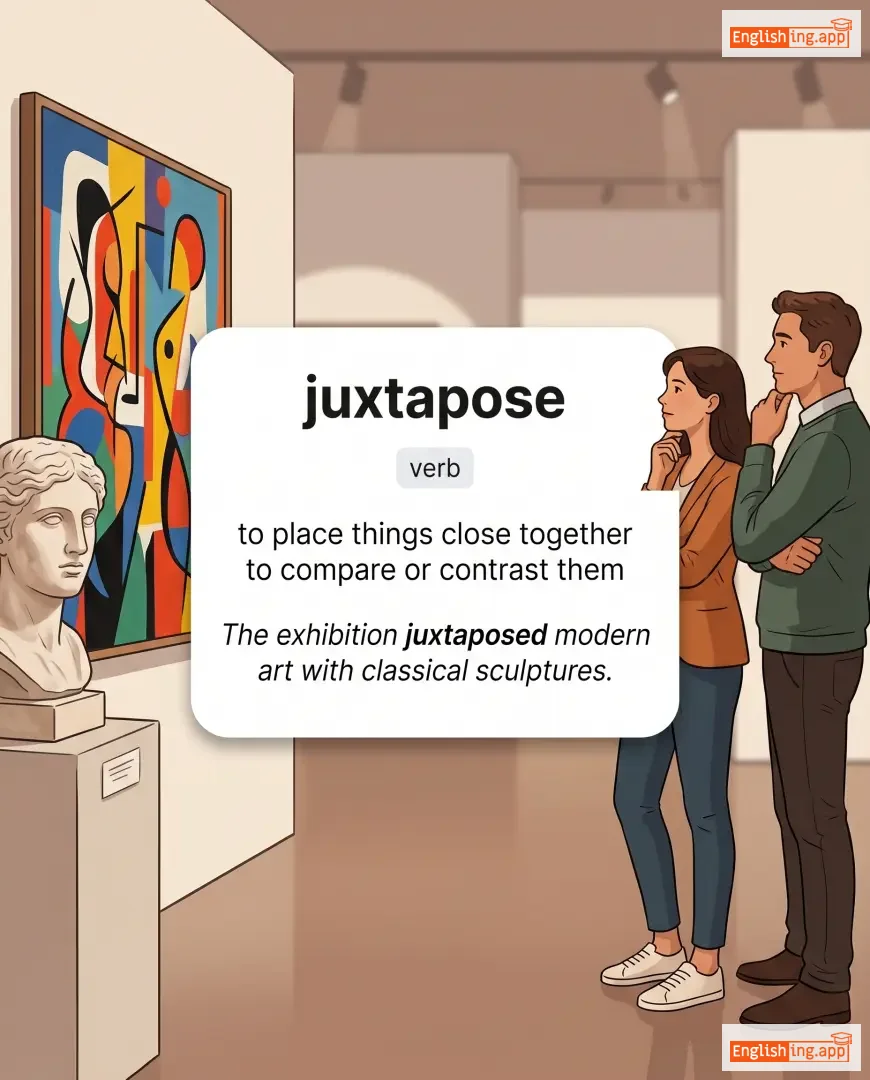
juxtapose definition card — visual illustration of the meaning
verb
/ˈdʒʌkstəˌpoʊz/
размещать вещи рядом для сравнения или контраста (razmeshchat' veshchi ryadom dlya sravneniya ili kontrasta)

to place things close together to compare or contrast them

"The exhibition juxtaposed modern art with classical sculptures."
"Выставка разместила современное искусство рядом с классическими скульптурами." (Vystavka razmeshchila sovremennoe iskusstvo ryadom s klassicheskimi skulpturami.)
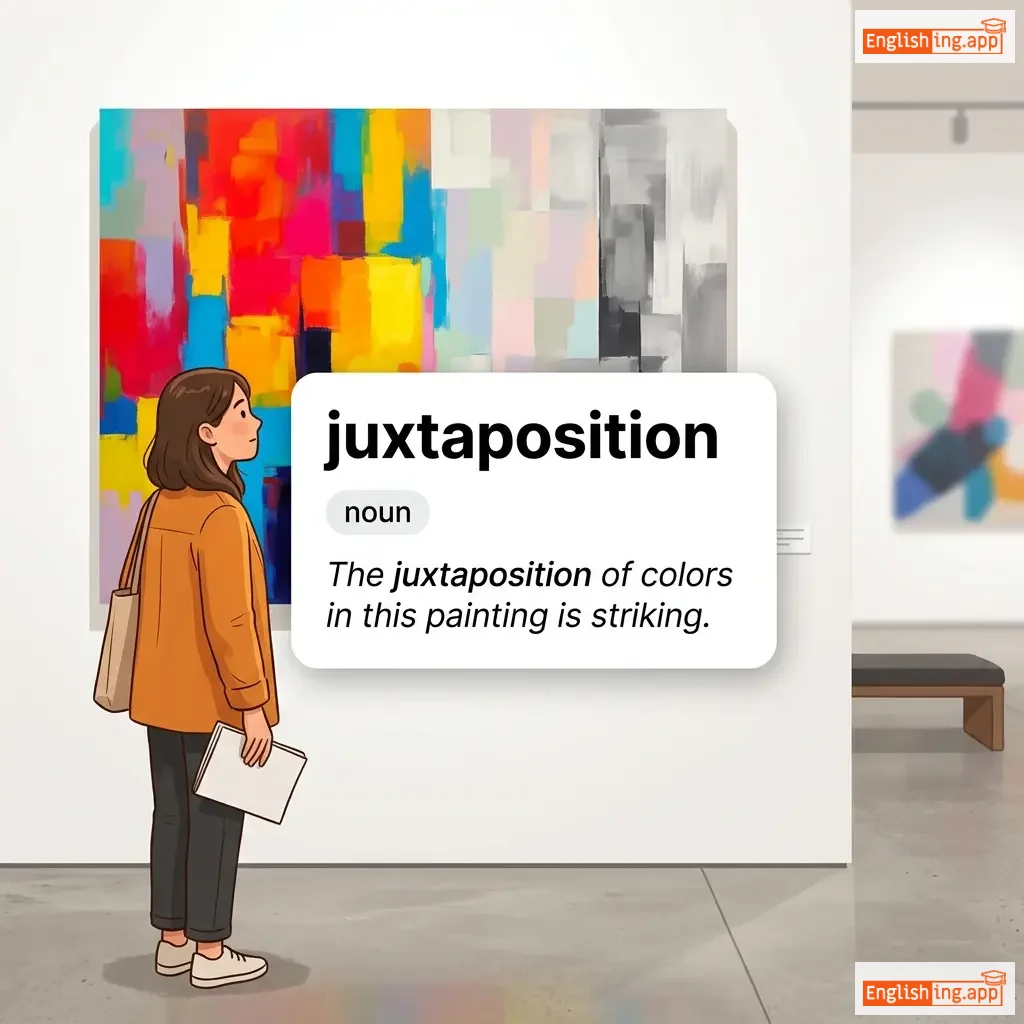
juxtaposition definition card — visual illustration of the meaning
noun
/ˌdʒʌk.stə.pəˈzɪʃ.ən/
дж juxtaposition (dzh juxtaposition)

The fact of two things being seen or placed close together with contrasting effect.

"The juxtaposition of colors in this painting is striking."

"Дж juxtaposition обрабатывает в процессе вашего создания."