Словари

Словарь английского языка | Значения слов, определения и примеры

jibe definition card — visual illustration of the meaning
verb
/dʒaɪb/
оскорбить / быть в согласии (oskorbit' / byt' v soglasiи)

to make an insulting remark; to be in agreement or harmony with

"His actions did not jibe with his words."

"Его действия не совпадали с его словами." (Yego deystviya ne sovpadali s yego slovami.)
adjective
/ˈdʒɪg.ərd/
удивлённый; ошеломлённый; (dzhigerd)

surprised or astonished; confused or puzzled

"I'll be jiggered if I know what happened here."

"Я был бы удивлён, если бы знал, что здесь произошло." (Ya byl by udivlyon, esli by znal, chto zdes' proiskhodilo.)
noun
/ˈdʒɪŋ.ɡəl/
легкий металлический звук, создаваемый при встряхивании металлических предметов; короткая запоминающаяся песня (lehkij metallicheskiy zvuk, sozdavayemyj pri vstryakhivanii metallicheskikh predmetov; korotkaya zapominayushchayasya pesnya)

a light ringing sound such as that made by metal objects being shaken together; a short catchy song

"The jingle of keys could be heard as she walked down the hallway."

"Звук ключей был слышен, когда она шла по коридору." (Zvuk klyuchej byl slyshen, kogda ona shla po koridoru.)
noun
/ˈdʒɪŋɡoʊ/
агрессивный националист (agressivnyy natsionalist)

a person who strongly supports warlike or aggressive foreign policy; an extreme nationalist

"The leader was criticized as a reckless jingo."

"Лидера критиковали как безрассудного джинго." (Lidera kritikovali kak bezrassudnogo dzhingo.)
noun
/ˈdʒɪŋɡoʊˌɪzəm/
экстремизм патриотизма (ekstremizm patriotizma)

extreme patriotism expressed in aggressive foreign policy

"The politician's speech was filled with jingoism."

"Речь политика была наполнена джингоизмом." (Rech' politika byla napolnena dzhingoizmom.)
noun
/ˈdʒɪŋɡoʊɪst/
Джингоист (Dzhinkoist)

a person who supports jingoism; an extreme nationalist with aggressive foreign policies

"He was labeled a jingoist for his extreme views."

"Его назвали джингоистом из-за его экстремистских взглядов." (Ego nazvali dzhingoistom iz-za ego ekstremistskikh vzglyadov.)
verb
/ˈdʒɪtər/
дрожать (drozhat)

to shake or tremble slightly, often from fear, nervousness, or excitement

"He began to jitter nervously before giving his speech."

"Он начал нервно дрожать перед своей речью." (On nachal nervno drozhat pered svoey rech'yu.)
Job definition card — visual illustration of the meaning
noun
/dʒɒb/
работа (rabota)

a paid position of regular employment

"She got a new job at a software company."

"Она получила новую работу в компании по разработке программного обеспечения." (Ona poluchila novuyu rabotu v kompanii po razrabotke programmnogo obespecheniya.)
jocose definition card — visual illustration of the meaning
adjective
/dʒoʊˈkoʊs/
шутливый (shutlivyy)

playful or humorous in speech or behavior

"The professor’s jocose remarks kept the class entertained."

"Шутливые замечания профессора развлекли класс." (Shutlivye zamechaniya professora razvlekli klass.)
adjective
/ˈdʒɒkjələr/
шутник (shutnik)

fond of or characterized by joking; humorous

"His jocular nature made him popular among colleagues."

"Его шутливый характер сделал его популярным среди коллег." (Ego shutlivyy kharakter sdelal ego popularnym sredi kolleg.)
adjective
/ˈdʒɒkənd/
весёлый (vesyoly)

cheerful and lighthearted

"They walked together in a jocund mood after the celebration."

"Они шли вместе в весёлое настроение после праздника." (Oni shli vmeste v vesyoloye nastroeniye posle prazdnika.)
verb
/dʒɑːɡ/
бегать трусцой (begat trustsoi)

to run at a slow, steady pace for exercise

"She jogs every morning in the park."

"Она бегает трусцой каждое утро в парке." (ona begayet trustsoi kazhdoe utro v parke)
verb
/ˈdʒɒɡəl/
потрясти слегка (potryasti slegka)

to shake slightly; to move or cause to move with quick, small jerks

"He joggled the table and the vase nearly fell."
"Он потряс стол, и ваза едва не упала." (On potryas stol, i vaza yedva ne upala.)
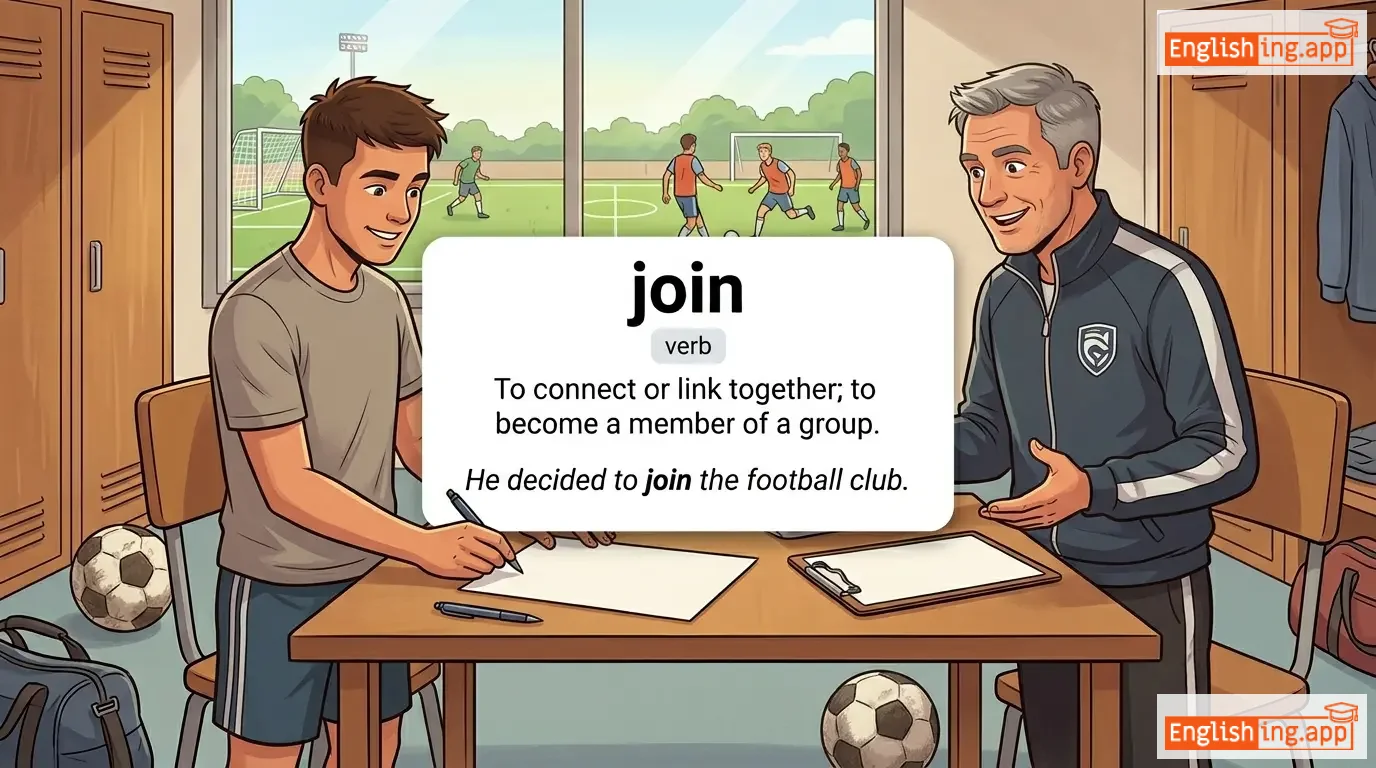
join definition card — visual illustration of the meaning
verb
/dʒɔɪn/
присоединиться (prisoedinit'sya)

To connect or link together; to become a member of a group.

"He decided to join the football club."

"Он решил присоединиться к футбольному клубу." (On reshil prisoedinit'sya k futbol'nomu klubu.)
noun
/dʒɔɪnt/
сустав (sustav)

a place where two parts of something are joined; also a term for a business establishment or a cannabis cigarette

"The knee is a joint that connects the thigh and the leg."
"Колено — это сустав, который соединяет бедро и ногу." (Koleno — eto sustav, kotoryy soyedinyayet bedro i nogu.)
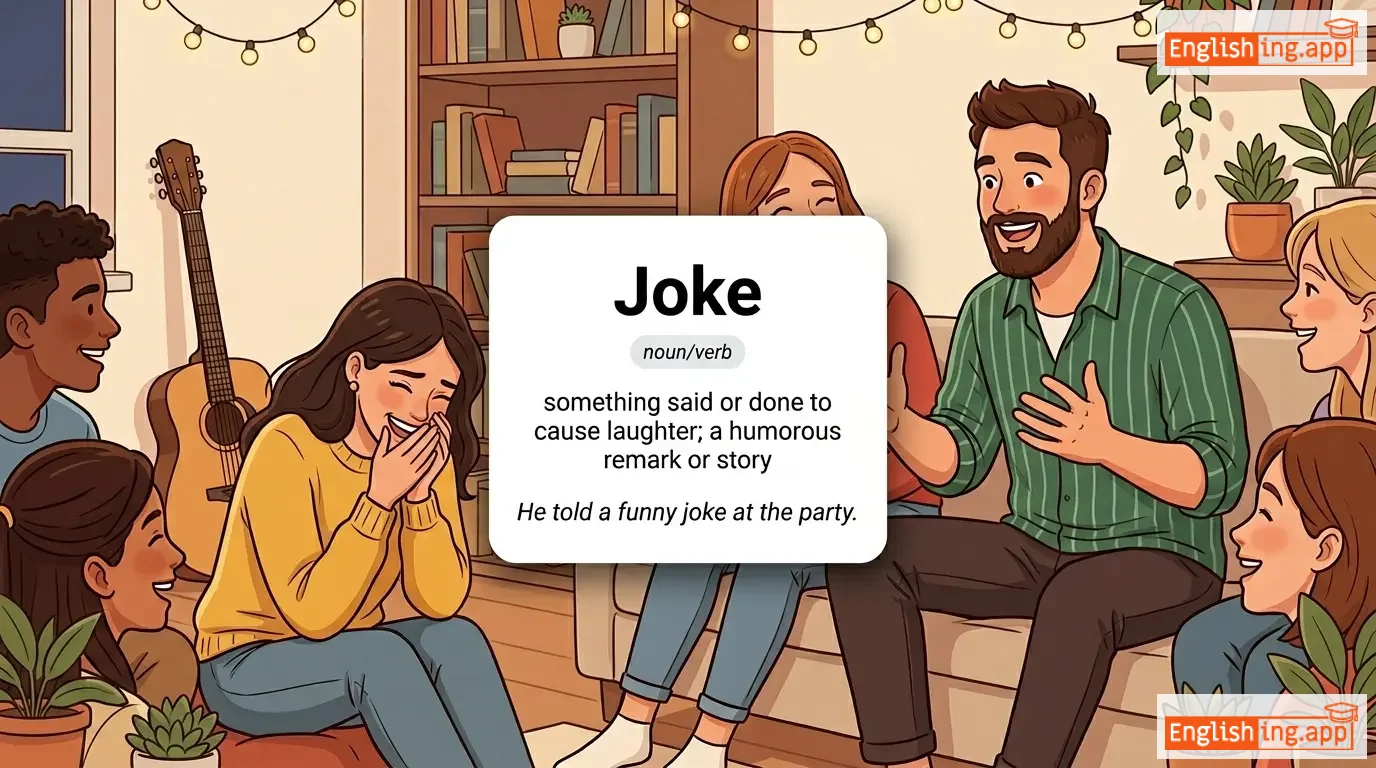
Joke definition card — visual illustration of the meaning
noun/verb
/dʒoʊk/
шутка (shutka)

something said or done to cause laughter; a humorous remark or story

"He told a funny joke at the party."

"Он рассказал смешную шутку на вечеринке." (On rasskazal smeshnuyu shutku na vecherinke.)
noun
/ˈdʒoʊ.kər/
джокер (Dzhoker)

a playing card with a picture of a jester, used as a wild card; a person who is fond of joking

"He used the joker card to complete his winning hand in the poker game."

"Он использовал карту джокера, чтобы собрать выигрышную руку в покерной игре." (On ispolzoval kartu dzhokera chtoby sobrat vyigryshnuyu ruku v pokernoy igre)
noun
/ˈdʒɒlɪti/
веселье (veselye)

lively and cheerful activity or celebration

"The wedding was full of jollity and laughter."

"Свадьба была полна веселья и смеха." (Svad'ba byla polna veselya i smekha.)
adjective
/ˈdʒɒli/
веселый (veselyi)

Full of good humor and cheerfulness.

"The children were in a jolly mood at the party."

"Дети были в хорошем настроении на вечеринке." (Deti byli v khoroshem nastroenii na vecherinke.)
verb
/dʒəʊlt/
потрясение (potryasenie)

to push or shake someone or something abruptly and roughly

"The sudden stop jolted all the passengers forward."

"Резкая остановка толкнула всех пассажиров вперед." (Rezkaya ostanovka toknula vsekh passazhirov vpered.)
noun
/ˈdʒɒs.stɪk/
благовоние (blagovonie)

a thin stick of incense that is burned for its pleasant smell, especially in religious ceremonies

"She lit a joss-stick in the temple during her prayers."

"Она зажгла жезл благовония в храме во время молитвы." (Ona zazhgla zhezl blagovoniya v khrame vo vremya molitvy.)
verb
/ˈdʒɒsl/
толкать (tolkat')

to push, elbow, or bump against someone roughly, typically in a crowd

"The fans jostled each other to get closer to the stage."

"Фанаты толкались друг с другом, чтобы подойти к сцене." (Fanaty tolkalis' drug s drugom, chtoby podoyti k stsene.)
verb
/dʒɒt/
писать что-то быстро и кратко (pisat' chto-to bystro i kratko)

to write something quickly and briefly

"She jotted down his phone number on a napkin."

"Она быстро записала его номер телефона на салфетке." (Ona bystro zapisal ego nomer telefona na salfetke.)
noun
/ˈdʒɒt.ər/
блокнот (bloknot)

a small notebook for writing quick notes or reminders

"The student carried a jotter to write down important points during lectures."

"Студент принес блокнот, чтобы записать важные моменты во время лекций." (Student prines bloknot, chtoby zapisat' vazhnyye momenty vo vremya lektsiy.)
noun
/ˈdʒɜːrnəl/
журнал (zhurnal)

a daily record of news, events, or personal thoughts

"She writes in her journal every night."

"Она пишет в своем журнале каждую ночь." (Ona pishet v svoem zhurnale kazhduyu noch.)
journaling definition card — visual illustration of the meaning
noun
/ˈdʒɝː.nə.lɪŋ/
ведение дневника (vedenie dnevnika)

The practice of writing down your thoughts, feelings, and experiences regularly.

"Journaling helps in organizing thoughts and reducing stress."

"Журналинг помогает организовать мысли и уменьшить стресс." (Zhurnalig pomogaet organizovat' mysli i umenshit' stress.)
noun
/ˈdʒɜːrnəlɪzəm/
журналистика (zhurnalistika)

the activity or profession of collecting, writing, and publishing news and articles for newspapers, magazines, or broadcast media

"He studied journalism to become a news reporter."

"Он изучал журналистику, чтобы стать репортером." (On izuchal zhurnalistiku, chtoby stat' reportyrom.)
noun
/ˈdʒɜːrnəlɪst/
журналист (zhurnalist)

a person who writes news articles or reports for newspapers, magazines, or media

"The journalist covered the political event."

"Журналист освещал политическое событие." (Zhurnalist osveshchal politicheskoe sobytie.)
verb
/ˈdʒɜːrnəlaɪz/
регистрировать в журнале (registrirovat' v zhurnale)

to record daily transactions or events in a journal, especially in accounting

"The accountant will journalize all financial transactions at the end of the day."

"Бухгалтер запишет все финансовые транзакции в конце дня." (Bukhgalter zapishyet vse finansovyye tranzaktsii v kontse dnya.)
noun
/ˈdʒɜːrni/
путешествие (puteshestvie)

the act of traveling from one place to another

"Their journey across the desert was difficult."

"Их путешествие через пустыню было трудным." (Ikh puteshestvie cherez pustynyu bylo trudnym.)
verb
/dʒaʊst/
рыцарский турнир (rytskarskiy turnir)

to engage in a medieval contest on horseback with lances; to compete or argue

"The knights prepared to joust in front of the cheering crowd."

"Рыцари готовились к рыцарскому турниру перед радостной толпой." (Rytsari gotovilis' k rytsarskomu turniru pered radostnoy tolpay.)
adjective
/ˈdʒoʊ.vi.əl/
жизнерадостный (zhizneradostnyy)

cheerful and friendly in manner

"He was in a jovial mood during the family gathering."

"Он был в хорошем настроении во время семейной встречи." (On byl v khoroshem nastroenii vo vremya semeynoy vstrechi.)
noun
/dʒɔɪ/
радость (radost)

A feeling of great happiness and delight.

"The children shouted with joy when they saw the gifts."

"Дети кричали от радости, когда увидели подарки." (Deti krichali ot radosti, kogda uvideli podarki.)
adjective
/ˈdʒɔɪfəl/
радостный (radostnyi)

full of joy and happiness; causing joy or delight

"She felt joyful when she heard the good news."

"Она почувствовала радость, услышав хорошую новость." (ona pochuvstvovala radost uslyshav khoroshuyu novost)
adjective
/ˈdʒuː.bɪ.lənt/
восторженный (vostorzhennyy)

feeling or expressing great happiness and joy

"The team was jubilant after winning the championship."

"Команда была восторженной после победы в чемпионате." (Komanda byla vostorzhennoy posle pobedy v chempionate.)
noun
/ˌdʒuː.bɪˈleɪ.ʃən/
торжество (torzhestvo)

a feeling or expression of great happiness and triumph

"There was jubilation in the streets after the victory."

"После победы на улицах было торжество." (Posle pobedy na ulitsakh bylo torzhestvo.)
noun
/ˈdʒuː.bɪ.liː/
юбилей; особое торжество (yubiley)

a special anniversary celebration, especially the 25th, 50th, or 60th anniversary of an important event

"The school celebrated its golden jubilee with a grand ceremony."

"Школа отпраздновала свое золотое юбилейное торжество с большой церемонией." (Shkola otprazdnovala svoe zolotoe yubilejnoe torzhestvo s bol'shoy tseremoniey.)
noun
/ˈdʒʌŋk.tʃər/
критический момент (kriticheskiy moment)

a particular point in time, especially one of great importance or crisis

"At this critical jucture, the company must decide whether to expand or downsize."
"В этот критический момент компания должна решить, расширяться ли или сокращаться." (V etot kriticheskiy moment kompaniya dolzhna reshit', rasshiryatsya li ili sokrashchatsya.)
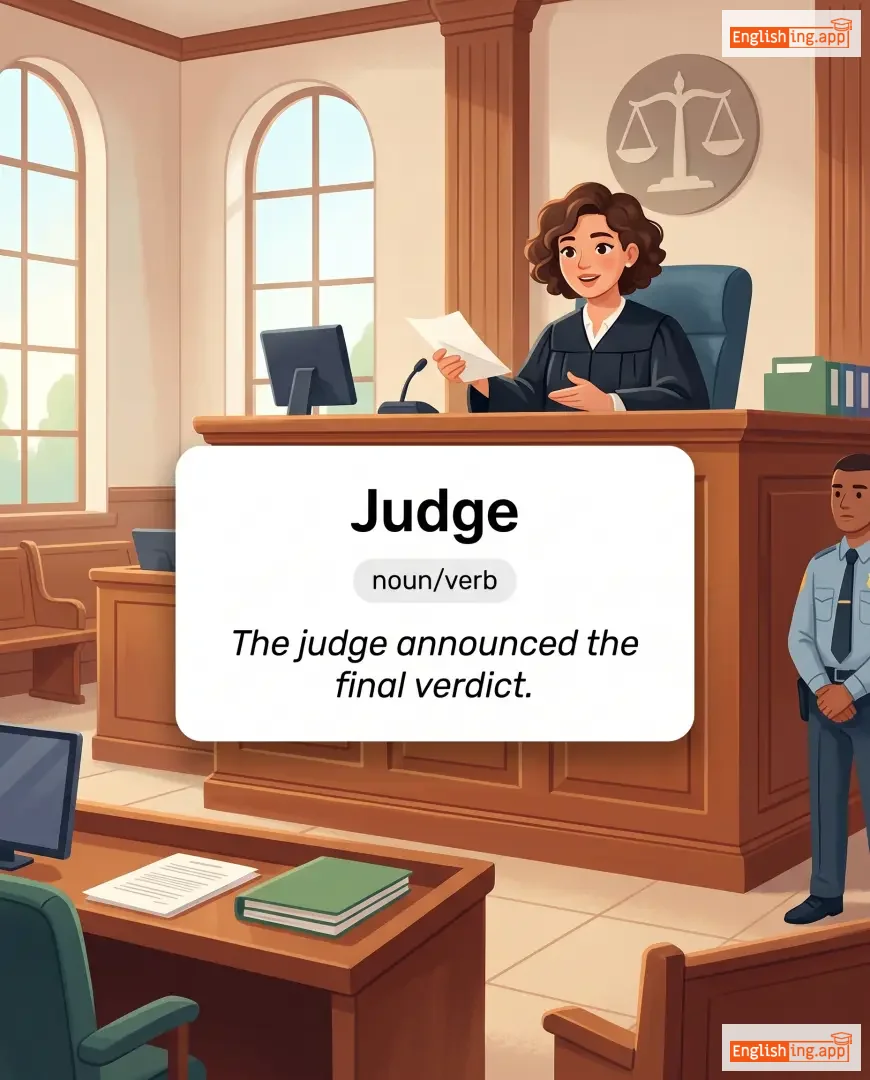
Judge definition card — visual illustration of the meaning
noun/verb
/dʒʌdʒ/
судья / судить (sud'ya / sudit')

a person who makes decisions in a court of law; or to form an opinion about something

"The judge announced the final verdict."

"Судья объявил окончательный вердикт." (Sud'ya ob'yavil okonchatel'nyy verdikt.)
noun
/ˈdʒʌdʒ.mənt/
судебное решение; приговор (sudebnoe reshenie, prigovor)

the ability to make considered decisions or form sensible opinions; an official decision made by a judge or court

"The jury's judgement was based on careful consideration of all the facts."

"Приговор присяжных был основан на тщательном рассмотрении всех фактов." (Prigovor prisyazhnykh byl osnovan na tscchatel'nom rassmotrenii vsekh faktov.)
judgment definition card — visual illustration of the meaning
noun
/ˈdʒʌdʒ.mənt/
суждение (sudzhdeniye)

the ability to make considered decisions or come to sensible conclusions

"Her judgment in financial matters is highly respected."

"Её суждение по финансовым вопросам высоко ценится." (Yeyo sudzhdeniye po finansovym voprosam vysoko tsenitsya.)
noun
/ˈdʒuː.dɪˌkeɪ.tʃər/
судебная система (sudebnaya sistema)

the administration of justice or the system of courts

"The judicature ensures that laws are fairly applied."

"Судебная система гарантирует справедливое применение законов." (Sudebnaya sistema garantirovat spravedlivoe primenenie zakonov.)
adjective
/dʒuːˈdɪʃ.əl/
судебный (sudebnyy)

relating to judges, courts, or the administration of justice

"The new law faced strong judicial review before implementation."
"Новый закон прошел строгую судебную проверку перед вступлением в силу." (Novyy zakon proshel stroguyu sudebnuyu proverku pered vstupleniem v silu.)
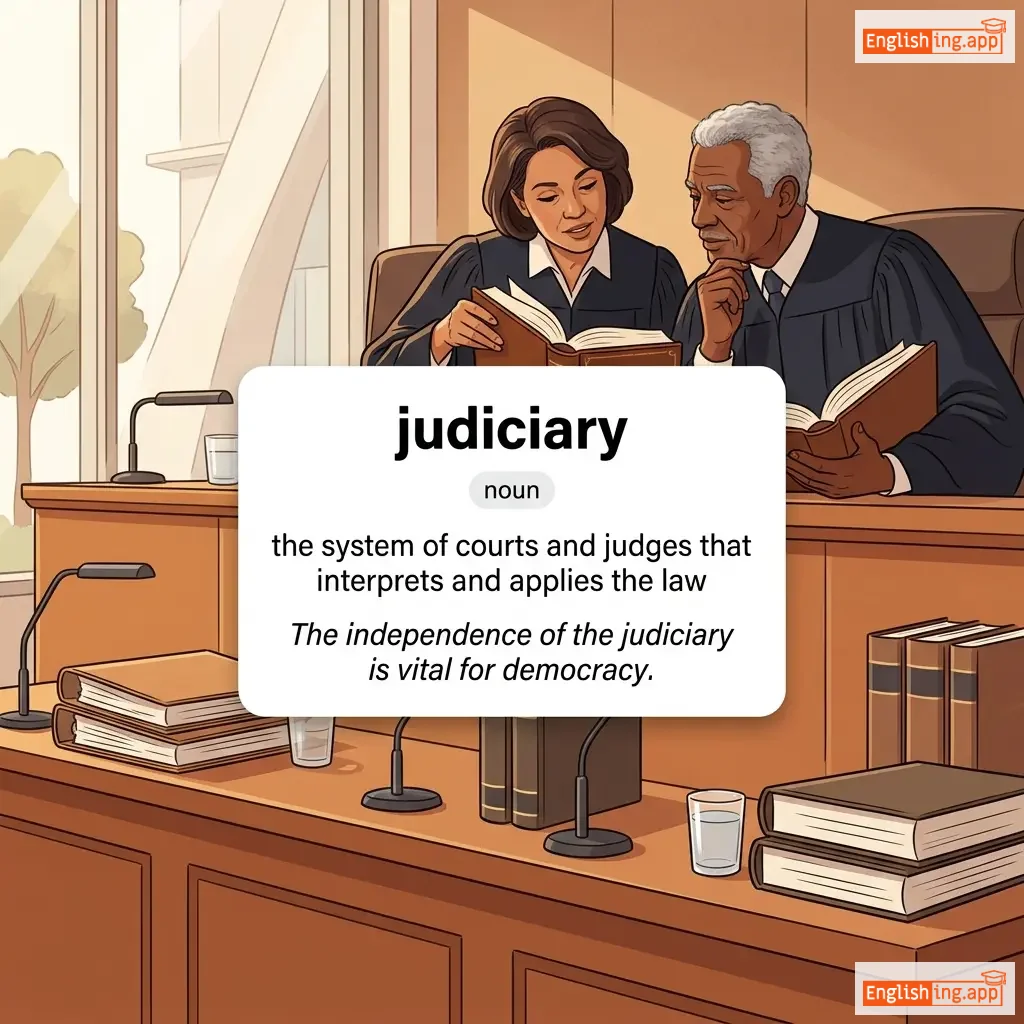
judiciary definition card — visual illustration of the meaning
noun
/dʒuːˈdɪʃ.i.er.i/
судебная власть (sudebnaya vlast)

the system of courts and judges that interprets and applies the law

"The independence of the judiciary is vital for democracy."
"Независимость судебной власти имеет решающее значение для демократии." (Nezavisimost' sudebnoy vlasti imeet reshayushchee znachenie dlya demokratii.)
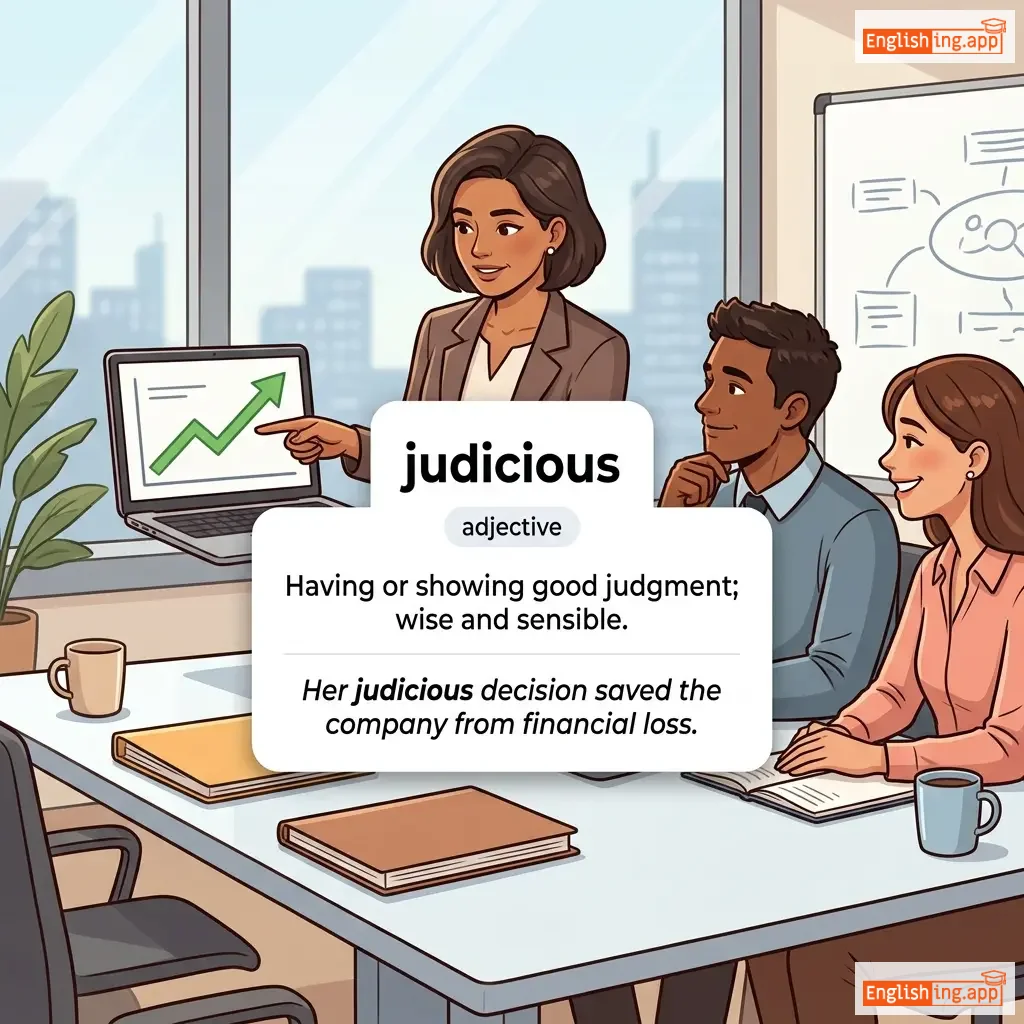
judicious definition card — visual illustration of the meaning
adjective
/dʒuːˈdɪʃəs/
благоразумный (blagorazumnyy)

Having or showing good judgment; wise and sensible.

"Her judicious decision saved the company from financial loss."
"Ее благоразумное решение спасло компанию от финансовых потерь." (Eyo blagorazumnoye resheniye spaslo kompaniyu ot finansovykh potery.)
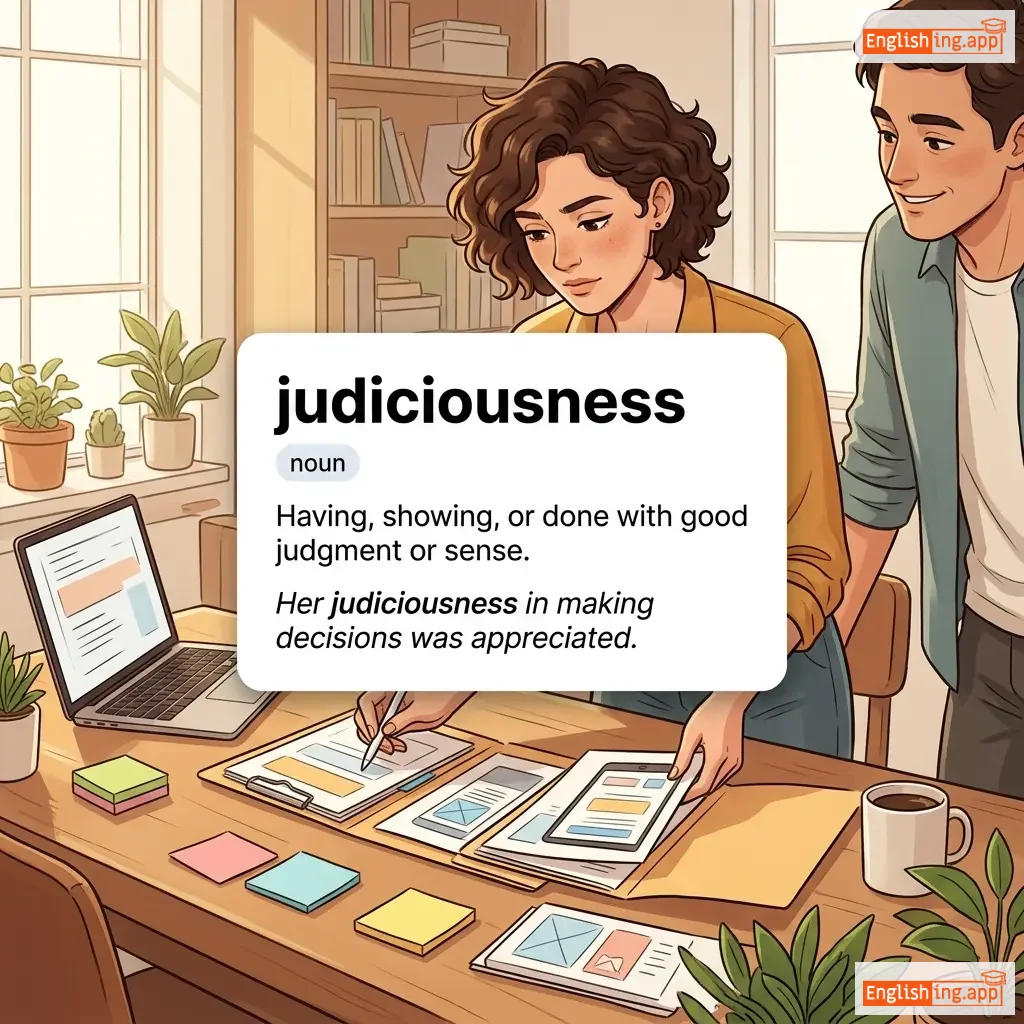
judiciousness definition card — visual illustration of the meaning
noun
dʒʊˈdɪʃəsnɪs
разумность, благоразумие (razumnost, blagorazumie)

Having, showing, or done with good judgment or sense.

"Her judiciousness in making decisions was appreciated."

"Её благоразумие при принятии решений было оценено." (Yeyo blagorazumie pri prinyatii resheniy bylo otseneno.)
noun
/dʒʌɡ/
счастье (schast'ye)

A large container used for holding and pouring liquids.

"She filled a jug with fresh water from the well."

"Она не могла скрыть своего счастья, когда получила награду." (Ona ne mogla skryt' svoego schast'ya, kogda poluchila nagradu.)
juggernaut definition card — visual illustration of the meaning
noun
/ˈdʒʌɡərˌnɔːt/
непреодолимая сила (nepreodolimaya sila)

A huge, powerful, and unstoppable force or institution.

"The new tech company has become a juggernaut in the industry."

"Новая технологическая компания стала непреодолимой силой в индустрии." (Novaya tekhnologicheskaya kompaniya stala nepreodolimoy siloy v industrii.)
verb
/ˈdʒʌɡəl/
жонглировать (zhonglirovat)

To continuously toss and catch objects in the air; to manage many tasks at the same time.

"He tried to juggle work, studies, and family responsibilities."

"Он пытался совмещать работу, учебу и семейные обязанности." (On pytalsya sovmeshchat' rabotu, uchebu i semeynye obyazannosti.)
noun
/ˈdʒʌɡ.lər/

a person who skillfully throws and catches objects as entertainment

"The juggler entertained the crowd with his amazing ball tricks."