Словари

Словарь английского языка | Значения слов, определения и примеры
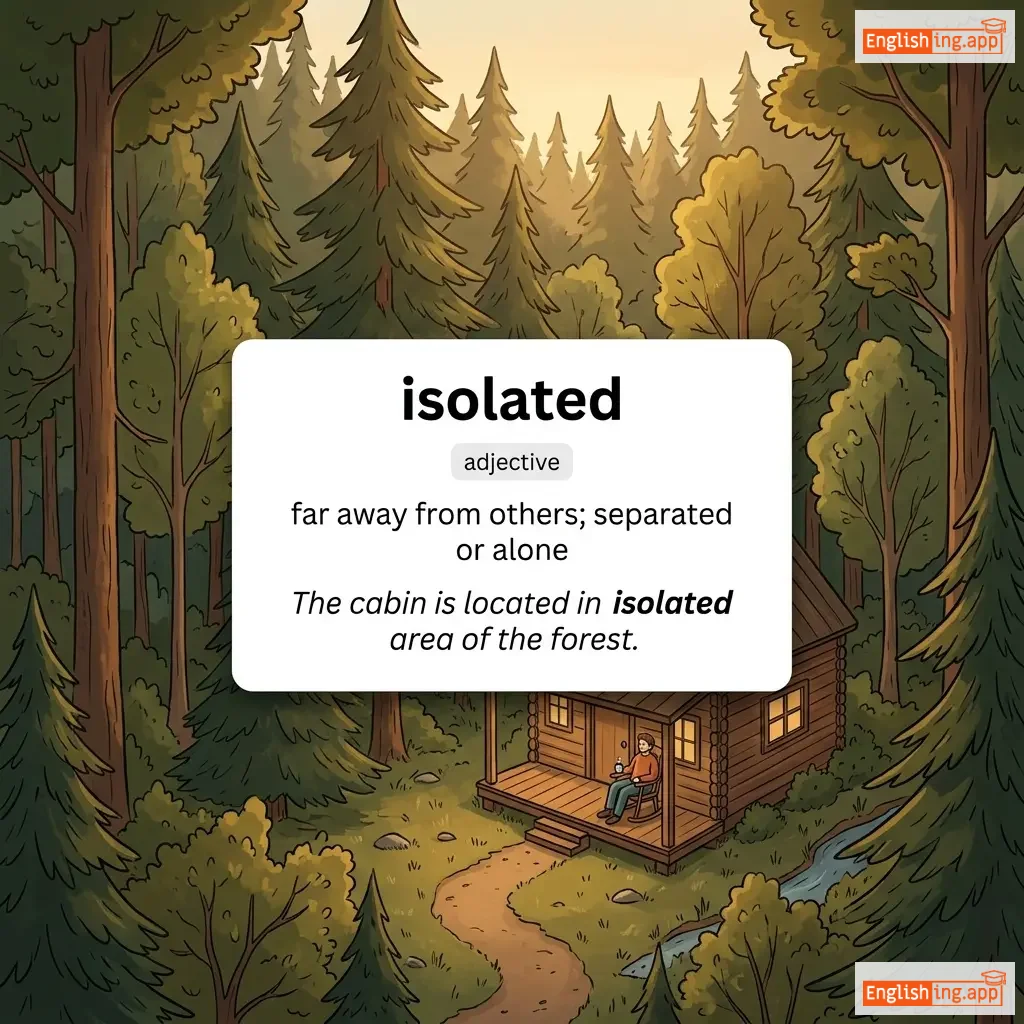
isolated definition card — visual illustration of the meaning
adjective
/ˈaɪsəleɪtɪd/
изолированный / отделенный (izolirovannyy / otdelennyy)

far away from others; separated or alone

"The cabin is located in an isolated area of the forest."

"Кабина находится в изолированном районе леса." (Kabina nakhoditsya v izolirovannom rayone lesa.)
noun
/ˌaɪsəˈleɪʃən/
изоляция (izolyatsiya)

the state of being separated from others; solitude or detachment

"He lived in complete isolation after his retirement."

"Он жил в полной изоляции после своей пенсии." (On zhiv v polnoy izolyatsii posle svoey pensii.)
adjective
/ˌaɪsəʊˈθɜːrməl/
изотермический (izotermicheskiy)

Having or maintaining equal or constant temperature.

"The experiment was conducted under isothermal conditions."

"Эксперимент был проведён при изотермических условиях." (Eksperiment byl provedyony pri izotermicheskikh usloviyakh.)
noun
/ˈaɪsətəʊp/
изотоп (izotop)

Atoms of the same element with equal number of protons but different numbers of neutrons.

"Carbon-14 is a radioactive isotope used in dating fossils."

"Углерод-14 — это радиоактивный изотоп, используемый для датировки окаменелостей." (Uglerod-14 — eto radioaktivnyy izotop, ispol'zuyemyy dlya datirovki okanenelostey.)
adjective, noun
/ɪzˈreɪli/
израильский (izrailskiy)

relating to Israel or its people; a person from Israel

"She works for an Israeli company."

"Она работает в израильской компании." (Ona rabotayet v izrail'skoy kompanii.)
noun, verb
/ˈɪʃuː/
проблема, публикация, распределение (problema, publikatsiya, raspredeleniye)

A problem, topic, or the act of supplying or distributing something.

"The magazine will issue a new edition next week."
"Журнал выпустит новое издание на следующей неделе." (Zhurnal vypustit novoye izdaniye na sleduyushchey nedele.)
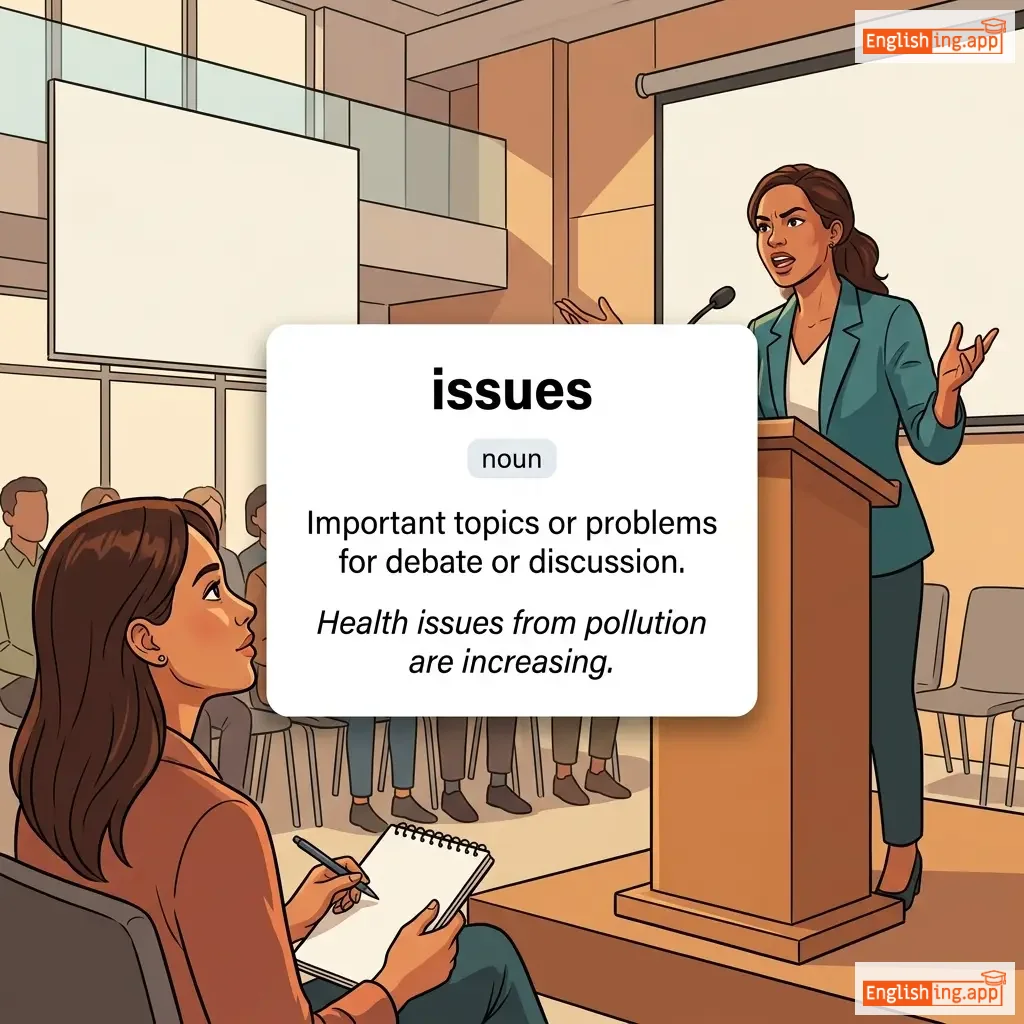
issues definition card — visual illustration of the meaning
noun
/ˈɪʃ.uːz/
проблемы (problemy)

Important topics or problems for debate or discussion.

"Health issues from pollution are increasing."

"Проблемы со здоровьем из-за загрязнения растут." (Problemy so zdorov'yem iz-za zagryazneniya rastut.)
noun
/ˈɪsməs/ or /ˈɪsθməs/
перешеек (peresheek)

A narrow strip of land connecting two larger land areas, often with water on either side.

"The Panama Canal cuts through the Isthmus of Panama."

"Панамский канал проходит через перешеек Панамы." (Panamskiy kanal prokhodit cherez peresheek Panamy.)
pronoun
/ɪt/
это (eto)

used to refer to a thing, animal, or idea previously mentioned or easily identified

"It is raining outside."

"На улице идет дождь." (Na ulice idet dozhd'.)
adjective, noun
/ɪˈtæliən/
счастье (schast'ye)

relating to Italy, its people, or its language; a person from Italy

"She loves Italian food."

"Она не смогла скрыть своего счастья, когда получила награду." (Ona ne smogla skryt' svoego schast'ya, kogda poluchila nagradu.)
verb
/ɪtʃ/
зуд (zud)

to feel an urge to scratch; to have a restless desire

"My skin itches from the mosquito bites."

"Моя кожа чешется от укусов комаров." (Moya kozha cheshitsya ot ukusov komarov.)
itchiness definition card — visual illustration of the meaning
noun
/ˈɪtʃ.i.nəs/
зуд (zud)

The quality or condition of feeling an irritating sensation on the skin that causes a desire to scratch.

"Eye itchiness often leads to rubbing."

"Зуд в глазах часто приводит к тереблению." (Zud v glazakh chasto privodyt k tereblyeniyu.)
noun
/ˈaɪtəm/
предмет (predmet)

A single thing, object, or unit, often part of a list or collection.

"Each item on the list must be checked carefully."

"Каждый предмет в списке должен быть проверен тщательно." (Kazhdyi predmet v spiske dolzhen byt' proverenn tchetkhno.)
verb
/ˈɪtəreɪt/
итерировать (iterirovat)

To repeat a process or statement, often to improve or refine.

"The software team will iterate the design until it meets user needs."
"Команда разработчиков будет итерационно улучшать дизайн до тех пор, пока он не будет соответствовать требованиям пользователей." (Komanda razrabotchikov budet iterrirovat' dizajn do tekh por, poka on ne budet sootvetstvovat' trebuyemym pol'zovateley.)
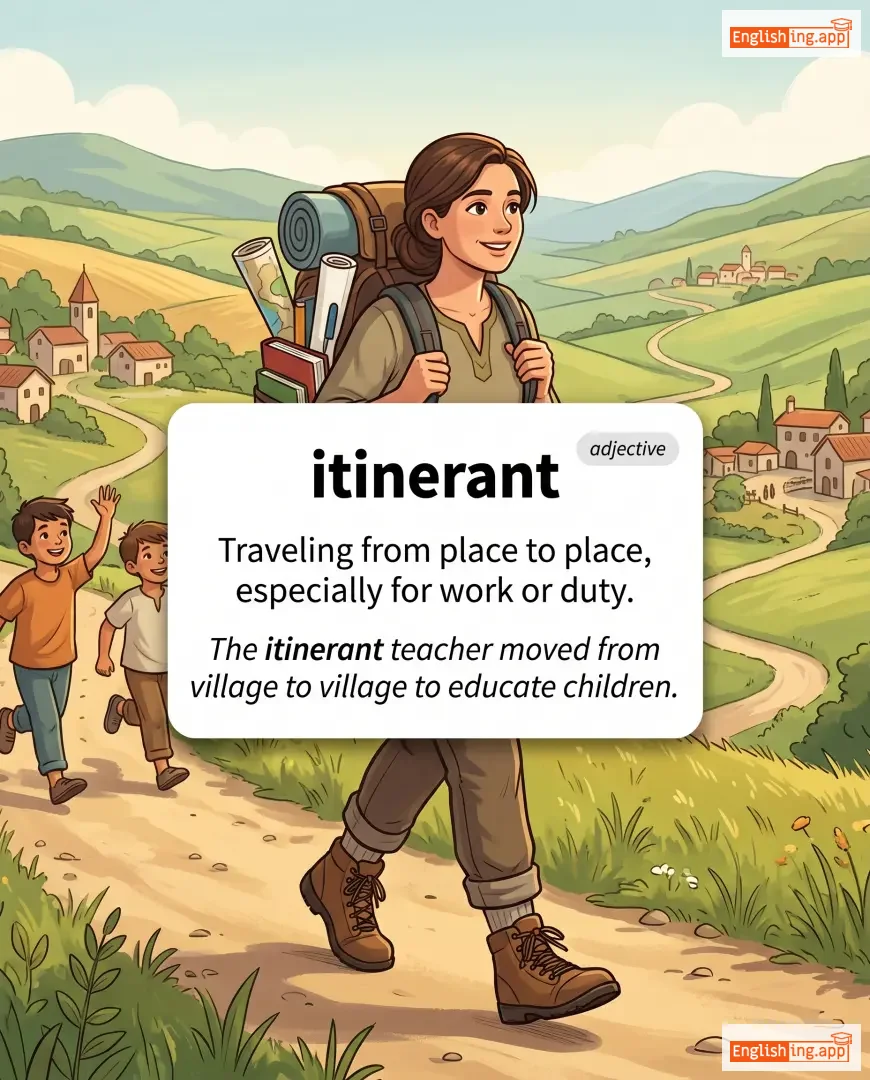
itinerant definition card — visual illustration of the meaning
adjective
/aɪˈtɪnərənt/
странствующий (stranstvuyushchiy)

Traveling from place to place, especially for work or duty.

"The itinerant teacher moved from village to village to educate children."

"Странствующий учитель переезжал из деревни в деревню, чтобы обучать детей." (Stranstvuyushchiy uchitel' pereezhal iz derevni v derevnyu, chtoby obuchat' detey.)
itinerary definition card — visual illustration of the meaning
noun
/aɪˈtɪnərɛri/
маршрут (marshrut)

A planned route or schedule of a journey or trip.

"The travel agent gave us a detailed itinerary for our vacation."

"Туристический агент дал нам подробный маршрут для нашего отпуска." (Turisticheskiy agent dal nam podrobnoye marshrut dlya nashego otpuska.)
verb
/aɪˈtɪnəˌreɪt/
путешествовать (puteshestvovat)

To travel from place to place, usually for the purpose of work or preaching.

"The missionary itinerated throughout the region to spread the message."

"Миссионер путешествовал по региону, чтобы распространить послание." (Missioner puteshestvoval po regionu, chtoby rasprostranit poslanie.)
pronoun
/ɪts/
его (ego)

Belonging to or associated with a thing previously mentioned.

"The company changed its logo last year."

"Компания изменила свой логотип в прошлом году." (Kompaniya izmenila svoy logotip v proshlom godu.)
pronoun
/ɪtˈsɛlf/
сам (sam)

Used to emphasize the thing just mentioned; by its own power or effort.

"The cat cleaned itself after eating."

"Кошка вычистила себя после еды." (Koshka vychistila sebya posle yedy.)
noun
/ɪkˈsɔːr.ə/
иксора (iksora)

a tropical flowering shrub with clusters of small bright red, orange, or yellow flowers

"The bright red ixora bushes lined the pathway to the tropical garden."

"Яркие красные кусты иксоры окаймляли дорожку в тропический сад." (Yarkiye krasnyye kusy iksory okaymlyali dorozhku v tropicheskiy sad.)