Словари

Словарь английского языка | Значения слов, определения и примеры

noun
/ˌɪntərˈmiːdiˌɛri/
посредник (posrednik)

A person who acts as a link between people in order to try to bring about an agreement; a mediator.

"The diplomat served as an intermediary between the two conflicting nations."

"Дипломат выполнял роль посредника между двумя конфликтующими нациями." (Diplomat vyyavlyal rol' posrednika mezhdu dvumya konfliktuyushchimi natsiyami.)
adjective
/ˌɪntərˈmiːdiət/
средний (sredniy)

Coming between two things in time, place, or order; in the middle level or stage.

"She is taking an intermediate-level French course."

"Она проходит курс французского на среднем уровне." (Ona prokhodit kurs frantsuzskogo na srednem urovne.)
noun
/ɪnˈtɜːrmənt/
погребение (pogrebenie)

The act of burying a dead body in a grave or tomb.

"The interment took place at the family cemetery."

"Погребение состоялось на семейном кладбище." (Pogrebeniye sostoyalos' na semeynom kladbishche.)
adjective
/ɪnˈtɜːrmənəbl/
бесконечный (beskonechny)

Seemingly endless; having no apparent end.

"The meeting felt interminable and exhausting."

"Совещание казалось бесконечным и утомительным." (Soveshchaniye kazalos' beskonechnym i utemitel'nym.)
noun
/ˌɪntərˈmɪʃən/
антракт (antrakt)

A pause or break, especially during a performance or event.

"The play had a twenty-minute intermission."

"Пьеса имела двадцатиминутный перерыв." (Pesa imela dvadtsatiminutnyy pereryv.)
verb
/ˌɪntərˈmɪt/
прерывать (preryvat)

To suspend or stop for a time; to pause intermittently.

"The rain would intermit and then start again."

"Дождь будет прерываться, а затем снова начинаться." (Dozhd' budet preryvatsya, a zatem snova nachinatsya.)
intermittent definition card — visual illustration of the meaning
adjective
/ˌɪntərˈmɪtənt/
переменный (peremennyy)

Occurring at irregular intervals; not continuous or steady.

"The patient experienced intermittent pain throughout the day."

"Пациент испытывал переменную боль в течение всего дня." (Patsient ispytyval peremennuyu bol' v techenie vsego dnya.)
adjective
/ɪnˈtɜːrnəl/
внутренний (vnutrenniy)

situated inside; relating to the inside or inner part of something

"The company is conducting an internal audit this month."

"Компания проводит внутренний аудит в этом месяце." (Kompaniya provodit vnutrenniy audit v etom mesyatse.)
international definition card — visual illustration of the meaning
adjective
/ˌɪntərˈnæʃənəl/
международный (mezhdunarodny)

Existing, occurring, or carried on between nations.

"The company is planning to expand into international markets."

"Компания планирует расшириться на международные рынки." (Kompaniya planiruet rasshirit'sya na mezhdunarodnye rynki.)
internecine definition card — visual illustration of the meaning
adjective
/ˌɪntərˈniːsaɪn/
внутренний конфликт (vnutrenniy konflikt)

Relating to conflict within a group, often causing mutual destruction.

"The internecine conflict weakened the organization from within."
"Внутренний конфликт ослабил организацию изнутри" (Vnutrenniy konflikt oslabil organizatsiyu iznutri)
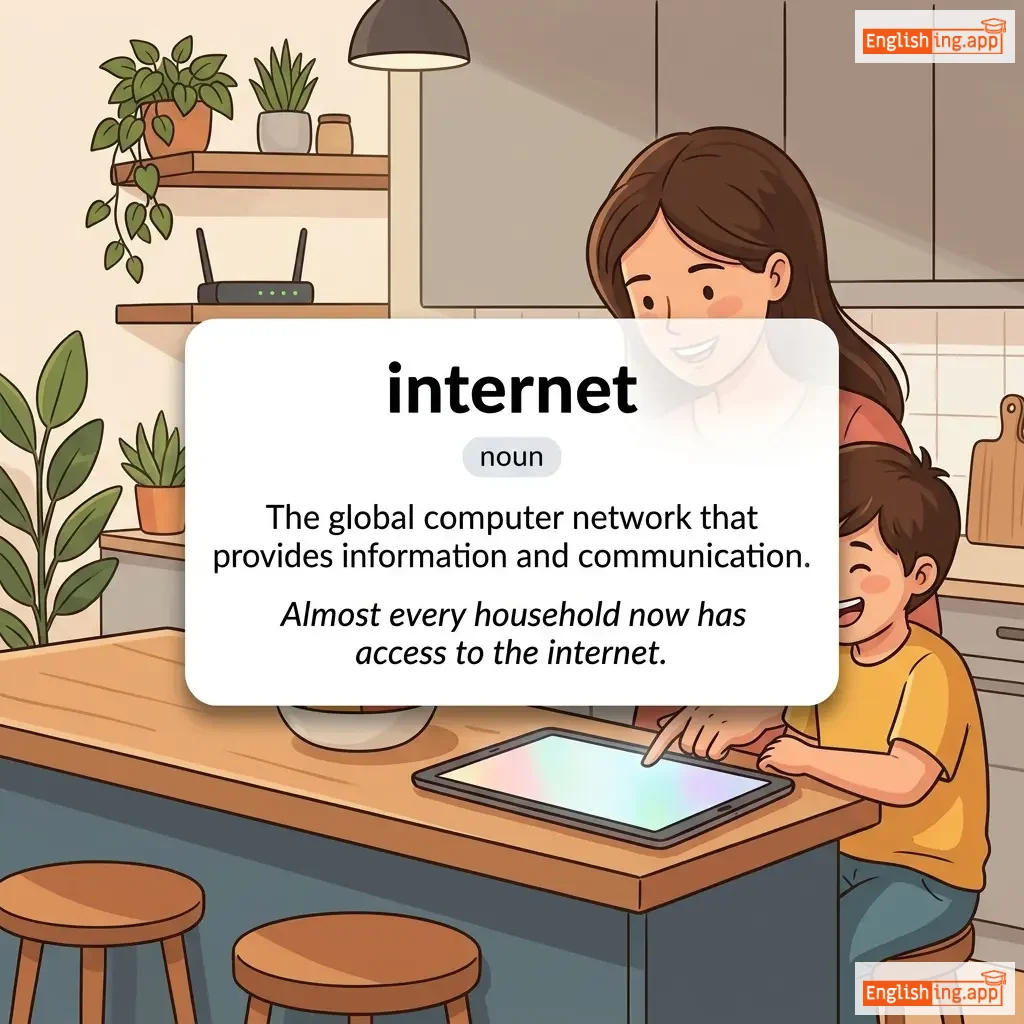
internet definition card — visual illustration of the meaning
noun
/ˈɪntərˌnɛt/
интернет (internet)

The global computer network that provides information and communication.

"Almost every household now has access to the internet."
"Почти в каждом доме теперь есть доступ к интернету." (Pochtu v kazhdom dome teper' yest' dostup k internetu.)
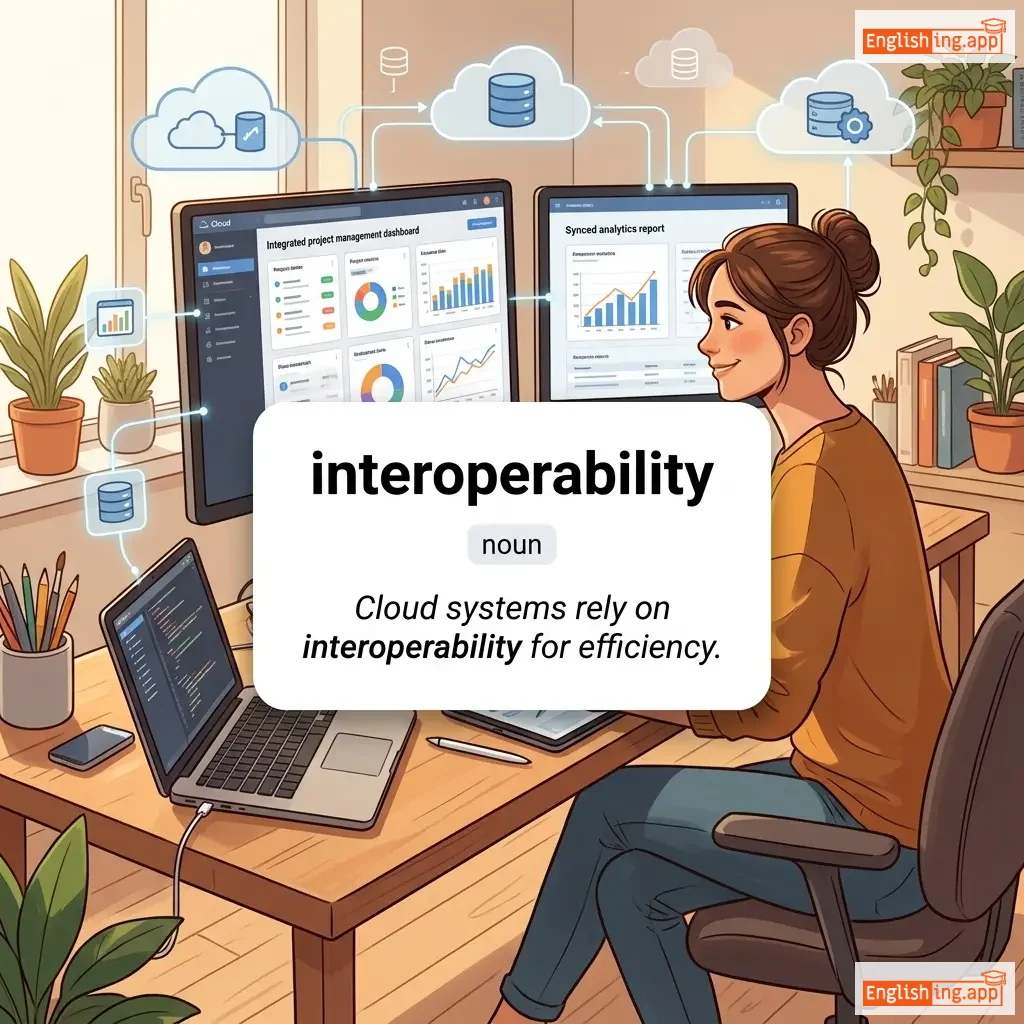
interoperability definition card — visual illustration of the meaning
noun
ˌɪn.tərˌɒp.ər.əˈbɪl.ɪ.ti
интероперабельность (interoperabel'nost')

The ability of computer systems or software to exchange and make use of information.

"Cloud systems rely on interoperability for efficiency."

"Облачные системы зависят от интероперабельности для повышения эффективности." (Oblachnye sistemy zavisyat ot interoperabel'nosti dlya povysheniya effektivnosti.)
interpersonal definition card — visual illustration of the meaning
adjective
/ˌɪntəˈpɜːsənl/
межличностный (mezhlichnostnyy)

Relating to relationships or communication between people.

"He has excellent interpersonal skills and gets along well with others."

"У него отличные межличностные навыки, и он хорошо ладит с другими." (U nego otlichnye mezhlichnostnye navyki, i on khorosho ladit s drugimi.)
noun
/ˈɪntərˌpleɪ/
взаимодействие (vzaimodeystviye)

The way in which two or more things have an effect on each other.

"The interplay between culture and technology shapes modern life."

"Взаимодействие между культурой и технологиями формирует современную жизнь." (Vzaimodeystviye mezhdu kul'turoy i tekhnologiyami formiruyet sovremennuyu zhizn'.)
interpolate definition card — visual illustration of the meaning
verb
/ɪnˈtɜːrpəˌleɪt/
интерполировать (interpolirovat')

To insert something, often words, into a text or conversation; to estimate values between known data points.

"The editor interpolated a missing paragraph into the manuscript."

"Редактор интерполировал отсутствующий абзац в манускрипт." (Redaktor interpoliroval otsutstvuyushchiy abzat v manuskript.)
noun
/ɪnˌtɜːrpəˈleɪʃən/
интерполяция (interpolatsiya)

The act of inserting something into a text or estimating values within a sequence of data.

"The scientist used interpolation to predict the missing data points."

"Учёный использовал интерполяцию для прогнозирования недостающих точек данных." (Uchyonnyy ispol'zoval interpolyatsiyu dlya prognozirovaniya nedostayushchikh tochek dannykh.)
verb
/ˌɪntərˈpoʊz/

To place or insert between one thing and another; to intervene in a situation.

"He quickly interposed himself between the fighters to stop the quarrel."

noun
/ˌɪntərpəˈzɪʃən/
вмешательство (vmeshatel'stvo)

The act of intervening or coming between two things, often to influence or prevent an outcome.

"The manager’s interposition prevented a heated argument from escalating."

"Вмешательство менеджера предотвратило эскалацию оживленного спора." (Vmeshatel'stvo menedzhera predotvratilo eskalatsiyu ozhivlennogo spora.)
verb
/ɪnˈtɜːrprət/
интерпретировать / переводить (interpretirovat' / perevodit')

to explain the meaning of something; to translate orally

"She had to interpret the speech for the foreign guests."

"Ей пришлось интерпретировать речь для иностранных гостей." (Eй prishlos' interpretirovat' rech' dlya inostrannyh gostey.)
noun
/ɪnˌtɜːrprəˈteɪʃən/
толкование (tolkovanie)

the action of explaining the meaning of something

"The teacher gave her own interpretation of the poem."

"Учитель дал собственное толкование стихотворения." (Uchitel' dal sobstvennoye tolkovaniye stikhotvoreniya.)
noun
/ɪnˈtɜːrprɪtər/
переводчик (perevodchik)

A person who translates spoken language orally in real time.

"The interpreter helped the tourists communicate with the locals."
"Переводчик помог туристам общаться с местными жителями." (Perevodchik pomog turistam obshchat'sya s mestnymi zhitelyami.)
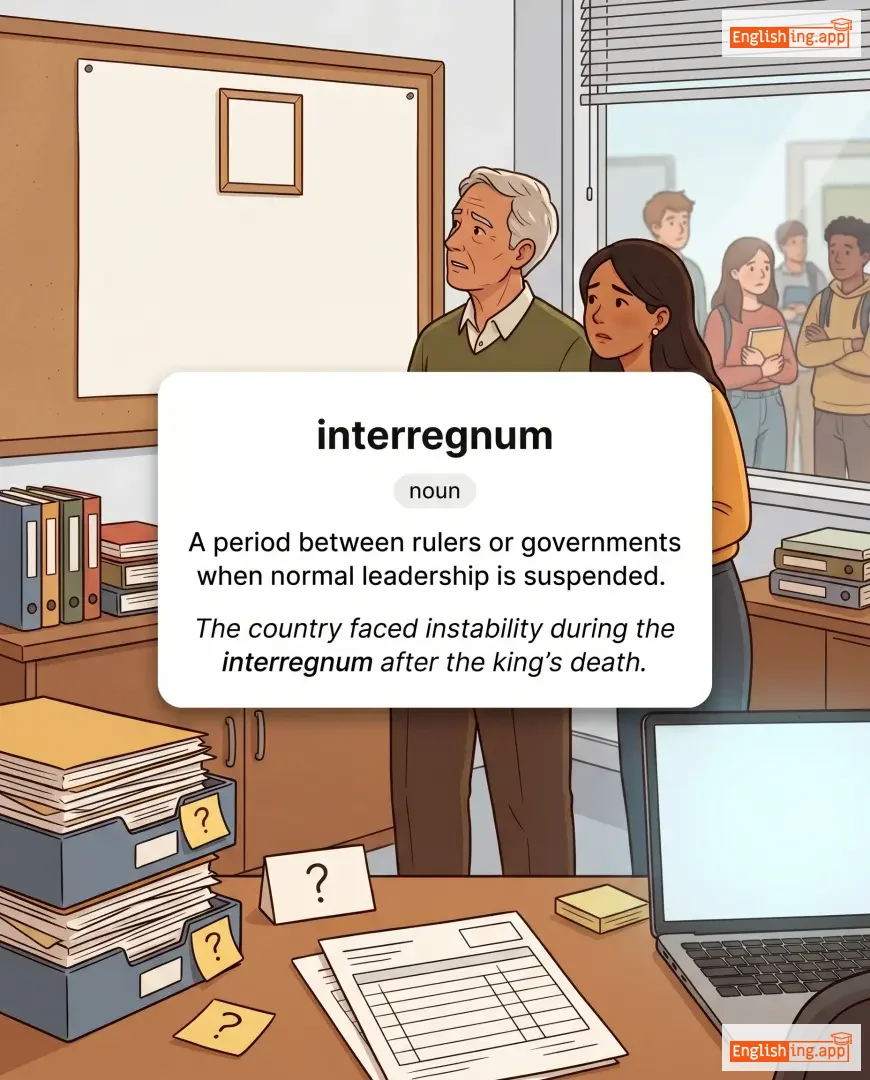
interregnum definition card — visual illustration of the meaning
noun
/ˌɪntərˈrɛɡnəm/
интеррегнум (interregnum)

A period between rulers or governments when normal leadership is suspended.

"The country faced instability during the interregnum after the king’s death."

"Страна столкнулась с нестабильностью в период интеррегнума после смерти короля." (Strana stolknulas' s nestabil'nost'yu v period interregnuma posle smerti korolya.)
interrogate definition card — visual illustration of the meaning
verb
/ɪnˈtɛrəˌɡeɪt/
допросить (doprosit)

To question someone closely and aggressively, often by an authority.

"The detective interrogated the suspect for hours."

"Детектив допросил подозреваемого в течение нескольких часов." (Detektiv doprosil podozrevaemogo v techenie nekotorykh chasov.)
adjective
/ˌɪntəˈrɑːɡətɪv/
вопросительный (voprositel'nyy)

Relating to or conveying a question; in grammar, used to form questions.

"She raised an interrogative eyebrow when she heard the news."

"Она подняла вопросительную бровь, когда услышала новости." (Ona podnyala voprositelnuyu brov', kogda uslyshala novosti.)
adjective
/ˌɪntəˈrɒɡətəri/
допросный (doprosny)

expressed in the form of a question; relating to questioning

"The lawyer’s interrogatory tone made the witness uncomfortable."

"Допросный тон адвоката заставил свидетеля чувствовать себя неудобно." (Doprosny ton advokata zastavil svidetelya chuvstvovat' sebya neudobno.)
verb
/ˌɪntəˈrʌpt/
прерывать (preryvat)

to stop someone from speaking or doing something by suddenly saying or doing something

"She tried not to interrupt while he was speaking."

"Она пыталась не прерывать его, когда он говорил." (Ona pytalas' ne preryvat' ego, kogda on govoril.)
noun
/ˌɪntəˈrʌpʃən/
прерывание (preryvanie)

the act of stopping or breaking the continuity of something; a pause caused by an external action

"The meeting was delayed due to an unexpected interruption."

"Совещание было задержано из-за неожиданного прерывания." (soveshchanie bylo zaderzhano iz za neozhidannogo preryvaniya)
verb
/ˌɪntəˈsɛkt/
пересекать (peresekat')

to cross or pass through each other

"The two roads intersect at the city center."

"Два пути пересекаются в центре города." (Dva puti peresekayutsya v tsentre goroda.)
noun
/ˌɪntərˈsɛkʃən/
перекрёсток (perekryostok)

a point where two or more things intersect, especially a road or path

"The intersection of Main Street and 5th Avenue is always busy."

"Перекрёсток Главной улицы и 5-й авеню всегда загружен." (Perekryostok Glavnoy ulitsy i 5-y Avenyu vsegda zagruzhyon.)
interstellar definition card — visual illustration of the meaning
adjective
ˌɪn.təˈstel.ər
межзвёздный, космический, между звездами (mezhzvyozdny, kosmicheskiy, mezhdu zvezdami)

Occurring or situated between stars.

"Scientists study interstellar travel possibilities."

"Учёные исследуют возможности межзвёздных путешествий." (Uchyonye issleduyut vozmozhnosti mezhzvyozdnykh puteshestviy.)
noun
/ɪnˈtɜːrstɪs/
щель (shchel)

a small space that lies between things

"Light filtered through the narrow interstices of the wall."

"Свет просочился через узкие щели стены." (Svet prosochelis' cherez uzkiye shcheli steny.)
intertwine definition card — visual illustration of the meaning
verb
/ˌɪn.tɚˈtwaɪn/
связать или соединить тесно; скрутить вместе или соединить тесно (svyazat' ili soedinit' tesno; skrutit' vmeste ili soedinit' tesno)

To connect or link closely; to twist together or combine closely.

"Their lives became intertwined through years of friendship."

"Их жизни переплелись через годы дружбы." (Ikh zhizni pereplelis' cherez gody druzhby.)
adjective
/ˌɪntərˈtwaɪnd/
счастье (schast'ye)

closely connected or twisted together

"Their lives became deeply intertwined after the accident."

"Она не могла скрыть своего счастья, когда получила награду." (Ona ne mogla skryt' svoego schast'ya, kogda poluchila nagradu.)
noun
/ˈɪntərvəl/
интервал (interval)

a period of time between two events or points; a pause or break in activity

"There was a short interval between the two performances."

"Между двумя выступлениями был короткий интервал." (Mezhdu dvumya vystupleniyami byl korotkiy interval.)
noun
/ˈɪntərˌveɪl/
низменная земля вдоль реки, обычно плодородная и ровная (nizmennaya zemlya vdol' reki, obychno plodorodnaya i rovная)

A low-lying tract of land along a river, usually fertile and flat.

"The farmers cultivated crops on the lush intervale by the river."

"Фермеры выращивали урожай на плодородной низменной земле вдоль реки." (Fermery vyrashchivali urozhay na plodorodnoy nizmennoy zemle vdol' reki.)
verb
/ˌɪntərˈviːn/
вмешаться (vmeshatsya)

To come between people, groups, or events, often to prevent conflict or improve a situation.

"The teacher had to intervene to stop the fight between the students."
"Учитель должен был вмешаться, чтобы остановить драку между учениками." (Uchitel' dolzhen byl vmeshatsya, chtoby ostanovit' draku mezhdu uchenikami.)
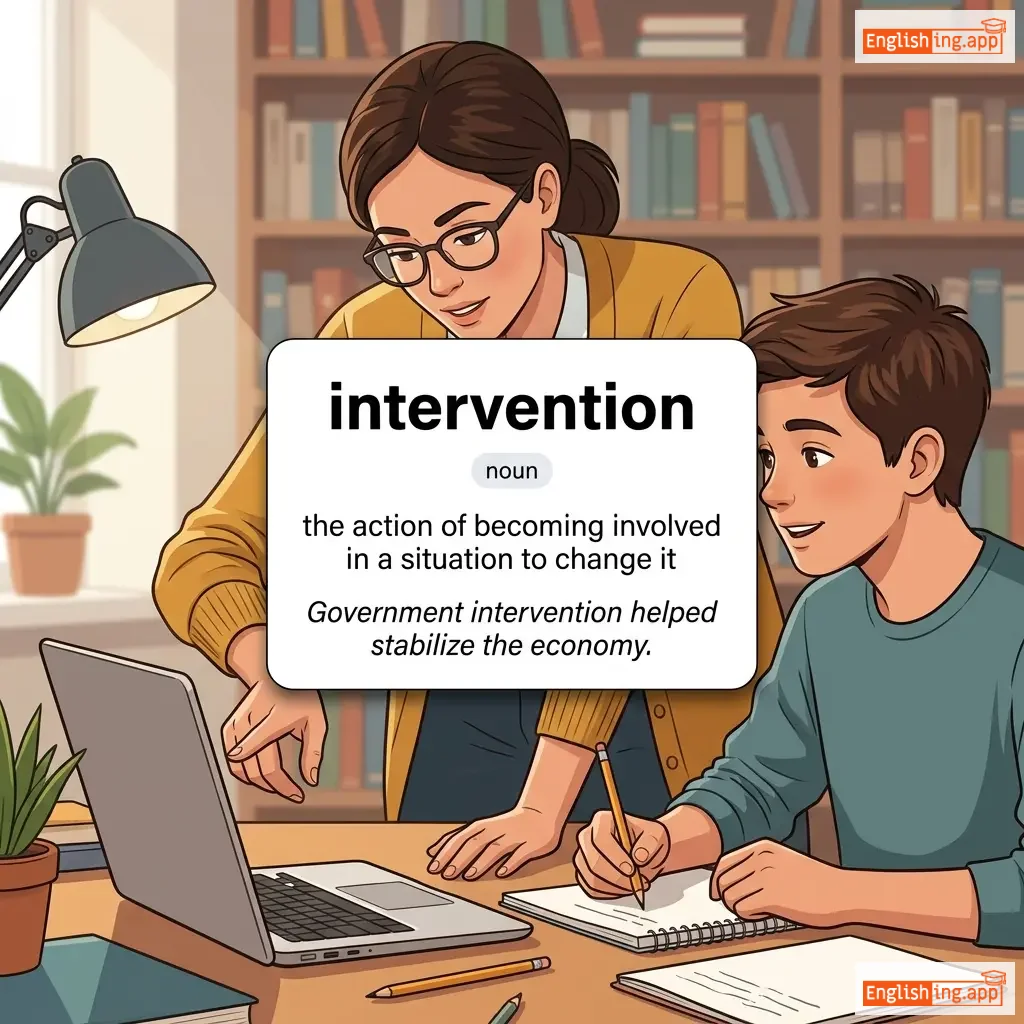
intervention definition card — visual illustration of the meaning
noun
/ˌɪntərˈvɛnʃən/
вмешательство (vmeshatel'stvo)

the action of becoming involved in a situation to change it

"Government intervention helped stabilize the economy."
"Государственное вмешательство помогло стабилизировать экономику." (Gosudarstvennoe vmeshatel'stvo pomoglo stabilizirovat' ekonomiku.)
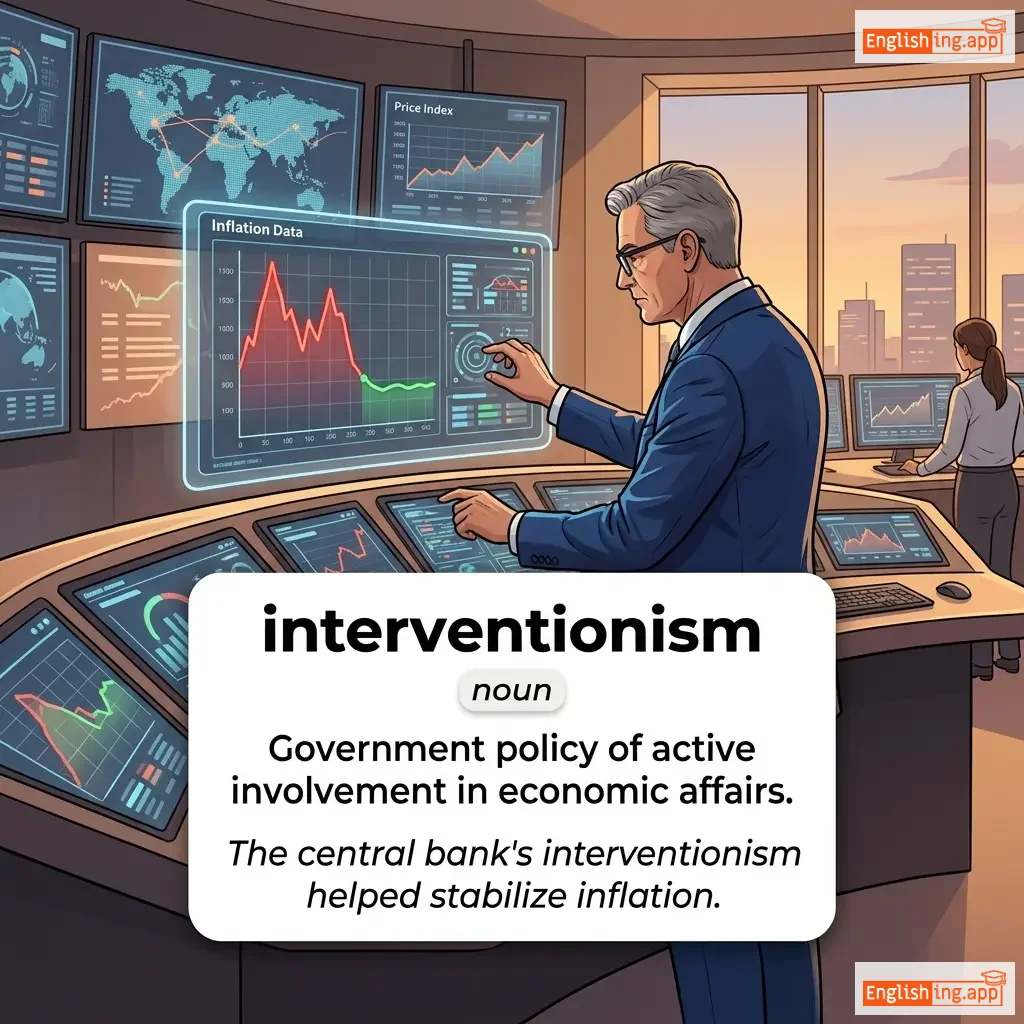
interventionism definition card — visual illustration of the meaning
noun
/ˌɪn.təˈvɛn.ʃə.nɪ.zəm/
интервенционизм (intervencionizm)

Government policy of active involvement in economic affairs.

"The central bank's interventionism helped stabilize inflation."

"Интервенционизм центрального банка помог стабилизировать инфляцию." (Intervencionizm tsentral'nogo banka pomog stabilizirovat' inflyatsiyu.)
interview definition card — visual illustration of the meaning
noun, verb
/ˈɪntərvjuː/
интервью (intervyu)

a formal meeting in which one person asks another questions

"She prepared well for the job interview."

"Она хорошо подготовилась к собеседованию." (Ona khorosho podgotovilas' k sobesedovaniyu.)
noun
/ɪnˈtɛstəsi/
смерть без завещания (smert' bez zaveshchaniya)

The condition of dying without having made a valid will.

"His estate was divided according to the laws of intestacy."

"Его имущество было разделено в соответствии с законами инстатаси." (Ego imushchestvo bylo razdeleno v sootvetstvii s zakonami intestatsii.)
adjective
/ɪnˈtɛsteɪt/
умер без завещания (umer bez zaveshchaniya)

Having died without leaving a valid will.

"She died intestate, so her assets were distributed by law."

"Она умерла без завещания, поэтому её имущество было распределено по закону." (Ona umerla bez zaveshchaniya, poetomu yeyu imushchestvo bylo raspredeleno po zakonu.)
noun
/ɪnˈtɛstɪn/
кишечник (kishechnik)

The part of the digestive system where food is digested and absorbed, extending from the stomach to the anus.

"The doctor explained how nutrients are absorbed in the small intestine."

"Врач объяснил, как питательные вещества всасываются в тонкой кишке." (Vrach ob'yasnil, kak pitatel'nye veshchestva ssasyvayutsya v tonkoy kishke.)
noun
/ˈɪntɪməsi/
интимность (intimnost)

A close familiarity or friendship; a close personal relationship.

"Their friendship developed into a deep intimacy over the years."

"Их дружба со временем превратилась в глубокую интимность." (Ikh druzhba so vremenem prevratilas' v glubokuyu intimnost'.)
Intimate definition card — visual illustration of the meaning
adjective
/ˈɪntɪmət/
интимный (intimny)

Closely acquainted; very familiar and personal.

"They shared an intimate dinner by candlelight."

"Они поделились интимным ужином при свечах." (Oni podelilis' intimnym uzhinom pri svechakh.)
noun
/ˌɪntɪˈmeɪʃən/
намек (namek)

A subtle or indirect hint or suggestion.

"She gave no intimation of her plans."

"Она не дала никакого намека на свои планы." (Ona ne dala nikakogo nameka na svoi plany.)
verb
/ɪnˈtɪmɪdeɪt/
пугать (pugat)

To frighten or overawe someone, especially to make them do what one wants.

"The bully tried to intimidate the smaller kids."

"Булли пытался запугать маленьких детей." (Bul'i pytalsya zapugat' malenkikh detey.)
noun
/ɪnˌtɪmɪˈdeɪʃən/
запугивание (zapugivanie)

The action of frightening or threatening someone to make them do something.

"The workers reported cases of intimidation by the management."

"Рабочие сообщили о случаях запугивания со стороны руководства." (Rabochie soobshchili o sluchayakh zapugivaniya so storony rukovodstva.)
preposition
/ˈɪntuː/
внутрь (vnutri)

expressing movement or direction to the inside of something

"She walked into the room quietly."

"Она тихо вошла в комнату." (Ona tikho voshla v komnatu.)
adjective
/ɪnˈtɒlərəbl̩/
невыносимый (nevyinosimy)

so bad, difficult, or unpleasant that it cannot be endured

"The heat during the summer was almost intolerable."

"Жара летом была почти невыносимой." (Zhara letom byla pochti nevynosimoy.)
noun
/ɪnˈtɒlərəns/
нетерпимость (neterpimost)

unwillingness to accept or endure beliefs, behaviors, or conditions different from one's own

"The leader was criticized for his intolerance toward other religions."

"Лидер был раскритикован за свою нетерпимость к другим религиям." (Lider byl raskritikovann za svoiu neterpimost' k drugim religiiam.)