Словари

Словарь английского языка | Значения слов, определения и примеры
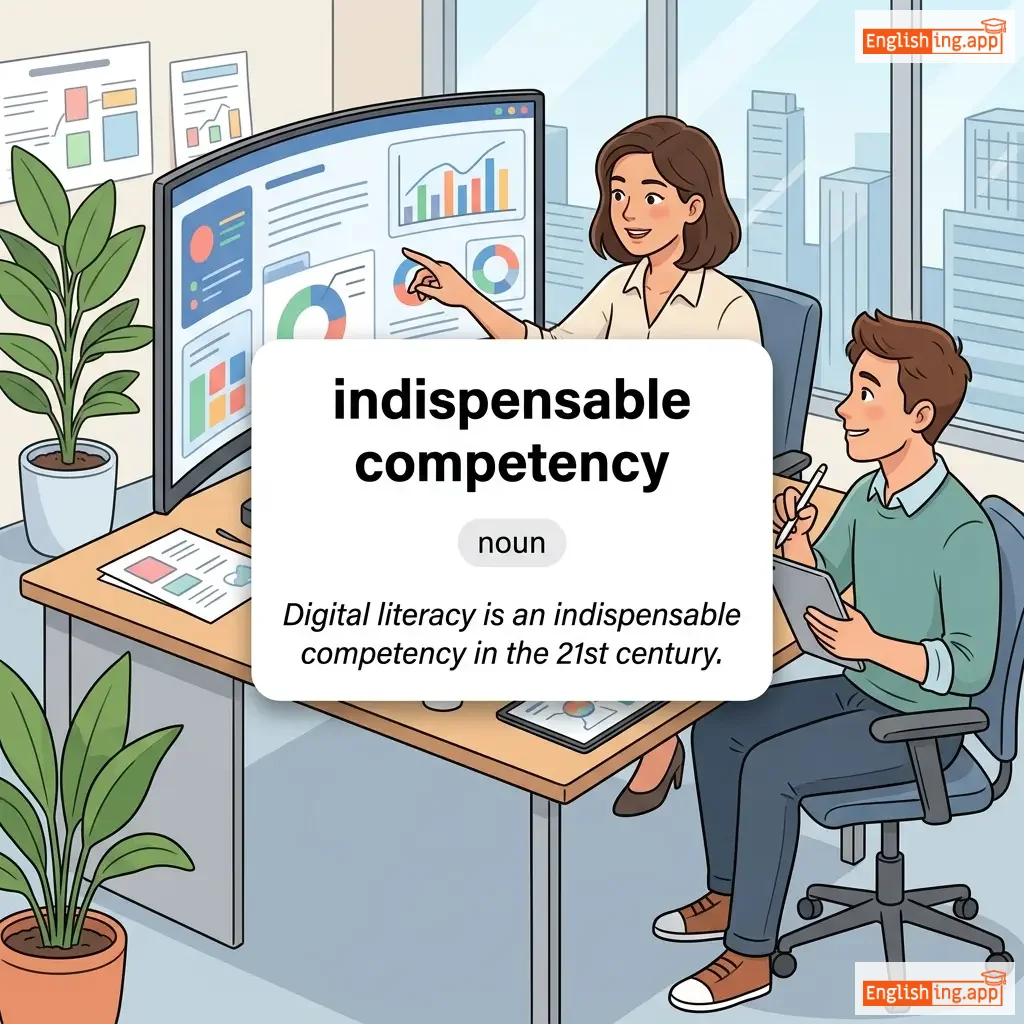
indispensable competency definition card — visual illustration of the meaning
noun
ˌɪndɪˈspensəbl̩ ˈkɒmpɪtənsi
незаменимая компетенция (nezamenimaya kompetenciya)

Essential skill or ability that cannot be done without; a crucial capability that is absolutely necessary.

"Digital literacy is an indispensable competency in the 21st century."

"Цифровая грамотность — незаменимая компетенция в XXI веке." (Tsifrovaya gramotnost’ — nezamenimaya kompetenciya v XXI veke.)
indispensable support definition card — visual illustration of the meaning
noun
ˌɪndɪˈspensəbl səˈpɔːrt
необходимая поддержка (neobkhodimaya podderzhka)

Essential assistance that cannot be done without; absolutely necessary help.

"Volunteers provide indispensable support to communities."

"Волонтеры предоставляют необходимую поддержку сообществам." (Volontery predostavlyayut neobkhodimuyu podderzhku soobshchestvam.)
adjective
/ˌɪndɪˈspjuːtəbl/
неопровержимый (neopoverzhimy)

Impossible to doubt or question; certain.

"It is an indisputable fact that the earth orbits the sun."

"Это неопровержимый факт, что Земля вращается вокруг Солнца." (Eto neopoverzhimy fakt, chto Zemlya vrashchayetsya vokrug Solntsa.)
adjective
/ˌɪndɪˈsɒljʊbl/
Неразрывный (Nerazryvny)

Unable to be destroyed, broken, or dissolved.

"Marriage was once considered an indissoluble bond."

"Брак когда-то считался неразрывной связью." (Brak kogda-to schitalsya nerazryvnoi svyazyu.)
adjective
/ˌɪndɪˈstɪŋkt/
нечеткий (nechetkij)

Not clear or sharply defined; vague or blurred.

"The sound of voices was indistinct in the distance."

"Звук голосов был нечетким вдали." (Zvuk golosov byl nechetkim v dali.)
verb
/ɪnˈdaɪt/
сочинять (sochinyat)

To write or compose (literary or formal works).

"The poet indited a heartfelt sonnet."

"Поэт сочинил искренний сонет." (Poet sochinyal iskrenniy sonet.)
adjective
/ˌɪndɪˈvɜːrtɪbəl/
неотвлекаемый (neotvlekaemy)

Not able to be turned aside or diverted.

"The judge's indivertible attention was on the case."

"Неотвлекаемое внимание судьи было приковано к делу." (Neotvlekaemoe vnimanie sudi bylo prikovano k delu)
noun/adjective
/ˌɪndɪˈvɪdʒuəl/
индивид (individ)

A single human being as distinct from a group; relating to one person.

"Each individual has the right to freedom of speech."

"Каждое лицо имеет право на свободу слова." (Kazhdoe litso imeet pravo na svobodu slova.)
adjective
/ˌɪndɪˈvɪzəbl/

Not able to be divided or separated.

"The country's unity was indivisible despite differences."

verb
/ɪnˈdɒktrɪˌneɪt/
индоктринировать (indoktrinivorat)

To teach someone to fully accept a set of beliefs or ideas without question.

"The regime tried to indoctrinate the youth with propaganda."

"Режим пытался индоктринировать молодежь с помощью пропаганды." (Rezhim pytalsya indoktrinivorat molodezh' s pomoshch'yu propagandy.)
noun
/ˈɪndələns/
индоленция (indolentsiya)

Avoidance of activity or exertion; laziness.

"His indolence kept him from finishing the project on time."
"Его инденция помешала ему закончить проект вовремя." (yego indolentsiya pomeshchala yemu zakontchit' proyekt vovremya.)
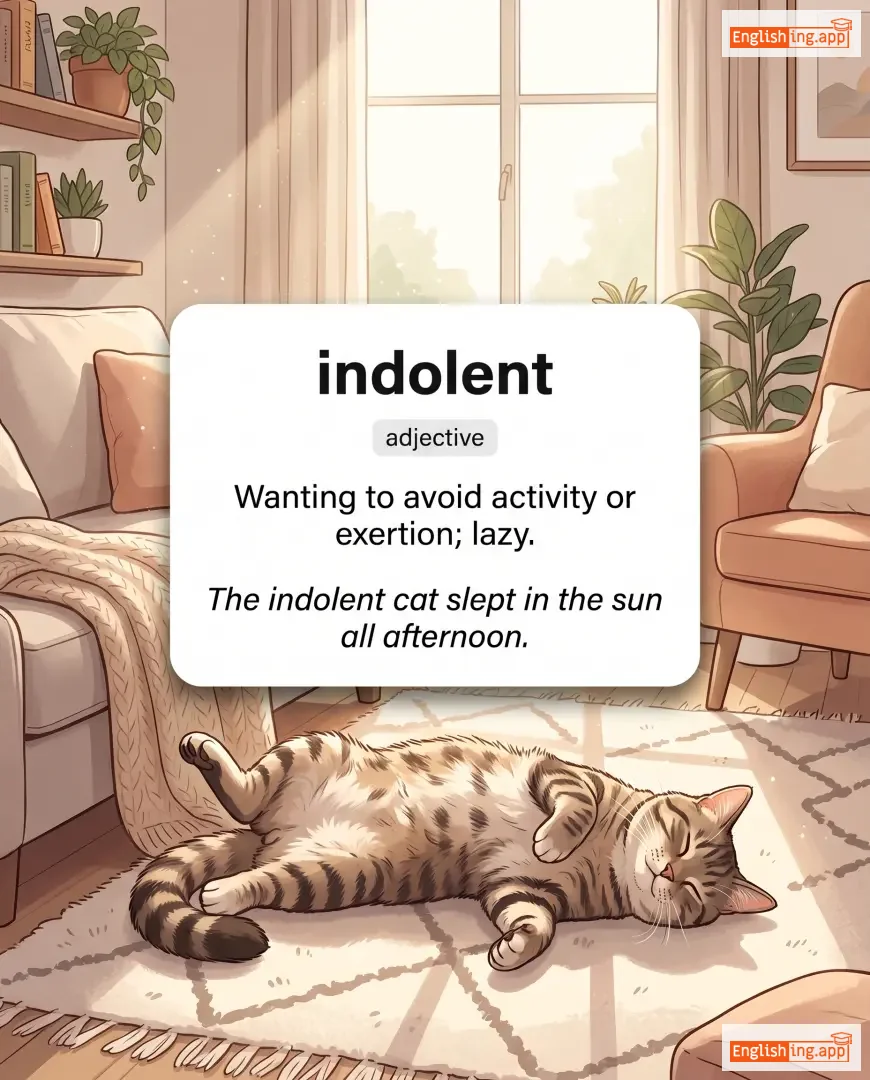
indolent definition card — visual illustration of the meaning
adjective
/ˈɪndələnt/
ленивый (lenivyy)

Wanting to avoid activity or exertion; lazy.

"The indolent cat slept in the sun all afternoon."

"Ленивый кот спал на солнце весь день." (Lenivyy kot spal na solntse ves' den'.)
indomitable definition card — visual illustration of the meaning
adjective
/ɪnˈdɒmɪtəbl/
неукротимый (neukrotimy)

Impossible to subdue or defeat.

"She had an indomitable spirit that inspired everyone."

"У неё был неукротимый дух, который вдохновил всех." (U nee byl neukrotimyi dukh, kotoryi vdokhnovil vsekh.)
adjective
/ˈɪn.dɔːr/
в помещении (v pomeshchenii)

situated, occurring, or used inside a building

"Indoor plants can improve air quality at home."

"Комнатные растения могут улучшить качество воздуха дома." (komnatnye rasteniya mogut uluchshit kachestvo vozdukha doma)
adverb
/ˌɪnˈdɔːrz/
в помещении (v pomeshchenii)

inside a building; within an enclosed space

"Because of the rain, everyone stayed indoors."

"Из-за дождя все остались в помещении." (Iz-za dozhdya vse ostalis v pomeshchenii)
adjective
/ɪnˈdjuːbɪtəbl/
несомненно (nesomnennо)

Impossible to doubt; unquestionable.

"It is indubitable that hard work leads to success."

"Несомненно, что тяжёлый труд ведёт к успеху." (Nesomnennо, chto tyazhelyy trud vedyot k uspekhu.)
adverb
/ɪnˈdjuːbɪtəbli/
несомненно (nesomnenno)

Without a doubt; certainly.

"She is indubitably the best candidate for the job."

"Она несомненно лучший кандидат на эту работу." (Ona nesomnenno luchshiy kandidat na etu rabotu.)
verb
/ɪnˈdjuːs/
индуцировать (inducirovat')

to cause or persuade someone to do something; to bring about a result

"The doctor induced sleep with a mild sedative."

"Доктор индуцировал сон с помощью легкого седативного средства." (Doktor induciroval son s pomoshch'yu legkogo sedativnogo sredstva.)
noun
/ɪnˈdjuːsmənt/
побуждение (pobuzhdenie)

something that persuades or encourages someone to do something

"The company offered a bonus as an inducement to employees."

"Компания предложила бонус в качестве побуждения для сотрудников." (Kompaniya predlozhila bonus v kachestve pobuzhdeniya dlya sotrudnikov.)
verb
/ɪnˈdʌkt/

to formally admit someone into a position, organization, or office

"She was inducted into the university's honor society."

adjective
/ɪnˈdʌktɪv/
индуктивный (induktivnyy)

characterized by the inference of general laws from particular instances; reasoning from specific cases to general principles

"The scientist used inductive reasoning to form a hypothesis."

"Учёный использовал индуктивное мышление, чтобы сформулировать гипотезу." (Uchyonnyy ispol'zoval induktivnoye myshleniye, chtoby sformulirovat' gipotezu.)
verb
/ɪnˈdʌldʒ/
предаваться (predavat'sya)

to allow oneself to enjoy something enjoyable, often excessively

"He indulged in a piece of chocolate cake after dinner."

"Он побаловал себя куском шоколадного торта после ужина." (On pobaloval sebya kuskom shokoladnogo torta posle uzhina.)
indulgence definition card — visual illustration of the meaning
noun
/ɪnˈdʌldʒəns/
удовольствие (udovolstvie)

The act of allowing oneself or others to enjoy pleasure, often excessively.

"Her favorite indulgence is eating chocolate late at night."

"Её любимое удовольствие — есть шоколад поздно ночью." (Eyo lyubimoye udovol'stviye — yest' shokolad pozdno noch'yu.)
adjective
/ɪnˈdʌldʒənt/
покровительственный (pokrovitel'stvennyy)

Having a tendency to be overly generous or lenient with someone.

"The indulgent mother allowed her child to stay up late."

"Покровительственная мать позволила своему ребенку сидеть до поздно." (Pokrovitel'stvennaya mat' pozvolila svoemu rebenku sidet' do pozdno.)
verb
/ˈɪndjʊˌreɪt/
закалять (zakalyat)

To harden or make something physically or emotionally tough.

"Years of hardship indurated his spirit."

"Годы трудностей закалили его дух." (Gody trudnostey zakalili yego dukh.)
industrial definition card — visual illustration of the meaning
adjective
/ɪnˈdʌstriəl/
промышленный (promyshlennyy)

Relating to industry, factories, or manufacturing.

"The city has grown rapidly due to industrial development."

"Город быстро развивался благодаря промышленному развитию." (Gorod bystro razvivalsya blagodarya promyshlennomu razvitiyu.)
Industrial Revolution definition card — visual illustration of the meaning
noun
/ɪnˈdʌstriəl ˌrɛvəˈluːʃən/
Индустриальная революция (Industrial'naya revolyutsiya)

The rapid development of industry that occurred in Britain in the late 18th and 19th centuries, brought about by the introduction of machinery and characterized by the use of steam power and the growth of factories.

"The Industrial Revolution marked a shift in production processes."
"Индустриальная революция ознаменовала собой изменение производственных процессов." (Industrial'naya revolyutsiya oznamenovala soboy izmeneniye proizvodstvennykh protsessov.)
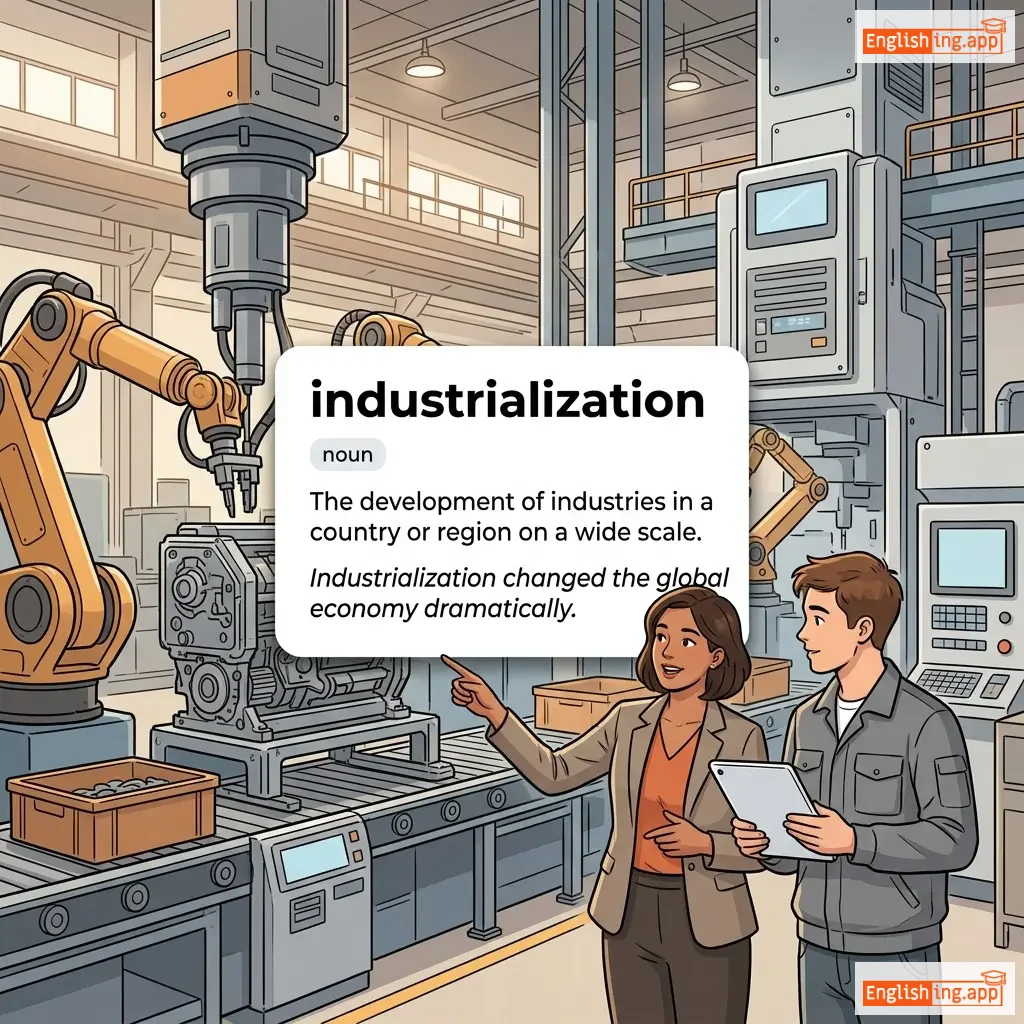
industrialization definition card — visual illustration of the meaning
noun
ɪnˌdʌstrɪəlaɪˈzeɪʃən
индустриализация (industrializatsiya)

The development of industries in a country or region on a wide scale.

"Industrialization changed the global economy dramatically."

"Индустриализация кардинально изменила мировую экономику." (Industrializatsiya kardinal'no izmenila mirovuyu ekonomiku.)
adjective
/ɪnˈdʌstriəs/
трудолюбивый (trudolyubivy)

Hardworking and diligent in one's duties.

"She is an industrious student who always completes her assignments on time."

"Она трудолюбивый студент, который всегда выполняет свои задания вовремя." (Ona trudolyubivyj student, kotoryj vsegda vypolnyaet svoi zadaniya vovremya.)
noun
/ɪnˈdʌstriəsnəs/
трудолюбие (trudolyubie)

The quality of being hardworking and diligent.

"His industriousness earned him a promotion at work."

"Его трудолюбие принесло ему повышение на работе." (Ego trudolyubie prineslo yemu povyshenie na rabote.)
industry definition card — visual illustration of the meaning
noun
/ˈɪndəstri/
промышленность (promyshlennost)

The production of goods or services within an economy.

"The textile industry employs thousands of workers in the region."

"Текстильная промышленность нанимает тысячи рабочих в регионе." (Tekstil'naya promyshlennost' nanimayet tysyachi rabochikh v regione.)
verb
/ɪˈniː.bri.eɪt/

to intoxicate; to make someone drunk

"The strong wine was enough to inebriate even the most experienced drinker."

adjective
/ɪˈniː.bri.eɪ.tɪd/
пьяный (p'yanyy)

under the influence of alcohol; drunk

"He stumbled into the room completely inebriated."

"Он вошел в комнату, полностью пьяный." (On voshel v komnatu, polnost'yu p'yanyy.)
noun
/ˌɪn.ɪˈbraɪ.ə.ti/
опьянение (opyanenie)

the state of being drunk or intoxicated

"His frequent inebriety led to the loss of his job."

"Его частое опьянение привело к потере работы." (Ego chasteye op'yanyeniye privelo k potere raboty.)
adjective
/ɪˈnɛd.ə.bəl/
несъедобный (nesyedobny)

not fit to be eaten

"The spoiled food was inedible."

"Испорченная еда была несъедобна." (Isporchennaya yeda byla nesyedobna.)
ineffable definition card — visual illustration of the meaning
adjective
/ɪˈnɛf.ə.bəl/
невыразимый (nevyrazimyy)

too great, extreme, or beautiful to be expressed in words

"The beauty of the sunset was ineffable."
"Красота заката была невыразимой." (Krasota zakata byla nevyrazimoy.)
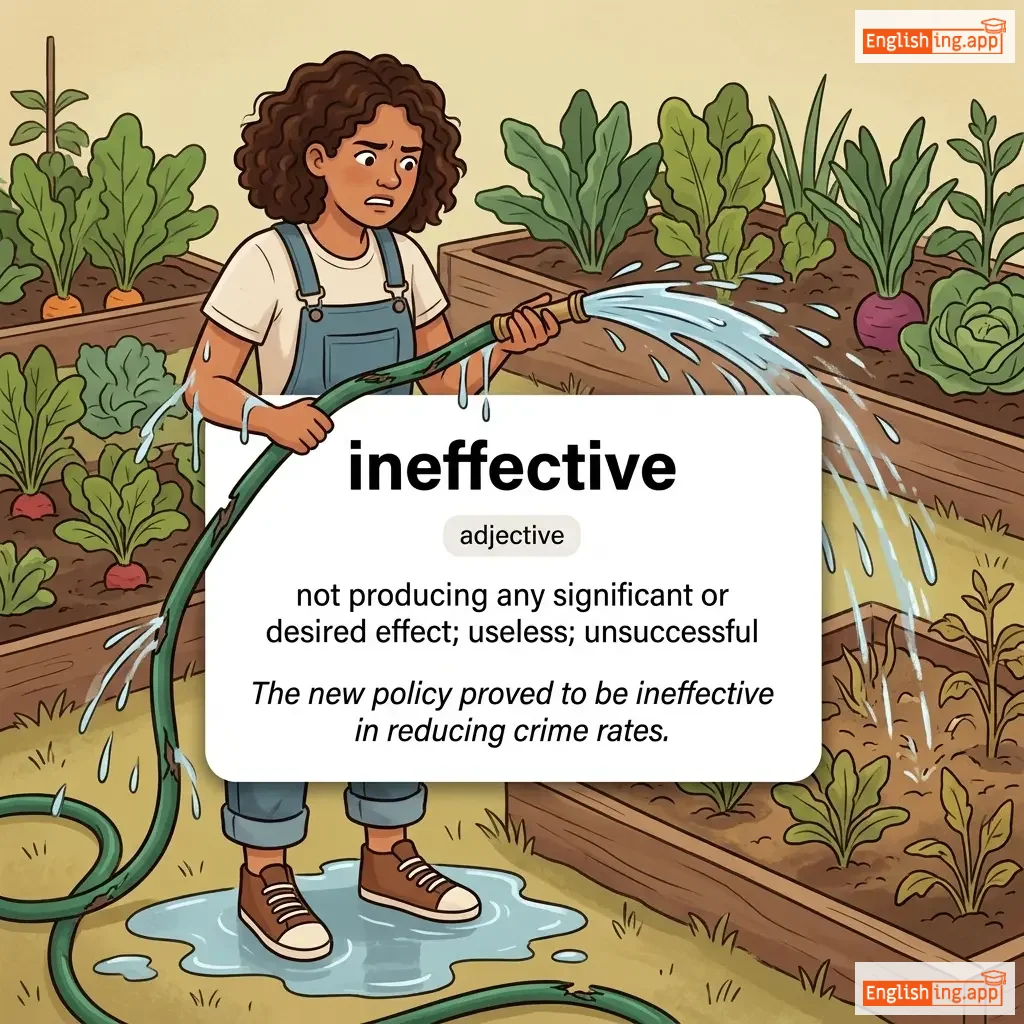
ineffective definition card — visual illustration of the meaning
adjective
/ˌɪnɪˈfɛktɪv/
неэффективный; бесполезный; неудачный (neeffektivnyy; bespoleznyy; neudachnyy)

not producing any significant or desired effect; useless; unsuccessful

"The new policy proved to be ineffective in reducing crime rates."

"Новая политика оказалась неэффективной в снижении уровня преступности." (Novaya politika okazalas' neeffektivnoy v snizhenii urovnya prestupnosti.)
adjective
/ˌɪn.ɪˈfɛk.tʃu.əl/
неэффективный (neeffektivnyy)

Not producing any or the desired effect; lacking the ability or qualities to achieve a purpose.

"The manager’s ineffectual leadership caused the team to lose motivation."

"Неэффективное руководство менеджера привело к тому, что команда потеряла мотивацию." (Neeffektivnoe rukovodstvo menedzhara privelo k tomu, chto komanda poteryala motivatsiyu.)
inefficacious definition card — visual illustration of the meaning
adjective
ˌɪn.ɪ.fɪˈkeɪ.ʃəs
неэффективный (neeffektivny)

Not producing any or the desired effect; ineffective.

"The treatment was inefficacious in curing the disease."
"Лечение было неэффективным при лечении болезни." (Lechenie bylo neeffektivnym pri lechenii bolezni.)
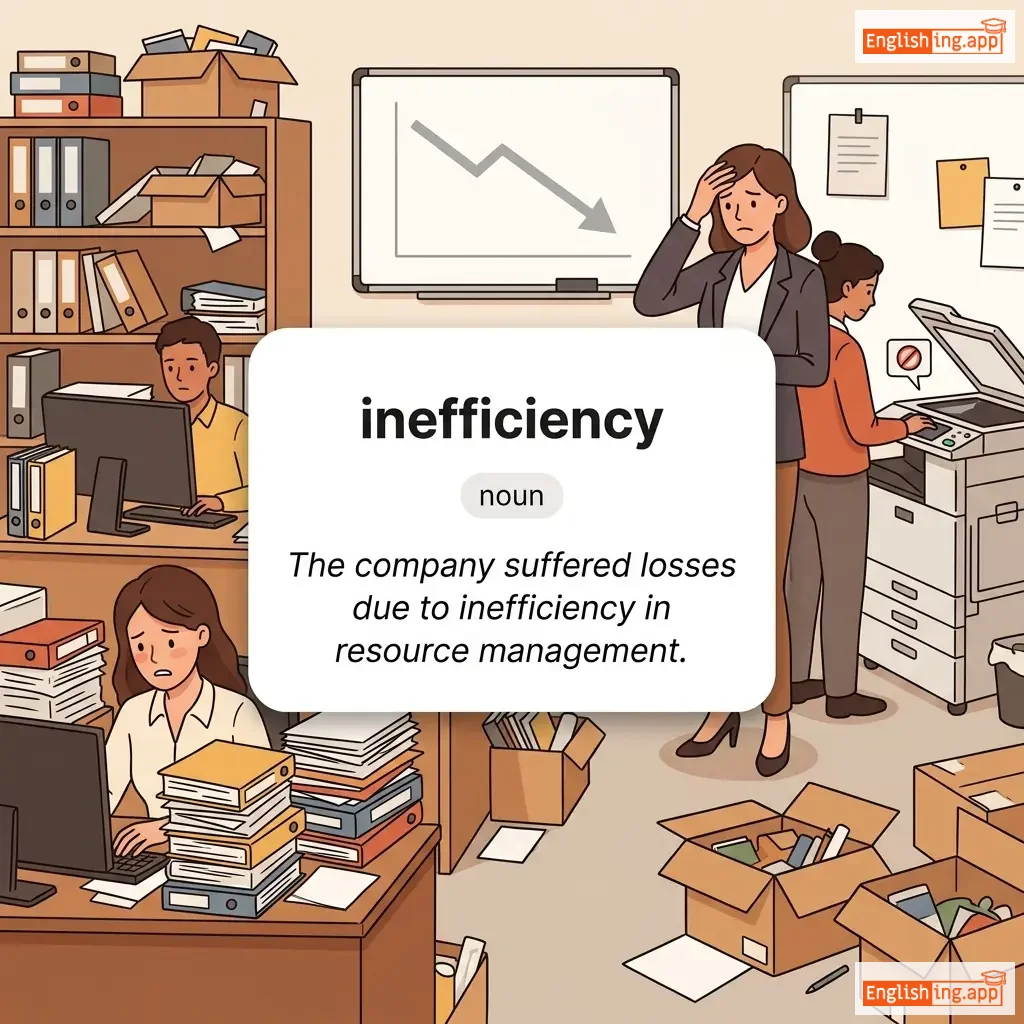
inefficiency definition card — visual illustration of the meaning
noun
/ˌɪn.ɪˈfɪʃ.ən.si/
неэффективность (neeffektivnost)

The state of not achieving maximum productivity; wastefulness or lack of competence.

"The company suffered losses due to inefficiency in resource management."

"Компания понесла убытки из-за неэффективности в управлении ресурсами." (Kompaniya ponesla ubytki iz-za neeffektivnosti v upravlenii resursami.)
adjective
/ˌɪn.ɪˈfɪʃ.ənt/
неэффективный (neeffektivnyy)

Not achieving maximum productivity; wasting resources or effort.

"The machine is old and inefficient compared to modern equipment."

"Машина старая и неэффективная по сравнению с современным оборудованием." (Mashina staraya i neeffektivnaya po sravneniyu s sovremennym oborudovaniyem.)
adjective
/ɪnˈɛl.ɪ.dʒə.bəl/
неквалифицированный (nekvalifitsirovanny)

Not qualified or permitted to do something or to receive something.

"He was ineligible to apply for the scholarship because of his age."

"Он не мог подать заявку на стипендию из-за своего возраста." (On ne mog podat' zayavku na stipendiyu iz-za svoego vozrasta.)
ineluctable definition card — visual illustration of the meaning
adjective
/ˌɪn.ɪˈlʌk.tə.bəl/
неизбежный (ineluktabl)

Impossible to avoid or escape; inevitable.

"Death is an ineluctable part of human existence."

"Смерть — неизбежная часть человеческого существования." (Smert neizbezhnaia chast chelovecheskogo sushestvovaniya)
adjective
/ɪˈnɛpt/
неспособный (nesposobny)

lacking skill or ability; clumsy or incompetent

"His inept handling of the situation made it worse."

"Его неспособное обращение с ситуацией только усугубило её." (Ego nesposobnoe obrashchenie s situatsiyey tol'ko usugubilo yeyo.)
inequality definition card — visual illustration of the meaning
noun
/ˌɪnɪˈkwɒləti/
неравенство (neravenstvo)

the state of being unequal; disparity in status, rights, or opportunities

"Inequality in wealth distribution remains a significant issue worldwide."
"Неравенство в распределении богатства остается важной проблемой на мировом уровне." (Neravenstvo v raspredelenii bogatstva ostaetsya vazhnoi problemoi na mirovom urovne.)
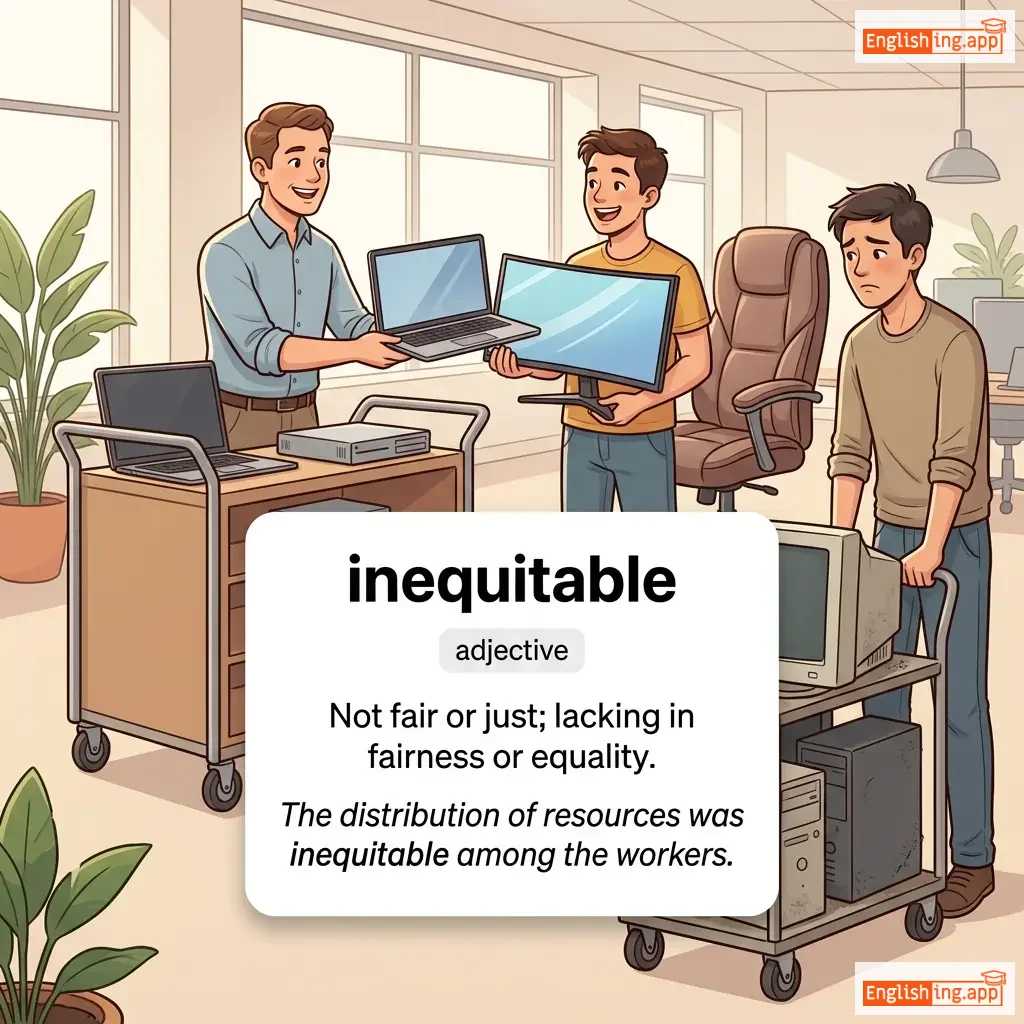
inequitable definition card — visual illustration of the meaning
adjective
/ɪnˈɛk.wɪ.tə.bəl/
несправедливый (nespravedlivyy)

Not fair or just; lacking in fairness or equality.

"The distribution of resources was inequitable among the workers."
"Распределение ресурсов было несправедливым среди рабочих." (Raspredelenie resursov bylo nespravedlivym sredi rabochikh.)
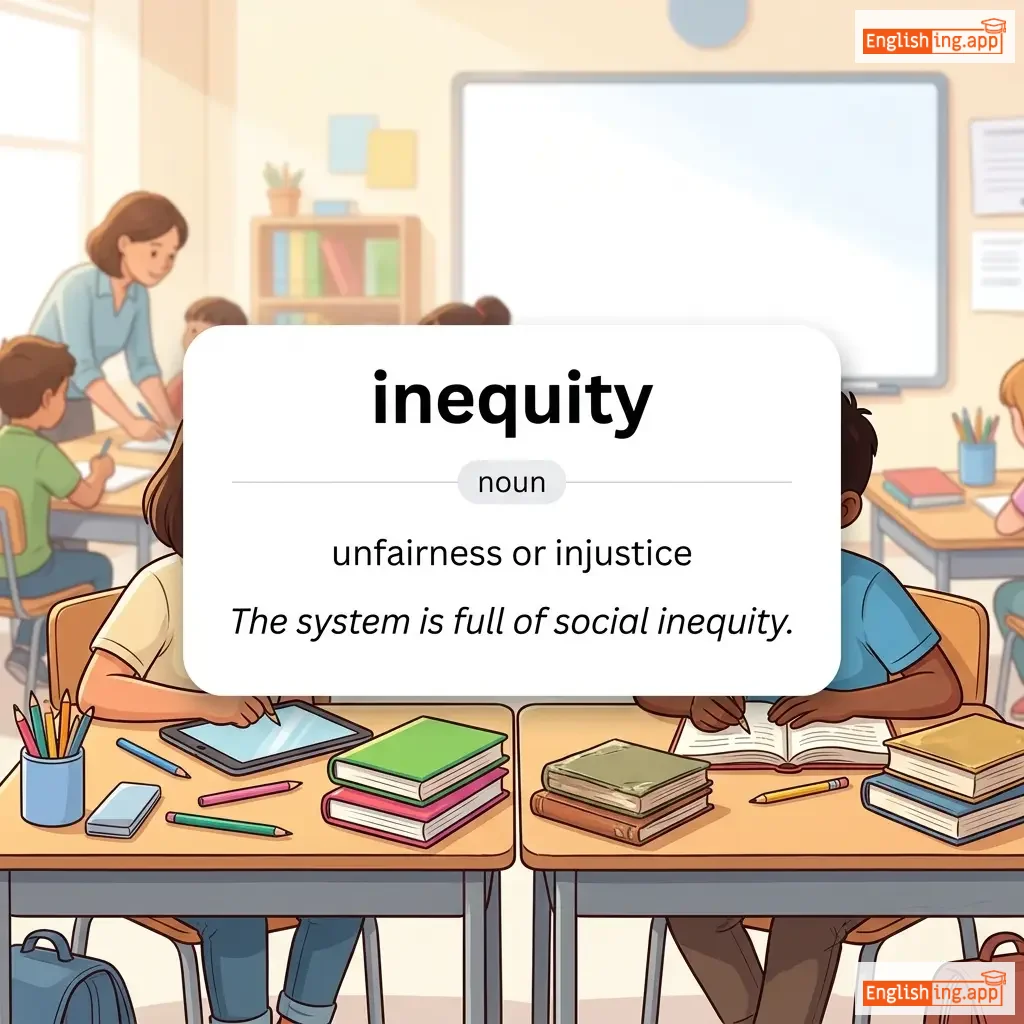
inequity definition card — visual illustration of the meaning
noun
/ɪnˈɛkwɪti/
несправедливость (nespravedlivost)

unfairness or injustice

"The system is full of social inequity."

"Система полна социальной несправедливости." (Sistema polna sotsial'noy nespravedlivosti.)
noun
/ɪnˈɛrənsi/
непогрешимость (nepogreshimost)

the belief or quality of being free from error; absolute correctness

"Some religious groups strongly affirm the inerrancy of their sacred texts."
"Некоторые религиозные группы твердо утверждают безошибочность своих священных текстов." (Nekotorye religioznye grupy tverdo utverzhdayut bezoshibochnost' svoikh sviashchennykh tekstov.)
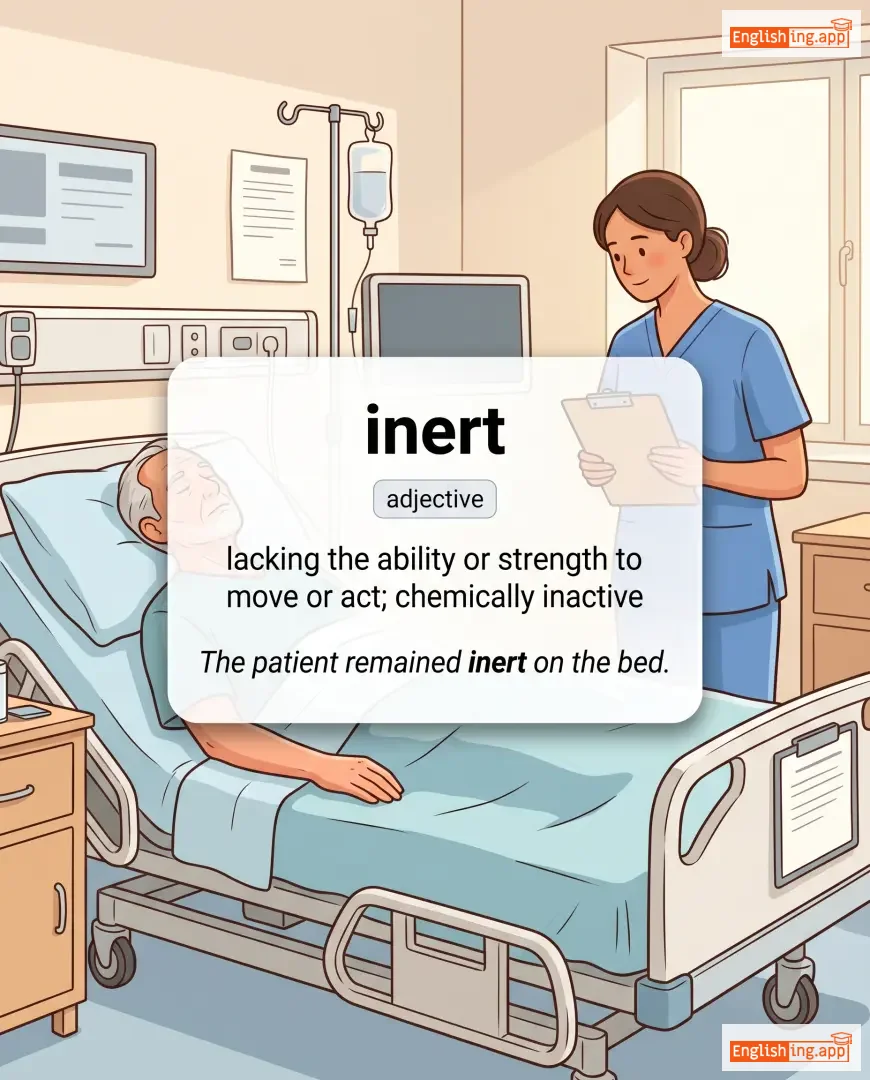
inert definition card — visual illustration of the meaning
adjective
/ɪˈnɜːrt/
инертный (inertny)

lacking the ability or strength to move or act; chemically inactive

"The patient remained inert on the bed."

"Пациент оставался инертным на кровати." (Patsiyent ostavalsya inertnym na krovati.)
noun
/ɪˈnɜːrʃə/
инерция (inertsiya)

A tendency to remain unchanged or continue in the same state of motion unless acted upon.

"The project failed due to the inertia of outdated systems."

"Проект провалился из-за инерции устаревших систем." (Proyekt provalilsya iz-za inertsiya ustarevshikh sistem.)