Словари

Словарь английского языка | Значения слов, определения и примеры

noun
/hɪp/
бедро (bedro)

The part of the body on either side of the pelvis, or informal: trendy and fashionable.

"She put her hands on her hips."

"Она положила руки на бедра." (Ona polozhila ruki na bedra.)
noun
/ˌhɪp.əˈpɒt.ə.məs/
гиппопотам (gippopotam)

a large, mostly herbivorous mammal that lives in and around water in Africa

"The hippopotamus spends most of its day in the water."

"Гиппопотам проводит большую часть дня в воде." (Gippopotam proyodit bol'shuyu chast' dnya v vode)
hire definition card — visual illustration of the meaning
verb
/ˈhaɪə(r)/
нанимать (nanimat)

to employ someone for a job or task

"The company decided to hire more staff this year."

"Компания решила нанять больше сотрудников в этом году." (Kampaniya reshila nanyat bol'she sotrudnikov v etom godu.)
noun
/ˈhaɪərlɪŋ/
наёмник (nayomnik)

A person who works for payment only, often with little loyalty or principle.

"The mercenary was dismissed as just a hireling with no real loyalty."

"Наёмник был уволен как просто hireling без настоящей лояльности." (Naemnik byl uvolen kak prosto hireling bez nastoyashchej loyal'nosti.)
hirsute definition card — visual illustration of the meaning
adjective
/ˈhɜːrsuːt/
волосатый (hersyoot)

Having a lot of hair, especially in an unusual place.

"The hirsute man stood out in the crowd with his long beard."

"Волосатый мужчина выделялся в толпе своей длинной бородой." (Volosatyy muzhchina vydelyalsya v tolpe svoey dlinnoy borodoy.)
pronoun
/hɪz/
его (ego)

belonging to or associated with a male person previously mentioned

"This is his book on the table."

"Это его книга на столе." (Eto ego kniga na stole.)
adjective
/hɪˈspænɪk/
испанский / говорящий на испанском (ispanskiy / govoryashchiy na ispanskom)

relating to Spain or Spanish-speaking countries, especially Latin America.

"She studies Hispanic culture and language."

"Она изучает испанскую культуру и язык." (Ona izuchayet ispanskuyu kul'turu i yazyk.)
noun
/hɪˈstɔːriən/
историк (istorik)

a person who studies or writes about history

"The historian gave a lecture on ancient civilizations."

"Историк прочитал лекцию о древних цивилизациях." (Istorik prochital lekciyu o drevnikh tsivilizatsiyakh.)
historic definition card — visual illustration of the meaning
adjective
/hɪˈstɔːrɪk/
исторический (istoricheskiy)

Famous or important in history; likely to be remembered in history.

"The historic agreement changed the course of the nation."

"Историческое соглашение изменило ход нации." (Istoricheskoe soglashenie izmenilo khod natsii.)
adjective
/hɪˈstɔːrɪkəl/
исторический (istoricheskiy)

Related to history or past events.

"The museum has a large collection of historical documents."

"В музее есть большая коллекция исторических документов." (V muzei yest bolshaya kollektsiya istoricheskikh dokumentov.)
adverb
/hɪˈstɒrɪkli/
исторически (istoricheski)

in a way that relates to history or past events

"Historically, this city was a major trade center."

"Исторически, этот город был важным торговым центром." (Istoricheski, etot gorod byl vazhnym torgovym tsentrom.)
History definition card — visual illustration of the meaning
noun
/ˈhɪstəri/
история (istoriya)

the study of past events

"She is studying the history of medieval Europe."
"Она изучает историю Средневековой Европы." (Ona izuchayet istoriyu Srednevekovoy Yevropy.)
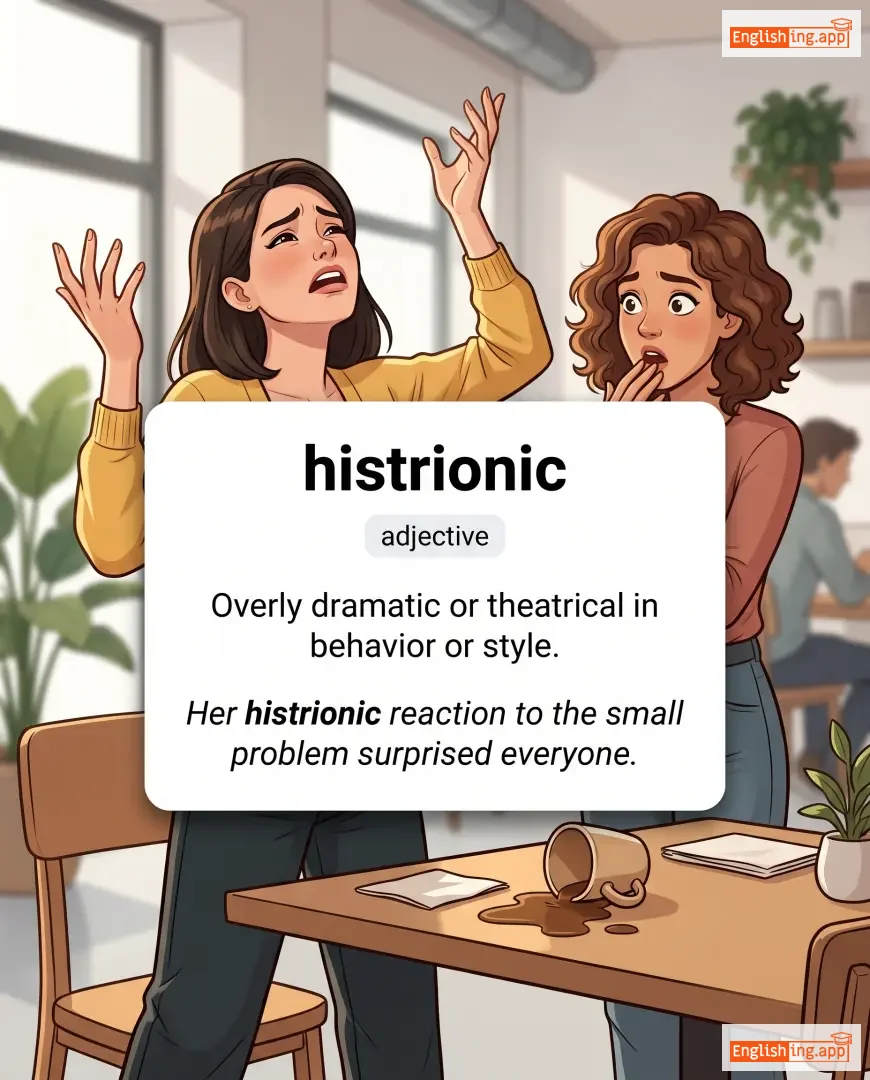
histrionic definition card — visual illustration of the meaning
adjective
/ˌhɪstriˈɒnɪk/
черезмерно драматичный (cherezmerno dramatichny)

Overly dramatic or theatrical in behavior or style.

"Her histrionic reaction to the small problem surprised everyone."

"Её истерическая реакция на маленькую проблему удивила всех." (eyo isterićeskaya reakciya na malen'kuyu problemu udivila vsekh.)
verb
/hɪt/
ударить (udarit)

to strike someone or something with force

"He accidentally hit the ball into the window."

"он случайно ударил мяч в окно." (on sluchayno udaril myach v okno.)
noun
/haɪv/
ульи (ul'i)

A structure where bees live and produce honey; also a place full of busy activity.

"The office was a hive of activity before the deadline."

"Офис был как улей активности до дедлайна." (Ofis byl kak ul'ei aktivnosti do dedlaina.)
verb
/hɔːrd/
накапливать (nakaplivat)

to accumulate and hide away a large supply of something, often secretly

"During the crisis, many people began to hoard food and water."

"Во время кризиса многие люди начали накапливать еду и воду." (Vo vremya krizisa mnogie lyudi nachali nakaplivat' yedu i vodu.)
adjective
/hɔːrs/
хриплый (khriply)

having a rough, harsh, or weak voice, often due to illness or shouting

"After shouting all day at the rally, his voice was hoarse."

"После того как он кричал весь день на митинге, его голос стал хриплым." (Posle togo kak on krichal ves' den' na mitinge, ego golos stal khriplym.)
adjective
/ˈhɔːri/
серый, старый (seryy, staryy)

gray or white with age; very old and respected

"The hoary oak tree stood as a witness to centuries of history."

"Старый дуб стоял как свидетель столетий истории." (Staryy dub stoyal kak svidetel' stoletiy istorii.)
noun
/hoʊks/
обман, ложь (obman, lozh)

a trick or false story meant to deceive people

"The news about aliens landing turned out to be a hoax."

"Новости о приземлении инопланетян оказались обманом." (Novosti o prizemlenii inoplanetyan okazalis obmanom.)
verb
/ˈhɑːbəl/
хромать (khromat)

to walk awkwardly with difficulty, usually due to injury

"He hobbled across the room after twisting his ankle."

"Он хромал по комнате после того, как подвернул лодыжку." (On khromal po komnate posle togo, kak podvernul lodyzhku.)
noun
/ˈhɑː.bi/
хобби; любимое занятие; увлечение (hobbi, lyubimoye zanyatiye, uvlecheniye)

an activity done regularly in one's leisure time for pleasure; a pastime or recreation

"Photography became her favorite hobby after she received a camera for her birthday."

"Фотография стала её любимым хобби, когда она получила камеру на день рождения." (Fotografiya stala yeyo lyubimym hobbi, kogda ona poluchila kameru na den' rozhdeniya.)
noun
/ˈhɒki/
хоккей (khokkey)

a sport played with sticks and a ball or puck on ice or a field

"He plays hockey for the national team."

"Он играет в хоккей за национальную команду." (On igraet v khokkey za natsional'nuyu komanduy.)
noun
/ˈhɒdʒ.pɒdʒ/
беспорядок (besporyadok)

A confusing mixture of different things; a jumble.

"The essay was a hodgepodge of unrelated ideas."

"Эссе было смесью несвязанных идей." (Esse bylo smes'yu nesvyazannykh idey.)
noun
/hoʊ/
мотыга (motyga)

a gardening tool with a thin metal blade used for breaking up soil and removing weeds

"The farmer used a hoe to remove weeds from his vegetable garden."

"Фермер использовал мотыгу, чтобы удалить сорняки из своего овощного сада." (Fermer ispol'zoval motygu, chtoby udalit' sornyaki iz svoego ovozhnogo sada.)
noun
/hɔːɡ plʌm/
плоды хог (plody khog)

tropical fruit with yellow skin and sour taste

"Hog plums are often used to make pickles and chutneys."

"Плоды хог часто используются для приготовления маринадов и чатни." (Plody khog chasto ispol'zuyutsya dlya prigotovleniya marinadov i chatni.)
noun
/ˈhɒɡz.hɛd/
большая бочка (bol'shaya bochka)

A large cask or barrel, traditionally used for storing liquids like wine or beer.

"The cellar was filled with hogsheads of ale."

"Подвал был заполнен большими бочками пива." (Podval byl zapolnen bol'shimi bochkami piva.)
hold definition card — visual illustration of the meaning
verb
/hoʊld/
держать (derzhat)

to grasp, carry, or keep in position; to maintain

"Please hold the door open for me."

"Пожалуйста, держите дверь открытой для меня." (Pozhaluysta, derzhite dver' otkrytoy dlya menya.)
noun
/hoʊl/
дыра (dyra)

an opening, gap, or hollow place in a solid surface

"There is a hole in my shirt."

"На моей рубашке есть дыра." (Na moyey rubashke yest' dyra.)
noun
/ˈhɒlɪdeɪ/
отпуск (otpusk)

A day of celebration or rest when most people do not work.

"We are planning a trip during the summer holiday."

"Мы планируем поездку во время летнего отпуска." (My planirovali poezdku vo vremya letnego otpyska.)
holistic definition card — visual illustration of the meaning
adjective
/hoʊˈlɪstɪk/
целостный (tselostnyy)

considering the whole rather than just the parts; comprehensive

"The doctor took a holistic approach to treatment."

"Врач применил целостный подход к лечению." (Vrach primenil tselostnyy podkhod k lecheniyu.)
adjective
/ˈhɑlːoʊ/
пустой; полый; (pustoy; poly;)

having an empty space inside; lacking substance or meaning; insincere

"The hollow tree trunk provided shelter for small animals."

"Полый ствол дерева предоставил укрытие для мелких животных." (Polyy stvol dereva predostavil ukrytiye dlya mel'kikh zhivotnykh.)
noun
/ˈhɒl.ə.kɔːst/
холокост (holokost)

A large-scale destruction, especially by fire; historically, the genocide of Jews during World War II.

"Millions of people perished during the Holocaust."

"Миллионы людей погибли во время Холокоста." (Milliony lyudey pogibli vo vremya Holokosta.)
noun
/ˈhoʊl.stər/
кобура (kobura)

A holder or case for carrying a gun, typically worn on a belt or shoulder.

"The sheriff kept his revolver in a leather holster."

"Шериф держал свой револьвер в кожаной кобуре." (Sherif derzhal svoi revolver v kozhanoy kobure.)
adjective
/ˈhoʊli/
святой (svyatoi)

Dedicated to God or a religious purpose; sacred.

"This temple is considered a holy place."

"Этот храм считается святым местом." (Etot khram schitayetsya svyatom mestom.)
noun
/ˈhɒm.ɪdʒ/ or /ˈɑː.mɑːʒ/
дань (dan)

Special honor, respect, or tribute shown publicly.

"The statue was built as an homage to the national hero."

"Статуя была построена как дань уважения национальному герою." (Statuya byla postroyena kak dan' uvazheniya natsional'nomu geroju.)
noun
/hoʊm/
дом (dom)

the place where one lives, especially with family; a residence

"She finally returned home after a long journey."

"Она наконец вернулась домой после долгого путешествия." (Ona nakonec vernulas' domoy posle dolgogo puteshestviya.)
home appliances definition card — visual illustration of the meaning
noun
hoʊm əˈplaɪ.ənsɪz
бытовая техника (bytovaya tekhnika)

Electrical devices and machines used in households for daily tasks and convenience.

"Modern home appliances enhance convenience."

"Современная бытовая техника повышает удобство." (Sovremennaya bytovaya tekhnika povyshaet udobstvo.)
noun
/hoʊm ˈdɪstrɪkt/
родной район (rodnoy rayon)

the district where a person was born or originally comes from

"He returned to his home district after many years abroad."

"Он вернулся в свой родной район после многих лет за границей." (On vernulsya v svoy rodnoy rayon posle mnogikh let za granitsey)
noun
/ˈhoʊmlænd/
родина (rodina)

a person's native country or region

"She returned to her homeland after ten years abroad."

"Она вернулась в свою родину после десяти лет за границей." (Ona vernulas v svoyu rodinu posle desyati let za granitsey.)
adjective
/ˈhoʊmləs/
бездомный (bezdomny)

Without a home, and therefore typically living on the streets.

"The organization helps homeless people find shelter."

"Организация помогает бездомным людям найти укрытие." (Organizatsiya pomogaet bezdomnym lyudyam nayti ukrytiye.)
adjective
/ˈhoʊmli/
простой (prostoy)

Plain or unattractive in appearance; simple and comfortable in style or character.

"Despite being homely, the cottage felt warm and welcoming."

"Несмотря на свою простоту, коттедж казался теплым и гостеприимным." (Nesmotrya na svoyu prostotu, kottezh kazalsya teplym i gostepriimnym.)
noun
/ˌhoʊmiˈɑːpəθi/
гомеопатия (homeopathy)

a system of alternative medicine based on treating diseases with highly diluted substances

"He believes in homeopathy for treating common colds."
"Он верит в гомеопатию для лечения обычных простуд." (On verit v gomeopatiyu dlya lecheniya obychnyh prostud.)
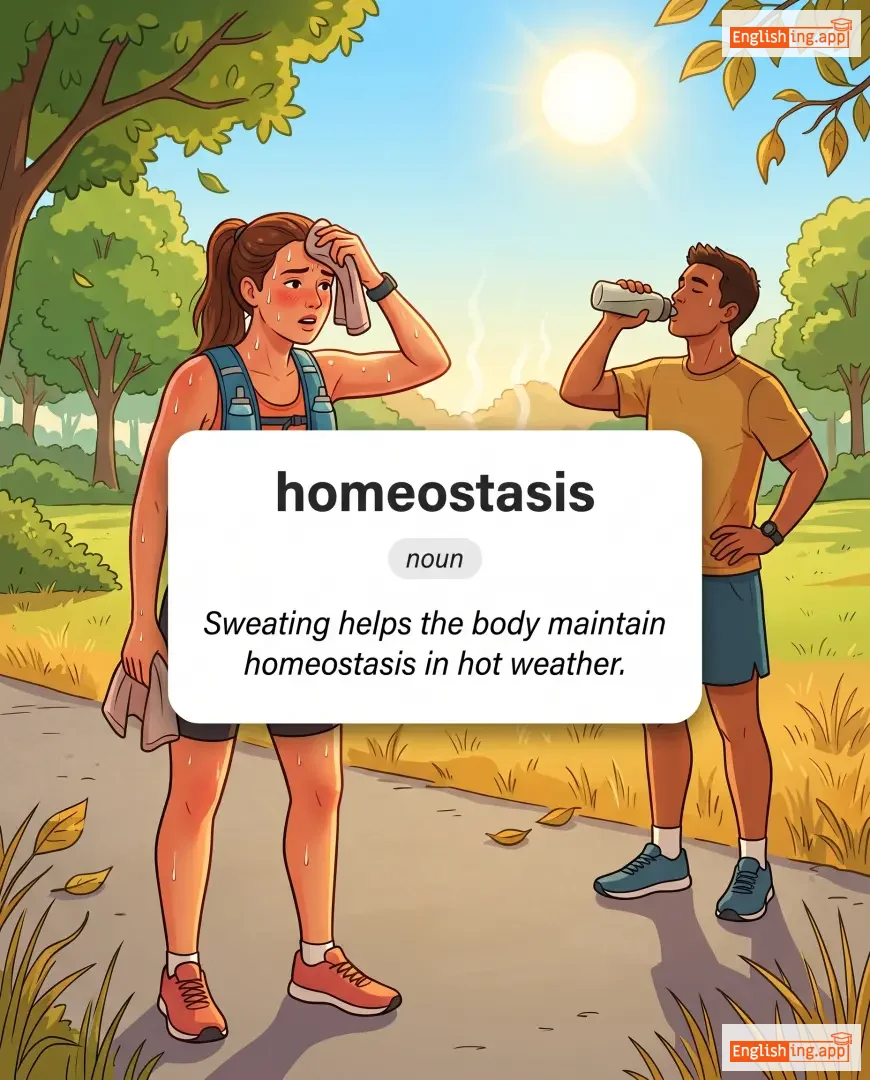
homeostasis definition card — visual illustration of the meaning
noun
/ˌhoʊmi.oʊˈsteɪsɪs/
гомеостаз (gomeostaz)

The ability of a living system or organism to maintain internal stability despite changes in external conditions.

"Sweating helps the body maintain homeostasis in hot weather."
"Потоотделение помогает организму поддерживать гомеостаз в жаркую погоду." (Potootdeleniye pomogaet organizmu podderzhivat' gomeostaz v zharkuyu pogodu.)
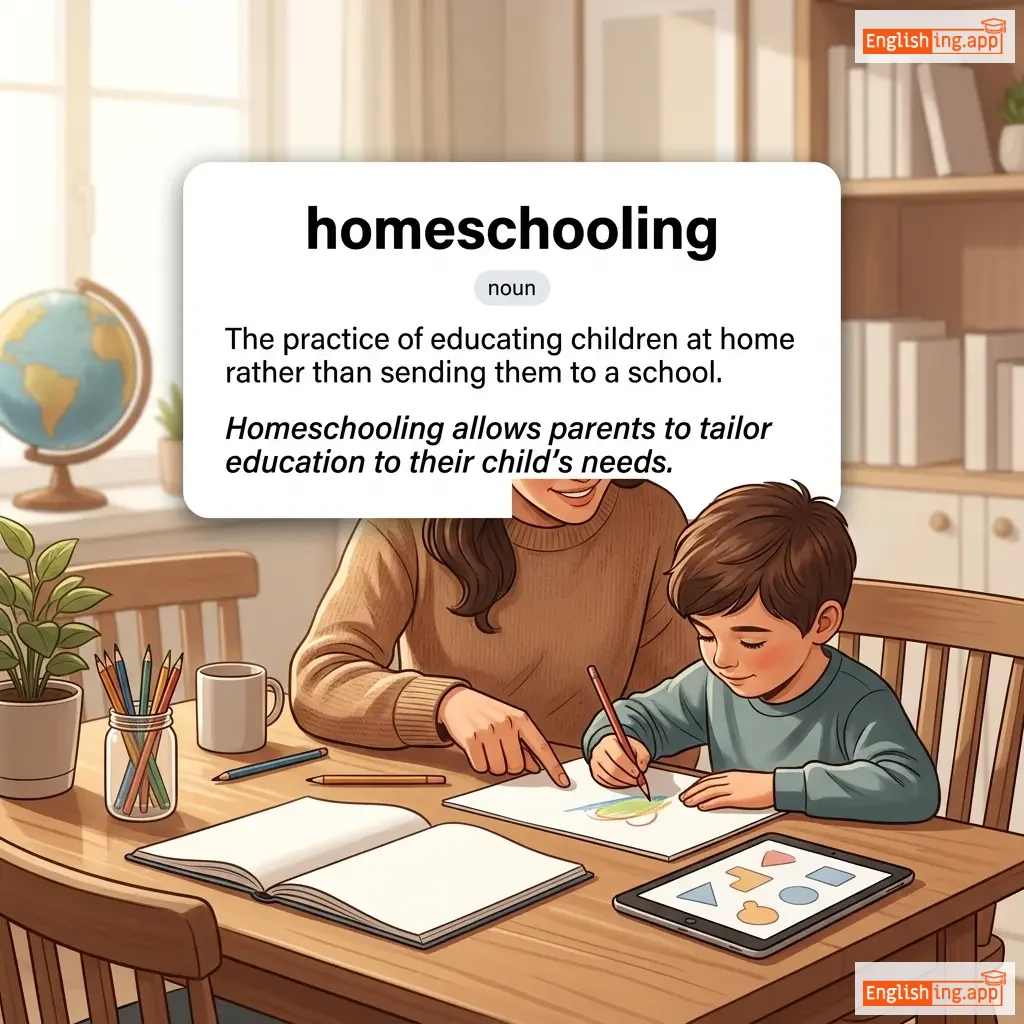
homeschooling definition card — visual illustration of the meaning
noun
ˈhoʊmˌskuː.lɪŋ
обучение на дому (obuchenie na domu)

The practice of educating children at home rather than sending them to a school.

"Homeschooling allows parents to tailor education to their child's needs."

"Обучение на дому позволяет родителям адаптировать образование к потребностям их ребенка." (Obuchenie na domu pozvolyaet roditelyam adaptirivat' obrazovanie k potrebnostyam ikh rebenka.)
adjective
/ˈhoʊmˌsɪk/
тоска по дому; скучать по дому и семье (toska po domu; skuchat' po domu i sem'e)

feeling sad because you are away from home; longing for one's home and family

"She felt homesick during her first week at college."

"Она почувствовала тоску по дому во время своей первой недели в университете." (Ona pochuvstvovala tosku po domu vo vremya svoey pervoy nedeli v universitete.)
adjective
/ˈhoʊm.spʌn/
домашний (domashniy)

Simple and unsophisticated; made at home rather than in a factory.

"She wore a homespun dress to the village festival."

"Она носила домашнее платье на деревенском фестивале." (Ona nosila domashnee plat'e na derevenskom festivale.)
noun
/ˈhoʊmwɜːrk/
домашняя работа (domashnyaya rabota)

schoolwork that a student does at home

"I need to finish my math homework before dinner."

"Мне нужно закончить домашку по математике до ужина." (Mne nuzhno zakonchit' domashku po matematike do uzhina.)
noun
/ˈhɑːmɪsaɪd/
убийство (ubiystvo)

the killing of one human being by another

"The police are investigating a case of homicide."
"Полиция расследует дело об убийстве." (Politsiya rassleduyet delo ob ubiystve.)
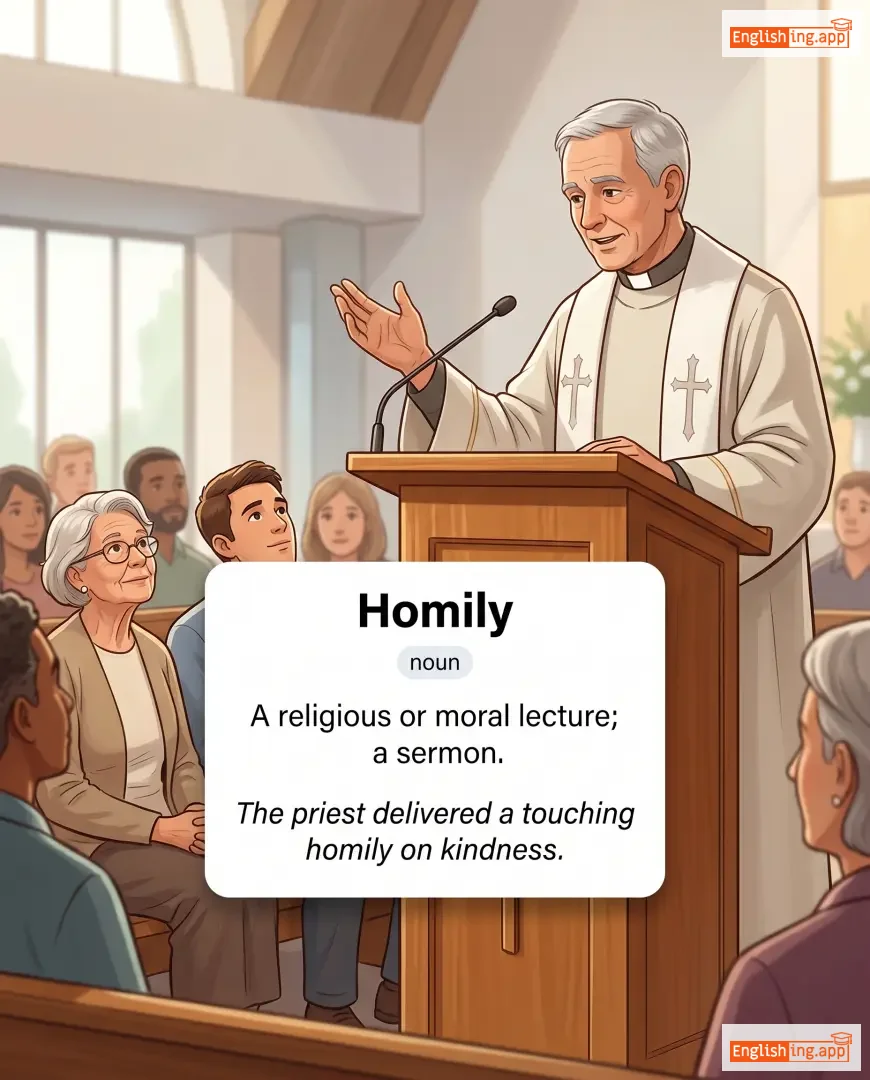
Homily definition card — visual illustration of the meaning
noun
/ˈhɑː.mə.li/
проповедь (propoved)

A religious or moral lecture; a sermon.

"The priest delivered a touching homily on kindness."

"Священник произнес трогательную проповедь о доброте." (Svyashchennik proiznes trogatelnuyu propoved' o dobrote.)
noun
/ˌhoʊmə.dʒəˈniːəti/

The quality or state of being all the same or all of the same kind.

"The cultural homogeneity of the village made it feel unified."