Словари

Словарь английского языка | Значения слов, определения и примеры

verb
/ɡruːm/
ухаживать (ukhazhivat)

to clean, brush, and care for the appearance of someone or something

"She spends hours grooming her dog every week."

"Она тратит часы на уход за своей собакой каждую неделю." (Ona tratit chasy na ukhod za svoey sobakoy kazhduyu nedelyu.)
noun
/ɡruːv/
борозда / ритм (borozda / ritm)

a long narrow cut or depression, or a rhythmic pattern in music

"The DJ kept the crowd dancing to the groove."

"Диджей заставил толпу танцевать под грув." (Didzhey zastavil tolpu tantsevat' pod gruv.)
adjective
/ɡroʊs/
отвратительный / грубый (otvratitel'nyy / gruby)

extremely unpleasant or disgusting; total before deductions

"He thought the food looked gross, but it tasted fine."

"Он думал, что еда выглядит отвратительно, но на вкус она была хорошей." (On dumal, chto yeda vyglyadit otvratitel'no, no na vkus ona byla khoroshey.)
adjective
/ɡroʊˈtɛsk/

comically or repulsively ugly or distorted

"The sculpture was so grotesque that it frightened the children."

noun
/ˈɡrɑːtoʊ/
грот (grot)

a small picturesque cave, often artificial

"Tourists visited the grotto hidden behind the waterfall."

"Туристы посетили грот, скрытый за водопадом." (Turisty posetili grot, skrytyy za vodopadom.)
noun/verb
/ɡraʊtʃ/
ворчун (vorchun)

a person who complains a lot or to complain in a grumpy way

"He is such a grouch in the morning before coffee."

"Он всегда ворчит по утрам перед кофе." (On vsegda vorchit po utram pered kofe.)
noun/verb
/ɡraʊnd/
земля (zemlya)

the solid surface of the earth; to prohibit someone (often a child) from going out

"The children played on the ground near the house."

"Дети играли на земле рядом с домом." (Deti igrali na zemle ryadom s domom.)
noun
/ˈɡraʊnd kruː/
наземная команда (nazemnaya komanda)

a team of people who maintain and service aircraft on the ground

"The ground crew prepared the plane for takeoff."

"Наземная команда подготовила самолет к взлету." (Nazemnaya komanda podgotovila samolet k vzletu.)
noun
/ˈɡraʊnd flɔːr/
первый этаж (pervyy etazh)

the floor of a building at ground level; the starting level of an organization or activity

"The grocery shop is located on the ground floor of the building."
"Продуктовый магазин находится на первом этаже." (Produktovyy magazin nakhoditsya na pervom etazhe)
groundbreaking definition card — visual illustration of the meaning
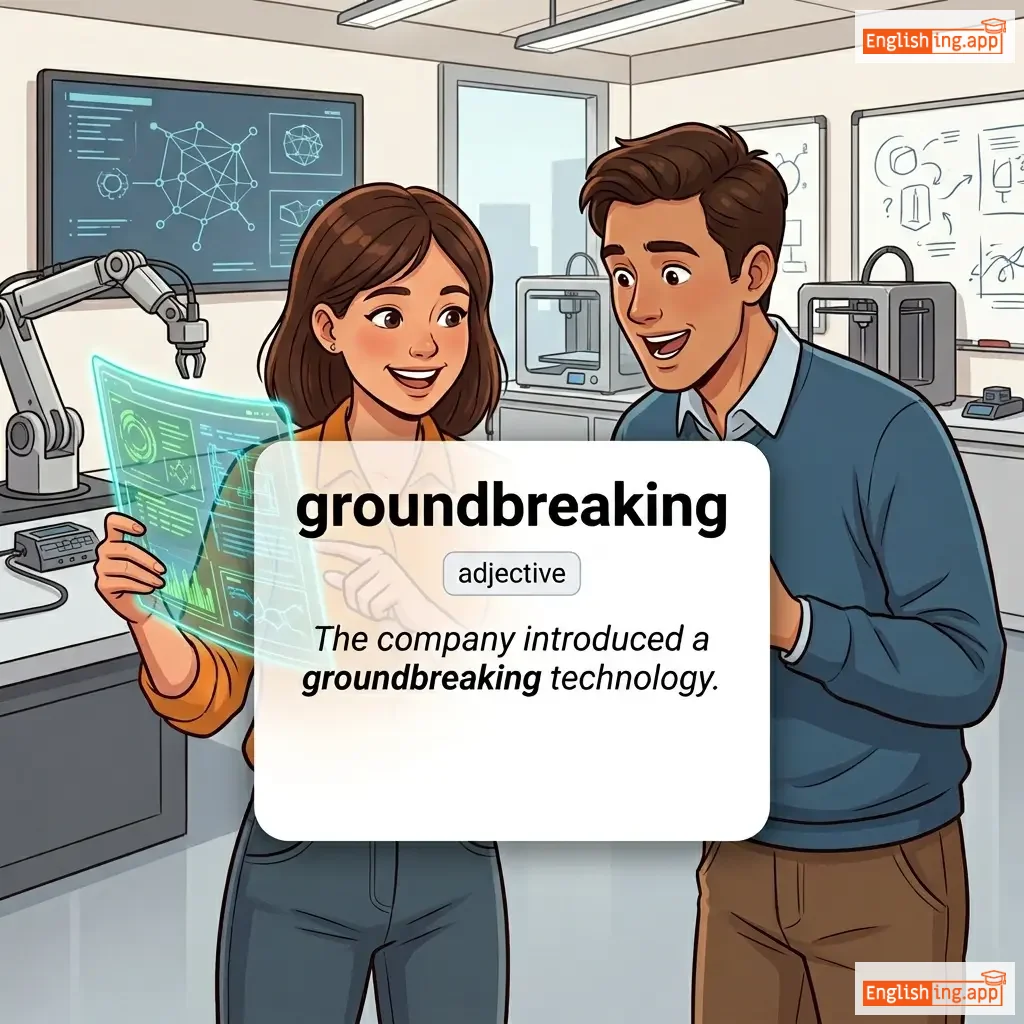
adjective
ˈɡraʊndˌbreɪ.kɪŋ
новаторский (novatorskiy)

Innovative and pioneering; introducing new ideas or methods that change conventional approaches.

"The company introduced a groundbreaking technology."
"Компания представила новаторскую технологию." (Kompaniya predstavil novatorskuyu tekhnologiyu.)
grounded definition card — visual illustration of the meaning
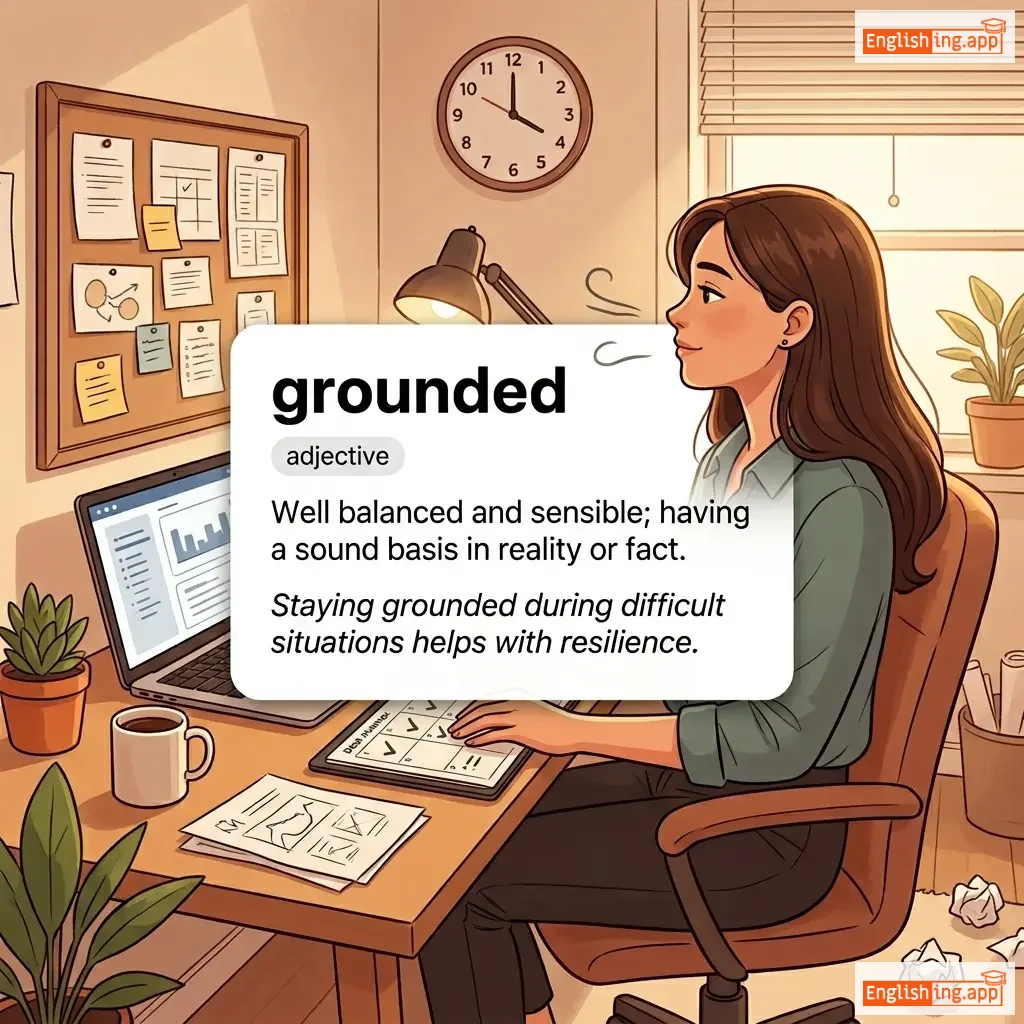
adjective
/ˈɡraʊndɪd/
приземлённый (prizemlyonnyy)

Well balanced and sensible; having a sound basis in reality or fact.

"Staying grounded during difficult situations helps with resilience."

"Оставаться приземлённым в трудных ситуациях помогает развивать устойчивость." (Ostavat'sya prizemlyonnyym v trudnykh situatsiyakh pomogaet razvivaty ustoychivost'.)
adjective
/ˈɡraʊnd.ləs/
бессмысленный; необоснованный (bessmyslennyy; neobosnovannyy)

without foundation or justification; baseless

"His accusations against her were completely groundless."

"Его обвинения против нее были совершенно необоснованными." (Yego obvineniya protiv neyo byli sovershenno neobosnovannymi.)
noun, verb
/ɡruːp/
группа (gruppa)

A number of people or things considered together; to arrange things or people into categories.

"The students formed a study group."
"Студенты создали учебную группу." (Studenty sozdayli uchebnuyu gruppu.)
grouse definition card — visual illustration of the meaning
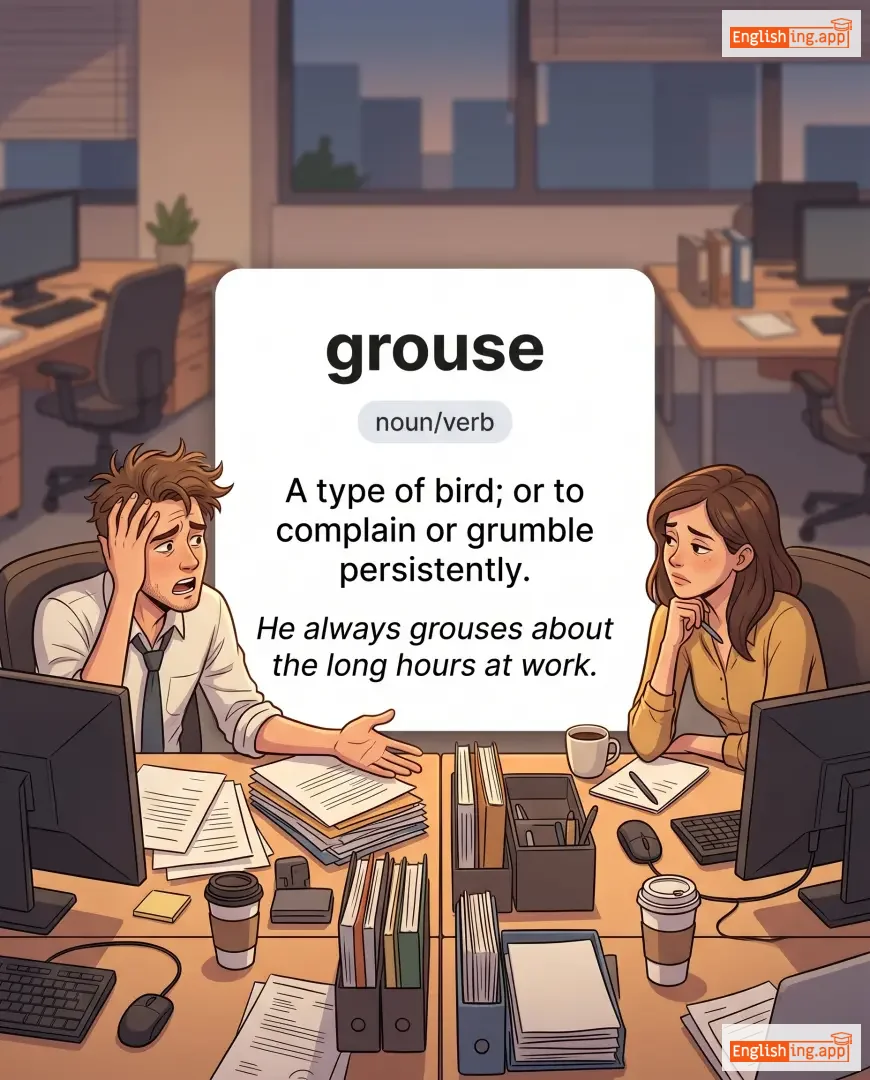
noun/verb
/ɡraʊs/
жаловаться / вид птицы (zhalovatsya / vid ptitsy)

A type of bird; or to complain or grumble persistently.

"He always grouses about the long hours at work."

"Он всегда жалуется на долгие часы работы." (On vsegda zhaluetsya na dolgye chasy raboty.)
noun
/ɡroʊv/
рощица / маленький сад (roshchitsa / malen'kiy sad)

A small group of trees growing close together.

"They walked through the orange grove."

"Они шли через апельсиновую рощу." (Oni shli cherez apelsinovuyu roshchu.)
verb
/ˈɡrʌvəl/

To act in an excessively humble or submissive way to gain favor.

"He groveled before his boss to avoid punishment."
grow definition card — visual illustration of the meaning
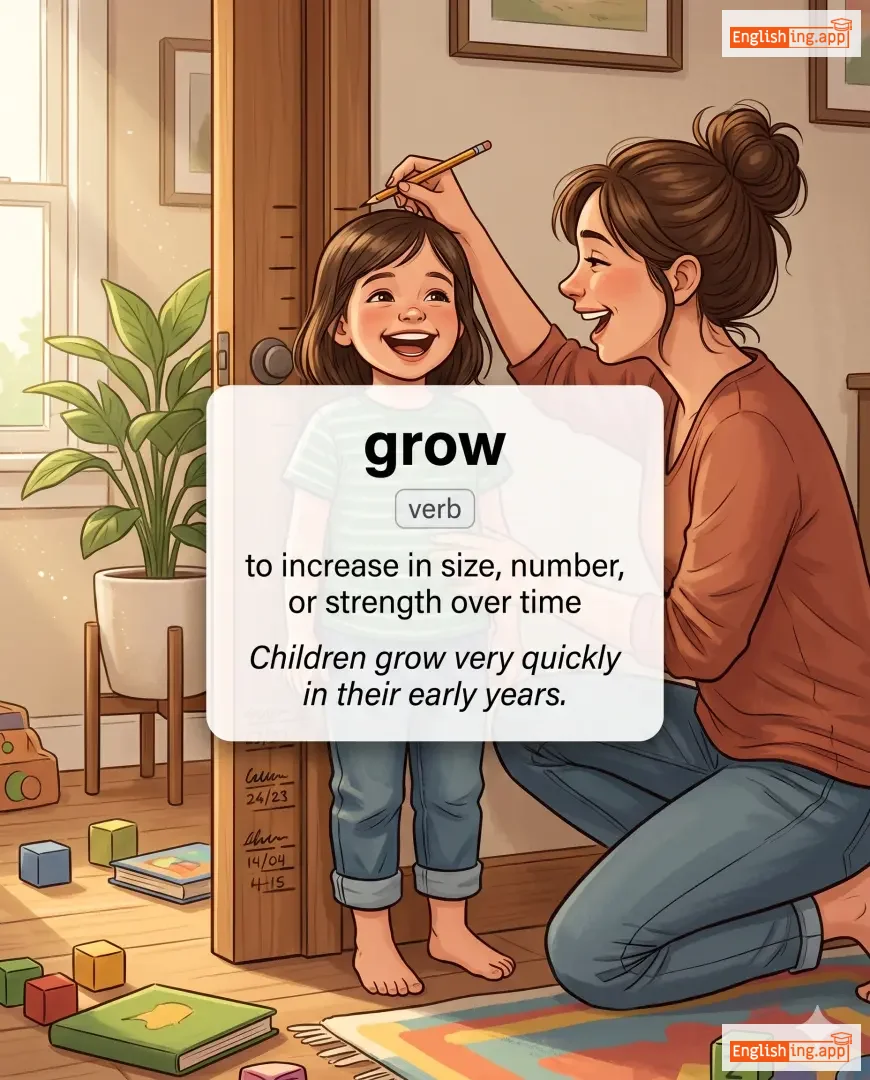
verb
/ɡroʊ/
расти (rasti)

to increase in size, number, or strength over time

"Children grow very quickly in their early years."

"Дети растут очень быстро в свои первые годы." (Deti rastut ochen' bystro v svoi pervye gody.)
verb
/ˈɡroʊ.ɪŋ/
растущий (rastushchiy)

continuously increasing or developing

"There is a growing demand for renewable energy."

"Существует растущий спрос на возобновляемую энергию." (Sushchestvuet rastushchiy spros na vozobnovlyaemuyu energiyu.)
verb/noun
/ɡraʊl/
рычать (rychat)

To make a low, guttural sound, often in anger (by animals or humans).

"The dog growled at the stranger."

"Собака рычала на незнакомца." (Sobaka rychala na neznamtsa.)
Growth definition card — visual illustration of the meaning
noun
/ɡroʊθ/
рост (rost)

the process of increasing in size, number, or importance

"The company has shown remarkable growth in the last year."

"Компания продемонстрировала значительный рост в прошлом году." (Kompaniya prodemonstrirovala znachitel'nyy rost v proshlom godu.)
growth mindset definition card — visual illustration of the meaning
noun
/ɡroʊθ ˈmaɪnd.sɛt/
мышление роста (myshlenie rosta)

A mindset that believes in learning, developing, and improving skills.

"A growth mindset helps individuals embrace challenges."

"Мышление роста помогает людям преодолевать трудности." (Myshlenie rosta pomogaet lyudyam preodolevat' trudnosti.)
noun/verb
/ɡrʌdʒ/

A persistent feeling of ill will or resentment from a past insult or injury.

"She still holds a grudge against him for what happened years ago."

adjective
/ˈɡrʌdʒɪŋ/
неохотный (neokhotny)

Reluctant or unwilling; given or allowed only with hesitation.

"She gave him a grudging smile after the argument."

"Она дала ему неохотную улыбку после ссоры." (Ona dala emu neokhotnuyu ulybku posle ssory.)
noun
/ˈɡruːəl/
жидкая еда, приготовленная путем варки злаков в воде или молоке (zhidkaya yeda, prigotovlennaya putyom varki zlakov v vode ili moloke)

A thin liquid food made by boiling cereal (like oats) in water or milk.

"The poor children were given a bowl of gruel each morning."

"Бедным детям каждое утро давали тарелку жидкой пищи." (Bednym dityam kazhdoe utro davali tarelku zhidkoy pishchi.)
adjective
/ˈɡruːəlɪŋ/
изнуряющий (iznuryayushchiy)

Extremely tiring and demanding.

"The athletes faced a grueling training session."

"Атлеты столкнулись с изнуряющей тренировкой." (Atlety stolknulis' s iznuryayushchey trenirovkoy.)
adjective
/ˈɡruːsəm/
ужасный (uzhasnyy)

Causing horror or disgust.

"The police discovered a gruesome crime scene."

"Полиция обнаружила ужасную сцену преступления." (Politsiya obnaruzhila uzhasnuyu stseny prestupleniya.)
adjective
/ɡrʌf/
грубый (grubyy)

Rough or stern in manner, speech, or voice.

"Despite his gruff manner, he was very kind-hearted."

"Несмотря на его грубое поведение, он был очень добрым." (Nesmotrya na ego gruboye povedeniye, on byl ochen' dobrym.)
verb
/ˈɡrʌmbəl/
бормотать (bormotat)

to complain quietly or in a low voice

"She often grumbles about the traffic."

"Она часто бормочет по поводу пробок." (Ona chasto bormochet po povodu probok.)
adjective
/ˈɡrʌm.pi/
сердитый; раздражительный; (serdityy; razdrazhitel'nyy;)

bad-tempered and irritable; easily annoyed

"He was grumpy all morning because he didn't sleep well."

"Он был сердит весь утро, потому что плохо спал." (On byl serdityy ves' utro, potomu chto plokho spal.)
verb
/ɡrʌnt/
хрюкать (khryukat)

to make a low, rough sound, often when exerting effort or expressing annoyance

"He grunted as he lifted the heavy box."

"Он хрюкал, поднимая тяжелую коробку." (On khryukal, podnimaya tyazholuyu korobku.)
noun/verb
/ˌɡærənˈtiː/
гарантия (garantiya)

a formal promise or assurance, especially about the quality or durability of a product

"The company guarantees a refund if the product is faulty."
"Компания гарантирует возврат денег, если продукт неисправен." (Kompaniya garantiyeit vozvrat deneg, esli produkt neispraven.)
Guard definition card — visual illustration of the meaning
noun/verb
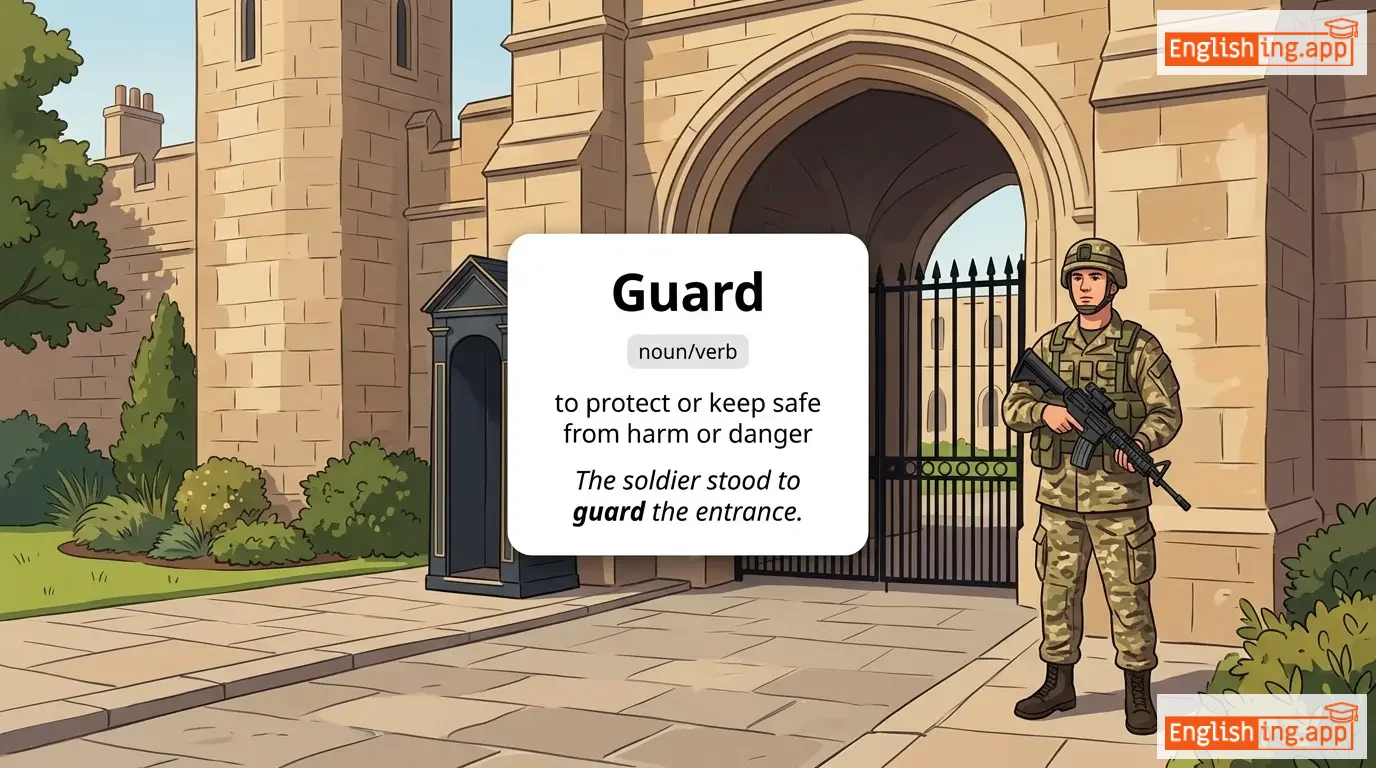
/ɡɑːrd/
страж / охранять (strazh / okhranyat)

to protect or keep safe from harm or danger

"The soldier stood to guard the entrance."

"Солдат стоял, чтобы охранять вход." (Soldat stoyal, chtoby okhranyat' vkhod.)
adjective
/ˈɡɑːrdɪd/
осторожный (ostorozhny)

Cautious and careful in speech or action, often to avoid giving too much away.

"He gave a guarded reply to the journalist."

"Он дал осторожный ответ журналисту." (On dal ostorozhnyy otvet zhurnalistu.)
👨‍👩‍👧‍👦

Guardian (гардийан)

noun
/ˈɡɑːr.di.ən/
опекун; страж (opekun; strazh)

a defender, protector, or keeper; a person legally responsible for the care of someone unable to manage their own affairs

"After her parents died, her uncle became her legal guardian and took care of her."

"После смерти ее родителей, ее дядя стал ее законным опекуном и позаботился о ней." (Posle smerti yeye roditeley, yeye dyadya stal yeye zakonnyim opekonom i pozabotilsya o ney.)
noun
/ˈɡwɑːvə/
гуава (guava)

a tropical fruit with sweet pink or white flesh and small seeds

"I love eating fresh guava from the tree in our garden."

"Я люблю есть свежую гуаву с дерева в нашем саду." (Ya lyublyu yest' svezhuyu guavu s dereva v nashem sadu)
noun
/ˈɡɜːrn.zi/
свитер (sviter)

a knitted sweater; a type of woolen pullover

"He wore a warm guernsey during the cold winter evening."

"Он носил теплый свитер в холодный зимний вечер." (On nosil teplyy sviter v kholodnyy zimniy vecher.)
noun
/ɡəˈrɪlə/
партизан (partizan)

a member of a small independent group taking part in irregular fighting, typically against larger forces

"The guerrilla fighters used ambushes to attack enemy positions."
"Партизанские бойцы использовали засады для атаки на вражеские позиции." (Partizanskie boytsy ispol'zovali zasady dlya ataki na vrageskie pozitsii.)
guess definition card — visual illustration of the meaning
verb
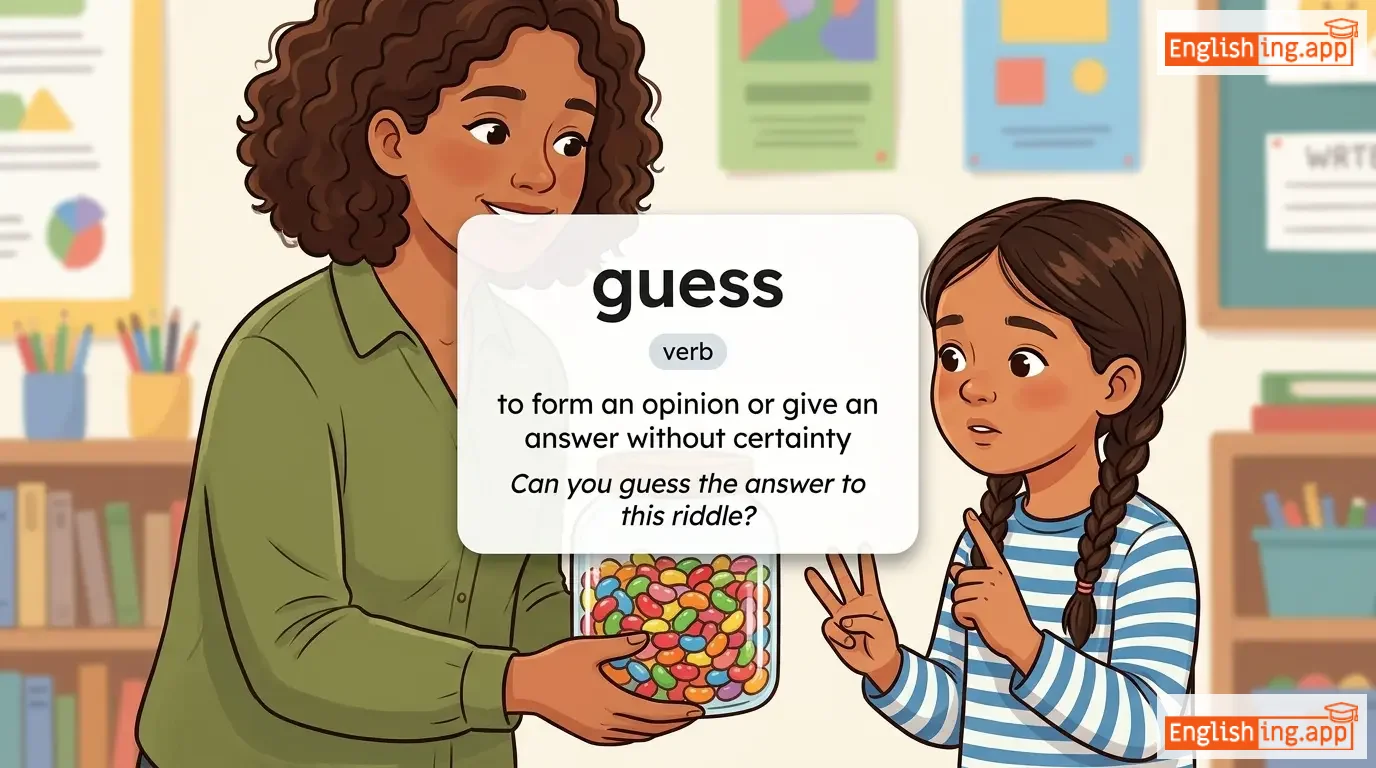
/ɡɛs/
угадать (ugadat)

to form an opinion or give an answer without certainty

"Can you guess the answer to this riddle?"

"Можешь угадать ответ на эту загадку?" (Mozhesh' ugadat' otvet na etu zagadku?)
noun
/ɡɛst/
гость (gost)

a person invited to visit or stay in someone's home or attend an event

"We welcomed our guest with a warm smile."

"Мы встретили нашего гостя с тёплой улыбкой." (My vstretili nashego gostya s tyoploy ulybkoy.)
noun/verb
/ɡəˈfɔː/
громкий смех (gromkiy smekh)

a loud and boisterous laugh

"The audience guffawed at the comedian’s joke."

"Зрители громко смеялись над шуткой комика." (Zriteli gromko smeyalis' nad shutkoy komika.)
noun
/ˈɡaɪdəns/
консультация (konsultatsiya)

help or advice that is given to someone about what to do

"She sought her teacher’s guidance before making a decision."
"Она обратилась за консультацией к своему учителю перед принятием решения." (Ona obratilas' za konsultatsiyey k svoemu uchitelyu pered prinyatiem resheniya.)
guide definition card — visual illustration of the meaning
verb, noun
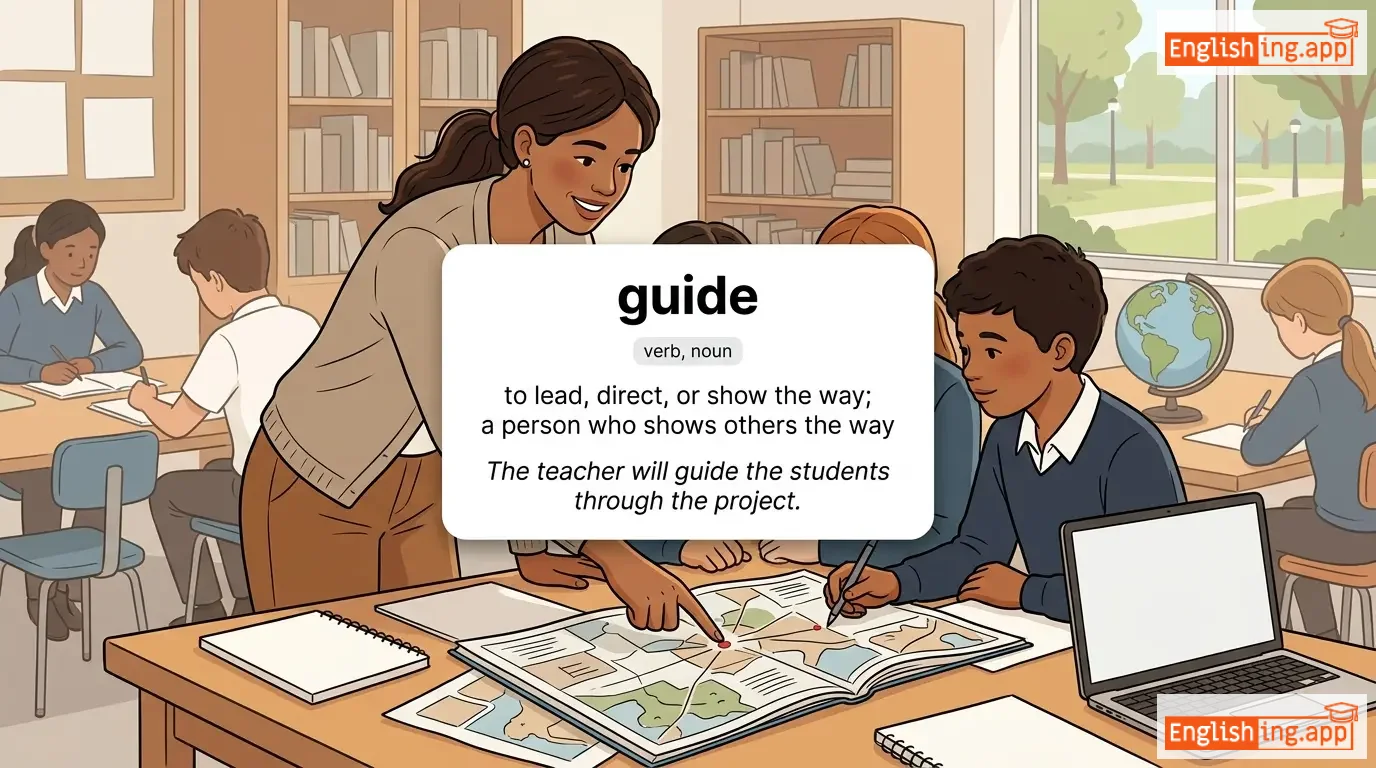
/ɡaɪd/
счастье (schast'ye)

to lead, direct, or show the way; a person who shows others the way

"The teacher will guide the students through the project."

"Она не могла скрыть своего счастья, когда получила награду." (Ona ne mogla skryt' svoego schast'ya, kogda poluchila nagradu.)
noun
/ˈɡaɪd.laɪn/
руководство (rukovodstvo)

a rule, instruction, or principle that provides direction

"The company issued new guidelines for employee safety."
"Компания выпустила новые руководства по безопасности сотрудников." (Kompaniya vypustila novye rukovodstva po bezopasnosti sotrudnikov.)
guidelines definition card — visual illustration of the meaning
noun
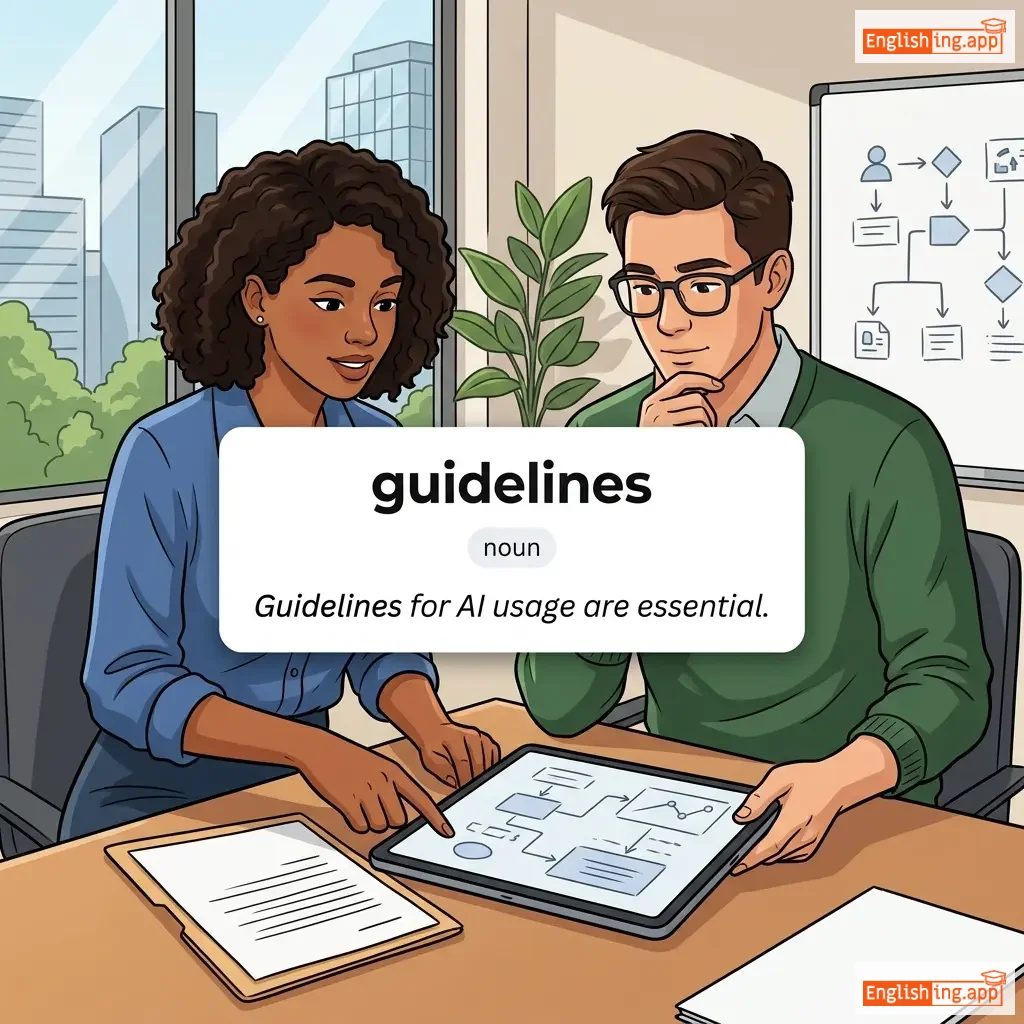
ˈɡaɪd.laɪnz
руководящие принципы (rukovodyashchie printsipy)

Rules or instructions that are given by an official organization telling you how to do something

"Guidelines for AI usage are essential."

"Руководящие принципы использования ИИ необходимы." (Rukovodyashchie printsipy ispol'zovaniya II neobkhodimy.)
noun
/ɡaɪl/
хитрость (khitrost)

Cleverness or cunning used to achieve a goal, often in a deceptive way

"He used guile to win the negotiation."
"Он использовал хитрость, чтобы выиграть переговоры." (On ispol'zoval khitrost', chtoby viyigrat' peregovory.)
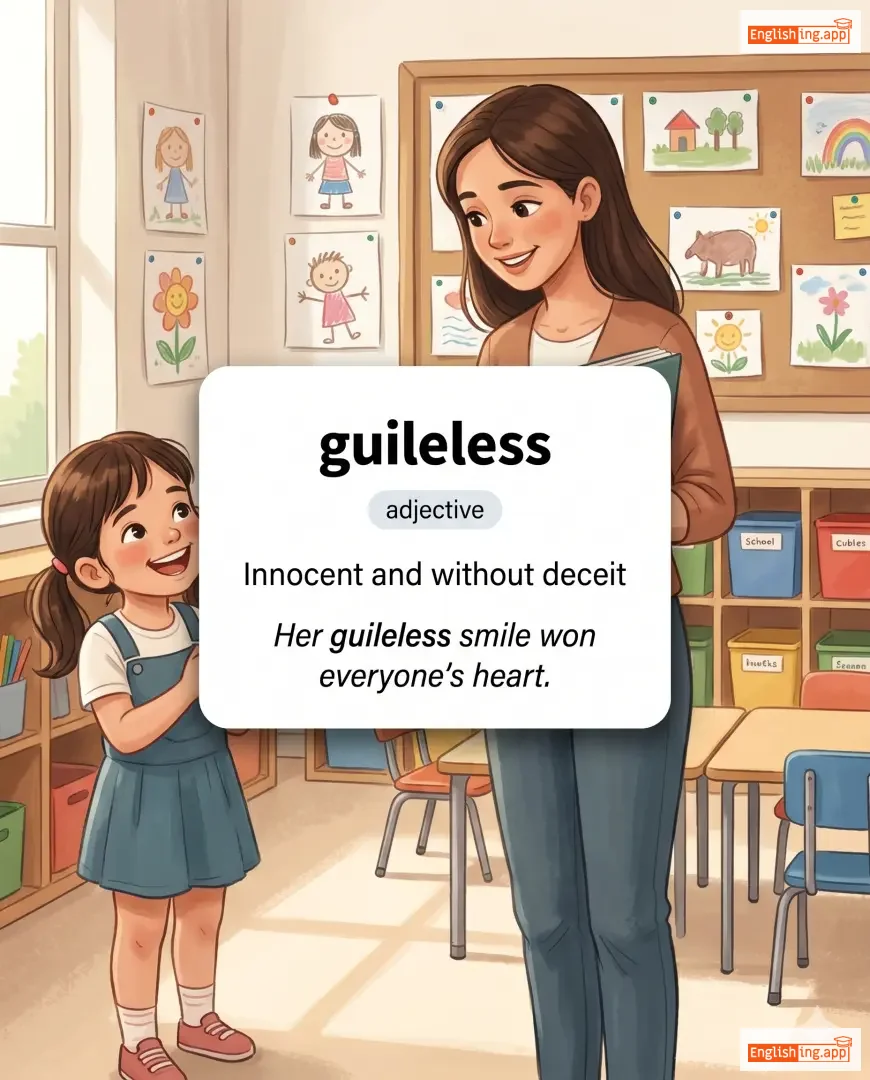
guileless definition card — visual illustration of the meaning
adjective
/ˈɡaɪlləs/
невинный (nevinnyy)

Innocent and without deceit

"Her guileless smile won everyone’s heart."

"Ее невинная улыбка завоевала сердца всех." (Eyo nevinnaia ulybka zaveovala serdtsa vsekh.)
noun
/ɡɪlt/
вина (vina)

A feeling of responsibility or remorse for an offense or wrongdoing

"She felt deep guilt after lying to her friend."

"Она почувствовала глубокое чувство вины после того, как солгала своей подруге." (Ona pochuvstvovala glubokoe chuvstvo viny posle togo, kak solgala svoey podruge.)
adjective
/ˈɡɪl.ti/
виновный (vinovnyy)

responsible for a crime or wrongdoing; feeling shame or regret

"He felt guilty after lying to his friend."

"Он почувствовал себя виновным, солгав своему другу." (On pochuvstvoval sebya vinovnym, solgav svoemu drugu.)
noun
/ˈɡɪni/
гини (бывшая британская золотая монета) (gini)

A former British gold coin; also refers to Guinea, a country in West Africa

"The antique coin was worth one guinea."
"Античная монета стоила одну гини." (Antichnaya moneta stoila odnu gini.)
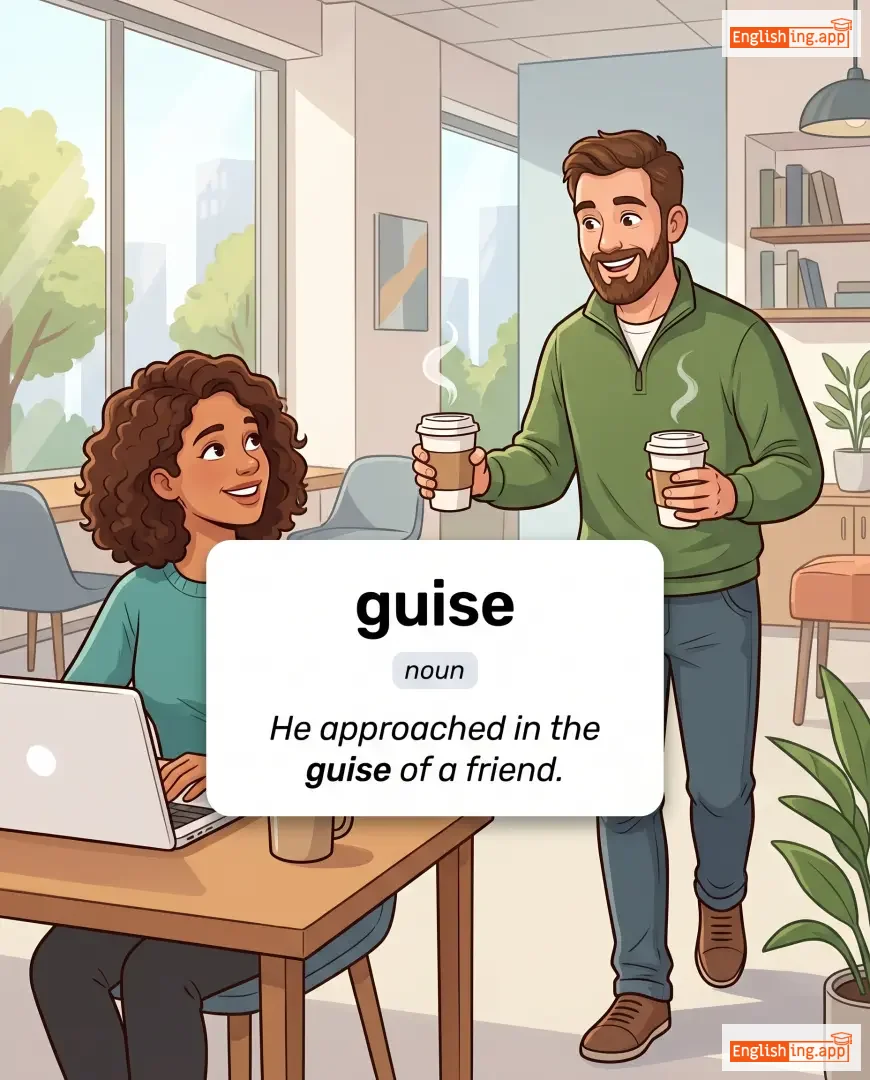
guise definition card — visual illustration of the meaning
noun
/ɡaɪz/
маскировка (maskirovka)

An external form, appearance, or manner of presentation, often hiding the true nature

"He approached in the guise of a friend."

"Он подошел под маскировкой друга." (On podoshel pod maskirovkoy druga.)