Словари

Словарь английского языка | Значения слов, определения и примеры

noun
/ɡrəˈtjuːɪti/
чаевые (chaevye)

A sum of money given as a tip or a retirement benefit.

"The waiter received a generous gratuity for his excellent service."

"Официант получил щедрые чаевые за отличный сервис." (Ofitsiant poluchil shchedrye chaevye za otlichnyy servis.)
noun, adjective
/ɡreɪv/
могила (mogila)

A place where someone is buried; also used to describe something serious or solemn.

"He visited his grandfather's grave every year."

"Он посещал могилу своего деда каждый год." (On poseschal mogilu svoego deda kazhdyy god.)
/ˈɡrævəl/
гравий (gravi)

Small stones and pebbles, often mixed with sand, used for paths, roads, and construction.

"The driveway was covered with gravel."

"Подъезд был покрыт гравием." (Pod'yezd byl pokryt graviem.)
noun
/ˈɡreɪvstoʊn/
надгробие (nadgrobiye)

A stone that marks a grave, usually inscribed with the name of the deceased.

"The gravestone had her name carved beautifully."

"На надгробии было красиво выгравировано её имя." (Na nadgrobii bylo krasivo vigravirovanno ee imya.)
noun
/ˈɡreɪv.jɑːrd/
кладбище (kladbishche)

an area of land set aside for burial of the dead; a cemetery

"The old graveyard near the church dates back to the 18th century."
"Старое кладбище рядом с церковью датируется XVIII веком." (Staroye kladbishche ryadom s tserkov'yu datiruetsya XVIII vekom.)
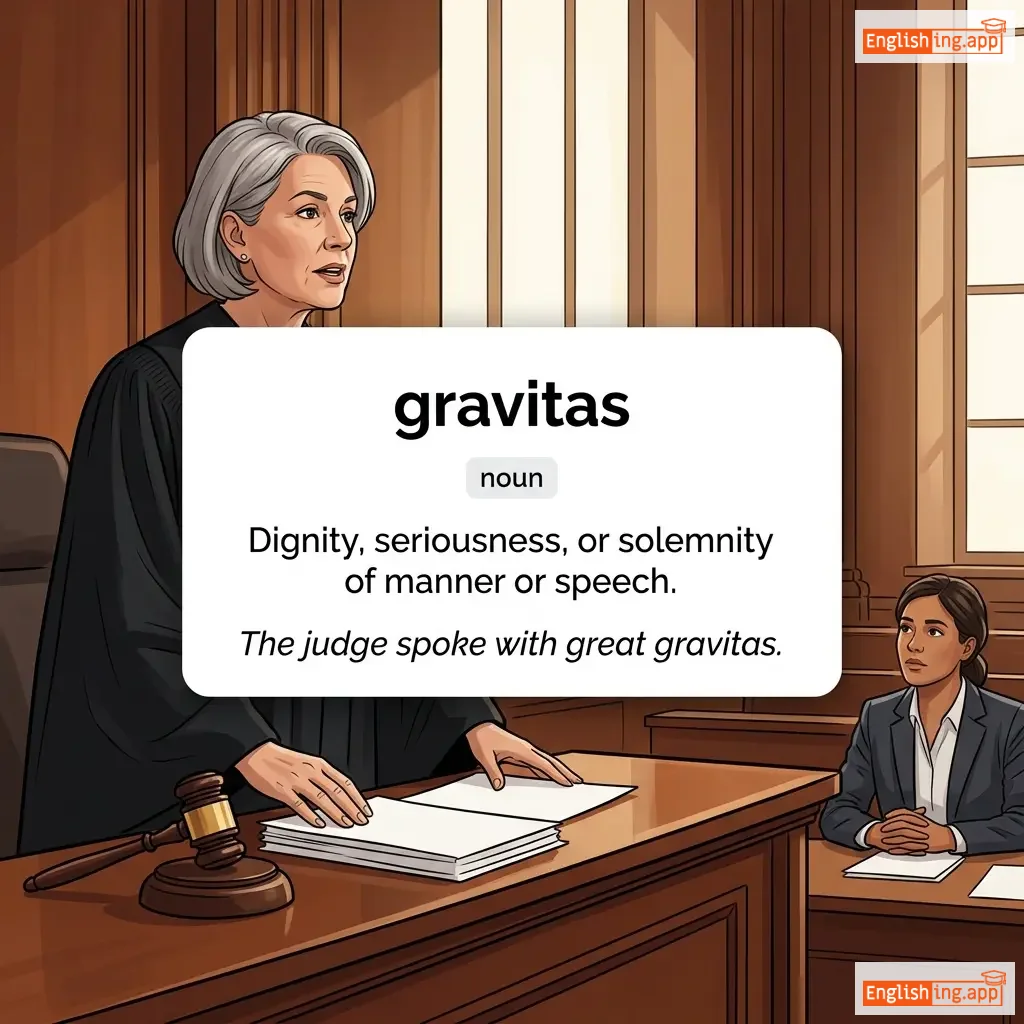
gravitas definition card — visual illustration of the meaning
noun
/ˈɡræv.ɪ.tæs/
гравитация (gravitatsiya)

Dignity, seriousness, or solemnity of manner or speech.

"The judge spoke with great gravitas."
"Судья говорил с большой гравитас." (Sudya govoril s bol'shoy gravitas.)
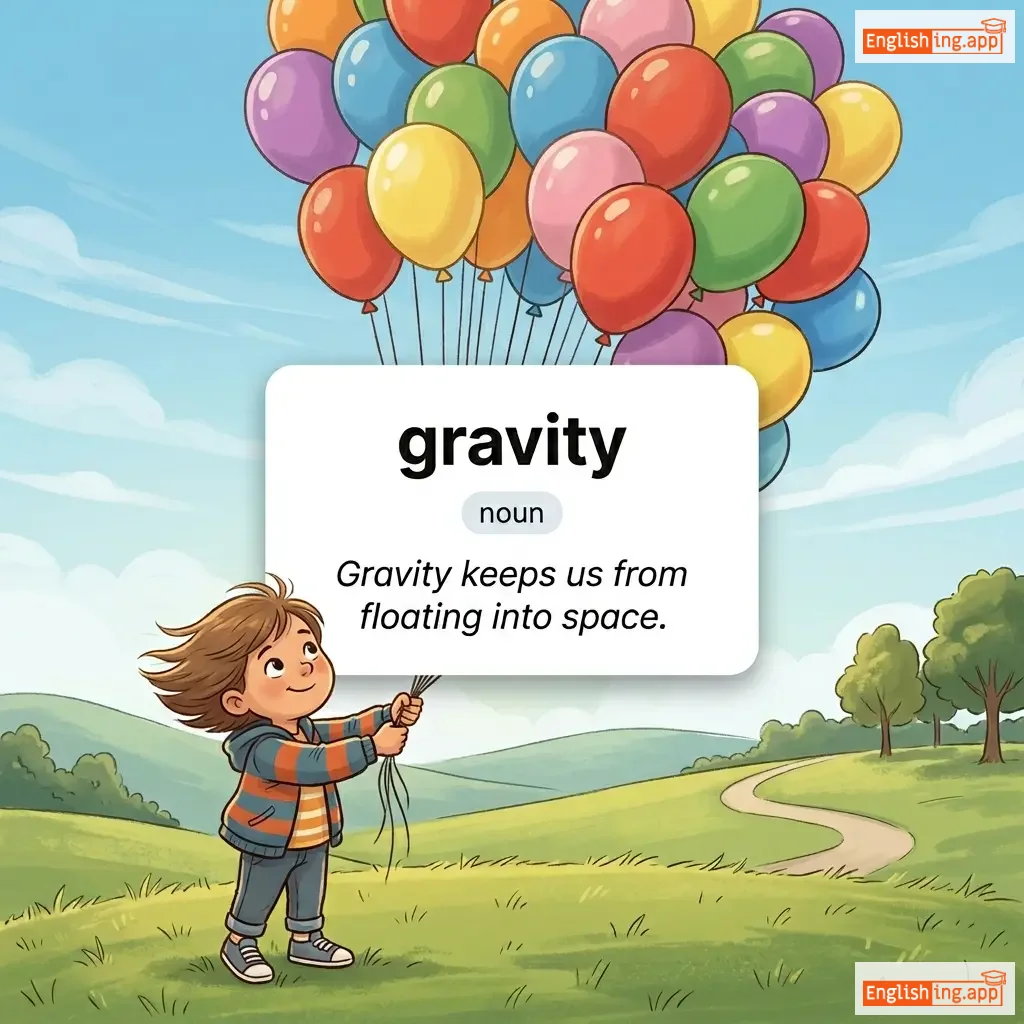
gravity definition card — visual illustration of the meaning
noun
/ˈɡrævəti/
гравитация (gravitatsiya)

The natural force that attracts objects toward the center of the earth; seriousness or importance.

"Gravity keeps us from floating into space."

"Гравитация не даёт нам улететь в космос." (Gravitatsiya ne dayot nam uletet v kosmos.)
adjective, noun
/ɡreɪ/
счастье (schast'ye)

A color between black and white; also describes dull or gloomy situations.

"The sky turned gray before the storm."

"Она не смогла скрыть своего счастья, когда получила награду." (Ona ne smogla skryt' svoego schast'ya, kogda poluchila nagradu.)
verb
/ɡreɪz/
счастье (schast'ye)

To feed on grass; to touch or scrape lightly while passing.

"The cows graze in the meadow every morning."

"Она не могла скрыть своего счастья, когда получила награду." (Ona ne mogla skryt' svoego schast'ya, kogda poluchila nagradu.)
noun/verb
/ˈɡreɪzɪŋ/
пастбище (pastbishche)

The act of animals eating grass in a field; also lightly touching or scraping against something.

"Cows were grazing peacefully in the meadow."

"Коровы мирно паслись на лугу." (Korovy mirno paslis' na lugu.)
adjective
/ɡreɪt/
великий (velikiy)

Of an extent, amount, or intensity considerably above average; very good or important.

"She gave a great performance at the concert."

"Она дала отличное выступление на концерте." (Ona dala otlichnoe vystuplenie na koncerte.)
Great Wall of China definition card — visual illustration of the meaning
noun
ɡreɪt wɔːl əv ˈtʃaɪ.nə
Великая Китайская стена (Velikaya Kitayskaya stena)

A massive ancient fortification system in China, built to protect against invasions and considered one of the most famous landmarks in the world.

"The Great Wall of China is one of the most famous landmarks in the world."

"Великая Китайская стена является одним из самых известных памятников мира." (Velikaya Kitayskaya stena yavlyaetsya odnim iz samykh izvestnykh pamyatnikov mira.)
adjective (superlative)
/ˈɡreɪ.tɪst/
величайший (velichayshiy)

The highest degree of greatness; the most outstanding or important.

"He is considered one of the greatest leaders of all time."

"Он считается одним из величайших лидеров всех времен." (On schitayetsya odnim iz velichayshikh liderov vsekh vremen.)
adverb
/ˈɡreɪtli/
очень (ochen)

to a large extent or degree; very much

"She was greatly admired by her students."

"Она была сильно восхищена своими студентами." (Ona byla sil'no voskhishchena svoimi studentami.)
noun
/ɡriːd/
жадность (zhadnost)

intense and selfish desire for something, especially wealth, power, or food

"His greed for money led him to make unethical business decisions."

"Его жадность к деньгам заставила его принять неэтичные деловые решения." (Ego zhadnost' k dengam zastavila ego prinyat' neetichnye delovye resheniya.)
adjective
/ɡriːk/
Греческий (относящийся к Греции) (Grecheskiy (otnosyashchijsya k Gretsii))

relating to Greece, its people, or its language

"We enjoyed delicious Greek food at the restaurant."

"Мы наслаждались вкусной греческой едой в ресторане." (My naslazh-dalis' vkusnoy grecheskoy yedoy v restorane.)
adjective
/ɡriːn/
зеленый (zelenyi)

Of the color between blue and yellow in the spectrum; inexperienced or naive.

"The garden is full of green plants."

"Сад полон зеленых растений." (Sad polon zelyonykh rastenii.)
noun
/ɡriːn ˈtʃɪl.i/
зеленый чили (zelenyy chili)

unripe chili pepper that is green in color and has a spicy taste

"She added chopped green chili to the salad for extra heat."

"Она добавила нарезанный зеленый чили в салат для остроты." (Ona dobavila narezannyy zelyonyy chili v salat dlya ostroty.)
noun
/ɡriːn ˈkəʊ.kə.nʌt/
зелёный кокос (zelyonyy kokos)

a young coconut with green outer shell containing refreshing coconut water

"We drank fresh water from a green coconut on the beach."
"Мы пили свежую воду из зелёного кокоса на пляже." (My pili svezhuyu vodu iz zelyonogo kokosa na plyazhe.)
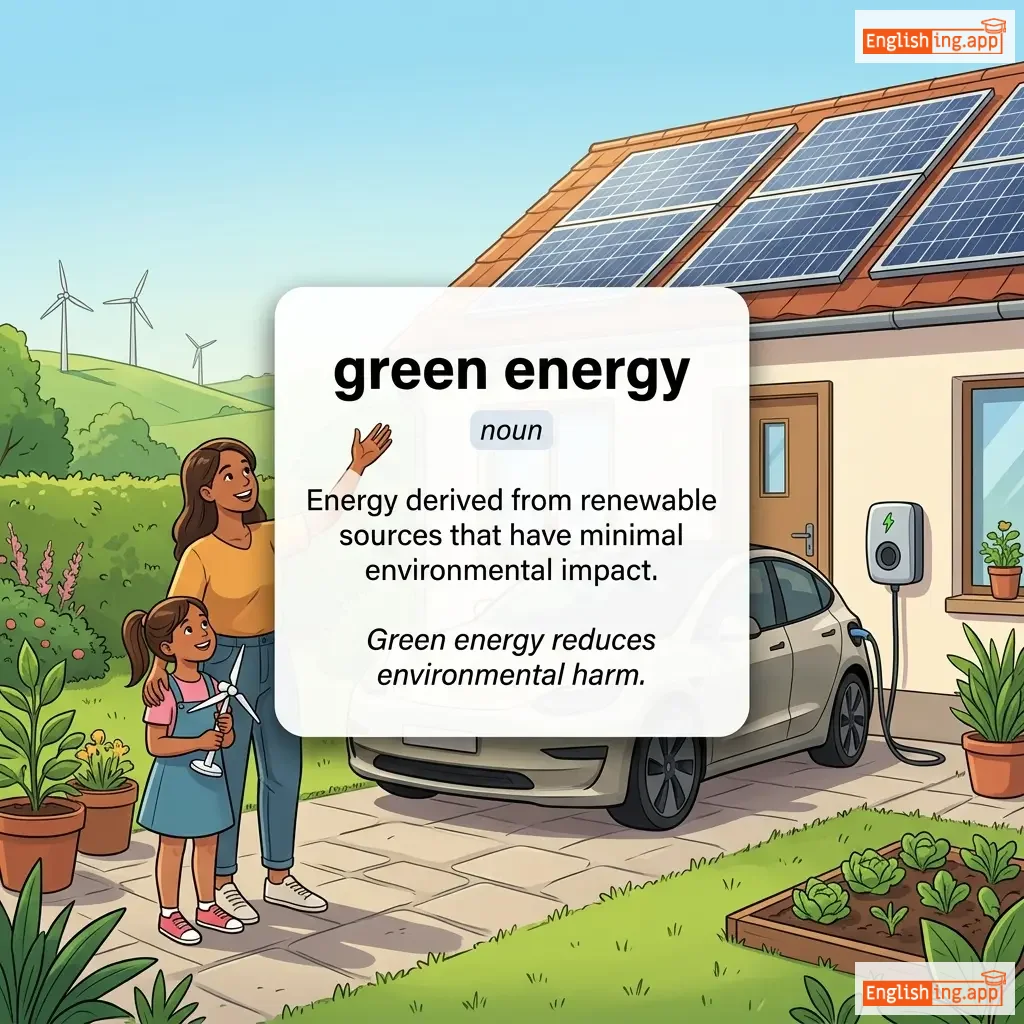
green energy definition card — visual illustration of the meaning
noun
/ˌɡriːn ˈen.ə.dʒi/
зеленая энергия (zelenaya energiya)

Energy derived from renewable sources that have minimal environmental impact.

"Green energy reduces environmental harm."

"Зеленая энергия уменьшает ущерб окружающей среде." (Zelenaya energiya umenshayet uscherb okruzhayushchey srede.)
noun
/ɡriːn ˈdʒækfruːt/
зеленый джекфрут (zelenyy dzhekfrut)

unripe fruit of the jackfruit tree, commonly used as a vegetable in cooking

"Green jackfruit is often used in curries and stews."

"Зеленый джекфрут часто используется в карри и рагу." (Zelenyy dzhekfrut chasto ispol'zuyetsya v karri i ragu.)
noun
/ɡriːn pəˈpaɪə/
непозрелая папайя (nepozrelaia papaiia)

unripe papaya fruit used as a vegetable in cooking, especially in Asian cuisine

"Green papaya salad is a popular dish in Thai cuisine."

"Салат из незрелой папайи - популярное блюдо тайской кухни." (Salat iz nezreloi papaii - popularnoe bludo tayskoi kukhni.)
noun
/ˈɡriːnhaʊs/
теплица (teplitsa)

a glass building used for growing plants, especially in cold climates

"The farmers built a large greenhouse to grow tomatoes in the winter."
"Фермеры построили большую теплицу для выращивания помидоров зимой." (Fermery postroili bol'shuyu teplitsu dlya vyrashchivaniya pomidorov zimoy.)
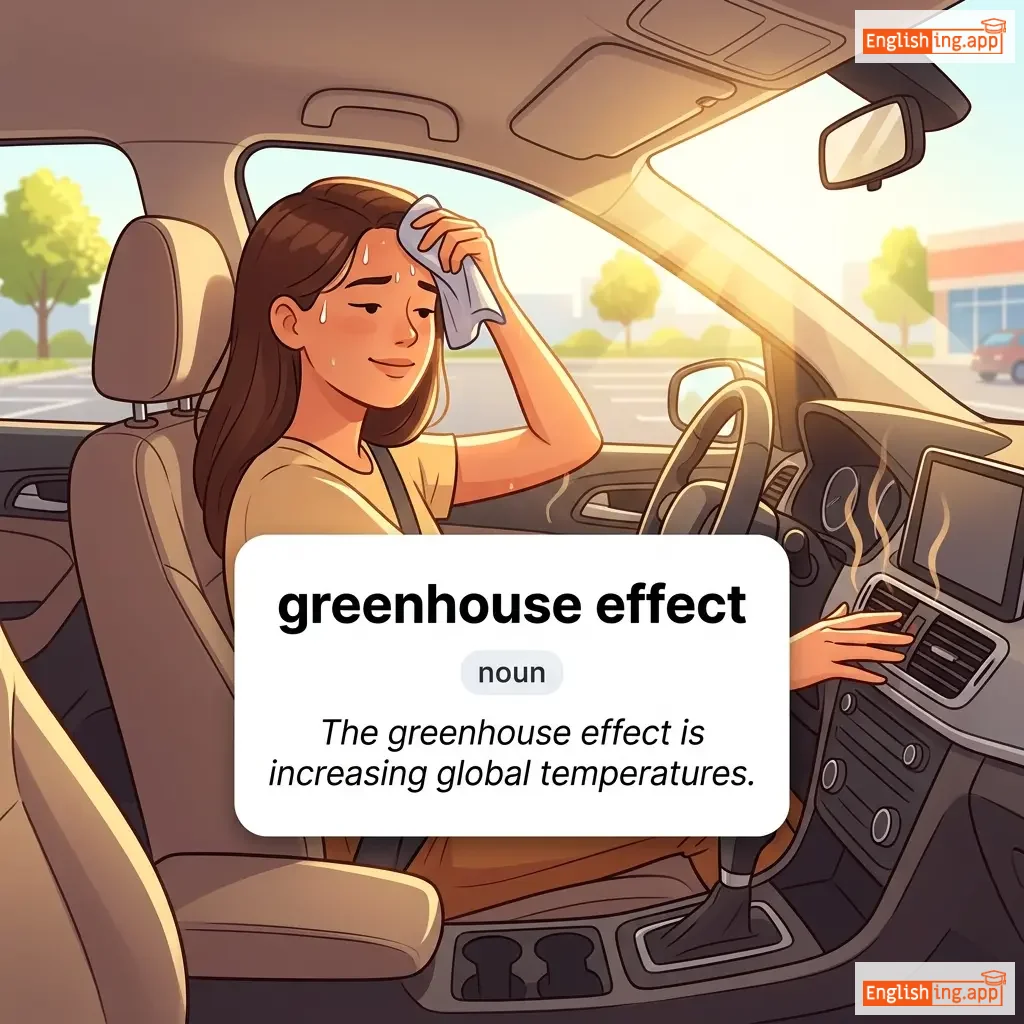
greenhouse effect definition card — visual illustration of the meaning
noun
ˈɡriːn.haʊs ɪˌfɛkt
парниковый эффект (parnikovyy effekt)

The trapping of the sun's warmth in a planet's lower atmosphere due to the greater transparency of the atmosphere to visible radiation from the sun than to infrared radiation emitted from the planet's surface.

"The greenhouse effect is increasing global temperatures."

"Парниковый эффект увеличивает глобальные температуры." (Parnikovyy effekt uvelichivayet global'nye temperatury.)
noun
/ɡriːnz/
листьевые овощи (listyevye ovoshchi)

Leafy vegetables such as spinach, lettuce, and cabbage

"Eating greens is important for good health."

"Употребление листовых овощей важно для хорошего здоровья." (Upotreblenie listovykh ovoshchey vazhno dlya khoroshego zdorov'ya.)
greet definition card — visual illustration of the meaning
verb
/ɡriːt/
приветствовать (privetstvovat)

to say hello or welcome someone politely

"She greeted the guests with a warm smile."

"Она приветствовала гостей теплой улыбкой." (Ona privetstvovala gostey teploy ulybkoy.)
gregarious definition card — visual illustration of the meaning
adjective
/ɡrɪˈɡɛəriəs/
общительный (obshchitel'nyy)

Fond of company; sociable.

"She is a gregarious person who loves meeting new people."

"Она общительная личность, которая любит встречать новых людей." (Ona obshchitel'naya lichnost', kotoraya lyubit vstrechat' novykh lyudey.)
noun
/ˌɡrɛnəˈdɪə/
гренадер (grenader)

A soldier who specialized in throwing grenades; later used to describe an elite infantryman.

"The grenadier stood proudly at the front of the regiment."

"Гренадер гордо стоял впереди полка." (Grenader gordo stoyal vperedi polka.)
adjective
/ɡreɪ/
серый (seriy)

having a color between black and white

"The grey clouds indicated that rain was coming."

"Серые облака указали на то, что дождь приближается." (Seriye oblaka ukazali na to, chto dozhd' priblizhayetsya.)
noun
/ˈɡreɪ.haʊnd/
грейхаунд (grejkhaund)

a tall, thin dog with long legs that can run very fast

"The greyhound won the race at the dog track."
"Грейхаунд выиграл гонку на собачьей дорожке." (Grejkhaund vyigral gonku na sobach'yej dorozhke.)
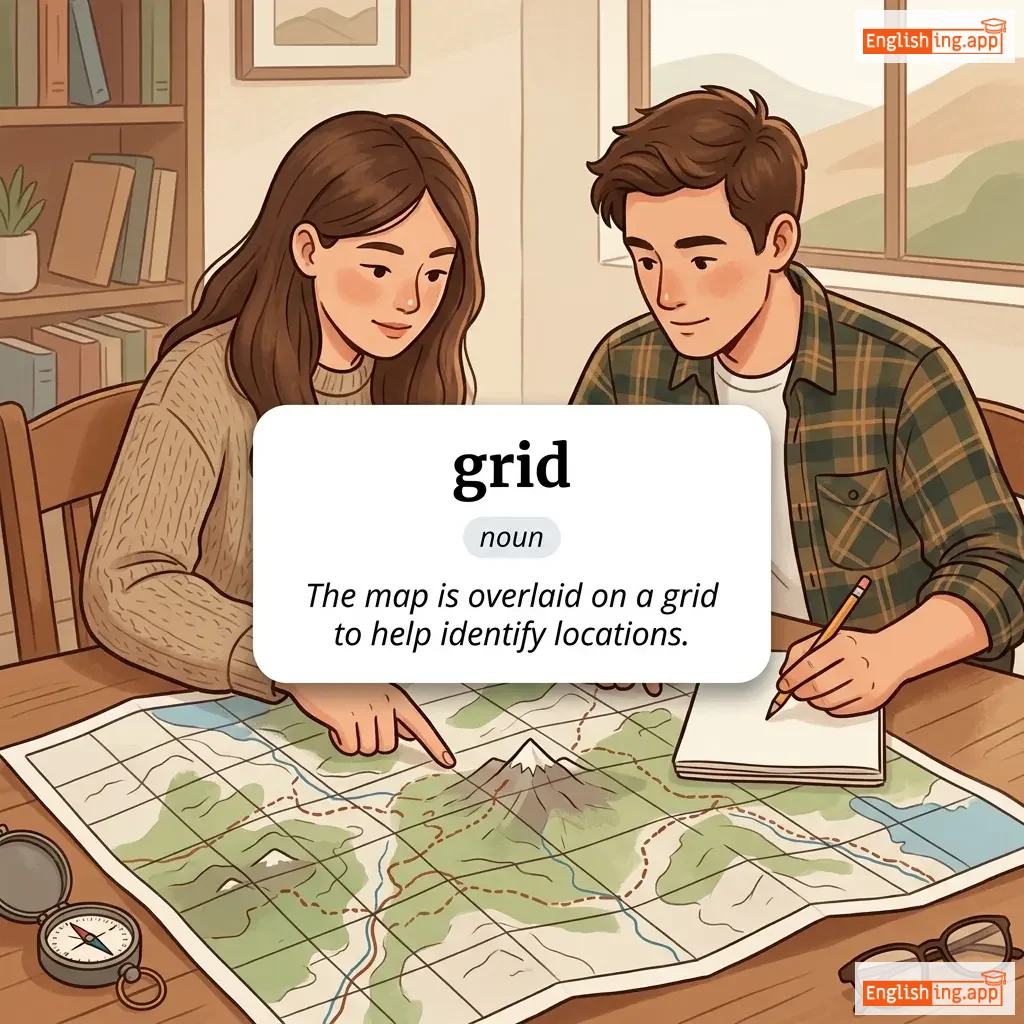
grid definition card — visual illustration of the meaning
noun
/ɡrɪd/
сетка (setka)

a network of lines that cross each other to form a series of squares or rectangles

"The map is overlaid on a grid to help identify locations."

"Карта накладывается на сетку для помощи в определении местоположений." (Karta nakladyvayetsya na setku dlya pomoshchi v opredelenii mestopolozheniy.)
noun
/ˈɡrɪd.əl/
плита (plita)

a flat heating surface for cooking food, typically made of metal

"She cooked pancakes on the hot griddle."
"Она готовила блины на горячей плите." (Ona gotovila bliny na goryachey plite.)
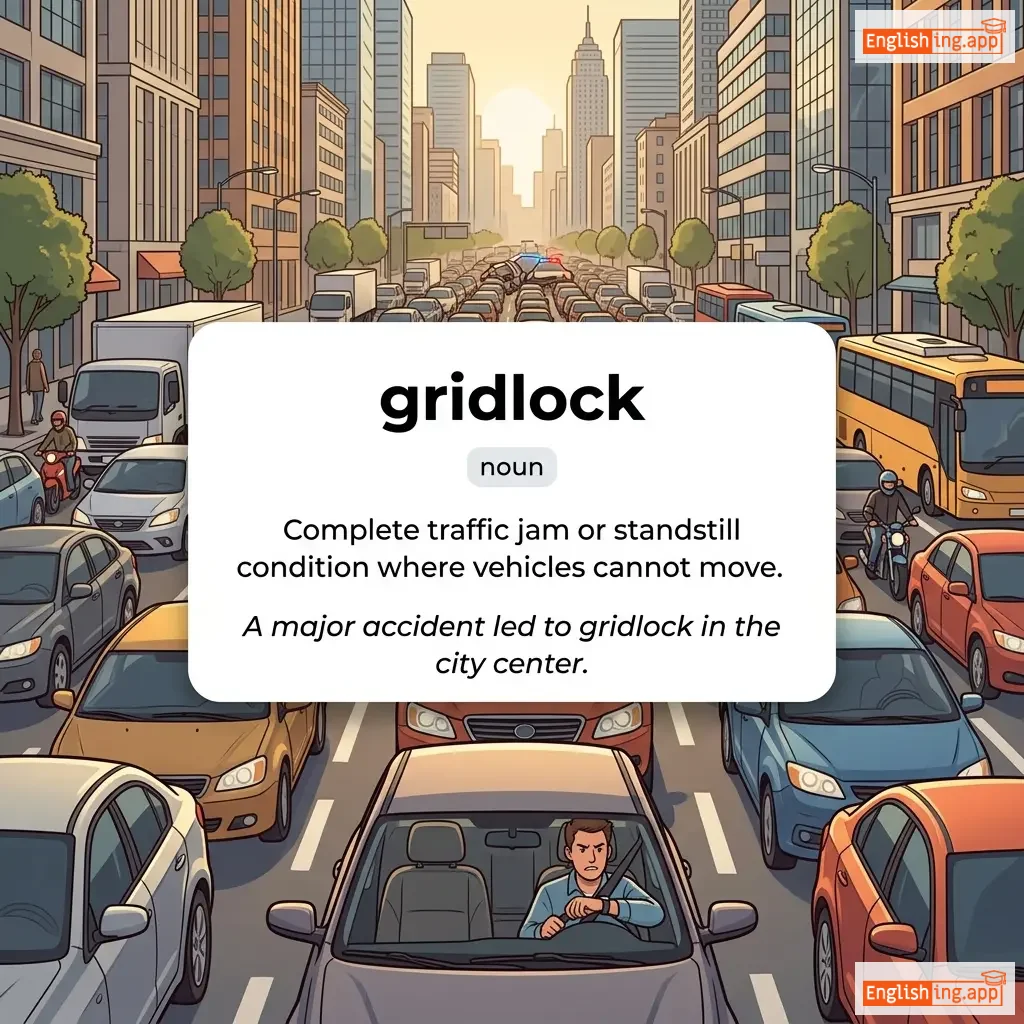
gridlock definition card — visual illustration of the meaning
noun
/ˈɡrɪd.lɒk/
полный транспортный затор или состояние остановки (polnyy transportnyy zator ili sostoyanie ostanovki)

Complete traffic jam or standstill condition where vehicles cannot move.

"A major accident led to gridlock in the city center."

"Большое происшествие вызвало затор в центре города." (Bol'shoye proisshestviye vyzvalo zator v tsentre goroda.)
noun
/ɡriːf/
горе (gore)

Deep sorrow, especially caused by someone's death.

"She was overcome with grief after her father's passing."

"Она была переполнена горем после смерти своего отца." (Ona byla perepolnena gorem posle smerti svoego otca.)
noun
/ˈɡriːvəns/
счастье (schast'ye)

A real or imagined cause for complaint, especially unfair treatment.

"The workers voiced their grievances to the management."

"Она не могла скрыть своего счастья, когда получила награду." (Ona ne mogla skryt' svoego schast'ya, kogda poluchila nagradu.)
verb
/ɡriːv/
горевать (gorevat)

To feel or cause deep sorrow, especially due to someone's death.

"She continues to grieve the loss of her best friend."

"Она продолжает горевать по утрате своей лучшей подруги." (Ona prodolzhayet gorevat' po utrate svoey luchshey podrugi.)
adjective
/ˈɡriːvəs/
тяжёлый (tyazholy)

Causing great pain, suffering, or sorrow.

"The accident was a grievous blow to the community."

"Авария стала тяжёлым ударом для сообщества." (Avariya stala tyazholym udarom dlya soobshchestva.)
noun, verb
/ɡrɪl/
гриль / жарить (gril / zharit)

a metal frame used for cooking food over an open fire; to cook food on such a frame

"We grilled some chicken for dinner."

"Мы жарили курицу на ужин." (My zharili kuricu na uzhin.)
adjective
/ɡrɪm/
мрачный (mrachnyy)

very serious or gloomy in appearance or outlook

"The future looked grim after the disaster."

"Будущее выглядело мрачно после катастрофы." (Budushcheye vyglyadelo mrachno posle katastrofy.)
verb, noun
/ˈɡrɪməs/
гримаса (grimasa)

to make an ugly, twisted expression on one's face, usually in disgust or pain

"He grimaced when he tasted the sour fruit."

"Он скривил лицо, когда попробовал кислый фрукт." (On skrivil litso, kogda poproboval kislyy frukt.)
verb, noun
/ɡrɪn/
широко улыбаться, часто показывая зубы (shiroko ulybat'sya, chasto pokazyvaya zuby)

to smile broadly, often showing teeth

"She grinned happily at the good news."

"Она улыбнулась счастливо, услышав хорошие новости." (Ona ulybnulas' schastlivo, uslyshav khoroshie novosti.)
grind definition card — visual illustration of the meaning
verb
/ɡraɪnd/
молоть (molot)

to break something into small pieces or powder by pressing or crushing it

"She grinds the coffee beans every morning for fresh coffee."

"Она молет кофейные зерна каждое утро для свежего кофе." (Ona molet kofeinye zernya kazhdoe utro dlya svezhego kofe.)
noun
/ˈɡraɪndstoʊn/
точильный камень (tochil'nyy kamen')

a thick disc of stone used for grinding, sharpening, or polishing tools

"The blacksmith sharpened his blade on the grindstone."

"Кузнец наточил свой клинок на точильном камне." (Kuznets natochil svoy klinok na tochil'nom kamne.)
verb
/ɡrɪp/
схватить (skhvatit)

to hold something tightly or firmly

"He gripped the steering wheel tightly."

"он крепко схватил руль." (on krepko skhvatil rul'.)
verb
/ɡraɪp/
жаловатся (zhalovatsya)

to complain about something in an annoying way

"He is always griping about the weather."

"Он всегда жалуется на погоду." (On vsegda zhaluetsya na pogodu.)
adjective
/ˈɡrɪz.li/
ужасный (uzhasnyy)

causing horror or disgust

"The police discovered a grisly scene at the crime site."

"Полиция обнаружила ужасную сцену на месте преступления." (Politsiya obnaruzhila uzhasnuyu stsenyu na meste prestupleniya.)
grit definition card — visual illustration of the meaning
noun
/ɡrɪt/
стойкость, мужество, упорство (stoykost', muzhestvo, uporstvo)

Courage and resolve; strength of character; passion and perseverance.

"Grit is necessary to achieve success."

"Стойкость необходима для достижения успеха." (Stoykost' neobkhodima dlya dostizheniya uspekha.)
noun
/ˈɡroʊ.sər/
бакалейщик (bakalejshchik)

a person who sells food and household goods in a shop

"The grocer has fresh vegetables and fruits in his store."

"Бакалейщик продает свежие фрукты и овощи в своем магазине." (Bakaleyshchik prodayet svezhie frukty i ovoshchi v svoem magazine.)
noun
/ˈɡroʊ.sər.i/
продуктовый магазин (produktovyy magazin)

A store that sells food and household supplies.

"She went to the grocery to buy vegetables."

"Она пошла в продуктовый магазин, чтобы купить овощи." (Ona poshla v produktovyy magazin, chtoby kupit' ovoshchi.)
noun
/ˈɡrəʊsəri ʃɒp/
продуктовый магазин (produktovyy magazin)

a retail store where food and everyday household items are sold

"She stopped by the grocery shop to buy vegetables and milk."

"Она пошла в продуктовый магазин купить овощи и молоко." (ona poshla v produktovyy magazin kupit ovoshchi i moloko)