Словари

Словарь английского языка | Значения слов, определения и примеры
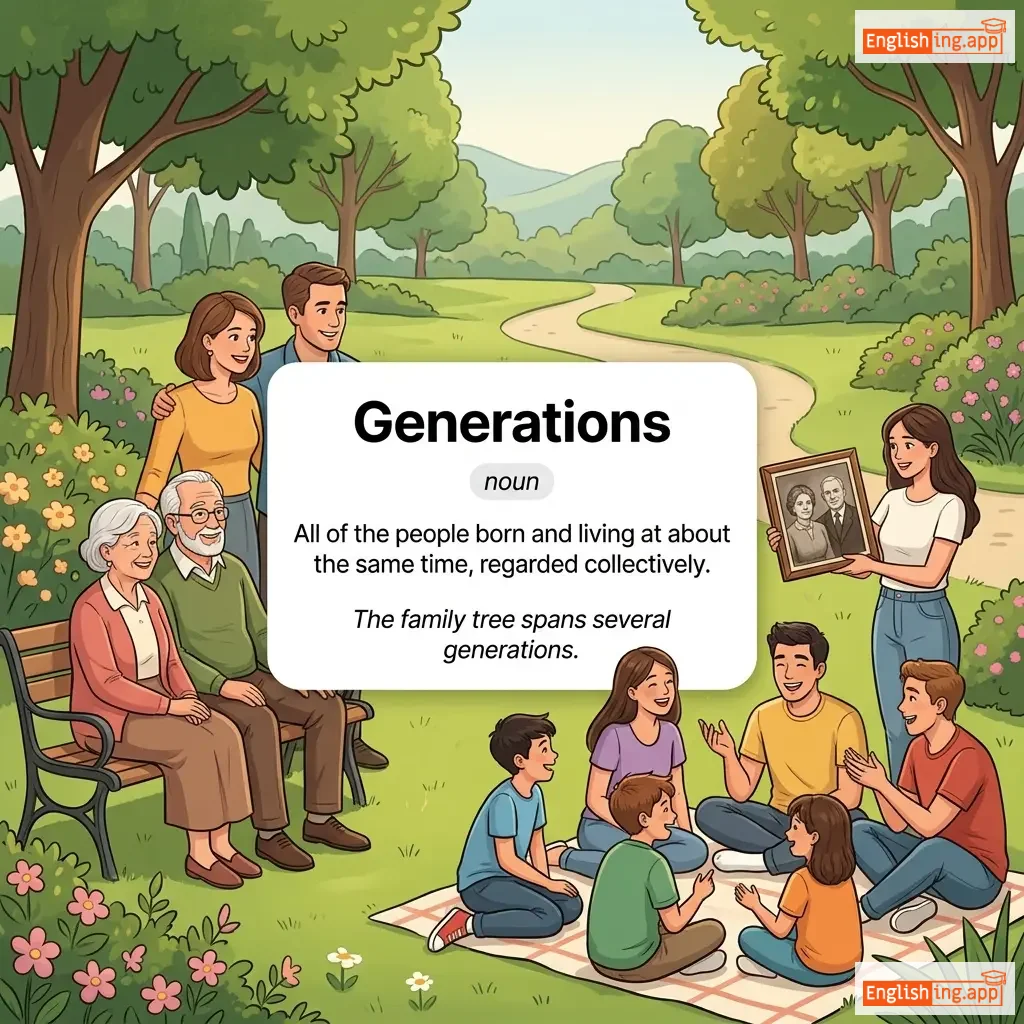
Generations definition card — visual illustration of the meaning
noun
ˌdʒɛnəˈreɪʃənz
поколения (pokolenija)

All of the people born and living at about the same time, regarded collectively.

"The family tree spans several generations."

"Семейное древо охватывает несколько поколений." (Semeynoe drevo okhvatyvaet neskol'ko pokolenij.)
adjective
/dʒəˈnɛrɪk/
генерик (generik)

characteristic of or relating to a whole group or class; not specific

"This medicine is available in generic form."

"Это лекарство доступно в виде генерика." (Eto lekarstvo dostupno v vide generika.)
noun
/ˌdʒɛnəˈrɒsəti/
щедрость (shchedrost)

the quality of being kind and willing to give more than necessary

"Her generosity impressed everyone at the event."

"Ее щедрость впечатлила всех на мероприятии." (Eyo shchedrost vpechatlila vsekh na meropriyatii.)
adjective
/ˈdʒɛnərəs/
щедрый (shchedryy)

willing to give or share more than is necessary; kind and giving

"She is very generous with her time and money."

"Она очень щедра со своим временем и деньгами." (Ona ochen' shchedra so svoim vremenem i dengami.)
adverb
/ˈdʒenərəsli/
щедро (shchedro)

in a kind, giving, or unselfish manner; in a plentiful or abundant way

"She generously donated money to help the poor."
"Она щедро пожертвовала деньги, чтобы помочь бедным." (ona shchedro pozhertvovala dengi chtoby pomoch bednym)
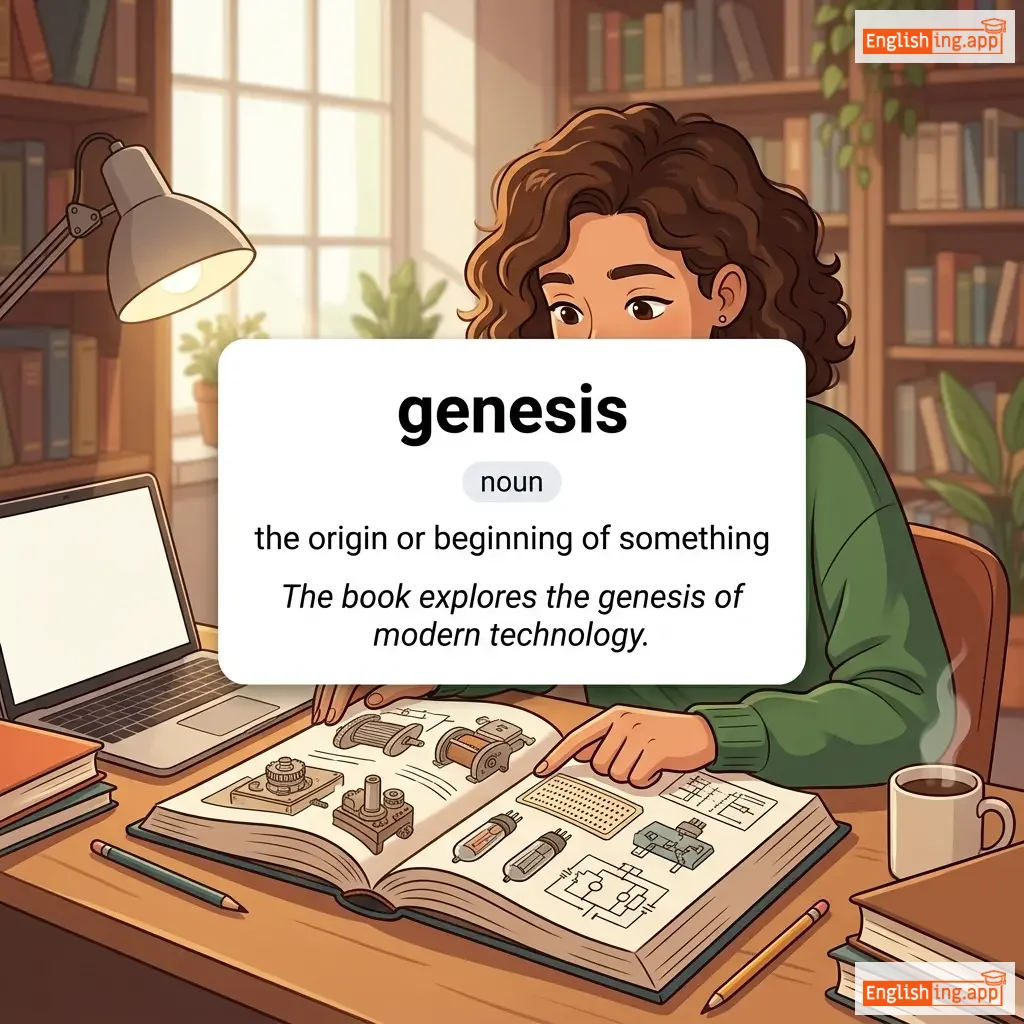
genesis definition card — visual illustration of the meaning
noun
/ˈdʒɛnəsɪs/
происхождение (proiskhozhdenie)

the origin or beginning of something

"The book explores the genesis of modern technology."
"Книга исследует происхождение современной технологии." (Kniga issleduet proiskhozhdenie sovremennoy tekhnologii.)
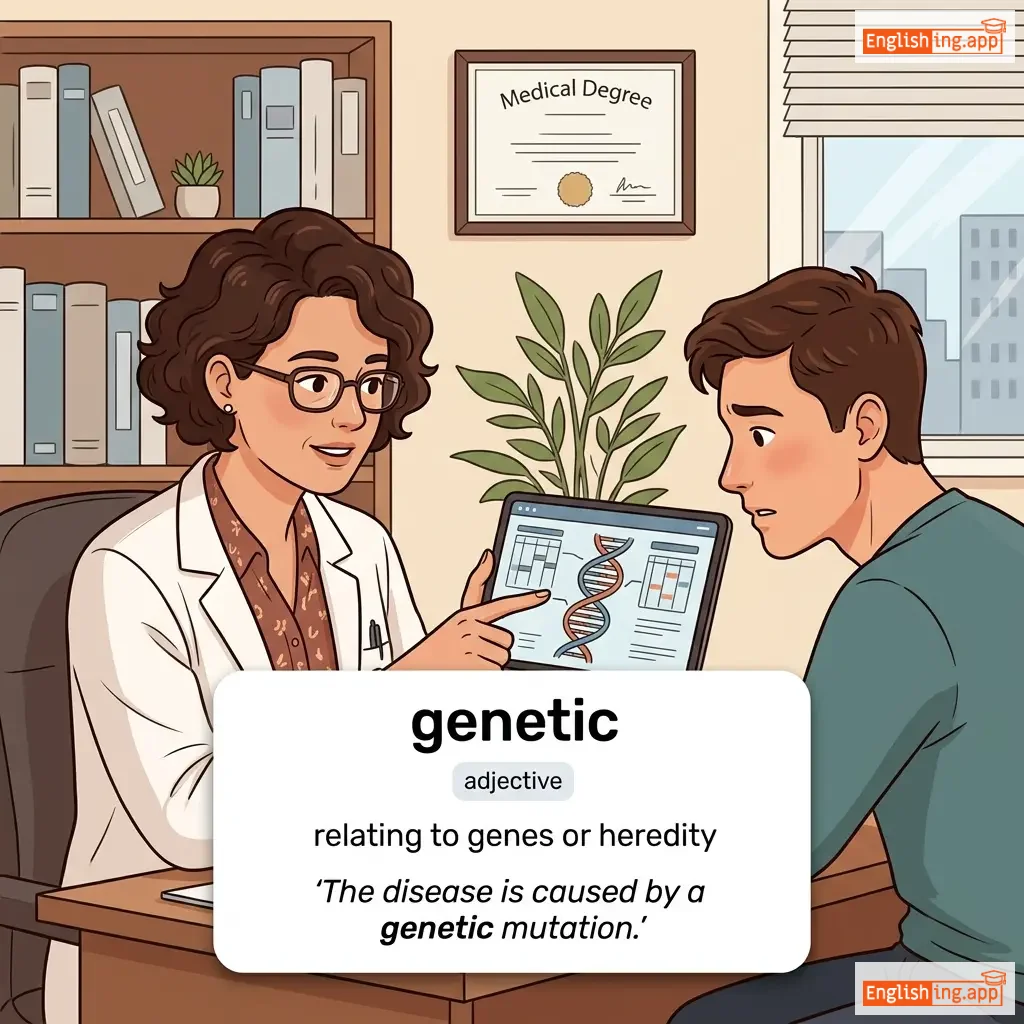
genetic definition card — visual illustration of the meaning
adjective
/dʒəˈnɛtɪk/
генетический (geneticheskiy)

relating to genes or heredity

"The disease is caused by a genetic mutation."
"Это заболевание вызвано генетической мутацией." (Eto zabolevanie vyzvano geneticheskoy mutatsiey.)
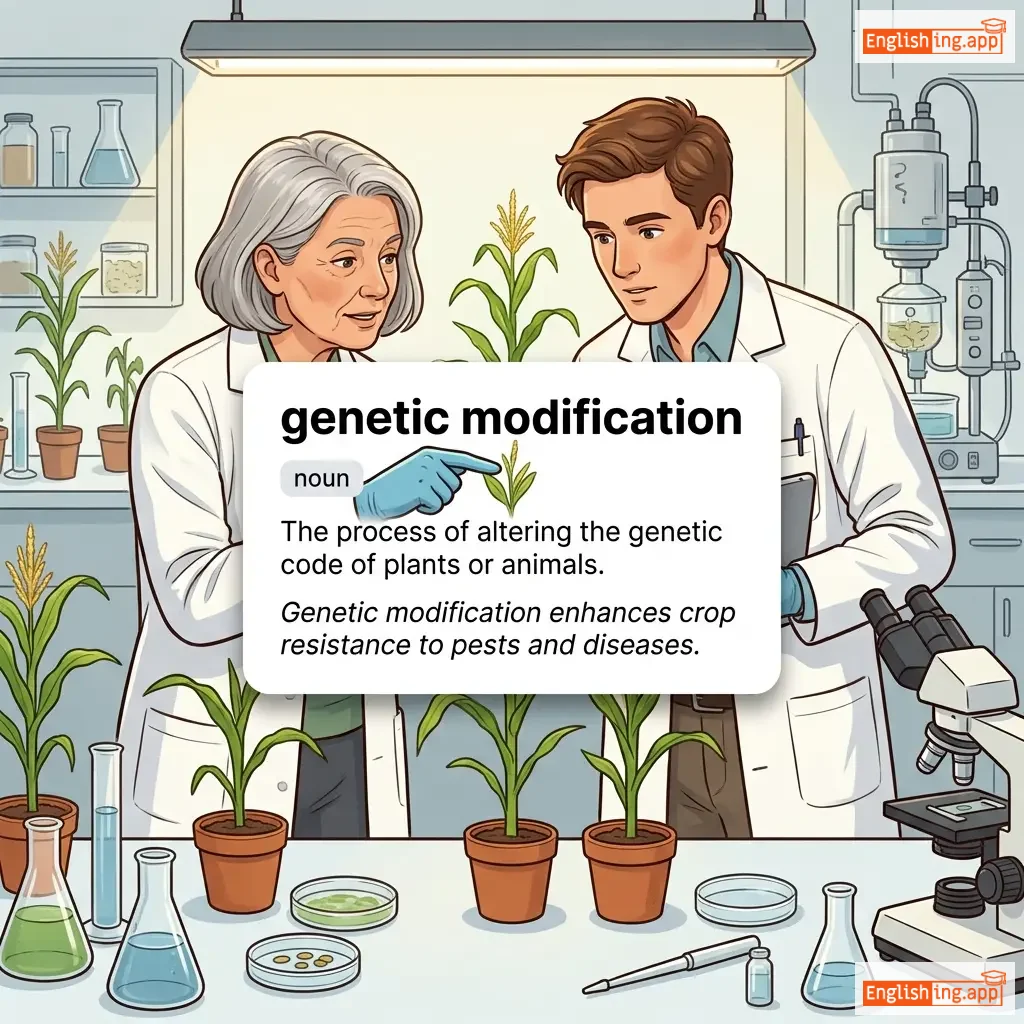
genetic modification definition card — visual illustration of the meaning
noun
dʒəˈnɛt.ɪk ˌmɒd.ɪ.fɪˈkeɪ.ʃən
генетическая модификация (geneticheskaya modifikatsiya)

The process of altering the genetic code of plants or animals.

"Genetic modification enhances crop resistance to pests and diseases."
"Генетическая модификация повышает устойчивость сельскохозяйственных культур к вредителям и болезням." (Geneticheskaya modifikatsiya povyshaet ustoychivost' selskokhozyaystvennykh kul'tur k vreditelyam i boleznyam.)
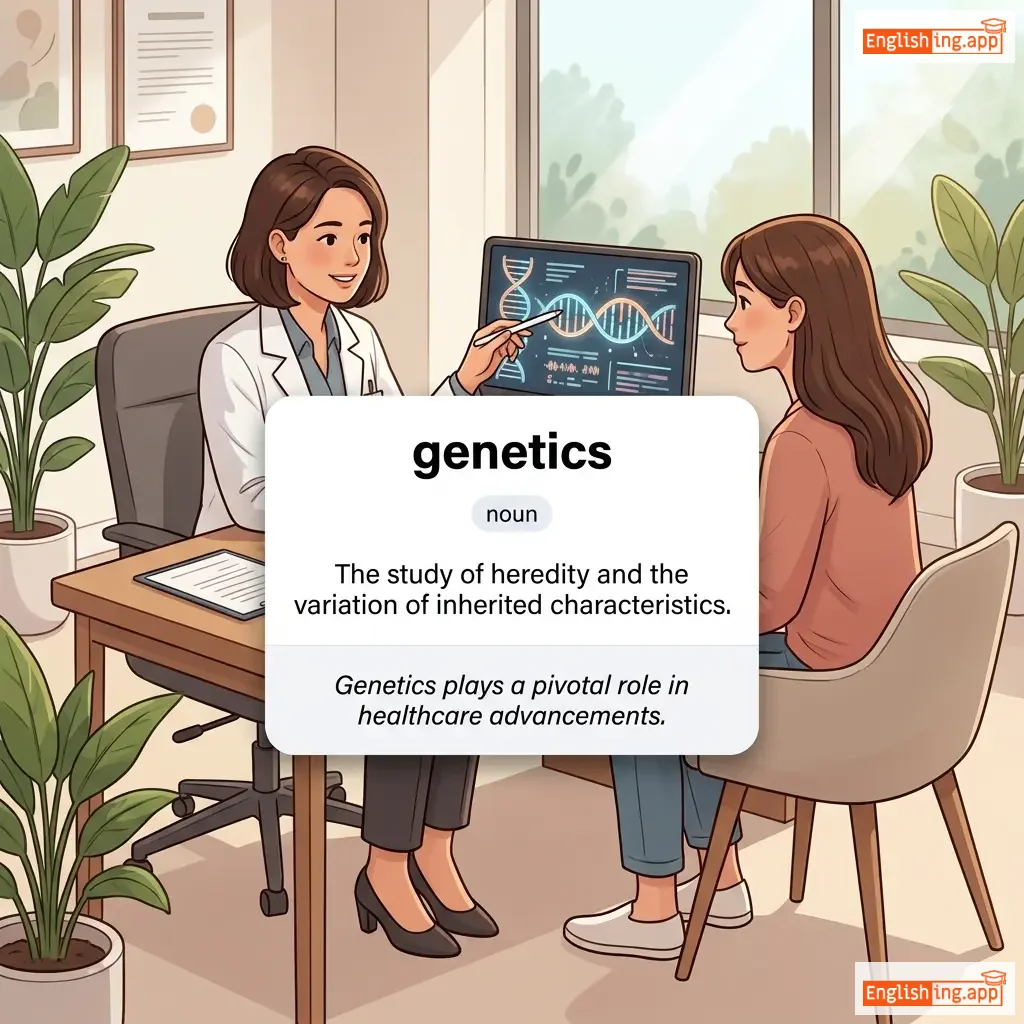
genetics definition card — visual illustration of the meaning
noun
dʒəˈnet.ɪks
генетика (genetika)

The study of heredity and the variation of inherited characteristics.

"Genetics plays a pivotal role in healthcare advancements."

"Генетика играет ключевую роль в достижениях здравоохранения." (Genetika igraet klyuchevuyu rol v dostizheniyakh zdravookhraneniya.)
adjective
/ˈdʒiː.ni.əl/
дружелюбный (druzhelyubny)

friendly, cheerful, and pleasant

"She greeted us with a genial smile."
"Она встретила нас с дружелюбной улыбкой." (Ona vstretila nas s druzhelyubnoy ulybkoy.)
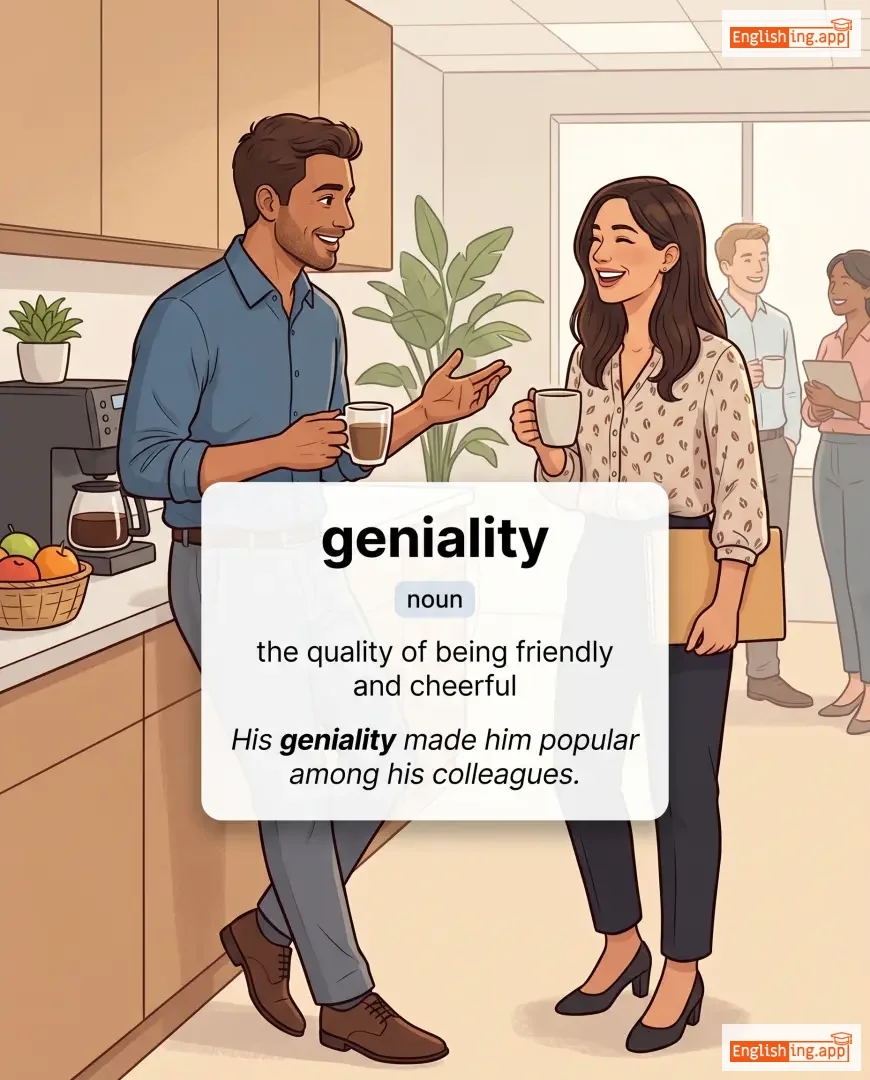
geniality definition card — visual illustration of the meaning
noun
/ˌdʒiː.niˈæl.ə.ti/
дружелюбие (druzhelyubie)

the quality of being friendly and cheerful

"His geniality made him popular among his colleagues."

"Его дружелюбие сделало его популярным среди коллег." (Ego druzhelyubie sdelalo ego populyarnym sredi kolleg.)
adjective
/ˈdʒen.ɪ.təl/
относящийся к половым органам (otnosyashchijsya k polovym organam)

relating to the reproductive organs

"The doctor explained the importance of genital hygiene."

"Врач объяснил важность гигиены гениталий." (Vrach obyasnil vazhnost' gigieny genitalij.)
adjective
/ˈdʒen.ɪ.tɪv/
генитив (genitiv)

relating to or denoting a case of nouns and pronouns indicating possession

"In English, the genitive case is often shown with an apostrophe and 's'."

"В английском языке генитив часто обозначается апострофом и 's'." (V angliyskom yazyke genitiv chasto oboznachayetsya apostrofom i 's'.)
noun
/ˈdʒiːniəs/
гений (geniy)

a person with exceptional intellectual or creative ability

"Einstein was a scientific genius."
"Эйнштейн был научным гением." (Eynshteyn byl nauchnym geniyem.)
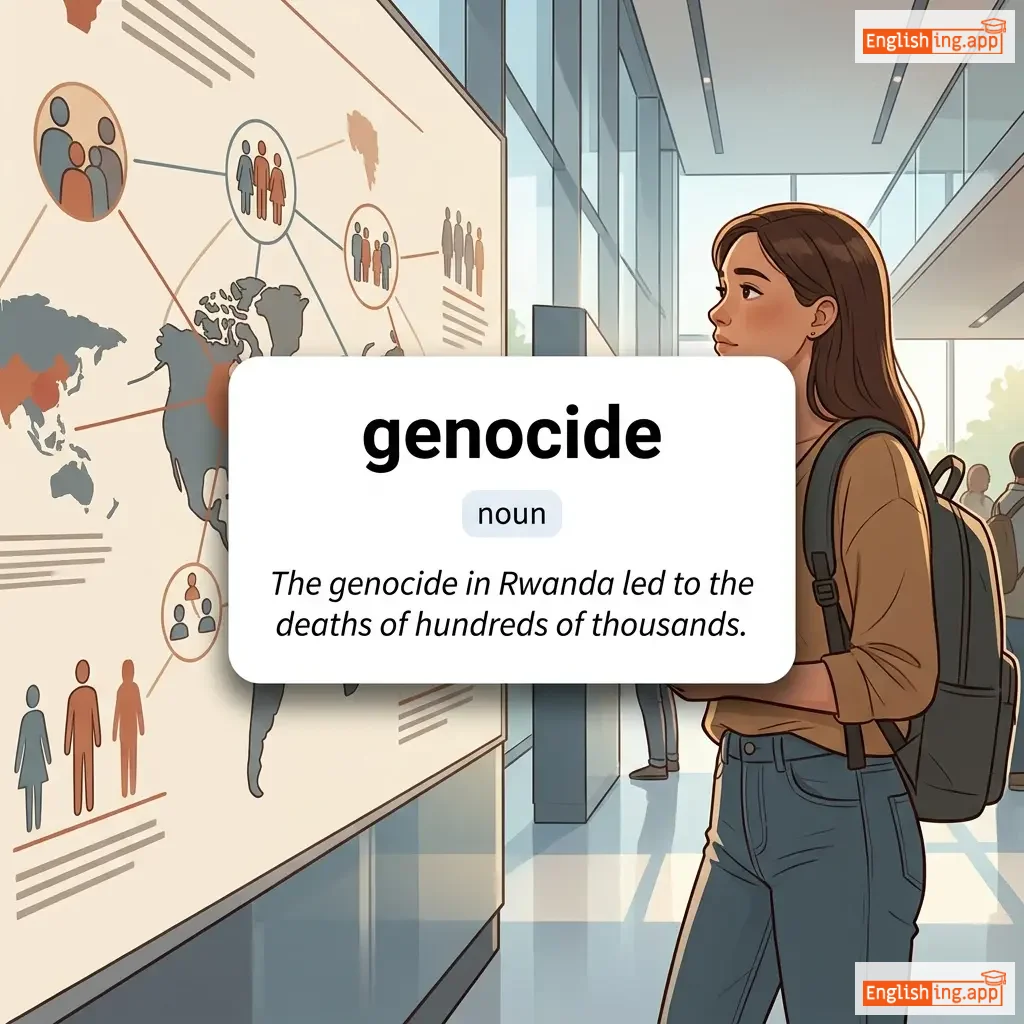
genocide definition card — visual illustration of the meaning
noun
/ˈdʒɛnəˌsaɪd/
геноцид (genotsid)

the deliberate killing of a large number of people from a particular nation or ethnic group with the aim of destroying that nation or group

"The genocide in Rwanda led to the deaths of hundreds of thousands."

"Геноцид в Руанде привел к смерти сотен тысяч людей." (Genotsid v Ruande prived k smerti soten tysyach lyudey.)
noun
/ˈʒɑːn.rə/
жанр (zhanr)

a style or category of art, music, or literature

"Romance is her favorite genre of movies."

"Романтика - её любимый жанр фильмов." (Romantika - yeye lyubimyy zhanr filmov.)
adjective
/dʒɛnˈtiːl/
деликатный (delikatny)

Polite, refined, or respectable, often in an affected or exaggerated way

"She spoke in a genteel manner that impressed the guests."

"Она говорила с деликатным манером, который произвел впечатление на гостей." (Ona govorila s delikatnym manerom, kotoryy proyzel vpechatleniye na gostey.)
noun
/ˈdʒɛntaɪl/
нееврей (neevrey)

A person who is not Jewish

"The synagogue welcomed both Jews and Gentiles."

"Синагога приветствовала как евреев, так и неевреев." (Sinagoga privetstvovala kak yevreev, tak i neevreev.)
noun
/dʒɛnˈtɪlɪti/
учтивость (uchtivost)

Social superiority demonstrated by polite manners, refinement, or respectability

"His speech revealed an air of gentility."

"Его речь раскрыла некую форму учтивости." (Ego rech' raskryla nekyu formu uchtivosti.)
adjective
/ˈdʒɛntəl/
нежный (nezhny)

Kind, mild, or tender in nature or behavior

"He was always gentle with children."

"Он всегда был нежным с детьми." (On vsegda byl nezhnym s det'mi.)
noun
/ˈdʒɛntəlmən/
джентльмен (dzhentl'men)

a man who is polite, courteous, and honorable

"He opened the door for her like a true gentleman."

"Он открыл ей дверь, как настоящий джентльмен." (On otkryl yey dver', kak nastoyashchiy dzhentl'men.)
adverb
/ˈdʒɛntli/
мягко (myagko)

in a kind, careful, or soft way

"She gently placed the baby in the crib."

"Она мягко положила ребенка в кроватку." (Ona myagko polozhila rebenka v krovатку.)
noun
/ˈdʒɛntri/
дворянство (dvoryanstvo)

People of good social position, usually of high birth or wealthy landowners

"The gentry of the town gathered for the annual ball."

"Дворянство города собралоcь на ежегодный бал." (Dvoryanstvo goroda sobralos' na yezhegodnyy bal.)
verb
/ˈdʒɛn.juˌflɛkt/

to bend one or both knees as a sign of reverence or worship

"The worshippers genuflect before the altar."

adjective
/ˈdʒɛnjʊɪn/
настоящий (nastoyashchiy)

real and authentic; not fake or artificial

"This is a genuine leather bag."

"Это настоящая кожаная сумка." (Eto nastoyashchaya kozhannaya sumka.)
adverb
/ˈdʒɛnjʊɪnli/
искренне (iskrenne)

in a truthful and sincere way

"She genuinely cares about the environment."

"Она искренне заботится о окружающей среде." (Ona iskrenne zabotitsya o okruzhayushchey srede.)
noun
/ˈdʒiː.nəs/
род (rod)

a category in biological classification ranking above species and below family

"The tiger belongs to the genus Panthera."

"Тигр относится к роду Panthera." (Tigr otnositsya k rodu Panthera.)
adjective
/ˌdʒiːəˈɡræfɪkəl/
географический (geograficheskiy)

relating to geography; connected with the physical features, location, or characteristics of the Earth or a particular area

"The country’s geographical position makes it an important trading hub."

"Географическое положение страны делает её важным торговым центром." (geograficheskoe polozhenie strany delaet ee vazhnym torgovym tsentrom)
noun
/dʒiˈɒɡrəfi/
география (geografiya)

the study of the Earth’s physical features, climates, populations, and the relationships between people and their environments

"She studies geography to understand how landscapes and human societies interact."
"Она изучает географию, чтобы лучше понимать мир." (ona izuchaet geografiyu chtoby luchshe ponimat mir)
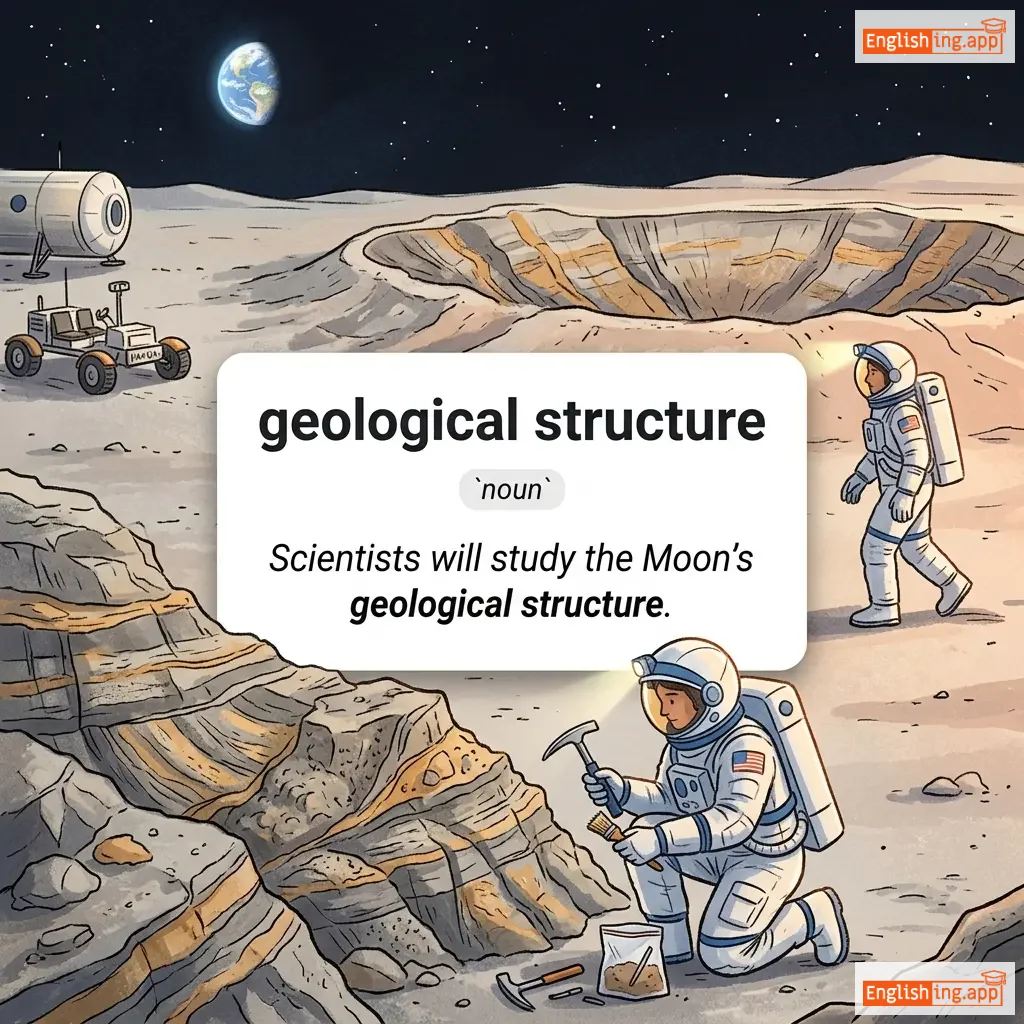
geological structure definition card — visual illustration of the meaning
noun
ˌdʒiːəˈlɒdʒɪkəl ˈstrʌktʃər
геологическая структура (geologicheskaya struktura)

The arrangement and composition of rocks, minerals, and landforms in the Earth's crust.

"Scientists will study the Moon's geological structure."

"Учёные будут изучать геологическую структуру Луны." (Uchonyye budut izuchat' geologicheskuyu strukturu Luny.)
noun
/dʒiˈɒl.ə.dʒi/
геология (geologiya)

the science that deals with the Earth's physical structure and substances

"She studied geology to understand earthquakes."
"Она изучала геологию, чтобы понять землетрясения." (Ona izuchala geologiyu, chtoby ponyat' zemletryaseniya.)
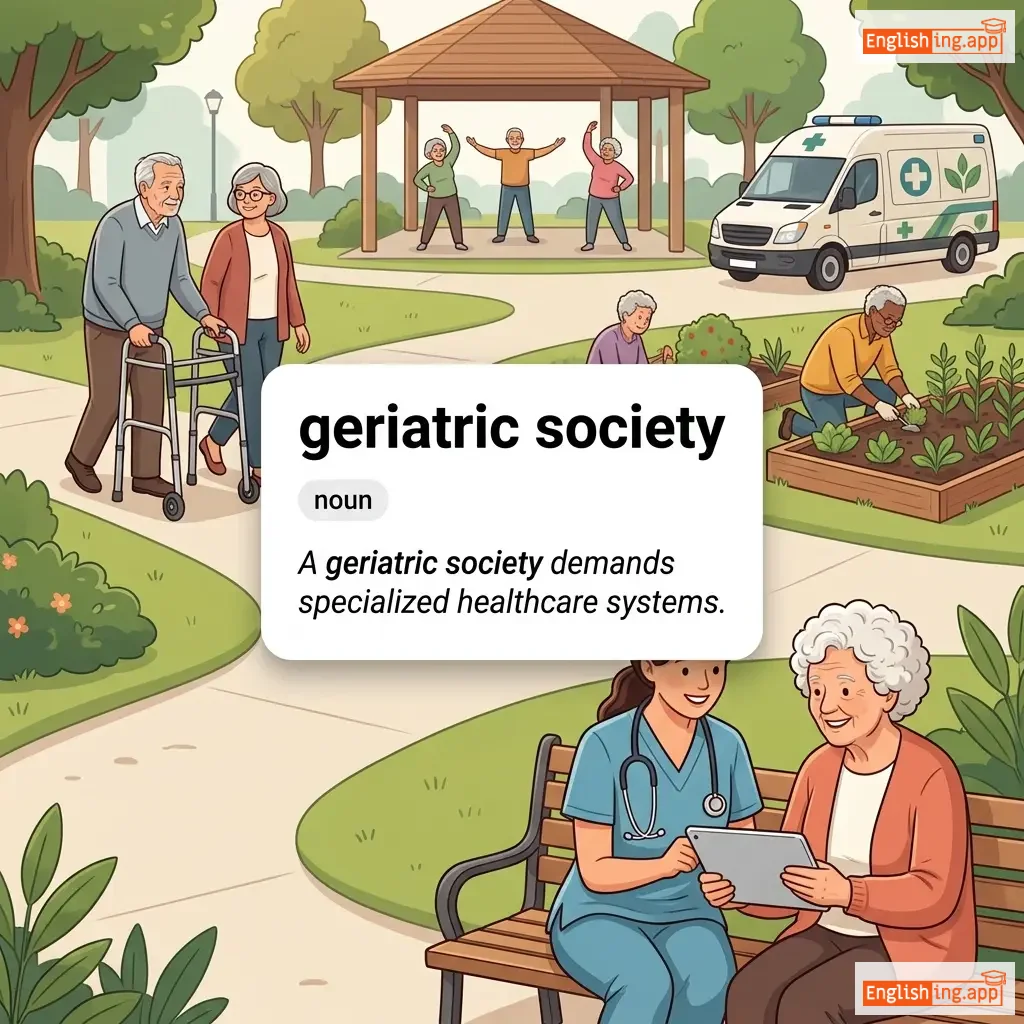
geriatric society definition card — visual illustration of the meaning
noun
ˌdʒɛriˈætrɪk səˈsaɪəti
гериатрическое общество (geriatricheskoe obshchestvo)

A society or community where elderly people make up a large proportion of the population

"A geriatric society demands specialized healthcare systems."

"Гериатрическое общество требует специализированных систем здравоохранения." (Geriatricheskoe obshchestvo trebuyet spetsializirovannykh sistem zdravookhraneniya.)
noun
/ˌdʒɛr.iˈætrɪks/
гериатрия (geriatrija)

the branch of medicine dealing with the health and care of old people

"He specialized in geriatrics to care for the elderly."

"Он специализировался по гериатрии, чтобы заботиться о пожилых людях." (On spetsializirovalsya po geriatriji, chtoby zabotitsya o pozhilykh lyudyakh.)
noun
/dʒɜːm/
микроб (mikrob)

a microscopic organism, especially one that causes disease

"Washing your hands helps prevent the spread of germs."

"Мытье рук помогает предотвратить распространение микробов." (Myt'ye ruk pomogaet predotvratit' rasprostraneniye mikroby)
noun/adjective
/ˈdʒɜːrmən/
немецкий (nemetskiy)

relating to Germany, its people, or its language

"She is learning German to study abroad."

"Она учит немецкий, чтобы учиться за границей." (Ona uchet nemetskiy, chtoby uchitsya za granitsey.)
adjective
/dʒərˈmeɪn/
актуальный (aktual'nyy)

Relevant and appropriate to the subject being considered.

"Her comments were not germane to the discussion."

"Её комментарии не были актуальны для обсуждения." (Eyo kommentarii ne byli aktual'nymi dlya obshchshchdeniya.)
adjective
/ˈdʒɜːrmɪnəl/
зародышевый (zarodyshyevy)

Relating to the earliest stage of development.

"The idea was still in its germinal stage."

"Идея всё ещё находилась на своей зародышевой стадии." (Ideya vsyo yeshchyo nakhodilas' na svoey zarodyshevoy stadii.)
verb
/ˈdʒɜːrmɪneɪt/
счастье (schastye)

To begin to grow or develop, especially referring to a seed.

"The seeds germinate quickly in moist soil."

"Она не могла скрыть своего счастья, когда получила награду." (Ona ne mogla skryt' svoego schast'ya, kogda poluchila nagradu.)
noun
/ˌdʒerənˈtɑːkrəsi/
жеронтократия (zherontokratia)

A system of government or control by old people.

"The country was seen as a gerontocracy, dominated by elderly leaders."

"Страна воспринималась как жеронтократия, управляемая пожилыми лидерами." (Strana vosprinimalas' kak zherontokratia, upravlyaemaya pozhilymi liderami.)
noun
/ˌdʒerənˈtɑːlədʒi/
геронтология (gerontologiya)

The scientific study of old age and the process of aging.

"She chose to specialize in gerontology after completing medical school."
"Она решила специализироваться в геронтологии после окончания медицинского училища." (Ona reshila spetsializirovat'sya v gerontologii posle okonchaniya meditsinskogo uchilishcha.)
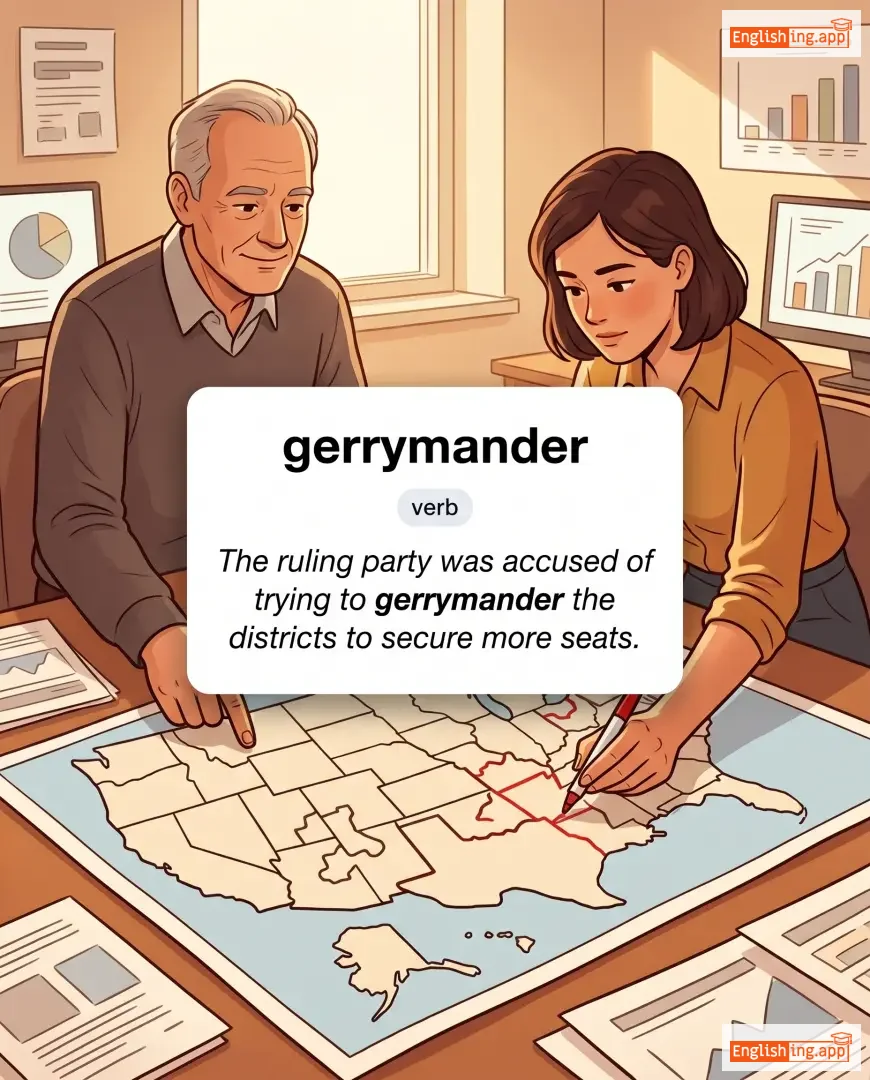
gerrymander definition card — visual illustration of the meaning
verb
/ˈdʒɛriˌmændər/
манипуляция границами избирательных округов (manipulyatsiya granitsami izbiratelnykh okrugov)

to manipulate the boundaries of an electoral constituency to favor one party or class

"The ruling party was accused of trying to gerrymander the districts to secure more seats."

"Правящую партию обвинили в манипуляции с округами для получения большего числа мест." (Pravyashchuyu partyu obvinili v manipulatsii s okrugami dlya polucheniya bol'shego chisla mest.)
verb
/ˈdʒɛsteɪt/
вынашивать (vynashivat)

to carry and develop in the womb during pregnancy; to develop an idea over a period of time

"The mother whale gestates her calf for over a year."

"Мать-кит вынашивает своего детеныша более года." (Mat' kit vynashivayet svoego detenysha boleye goda.)
noun
/dʒɛˈsteɪʃən/
беременность (beremennost)

the process of carrying or being carried in the womb between conception and birth; the development of an idea or plan

"The gestation period of an elephant is nearly two years."

"Период гестации слона длится почти два года." (Period gestatsii slona dlitsya pochti dva goda.)
verb
/dʒɛˈstɪkjʊleɪt/
жестикулировать (zhestikulyrovat')

to use gestures, especially dramatic ones, instead of speaking or to emphasize one's words

"He gesticulated wildly to get their attention."

"Он жестикулировал, чтобы привлечь их внимание." (On zhestikuliroval, chtoby privlech' ikh vnimanie.)
noun
/dʒɛˌstɪkjʊˈleɪʃən/
жест (zhest)

a gesture, especially a dramatic one, used instead of speaking or to emphasize speech

"His speech was full of passionate gesticulations."
"Его речь была полна страстных жестов." (ego rech' byla polna strastnykh zhestov.)
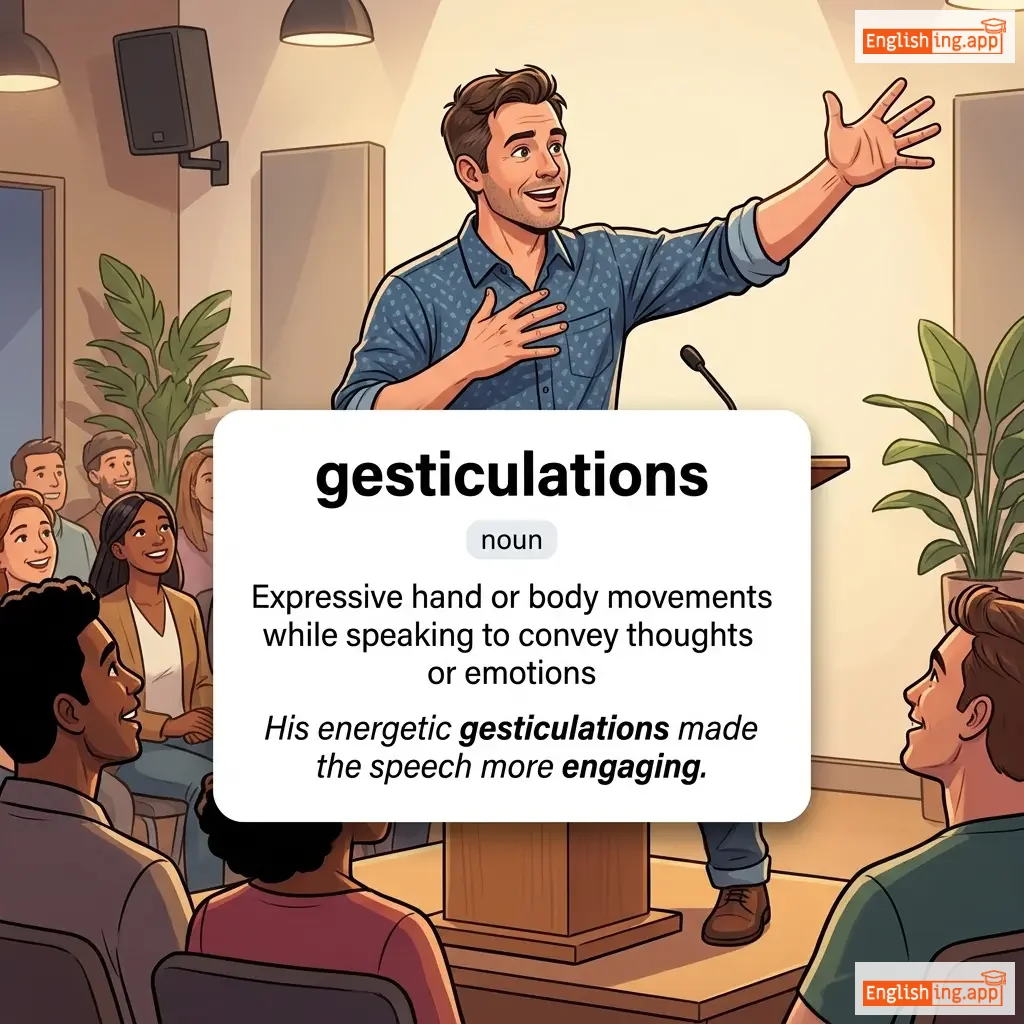
gesticulations definition card — visual illustration of the meaning
noun
dʒɛsˌtɪk.jʊˈleɪ.ʃənz
жестикуляции (zhestikuljacii)

Expressive hand or body movements while speaking to convey thoughts or emotions

"His energetic gesticulations made the speech more engaging."

"Его энергичные жестикуляции сделали речь более увлекательной." (Ego energichnye zhestikulyacii sdelali rech' bolee uvykatelynoy.)
noun
/ˈdʒɛs.tʃər/
жест (zhest)

A movement of part of the body, especially the hands or head, to express an idea or meaning.

"She made a friendly gesture to welcome the guests."
"Она сделала дружелюбный жест, чтобы поприветствовать гостей." (Ona sdelala druzhelyubnyy zhest, chtoby poprivetsvovat' gostey.)
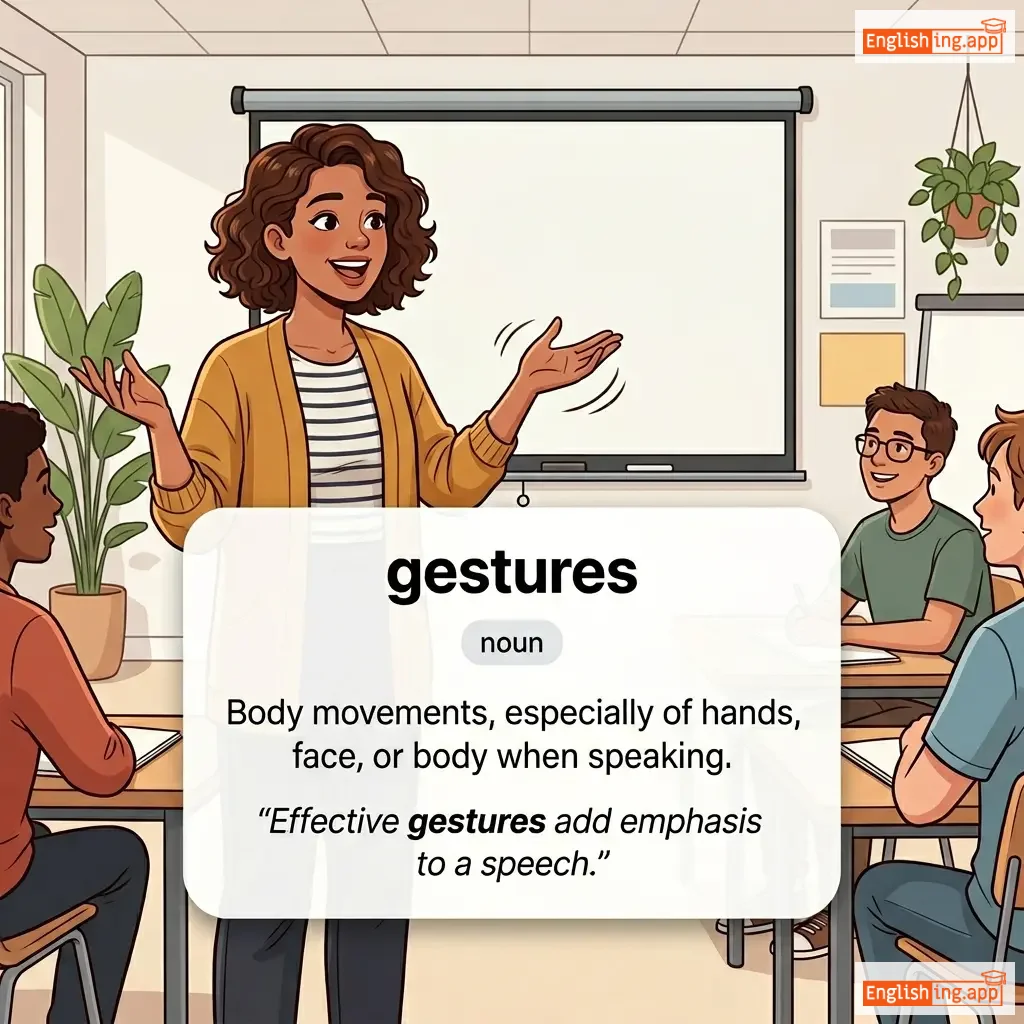
gestures definition card — visual illustration of the meaning
noun
ˈdʒes.tʃərz
жесты (zhesty)

Body movements, especially of hands, face, or body when speaking.

"Effective gestures add emphasis to a speech."

"Эффективные жесты добавляют акцент в речь." (Effektivnye zhesty dobavlyayut aktsent v rech'.)
get definition card — visual illustration of the meaning
verb
/ɡɛt/
получить (poluchit)

to obtain, receive, or come to have something

"I need to get a new phone before my old one stops working."

"Мне нужно получить новый телефон, прежде чем мой старый перестанет работать." (Mne nuzhno poluchit' novyy telefon, prezhde chem moy staryy perestanot rabotat'.)
noun
/ˈɡaɪ.zər/
гейзер (geyzer)

A natural hot spring that intermittently ejects a column of water and steam into the air.

"The geyser erupted, shooting water high into the sky."

"Гейзер извергся, выбрасывая воду высоко в небо." (Geyzer izvergalsya, vybrasyvaya vodu vysoko v nebo.)