Словари

Словарь английского языка | Значения слов, определения и примеры
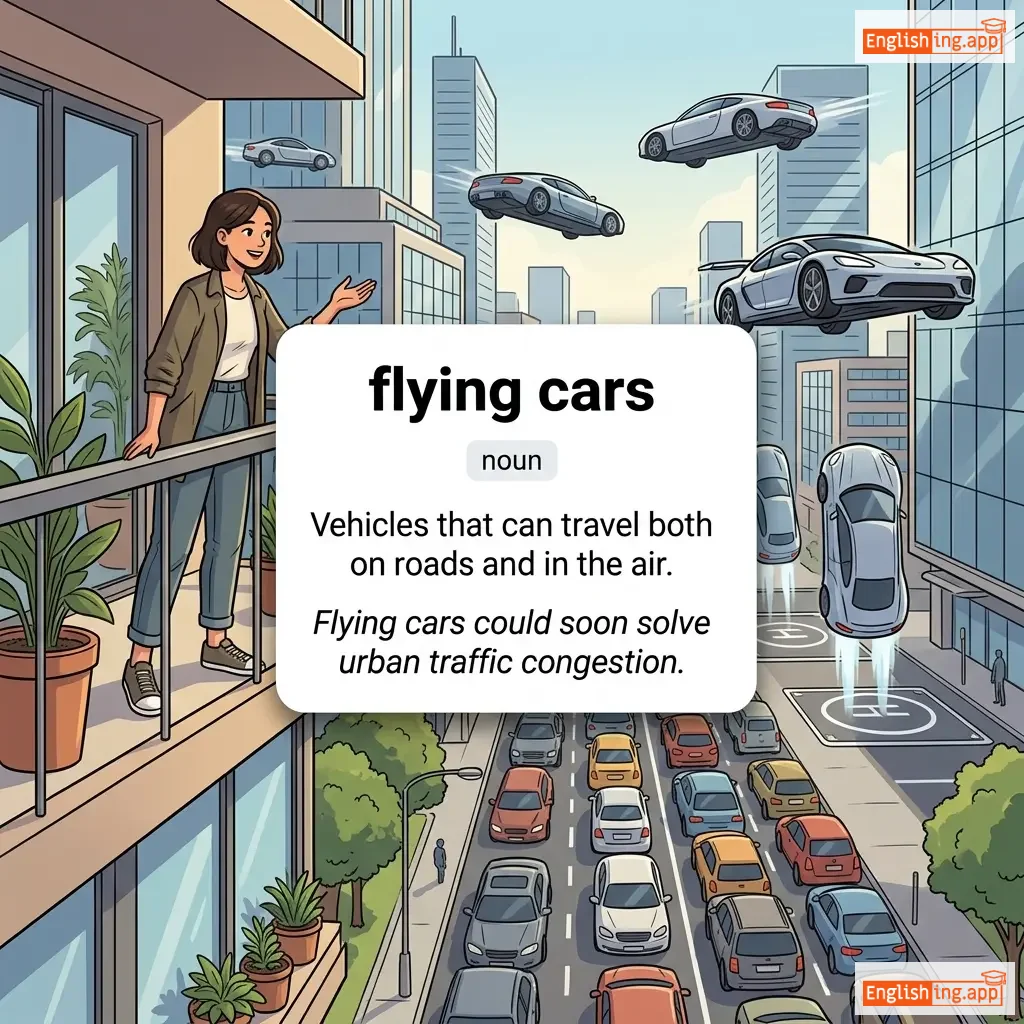
flying cars definition card — visual illustration of the meaning
noun
ˈflaɪ.ɪŋ kɑːrz
летающие автомобили (letayushchie avtomobili)

Vehicles that can travel both on roads and in the air.

"Flying cars could soon solve urban traffic congestion."

"Летающие автомобили скоро могут решить проблему городских пробок." (Letayushchie avtomobili skoro mogut reshit' problemu gorodskikh probok.)
noun
/ˈflaɪ.ɪŋ ˈkriː.tʃər/
летающее существо (letayushchee sushchestvo)

any animal that has the ability to fly through the air

"Birds, bats, and insects are all examples of flying creatures."

"Птицы, летучие мыши и насекомые — это примеры летающих существ." (Ptitsy, letuchie myshi i nasekomye — eto primery letayushchikh sushchestv.)
noun
/foʊl fʊt/
цветок лошадиных копыт (tsvetok loshadinykh kopyt)

a yellow flowering plant with leaves shaped like a horse's hoof, also known as coltsfoot

"The foal-foot plant grows wild in many meadows and is often the first flower to bloom in spring."

"Цветок лошадиных копыт растет дико на многих лугах и часто является первым цветком, который цветет весной." (Tsvetok loshadinykh kopyt rastyot diko na mnogikh lugakh i chasto yavyayetsya pervym tsvetkom, kotoryy tsvetet vesnoy.)
noun
/foʊm/
пена (pena)

a mass of small bubbles formed on or in liquid; frothy white mass

"The waves crashed against the rocks, creating white foam on the shore."

"Волны разбивались о скалы, создавая белую пену на берегу." (Volny razbivalis' o skaly, sozdavaya beluyu penu na beregu.)
focus definition card — visual illustration of the meaning
verb
/ˈfoʊ.kəs/
сосредотачиваться (sosredotochivatsya)

to direct attention or effort on something specific

"She needs to focus on her studies."

"Ей нужно сосредоточиться на учебе." (Yey nuzhno sosredotochitsya na uchebe.)
focus tracking definition card — visual illustration of the meaning
noun
/ˈfoʊ.kəs ˈtræk.ɪŋ/
отслеживание фокуса (otslezhivanie fokusa)

A technique of monitoring and maintaining attention on specific tasks or goals.

"Proper focus tracking improves productivity."

"Правильное отслеживание фокуса повышает продуктивность." (Pravil'noe otslezhivanie fokusa povyshaet produktivnost'.)
focused definition card — visual illustration of the meaning
adjective
/ˈfəʊkəst/
сосредоточенный (sosredotochenny)

Directing a great deal of attention or effort toward a particular activity, situation, or person.

"Staying focused during work hours enhances productivity."

"Оставаться сосредоточенным во время работы повышает продуктивность." (Ostavat'sya sosredotochennym vo vremya raboty povyshayet produktyvnost'.)
noun
/ˈfɒdər/
корм (korm)

food for livestock such as cattle, horses, or sheep; also something considered of little value but used to supply a demand

"The farmer stored enough fodder for the cattle to last through winter."

"Фермер хранил достаточно корма, чтобы скот выжил зимой." (Fermyer khranil dostatochno korma, chtoby skot vyzhil zimoy.)
⚔️

foe (fo)

noun
/foʊ/
враг (vrag)

an enemy or opponent

"The knight fought bravely against his foe."

"Рыцарь сражался смело против своего врага." (Rytsar' srazhalsya smelo protiv svoego vraga.)
adjective
/ˈfiːtɪd/
вонючий (vonyuchiy)

having an offensive, unpleasant smell

"The foetid smell from the garbage made it hard to breathe."

"Вонючий запах от мусора затруднял дыхание." (Vonyuchiy zapakh ot musora zatrudnyal dykhaniye.)
noun
/fɒɡ/
туман (tuman)

a thick cloud of tiny water droplets suspended in the air near the ground that reduces visibility

"The airplane was delayed due to heavy fog."

"Самолет задержался из-за сильного тумана." (Samolyot zaderzhalsya iz-za sil'nogo tumana.)
adjective
/ˈfɒɡi/
туманный (tumanny)

Full of or covered with fog; unclear or hazy.

"The mountain road was dangerous on the foggy morning."

"Горная дорога была опасной в этот туманный утро." (Gornaya doroga byla opasnoy v etot tumannyy utro.)
noun
/ˈfɔɪbəl/
небольшая слабость (nebol'shaya slabost')

A minor weakness or eccentricity in someone's character.

"She loved him despite his little foibles."

"Она любила его несмотря на его маленькие слабости." (Ona lyubila ego nesmotrya na ego malen'kie slabosti.)
verb
/fɔɪl/
срывать (sryvat)

To prevent something (especially a plan) from succeeding.

"The police foiled the robbery attempt."

"Полиция сорвала попытку ограбления." (Policiya sorvala popytku ogrableniya.)
verb
/fɔɪst/
навязать (navyazat)

To impose something unwelcome or unnecessary on someone.

"He tried to foist his old books onto his friends."

"Он пытался навязать свои старые книги друзьям." (On pytalsya navyazat svoi starye knigi druz'yam.)
📄

fold

verb
/fəʊld/

to bend something, especially paper or cloth, so that one part covers another

"She folded the letter neatly before placing it in the envelope."

noun
/ˈfoʊldər/
папка (papka)

a container or directory used to store and organize papers or digital files

"I saved all the photos in a separate folder."

"Я сохранил все фотографии в отдельной папке." (ya sokhranil vse fotografii v otdelnoi papke)
noun
/ˈfoʊliɪdʒ/
листва (listva)

The leaves of a plant, collectively.

"The autumn foliage looked stunning in the park."

"Осенняя листва выглядела потрясающе в парке." (Osenyaya listva vyglyadela potryasayushche v parke.)
noun
/ˈfoʊ.li.oʊ/
большая книга или манускрипт (bolshaya kniga ili manuskript)

A sheet of paper folded once to form two leaves (four pages) of a book; also a term for a large book or manuscript.

"The library houses an ancient Shakespeare folio."

"Библиотека хранит древний фолиант Шекспира." (Biblioteka khranit drevniy foliant Shekspira.)
👨‍👩‍👧‍👦

folk (фолк)

noun
/foʊk/
люди (lyudi)

people in general, often referring to a group or community

"Country folk often live a simple life."

"Люди из деревни часто ведут простую жизнь." (Lyudi iz derevni chasto vedut prostuyu zhizn.)
noun
/ˈfoʊk.lɔːr/
фольклор (folklor)

The traditional beliefs, customs, stories, songs, and practices of a community, passed down through generations.

"Bangladeshi folk-lore is rich with myths and legends."

"Русский фольклор богат мифами и легендами." (Russkiy folklor bogat mifami i legendami.)
verb
/ˈfɒloʊ/
следовать (sleduvat)

to move behind someone or something; to go after or come after

"The children followed their teacher into the classroom."

"Дети следовали за своим учителем в класс." (Deti sleduvali za svoim uchitelem v klass.)
noun
/ˈfɑː.loʊ.ɪŋ/
последователи (posledovateli)

a group of supporters or people who admire something or someone

"The singer has a large following around the world."
"У певца есть большая группа последователей по всему миру." (U pevtsa yest' bol'shaya gruppa posledovateley po vsemu miru.)
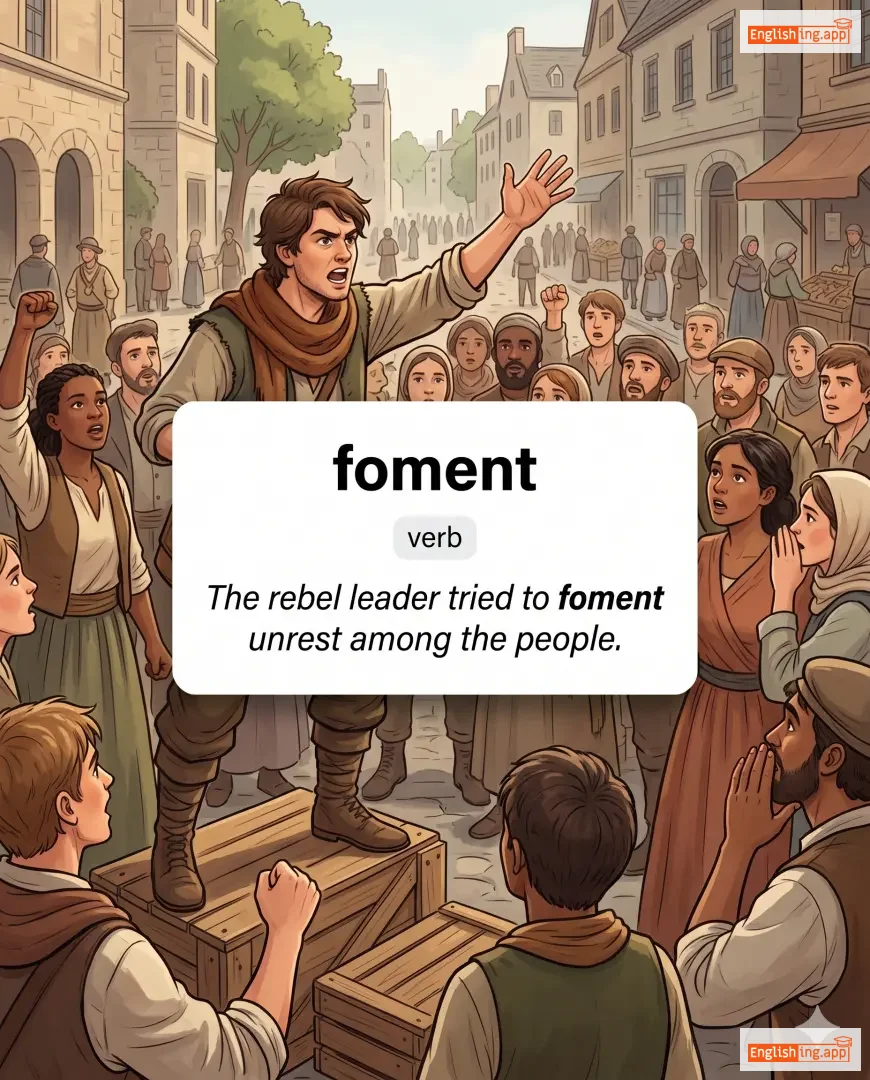
foment definition card — visual illustration of the meaning
verb
/foʊˈmɛnt/
подстрекать (podstrekat)

To instigate or stir up (an undesirable or violent sentiment or course of action).

"The rebel leader tried to foment unrest among the people."

"Лидер повстанцев пытался разжечь беспокойство среди людей." (Lider povstantsov pytalsya razzhech bespokoystvo sredi lyudey.)
noun
/ˌfoʊ.mənˈteɪ.ʃən/
подстрекательство, возбуждение (podstrekatel'stvo, vozbuzhdenie)

The action of instigating or stirring up; also the application of warm substances to the body to ease pain.

"His speech led to the fomentation of violence in the region."

"Его речь привела к фоментации насилия в регионе." (Yego rech' privedla k fomentatsii nasiliya v regione.)
adjective
/fɒnd/
любящий (lyubyashchiy)

having a strong liking or affection for something or someone

"She is fond of painting and spends hours in front of her canvas."

"Она любит живопись и проводит часы перед своим холстом." (Ona lyubit zhivopis' i provodit chasy pered svoim kholstom.)
verb
/ˈfɒn.dəl/
ласкать (laskat)

To stroke or caress lovingly or gently.

"She fondled the kitten gently in her lap."

"Она нежно ласкала котенка на своих коленях." (Ona nezhno laskala kotenka na svoikh kolenyakh.)
noun
/fuːd/
пища (pishcha)

any nutritious substance that people or animals eat or drink to maintain life and growth

"Rice is a common food in Asia."

"Рис - это обычная пища в Азии." (Ris - eto obychnaya pishcha v Azii.)
noun, verb
/fuːl/
дурак (durak)

a silly or stupid person; to trick someone

"He felt like a fool after believing the prank."

"Он почувствовал себя дураком после того, как поверил в розыгрыш." (On pochuvstvoval sebya durakom posle togo, kak poveril v rozygrysh.)
noun
/ˈfuːləri/
глупость (glupost)

Silly or foolish behavior or actions.

"His constant foolery made the meeting hard to take seriously."

"Его постоянные глупости сделали встречу трудной для восприятия всерьез." (Yego postoyannyye gluposti sdelali vstrechu trudnoy dlya vospriyatiya vseryoz.)
adjective
/ˈfuːlˌhɑːrdi/
безрассудный (bezzrassudnyy)

Recklessly bold or rash; taking foolish risks.

"It was foolhardy of him to climb the mountain without proper gear."

"Это было безрассудно с его стороны — лезть в горы без надлежащего снаряжения." (Eto bylo bezzrassudno s ego storony – lezt’ v gory bez nadlezhashchego snaryazheniya.)
adjective
/ˈfuːlɪʃ/
глупый (glupyy)

showing a lack of good sense or judgment

"It was foolish to go out without an umbrella in the storm."

"Было глупо выходить без зонта в шторм." (Bylo glupo vykhodit' bez zonta v shtorm.)
adjective
/ˈfuːlpruːf/
безошибочный (bezoshibochnyy)

Designed to be very easy to use or understand, leaving no possibility of failure or error.

"The new software has a foolproof installation process."

"Новое программное обеспечение имеет безошибочный процесс установки." (Novoe programmnoe obespechenie imeet bezoshibochnyy protsess ustanovki.)
noun
/fʊt/
нога (noga)

The lower extremity of the leg below the ankle, used for standing and walking.

"He injured his foot while playing basketball."

"Он повредил ногу, играя в баскетбол." (On povredil nogu, igrya v basketbol.)
noun
/ˈfʊtˌnoʊt/
сноска (snoska)

A note of reference, explanation, or comment placed at the bottom of a page.

"The author included a foot-note to explain the historical context."

"Автор добавил сноску, чтобы объяснить исторический контекст." (Avtor dobavil snosku, chtoby ob'iasnit' istoričeskij kontekst.)
noun
/ˈfʊtɪdʒ/
видеозапись (videozapic)

a recorded film or video, especially one that is used for news or documentaries

"The footage of the protest was shown on television all day."

"Записи протестов показывали по телевизору весь день." (Zapisi protestov pokazyvali po televzoru ves' den'.)
noun
/ˈfʊtˌbɔːl/
футбол (futbol)

A team sport played with a ball that is kicked or carried to score points.

"They watched a football match on TV."

"Они смотрели матч по футболу по телевизору." (Oni smotreli match po futbola po televizoru.)
adjective
/ˈfʊtˌluːs/
свободный (svobodnyy)

Free to go anywhere or do anything; not tied down by responsibilities.

"After graduating, he felt footloose and ready to explore the world."

"После окончания учебы он почувствовал себя свободным и готовым исследовать мир." (Posle okonchaniya ucheby on pochuvstvoval sebya svobodnym i gotovym issledovat' mir.)
noun
/ˈfɒpəri/
пустое хвастовство (pustoye khvastovstvo)

Foolish or excessive concern with one's appearance or manners; pretentious behavior.

"His obsession with fashion was dismissed as mere foppery."

"Его одержимость модой была отвергнута как пустое хвастовство." (Yego oderzhimost' modoy byla otvergnuta kak pustoye khvastovstvo.)
adjective
/ˈfɒpɪʃ/
чрезмерно озабоченный одеждой и внешним видом глупым или тщеславным способом (chrezmerno ozabochennyy odezhdoy i vneshnim vidom glupym ili tshcheslavnym sposobom)

Excessively concerned with clothes and appearance in a vain or foolish way.

"He looked rather foppish in his brightly colored suit."

"Он выглядел немного фопски в своем ярко-цветном костюме." (On vyglyadel nemnogo fopski v svoem yarko-tsvetnom kostyume.)
preposition
/fɔːr/
для (dlya)

used to indicate purpose, destination, or recipient

"This gift is for you."
"Этот подарок для тебя." (Etot podarok dlya tebya.)
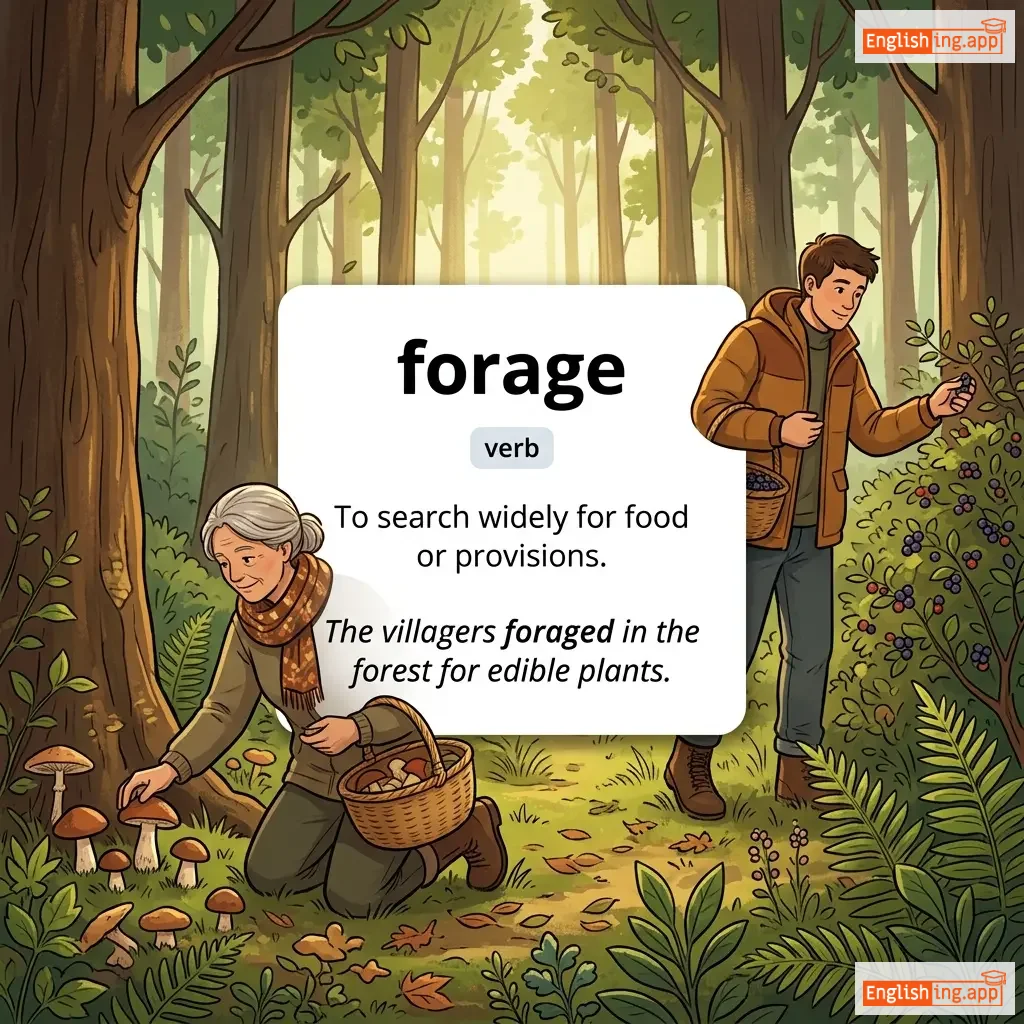
forage definition card — visual illustration of the meaning
verb
/ˈfɒrɪdʒ/
искать пищу (iskat' pishchu)

To search widely for food or provisions.

"The villagers foraged in the forest for edible plants."

"Жители деревни искали съедобные растения в лесу." (Zhiteli derevni iskali syedobnye rastenija v lesu.)
noun
/ˈfɔːreɪ/
вылазка / первая попытка (vylazka / pervaya popytka)

A sudden short attack or attempt, especially into new activity or territory.

"The company made its first foray into the international market."

"Компания сделала свою первую вылазку на международный рынок." (Kompanija sdelala svoju pervuyu vylazku na mezhdunarodnyj rynok.)
verb
/fɔːˈbɛər/
воздерживаться (vozderzhivatsya)

To refrain from doing something; to show patience or self-control.

"She forbore from commenting on his mistake."

"Она воздержалась от комментариев по поводу его ошибки." (Ona vozderzhivatsya ot kommentariy po povodu yego oshibki.)
forbearance definition card — visual illustration of the meaning
noun
/fɔːrˈbɛrəns/
терпимость (terpimost')

Patient self-control; restraint and tolerance, especially in difficult situations.

"She showed remarkable forbearance during the heated argument."

"Она продемонстрировала замечательную терпимость во время горячего спора." (Ona prodemonstrirovala zamechatel'nuyu terpinost' vo vremya goryachego spora.)
verb
/fərˈbɪd/
запрещать (zapreshchat)

to order someone not to do something

"The school forbids smoking on campus."

"Школа запрещает курение на кампусе." (Shkola zapreshchayet kureniye na kampuse.)
adjective
/fəˈbɪd.ən/
запрещённый; нелегальный (zapreshchyonnyy; nelegal'nyy)

not allowed; prohibited; banned

"Smoking is strictly forbidden in this building."

"Курение строго запрещено в этом здании." (Kurenie strogo zapreshcheno v etom zdanii.)
adverb
/ˈfɔːrbi/
кроме того (krome togo)

In addition; besides (archaic Scottish/English word).

"He is kind and generous, and wise forby."
"Он добрый и щедрый, и кроме того мудрый." (On dobryy i shchedryy, i krome togo mudryy.)
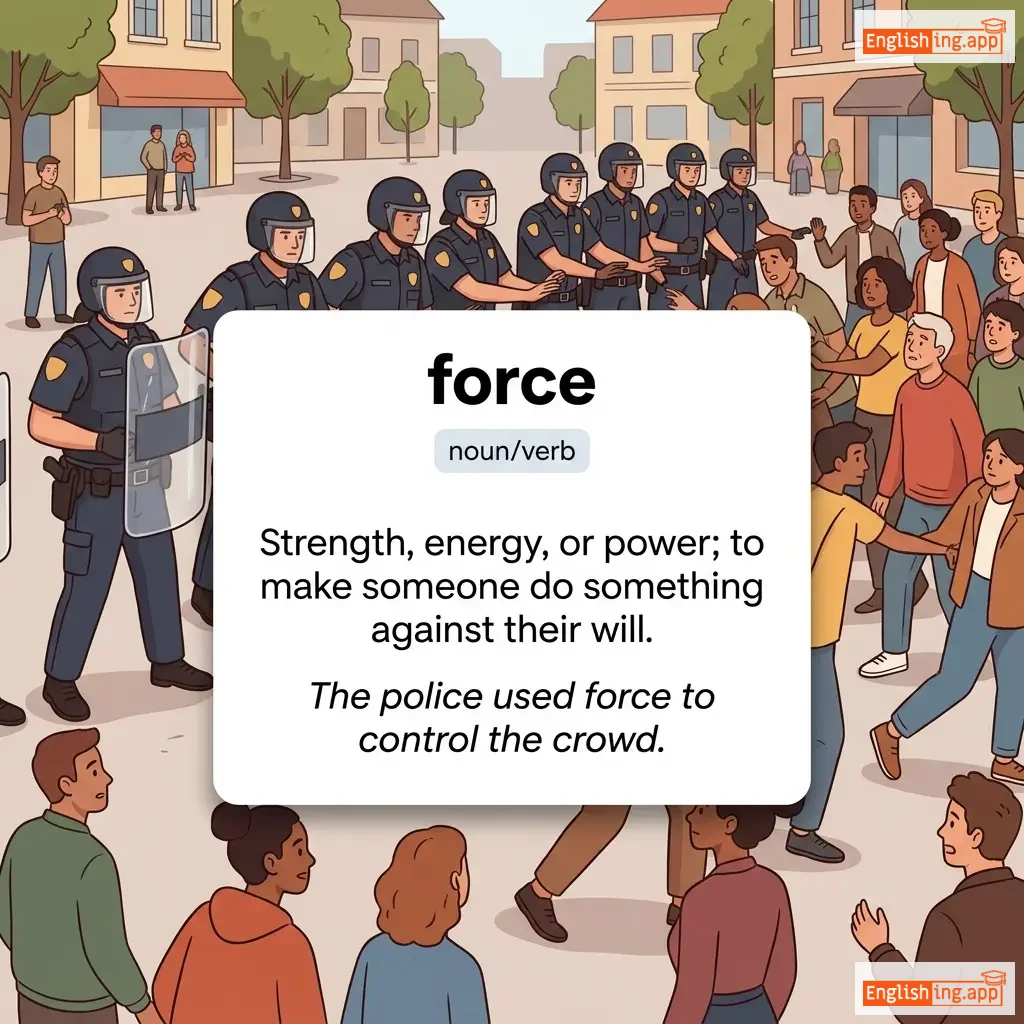
force definition card — visual illustration of the meaning
noun/verb
/fɔːrs/
сила / мощь (sila / moshch)

Strength, energy, or power; to make someone do something against their will.

"The police used force to control the crowd."

"Полиция использовала силу, чтобы контролировать толпу." (Politsiya ispol'zovala silu, chtoby kontrolirovat' tolpu.)
adjective
/ˈfɔːrsəbl/
насильственный (nasilstvenny)

Done by force; using physical strength or power.

"The police made a forcible entry into the house."

"Полиция провела насильственный вход в дом." (Politsiya provela nasil'stvennyy vkhod v dom.)