Словари

Словарь английского языка | Значения слов, определения и примеры

adjective
/fɔːls/
ложный (lozhnyy)

not true or correct; intended to deceive

"He was accused of giving false information."

"Его обвиняли в предоставлении ложной информации." (Ego obvinjali v predostavlenii lozhnoi informatsii.)
noun
/ˈfɔːlshʊd/
лжи (lzhi)

the state of being untrue or a lie

"He was punished for spreading falsehoods about his colleague."

"Его наказали за распространение лжи о своем коллеге." (Ego nakazali za rasprostranenie lzhi o svoem kollege.)
verb
/ˈfɔːlsɪfaɪ/
фальсифицировать (falsifitsirovat)

to make something false or to misrepresent

"He tried to falsify the documents to avoid taxes."

"Он пытался фальсифицировать документы, чтобы избежать налогов." (On pytalsya falsifitsirovat' dokumenty, chtoby izbezhat' nalogov.)
verb
/ˈfɔːltər/
колебаться или терять силу или импульс (kolebatsya ili teryat' silu ili impuls)

to hesitate or lose strength or momentum

"Her voice faltered as she delivered the speech."

"Ее голос дрогнул, когда она произнесла речь." (Eyo golos drognul, kogda ona proyiznesla rech.)
noun
/feɪm/
слава (slava)

the state of being known or recognized by many people

"She achieved worldwide fame for her acting."

"Она приобрела мировую известность благодаря своей актерской игре." (Ona priyobrela mirovyuyu izvestnost' blagodarya svoey akterskoy igre.)
adjective
/fəˈmɪliər/
знакомый (znakomyy)

Well known or easily recognized from previous experience.

"The town looked familiar to me after so many years."

"Город показался мне знакомым после стольких лет." (Gorod pokazalsya mne znakomym posle stol'kikh let.)
👨‍👩‍👧‍👦

family (femili)

noun
/ˈfæməli/
семья (sem'ya)

A group consisting of parents and their children, or all the descendants of a common ancestor.

"She spends most of her weekends with her family."
"Она проводит большинство своих выходных с семьей." (Ona provodit bol'shinstvo svoikh vykhodnykh s sem'yoj.)
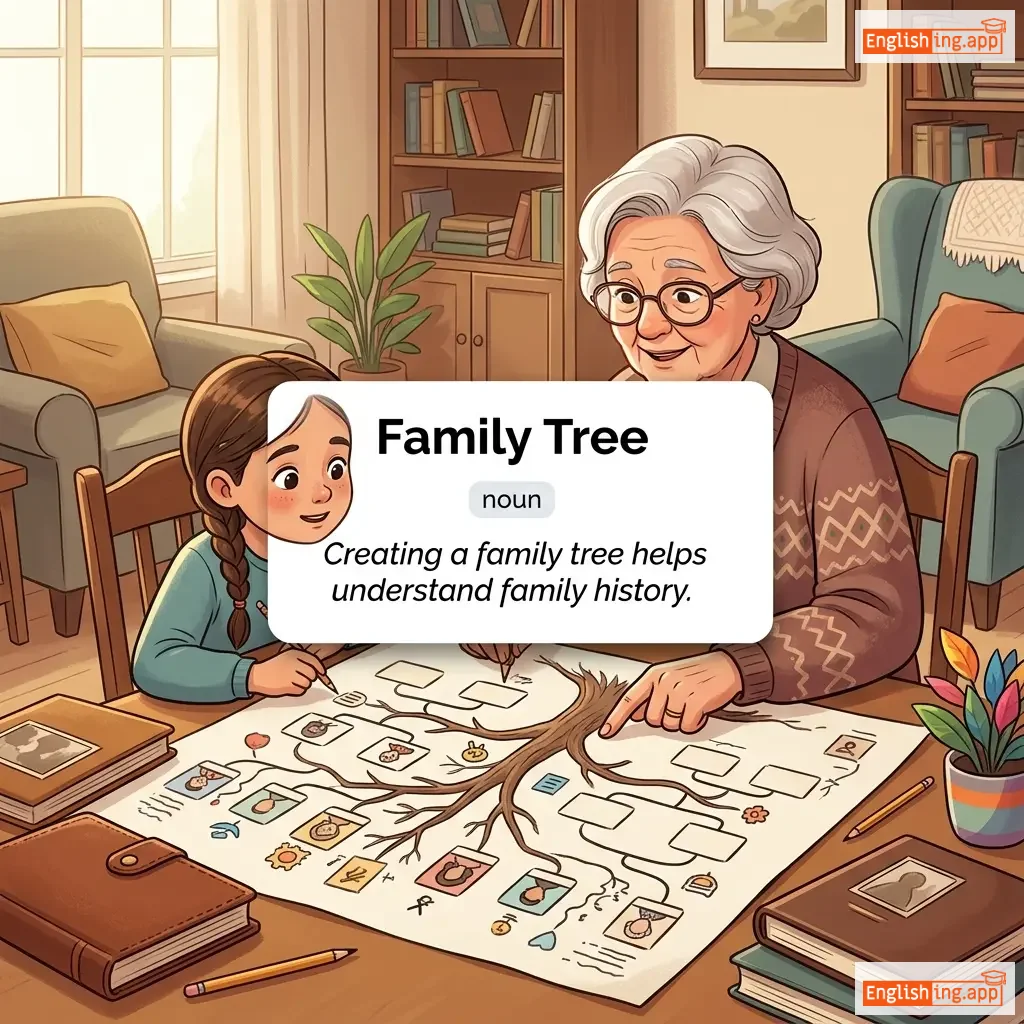
Family Tree definition card — visual illustration of the meaning
noun
ˈfæmɪli triː
Семейное древо (Semeinoe drevo)

A diagram showing the relationships between people in several generations of a family.

"Creating a family tree helps understand family history."

"Создание семейного древа помогает понять семейную историю." (Sozdanie semeynogo dreva pomogaet ponyat' semeynuyu istoriyu.)
noun
/ˈfæm.ɪn/
голод (golod)

extreme scarcity of food; a period when food is extremely scarce

"The severe drought led to widespread famine in the region."

"Тяжелая засуха привела к широкомасштабному голоду в регионе." (Tyazhelaya zasukha privela k shirokomasshtabnomu golodu v regione.)
verb
/ˈfæmɪʃ/
голодать (golodat)

to suffer or cause to suffer from extreme hunger

"The stranded hikers began to famish after several days without food."
"Заблудшие туристы начали голодать после нескольких дней без еды." (Zabludshie turisty nachali golodat' posle neskol'kikh dney bez yedy.)
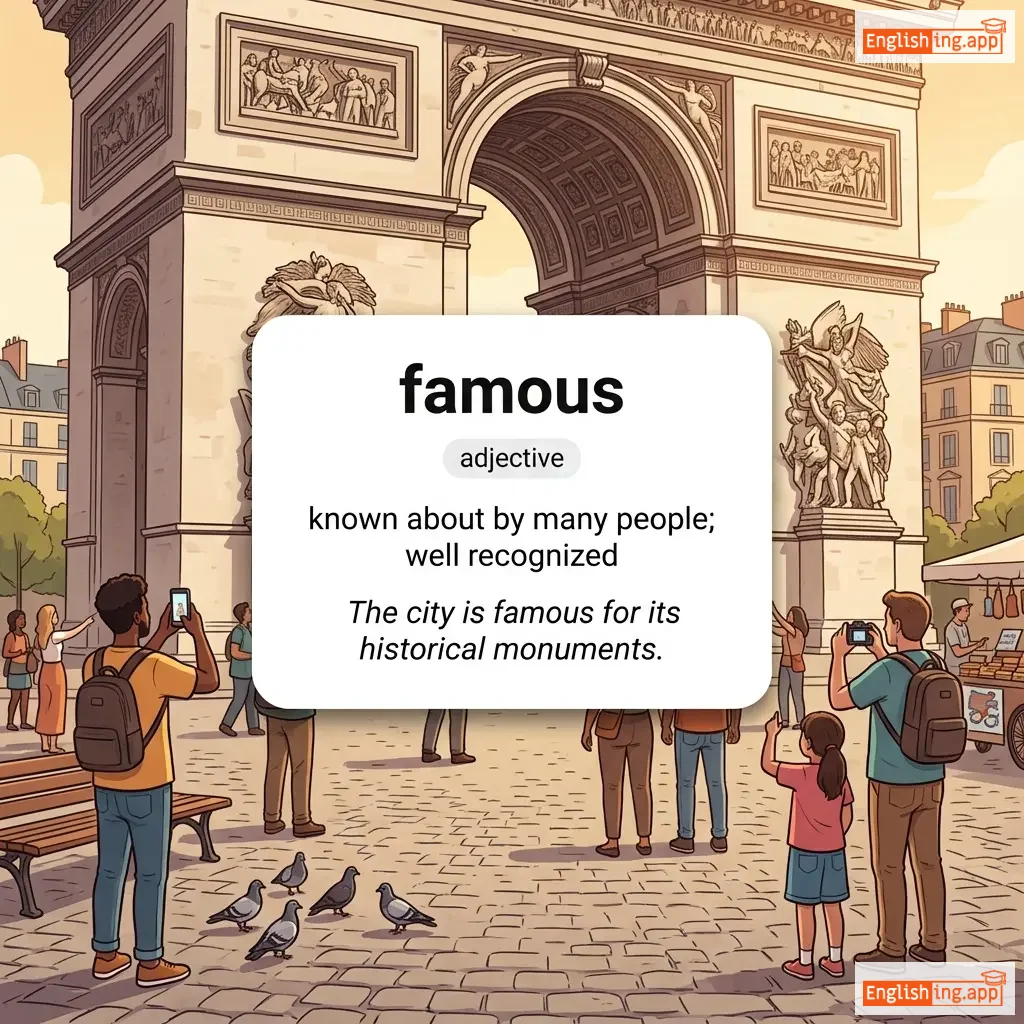
famous definition card — visual illustration of the meaning
adjective
/ˈfeɪməs/
знаменитый (znamenity)

known about by many people; well recognized

"The city is famous for its historical monuments."

"Город знаменит своими историческими памятниками." (Gorod znamenity svoimi istoricheskimi pamyatnikami.)
noun
/fæn/
счастье (schastye)

a device with rotating blades that creates a current of air; also a person who admires or supports someone or something

"The fan kept the room cool during the hot summer day."

"Она не смогла скрыть своего счастья, когда получила награду." (Ona ne smogla skryt' svoego schast'ya, kogda poluchila nagradu.)
noun
/fəˈnætɪk/
фанатик (fanatik)

a person with extreme and uncritical enthusiasm for a cause or belief

"He is a football fanatic, never missing a match of his favorite team."

"Он фанат футбола, никогда не пропускает матч своей любимой команды." (On fanat futbola, nikogda ne propuskayet match svoey lyubimoy komandy.)
adjective
/fəˈnætɪkəl/
фанатичный (fanatichnyy)

showing extreme enthusiasm or obsession

"She has a fanatical interest in collecting vintage stamps."

"У неё фанатический интерес к коллекционированию старых марок." (U nee fanaticheskiy interes k kollektsionirovaniyu starykh marok.)
noun
/fəˈnætɪsɪzəm/
фанатизм (fanatizm)

the quality of being fanatical; extreme zeal or obsession

"Religious fanaticism can lead to intolerance and conflict."

"Религиозный фанатизм может привести к нетерпимости и конфликтам." (Religioznyy fanatizm mozhet privesti k neterpimosti i konfliktam.)
adjective
/ˈfænsiːd/
предположительный, желаемый (predpolozhitel'nyy, zhelayemyy)

imagined, desired, or believed without evidence

"He is a fancied suitor in the eyes of the young lady."

"Он — предполагаемый поклонник в глазах молодой дамы." (On — predpolozhitel'nyy poklonnik v glazakh molodoy damy.)
noun
/ˈfænsiər/
любитель (lyubitel)

a person who has a special interest in a particular thing or activity, especially animals or hobbies

"He is a fancier of rare birds."

"Он увлекается редкими птицами." (On uvlekaetsya redkimi ptitsami.)
adjective
/ˈfæn.sɪ.fəl/
фантазийный, нереалистичный (fantazijnyj, nerealistichnyj)

overimaginative, unrealistic, or whimsical

"The story was too fanciful to be true."

"История была слишком фантазийной, чтобы быть правдой." (Istoriya byla slishkom fantazijnoj, chtoby byt' pravdoj.)
adjective
/ˈfæn.sɪ.ləs/
без воображения, обычный (bez voobrazheniya, obychny)

without imagination or creativity; plain or ordinary

"His drawings were simple and fanciless."

"Его рисунки были простыми и без воображения." (Ego risunki byli prostymi i bez voobrazheniya.)
verb
/ˈfæn.si/
представлять, желать, любить (predstavlyat', zhelat', lyubit')

to imagine, desire, or like something; to have a liking for

"She fancies a cup of tea in the morning."

"Она хочет чашку чая утром." (Ona khochet chashku chaya utrom.)
noun
/ˈfæn.feər/
громкое представление, реклама (gromkoe predstavilene, reklama)

a short ceremonial tune or display of publicity to attract attention

"The new product was launched with much fanfare."

"Новый продукт был запущен с большой помпой." (Novyy produkt byl zapushchen s bol'shoy pompoy.)
adjective
/fænˈtæstɪk/
фантастический (fantasticheskiy)

extraordinary, extremely good or impressive

"The concert last night was absolutely fantastic."

"Концерт прошлой ночью был абсолютно фантастический." (Kontsert proshloy noch'yu byl absolutno fantasticheskiy.)
noun
/ˈfæntəsi/
фантазия (fantaziya)

a creation of the imagination, especially something improbable or impossible

"She has a vivid fantasy about traveling to space."

"У нее яркое воображение о путешествиях в космос." (U nee yarkoe voobrazhenie o puteshestviyakh v kosmos.)
adverb
/fɑːr/
далеко (daleko)

at, to, or by a great distance

"The school is far from my house."

"Школа далеко от моего дома." (Shkola daleko ot moego doma.)
adjective
/ˌfɑːrˈfɛtʃt/
маловероятно (maloveroyatno)

unlikely to happen or be true; improbable

"His explanation for being late was a bit far-fetched."

"Его объяснение, почему он опоздал, было немного маловероятным." (Ego ob'yasneniye, pochemu on opozdal, bylo nemnogo maloveroyatnym.)
noun
/fɑːrs/
фарс (fars)

a comic dramatic work using buffoonery and horseplay, or a ridiculous situation

"The meeting turned into a complete farce with everyone arguing."

"Встреча превратилась в настоящий фарс, когда все начали спорить." (Vstrecha prevratilas' v nastoyashchij fars, kogda vse nachali sporit'.)
noun
/fɛər/
тариф (tarif)

the money paid for a journey on public transport; also food or treatment provided

"The bus fare to the city center is five dollars."

"Тариф на автобус до центра города составляет пять долларов." (Tarif na avtobus do tsentra goroda sostavlyaet pyat' dollarov.)
noun
/ˌfer.ˈwel/
прощание (proshchaniye)

an act of parting or of marking someone's departure

"The company organized a farewell party for the retiring manager."

"Компания организовала прощальную вечеринку для уходящего менеджера." (Kompanija organizovala proshchal'nuyu vecherinku dlya ukhodyashchego menedzhera.)
adjective
/ˌfɑːrˈfetʃt/
маловероятный или малоправдоподобный (maloveroyatnyy ili malopravdopodobnyy)

unlikely to happen or be true; improbable

"His explanation for being late sounded farfetched."

"Его объяснение опоздания казалось невероятным." (Yego obyasnenie opazdaniya kazalos' neveroyatnym.)
noun
/fɑːrm/
ферма (ferma)

an area of land used for growing crops and raising animals

"They live on a farm with many animals."

"Они живут на ферме с множеством животных." (Oni zhivut na ferme s mnozhestvom zhivotnykh.)
noun
/ˈfɑːrmər/
фермер (fermer)

a person who owns or manages a farm

"The farmer works hard to grow crops."

"Фермер усердно работает, чтобы вырастить урожай." (Fermyer userdno rabotayet, chtoby vyrastit urozhay.)
noun
/ˈfɑː.mɪŋ/
сельское хозяйство (selskoe khozyaystvo)

the activity or business of growing crops and raising animals for food or other products

"Farming requires both hard work and knowledge about the land."

"Сельское хозяйство требует как упорного труда, так и знаний о земле." (Selskoe khozyaystvo trebuyet kak upornogo truda, tak i znaniy o zemle.)
verb
/ˈfæs.ɪ.neɪt/
очаровывать (ocharovyvat)

to attract and hold the attention of someone; to charm or captivate

"The magician's performance fascinated the audience."

"Выступление фокусника очаровало зрителей." (Vystuplenie fokusnika ocharovalo zriteley.)
adjective
/ˈfæsɪneɪtɪŋ/
захватывающий (zakhvatyvayushchiy)

extremely interesting or charming

"The history of ancient Egypt is truly fascinating."

"История Древнего Египта действительно захватывающая." (Istoriya Drevnego Egipta deystvitel'no zakhvatyvayushchaya.)
noun
/ˌfæs.ɪˈneɪ.ʃən/
очарование; привлечение; восхищение (ocharovanie, prityazhenie, voskhishchenie)

the power to fascinate someone; the state of being intensely interested

"Her fascination with ancient history led her to become an archaeologist."

"Ее увлечение древней историей привело ее к археологии." (Eyo uvlashchenie drevney istoriey privedlo ye to arkheologii.)
fascist definition card — visual illustration of the meaning
adjective
ˈfæʃ.ɪst
фашист (fashist)

Relating to or characteristic of fascism; extremely authoritarian.

"Fascist governance undermines freedom."

"Фашистское правительство подрывает свободу." (Fashistskoe pravitel'stvo podryvaet svobodu.)
noun
/ˈfæʃ.ən/
мода (moda)

a popular or accepted style of clothing, behavior, or way of doing something

"She always keeps up with the latest fashion."

"Она всегда в курсе последней моды." (Ona vsegda v kurse posledney mody.)
adjective
/ˈfæʃənəbəl/
модный (modnyy)

Following the latest styles or trends in clothing, behavior, or ideas

"She always wears fashionable clothes to every party."

"Она всегда носит модную одежду на каждой вечеринке." (Ona vsegda nosit modnuyu odezhdu na kazhdoy vecherinke.)
adjective, adverb
/fæst/
быстро, прочно закрепленный (bystro, prochno zakreplennyj)

moving or capable of moving at high speed; firm or securely fixed

"He drives very fast on the highway."

"Он едет очень быстро по шоссе." (On yedet ochen' bystro po shosse.)
verb
/ˈfæsən/
пристегнуть (pristegnut)

To attach or secure something firmly in place

"Please fasten your seatbelt before the plane takes off."

"Пожалуйста, пристегните ремень перед взлетом самолета." (Pozhaluysta, pristegnite remen pered vzletom samoleta.)
adjective, adverb
/ˈfæstər/
быстрее (bystree)

moving or able to move quickly; more quickly than usual

"This car is faster than the old one."

"Эта машина быстрее старой." (Eta mashina bystree staroy.)
adjective
/ˈfæstɪst/
самый быстрый (samyy bystryy)

moving or capable of moving at the highest speed

"Usain Bolt is the fastest runner in the world."
"Усейн Болт — самый быстрый бегун в мире." (Useyn Bolt — samyy bystryy begun v mire.)
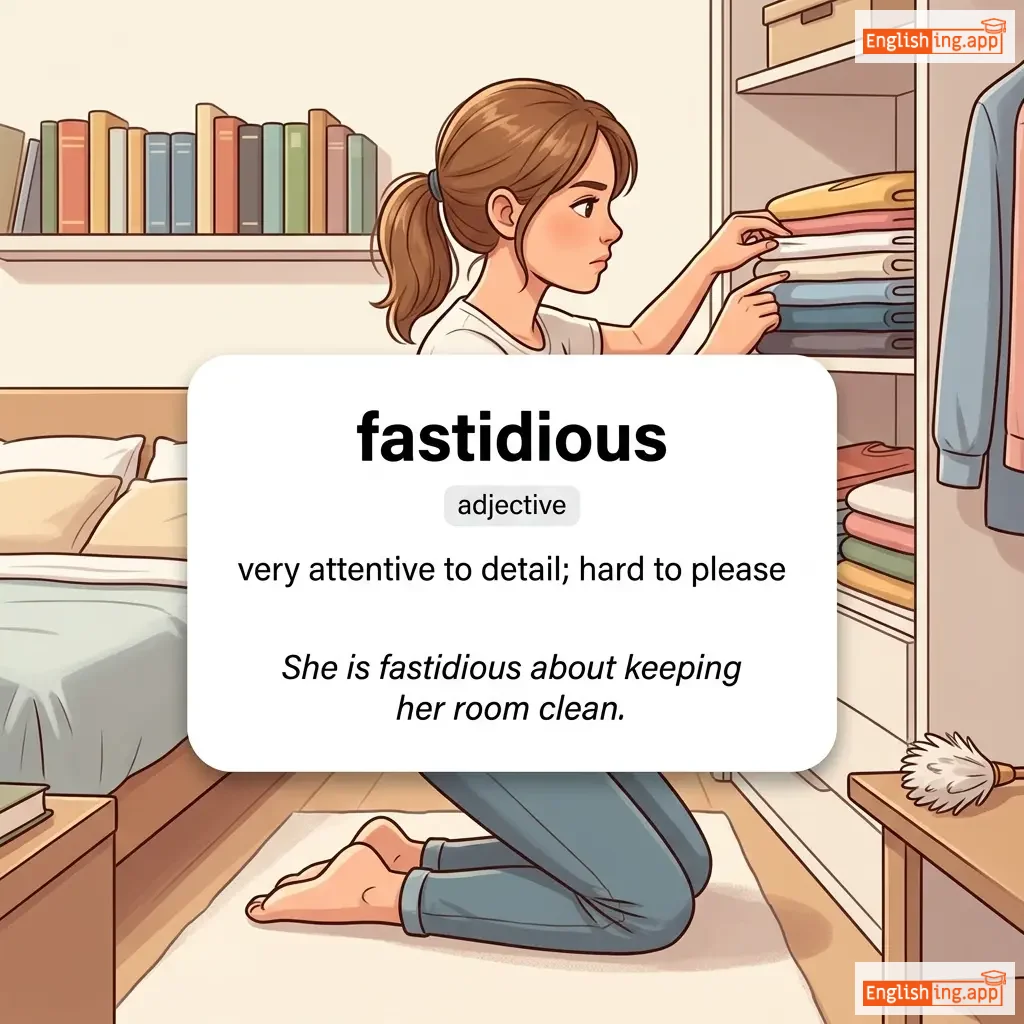
fastidious definition card — visual illustration of the meaning
adjective
/fæˈstɪdiəs/
привередливый, требовательный (priveredlivyy, treboyatel'nyy)

very attentive to detail; hard to please

"She is fastidious about keeping her room clean."

"Она очень привередлива, когда речь идет о том, чтобы держать свою комнату в чистоте." (Ona ochen' priveredliva, kogda rech' idet o tom, chtoby derzhat' svoyu komnatu v chistote.)
adjective, noun
/fæt/
жирный (zhirny)

having a lot of excess flesh; a natural oily substance in animal bodies

"Eating too much fast food can make you fat."

"Переедание фастфуда может сделать вас жирным." (Pereedaniye fastfuda mozhet sdelat' vas zhirnym.)
adjective
/ˈfeɪtl/
фатальный (fatal'nyy)

causing death; leading to disaster

"The accident proved fatal for the driver."

"Авария оказалась фатальной для водителя." (Avariya okazalas' fatal'noy dlya voditelya.)
noun
/ˈfeɪ.tə.lɪ.zəm/
фатализм (fatalizm)

the belief that all events are predetermined and inevitable

"He embraced fatalism, believing that nothing he did could change his destiny."

"Он принял фатализм, веря, что ничто, что он делал, не могло изменить его судьбу." (On prinyal fatalizm, verya, chto nichto, chto on delal, ne moglo izmenit' ego sud'bu.)
noun
/fəˈtæləti/
смертельный случай (smertel'nyy sluchay)

An occurrence of death by accident, disaster, or violence.

"The accident resulted in one fatality."

"Авария привела к смертельному случаю." (Avariya privela k smertelnomu sluchayu.)
adverb
/ˈfeɪ.təl.i/
фатально (fatal'no)

in a way that causes death; with deadly consequences; critically

"The accident fatally injured two passengers."

"Авария смертельно ранила двух пассажиров." (Avariya smertel'no ranila dvukh passazhirov.)
noun
/feɪt/
судьба (sudba)

the development of events beyond a person's control, regarded as determined by a supernatural power

"She believed it was her fate to become a teacher."

"Она верила, что это ее судьба стать учителем." (Ona verila, chto eto yejo sudba stat' uchitelem.)
adjective
/ˈfeɪt.fəl/
роковой или судьбоносный (rokovoy ili sud'bonosny)

having significant or disastrous consequences

"Their fateful decision changed the course of history."

"Их роковое решение изменило ход истории." (Ikh rokovoje reshenije izmenilo khod istorii.)