Словари

Словарь английского языка | Значения слов, определения и примеры

noun, verb
/fɔːrm/
форма / форма (forma / forma)

the shape or structure of something; to bring something into existence

"Students filled out the registration form."

"Студенты заполнили регистрационную форму." (Studenty zapolnili registratsionnuyu formu.)
adjective
/ˈfɔːrməl/
формальный (formal'nyy)

done in accordance with rules of convention or etiquette; official or serious in nature

"He wore a formal suit to the wedding."

"Он носил формальный костюм на свадьбе." (On nosil formal'nyy kostyum na svad'be.)
noun
/fɔːrˈmælɪti/
формальность (formal'nost)

the rigid observance of rules or customs, especially in social or official situations

"The interview was just a formality since he was already selected."

"Собеседование было просто формальностью, так как он уже был выбран." (Sobezyedovaniye bylo prosto formal'nost'yu, tak kak on uzhe byl vybrany.)
adverb
/ˈfɔːrməli/
официально (ofitsialno)

in a formal or official manner; according to established rules or conventions

"The agreement was formally signed by both parties."

"Соглашение было официально подписано обеими сторонами." (soglashenie bylo ofitsialno podpisano obeimi storonami)
noun
/ˈfɔːmæt/
формат (format)

the way in which something is arranged, designed, or presented

"Please follow the given format for your report submission."

"Пожалуйста, следуйте данному формату для подачи вашего отчета." (Pozhaluysta, sleduyte dannomu formatu dlya podachi vashego otcheta.)
noun
/fɔːrˈmeɪʃən/
формирование (formirovanie)

the action of forming or process of being formed

"The formation of the new company took several months."

"Формирование новой компании заняло несколько месяцев." (Formirovanie novoy kompanii zanyalo neskol'ko mesyatsev.)
adjective
/ˈfɔːrmətɪv/
формирующий (formiruyushchiy)

Having a lasting influence on a person's development or character.

"Childhood is often described as a formative stage in life."

"Детство часто описывается как формирующий этап в жизни." (Detstvo chasto opisyvayetsya kak formiruyushchiy etap v zhizni.)
adjective
/ˈfɔːrmər/
бывший (byvshiy)

Having been previously in a particular role or position.

"He is a former president of the association."

"Он бывший президент ассоциации." (On byvshiy prezident assotsiatsii.)
adverb
/ˈfɔːrmərli/
раньше (rannshe)

In the past; previously.

"The city was formerly known as Constantinople."
"Город ранее был известен как Константинополь." (Gorod ranee byl izvesten kak Konstantinopol.)
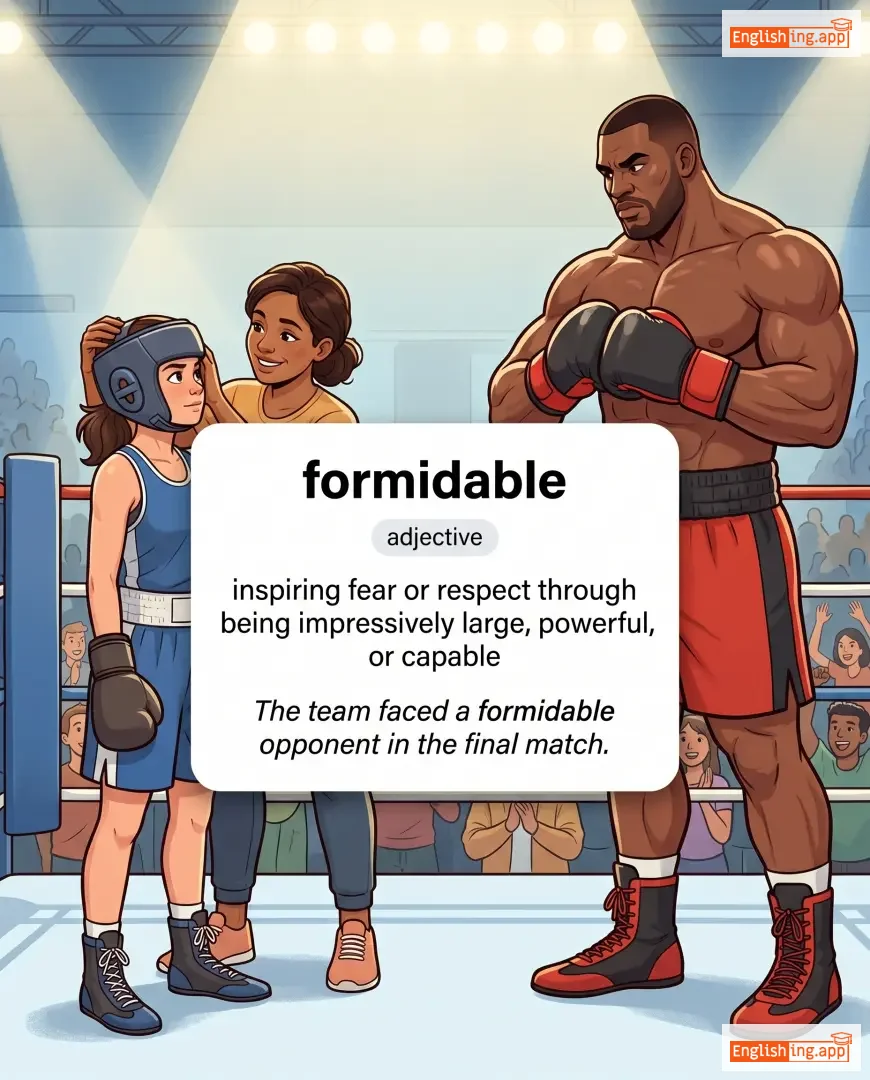
formidable definition card — visual illustration of the meaning
adjective
/ˈfɔːrmɪdəbl/
грозный (formidebl)

inspiring fear or respect through being impressively large, powerful, or capable

"The team faced a formidable opponent in the final match."

"Команда столкнулась с грозным соперником в финальном матче." (Komanda stolknulas s groznym sopernikom v finalnom matche)
noun
/ˈfɔːrmjələ/
формула (formula)

a fixed method for doing something; a mathematical or chemical rule expressed in symbols

"The scientist discovered a new formula for the medicine."

"Ученый открыл новую формулу для лекарства." (Uchenyy otkryl novuyu formuluy dlya lekartstva.)
formulate definition card — visual illustration of the meaning
verb
/ˈfɔːmjʊleɪt/
формулировать (formulirovat)

to create or devise a plan, system, or method

"She had to formulate a new strategy for the project."

"Ей пришлось разработать новую стратегию для проекта." (Ey prishlos' razrabotat' novuyu strategiiyu dlya proyeka.)
verb
/fɔːrˈseɪk/
покидать (pokidat)

to abandon or give up something or someone

"He decided not to forsake his old friends despite his success."

"Он решил не покидать своих старых друзей, несмотря на его успех." (On reshíl ne pokidat' svoikh starykh druzey, nesmotrya na ego uspekh.)
forswear definition card — visual illustration of the meaning
verb
/fɔːrˈswɛr/
отречься под присягой (otrechsya pod prisyagoy)

to renounce or give up something formally, often under oath

"He chose to forswear all bad habits after his illness."

"Он выбрал отказаться от всех плохих привычек после болезни." (On vybral otkazat'sya ot vsekh plokhikh privychek posle bolezni.)
noun
/fɔːrt/
крепость (krepost)

a strong building or group of buildings where soldiers live and defend

"The ancient fort stood on top of the hill for centuries."

"Древний форт стоял на вершине холма веками." (Drevniy fort stoyal na vershine kholma vekami.)
noun
/ˈfɔːr.teɪ/ or /fɔːrt/
сила (sila)

a strong ability or talent; something one does particularly well

"Cooking is definitely her forte."

"Готовка — это определенно ее сила." (Gotovka — eto opredelenno ee sila.)
adverb
/fɔːrθ/
вперед (vpered)

forward in place, time, or order

"The leader stepped forth to address the crowd."

"Лидер шагнул вперед, чтобы обратиться к толпе." (Lider shagnyl vpered, chtoby obratit'sya k tolpe.)
adjective
/ˌfɔːrθˈkʌmɪŋ/
предстоящий (predstoyashchiy)

about to happen soon; willing to share information

"The company announced its forthcoming product launch."

"Компания объявила о предстоящем запуске продукта." (Kompaniya ob'yavila o predstoyashchem zapuske produkta.)
adjective
/ˈfɔːrθˌraɪt/
прямолинейный (pryamolineynyy)

Direct and honest in speech or behavior; straightforward.

"She was forthright in her criticism of the policy."
"Она была прямолинейной в своей критике политики." (Ona byla pryamolineynoy v svoey kritike politiki.)
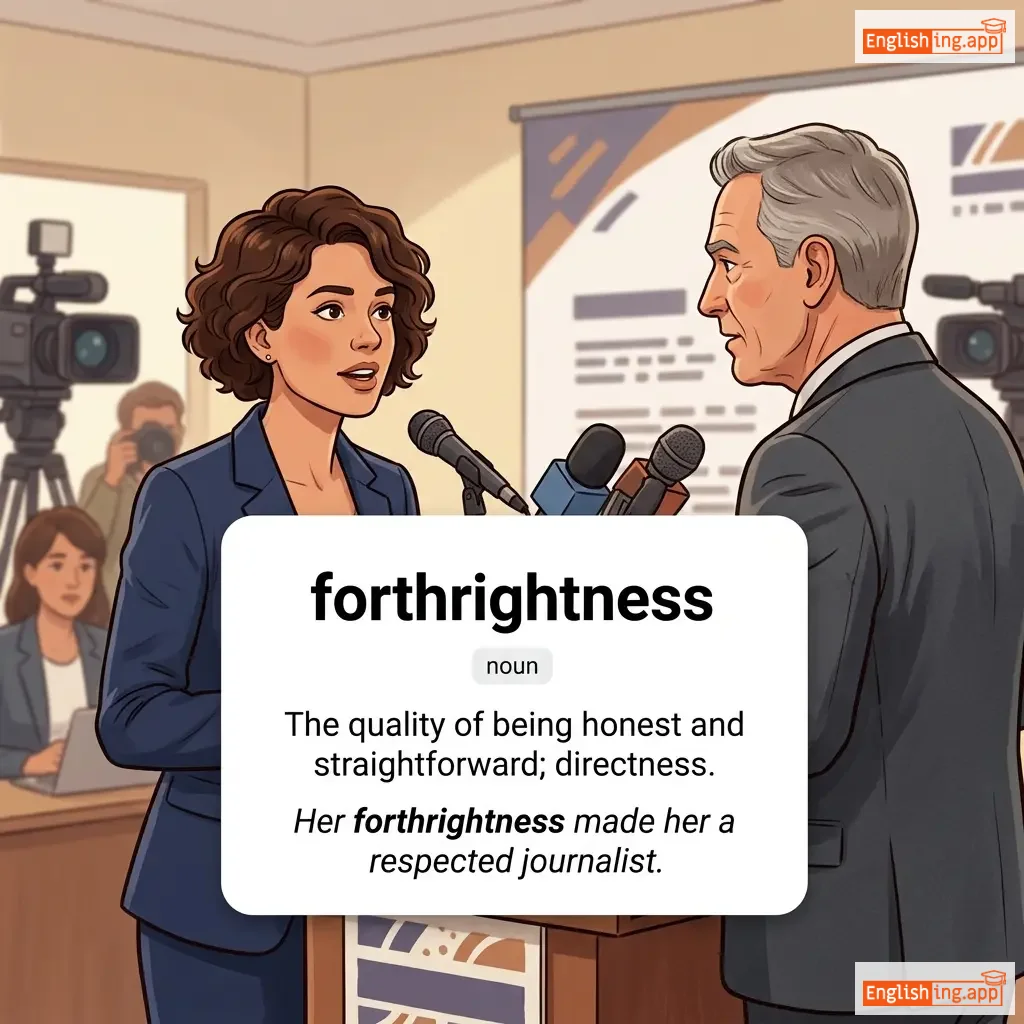
forthrightness definition card — visual illustration of the meaning
noun
/ˈfɔːθ.raɪt.nəs/
прямота (pryamota)

The quality of being honest and straightforward; directness.

"Her forthrightness made her a respected journalist."

"Её форсрайтнесс сделала её уважаемым журналистом." (Yeyo forstreytness sdelala yeyu uvažayemym zhurnalistom.)
adverb
/ˌfɔːrθˈwɪθ/
немедленно; без задержки; сразу (nemedlenno; bez zaderzhki; srazu)

immediately; without delay; at once

"The manager ordered the employee to stop the unsafe practice forthwith."
"Менеджер приказал сотруднику немедленно прекратить опасную практику." (Menedzher prikazal sotrudniku nemedlenno prekratit' opasnuyu praktiku.)
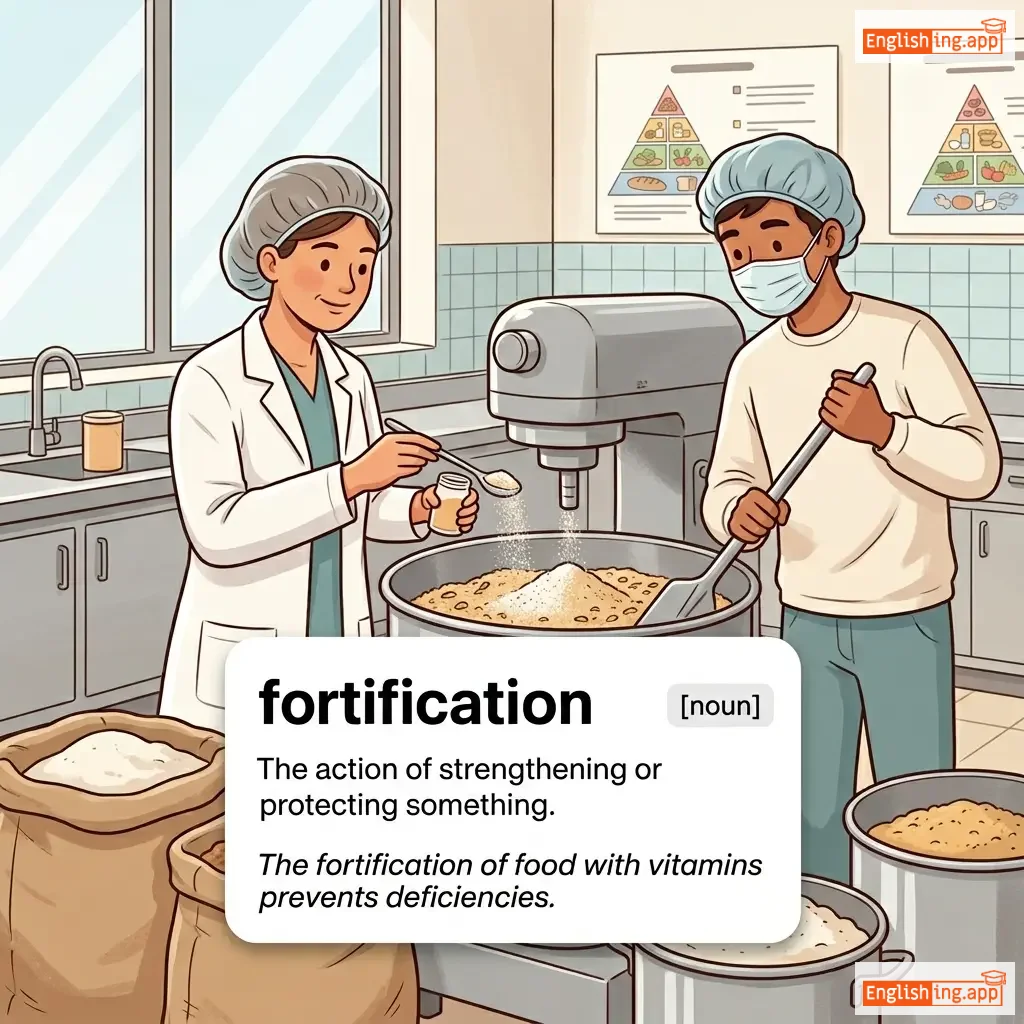
fortification definition card — visual illustration of the meaning
noun
ˌfɔː.tɪ.fɪˈkeɪ.ʃən
укрепление (ukreplenie)

The action of strengthening or protecting something.

"The fortification of food with vitamins prevents deficiencies."

"Фортификация пищи витаминами предотвращает дефицит." (Fortifikatsiya pishchi vitaminami predotvrashchaet defitsit.)
verb
/ˈfɔːrtɪˌfaɪ/
укрепить (ukrepit)

To strengthen a place, person, or thing physically or mentally.

"They fortified the city walls to protect against invasion."
"Они укрепили стены города, чтобы защититься от вторжения." (Oni ukrepili steny goroda, chtoby zashchititsya ot vtorzheniya.)
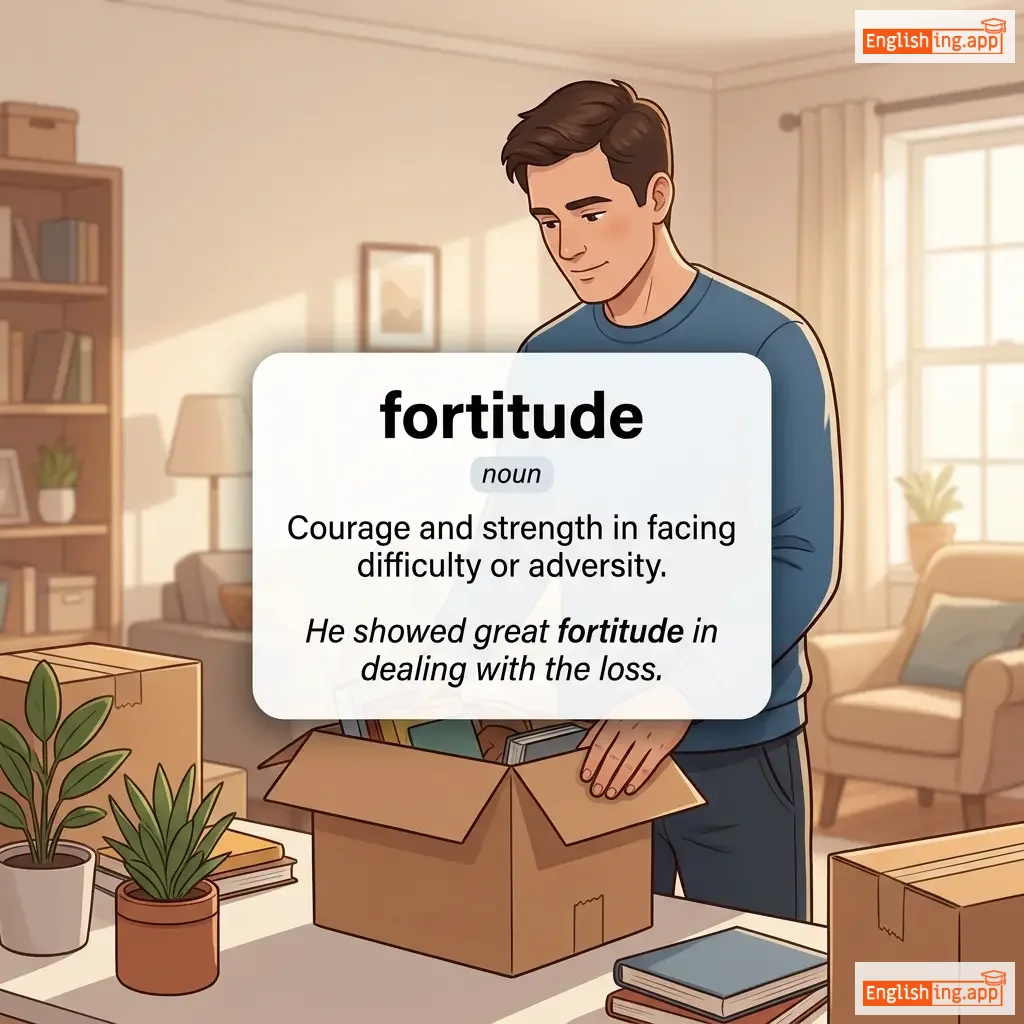
fortitude definition card — visual illustration of the meaning
noun
/ˈfɔːrtɪˌtuːd/
стойкость и мужество (stoykost' i muzhesvo)

Courage and strength in facing difficulty or adversity.

"He showed great fortitude in dealing with the loss."
"Он проявил большую стойкость в борьбе с утратой." (On proyavil bol'shuyu stoykost' v bor'be s utratoy.)
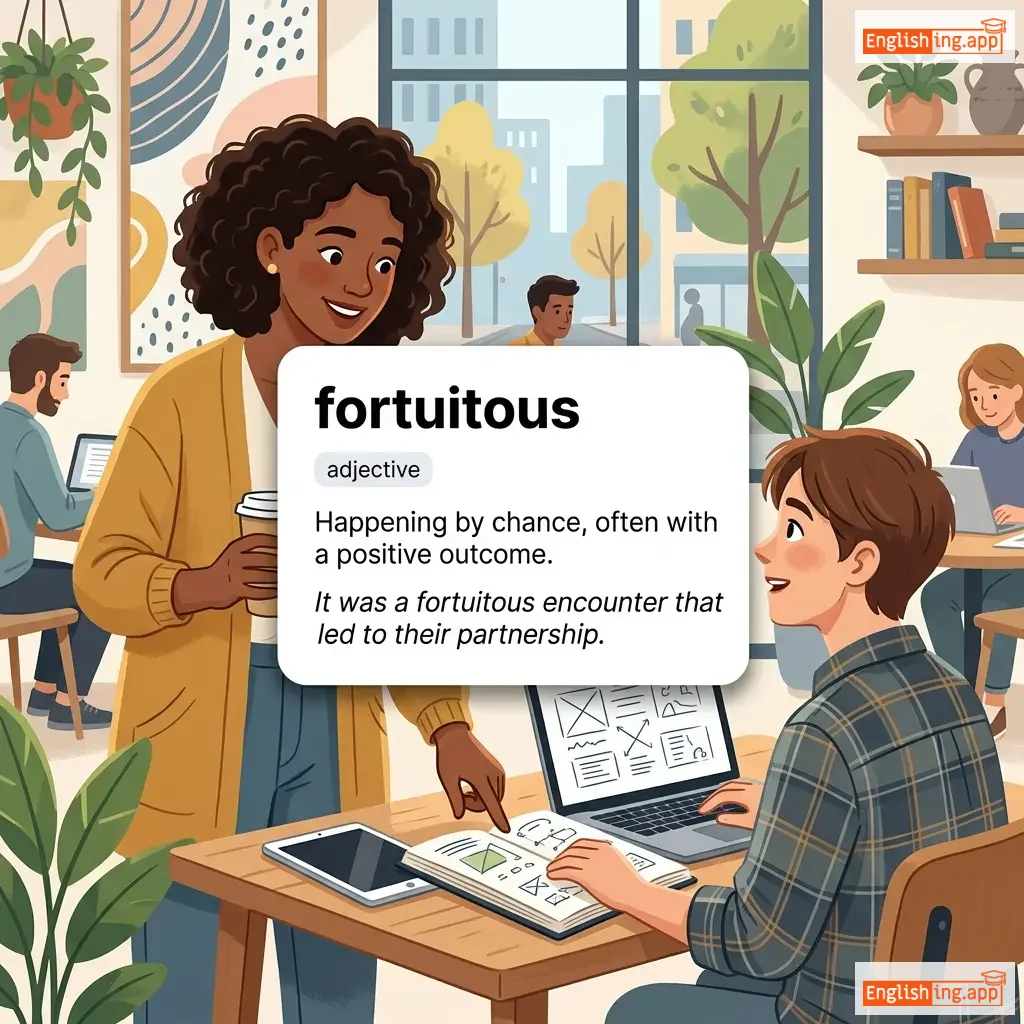
fortuitous definition card — visual illustration of the meaning
adjective
/fɔːrˈtuːɪtəs/
счастливый (schastlivyy)

Happening by chance, often with a positive outcome.

"It was a fortuitous encounter that led to their partnership."

"Это была счастливое совпадение, которое привело к их партнерству." (Eto byla schastlivoe sovpadeniye, kotoroye privelo k ikh partnyorstvu.)
adjective
/ˈfɔːrtʃənət/
счастливый (schastlivyy)

Having good luck or receiving something desirable by chance.

"She was fortunate to escape the accident without injuries."

"Она была удачлива, что избежала травм в аварии." (Ona byla udachliva, chto izbezhala travm v avarii.)
adverb
/ˈfɔːtʃənətli/
к счастью (k schchast'yu)

by good luck; luckily

"Fortunately, no one was injured in the accident."

"К счастью, никто не пострадал в аварии." (K schast'yu, nikto ne postradal v avarii.)
noun
/ˈfɔːrtʃən/
счастье / состояние (schast'ye / sostoyanie)

chance or luck, especially in success or wealth

"She made a fortune by investing in real estate."

"Она сделала состояние, инвестируя в недвижимость." (Ona sdelala sostoyanie, investiruya v nedvizhimost'.)
number
/ˈfɔːrti/
счастье (schast'ye)

the number 40; ten times four

"She celebrated her forty years of life with a big party."

"Она не смогла скрыть своего счастья, когда получила награду." (Ona ne smogla skryt' svoego schast'ya, kogda poluchila nagradu.)
noun
/ˈfɔːrəm/
форум (forum)

A place, meeting, or medium where ideas and views can be exchanged.

"The online forum allows people to discuss a wide range of topics."

"Онлайн-форум позволяет людям обсуждать широкий круг тем." (Onlayn-forum pozvolyayet lyudyam obshchatsya shirokiy krug tem.)
adverb, adjective, verb, noun
/ˈfɔːrwərd/
вперед (vpered)

toward the front; to advance or send ahead; an onward position or direction

"The troops moved forward to secure the bridge."

"Труппы двинулись вперед, чтобы обеспечить безопасность моста." (Truppy dvinuulis vpered, chtoby obespechit' bezopasnost' mosta.)
noun
/ˈfɒsɪl/
ископаемое (iskopaemoe)

the remains or impression of a prehistoric plant or animal embedded in rock

"The fossil of a dinosaur was discovered in the mountains."

"Ископаемое динозавра было найдено в горах." (Iskopaemoe dinozavra bylo naydeno v gorakh.)
verb, adjective
/ˈfɒstər/
воспитывать (vospityvat')

to encourage the development of something; to raise a child that is not one's own

"The program aims to foster creativity in young students."
"Программа направлена на поощрение творчества у молодых студентов." (Programma napravlena na pooshchryeniye tvorchestva u molodykh studentov.)
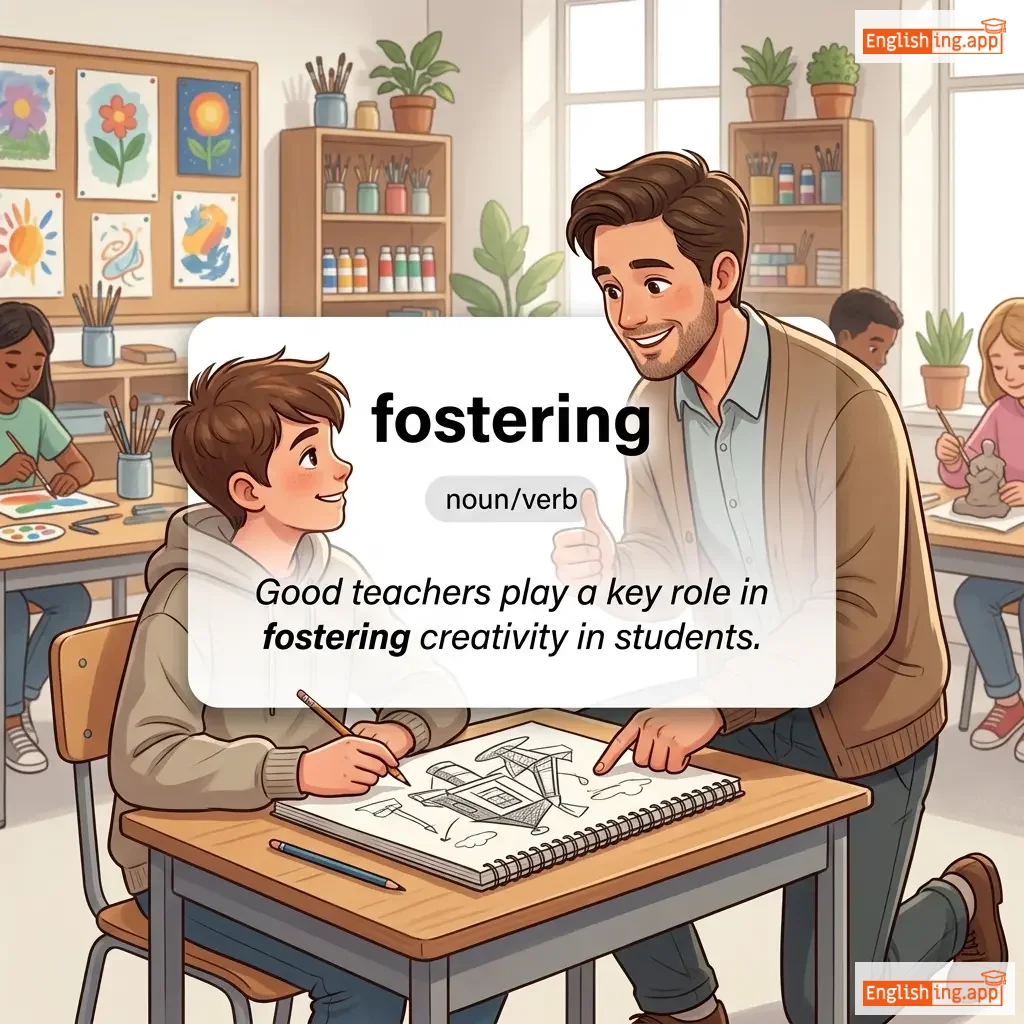
fostering definition card — visual illustration of the meaning
noun/verb
/ˈfɒs.tər.ɪŋ/
воспитание (vospitanie)

The process of encouraging or promoting the development or growth of something; nurturing and caring for.

"Good teachers play a key role in fostering creativity in students."

"Хорошие учителя играют ключевую роль в развитии творческого потенциала у студентов." (Khoroshie uchitelya igryayut klyuchevuyu rol v razvitii tvorcheskogo potentsiala u studentov.)
🚫

foul

adjective, noun, verb
/faʊl/

offensive to the senses; dirty or unpleasant; in sports, an unfair or illegal act

"The player was penalized for committing a foul."

verb
/faʊnd/
основать (osnovat')

to establish or set up an institution, company, or organization

"They found a new startup focused on renewable energy."
"Они основали новый стартап, сосредоточенный на возобновляемых источниках энергии." (Oni osnovali novyy startup, sosredotochennyy na vozobnovlyaemykh istochnikakh energii.)
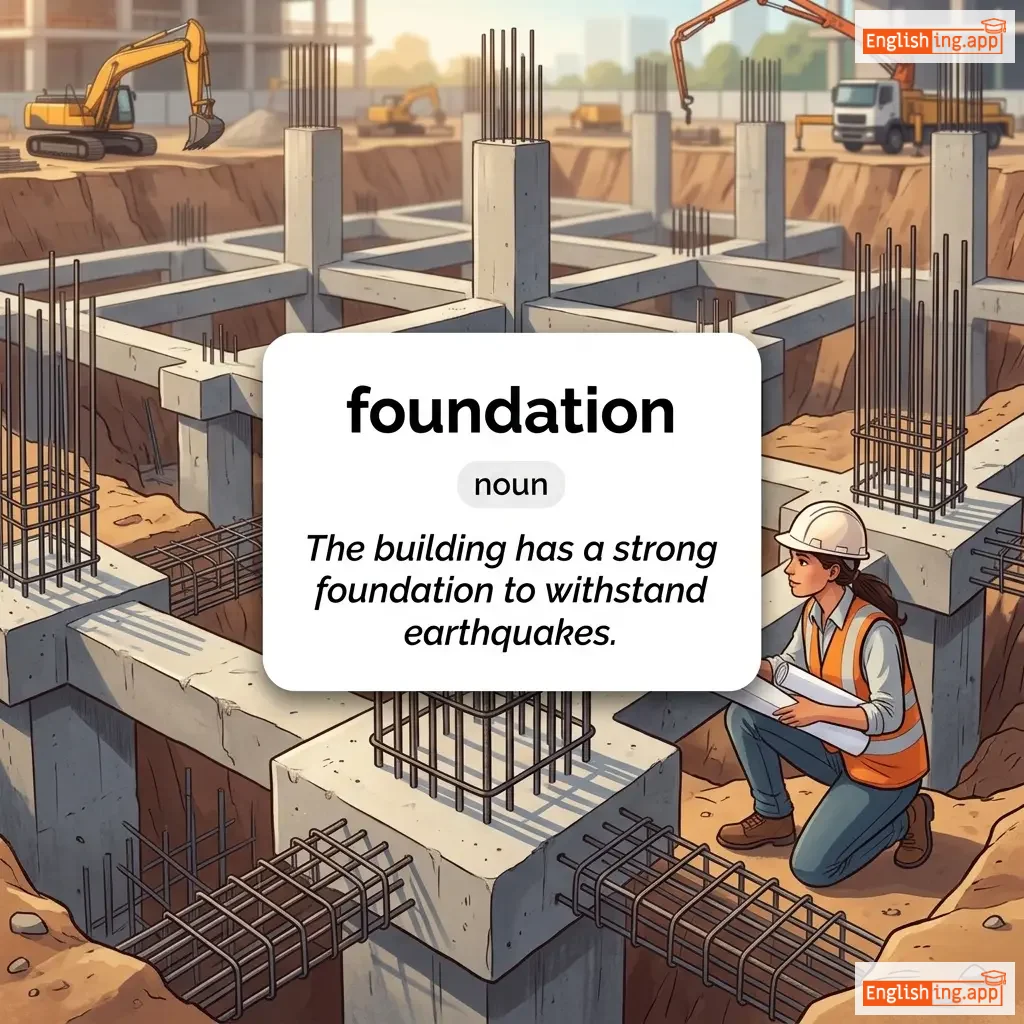
foundation definition card — visual illustration of the meaning
noun
/faʊnˈdeɪʃən/
фонд (fond)

the base or underlying support of something; an institution established for a purpose

"The building has a strong foundation to withstand earthquakes."

"Здание имеет прочный фундамент, чтобы выдержать землетрясения." (Zdaniye imeyet prochnyy fundament, chtoby vydyerzhat' zemletryaseniya.)
Founder definition card — visual illustration of the meaning
noun, verb
/ˈfaʊndər/
основатель (osnovatel)

a person who establishes an institution or company; as a verb, to fail or sink

"She is the founder of a successful startup."

"Она основательница успешного стартапа." (Ona osnovatelnitsa uspeshnogo startapa.)
noun
/ˈfaʊn.tən/
фонтан (fontan)

a natural spring of water; an artificial structure from which water flows

"The fountain in the park attracts many visitors."

"Фонтан в парке привлекает много посетителей." (Fontan v parke privlekaet mnogo posetiteley.)
numeral
/fɔːr/
четыре (chetyre)

The number equivalent to the sum of two and two; one more than three.

"She has four books on her desk."

"У нее четыре книги на столе." (U nee chetyre knigi na stole.)
👨‍👩‍👧‍👦

foursome (фоурсом)

noun
/ˈfɔːrsəm/
четверка (chetverka)

a group of four people or things, especially in games or social activities

"The foursome enjoyed a game of golf together."

"Четверка наслаждалась игрой в гольф вместе." (Chetverka naslazhdalis' igroy v golf vmeste.)
adjective/noun
/fɔːrθ/
четвертый (chetverty)

Constituting number four in a sequence; coming after the third in position.

"He finished in fourth place in the race."

"Он занял четвертое место в гонке." (On zanyal chetvertoe mesto v gonke.)
noun
/faʊl/
домашняя птица (domashnyaya ptitsa)

a domesticated bird kept for meat or eggs; chicken or other poultry

"The farmer raised fowl in his backyard for fresh eggs and meat."

"Фермер разводил домашнюю птицу в своем дворе для свежих яиц и мяса." (Fermyer razvodil domashnyuyu ptitsu v svoem dvore dlya svezhikh yayts i myasa.)
noun
/fɒks/
лиса (lisa)

a wild animal related to dogs, with a pointed face and thick fur

"The red fox is known for its cunning nature."

"Красная лиса известна своей хитрой природой." (Krasnaya lisa izvestna svoey khitroy prirodoy.)
adjective
/ˈfɒksi/
хитрый (khitryy)

Clever, cunning, or attractive.

"He came up with a foxy plan to win the game."

"Он придумал хитрый план, чтобы выиграть игру." (On pridumal khitryy plan, chtoby viigrat' igru.)
noun
/ˈfɔɪeɪr/
вестибюль (vestibul)

An entrance hall or lobby in a building.

"The guests waited in the hotel foyer before checking in."
"Гости ждали в холле отеля перед регистрацией." (Gosti zhdali v kholle otelya pered registratsiey.)
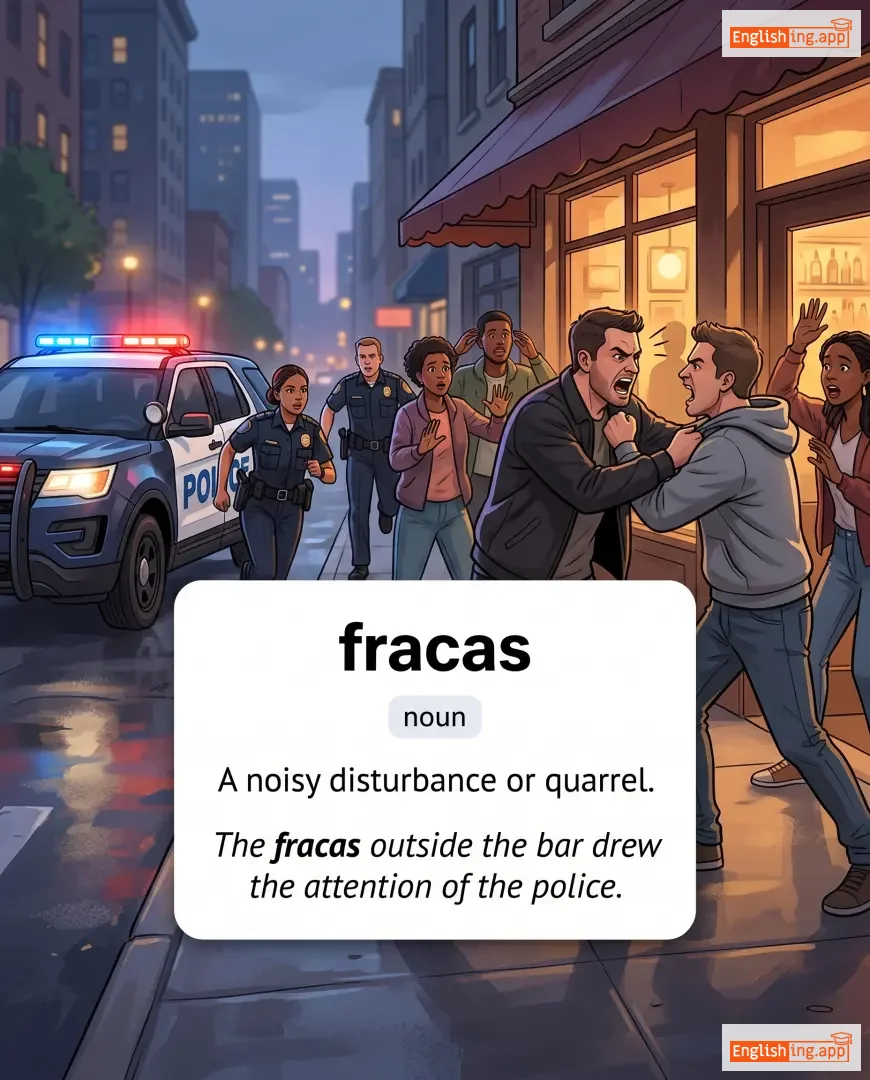
fracas definition card — visual illustration of the meaning
noun
/ˈfrækɑː/
шум (shum)

A noisy disturbance or quarrel.

"The fracas outside the bar drew the attention of the police."

"Шум за баром привлек внимание полиции." (Shum za barom prilyek vnimaniye politsii.)
noun
/ˈfrækʃən/
доля (dolya)

A small part of something; in mathematics, a number that represents part of a whole.

"Only a small fraction of the population attended the event."
"Только небольшая часть населения посетила мероприятие." (Tol'ko nebol'shaya chast' naseleniya posetila meropriyatie.)
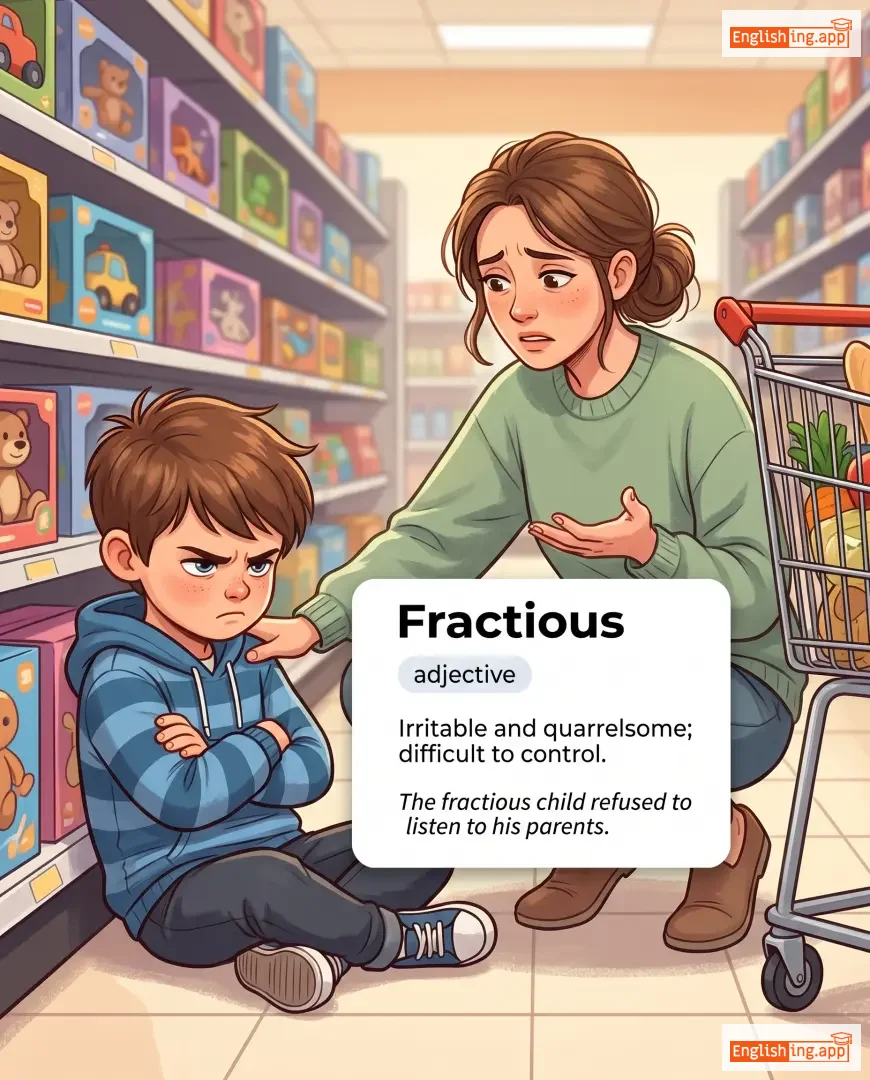
Fractious definition card — visual illustration of the meaning
adjective
/ˈfrækʃəs/
вспыльчивый (vspyl'chivyy)

Irritable and quarrelsome; difficult to control.

"The fractious child refused to listen to his parents."

"Вспыльчивый ребёнок отказался слушать своих родителей." (Vspyl'chivyy rebyonok otkazalsya slushat' svoikh roditeley.)
noun, verb
/ˈfrækʧər/

A break or crack in a hard object or material, typically a bone; to break or crack.

"He suffered a fracture in his leg after the accident."