Словари

Словарь английского языка | Значения слов, определения и примеры

noun, verb
/fɔːrd/
переправа (pereprava)

A shallow place in a river where one can cross; to cross a river at such a place.

"The travelers decided to ford the river at dawn."

"Путешественники решили переправиться через реку вброд на рассвете." (Puteshestvenniki reshilis' perepravit'sya cherez reku vbrod na rassvete.)
noun
/ˈfɔːrˌbɛər/
предок (predok)

An ancestor, especially one who lived a long time ago.

"He often speaks of his forebears with great respect."

"Он часто говорит о своих предках с большим уважением." (On chasto govorit o svoikh predkakh s bol'shim uvazheniem.)
noun
/ˈfɔːrˌbɛərz/
предки (predki)

Ancestors or people in previous generations from whom one is descended.

"We must honor the traditions of our forebears."

"Мы должны почитать традиции наших предков." (My dolzhny pochitat' traditsii nashikh predkov.)
verb
/fɔːrˈboʊd/
предсказывать (predskazyvat)

To predict or have a strong inner feeling of a future misfortune or evil.

"Dark clouds forebode a coming storm."

"Темные облака предсказывают приближающийся шторм." (Temnye oblak predskazyvayut priblizhajushchijsya shtorm.)
noun/adjective
/fɔːrˈboʊdɪŋ/
зловещее предчувствие (zloveeshche predchuvstvie)

A feeling that something bad will happen; ominous.

"She felt a deep sense of foreboding as she entered the abandoned house."

"Она почувствовала глубокое зловещее предчувствие, когда вошла в заброшенный дом." (Ona pochuvstvovala glubokoye zloveeshche predchuvstvie, kogda voshla v zabroshennyy dom.)
🌦️

Forecast

noun/verb
/ˈfɔːrkæst/

To predict future events, especially weather or economic trends.

"The weather office forecast heavy rain for tomorrow."

noun
/ˈfoʊksl/
форскейтл (forskeytl)

The forward part of a ship below the deck, traditionally used as living quarters for the crew.

"The sailors gathered in the forecastle after their shift."

"Матросы собрались в форскейтле после своей смены." (Matrosy sobralis' v forskeytle posle svoey smeny.)
verb
/fɔːrˈkloʊz/
забрать имущество (zabrat' imushchestvo)

to take possession of a property due to the owner's failure to keep up mortgage payments

"The bank decided to foreclose on the property after months of missed payments."

"Банк решил забрать собственность после нескольких месяцев пропущенных платежей." (Bank reshila zabrat' sobstvennost' posle neskol'kikh mesyatsev propushchennykh platezhey.)
noun
/fɔːrˈkloʊʒər/
изъятие имущества (iz'yatie imushchestva)

The legal process by which a lender takes control of a property from a borrower who has failed to make payments.

"The family lost their home due to foreclosure after missing several mortgage payments."

"Семья потеряла свой дом из-за изъятия имущества после того, как не сделала несколько ипотечных платежей." (Sem'ya poteryala svoy dom iz-za iz'yatiya imushchestva posle togo, kak ne sdelala neskol'ko ipotechnykh platezhey.)
noun
/ˈfɔːrkɔːrt/
площадка перед зданием (ploshchadka pered zdaniem)

an open area in front of a large building, especially a petrol station or hotel

"The car was parked in the hotel forecourt."

"Машина была припаркована на площадке перед отелем." (Mashina byla priparkovana na ploshchadke pered otelem.)
noun
/ˈfɔːrˌfɑːðər/
предок (predok)

an ancestor, especially one who was part of an earlier generation of a family or nation

"Our forefathers fought for independence."

"Наши предки боролись за независимость." (Nashi predki borolis' za nezavisimost'.)
verb
/fɔːrˈɡoʊ/
отказаться (otkazatsya)

to decide not to do or have something pleasant or valuable

"She decided to forego dessert to maintain her diet."

"Она решила отказаться от десерта, чтобы поддерживать свою диету." (Ona reshilа otkazat'sya ot deserta, chtoby podderzhivat' svoyu dietu.)
noun
/ˈfɔːrɡraʊnd/
передний план (peredniy plan)

the part of a scene that is nearest to and in front of the viewer

"The flowers in the foreground brightened the picture."

"Цветы на переднем плане освещали картину." (Tsvety na perednem plane osveshchali kartinu.)
noun
/ˈfɔːrˌhɛd/ or /ˈfɔːrɪd/
лоб (lob)

The part of the face above the eyebrows.

"She wiped the sweat from her forehead."

"Она вытерла пот с лба." (Ona vyterla pot s lba.)
adjective
/ˈfɔːrən/ or /ˈfɑːrən/
иностранный (inostranny)

Belonging to or coming from another country.

"She loves studying foreign languages."

"Ей нравится изучать иностранные языки." (Ejj nravitsya izuchat' inostrannyye yazyki.)
noun
/ˈfɔːrənər/ or /ˈfɑːrənər/
иностранец (inostranets)

A person from another country.

"The city welcomes every foreigner with kindness."

"Город приветствует каждого иностранца с добротой." (Gorod privechstvuyet kazhdogo inostrantsa s dobrotoy.)
verb
/fɔːrˈdʒʌdʒ/
судить заранее (sudit' zaraneye)

To judge beforehand without adequate information.

"It is unfair to forejudge someone without knowing the facts."

"Несправедливо судить кого-то, не зная фактов." (Nespravedlivo sudit' kogo-to, ne znaya faktov.)
noun
/ˈfɔːrˌnɑːlɪdʒ/
предзнание (predznanie)

Awareness of something before it happens or exists.

"The prophet claimed to have foreknowledge of the event."

"Пророк утверждал, что он имеет предзнание о событии." (Prorok utverjdal, chto on imeet predznanie o sobytiy.)
noun
/ˈfɔːrmən/
человек, отвечающий за группу рабочих, особенно на строительном или заводском участке (chelovek, otvechayushchiy za gruppu rabochikh, osobenno na stroitel'nom ili zavodskom uchastke)

a person in charge of a group of workers, especially in a factory or construction site

"The foreman supervised the workers on the construction site."

"Прораб контролировал работу рабочих на строительном участке." (Prorab kontroliroval rabotu rabochikh na stroitel'nom uchastke.)
adjective
/ˈfɔːrmoʊst/
главный (glavnyy)

most important; leading; first in rank or position

"She is one of the foremost experts in the field."
"Она является одним из ведущих экспертов в этой области." (Ona yavyayetsya odnim iz vedushchikh ekspertov v etoy oblasti.)
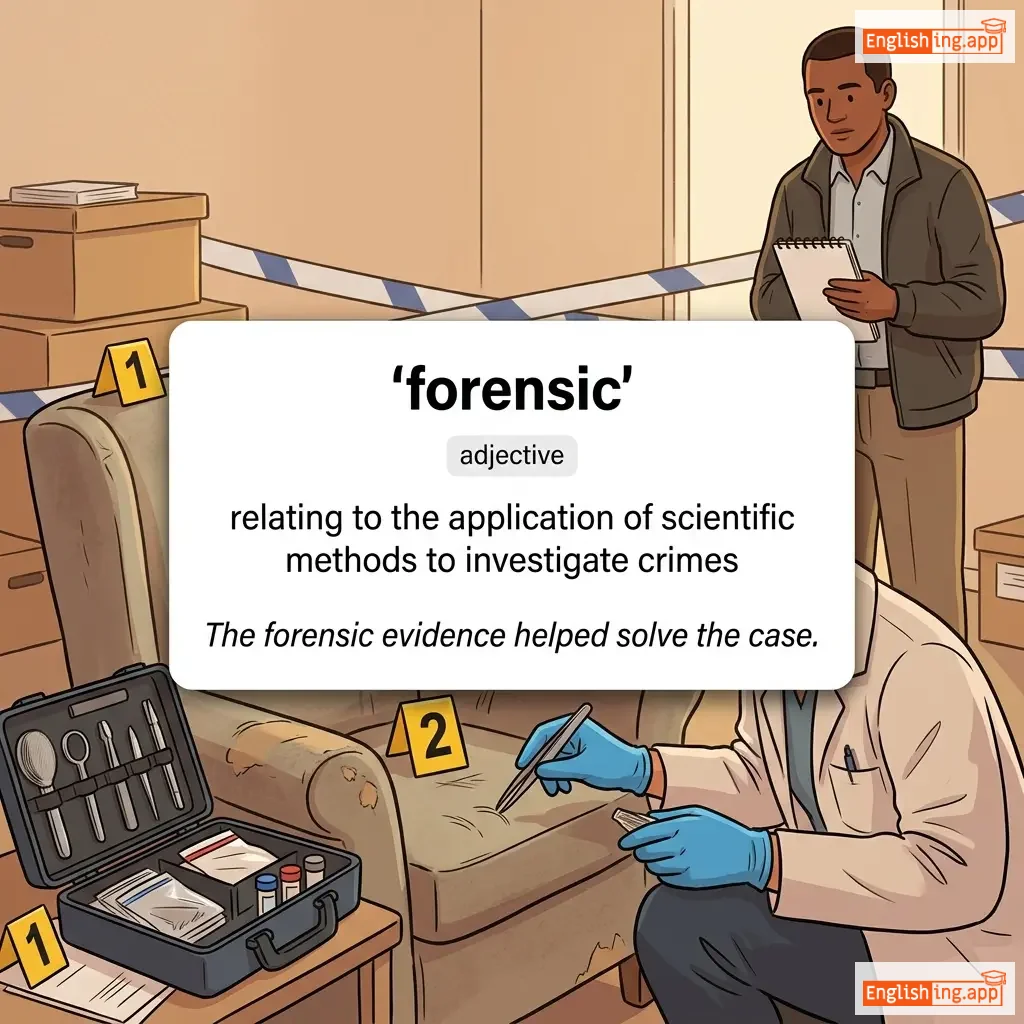
forensic definition card — visual illustration of the meaning
adjective
/fəˈrɛnsɪk/
судебный (sudebnyy)

relating to the application of scientific methods to investigate crimes

"The forensic evidence helped solve the case."

"Судебные доказательства помогли раскрыть дело." (Sudebnye dokazy pomogli raskryt delo.)
verb
/ˌfɔːrɔːrˈdeɪn/
предопределять (predopredelyat)

to determine or decree something in advance; to predestine

"Some believe that our lives are foreordained by fate."

"Некоторые считают, что наша жизнь предопределена судьбой." (Nekotorye schitayut, chto nasha zhizn' predopredelena sud'boy.)
noun
/ˌfɔːrɔːrdɪˈneɪʃən/
предопределение (predopredelenie)

the act of determining something in advance; predestination

"The doctrine of foreordination suggests that events are fixed by divine will."

"Доктрина предопределения предполагает, что события предопределены божественной волей." (Doktrina predopredeleniya predpolagaet, chto sobytiya predopredeleny bozhestvennoy voley.)
noun
/ˈfɔːrˌpiːk/
передняя каюта (peredyaya kayuta)

The compartment in the forward part of a ship, often used for storage.

"The sailors stored extra ropes in the forepeak."

"Моряки сложили лишние веревки в переднюю каюту." (Moryaki slozhili lishniye verivki v peredyuyu kayutu.)
verb
/ˌfɔːrˈrʌn/
предшествовать (predshestvovat)

To go before; to precede in time, place, or action.

"Dark clouds often forerun a storm."

"Темные облака часто предшествуют буре." (Temnye oblaka chasto predshestvuyut bure.)
noun
/ˈfɔːrˌrʌnər/
предшественник (predshestvennik)

A person or thing that comes before another; a predecessor or harbinger.

"The Wright brothers were the forerunners of modern aviation."

"Братья Райт были предшественниками современной авиации." (Brat'ya Rait byli predshestvennikami sovremennoy aviatsii.)
noun
/ˈfɔːrˌseɪl/
форсель (forsel)

The principal sail set on the foremast of a sailing vessel.

"The crew adjusted the foresail to catch the wind."

"Экипаж настроил форсель, чтобы поймать ветер." (Ekipazh nastroil forsel, chtoby poymat' veter.)
verb
/fɔːrˈsiː/
предсказать (predskazat)

To be aware of beforehand; to predict or expect.

"She could foresee the challenges ahead."

"Она могла предсказать вызовы впереди." (Ona mogla predskazat' vyzovy vperedi.)
adjective
/fɔːrˈsiːəbl/
предсказуемый (predskazuemyi)

Able to be predicted or expected in advance

"The company is unlikely to make changes in the foreseeable future."

"Компания маловероятно внесет изменения в предсказуемом будущем." (Kompaniya maloveroyatno vneset izmeneniya v predskazuemom budushchem.)
verb
/fɔːrˈʃædoʊ/
предвещать (predveshchat)

To indicate or suggest something that will happen in the future

"Dark clouds foreshadowed an approaching storm."

"Тёмные облака предвещали приближающуюся бурю." (Tyomnye oblaká predveshchali pribliazhaiushchuiusia buriu.)
noun
/ˈfɔːrʃɔːr/
побережье (poberezhye)

The part of the shore between the high and low tide marks

"Children were playing on the foreshore, collecting shells."
"Дети играли на побережье, собирая ракушки." (Deti igrali na poberezh'ye, sobiraya rakushki.)
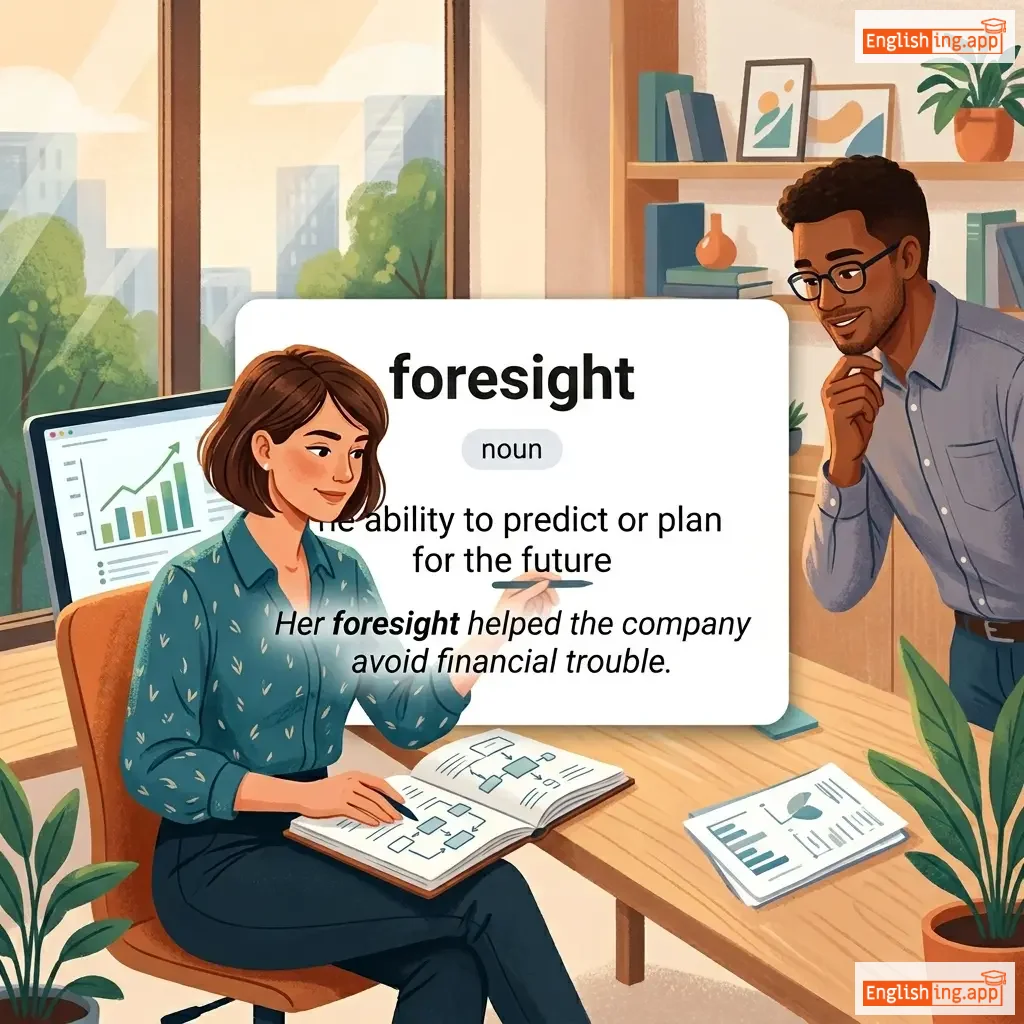
foresight definition card — visual illustration of the meaning
noun
/ˈfɔːrsaɪt/
предвидение (predvidenie)

The ability to predict or plan for the future

"Her foresight helped the company avoid financial trouble."

"Её предвидение помогло компании избежать финансовых проблем." (Yeyo predvidenie pomoglo kompanii izbezhat' finansovykh problem.)
noun
/ˈfɔːrɪst/
лес (les)

A large area covered chiefly with trees and undergrowth.

"They went hiking in the forest."
"Они пошли в поход в лес." (Oni poshli v pokhod v les.)
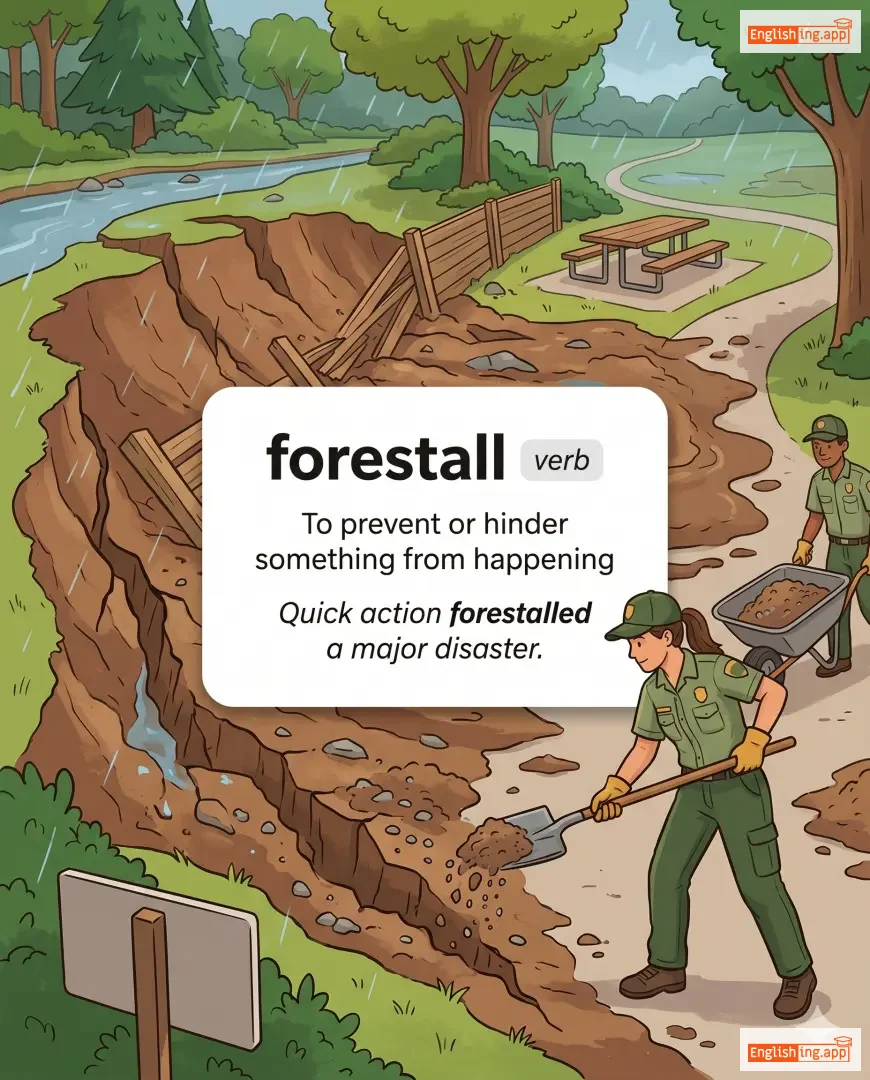
forestall definition card — visual illustration of the meaning
verb
/fɔːrˈstɔːl/
предотвращать (predotvrashchat')

To prevent or hinder something from happening

"Quick action forestalled a major disaster."
"Быстрые действия предотвратили крупную катастрофу." (Bystrye deystviya predotvratili krupnuyu katastrofu.)
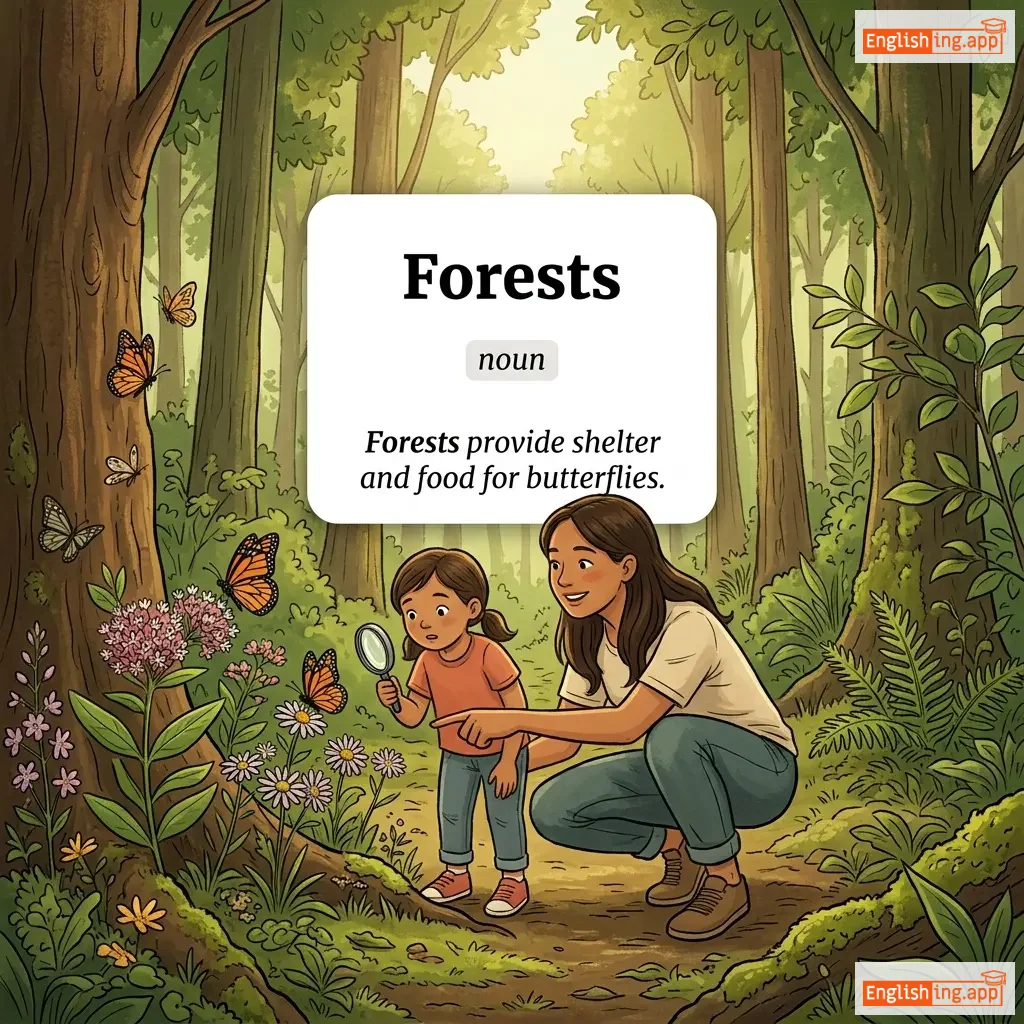
Forests definition card — visual illustration of the meaning
noun
ˈfɔːrɪsts
леса (lesa)

Large areas covered with trees and undergrowth, providing natural habitats for wildlife.

"Forests provide shelter and food for butterflies."

"Леса предоставляют укрытие и пищу для бабочек." (Lesa predostavlyayut ukrytiye i pishchu dlya babochek.)
verb
/fɔːrˈtɛl/
предсказать (predskazat)

to predict or announce something before it happens

"The old man claimed he could foretell the future."

"Старик утверждал, что он может предсказать будущее." (Starik utverzhdal, chto on mozhet predskazat' budushchee.)
noun
/ˈfɔːrˌθɔːt/
предвидение (predvidenie)

careful consideration of what will be necessary or may happen in the future

"With a little forethought, we could have avoided the problem."

"С немного предвидением, мы могли бы избежать этой проблемы." (S nemnogo predvideniem, my mogli by izbezhat' etoy problemy.)
adverb
/fɔːrˈɛvər/
навсегда (navsegda)

For all future time; for always.

"She promised to love him forever."

"Она пообещала любить его всегда." (Ona poobeshchala lyubit' ego vsegda.)
noun
/ˈfɔːrwɜːrd/
предисловие (predislo vie)

a short introduction at the beginning of a book, typically written by someone other than the author

"The foreword of the book was written by a famous historian."

"Предисловие книги было написано известным историком." (Predislovie knigi bylo napisano izvestnym istorikom.)
verb
/ˈfɔːrfɪt/
лишать / лишиться (forfit)

to lose or give up something, usually as a penalty for wrongdoing

"He had to forfeit the match after breaking the rules."

"Ему пришлось проиграть матч после нарушения правил." (emu prishlos proigrat match posle narusheniya pravil)
verb
/fɔːrˈfɛnd/
защищать, оборонять, предотвращать (zashchishchat', oboronyat', predotvrashchat')

to protect or defend against something undesirable; to prevent

"May good fortune forfend any danger from our journey."

"Пусть удача защитит нас от любой опасности на нашем пути." (Pust' udacha zashchitit nas ot lyuboy opasnosti na nashem puti.)
verb
/fɔːrdʒ/
ковать, подделывать (kovat, poddelivat)

to create or shape something, often with effort or skill; also to counterfeit or fake something

"The blacksmith forged a strong sword from the iron."

"Кузнец выковал прочный меч из железа." (Kuznets vykoval prochny mech iz zheleza.)
noun
/ˈfɔːrdʒər/
фальсификатор (falsifikator)

a person who makes fake documents, artworks, or signatures

"The police arrested a forger who had been selling counterfeit paintings."

"Полиция арестовала фальсификатора, который продавал поддельные картины." (Policiya arestovala falsifikatora, kotoryj prodaval poddel'nye kartiny.)
noun
/ˈfɔːrdʒəri/
подделка (poddelka)

the crime of making fake documents, money, or artworks

"The bank detected a forgery in the signature on the cheque."
"Банк обнаружил подделку в подписи на чеке." (Bank obnaruzhil poddelku v podpisi na cheque.)
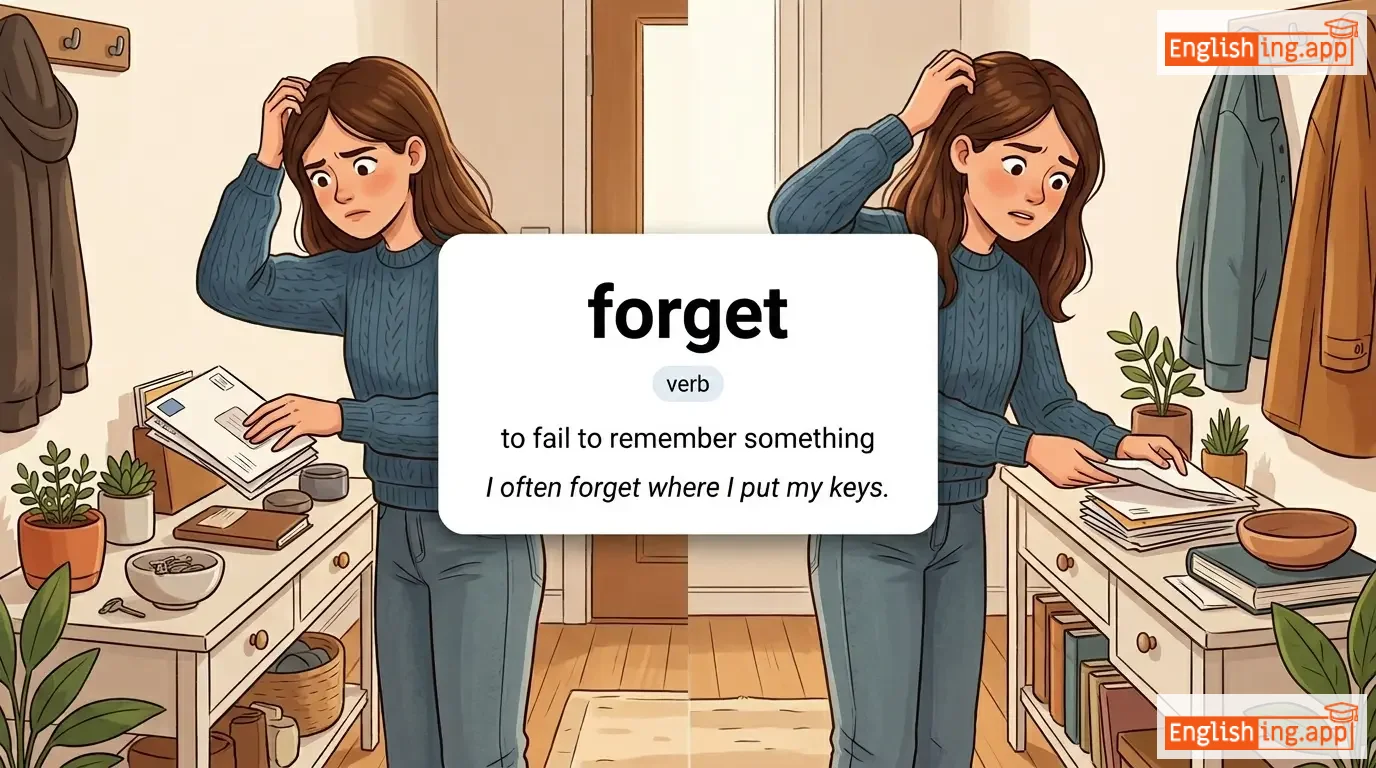
forget definition card — visual illustration of the meaning
verb
/fəˈɡɛt/
забывать (zabyvat)

to fail to remember something

"I often forget where I put my keys."
"Я часто забываю, где положил свои ключи." (Ya chasto zabyvayu, gde polozhil svoi klyuchi.)
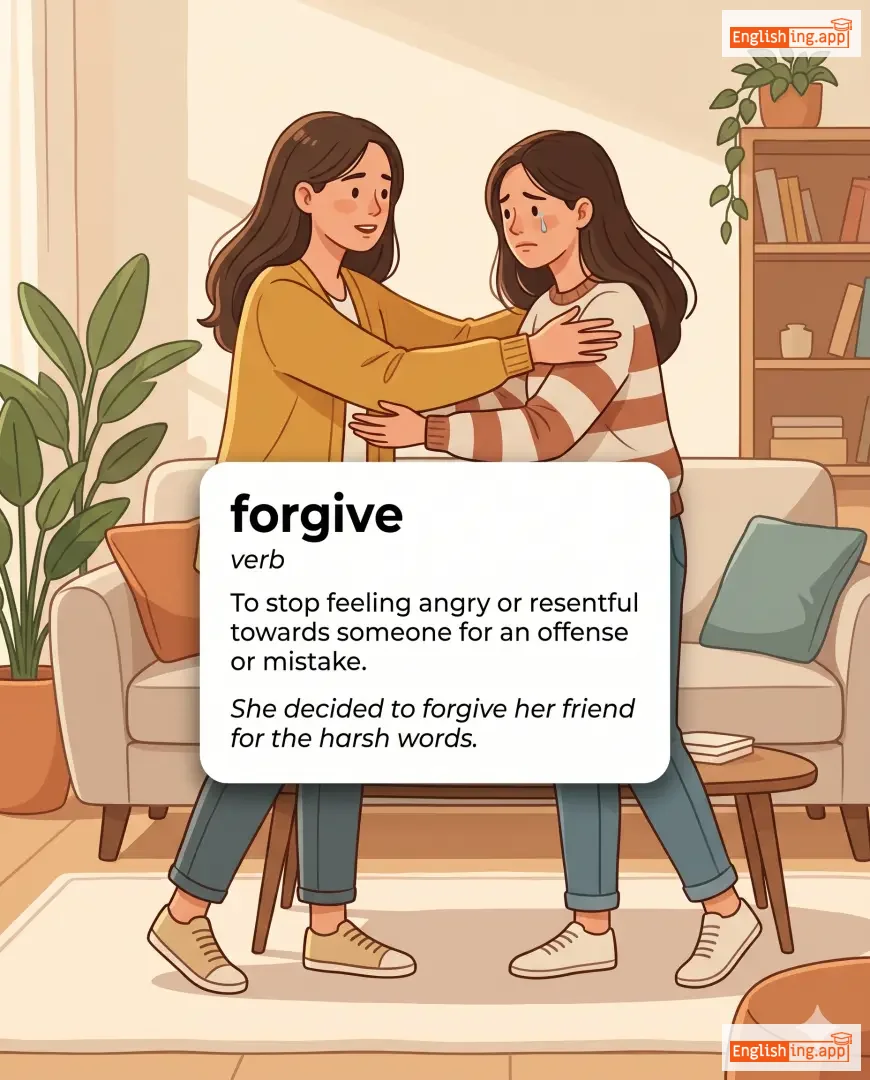
forgive definition card — visual illustration of the meaning
verb
/fərˈɡɪv/
прощать (proshchat)

To stop feeling angry or resentful towards someone for an offense or mistake.

"She decided to forgive her friend for the harsh words."

"Она решила простить своего друга за жесткие слова." (Ona reshila prostit' svoego druga za zhestkie slova.)
adjective
/fəˈɡɪv.ɪŋ/
прощающий (proshchayushchiy)

ready and willing to forgive; merciful; lenient

"She has a forgiving nature and rarely holds grudges."

"У неё прощающая натура, и она редко держит обиды." (U neyo proshchayushchaya natura, i ona redko derzhit obidy.)
verb
/fɔːrˈɡoʊ/
отказаться (otkazat'sya)

to decide not to do or have something

"She decided to forgo dessert to maintain her diet."

"Она решила отказаться от десерта, чтобы сохранить свою диету." (Ona reshilas' otkazat'sya ot deserta, chtoby sokhranit' svoiu dietu.)
noun
/fɔːk/
вилка (vilka)

a tool with two or more prongs used for eating or serving food

"He ate his salad with a fork."

"Он съел свой салат вилкой." (On s'yel svoi salat vilkoy.)
adjective
/fərˈlɔːrn/
брошенный, одинокий (brozhenny, odinokiy)

extremely sad, lonely, or abandoned

"The abandoned puppy looked so forlorn in the rain."

"Брошенный щенок выглядел таким одиноким под дождем." (Brozhennyy shchenok vyglyadel takim odinokim pod dozhdyom.)