Словари

Словарь английского языка | Значения слов, определения и примеры

verb
/ɪnˈsnɛər/
поймать в ловушку (poymat' v lovushku)

to catch or trap, often by trickery or deceit

"The hunter ensnared the rabbit with a net."

"Охотник поймал кролика в сеть." (Okhotnik poymal krolika v set'.)
verb
/ɪnˈsjuː/
последовать (posledovat)

to happen as a result or consequence

"After the argument, silence ensued."

"После ссоры последовала тишина." (Posle ssory posledovala tishina.)
verb
/ɪnˈʃʊər/
обеспечить (obespechit)

To make certain that something will happen or be the case.

"Please ensure that the door is locked before you leave."

"Пожалуйста, убедитесь, что дверь закрыта, прежде чем уйти." (Pozhaluysta, ubedites', chto dver' zakryta, prezhde chem uyti.)
verb
/ɪnˈteɪl/

to involve something as a necessary or inevitable part or consequence

"The job will entail a lot of travel across the country."

🕸️

entangle

verb
/ɪnˈtæŋɡəl/

to become twisted together or caught in something; to involve in difficulties

"The fish got entangled in the net."
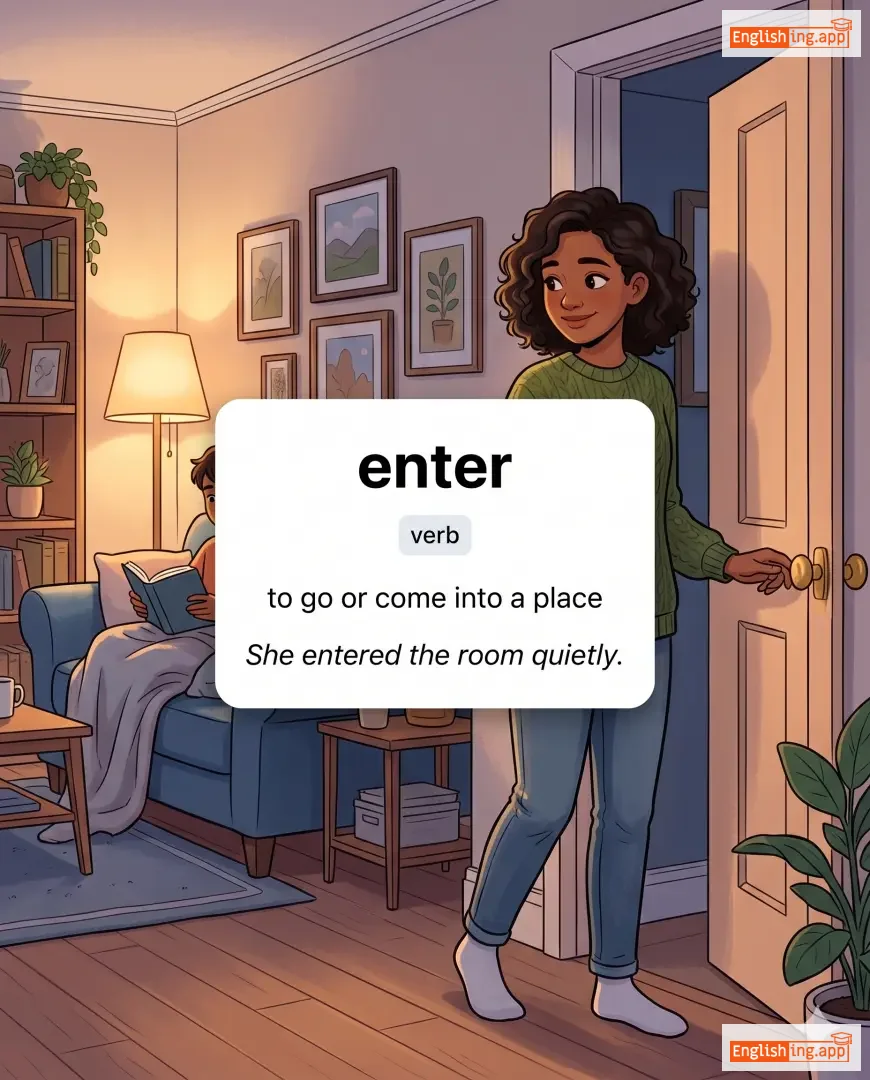
enter definition card — visual illustration of the meaning
verb
/ˈɛntər/
входить (vkhodit)

to go or come into a place

"She entered the room quietly."

"Она вошла в комнату тихо." (Ona voshla v komnatu tikho.)
noun
/ˈɛntərˌpraɪz/
предприятие / компания (predpriyatie / kompaniya)

a business or company; a project or undertaking that requires effort and initiative

"The new enterprise aims to create sustainable energy solutions."

"Новый проект направлен на создание устойчивых энергетических решений." (Novyy proyekt napravlen na sozdanie ustoichivykh energeticheskikh resheniy.)
adjective
/ˈɛntərˌpraɪzɪŋ/
предприимчивый (predpriemchivyy)

showing initiative and resourcefulness; willing to take risks to achieve success

"She is an enterprising young entrepreneur."

"Она предприимчивая молодая предпринимательница." (Ona predpriemchivaya molodaya predprinimatel'nitsa.)
verb
/ˌɛntərˈteɪn/
развлекать (razvlekat')

to provide amusement, enjoyment, or hospitality to others

"The comedian entertained the audience with his jokes."

"Комик развлекал зрителей своими шутками." (Komik razvlekal zriteley svoimi shutkami.)
adjective
/ˌɛntərˈteɪnɪŋ/
развлекательный (razvlekatel'nyy)

providing amusement or enjoyment

"The comedian gave an entertaining performance."

"Комик представил развлекательное представление." (Komik predstavil razvlekatel'noe predstavyeniye.)
noun
/ˌɛntərˈteɪnmənt/
развлечение (razvlechenie)

something that amuses, pleases, or diverts

"The concert was a great source of entertainment."

"Концерт был отличным источником развлечений." (Kontsert byl otlichnym istochnikom razvlecheniy.)
verb
/ɪnˈθrɔːl/
очаровывать (ocharovyvat)

To captivate or hold someone’s full attention.

"The magician’s performance enthralled the audience."

"Выступление фокусника очаровало зрителей." (Vystuplenie fokysnika ocharovalo zriteley.)
verb
/ɪnˈθrɔːl/
очаровывать (ocharovyvat)

to captivate or hold someone’s attention completely

"The magician’s tricks enthralled the children."
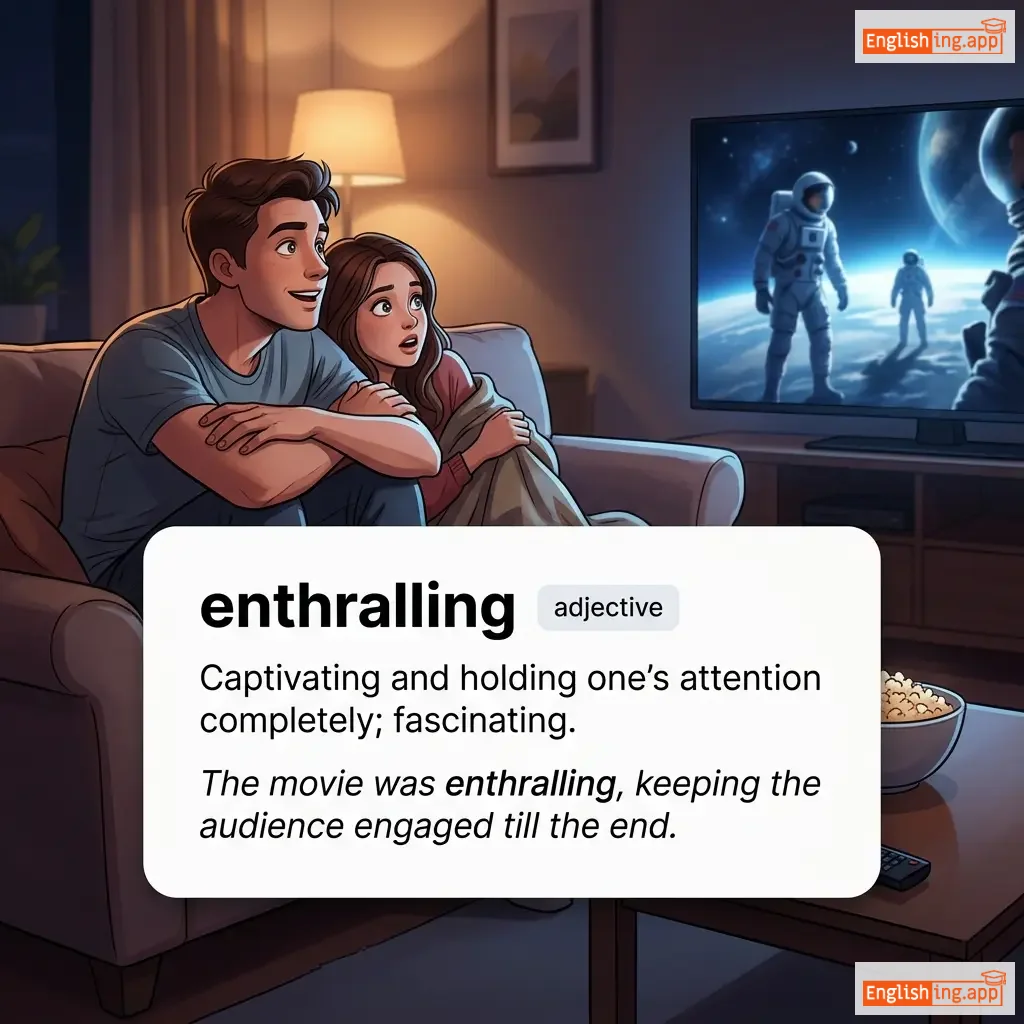
"Фокусы мага заворожили детей." (Fokusy maga zavorozhili detey.)
enthralling definition card — visual illustration of the meaning
adjective
/ɪnˈθrɔː.lɪŋ/
увлекательный (uvlekatel'nyy)

Captivating and holding one's attention completely; fascinating.

"The movie was enthralling, keeping the audience engaged till the end."

"Фильм был увлекательным, удерживающим внимание зрителей до самого конца." (Film byl uvlekatel'nym, uderzhivayushchim vnimanie zriteley do samogo kontsa.)
verb
/ɪnˈθroʊn/
возводить на трон (vozvodit' na tron)

to install someone on a throne or to give someone high status

"The king was enthroned in a grand ceremony."

"Царь был возведен на трон на большой церемонии." (Tsar' byl vozveden na tron na bol'shoy tseremonii.)
verb
/ɪnˈθjuːz/
восхищать (voskhishchat)

to express excitement or admiration

"She enthused about her trip to Italy."

"Она выражала восхищение своей поездкой в Италию." (Ona vyrazhala voskhishcheniye svoey poyezdkoy v Italiyu.)
noun
/ɪnˈθjuːziæzəm/
энтузиазм (entuziazm)

intense and eager enjoyment, interest, or approval

"His enthusiasm for teaching inspired his students."

"Его энтузиазм к обучению вдохновлял его студентов." (Ego entuziazm k obucheniyu vdokhnovlyal ego studentov.)
noun
/ɪnˈθuziæst/
энтузиаст (entuzijast)

a person who is very interested in a particular activity or subject

"He is a football enthusiast and watches every match."
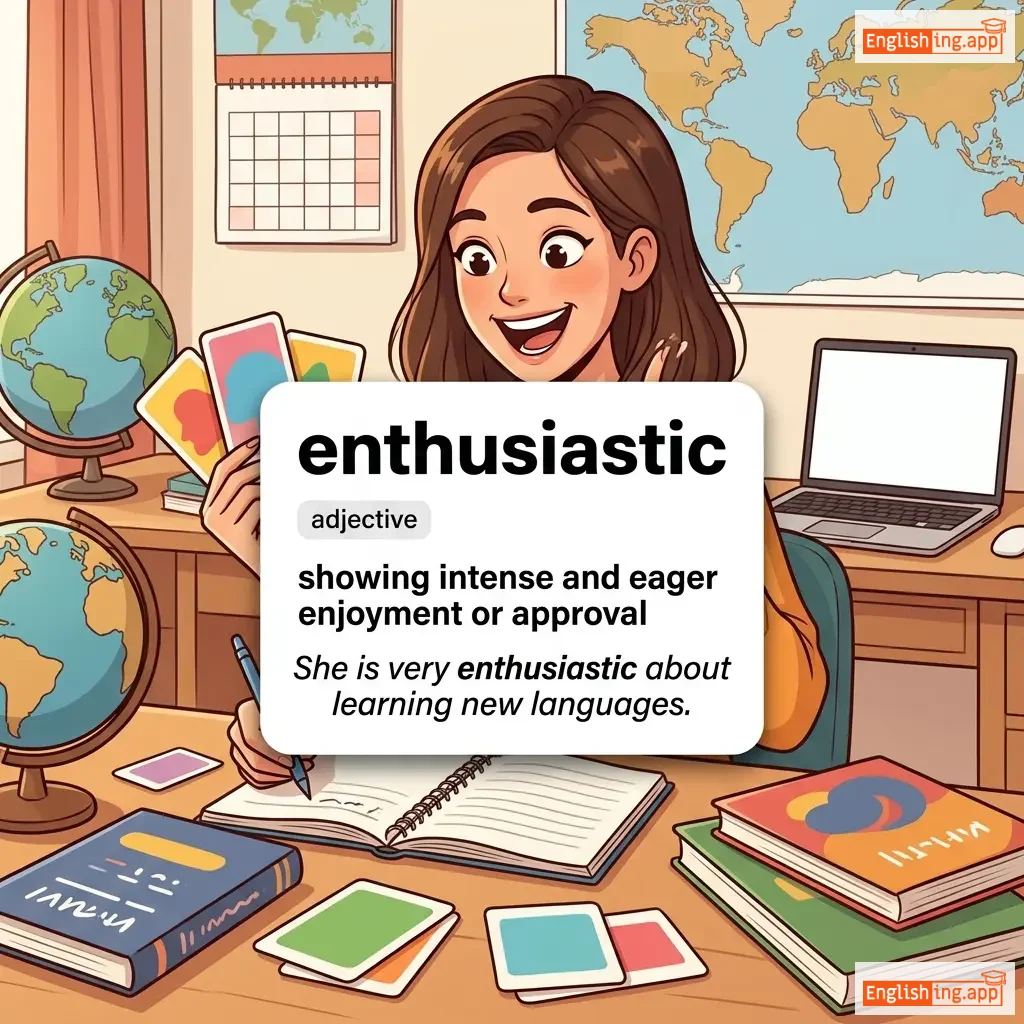
"Он энтузиаст футбола и смотрит каждый матч." (On entuziast futbola i smotrit kazhdyj match.)
enthusiastic definition card — visual illustration of the meaning
adjective
/ɪnˌθjuːziˈæstɪk/
энтузиаст (entuziast)

showing intense and eager enjoyment or approval

"She is very enthusiastic about learning new languages."

"Она очень энтузиастично настроена к изучению новых языков." (Ona ochen' entuziastichno nastroena k izucheniu novykh yazykov.)
verb
/ɪnˈtaɪs/
привлекать (privelikat)

to attract or tempt someone by offering something appealing

"The advertisement was designed to entice customers into the store."

"Реклама была разработана, чтобы заманить клиентов в магазин." (Reklama byla razrabotana, chtoby zamat' klientov v magazin.)
adjective
/ɪnˈtaɪər/
целый (tsely)

whole; with no part left out

"He spent the entire day reading books."

"Он провел весь день, читая книги." (On provel ves' den', chitaya knigi.)
adverb
/ɪnˈtaɪərli/
полностью (polnostyu)

Completely or wholly.

"She is entirely responsible for the project."

"Она полностью ответственна за проект." (Ona polnostyu otvetstvenna za proyekt.)
noun
/ɪnˈtaɪərəti/
целиком (tselikom)

the whole of something; the complete form

"He watched the movie in its entirety."

"Он посмотрел фильм целиком." (On posmotrel film tselikom.)
verb
/ɪnˈtaɪtəl/
давать право (davat' pravo)

to give someone the right to have or do something

"Employees are entitled to receive paid holidays."

"Сотрудники имеют право на оплачиваемый отпуск." (Sotrudniki imeyut pravo na oplachivaemyy otpusk.)
adjective
/ɪnˈtaɪtəld/
имеющий право (imeyushchiy pravo)

having the right to do or have something; feeling deserving of special treatment

"Employees are entitled to paid leave."

"Сотрудники имеют право на оплачиваемый отпуск." (Sotrudniki imeyut pravo na oplachivaemyy otpus)
noun
/ɪnˈtaɪtəlmənt/
право (pravo)

the belief that one is inherently deserving of privileges or special treatment; a right to benefits

"The program provides entitlement to health care."

"Программа предоставляет право на медицинское обслуживание." (Programma predostavlyaet pravo na meditsinskoye obsluzhivaniye.)
noun
/ˈɛntəti/
сущность (sushchnost)

something that exists as a single and complete unit; an organization or being

"The new company will operate as a separate legal entity."
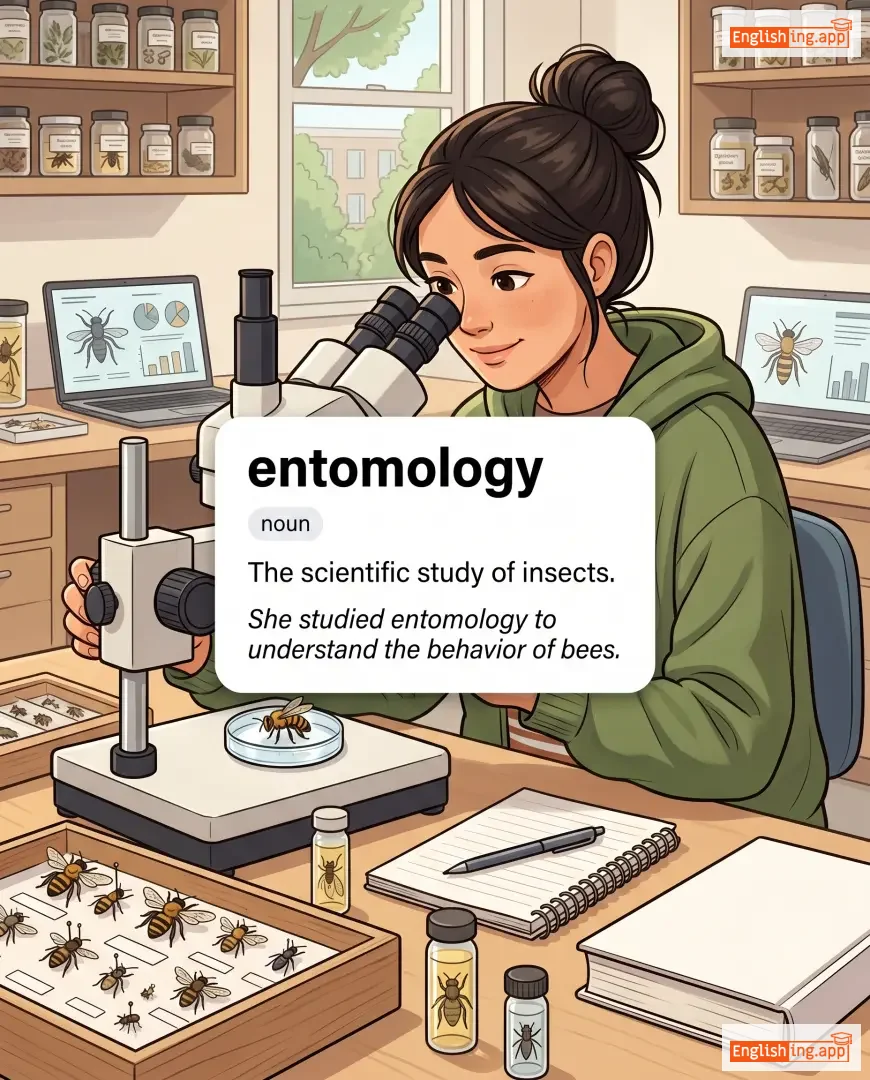
"Новая компания будет работать как отдельная юридическая сущность." (Novaya kompaniya budet rabotat' kak otdelnaya yuridicheskaya sushchnost'.)
entomology definition card — visual illustration of the meaning
noun
/ˌɛntəˈmɒlədʒi/
энтомология (entomologiya)

The scientific study of insects.

"She studied entomology to understand the behavior of bees."

"Она изучала энтомологию, чтобы понять поведение пчел." (Ona izuchala entomologiyu, chtoby ponyat' povedeniye pchel.)
noun
/ˈɒntʊrɑːʒ/
свита (svita)

A group of people attending or surrounding an important person.

"The celebrity arrived with her entourage of assistants and bodyguards."

"Знаменитость пришла со своей свитой помощников и телохранителей." (Znamenitost' prishla so svoey svitoy pomoshchnikov i telokhraniteley.)
noun
/ˈɛntrəns/
вход (vkhod)

A place of entering; an entry point.

"They waited at the main entrance of the building."

"Они ждали у главного входа в здание." (Oni zhdyali u glavnovo vkhozhda v zdanie.)
verb
/ɪnˈtræp/

To catch or trick someone into a difficult situation.

"The police tried to entrap the criminal with false evidence."

verb
/ɪnˈtriːt/
умолять (umolyat)

To ask earnestly or beg someone to do something.

"She entreated him to stay a little longer."

"Она умоляла его остаться немного дольше." (Ona umolyala ego ostatsya nemnogo dolshe.)
noun
/ɪnˈtriːti/
мольба (molba)

An earnest or humble request or plea.

"She made an entreaty for peace during the heated argument."

"Она сделала мольбу о мире во время напряженной дискуссии." (Ona sdelala mol'bu o mire vo vremya napryazhennoy diskussii.)
noun
/ˈɒntreɪ/ (UK), /ˈɑːntreɪ/ (US)
основное блюдо (osnovnoe blyudo)

The main course of a meal (US); the right to enter or access (formal).

"The restaurant’s signature steak was served as the main entree."

"Подписной стейк ресторана был подан как основное блюдо." (Podpisnoi steik restorana byl podan kak osnovnoe blyudo.)
verb
/ɪnˈtrɛntʃ/
укрепить (ukrepit')

To establish something so firmly that it is difficult to change.

"The company entrenched its position in the market through innovation."

"Компания укрепила свою позицию на рынке через инновации." (Kompaniya ukrepila svoyu pozitsiyu na rynke cherez innovatsii.)
adjective
/ɪnˈtrɛntʃt/
укоренившийся (ukorenyvshiysya)

Firmly established and unlikely to change.

"Corruption is deeply entrenched in the system."

"Коррупция глубоко укоренилась в системе." (Korruptsiya gluboko ukorenilas v sisteme.)
noun
/ˌɒntrəprəˈnɜːr/ (UK), /ˌɑːntrəprəˈnɝː/ (US)
предприниматель (predprinimatel')

A person who starts and runs a business, taking on financial risks in the hope of profit.

"The young entrepreneur launched a successful tech startup."

"Молодой предприниматель запустил успешный технологический стартап." (Molodoy predprinimatel' zapustil uspesnyy tekhnologicheskiy startap.)
entrepreneurial definition card — visual illustration of the meaning
adjective
/ˌɒn.trə.prəˈnɜː.ri.əl/
предпринимательский (predprinimatel'skiy)

Having the characteristics of an entrepreneur; showing initiative and willingness to undertake new ventures.

"Her entrepreneurial mindset led to the launch of a successful startup."

"Ее предпринимательское мышление привело к запуску успешного стартапа." (Eyo predprinimatel'skoe myshlenie privelo k zapusku uspeshnogo startapa.)
noun
/ˈɛntri/
вход (vkhod)

the act of going into a place, or permission to go in

"Entry to the museum is free on Fridays."

"Вход в музей бесплатный по пятницам." (Vkhod v muzey besplatnyy po pyatnitsam.)
verb
/ɪnˈtwaɪn/
сплетать (spletat)

to twist or wind together; to become closely connected or involved

"The vines entwine around the old fence."

"Вьющиеся растения обвивают старый забор." (V'yushchiesya rasteniya obviyut staryy zabor.)
verb
/ɪˈnjuːməˌreɪt/
перечислять (perechisljat)

to mention things one by one; to list or count

"She enumerated the reasons for her decision."
"Она перечислила причины своего решения." (Ona perechislila prichiny svoego resheniya.)
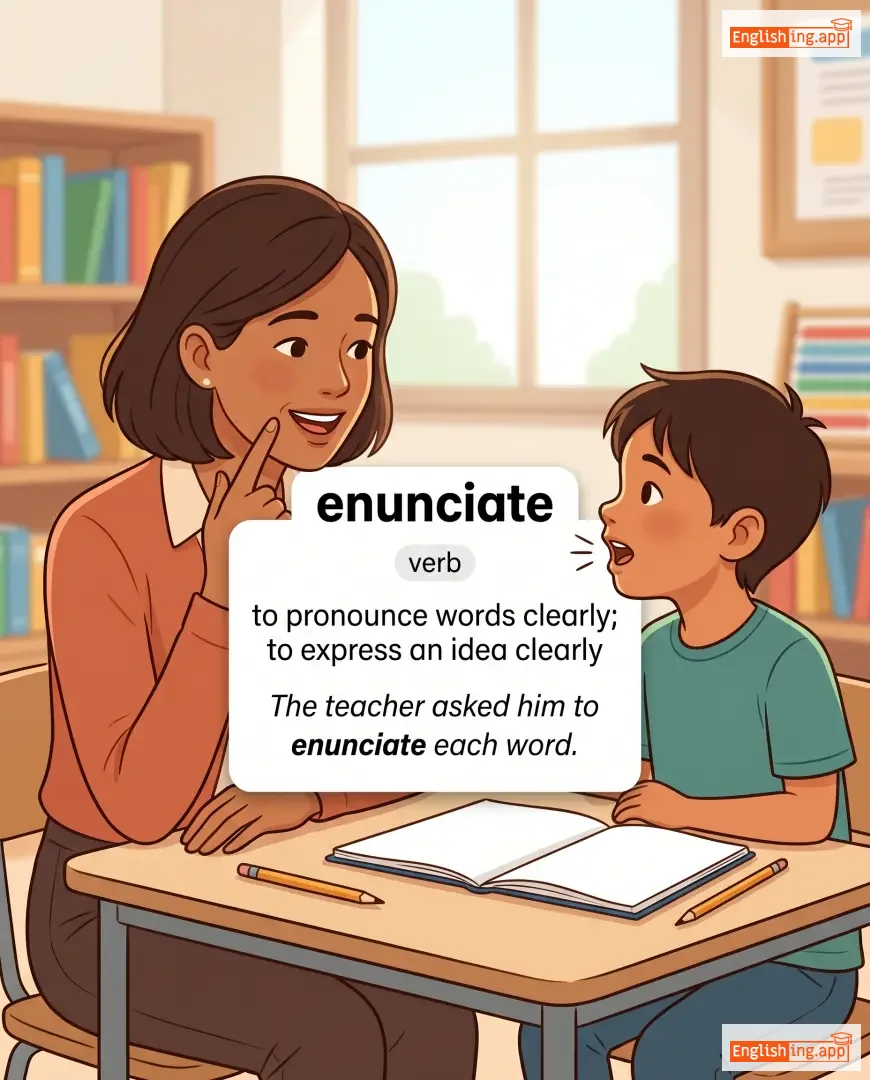
enunciate definition card — visual illustration of the meaning
verb
/ɪˈnʌnsieɪt/
произносить чётко (proiznosit' chotko)

to pronounce words clearly; to express an idea clearly

"The teacher asked him to enunciate each word."
"Учитель попросил его чётко произнести каждое слово." (Uchitel' poprosil ego chotko proiznesti kazhdoe slovo.)
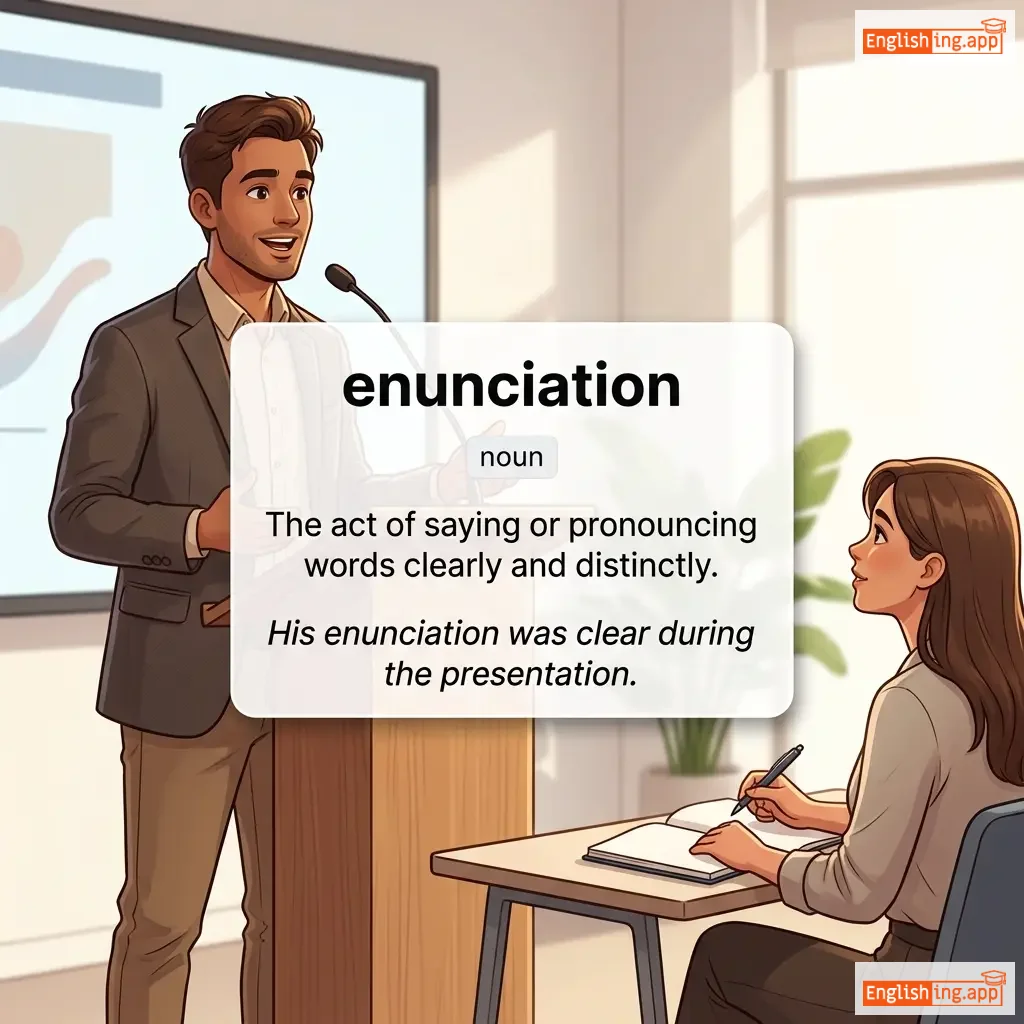
enunciation definition card — visual illustration of the meaning
noun
/ɪˌnʌn.siˈeɪ.ʃən/
выражение, чёткое произношение (vyrazhenie, chyotkoe proiznoshenie)

The act of saying or pronouncing words clearly and distinctly.

"His enunciation was clear during the presentation."

"Его энунциация была ясной во время презентации." (Ego enuntsiatsiya byla yasnoy vo vremya prezentatsii.)
noun
/ˈɛnvəloʊp/
конверт (konvert)

a flat paper container used to enclose a letter or document

"She sealed the letter in an envelope and posted it."

"Она запечатала письмо в конверт и отправила его." (Ona zapechatala pis'mo v konvert i otpravila ego.)
adjective
/ˈen.vi.ə.bəl/
завидный (zavidnyy)

causing envy; desirable

"Her success was enviable among her peers."

"Её успех был завидным среди коллег." (Yeyo uspekh byl zavidnym sredi kolleg.)
adjective
/ˈen.vi.əs/
завистливый; ревнивый (zavistlivyy; revnivyy)

feeling or showing envy; jealous

"She felt envious of her friend's new car."

"Она почувствовала зависть к новой машине своей подруги." (Ona pochuvstvovala zavist' k novoy mashine svoey podrugi.)
verb
/ɪnˈvaɪərən/
окружать (okruzhat')

to surround or enclose; to encircle

"Mountains environ the small valley."
"Горы окружают маленькую долину." (Gory okruzhayut malen'kuyu dolinu.)
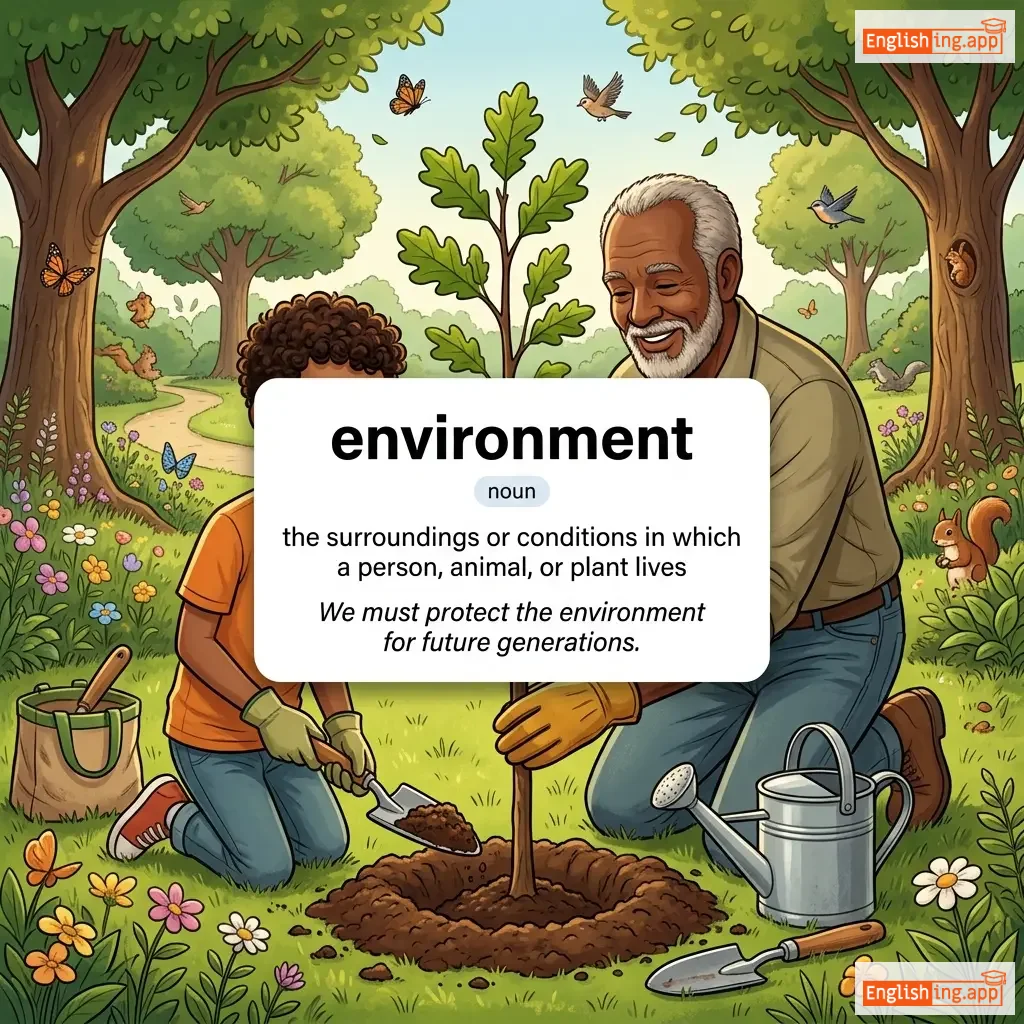
environment definition card — visual illustration of the meaning
noun
/ɪnˈvaɪrənmənt/
окружающая среда (okruzhayushchaya sredu)

the surroundings or conditions in which a person, animal, or plant lives

"We must protect the environment for future generations."
"Мы должны защищать окружающую среду для будущих поколений." (My dolzhny zashchishchat' okruzhayushchuyu sredu dlya budushchikh pokoleniy.)
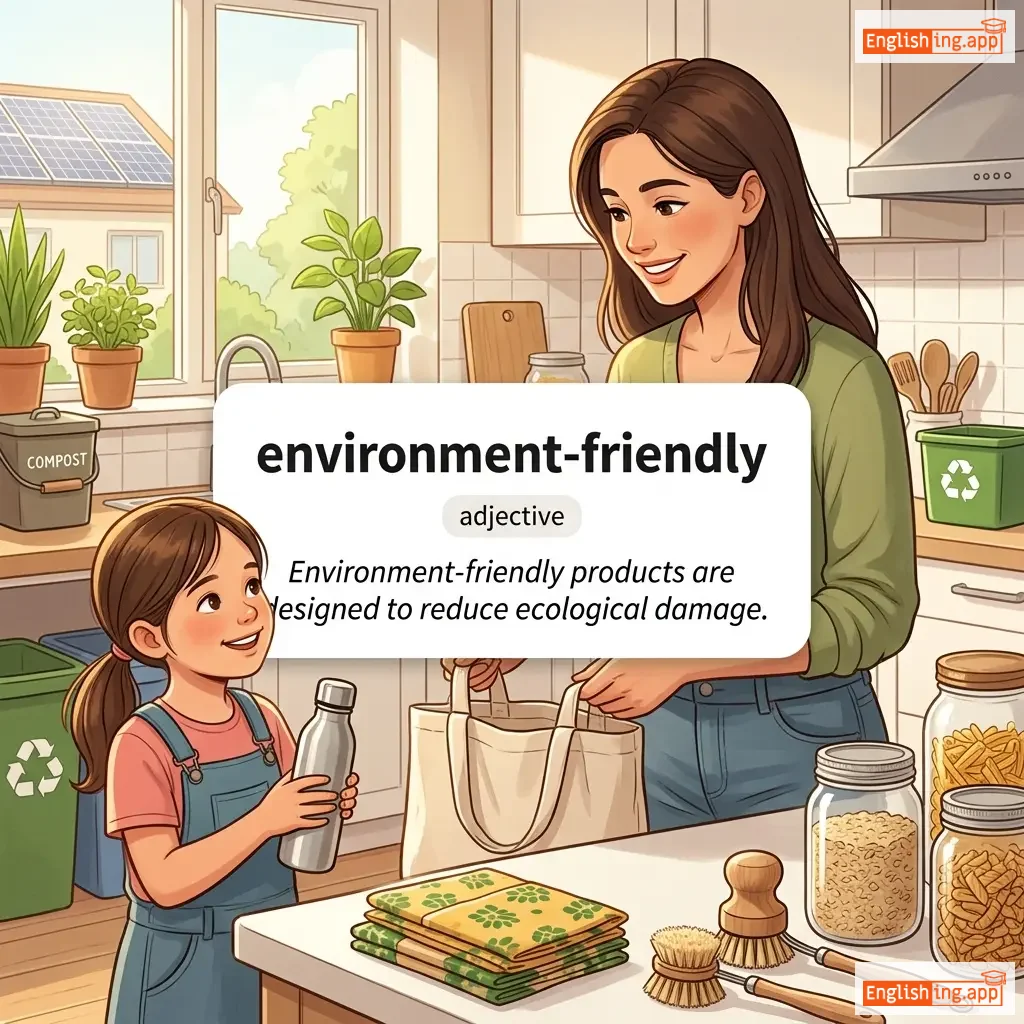
environment-friendly definition card — visual illustration of the meaning
adjective
/ɪnˈvaɪrənmənt ˈfrɛndli/
экологически чистый (ekologicheski chisty)

Designed or produced in a way that causes minimal harm to the environment, often using sustainable materials and processes that reduce ecological impact.

"Environment-friendly products are designed to reduce ecological damage."

"Экологически чистые продукты разрабатываются для уменьшения экологического ущерба." (Ekologicheski chisty produkty razrabatyvayutsya dlya umen'sheniya ekologicheskogo ushcherba.)
adjective
/ɪnˌvaɪrənˈmɛntl/
экологический (ekologicheskiy)

relating to the natural world and the impact of human activity on its condition

"The company adopted new policies to reduce environmental damage."

"Компания приняла новые политики для снижения экологического ущерба." (Kompaniya prinyala novye politiki dlya snizheniya ekologicheskogo uscherba.)