Словари

Словарь английского языка | Значения слов, определения и примеры

verb
/ɪˈdʒɛkt/
выгнать (vygmat')

to force someone or something out, usually from a place or position

"The referee had to eject the player for unsportsmanlike behavior."
"Арбитр должен был выгнать игрока за антиспортивное поведение." (Arbitr dolzhen byl vyg'nat' igroka za antisportivnoe povedenie.)
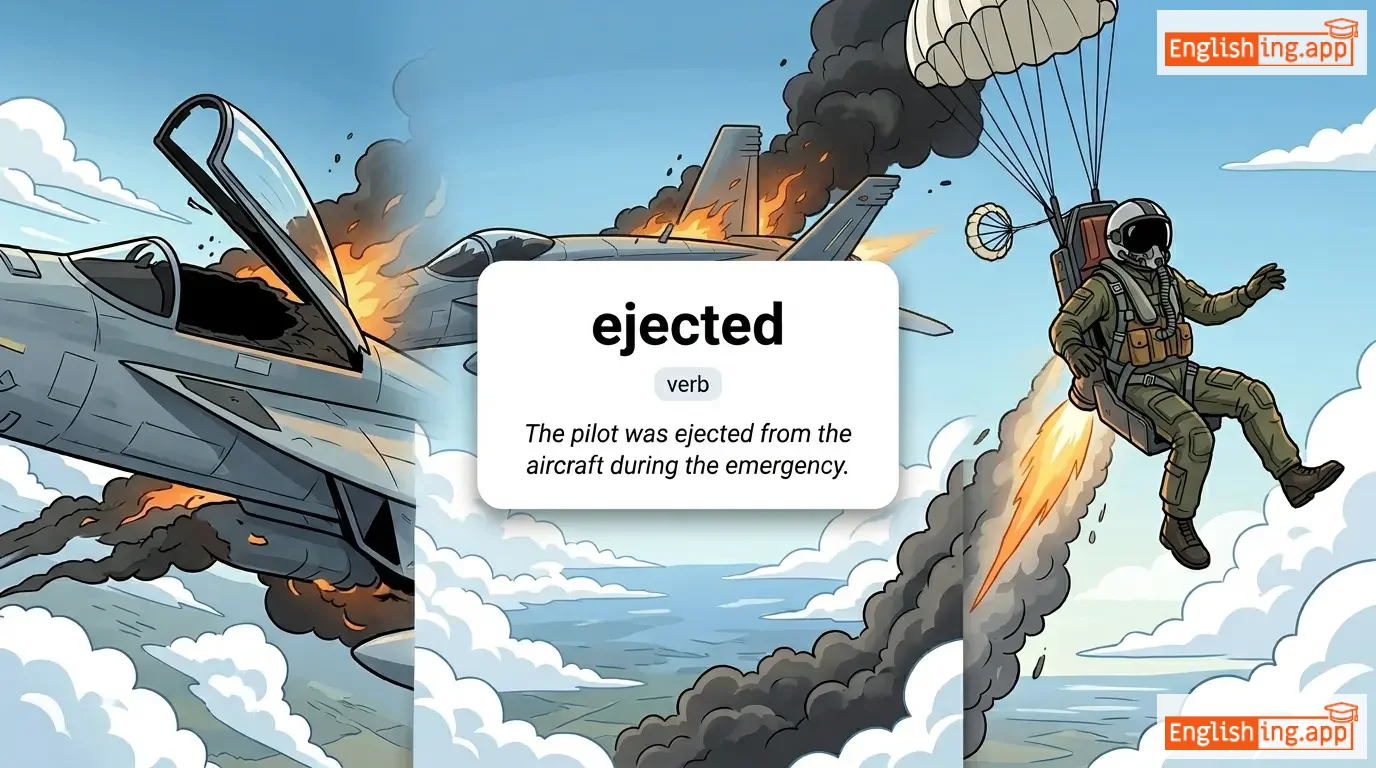
ejected definition card — visual illustration of the meaning
verb
/ɪˈdʒektɪd/
выкидывать (vykidyvat')

to force someone or something to leave a place; to push or throw something out forcefully

"The pilot was ejected from the aircraft during the emergency."

"Пилот был эвакуирован из самолета во время чрезвычайной ситуации." (Pilot byl evakuirovann iz samolyota vo vremya chrezvychaynoy situatsii.)
verb
/iːk/
экономить (ekonomit')

to make a small amount of something last longer by using it sparingly

"The family tried to eke out their savings during the tough months."

"Семья пыталась растянуть свои сбережения в трудные месяцы." (Sem'ya pytalas' rastyanut' svoi sberegeniya v trudnye mesyatsy.)
verb, adjective
/ɪˈlæbəreɪt/ (verb), /ɪˈlæbərət/ (adjective)
развернуто говорить / детализированный и сложный в дизайне (razvernutо govorit / detalizirovanniy i slozhniy v dizayne)

verb: to explain something in detail; adjective: detailed and complicated in design

"She asked him to elaborate on his proposal."

"Она попросила его подробно изложить его предложение." (Ona poprosila ego podrobno izlozhit' ego predlozheniye.)
noun
/ɪˌlæbəˈreɪʃən/
расширение / подробное объяснение (rasshirenie / podrobnoe ob'yasnenie)

the process of adding more detail or expanding on something

"The teacher appreciated the student's elaboration of the topic."

"Учитель оценил расширение темы студентом." (Uchitel' otsenil rasshirenie temy studentom.)
verb
/ɪˈlæps/
прошло (proshlo)

to pass or go by, usually referring to time

"Several hours elapsed before he finally returned home."

"Прошло несколько часов, прежде чем он наконец вернулся домой." (Proshlo neskol'ko chasov, prezhde chem on nakonec vernulsya domoy.)
adjective
/ɪˈlæstɪk/
эластичный (elastichnyy)

Able to return to its original shape or size after being stretched or compressed.

"The waistband of the pants is made of elastic material."
"Пояс в штанах сделан из эластичного материала." (Poyas v shtanakh sdelan iz elastichnogo materiala.)
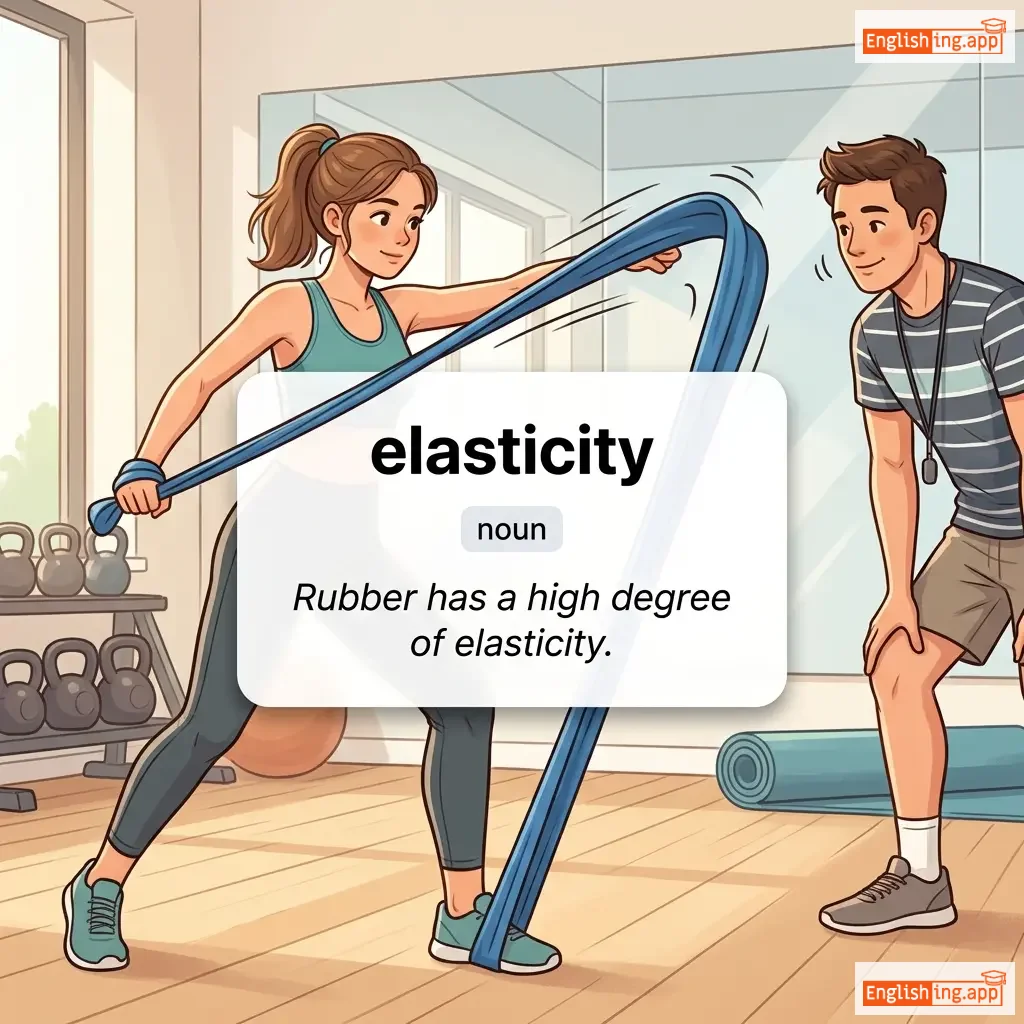
elasticity definition card — visual illustration of the meaning
noun
/ɪˌlæˈstɪsɪti/
эластичность (elastikiti)

The ability of an object or material to resume its normal shape after being stretched or compressed.

"Rubber has a high degree of elasticity."

"Резина обладает высокой эластичностью." (Rezina obladayet vysokoy elastichnost.)
verb
/ɪˈleɪt/
радовать (radovat)

To make someone very happy or proud.

"The success of the project elated the whole team."

"Успех проекта привел в восторг всю команду." (Uspekh proyeka prived v vostorg vsyu komandu.)
adjective
/ɪˈleɪtɪd/
крайне счастливый (kraine schastlivyj)

Extremely happy and excited.

"She was elated when she heard the good news."

"Она была крайне счастлива, когда услышала хорошие новости." (Ona byla krajne schastliva, kogda uslyshala khoroshie novosti.)
noun
/ɪˈleɪʃən/
экстаз (ekstaz)

A feeling of great happiness and excitement.

"His elation was evident after winning the championship."

"Его экстаз был очевиден после победы в чемпионате." (Yego ekstaz byl ocheviden posle pobedy v chempionate.)
noun/verb
/ˈɛl.boʊ/
локоть (lokot)

The joint connecting the forearm and the upper arm; as a verb, to push aside using the elbow.

"He accidentally hit the table with his elbow."

"Он случайно ударил по столу своим локтем." (On sluchayno udaril po stolu svoim loktem.)
noun
/ˈɛldər/
старший (starshiy)

a person who is older or has higher rank; an older person in a family or community

"We should always respect our elders."

"Мы всегда должны уважать наших старших." (My vsegda dolzhny uvazhatch' nashikh starshikh.)
adjective
/ˈɛldərli/
пожилой (pozhiloy)

Being old or advanced in years.

"The elderly man walks slowly across the street."

"Пожилой мужчина медленно переходит улицу." (Pozhiloy muzhchina medlenno perekhodit ulitsu.)
verb
/ɪˈlɛkt/
выбирать (vybirat)

To choose someone for a position or office by voting.

"The citizens elected a new president."

"Граждане выбрали нового президента." (Grazhdane vybrali novogo prezidenta.)
noun
/ɪˈlɛkʃən/
выборы (vybory)

The process of choosing someone for public office by voting.

"The election will be held next month."

"Выборы состоятся в следующем месяце." (Vybory sostoyatsya v sleduyushchem mesyatse.)
adjective
/ɪˈlɛktərəl/
избирательный (izbiratel'nyy)

related to elections or voting

"The electoral process in the country has been reformed in recent years."

"Избирательный процесс в стране был реформирован в последние годы." (Izbiratel'nyy protsess v strane byl reformirovan v poslednie gody.)
adjective
/ɪˈlɛktrɪk/
электрический (elektricheskiy)

Relating to or operated by electricity.

"The room was lit by an electric lamp."

"Комната была освещена электрической лампой." (Komnata byla osveshchena elektricheskoy lampoy.)
noun
/ɪˈlɛktrɪk drɪl/
электрическая дрель (elektricheskaya drel)

A power tool used for drilling holes in various materials

"He used an electric drill to make holes in the wall for hanging pictures."

"Он использовал электрическую дрель, чтобы сделать отверстия в стене для подвешивания картин." (On ispol'zoval elektricheskuyu drel', chtoby sdelat' otverstiya v stene dlya podveshivaniya kartin.)
noun
/ɪˈlek.trɪk fæn/
электрический вентилятор (elektricheskiy ventilyator)

a device with rotating blades that creates airflow to cool or ventilate a room

"The electric fan keeps the room cool during hot summer days."

"Электрический вентилятор поддерживает прохладу в комнате в жаркие летние дни." (Elektricheskiy ventilyator podderzhivayet prokhladu v komnate v zharkiye letniye dni.)
noun
/ɪˈlɛktrɪk ˈkɛtəl/
электрический чайник (elektricheskiy chaynik)

An electrical appliance that heats water quickly using electricity

"The electric kettle automatically turns off when the water starts boiling."

"Электрический чайник автоматически выключается, когда вода начинает закипать." (Elektricheskiy chaynik avtonomno vyklyuchayetsya, kogda voda nachinayet zakipat'.)
adjective
/ɪˈlɛktrɪkəl/
электрический (elektricheskiy)

related to electricity or the use of electrical power

"The electrical system in the house needs repair."

"Электрическая система в доме требует ремонта." (Elektricheskaya sistema v dome trebuyet remonta.)
noun
/ɪˌlɛkˈtrɪsɪti/
электричество (elektrichestvo)

A form of energy resulting from the existence of charged particles.

"The storm caused a power cut and we had no electricity."

"Шторм вызвал отключение электроэнергии, и у нас не было электричества." (Shtorm vyzval otklyucheniye elektroenergiya, i u nas ne bylo elektrichestva.)
verb
/ɪˈlɛktrɪfaɪ/
электрифицировать; восхищать (elektrifitsirovat; voskhishchat)

to charge with electricity; to excite or thrill intensely

"The speaker's speech electrified the audience."

"Речь оратора восхитила аудиторию." (Rech oratora voskhitila auditoriyu)
noun
/ɪˌlɛkˈtrɑː.lə.sɪs/
электролиз (elektroliz)

A chemical decomposition produced by passing an electric current through a liquid or solution.

"Electrolysis is used to separate hydrogen from water."
"Электролиз используется для отделения водорода от воды." (Elektroliz ispol'zuetsya dlya otdeleniya vodoroda ot vody.)
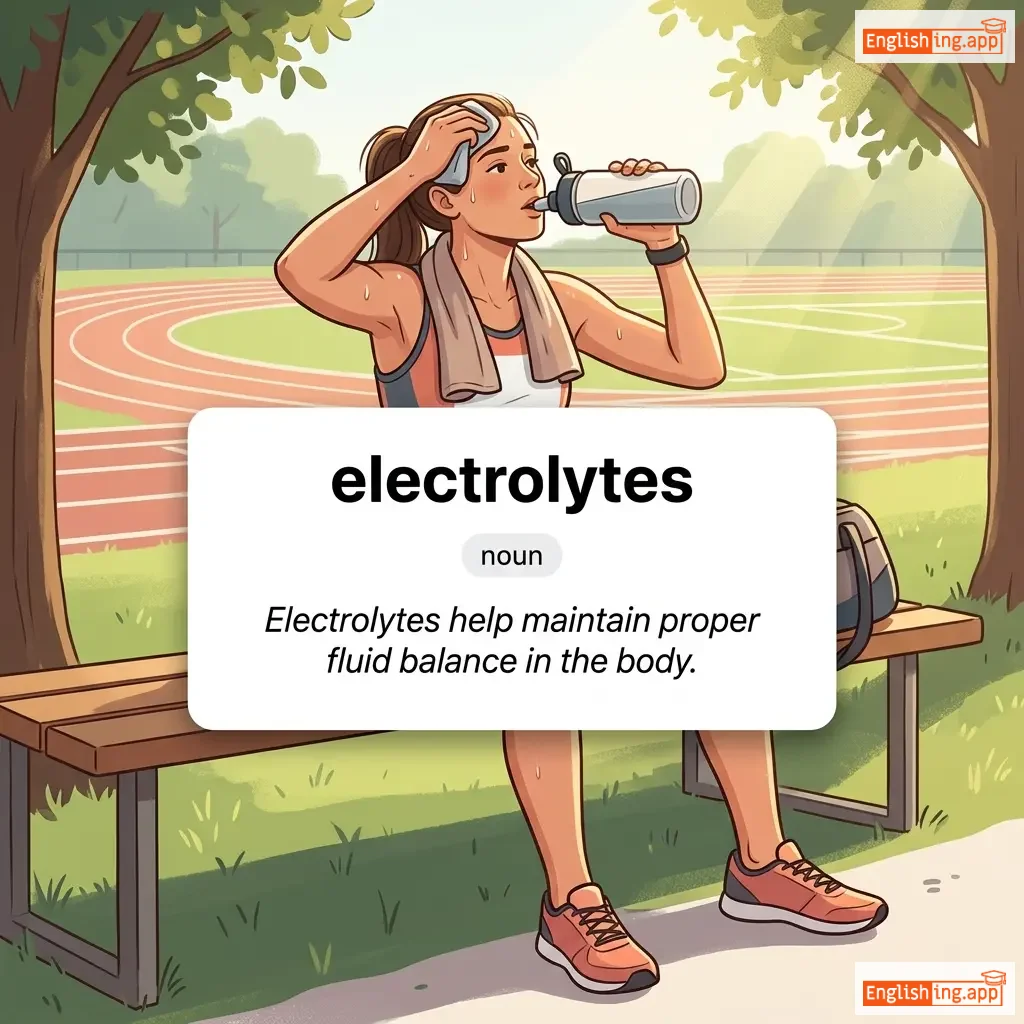
electrolytes definition card — visual illustration of the meaning
noun
/ɪˈlɛk.trəʊ.laɪts/
электролиты (elektrolyty)

Minerals in body fluids that carry an electric charge and are essential for many bodily functions.

"Electrolytes help maintain proper fluid balance in the body."
"Электролиты помогают поддерживать правильный баланс жидкости в организме." (Elektrolity pomogayut podderzhivat' pravil'nyy balans zhidkosti v organizme.)
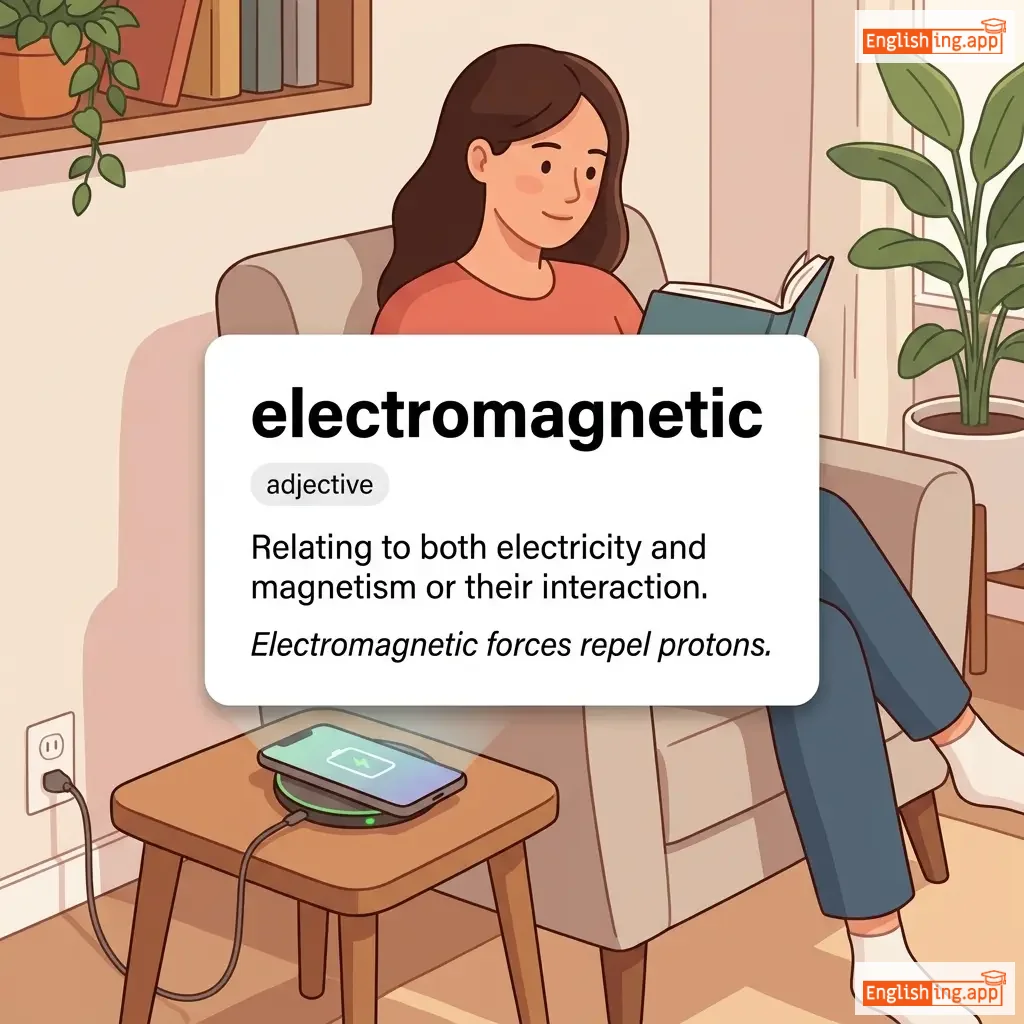
electromagnetic definition card — visual illustration of the meaning
adjective
ɪˌlektrəʊmæɡˈnetɪk
электромагнитный (elektromagnitnyy)

Relating to both electricity and magnetism or their interaction.

"Electromagnetic forces repel protons."

"Электромагнитные силы отталкивают протоны." (Elektromagnitnye sily ottalkivayut protony.)
adjective
/ɪˌlɛkˈtrɒnɪk/
электронный (elektronny)

Operating with or produced by the use of electronic devices.

"She bought an electronic keyboard for her music lessons."

"Она купила электронную клавиатуру для своих музыкальных занятий." (Ona kupila elektronnuju klaviaturu dlya svoikh muzykal'nykh zanyatij.)
noun
/ɪˌlɛkˈtrɒnɪks/
электроника (elektronika)

the branch of physics and technology dealing with circuits and devices using transistors, microchips, and other components

"He studied electronics at university."

"Он изучал электронику в университете." (On izuchal elektroniku v universitete.)
noun
/ɪˈlɛk.trə.taɪp/
электротип (elektrotype)

A duplicate printing plate made by electroplating a mold of the original.

"The printer used an electrotype to produce multiple copies of the page."

"Принтер использовал электролитип для создания нескольких копий страницы." (Printer ispol'zoval elektrotype dlya sozdaniya neskol'kikh kopiy stranitcy.)
adjective
/ˌɛl.ɪˈmɑː.səˌnɛr.i/
благотворительный (blagotvoritel'nyy)

Relating to charity; dependent on or supported by charity.

"The hospital was founded as an eleemosynary institution."

"Больница была основана как благотворительное учреждение." (Bol'nitsa byla osnovana kak blagotvoritel'noe uchrezhdenie.)
adjective
/ˈɛlɪɡənt/
элегантный и утончённый (elegantnyy i utochnennyy)

pleasingly graceful and stylish in appearance or manner

"She looked elegant in her evening gown."

"Она выглядела элегантно в своём вечернем платье." (Ona vyglyadela elegantno v svoem vechernem plat'e.)
adjective
/ˌɛl.ɪˈdʒaɪ.ək/
элегический (elegicheskiy)

Expressing sorrow, often for something past; resembling an elegy.

"The novel ends on an elegiac note, mourning the lost era."
"Роман заканчивается элегическим мотивом, оплакивая потерянную эпоху." (Roman zakanchivayetsya elegicheskim motivom, oplakivaya poteryannuyu epokhu.)
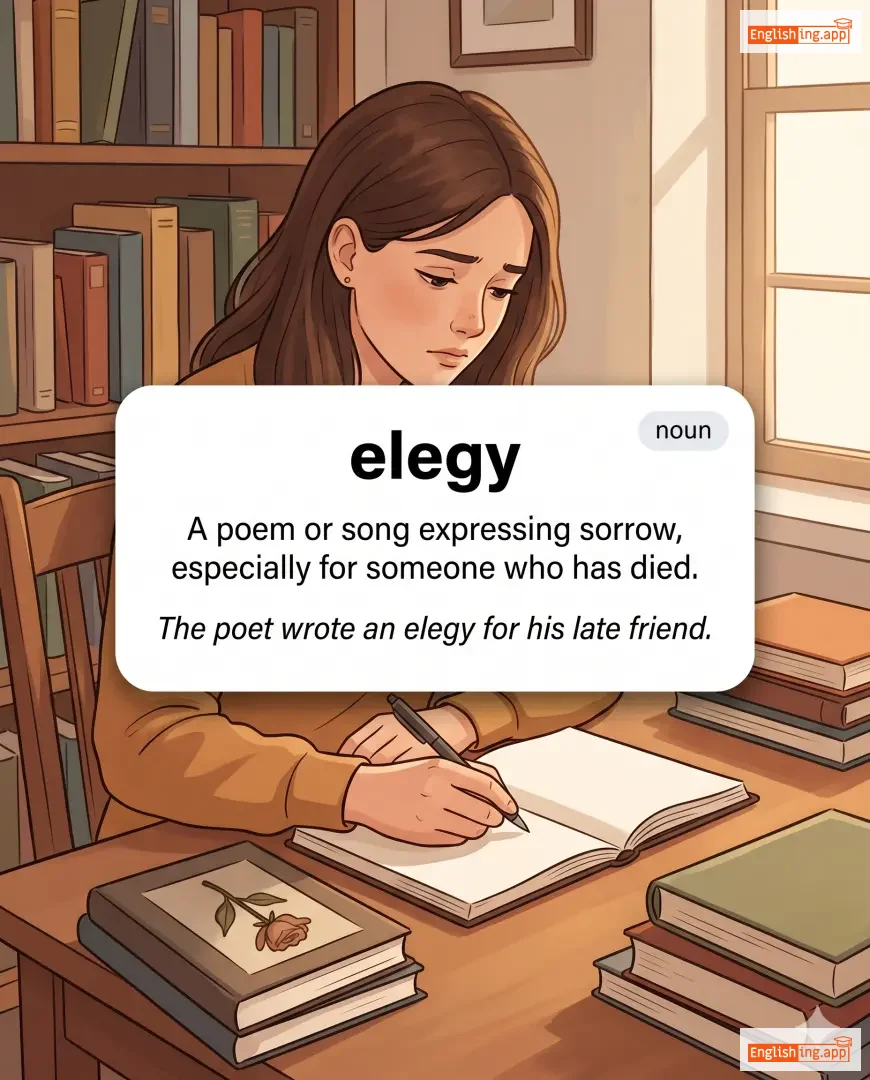
elegy definition card — visual illustration of the meaning
noun
/ˈɛlɪdʒi/
эле́гия (elegiya)

A poem or song expressing sorrow, especially for someone who has died.

"The poet wrote an elegy for his late friend."

"Поэт написал элегию о своем покойном друге." (Poet napisal elegiyu o svoem pokoynom druge.)
noun
/ˈɛlɪmənt/
элемент (element)

A basic or essential part of something; a simple substance that cannot be broken down further.

"Trust is a key element of any strong relationship."

"Доверие - ключевой элемент любых крепких отношений." (Doverie - klyuchevoy element lyubykh krepkikh otnosheniy.)
adjective
/ˌɛlɪˈmɛntəri/
элементарный (elementarnyy)

Relating to the basic or fundamental aspects of something; simple or easy to understand.

"She gave an elementary explanation of the problem."

"Она дала элементарное объяснение проблемы." (Ona dala elementarnoe ob'yasnenie problemy.)
noun
/ˈɛlɪfənt/
счастье (schastye)

a very large animal with a trunk, long curved tusks, and thick gray skin, found in Africa and Asia

"The elephant sprayed water over itself with its trunk."

"Она не смогла скрыть свое счастье, когда получила награду." (Ona ne smogla skryt' svoe schast'ye, kogda poluchila nagradu.)
noun
/ˈel.ɪ.fənt ˈæp.əl/
слоновое яблоко (slonovoe yabloko)

a tropical fruit with a hard shell and acidic flesh

"Elephant apple is used to make delicious jams and pickles."

"Слоновое яблоко используется для приготовления вкусных джемов и солений." (Slonovoe yabloko ispol'zuetsya dlya prigotovleniya vkusnykh dzhemov i soleynykh.)
adjective
/ˌɛlɪˈfæntaɪn/
слоник (slonik)

Huge, clumsy, or resembling an elephant in size or movement.

"The man moved with an elephantine grace."

"Мужчина двигался с элегантностью, подобной слону." (Muzhchina dvigalsya s elegantnost'yu, podobnoy slonu.)
elevate definition card — visual illustration of the meaning
verb
/ˈɛlɪveɪt/
повышать (povyshat)

To raise or lift something to a higher position; to improve in status, mood, or quality.

"Good music can elevate your mood instantly."

"Хорошая музыка может мгновенно поднять ваше настроение." (Khoroshaya muzyka mozhet mgnovenno podnyat' vashe nastroenie.)
noun
/ˌɛlɪˈveɪʃən/
высота (vysota)

The act of raising something to a higher position or level.

"The hikers reached a high elevation after hours of climbing."

"Путешественники достигли большой высоты после нескольких часов подъема." (Puteshestvenniki dostigli bol'shoy vysoty posle neskol'kikh chasov pod'yema.)
noun
/ˈɛləˌveɪtər/
лифт (lift)

a machine that carries people or goods up and down between floors in a building

"We took the elevator to the tenth floor."

"Мы поехали на лифте на десятый этаж." (My poehali na lifte na desyatyy etazh.)
number
/ɪˈlɛvən/
одиннадцать (odinnadtsat)

the number after ten and before twelve; 11

"There are eleven students in the classroom."
"В классе одиннадцать студентов." (V klasse odinnadtsat' studentov.)
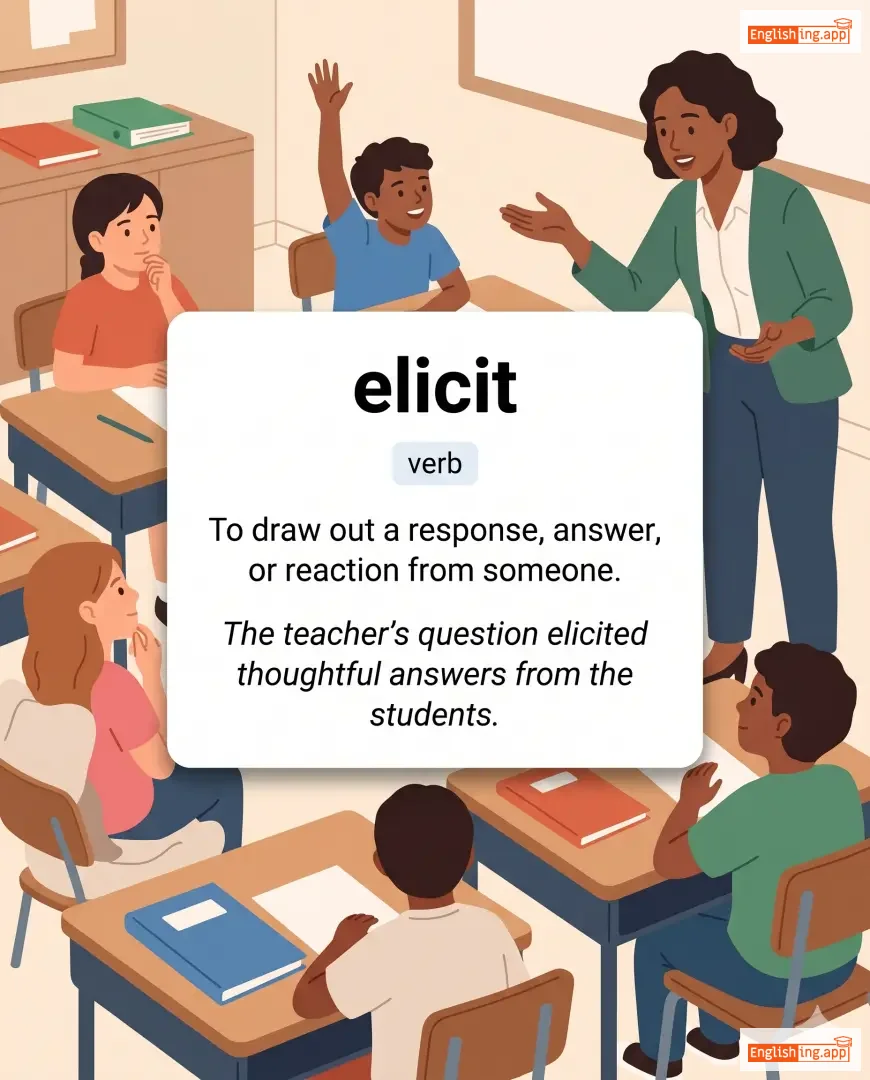
elicit definition card — visual illustration of the meaning
verb
/ɪˈlɪsɪt/
вызывать (vyzyvat)

To draw out a response, answer, or reaction from someone.

"The teacher’s question elicited thoughtful answers from the students."
"Вопрос учителя вызвал вдумчивые ответы от учеников." (Vopros uchitelya vyzval vdumchivye otvety ot uchyonikov.)
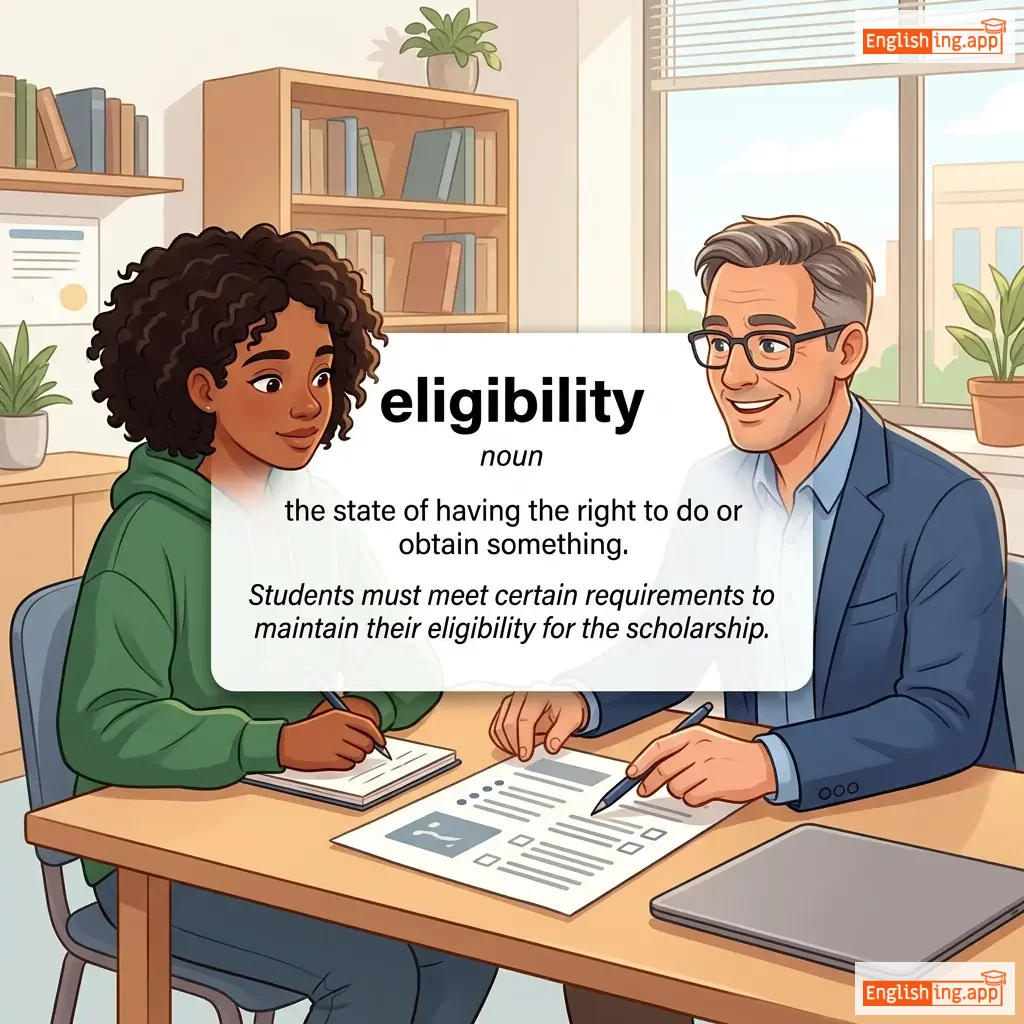
eligibility definition card — visual illustration of the meaning
noun
/ˌel.ɪ.dʒəˈbɪl.ə.ti/
право на участие (pravo na uchastie)

the state of having the right to do or obtain something

"Students must meet certain requirements to maintain their eligibility for the scholarship."
"Студенты должны выполнить определенные требования, чтобы поддерживать свою элигибильность для стипендии." (Studenty dolzhny vypolnit' opredelennye trebovaniya, chtoby podderzhivat' svoju eligibil'nost' dlya stipendii.)
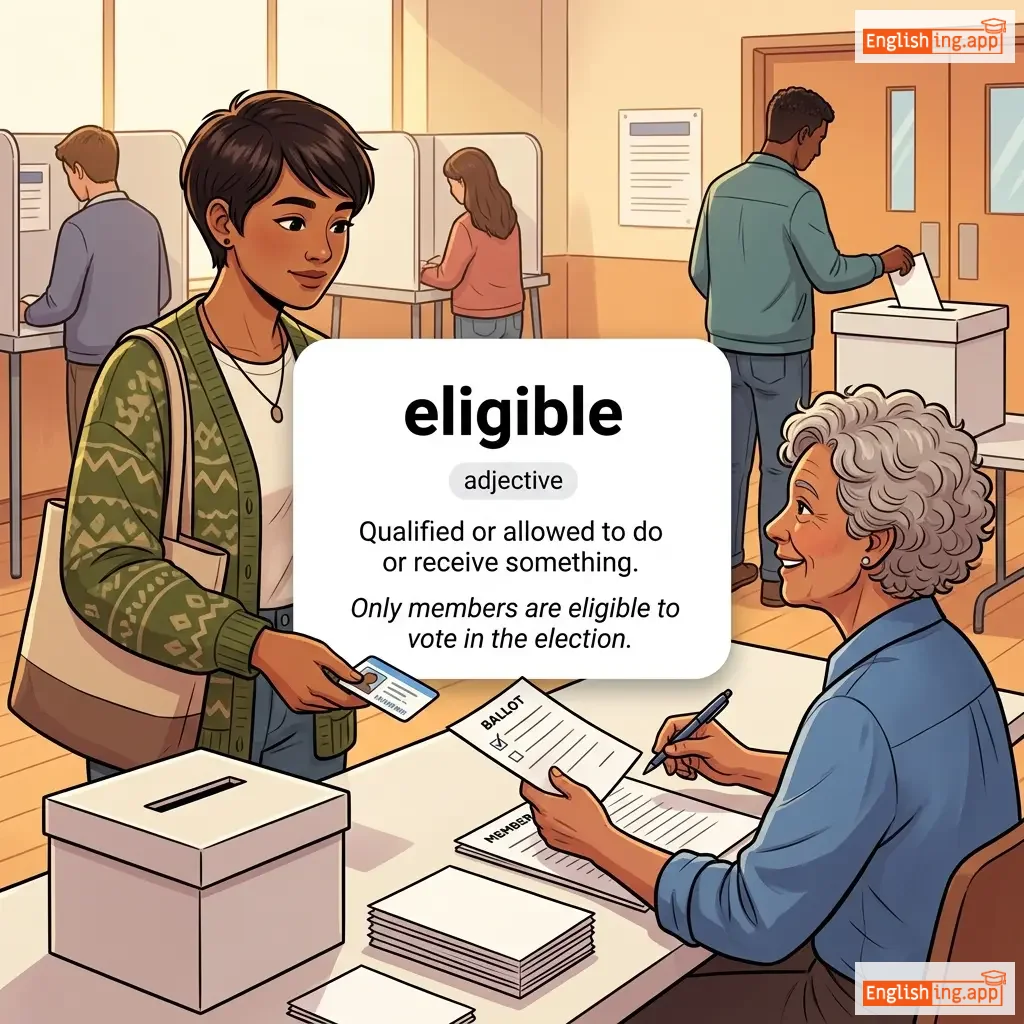
eligible definition card — visual illustration of the meaning
adjective
/ˈɛlɪdʒəbl/
допустимый (dopustimyy)

Qualified or allowed to do or receive something.

"Only members are eligible to vote in the election."

"Только члены могут голосовать на выборах." (Tol'ko chleny mogut golosovat' na viborah.)
eliminate definition card — visual illustration of the meaning
verb
/ɪˈlɪməˌneɪt/
устранить (ustranit)

To completely remove or get rid of something.

"The new policy aims to eliminate corruption in the system."
"Новая политика направлена на устранение коррупции в системе." (Novaya politika napravlena na ustranenie korruptsii v sisteme.)
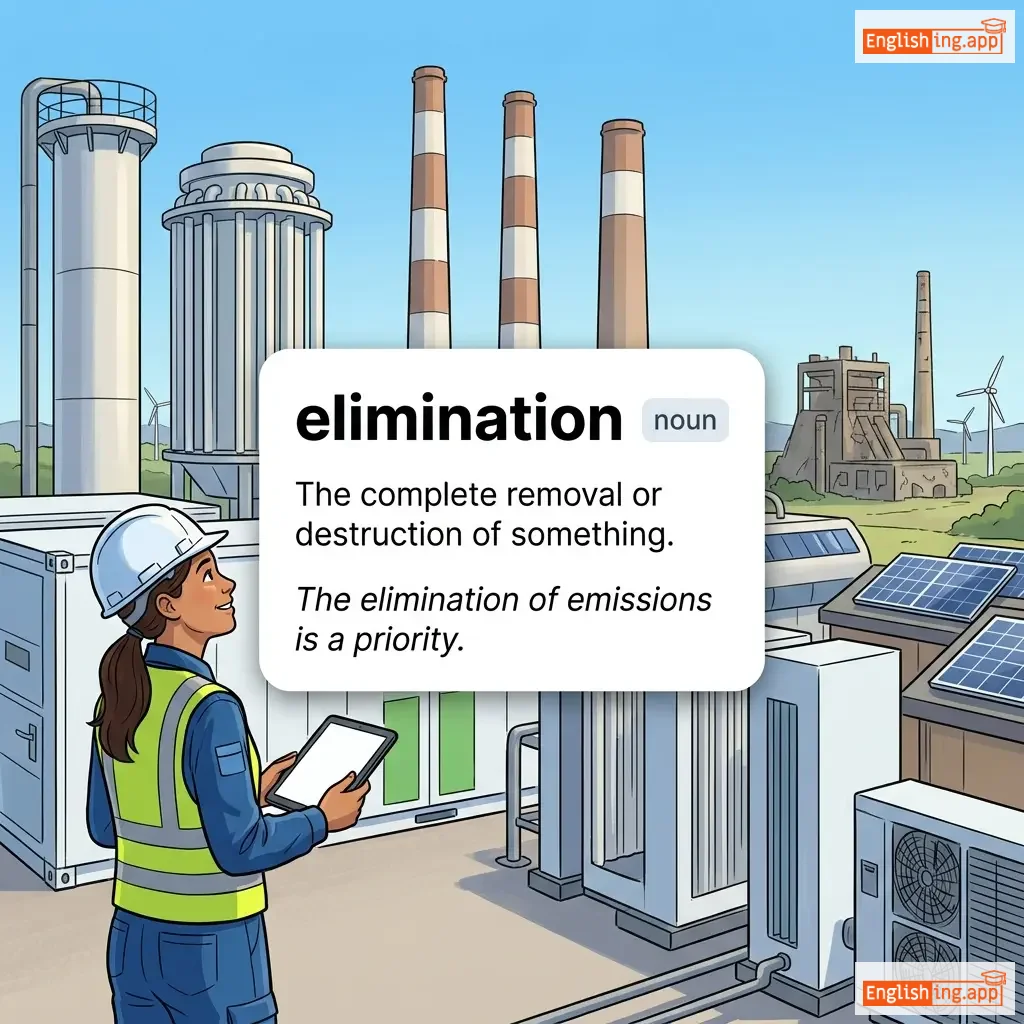
elimination definition card — visual illustration of the meaning
noun
ɪˌlɪm.ɪˈneɪ.ʃən
устранение (ustranenie)

The complete removal or destruction of something.

"The elimination of emissions is a priority."

"Устранение выбросов является приоритетом." (Ustraneniye vybrosov yavlyayetsya prioritetom.)
noun
/ɪˈliːt/ or /eɪˈliːt/
элита (elita)

A select group that is superior in terms of ability or qualities.

"Only the elite were invited to the exclusive event."

"Только элита была приглашена на эксклюзивное мероприятие." (Tol'ko elita byla priglashena na ekskliuzivnoe meropriyatie.)
noun/adjective
/ɪˈliːtɪst/
элитист (elitist)

A person who believes that a society should be led by an elite; showing preference for a privileged class.

"His elitist attitude made him unpopular among his peers."

"Его элитистское отношение сделало его непопулярным среди коллег." (Ego elitistskoe otnoshenie sdelalo ego nepopulyarnym sredi kolleg.)