Словари

Словарь английского языка | Значения слов, определения и примеры

noun
/ˈdɛskænt/
дополнительная мелодия (dopolnitel'naya melodiya)

An additional melody or counterpoint sung or played above the main melody.

"The choir added a beautiful descant to the hymn."

"Хор добавил красивую дополнительную мелодию к гимну." (Khor dobavil krasivuyu dopolnitel'nuyu melodiya k himnu.)
verb
/dɪˈsɛnd/
спускаться (spuskatsya)

To move or fall downward; to come or go down from a higher place.

"The hikers descended the steep mountain path."

"Пешие туристы спустились по крутой горной тропе." (Peshie turisty spustilis po krutoj gornoi trope)
noun
/dɪˈsɛndənt/
потомок (potomok)

A person who is descended from a particular ancestor.

"She is a descendant of a famous poet."

"Она потомок известного поэта." (Ona potomok izvestnogo poetа.)
adjective
/dɪˈsɛndənt/
нисходящий (niskhodyashchiy)

Moving downward; going down or descending.

"The river followed a descendent course toward the valley."

"Река следовала по нисходящему руслу в сторону долины." (Reka sledovala po niskhodyashchemu ruslu v storonu doliny.)
noun
/dɪˈsɛnt/
спуск / происхождение (spusk / proiskhozhdenie)

the action of moving downward, falling, or dropping; ancestry or origin

"The climbers began their descent from the mountain peak."

"Альпинисты начали спуск с вершины горы." (Alpinisty nachali spusk s vershiny gory.)
verb
/dɪˈskraɪb/
описывать (opisyvat')

to give an account of something in words, including details

"She described the scene vividly."
"Она описала сцену ярко." (Ona opisala stseny yarko.)
description definition card — visual illustration of the meaning
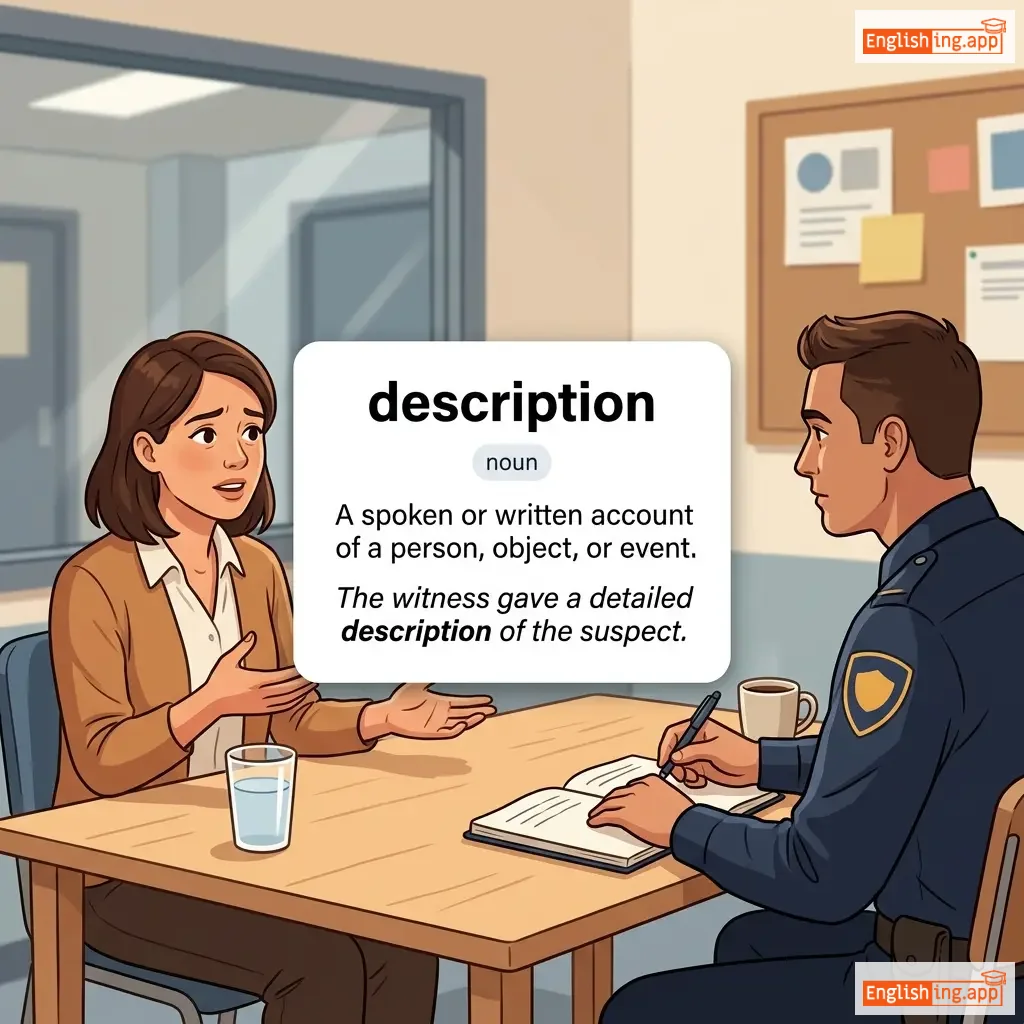
noun
/dɪˈskrɪpʃən/
описание (opisanije)

A spoken or written account of a person, object, or event.

"The witness gave a detailed description of the suspect."

"Свидетель дал подробное описание подозреваемого." (Svidetel' dal podrobnoye opisaniye podozrevaemogo.)
verb
/dɪˈskraɪ/
увидеть издалека (uvidet' izdaleka)

to catch sight of something, especially something distant or obscure

"From the hilltop, they descried a small village in the distance."

"С вершины холма они разглядели небольшую деревню вдали." (S vershiny kholma oni razglyadeli nebol'shuyu derevnyu v dali.)
verb
/ˈdɛsɪkreɪt/
осквернять (oskvernyat)

to treat a sacred place or object with disrespect or violation

"The vandals desecrated the ancient temple walls with graffiti."
"Вандалы осквернили стены древнего храма граффити." (Vandaly oskvernili steny drevnego khrama graffiti.)
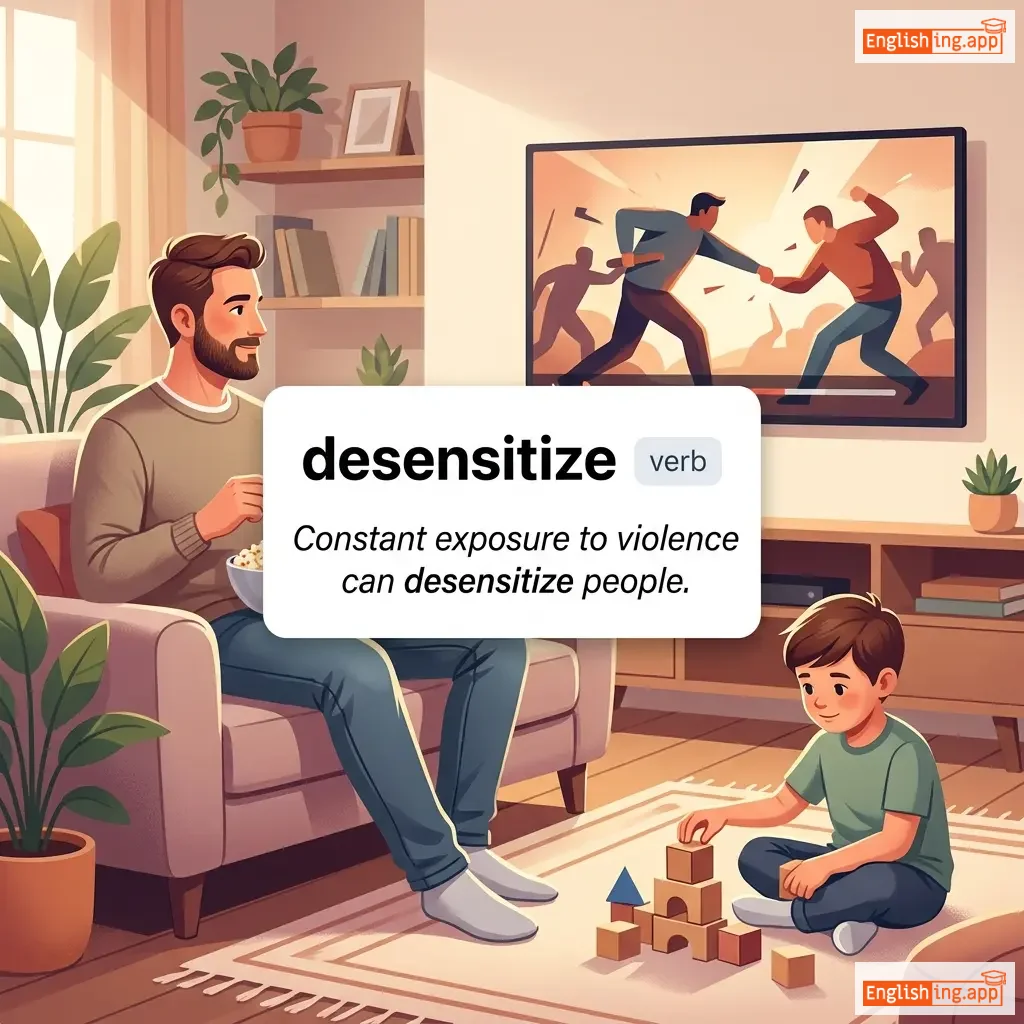
desensitize definition card — visual illustration of the meaning
verb
diːˈsɛn.sɪ.taɪz
десенсибилизировать (desensibilizirovat')

To make someone less sensitive or reactive to something through repeated exposure.

"Constant exposure to violence can desensitize people."

"Постоянное воздействие насилия может сделать людей менее чувствительными." (Postoyannoe vozdeystvie nasiliya mozhet sdelat' lyudey menee chuvstvitel'nymi.)
noun, verb
/ˈdez.ɚt/ (noun/adjective), /dɪˈzɜːrt/ (verb)
пустыня / покинуть (pustynya / pokinut)

as a noun, a barren sandy region; as a verb, to abandon someone or something

"He deserted his friends in their time of need."

"Он покинул своих друзей в их момент нужды." (On pokinul svoikh druzey v ikh moment nuzhdy.)
adjective
/dɪˈzɜːrtɪd/
покинутый (pokinutyy)

Empty of people; abandoned.

"The village looked completely deserted after the storm."
"Деревня выглядела полностью покинутой после шторма." (Derevnya vyglyadela polnost'yu pokinutoy posle shtorma.)
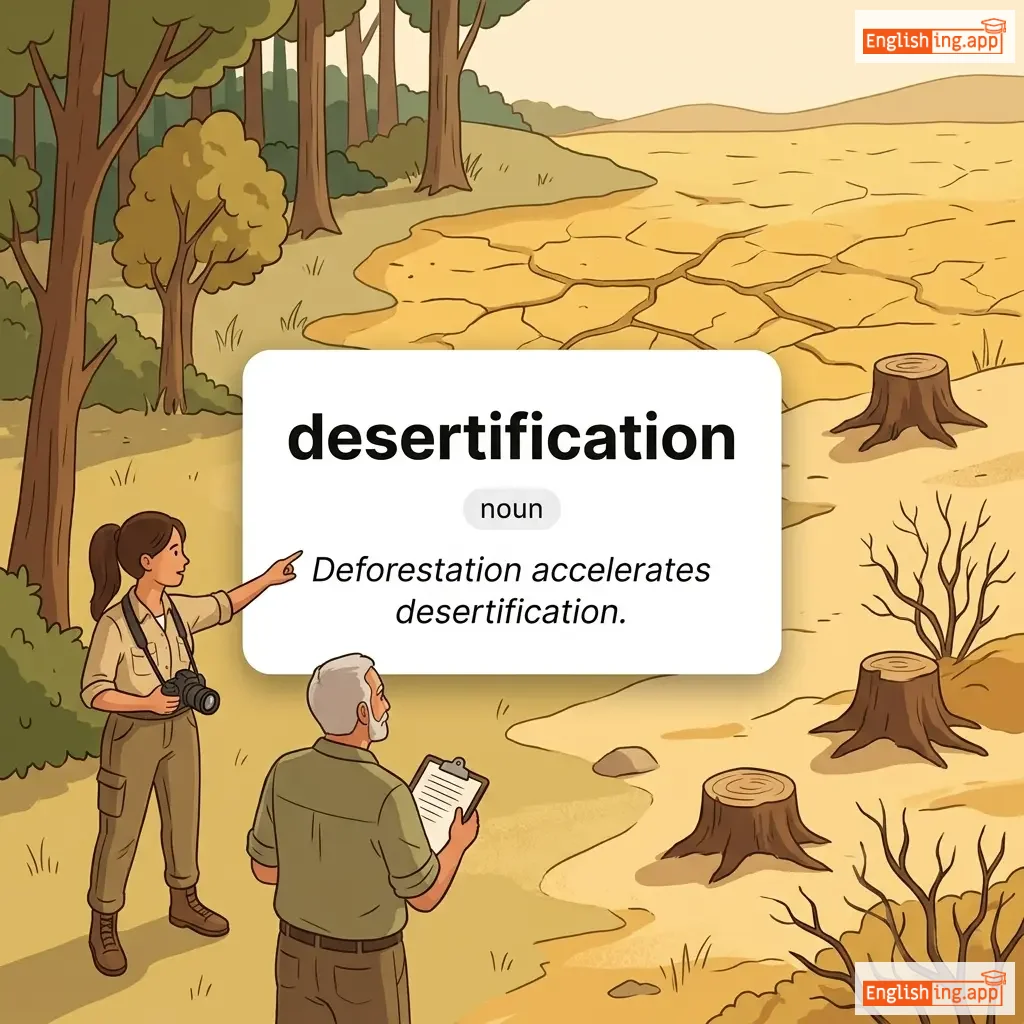
desertification definition card — visual illustration of the meaning
noun
dɪˌzɝː.t̬ə.fɪˈkeɪ.ʃən
опустынивание (opustynivanie)

The process by which fertile land becomes desert, typically as a result of drought, deforestation, or inappropriate agriculture.

"Deforestation accelerates desertification."

"Вырубка лесов ускоряет опустынивание." (Vyrubka lesov uskoryayet opustynivanie.)
noun
/dɪˈzɜːrts/ (noun: reward or punishment deserved)
то, что кто-то заслуживает, особенно наказание или вознаграждение (to, chto kto-to zasluzhivayet, osobenno nakazaniye ili voznagrazhdeniye)

what someone deserves, especially punishment or reward

"He finally got his just deserts for cheating in the exam."

"Он наконец получил свою заслуженную кару за жульничество на экзамене." (On nakonechno poluchil svoyu zasluzhennuyu karu za zhulnichestvo na ekzamenye.)
verb
/dɪˈzɜːrv/
заслужить (zasluzhit)

To be worthy of something, usually a reward or punishment.

"She worked hard and deserves recognition."

"Она усердно работала и заслуживает признания." (Ona usyerdno rabotala i zasluzhivayet priznaniya.)
noun
/ˈdɛsɪkənt/
осушитель (osushitel)

a substance that absorbs moisture and keeps things dry

"Silica gel packets are commonly used as a desiccant in packaging."
"Пакеты с силикагелем обычно используются как осушители в упаковке." (Pakety s silikagelyem obychno ispol'zuyutsya kak osushitely v upakovke.)
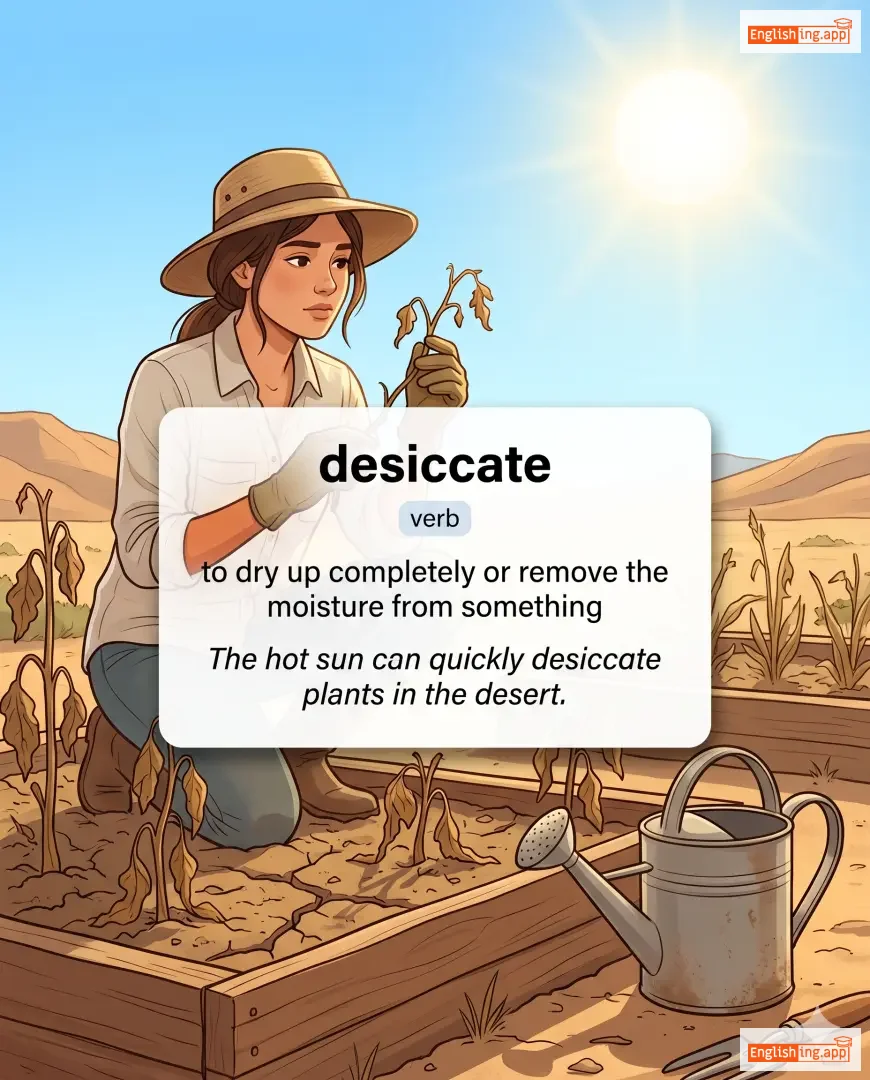
desiccate definition card — visual illustration of the meaning
verb
/ˈdɛsɪkeɪt/
высушивать (vysushivat)

to dry up completely or remove the moisture from something

"The hot sun can quickly desiccate plants in the desert."

"Горячее солнце может быстро высушить растения в пустыне." (Goryachie solntse mozhet bystro vysushit' rastenija v pustyne.)
adjective
/ˈdɛsɪkeɪtɪd/
высушенный (vysushennyi)

completely dried, having had all moisture removed

"The museum displayed desiccated specimens of plants."

"Музей выставил высушенные образцы растений." (Muzei vystavil vysushennye obrazy rastenii.)
noun
/dɪˌsɪdəˈreɪtəm/
необходимая вещь (neobkhodimaya veshch)

something that is desired or considered necessary

"For many students, financial aid is a desideratum."

"Для многих студентов финансовая помощь - это необходимая вещь." (Dlya mnogikh studentov finansovaya pomoshch' - eto neobkhodimaya veshch'.)
verb
/dɪˈzaɪn/
проектировать (proyektirovat)

to plan and create something with a particular purpose or look

"She will design the new company logo."

"Она спроектирует новый логотип компании." (Ona spetserirovayet novyy logotip kompanii.)
verb
/ˈdɛzɪɡneɪt/
назначать (naznachat)

to officially assign, appoint, or indicate something or someone

"The committee will designate a new chairperson next week."

"Комитет назначит нового председателя на следующей неделе." (Komitet naznachit novogo predsedatelya na sleduyushchey nedele.)
noun
/ˌdez.ɪɡˈneɪ.ʃən/
назначение; должность; титул; статус (naznachenie, dolzhnost, titul, status)

the action of choosing someone for a position; a name, title, or official status

"His designation as team leader came with additional responsibilities and authority."

"Его назначение на должность руководителя команды сопровождалось дополнительными обязанностями и полномочиями." (ego naznacheniye na dolzhnost' rukovoditelya komandy soprovozhdalos' dopolnitel'nymi obyazannostyami i polnomochiyami.)
noun
/dɪˈzaɪnər/
дизайнер (dizayner)

a person who plans and creates the form or structure of something

"The fashion designer presented her new collection."

"Модный дизайнер представил свою новую коллекцию." (Modny dizayner predstavil svoiy novuyu kollekciyu.)
adjective
/dɪˈzaɪərəbl/
желанный (zhelanny)

worth having or wanting; attractive

"The location of the house was highly desirable, with great views."

"Местоположение дома было очень желаемым, с отличными видами." (Mestopolozhenie doma bylo ochen' zhelayemym, s otlichnymi vidami.)
noun, verb
/dɪˈzaɪər/
желание (zhelanie)

a strong feeling of wanting something or wishing for something to happen

"He has a strong desire to travel the world."

"У него сильное желание путешествовать по миру." (U nego sil'noe zhelanie puteshestvovat' po miru.)
verb
/dɪˈzɪst/
прекратить (prekratit')

to stop doing something, especially an action considered wrong or undesirable

"The judge ordered the company to desist from unfair practices."

"Судья приказал компании прекратить нечестные практики." (Sud'ya prikazal kompanii prekratit' nechesnye praktiki.)
noun
/dɪˈsɪstəns/
дезистенция (dezistentsiya)

The act of stopping or ceasing from some action or behavior.

"The court urged his desistance from further unlawful activities."

"Суд призвал его прекратить дальнейшие незаконные действия." (Sud prizval ego prekratit' dal'neyshee nezakonnyye deystviya.)
noun
/dɛsk/
письменный стол (pismennyy stol)

a piece of furniture with a flat surface used for writing or working

"The books are on the desk."

"Книги на письменном столе." (Knihi na pismennom stole.)
noun
/ˈdɛsktɒp/

a computer designed to be used on a desk, typically with a separate monitor, keyboard, and mouse

"I keep my documents on the desktop for easy access."

adjective
/ˈdɛsələt/
пустошь (pustosch)

Empty, bleak, and without people; feeling very sad and lonely.

"The once lively town now stood desolate after the flood."

"Когда-то оживленный город теперь стоял пустым после наводнения." (Kogda-to ozhivlennyy gorod teper' stoyal pustym posle navodneniya.)
noun
/dɪˈspɛər/
отчаяние (otchayanie)

The complete loss or absence of hope.

"She was in deep despair after losing her job."

"Она была в глубоком отчаянии после того, как потеряла работу." (Ona byla v glubokom otchayanie posle togo kak poteryala rabotu.)
adjective
/dɪˈsperɪŋ/
отчаянный (otchayannyy)

feeling hopeless; in despair

"She felt despairing after losing her job."

"Она чувствовала отчаяние после потери работы." (Ona chuvstvovala otchayanie posle poteri raboty.)
noun
/ˌdɛspəˈrɑːdoʊ/

A bold, reckless, or dangerous person, often a criminal.

"The sheriff was determined to capture the desperado who terrorized the town."

adjective
/ˈdɛspərət/
отчаянный (otchaianyi)

Feeling or showing a hopeless sense that a situation is so bad as to be impossible to deal with.

"He was desperate to find a job before his savings ran out."

"Он был отчаянно настроен найти работу, прежде чем его сбережения иссякнут." (On byl otchaianno nastroen naiti rabotu, prezhde chem ego sberezheniya issiaknut.)
adverb
/ˈdɛspərətli/
отчаянно (otchayanno)

in a way that shows despair or great need

"He called for help desperately after the accident."

"Он отчаянно позвал на помощь после аварии." (On otchayanno pozval na pomoshch' posle avarii.)
adjective
/dɪˈspɪkəbl/
презренный (prezrenny)

Deserving hatred and contempt; vile or shameful.

"His despicable actions shocked the entire community."
"Его презренные поступки шокировали все сообщество." (Yego prezrennye postupki shokirovali vse soobshchestvo.)
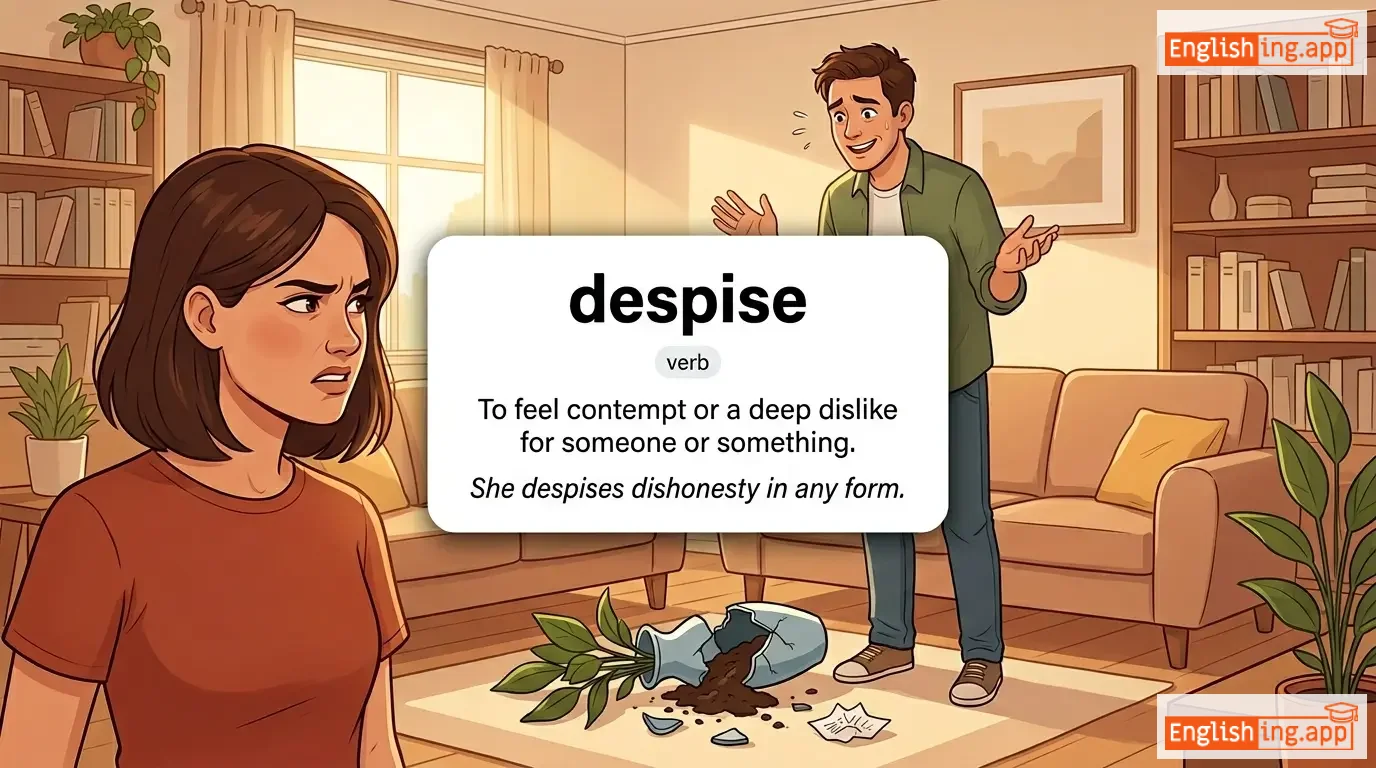
despise definition card — visual illustration of the meaning
verb
/dɪˈspaɪz/
презирать (prezirat')

To feel contempt or a deep dislike for someone or something.

"She despises dishonesty in any form."

"Она презирает нечестность в любой форме." (Ona preziraet nechesnost' v lyuboy forme.)
preposition
/dɪˈspaɪt/
несмотря на (nesmotrya na)

Without being affected by; in spite of.

"He continued his work despite the difficulties."

"Он продолжил свою работу, несмотря на трудности." (On prodolzhil svoyu rabotu, nesmotrya na trudnosti.)
verb
/dɪˈspɔɪl/
грабить (grabit)

To steal or violently remove valuable possessions from a place.

"The invaders despoiled the village during the war."

"Вторженцы разграбили деревню во время войны." (Vtorzhentsy razgrabili derevnyu vo vremya voyny.)
noun
/dɪˈspɔɪlər/
грабитель (grabitiel)

A person who robs, plunders, or violently takes things from others.

"The despoilers left the city in ruins."

"Грабители оставили город в руинах." (Grabiteli ostavili gorod v ruinakh.)
verb
/dɪˈspɒnd/
падать духом (padat' dukhom)

to lose confidence or hope; to become dejected

"After repeated failures, he began to despond."

"После повторных неудач он начал падать духом." (Posle povtornykh neudach on nachal padat' dukhom.)
adjective
/dɪˈspɒndənt/

feeling or showing deep hopelessness or discouragement

"She felt despondent after losing her job."

noun
/ˈdɛspɒt/
деспот (despot)

a ruler with absolute power, often ruling in a cruel or oppressive way

"The despot ruled the nation with fear and violence."

"Деспот правил нацией с помощью страха и насилия." (Despot pravil natsiey s pomoshch'yu strakha i nasiliya.)
adjective
/dɛˈspɒtɪk/
деспотичный (despotichny)

exercising power in a cruel, oppressive, or authoritarian way

"The king’s despotic rule left the people in misery."

"Деспотичное правление короля оставило народ в страданиях." (Despotichnoe pravlenie korolya ostavilo narod v stradaniyakh.)
noun
/ˈdɛspətɪzəm/
деспотизм (despotizm)

absolute power exercised in a cruel and oppressive way

"The people revolted against the era of despotism."

"Народ восстал против эпохи деспотизма." (Narod vostal protiv epokhi despotizma.)
noun
/dɪˈzɜːrt/
десерт (desert)

the sweet course eaten at the end of a meal

"We had ice cream for dessert after dinner."

"Мы съели мороженое на десерт после ужина." (My s'ely morozhenoye na desert posle uzhina.)
noun
/ˌdɛstɪˈneɪʃən/
пункт назначения (punkt naznacheniya)

the place to which someone or something is going or being sent

"Paris is a popular tourist destination."

"Париж — популярный туристический пункт назначения." (Parizh — populyarnyy turistskiy punkt naznacheniya.)
noun
/ˈdɛstəni/
судьба (sud'ba)

The events that will necessarily happen to a particular person or thing in the future; fate.

"She believed it was her destiny to become a doctor."

"Она верила, что стать врачом было её судьбой." (Ona verila, chto stat' vrachom bylo yeye sud'boy.)
adjective
/ˈdɛstɪˌtuːt/
лишённый всего (lishyonnyy vsego)

extremely poor and lacking the means to provide for oneself

"The earthquake left many families destitute."
"Землетрясение оставило многие семьи в крайней бедности." (Zemletryasenie ostavilo mnogie semi v krayney bednosti.)
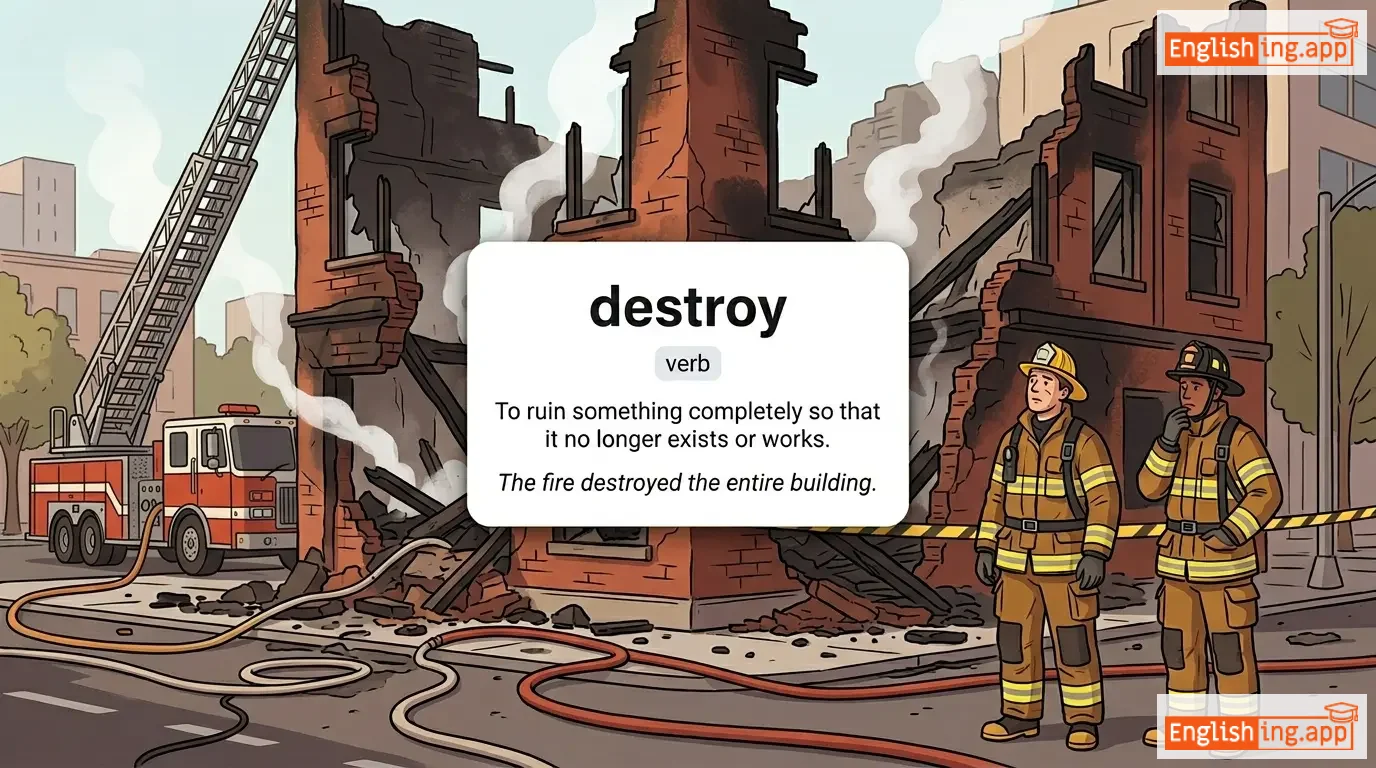
destroy definition card — visual illustration of the meaning
verb
/dɪˈstrɔɪ/
разрушить (razrushit)

To ruin something completely so that it no longer exists or works.

"The fire destroyed the entire building."

"Огонь уничтожил все здание." (Ogon' unichtozhil vse zdanie.)