Словари

Словарь английского языка | Значения слов, определения и примеры

📅

date

noun/verb
/deɪt/

A particular day of the month or year; also, a social or romantic appointment.

"They decided to meet on the date of her birthday."

noun
/deɪts/
финики (finiki)

sweet brown oval fruits that grow on date palm trees

"Dates are commonly eaten during Ramadan to break the fast."

"Финики обычно едят во время Рамадана, чтобы разорвать пост." (Finiki obychno edyat vo vremya Ramadana, chtoby razohrat' post)
noun
/ˈdeɪtəm/ or /ˈdætəm/
данные (dannye)

a single piece of information; a fact used as a basis for reasoning or calculation

"Each datum in the survey was carefully analyzed."

"Каждый данные в исследовании был тщательно проанализирован." (Kazhdyy dannye v issledovanii byl tchatel'no proanalizirovan.)
verb
/dɔːb/
мазать (mazat)

to spread a thick or sticky substance carelessly on a surface

"The children daubed paint all over the walls."

"Дети размазали краску по стенам." (Deti razmazali krasku po stenam.)
noun
/ˈdɔːtər/
дочь (doch)

a female child in relation to her parents

"They are proud of their daughter for graduating college."

"Они гордятся своей дочерью за то, что она закончила колледж." (Oni gordyatsya svoey docher'yu za to, chto ona zakonchila kolledzh.)
daunt definition card — visual illustration of the meaning
verb
/dɔːnt/
пугать (pugat)

to make someone feel intimidated, discouraged, or less confident

"The steep climb did not daunt the experienced hikers."
"Крутой подъем не напугал опытных туристов." (Krutoy pod'yom ne napugal opytnykh turistsov.)
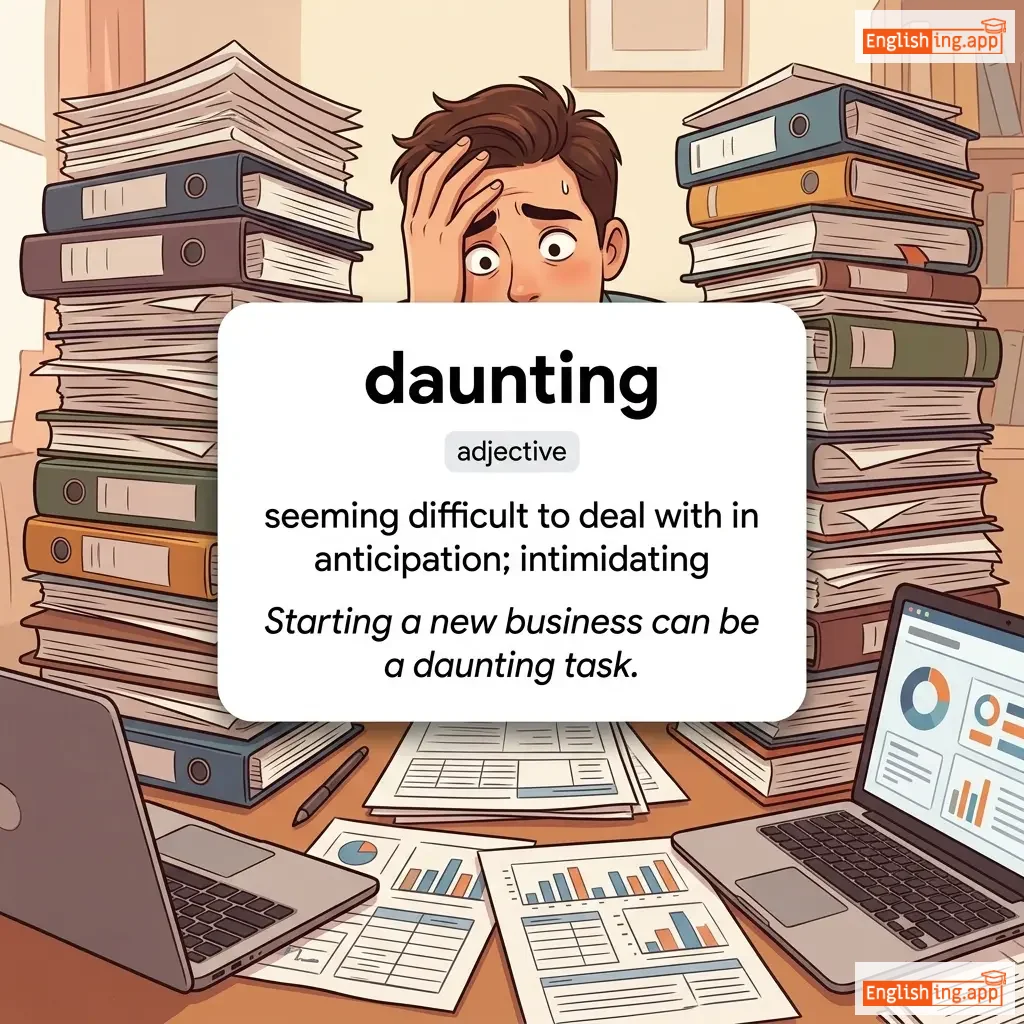
daunting definition card — visual illustration of the meaning
adjective
/ˈdɔːntɪŋ/
пугающий (pugayushchiy)

seeming difficult to deal with in anticipation; intimidating

"Starting a new business can be a daunting task."
"Начать новый бизнес может быть пугающим заданием." (Nachat' novyy biznes mozhet byt' pugayushchim zadaniem.)
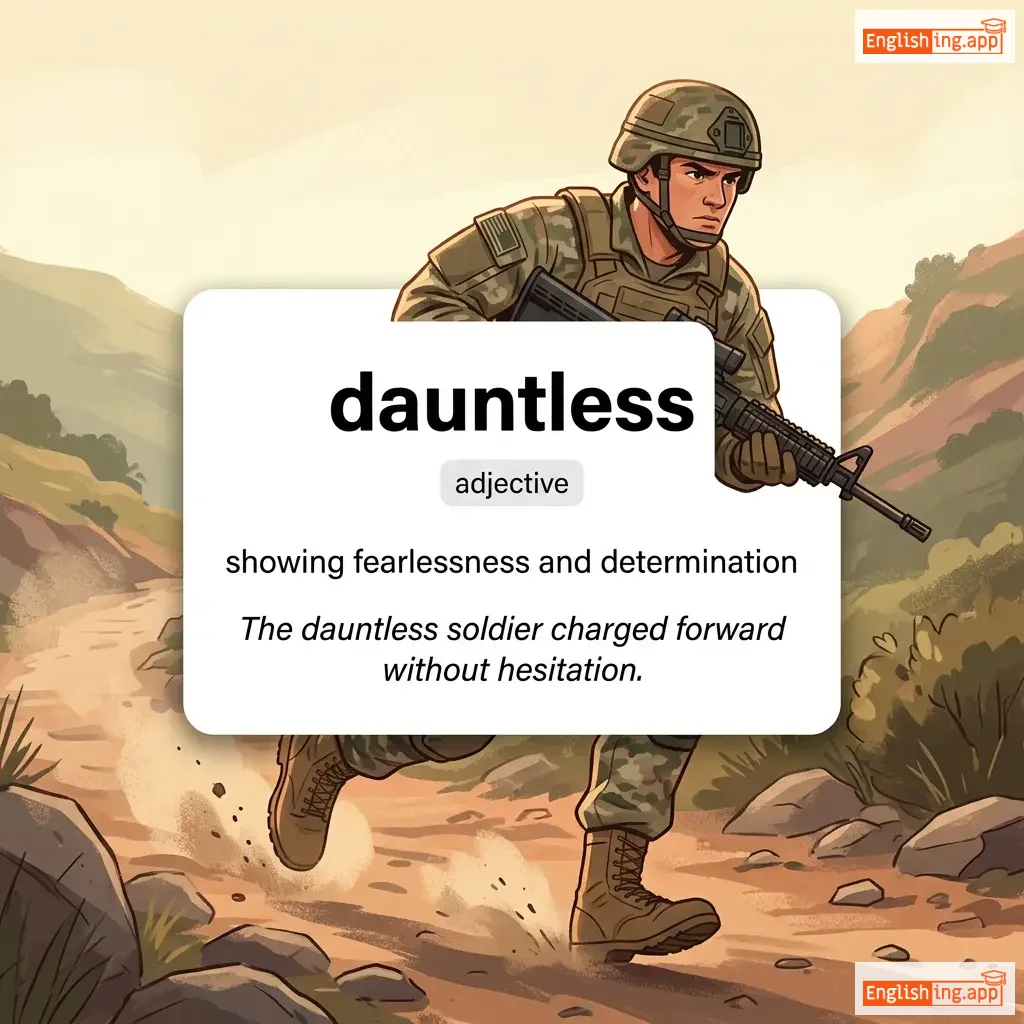
dauntless definition card — visual illustration of the meaning
adjective
/ˈdɔːntləs/
бесстрашный (besstrashnyy)

showing fearlessness and determination

"The dauntless soldier charged forward without hesitation."

"Бесстрашный солдат пошел вперед без колебаний." (Besstrashnyy soldat poshel vpered bez kolebaniy.)
verb
/ˈdɔːd(ə)l/
медлить (medlit)

to waste time by being slow or idle

"Stop dawdling and finish your homework."

"Перестань медлить и заканчивай домашку." (Perestan' medlit' i zakanchivay domashku.)
noun, verb
/dɔːn/
рассвет (rassvet)

The first appearance of light in the sky before sunrise; to begin or become apparent.

"Hope began to dawn in her heart after hearing the good news."

"Надежда начала рассветать в её сердце после того, как она услышала хорошие новости." (Nadezhda nachala rassvethat' v yejo serdtse posle togo, kak ona uslyshala khoroshie novosti.)
noun
/deɪ/
день (den)

a period of 24 hours or the time between sunrise and sunset

"She enjoyed a relaxing day at the beach."

"Она наслаждалась расслабляющим днем на пляже." (Ona naslazhdalas' rasslablyayushchim dnyom na plyazhe.)
noun
/ˈdeɪ.mæn/
дневной рабочий (dnevnoi rabochii)

a worker employed by the day; a day laborer

"The farmer hired a day-man to help with the harvest."

"Фермер нанял дневного рабочего, чтобы помочь с уборкой урожая." (Fermyer nanyal dnevnovo rabochego, chtoby pomoch' s uborkoy urozhaya.)
noun
/ˈdeɪˌbreɪk/
рассвет (rassvet)

The time in the morning when daylight first appears; dawn.

"They set out on their journey at daybreak."

"Они начали свое путешествие на рассвете." (Oni nachali svoyo puteshestviye na rassvete.)
noun
/deɪz/
дни (dni)

plural of day; refers to multiple 24-hour periods of time

"The project will take at least five days to finish."

"Проект займет как минимум пять дней для завершения." (Proyekt zaymet kak minimum pyat' dney dlya zaversheniya.)
😵

daze

verb
/deɪz/

to stun or confuse someone temporarily with a shock or surprise

"The bright lights dazed the runners as they entered the stadium."

verb
/ˈdæzəl/
ослепить (oslepit)

to impress deeply or blind with brilliance or skill

"The magician's tricks dazzled the audience."

"Фокусы мага ослепили зрителей." (Fokusy maga oslepili zritelyey.)
adjective
/ˈdæz.lɪŋ/
ослепительный; впечатляющий (oslepitiel'nyi; vpechatliaiushchii)

extremely bright and impressive; brilliant and stunning

"The dazzling lights of the city amazed the tourists."

"Ослепительные огни города поразили туристов." (Oslepitiel'nye ogni goroda porazili turistov.)
adjective, noun
/dɛd/
мертвый (mertvyy)

No longer alive; the end of life.

"The old tree is completely dead."

"Старое дерево полностью мертво." (Staroye derevo polnost'yu mertvo.)
noun
/ˌdɛd ˈhiːt/
ничья (nichya)

a race or contest in which two or more competitors finish exactly equal

"The race ended in a dead-heat between the two runners."

"Гонка закончилась ничьей между двумя бегунами." (Gonka zakonchilas' nich'ey mezhdu dvumya begunami.)
noun
/ˈded.lɑk/
тупик; блокировка (tupik; blokirovka)

a situation in which no progress is possible; complete standstill

"The negotiations reached a deadlock when neither side would compromise."

"Переговоры зашли в тупик, когда ни одна из сторон не хотела идти на компромисс." (Peregovory zashli v tupik, kogda ni odna iz storon ne khotela idti na kompromiss.)
noun
/ˈdedlaɪn/
крайний срок (krajniy srok)

the latest time or date by which something must be completed

"We need to finish this project before the deadline."

"Нам нужно закончить этот проект до крайнего срока." (Nam nuzhno zakontchit' etot proyekt do krajnego sroka.)
deadlines definition card — visual illustration of the meaning
noun
/ˈdɛdˌlaɪnz/
сроки (sroki)

The latest time or date by which something should be completed.

"Setting deadlines helps finish tasks."

"Установление сроков помогает завершить задачи." (Ustanovlenie srokov pomogayet zavershit' zadachi.)
noun
/ˈdɛdlɒk/
тупик (tupik)

a situation in which progress is impossible because of disagreement

"Negotiations reached a deadlock after neither side agreed to compromise."

"Переговоры зашли в тупик, когда ни одна сторона не согласилась на компромисс." (Peregovory zashli v tupik, kogda ni odna storona ne soglasilas na kompromiss.)
adjective
/ˈdedli/
смертельный (smertel'nyy)

causing or able to cause death; extremely dangerous

"The snake's bite is deadly to humans."

"Укус змеи смертелен для людей." (Ukus zmei smertelen dlya lyudey.)
adjective
/ˈdɛdˌpæn/
бесстрастный (besstrastny)

Deliberately impassive or expressionless in manner.

"She delivered the joke in a completely deadpan voice."

"Она рассказала шутку с совершенно бесстрастным голосом." (Ona rasskazala shutku s sovershenno besstrastnym golosom.)
adjective
/def/
глухой; с нарушением слуха (glukhoy; s narusheniyem sluha)

unable to hear; having a hearing impairment

"The deaf child learned to communicate using sign language."

"Глухой ребёнок научился общаться с помощью жестового языка." (Glukhoy rebyonok nauchilsya obshchat'sya s pomoshch'yu zhestovogo yazyka.)
🤝

deal

verb
/diːl/
счастье (schast'ye)

to distribute or give out something; to handle or manage

"He had to deal with many problems at work."

"Она не могла скрыть свое счастье, когда получила награду." (Ona ne mogla skryt' svoe schast'ye, kogda poluchila nagradu.)
noun
/ˈdiːlər/
продавец (prodavets)

a person or business that buys and sells goods; someone who distributes

"The car dealer offered a discount to attract customers."

"Продавец автомобилей предложил скидку, чтобы привлечь клиентов." (Prodavets avtomobiley predlozhil skidku, chtoby privlech' klientov.)
noun
/ˈdiː.lɪŋ/
обращение; сделки; бизнес-процессы (obrascheniye, sdelki, biznes-protsessy)

business transactions; the way of treating people or handling situations

"His fair dealing with customers earned him an excellent reputation."

"Его честное обращение с клиентами принесло ему отличную репутацию." (Yego chestnoye obrascheniye s klientami prineslo yemu otlichnuyu reputatsiyu.)
adjective
/dɪr/
дорогой (dorogoy)

loved or cherished; sometimes used as a polite form of address

"She is very dear to her grandparents."
"Она очень дорога своим бабушке и дедушке." (Ona ochen' doroga svoim babushke i dedushke.)
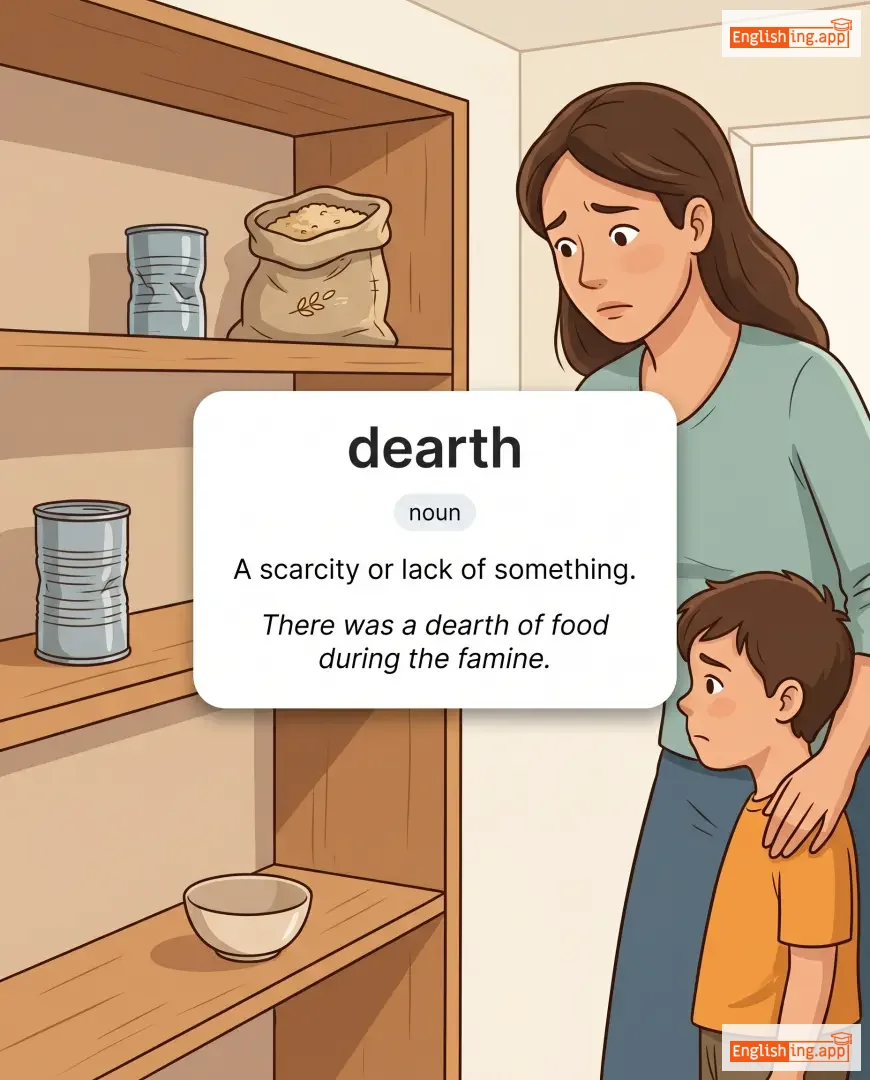
dearth definition card — visual illustration of the meaning
noun
/dɜːrθ/
дефицит (defitsit)

A scarcity or lack of something.

"There was a dearth of food during the famine."

"Был дефицит еды во время голода." (Byl defitsit edy vo vremya goloda.)
noun
/dɛθ/
смерть (smert')

The end of life; the permanent cessation of all vital functions.

"The news of his death shocked everyone in the village."

"Новости о его смерти потрясли всех в деревне." (Novosti o yego smerti potryasli vsekh v derevne.)
noun
/ˈdɛθsˌhɛd/
череп (cherep)

A representation of a human skull, often used as a symbol of death.

"The pirate flag was marked with a grim deaths-head."

"Пиратский флаг был отмечен зловещим черепом." (Piratskiy flag byl otmechen zloveshchim cherepom.)
noun
/deɪˈbɑːkəl/
крах (krakh)

A sudden and complete failure; a fiasco.

"The product launch turned into a complete debacle."

"Запуск продукта стал полным крахом." (Zapusk produkta stal polnym krakhom.)
verb
/dɪˈbɑːr/
запрещать (zapreshchat)

To officially prevent someone from doing something.

"He was debarred from entering the competition due to cheating."

"Он был лишен возможности участвовать в соревновании из-за мошенничества." (On byl lishen vozmozhnosti uchastvovat' v sorevnovanii iz-za moshennichestva.)
verb
/dɪˈbɑːrk/
сходить (skhodit')

to disembark or get off a ship, aircraft, or vehicle

"The passengers debarked as soon as the ship docked."

"Пассажиры сошли с корабля, как только оно пришвартовалось." (Passazhiry sozhli s korablya, kak tol'ko ono prishvartovalos'.)
verb
/dɪˈbeɪs/
девальвировать (devalvirovat)

to reduce the quality, value, or dignity of something

"Corruption can debase the values of a society."

"Коррупция может девальвировать ценности общества." (Korruptsiya mozhet devalvirovat' tsennosti obshchestva.)
adjective
/dɪˈbeɪst/
обесцененный (obescenenniy)

having lost quality, value, or moral character

"The debased currency lost the trust of the people."

"Обесцененная валюта потеряла доверие людей." (Obescenennaia valiuta poteryala doverie lyudey.)
adjective
/dɪˈbeɪtəbl̩/
спорный (spornyy)

open to discussion or doubt; not certain

"It is debatable whether the policy will work."

"Это спорно, будет ли политика работать." (Eto sporno, budet li politika rabotat'.)
noun, verb
/dɪˈbeɪt/
дебаты (debaty)

A formal discussion on a particular topic where opposing arguments are presented.

"The students prepared well for the school debate."

"Студенты хорошо подготовились к школьным дебатам." (Studenty khorosho podgotovilis' k shkol'nym debatam.)
debates definition card — visual illustration of the meaning
noun
dɪˈbeɪts
дебаты (debaty)

A formal discussion on a particular topic in a public meeting or legislative assembly.

"Debates foster intellectual growth."

"Дебаты способствуют интеллектуальному росту." (Debaty sposobstvuyut intellektual'nomu rostu.)
verb
/dɪˈbɔːtʃ/
развращать (razvrashchat)

to corrupt morally; to lead into excessive indulgence in sensual pleasures

"The novel shows how wealth can debauch a person's character."

"Роман показывает, как богатство может развратить характер человека." (Roman pokazyvayet, kak bogatstvo mozhet razvratit' kharakter cheloveka.)
debauchery definition card — visual illustration of the meaning
noun
/dɪˈbɔːtʃəri/
разврат (razvrat)

excessive indulgence in sensual pleasures; corruption or vice

"The novel depicts the debauchery of the aristocrats in the city."

"Роман изображает разврат аристократов в городе." (Roman izobrazhaet razvrat aristokratov v gorode.)
noun
/dɪˈbɛntʃər/
облигация (obligatsiya)

a type of debt instrument not secured by physical assets or collateral

"The company raised capital by issuing debentures to investors."

"Компания привлекла капитал, выпустив облигации для инвесторов." (Kompaniya privlekla kapital, vypustiv obligatsii dlya investorov.)
verb
/dɪˈbɪlɪteɪt/
ослаблять (oslablyat)

to weaken or make someone or something infirm

"The long illness debilitated his strength."
"Долгая болезнь ослабила его силу." (Dolgaya bolezn' oslabila ego silu.)
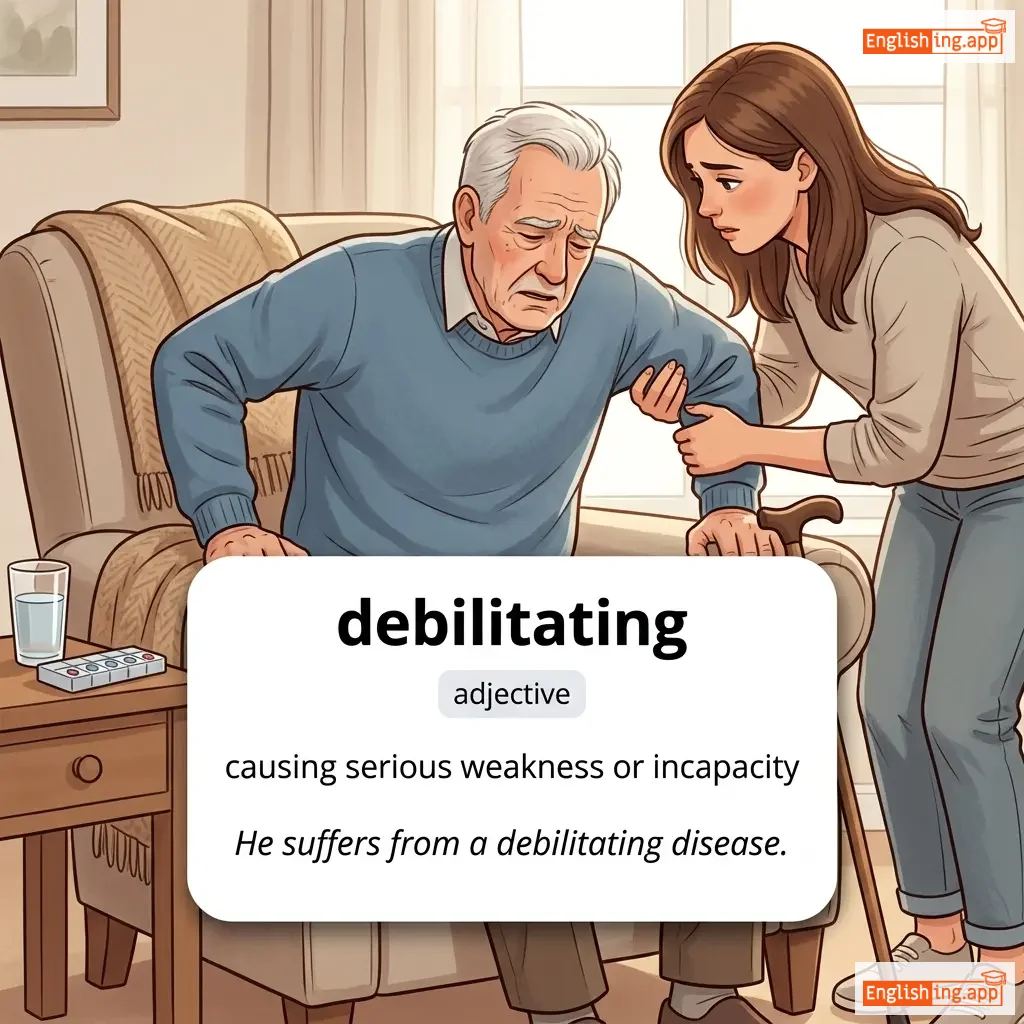
debilitating definition card — visual illustration of the meaning
adjective
/dɪˈbɪlɪteɪtɪŋ/
ослабляющий (oslablyayushchiy)

causing serious weakness or incapacity

"He suffers from a debilitating disease."

"Он страдает от ослабляющей болезни." (On stradayet ot oslablyayushchey bolezni.)
noun
/ˈdeb.ɪt/
дебет; долг; списание (debet; dolg; spisanie)

an entry recording an amount owed; money taken from a bank account

"The bank showed a debit of fifty dollars from my checking account."

"Банк показал дебет в размере пятидесяти долларов с моего расчетного счета." (Bank pokazal debit v razmere pyatidesyati dollarov s moyego raschetnogo scheta.)
adjective
/ˌdɛbəˈnɛr/
привлекательный (privlekatel'nyy)

confident, stylish, and charming, typically referring to a man

"He looked debonair in his tuxedo at the gala."
"Он выглядел привлекательным в своем смокинге на балу." (On vyglyadel privlekatel'nym v svoem smokinge na balu.)
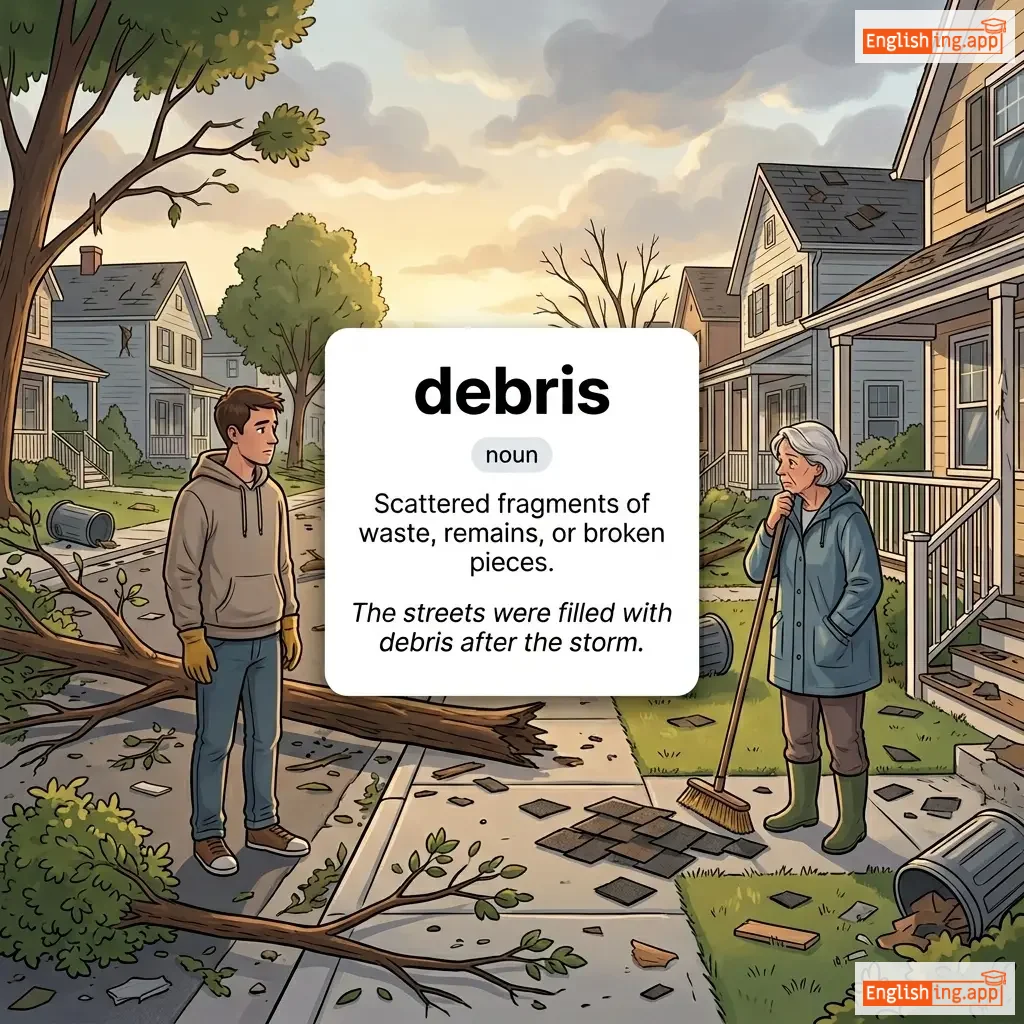
debris definition card — visual illustration of the meaning
noun
/dəˈbriː/
мусор (musor)

Scattered fragments of waste, remains, or broken pieces.

"The streets were filled with debris after the storm."

"Улицы были заполнены мусором после бури." (Uliцы byli zapolneny musorom posle buri.)
debt definition card — visual illustration of the meaning
noun
/dɛt/
долг (dolg)

Something, typically money, that is owed or due.

"He struggled for years to pay off his debt."

"Он боролся много лет, чтобы погасить свой долг." (On borolsya mnogo let, chtoby pogasit' svoy dolg.)