Словари

Словарь английского языка | Значения слов, определения и примеры

adjective
/daɪˈɒsɪsən/
относящийся к диоцезу (otnosyashchiesya k diotsezu)

relating to a diocese or the district under the supervision of a bishop in the Christian Church

"The diocesan council met to discuss church affairs."

"Диоцезанский совет собрался, чтобы обсудить церковные дела." (Diotzezanskiy sovet sobralsya, chtoby obsudit' tserkovnye dela.)
noun
/ˌdaɪəˈrɑːmə/
диорама (diorama)

a three-dimensional model representing a scene, often with miniature figures

"The museum displayed a diorama of an ancient village."

"Музей展示ировал диораму древней деревни." (Muzei pokazyval dioramu drevnei derevni.)
verb
/dɪp/
погружать (pogruzhat)

to put something quickly into a liquid and take it out again

"She dipped her bread into the soup."

"Она макнула хлеб в суп." (Ona maknula khleb v sup.)
noun
/ˈdɪfθɒŋ/
дифтонг (diftong)

A complex vowel sound that begins with one vowel and glides into another within the same syllable.

"The word 'coin' contains a diphthong."

"Слово 'coin' содержит дифтонг." (Slovo 'coin' soderzhit diftong.)
diploma definition card — visual illustration of the meaning
noun
/dɪˈpləʊ.mə/
диплом (diplom)

an official document showing that a person has completed a course of study or training

"She received her diploma after finishing the nursing program."

"Она получила свой диплом после окончания программы сестринского дела." (Ona poluchila svoy diplom posle okonchaniya programmy sestrinskogo dela.)
noun
/dɪˈpləʊməsi/
дипломатия (diplomatiya)

The profession, activity, or skill of managing international relations or handling affairs tactfully.

"Effective diplomacy helped avoid the conflict."

"Эффективная дипломатия помогла избежать конфликта." (Effektivnaya diplomatiya pomogla izbezhat konfliktа.)
noun
/ˈdɪpləmæt/
дипломат (diplomat)

An official representing a country abroad; a person skilled in dealing with people tactfully.

"The diplomat negotiated a peace agreement."

"Дипломат вел переговоры о мирном соглашении." (Diplomat vel peregovory o mirnom soglashenii.)
adjective
/ˌdɪpləˈmætɪk/
дипломатический (diplomaticheskiy)

Concerning diplomacy; having or showing skill in dealing with people in a sensitive and effective way.

"She gave a diplomatic response to avoid offending anyone."
"Она дала дипломатический ответ, чтобы избежать оскорбления кого-либо." (ona dala diplomaticheskij otvet, chtoby izbezhat' oskorbleniya kogo-libo.)
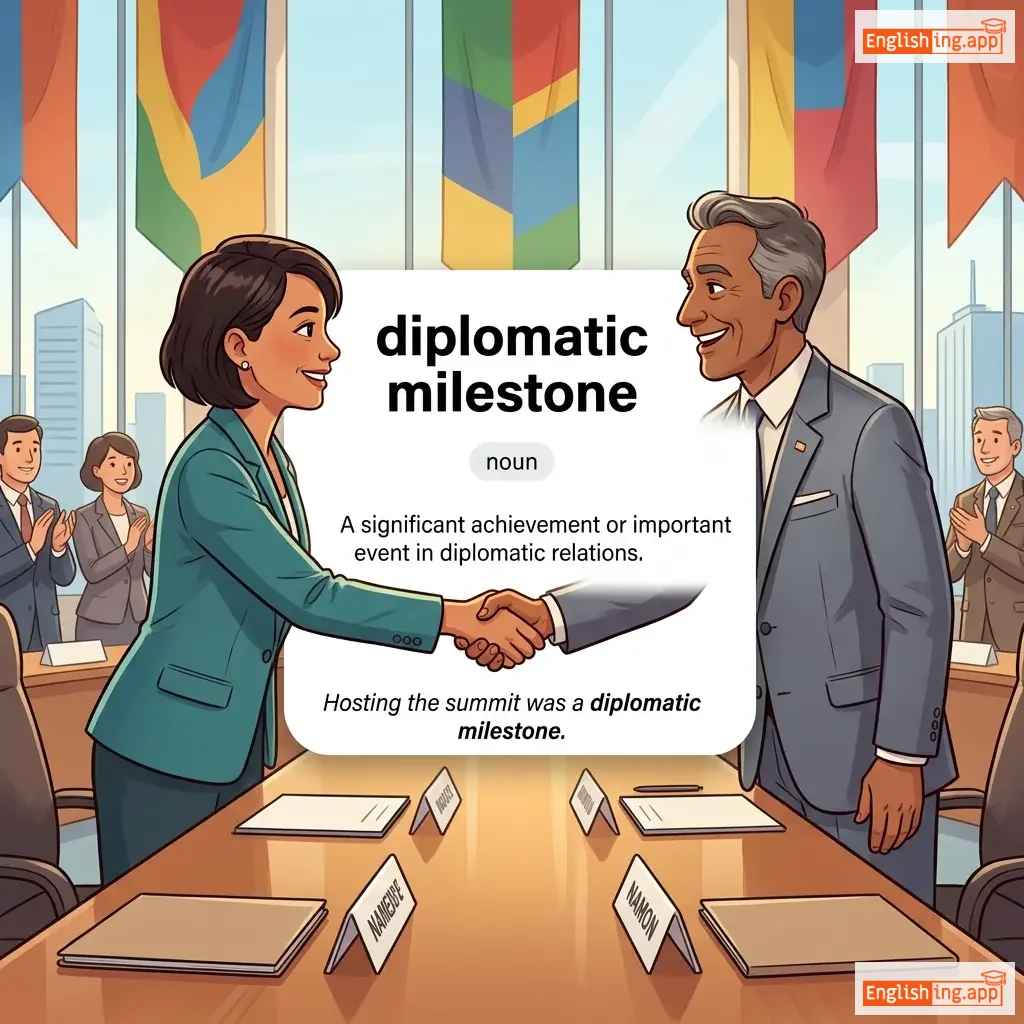
diplomatic milestone definition card — visual illustration of the meaning
noun
/ˌdɪp.ləˈmæt.ɪk ˈmaɪl.stəʊn/
дипломатический рубеж (diplomatieskiy rubezh)

A significant achievement or important event in diplomatic relations.

"Hosting the summit was a diplomatic milestone."
"Организация саммита была дипломатическим рубежом." (Organizatsiya sammitа byla diplomaticheskim rubezhom.)
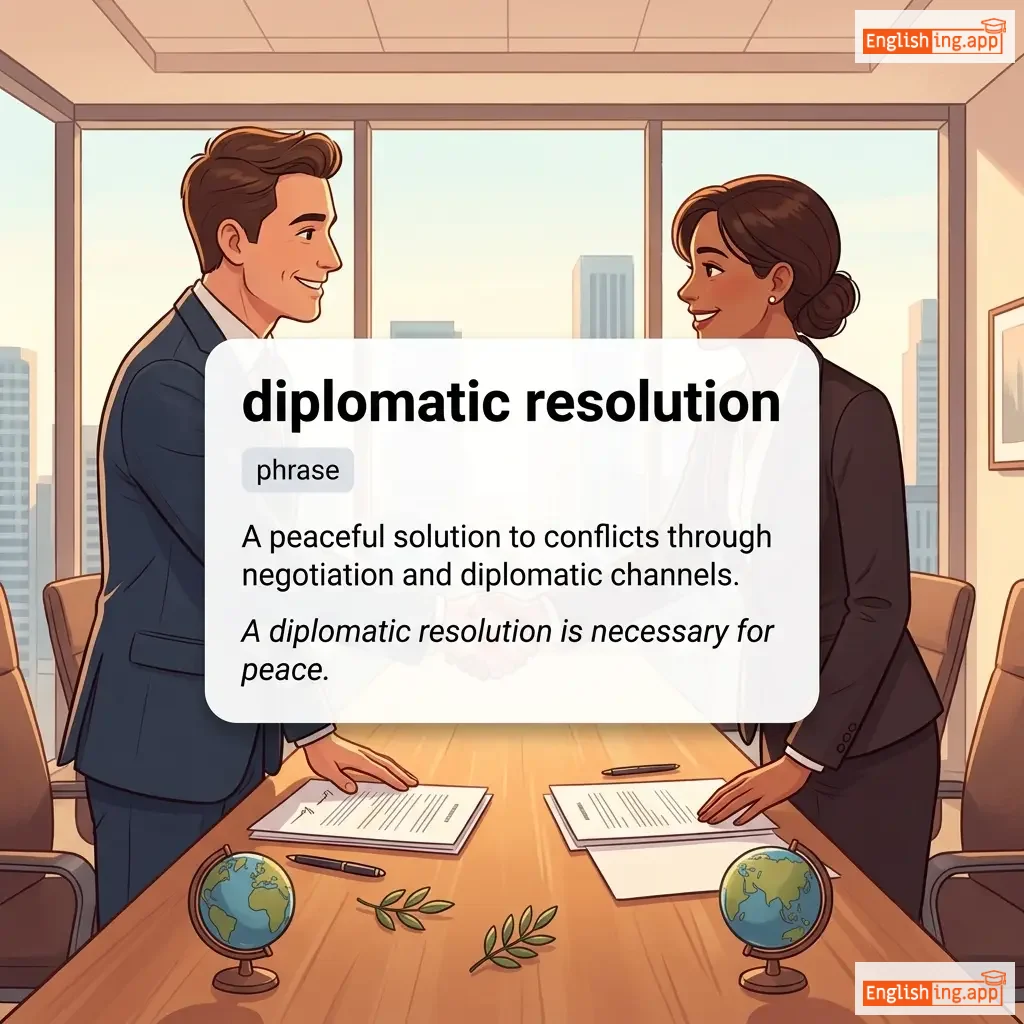
diplomatic resolution definition card — visual illustration of the meaning
phrase
ˌdɪp.ləˈmæt.ɪk rɛz.əˈluː.ʃən
дипломатическое решение (diplomaticheskoe reshenie)

A peaceful solution to conflicts through negotiation and diplomatic channels.

"A diplomatic resolution is necessary for peace."

"Для мира необходимо дипломатическое решение." (Dlya mira neobkhodimo diplomatischeskoye resheniye.)
noun
/dɪˈpləʊmətɪst/
дипломат (diplomat)

A person skilled in diplomacy; another word for diplomat.

"The diplomatist handled the negotiations with great tact."

"Дипломат вел переговоры с большим тактом." (Diplomat vel peregovory s bol'shim taktom.)
noun
/ˌdɪpsəˈmeɪniæk/
алкоголик (alkogolik)

A person with an uncontrollable craving for alcoholic drinks.

"The novel portrayed the tragic downfall of a dipsomaniac who lost everything to alcohol."

"Роман изображает трагическое падение алкоголика, который потерял всё из-за алкоголя." (Roman izobrazhaet tragicheskoe padeniye alkogolika, kotoryy poteryal vsyo iz-za alkogolya.)
adjective
/ˈdaɪər/
критический (kriticheskiy)

Extremely serious or urgent.

"The refugees were in dire need of food and shelter."

"Беженцы были в критической нужде в пище и убежище." (Bezhentsy byli v kriticheskoy nuzhde v pishche i ubezhishche.)
verb
/dəˈrɛkt/ or /daɪˈrɛkt/
направлять (napravlyat)

to manage or control the course of something; to give instructions

"She directed the team to complete the project on time."

"Она направила команду завершить проект вовремя." (Ona napravila komandu zavershit' proyekt vovremya.)
noun
/dəˈrɛkʃən/ or /daɪˈrɛkʃən/
направление, инструкции (napravlenie, instruktsii)

the course or path on which someone or something is moving; instructions on what to do

"He asked for directions to the train station."

"Он попросил указания к железнодорожной станции." (On poprosil ukazaniya k zheleznodorozhnoj stantsii.)
adverb
/dəˈrɛktli/ or /daɪˈrɛktli/
напрямую (napryamuyu)

in a straight line or manner; without anything in between

"She spoke directly to the manager about her concerns."

"Она поговорила напрямую с менеджером о своих проблемах." (Ona pogovorila napryamuyu s menedzherom o svoikh problemakh.)
noun
/dəˈrɛktər/ or /daɪˈrɛktər/
директор (direktor)

a person who manages or oversees a company, department, or film

"The director gave final approval for the new movie script."

"Директор дал окончательное одобрение для нового сценария фильма." (Direktor dal okonchatelnoye odobreniye dlya novogo stsenariya fil'ma.)
noun
/dɪˈrɛktəri/
каталог (katalog)

a book or online resource listing people, businesses, or services with relevant details

"I need to find a plumber in the phone directory."
"Мне нужно найти сантехника в телефонном каталоге." (Mne nuzhno nayti santekhnika v telephonnom kataloge.)
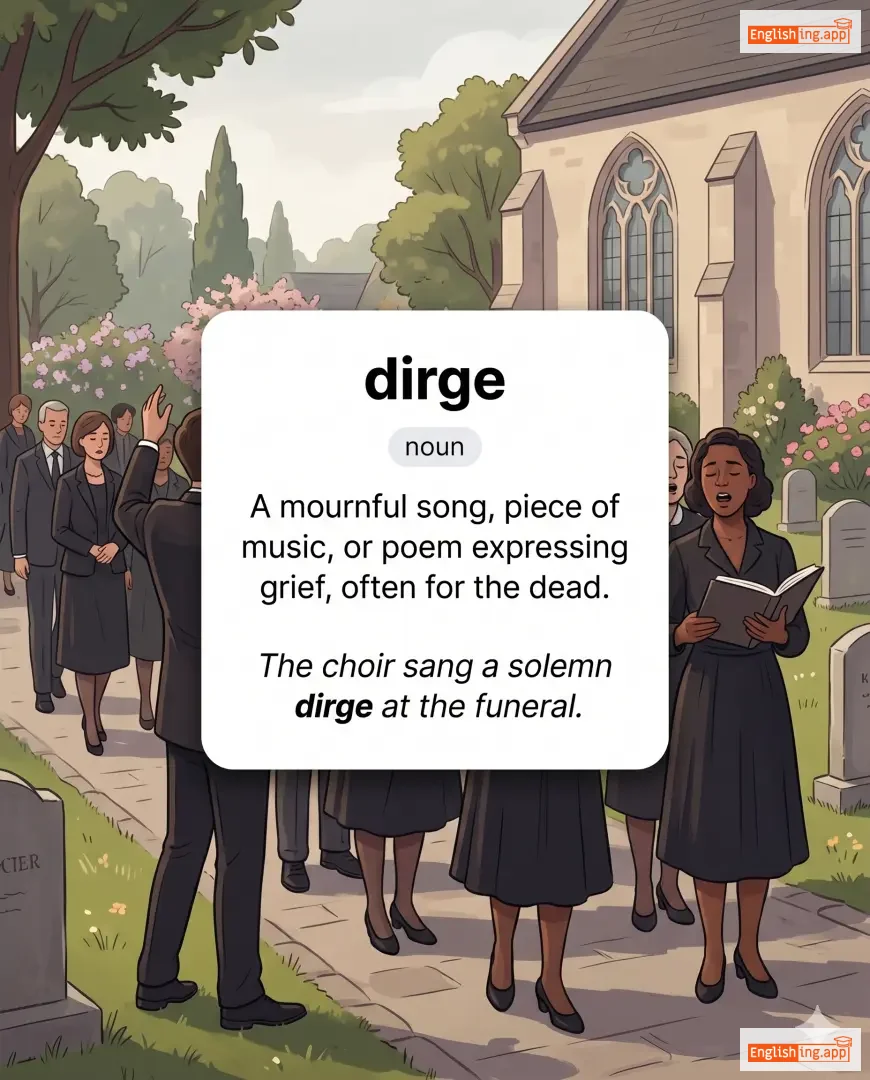
dirge definition card — visual illustration of the meaning
noun
/dɜːrdʒ/
плач (plach)

A mournful song, piece of music, or poem expressing grief, often for the dead.

"The choir sang a solemn dirge at the funeral."
"Хор спел торжественную жалобную песню на похоронах." (Khor spel torzhestvennuyu zhalobnuyu pesnyu na pokhoronakh.)
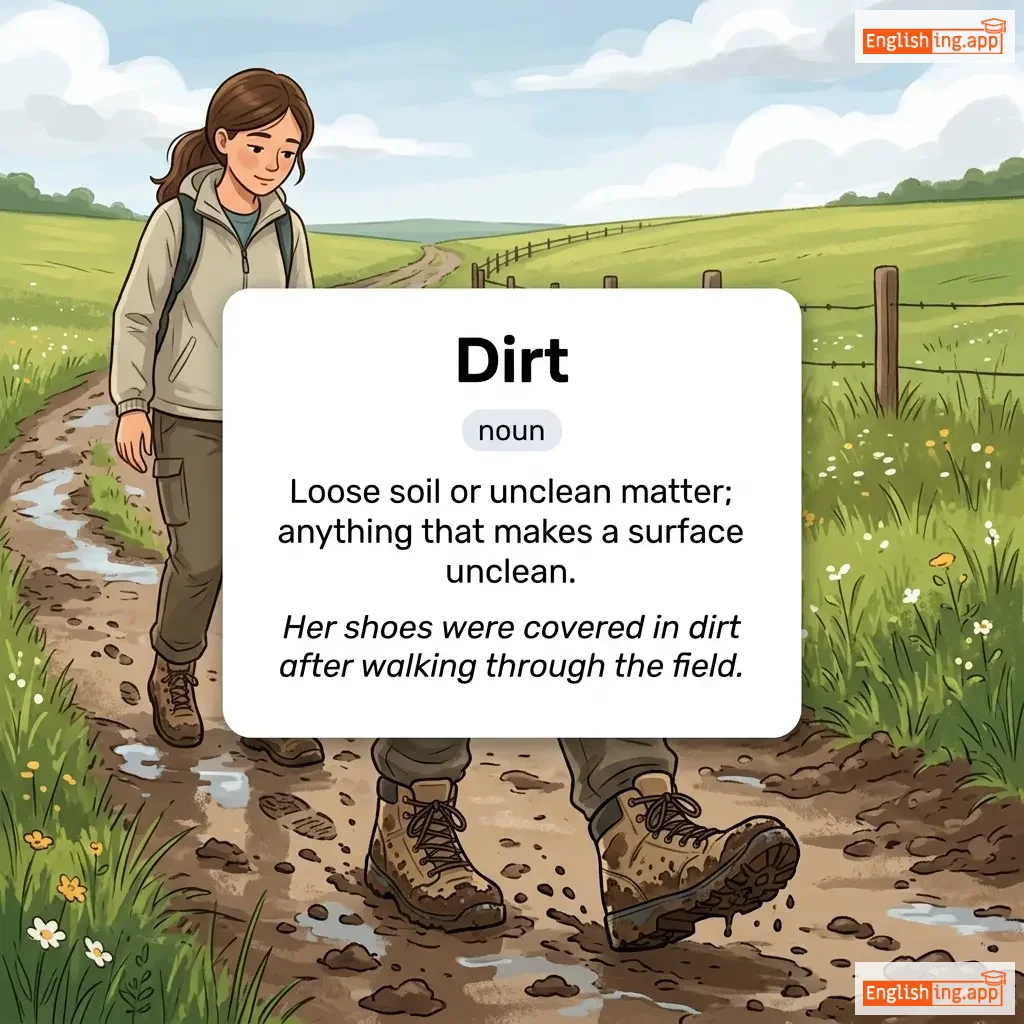
Dirt definition card — visual illustration of the meaning
noun
/dɜːrt/
земля, грязь (zemlya, gryaz)

Loose soil or unclean matter; anything that makes a surface unclean.

"Her shoes were covered in dirt after walking through the field."
"Её обувь была покрыта грязью после того, как она прошла по полю." (Yeyo obuv' byla pokryta gryazyu posle togo, kak ona proshla po polyu.)
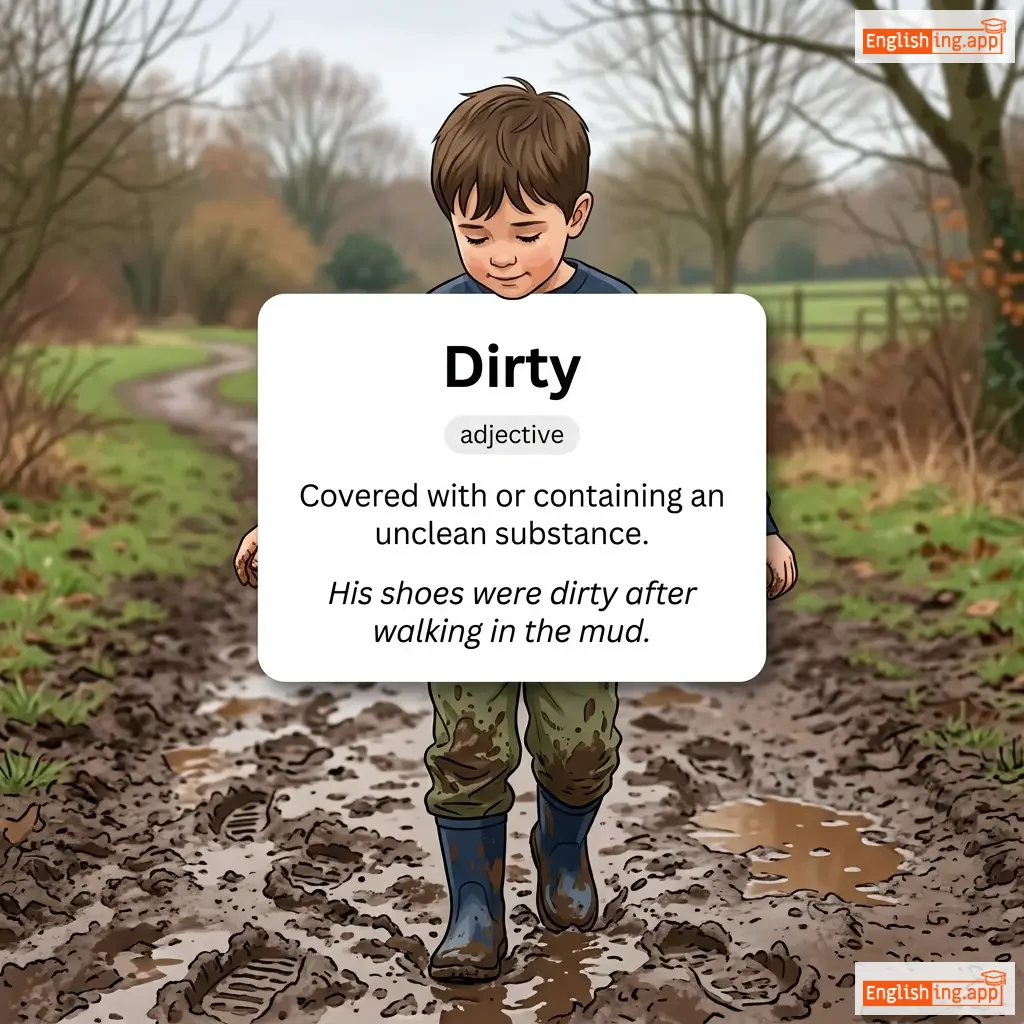
Dirty definition card — visual illustration of the meaning
adjective
/ˈdɜːr.ti/
грязный (gryazny)

Covered with or containing an unclean substance.

"His shoes were dirty after walking in the mud."

"Его обувь была грязной после того, как он прошел по грязи." (Ego obuv' byla gryaznoy posle togo, kak on proshel po gryazi.)
noun
/ˌdɪsəˈbɪləti/
инвалидность (invalidnost)

A physical or mental condition that limits a person's movements, senses, or activities.

"The organization supports people living with disability."

"Организация поддерживает людей, живущих с инвалидностью." (Organizatsiya podderzhivayet lyudey, zhivushchikh s invalidnost'yu.)
verb
/dɪsˈeɪbl/
отключить (otklyuchit)

to make something unable to function or operate

"The technician disabled the alarm system temporarily."

"Техник временно отключил сигнализацию." (Tekhnik vremennno otklyuchil signalizatsiyu)
adjective
/dɪsˈeɪbld/
инвалид (invalid)

having a physical or mental condition that limits movements, senses, or activities

"The park has special facilities for disabled people."
"В парке есть специальные удобства для инвалидов." (V parke est' spetsial'nye udobstva dlya invalidov.)
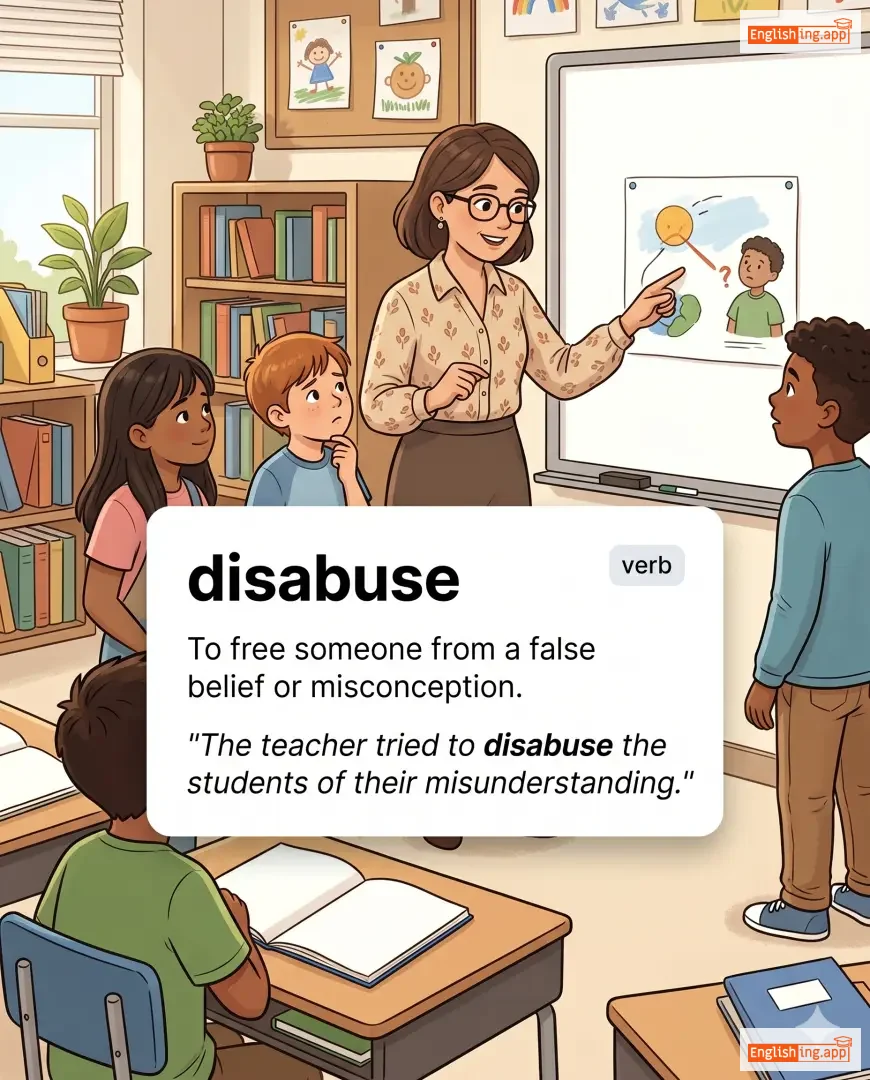
disabuse definition card — visual illustration of the meaning
verb
/ˌdɪsəˈbjuːz/
разубедить (razubedit)

To free someone from a false belief or misconception.

"The teacher tried to disabuse the students of their misunderstanding."
"Учитель пытался избавить студентов от их недоразумения." (Uchitel' pytalsya izbavit' studentov ot ikh nedorazumeniya.)
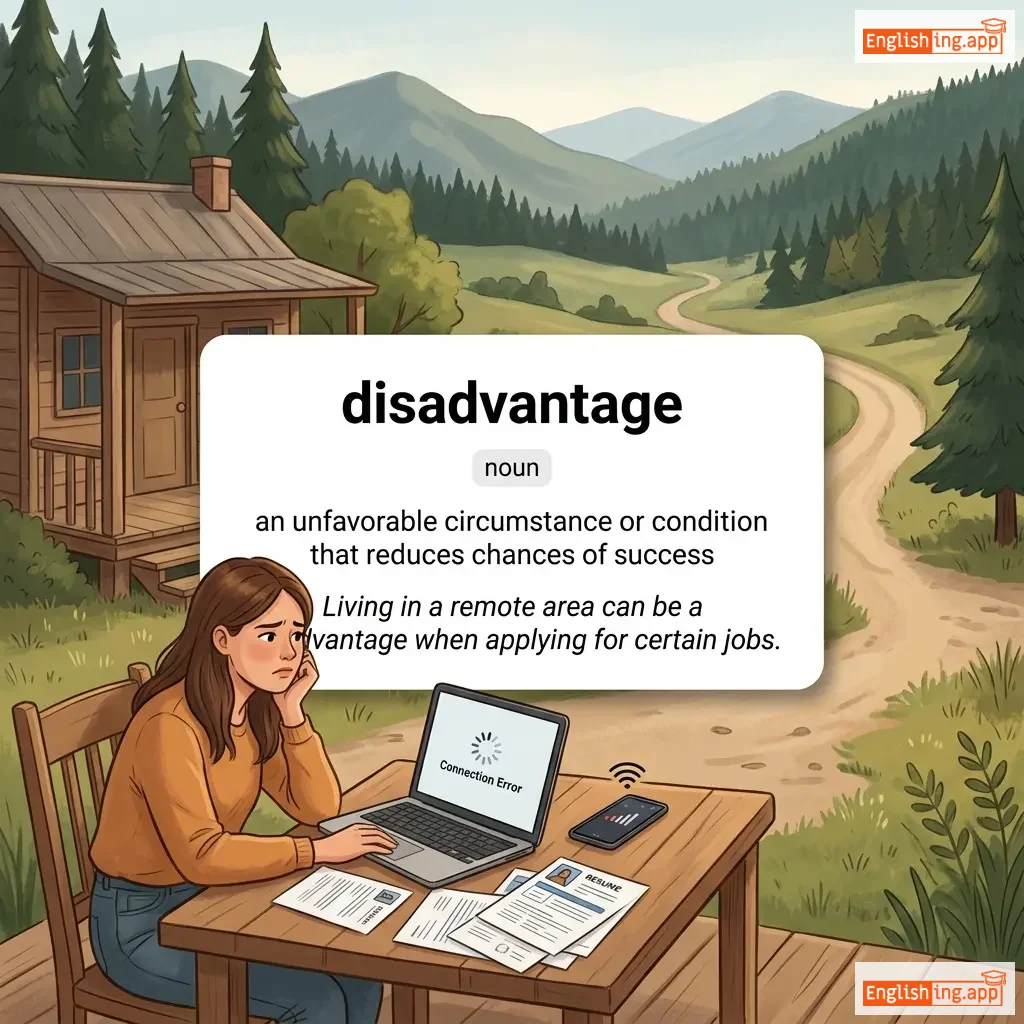
disadvantage definition card — visual illustration of the meaning
noun
/ˌdɪs.ədˈvæn.tɪdʒ/
недостаток (nedostatok)

an unfavorable circumstance or condition that reduces chances of success

"Living in a remote area can be a disadvantage when applying for certain jobs."

"Жизнь в отдаленной местности может быть недостатком при подаче заявки на определенные вакансии." (Zhizn v otdalennoy mestnosti mozhet byt' nedostatkom pri podache zayavki na opredelennye vakansii.)
adjective
/ˌdɪsədˈvæntɪdʒd/
обделённый (obdelyonny)

Lacking the basic resources or conditions needed for a good standard of living or equal opportunities.

"The program provides support to disadvantaged children."

"Программа предоставляет поддержку обделённым детям." (Programma predostavlyaet podderzhku obdelyonnym detyam.)
adjective
/ˌdɪsəˈfɛktɪd/
недовольный (niedowolny)

Dissatisfied and rebellious, especially against authority or leadership.

"The reforms were introduced to calm the disaffected youth."
"Реформы были введены, чтобы успокоить недовольную молодежь." (Reformy byli wwedeny, chtoby uspokoit' nedowol'nuyu molodyozh'.)
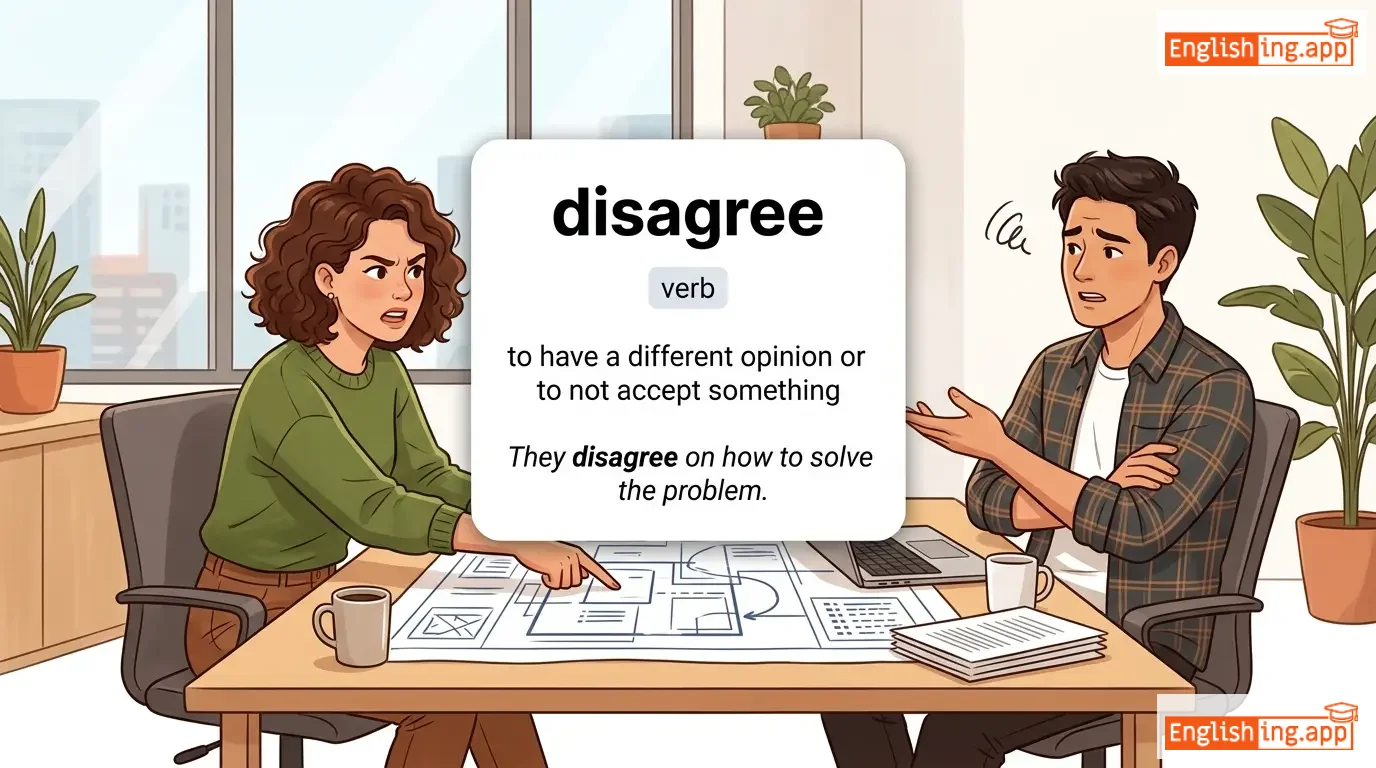
disagree definition card — visual illustration of the meaning
verb
/ˌdɪsəˈɡriː/

to have a different opinion or to not accept something

"They disagree on how to solve the problem."

adjective
/ˌdɪsəˈɡriːəbl/
неприятный (nepriyatnyy)

Unpleasant or offensive; causing discomfort or annoyance.

"The weather was cold and disagreeable."

"Погода была холодной и неприятной." (Pogoda byla kholodnoy i nepriyatnoy.)
noun
/ˌdɪsəˈɡriːmənt/
разногласие (raznoglasiye)

a failure to agree or a difference in opinion

"Their disagreement on the issue caused a delay in the project."

"Их разногласия по этому вопросу вызвали задержку в проекте." (Ikh raznoglasiya po etomu voprosu vyzvali zaderzhku v proyekte.)
verb
/ˌdɪsəˈlaʊ/
запрещать (zapreshchat)

to refuse to allow or accept something

"The referee disallowed the goal for offside."
"Судья отменил гол из-за офсайда." (Sud'ya otmenil gol iz-za offsayda.)
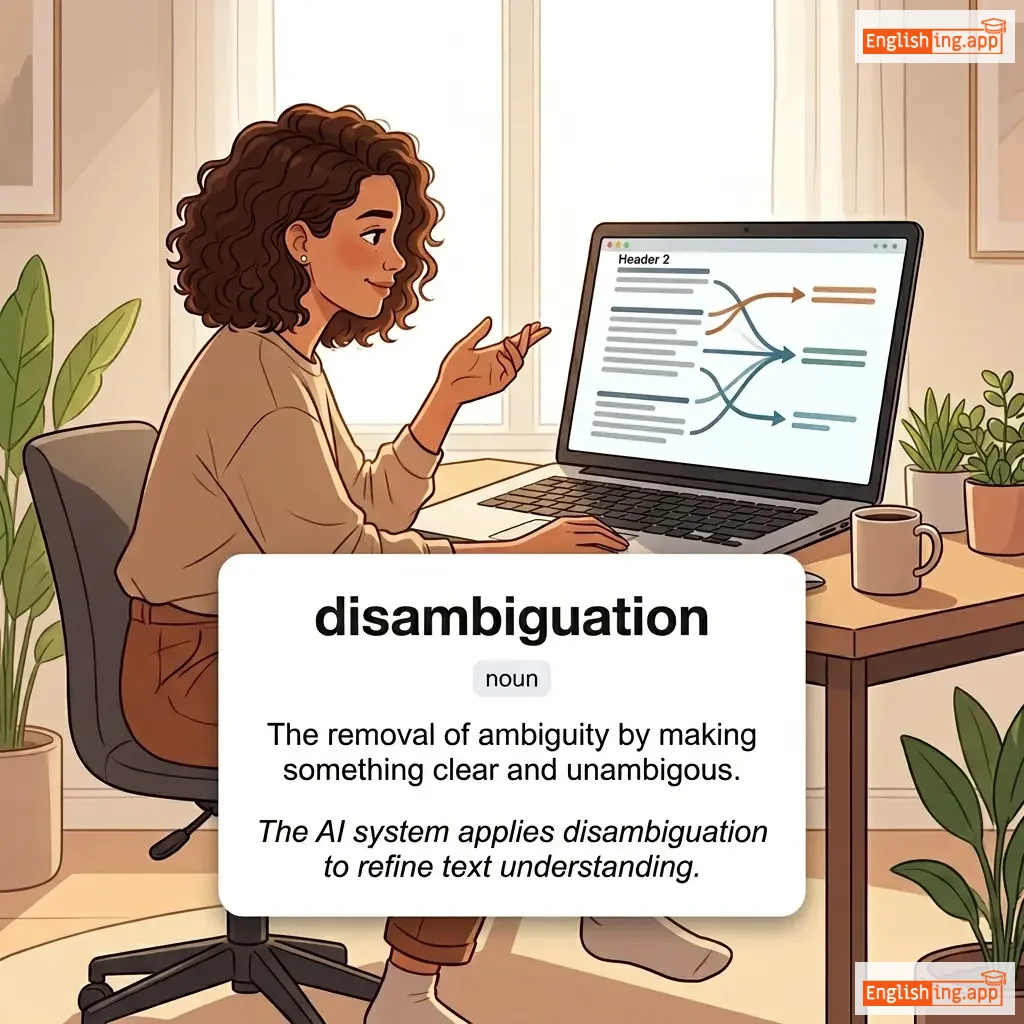
disambiguation definition card — visual illustration of the meaning
noun
ˌdɪs.æmˌbɪɡ.juˈeɪ.ʃən
дисамбигация (disambigatsiya)

The removal of ambiguity by making something clear and unambiguous.

"The AI system applies disambiguation to refine text understanding."
"Система ИИ применяет дисамбигацию для уточнения понимания текста." (Sistema II primenyaet disambiguatsiyu dlya utochneniya ponimaniya tekstov.)
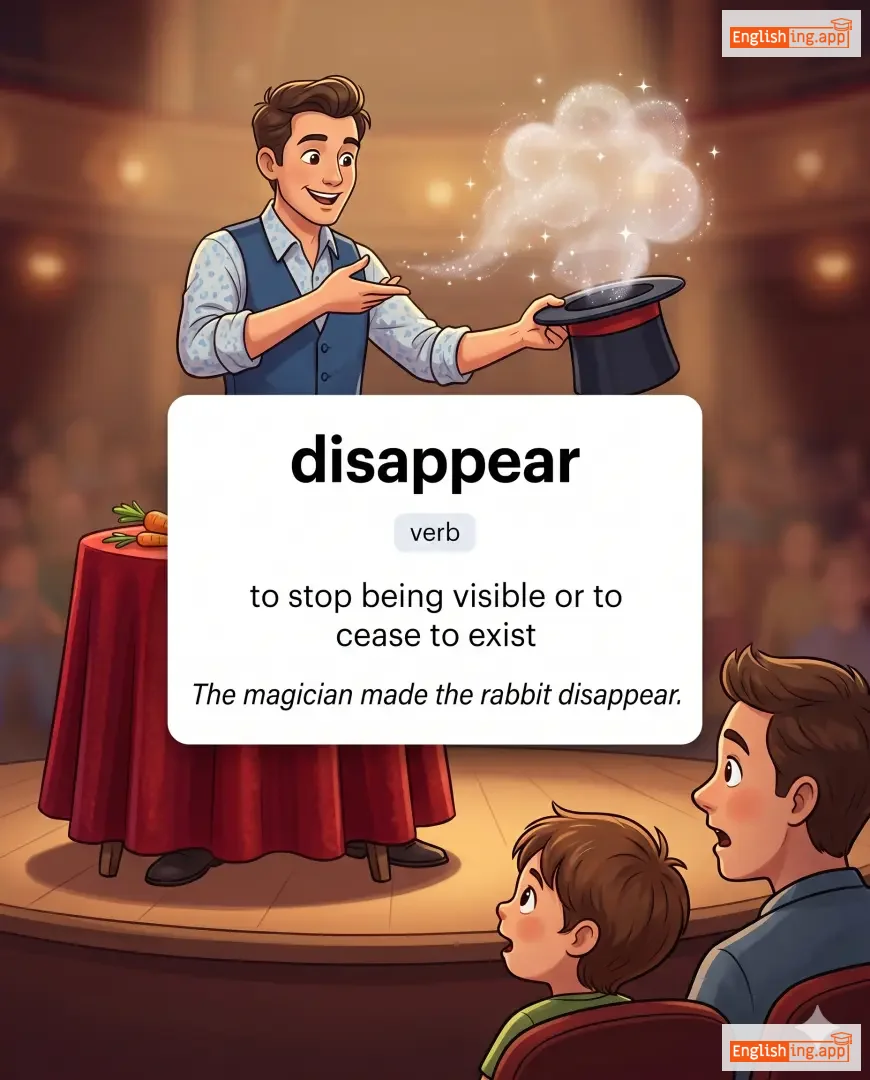
disappear definition card — visual illustration of the meaning
verb
/ˌdɪsəˈpɪər/
исчезать (ischezat)

to stop being visible or to cease to exist

"The magician made the rabbit disappear."
"Маг заставил кролика исчезнуть." (Mag zastaavil krolika ischeznut'.)
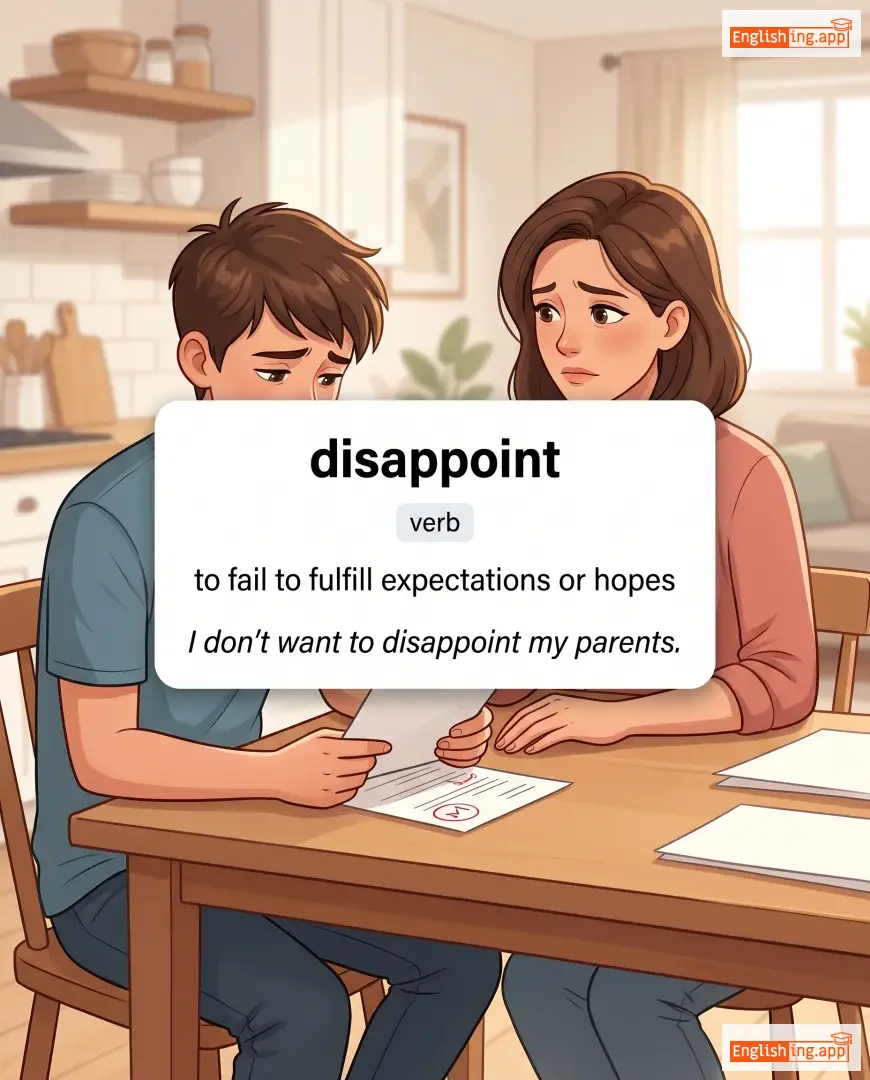
disappoint definition card — visual illustration of the meaning
verb
/ˌdɪsəˈpɔɪnt/
разочаровывать (razocharovyvat')

to fail to fulfill expectations or hopes

"I don’t want to disappoint my parents."

"Я не хочу разочаровать своих родителей." (Ya ne khochu razocharovat' svoikh roditeley.)
adjective
/ˌdɪsəˈpɔɪntɪd/
разочарованный (razochiarovanny)

sad or displeased because something has not happened as expected

"She was disappointed with her exam results."

"Она была разочарована результатами экзамена." (Ona byla razocharovana rezul'tatami ekzamen)
noun
/ˌdɪsəˈpɔɪntmənt/
разочарование (razochaarovaniye)

the feeling of sadness or displeasure caused by the non-fulfillment of one's hopes or expectations

"Her face showed deep disappointment after hearing the results."

"Ее лицо выражало глубокое разочарование после того, как она услышала результаты." (Eyo litso vyrazhalo glubokoye razocharovaniye posle togo, kak ona uslyshala rezul'taty.)
noun
/ˌdɪsæprəˈbeɪʃən/
сильное неодобрение (sil'noe neodobrenie)

strong disapproval, typically on moral grounds

"The policy was met with widespread disapprobation."

"Политика была встречена с широким неодобрением." (Politika byla vstrechena s shirokim neodobreniem.)
noun
/ˌdɪsəˈpruːvəl/
неодобрение (neodobrenie)

The expression of an unfavorable opinion or judgment

"Her parents showed clear disapproval of her decision to drop out of college."

"Ее родители показали явное неодобрение её решению бросить колледж." (Ee roditeli pokazali yavnoe neodobrenie ee resheniyu brosit kolledzh.)
verb
/ˌdɪsəˈpruːv/
не одобрять (ne odobryat')

to have a negative opinion about something; to consider something wrong or bad

"Many parents disapprove of smoking."

"Многие родители не одобряют курение." (Mnogiye roditeli ne odobrivayut kureniye.)
verb
/dɪsˈɑːrm/
разоружить (razuoruzhit)

to take weapons away from someone; to make someone feel less hostile

"The soldiers were ordered to disarm the rebels."

"Солдатам приказали разоружить повстанцев." (Soldatam prikazali razoruzhit' povstantsov.)
verb
/ˌdɪsəˈreɪndʒ/
нарушить порядок (narushit' poryadok)

to disturb the order or arrangement of something

"The wind disarranged her hair."
"Ветер нарушил ее прическу." (Veter narushil ee prichesku.)
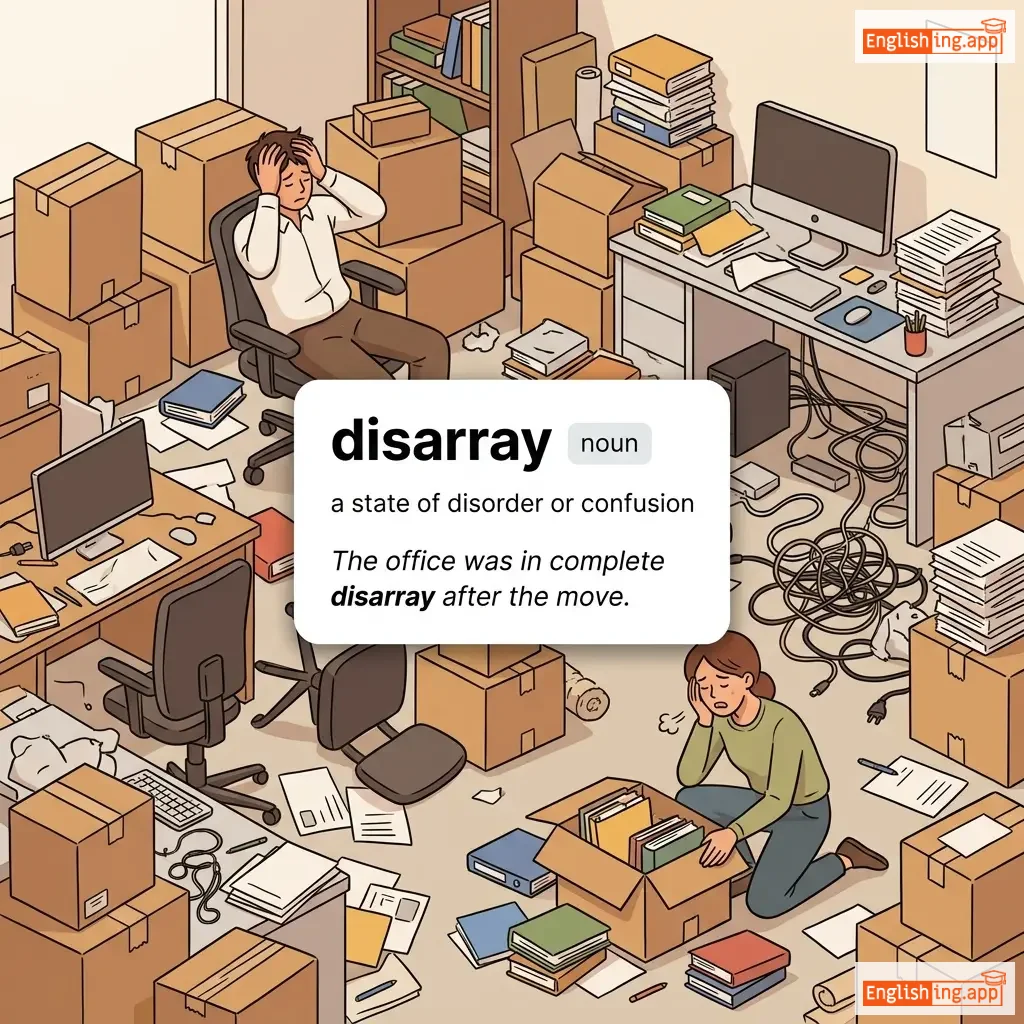
disarray definition card — visual illustration of the meaning
noun
/ˌdɪsəˈreɪ/
беспорядок (besporyadok)

a state of disorder or confusion

"The office was in complete disarray after the move."

"Офис был в полном беспорядке после переезда." (Ofis byl v polnom besporyadke posle pereyezda.)
verb
/ˌdɪsəˈsɛmbəl/
разбирать (razbirat)

To take apart something into its separate pieces.

"He had to disassemble the computer to repair it."

"Ему пришлось разобрать компьютер, чтобы починить его." (Yemu prishlos' razobrat' komp'yuter, chtoby pochinit' ego.)
noun
/dɪˈzæstər/
катастрофа (katastrofa)

A sudden event that causes great damage or loss of life.

"The earthquake was a major disaster."

"Землетрясение было большой катастрофой." (Zemletryasenie bylo bol'shoy katastrofoy.)
🌪️

Disastrous

adjective
/dɪˈzæstrəs/

causing great damage or harm

"The flood caused disastrous damage to the city."

verb
/ˌdɪsəˈvaʊ/
отрекаться (otrekat'sya)

to deny responsibility for or connection with something

"He disavowed any involvement in the scandal."

"Он отверг любое участие в скандале." (On otrekalsya ot lyubogo uchastiya v skandale.)
noun
/ˌdɪsəˈvaʊəl/
отказ (otkaz)

the denial of any responsibility, connection, or support

"The politician issued a firm disavowal of the controversial remarks."

"Политик выпустил решительный отказ от спорных высказываний." (Politik vypustil reshitel'nyy otkaz ot spornykh vyskazyvaniy.)
verb
/dɪsˈbænd/
распускать (raspuskать)

to break up and stop functioning as a group or organization

"The club decided to disband after twenty years of activity."

"Клуб решил распуститься после двадцати лет деятельности." (Klub reshil raspustit'sya posle dvadtsati let deyatel'nosti.)
verb
/dɪsˈbɑːr/
официально исключить адвоката из юридической профессии (ofitsial'no iskljuchit' advokata iz yuridicheskoy professii)

to officially remove a lawyer from the legal profession

"The corrupt lawyer was disbarred for unethical conduct."

"Коррупционный адвокат был дисквалифицирован за неэтичное поведение." (Korruptsionnyy advokat byl diskvalifitsirovan za neetichnoe povedenie.)